

Get a Free WorkTrek Demo
Let's show you how WorkTrek can help you optimize your maintenance operation.
Try for freeKey Takeaways:
- Predictive maintenance can reduce costs by 10% to 40%.
- CMMS platforms increase visibility and communication, and decrease downtime.
- U.S employers spend approximately $58.78 billion annually on workplace injury costs.
Unplanned breakdowns start long before a machine stops working.
Behind many of them is a problem that often goes unnoticed: the wrong tools, used at the wrong time, for the wrong job.
It happens more often than you might think.
That’s why this guide breaks down the full spectrum of upkeep tools, both physical and digital, and shows how each category helps reduce downtime, improve safety, and control operational costs.
Types of Maintenance Tools
Maintenance work relies on a wide range of tools, and not all of them are used directly for repairs.
Some tools help monitor performance and detect issues early, while others protect the people performing the work.
Understanding these categories helps you build a well-equipped maintenance program and ensures your team is prepared for all types of upkeep.
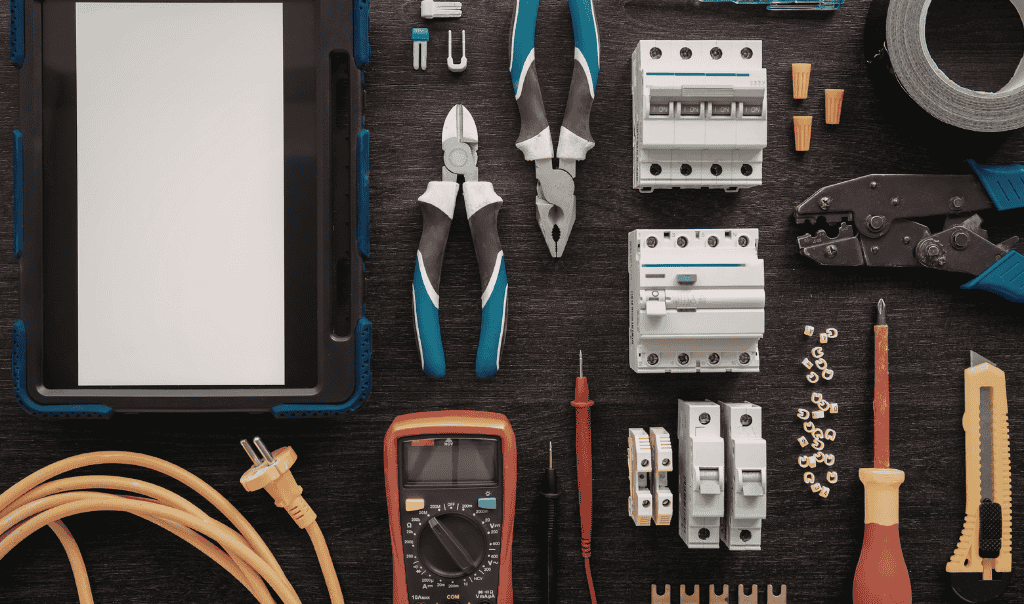
Hand Tools
Hand tools are manual tools that rely solely on the user’s physical effort.
They’re the most common tools in any maintenance environment and form the foundation of routine, day-to-day work.
Their simplicity, reliability, and low cost make them indispensable across industries.
Common examples of hand tools used in maintenance include:
- Pliers for gripping, bending, or cutting wires
- Allen keys (hex keys) for tightening hex bolts
- Screwdrivers for fastening and removing screws
- Hammers and mallets for assembly or disassembly
- Wrenches and spanners for tightening or loosening bolts
- Tape measures and levels for measurement and alignment
Even in highly automated facilities, hand tools remain vital for everyday maintenance tasks.
Power Tools
Power tools are motor-driven and use electricity, batteries, or compressed air to perform tasks that would be slow or physically demanding with hand tools.
They are especially useful when maintenance work requires higher torque, speed, or precision, particularly for large or tightly fastened components.
Common power tools include:
- Electric drills for drilling and fastening
- Impact wrenches for heavy-duty fastening
- Angle grinders for cutting and polishing metal
- Reciprocating saws for dismantling and structural work
- Pneumatic tools (e.g., air ratchets) powered by compressed air
Power tools improve efficiency, reduce manual effort, and enable teams to handle more demanding maintenance tasks with greater precision.
Diagnostic Tools
Diagnostic tools help you identify faults, failures, or performance issues, often before they cause equipment downtime or safety incidents.
Unlike hand and power tools, which are used to perform repairs, diagnostic tools provide insight into equipment condition.
This makes them essential for preventive, condition-based, and predictive maintenance strategies.
By identifying issues early, maintenance teams can schedule repairs proactively, reducing unplanned downtime and extending asset lifespan.
There’s plenty of research that supports this.
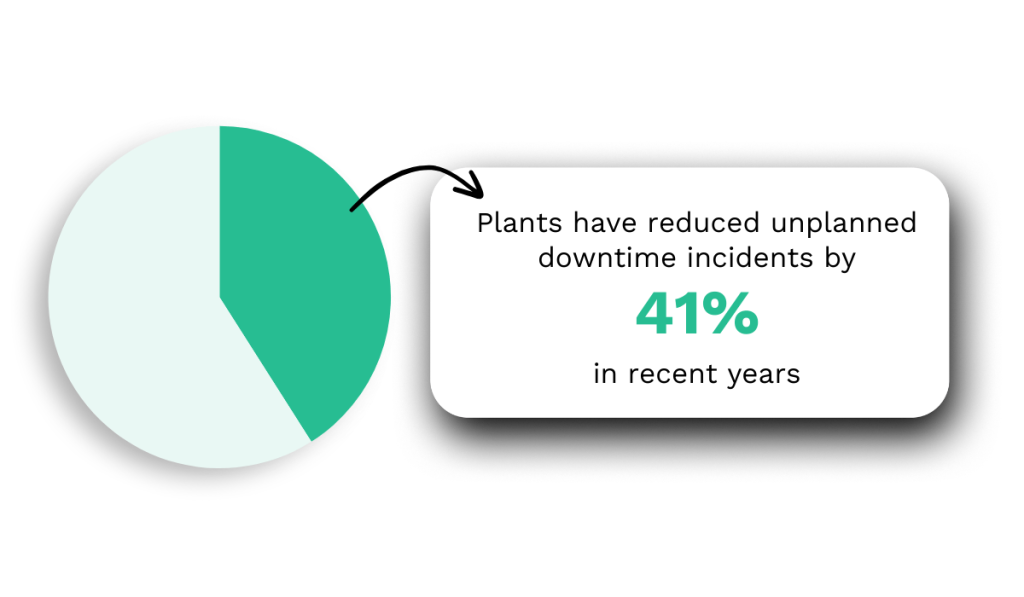
According to Siemens’ 2024 report, plants have reduced unplanned downtime incidents by 41% in recent years, reflecting the growing adoption of technologies such as condition monitoring and diagnostic tools.
These tools are clearly yielding significant results, which is why we’re likely to see their adoption increase even further.
Here are some examples of diagnostic tools commonly used in maintenance:
| Diagnostic Tool | What It Measures / Detects | Example Use |
|---|---|---|
| Multimeters | Voltage, current, resistance | Diagnose faults in motors, circuits, and control panels |
| Thermal imaging cameras | Heat anomalies | Identify overheating components before failure |
| Vibration analyzers | Abnormal vibration | Detect imbalance, misalignment, or bearing wear |
| Ultrasonic leak detectors | High-frequency sound | Locate air, gas, or steam leaks |
| Oil analysis tools | Contamination and wear particles | Detect internal equipment wear early |
All in all, while condition-monitoring tools aren’t used directly in equipment repair, they still have an enormous impact on maintenance efficiency, minimizing disruption and prolonging asset life.
PPE
Personal protective equipment (PPE) is wearable gear designed to minimize exposure to workplace hazards.
In many cases, these hazards cannot be fully eliminated through engineering controls, such as machine guarding, or administrative controls, such as safe work procedures.
Therefore, PPE is a critical layer of protection in maintenance environments, where technicians regularly work with electrical systems, heavy machinery, chemicals, and at heights.
The impact of improved safety practices is clear.
According to OSHA, workplace injury and illness rates in the U.S. have declined from 10.9 incidents per 100 workers in 1972 to approximately 2.7 in recent years.
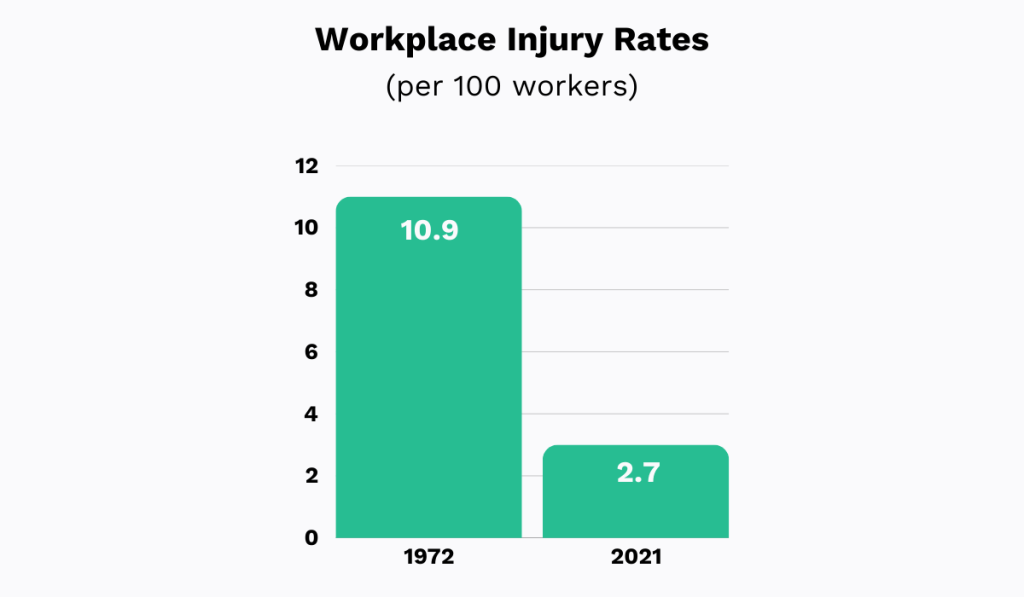
This is a direct result of decades of progress in safety standards, training, and protective measures.
Common PPE used in maintenance includes:
- Hard hats for protection against falling objects
- Hearing protection in high-noise environments
- Steel-toed boots for impact and puncture protection
- Safety glasses and face shields for eye and face protection
- High-visibility vests for safer movement in active work zones
- Gloves to guard against cuts, chemicals, and electrical hazards
Note that PPE is the last line of defense in the hierarchy of hazard controls, and not a substitute for eliminating risks at the source.
Digital Tools
Modern maintenance increasingly relies on software and smart devices alongside physical tools.
As facilities grow more complex and the cost of unplanned downtime rises, managing maintenance through spreadsheets, paper logs, or phone calls alone is no longer practical.
Digital tools provide a centralized, real-time view of operations, including who is working on what, where, and when.
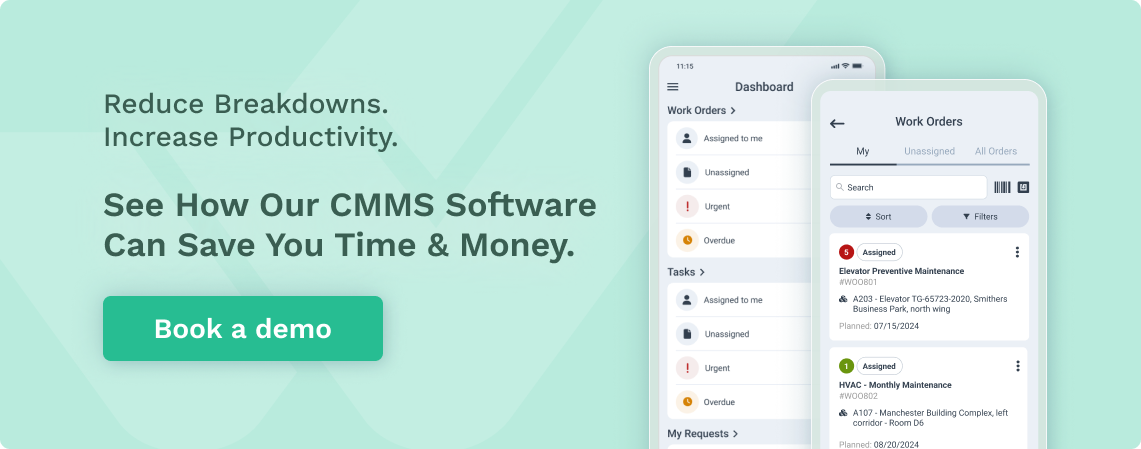
The most widely adopted category is Computerized Maintenance Management Software (CMMS).
A CMMS centralizes and automates core maintenance tasks, including:
- Asset tracking
- Performance reporting
- Work order management
- Maintenance history logging
- Preventive maintenance scheduling
- Spare parts and inventory management
Instead of relying on fragmented records or institutional knowledge, a CMMS creates a single source of truth accessible from both desktop and mobile devices.
It reduces administrative workload, simplifies audit readiness, and provides the data needed to make informed decisions.
Teams can identify high-cost assets, optimize technician workloads, and prioritize maintenance activities more effectively.
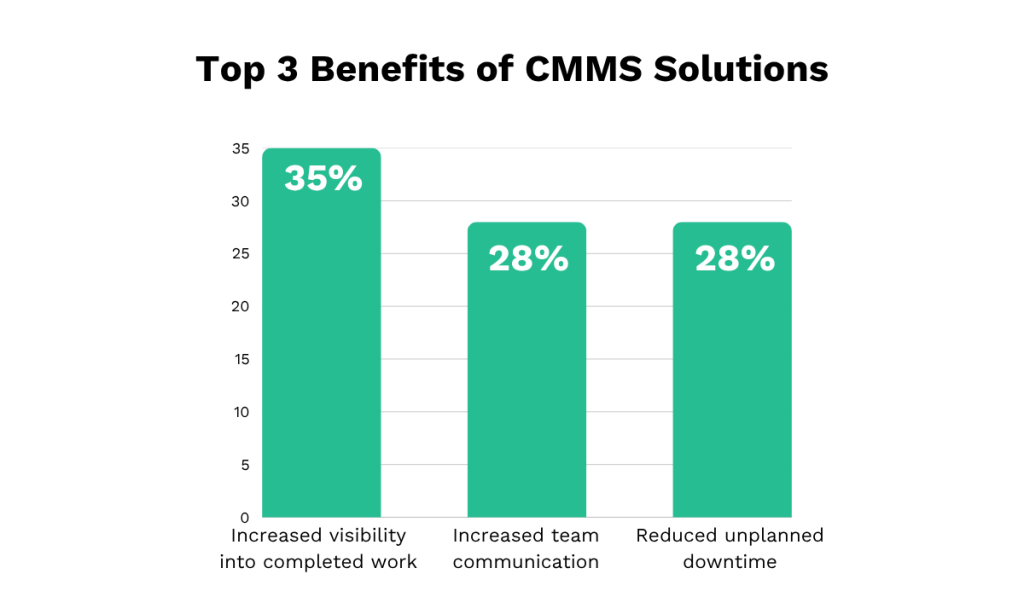
In fact, a recent survey found that teams using CMMS platforms report major improvements: better visibility into completed work, less unplanned downtime, and increased communication.
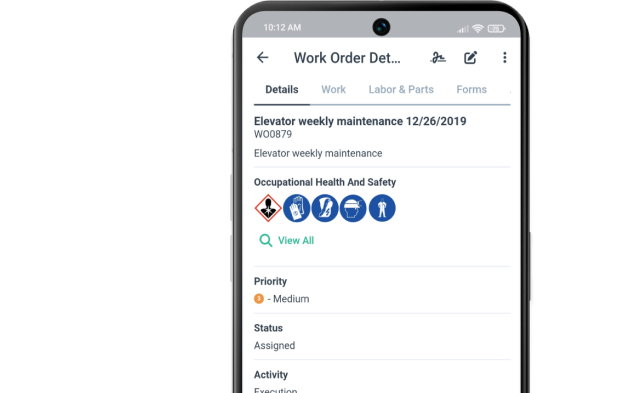
Take, for instance, WorkTrek, a CMMS platform designed to simplify asset and work management for upkeep teams across manufacturing, facilities, and field service environments.
Built with the needs of maintenance managers and supervisors in mind, it consolidates your operations into a single platform accessible via web and mobile, including offline functionality for field technicians.
Some of its key capabilities include the preventive maintenance scheduling feature, which plans and schedules recurring maintenance tasks based on time-based or usage-based triggers.
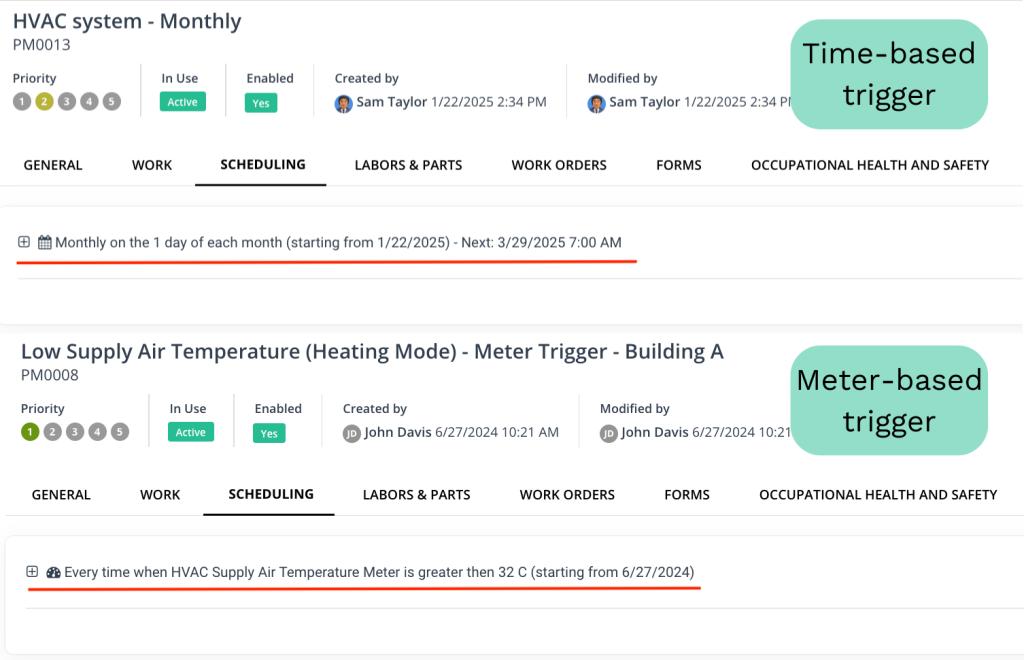
It automatically generates work orders according to scheduled intervals, helping you stay ahead of equipment failures.
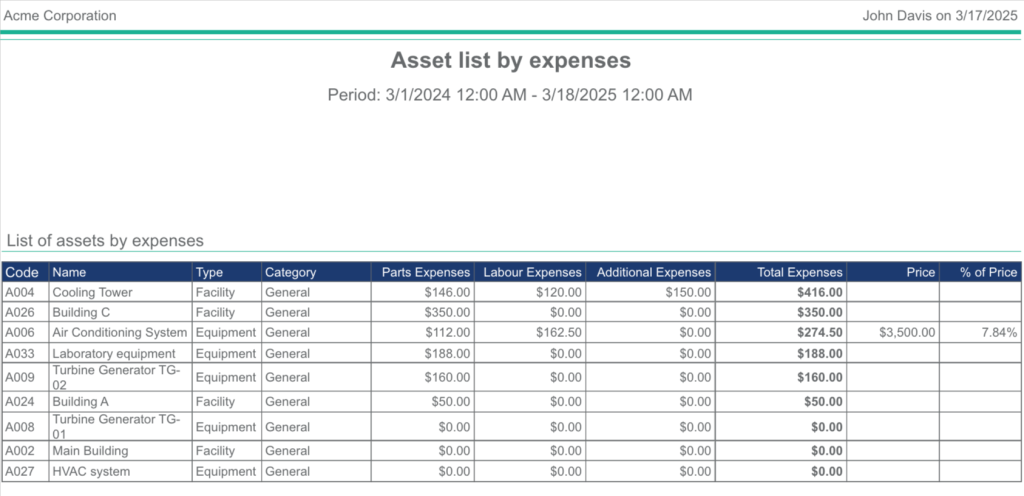
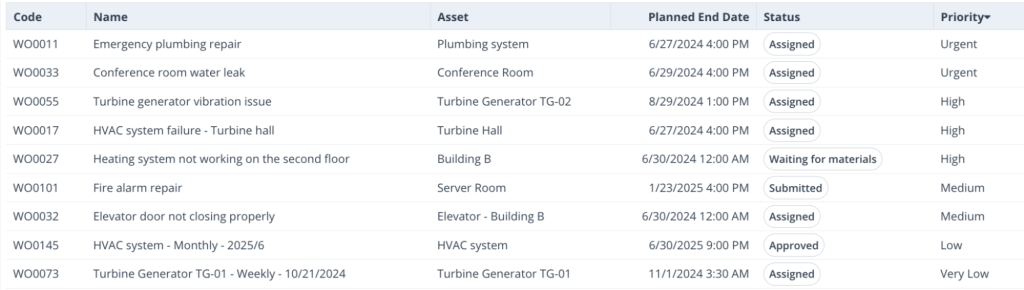
Additionally, WorkTrek’s comprehensive reporting provides insight into KPIs, such as PM compliance, downtime, and more, helping you minimize downtime, optimize staffing, and ensure high-priority tasks are completed.
Here’s just one report example:
Additionally, the work order management feature helps you create, assign, prioritize, and track work orders from request through to completion.
Every task is documented with full transparency, so nothing falls through the cracks.
Your team always knows what needs to be done and who’s responsible.
These features directly translate into operational improvements.
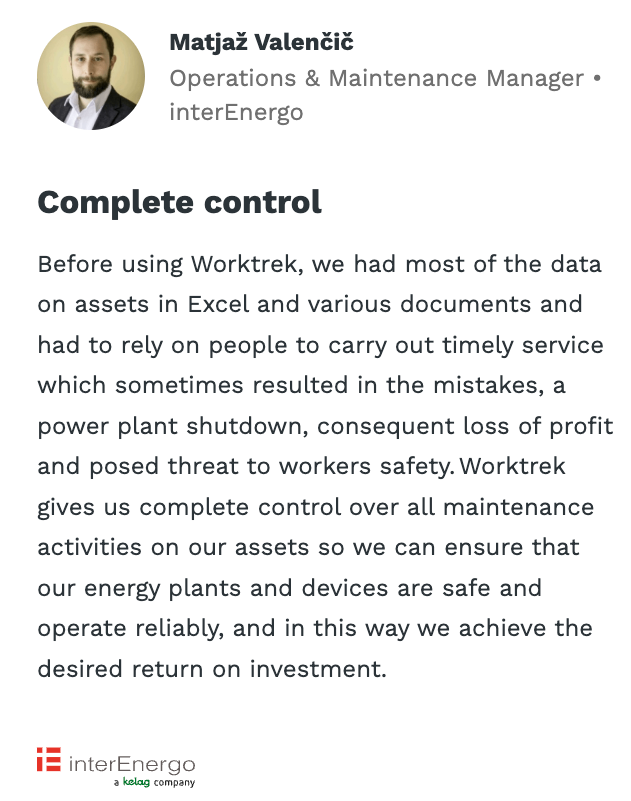
Just ask Matjaž Valenčič, Operations and Maintenance Manager at interEnergo, an international energy company:
For teams managing complex operations, digital tools are no longer optional.
If your maintenance program still relies on spreadsheets or disconnected systems, adopting a CMMS like WorkTrek is one of the highest-impact upgrades you can make.
Benefits of Choosing the Right Maintenance Tools
The tools your team uses directly affect how well your facility runs.
Therefore, choosing the right tools for each job and building the systems to support their use pays dividends across three areas that matter most to upkeep managers: asset uptime, workforce safety, and operating costs.
Reduced Downtime
Unplanned equipment failures rarely happen without warning.
They develop over time through wear, misalignment, loose fasteners, or component degradation that goes unnoticed until it’s already too late.
Anyone who’s experienced this knows how severe the cost can be.
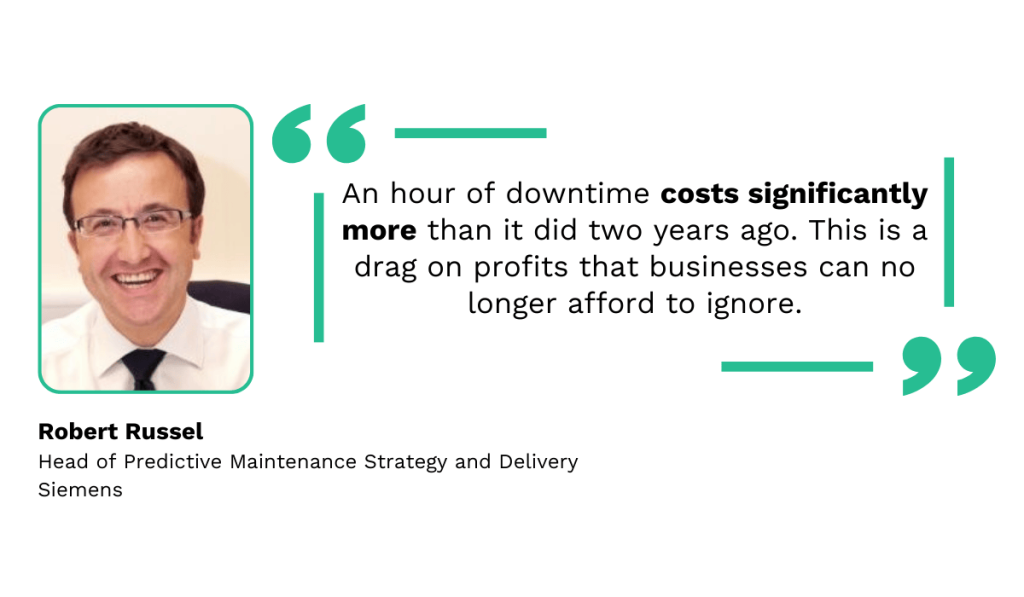
Robert Russell, Head of Predictive Maintenance Strategy and Delivery at Siemens, explains:
Your maintenance tools make it easier to detect early warning signs and intervene before these costly failures occur.
On the physical side, properly calibrated hand and power tools allow technicians to perform routine inspections and adjustments with precision.
Moreover, digital tools support these routine tasks by ensuring that the work actually gets done.
A CMMS automates preventive maintenance scheduling by:
- Generating work orders at defined intervals
- Assigning tasks to the right technicians
- Flagging overdue or incomplete work
This removes reliance on memory, manual tracking, or paper-based systems, reducing the risk of missed maintenance.
The cumulative effect is a measurable reduction in both the frequency and severity of unplanned failures.
In the end, equipment that is regularly inspected, adjusted, and serviced with appropriate tools simply breaks down less often.
And when issues do arise, they’re caught early enough to be addressed during planned maintenance windows rather than mid-production.
Increased Safety
The relationship between maintenance tools and workplace safety manifests in two ways.
First, these tools, particularly PPE, protect your technicians from hazards encountered during maintenance work.
Second, well-maintained equipment is inherently safer.
Machines that are regularly inspected, properly adjusted, and serviced before components degrade are far less likely to fail in ways that put operators or nearby workers at risk.
Using the correct tool for each task also eliminates a common source of injuries.
Improvised tool use, such as using a wrench as a hammer, or bypassing a safety interlock because the right lockout/tagout equipment is not available, significantly increases risk.
When teams have access to the proper tools and are trained to use them correctly, these incidents decline sharply.
The business case for investing in safety through better tooling is also concrete.
Workplace injuries carry direct costs, like medical treatment, workers’ compensation claims, regulatory fines, and potential litigation, as well as indirect costs that are often even higher:
- Lost productivity
- Equipment damage
- Impact on team morale
- Accident investigation time
- Increased insurance premiums
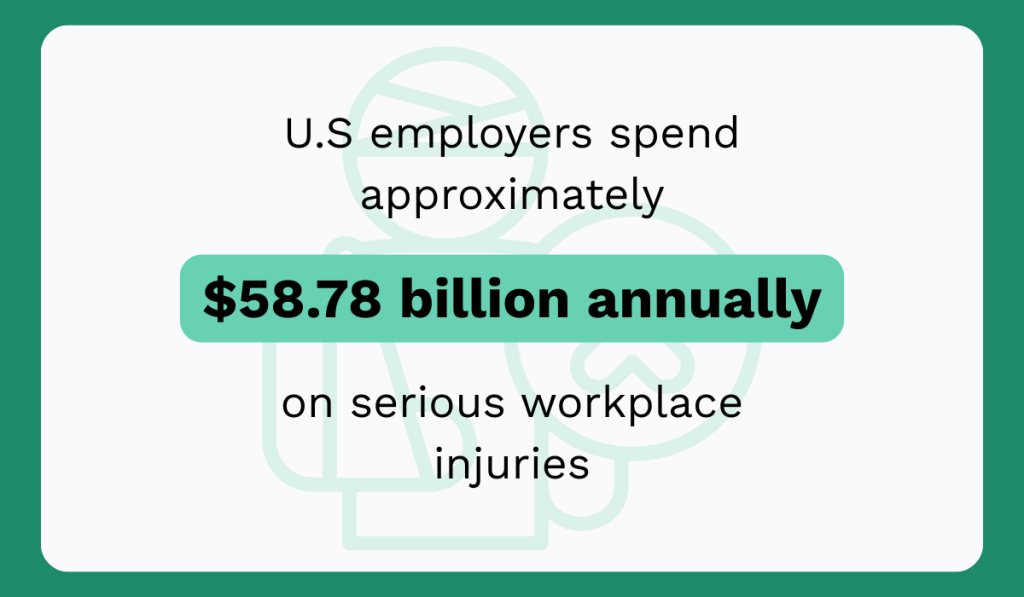
According to the Liberty Mutual Workplace Safety Index 2025, U.S employers spend approximately $58.78 billion annually on workplace injury costs.
Beyond financial exposure, a strong safety record also offers operational benefits.
Facilities with lower injury rates typically see:
- Higher workforce retention
- Fewer production disruptions
- Better outcomes in regulatory inspections and customer audits
In other words, safety is more than a compliance requirement. It’s a core operational metric that directly impacts performance, reliability, and long-term cost control.
Lower Operational Costs
Investing in the right maintenance tools, both physical and digital, can feel like an upfront cost.
In reality, it’s one of the most reliable ways to reduce long-term maintenance expenditure.
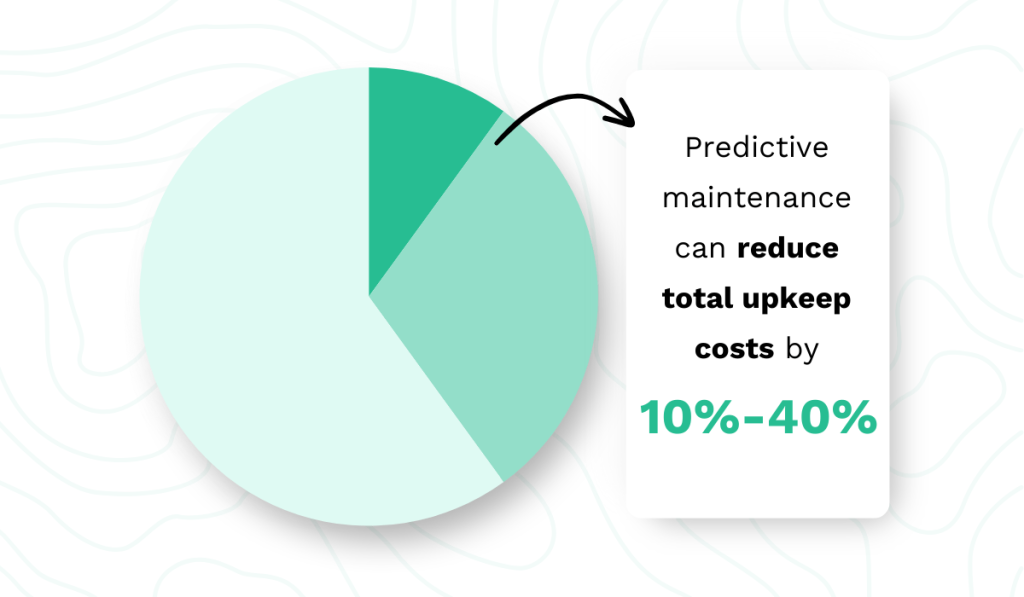
For example, research from McKinsey & Company shows that predictive maintenance, enabled by diagnostic tools and AI, can reduce total maintenance costs by 10% to 40%.
The most direct route to cost savings is through reduced equipment damage.
Using properly sized and calibrated tools minimizes the risk of incidental damage during maintenance, such as stripped threads, cracked housings, or damaged seals.
Individually, these issues may seem minor.
However, they compound quickly, adding unnecessary parts, labor, and downtime that could have been avoided.
A strong proactive maintenance program, combining diagnostic tools with a CMMS, helps address wear before it escalates into failure.
For instance, replacing a bearing at the right time costs far less than replacing it after it seizes and damages adjacent components, such as shafts or housings.
Efficiency gains are just as significant.
When technicians have the tools they need and receive clearly assigned, well-documented work orders through a CMMS, they spend less time:
- Searching for equipment
- Diagnosing recurring issues from scratch
- Waiting for parts due to poor inventory visibility
That time is redirected toward productive maintenance work instead of administrative overhead.
Across all these areas, the pattern is consistent: effective tooling shifts maintenance from an unpredictable, reactive cost center into a controlled, planned function.
Conclusion
Modern maintenance is about building systems, processes, and toolsets that make breakdowns less likely and less disruptive when they occur.
Hand and power tools enable precise, reliable work, and diagnostic tools help you catch problems early.
Digital platforms like CMMS bring structure, visibility, and accountability to every task, while PPE ensures your team can do their jobs safely, every single day.
When these tools work together, the result is less downtime, safer operations, and lower long-term costs.
In short, maintenance outcomes are built on having the right tools, used the right way, at the right time.