

Blog

Enterprise Asset Management
What’s the Difference Between a CMMS and EAM?
Want to know whether CMMS or EAM is right for your business? Learn the crucial differences between the two systems here.
Key Takeaways:
Among organizations that use EAM software, 98% rely on it to generate reports.
62% of companies have implemented a CMMS.
CMMS solutions can automate preventive maintenance scheduling.
You’ve probably heard of CMMS and EAM systems if you own or manage physical assets.
These terms are often used interchangeably when referring to software for asset management, maintenance planning, and maximizing asset ROI.
However, they’re not the same.
In fact, not knowing the difference and picking the wrong one could easily translate to missed opportunities, wasted money, or various operational disruptions down the line.
Therefore, this article will discuss the key differences between CMMS and EAM systems.
This will help you choose the solution that best aligns with your organization’s needs and goals.
What Is a CMMS?
CMMS (Computerized Maintenance Management System) is software designed to help you maintain your assets more efficiently by automating various upkeep processes.
Think of a CMMS as a centralized hub for all your maintenance-related activities.
It enables you to issue and track work orders, access detailed asset information, generate reports, and view current and historical data—all in one place.
Here are some typical CMMS features:
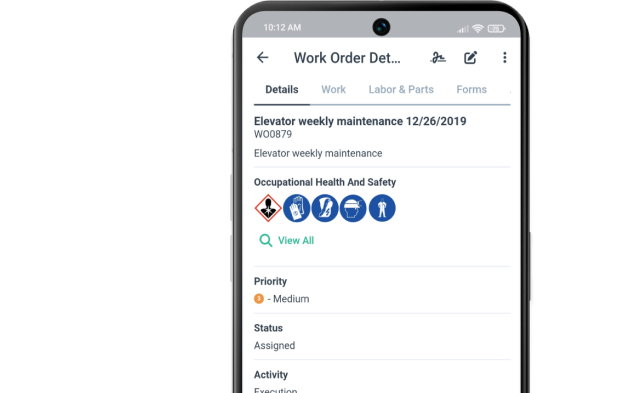
Work Order ManagementCreate, assign, track, and analyze maintenance tasks from a single platform.Compliance ManagementDefine, access, and manage health and safety procedures, linking them to specific assets and work orders.Inventory ManagementEasily track inventory levels, manage spare parts and materials, and never miss a reorder with automated alerts.InvoicingGenerate invoices directly from work orders in just a few clicks.Analytics & ReportingGain insights through automated reports, key performance indicators, and customizable dashboards.Mobile FunctionalityAccess all CMMS features on the go.
One of the most valuable features of a CMMS is preventive maintenance management.
This feature automates upkeep schedules based on either time (e.g., daily, weekly, monthly) or usage metrics (e.g., runtime, mileage, temperature, pressure), as shown below.
Source: WorkTrek
Based on these triggers, the system automatically generates work orders with all the necessary details and sends timely alerts for an upcoming service or inspection.
This proactive approach ensures that assets are maintained at the right time, reducing unplanned downtime and extending their lifespan.
As Baron Brown, Senior Project Engineer at FST Technical Services, a provider of life cycle testing, inspection, certification & engineering solutions, puts it:
Illustration: WorkTrek / Quote: FacilitiesNet
Essentially, a CMMS helps ensure that key equipment upkeep is always done on time, addressing minor problems before they escalate, says Brown.
That’s likely why many companies are adopting this technology across their operations.
According to a 2024 survey by the Institution of Mechanical Engineers, 62% of organizations use a CMMS—up from 49% the year before.
Illustration: WorkTrek / Data: Institution of Mechanical Engineers
And it’s easy to see why.
As companies grow and their maintenance needs become more complex, traditional manual processes can no longer keep up.
Tracking tasks, planning maintenance activities, and monitoring progress through paper logs and spreadsheets only introduces errors and disruptions.
A CMMS is the most effective way to tackle inefficiencies, making maintenance more streamlined, organized, and data-driven.
What Is EAM?
Enterprise Asset Management (EAM) software helps you manage and optimize the entire lifecycle of your physical assets, such as equipment, machinery, and infrastructure.
Here are some typical features you can expect in such a system:
Maintenance ManagementPreventive maintenance scheduling, predictive maintenance using sensors or condition data, and work order management.Inventory & Spare Parts ManagementParts usage and availability tracking, reorder alerts, and supplier integration.Labor & Resource ManagementMaintenance team scheduling, timesheet tracking.Reporting & AnalyticsDashboards for asset performance, compliance, and audit reports.Financial ManagementA comprehensive financial view of your asset portfolio and future expenses forecasting.
You’ll notice that many CMMS and EAM features overlap, including preventive maintenance, work order management, and maintenance cost tracking.
However, EAM software is designed to offer a more holistic approach to asset management, covering all phases of an asset’s lifecycle.
This entails everything from planning and procurement to operation, maintenance, and eventual disposal.
In essence, all asset-related information is centralized and accessible from anywhere.
Alan Salton, Managing Director at Panorama Consulting Group, a consulting firm specializing in digital transformation, sums up the whole purpose of EAMs:
Illustration: WorkTrek / Quote: TechTarget
These solutions are key to gaining control over your assets, from ensuring compliance to helping you understand your Overall Equipment Effectiveness (OEE).
In terms of specific use cases, companies leverage EAM software for a wide variety of tasks.
According to a 2025 survey by Brightly, the top three include generating reports, physical asset tracking, and maintenance management.
Illustration: WorkTrek / Data: Brightly
Overall, EAM and CMMS solutions share many similarities. Both were developed to help organizations maximize the value of their assets.
This is why confusion between the two is so common.
Still, to gauge which system is right for your business, it’s important to fully understand how they differ from each other.
Therefore, let’s break down the key differences between EAM and CMMS.
CMMS vs EAM: A Comparison
The key difference between CMMS and EAM software lies in their scope and focus.
CMMS solutions are designed to optimize upkeep operations: managing WOs, ensuring timely maintenance, tracking spare parts, and measuring upkeep effectiveness.
EAM systems, on the other hand, have a broader scope.
They include everything a CMMS does but go further by managing the entire asset lifecycle, including procurement, financial tracking, and more.
But the differences go beyond just focus.
To help you see the distinctions between these two types of software, we’ve broken down the key differences in the table below:
CategoryCMMSEAMFocusPrimarily maintenance operations: tracking WOs, managing preventive maintenance, and scheduling repairs.Broader scope: covers asset planning, acquisition, usage, maintenance, and disposal; integrates with finance, inventory, HR, and more.User BaseMaintenance teams, technicians, and facility managers.A broader audience, including maintenance, operations, finance, and executive leadership.ImplementationQuicker to implement and doesn’t involve extensive training.More complex rollouts require cross-departmental input, data migration, training, and phased implementation.CostLower overall cost due to narrower scope and fewer features.Higher cost due to expanded capabilities like financial integration and strategic planning.ProsEasy to implement and use, cost-effective, ideal for small to mid-sized organizations, and helps reduce unplanned downtime.Highly versatile, provides a detailed view of each asset across its lifecycle, supports advanced analytics, and integrates across departments and enterprise systems (ERP, HRMS).ConsLimited to maintenance tasks, may not integrate well with other enterprise systems, fewer use cases.Greater complexity, higher cost, and potentially excessive for organizations with basic maintenance needs.
As you can see, CMMS and EAM systems differ in more ways than it might seem at first glance.
However, Tim Shope, Industry Leader at the controls systems provider, Hargrove Controls & Automation, maintains that these tools should be seen as complementary rather than different:
Illustration: WorkTrek / Quote: Automation World
In other words, while each system has unique strengths, weaknesses, and ideal use cases, they deliver the best results when used in tandem.
But what if implementing both systems isn’t feasible for your organization?
Let’s discuss how to choose the right solution for your specific needs.
Which Is Right For Your Business?
When choosing between an EAM system and a CMMS, start by asking yourself a few key questions:
What’s the primary goal—just maintenance or full asset lifecycle management?
Do you need integration with other enterprise systems (e.g., ERP, finance)?
How many assets are you managing, and how complex are they?
What level of reporting and analytics do you require?
Do you have the time to commit to implementation?
How tech-savvy is your team?
What’s your budget?
Answering these questions will help clarify your organization’s needs and readiness for implementation.
From there, it becomes much easier to identify the right system.
Now, here’s a simple rule of thumb:
EAM systems are generally better suited for larger, asset-heavy organizations.
Such companies often have complex asset management requirements and a greater need for integration across business functions, both of which an EAM system can easily address.
They typically have the budget to support the software investment and associated training.
However, if your primary focus is maintenance, EAM software might be overkill.
The survey by the Institution of Mechanical Engineers we mentioned earlier found that only 22% of maintenance professionals currently use EAM systems—down from 39% the year before.
Illustration: WorkTrek / Data: Institution of Mechanical Engineers
One possible reason for this decline is the growing popularity of CMMS platforms, which are purpose-built for maintenance and often offer stronger features.
So, who should choose a CMMS?
Typically, a CMMS is used by small to mid-sized organizations that want to automate workflows, implement proactive maintenance, and minimize downtime—all in a simple, cost-effective way.
Take our own CMMS solution, WorkTrek, for example.
It replaces outdated tools like spreadsheets with a centralized, easy-to-use system used by maintenance professionals across industries.
As a result, mistakes are minimized, and maintenance efficiency is significantly improved.
Just ask Matjaž Valenčič, Operations and Maintenance Manager at interEnergo, an international Ljubljana-based energy company.
He has firsthand experience with WorkTrek:
Source: WorkTrek
If Matjaž’s story sounds familiar, then a CMMS like WorkTrek might be what you’re looking for.
It’s simpler and more affordable than an EAM system, yet powerful enough to transform your maintenance operations.
But don’t just take our word for it.
Instead, take advantage of WorkTrek’s free trial and explore all its features firsthand.
That way, you and your team can see how well it fits into your daily operations and decide based on experience.
Because, at the end of the day, whether you choose an EAM or a CMMS, the right solution should align with your needs and work for you—not the other way around.
Conclusion
Choosing between CMMS and EAM software isn’t just a technology decision.
It’s an opportunity to eliminate outdated workflows, streamline operations, reduce stress, and boost your asset ROI.
So, take the time to research your options thoroughly.
Don’t forget to ask for free trials or demos, read real user reviews, and see these tools in action.
The more informed you are, the more confident you’ll be in selecting the right solution for your team.

Operations & Maintenance
Best Software Solutions for Streamlining Proactive Maintenance
Proactive maintenance can minimize downtime and extend asset life. Modern Computerized Maintenance Management Systems (CMMS) support this by streamlining preventative tasks, work order scheduling, and asset monitoring. This article covers the top software solutions for streamlining proactive maintenance.
This comparison examines five leading maintenance management software solutions – WorkTrek, Limble CMMS, UpKeep, Fiix CMMS, and Maintenance Connection – focusing on how each facilitates proactive maintenance.
Illustration: WorkTrek / Data: facilitisnet
We summarize each product’s top features, real customer feedback (pros and cons), pricing, and a side-by-side feature comparison.
WorkTrek emerges as a top-performing solution with its comprehensive features and user satisfaction, but all five offer significant capabilities for maintenance teams.
WorkTrek – Leading in Proactive Maintenance
WorkTrek is an intuitive cloud-based CMMS built to optimize maintenance operations for teams in industries from energy to manufacturing. It emphasizes usability and broad functionality, making it a high-satisfaction choice (Crozdesk user satisfaction 96% (Worktrek | Software Reviews & Alternatives)).
Source: WorkTrek
Top Features:
Work Order & Task Management: Simplifies creating, assigning, and tracking work orders and tasks through their full lifecycle, improving team organization and response times. It has one of the most intuitive user interface on both web and mobile for creating and managing work orders. the best.
Preventive Maintenance Scheduling: Automates time-based and meter-based maintenance schedules. WorkTrek can trigger follow-up work orders and time-based tasks to extend asset life and reduce downtime.
Asset & Inventory Management: Provides detailed asset tracking (metadata, condition readings) and advanced parts inventory control across locations. Low-stock alerts and ERP integration help prevent spare part shortages.
Compliance & Safety: This package includes compliance management tools to upload safety procedures and manage Lockout/tagout processes, enhancing field safety oversight. Digital forms and checklists replace paperwork for more efficient data collection.
Reporting & Analytics: Offers 50+ out-of-the-box reports and a real-time dashboard for data-driven decisions. Reports can be generated in various formats, including PDF & CSV. Users can schedule reports via email, ensuring stakeholders stay informed.
Negatives: WorkTrek is one of the newest entrants in the CMMS industry and is better suited for small—to medium-sized businesses.
Pricing
Source: WorkTrek
WorkTrek: Subscription-based with transparent and affordable plans. Starter at $29/user/month and Professional at $49/user/month (Enterprise plan is custom). The Starter includes core CMMS features (work orders, asset mgmt, basic inventory, reports). At the same time, the Professional plan adds preventive maintenance scheduling, a service catalog, contracts, and advanced inventory. All plans include mobile app usage.
Source: WorkTrek
Limble CMMS
Limble CMMS is a highly rated maintenance platform (#1 rated CMMS on some surveys) focused on simplifying maintenance operations. Limble centralizes work orders, PM schedules, and asset data to improve efficiency and reduce downtime.
Top Features:
Work Orders & Asset History: Create and track work orders easily, with equipment history at your fingertips. Limble’s interface makes it simple to log tasks and see past maintenance, aiding informed decision-making.
Preventive Maintenance Automation: Limble puts PM on “autopilot” with flexible scheduling (time or usage-based triggers). Users can set up recurring tasks and get notifications to perform maintenance before breakdowns occur.
Real-Time Analytics: Built-in dashboards and analytics provide insight into maintenance performance and asset health, helping identify issues proactively. However, all advanced analytics require a higher-tier plan and are unavailable on standard plans.
Mobile App (Online/Offline): Limble’s app lets techs work from anywhere, handling work requests without disruptive phone calls.
Integrations & IoT: Supports API integrations and even IoT sensor connections for predictive maintenance alerts (available in higher plans). This means machine sensor data can automatically trigger work orders – a big plus for proactive maintenance.
Negatives: Some of the UI features, like the drag-and-drop calendar feature, are difficult to use. Setting up meter-based PM triggers is another complexity.
Pricing
Limble offers a free Basic plan (limited features) and paid tiers.
Standard is $28/user/month covers most CMMS features like PM, work orders, basic analytics, however, it is limited to three work orders with attached procedures and only three months of analytics.
Premium+ at $69/user/month adds advanced features (automations, advanced inventory, integrations).
Enterprise tier with custom pricing is available for organizations needing full flexibility and integrations. This tier includes enterprise features like SSO, ERP integration, and custom roles and approvals. Pricing is only available via a custom quote.
UpKeep
UpKeep is a popular CMMS known for its robust work order and asset management functionality. It provides a central hub for all maintenance activities, serving maintenance, reliability, and operations teams.
UpKeep also offers an “Edge” module for IoT sensors, which bridges real-time condition monitoring with maintenance—a strong proactive feature.
Top Features:
Centralized Work Management: UpKeep provides a one-stop dashboard to manage work orders, assets, inventory, and budgets. It streamlines request submission and approvals, creating a single “front door” for all service requests. Technicians can easily update tasks and track progress in real time.
Preventive Maintenance Scheduling: This tool enables the scheduling of recurring tasks and PM checklists.
Custom procedures and checklists can be attached to PM tasks for consistency. UpKeep’s “Preventive Maintenance Optimization” helps refine schedules to prevent failures.
Mobile App & Ease of Use: UpKeep’s app is highly regarded. Technicians find it easy to navigate, fast, and visually appealing. It supports push notifications and even an offline mode (in higher tiers) for working in no-service areas. Unlimited free requesters (non-licensed users submitting requests) are included even in basic plans, broadening its utility.
IoT and Predictive Maintenance (Edge): UpKeep’s Edge module allows connecting IoT sensors to monitor equipment conditions (vibration, temperature, etc.) This data can automatically trigger alerts and work orders, enabling predictive maintenance if thresholds are crossed. (For example, operations teams use Edge to monitor machine metrics to schedule maintenance before failure remotely.
Analytics & Reporting: UpKeep includes reporting dashboards (basic analytics on lower plans, 30-day data history on Starter (Pricing & Plans | UpKeep), and advanced analytics on Professional (Pricing & Plans | UpKeep)). These reports help teams track KPIs like response times, downtime, and costs, supporting continuous improvement.
Negatives: The Upkeep mobile application is more complicated than its competitors. The offline mobile features are also buggy and don't always work correctly.
Pricing
Lite, at $20/user/month, provides fundamental maintenance management features such as unlimited work orders and asset management. However, the Lite plan does not include PM and custom checklists, parts and inventory management, or very limited reporting.
Starter at $45/user/month adds more robust PM features, inventory management, and basic reporting.
Professional at $75/user/month includes advanced analytics, multiple inventory locations, offline mode, and additinoal customization. It also offers customizable request portals and mobile offline mode.
Business Plus plan is custom-priced and adds multi-site support, workflow automation, API access, and other enterprise features. All plans come with 24/7 support; free trial available (no free version beyond trial).
Fiix CMMS
Fiix (by Rockwell Automation) is a cloud-based CMMS designed for small to mid-sized businesses aiming to control and optimize maintenance. It combines an intuitive interface with strong work order and asset management capabilities, and it provides robust analytics to turn maintenance data into actionable insights. Fiix is especially known for helping organizations move toward predictive maintenance with AI-driven insights (in its advanced tiers) and for its ease of integration with other systems.
Source: WorkTrek
Top Features:
Work Order & Asset Management: Fiix allows users to create, assign, and manage an unlimited number of work orders, with the ability to attach photos/videos, track labor hours, and log parts used. Preventive maintenance work orders can be auto-generated based on time, meter readings, or IoT alarms/events. This ensures maintenance before issues escalate.
Preventive Maintenance & Scheduling: Scheduling PM tasks is straightforward with Fiix. It supports calendar-based and usage-based triggers (date, runtime, readings, etc.) for recurring maintenance. Fiix’s calendar and dashboards give visibility into upcoming tasks and overdue maintenance, facilitating proactive planning.
Analytics and Insights: Fiix stands out for its analytics. An Asset Insights Dashboard monitors where extra time or money is spent on maintenance, flagging potential problem areas to address before downtime occurs. There’s also a Work Order insights report to analyze historical trends and prevent repeat issues (Note: some users desire even more advanced reporting; Fiix’s built-in reports cover most needs but can be less customizable than some expect.
Inventory Management: Fiix includes strong parts and inventory management. Users can set minimum stock levels with alerts for low stock. A unique Parts Forecaster suggests which parts to reorder and when, helping avoid shortages and overstock. The system tracks spare parts usage across work orders and multiple sites, and even offers an integrated MRO marketplace for ordering parts.
Mobility and Integrations: Fiix offers full-featured mobile access (iOS/Android), enabling techs to receive work orders and update status in real time. It also provides open APIs and pre-built integrations to link with enterprise systems (and, being part of Rockwell, it can tie into IoT platforms and SCADA systems for predictive maintenance). Fiix’s multi-tenant cloud architecture makes it scalable across many sites.
Negatives: If you are not on the top plan, reporting and customization is somewhat limited. There are also issues with complex and specialized workflows.
Pricing
Provides a limited free version for up to 3 users (capped at 25 active work orders or PM tasks, suitable for evaluation or small operations). Paid plans start at $45/user/month:
Basic plan (approximate, often called “Professional” in Fiix’s terms), including core work order and PM functions. The basic plan does not include inventory/parts management, custom reporting, and analytics.
Advanced Plan: $75/user/month offers Purchase Orders, inventory management, and notifications. It does not include customizable workflow or SSO.
Enterprise Plan: Custom Pricing—This plan includes many enterprise features, such as SSO, e-signatures, and customizable workflows.
Maintenance Connection
Maintenance Connection (by Accruent) is a long-established CMMS geared toward large organizations and enterprises. It features a comprehensive set of functions, covering all core maintenance aspects, including work orders, preventive maintenance, inventory, and procurement.
Maintenance Connection has recently integrated with Accruent’s IoT remote monitoring (vx Observe) and engineering document management (Meridian) tools, enabling a highly proactive maintenance environment by linking real-time asset monitoring with maintenance workflows.
Top Features:
Full CMMS Functionality: Maintenance Connection offers robust modules for work order management, PM scheduling, asset database, inventory control, purchasing, and compliance tracking. Virtually any maintenance workflow can be managed within the system, and it’s known for covering industry-specific requirements (it’s used in manufacturing, facilities, utilities, etc., often in regulated environments that need features like calibration and safety programs).
IoT and Predictive Maintenance: A standout capability is its integration with IoT sensors and monitoring. Through Accruent’s vx Observe integration, Maintenance Connection can automatically generate alerts or work orders when connected equipment conditions indicate a potential failure. If a sensor reports an anomaly (like temperature or vibration out of range), the system can trigger a maintenance response, greatly enhancing proactive maintenance for enterprise asset fleets.
Asset Centralization & EDMS: The platform centralizes asset data and documents. The tie-in with Meridian (engineering document management) lets users link equipment to technical documents, schematics, etc., all in one place. This central repository speeds up maintenance by providing technicians easy access to manuals or procedures.
Customizability and Extensibility: Maintenance Connection can be expanded with other Accruent solutions and configured to fit complex workflows. It supports custom fields and business rules and can integrate with ERP or facilities systems (common in enterprise IT environments). A rich API and Accruent’s platform services allow for significant customization, fitting for large organizations with unique needs.
Mobile Access: A mobile app is available for Maintenance Connection so that technicians in the field can manage work orders and inspections. However, the mobile module is a paid add-on in their pricing model. The mobile app provides offline capabilities and barcode scanning, which are useful for enterprise asset management.
Usability: Maintenance connection has a complex UI and is not as easy to use as other products on the market. There is a steep learning curve for new users.
Cost: The cost can also be a barrier for users since it can average around $1300 per seat per year without mobile accessibility. Mobile access will cost you another $700 per year. This makes it one of the more expensive CMMS products on the market.
Negatives: The cost can also be a barrier for users since it can average around $1300 per seat per year without mobile accessibility. Mobile access will cost you another $700 per year. The system is also complex to learn and has a steep learning curve.
Pricing
Maintenance Connection: Uses a per-named-user subscription with modules. It’s at the high end of pricing – the core Professional (cloud) license runs about $110/user/month (≈$1,325 per user/year). The mobile app is an add-on (~$58/user/month if added).
Overall, it is one of the more costly solutions on the market and targets enterprise customers.
Large teams may have volume discounts, and on-premise deployments can have different pricing. Typically, Maintenance Connection is sold with annual contracts.
No free plan is available; however, Accruent often provides demos and sometimes a trial instance for evaluation.
Feature Comparison Table
Core FeaturesWorkTrek (Top Pick) - Contact UsLimble CMMSUpKeepFiix CMMSMaintenance ConnectionWork Order ManagementYes – Create, assign, track WOs with full lifecycle tracking (WorkTrek Reviews: Pricing & Software Features 2024 - Financesonline.com) ([WorktrekSoftware Reviews & Alternatives](https://crozdesk.com/software/worktrek#:~:text=WorkTrek%20is%20a%20cloud%20based,contracts%2C%20resources%2C%20subcontractors%20and%20inventory))Yes – Streamlined WO creation & tracking ([Limble CMMS Reviews Mar 2025: Pricing & FeaturesSoftwareWorld](https://www.softwareworld.co/software/limble-cmms-reviews/#:~:text=to simplify maintenance operations for,reliability and overall operational excellence)) to simplify maintenance operations for reliability and overall operational excellence.Yes – Centralized WO hub with requests & approvals (UpKeep Reviews 2025. Verified Reviews, Pros & Cons - Capterra)Preventive MaintenanceYes – PM scheduling (time/usage-based) in Pro plan (Pricing - Worktrek CMMS) (WorkTrek Reviews: Pricing & Software Features 2024 - Financesonline.com); automates follow-up tasksYes – Advanced PM automation (schedule by time/meter) (Limble vs UpKeep: Ultimate CMMS Software Comparison 2025)Yes – Recurring work orders even in Lite; PM optimization tools in higher tiers ([Pricing & PlansUpKeep](https://upkeep.com/pricing/#:~:text=Starter)) ([Pricing & PlansUpKeep](https://upkeep.com/pricing/#:~:text=Everything%20in%20Lite%20plus%3A))Predictive/IoT MaintenanceSupported – API and integrations; can incorporate IoT via custom setup (Enterprise) (Pricing - Worktrek CMMS)Supported – Available via sensors/IoT integration in Premium (alerts from equipment) (Limble vs UpKeep: Ultimate CMMS Software Comparison 2025)Supported – UpKeep Edge module for IoT sensor alerts (predictive triggers) (Best CMMS Software & Platforms in 2024 -)Supported – Fiix Foresight AI for predictive analytics (upper tiers); integrates with sensors via RockwellSupported – Native IoT monitoring (vx Observe) triggers work orders proactively (8 Best Asset Maintenance Software (With Real User Reviews))Asset ManagementYes – Detailed asset registry with hierarchy, downtime tracking (8 Best Asset Maintenance Software (With Real User Reviews))Yes – Asset database with history and QR code tagging; multi-location support ([Limble CMMS Reviews Mar 2025: Pricing & FeaturesSoftwareWorld](https://www.softwareworld.co/software/limble-cmms-reviews/#:~:text=,140%20Inventory%20Management))Yes – Asset performance tracking and lifecycle management (Enterprise Asset Mgmt module) (Best CMMS Software & Platforms in 2024 -)Yes – Asset registry with performance tracking and lifecycle analytics ([Fiix Reviews Mar 2025: Pricing & FeaturesInventory & Spare PartsYes – Inventory mgmt with low-stock alerts; ERP sync; advanced inventory in Pro (8 Best Asset Maintenance Software (With Real User Reviews)) (Pricing - Worktrek CMMS)Yes – Inventory module (Premium+ includes advanced features like optimizations) ([Limble CMMS Plans & PricingGet Started for Free](https://limblecmms.com/pricing/#:~:text=Premium%2B)) ([Limble CMMS Plans & PricingGet Started for Free](https://limblecmms.com/pricing/#:~:text=Automate%20workflows%20and%20streamline%20inventory,increase%20efficiency%20and%20reduce%20costs))Yes – Stock management from Starter plan up; multi-warehouse in Pro; alerts and costing included ([Pricing & PlansMobile AppYes – Included (iOS/Android); real-time updates, offline capable; free for all users (8 Best Asset Maintenance Software (With Real User Reviews)) (Pricing - Worktrek CMMS)Yes – Included (iOS/Android); designed mobile-first; runs smoothly, minimal interruptions (Best CMMS Software & Platforms in 2024 -) (Limble Software Reviews, Pros and Cons - 2025 Software Advice)Yes – Included (iOS/Android); offline mode available in Pro tier ([Pricing & PlansUpKeep](https://upkeep.com/pricing/#:~:text=,Advanced%20Analytics%20%26%20Reporting)); unlimited free requester usersYes – Included (iOS/Android); mirrors web functions (create WOs, scan QR codes, etc.)Reporting & Analytics50+ built-in reports; customizable dashboards; scheduled email reports (WorkTrek Reviews: Pricing & Software Features 2024 - Financesonline.com) (8 Best Asset Maintenance Software (With Real User Reviews))Real-time dashboards and KPI tracking; exportable reports; premium plan adds more analytics ([Limble CMMS Reviews Mar 2025: Pricing & FeaturesSoftwareWorld](https://www.softwareworld.co/software/limble-cmms-reviews/#:~:text=Limble%20CMMS%20centralizes%20data%2C%20providing,reliability%20and%20overall%20operational%20excellence))Built-in dashboards; Starter keeps 30-day data ([Pricing & PlansUpKeep](https://upkeep.com/pricing/#:~:text=,30%20day%20Analytics%20%26%20Reporting)), Pro gives advanced analytics; tracks downtime, costs, etc.Integrations & APIYes – API access in Enterprise tier; out-of-the-box ERP integration for inventory sync (8 Best Asset Maintenance Software (With Real User Reviews)) (Pricing - Worktrek CMMS)Yes – Open API and webhooks; integrates with IoT devices and other systems (Premium/Enterprise) (Limble vs UpKeep: Ultimate CMMS Software Comparison 2025) ([Limble CMMS Plans & PricingGet Started for Free](https://limblecmms.com/pricing/#:~:text=Enterprise))Yes – REST API in Business Plus; native integrations for sensors (Edge) and business systems (via Zapier, etc.)Yes – Open API; native integrations (e.g., with ERP, IoT platforms); part of Rockwell Automation ecosystemEase of UseVery high – UI designed for simplicity; users report fast onboarding. User Satisfaction: 96% ([WorktrekSoftware Reviews & Alternatives](https://crozdesk.com/software/worktrek#:~:text=Worktrek%20currently%20scores%2089%2F100%20in,gathered%20from%20around%20the%20web)).High – Modern UI; Users: 4.8/5 rating for ease-of-use (Limble Software Reviews, Pros and Cons - 2025 Software Advice) (Limble Software Reviews, Pros and Cons - 2025 Software Advice). Mobile app highly praised.High – Intuitive and visually appealing; Users: 4.6/5 overall, noted for quick navigation (UpKeep Reviews 2025. Verified Reviews, Pros & Cons - Capterra) (UpKeep Reviews 2025. Verified Reviews, Pros & Cons - Capterra).High – Clean interface; generally easy for SMBs to adopt. Some limits in deep customization but straightforward daily use (Fiix Reviews 2025: Pricing, Features & More) (Fiix Reviews 2025: Pricing, Features & More).Target CustomerSMBs to Enterprises – Scalable for any size (cloud SaaS). Industries: energy, facilities, manufacturing ([WorktrekSoftware Reviews & Alternatives](https://crozdesk.com/software/worktrek#:~:text=WorkTrek%20is%20used%20across%20the,property%20management%20and%20manufacturing)).SMBs to Mid-size – All industries; popular in manufacturing, facilities, etc. (Noted use by 50k+ professionals)SMBs/Mid-market – Multi-industry; also has enterprise modules (EAM, IoT) for larger orgs if needed.SMBs – Designed for small/medium businesses; can support multiple sites. Backed by large vendor (Rockwell) for reliability.Free Trial / Free PlanFree 14-day trial (full features) ([UpKeep Reviews Mar 2025: Pricing & FeaturesSoftwareWorld](https://www.softwareworld.co/software/upkeep-reviews/#:~:text=Free%20Trial)); no free tier (but unlimited free requesters included) (8 Best Asset Maintenance Software (With Real User Reviews)).Free basic plan (limited features) available; Limble also offers trial for paid tiers.No free plan (Lite is paid); 7–14 day free trial offered ([UpKeep Reviews Mar 2025: Pricing & FeaturesSoftwareWorld](https://www.softwareworld.co/software/upkeep-reviews/#:~:text=Free%20Trial)) ([UpKeep Reviews Mar 2025: Pricing & Features

Compliance & Control
What is the Difference Between FMEA and DFMEA?
Understanding the distinctions between different analysis methods is important for the effective implementation of risk management tools.
FMEA (Failure Mode and Effects Analysis) and DFMEA (Design Failure Mode and Effects Analysis)are two related but distinct approaches that help organizations identify potential failures before they occur.
The primary difference is that FMEA is a broader technique used across various products, processes, and services throughout their lifecycle. At the same time, DFMEA focuses explicitly on identifying failure modes during the product design phase.
Both methodologies aim to prevent failures but operate at different stages and with different scopes. DFMEA enables teams to assess potential failure modes during early or end stages of product design, helping engineers address issues before manufacturing begins. The standard FMEA, however, can be applied more widely and includes aspects like production and in-service fault detection that extend beyond the design phase.
Organizations often implement both approaches as part of a comprehensive risk management strategy.
While DFMEA targets design-specific concerns, it frequently works alongside other specialized analyses such as PFMEA (Process FMEA), which addresses risks within the manufacturing process rather than the product design itself.
Key Takeaways
FMEA applies broadly across products and processes throughout their lifecycle, while DFMEA specifically targets potential failures during the design phase.
Implementing DFMEA helps organizations identify and address design flaws before moving to production, potentially saving significant resources.
Both methodologies use similar assessment principles but differ in timing, scope, and the specific team members typically involved in the analysis process.
Understanding FMEA
Failure Mode and Effects Analysis (FMEA) provides a structured approach to identifying potential failures in systems, products, or processes. This methodology helps organizations prevent problems before they occur through systematic risk assessment.
Definition of FMEA
FMEA stands for Failure Mode and Effects Analysis, a proactive reliability and risk assessment technique first developed in the 1940s by the U.S. military and later adopted across various industries, including aerospace, automotive, and healthcare.
At its core, FMEA is a systematic methodology that identifies potential failure modes, their causes, and effects before they occur in a system, product, or process.
Source: WorkTrek
The analysis typically involves cross-functional teams working together to evaluate risks and develop mitigation strategies. FMEA documents are living documents that should be updated throughout a product or process lifecycle.
Purpose and Objectives
The primary purpose of FMEA is to anticipate and prevent failures before they impact customers or operations. This methodology aims to identify potential risks early when changes are less costly to implement.
Key objectives include:
Identifying potential failure modes and their impacts
Prioritizing issues based on severity, occurrence, and detection
Implementing preventive actions to reduce or eliminate risks
Documenting knowledge for future reference and continuous improvement
Reducing warranty costs and enhancing customer satisfaction
FMEA helps organizations make data-driven decisions about risk mitigation and resource allocation. It provides a framework for evaluating tradeoffs between design choices, manufacturing processes, and quality control measures.
Types of FMEA
Several specialized types of FMEA exist to address different aspects of product development and manufacturing:
Design FMEA (DFMEA) - Focuses on potential failures in product design before manufacturing begins. DFMEA examines components, subsystems, and their interactions.
Process FMEA (PFMEA) - Analyzes manufacturing or assembly processes to identify potential failures in production methods, equipment, or procedures.
System FMEA - Considers failures at the overall system level, including interactions between subsystems and components.
Service FMEA - Applied to service industries to identify potential failures in service delivery processes.
Each type follows a similar methodology but differs in scope and application timing during a product's lifecycle. Organizations often implement multiple FMEA types sequentially as projects progress from concept to production.
Defining DFMEA
Design Failure Mode and Effects Analysis (DFMEA) is a specialized methodology used to identify and prevent potential design failures before they occur. This proactive approach analyzes design elements to reduce risks and improve product reliability from the earliest development stages.
Definition of DFMEA
DFMEA stands for Design Failure Mode and Effects Analysis, a subset of the broader FMEA methodology. It focuses explicitly on potential failures in the product design process rather than manufacturing or operational failures.
During the design phase, DFMEA examines products or systems to identify where and how they might fail. The primary goal is to catch design flaws before production begins.
Engineers use DFMEA to evaluate the overall design of product systems and components, analyzing each element for potential issues. This structured approach helps teams prioritize their efforts based on risk levels.
Role in Product Design
DFMEA plays a crucial role during the early and end stages of product design. It helps designers anticipate problems before they materialize in physical prototypes or finished products.
Source: WorkTrek
The process involves:
Identifying potential failure modes for each design component
Determining the effects of these failures
Assessing the severity of consequences
Establishing detection methods
Implementing design controls
By addressing design weaknesses early, companies save significant time and resources. DFMEA guides development teams toward robust designs with fewer iterations needed.
It also helps identify critical characteristics that require special attention during manufacturing and testing phases. This creates a direct link between design specifications and quality control requirements.
DFMEA in Risk Management
DFMEA uses a systematic rating system in risk management to evaluate design risks. Teams assign numerical values to:
Severity - How serious the failure's impact would be
Occurrence - How likely the failure is to happen
Detection - How easily the failure can be detected
These ratings combine into the Risk Priority Number (RPN), which helps prioritize immediate issues.
Source: WorkTrek
DFMEA documentation serves as evidence of due diligence in product safety efforts. This can be valuable for regulatory compliance and liability protection.
Teams use DFMEA findings to implement preventive measures that address root causes of potential failures. This proactive approach is more effective than reactive problem-solving after failures occur.
Key Differences Between FMEA and DFMEA
https://youtu.be/B2Z-AGD3Bzc
FMEA (Failure Mode and Effects Analysis) and DFMEA (Design Failure Mode and Effects Analysis) share the goal of identifying potential failures. Still, they differ significantly in their focus, timing, and application areas.
Process Focus vs. Design Focus
FMEA is a broader analysis methodology that can be applied across multiple areas, including products, processes, and services. It examines potential failures in any system to prevent issues before they occur.
As the name suggests, DFMEA specifically focuses on a product's design aspects. It evaluates the overall design of product systems and components to determine potential failure modes and their causes.
The scope of analysis differs significantly between the two. While FMEA can address failures in any part of an organization's operations, DFMEA focuses exclusively on design elements.
DFMEA asks questions like "How might this design fail?" and "What would cause this design to malfunction?" This targeted approach makes it particularly valuable for product developers and design engineers.
Timing in the Product Lifecycle
FMEA can be implemented at various stages throughout a product's lifecycle, from initial concept through production and even during in-service operations.
In contrast, DFMEA is only used during the design stage of product development. It serves as a preventive measure before a product moves to manufacturing.
The timing difference is crucial because DFMEA helps catch potential failures before production begins, potentially saving significant resources. Once designs are finalized and production starts, organizations typically transition to other FMEA types.
This early implementation of DFMEA supports the "right first time" approach, reducing costly redesigns and modifications later in the product lifecycle.
Application Areas
FMEA has widespread applications across industries and departments. It can analyze processes, services, software, and hardware throughout their lifecycles.
DFMEA is primarily used for product design, focusing on how design flaws might cause components and systems to fail. It's most valuable in the automotive, aerospace, and medical device manufacturing industries.
Illustration: WorkTrek / Data: TWI
While both methodologies use similar approaches to risk analysis, DFMEA typically involves design engineers and technical specialists who understand product specifications and requirements.
DFMEA teams often use specialized tools for analysis, including fault-tree approaches to identify root causes of potential design failures. This targeted analysis helps create more robust product designs before manufacturing begins.
Scope of Analysis
FMEA and DFMEA differ significantly in their analytical scope and focus areas. These differences help organizations select the appropriate tool for their risk assessment needs.
Component Level vs. System Level
FMEA (Failure Mode and Effects Analysis) operates at a broader scope, covering a wide range of products, processes, and services. It examines potential failures across an entire system or organization.
DFMEA (Design FMEA) focuses on the design aspects of products or systems. It concentrates on identifying potential design flaws before production begins.
The scope difference is crucial because DFMEA is a specialized subset of the broader FMEA framework. Think of FMEA as the parent category and DFMEA as a more targeted application.
While FMEA can be applied to virtually any process or system, DFMEA is explicitly tailored for design teams working on new products or redesigning existing products.
Assessment Criteria
FMEA assessment criteria typically cover various potential failures across different operational phases. They evaluate impacts on multiple aspects, including safety, performance, and regulatory compliance.
DFMEA focuses on design-related failure modes, assessing how design decisions might lead to product malfunctions. Key assessment criteria include:
Design specifications and requirements
Material selection
Component tolerances
Interface compatibility
Safety factors
DFMEA analysis often uses severity, occurrence, and detection ratings to calculate risk priority numbers (RPNs). These help prioritize which design risks need immediate attention.
The criteria in DFMEA are evaluated earlier in the product lifecycle, while broader FMEA criteria may be evaluated throughout the entire product or process lifecycle.
Methodologies and Procedures
https://youtu.be/qksI4lqdUTI
Both FMEA and DFMEA follow specific methodologies that help teams identify and address potential failures. These approaches involve systematic steps and utilize specialized tools to document findings and prioritize actions.
Step-by-Step Approach
The FMEA process typically starts with identifying the system, component, or process to be analyzed. For DFMEA, this focuses specifically on product design elements during development stages.
Teams then identify potential failure modes for each component.
In DFMEA, these failures relate to design specifications, while general FMEA may cover broader operational issues.
Next, teams assess the effects of each failure mode and assign severity ratings on a scale (typically 1-10). This helps prioritize which issues need immediate attention.
The process continues with identifying potential causes and assigning occurrence ratings. Teams then evaluate current controls and determine detection ratings.
Finally, Risk Priority Numbers (RPNs) are calculated by multiplying severity, occurrence, and detection ratings. Higher RPNs indicate areas requiring immediate corrective actions.
Tools and Templates
Standard FMEA and DFMEA use similar documentation tools, though with different focuses. Both utilize structured worksheets or templates containing columns for components, functions, failure modes, effects, causes, controls, and ratings.
DFMEA templates specifically include design parameters and requirements that aren't present in general FMEA forms. These help track design-specific considerations.
Modern FMEA implementation often uses specialized software tools that facilitate collaboration and maintain historical data. These tools can automatically calculate RPNs and track improvement actions.
Many organizations, like AIAG, provide standardized templates to ensure consistency across industries. These templates typically include sections for preventive actions and responsibility assignments.
Cross-functional teams should use these tools during dedicated workshops to capture diverse perspectives on potential failures.
Real-World Applications
FMEA and DFMEA serve distinct functions in risk management across various industries. Each methodology helps organizations identify and mitigate potential failures before they impact customers or operations.
Automotive Industry Example
The automotive sector extensively uses both FMEA and DFMEA to ensure vehicle safety and reliability. When designing a new braking system, manufacturers apply DFMEA during the design stage to identify potential failure modes before production begins.
Illustration: WorkTrek / Data: Coast
Engineers might analyze how a brake pad could fail under extreme temperatures or assess the risk of hydraulic fluid leakage. They would rate each failure by severity, likelihood of occurrence, and detection difficulty.
Meanwhile, FMEA would extend beyond design to evaluate the entire braking system lifecycle, including production processes and in-service performance. This comprehensive approach helps manufacturers meet safety standards like ISO 26262 and reduce costly recalls.
Electronics and Manufacturing
In electronics manufacturing, DFMEA and FMEA serve complementary but distinct purposes. When designing a new smartphone, engineers use DFMEA to spot potential failures in components like batteries or circuit boards before manufacturing begins.
This might include analyzing thermal management issues or identifying potential short-circuit risks. Design teams assign risk priority numbers to prioritize critical issues requiring immediate design modifications.
Companies employ Process FMEA (PFMEA) for the manufacturing process itself to examine potential failures in assembly lines, soldering processes, or quality control systems.
This helps prevent defects from reaching consumers.
Leading electronics manufacturers integrate both approaches into a unified quality management system, often using specialized software to track risk metrics throughout the product lifecycle.
Benefits and Limitations
Understanding the strengths and weaknesses of both FMEA and DFMEA helps organizations decide which approach best suits their needs. Each methodology offers distinct advantages while also having certain limitations that should be considered.
FMEA Strengths and Weaknesses
FMEA's greatest strength is its versatility across multiple applications. It can be used for products, processes, and services throughout their entire lifecycle. This broad applicability makes it a powerful tool for overall risk management.
FMEA provides a systematic approach to identifying potential failures before they occur. It helps prioritize risks based on severity, occurrence, and detection, allowing teams to focus resources on the most critical issues.
However, FMEA has some limitations. It can be time-consuming and resource-intensive, especially for complex systems with numerous potential failure modes.
Another weakness is that FMEA sometimes relies too heavily on team experience. Important failure modes might be missed without diverse expertise, leading to incomplete analysis.
FMEA also tends to focus on single-point failures rather than combinations of failures that might occur simultaneously.
DFMEA Advantages and Drawbacks
DFMEA offers the significant advantage of identifying potential product design issues before manufacturing begins. This early detection can save substantial costs by preventing design flaws from reaching production.
It promotes cross-functional collaboration by bringing together design, engineering, and quality teams. This collaborative approach helps capture diverse perspectives on potential failure modes.
DFMEA also creates valuable documentation that can be reused for similar products, building an organizational knowledge base over time.
The main limitation of DFMEA is its narrow focus on just the design phase. Unlike general FMEA, it doesn't address manufacturing process risks or service delivery failures.
DFMEA requires specific design expertise to be effective. Without experienced design engineers, the analysis may miss critical failure modes unique to the designed product.
Integration With PFMEA and Other Analyses
While FMEA is an umbrella methodology, its specialized forms, such as DFMEA and PFMEA, work together to create comprehensive risk management.
DFMEA focuses on spotting failure modes during product design, while PFMEA addresses risks within the manufacturing process.
The relationship between these analyses is sequential. DFMEA typically occurs first during product development, when design-related failures are identified. PFMEA follows, examining potential shortcomings in the production process.
Source: WorkTrek
Key Integration Points:
DFMEA outputs become PFMEA inputs
Design weaknesses identified in DFMEA inform process controls in PFMEA
Both share similar severity, occurrence, and detection rating systems
Effective integration requires clear handoffs between design and manufacturing teams. The DFMEA and PFMEA processes are similar, but their inputs and outputs differ, making communication crucial.
Beyond PFMEA, these analyses connect with other quality tools like:
Fault Tree Analysis (FTA)
8D Problem Solving
Control Plans
Design Reviews
System FMEA often sits above both DFMEA and PFMEA, examining interactions between components at a higher level.
Organizations gain the most value when treating these analyses as complementary rather than isolated efforts. This integration creates a continuous risk assessment loop from design through manufacturing.
Best Practices for Implementation
Implementing FMEA and DFMEA requires careful planning and execution to maximize effectiveness. Both methodologies benefit from similar best practices, but they have some key differences in their application.
Start with a cross-functional team that includes experts from various departments. For DFMEA, include design engineers, quality specialists, and manufacturing representatives. For general FMEA, ensure the team represents all relevant process areas.
Early implementation is crucial, especially for DFMEA. Changes are least expensive and most effective during the design phase. General FMEA can be implemented at various stages but works best proactively.
Follow industry guidelines and use a standardized approach.
Prioritize risks effectively using RPN (Risk Priority Number) calculations:
Severity (1-10)
Occurrence (1-10)
Detection (1-10)
Document all findings thoroughly and maintain regular reviews of both FMEA and DFMEA analyses. These should be treated as living documents that evolve with the product or process.
For DFMEA specifically, focus on design elements that could affect the product's functionality, reliability, and safety. This helps reduce operational costs in the long run.
Utilize software tools for FMEA/DFMEA to simplify documentation, tracking, and analysis of potential failure modes.
Always validate corrective actions through testing or simulation before full implementation to ensure they effectively mitigate the identified risks.
Conclusion
In conclusion, FMEA and DFMEA are vital components of a robust risk management strategy. While they share similar assessment principles, their distinct applications make them complementary rather than interchangeable tools.
FMEA is versatile enough to identify potential failures across the entire product lifecycle, offering a broad framework for risk assessment in various operational contexts.
Meanwhile, DFMEA focuses on catching design flaws before they reach production, potentially saving significant resources and preventing costly redesigns.
Illustration: WorkTrek / Quote: Agilian
Implementing both methodologies as part of an integrated quality management system is the most effective approach.
By starting with DFMEA during product development and transitioning to broader FMEA applications throughout the product lifecycle, organizations can create a continuous risk assessment loop that enhances reliability, reduces costs, and improves customer satisfaction.
Remember that these analyses should be treated as living documents that evolve with your products and processes.
Regular reviews, cross-functional collaboration, and systematic documentation will ensure that both FMEA and DFMEA continue to provide value as preventive tools rather than simply becoming compliance exercises.
By understanding when and how to apply each methodology appropriately, maintenance teams can proactively identify and address potential failures before they impact operations or customers, ultimately supporting the organization's commitment to quality and reliability.

Facility Management
Seasonal Church Grounds Maintenance Tips
Is your church or house of worship struggling with inconsistent grounds maintenance? Overgrown landscaping, cracked walkways, and weather-damaged gardens don't just create eyesores—they can pose serious safety risks for your congregation and visitors.
Many churches are caught in a costly cycle of reactive maintenance, scrambling to address issues after they've already caused damage or created liability concerns.
Without a systematic approach to grounds care, maintenance problems compound season after season. Neglected fall cleanup leads to drainage issues in winter, and skipped spring preparations result in unsightly summer landscapes.
Meanwhile, maintenance costs spiral as minor issues develop into major repairs. Worst of all, these visible signs of neglect can undermine your church's ministry by creating an unwelcoming first impression for potential visitors seeking spiritual community.
Illustration: WorkTrek / Data: National Churches Trust
A comprehensive seasonal maintenance calendar transforms this chaotic approach into organized stewardship. By dividing tasks appropriately throughout the year and leveraging modern tools like CMMS software, your church can maintain beautiful, safe grounds while reducing costs and volunteer burnout.
Let's explore the complete year-round guide that will help your church property become a true reflection of your mission and values.
Key Takeaways
A seasonal maintenance approach divides church grounds tasks into appropriate periods, ensuring proper care during each weather condition throughout the year.
Regular maintenance of exterior elements like gutters, landscaping, and walkways prevents costly repairs and creates a safe, welcoming environment for worship.
Involving congregation members in scheduled maintenance activities builds community while distributing the workload and creating shared ownership of church grounds.
Understanding Seasonal Grounds Maintenance
https://youtu.be/pE6PaJ0_hXk
Maintaining church grounds requires different approaches to address changing weather conditions and plant growth cycles throughout the year.
Start by developing a church maintenance checklist for your church facility.
A well-planned maintenance schedule helps prevent costly repairs and keeps outdoor spaces welcoming for congregants.
The Importance of Seasonal Maintenance
Seasonal maintenance ensures church grounds remain safe, beautiful, and functional year-round. Regular upkeep prevents minor issues from becoming expensive problems that could drain church resources.
Preventive maintenance helps identify potential hazards before they cause accidents. Loose pavers, damaged handrails, or overgrown shrubs can create safety risks for visitors, especially elderly congregants or children.
Source: WorkTrek
Well-maintained grounds create a positive first impression for newcomers and reflect the congregation's care for its spiritual home. This attention to detail can influence visitors' decisions to return.
Seasonal planning distributes workload throughout the year, making maintenance more manageable and cost-effective. Tasks like pruning, mulching, and equipment checks can be scheduled during optimal seasons rather than rushed during busy periods.
The Impact of Climate on Maintenance Schedules
Climate directly affects when and how church grounds maintenance should be performed. Seasonal landscaping tasks must be adjusted based on local weather patterns.
Regional Climate Considerations:
Northern regions: Shorter growing seasons, snow removal planning
Southern regions: Extended growing seasons, drought management
Coastal areas: Salt damage prevention, hurricane preparation
Midwest: Tornado season cleanup, extreme temperature fluctuations
Temperature extremes can damage plants, hardscapes, and irrigation systems. Churches in areas with freezing winters need to winterize irrigation systems and protect sensitive plants from frost damage.
Rainfall patterns determine watering schedules and drainage maintenance needs. Churches in rainy regions should focus on gutter cleaning and drainage solutions, while those in drier climates need efficient irrigation systems and drought-resistant plantings.
Illustration: WorkTrek / Data: Window Hero
Seasonal lawn care timing varies by region - southern churches may need year-round mowing, while northern congregations can suspend this service during winter.
Spring Maintenance Tasks
Spring brings new life to church grounds and requires specific tasks to ensure beauty and functionality throughout the season. Proper spring maintenance sets the foundation for the year's landscape health and appearance.
Cleaning and Preparing the Grounds
Start by removing winter debris from all areas of the church property. Clear away fallen branches, leaves, and trash that accumulated during the winter months. This prevents damage to new growth and improves the overall appearance.
Inspect the lawn areas for winter damage, filling in bare spots with seed or sod. Aeration is crucial for compacted soil, especially in high-traffic areas around entrances and gathering spaces.
Check walkways, parking lots, and other hardscaped areas for cracks or damage from winter freeze-thaw cycles. Repair these promptly to prevent trip hazards and further deterioration.
Clean and inspect outdoor lighting fixtures, replacing any bulbs that have burned out during winter. Test emergency lighting systems as well. This ensures safety for evening services and events.
Planting and Fertilizing
Early spring is ideal for applying fertilizer to lawns and garden beds around the church property. Choose a balanced, slow-release formula appropriate for your regional soil conditions.
Plant annual flowers in key visible areas like entrance beds, around church signs, and near gathering spaces. Select varieties that reflect the church's aesthetic while considering maintenance requirements.
Recommended Spring Planting Areas:
Main entrance flower beds
Prayer garden spaces
Memorial areas
Outdoor worship spaces
Fellowship areas
Refresh mulch in all garden beds to a depth of 2-3 inches. This helps retain moisture, suppress weeds, and give the grounds a fresh, well-maintained appearance.
Pruning and Maintenance of Perennials
Examine trees and shrubs for winter damage and prune dead or broken branches. Know flowering shrubs' bloom cycles—prune spring bloomers after flowering and summer bloomers in early spring.
Divide overcrowded perennials and transplant to fill empty garden spaces. This promotes healthier growth and expands planted areas without additional expense.
Cut back ornamental grasses and perennials that weren't trimmed in fall. Remove old growth to make way for new shoots and improve appearance.
Schedule seasonal maintenance for any water features on church grounds. Clean, check pumps, and repair any damage before returning them to service for spring and summer use.
Consider creating a maintenance checklist specific to your church's landscape features to ensure nothing is overlooked during this crucial seasonal transition.
Summer Upkeep Strategies
Summer presents unique challenges for church grounds maintenance with heat, drought, and increased pest activity. Proper attention to irrigation, pest control, and regular mowing ensures your church property remains inviting and beautiful during these warmer months.
Irrigation and Water Management
Churches should water their lawns deeply but infrequently to encourage deep root growth. Early morning watering (between 4-10 AM) is ideal to reduce evaporation and fungal growth.
Illustration: WorkTrek / Data: The Spruce
Install a reliable irrigation system with programmable timers to ensure consistent watering. Many churches benefit from smart irrigation controllers that adjust based on weather conditions.
Check sprinkler heads monthly for damage or misalignment to ensure they function properly. Broken heads waste water and leave dry patches that can become eyesores.
Consider using drip irrigation for planted areas and flower beds to reduce water usage while keeping plants healthy. This targeted approach delivers water directly to root zones.
Monitor rainfall and adjust watering schedules accordingly. Skip irrigation cycles after significant rainfall to prevent overwatering and root rot.
Managing Weeds and Pests
Apply pre-emergent herbicides early in summer to prevent weed germination. For existing weeds, spot-treat rather than blanket-spray to minimize chemical usage.
Inspect grounds weekly for signs of pest damage. Common summer pests include aphids, grubs, and beetles that can damage lawn and garden areas.
Implement integrated pest management techniques that use biological controls when possible. Beneficial insects like ladybugs can help control aphid populations naturally.
Illustration: WorkTrek / Data: The Business Research Company
Mulch 2-3 inches deep in planted areas to suppress woweeds and improve soil moisture retention.
Refresh mulch mid-summer as needed, avoiding direct contact with stems and trunks.
Consider organic weed control methods in areas where children play. Vinegar-based solutions work well for controlling weeds on pathways and sidewalks.
Lawn Care and Mowing Frequencies
Raise mower blades to 3-3.5 inches during summer. Taller grass develops deeper roots, shades the soil, and better competes with weeds.
Establish a consistent mowing schedule, typically every 5-7 days during peak growth periods. Avoid cutting more than one-third of the grass height at once to prevent stress.
Monitor softscaping for heat stress and adjust maintenance accordingly. Signs include wilting, browning, or discoloration of grass and plants.
Leave grass clippings on the lawn to return nutrients to the soil when possible. This practice, called grasscycling, reduces fertilizer needs by up to 25%.
Apply summer-formulated fertilizer if needed, following soil test recommendations. Slow-release fertilizers work best in summer conditions to avoid burning grass.
Keep mower blades sharp to create clean cuts that heal quickly. Dull blades tear grass, creating entry points for disease and increasing water loss.
Autumn Preparations
Fall brings unique challenges and opportunities for church grounds maintenance. This season requires specific tasks to protect your property from winter damage while preparing for spring renewal.
Leaf Removal and Disposal
Fallen leaves can quickly overwhelm church grounds and create maintenance issues. Establish a weekly leaf removal schedule starting in early October to prevent buildup.
Raking works well for smaller areas, while more significant properties may require leaf blowers or riding mowers with collection systems.
Consider creating a designated compost area for collected leaves rather than bagging them for disposal. Composted leaves make excellent mulch for gardens next spring.
Increase the frequency of cleaning walkways and entrances to prevent slip hazards, especially after rain when wet leaves become treacherous. Consider installing additional mats at church entrances to reduce the tracking of leaves inside the building.
Remember gutters and drainage systems! Clogged gutters from fall leaves can cause water damage to buildings. Schedule at least two gutter cleanings during the fall.
Preparing Plants for Winter
Autumn is crucial for plant health through winter. To insulate roots from fluctuating temperatures, apply a layer of mulch (2-3 inches) around trees and shrubs. Avoid piling mulch against trunks to prevent rot and pest problems.
Prune dead branches and shape ornamental shrubs before the first frost. However, avoid heavy pruning of spring-flowering shrubs, as this will remove next year's blooms.
Protect tender perennials and newer plantings with burlap wraps or shields, especially those exposed to harsh winds. These protective measures can be aesthetically arranged to maintain the church's welcoming appearance during winter.
Fall is also ideal for planting. Consider adding spring bulbs like daffodils and tulips for Easter displays. Mark newly planted areas clearly to avoid damage during snow removal.
Equipment Maintenance and Storage
Prepare lawn equipment for winter storage by draining fuel from gas-powered tools or adding fuel stabilizer if they'll remain unused for months. Clean all equipment thoroughly, removing grass clippings and debris that can cause corrosion.
Sharpen mower blades, pruning shears, and other cutting tools before storing. This preparation ensures they'll be ready for spring use and extends their lifespan.
Create an inventory checklist of all grounds maintenance equipment, noting items that need repair or replacement before spring.
Source: WorkTrek
This proactive approach prevents delays when maintenance resumes.
Store equipment in dry, secure locations. Consider reorganizing the storage area during this slower season to improve efficiency for the coming year.
Label storage areas clearly to help volunteers easily locate tools for occasional maintenance during winter.
Winter Preservation Techniques
Winter presents unique challenges for church grounds maintenance. Proper care during cold months prevents costly damage and ensures your property remains safe and welcoming for congregants.
Snow and Ice Removal
Clearing snow and ice promptly is essential for safety and property protection. Establish a winter maintenance checklist that includes snow removal priorities.
Priority Areas:
Walkways and entrances
Handicap access points
Emergency exits
Parking lots
Apply ice melt products sparingly to prevent damage to concrete surfaces and nearby vegetation. When temperatures are extremely low, consider using calcium magnesium acetate or potassium chloride instead of rock salt, as these are less harmful to plants and surfaces.
Invest in quality snow removal equipment appropriate for your property size. A commercial-grade snow blower may be necessary for large church grounds. Store shovels, ice scrapers, and melt products in an accessible storage area.
Protective Measures for Flora
Winter can severely damage landscaping without proper protection. Install burlap screens around delicate evergreens and shrubs to shield them from harsh winds and heavy snow.
Apply 2-3 inches of mulch around trees and plant beds before the first freeze to:
Regulate soil temperature
Retain moisture
Protect root systems
Wrap young tree trunks with protective guards to prevent rodent damage and frost cracks. Prune dead branches to prevent breakage during ice storms, but avoid major pruning until late winter.
Winterize irrigation systems by shutting off the water supply and blowing out lines before freezing temperatures arrive. Disconnect and drain outdoor hoses and store them indoors.
Winter Inspections and Repairs
Regular inspections during winter can prevent minor issues from becoming major problems. Check the roofing after storms for ice dams and accumulated snow that could cause structural damage.
Examine gutters and downspouts regularly to ensure proper drainage. Clear any blockages to prevent ice buildup that could damage fascia and soffits.
Inspect exterior walls for cracks or gaps where cold air might infiltrate. Seal these areas with appropriate weatherproofing materials to improve energy efficiency.
Source: WorkTrek
Monitor outdoor lighting fixtures to ensure paths remain well-lit during shorter winter days. Replace burnt-out bulbs immediately, as proper lighting is crucial for safety during evening services.
Check exterior water fixtures for leaks or damage. Turn off and drain outdoor water supplies to prevent frozen and burst pipes.
Inspect the HVAC system and replace air filters monthly to improve system efficiency. This will ensure proper operation during the cold winter months, help maintain air quality, and make your house or workshop a safe and welcoming environment.
Planning and Record Keeping
Effective church grounds maintenance requires systematic planning and thorough documentation. These practices ensure nothing gets overlooked and help manage resources efficiently throughout the changing seasons.
Creating a Maintenance Calendar
A well-structured maintenance calendar serves as the foundation for successful church grounds upkeep.
Start by creating a comprehensive schedule spanning the entire year for critical systems, divided by seasons and months.
Include specific seasonal tasks—spring cleanup, summer watering schedules, fall leaf removal, and winter snow management.
Mark important dates such as pre-Easter landscaping preparations or Christmas decorating periods.
Color-code tasks by priority or responsibility area to maintain visual clarity. Many churches benefit from digital calendars with automated reminders, but a large printed calendar in the maintenance office works well too.
Review and adjust the calendar quarterly, accounting for weather pattern changes or unexpected maintenance issues that have arisen. This flexibility ensures the schedule remains relevant and practical.
Documentation and Budgeting
Thorough record-keeping transforms routine maintenance into strategic property management. Maintain detailed logs of all completed work, including dates, personnel involved, materials used, and costs incurred.
Document all seasonal landscaping activities with before-and-after photos to track progress and demonstrate stewardship to church leadership. These visual records prove invaluable when seeking budget approvals.
Create a dedicated maintenance budget that accounts for:
Regular weekly/monthly expenses
Seasonal equipment needs
Emergency repair funds
Professional service contracts
Track actual spending against budgeted amounts monthly to identify cost patterns. This data helps forecast future expenses more accurately and justifies budget requests with concrete evidence.
Consider implementing a simple work order system to track maintenance requests and completions. This organization ensures nothing falls through the cracks while creating an accountability structure for the maintenance team.
Involving the Community
Successful church grounds maintenance thrives on community involvement. Engaging members lightens the workload and creates a shared sense of ownership and pride in the sacred space.
Volunteer Programs and Education
Organizing regular volunteer days is an effective way to tackle seasonal maintenance tasks.
Schedule monthly "Garden Ministry" sessions where members can help with basic landscaping work. These gatherings work best when held consistently, such as the first Saturday morning of each month.
Create a sign-up system where members can commit to specific areas of the grounds based on their skills and interests. Some prefer flower bed maintenance, while others enjoy tree care or pathway clearing.
Educational workshops can build maintenance skills among your congregation.
Consider hosting seasonal clinics on proper pruning, plant selection, or sustainable landscaping practices. These sessions both train your volunteers and foster community bonds.
Recognition is crucial for volunteer retention. To show appreciation for volunteers' contributions, highlight them in church bulletins, social media, or during services.
Event Planning in Church Grounds
Church grounds can host various seasonal events, simultaneously showcasing and maintaining the property. For example, spring cleanup days can be transformed into family-friendly events with refreshments and activities for children.
Summer picnics and outdoor worship services utilize the grounds, allowing members to appreciate well-maintained spaces. Fall harvest festivals or pumpkin patches can incorporate seasonal decorations that enhance the grounds.
When planning these events, create checklists for setup and cleanup to ensure the grounds remain in excellent condition. Assign specific maintenance responsibilities to event committees.
Seasonal plantings can be coordinated with church celebrations. For example, Easter lily plantings or Christmas evergreen decorations can meaningfully connect the liturgical calendar to grounds maintenance.
Community garden plots on church property can provide ongoing grounds care while serving outreach missions and providing fresh produce for food ministries.
Sustainable Practices and Eco-Friendly Solutions
Caring for church grounds with environmental stewardship in mind creates healthier spaces while reflecting values of good creation care. These approaches reduce negative environmental impacts while often saving money over time.
Using Organic Products
Churches can significantly reduce chemical usage by switching to organic lawn care products. Natural fertilizers like compost tea and worm castings provide nutrients without harmful runoff that damages local waterways.
When pest control becomes necessary, consider organic pest control methods that target specific issues rather than broad-spectrum chemicals. Neem oil, insecticidal soaps, and beneficial insects offer practical alternatives.
For weed management, corn gluten meal serves as a natural pre-emergent herbicide. Manual removal with proper tools remains the most environmentally friendly option for existing weeds.
Select native plants when refreshing gardens. They typically require fewer resources and support local wildlife ecosystems. Native plants evolved to thrive in local conditions, requiring less water and maintenance.
Implementing Composting and Recycling
Start a church composting system to recycle green waste from grounds maintenance. Fallen leaves, grass clippings, and plant trimmings become valuable resources rather than waste.
The resulting compost enriches soil naturally and eliminates the need for chemical fertilizers.
Set up dedicated bins for different materials throughout the grounds. Clear labeling helps dispose of compostable materials, recyclables, and trash properly.
Churches can also establish a seasonal maintenance calendar specifically for recycling operations. Each season brings different materials—spring prunings, summer grass clippings, fall leaves—requiring adjusted collection schedules and processing methods.
Safety Measures and Compliance
Maintaining a safe church environment requires both proactive planning and regulatory awareness. Regular safety assessments and adherence to local codes protect congregation members and visitors while reducing liability concerns.
Ensuring Safe Grounds for Visitors
Churches must regularly inspect walkways and parking areas for potential hazards, including access control systems. Cracked sidewalks, loose railings, and inadequate lighting can lead to accidents and injuries, especially for elderly congregants.
Trim trees and shrubs away from walkways to improve visibility and eliminate falling branch risks.
Establish a snow and ice removal protocol during winter months. Designate responsible parties and ensure de-icing materials are always available. Document these efforts through a simple checklist system.
Consider these essential safety measures:
Install adequate lighting in parking lots and walkways
Maintain clear emergency exit paths around the building
Post appropriate signage for hazardous areas
Conduct monthly inspections of playground equipment
Adhering to Regulations and Standards
Churches must comply with local building codes, fire safety regulations, and accessibility requirements. To verify compliance with current standards, schedule annual inspections with qualified professionals.
Illustration: WorkTrek / Data: Total Landscape Care
The Americans with Disabilities Act (ADA) requires accessible entrances, restrooms, and parking spaces. Regular maintenance checks should confirm that these features remain functional and unobstructed.
Environmental regulations may impact landscaping practices. Evaluate chemical use in grounds maintenance and consider environmentally friendly alternatives that meet landscaping maintenance best practices.
Document all compliance efforts, including:
Dates of inspections
Issues identified
Corrective actions taken
Follow-up verification
Contact local authorities annually to verify current requirements, as codes and regulations frequently change.
Tools and Equipment Overview
Proper church grounds maintenance requires specific tools and regular equipment upkeep. Having the right tools on hand and maintaining them properly ensures efficient work and extends the life of your investment.
Essential Maintenance Tools
A well-stocked church maintenance shed should include both power equipment and hand tools. A quality lawn mower, weed trimmer, and leaf blower are essential for lawn care.
Hand tools like rakes, shovels, pruning shears, and hedge trimmers help with detailed work around trees and gardens.
Snow removal equipment, including snow blowers, shovels, and ice melt spreaders, is crucial for winter months. Churches should also maintain basic repair tools like hammers, screwdrivers, and measuring tapes for quick fixes to outdoor fixtures.
Source: WorkTrek
Safety equipment deserves special attention. Gloves, eye protection, ear protection, and first aid kits should be readily available. Consider investing in a utility vehicle for larger properties to transport tools and materials efficiently.
Upgrading and Replacing Equipment
Church maintenance teams should inspect equipment regularly and replace worn components such as belts, blades, and filters. Equipment typically needs replacement every 5-10 years depending on usage and quality.
When upgrading, consider newer eco-friendly options that reduce emissions and noise. Battery-powered tools have improved significantly and offer advantages for early morning work near worship spaces.
Look for end-of-season sales to maximize your budget for tool replacement. When selecting equipment, consider the size of your grounds—larger properties may justify commercial-grade tools despite higher initial costs.
Use a CMMS Solution for Church Grounds Management
Modern Computerized Maintenance Management System (CMMS) like WorkTrek software offers churches powerful tools to streamline grounds maintenance year-round. These digital solutions can transform how religious organizations manage their properties while maximizing limited resources.
Centralizing Maintenance Information
CMMS software creates a central repository for all grounds maintenance information. Churches can digitally store equipment information, maintenance histories, and seasonal task schedules in one accessible location rather than relying on paper records or individual knowledge.
This centralization proves especially valuable for churches with volunteer-based maintenance teams. When key volunteers transition out of roles, crucial maintenance knowledge remains preserved in the system rather than leaving with individuals.
Churches can upload grounds maps, irrigation system layouts, and planting diagrams into the CMMS. This visual documentation helps maintenance teams quickly locate underground systems, specialized plantings, or memorial gardens requiring specific care.
Streamlining Seasonal Tasks
A CMMS platform can generate automated maintenance schedules based on seasonal needs. The system sends timely reminders for critical seasonal transitions, such as spring irrigation system activation or fall winterization.
Task management features allow maintenance duties to be assigned to specific staff members or volunteer teams. This clarity of responsibility ensures no seasonal task falls through the cracks, particularly during busy worship seasons like Easter or Christmas.
Churches can create standardized maintenance procedures within the CMMS for recurring seasonal tasks. These step-by-step guides ensure consistent quality whether work is performed by experienced staff or first-time volunteers.
Inventory and Resource Management
CMMS software helps churches track maintenance supplies and equipment. Inventory management features monitor stock levels of seasonal items like ice melt, mulch, or fertilizer, triggering automatic reorder notifications when supplies run low.
Equipment tracking capabilities record grounds equipment's location, condition, and maintenance history. This visibility helps prevent duplication of purchases and ensures tools receive proper seasonal maintenance before periods of heavy use.
Budget management tools within CMMS systems allow churches to forecast seasonal maintenance expenses more accurately. The software can generate reports showing historical spending patterns by season, helping stewardship committees plan accordingly.
Volunteer Coordination
Many CMMS platforms include volunteer management features that are specifically beneficial for churches. These tools help coordinate volunteer workdays, track volunteer skills and availability, and match volunteers with appropriate seasonal tasks.
Illustration: WorkTrek / Data: NCLS Research
Mobile access allows volunteers to log completed maintenance tasks, report issues, or access maintenance guides from their smartphones. This flexibility is especially valuable for weekend volunteer teams who maintain grounds outside regular staff hours.
Recognition features within CMMS systems can track volunteer contributions, helping church leadership acknowledge members' service. This recognition strengthens volunteer engagement and retention for future seasonal maintenance needs.
Data-Driven Grounds Management
CMMS analytics provide valuable insights for improving maintenance practices. Churches can analyze data to identify recurring seasonal issues or maintenance bottlenecks that require additional attention.
Weather integration features in advanced CMMS platforms can automatically adjust maintenance schedules based on local forecasts. This responsiveness helps churches adapt to unseasonable weather events that might affect grounds care needs.
Documentation of grounds changes over time creates a valuable historical record. This information helps churches monitor landscape evolution, track the success of plantings, and make data-informed decisions about future grounds improvements.
Implementation Considerations
When selecting a CMMS solution, churches should consider:
Affordability: Look for systems offering nonprofit pricing discounts
Ease of use: Prioritize intuitive interfaces accessible to volunteers with varying technical skills
Scalability: Choose solutions that can grow with your church's needs
Mobile capabilities: Ensure the system works well on smartphones for on-the-go maintenance teams
Support resources: Verify the availability of implementation assistance and ongoing technical support
Start with essential modules focused on seasonal scheduling, work orders, and basic inventory management. As your church becomes comfortable with the system, additional features can be added.
Consider forming a small implementation team that includes grounds committee members, office staff, and key volunteers. This collaborative approach ensures that the CMMS meets the needs of all stakeholders involved in grounds maintenance.
Successful CMMS implementation requires an initial time investment in system setup and training. However, this upfront effort creates significant long-term efficiency gains for seasonal grounds management.
Conclusion
Effective seasonal church grounds maintenance is more than routine upkeep—it's faithful stewardship of sacred spaces that serve as a visible witness to the community.
By implementing a structured seasonal approach, leveraging CMMS technology, and engaging congregation members, churches can efficiently maintain beautiful, safe grounds year-round while managing limited resources wisely.
These maintenance practices preserve property value and create welcoming environments that support ministry activities and reflect the care and attention given to God's house.
With proper planning, documentation, and community involvement, even churches with modest budgets can maintain grounds that inspire and invite visitors while honoring their mission of hospitality.
Remember that well-maintained church grounds speak volumes before visitors enter the sanctuary doors.

Operations & Maintenance
7 Essential KPIs for Maintenance Management
Maintenance teams need clear metrics to reduce guesswork. Clear maintenance matrices can also reduce costly breakdowns and inefficient resource allocation.
When equipment fails, it can devastate production output and costs. It can also cause teams to scramble to fix problems that could have been prevented. The difference between reactive and planned maintenance often represents thousands—even millions—in operational losses.
One approach is to track seven essential maintenance Key Performance Indicators (KPIs), such as MTBF, MTTR, and Overall Equipment Effectiveness (OEE).
By utilizing measurable insights, maintenance teams can optimize operations and eliminate guesswork. This can lead to better maintenance performance and reduced maintenance costs, and most importantly, this approach can reduce equipment downtime.
Key Takeaways
Organizations prevent equipment failures and reduce unplanned downtime by tracking key maintenance performance indicators (KPIs), such as Mean Time Between Failures (MTBF) and Mean Time To Repair (MTTR).
Implementing a maintenance management software like WorkTrek CMMS can streamline tracking maintenance Key Performance Indicators
Regular monitoring of maintenance metrics enables data-driven decisions that extend asset lifespans and improve reliability.
Defining KPIs for Maintenance Management
https://youtu.be/uyimxnSwoek
Maintenance KPIs are measurements that link organizational processes with specific maintenance goals. They help maintenance teams track progress and identify areas for improvement.
Good maintenance KPIs should be:
Specific
Measurable
Achievable
Relevant
Rime-bound (SMART)
They provide clear insights into how well maintenance operations perform against established benchmarks.
KPIs are the nerve center that serves as a dashboard for maintenance managers to make informed decisions.
They are designed to transform raw data into actionable intelligence that drives maintenance strategy.
Key Categories of Maintenance KPIs:
Equipment Performance
Maintenance Efficiency
Cost Management
Safety Metrics
Resource Utilization
The most effective maintenance departments focus on a balanced mix of reactive and planned maintenance.
Illustration: WorkTrek / Data: ChartExpo
This balance, which is often measured as a ratio, is a critical indicator of maintenance maturity.
Several essential maintenance KPIs include:
Mean Time To Repair (MTTR)
Mean Time Between Failures (MTBF)
Overall Equipment Effectiveness (OEE)
By following these metrics, maintenance teams can better understand equipment reliability and maintenance response effectiveness.
All maintenance teams want to reduce maintenance costs. As a result, they should focus on KPIs that help them track maintenance expenses closely.
This metric helps organizations understand the financial impact of their maintenance programs.
Modern CMMS solutions enable teams to track these KPIs automatically. This technology removes the burden of manual data collection and provides real-time visibility into maintenance performance.
1. Reliability and Performance Metrics
https://youtu.be/7TfDeoP6piQ
Tracking reliability and performance metrics enables maintenance teams to assess equipment health and pinpoint areas for improvement. These metrics offer valuable insights into the performance of your assets and where maintenance efforts should be concentrated.
Overall Equipment Effectiveness (OEE)
OEE measures how effectively a manufacturing operation is utilized compared to its full potential.
OEE is considered the gold standard to track three critical factors:
Availability,
Performance
Quality.
The formula for calculating OEE is:
OEE = Availability × Performance × Quality
OEE Calculator
OEE Calculator
Planned Production Time (minutes)
?
Total time scheduled for production
Actual Production Time (minutes)
?
Time actually spent producing (excluding stops)
Ideal Cycle Time (seconds)
?
Theoretical fastest possible time to produce one unit
Total Parts Produced
?
Total number of units produced, including defects
Good Parts
?
Number of parts that meet quality standards
Availability
0%
Performance
0%
Quality
0%
Overall OEE
0%
How does OEE Work?
So, you might be asking how all this works. For a benchmark, an OEE score of 85% or higher is considered world-class.
Based on our experience, most manufacturing facilities target an OEE of around 60%, which indicates significant room for improvement.
Source: WorkTrek
OEE helps maintenance teams identify specific areas causing equipment inefficiency. For example, low availability might indicate excessive downtime, while performance issues could point to speed losses.
Regular OEE tracking allows organizations to set benchmarks and measure the effectiveness of maintenance strategies over time.
Mean Time Between Failures (MTBF)
Another KPI is MTBF, which measures the average time between equipment failures. A higher MTBF value indicates better equipment reliability and more effective maintenance practices.
The calculation is straightforward:
MTBF = Total Operating Time ÷ Number of Failures
MTBF Calculator
MTBF Calculator
Calculate Mean Time Between Failures (MTBF) by entering your operational data below.
Total Operating Time:
Hours
Days
Months
Enter the total time the system was operational
Number of Failures:
Enter the total number of failures during the operating period
Calculate MTBF
Results:
Tracking MTBF helps maintenance teams:
Predict when equipment might fail
Schedule preventive maintenance effectively
Identify problematic assets that require attention
Measure the success of reliability improvement initiatives
One good practice is to track MTBF against the manufacturer's benchmarks or historical data.
A declining MTBF can indicate deteriorating equipment condition, while an improving trend shows successful maintenance interventions.
Regularly analyzing MTBF data helps organizations move from reactive to proactive maintenance approaches.
2. Cost and Efficiency Tracking
Tracking maintenance costs and efficiency metrics provides insight into maintenance operations' financial performance and resource utilization.
Tracking maintenance costs closely can help teams better justify their budgets and identify areas for improvement.
Maintenance Costs as a Percentage of Asset Replacement Value
Every piece of equipment has a defined lifetime. At some point, maintenance managers have to decide whether the equipment is worth the cost of repairs.
So, how do you calculate this?
The formula is simple: divide total maintenance costs by the replacement value of all assets, then multiply by 100 to get a percentage.
Industry benchmarks for world-class facilities typically range from 2-3%. Higher percentages may indicate inefficient maintenance practices or aging equipment requiring more repairs.
This metric helps maintenance managers:
Compare maintenance spending across different facilities
Justify budget requests based on industry standards
Identify when replacement might be more cost-effective than continued repairs
When this percentage consistently rises, it's time to investigate the root causes and potential solutions.
Planned Maintenance Percentage (PMP)
Planned Maintenance Percentage measures the ratio of scheduled maintenance work to total maintenance activities.
Source: WorkTrek
It can be calculated by dividing the planned maintenance hours by the total maintenance hours and then multiplying by 100.
Generally, a higher PMP indicates more proactive maintenance management.
The gold benchmark most industry leaders strive to follow is a PMP of 80-90%, indicating that most work is planned rather than reactive.
PMP Calculator
Planned Maintenance Percentage Calculator
Calculate your organization's Planned Maintenance Percentage (PMP) by entering the maintenance hours below.
Planned Maintenance Hours:
Enter the total hours spent on scheduled maintenance tasks
Please enter a valid number of hours
Total Maintenance Hours:
Enter the total hours spent on all maintenance (planned + unplanned)
Please enter a valid number of hours
Calculate PMP
Benefits of tracking PMP include:
Reduced emergency repairs
Better resource allocation
Lower overall maintenance costs
Extended asset lifespans
Improved maintenance planning
Increased asset performance
So, how do you improve your organization's PMP? One popular approach is to implement regular preventive maintenance schedules and gradually convert emergency repairs into planned activities.
Use work order data from your CMMS systems to identify recurring issues that can be addressed proactively.
Tracking this KPI over time helps maintenance teams shift from a reactive "firefighting" approach to a more strategic maintenance strategy.
3. Quality Assurance Metrics
Tracking quality metrics helps maintenance teams identify problems before they cause major breakdowns. These measurements emphasize repair efficiency and equipment reliability to ensure optimal operational performance.
Mean Time to Repair (MTTR)
MTTR measures the average time required to fix equipment after a failure occurs. This essential maintenance KPI tracks the efficiency of your repair processes and technician performance.
A lower MTTR indicates that your maintenance team resolves issues quickly, minimizing production losses. To calculate MTTR, divide the total repair time by the number of repairs performed during a specific period.
Formula: MTTR = Total Repair Time ÷ Number of Repairs
Source: WorkTrek
MTTR Calculator
Mean Time To Repair (MTTR) measures the average time required to repair a failed system and return it to operational status. This includes:
Detection time
Diagnosis time
Repair time
Testing time
Repair Duration:
Minutes
Hours
Days
Remove
Add Another Repair
Calculate MTTR
Results:
For example, if your team spent 40 hours on eight repairs last month, your MTTR would be 5 hours.
Factors affecting MTTR include:
Technician skills and training
Parts availability
Repair procedure quality
Diagnostic tool effectiveness
By setting MTTR benchmarks, maintenance managers can improve process inefficiencies.
Many organizations aim to reduce MTTR by 5-10% annually through better training and improved spare parts management.
Equipment Downtime Analysis
Equipment downtime analysis examines periods when machinery isn't operational due to failures or maintenance. This metric directly impacts overall equipment effectiveness (OEE) and production capacity.
Tracking downtime by equipment type, cause, and duration helps identify chronic problems. Maintenance teams should categorize downtime as either:
Planned downtime: Scheduled maintenance activities
Unplanned downtime: Unexpected breakdowns requiring immediate attention
It is important to keep track of the ratios between these types. Top-performing maintenance departments maintain an 80:20 ratio of planned to unplanned downtime.
Additionally, creating a downtime Pareto chart helps identify the "vital few" issues causing most problems. For instance, a food processing plant might discover that 80% of its downtime stems from just 20% of equipment failures.
Source: WorkTrek
Regular equipment downtime review meetings help maintenance teams track improvement initiatives, improve maintenance metrics, reduce maintenance backlogs, and justify investments in preventive maintenance programs.
4. Safety and Compliance Indicators
Every maintenance manager strives to create a safe work environment. Tracking safety and compliance metrics and maintenance performance metrics helps maintenance teams prevent accidents and ensure regulatory adherence.
These indicators protect workers and minimize legal risks and financial penalties.
Safety Incident Rate
The Safety Incidents Rate measures the frequency of workplace accidents related to maintenance activities.
This KPI is typically calculated as the number of incidents per a set number of work hours (often per 200,000 hours worked).
A declining Safety Incident Rate indicates improving workplace safety conditions. To effectively track this metric, maintenance managers should:
Document all incidents, including near-misses
Categorize incidents by severity and type
Analyze the root causes of each incident
Track incident trends over time
Many organizations set target thresholds for this KPI, such as fewer than three incidents per 200,000 work hours.
Regular safety audits and proactive maintenance can help reduce this rate.
The best maintenance teams utilize this metric to identify hazardous equipment, high-risk procedures, or areas requiring additional safety training.
Regulatory Compliance Rate
All maintenance organizations must comply with regulatory requirements, from OSHA to EPA rules. The Regulatory Compliance Rate measures how well maintenance activities meet industry regulations and standards.
This metric is calculated as the percentage of compliance requirements satisfied during audits or inspections.
Maintaining high compliance rates helps organizations avoid:
Government fines and penalties
Equipment shutdowns
Production delays
Reputational damage
Compliance requirements vary by industry but often include equipment certification, maintenance documentation, and adherence to safety protocols. For example, facilities with pressure vessels must follow specific maintenance schedules to remain compliant.
Regular internal audits can help identify compliance gaps before they become issues during official inspections. Maintenance teams should use digital systems to track regulatory deadlines and certification expiration dates.
5. Inventory and Procurement Management
Effective maintenance relies on having the right parts and supplies when needed. Tracking inventory metrics helps prevent costly downtime while procurement KPIs ensure reliable supplier relationships.
Stock Out Rate
Stock out rate measures how often maintenance teams cannot find necessary parts when needed. This key performance indicator (KPI) has a direct impact on downtime and repair delays.
Source: WorkTrek
The formula for calculating stock out rate is:
Stock Out Rate = (Number of Stock Outs / Total Number of Parts Requests) × 100%
A high stock-out rate indicates potential problems in inventory management. Maintenance managers should aim for a rate below 2-3%.
To improve this metric, teams should:
Implement minimum stock level alerts
Use inventory management software
Analyze usage patterns for critical parts
Develop emergency procurement procedures
Reviewing stock-out incidents helps identify which critical parts require higher safety stock levels. Implementing a CMMS software like WorkTrek can help you set automatic stock-out alerts.
Supplier Performance Score
This metric assesses how effectively vendors meet the needs of the maintenance department. A comprehensive supplier score typically includes delivery time, quality, and cost factors.
Key components to track include:
Source: WorkTrek
Supplier lead time is particularly critical for maintenance operations. Tracking average delivery times helps maintenance planners schedule work more effectively.
Teams should review supplier scores quarterly and use the data for vendor negotiations. Poor-performing suppliers should receive improvement plans or be replaced with more reliable alternatives.
6. Work Order and Workflow Statistics
Tracking work order metrics provides critical insights into maintenance efficiency and team performance. These statistics help identify bottlenecks, optimize resource allocation, and ensure timely completion of maintenance tasks.
Work Order Backlog
The work order backlog refers to the number of pending maintenance tasks that have yet to be completed. This metric is typically measured in hours or days of work.
A growing backlog indicates that your team cannot meet maintenance demands, which requires an adjustment.
Estimated maintenance backlog hours should be monitored weekly to ensure proper resource planning. Maintenance managers should aim to manage the backlog, typically 2-4 weeks of work.
Excessive backlogs can lead to:
Increased equipment downtime
Higher risk of emergency breakdowns
Maintenance staff burnout
Cascading failures across systems
Maintenance overtime hours
Reduced asset reliability
Breaking down the backlog by priority levels, equipment type, and department helps identify problem areas that need immediate attention.
Response Time and Completion Rates
Average response time measures how quickly maintenance teams address work requests. This KPI directly impacts equipment downtime and user satisfaction.
Response times should be categorized by priority:
Emergency: 1-2 hours
Urgent: 24 hours
Normal: 48-72 hours
Low priority: 1-2 weeks
Source: WorkTrek
Completion rates track the percentage of work orders finished within target timeframes. On-time work order performance should aim for 90%+ compliance with established deadlines.
Analyzing these metrics helps identify training needs, resource shortages, or procedural bottlenecks. Teams can use this data to implement targeted improvements and standardize organizational workflow processes.
7. Continuous Improvement and Predictive Analytics
Modern maintenance is evolving beyond reactive approaches through the use of data analysis and forward-thinking methodologies. These strategies enable maintenance teams to prevent failures before they occur and continually refine their practices.
Trending Failure Analysis
Trending Failure Analysis examines patterns in equipment breakdowns to identify underlying causes. This approach utilizes historical data trends to identify recurring issues and implement lasting solutions.
Teams should track:
Failure frequency by equipment type
Common failure modes
Environmental factors contributing to failures
Seasonal patterns in breakdowns
When properly implemented, this analysis reduces repeat failures by 30-40%. Organizations using trending analysis report significant decreases in unplanned downtime.
A well-structured failure analysis program requires the right tools and proper staff training. Many CMMS systems, such as WorkTrek, now include built-in analysis capabilities to simplify this process.
Predictive Maintenance Adoption Rate
This KPI measures how quickly and thoroughly an organization implements predictive maintenance technologies.
It tracks progress from traditional maintenance methods to data-driven, forward-looking approaches.
Organizations typically measure this rate by:
Percentage of assets monitored by predictive technologies
Staff trained in predictive methods
Budget allocated to predictive maintenance tools
Reduction in reactive maintenance work orders
Facility management leaders find this KPI essential for tracking technological progress. Companies with high adoption rates (over 60%) typically experience a decrease in maintenance costs of 15-25%.
Illustration: WorkTrek / Data: Market.us
Successful adoption depends on choosing the right starting points. Begin with critical equipment where failures cause significant disruption, then expand gradually based on proven results.
Leveraging CMMS for KPI Tracking and Optimization
Modern Computerized Maintenance Management Systems (CMMS) have revolutionized how maintenance teams collect, analyze, and act upon performance data.
CMMS software provides the infrastructure to transform raw maintenance data into actionable insights through automated KPI tracking.
Real-Time Dashboard Visibility
A robust CMMS creates centralized dashboards that allow maintenance managers to simultaneously monitor all seven essential KPIs.
This real-time visibility eliminates the guesswork from maintenance management by providing:
Customizable KPI displays that highlight critical metrics
Automated data collection that reduces manual input errors
Visual indicators that quickly flag metrics falling outside acceptable ranges
Historical trending data to identify long-term performance patterns
By consolidating these metrics into accessible dashboards, maintenance teams can spot potential issues before they escalate into costly breakdowns or production delays.
Automated Data Collection and Analysis
Manual data collection introduces delays and inaccuracies that compromise KPI effectiveness. Modern CMMS platforms address this challenge through:
Integration with equipment sensors and IoT devices for automatic data capture
Standardized work order templates that ensure consistent data entry
Built-in calculation engines that process complex metrics like OEE and MTBF
Automated report generation based on predefined thresholds
This automation eliminates the administrative burden of KPI tracking, allowing maintenance teams to focus on analysis and improvement rather than data gathering.
Predictive Maintenance Capabilities
Illustration: WorkTrek / Data: The Business Research Company
The most advanced CMMS solutions have evolved beyond simple tracking to incorporate predictive capabilities that transform reactive maintenance cultures into proactive ones. These systems:
Analyze historical failure data to identify patterns and warning signs
Create alerts when equipment performance metrics indicate potential failures
Generate preventive maintenance schedules based on actual usage patterns
Calculate optimal parts inventory levels based on equipment reliability data
Through these predictive features, maintenance teams can address equipment issues before failures occur, significantly reducing downtime and extending asset lifespans.
Enhanced Resource Allocation
Effective resource management is critical for maintenance efficiency, and CMMS platforms provide the insights needed to optimize staff and inventory allocation:
Work order prioritization based on equipment criticality and failure risk
Technician assignments matched to skill requirements and availability
Parts inventory management aligned with maintenance schedules
Budget allocation guided by maintenance cost analysis
These capabilities ensure that limited maintenance resources deliver maximum impact on overall equipment reliability and operational efficiency.
Continuous Improvement Support
Perhaps most importantly, CMMS systems provide the foundation for continuous improvement by:
Establishing baseline performance metrics for all critical assets
Identifying root causes through detailed failure analysis tools
Tracking the effectiveness of corrective actions through before-and-after comparisons
Benchmarking performance against industry standards or internal targets
This data-driven approach to improvement enables maintenance teams to eliminate recurring issues systematically and steadily increase equipment reliability over time.
Implementation Considerations
While CMMS offers powerful benefits for KPI tracking, successful implementation requires careful planning:
Start with a focused set of KPIs that align with organizational priorities
Ensure proper configuration of calculation methods to maintain data integrity
Provide adequate training for maintenance staff to encourage system adoption
Establish regular review processes to translate data insights into action plans
Organizations that follow these implementation best practices typically see a 10-15% reduction in maintenance costs and a 20-30% increase in planned maintenance activities within the first year of CMMS adoption.
By leveraging CMMS technology for KPI tracking, maintenance teams can transform from reactive repair crews into strategic asset managers, driving significant improvements in equipment reliability, operational efficiency, and overall maintenance performance.
Summary
The journey from reactive to proactive maintenance begins with measuring what matters. Maintenance teams transform from cost centers into strategic business partners by implementing and regularly tracking the seven essential KPIs outlined in this article—from reliability metrics like MTBF and OEE to workflow statistics and predictive indicators.
These metrics provide the foundation for informed decision-making, allowing teams to prevent failures before they occur, optimize resource allocation, and demonstrate clear ROI on maintenance investments.
Modern CMMS solutions like WorkTrek have made this data-driven approach accessible to organizations of all sizes by automating data collection, providing real-time visibility, and enabling predictive maintenance capabilities.
The most successful maintenance departments leverage these tools not just for tracking, but as platforms for continuous improvement, systematically eliminating recurring issues and steadily increasing equipment reliability.
Remember that effective KPI implementation isn't about collecting data for its own sake—it's about creating actionable insights that drive tangible improvements in equipment reliability, operational efficiency, and bottom-line results.
By establishing clear metrics, leveraging the right technology, and committing to data-driven decision-making, maintenance teams can deliver significant and sustainable value to their organizations.

CMMS
5 Ways a CMMS Helps with Compliance
Key Takeaways:
CMMS reduces the risk of human error, missing information, and outdated records.
A food manufacturing company had to pay $463,224 because of OSHA violations.
Proactive maintenance minimizes unexpected failures, ensuring long-term asset safety.
Are compliance audits keeping you up at night?
That’s completely understandable, as failing to meet regulatory requirements can result in hefty fines, operational shutdowns, and even reputational damage.
Therefore, in industries where compliance is non-negotiable, having the right systems in place is critical.
That’s where a Computerized Maintenance Management System (CMMS) comes in, helping businesses always stay audit-ready.
In this article, we’ll explore five key ways a CMMS simplifies compliance, minimizes risk, and keeps your operations running.
Centralized Record Keeping
A CMMS automatically logs and centralizes all maintenance data and documents, such as inspections, work orders, certifications, incident reports, parts replacements, and more.
This ensures you have thorough and accurate maintenance records that can be easily retrieved when audit time rolls around.
Whether it’s an OSHA, FDA, or GMP audit, CMMS allows you to quickly access a complete, searchable maintenance history—like the one shown in the image below—for each asset.
Source: WorkTrek
Since data is automatically recorded and every change is tracked in real time, you don’t have to worry about inaccuracies or missing information.
You get a full, transparent audit trail.
Additionally, with analytics and reporting features, you can generate various customizable reports on the spot.
Work hours summaries, cost breakdowns, work completed vs. pending, parts consumption, and more are only a few clicks away.
You can see an example of one such report below:
Source: WorkTrek
Wherever you are, you can pull up the right data in seconds, making compliance audits painless for everyone involved.
Daren Hansen, Sr. Editor, Transportation Safety at J. J. Keller & Associates, Inc., a consulting firm for the transportation industry, puts it perfectly:
Illustration: WorkTrek / Quote: J.J. Keller
After all, that’s the only way to prove to regulatory bodies that you follow the rules.
Troy Design & Manufacturing, a leading manufacturer of high-quality automotive prototypes and stamping, has experienced firsthand the benefits of a CMMS in ensuring compliance.
According to Bill G., the facilities manager, the system has proven invaluable across their four facilities with its centralized records and user-friendly reporting capabilities.
Illustration: WorkTrek / Quote: eMaint
Now, everything is stored in a single, digital hub—well-organized, easily searchable, and readily accessible.
Thanks to the CMMS, maintaining compliance has never been more streamlined.
Preventive Maintenance Scheduling
A CMMS streamlines preventive maintenance scheduling through automation, ensuring all tasks are completed on time.
This helps prevent unexpected equipment failures and subsequent safety violations.
Preventive maintenance tasks can be triggered based on factors such as elapsed time or equipment usage metrics.
For instance, time-based scheduling allows you to schedule maintenance activities on a daily, weekly, monthly, or annual basis:
Source: WorkTrek
Additionally, you can define task durations and end conditions to further enhance efficiency.
Alternatively, meter-based scheduling ensures maintenance is performed according to specific usage parameters, including operating hours, mileage, temperature fluctuations, or pressure thresholds:
Source: WorkTrek
For each scheduled task, you can add relevant SOPs, checklists, images, and detailed instructions, ensuring that technicians have all the information they need.
However, a CMMS does more than just schedule maintenance.
It also boosts overall accountability by automatically sending alerts for upcoming maintenance and generating follow-up work orders when inspections fail.
That way, no critical task is ever overlooked.
Ultimately, such diligent and strategic asset maintenance significantly reduces malfunctions that could result in costly downtime, accidents, or regulatory violations.
Daren Hansen from J. J. Keller & Associates, Inc., whom we referenced earlier, fully supports this approach:
Illustration: WorkTrek / Quote: J.J. Keller
In other words, reactive responses to equipment failures are insufficient.
To ensure compliance, organizations must perform regular inspections and preemptive component replacements to mitigate risks before minor issues escalate into major problems.
While Hansen’s insights are specifically geared towards fleet management, these principles are universally applicable across various industries.
A CMMS is the key ingredient in any successful proactive maintenance program.
Tulco Oils, a mid-sized industrial lubricants manufacturer based in Tulsa, Oklahoma, can attest to this.
Before implementing this technology, Tulco Oils faced significant challenges in tracking and managing maintenance schedules as its asset portfolio grew.
Don Stanton, the company’s Vice President of Operations, recalls:
Illustration: WorkTrek / Quote: Reliable Plant
This inefficient system posed a growing risk to asset reliability and compliance.
However, after adopting a CMMS, Tulco Oils gained full control and visibility over its maintenance schedules.
Today, the company confidently ensures that each asset is regularly inspected, repaired when necessary, and fully operational and safe.
Real-Time Hazard Reporting
Many CMMS solutions offer mobile access so workers can document safety incidents and submit work requests on the go.
As shown below, they can add photos, descriptions, priority levels, asset details, locations, and more, ensuring that the right information reaches the right people without any delay.
Source: WorkTrek
This real-time reporting significantly speeds up response times, reducing workplace risks and helping prevent accidents and safety violations.
Gone are the bottlenecks and the delays caused by paper-based processes.
What remains is fast, efficient issue resolution.
Take it from Camden Property Trust, a real estate company that cut apartment maintenance completion times in half by equipping its technicians with a mobile app.
Previously, they relied on paper-based service request forms, which wasted valuable time, explains Danielle Rivers, their Business Services Director:
Illustration: WorkTrek / Quote: RealPage
Each time an issue arose, the appropriate forms had to be completed and printed, introducing delays.
Additionally, all the back-and-forth conversations between technicians and front-office staff diverted attention from core responsibilities.
Since implementing the new system, the staff has embraced it, finding it far more efficient and allowing them to remain focused on their work, says Rivers:
“Instead, right in your hand is this tool that lets you view what’s on your plate, record your progress, report any complications, close and open new jobs, even do things like take photos of itemized damage during inspections for charging back to residents."
When the process is this simple and efficient, reporting problems no longer feels like a chore.
As a result, risks are addressed swiftly, and operations run smoothly, safely, and in full compliance.
Labor Hours Tracking
A CMMS tracks who performed the work, how long it took, and what tasks were completed.
This simplifies worker hours monitoring and ensures compliance with wage and labor laws, overtime regulations, union agreements, and fair labor standards.
Many CMMS solutions integrate a clock-in/clock-out system, like the one shown below, enabling workers to log their time and activities easily.
Source: WorkTrek
This ultimately minimizes errors and keeps records complete and up to date.
Additionally, CMMS systems generate reports, such as work completion summaries or comparisons of actual versus planned labor hours, offering a clear view of labor efficiency.
Here’s one example:
Source: WorkTrek
With this data, you can more easily identify potential compliance issues.
For example, a recent audit by Toronto’s Auditor General, Tara Anderson, revealed that the city lacked a reliable system to track whether workers completed tasks to the required standard.
As a result, city crews responsible for maintaining Toronto's parks reported spending more hours on job sites than they did.
Source: CBC/Radio Canada
While some daily logs did exist, the investigation revealed inconsistencies in reporting.
Such inefficiencies and errors are quite common without automated work tracking.
Fortunately, a CMMS eliminates the need for manual logs or spreadsheets by enabling technicians to record hours in real time as tasks are completed.
As employees must specify the work performed, discrepancies in reported labor hours are easier to identify.
Additionally, you can analyze task histories to estimate typical completion times and compare them against reported durations to spot inconsistencies.
Health & Safety Procedures Management
With a CMMS, you can centralize all safety procedures, reminders, and requirements in one easy-to-access system.
For example, our CMMS, WorkTrek, enables users to upload safety rules and set reminders about potential hazards in the field.
You can also attach information about the personal protective equipment to specific work orders:
Source: WorkTrek
That way, technicians clearly understand potential dangers and how to mitigate them before beginning any work.
Similarly, instructions and step-by-step procedures for Lockout/Tagout (LOTO) can be created and attached to work orders or corresponding assets:
Source: WorkTrek
Documenting proper shutdown and isolation procedures protects workers and helps demonstrate compliance with OSHA and other workplace safety standards.
According to OSHA, lockout/tagout standard violations are among the most frequent.
For instance, in 2024, Aunt Kitty’s Food Inc., a New Jersey food manufacturing company, faced $463,224 in OSHA fines due to such violations.
The company failed to implement a lockout/tagout program for its maintenance staff working on equipment in the canning and filling department, exposing workers to significant risks.
Paula Dixon-Roderick, Area Director at OSHA, explains why this standard is so important:
Illustration: WorkTrek / Quote: EHS Daily Advisor
Aunt Kitty’s Food failed to implement these critical procedures, ultimately neglecting its responsibility to provide a safe and healthful workplace, which resulted in legal accountability.
Fortunately, with a CMMS like WorkTrek, you can avoid similar incidents.
It helps you manage and track all critical instructions and procedures, ensuring your workers stay informed, accountable, and—most importantly—safe.
Conclusion
You can think of a CMMS as your in-house inspector, always preparing you for actual audits.
It supports compliance in everyday operations and guarantees that all necessary documentation and information are readily available whenever required.
These solutions completely take the stress out of compliance.
With a CMMS, compliance becomes so ingrained in your daily operations that it almost takes care of itself.

CMMS
What Is a CMMS? Definition, Functionalities, and Implementation Tips
Key Takeaways:
A CMMS with mobile access can eliminate unnecessary and cumbersome tasks.
Many facility managers find work order tracking too time-consuming.
Spreadsheets and similar tools can’t keep up with modern maintenance needs.
With equipment becoming more complex daily and skilled upkeep workers in short supply, optimizing maintenance can no longer be put off.
Unplanned downtime, delays, and budget overruns are a constant threat for those who don’t take control of their assets and upkeep.
That’s where a CMMS comes in.
This powerful tool helps businesses streamline operations, slash downtime, and extend the life of critical assets.
So, keep reading to discover what a CMMS is, its must-have features, and tips for successful implementation.
Whether you’re looking to cut costs, prevent unexpected breakdowns, or boost efficiency, a CMMS is exactly what you need.
What Is a CMMS?
A Computerized Maintenance Management System (CMMS) is a significant game-changer in the maintenance world.
It’s specifically designed to centralize maintenance information, streamline upkeep processes, and improve asset management within an organization.
It serves maintenance professionals across various industries, helping manage tools, equipment, fleets, systems, and facilities.
In short, a CMMS can benefit operations that rely on large or small assets.
Many companies seem to be already well aware of those benefits.
According to a 2024 report from the Institution of Mechanical Engineers, 62% now use a CMMS.
Illustration: WorkTrek / Data: Institution of Mechanical Engineers
The primary advantage of a CMMS is its ability to replace inefficient, manual maintenance processes, which are often tedious and prone to human error.
William Matthews, Regional Asset and Lifecycle Manager at Kerry, an Ireland-based public food company, agrees.
He maintains that tools like Excel can’t keep up with modern needs.
Illustration: WorkTrek / Quote: Institution of Mechanical Engineers
Put simply, a CMMS unlocks unparalleled efficiency, accuracy, and accessibility across entire maintenance operations.
With this technology, you can finally say goodbye to lost work orders, forgotten repairs, and guesswork.
Key Features of a CMMS
Of course, a CMMS's benefits stem from its features, which improve various aspects of your upkeep operations.
Let’s explore the most significant ones.
Work Order Management
This feature allows maintenance personnel to easily create, assign, prioritize, and track work orders in real time.
As a result, tasks get completed more efficiently, while delays, confusion, and miscommunication are minimized.
This feature enables you to set up templates with required fields, ensuring that no critical data is overlooked.
Typically, there are fields for priority levels, assigned workers, planned materials and costs, signatures, and more, just like in the example below.
Source: WorkTrek
Additionally, you can attach photos, documents, and comments, ensuring technicians have all the information they need to complete their tasks correctly.
Checking WO status is equally easy.
From the moment a work order is created to its completion, all stakeholders can quickly look it up from anywhere and anytime.
A 2024 JLL Technologies report hints at how game-changing automated WO management can be, particularly in facilities management.
As it turns out, FMs are drowning in work orders, with tracking their progress and status ranked as the most time-consuming part of their job.
Illustration: WorkTrek / Data: JLL Technologies
A CMMS fixes that.
Everyone involved can access and update vital information anytime, accelerating task completion.
With automated work order management, operations simply run much more smoothly.
Preventive Maintenance
A CMMS makes proactive maintenance easier than ever by automating the planning and scheduling of recurring tasks.
That way, you reduce the risk of unexpected breakdowns, lowering repair costs and downtime.
WorkTrek, our CMMS, supports this function too.
For instance, you can schedule service and inspections based on time triggers, which means you can decide whether you want the task to repeat daily, weekly, monthly, or yearly:
Source: WorkTrek
You can also specify the planned duration and end rule for maximum efficiency.
Alternatively, you can set schedules based on meter readings, ensuring maintenance occurs after specific usage hours, mileage, temperature, pressure, or other factors:
Source: WorkTrek
In any case, with WorkTrek, you ensure each asset gets the care it needs, exactly when it needs it.
This improves your upkeep planning and scheduling and saves you money in the long run.
Terri Ghio, former President of the manufacturing optimization solution FactoryEye North America, illustrates this point with an example:
Illustration: WorkTrek / Quote: Pet Food Processing
That’s where a CMMS like WorkTrek comes in. It helps you track every asset’s needs and keeps your entire team proactive.
Inventory Management
The inventory management feature lets you manage and track spare parts, their locations, stock levels, and supplier details from one centralized platform.
You can see what that might look like in the image below:
Source: WorkTrek
Everything is right at your fingertips, from make and model to quantity and user manuals.
Some systems even send real-time alerts when stock levels are low, allowing you to restock on time and avoid costly operational disruptions.
Given just these elements, this feature makes it significantly easier to prevent stockouts or overstocking, optimizing spare parts usage and cost control.
As such, it transforms your inventory from a necessary expense into a strategic asset.
According to a 2024 Veruson report, 71% of organizations believe MRO management should be treated as a strategic initiative rather than just an operational necessity.
However, only 54% report having full visibility into their MRO materials, including consumption patterns, utilization, maintenance schedules, and personnel involved in upkeep.
Illustration: WorkTrek / Data: Verusen
This is a problem because, without that kind of visibility, unlocking the full potential of your inventory is practically impossible.
Luckily, with a CMMS, that all changes.
These solutions show you precisely what you have, how much, where, and how it’s being used, enabling you to allocate resources more strategically.
Reporting and Analytics
The analytics and reporting feature delivers valuable insights into your maintenance efforts by automating the collection, analysis, and visualization of relevant upkeep data.
As such, it helps you track key performance indicators, uncover hidden inefficiencies, and, ultimately, optimize maintenance processes.
Typically, interactive dashboards give you a consolidated view of your operations' activities.
For example, here, you can quickly look up WO status, active requests, and more:
Source: WorkTrek
However, if you want to dig a bit deeper, you can also use pre-built KPIs and reports for a more detailed performance and cost analysis.
Some solutions even enable you to schedule these reports to be automatically delivered via email at specified intervals.
That way, keeping everyone in the loop becomes so much easier.
These insights aren’t just numbers on paper but can be leveraged to improve various aspects of your operations, such as costs, downtime, or spare parts usage.
For instance, Tim Newman, Maintenance Manager at Simmons Feed Ingredients, a supplier of poultry, pet, and ingredient products, uses this information for better planning and scheduling:
Illustration: WorkTrek / Quote: Reliable Plant
Put simply, with this feature, you no longer have to rely on gut instinct when making decisions.
Instead, you can trust reliable, data-backed insights to guide you, giving you the confidence to make informed choices every time.
Mobile Access
Mobile access allows technicians to use all CMMS features on their smartphones and tablets.
This significantly boosts their overall flexibility, allowing them to update and access crucial data easily while on the go.
They can create requests, look up information, take photos of assets or completed work on-site, and attach them to the work order—all with just a couple of taps on their mobile device:
Source: Google Play
Some solutions offer offline functionality, enabling workers to work without cellular or Wi-Fi connections.
Danielle Rivers, Director of Business Services at Camden Property Trust, a multifamily real estate company, shares that mobile apps have boosted productivity within her upkeep team:
Illustration: WorkTrek / Quote: RealPage
She explains that technicians no longer need to visit the office to print work orders or pick up keys, complete tasks, fill out forms, and return to close the job.
Now, they can view their assignments, track progress, report complications, and close out tasks—from the palm of their hand.
For a typical field worker, that’s a huge difference in terms of productivity.
Tips for Successful Implementation
To unlock a CMMS's advantages, you need to implement and integrate it effectively into your processes.
Here are some tips on how to do this.
Define Clear Goals
Before evaluating potential CMMS solutions, it's important to identify the key challenges you need to address and establish relevant KPIs.
If you skip this step, assessing whether the system is solving your problems will be very difficult, leading to wasted time and resources.
A 2023 Microsoft study found that 98% of leaders use some form of goal-setting framework, demonstrating that goal clarity is essential for any project.
Illustration: WorkTrek / Data: Microsoft
One effective framework to consider is the SMART criteria, which helps ensure your goals are realistic and achievable.
Here’s a breakdown of SMART:
SpecificDefine exactly what you want to achieve (e.g., "Reduce unplanned equipment downtime”)MeasurableIdentify clear metrics (e.g., "Reduce unplanned equipment downtime by 20%")AchievableEnsure the goal is realistic, considering the resources and time available (Given your current maintenance team size and existing tools, is this reduction feasible?)RelevantMake sure the goal supports broader business objectives (e.g., if your company’s goal is to increase production efficiency and minimize costs, then reducing downtime would align with those objectives)Time-boundSet a specific deadline for achieving the goal (e.g., "Reduce unplanned equipment downtime by 20% within the next 12 months)
Once these goals are defined, you can establish KPIs to track progress toward meeting them.
For example, if your goal is to reduce unplanned downtime, relevant KPIs could include metrics such as:
Mean Time Between Failures (MTBF)
equipment availability
the ratio of planned vs. unplanned work orders
When you implement your CMMS solution, you can revisit these goals and metrics to evaluate whether your targets are being met.
This way, you ensure that your efforts align with your desired outcomes.
Choose The Right Software
Your chosen software should be user-friendly and tailored to your company’s needs and workflows.
If you select the wrong one, you could end up with a system that’s either too complex or lacks essential features, hindering adoption and overall performance.
This problem is more common than you might think.
According to Capterra's 2024 survey, 58% of U.S. buyers regret at least one software purchase.
These wrong decisions often lead to severe consequences, such as reduced competitiveness, excessive costs, and employee dissatisfaction.
Illustration: WorkTrek / Data: Capterra
To avoid making the same mistake with your CMMS, conducting thorough research is crucial.
Carefully evaluate each candidate’s features and pricing, keeping your goals in mind.
But don’t stop there.
Look at online reviews—like the one below—to gauge the user-friendliness, customer support quality, and overall experience of other users.
Source: G2
Such insights can provide a clearer picture of the software’s true performance.
For solutions that meet your requirements, fit your budget, and have positive reviews, check if they offer a free trial or demo.
There’s no better way to assess a solution than by trying it out yourself.
This will allow you to evaluate its ease of use, gather feedback from your team, and make a fully informed decision before committing to the purchase.
Monitor Progress
Even after the software has been purchased and implemented, the work doesn't end.
At this stage, it’s best to monitor system usage and analyze user feedback to improve workflows where necessary.
If this isn’t done, inefficiencies may persist, and employees might eventually abandon the system altogether.
According to a Userlane 2023 survey, the average employee loses 2.33 hours per week due to software-related challenges, resulting in hundreds of thousands of hours wasted yearly.
Illustration: WorkTrek / Data: Userlane
If you don’t track post-implementation performance, you risk facing similar inefficiencies.
In fact, you might end up like the company described by this Reddit user.
From their post, it seems their upkeep management solution isn't working as intended, yet no one is paying attention or addressing the issue:
Source: Reddit
Don’t let things get to this level of chaos.
Instead, revisit the KPIs and goals you set earlier and see if they are being met.
If not, this could be a sign that the software is underperforming.
In that case, contact your team for feedback on software usability, work order processes, and any bottlenecks.
After all, it's better if they talk to you directly than vent on social media.
Together, you can address the problems and ensure you get the most out of your CMMS.
Often, you need simple fixes, such as providing additional training on using certain features or tweaking system settings to match your workflows better.
Conclusion
All things considered, CMMS solutions are undoubtedly the future of maintenance.
They can streamline nearly every aspect of asset upkeep, boosting efficiency, reducing errors, and keeping your equipment and facilities in peak condition.
Once you see what a CMMS can do for your operations, you’ll never be able to imagine being without it—nor will your maintenance team.

Operations & Maintenance
10 Church Roof Maintenance Tips to Prevent Costly Repairs
Your church's aging roof is likely harboring invisible damage that could lead to catastrophic failure when you least expect it. Every rainstorm, every winter freeze, and every summer heat wave is slowly compromising your roof's integrity, putting your entire building—and your congregation's financial stability—at serious risk.
Imagine Sunday service interrupted by water pouring through the ceiling or discovering that years of undetected moisture have rotted your historic timber frame. The average roof repair after neglect costs churches between $25,000 and $100,000, which could have funded your ministry efforts.
Illustration: WorkTrek / Data: Insurance Business
Worse, these emergencies often strike during the worst possible moments, forcing difficult choices between proper repairs and quick fixes.
Fortunately, implementing a strategic roof maintenance plan can prevent these disasters. Our 10 essential church roof maintenance tips will prevent costly repairs.
This article will guide you through simple, cost-effective steps to protect your church roof, extend its lifespan, and save thousands in emergency repairs.
With proper care, your church roof will continue sheltering your sacred space for decades, keeping your congregation safe and your ministry budget intact.
Key Takeaways
Regular inspections and preventative maintenance can extend a church roof's lifespan and prevent costly emergency repairs.
Proper documentation of roof conditions helps track changes over time and informs maintenance decisions.
Professional roofing services should be engaged for comprehensive evaluations at least once a year and after severe weather events.
Understanding Your Church Roof Structure
Churches typically have unique and complex roof designs that require specific maintenance approaches. Knowing your roof's construction and design elements helps create effective maintenance plans and identify potential problem areas before they escalate.
Identify Roof Type and Materials
Most church roofs fall into several common categories: slate, tile, metal, or asphalt shingle. Each material has different lifespan expectations and maintenance needs.
Common Church Roof Materials:
Slate: Durable (75-200 years), heavy, requires specialized repairs
Clay Tile Roof: Long-lasting (50-100 years), brittle, distinctive appearance
Metal: Durable (40-70 years), lightweight, reflects heat effectively
Asphalt Shingles: Affordable, shorter lifespan (15-30 years), easier to repair
Illustration: WorkTrek / Data: Reasrch and Markets
Understanding your specific material helps you know when to call a professional roofer for the right type of maintenance. Document the age of your current roof system to anticipate replacement needs better.
Familiarize With Roof Architecture
Church roofs often include distinctive architectural elements like steeples, bell towers, dormers, and complex drainage systems. These features require special attention during inspections and require experienced roofing professionals.
That is why a church roof replacement project is generally more costly than replacing standard commercial roofs.
When inspecting, consider valleys, intersections, and transitions between roof sections. These areas are prone to leaks and deterioration over time.
Given the unique nature of church rooftops and buildings, focus on Architectural integrity must be maintained during any repair or replacement.
Many historic churches have unique designs that require specialized knowledge to maintain properly.
Look for unusual design elements that might collect debris or hinder water drainage. Complex rooflines with multiple angles create additional areas where debris buildup can lead to water damage.
1. Developing a Maintenance Plan
A structured maintenance plan helps churches protect their roofing investment and avoid unexpected repair costs. Effective plans integrate regular inspections and preventative actions based on seasonal needs and the roof's vulnerabilities.
Schedule Regular Inspections
Professional roof inspections should occur at least twice yearly—ideally in spring and fall. These seasons provide optimal timing to assess winter damage and prepare for upcoming weather challenges.
Mark inspection dates on your church calendar and assign specific maintenance team members responsibility. Each element of your church building, including your roof, has an expected life cycle, so tracking its condition consistently is essential.
During inspections, document all findings with photos and detailed notes.
A Computerized Maintenance Management System (CMMS) tool like WorkTrek will simplify documenting inspections.
Create a simple checklist that includes:
Checking for loose or damaged shingles/tiles
Replace missing or damaged shingles
Look for signs of roof damage or leaks
Examining flashing around chimneys and vents
Assessing gutter and downspout condition
This documentation creates a historical record that helps identify problems before they become serious failures.
Prioritize Preventative Measures
Preventative maintenance saves churches significant money compared to reactive repairs.
Clean gutters and downspouts at least twice yearly to prevent water damage to the roof structure. Clogged gutters tend to overflow and cause water damage.
Illustration: WorkTrek / Data: Window Hero
Remove overhanging branches that could damage the roof during storms. These simple actions significantly reduce roof stress and extend its lifespan.
Allocate funds specifically for roof maintenance in your annual budget. Many churches create a dedicated maintenance fund that accumulates for routine care and eventual replacement over time.
Consider working with a roofing professional specializing in church buildings, as they understand these structures' unique architectural challenges.
Regularly inspecting your church roof and knowing when to call a professional roofer helps maintain it properly.
Implement seasonal maintenance tasks like clearing snow accumulation in winter and checking for heat-related damage during summer months.
2. Performing Routine Inspections
Regular inspection is the cornerstone of effective church roof maintenance. Catching small issues early prevents them from becoming expensive emergencies and extends the life of your roof structure.
Source: WorkTrek
Also, consider inspections before significant weather events or severe weather conditions.
Check for Signs of Wear and Damage
Prompt attention to visible damage signs on your church roof is essential for preventing major repairs.
Establish a twice-yearly inspection schedule - ideally in late spring and fall. This timing allows you to address winter damage and prepare for upcoming seasonal challenges.
Look specifically for:
Cracked, broken, or missing shingles/tiles
Damaged flashing around chimneys and vents
Sagging roof sections
Interior water stains or dampness
Damaged sealant around roof penetrations
For initial assessments, contact a professional roofing contractor for a free inspection. Hire qualified roofing professionals who understand historical, religious, and place-of-worship building structures for thorough inspections.
Document all findings with photos and written notes. This creates a maintenance history that helps track deterioration patterns over time.
Assess for Environmental Impact
Environmental factors significantly affect church roof longevity. Trees near your building require special attention as branches can scrape roofing materials during storms, while fallen leaves collect moisture that damages roofing materials.
Regular maintenance should include:
Trimming tree branches that hang over or near the roof
Removing debris like leaves, sticks, and dirt
Checking for moss, algae, or lichen growth
Inspecting for animal nests or damage
Assessing drainage systems for blockages
Climate-specific concerns need particular attention. In snowy regions, watch for ice dam formation along eaves. In humid areas, inspect for mold and mildew development.
Creating a structured maintenance checklist specifically for environmental impacts helps ensure consistent monitoring of these issues year after year.
3. Address Water Damage and Leakage
Water damage is the primary enemy of church roofs and can lead to structural deterioration, mold growth, and damaged interior finishes.
Prompt identification and repair of leaks can save thousands in repair costs and preserve historical elements.
Ensure Proper Drainage
Proper drainage is essential for protecting your church roof from water damage. Remove leaves, twigs, and other debris that can clog these drainage systems.
Check that downspouts direct water at least 3 feet from the building's foundation. When needed, installing downspout extensions is a simple, cost-effective solution.
For flat sections of church roofs, ensure adequate slope toward drainage points. Standing water, or "ponding," can quickly damage roofing materials and create entry points for moisture.
Consider installing gutter guards in areas with heavy tree coverage to minimize maintenance needs while maintaining proper water flow.
Repair Leaks Promptly
Take immediate action when water damage signs appear or you notice roof leaks.
Rather than waiting for extensive damage to occur, contact a professional roofing company to assess the extent of the damage as soon as leaks are detected.
Illustration: WorkTrek / Data: Angi's List
Look for early warning signs inside the church, including:
Water stains on ceilings or walls
Damp spots after rainfall
Peeling paint or bubbling plaster
Musty odors that might indicate hidden moisture
Use tarps to cover damaged areas for temporary emergency protection before professional repairs. However, these should never be considered long-term solutions. Long term foruc
Churches with historical significance may require specialized roof repair techniques.
Working with contractors experienced in historic preservation ensures that repairs maintain architectural integrity while effectively protecting against water infiltration.
4. Managing Vegetation and Debris
Vegetation and debris are common threats to church roof integrity. Left unmanaged, they can trap moisture, block drainage systems, and cause significant structural damage over time.
Trim Overhanging Branches
Trees near church buildings require regular attention. Overhanging branches can scrape against roofing materials during storms, damaging shingles and protective coatings. When branches break during storms, they may puncture the roof surface, creating entry points for water.
Maintain a minimum clearance of 10 feet between tree limbs and the roof surface. This distance helps prevent damage while still providing the aesthetic benefits of surrounding trees.
It can also create a safe fire zone around your building.
Schedule professional tree trimming annually, ideally in late fall after leaves have dropped. This timing makes it easier to identify problematic branches and reduces stress on the trees.
For historic churches with mature trees, consult an arborist specializing in historic property maintenance to balance preservation needs with building protection.
Clean Gutters and Downspouts
Clogged gutters and downspouts prevent proper water drainage, leading to water damage and premature roof failure.
To prevent water damage to the building structure, clean gutters and downspouts at least twice yearly.
Use a sturdy ladder with a stabilizer attachment when cleaning gutters on church buildings. Always have a second person present for safety.
Remove leaves, twigs, and sediment buildup using gloved hands or a small garden trowel. After cleaning, flush the system with water to ensure proper flow.
Install gutter guards to minimize debris accumulation, especially if many trees surround the church. Mesh screens or solid covers can significantly reduce maintenance frequency.
For churches with complex rooflines, consider professional gutter cleaning services, which use the proper equipment to safely access all areas of the building.
5. Handling Roof Cleaning
Regular cleaning of your church roof removes debris, prevents moss growth, and extends roof life.
Illustration: WorkTrek / Data: C&C Family Roofing
Proper cleaning techniques protect roofing materials, while harsh chemicals can cause premature deterioration.
Use Appropriate Cleaning Methods
Soft washing is ideal for most church roofs. This low-pressure cleaning method uses specialized equipment that won't damage shingles or other roofing materials.
To remove moss and algae, gently brush with soft bristles to avoid scratching roofing surfaces.
Check to make sure you have proper attic ventilation and the
Professional roof cleaners familiar with church structures are often worth the investment.
They have the proper safety equipment and expertise to clean hard-to-reach areas without causing damage.
For metal roofs, use soft cloths and gentle cleaners designed specifically for metal surfaces to avoid scratching protective coatings.
Avoid Harsh Chemicals
Chemical cleaners containing bleach or chlorine can damage roofing materials and surrounding landscaping. They may also accelerate the deterioration of metal fasteners and flashing components.
Instead, choose environmentally friendly cleaners specifically designed for roof surfaces. Look for products labeled as roof-safe that won't harm plants or soil below.
Vinegar solutions (1 part vinegar to 3 parts water) can safely remove light stains and algae without damaging roofing materials.
For stubborn areas, oxygen-based cleaners offer effective cleaning without harsh side effects.
Always test cleaning solutions on a small, inconspicuous area first. This ensures compatibility with your specific roofing material before applying to larger areas.
6. Maintaining Roof Accessories
Roof accessories can protect your church building from water damage.
These components require regular attention to ensure they function correctly and extend the life of your entire roofing system.
Inspect and Repair Flashing
Flashing is the metal material installed at roof joints and around projections to prevent water from seeping in.
Check all flashing around chimneys, vents, skylights, and where roof sections meet walls or other roof planes.
Look for signs of deterioration, including:
Rust or corrosion
Loose or missing sections
Cracks or separations
Bent or damaged pieces
Inspect your roof systematically after major storms, as high winds can damage flashing. When you find damaged flashing, repair it promptly to prevent leaks.
Apply roofing cement to seal small gaps where flashing meets the roof. For severely damaged flashing, replacement is often necessary.
Also, replace damaged shingles around the flashings.
Consider hiring a professional roofer for complex repairs, especially on steep or high church roofs.
Secure Loose Fixtures
Roof fixtures like vents, satellite dishes, and lightning rods can become loose over time. These items need regular inspection and maintenance.
Start by examining all roof-mounted equipment:
HVAC components
Antennas or communication equipment
Lightning protection systems
Cross or steeple attachments
Tighten any loose bolts, screws, or mounting brackets. Replace damaged hardware with proper roofing-grade fasteners to prevent water penetration.
Keep detailed information about your roof fixtures and their maintenance requirements. This documentation helps ensure consistent upkeep regardless of personnel changes.
Apply appropriate sealants around penetrations where fixtures attach to the roof. Use materials compatible with your specific roofing type. During winter, monitor fixtures carefully, as freeze-thaw cycles can cause additional stress on mountings.
7. Preparing for Extreme Weather
Churches face unique challenges when severe weather strikes. Proactive measures can protect your church roof from damage and extend its lifespan through storms, high winds, and harsh winter conditions.
Strengthen Roof Against Storms
Start by conducting regular inspections of your church roof to identify potential weak points before storms arrive. Look for loose shingles, deteriorating flashing, and weakened structural components.
If your church is in a storm-prone area, consider upgrading your roofing materials to those rated for high wind resistance. Many manufacturers now offer impact-resistant roof shingles specifically designed to withstand harsh weather.
Illustration: WorkTrek / Data: RubyHome
Trim trees near the church building to prevent branches from falling onto the roof during high winds. Branches should be kept at least 10 feet away from the roof surface.
In areas prone to serious storms, reinforce roof connections with hurricane straps or clips. These metal connectors significantly strengthen the attachment between the roof and walls.
Winterize the Roof
Check for and remove ice dams regularly during winter months. These formations can force water under shingles and cause significant interior damage.
Install adequate insulation and ventilation in the attic space. This helps maintain a consistent roof temperature and prevents the freeze-thaw cycles that can damage roofing materials.
Consider installing heating cables along roof edges in areas with heavy snowfall. These prevent ice dam formation by consistently melting snow across the roof surface.
8. Documenting Maintenance and Repairs
Proper documentation of your church roof's maintenance history and repairs is crucial for long-term management and budget planning. Records help track wear patterns and provide valuable information for future maintenance teams.
Keep Detailed Records
Create a dedicated maintenance log for your church roof, including dates, work descriptions, and costs. Take photos or videos of any damage found and repairs made to maintain visual documentation of your roof's condition over time.
Include contact information for contractors who have worked on the roof and copies of warranties, invoices, and guarantees. Store materials specification sheets and product information for all roofing components.
Consider using digital record-keeping solutions to organize and access your documentation easily. Cloud storage ensures that records aren't lost due to physical damage and can be accessed by multiple church committee members.
Make notes about weather events that may have affected the roof, such as heavy storms, hail, or snow accumulation.
Review and Update Documentation Annually
Schedule an annual documentation review meeting with your church maintenance committee to assess the completeness and accuracy of your records. This regular review helps identify recurring issues that might indicate deeper problems.
Update your maintenance schedule based on the previous year's experiences and the roof's current condition. Note any emerging patterns, such as leaks in certain areas or seasonal issues.
Use this review to plan and budget for upcoming maintenance needs. Examining cost trends can help forecast future expenses more accurately.
Share documentation with new committee members or facilities managers to ensure continuity of knowledge. This prevents the loss of institutional memory when leadership changes occur.
Consider creating a simple executive summary highlighting key findings from your annual review for church leadership and budget planning purposes.
9. Engage Professional Services
Professional help is crucial for maintaining church roofs properly. While basic upkeep can be managed internally, certain aspects of roof maintenance require specialized knowledge and equipment.
Hire Certified Roofing Contractors
When selecting roofing professionals for your church, always verify that they have proper certification and insurance. Look for contractors with specific experience working on religious buildings, as these structures often have unique architectural features requiring specialized knowledge.
Request multiple bids from different companies to ensure competitive pricing. Look for contractors who understand your building's historical or architectural significance.
Establish a maintenance contract with your chosen professional. This arrangement typically includes bi-annual inspections, minor repairs, and documentation of the roof's condition over time.
Reputable contractors will provide detailed reports after each inspection, highlighting current issues and potential future concerns. These relationships often result in cost savings through early problem detection.
Consult Experts for Major Repairs
Consulting with specialized experts becomes essential for significant damage or structural concerns. When visible damage appears concerning, structural engineers can assess the underlying support system.
If your church has a historical designation, historical preservation specialists should be involved. These experts ensure that repairs maintain the building's historical integrity while addressing functional needs.
Consider forming a professional assessment team for extensive projects, including:
Structural engineer
Roofing contractor
Historical consultant (if applicable)
Building inspector
This collaborative approach helps identify comprehensive solutions rather than temporary fixes. Expert consultations may seem costly initially but prevent expensive emergency repairs later.
Professionals can also help develop long-term maintenance plans tailored to your roof type and regional weather conditions.
10. Leveraging CMMS for Church Roof Maintenance
Implementing a Computerized Maintenance Management System (CMMS) like WorkTrek can significantly enhance the efficiency and effectiveness of maintaining your church's roof. This technology offers a structured approach to managing maintenance tasks, ensuring your church roof remains in optimal condition while preventing costly repairs.
Source: WorkTrek
Key Benefits of CMMS
Centralized Maintenance Data: CMMS provides a single platform to store all maintenance-related information, including inspection reports, repair logs, and contractor details. This centralization aids in tracking the roof's condition over time and facilitates informed decision-making.
Automated Scheduling: The system can automate the scheduling of regular inspections and maintenance tasks, such as cleaning gutters or checking for damaged shingles. This ensures routine maintenance is consistently performed, reducing the risk of unexpected issues.
Task Management: CMMS allows for efficient assignment and tracking of maintenance tasks. You can assign specific duties to maintenance team members or contractors, ensuring accountability and timely completion of all necessary work.
Budget Control: By tracking all expenses related to roof maintenance and repairs, CMMS helps manage the church's budget effectively. It provides insights into the costs involved, allowing for better financial planning and resource allocation.
Predictive Maintenance: Advanced CMMS features can analyze data to predict potential roof issues before they become major problems. This predictive capability supports preventative maintenance strategies, saving money on significant repairs.
Implementing CMMS in Your Church
To maximize the benefits of CMMS for your church roof maintenance, consider the following steps:
Choose the Right System: Select a CMMS that meets your church's specific needs, focusing on ease of use, scalability, and compatibility with existing church management systems.
Training and Adoption: Ensure that staff and volunteers involved in maintenance are trained to use the CMMS effectively. Conduct training sessions to familiarize them with the system's capabilities and features.
Regular Updates: Keep the CMMS updated with the latest maintenance activities, inspection results, and repair work. This ensures that accurate data is available for future planning and decision-making.
Continuous Improvement: Use the insights from CMMS reports to refine and optimize your maintenance strategies. Review the data regularly to identify trends and areas for improvement.
By integrating a CMMS into your church's roof maintenance plan, you can streamline operations, enhance maintenance efficiency, and ensure the longevity of your church's roof, safeguarding your sacred space for future generations.
Conclusion
Implementing a comprehensive church roof maintenance plan is not just about preventing costs—it's about protecting your sacred space and ensuring ministry continuity.
By following these ten essential maintenance tips, from regular professional inspections to proper documentation and leveraging modern CMMS technology, your church can avoid catastrophic failures and significantly extend its roof's lifespan.
Remember that your roof is your first line of defense against the elements. Each dollar invested in preventative maintenance saves approximately seven dollars in emergency repairs, allowing more resources to flow toward your church's mission rather than unexpected building costs.
Don't wait for leaks or visible damage to appear. Start today by scheduling a professional inspection, creating a maintenance calendar, and establishing a dedicated maintenance fund.
With diligent care and attention, your church roof will continue to shelter your congregation and protect your ministry investments for generations.

Operations & Maintenance
8 Tips for Effective Maintenance Management
Unexpected equipment failures drain your budget, halt production, and create chaos. Without a proper maintenance strategy, you're constantly fighting fires instead of preventing them.
The cost of poor maintenance extends far beyond repair bills. Every minute of downtime erodes your bottom line, damages customer relationships, and stresses your team unnecessarily. Can your business afford to keep gambling with reactive maintenance?
Illustration: Worktrek / Data: Siemens
Implementing these eight proven maintenance management practices and maintenance management software can transform equipment reliability, extend asset lifecycles, reduce potential equipment failures, and significantly reduce operational costs.
Discover how leading organizations save 20-30% on maintenance expenses while boosting production capacity by up to 25%.
Key Takeaways
A well-structured maintenance plan with prioritized assets helps organizations maximize equipment reliability, reduce costs, and add overall operational efficiency.
Implementing a CMMS solution like WorkTrek centralizes maintenance data, improves maintenance processes, and leads to operational excellence.
Making employees accountable and setting specific goals ensures continuous improvement in maintenance operations and leads to cost efficiency.
Understanding Maintenance Management
Maintenance management and proactive maintenance strategies systematically coordinate activities to keep equipment, facilities, and infrastructure operating efficiently.
It encompasses planning, scheduling, and tracking maintenance tasks to prevent breakdowns and extend asset lifecycles.
Defining Maintenance Management
Maintenance management is the process of organizing, planning, and controlling maintenance activities to ensure optimal equipment performance and facility functionality.
It includes various preventive, predictive, and reactive maintenance approaches to improve asset performance.
A good maintenance management system helps track work orders, manage inventory, and document maintenance history.
Source: WorkTrek
Computerized Maintenance Management Systems (CMMSs) are commonly used to streamline these processes and minimize downtime.
Effective maintenance strategies and management require:
Clear documentation of procedures
Proper resource allocation
Strategic maintenance schedules
Continuous monitoring of equipment performance
Preventive maintenance program
Preventive maintenance schedule
Maintenance management creates a structured approach that minimizes disruptions and maximizes operational efficiency when implemented correctly.
Importance of Maintenance in Operations
Proper maintenance impacts an organization's bottom line by reducing costly emergency repairs and extending asset lifespans.
Equipment failure can halt production, creating expensive downtime that affects customer satisfaction and revenue.
Maintenance also plays a crucial role in safety compliance and risk management. Well-maintained equipment poses fewer hazards to workers and the environment.
According to industry experts, organizations that implement effective maintenance practices typically experience:
20-30% reduction in maintenance costs
35-45% decrease in downtime
20-25% increase in production capacity
Maintenance affects quality control as well. Equipment operating at optimal performance produces more consistent output with fewer defects and less waste.
This quality consistency builds customer trust and strengthens market position.
Developing a Maintenance Strategy
https://youtu.be/aEuK_EUHKYw
A well-crafted maintenance strategy serves as the foundation for effective maintenance management. It provides a clear direction for maintenance activities and helps organizations allocate resources efficiently.
Aligning Maintenance with Business Goals
Maintenance strategies must directly support the organization's business objectives.
Start by identifying key performance indicators (KPIs) that matter most to your operation, such as equipment uptime, production output, or quality metrics.
Illustration: WorkTrek / Data: OfficeRnD
Critical alignment factors:
Financial targets (cost reduction, ROI)
Production requirements
Safety and compliance standards
Asset lifecycle management
Asset reliability
Improving equipment efficiency
One suggestion we've seen succeed is if department leaders meet quarterly to ensure maintenance priorities reflect changing business needs.
This alignment prevents maintenance from operating in isolation and transforms it into a strategic business function.
Don't forget to communicate these goals clearly to maintenance teams so they understand how their work contributes to organizational success. Regular performance reviews against these metrics help identify gaps and improvement opportunities.
Predictive vs. Preventive Maintenance
Organizations must determine the right balance between predictive and preventive maintenance approaches for different assets.
Preventive maintenance strategies follow fixed schedules based on time or usage intervals. It works well for:
Equipment with predictable wear patterns
Assets with clear manufacturer guidelines
Systems where failures create safety hazards
Predictive maintenance strategies use condition monitoring to perform maintenance only when needed. It excels with:
Critical equipment where downtime is costly
Assets with variable usage patterns
Systems with detectable failure indicators
Predictive maintenance requires access to a lot of repair and equipment data and potentially specialized software.
Illustration: WorkTrek / Data: Makula
Implementing both approaches typically yields the best results. Use data analysis to determine which assets benefit most from each strategy.
Modern CMMS solutions offer a good balance so that you can track effectiveness and optimize your maintenance mix.
Incorporating Reliability-Centered Maintenance
Reliability-Centered Maintenance (RCM) focuses on identifying and addressing the most critical failure modes that impact system functions.
The RCM process involves:
Identifying system functions
Determining potential functional failures
Analyzing failure modes and effects
Selecting optimal maintenance tasks
This systematic approach ensures maintenance efforts focus on failure prevention rather than just equipment repair. RCM helps maintenance teams move beyond reactive practices by targeting the root causes of equipment failures.
Illustration: WorkTrek / Quote: MaxGrip
To implement RCM effectively, create cross-functional teams including operators, maintenance technicians, and engineers.
Their combined expertise helps identify critical failure modes that might otherwise be overlooked.
RCM implementation typically results in fewer catastrophic failures, extended equipment life, and more efficient resource allocation.
Implementing Maintenance Best Practices
Use and implement proven practices before implementing a maintenance management process. Organizations that systematically apply these methods consistently achieve better equipment reliability and operational efficiency.
Standardizing Processes
Start with standardizing your processes. Standardization serves as the foundation for effective maintenance operations.
Implementing a Computerized Maintenance Management System CMMS solution helps centralize maintenance data and standardize department workflows. This technology ensures the consistent execution of maintenance tasks.
Standard Operating Procedures (SOPs) eliminate guesswork and reduce errors. Maintenance teams should document each critical process with step-by-step instructions, including safety protocols and required tools.
Illustration: WorkTrek / Data: Speach
Key elements of standardization include:
Detailed maintenance checklists
Clear documentation formats
Consistent naming conventions for equipment
Standardized work order procedures
Maintenance workflows
Review these standards regularly. Consider all of the practices and evaluate their effectiveness regularly.
One good guideline is to evaluate these processes every quarter with the team and measure their effectiveness.
Routinely Training Maintenance Staff
Continuous skill development directly impacts maintenance quality.
Investing in training ensures technicians can effectively maintain increasingly complex equipment and systems.
Illustration: WorkTrek / Data: Elucidat
Training should address both technical skills and procedural knowledge. New staff require comprehensive onboarding that covers system operations, documentation protocols, and safety requirements.
Effective training approaches include:
Hands-on demonstrations with experienced technicians
Equipment-specific certifications
Regular refresher courses on critical systems
Cross-training to build versatile skill sets
Maintenance departments should maintain training records to track skill development and identify knowledge gaps. Using a CMMS system like WorkTrek will simplify document tracking.
This documentation helps create personalized development plans for each team member.
Optimizing Workflow and Schedules
Strategic scheduling maximizes productivity while ensuring all assets receive appropriate attention. Developing a maintenance plan with clear priorities prevents resource conflicts and reduces emergency repairs.
Source: WorkTrek
To start, prioritize your assets. Critical equipment directly impacting production should receive the highest maintenance priority, with appropriate frequency and thoroughness.
Maintenance managers should analyze work order completion times to identify inefficiencies. This data highlights opportunities to reallocate resources, adjust schedules, or modify procedures for better outcomes.
Workflow optimization strategies include:
Grouping similar maintenance tasks
Scheduling preventive work during planned downtime
Balancing workloads across all technicians
Centralizing vendor management to streamline external support
Regular schedule reviews are crucial for continuous improvement.
Monthly assessments help identify recurring issues and refine the maintenance calendar.
Leveraging Maintenance Software
Modern maintenance management depends heavily on software solutions that streamline operations and provide valuable data insights.
The right software tools can transform maintenance from reactive to proactive while reducing costs and equipment downtime.
Choosing the Right Maintenance Software
When selecting maintenance software, focus on your organization's needs rather than the most popular options.
Implement a CMMS solution that matches your facility size, asset complexity, and team capabilities.
Source: WorkTrek
Consider these key factors:
User-friendliness - Software should be intuitive for your maintenance team
Scalability - Can it grow with your organization?
Mobile accessibility - Field technicians need on-the-go access
Technical support - Reliable vendor assistance is crucial
Demo several options before deciding. Check if the software offers customizable reporting features that align with your KPIs. Ensure the solution provides adequate security for your operational data.
Maximizing the Use of CMMS
A CMMS delivers value only when properly utilized. When implementing your system, gather input from various departments, including maintenance teams, IT, and management.
Effective CMMS usage requires:
Comprehensive asset and equipment inventories
Regular data updates and maintenance
Proper staff training on all features
Setting up automated preventive maintenance schedules
To encourage consistent use, make data entry simple for technicians and use the reporting functions to identify maintenance trends and problem areas.
Embrace preventive maintenance schedules through your CMMS to reduce emergency repairs.
Set up automated alerts for critical maintenance tasks to ensure nothing is overlooked.
Integrating with Other Systems
Maintenance software delivers maximum value when it communicates with other business systems. Integration eliminates data silos and provides a more complete operational picture.
Key integration points include:
Inventory management - Automatic parts ordering when stocks run low
Purchasing systems - Streamlined procurement processes
Energy management systems - Correlate maintenance with energy efficiency
Asset management software - Complete lifecycle tracking
Enterprise Resource Planning Software - Manage financials
APIs (Application Programming Interfaces) facilitate these connections between systems. Ask software vendors about pre-built integrations or open APIs with your existing systems.
Foster a culture of continuous improvement by regularly reviewing how well your integrated systems function together.
Schedule periodic reviews to identify new integration opportunities that enhance maintenance operations.
Managing Maintenance Data
Data forms the backbone of effective maintenance management. Properly collected and analyzed information enables better decision-making, resource allocation, and performance tracking across maintenance operations.
Tracking Key Performance Indicators
Maintenance KPIs provide measurable values that show how effectively a facility meets its maintenance objectives. The eight essential maintenance management indicators include equipment availability, mean time between failures, and maintenance costs.
Illustration: WorkTrek / Quote: Fix
Key maintenance KPIs to track:
Equipment downtime percentage
Preventive maintenance compliance
Work order completion rate
Maintenance backlog
Mean time to repair (MTTR)
Most modern CMMS systems make KPI tracking more efficient. These systems automatically collect and organize maintenance data, generating reports highlighting improvement areas.
Regular KPI reviews help maintenance teams identify emerging issues before they escalate into costly problems.
Analyzing Maintenance Records
Maintenance records provide valuable insights into equipment performance trends and maintenance effectiveness. These records should include repair histories, part replacements, and technician notes.
When analyzing maintenance records, look for:
Recurring failures on specific equipment
Patterns in breakdown timing or conditions
Variations in repair times among technicians
Parts that frequently need replacement
Standardizing record formats ensures consistent data collection. Effective maintenance management requires detailed records that go beyond simple work order completion.
Digital record systems allow faster searching and better pattern recognition than paper-based systems. They also facilitate information sharing across departments and shifts.
Using Data for Continuous Improvement
Maintenance data drives continuous improvement by identifying inefficiencies and opportunities. Creating a culture of continuous improvement starts with using data to establish baseline performance.
Data-driven improvement strategies:
Set up regular performance review meetings
Create action plans based on KPI trends
Test and measure results of maintenance strategy changes
Share success stories to motivate the team
Predictive maintenance relies heavily on quality data. Maintenance teams can predict when equipment might fail by analyzing performance patterns and scheduling interventions before breakdowns occur.
Data visualization tools help communicate complex information to stakeholders. Simple charts and graphs can reveal trends that might be missed in spreadsheets or text reports.
Remember that data quality matters more than quantity. Focus on collecting accurate, relevant information rather than overwhelming the team with excessive metrics.
Ensuring Regulatory Compliance
Regulatory compliance forms the backbone of effective maintenance management. Clear documentation and standardized procedures help organizations avoid penalties while maintaining safe and efficient operations.
Staying Informed on Regulations
Maintenance departments must actively track industry regulations that affect their operations. This requires:
Designating compliance officers responsible for monitoring regulatory changes
Subscribing to industry newsletters from governing bodies
Joining professional associations that provide regulatory updates
Attending regular training sessions on compliance requirements
Create a regulatory tracking system that categorizes requirements by department, equipment type, and deadline. This helps prioritize which regulations need immediate attention.
Regular team meetings to discuss regulatory changes ensure everyone stays informed. These meetings should cover potential impacts on current procedures and necessary adjustments.
Maintaining Compliance Records
Document management is the cornerstone of adhering to regulatory standards. Well-defined policies and procedures help ensure compliance with regulations and standards.
Essential documentation includes:
Equipment maintenance logs
Training certifications
Inspection reports
Safety incident records
Corrective action documentation
A CMMS solution can centralize and automate documentation. This technology reduces manual record-keeping and minimizes human error.
Establish standardized formats for all compliance documents. This consistency makes information easier to locate during audits or inspections.
Store records according to retention requirements vary by industry and document type. Always maintain backups of critical compliance documentation.
Regular Audits and Inspections
Proactive auditing prevents compliance issues before they become serious problems.
Setting up a calendar to track inspection dates helps avoid missed checks and keeps facilities compliant. This can also be easily managed in a CMMS system.
Illustration: WorkTrek / Data: inFlow Blog
Develop a structured audit schedule that includes:
Daily visual inspections of critical equipment
Weekly safety checks of high-risk areas
Monthly compliance reviews of documentation
Quarterly comprehensive audits of all maintenance systems
Train auditors to identify both technical violations and procedural shortcomings. Their findings should be documented in standardized reports.
After each audit, create action plans with specific tasks, responsible parties, and completion deadlines. Follow up consistently to ensure issues are resolved promptly.
Consider using third-party auditors periodically to provide unbiased assessments of compliance status. External perspectives often identify blind spots internal teams might miss.
Budgeting for Maintenance
Creating a realistic maintenance budget helps organizations control costs while keeping equipment running smoothly.
Estimating Maintenance Costs
Accurate cost estimation forms the foundation of any maintenance budget. Start by analyzing historical maintenance data to identify spending patterns and trends for each asset.
Many maintenance professionals follow the asset-based budgeting approach, which allocates funds based on equipment importance and condition. This method ensures that critical assets receive appropriate financial attention.
Illustration: WorkTrek / Data: Infraspeak Blog
Manufacturers' recommendations provide initial maintenance cost estimates for new equipment. When projecting total expenses, factor in labor costs, spare parts inventory, and contractor services.
A good rule of thumb for building maintenance is to budget 1-3% of the facility's replacement value annually. Equipment-heavy industries often require higher percentages.
CMMS systems can help track actual costs against projections, enabling more accurate future budgeting.
Allocating Resources Effectively
Prioritization is essential when allocating maintenance resources. Categorize assets based on criticality to operations and potential failure impact.
Resource Allocation Priority Matrix:
Source: WorkTrek
Standardizing maintenance processes across departments eliminates redundancy and reduces waste. To lower long-term costs, consider shifting from reactive to preventive maintenance.
Training maintenance staff on budget awareness encourages cost-conscious decisions. Empower technicians to identify potential savings without compromising quality.
Regular budget reviews (quarterly at minimum) allow for adjustments based on changing conditions and maintenance needs.
Planning for Unexpected Repairs
Even the best maintenance programs face unexpected breakdowns. A contingency fund is essential for handling these situations without derailing the entire budget.
Financial experts recommend setting aside 10-15% of your total maintenance budget for emergency repairs. This creates a financial buffer that prevents funds from being pulled from other critical maintenance activities.
Illustration: WorkTrek / Data: Comparesoft
CMMS software helps stretch maintenance budgets during unexpected situations by identifying the most cost-effective repair options. It also tracks repair histories to help prevent similar failures.
Consider maintenance insurance or service contracts for highly specialized equipment where emergency repairs could be exceptionally costly.
Develop clear approval processes for accessing emergency funds to ensure they're used appropriately. Quick response times to failures often minimize total repair costs and operational disruptions.
Continuous Improvement in Maintenance
Like all other activities, don't forget to focus on continuous improvement in your maintenance management program.
This can lead to better efficiency, reduced costs, and extended asset lifespans.
Implementing structured feedback loops and suggestion boxes and staying current with industry developments ensures maintenance practices evolve with organizational needs.
Soliciting Staff Feedback
Maintenance technicians do the work and know the equipment well. They often have valuable insights about equipment issues and process inefficiencies.
Creating formal channels for this feedback can uncover improvement opportunities that management might miss.
A simple feedback system might include:
Daily huddles (5-10 minutes) to address immediate concerns
Monthly review sessions to analyze recurring issues
Digital suggestion platforms where ideas can be submitted anytime
Rewarding valuable contributions encourages ongoing participation. This might involve recognition programs or incentives for implemented ideas that yield measurable improvements.
Track which suggestions lead to improvements and share these successes with the team. This reinforces the value of their input and encourages continued engagement.
Adapting to Technological Advances
Maintenance technology evolves rapidly, with new tools and systems offering significant efficiency gains. Organizations must regularly evaluate new technologies against current maintenance needs.
CMMS forms the backbone of modern maintenance operations.
Implementing a CMMS solution helps track work orders, schedule preventive maintenance, and analyze performance data.
Emerging technologies worth monitoring include:
IoT sensors for real-time equipment monitoring
AI-powered predictive analytics to forecast failures
Mobile applications for field technicians
Augmented reality for remote troubleshooting
Budget for regular technology training. Even the best maintenance technologies fail without proper user adoption. Develop a systematic approach to evaluate new tools against specific maintenance challenges.
Create a technology roadmap that plans implementations over 1-3 years rather than attempting wholesale changes simultaneously.
Benchmarking Against Industry Standards
Comparing maintenance performance against industry benchmarks reveals improvement opportunities and validates current practices.
Key performance indicators (KPIs) provide objective measures for this assessment.
Essential maintenance KPIs to track include:
Source: WorkTrek
Join industry associations to access benchmark data specific to your sector. These organizations often publish reports with average performance metrics.
Prioritize maintenance assets based on criticality to focus improvement efforts where they'll have the most significant impact.
This targeted approach yields better results than trying to improve everything simultaneously.
Conduct regular audits comparing your organization's performance against established benchmarks. Document findings and create specific action plans to address gaps.
Conclusion
Effective maintenance management is not just about fixing equipment—it's about creating a sustainable system that protects business assets while controlling costs. Organizations can move from reactive firefighting to proactive maintenance excellence by implementing the strategies outlined in this article.
The most successful maintenance programs combine standardized processes, well-trained staff, appropriate technology solutions, and data-driven decision-making.
Remember that maintenance management is an ongoing journey rather than a destination. Continuous improvement should remain your north star, and regular performance evaluations should guide adjustments to your maintenance strategy.
Illustration: WorkTrek / Data: Click Maint
Implement a CMMS solution to centralize information and strengthen work order management. Finally, foster a culture where maintenance is viewed as a value-adding business function rather than just a necessary expense.
With these practices in place, your organization will experience fewer disruptions, longer equipment lifespans, and a stronger bottom line.
Make your work easier.
Try for free.
Book a demo