

Blog

Operations & Maintenance
7 Benefits of Maintenance Management
Do you struggle with unexpected equipment breakdowns that disrupt operations, create safety hazards, and drain financial resources as a maintenance manager? When equipment fails without warning, production halts, deadlines are missed, and costs skyrocket as teams scramble to implement emergency repairs. The true cost of poor maintenance extends far beyond the immediate repair expenses. Each […]
Do you struggle with unexpected equipment breakdowns that disrupt operations, create safety hazards, and drain financial resources as a maintenance manager?
When equipment fails without warning, production halts, deadlines are missed, and costs skyrocket as teams scramble to implement emergency repairs.
The true cost of poor maintenance extends far beyond the immediate repair expenses. Each breakdown triggers a cascade of consequences: production delays that disappoint customers, safety risks that endanger employees, compliance violations that lead to hefty fines, and excessive energy consumption that increases utility bills.
This article covers the top 7 benefits of implementing a maintenance management system in your organization.
Without effective maintenance strategies, your organization remains trapped in a reactive cycle that wastes resources and prevents you from achieving operational excellence.
Illustration: WorkTrek / Data: FinancesOnline
This is where maintenance management comes in. Implementing a comprehensive maintenance management system transforms how your organization handles equipment upkeep and maintenance tasks.
By shifting from reactive to proactive maintenance, you'll prevent problems before they occur, extend asset lifespans, reduce operational costs, and dramatically improve efficiency. The following seven maintenance management benefits show how proper maintenance practices can revolutionize your operations and deliver measurable results to your bottom line.
In this article the seven benefits of maintenance management and how it can help your organization.
Key Takeaways
Preventive maintenance strategies prolong equipment life and reduce unexpected breakdowns, saving time and money.
Maintenance management systems provide real-time monitoring and alerts that help teams address issues before they cause major disruptions.
Effective maintenance practices improve safety compliance while reducing maintenance costs and extending asset lifecycles.
1. Optimized Asset Utilization
Maintenance management directly improves the efficiency of your organization's use of its assets. When equipment is well-maintained and runs optimally, businesses experience immediate performance benefits and long-term lifespan advantages.
Enhanced Equipment Performance
If you have expensive equipment, you want it to keep running without interruptions. Asset utilization is a key maintenance metric that shows how efficiently you use equipment and extract value from it.
Well-maintained equipment operates at peak capacity, reducing downtime and maintaining consistent production levels.
Like changing the oil in your car, regular maintenance prevents minor issues from developing into major failures that could halt operations completely.
This proactive approach helps organizations maintain productivity targets and meet customer demands on schedule.
One of the most significant benefits of well-maintained equipment is less energy use. For example, a well-lubricated machine requires less power to operate than one with friction issues.
This efficiency translates directly to lower operational costs.
Extended Asset Lifespan
We all want our equipment to last longer. Consistent maintenance significantly extends the useful life of equipment and infrastructure.
Components that receive regular service can remain operational far beyond their expected lifespans, leading to long-term cost savings.
Implementing clear asset management practices, such as preventive maintenance scheduling, helps organizations transition from reactive to proactive maintenance.
Illustration: WorkTrek / Data: Aaron Solutions
Rather than replacing equipment prematurely, businesses can strategically plan for repairs and parts replacement.
This approach creates more predictable cash flows by spreading maintenance costs over time instead of requiring large capital investments for unexpected replacements.
Extended equipment life also means organizations can delay new purchases, improving initial investment returns. This aspect of maintenance management directly impacts the bottom line through reduced capital expenditures.
2. Streamlined Maintenance Processes
Maintenance management systems revolutionize how organizations handle repairs and upkeep. These systems transform scattered, reactive approaches into methodical, data-driven processes that save time and resources.
Automated Maintenance Scheduling
A popular type of maintenance management software is Computerized maintenance management systems like WorkTrek.
CMMS can eliminate manual scheduling and reactive maintenance headaches by automatically generating work orders based on predetermined schedules.
Source: WorkTrek
This automation ensures critical maintenance tasks are never overlooked or delayed, improving equipment maintenance.
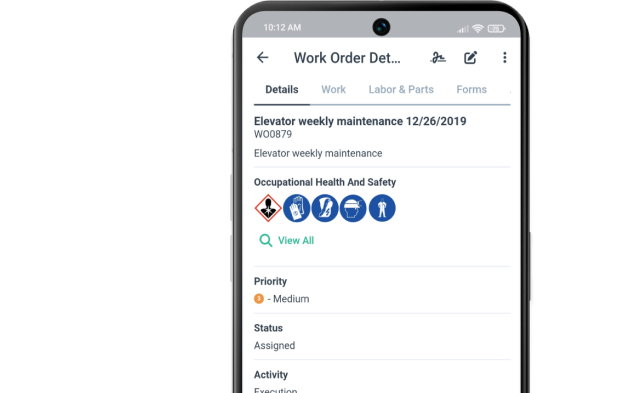
With mobile apps provided by CMMS systems, technicians receive timely notifications about upcoming work, complete with detailed task instructions and required parts information.
This proactive approach decreases unplanned downtime and reactive maintenance by addressing potential issues before they cause equipment failure.
The scheduling features allow for better resource allocation, enabling maintenance managers to distribute workloads evenly among team members.
This balanced approach prevents overworking maintenance workers while ensuring all assets receive proper attention.
Standardized Procedures
One of the benefits of maintenance management solutions is the enforcement of consistent protocols across all maintenance activities.
Each task follows documented procedures, ensuring repairs meet quality standards regardless of which technician performs the work.
Illustration: WorkTrek / Quote: ATR
This type of standardization creates a detailed log of each machine in the facility, tracking maintenance history and establishing best practices for specific equipment types.
Standard operating procedures can reduce new employee training time. This allows new employees to follow step-by-step instructions rather than rely on tribal knowledge.
Maintenance teams benefit from clear maintenance checklists that:
Identify required tools and parts to perform maintenance
Outline safety protocols and implement a safer working environment
Specify quality checks
Document completion criteria
Preventative maintenance protocols
Improved overall operational efficiency
These standardized approaches ultimately increase efficiency throughout the maintenance operation.
What does this mean to you as a maintenance manager? It ensures consistent results while minimizing errors and rework.
3. Cost Reduction and Control
Every maintenance organization wants to reduce maintenance costs without reducing equipment performance.
Effective maintenance management directly impacts a company's financial health by reducing expenses and providing better cost control.
The effective approach to maintenance can yield significant savings in both direct repair costs and indirect downtime expenses.
Lower Repair Costs
A regular preventive maintenance plan helps catch small issues before they become major problems.
When equipment is routinely inspected and maintained, you reduce the need for expensive emergency repairs. Plus, you can avoid those late-night emergency calls to fix failing equipment.
With a well-implemented maintenance management system, companies typically experience significant cost savings in the long run. These savings come from:
Reduced frequency of major repairs
Lower parts replacement costs
Decreased labor hours for maintenance staff
Extended equipment lifespan
Improved production process
Happier maintenance technicians
Reduction in unplanned maintenance
Illustration: WorkTrek / Data: eMaint
Implementing a Computerized Maintenance Management System (CMMS) can help reduce costs over time.
Minimized Downtime Expenses
As a maintenance professional, you know that unplanned downtime is exceptionally costly, often far exceeding the direct repair expenses. When equipment fails unexpectedly, businesses face numerous hidden costs.
Preventive maintenance strategies decrease unplanned downtime significantly. This protection delivers several financial benefits:
Maintained production schedules and deadlines
Protected revenue streams
Preserved customer satisfaction and retention
Reduced overtime costs for emergency repairs
Buy quality parts. While they might seem more expensive initially, they can lower failure rates and prevent production slowdowns. This approach minimizes both maintenance labor costs and lost productivity expenses.
Implementing a comprehensive maintenance program helps boost operational efficiency by preventing cascading equipment failures that can halt entire production lines.
4. Improved Safety and Compliance
Effective maintenance management significantly enhances workplace safety standards while ensuring operations meet regulatory requirements. These improvements protect workers and the organization from potential hazards and legal complications.
Improved Regulatory Compliance
Most maintenance organizations we've worked with have to adhere to industry compliance standards.
Maintenance management systems can help organizations comply with industry regulations and standards.
Companies can easily demonstrate compliance during inspections or audits by tracking maintenance activities. This documentation creates a reliable paper trail that proves due diligence.
Regular maintenance checks identify potential compliance issues before they become violations. This proactive approach helps avoid costly fines and penalties that result from non-compliance.
CMMS (Computerized Maintenance Management Systems) often include built-in compliance features that:
Automate regulatory requirement tracking
Schedule mandatory inspections
Generate compliance reports
Alert managers about upcoming deadlines
Source: WorkTrek
These systems can be customized to address specific industry regulations, whether OSHA, EPA, or other governing bodies. The result is consistent adherence to changing regulatory landscapes without constant manual oversight.
Enhanced Safe Working Conditions
Proper maintenance management can and will improve workplace safety by reducing accident risks.
Well-maintained equipment is less likely to malfunction in dangerous ways that could harm operators or nearby personnel.
Illustration: WorkTrek / Data: DuraPlas
Regular preventive maintenance identifies worn components, loose connections, and other potential safety hazards before they cause injuries.
This approach creates a safer work environment where employees can confidently perform their duties.
The safety benefits extend beyond equipment reliability. Clean, well-maintained facilities reduce slip-and-fall accidents and other common workplace injuries, and proper lighting maintenance ensures visibility in critical areas.
Maintenance teams can also:
Identify recurring safety issues
Implement corrective measures
Track safety incidents and near-misses
Provide data for safety training programs
When employees see a commitment to maintenance, they develop greater trust in their equipment and working conditions.
This promotes a stronger safety culture throughout the organization.
5. Data-Driven Decision Making
Maintenance management systems collect vast amounts of data that can transform organizations' decisions.
This information enables teams to identify patterns, predict failures, and allocate resources more effectively. More importantly, a good maintenance management system will let you quickly find the needed data.
This is a much better approach than shuffling through manual paperwork orders.
Accurate Maintenance Records
Modern maintenance systems create detailed digital records of all equipment history, repairs, and performance metrics.
These systems replace error-prone paper logs and manual work orders with reliable digital documentation that maintenance teams can access instantly.
Equipment details such as installation dates, warranty information, and component lifespans become searchable and analyzable. This accessibility helps technicians quickly identify recurring issues and make informed repair decisions.
Accurate records also track maintenance costs at the asset level, revealing which equipment consumes the most resources. Maintenance managers can then determine if a machine requires replacement rather than continued repairs.
Digital records also eliminate information silos by making critical data available to all stakeholders, improving cross-departmental communication and coordination.
Performance Tracking and Analysis
Data analytics tools and detailed reports can transform raw maintenance data into actionable insights.
These tools identify patterns humans might miss, such as subtle changes in equipment performance before a major failure occurs.
Real-time monitoring and alerts allow teams to respond immediately to developing issues. Dashboard visualizations display key performance indicators (KPIs) that show maintenance effectiveness at a glance.
Source: WorkTrek
Analytics also enable maintenance teams to:
Compare actual performance against benchmarks
Identify bottlenecks in maintenance workflows
Determine optimal maintenance intervals
Forecast future resource needs
Organizations can shift from reactive to predictive maintenance strategies by leveraging data from various sources. This approach reduces downtime, extends equipment life, and optimizes maintenance spending.
6. Boosted Team Productivity
Effective maintenance management can directly impact how well teams perform their daily tasks.
Outlining and implementing proper systems and protocols enable staff to work more efficiently while ensuring resources are allocated where needed.
Empowered Maintenance Staff
Maintenance management systems provide staff clear instructions and procedures, eliminating confusion about task priorities.
Technicians can instantly access equipment histories and maintenance requirements, reducing diagnostic time and improving repair accuracy for routine maintenance.
Digital tools enable technicians to document their work comprehensively without time-consuming paperwork.
What does this mean? This means you can increase uptime, improve operations productivity, and help optimize maintenance costs.
Training becomes more targeted when management systems track performance metrics and identify skill gaps. Staff feel more confident when they have the right tools and information.
Illustration: WorkTrrek / Data: Alison
Teams with proper maintenance management report higher job satisfaction and lower turnover rates. When technicians can solve problems effectively, they develop professional pride in their work.
Efficient Resource Allocation
Smart maintenance practices help organizations distribute labor, parts, and equipment where they'll have the greatest impact. Predictive analytics identify which assets require attention before failures occur, reducing unexpected breakdowns by up to 90%.
Inventory management features ensure necessary parts are always available without excess stock tying up capital. Teams waste less time waiting for components to arrive when systems track usage patterns accurately.
Source: WorkTrek
Resource scheduling tools match technician skills to appropriate tasks, maximizing expertise while minimizing downtime. This optimization leads to faster completion times and more efficient operations.
Digital maintenance systems eliminate paperwork and automate routine processes, freeing staff to focus on critical maintenance activities.
Time previously spent on administrative tasks can be redirected to preventive maintenance and timely repairs. All this can lead to fewer equipment replacements and a boost in customer satisfaction.
7. Environmental Sustainability
Illustration: WorkTrek / Data: pwc
Modern maintenance management practices contribute significantly to environmental protection while delivering operational benefits. Effective maintenance strategies reduce facility impact through energy savings and waste reduction practices.
Reduced Energy Consumption
Well-maintained equipment operates more efficiently, using less energy to perform the same tasks. Smart maintenance systems provide real-time monitoring that identifies energy waste sources before they become costly problems.
Regular inspection schedules ensure HVAC systems, motors, and machinery function optimally. Companies typically achieve 10-15% energy savings through preventive maintenance programs focused on efficiency.
Several benefits to energy-saving maintenance practices include:
Scheduled lubrication of moving parts
Filter replacements before performance degradation
Prompt repair of compressed air leaks
Calibration of temperature controls and sensors
Insulation maintenance for heating/cooling systems
These practices reduce utility costs and decrease operations' carbon footprint.
Minimized Waste Generation
Effective maintenance extends equipment lifespan, significantly reducing material waste from premature replacement.
Sustainable maintenance practices balance operational efficiency with environmental responsibility.
Proper maintenance procedures include recycling or responsible disposal of replaced parts, fluids, and consumables.
Illustration: WorkTrek / Data: Katana MRP
Modern maintenance management systems track material usage and waste streams, helping facilities meet environmental compliance requirements.
Predictive maintenance technologies further reduce waste by:
Replacing only components that need service
Minimizing emergency repairs that generate excess waste
Using condition-based maintenance to optimize part lifespans
Implementing CMMS software
Reducing chemical usage through precise application
Implementing sustainable facilities management practices
These approaches deliver environmental and financial benefits. Studies show that maintenance-driven waste reduction can lower disposal costs by 20-30% in manufacturing settings.
Conclusion
Effective maintenance management transforms reactive, costly approaches into proactive strategies that deliver measurable operational benefits.
Implementing comprehensive maintenance systems, such as CMMS software, can help organizations optimize asset utilization, streamline processes, and significantly reduce costs while enhancing safety compliance.
Data-driven decision-making empowers maintenance teams to identify potential issues before they cause disruptions while boosting team productivity and morale through clear workflows and proper resource allocation.
The transition from reactive to preventive maintenance creates a virtuous cycle of improved equipment reliability, extended asset lifespans, and enhanced operational efficiency.
For maintenance managers seeking to break free from the costly cycle of emergency repairs and unplanned downtime, implementing these seven maintenance management benefits provides a clear pathway to operational excellence and sustainable business growth.
The investment in proper maintenance management consistently delivers returns that benefit the entire organization.

Operations & Maintenance
8 Best Tools for Predictive Maintenance
Key Takeaways
Predictive maintenance tools combine sensors, AI, and analytics to detect potential failures
Predictive maintenance tools like GE Digital and Siemens to specialized tools for specific industries.
The right predictive maintenance technology can transform maintenance from a reactive to a proactive approach, leading to substantial operational cost savings.
As a maintenance manager, you know how hard it is to keep your equipment running smoothly. Several savvy companies now utilize predictive maintenance to identify issues before they become big problems.
Implementing predictive maintenance requires custom tools, sensors, data analysis, and artificial intelligence to monitor equipment health and predict failures.
Additionally, successful companies have been increasingly deploying computerized maintenance management systems like WorkTrek to improve predictive maintenance outcomes.
The Importance of Predictive Maintenance in Modern Industry
Predictive maintenance is the technology modern industries use to optimize operations, improve operational efficiency, extend equipment life, and reduce costs.
Unlike traditional reactive maintenance, predictive maintenance uses data analysis to anticipate equipment failures before they occur.
One of the primary benefits is decreased downtime, which keeps production lines running smoothly. When machines unexpectedly fail, companies lose money every minute they're not operational.
Source: WorkTrek / Data: NumberAnalytics
Lower maintenance costs represent another significant advantage. By addressing issues precisely when needed, businesses avoid the expenses of emergency repairs and unnecessary scheduled maintenance.
Predictive maintenance also contributes to increased equipment longevity. Machines that receive timely attention to developing problems tend to last longer than those subjected to reactive maintenance approaches.
Key benefits of predictive maintenance include:
Reduced unexpected downtime
Lower repair costs
Extended equipment maintenance and lifespan
Improved worker safety
Enhanced product quality
Better resource allocation
Improved lifecycle management
Improved equipment reliability
Modern predictive maintenance relies on condition monitoring tools and machine learning algorithms to detect potential failures. These technologies analyze patterns in equipment performance data to identify early warning signs.
Implementing predictive maintenance software enables teams to plan and execute maintenance tasks more effectively. These solutions coordinate activities and ensure that nothing falls through the cracks.
The manufacturing, energy, healthcare, and transportation industries increasingly adopt these sophisticated techniques to remain competitive in today's fast-paced market environment.
Fundamentals of Predictive Maintenance Technology
Predictive maintenance relies on several key technologies that work together to anticipate equipment failures before they occur. These technologies systematically gather data, analyze patterns, and identify potential issues.
Condition Monitoring Techniques
Condition monitoring forms the backbone of predictive maintenance by continuously tracking equipment health. Vibration analysis is one of the most reliable techniques for detecting mechanical issues in rotating equipment.
Source: WorkTrek
Other important monitoring methods include:
Infrared thermography: Identifies overheating components by capturing heat signatures
Ultrasonic testing: Detects air or fluid leaks and bearing failures by analyzing sound patterns
Oil analysis: Examines lubricant samples for contamination and wear particles
Motor current analysis: Measures electrical signals to identify motor degradation
Illustration: WorkTrek / Data: MMR
These techniques capture real-time data that serves as early indicators of potential failures. Modern sensors allow for continuous monitoring rather than periodic inspections, creating more comprehensive datasets.
Data Analytics and Machine Learning
The true power of predictive maintenance emerges when combining equipment data with advanced analytics.
Predictive maintenance software uses algorithms to identify patterns that precede failures.
Machine learning models analyze historical equipment data to:
Establish normal operating parameters
Detect anomalies that deviate from expected performance
Predict the remaining useful life of components
Recommend optimal maintenance timing
These systems become more accurate over time as they process additional data. Leading solutions like GE Digital SmartSignal and Siemens Predictive Maintenance employ sophisticated algorithms that can detect subtle changes in equipment behavior weeks before failure.
Failure Mode and Effects Analysis (FMEA)
FMEA provides a structured framework for identifying potential failure points and their consequences. This systematic approach helps maintenance teams prioritize their efforts based on risk.
Source: WorkTrek
The FMEA process typically involves:
Identifying all potential failure modes for each component
Assessing the severity of each failure's impact on operations
Determining the likelihood of each failure occurring
Calculating risk priority numbers (RPNs) to focus on the highest-risk items
FMEA's proactive detection of anomalies helps organizations avoid costly downtime. When integrated with predictive analytics, FMEA becomes even more powerful by connecting theoretical failure modes with equipment data.
This methodology requires cross-functional expertise from maintenance, operations, and engineering teams to succeed.
Don't forget to regularly update your FMEA documentation to ensure it remains relevant as equipment and processes change.
Best Tools for Predictive Maintenance
The predictive maintenance landscape offers diverse tools that blend technology with practical applications. These tools help organizations detect problems early, reduce downtime, and optimize maintenance schedules through data-driven insights.
1. Predictive Maintenance Software Platforms
GE Digital SmartSignal and SAP Predictive Maintenance and Service lead the industry in providing comprehensive asset management solutions. These platforms use machine learning algorithms to analyze equipment data and predict failures before they occur.
PTC ThingWorx offers real-time monitoring capabilities that integrate with existing systems. The platform processes sensor data to identify patterns that indicate potential equipment issues.
Siemens Predictive Maintenance excels in manufacturing environments. It uses digital twins to simulate equipment performance, allowing maintenance teams to test scenarios before implementing changes on actual machinery.
Illustration: WorkTrek / Quote: Siemens AG
Other notable platforms include Uptake and Alteryx AI Platform, which focus on industrial applications with specialized analytics tools.
2. Wearable Technology and Sensors
Modern maintenance relies heavily on various sensor technologies that track critical equipment parameters. Vibration analysis sensors detect abnormal machine movements that often precede mechanical failures.
Temperature sensors monitor heat patterns in equipment, alerting teams to potential overheating issues. These are particularly useful in electrical systems and motors where heat often indicates problems.
Infrared analysis sensors identify hot spots in equipment that aren't visible to the naked eye. Maintenance personnel wearing smart glasses can receive real-time alerts about equipment status during inspections.
Wearable devices also protect workers by monitoring environmental conditions and alerting them to dangerous situations. These sensors transmit data wirelessly to central monitoring systems for analysis.
3. Drones for Visual and Thermal Inspections
Drones equipped with high-definition cameras offer access to previously inaccessible areas without compromising worker safety.
They efficiently inspect tall structures, rooftops, and complex industrial equipment.
Thermal imaging drones detect heat variations in equipment, identifying potential issues before visible signs appear. This technology is particularly valuable for electrical infrastructure inspections.
AI-powered image recognition systems analyze drone footage to identify cracks, corrosion, or other defects. These systems compare current images with historical data to track degradation over time.
Drones reduce inspection costs by eliminating the need for scaffolding or lifts. They also increase inspection frequency, allowing more data collection and better predictive models.
4. Robotics for Automated Inspections
Autonomous robots navigate complex industrial environments to conduct routine inspections without human intervention. They excel in hazardous areas where human access is dangerous or limited.
Crawling robots inspect pipelines and confined spaces, using specialized sensors to detect leaks, corrosion, or structural weaknesses. Submersible robots perform similar functions for underwater infrastructure.
Wall-climbing robots inspect vertical surfaces in industrial settings using vacuum or magnetic attachments. They collect detailed visual and sensor data while maintaining steady contact with the surface.
Consistency in robotic inspections improves data quality for predictive models. Robots follow the same inspection patterns, eliminating human variability and creating reliable baseline measurements.
5. Acoustic Monitoring Devices
Ultrasonic analysis microphones detect high-frequency sounds emitted by failing equipment components. These sounds occur above human hearing range but provide valuable early warnings of issues.
Acoustic monitoring systems identify abnormal equipment sounds that indicate problems like bearing wear, steam leaks, or electrical arcing. The technology works well for rotating equipment like motors, pumps, and compressors.
Pattern recognition algorithms compare current sound signatures to normal operating conditions. Any deviation triggers alerts for maintenance teams to investigate potential problems.
Portable acoustic devices allow technicians to perform spot checks during regular maintenance rounds. Fixed systems continuously monitor critical equipment, creating long-term sound profiles for analysis.
6. Smart Maintenance Systems with IoT Integration
IoT sensors create connected networks of equipment that continuously transmit performance data. This enables real-time monitoring of entire facilities through centralized dashboards.
Cloud-based systems analyze this data stream using advanced algorithms to identify patterns and predict failures. These systems become more accurate over time as they learn from maintenance outcomes.
KONE stands out with its IoT-enabled elevator maintenance system that predicts issues before breakdowns occur. The system monitors thousands of data points per elevator to ensure reliability.
Smart maintenance systems automatically generate work orders when potential issues are detected. This streamlines the maintenance workflow and ensures timely interventions before failures occur.
7. Augmented Reality for Maintenance Training
AR headsets overlay digital information onto physical equipment, guiding technicians through complex maintenance procedures. This reduces errors and improves repair quality, especially for less experienced staff.
Illustration: WorkTrek / Data: FieldCircle
Remote expert assistance through AR allows specialists to see what technicians see in the field. They can provide real-time guidance by drawing annotations in the technician's field of view.
Training simulations use AR to create realistic maintenance scenarios without risking actual equipment. Technicians practice procedures in a safe environment before working on critical systems.
AR maintenance applications store equipment-specific information that technicians can access hands-free.
This includes repair histories, part specifications, and step-by-step maintenance procedures.
8. CMMS (Computerized Maintenance Management Systems)
A Computerized Maintenance Management System (CMMS) like WorkTrek transforms reactive maintenance into proactive strategies through several key capabilities.
CMMS platforms automate preventive maintenance scheduling based on time intervals or machine metrics, ensuring critical tasks are never missed. They provide customizable inspection checklists that standardize procedures and create accountability in the maintenance process.
By maintaining comprehensive equipment histories, CMMS helps identify recurring issues before they lead to major failures. The work order management functionality streamlines maintenance activities by providing customizable templates for various maintenance types.
Inventory management features track spare parts and trigger reorder alerts when supplies run low. This ensures that necessary components are always available for scheduled maintenance work.
Performance analytics generate reports on metrics like schedule adherence and downtime reduction, helping teams continuously refine their proactive approach. Mobile applications allow technicians to access critical information in the field, supporting efficient documentation regardless of location.
Advanced CMMS solutions integrate with condition monitoring sensors, extending capabilities into predictive maintenance. This comprehensive approach shifts maintenance from reactive firefighting to strategic asset management, reducing downtime while extending equipment life.
Choosing the Right Predictive Maintenance Tools
Selecting an effective predictive maintenance solution requires careful evaluation of your specific operational needs, budget constraints, and technical infrastructure. The right tool must align with your industry requirements while delivering meaningful ROI and seamlessly integrating with existing systems.
Industry-Specific Considerations
Different industries face unique maintenance challenges that require specialized predictive maintenance solutions. Manufacturing facilities typically need tools for mechanical equipment, vibration analysis monitoring, and thermal imaging. Meanwhile, utilities benefit from solutions focused on grid reliability and outage prevention.
Healthcare organizations require predictive tools that meet strict regulatory compliance while maintaining critical life-support systems.
Transportation companies need tools to track vehicle fleet health and predict maintenance needs based on mileage and operating conditions. When evaluating vendors, look for industry-specific case studies to ensure they understand your sector's unique challenges.
The most effective predictive maintenance implementations come from tools designed with your industry's specific failure modes, compliance requirements, and operational constraints in mind.
Cost-Benefit Analysis
Implementing predictive maintenance tools requires initial investment, but the long-term benefits often outweigh these costs.
Consider direct expenses (software licenses, sensors, implementation) and indirect costs (training, system downtime during installation) when evaluating options.
The primary benefits include:
Reduced unexpected downtime (typically 30-50%)
Extended equipment lifespan (25-30% on average)
Lower maintenance costs (25-30% reduction)
Decreased spare parts inventory (20-25% reduction)
For most organizations, predictive maintenance tools can deliver ROI within 6-12 months. Calculate your potential savings by examining your maintenance expenses, equipment failure costs, and production losses from unplanned downtime.
Request vendor case studies with documented ROI figures from similar companies. This helps establish realistic expectations for your implementation and justifies the investment to stakeholders.
Ease of Integration
The most effective predictive maintenance solution must work seamlessly with your existing technology infrastructure.
Evaluate how each tool connects with your current maintenance management systems, ERP platforms, and control systems.
Illustration: WorkTrek / Quote: Llumin
Key integration considerations include:
API availability - Does the tool offer robust APIs for connecting your systems?
Data compatibility - Can it process your existing sensor data formats?
Implementation complexity - What resources are required for setup?
Scalability - Will it grow with your operation's needs?
Siemens Predictive Maintenance offers pre-built connectors for major industrial control systems, making integration substantially easier for manufacturing environments. Other solutions, such as SAP Predictive Maintenance, integrate naturally with existing SAP implementations.
Ask vendors about implementation timelines and required technical expertise. The best solution balances advanced capabilities with practical deployment requirements for your organization's technical resources.
Vendor Support and Training
Comprehensive support and training are critical for successfully implementing and using predictive maintenance tools. Evaluate vendors based on their support structure, training programs, and customer success resources.
Look for providers offering:
Dedicated implementation assistance
24/7 technical support options
Comprehensive documentation
Regular system updates and improvements
On-site or virtual training programs
Maintenance software providers differ significantly in their support offerings.
Some licenses include basic support, while others charge premium fees for priority assistance. Consider these ongoing costs in your evaluation.
User training is particularly important for predictive maintenance tools. Staff need to understand not just how to use the software but also how to interpret the predictive data it generates. The best vendors provide initial training and ongoing educational resources as your team's capabilities mature.
Implementing Predictive Maintenance in Your Operations
Turning predictive maintenance from concept to reality requires a structured approach that addresses strategy, skills, data, and ongoing improvement. Successful implementation depends on having the right foundations before deploying any tools.
Developing a Predictive Maintenance Strategy
Begin by identifying critical assets that would benefit most from predictive maintenance. These are typically equipment with high repair costs, significant safety impacts, or those that create bottlenecks when they fail.
Create objectives with measurable KPIs, such as reduced downtime, extended asset life, or lower maintenance costs. These metrics will help track your success.
Assessment and planning should include a comprehensive analysis of current maintenance processes to find gaps and improvement opportunities.
Develop a phased implementation roadmap rather than attempting to overhaul everything at once. Start with a pilot program on one critical system to demonstrate value before expanding.
Key considerations:
Resource requirements (budget, personnel, time)
Technology compatibility with existing systems
Expected ROI timeframe
Stakeholder buy-in from all levels
Training and Skills Development
Effective predictive maintenance requires both technical expertise and analytical capabilities. Team members need training in data collection, analysis, and interpretation of predictive models.
Create a comprehensive training program that addresses different skill levels and roles. Maintenance technicians need training that is different from that of data analysts or IT staff.
Consider bringing in external expertise initially. Consultants or vendors can provide specialized knowledge while internal team members develop their skills.
Required skill sets:
Data analysis fundamentals
Sensor technology understanding
Specific equipment knowledge
Software proficiency
Root cause analysis techniques
Build a cross-functional team with maintenance, operations, IT, and management representatives. This diverse perspective helps ensure that all aspects of implementation are considered.
Data Collection and Management
Quality data is the foundation of any predictive maintenance program. Begin by identifying which data points truly predict equipment failure through data collection and acquisition.
Install appropriate sensors and monitoring equipment to capture real-time data on temperature, vibration, pressure, or other relevant parameters. Ensure these systems integrate with your existing infrastructure.
Establish data governance protocols that address:
Data quality standards
Storage requirements and duration
Access controls and security
Backup procedures
Integration with other systems
Clean and normalize historical data before using it to train predictive models. Poor quality data leads to unreliable predictions and undermines confidence in the system.
Set up automated data collection to reduce manual entry errors and ensure consistent monitoring.
Continuous Improvement and Optimization
Predictive maintenance is not a set-it-and-forget-it solution. Regular performance reviews against established KPIs help identify what's working and needs adjustment.
Schedule periodic evaluations of your prediction models' accuracy. As equipment ages or operating conditions change, models may need recalibration or retraining.
Create feedback loops between maintenance teams and data analysts. Technicians can provide valuable insights about whether predictions match their real-world experience.
Real-time insights from your implementation can help minimize downtime and extend asset life beyond initial expectations.
Use these insights to refine your approach continuously.
Consider these improvement strategies:
Add more data sources as you expand
Refine prediction algorithms based on performance
Adjust maintenance thresholds as you gain experience
Incorporate new technologies as they become available
Document successes and failures to build institutional knowledge that survives personnel changes.
Challenges and Considerations for Predictive Maintenance
Implementing predictive maintenance involves several hurdles organizations must navigate to achieve successful outcomes.
These range from data security concerns to technical limitations and the human factors involved in adoption.
Data Privacy and Security
Collecting vast amounts of equipment data raises significant privacy and security concerns. Organizations must protect sensitive operational data from unauthorized access and potential breaches.
Predictive maintenance systems often require connectivity to external networks, creating potential entry points for cyberattacks. This increased attack surface necessitates robust security protocols and regular vulnerability assessments.
Many industries face strict regulatory requirements regarding data storage and processing. Companies must ensure their predictive maintenance implementations comply with regulations like GDPR, HIPAA, or industry-specific standards.
Key Security Measures:
End-to-end encryption for data transmission
Role-based access controls
Regular security audits
Secure API integrations
On-premise solutions for highly sensitive environments
Technical Challenges and Limitations
One major hurdle is implementing system infrastructure, as organizations need the right tools and sensors to collect accurate data.
Older equipment often lacks built-in sensors, requiring retrofitting solutions.
Data quality issues can significantly impact analysis accuracy. Missing values, sensor drift, and measurement noise can lead to false positives or missed failure predictions.
Many organizations struggle with integrating predictive maintenance into existing systems. Legacy maintenance management software may not easily connect with newer predictive tools, creating data silos.
Another challenge is to identify key indicators for each asset. Different equipment types require unique monitoring parameters and failure thresholds.
Cultural Change and User Adoption
Transitioning from reactive or preventive maintenance to predictive approaches requires significant cultural shifts.
Maintenance teams accustomed to traditional methods may resist new technologies.
Training requirements can be substantial. Staff need to understand how to use new tools, interpret the data, and make informed decisions based on predictions.
Management buy-in is crucial for success. Without leadership support, predictive maintenance initiatives often fail to receive adequate resources or attention.
Adoption Strategies:
Involve maintenance teams early in implementation
Demonstrate quick wins and ROI
Provide continuous training opportunities
Create clear escalation paths for alerts
Recognize and reward adoption
Maintenance Scheduling and Planning
Balancing predictive alerts with existing maintenance schedules creates logistical challenges. Organizations must determine when to act on predictions versus following established maintenance intervals.
Source: WorkTrek
Predictive systems make resource allocation more complex. Maintenance teams need flexibility to respond to algorithmic recommendations while managing routine work.
Integration with maintenance management systems is essential for effective planning. Work orders generated from predictive alerts should flow seamlessly into existing workflows.
Equipment downtime coordination requires careful planning. Even with a warning, taking critical assets offline for maintenance impacts production schedules and requires cross-departmental coordination.
The Future of Predictive Maintenance Tools
Predictive maintenance is evolving rapidly, and technological innovations are reshaping industrial operations.
These advancements focus on smarter analytics, deeper integration with manufacturing systems, and contributions to environmental sustainability.
Advancements in AI and Machine Learning
The next generation of predictive maintenance tools will feature significantly more sophisticated AI capabilities. Machine learning algorithms are becoming increasingly accurate at detecting subtle equipment anomalies before they cause failures.
Deep learning models will soon analyze complex patterns across multiple data streams simultaneously, recognizing issues that current systems might miss. These advances will reduce the false positives that plague many current solutions.
Edge computing integration will enable direct real-time processing of industrial equipment. This eliminates latency issues and allows for immediate response to developing problems.
Natural language processing will make these tools more accessible to maintenance staff without technical expertise.
Workers can query systems using plain language and receive actionable insights rather than complex data.
Integration with Smart Factory Concepts
Predictive maintenance is becoming a cornerstone of Industry 4.0 implementations. Future tools will seamlessly connect with entire smart factory ecosystems rather than functioning as standalone solutions.
Digital twin technology will create virtual replicas of physical assets, allowing for simulation-based maintenance planning. These simulations will test different maintenance scenarios before implementing them in the real world.
Source: WorkTrek
Interoperability standards are evolving to ensure different platforms can share data easily. This will eliminate the information silos that currently limit comprehensive equipment monitoring.
Augmented reality interfaces will guide technicians through maintenance procedures with visual overlays on actual equipment.
This will reduce training requirements and improve repair quality.
Predictive Maintenance and Sustainability
The predictive maintenance market is increasingly focusing on sustainability benefits. Future tools will quantify energy savings and reduced material waste from optimized maintenance schedules.
Equipment lifespan extensions will be measured and reported as sustainability metrics. Organizations will use these metrics for environmental compliance reporting and sustainability initiatives.
Carbon footprint calculations will be integrated into maintenance planning. Algorithms will prioritize maintenance activities that provide the most significant environmental benefit alongside operational improvements.
Illustration: WorkTrek / Data: Ecologi
Resource optimization features will go beyond preventing failures to ensure maximum efficiency. Systems will recommend adjustments to operating parameters that reduce energy consumption while maintaining production targets.
Conclusion
In conclusion, integrating predictive maintenance tools and technologies revolutionizes how industries manage equipment health and reliability.
By leveraging advanced data analytics, machine learning, and condition monitoring, businesses can predict equipment failures before they occur, significantly reducing downtime and maintenance costs.
Adopting these tools extends equipment life and enhances operational efficiency and resource allocation, transforming maintenance from a reactive to a proactive strategy.
The future promises even more sophisticated AI capabilities, seamless integration with smart factory ecosystems, and a stronger focus on environmental sustainability. By embracing these advancements, organizations can stay competitive, improve asset performance, and contribute to a more sustainable future.

CMMS
5 Benefits Of Using Web-Based CMMS
Key Takeaways:
Web-based CMMS replaces spreadsheets, manual systems, and on-premise CMMS.
It is more affordable upfront and can lower total ownership costs by 30-40%.
More than 70% of companies use CMMS to organize maintenance activities.
Did you know the global CMMS market is expected to grow by nearly 150%, reaching $5.4 billion by 2035?
This growth is driven mainly by web-based CMMS software, which is quickly becoming the top choice for companies looking to streamline maintenance operations and boost asset uptime.
Compared to spreadsheets or legacy software, these cloud-based platforms offer real-time access, lower costs, seamless updates, scalability, and enhanced security.
Let’s dive into these benefits and see how they can transform your maintenance strategy.
Real-Time Access to Information From Any Location
The main advantage of a web-based CMMS over spreadsheets or on-premise software is its ability to provide real-time access to maintenance data from any internet-connected device.
While instant access to information from mobile devices and constant connectivity feels standard today, many maintenance teams still rely on outdated methods like Excel spreadsheets, site-specific software, or pen and paper.
A 2022 Comparesoft study of 119 CMMS buyers highlighted this gap, revealing that nearly half used spreadsheets, while 23% had no system before switching to a web-based CMMS.
Illustration: WorkTrek / Data: Comparesoft
These numbers indicate that over 82% of companies relied on non-mobile, disconnected maintenance methods.
The figure is likely higher when accounting for outdated, on-premise systems lacking mobile capabilities and real-time access.
One of the main reasons for switching is the need for real-time coordination between plant or facility users, maintenance managers, and technicians.
Without it, maintenance teams struggle to retrieve critical information, leading to slower response times, miscommunication, and increased downtime.
A web-based CMMS eliminates these issues by ensuring that all stakeholders—whether on-site or remote—have instant access to the same up-to-date information at all times.
Source: WorkTrek
For instance, team members can access the CMMS app on their smartphone wherever they are to check the dashboard for updates, review work orders, and receive automated reminders.
Managers can approve, assign, and schedule work orders, with all updates instantly visible to relevant users.
Technicians can view updates and complete tasks directly from their mobile devices, eliminating the need to return to the office or use paper forms.
Source: WorkTrek
Additionally, inventory levels are updated in real-time, allowing users to check the availability of tools, parts, and materials needed for maintenance.
This helps prevent delays caused by missing parts and keeps operations running.
While all organizations can benefit from the real-time capabilities of a web-based CMMS, it’s a game-changer for teams operating across multiple locations or in the field.
For instance, an employee or external user at one site can report a maintenance issue on the spot in just a few steps, as seen here:
Source: WorkTrek
A manager at another location sees it instantly, assigns the task, and ensures timely repairs.
This connectivity keeps everyone informed and ready to act, minimizing downtime and enhancing productivity.
Lower Upfront Costs
If you opt for an on-premise version of a CMMS system, you need to keep in mind that such solutions require a significant upfront investment in software licenses, hardware, servers, and IT infrastructure.
Beyond these initial costs, you’ll also have to allocate resources for ongoing system maintenance, updates, and security, increasing overall expenses and burdening internal IT teams.
Despite all this, some companies still prefer on-premise CMMS solutions for their control and security benefits.
With that in mind, WorkTrek remains one of the only CMMS products on the market that still offers an on-premise version for very specific applications.
In contrast, a web-based CMMS offers a cloud-hosted alternative that requires no on-site hardware or infrastructure with minimal IT involvement.
Derek Singleton, product management expert, puts it this way:
Illustration: WorkTrek / Quote: Arena Solutions
Unlike traditional software that requires installation on company-owned servers, a SaaS-based CMMS is hosted in the cloud and accessed via a web browser.
This eliminates the need for costly hardware purchases and ongoing IT maintenance.
Instead of large one-time investments, businesses pay a predictable subscription fee that covers software updates, security, and data backups.
This subscription-based model not only reduces costs but also offers predictable budgeting.
Beyond that, the shift from on-premise to cloud-based software reduces the total cost of ownership (TCO).
Research from Accenture shows that organizations operating in the cloud achieve IT total cost of ownership (TCO) savings of 30-40% compared to on-premise systems.
Illustration: WorkTrek / Data: Accenture
For organizations adopting a web-based CMMS, these savings translate into lower initial investment, reduced operational costs, and a faster return on investment (ROI).
Additionally, implementation is faster.
While on-premise systems may take months to set up, web-based solutions can often be deployed within days or weeks.
This efficiency allows organizations to quickly start seeing the benefits of improved maintenance management.
Automatic Updates Without Downtime
Keeping CMMS software up to date is essential for security, performance, and access to new features.
With a web-based CMMS, updates happen automatically and without downtime.
Automatic updates remove the burden from your internal IT team and prevent disruptions caused by outdated software.
Since service providers maintain web-based solutions, they ensure that users always have access to the latest CMMS version without requiring manual updates.
In contrast, on-premise systems often require manual installation and planned downtime, which can delay operations.
Source: Missouri State
When a CMMS provider automatically handles updates without downtime, your IT team no longer needs to schedule or execute system upgrades, freeing them for other tasks.
Beyond reducing IT workload, automatic updates ensure that web-based CMMS solutions continuously evolve with new features and enhancements.
These improvements are typically driven by user feedback, which helps CMMS providers refine their platforms based on client needs.
For instance, a 2024 survey revealed that 72% of companies primarily use CMMS to organize maintenance activities and centralize data, highlighting the system's core value.
Illustration: WorkTrek / Data: Upkeep
This means your provider will likely implement automatic updates and enhancements for core CMMS features like work order management, inventory tracking, reporting, and mobile access.
However, there is also a range of other advanced features organizations are increasingly looking for.
This is evidenced by the Comparesoft survey we mentioned earlier, which found that 79% of CMMS users are interested in additional features such as:
Cost tracking and reporting
Asset tagging and tracking
Health and safety compliance
Sensor integration for predictive maintenance
Machine learning and AI for advanced analytics
Software integrations with other business systems
Many of these features are either already available or actively being developed in web-based CMMS—without costly in-house customization.
Even if some advanced functionalities are offered at an extra cost, the expense is significantly lower than developing and maintaining a custom-built system.
More importantly, all essential updates—security patches, system enhancements, and performance improvements—are included in your subscription and implemented automatically without downtime.
Scalability to Support Business Growth
As businesses expand, so do their maintenance challenges.
More facilities, equipment, and personnel create greater demands on maintenance management.
A scalable CMMS ensures that as your operations grow, your system can keep up without costly infrastructure upgrades.
One key advantage of web-based CMMS solutions is multi-site support.
Instead of juggling multiple disconnected on-premise systems, companies can manage all locations and assets within a single, centralized platform.
Whether you’re adding a new client site, production facility, or warehouse, a cloud-based CMMS provides a unified view of maintenance activities across all locations.
Source: WorkTrek
The same easy scalability principle applies to onboarding new users, whether they’re maintenance staff, managers, or guest users.
Since a cloud-based CMMS is hosted on the devices your company and workers already use, there’s no need for additional hardware or IT infrastructure.
This allows you to add users seamlessly, ensuring that everyone stays connected and in the loop.
Additionally, some web-based CMMS solutions like our WorkTrek offer a maintenance request module.
With this feature, guest users can submit any number of service requests, receive notifications, and track progress—all without adding cost to your organization.
Source: WorkTrek
Customizable feature packages and modules further enhance the scalability of web-based CMMS solutions.
More precisely, you can start with the essential features and expand them as needed, ensuring the system evolves alongside your growing maintenance requirements.
The same scalability applies to IT infrastructure, such as the need for additional servers for data storage.
Most providers allow you to easily increase your data and processing capacities, making business growth more efficient and cost-effective.
This scalability ensures that your system can expand seamlessly to support more users, assets, and locations without the need for additional hardware investments.
Enhanced Data Security
Protecting sensitive maintenance data is critical, as it contains vital company and client information and details on assets, schedules, and workflows.
In traditional on-premise systems, security depends heavily on the expertise and resources of in-house IT teams.
This often means smaller businesses have weaker security measures, making them more vulnerable to breaches.
With web-based CMMS solutions, providers implement enterprise-grade protection measures across all customers, ensuring a higher baseline level of security.
The measures include:
Encryption
Firewalls
Secure access controls
Since their reputation and business depend on safeguarding your data, they have a strong incentive to maintain rigorous security standards.
However, cybersecurity is not just the provider’s responsibility.
It also depends on how your company manages user access and credentials, as Neelesh Kripalani, CTO at Clover Infotech, explains:
Illustration: WorkTrek / Quote: DQ Channels
This shared responsibility also extends to data storage and protection from loss.
Unlike on-premise systems requiring manual backups and dedicated servers, cloud-based CMMS solutions automatically back up data regularly.
This minimizes the risk of data loss due to system failures, cyberattacks, or human error.
Additionally, reliable disaster recovery protocols ensure that your maintenance data remains intact and accessible even in these situations.
With data securely backed up in the cloud, organizations can retrieve data and restore operations with minimal disruption.
Of course, security isn’t just about data storage—it starts with how users access the system.
Source: WorkTrek
While both on-premise and cloud-based CMMS platforms can leverage user access security measures, web-based solutions offer distinct advantages.
For one, the provider applies security updates and patches automatically, reducing the risk of outdated protections.
Additionally, most web-based CMMS solutions allow administrators to configure access control levels and user roles easily.
With a centralized dashboard, they can efficiently manage permissions across multiple locations and ensure that employees only access the data and functions relevant to their roles.
One key security feature they can enable is multi-factor authentication (MFA), which adds an extra layer of protection beyond just usernames and passwords.
Source: Ramsac
Beyond internal security measures, web-based CMMS providers also ensure compliance with industry regulations and data privacy standards.
Leading solutions adhere to frameworks like ISO 27001, GDPR, and SOC 2, helping your organization stay compliant without additional effort.
With enterprise-grade security, automated backups, and regulatory adherence, web-based CMMS solutions provide a reliable foundation for ensuring data integrity, operational continuity, and compliance.
Conclusion
A web-based CMMS goes beyond mobile maintenance management, offering efficiency, scalability, and cost-effectiveness.
It automates processes, supports multi-site operations, and provides enterprise-grade security while reducing IT workloads.
It delivers a future-proof solution for modern maintenance management by enabling real-time collaboration.
Are you already using a web-based CMMS?
If not, now is the time to start.

CMMS
How to Use CMMS Software in Your Manufacturing Plant
Key Takeaways:
OSHA fines can reach up to $16,550 per violation.
Companies save hundreds of thousands of dollars annually by using a CMMS.
Experts say proactive maintenance is about three times more cost-effective than reactive maintenance.
Unplanned breakdowns aren’t just inconveniences.
In manufacturing, every minute of downtime costs money, delays production, and disrupts efficiency, harming the overall profitability and even the reputation of your plant.
Fortunately, a Computerized Maintenance Management System (CMMS) can help minimize these disruptions.
A CMMS digitizes and automates maintenance processes, bringing order to chaos, boosting data accuracy, and maximizing uptime.
Read on to learn how to use CMMS software effectively and keep your plant running at peak performance.
Work Order Management
CMMS software optimizes creating, tracking, and completing work orders within your plant, boosting the entire team's efficiency.
Supervisors can easily assign work and monitor progress in real-time, while technicians gain access to all the crucial information they need to complete their tasks properly.
One key advantage of CMMS software is its customizable work order templates with required fields.
They significantly reduce the risk of incomplete information and errors.
For example, with our own CMMS, WorkTrek, you can capture essential work order data such as required labor, parts, expenses, signatures, and more, as shown below:
Source: WorkTrek
Step-by-step instructions, photos, and other important documents can also be attached to expedite problem resolution further.
Once the work is complete, you can access reports on WO costs, efficiency, and more.
This enables you to quickly identify areas for improvement and plan future maintenance more effectively.
Below, you can see WorkTrek’s dashboard with crucial WO insights:
Source: WorkTrek
Imagine the alternative: stacks of paperwork, constant trips between the office and the job site, and confusion over who’s responsible for what.
That’s time wasted, and money lost.
With WorkTrek, however, everything is digital and accessible on the go.
Miller Milling, which produces flour for consumers and food service customers, has experienced the struggle of paper-based work orders.
Due to this inefficient system, their daily lives were riddled with issues like lost information, difficulties monitoring task completion, and delays.
With CMMS, all that finally changed, says Alisha Bibriesca, Facility & System Administrator at Miller Milling Company:
Illustration: WorkTrek / Quote: Food Processing
Now, Miller Milling can prioritize tasks more effectively, capture vital data, and ensure work is completed on time.
Examples like this show how CMMS, with its automated work order management, brings more order, accountability, and efficiency to plant maintenance.
It makes it easier to know what needs to be done, when, by whom, and how, leaving no room for error.
Preventive Maintenance Scheduling
If you’ve been struggling to shift from reactive maintenance to a more proactive approach, a CMMS could be the solution you’ve been looking for.
This kind of software automatically schedules tasks based on various triggers, sends alerts for upcoming maintenance, and makes overall planning much easier.
As a result, you'll see fewer unexpected failures and less downtime.
You can schedule maintenance based on time triggers, ensuring tasks repeat daily, weekly, monthly, or annually, depending on your needs:
Source: WorkTrek
CMMS gives you full control here.
You can set start dates, define end rules (by a specific date or number of occurrences), determine how far in advance WOs should be created, and more.
Leading maintenance scheduling CMMS platforms also support meter-based triggers.
You can schedule inspections or services based on specific usage metrics such as operating hours, mileage, temperature, or pressure.
Reading thresholds, conditions, planned durations, and end rules can all be defined, just like in the example below:
Source: WorkTrek
Consequently, each asset receives the specific care it requires, staying in good condition longer and minimizing unexpected breakdowns that could disrupt production.
Zach Williams, Engineering Manager at Kito Crosby Australia, an industrial equipment supplier specializing in custom hoists and lifting solutions, agrees:
Illustration: WorkTrek / Quote: Manufacturers’ Monthly
This not only boosts the efficiency of a plant’s operations but also has a direct impact on the bottom line, Williams adds:
“Proactive maintenance is nearly three times more cost-effective than reactive maintenance.”
In other words, preventive maintenance pays off—but only if you have the right system to manage it.
That’s where a CMMS comes in, automating scheduling, sending reminders, and ensuring no task is overlooked.
Regulatory Audits
The core function of any CMMS software is to document maintenance activities and centralize all crucial information in one place, keeping the records complete, accurate, and up-to-date.
As shown below, you can quickly check when an asset was last serviced, what was done, and who performed the task:
Source: WorkTrek
For manufacturing plants operating under strict regulations, this is extremely valuable.
It allows them to easily and quickly demonstrate compliance during regulatory or internal audits, helping avoid hefty fines, penalties, and reputational damage.
Whether you're preparing for an SQF, EPA, or OSHA inspection, a CMMS will eliminate the need to sift through files for hours or scramble to find missing paperwork.
Instead, all audit-related documents and reports are neatly organized, easily accessible, and ready at a moment’s notice.
Troy Design & Manufacturing, a manufacturer of high-quality automotive prototypes and stamping, leverages a CMMS for this exact purpose.
Bill G., their Facilities Manager, explains how the platform provides unparalleled visibility, significantly simplifying audits:
Illustration: WorkTrek / Quote: eMaint
Audits are stressful enough without adding extra complications.
A CMMS ensures you have everything at your fingertips, eliminating the chaos, guesswork, and headaches.
Since OSHA fines can reach up to $16,550 per violation, having such a well-organized system is helpful and an absolute must-have.
Asset Management
A CMMS tracks the entire asset lifecycle—from procurement to disposal—providing insights into your tools and equipment's performance, health, utilization, and depreciation.
With this information, you can optimize asset usage, improve resource allocation, and maximize ROI.
Think of a CMMS as your plant’s central command center for asset data.
Everything from physical locations and warranty details to complete maintenance history and expenses can be accessed anytime and anywhere:
Source: WorkTrek
This allows your technicians to check an asset’s availability, whereabouts, or inspection status at a glance.
Moreover, you gain deeper insights into asset performance with CMMS's built-in reporting and analytics.
For example, you can access reports on warranty expirations, utilization, downtime, production losses, and more, all in mere moments.
Below, you can see one such report:
Source: WorkTrek
At Cloeren Inc., a global leader in plastics manufacturing, they understand how valuable data-driven decisions can be.
Their Maintenance Administrator, Holly Tullos, explains:
Illustration: WorkTrek / Quote: Fiix
She adds that, with a recent influx of new machinery, each with its unique data, the CMMS helped them finally "catch up with what they have," organizing all that information in one place.
In fact, the system has even helped justify new equipment purchases—which are often delayed due to cost concerns.
At the end of the day, asset management isn’t about hunches but about hard data.
With a CMMS, every decision is rooted in reality, driving efficiency, cost savings, and long-term success for the entire plant.
Spare Parts Tracking
In addition to your assets, CMMS software helps manage the inventory needed to perform maintenance on those assets.
More specifically, it does the following:
Automatically monitors spare part levels.
Lets you set reorder points.
Sends alerts when stock is running low.
This ensures continuous parts availability while simultaneously reducing costs by preventing over-purchasing.
Just like with fixed assets, a CMMS keeps a detailed record of spare parts, including their make, model, location, quantity, user manuals, and more, as shown below:
Source: WorkTrek
This allows you and your team to easily access all relevant information, update stock levels, and transfer inventory between warehouses on the go.
Additionally, the software provides thorough reports on low-stock items, parts consumption per asset, and other key metrics, helping you identify trends and inefficiencies driving up costs.
A 2025 RS & CIPS report shows a growing need for systems with such capabilities, with 62% of companies across all industries reporting inflation as their biggest challenge.
At the same time, 60% have reduced their operational budgets, while 40% report the need to cut inventory costs.
Illustration: WorkTrek / Data: RS
In other words, modern businesses must find ways to do more with less.
With rising costs and pressure to reduce expenses while maintaining high-quality work, the challenge has never been greater.
Fortunately, a CMMS with automated inventory tracking ensures that every material and spare part is used efficiently.
It helps maintain just the right amount of stock—not too much, not too little—keeping production running smoothly and cost-effectively.
As a maintenance professional, you're aware that inventory expenses are unavoidable.
But with a CMMS, you can ensure every dollar spent is justified and strategically allocated.
Maintenance Cost Analysis
With its powerful reporting and analytics features, a CMMS can track labor, parts, and other maintenance costs, helping you identify inefficiencies and cost-saving opportunities.
For example, a report like the one below could reveal high-maintenance assets that are more cost-effective to replace than repair or highlight over-purchasing of spare parts that go unused.
Source: WorkTrek
These inefficiencies can quietly drain your budget without a transparent system to gather and analyze maintenance data.
Robert Peffen, Director of Asset Performance Excellence at Implementation Engineers, puts it best:
"One of the most effective ways to control the maintenance budget is to identify and eliminate recurring reliability and maintenance problems. To accomplish this, the data on maintenance work performed must be collected and analyzed."
In other words, you can’t fix what you don’t track—and you need a CMMS for effective tracking.
Take Johnson & Johnson’s Centocor/Global Biologics Supply Group, a manufacturer of a key biopharmaceutical ingredient used in the drug Remicade.
Their CMMS collects and monitors various data, such as instrument calibration, maintenance schedules, costs, and spare parts usage.
Those insights enable them to make quick, data-driven improvements, leading to significant cost savings:
The initial CMMS investment was paid back in under two years.
Increased equipment reliability led to $1.3 million in savings in Year 1 and $1.1 million in Year 2.
Productivity at the facility rose by 30%, leading to ongoing annual savings of $300,000.
Yes, all of these improvements were driven by one thing: reliable, actionable data.
With an efficient CMMS and data-driven cost analysis, you too can unlock such benefits.
Conclusion
CMMS software improves every aspect of maintenance operations.
Whether you want to streamline work order processes, centralize inventory data, or reduce costs, this system can make a significant difference in your manufacturing plant.
It delivers unmatched transparency, data accuracy, and process efficiency, taking the guesswork out of maintenance—so you can keep your assets performing at their best.

Operations & Maintenance
Predictive Maintenance Examples from Different Industries
Businesses want to keep their equipment running smoothly. Predictive maintenance has emerged as a game-changing approach that uses data and smart technology to spot problems before they cause breakdowns.
This proactive strategy helps companies save money, reduce downtime, and extend equipment life by detecting potential failures before they happen.
Predictive maintenance is making waves in diverse industries, from factory floors to hospital equipment.
Illustration: WorkTrek / Data: pwc
Manufacturing plants use vibration sensors on motors to predict failures, while energy companies monitor wind turbines remotely to schedule repairs during low-wind periods.
In aviation, aircraft engines have sensors that continuously analyze performance data, helping maintenance teams replace parts before they fail during flights.
Key Takeaways
Predictive maintenance solutions use advanced analytics and sensor technology to identify equipment issues before failures occur, reducing unexpected downtime by up to 50%.
Different industries implement unique predictive maintenance approaches based on their specific equipment needs, environmental conditions, and operational requirements.
Integrating AI, machine learning, and a computerized maintenance management system (CMMS) like WorkTrek with predictive maintenance systems transforms maintenance from a cost center to a strategic business advantage across multiple sectors.
The Concept of Predictive Maintenance
https://youtu.be/u0apbsPeDWM
Predictive maintenance transforms companies' equipment health management through data-driven insights and timely interventions. It represents a shift from reactive fixes to proactive care that saves money and extends machine life.
Definition and Principles
Predictive maintenance is a strategy for proactively detecting potential defects and equipment anomalies before they cause failures. This can improve business operations and reduce operational costs.
Unlike preventive maintenance which follows fixed schedules, predictive maintenance relies on real-time data and condition monitoring.
The core principle involves using sensors and monitoring tools to track equipment performance metrics, such as vibration, temperature, noise levels, and oil conditions.
Modern predictive maintenance systems employ:
Continuous monitoring of operational parameters
Data analytics to identify patterns indicating potential failures
Machine learning algorithms that improve predictions over time
IoT connectivity for real-time insights
Techniques like infrared thermography, acoustic analysis, and vibration analysis help maintenance teams catch problems early when they're cheaper to fix.
Benefits for Industries
Implementing predictive maintenance can deliver substantial benefits across diverse industrial settings, such as the oil and gas industry, among many others.
The most immediate benefit is significant cost reduction for critical assets through preventing catastrophic failures and extending equipment lifespan.
Companies experience fewer unexpected breakdowns, resulting in higher productivity and operational efficiency.
A well-implemented system can reduce downtime by 30-50% and extend machine life by 20-40%.
Illustration: WorkTrek / Data: Aberdeen
Other key benefits include:
Improved safety conditions for workers
Optimized maintenance scheduling based on actual equipment condition
Reduced spare parts inventory costs
Enhanced product quality through consistently functioning equipment
Lower energy consumption from well-maintained systems
Predictive maintenance also supports sustainability initiatives by reducing waste and energy use. Organizations can make data-driven decisions about repairs versus replacements, optimizing resource allocation.
Predictive Maintenance in Manufacturing
https://youtu.be/QStfd20NH3I
Manufacturing facilities rely heavily on predictive maintenance to prevent costly downtime and ensure product quality.
These preventive maintenance programs utilize sensors, data analysis, and machine learning to detect potential issues before they cause breakdowns.
Equipment Failure Prediction
In manufacturing environments, predictive maintenance helps detect equipment issues before they lead to catastrophic failures. Sensors monitor key parameters like vibration, temperature, and acoustics to identify abnormal patterns. When these patterns emerge, maintenance teams receive alerts to address problems before equipment fails.
Illustration: WorkTrek / Data: Arshon Technology
For example, a paper mill might use vibration analysis to detect bearing wear in critical motors. The system identifies subtle changes in vibration signatures that humans cannot perceive.
Machine learning algorithms continuously improve predictions by analyzing historical failure data. This creates a self-improving system that becomes more accurate over time.
Common monitoring parameters include:
Vibration analysis
Thermal imaging
Oil analysis
Acoustic monitoring
Power consumption patterns
Quality Assurance Measures
A predictive maintenance program directly impacts product quality by ensuring that machines operate within optimal parameters.
Quality issues often appear when equipment moves from ideal settings before complete failure occurs.
Conveyor belt monitoring systems use vibration sensors to detect misalignments that could damage products. Similarly, precision manufacturing equipment utilizes real-time tolerance monitoring to predict when calibration will be needed.
Some advanced systems correlate maintenance data with quality control metrics. This allows manufacturers to identify which maintenance issues most significantly impact product quality.
Automated inspection systems also contribute to predictive maintenance by identifying patterns in defects that suggest equipment problems.
Case Study: Automotive Industry
With remarkable results, an automotive assembly plant implemented predictive maintenance across its welding robots. The system monitored electrical current signatures to detect when welding tips began to wear.
Before implementation, the plant averaged 4.7 hours of unplanned downtime per week. After deploying predictive maintenance, this dropped to just 0.8 hours—an 83% reduction.
Maintenance costs decreased by 47%, while product quality improved by 23%.
Wind energy companies use similar approaches by combining vibration analysis, oil testing, and thermal imaging to prevent turbine failures. These integrated systems allow for precise maintenance scheduling only when needed.
Illustration: WorkTrek / Data: Global Trade Magazine
The automotive industry has been particularly successful with predictive maintenance because of its high production volumes and the significant cost of downtime. Many manufacturers report ROI within 6-12 months of implementation.
Use Cases in the Energy Sector
The energy sector has embraced predictive maintenance to enhance operational efficiency and sustainability.
These technologies help detect equipment failures before they occur, reducing downtime and maintenance costs while extending asset lifespans.
Wind Turbine Optimization
Wind energy companies utilize multiple predictive maintenance techniques to maximize turbine performance. Vibration analysis, oil analysis, and thermal imaging work together to identify potential issues before they cause shutdowns.
Illustration: WorkTrek / Data: Praxie
Sensors placed strategically on turbine components monitor abnormal vibrations that might indicate bearing failures or blade imbalances. This real-time data allows maintenance teams to schedule repairs during low-wind periods, minimizing production losses.
Weather pattern analysis integrates with maintenance schedules to optimize service timing. When high winds are forecasted, technicians can prioritize urgent repairs before storms arrive.
Remote monitoring systems reduce the need for dangerous climb-ups, improving worker safety. Drones equipped with cameras can inspect blade surfaces for cracks or erosion without stopping turbine operation.
Oil and Gas Equipment Surveillancework
The Oil and Gas industry is a $4 trillion industry. Oil and gas companies have extensively deployed predictive maintenance to prevent catastrophic failures and environmental incidents. Due to unplanned downtime, oil and gas companies lose $149 million annually.
Source: WorkTrek / Data: Offshore Technology
Given the size and complexity of the oil and gas industry, a single hour of downtime can cost around $500K. Therefore, they are highly motivated to reduce downtime.
Liquid leakage detection systems monitor pipelines and storage tanks for early signs of deterioration.
Acoustic sensors detect minute changes in equipment sounds that human ears cannot perceive. These subtle variations often indicate worn components or impending failures in pumps, compressors, and valves.
AI-powered systems analyze operational data from multiple sources to predict equipment failures up to weeks in advance. This allows companies to order parts and schedule maintenance during planned shutdowns.
Thermal imaging cameras identify hotspots in electrical systems and mechanical components. Overheating often precedes complete failures, making temperature monitoring critical for preventive action.
Corrosion monitoring tools use specialized sensors to track metal degradation in harsh environments, extending the life of expensive infrastructure.
Aviation Industry Applications
The aviation sector has emerged as one of the leading adopters of predictive maintenance technologies.
Airlines and aerospace companies implement advanced analytics to monitor aircraft components and enhance safety measures through data-driven approaches.
Aircraft Maintenance Scheduling
Airlines using predictive maintenance reap significant benefits by reducing unscheduled aircraft removals and increasing operational time. Modern aircraft generate terabytes of sensor data during each flight, providing valuable insights for maintenance teams.
Engine health monitoring systems track parameters like temperature, pressure, and vibration patterns to detect potential failures weeks before they occur. This early detection capability allows maintenance teams to schedule repairs during planned downtime.
Components like landing gear, hydraulic systems, and avionics undergo continuous monitoring through integrated sensor networks.
When anomalies appear, AI algorithms assess the severity and recommend appropriate maintenance actions.
Key benefits for airlines include:
30-40% reduction in maintenance-related delays
Up to 20% decrease in repair costs
Extended component lifespan through optimized servicing intervals
Reduced inventory costs for spare parts
Flight Safety Enhancements
Predictive analytics revolutionizes aerospace maintenance by analyzing real-time sensor data to anticipate potential failures before they impact flight safety.
This proactive approach transforms how airlines manage risk.
Advanced algorithms can detect subtle changes in aircraft performance that might indicate developing problems. For example, slight variations in fuel consumption patterns might signal early-stage engine issues requiring inspection.
Illustration: WorkTrek / Data: Praxie
Weather pattern analysis combined with aircraft condition monitoring helps pilots and dispatchers make informed decisions about flight routes and altitudes. Aircraft maintenance relies on this approach to reduce wear on components while enhancing passenger comfort.
Safety improvements through predictive maintenance:
Earlier detection of critical system degradation
Reduced in-flight incidents related to mechanical failures
Enhanced decision-making for flight crews
More comprehensive documentation of aircraft health history
Automated damage recognition systems use computer vision to inspect aircraft surfaces during routine ground checks, identifying potential structural issues invisible to the human eye.
Predictive Maintenance in Transportation
Transportation systems depend heavily on reliable equipment and vehicles.
Predictive maintenance technologies have revolutionized monitoring and maintaining these assets, significantly reducing downtime and extending useful life.
Railway System Analytics
Railway systems use sophisticated predictive maintenance techniques to monitor critical components like wheels, tracks, and signals.
Vibration sensors on tracks detect subtle changes in train wheel patterns that might indicate early wear or damage.
Network Rail in the UK employs acoustic monitoring systems to identify failing bearings in passing trains. These systems can detect problems up to 3,000 miles before failure occurs, preventing dangerous derailments.
Illustration: WorkTrek / Data: IoT Now
Temperature sensors along railway lines monitor track conditions to prevent buckling in extreme heat. This gives maintenance teams time to address issues before they affect service.
Deutsche Bahn uses AI algorithms to analyze data from multiple sensors, resulting in a 25% reduction in unplanned maintenance. Their system predicts when catenary wires and switches need servicing days before problems become visible.
Fleet Management Solutions
Commercial vehicle fleets implement predictive maintenance solutions to maximize vehicle uptime and operational efficiency. Onboard diagnostic systems continuously monitor engine performance, transmission behavior, and brake wear.
Toyota partnered with IBM's Maximo solution to analyze real-time vehicle data. This system flags potential failures before they occur, allowing for scheduled maintenance that doesn't disrupt delivery schedules.
Oil analysis in fleet vehicles detects microscopic metal particles that indicate internal engine wear. Maintenance teams can predict when specific components need replacement by tracking these particles over time.
Fleet managers use dashboards that display vehicle health scores based on multiple data points. These scores help prioritize maintenance activities and optimize resource allocation.
Battery health monitoring in electric delivery vehicles uses thermal imaging to identify cells degrading faster than others. This prevents unexpected failures during operation and extends overall battery life.
Smart Infrastructure and Buildings
Modern buildings now use predictive maintenance to prevent problems and save money. Smart systems collect sensor data to catch issues before they cause failures or expensive damage.
HVAC System Monitoring
HVAC systems benefit greatly from predictive maintenance techniques. Sensors measure temperature, airflow, pressure, and energy consumption to detect performance issues early. When a system shows unusual patterns, maintenance teams receive alerts.
Illustration: WorkTrek / Data: Camcode
For example, algorithms can identify when an air handler works harder than normal, suggesting a potential filter clog or motor problem. This early warning prevents complete system failure during extreme weather conditions.
Key HVAC monitoring parameters include:
Temperature differential across components
Power consumption patterns
Vibration analysis of moving parts
Refrigerant pressure readings
Many smart buildings use IoT integration that lets technicians view HVAC performance remotely. This remote monitoring capability reduces inspection visits and helps prioritize maintenance work.
Structural Health Monitoring
Buildings face ongoing stress from weather, usage, and aging. Condition monitoring systems use sensors to track structural integrity over time.
These systems measure:
Vibration patterns revealing potential weaknesses
Settlement and shifting of foundations
Material fatigue in critical support elements
Moisture levels that might lead to corrosion
Acoustic sensors detect subtle changes in how sound moves through structures. This technology can identify developing cracks or weakening joints before they become visible to inspectors.
Advanced buildings incorporate strain gauges on key structural elements. These devices measure tiny changes that might indicate developing problems with load-bearing components.
These monitoring systems quickly assess building safety after earthquakes or severe storms. This helps reduce costly inspections and provides data-driven decisions about occupancy.
Healthcare Industry Implementation
Predictive maintenance in healthcare delivers significant benefits through equipment reliability and enhanced patient outcomes.
Healthcare facilities have started leveraging data analytics and sensor technology to prevent failures and optimize care delivery.
Medical Equipment Upkeep
Hospital equipment is critical, and failure can be life-threatening. This makes predictive maintenance paramount.
Modern healthcare facilities have implemented vibration analysis and acoustic monitoring to detect early signs of deterioration in critical equipment.
Illustration: WorkTrek / Data: Fact.MR
One example is that predictive maintenance greatly benefits MRI machines. Sensors track helium levels, cooling system performance, and magnetic field stability to prevent unexpected downtime.
Hitachi's Sentinel Analytics, a predictive maintenance system for MRI machines, has been shown to reduce downtime by 16.3% compared to before its implementation. This reduction in downtime is particularly significant for superconducting MRI systems.
GE Healthcare's OnWatch Predict for MRI has shown even more impressive results, reducing unplanned downtime by up to 40% and cutting customer-initiated service requests (often sources of stress for hospital imaging staff) by as much as 35%.
Financial Implications
The financial implications are substantial. A typical medium-sized healthcare facility may allocate approximately $5 million annually for medical equipment maintenance, while an average healthcare system can incur annual costs of around $50 million. Full-service maintenance for a single CT or MRI machine can cost over $100,000 annually.
Patient Monitoring Systems
Patient monitoring systems also receive predictive care through continuous performance tracking. Algorithms detect subtle changes in measurement accuracy, power fluctuations, and component wear. Healthcare providers save millions annually by preventing emergency repairs and avoiding patient care disruptions.
Predictive maintenance software integrates with hospital management systems to schedule maintenance during low-usage periods. This integration minimizes disruption to patient care while maximizing equipment availability.
Patient Care Improvement
Beyond equipment reliability, predictive maintenance improves patient outcomes through data-driven interventions. Smart beds with embedded sensors monitor patient movement patterns and predict potential pressure ulcer development sites.
Remote patient monitoring devices employ predictive algorithms to identify potential failures before they affect patient care. These systems analyze battery life, connectivity patterns, and sensor accuracy to ensure reliable monitoring of vital signs.
Medication Dispensing Systems
Predictive maintenance, which involves continuous analysis of mechanical components, benefits medication-dispensing systems. Early wear detection in dispensing mechanisms prevents medication errors and ensures accurate dosing.
Predictive analytics extends to patient flow management, identifying potential bottlenecks in care delivery.
This approach optimizes resource allocation, reduces wait times, and improves overall patient satisfaction while maximizing equipment utilization.
Predictive Maintenance Technologies
Modern predictive maintenance relies on advanced technologies that collect, analyze, and act on equipment data. These systems work together to help companies prevent breakdowns and extend machine lifespans.
Internet of Things (IoT) Devices
IoT devices form the foundation of effective predictive maintenance by continuously monitoring equipment health. These smart sensors attach directly to machinery and measure critical parameters like temperature, vibration, pressure, and acoustics in real time.
For example, vibration analysis sensors can detect subtle changes in equipment operation that humans cannot perceive. When a motor bearing begins to wear, these sensors identify the issue weeks before failure occurs.
Modern IoT devices are becoming increasingly affordable and compact. Many now operate wirelessly and can be powered by batteries or energy harvesting techniques, making installation possible even on older equipment.
The data captured by these sensors creates a continuous stream of information that feeds into centralized systems. This allows maintenance teams to monitor hundreds of assets simultaneously without physical inspection.
Machine Learning and Data Analytics
Machine learning algorithms transform raw sensor data into actionable maintenance insights. These AI systems identify patterns and anomalies that would be impossible for humans to detect manually.
Illustration: WorkTrek / Data: Arshon Technology
AI-powered predictive maintenance helps hospitals extend equipment lifespans, reduce costly failures, and ensure reliable patient care. By automating monitoring and alerts, hospital staff can focus more on patient care, boosting productivity and enhancing service quality.
After collecting sufficient historical data, predictive models can determine when specific components will likely fail. For instance, algorithms can analyze oil samples to predict engine component wear accurately.
Several industries leverage these capabilities:
Manufacturing: Detecting tool wear before product quality suffers
Energy: Predicting generator failures to prevent outages
Transportation: Forecasting vehicle component failures to optimize maintenance schedules
The most advanced predictive maintenance companies use AI to move beyond simple failure prediction. Their systems can recommend optimal repair times, estimate remaining useful life, and suggest specific maintenance procedures.
Remote Monitoring Software
Remote monitoring platforms serve as the control center for predictive maintenance operations. These software solutions aggregate data from multiple sources and present it through intuitive dashboards.
Maintenance teams can access equipment status from anywhere using web or mobile interfaces. Critical alerts, often sent through smartphone notifications, notify technicians immediately when systems detect potential problems.
These platforms typically include:
Real-time equipment status visualization
Historical performance trending
Automated work order generation
Maintenance schedule optimization
Parts inventory management
Many industries benefit from remote monitoring capabilities. Food processing companies use these systems to ensure production equipment meets strict hygiene standards, while mining operations monitor equipment across vast geographical areas.
Advanced platforms integrate with enterprise resource planning (ERP) systems to streamline maintenance workflows and provide a cost analysis of maintenance activities.
Computerized maintenance management system
Computerized Maintenance Management Systems (CMMS) have revolutionized how organizations approach equipment maintenance by enabling the shift from reactive to predictive maintenance strategies. This transformation is delivering substantial benefits across multiple industries.
CMMS platforms collect real-time data from machinery sensors in manufacturing to identify patterns that precede failures. By analyzing vibration patterns, temperature fluctuations, and output quality metrics, these systems can alert maintenance teams before catastrophic breakdowns occur. This predictive approach reduces unplanned downtime by up to 50% and extends equipment lifespan by 20-40%.
Source: WorkTrek
Healthcare facilities leverage CMMS to ensure critical equipment like MRI machines, ventilators, and laboratory analyzers remain operational.
The predictive capabilities help schedule maintenance during non-peak hours, minimizing disruption to patient care while ensuring regulatory compliance with precise documentation of all maintenance activities.
CMMS monitors power generation equipment, transmission infrastructure, and distribution networks in energy and utilities. Remote monitoring capabilities are particularly valuable for geographically dispersed assets like wind turbines or pipeline networks.
Companies avoid costly emergency repairs and maintain service reliability by predicting potential failures in these hard-to-reach locations.
Transportation and logistics operations use CMMS to predict maintenance needs for fleet vehicles, cargo-handling equipment, and infrastructure.
The systems analyze engine diagnostics, brake performance, and other critical systems to schedule maintenance before vehicles break down on delivery routes, preventing costly delays and service interruptions.
Facility management teams employ CMMS to maintain building systems, including HVAC, elevators, and security equipment. By integrating with CMMS, predictive maintenance ensures optimal building performance, energy efficiency, and occupant comfort.
The ROI of CMMS-powered predictive maintenance is compelling across all these sectors:
Reduced maintenance costs
Reduction in costly repairs
Decreased equipment downtime,
Extended asset management and performance
Optimized inventory management for spare parts
Improved resource allocation for maintenance personnel
Improved asset performance
Improved proactive maintenance planning
As IoT sensor technology advances and machine learning algorithms become more sophisticated, CMMS platforms will grow more powerful in their predictive capabilities.
Challenges and Considerations
While predictive maintenance offers substantial benefits, organizations face several hurdles when implementing these systems.
If not adequately addressed, technical, financial, and operational obstacles can impact successful deployment.
Data Privacy and Security
Data security remains one of the most significant challenges in implementing predictive maintenance. Connected sensors and IoT devices collect vast amounts of operational data that may contain sensitive information about production processes or intellectual property.
Organizations must establish robust data protection protocols to prevent unauthorized access or breaches. This includes encryption of data both at rest and in transit.
Compliance with regulations like GDPR or industry-specific requirements adds another layer of complexity. Companies operating globally must navigate varying regional data privacy laws.
Many maintenance teams struggle to determine who should access which data streams.
Proper authentication systems and access controls are essential for maintaining data integrity while still allowing the right personnel to view critical information.
Cost-Benefit Analysis
Predictive maintenance requires significant upfront investment in sensors, data infrastructure, analytics software, and staff training.
Organizations often face increasing maintenance costs initially before seeing returns.
The ROI calculation must account for:
Hardware acquisition and installation costs
Software licensing and customization expenses
Training and change management resources
Ongoing system maintenance requirements
Illustration: WorkTrek / Data: Fast Funnel
Many companies struggle to quantify the benefits, particularly indirect ones like improved product quality or extended equipment life. A comprehensive analysis should include tangible savings from reduced downtime and intangible benefits.
Small organizations may find the investment particularly challenging without clear proof of returns. Phased implementation approaches can help manage costs while incrementally demonstrating value.
Integration with Existing Systemswork
Incorporating predictive maintenance into legacy operational technology presents substantial technical hurdles.
Many facilities operate with equipment of varying ages and communication protocols not designed for modern connectivity.
Technological complexities arise when attempting to standardize data from diverse sources. Different machines may generate different data formats or measurement units, requiring normalization.
Integration often demands custom solutions rather than off-the-shelf products. Maintenance teams must collaborate closely with IT departments to ensure seamless data flow.
Resistance to change can impede adoption. Maintenance personnel may be reluctant to transition from familiar reactive approaches to data-driven methods. Comprehensive training programs and clear communication about the benefits help address this challenge.
Future Trends in Predictive Maintenance
Predictive maintenance tools and technologies are evolving rapidly, with significant innovations in AI capabilities and increased automation through robotics.
The predictive maintenance market is forecasted to reach USD 80.2 billion by 2034 at a 10.9% CAGR. The global predictive maintenance market was valued at USD 8.05 billion in 2023 and is expected to grow at a CAGR of 35.4% during the forecast period.
Advancements in AI and Predictive Analytics
The predictive maintenance market is experiencing substantial growth, reaching $5.5 billion in 2022 with a projected CAGR of 17% by 2028.
Integrating artificial intelligence (AI) promises to automate further and refine maintenance processes.
At the same time, advancements in diagnostics and prognostics are set to offer even more precise insights into equipment health. Analyzing sensor data, AI and ML algorithms enable more accurate predictions of equipment failures.
Machine Learning
Machine learning models are becoming increasingly accurate at predicting equipment failures days or weeks before they occur. These models integrate multiple data streams simultaneously, including vibration, temperature, acoustic, and operational data.
Digital Twins
Digital twins—virtual replicas of physical assets—are gaining prominence in predictive maintenance strategies. They simulate equipment performance under various conditions, allowing maintenance teams to test different scenarios without risking actual machinery.
Source: WorkTrek
Edge computing reduces latency in predictive maintenance systems by processing data directly on devices rather than sending everything to the cloud. This enables real-time decision-making for critical equipment.
Growing Role of Robotics
Autonomous inspection robots are increasingly deployed in hazardous or difficult-to-access environments. These robots can safely perform routine inspections in areas like offshore oil platforms or chemical plants without endangering human workers.
Drone technology is integrated with predictive maintenance systems, particularly for inspecting large-scale infrastructure like power lines, wind turbines, and bridges. Equipped with thermal cameras and sensors, drones can detect anomalies invisible to the human eye.
Collaborative robots (cobots) work alongside maintenance technicians to enhance precision in repair tasks. These robots can handle repetitive diagnostic procedures while technicians focus on complex problem-solving.
Remote monitoring capabilities have expanded significantly. Robots can now autonomously conduct infrared thermography and acoustic analysis in facilities with minimal human supervision.
Conclusion
Predictive maintenance represents a revolutionary approach to equipment management across industries.
By leveraging advanced technologies like IoT sensors, AI algorithms, and remote monitoring systems, organizations can anticipate failures before they occur, dramatically reducing downtime and maintenance costs.
The applications are diverse and impactful, from manufacturing plants monitoring motor vibrations to airlines tracking aircraft engine performance. The benefits extend beyond cost savings, including improved safety, enhanced product quality, and extended equipment lifespan.
Predictive maintenance is poised for further growth as technologies evolve through AI advancements and robotics integration.
Despite challenges in data security, implementation costs, and system integration, the return on investment makes predictive maintenance increasingly attractive to forward-thinking companies.

CMMS
6 Best CMMS Software for Plants & Manufacturing
Unexpected breakdowns, increased maintenance costs, and production delays.
If you choose the wrong CMMS software to manage your plant or manufacturing facility, you can expect serious setbacks like these—and more.
The right system, however, will help you reduce downtime, streamline operations, and keep maintenance costs in check.
With so many options available, how do you choose the right one?
We did the research and narrowed it down to the top six CMMS solutions.
Find the perfect fit for your business below.
WorkTrek
WorkTrek is a modern, cloud-based CMMS designed to simplify and optimize maintenance and asset management operations.
It’s ideal for facilities seeking an intuitive platform with robust features.
In fact, users say that WorkTrek is the most user-friendly CMMS on the market:
Source: Slashdot
Despite its simplicity, WorkTrek offers everything managers and supervisors need for seamless plant and manufacturing management.
Some of its core features include:
Advanced asset tracking
Work order management
Preventive maintenance scheduling
Real-time analytics
Mobile accessibility
Seamless software integration
Teams can access these features anytime, anywhere, using WorkTrek’s mobile app.
Source: WorkTrek CMMS on Google Play
It is compatible with iOS and Android devices, allowing users to submit or manage items with just a few clicks.
Another benefit of WorkTrek is its affordability compared to many other CMMS tools.
There are three paid plans available:
Starter plan at $29/month per user
Professional plan at $49/month per user
Enterprise plan with pricing available on request
The Enterprise plan offers advanced customizations for users looking for tailored solutions, including custom fields and custom feature development.
But, overall, all plans offer strong customization options compared to most other CMMS software.
Here’s a more in-depth look at what’s included in each plan:
Source: WorkTrek
No matter which plan you choose, WorkTrek can be customized to fit your workflows, needs, and preferences.
This can save you a lot of time and ensure better outcomes in the long run.
For instance, creating custom predictive maintenance schedules can help reduce downtime and improve efficiency, while the option of work request details customization can help you resolve issues faster.
Source: WorkTrek
Naturally, as a comprehensive solution, WorkTrek does require some initial setup.
However, according to our users, the process is straightforward.
And if you do happen to run into any difficulties, our support team is always available to help ensure a smooth setup process.
Source: Slashdot
They’ll be happy to customize and integrate the software for you and train your team to increase user adoption.
And if you want to test out WorkTrek and see if it’s the right fit for your organization, consider booking a demo with us or signing up for a free trial—no strings attached.
Overall, WorkTrek’s combination of simplicity and robust features makes it a great choice for plants and manufacturing facilities of all sizes.
Fiix
Fiix is a cloud-based CMMS that enables teams to plan, track, and optimize maintenance with AI-driven tools, reports, and integrations.
It has all the standard features you’d expect from a CMMS but also more advanced ones to minimize time-consuming manual processes.
This makes it a good match for enterprises, especially those looking for AI-enhanced solutions with strong automation capabilities.
Source: Fiix
Fiix’s main features include:
Work order management
Asset management
AI-driven insights
Automated maintenance scheduling
IIoT integration
Mobile accessibility
The two features that make this solution stand out the most are IIoT integrations and AI-driven insights.
Pre-built IIoT integrations can be activated for a one-time fee, while custom integrations are also available upon request.
They provide real-time data automatically, eliminating the need for manual entry after inspections or breakdowns.
Integrations take Fiix to the next level, allowing it to perform time-saving functions like:
Automatically triggering work orders
Tracking and reporting on online/offline status
Tracking and reporting on real-time asset condition data
The AI-powered insights are delivered through Fiix’s proprietary AI engine for maintenance, Fiix Foresight.
Fiix Foresight uses AI to analyze maintenance data, identify trends, and proactively suggest improvements.
It can help you identify maintenance inefficiencies, optimize inventory, ensure stock availability, and more.
Source: Fiix
While these features can be useful to enterprises, they’re often overkill for smaller businesses.
In fact, Fiix’s complexity can be a disadvantage for teams that need simpler solutions.
It’s also important to consider that advanced features increase the price, so consider carefully whether you’d actually use them.
On that note, Fiix is more expensive than many other tools on this list, including WorkTrek.
There’s a free plan available for a limited number of users and up to 25 active PMs.
But when it comes to paid plans, there are three available:
Basic plan at $45 per user/month
Professional plan at $75 per user/month
Enterprise plan, with pricing available on request
It’s worth noting that Fiix Foresight is only available as part of the Professional and Enterprise plans.
Furthermore, robust integration capabilities are only included in the Enterprise plan, or can be activated for an additional fee.
Source: Fiix
Besides pricing, the downside of Fiix is limited customization in the basic version.
So, if advanced capabilities were your main selling point, you’d have to opt for a higher-tier plan.
LLumin
LLumin is a sophisticated CMMS and asset management solution focused on automated data collection.
This makes it a good match for manufacturers and industrial plants that prioritize real-time monitoring and predictive maintenance.
Source: LLumin
Its core features include:
Preventive maintenance
Asset management
IoT and sensor integrations
Work order management
Inventory tracking
Condition monitoring
Some key benefits of this solution include automating maintenance actions based on sensor readings and providing teams with real-time equipment data.
Additionally, integrating LLumin with industrial IoT platforms helps track maintenance history and asset conditions.
This is essential for ensuring compliance, especially for large-scale operations.
However, integrations are not available in all of LLumin’s plans, and may be too limited for the cost of this CMMS.
LLumin offers three plans:
Professional plan at $45/month per user
Premium plan at $80/month per user
Enterprise plan at $110/month per user
Here’s what’s included in each:
Source: LLumin
So, unlike WorkTrek and Fiix, LLumin has a fixed price for its most comprehensive plan.
It’s also worth noting that their second-tier plan is significantly costlier than WorkTrek’s.
Another thing to keep in mind is that the cheapest plan does not include any external integrations.
Some are available with the Premium plan, while SAP and Oracle ERP integrations are only included with the Enterprise plan.
This can create challenges, particularly in data management and transfer.
According to one long-time user, entering equipment data into LLumin is labor-intensive and time-consuming.
Despite having the system for years, they still only record basic information, which suggests that the system has quite a learning curve.
Source: Software Advice
If you’re interested in trying out LLumin, remember that they don’t offer a free trial—only a free demo upon request.
eMaint
eMaint is a cloud-based CMMS that helps organizations plan, monitor, and optimize maintenance activities.
It’s ideal for large-scale industrial operations looking to enhance maintenance efficiency and minimize unplanned downtime.
The CMMS has must-have features for large facilities, like inventory management tools and interactive floor plans.
It also supports multiple languages and is easily scalable.
Source: eMaint
eMaint’s core features include:
Work order management
Preventive maintenance
Asset management
Parts inventory and analytics
Multi-site facility support
Mobile support
It stands out with its mobile application, which technicians can use to enrich work orders with photos and videos, scan QR codes and barcodes, check off inspection lists, and more.
Also, companies can integrate eMaint with other systems via their API and connect it with Fluke sensors for real-time asset condition monitoring.
Source: eMaint
Finally, like WorkTrek, eMaint allows for extensive customization.
For example, it enables facilities to adapt forms, customize workflows, and configure reporting dashboards to their needs.
However, this can make initial implementation complex.
Various customization options can be intimidating, so you’ll likely need help during the setup.
eMaint indeed provides it, but many users were unhappy with their onboarding.
One user says they felt rushed through the process and couldn’t customize the software properly.
Because of this, they still use the CMMS they were initially trying to switch from alongside eMaint.
Source: Capterra
Although eMaint offers various support resources and guides, considering its pricing, one would not be wrong to expect more assistance.
Similarly to other software solutions on this list, eMaint offers three paid plans, but all are more expensive than everything we’ve reviewed so far:
The Team plan starts at $69/month per user
The Professional plan starts at $85/month per user
The price of the Enterprise plan is available upon request
Here’s a brief overview of what’s included in each:
Source: eMaint
The Professional and Enterprise plans also come with helpful sandbox staging accounts.
This lets you test and try out configurations before rolling them out company-wide.
If you want to take advantage of eMaint’s free trial, you’ll have to fill out the form on their website, contact their advisor, develop a plan with them, and then be provided with account information.
Overall, eMaint is a comprehensive, enterprise-friendly solution, but it comes with premium pricing.
UpKeep
UpKeep is a mobile-oriented CMMS designed to simplify and optimize maintenance and reliability operations.
It works best for mid-sized manufacturers needing an affordable, easy-to-use solution.
The interface is simple, intuitive, and easy to navigate, even with mobile devices.
This makes it perfect for field teams who need a flexible, hassle-free solution.
Source: UpKeep
On that note, UpKeep’s core features include:
Mobile-first CMMS
Work order management
Preventive maintenance
Asset management
Parts inventory
Analytics
It stands out for its strong mobile accessibility.
Technicians, for example, can use it to manage work, submit requests, and share updates while on the go.
On top of that, the built-in chat feature helps keep teams connected without switching platforms.
Users emphasize the simplicity of the solution as its strongest selling point.
However, some say there are occasional bugs, like the app slowing down or freezing.
Source: Software Advice
While this solution's somewhat limited features may not be the best fit for enterprise-level operations, they could be exactly what many small to mid-sized businesses need.
UpKeep’s pricing reflects this simplicity, too.
Their lowest-tier paid plan is extremely affordable compared to other CMMS software.
There are four available tiers:
Lite at $20/month per user
Starter at $45/month per user
Professional at $75/month per user
Business+ pricing on request
As expected, the Lite plan has limited features. Potentially, the biggest drawback is a lack of analytics, reporting, and preventive maintenance features.
Still, it may be a good fit for simpler workflows.
Source: UpKeep
UpKeep also offers a free 7-day trial, allowing you to try it before committing.
We especially recommend testing more advanced features, as some users report issues.
For example, some mention that integrating UpKeep with other systems sometimes doesn’t work or isn’t as seamless as they’d like.
Others say that initial configuration takes more time than they prefer to spend.
So, it's worth exploring these areas to see if they align with your needs and expectations before committing.
Limble CMMS
Limble CMMS is a cloud-based maintenance and asset management system that simplifies and optimizes maintenance operations.
It works best for companies looking to reduce downtime, improve productivity, and have complete control over maintenance processes.
It’s also a good choice for those seeking an intuitive CMMS with a quick setup, with users pointing out the software’s simplicity and user-friendly interface.
Source: Limble CMMS
Overall, Limble CMMS has a clean and modern design that reduces the learning curve.
Yet, it still has all the features you need to manage maintenance successfully.
This includes:
Work order management
Preventive maintenance
Asset management
Spare parts inventory management
Analytics and reporting
User-friendly dashboards
That said, the CMMS lacks more advanced analytics features than its competitors.
Some data functionalities are sacrificed for simplicity, so creating more sophisticated reports can be difficult.
However, Limble CMMS may compensate for this by including unlimited custom dashboards, even in its cheapest plan.
These can be useful for getting quick insights into performance, costs, and efficiency.
Source: Limble CMMS
You can also export the data to programs like Excel and create more robust reports.
Beyond its customization capabilities, Limble CMMS offers several time-saving automation features.
For example, it lets you automate preventive maintenance with scheduled tasks and auto-assigned work orders.
It also manages spare parts with inventory tracking and auto-reordering, making it easy to prevent stockouts and delays.
Though quite comprehensive, Limble CMMS is among the more affordable options on this list.
You can choose between the following three paid plans:
Standard at $28/month per user
Premium at $69/month per user
Enterprise with custom pricing
There’s also a Basic plan, which is free but has very limited features.
Here is a brief overview of what’s included in each paid plan:
Source: Limble CMMS
One thing to note is that the software’s customization capabilities can also be a disadvantage.
Larger companies, in particular, may require significant setup time, as the default configuration may not fully meet their needs.
However, according to user reviews, Limble CMMS has good customer support that can help with this process.
Conclusion
Effective maintenance management starts with having the right tools.
When it comes to plants and manufacturing, a solid CMMS is one of the most important assets.
The six solutions we showed here offer a range of features to help you streamline maintenance and maximize productivity.
Now, the next step is yours to take.
Choose the software that suits you the most and use a well-planned strategy to implement it.

Operations & Maintenance
How to Build a Predictive Maintenance Program
Predictive maintenance has become a game-changer for businesses looking to reduce downtime and maintenance costs.
Unlike traditional maintenance methods that fix problems after they occur, predictive maintenance uses data and technology to detect issues before equipment fails.
Building an effective predictive maintenance program involves analyzing critical assets, installing IoT sensors, and establishing baseline performance metrics to predict needed maintenance.
Source: WorkTrek
Getting started with a predictive maintenance program doesn't have to be complicated. The process begins by identifying critical assets for PdM and understanding their failure patterns.
Companies then need to collect actionable data through sensors and monitoring systems. Many organizations find success by developing a pilot program to test their approach before scaling across their entire operation.
Key Takeaways
Successful predictive maintenance programs require identifying critical assets, installing appropriate sensors, and establishing baseline performance metrics.
Organizations should start with a small predictive maintenance pilot program before expanding their operations.
Data collection and analysis form the foundation of effective predictive maintenance strategies that reduce downtime and extend equipment life.
Understanding Predictive Maintenance
Predictive maintenance is the opposite of reactive maintenance. A predictive maintenance solution leverages data, technology, and analytics to optimize maintenance activities and prevent unexpected failures.
Definition and Principles
Predictive maintenance is a strategy that monitors equipment conditions to determine when maintenance should occur. Unlike traditional approaches, it relies on real-time data from machines to predict failures before they happen.
Illustration: WorkTrek / Quote: Power MI
The core principles include:
Condition monitoring: Using sensors to track parameters like vibration, temperature, and acoustics
Data analysis: Applying algorithms to detect patterns indicating potential failures
Just-in-time maintenance: Performing repairs only when needed, not on a fixed schedule
One predictive maintenance technique is installing IoT sensors and establishing baseline performance measurements.
These tools help technicians understand normal operating conditions, prioritize maintenance tasks, and recognize deviations that signal developing problems. They can also help perform maintenance and continuous online monitoring to improve equipment reliability.
The data-driven approach maximizes equipment availability and uptime while minimizing unnecessary maintenance interventions.
Benefits and Importance
Implementing predictive maintenance delivers significant advantages for organizations across industries:
Financial Benefits:
Reduced maintenance costs (8% to 12% savings compared to reactive maintenance)
Lower spare parts inventory requirements
Extended equipment lifespan
Decreased energy consumption
Illustration: WorkTrek / Data: Omega Engineering
Operational Improvements:
Minimized unplanned downtime (up to 50% reduction)
20% increase in labor productivity per a study by Deloitte
Increased production reliability and quality
Better allocation of maintenance resources
Enhanced safety by preventing catastrophic failures
Predictive maintenance helps businesses move from crisis management to strategic planning. It transforms maintenance from a cost center into a value-adding function.
To measure predictive maintenance success successfully, focus on measuring overall equipment reliability and implement a data analysis strategy.
Predictive vs Preventative Maintenance
These two approaches represent different maintenance philosophies with distinct characteristics:
Source: WorkTrek
Preventative maintenance follows predetermined schedules regardless of equipment condition. This can result in unnecessary work on healthy components.
Predictive maintenance, however, uses data to determine the optimal time for maintenance activities. It accurately assesses actual equipment conditions to prevent premature interventions and unexpected failures.
Most successful organizations implement a hybrid approach, using preventative techniques for simple, low-cost items and predictive strategies for critical, expensive assets.
Key Components of a Predictive Maintenance Program
Implementing a successful predictive maintenance program relies on several components working together. These elements are combined to create a system that can effectively identify potential failures before they occur, saving time and resources—all designed to help improve asset reliability.
Data Collection and Management
To start, you need to ensure that you have a reliable data collection process in place. This forms the foundation of any predictive maintenance program.
Develop a process and system for gathering and storing information from multiple sources, including equipment sensors, maintenance records, and operational data.
Raw data from sensors can be noisy and has to be stored and cleaned in an accessible database format. Many companies use cloud-based systems that allow for real-time data access across departments.
Illustration: WorkTrek / Data: facilio
Data quality is critical—inaccurate readings can lead to false alarms or missed failures. Make sure to calibrate sensors regularly and validate their data integrity. When sensors are stored in production environments and exposed to excessive heat and debris, they can start reporting inaccurate data.
Sensor calibration and information validation help maintain data integrity.
Develop a baseline reading for normal operating conditions. This will provide a comparison point to identify deviations that might indicate developing problems.
Predictive Maintenance Technologies
Modern predictive maintenance employs various technologies to monitor equipment health. Vibration analysis can detect unusual movements that might indicate bearing wear or misalignment in rotating machinery.
Infrared thermography identifies hot spots in electrical systems or mechanical components that could signal impending failure.
Illustration: WorkTrek / Data: MMR
Oil analysis examines lubricant samples for contaminants that reveal internal wear patterns.
Ultrasonic testing can detect pressure leaks, electrical arcing, and bearing wear by capturing high-frequency sounds.
These technologies can vary in complexity and cost, so selecting the right tools is important to a successful predictive maintenance program.
Implementation should follow a phased approach, starting with critical assets and expanding as the program matures. Each technology requires proper staff training and certification to ensure correct usage and interpretation.
Condition Monitoring Equipment
Effective condition monitoring requires specialized equipment that is tailored to specific asset types.
It all starts with sensors that form the front line of monitoring—vibration sensors for rotating equipment, pressure transducers for hydraulic systems, and temperature probes for critical components.
Source: WorkTrek
Portable data collectors enable technicians to gather readings during routine inspections. There are more advanced but costly systems that employ permanently installed sensors that continuously transmit data to monitoring systems.
The selection of monitoring equipment should be based on:
Asset health & criticality
Failure modes to be detected
Environmental conditions
Required monitoring frequency
Budget constraints
Stay focused on the proper installation of these sensors. Incorrectly mounted sensors can provide misleading data or fail prematurely.
Don't forget regular calibration to help maintain measurement accuracy and ensure reliable condition assessment.
Software and Data Analytics Tools
Analytics software transforms raw data into actionable intelligence—modern predictive maintenance platforms.
Data analysis software can integrate multiple data sources and apply advanced algorithms to identify patterns and anomalies.
Machine learning systems can detect subtle changes in equipment behavior that might escape human analysis. These systems improve as they process and train with more operational data and failure events.
Intuitive dashboards and KPIs provide at-a-glance status reports with color-coded alerts and trend visualizations.
Mobile applications allow maintenance teams to access critical information anywhere in the facility.
Integration with computerized maintenance management systems (CMMS) like WorkTrek or enterprise asset management (EAM) platforms streamlines work order generation when issues are detected.
This creates a closed-loop system where identified problems automatically trigger appropriate maintenance responses.
Developing a Predictive Maintenance Strategy
Focus on aligning your predictive maintenance strategy with technical capabilities and business objectives. It identifies critical assets, establishes metrics, and ensures proper resource allocation.
Asset Identification and Prioritization
The first step in developing a predictive maintenance strategy is identifying assets appropriate for predictive maintenance.
Using a predictive maintenance strategy for your equipment would waste resources.
Consider these criteria to prioritize assets:
Criticality to operations: Equipment whose failure would halt production
Replacement costs: Assets with high replacement or repair expenses
Failure patterns: Equipment with predictable degradation patterns
Safety implications: Machinery whose failure poses safety risks
After identification, historical failure data will be analyzed to understand patterns and frequencies.
This analysis should focus on determining which assets will provide the greatest return on investment and should be included in the PdM program.
Many organizations succeed by starting with a small subset of critical assets before expanding. This approach allows for process refinement before full-scale implementation.
Performance Metrics and KPIs
Establishing clear metrics is essential for measuring program effectiveness. Well-defined KPIs allow organizations to track progress and demonstrate value.
Common predictive maintenance KPIs include:
Source: WorkTrek
Organizations must establish baseline measurements before implementing PdM to track improvements accurately. This baseline data allows for meaningful comparisons.
Regularly reviewing these metrics helps refine the program and justify continued investment in predictive technologies.
Resource Allocation and Training
Successful predictive maintenance requires appropriate resources and skilled personnel. Organizations must determine which functions to handle internally versus externally.
Key resource considerations include:
Technology infrastructure: IoT sensors, data storage, analytics software
Personnel: Data scientists, reliability engineers, maintenance technicians
Budget: Initial investment and ongoing operational costs
Time: Implementation timeline and maintenance schedules
Staff training is critical. Team members need to understand both the technology and methodology. This includes selecting proper condition monitoring equipment and interpreting the resulting data.
Illustration: WorkTrek / Data: Leapsome
Cross-functional collaboration between maintenance, operations, and IT departments enhances program effectiveness. Clear responsibilities and communication channels should be established early in the development process.
Many organizations benefit from partnering with external specialists during initial implementation while building internal capabilities over time.
Implementation Process
You will need to create a plan before implementing a predictive maintenance program.
Below are a few suggested steps before fully implementing a PDM plan.
Planning and Scheduling
Start by identifying critical assets. Not all equipment needs the same level of monitoring - focus on machinery where failures cause significant downtime or safety risks.
Create a detailed timeline with specific milestones and responsibilities. This should include:
Selection of appropriate monitoring technologies
Installation timeframes
Training schedules
Review points
Establish clear metrics to measure success. These might include reduced downtime, maintenance cost savings, or extended equipment life. Your metrics should align with your organization's specific goals.
Before you start the implementation process, consider your budget and ongoing costs. Consider budgets for both the initial implementation and ongoing support. Collecting actionable data requires investment in sensors, software, and training.
Integration with Existing Systems
Your predictive maintenance program should be complementary to current systems rather than replace them entirely. Assess compatibility with your existing predictive maintenance software, such as CMMS (Computerized Maintenance Management System).
Illustration: WorkTrek / Data: FinancesOnline
Data integration is critical for success. Create protocols for how predictive data flows into work order systems. This ensures that maintenance actions are triggered automatically when a potential failure is detected.
If direct integration isn't possible, consider API connections between systems or middleware solutions. Many modern CMMS platforms offer open APIs and specific PdM modules that simplify this process.
Staff roles may need to be adjusted. Technicians will need training on both new technologies and changed workflows. Developing clear maintenance procedures helps smooth this transition.
Pilot Testing
Your predictive maintenance plan should include a small pilot program on selected assets before you scale predictive maintenance across the entire organization.
This allows you to refine your approach and demonstrate value quickly.
Illustration: WorkTrek / Quote: Device Magic
Select test equipment that:
Has clear failure modes
Is critical but not catastrophic if issues arise
Represents typical assets in your facility
Set a specific timeframe for the pilot - depending on the size of your facility, this can take anywhere between 3-6 months. This provides enough data to evaluate effectiveness without delaying broader implementation.
Gather feedback from maintenance technicians and operators regularly during testing. Outline the benefits of predictive maintenance programs to their day-to-day operations.
Their insights will help identify practical issues that need to be addressed and any significant improvements that need to take place.
Document all successes and challenges encountered. This will create a blueprint for your full deployment and help justify the program to stakeholders.
Full-scale Deployment
Expand gradually based on lessons from your pilot testing. As you scale your predictive maintenance program, consider the lessons learned during the project's pilot phase.
Develop a phased rollout plan that prioritizes:
High-value assets
Equipment groups with similar monitoring needs
Locations with trained personnel
Remember continuous training during the project's deployment phase. Create a support structure for the maintenance team, including a knowledge base, online training videos, and documentation.
Establish regular review meetings to evaluate program performance against your initial metrics. Be prepared to adjust your approach based on real-world results.
Document your implementation process thoroughly. This creates institutional knowledge that survives personnel changes and helps troubleshoot future issues.
Challenges and Considerations
Implementing predictive maintenance involves several hurdles organizations must overcome to realize its full benefits. Companies must address technical, financial, organizational, and regulatory aspects before transitioning from traditional maintenance approaches.
Data Quality and Quantity Challenges
Predictive maintenance programs face two primary data challenges: identifying key indicators for each asset and collecting sufficient quality data.
Many organizations struggle with inconsistent data collection methods and incomplete historical maintenance records.
Sensor data quality issues often emerge from:
Poorly calibrated sensors
Environmental interference
Improper installation
Data transmission failures
Legacy equipment may lack built-in sensors, requiring complex and expensive retrofitting.
Sensors tend to produce large amounts of data, so companies must address data storage and processing infrastructure challenges.
Data integration presents another hurdle, as maintenance information typically resides in various systems.
Creating a unified data model across multiple assets, manufacturers, and system types requires significant technical expertise and planning.
Cost-benefit Analysis
The transition to predictive maintenance requires substantial upfront investment in sensors, software, infrastructure, and training. Organizations must carefully weigh these costs against potential benefits.
Initial implementation costs typically include:
Source: WorkTrek
Return on investment timeframes vary significantly by industry, but most organizations see 12-24 months of payback periods. Companies should start with pilot programs on critical assets before full-scale implementation.
Maintenance teams must also consider ongoing costs, such as sensor maintenance, software subscriptions, and potential consulting fees for specialized analysis.
Change Management
Implementing predictive maintenance requires significant cultural and organizational changes. Resistance often occurs at multiple levels, from executives to maintenance technicians.
Maintenance staff may fear job displacement or lack confidence in new technologies. Providing comprehensive training and emphasizing how predictive tools enhance their expertise rather than replace it helps overcome resistance.
Illustration: WorkTrek / Data: whatfix
Management buy-in requires clear communication of benefits through:
Specific ROI projections
Case studies from similar organizations
Pilot program results
Cross-departmental collaboration becomes essential as predictive maintenance spans IT, operations, and maintenance teams. Creating a dedicated task force with representatives from each area improves adoption rates.
Successful implementation requires establishing new workflows, responsibilities, and performance metrics that align with predictive approaches.
Regulatory Compliance and Safety
When implementing predictive maintenance systems, organizations must navigate various regulatory requirements.
Different industries have specific compliance standards governing data collection, storage, and equipment modifications.
When collecting large data sets, consider the privacy of this type of data. Work to establish clear data governance policies to address:
Data ownership
Access controls
Retention periods
Security protocols
Safety considerations arise when predictive systems interface with critical equipment or processes. Develop redundant safety mechanisms and validate that automation won't create new hazards.
Source: WorkTrek
Documentation requirements increase with predictive systems. Teams must maintain detailed records of algorithms, model training data, and decision criteria to satisfy regulatory audits and potential liability concerns.
Maintenance Analytics and Improvement
The success of a predictive maintenance program depends on your ability to analyze data effectively and implement systematic improvements based on what you learn.
Data-driven insights enable maintenance teams to make better decisions and continuously refine their approach.
Predictive Analytics Techniques
Machine Learning Models form the backbone of modern predictive maintenance analytics. These models identify patterns in equipment data that indicate potential failures before they occur.
Common techniques include regression analysis, classification algorithms, and neural networks.
Time-series analysis helps track equipment performance over specific periods, making it easier to spot degradation patterns.
For example, gradual changes in vibration readings might indicate bearing wear that requires attention.
Key Analytical Methods:
Anomaly detection algorithms that flag unusual equipment behavior
Failure mode prediction based on historical data
Remaining useful life (RUL) calculations to optimize maintenance timing
Condition indicators that track specific performance metrics
These techniques work best with domain expertise from maintenance professionals who understand equipment behavior.
Continuous Improvement Cycle
The PDCA (Plan-Do-Check-Act) cycle provides a structured framework for ongoing maintenance program enhancement. This approach ensures your predictive maintenance strategy evolves and improves over time.
Plan: Set clear objectives for your maintenance program and identify key performance indicators (KPIs) like mean time between failures or maintenance cost reduction targets.
Do: Implement your planned actions, collecting data throughout the process. This stage involves executing maintenance tasks based on predictive insights.
Check: Analyze results against your established KPIs to determine if your maintenance activities achieved the desired outcomes. This evaluation shows what's working and what isn't.
Act: Implement changes based on your analysis. This might involve adjusting sensor thresholds, updating prediction models, or refining your maintenance strategy.
Feedback Loops and Program Refinement
Effective feedback mechanisms ensure your predictive maintenance program captures valuable insights from every maintenance action. Regular review meetings help maintenance teams share observations that sensors might not capture.
Illustration: WorkTrek / Quote: ThoughtExchange
Documentation plays a crucial role in program refinement. Maintain detailed records of:
Predicted failures vs. actual outcomes
False positives/negatives in your prediction models
Maintenance actions taken and their effectiveness
Cost savings achieved through predictive interventions
Establishing regular review cycles helps identify areas for improvement. Monthly or quarterly assessments allow teams to evaluate prediction accuracy and adjust thresholds accordingly.
Cross-functional input improves program effectiveness. Operations, engineering, and maintenance personnel provide unique perspectives that enhance the overall maintenance strategy and ensure it aligns with broader business objectives.
Case Studies and Industry Applications
Examining real-world implementations of predictive maintenance shows how organizations across sectors achieve tangible benefits from these programs. These examples demonstrate practical applications, success metrics, and lessons learned that can inform your predictive maintenance strategy.
Manufacturing Sector
Manufacturing companies have embraced predictive maintenance to reduce costly downtime and extend equipment life. LSB Industries is a notable example of a company that has developed a successful predictive maintenance program that significantly improved equipment reliability.
In another case, a major automotive manufacturer implemented vibration analysis to detect bearing faults before failure. Their system identified unbalanced conditions and impact problems weeks before traditional methods would have caught them.
The ROI for these programs is compelling. Manufacturers typically report:
25-30% reduction in maintenance costs
70-75% decrease in breakdowns
35-45% reduction in downtime
Machine learning algorithms help production facilities monitor multiple variables simultaneously, creating early warning systems that allow maintenance teams to address issues during planned downtimes rather than critical production runs.
Energy and Utilities
Power generation and utility companies leverage predictive maintenance to ensure reliable service and manage remote assets efficiently. Wind farm operators use AI-powered systems to analyze turbine vibration patterns and weather data.
One electric utility implemented sensors across its grid infrastructure that monitor key performance indicators to predict potential failures. This approach:
Reduced unplanned outages by 38%
Extended equipment lifespan by 20%
Optimized maintenance crew scheduling
Oil and gas companies deploy advanced analytics to monitor pipeline integrity. These systems correlate multiple data streams, including pressure, flow rates, and environmental factors, to predict potential leaks or failures before they occur.
The energy sector finds particular value in remote monitoring capabilities, which allow it to maintain widely distributed assets without constant physical inspections.
Transportation and Aviation
Airlines and transportation companies rely heavily on predictive maintenance to ensure safety and operational efficiency. Major airlines have implemented systems that analyze engine performance data in real time.
Illustration: WorkTrek / Data: Insaite
A commercial airline using machine learning algorithms to analyze fuel consumption patterns identified engine inefficiencies before they caused flight delays. Their program achieved:
16% reduction in maintenance-related delays
$7-9 million annual savings in maintenance costs
Improved fleet availability by 3.4%
Railway operators monitor track and railcar conditions through sensors that detect subtle changes in vibration and temperature patterns. This allows maintenance to be scheduled during low-traffic periods.
Fleet management companies use telematics data to predict vehicle component failures. By analyzing braking patterns, engine performance, and other metrics, they can schedule preventive maintenance before drivers experience problems.
Monitoring and Evaluation
Once your predictive maintenance program is up and running, develop an ongoing monitoring and evaluation. This monitoring type is essential for any PDM program's long-term success.
Regular assessment helps identify areas for improvement and ensures the program delivers the expected return on investment.
Performance Tracking
Effective performance tracking requires establishing clear key performance indicators (KPIs) that align with your maintenance objectives. Common metrics include:
Equipment uptime percentage
Mean time between failures (MTBF)
Reduction in unplanned downtime
Maintenance cost savings
Repair time reduction
Tracking these metrics can help you measure program effectiveness. Companies should collect pre-implementation baseline data and post-implementation results to measure improvements accurately.
Modern CMMS (Computerized Maintenance Management Systems) like WorkTrek can automate this tracking. Many organizations use dashboard visualizations to monitor KPIs in real time, allowing maintenance teams to identify performance trends quickly.
For critical assets, consider implementing more detailed tracking with specific thresholds that trigger notifications when performance metrics fall outside acceptable ranges.
Reporting and Analysis
Regular reporting transforms raw performance data into actionable insights. Data collection and analysis plans should be established early in the program development.
Reports should include:
Current performance metrics compared to targets
Trend analysis showing improvements over time
Root cause analysis of any failures that occurred
Cost-benefit analysis of the maintenance program
Visualization tools can really help make complex data more accessible. Charts showing failure rates before and after program implementation can demonstrate value to stakeholders.
Analysis should identify patterns that might indicate broader system issues. For example, if multiple assets show similar degradation patterns, this might point to operational or environmental factors affecting equipment longevity.
Cross-functional analysis meetings allow maintenance, operations, and management teams to review findings and develop coordinated responses.
Revisiting the Maintenance Strategy
A predictive maintenance program requires regular refinement to remain effective. Establishing a strategy is not a one-time event but an ongoing process.
Schedule quarterly reviews to evaluate:
Effectiveness of current monitoring techniques
Accuracy of failure predictions
New technologies that could enhance the program
Changes in production requirements or equipment usage
Be prepared to adjust sensor types and locations based on performance data. Sometimes, initial monitoring points prove less valuable than anticipated, requiring reconfiguration.
The maintenance team should also periodically reassess which assets are included in the predictive program. As equipment ages or production priorities shift, different assets may become more critical to operations.
Developing pilot programs to test new approaches allows for controlled evaluation before fully implementing changes to the maintenance strategy.
Conclusion
Implementing a predictive maintenance program can help optimize maintenance programs and improve equipment performance.
Utilizing predictive maintenance technologies, such as condition monitoring equipment and predictive analytics, can help businesses transition from reactive maintenance to a more proactive approach. This move helps reduce maintenance costs, minimize unplanned downtime, and extend critical assets' life.
Illustration: WorkTrek / Data: Omega Engineering
Starting with a predictive maintenance pilot program allows companies to test and refine their strategies, ensuring predictive maintenance success before scaling up.
Continuous monitoring and data analysis are crucial for identifying potential equipment failures and effectively prioritizing maintenance tasks.

CMMS
6 Ways CMMS Benefits Manufacturers
Key Takeaways:
CMMS can minimize unplanned failures, which cost companies about $125,000 per hour.
Over 44% of facility managers say tracking work orders is time-consuming.
Research found that companies using a CMMS can lower costs and downtime by 20%.
As a maintenance manager in manufacturing, you understand that minimizing downtime and maximizing efficiency are both essential and challenging.
Likewise, if your organization fails to appreciate the power of good maintenance fully, you're not alone.
The good news?
A proactive approach with a Computerized Maintenance Management System (CMMS) can change that.
This powerful tool brings a range of benefits to your operations.
Are you curious about these benefits and how CMMS helps achieve them?
Read on to find out.
Reduces Equipment Downtime
It’s no secret that preventing unexpected equipment failures and minimizing downtime is the ultimate goal of effective maintenance in any manufacturing facility.
These priorities stem from the need for operational efficiency and safety and compliance requirements.
To tackle this challenge, many companies are adopting predictive maintenance (PdM) as an extension of their preventive maintenance (PM) strategies.
The goal behind this shift—and the technologies enabling it—is to avoid the extremely high costs of unplanned failures.
A 2023 survey by ABB Motion Services, a global leader in motors and drives, examined the impact of equipment outages on 3,215 maintenance leaders worldwide.
As Virve Viitanen, Head of Global Customer Care and Support at ABB, explains:
Illustration: WorkTrek / Data: ABB
Moreover, the survey found that 69% of facilities experience unplanned outages of critical equipment at least once a month, with 8% facing them daily.
These alarming statistics underscore the urgent need for predictive maintenance solutions.
However, implementing fully integrated AI-powered PdM systems with real-time sensor monitoring can be costly and complex.
A CMMS provides a cost-effective alternative using historical data and automated alerts to predict and prevent unexpected failures.
Since all maintenance activities are recorded in the CMMS, you can track equipment performance over time.
Source: WorkTrek
By analyzing maintenance logs and past failure patterns, your team can identify when certain components are likely to fail, allowing for timely interventions and reducing downtime as a result.
Automated alerts further support this by notifying managers when specific machinery needs maintenance.
How?
Monitoring meter readings—such as mileage, operating hours, or oil levels—regularly entered into the CMMS.
Once a predefined threshold is reached, the system can automatically generate a preventive maintenance work order, ensuring issues are addressed before they lead to costly breakdowns.
Source: WorkTrek
These capabilities also make CMMS solutions a solid foundation for gradually building a more advanced, sensor-based system.
In real-time, various sensors—built-in or external—can continuously monitor equipment conditions such as temperature, vibration, and operational loads.
When integrated with a CMMS, they provide real-time condition data, enabling even more accurate failure predictions and proactive maintenance scheduling.
To recap, CMMS software reduces equipment downtime by leveraging historical maintenance data, automated alerts, and real-time monitoring that can be enhanced with sensors.
Streamlines Work Order Management
Simplified work order management is another way CMMS benefits your manufacturing operations.
It automates task scheduling, tracks maintenance requests, and ensures work is completed on time.
Since everything is digitized and accessible from any device, paperwork is minimized, and maintenance operations run more efficiently.
This efficiency is especially crucial as the demand for maintenance continues to rise.
In 2024, over 55% of facility managers surveyed by JLL Technologies reported an increase in work orders compared to the previous year.
More than 44% cited work order progress tracking as their most time-consuming task.
Illustration: WorkTrek / Data: JLL Technologies
Let’s explore how CMMS streamlines work order management in light of this.
Simply put, it automates and simplifies the entire work order process—from submitting maintenance requests to ensuring timely completion.
For example, when facility workers notice an issue, they no longer need to rely on paper forms or back-and-forth emails.
Instead, they can report it instantly through a CMMS app.
The manager is immediately notified and can use the app to check technicians’ schedules, assess workload, and assign work orders to the right team members.
From there, managers can track the status of all work orders in one place, gaining real-time visibility into their progress.
Source: WorkTrek
On the technicians’ side, the CMMS app instantly notifies them of new work orders assigned to them and automatically adds the tasks to their dashboard.
Additionally, work orders are prioritized based on urgency—either by the manager or a dedicated prioritization team—ensuring technicians always know which tasks to tackle first.
Source: WorkTrek
Meanwhile, managers can monitor the status and progress of all work orders on a single screen, eliminating the need for multiple spreadsheets or paper forms.
This digital tracking doesn’t just streamline work order management, though.
It also enhances accountability and ensures critical maintenance tasks are completed without delay.
Overall, a cloud-based CMMS eliminates error-prone, time-consuming paperwork and spreadsheets, fully digitizing and optimizing the entire work order management process.
Extends Asset Lifespan
Guided by a CMMS like WorkTrek, regular maintenance extends the life of machines by enabling proactive maintenance and reducing unexpected breakdowns.
More precisely, the system tracks asset usage and maintenance history, helping maintenance teams identify wear patterns and schedule interventions before failures occur.
By automating maintenance reminders and optimizing service schedules, CMMS enables your team to:
Minimize excessive wear and tear
Prevent premature replacements
Maximize equipment performance
According to OxMaint, continuous asset health monitoring and targeted interventions can extend their useful life by 20-40%.
Illustration: WorkTrek / Data: OxMaint
How is this significant extension of an asset’s useful life achieved?
One key factor is leveraging real-time data and historical maintenance records stored in the CMMS.
These data points help your team track asset performance and detect signs of wear or inefficiencies.
This allows them to make informed, data-driven decisions on when to service equipment, thus preventing minor issues from escalating into costly failures.
Centralizing all this information in your CMMS dashboard further streamlines maintenance planning and enhances asset longevity.
Source: WorkTrek
As mentioned, CMMS also offers predictive analytics capabilities even without real-time monitoring sensors.
For example, meter readings entered into the system allow maintenance schedules to be optimized and triggered alerts to be set based on actual usage patterns rather than fixed intervals.
This ensures servicing is done precisely when needed—neither too soon nor too late—helping to extend asset lifespan while optimizing maintenance costs.
Next, CMMS also helps standardize maintenance procedures, ensuring servicing aligns with manufacturer recommendations and industry best practices.
Additionally, automated reminders keep service teams on top of critical tasks, reducing the risk of overlooked maintenance.
Source: WorkTrek
By combining these features, CMMS enables your team to optimize maintenance efforts, ultimately extending equipment lifespan and maximizing the value of your investments.
Enhances Regulatory Compliance
Compliance is a top priority for manufacturers, as failing to meet industry regulations and safety standards can lead to hefty fines, operational shutdowns, and safety risks.
A CMMS simplifies compliance by automating record-keeping and ensuring all maintenance activities align with regulatory requirements.
One way it achieves this is by standardizing maintenance procedures with digital checklists.
These checklists ensure that technicians follow step-by-step procedures, helping prevent human error and ensuring all necessary inspections and servicing tasks are completed correctly.
Here’s an example of an electrical panel inspection checklist.
Source: WorkTrek
Additionally, CMMS software streamlines audit preparation by storing maintenance logs, safety inspections, and training records.
Rather than sifting through paper forms or spreadsheets, managers can easily generate reports demonstrating adherence to safety protocols and equipment maintenance schedules.
Another compliance-enhancing feature of CMMS solutions is the ability to establish and track workplace safety requirements, such as wearing proper PPE.
Source: WorkTrek
These digital PPE requirements, hazard lists, and safety checklists ensure technicians are properly equipped for maintenance tasks.
This not only reduces workplace hazards but also provides a clear record of adherence to safety measures set by OSHA, ISO, and other industry standards.
Finally, CMMS provides real-time proof of maintenance activities, reducing compliance risks.
If an inspector requests records, you can instantly retrieve a complete history of maintenance logs, technician actions, and completed work orders—it’s all just a few clicks away.
To recap, CMMS software helps manufacturers maintain regulatory compliance, avoid penalties, and uphold high safety standards.
Optimizes Inventory Management
Another key advantage that manufacturing companies gain from a CMMS is automated and streamlined inventory management.
More specifically, CMMS helps you manage the inventory of tools, spare parts, and other supplies.
This helps prevent unnecessary stockpiling and reduces the odds of production delays caused by shortages of key components.
For starters, both the manager and the technician assigned to a task can use a CMMS app to check the availability of tools, spare parts, and materials they need.
Source: WorkTrek
These instant, real-time insights into stock levels are invaluable for service efficiency and directly contribute to reducing downtime when a failure occurs.
As Jeff Shiver, CEO of People and Processes Inc., explains:
“Studies have shown as much as 32% of downtime was related to not having the right parts and materials in the storeroom.”
In other words, if a machine fails and parts are not immediately available, downtime can be extended by nearly a third.
That’s where another CMMS feature—automated low-inventory alerts—comes into play.
Source: WorkTrek
This feature involves setting minimum quantity thresholds for all or just critical inventory items.
As technicians check out the inventory, they record what they took in the CMMS app.
When the system detects that the quantity has fallen below the predefined level, it automatically triggers a low-inventory alert sent to the manager or other authorized personnel.
Additionally, most CMMS software can be easily integrated with your company's other inventory management systems and business platforms.
Such integrations enable you to align maintenance activities, inventory needs, and procurement planning.
Ultimately, all the above CMMS features allow you to monitor inventory levels, optimize procurement, and ensure that tools, parts, and materials are available at the right time.
Lowers Operational Costs
A CMMS solution helps manufacturers cut operating costs by streamlining maintenance, reducing emergency repairs, and improving resource efficiency.
One major cost-saving advantage comes from proactive maintenance.
Rather than reacting to sudden breakdowns, a CMMS facilitates preventive and predictive maintenance, reducing unexpected failures and unplanned downtime.
As mentioned earlier, downtime can be costly, estimated at $125,000 per hour.
We also just described how CMMS software allows you to proactively manage inventory, which prevents costly stockouts and last-minute purchases, resulting in lower material costs.
These combined benefits translate into significant cost savings.
In fact, BusinessWire research found that companies that implemented a CMMS enjoyed an average 20% reduction in both equipment downtime and material costs.
Illustration: WorkTrek / Data: BusinessWire
Along with reducing downtime and streamlining inventory, other CMMS features contribute to lower operational costs.
For instance, properly maintained equipment operates more efficiently, reducing energy consumption and minimizing wear and tear.
This leads to lower utility costs and extends asset lifespan, further cutting down on capital expenditures.
Another way CMMS reduces costs is through centralized work order scheduling.
With a single view of all work orders and access to real-time scheduling, managers can efficiently assign tasks, balance workloads, and reduce unnecessary labor costs.
Additionally, some CMMS solutions, like our WorkTrek, allow you to track work hours and task duration, ensuring that labor costs align with actual maintenance needs.
Source: WorkTrek
By using the WorkTrek app to clock in and out, technicians create a real-time log of work hours, providing greater transparency and opportunities for cost optimization.
Furthermore, WorkTrek’s features go beyond time tracking, enabling your team to monitor labor, parts, and material expenses—all in one place.
Source: WorkTrek
Analyzing these cost breakdowns across different work orders helps identify inefficiencies that can be eliminated or optimized to drive cost savings.
Moreover, a clear view of expected costs helps managers approve work orders strategically, ensuring maintenance stays within budget.
In summary, CMMS software provides the visibility and control you need to reduce operational costs—by preventing equipment failures, streamlining maintenance, and optimizing resource allocation.
Conclusion
After exploring these six key benefits, it’s clear that a CMMS is a powerful tool for enhancing maintenance efficiency, minimizing downtime, and optimizing costs.
It streamlines work order management, improves inventory tracking, ensures compliance, and provides valuable data insights, helping manufacturing operations run smoothly.
By offering real-time visibility and control, CMMS solutions allow manufacturing companies to shift from reactive to proactive maintenance.
So, investing in a CMMS can provide a quick return by improving overall productivity, extending equipment lifespan, and reducing expenses.

Operations & Maintenance
Technologies Driving Predictive Maintenance
In today's industrial landscape, minimizing downtime and extending equipment life has never been more critical. Predictive maintenance technologies offer a revolutionary approach that helps companies detect potential failures before they occur.
Predictive maintenance systems can reduce unplanned downtime by up to 50% while extending machine life by years.
Illustration: Worktrek / Data: Siemens
These predictive maintenance solutions rely on a sophisticated ecosystem of tools, including advanced sensors, Internet of Things (IoT) connectivity, and AI-driven analytics systems.
Integrating these elements enables machines to self-monitor, collecting real-time data on vibration, temperature, sound, and other performance indicators that can signal impending problems.
This shift from scheduled maintenance to condition-based interventions represents one of modern industry's most significant operational improvements.
The predictive maintenance approach continues to evolve as machine learning algorithms become more sophisticated and accessible.
Companies that have embraced these technologies report substantial reductions in maintenance costs and impressive gains in productivity, equipment health, and reliability. Predictive maintenance has become part of these organizations' standard maintenance practices and has delivered measurable returns across multiple business metrics.
Key Takeaways
Predictive maintenance technologies combine IoT sensors, AI analytics, and machine learning to anticipate equipment failures before they occur.
Implementation of predictive maintenance systems can significantly reduce downtime while extending asset lifespan and improving overall operational efficiency.
The future of maintenance strategies lies in increasingly sophisticated predictive analytics that offer better accuracy, broader application, and more accessible deployment options.
Evolution of Maintenance Strategies
https://youtu.be/VX3VwfGMkts
Maintenance strategies have transformed dramatically, from fixing equipment after failure to using data to predict when maintenance is needed.
This shift to advanced technologies has reduced downtime and saved companies significant maintenance costs.
From Reactive to Predictive
Traditional maintenance started with a reactive approach—simply fixing machines after they broke down. This method is unpredictable and leads to costly unplanned downtime and emergency repairs.
Next came preventive maintenance, which involved regular scheduled service regardless of equipment condition. While better than reactive methods, it often resulted in unnecessary work and wasted resources.
Illustration: WorkTrek / Data: EZO CMMS
The real breakthrough came with condition-based maintenance, which monitored equipment health through inspections and tests. This approach allowed teams to perform maintenance only when specific indicators showed potential issues.
Today's gold standard is predictive maintenance, which uses advanced sensors, data analytics, and machine learning to forecast equipment failures before they happen. This strategy has dramatically reduced maintenance costs and downtime.
Rise of PdM in Industry 4.0
Industry 4.0 has accelerated predictive maintenance adoption through several key technologies to help enhance operational efficiency:
IoT Sensors—Modern equipment now contains sensors that continuously monitor temperature, vibration, and other critical parameters in real-time.
Illustration: WorkTrek / Quote: Click Maint
Big Data Analytics - Companies collect vast amounts of operational data that reveal patterns and anomalies in equipment behavior.
Machine Learning - AI algorithms can identify subtle changes in equipment performance that humans might miss, providing early warning of potential failures.
The food and beverage industry has been particularly successful with predictive maintenance strategies. Manufacturers use machine learning to anticipate maintenance needs, preventing costly production interruptions.
Maintenance will become even more sophisticated, with data driving every decision and remote diagnostics allowing for more efficient resource deployment.
The Role of AI and Machine Learning
https://youtu.be/y-8Y30klInU
Artificial intelligence and machine learning technologies have transformed predictive maintenance by enabling systems to identify potential failures before they occur. These technologies process vast amounts of sensor data to recognize patterns that would be impossible for humans to detect manually.
Foundations of AI in PdM
AI-powered predictive maintenance uses complex algorithms to analyze operational data from equipment sensors. These systems establish normal operating parameters and detect subtle deviations that might indicate developing problems.
Illustration: WorkTrek / Data: The Business Research Company
AI in predictive maintenance helps companies streamline operations and reduce costs by preventing unexpected breakdowns. The technology requires robust data collection systems that continuously monitor equipment performance metrics like temperature, vibration, and power consumption.
Modern AI systems can learn from historical failure data to improve prediction accuracy. This self-improving capability means maintenance predictions become more reliable as the system accumulates operational experience.
Advanced implementations combine multiple data sources to create comprehensive equipment health profiles.
Machine Learning Algorithms for Anomaly Detection
Machine learning algorithms analyze data to determine optimal maintenance timing, ensuring interventions happen precisely when needed. These algorithms fall into several categories:
Supervised learning: Trained on labeled examples of normal and failure states
Unsupervised learning: Identifies unusual patterns without prior examples
Deep learning: Processes complex sensor data through neural networks
Anomaly detection algorithms excel at identifying subtle deviations from normal operation patterns. They can detect unusual vibration signatures or temperature fluctuations that precede equipment failure.
Predictive analytics can reduce downtime by 30-50% and extend machine life by 20-40%. The algorithms continuously refine their models based on new data, improving accuracy.
Implementing IoT in Predictive Maintenance
Integrating IoT technology into maintenance systems creates powerful predictive capabilities that dramatically reduce downtime and extend equipment life.
Combining smart sensors and advanced analytics transforms traditional maintenance approaches into data-driven decision systems.
IoT Devices and Sensor Integration
IoT predictive maintenance systems begin with strategically placed sensors that monitor critical equipment parameters.
These sensors track vibration, temperature, pressure, noise, and electrical current to detect subtle changes in machine performance.
Illustration: WorkTrek / Data: facilio
Modern sensors take various forms, from simple temperature probes to complex vibration analyzers that detect microscopic changes in equipment behavior.
These devices continuously collect real-time operational data, which is the foundation of predictive algorithms.
Installation requires careful planning to ensure sensors capture relevant data without interfering with operations. Key considerations include:
Sensor placement for optimal data collection
Connectivity options (WiFi, cellular, Bluetooth)
Power requirements (battery-powered vs. hardwired)
Environmental factors affecting sensor durability
Processing IoT Data for Maintenance Insights
The real value of IoT maintenance comes from transforming raw sensor data into actionable insights. This requires powerful data processing systems to handle the massive information flow from connected devices.
IoT maintenance platforms typically use AI algorithms to establish standard equipment operation patterns and identify deviations that signal potential failures.
These systems become increasingly accurate as they learn from historical performance data.
Cloud-based processing solutions offer scalability for industrial implementations, while edge computing enables faster response times for critical equipment.
The data analysis approach typically follows three steps:
Data collection and cleaning
Pattern recognition and anomaly detection
Failure prediction and maintenance scheduling
These systems translate complex operational data into simple maintenance recommendations that technicians can implement before equipment fails.
Best Practices for Implementing PdM
Implementing predictive maintenance requires careful planning and ongoing refinement to maximize its benefits. Organizations that follow proven methodologies achieve better equipment reliability, cost savings, and operational efficiency.
Strategic Planning for PdM Implementation
Successful PdM implementation begins with assembling a qualified support team that understands maintenance principles and data analysis. This team should include maintenance technicians, reliability engineers, and IT specialists who can collaborate effectively.
Start small and focus on critical assets first. Identify the machinery and equipment that would cause significant downtime or safety issues if they failed. This targeted approach allows teams to refine their processes before expanding.
Develop clear goals and KPIs to measure success. Effective metrics might include reducing unplanned downtime, saving on maintenance costs, or extending equipment lifespan.
Illustration: WorkTrek / Data: Healthy Happy Impactful
Ensure connectivity to machines through appropriate sensors and monitoring tools. The right condition monitoring technologies should be selected based on failure modes and equipment criticality.
Conduct a formalized RCM (Reliability Centered Maintenance) analysis to identify where PdM technologies can best mitigate failures.
Continuous Improvement and Adaptation
PdM programs must evolve to remain effective. Regular analysis of collected data helps identify patterns and refine predictive models over time, improving the accuracy of failure predictions.
Provide comprehensive training to maintenance staff and operators on using predictive tools and interpreting results. Well-trained teams make better decisions based on the data.
Establish feedback loops between maintenance, operations, and management. Document the outcomes of maintenance actions based on PdM alerts to validate or improve the predictive model.
Obtain actionable data that can drive real decisions. This means filtering noise and focusing on meaningful indicators of equipment health.
Scale your approach gradually as success is demonstrated. Add more assets to the program and integrate additional technologies as your team's capabilities grow.
Types of Sensors
Predictive maintenance relies heavily on various sensor technologies to monitor equipment health. These sensors collect real-time data that helps identify potential failures before they occur.
Vibration sensors are among the most widely used in predictive maintenance. They detect abnormal vibrations in rotating machinery that might indicate misalignment, imbalance, or bearing failures.
Temperature sensors monitor equipment heat levels. Unexpected temperature changes often signal friction issues, electrical problems, or component wear that requires attention.
Pressure sensors measure system pressure variations, which are significant in hydraulic systems, pipelines, and manufacturing equipment. Unusual pressure readings can indicate leaks, blockages, or pump failures.
Ultrasonic sensors detect high-frequency sound waves that humans cannot hear. These sensors excel at identifying gas or air leaks, electrical discharges, and mechanical issues before they become serious problems.
Acoustic sensors capture audible sound patterns from equipment. Changes in noise signatures often reveal developing mechanical issues, such as worn gears or bearings.
Common Predictive Maintenance Sensors:
Vibration sensors
Temperature sensors
Pressure sensors
Ultrasonic sensors
Acoustic sensors
Gas sensors
Humidity sensors
Security sensors
These sensors form the foundation of effective predictive maintenance programs by providing critical data to make informed maintenance decisions and prevent costly downtime.
Emerging Predictive Maintenance Technologies on the Horizon
Several cutting-edge technologies are poised to transform predictive maintenance in the near future:
Digital Twins with Real-Time Simulation
Source: WorkTrek
Advanced digital twin technology will soon allow maintenance teams to create virtual replicas of physical assets that update in real time. These sophisticated models will simulate component wear and degradation under various operating conditions, enabling engineers to run "what-if" scenarios before making physical adjustments. This technology will provide unprecedented insight into asset behavior and failure modes before manifesting in the physical equipment.
Edge Computing for Remote Assets
Expanding edge computing will revolutionize predictive maintenance for remote or distributed assets. These systems will enable real-time analysis even in locations with limited connectivity by processing data locally rather than sending everything to centralized servers. This advancement will be particularly valuable for utilities, transportation networks, and field operations where immediate insights can prevent critical failures.
Augmented Reality Maintenance Guidance
Illustration: WorkTrek / Data: FieldCircle
AR technology will soon provide maintenance technicians with real-time visual guidance overlaid on physical equipment. By integrating with CMMS systems, AR headsets will display asset histories, predictive alerts, and step-by-step repair procedures directly in the technician's field of vision. This technology will significantly reduce repair times and errors while capturing maintenance activities automatically for future analysis.
Deep Learning for Complex Pattern Recognition
Next-generation predictive maintenance will employ deeper neural networks that identify subtle, complex patterns across multiple sensor streams.
Unlike systems that often analyze parameters in isolation, these advanced models will recognize interdependent failure signatures across dozens of variables. This capability will dramatically reduce false positives while increasing early detection rates for complex equipment.
Autonomous Maintenance Drones and Robots
Automated inspection through specialized drones and robots will become standardized for hazardous or difficult-to-access assets.
These systems will conduct regular autonomous inspections using thermal imaging, ultrasonic testing, and visual analysis, automatically feeding data into predictive maintenance algorithms. Some advanced models will even perform minor maintenance tasks autonomously based on AI-driven decisions.
These technologies represent the next frontier in predictive maintenance, promising to reduce downtime further, extend asset lifecycles, and optimize maintenance resources in ways that today's systems are only beginning to approach.
The Role of CMMS in Optimizing Predictive Maintenance
Computerized Maintenance Management Systems (CMMS) like WorkTrek have revolutionized predictive maintenance by transforming reactive approaches into proactive strategies.
Centralize Data
CMMS centralizes asset data, maintenance histories, and performance metrics, enabling organizations to identify potential equipment failures before they occur.
Source: WorkTrek
This shift from responding to breakdowns to preventing them significantly reduces downtime, extends asset lifespans, and optimizes maintenance resource allocation.
Data Integration
The power of CMMS in predictive maintenance lies in its data integration capabilities. Modern systems collect real-time equipment data through IoT sensors, monitoring critical parameters like temperature, vibration, pressure, and energy consumption.
Data Analytics
This continuous stream of performance data, when analyzed against historical baselines, reveals subtle degradation patterns that would otherwise remain undetected until failure. The software's algorithmic analysis can detect anomalies weeks or even months before traditional inspection methods, creating crucial lead time for maintenance planning.
AI and Machine Learning
Beyond anomaly detection, advanced CMMS platforms continuously leverage machine learning to refine predictive models. As these systems accumulate more operational data, their accuracy in forecasting maintenance needs improves, enabling increasingly precise interventions.
Streamlined Maintenance Scheduling
The software also optimizes maintenance scheduling by balancing urgency against resource availability, parts inventory, and production demands.
This holistic approach ensures that predictive maintenance occurs at the optimal intersection of necessity and operational convenience, minimizing both the risk of failure and the impact of maintenance activities on productivity.
Understanding Key Metrics and Data Points
Successful predictive maintenance relies on measuring the right metrics and interpreting data accurately. Organizations need clear performance indicators to gauge equipment health and maintenance effectiveness.
Importance of OEE in PdM
Overall Equipment Effectiveness (OEE) is a cornerstone of predictive maintenance strategies. This comprehensive measurement combines availability, performance, and quality to provide a score that reflects total equipment productivity.
OEE helps maintenance teams identify the root causes of equipment failures and inefficiencies. A declining OEE score often signals potential maintenance issues before they cause catastrophic failures.
Illustration: WorkTrek / Quote: Harvard Business School Online
For example, a gradual decrease in performance rate might indicate bearing wear that sensors have yet to detect.
Companies implementing predictive maintenance typically see OEE improvements of 10-30% compared to reactive maintenance approaches.
To calculate OEE effectively:
Availability = Operating Time ÷ Planned Production Time
Performance = (Total Pieces ÷ Operating Time) ÷ Ideal Run Rate
Quality = Good Pieces ÷ Total Pieces
KPIs for PdM Success
Selecting the right Key Performance Indicators (KPIs) dramatically impacts the success of a predictive maintenance program. What gets measured gets improved, making KPI selection a critical decision for maintenance teams.
Essential KPIs to track include:
Mean Time Between Failures (MTBF) - measures reliability improvements
Mean Time To Repair (MTTR) - evaluates maintenance efficiency
Maintenance Cost as Percentage of Asset Replacement Value - monitors economic efficiency
Planned vs. Unplanned Maintenance Ratio - tracks program maturity
Predictive maintenance programs should monitor leading indicators (vibration levels, temperature readings) and lagging indicators (downtime, repair costs).
Leading indicators help prevent failures while lagging indicators measure program effectiveness.
The global predictive maintenance market reached $7.85 billion in 2022, showing how organizations increasingly recognize the value of these metrics in extending equipment life and reducing costs.
Predictive Analytics for Maintenance
Predictive analytics transforms raw maintenance data into actionable insights that prevent failures and optimize operations.
This technology identifies patterns and anomalies humans might miss, enabling proactive maintenance approaches.
Leveraging Historical Data
Historical maintenance records provide the foundation for effective predictive analytics. A computerized maintenance management system could easily manage and track these records.
Maintenance personnel can identify recurring patterns preceding breakdowns and optimize maintenance tasks by analyzing equipment failures. These patterns might include unusual vibration readings, temperature spikes, or performance degradation.
Condition monitoring systems collect this valuable data through sensors that measure critical parameters like vibration, temperature, and pressure. The longer these systems run, the more robust the historical dataset becomes.
Organizations typically store this information in centralized maintenance management systems. Integration between these systems and analytics platforms enables real-time analysis and faster response times.
The most successful implementations combine different data types - maintenance records, sensor readings, and operational data - to create a comprehensive view of equipment health.
Predictive Models and Forecasting
Advanced algorithms transform historical data into predictive models that forecast when equipment is likely to fail. These models identify subtle changes in performance metrics that indicate potential problems before obvious symptoms appear.
This allows maintenance teams to fine-tune their maintenance strategies.
Machine learning algorithms improve over time as they process more data. They can detect complex relationships between operating conditions and failure modes that would be impossible to program manually.
Predictive maintenance analytics creates significant competitive advantages. Companies can schedule maintenance during planned downtime, extend equipment life, and reduce unexpected failures.
Source: WorkTrek / Data: Offshore Technology
These systems' forecasting capability helps maintenance teams prioritize their work based on actual risk rather than fixed schedules or reactive approaches. This optimization reduces unnecessary maintenance while preventing catastrophic failures.
Real-world applications include predicting motor failures in manufacturing, identifying potential transmission issues in fleet vehicles, and forecasting pump degradation in utility operations.
Economic Impact and ROI of PdM
Predictive maintenance delivers substantial financial benefits through direct cost reductions and operational improvements.
The ROI of predictive maintenance depends on several factors, including data quality, technology selection, and implementation strategy.
Cost Savings and Efficiency Gains
Predictive maintenance significantly reduces maintenance costs by eliminating unnecessary scheduled maintenance.
Organizations typically save 8-12% over preventive maintenance approaches and up to 40% compared to reactive maintenance strategies.
The global predictive maintenance market reached $5.5 billion in 2022, growing 11% from 2021. The projected CAGR is 17% through 2028. This growth reflects the strong financial case for PdM adoption.
Key efficiency gains include:
Reduced parts inventory (15-20% savings)
Lower maintenance labor costs (25-30% reduction)
Extended equipment lifespan (20-40% increase)
Energy efficiency improves as equipment operates optimally, resulting in 5-15% energy savings for most industrial operations.
Quantifying the Benefits of Reduced Downtime
Unplanned downtime costs industrial manufacturers an estimated $50 billion annually. Predictive maintenance directly addresses this by monitoring equipment during normal operation to prevent failures.
Companies implementing PdM typically experience:
30-50% reduction in machine downtime
70-75% decrease in breakdowns
20-25% increase in production
When calculating PdM ROI, organizations must consider direct savings and opportunity costs from avoided downtime. For example, a production line generating $10,000/hour in revenue can save $100,000 by avoiding just 10 hours of downtime.
The most significant ROI often comes from critical equipment where failure causes extensive operational disruption. Some industries report an ROI of 10:1 or higher when PdM prevents significant outages.
Challenges and Considerations in PdM
While predictive maintenance offers significant benefits, organizations face several hurdles when implementing these systems.
Data complexity and security concerns represent major obstacles impacting successful PdM adoption.
Integration Challenges
Implementing predictive maintenance often requires compatibility between existing assets and smart sensors.
Many legacy systems were not designed with connectivity, making integration difficult and costly.
Organizations frequently struggle with workforce readiness. Staff may lack the technical skills to operate and maintain new PdM systems, requiring additional training and development programs.
The initial investment in PdM technology can be substantial. Companies must purchase sensors, analytics software, and data storage solutions to account for the high initial implementation costs.
Data quality presents another significant challenge. Inconsistent or incomplete data can lead to incorrect predictions about equipment failures, potentially missing early warning signs of catastrophic failures that could cause extensive damage and downtime.
Data Privacy and Security
PdM systems collect vast amounts of operational data, creating new security vulnerabilities. Data privacy and security become important for maintenance managers when collecting large amounts of data.
Protecting this information is crucial, especially in industries with significant privacy concerns.
While there are standardized security and privacy processes that all organizations should follow, depending on your industry, there are additional items to consider.
Healthcare
HIPAA (Health Insurance Portability and Accountability Act): Protects patient health information in the US
HITECH Act: Strengthens HIPAA enforcement and breach notification requirements
21 CFR Part 11: FDA regulations for electronic records in pharmaceutical/medical device industries
Financial Services
GLBA (Gramm-Leach-Bliley Act): Requires financial institutions to explain information-sharing practices and protect sensitive data
PCI DSS (Payment Card Industry Data Security Standard): Security standards for organizations handling credit card information
FFIEC (Federal Financial Institutions Examination Council): Guidelines for authentication, risk management, and cybersecurity
Technology & General Business
GDPR (General Data Protection Regulation): Comprehensive EU data protection law affecting businesses worldwide
CCPA/CPRA (California Consumer Privacy Act/California Privacy Rights Act): California's privacy regulations similar to GDPR
Education
FERPA (Family Educational Rights and Privacy Act): Protects the privacy of student education records
COPPA (Children's Online Privacy Protection Act): Regulates data collection from children under 13
PPRA (Protection of Pupil Rights Amendment): Additional protections regarding surveys and marketing to students
Telecommunications
CPNI (Customer Proprietary Network Information) rules: FCC regulations protecting customer data held by telecom providers
ePrivacy Directive (Cookie Law): EU regulations on digital tracking and electronic communications
International Regulations
PIPL (Personal Information Protection Law): China's data protection law
LGPD (Lei Geral de Proteção de Dados): Brazil's general data protection law
PIPEDA (Personal Information Protection and Electronic Documents Act): Canada's primary privacy law
Privacy Act 1988: Australia's privacy framework
Maintenance managers and facilities must safeguard proprietary production data that, if compromised, could reveal trade secrets.
Maintenance organizations must comply with industry regulations regarding data storage and transmission. This often requires additional security measures and documentation processes, adding complexity to PdM implementations.
While valuable, remote monitoring capabilities create additional attack surfaces for potential cyber threats.
Companies must implement robust security protocols to prevent unauthorized access to their PdM systems and the critical infrastructure they monitor.
Future Trends in Predictive Maintenance
Predictive maintenance is rapidly evolving, and technology advancements promise to revolutionize how industries approach equipment reliability.
These innovations create smarter, more connected maintenance systems that accurately anticipate failures.
Advancements in AI and Machine Learning
AI and ML technologies are becoming more sophisticated in analyzing maintenance data. Modern predictive maintenance systems can now identify complex patterns humans might miss, detecting equipment anomalies before they cause failures.
Deep learning algorithms are particularly promising. They can process unstructured data, such as equipment sounds and vibrations, to identify potential failures. These systems improve over time as they analyze more data.
Industries are moving beyond simple rule-based systems to more advanced models that can adapt to changing equipment conditions. ML models now consider multiple variables simultaneously, creating a more holistic view of machine health.
Companies implementing these AI-driven strategies report up to 25% reductions in maintenance costs and 70% decreases in breakdowns. This transformation is also making predictive maintenance more accessible to smaller businesses.
The Expanding Role of IoT
IoT devices form the backbone of modern predictive maintenance by creating a constant stream of real-time equipment data.
The market for these technologies is growing rapidly, with the global predictive maintenance market reaching $5.5 billion in 2022.
Advanced sensors can now monitor:
Temperature fluctuations
Vibration patterns
Sound anomalies
Electrical consumption
Fluid quality
These sensors are becoming smaller, more affordable, and more energy-efficient. Many can now operate on a single battery for years or harvest energy from their environment.
Edge computing enhances IoT capabilities by processing data locally before sending it to central systems. This reduces latency and allows for faster decision-making when equipment issues arise.
Sensor technology advancements are particularly transformative in industries like automotive manufacturing, where connected vehicles can now transmit performance data directly to maintenance systems.
Conclusion
The integration of predictive maintenance technologies is revolutionizing industries by enhancing equipment reliability and operational efficiency. By leveraging advanced sensors, IoT connectivity, and AI-driven analytics, companies can anticipate equipment failures before they occur, significantly reducing downtime and maintenance costs.
The shift from reactive to predictive maintenance strategies marks a pivotal improvement in maintenance practices, allowing organizations to optimize asset utilization and extend equipment lifespans.
Illustration: WorkTrek / Quote: Llumin
As AI and machine learning technologies evolve, predictive maintenance systems will become increasingly sophisticated, providing more accurate and actionable insights.
The ongoing advancements in IoT and sensor technology further enhance predictive maintenance capabilities, making it more accessible and effective across various sectors.
Embracing these technologies improves equipment performance and drives significant economic benefits, positioning predictive maintenance as a critical component of modern industrial operations and a key driver of future growth.
Make your work easier.
Try for free.
Book a demo