

Blog

CMMS
Top 7 Web-Based CMMS Software Solutions
Looking for the best web-based CMMS software? Discover seven top-rated solutions that streamline maintenance management and boost efficiency.
Managing maintenance tasks, work orders, and asset health is already challenging—so why complicate it further with outdated, inefficient software?
Traditional on-premise CMMS solutions have high infrastructure costs, require continuous IT maintenance, and require frequent manual updates.
In contrast, web-based CMMS platforms provide real-time access, automatic updates, and seamless integrations while reducing IT overhead.
With countless options available, how do you find the right one?
We’ve analyzed seven top web-based CMMS solutions, highlighting their key features, user feedback, and pricing.
Read on to discover the best fit for your maintenance needs.
WorkTrek
We’re starting with our very own CMMS—WorkTrek.
Whether you need it for plant maintenance, facility management, tool and equipment tracking, or field service management, WorkTrek’s comprehensive features have you covered.
As a web-based CMMS, WorkTrek allows you to access it anytime, anywhere, without the need for on-premise installations or complex IT maintenance.
You can log in from any device with an internet connection, ensuring you always have up-to-date data at your fingertips.
Source: WorkTrek
WorkTrek provides a comprehensive set of features:
Asset management
Work order management
Work request management
Work log management
Preventive maintenance
Inventory & spare parts management
Reporting & analytics
Project management
Task management
When it comes to asset management, WorkTrek provides instant access to key asset details like location, maintenance history, warranty, and expenses—all in one platform.
You can retrieve this data on desktop, tablet, or mobile devices, whether in the office, on-site, or in the field.
The built-in map view provides a clear, real-time overview of asset locations, simplifying the tracking and management of dispersed assets.
Source: WorkTrek
When it comes to work orders, WorkTrek makes the process simple.
You can create, assign, and track them in real time and schedule preventive maintenance based on time, usage, and meter readings.
The platform lets you stay organized by viewing tasks in a scheduler, list, or even on a map—whichever works best for you.
Source: WorkTrek
With the WorkTrek mobile app, managers can track team activities in real time, regardless of their location.
You’ll stay connected with your teams and be notified of any failures or problems as they arise.
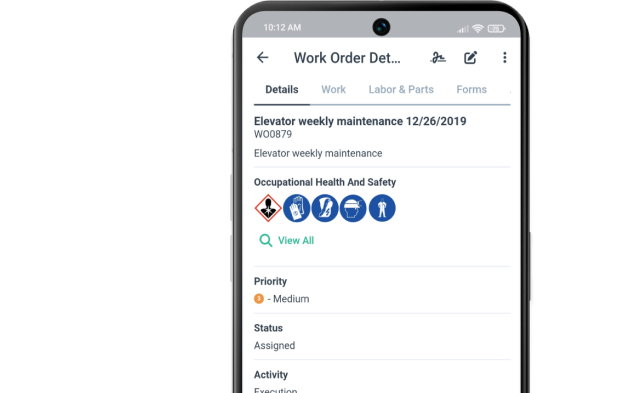
Technicians and field workers also benefit from WorkTrek’s mobile accessibility.
They can access all the asset details they need, check the assigned tasks, view work instructions, safety checklists, and more.
Source: WorkTrek
Additionally, they can upload photos, sign completed work orders, and update tasks in real time, boosting efficiency and reducing paperwork.
Source: WorkTrek
Users particularly appreciate how WorkTrek streamlines office and field operations, delivering significant time and cost savings.
Source: Crozdesk
The platform is also well-regarded for its outstanding customer support, with users praising their technical expertise and quick responses.
Source: Trustpilot
WorkTrek also stands out for its flexibility.
We make it easy to import your asset data, preventive maintenance schedules, parts, forms, and checklists.
Our team works with you to customize the platform to fit your business processes and integrate with your existing systems.
This way, you get the most out of WorkTrek, no matter the size of your operation.
As for pricing, WorkTrek comes in three subscription plans, depending on your goals, needs, and budget:
Source: WorkTrek
If you're interested, you can try WorkTrek for free to explore its features and see how it fits your business.
Contact us to learn more!
Limble CMMS
Limble CMMS is another web-based CMMS with features similar to WorkTrek.
It covers key maintenance management needs, including:
Work orders
Asset management
Preventive maintenance
Spare parts inventory management
Reporting
Like WorkTrek, Limble CMMS is highly customizable, allowing users to tailor the platform to their needs.
One area where this is particularly useful is work orders.
Just like in WorkTrek, each work order can include key details such as labor, materials, downtime, and attachments like photos or manuals.
Source: G2
Users can also automate work order generation based on asset performance data, streamlining workflows and minimizing downtime.
This feature and ease of use stand out in user reviews.
Limble users appreciate how easy it is to set up recurring tasks, ensuring timely asset maintenance.
Source: G2
However, Limble receives mixed feedback on its reporting capabilities.
Some users would prefer more flexibility in widget creation and an improved interface for generating reports.
Source: G2
Another drawback that one user mentioned on Reddit is the lack of a fully functional native mobile app.
Instead of a dedicated mobile application, Limble CMMS relies on a mobile-friendly app window, which is slow and occasionally buggy.
Source: Reddit
This can be frustrating for technicians and managers who need real-time access to work orders and asset information while on the go.
In terms of pricing, Limble CMMS does offer a free version.
However, it has significant limitations, allowing only four active recurring work orders and two work orders with attached procedures.
Paid plans start at $28 per user per month.
Source: Limble CMMS
Users who want access to advanced features like meter and threshold-based scheduling, parts inventory management, and time and cost tracking must opt for the Premium+ plan, which costs $69 per user per month.
They also provide a free trial and demo for those interested in exploring the software.
MaintainX
MaintainX is a web-based CMMS that works on both desktop and mobile devices.
Like WorkTrek and Limble CMMS, it allows users to assign work orders to technicians and manage scheduled tasks.
A standout feature is its User Capacity section, which visually tracks scheduled work, assigned personnel, and their weekly workload distribution, as you can see here:
Source: Maintain X
Users can then reorganize work orders with a simple drag-and-drop function and adjust individual team members’ availability as needed.
It’s important to know that this CMMS differentiates between its desktop and mobile versions.
The web application offers features not available on mobile, such as reporting, purchase orders, and a document library with templates and procedures.
On the other hand, the mobile app provides features that are not available on the web application, like:
QR and barcode scanning
Offline mode
Work order timer
The ability to track recent activity
As a result, users must switch between desktop and mobile to access different features, potentially disrupting workflows.
Users appreciate MaintainX's intuitive design and cloud-based functionality, allowing real-time work order assignments from anywhere.
Another advantage is linking sub-assets to their associated parts and vendors, simplifying inventory management and purchase order creation.
Source: Reddit
However, some users note that MaintainX lacks customization options compared to Limble.
Additionally, setting up PMs and assets requires going through MaintainX’s support team, which some find inconvenient.
Source: Reddit
MaintainX offers a free basic plan, but just like Limble’s, it is limited.
Namely, it allows only two work orders with attached procedures and two active repeating work orders.
Paid plans start at $16 per user per month.
Source: Maintain X
Those interested can book a tour on their website to explore its features further.
Maintenance Connection
Maintenance Connection by Accruent is another comprehensive web-based CMMS.
It was built for organizations across various industries, including healthcare, manufacturing, government, utilities, and energy development.
Unlike some other CMMS solutions, it can be hosted either online or on a company’s server, offering flexibility in deployment.
Source: Maintenance Connection
Users access the system entirely through a web browser, ensuring ease of use without additional software installation.
Its key features include work order management, a mobile CMMS application, reporting and analytics, and automated notifications.
Source: Maintenance Connection
It supports fixed and floating schedules for preventive maintenance, helping organizations plan maintenance more effectively.
Moreover, a customizable calendar allows users to view employee work schedules and their relationships, making workforce planning easier.
Source: G2
According to G2 reviews, users appreciate its strong asset management features, cost tracking, and inventory management, making it well-suited for companies managing multiple sites.
However, some find its customization options complex and reporting capabilities less intuitive than other CMMS platforms.
Source: G2
Despite these drawbacks, its robust capabilities make it a solid choice for enterprise-scale operations.
Maintenance Connection is pricier than the CMMS solutions reviewed so far.
Its costs start at $1,325 per user annually, plus an additional $700 per user per year for mobile access.
Source: Accruent
However, a free trial provides complete access to its features, making it easy to evaluate whether it meets your business needs.
eMaint CMMS by Fluke
eMaint CMMS by Fluke is a web-based maintenance management solution offered as a SaaS platform.
This model allows users to manage maintenance from anywhere.
Source: eMaint
Like the other CMMS platforms, web-based eMaint supports taking pictures of broken equipment, recording repair best practices, and sharing content across an organization.
Other key features include:
Work orders
Preventive maintenance scheduling
Asset management
Spare parts inventory
Condition monitoring
eMaint’s MX Mobile
According to Software Advice, eMaint stands out because of its integration with Fluke’s lineup of 13 different sensor types, enabling users to automate alerts and trigger work orders when asset metrics cross a defined threshold.
Source: eMaint
This proprietary sensor integration sets it apart from competitors, offering deeper condition monitoring capabilities.
Users appreciate its simplified tech interface and ability to automatically associate parts, steps, and tools with preventive maintenance tasks.
Source: Reddit
However, eMaint has some downsides, too.
For example, setting up reports isn’t always intuitive and can be complex, according to this user:
Source: Software Advice
eMaint’s pricing starts at $69 per user per month, with a minimum of three users required.
Some features, like work requests, are only available in higher-tier Pro and Enterprise plans, and setup costs vary based on the chosen plan.
A free demo is available for those interested in exploring eMaint further.
Fracttal One
Fracttal One is a web-based and AI-enabled maintenance management solution designed to help teams manage assets, schedule preventive maintenance, track costs, and monitor spare parts inventories.
Source: Fracttal
It also offers tools for work order management, performance tracking, and generating analytical reports.
https://youtu.be/rToRU52YojQ?si=EAGwDLBsMS7slx5y
Source: Fracttal on YouTube
Unlike some traditional CMMS platforms, Fracttal integrates artificial intelligence and the Internet of Things (IoT) to enhance predictive maintenance.
It also offers an AI-powered virtual assistant that recommends improvements to maintenance strategies.
Source: Software Advice
One advantage noted by users is its mobility across multiple platforms, allowing teams to work seamlessly from different devices.
Users also value the platform's real-time performance tracking, cost analysis, and sensor-based monitoring.
Source: Capterra
However, some users report drawbacks, such as the lack of automatic work duration tracking and the inability to differentiate time spent by individual technicians.
These are features that other CMMS platforms, like WorkTrek, handle more effectively.
Additionally, fieldwork can sometimes be slowed down due to system performance issues.
Fracttal One’s pricing is available upon request. If you are interested, you can schedule a demo or try out a free version.
Brightly Asset Essentials
Brightly Asset Essentials is the last web-based CMMS on our list today.
It offers comprehensive features for tracking work orders, managing preventive maintenance, and monitoring asset performance in real time.
Like other CMMS platforms, it allows users to create and assign work orders, schedule maintenance tasks, and generate reports on asset utilization.
Source: Slashdot
Key features include:
Mobile access for field technicians
Inventory management
Integration with existing enterprise systems
If you want a quick feature overview, check out the video below:
Brightly Asset Essentials Product Overview
According to Software Advice, this CMMS is particularly suited for managing public utilities, largely due to its GIS integration.
Asset Essentials can transform spreadsheet or database data into actual points on a map, allowing users to associate work orders with assets and track completed maintenance through both the web portal and mobile app.
Source: Software Connect
This real-time GIS mapping feature makes it stand out for organizations that need spatial asset management.
Many users find Asset Essentials easy to use and appreciate its module versatility, interconnectivity, and work order customization.
Source: Reddit
However, there are consistent complaints about the mobile app, like this one on GetApp:
Source: GetApp
This review on Reddit also mentions frequent crashes and poor responsiveness, which may hinder teams relying on mobile access.
Source: Reddit
So, if mobile access is a priority, you may want to consider alternatives.
The pricing is custom, but similar solutions typically range from $10,000 to $30,000 per year, excluding setup costs.
If you're interested, you can schedule a demo to learn more.
Conclusion
Choosing the right web-based CMMS can significantly improve asset performance by streamlining maintenance operations, minimizing downtime, and maximizing asset performance.
Each platform we reviewed has strengths, from WorkTrek’s all-in-one flexibility to specialized solutions for predictive maintenance, GIS mapping, or industry-specific needs.
The key is choosing software that fits your workflows, team structure, and budget.
With so many options available, trying them for yourself is the best way to decide.
Most providers offer free trials, demos, or guided tours, which allow you to test their usability, customization options, and support.
So, take advantage of that.

Operations & Maintenance
Ultimate guide to predictive maintenance
Keeping equipment running smoothly is a top priority for businesses across industries. Breakdowns cost money, waste time, and frustrate everyone involved. Predictive maintenance could be the solution to improve your maintenance operations.
Predictive maintenance offers a smarter approach by using data to spot problems before they cause failures. Unlike traditional maintenance methods that wait for equipment to break down or follow rigid schedules, predictive maintenance uses sensors, data analysis, and machine learning to anticipate exactly when maintenance is needed.
Illustration: WorkTrek / Data: Omega Engineering
Getting started with predictive maintenance doesn't have to be complicated. The process typically begins by identifying critical assets that would cause significant problems if they failed, followed by installing IoT sensors to collect data on how these assets perform.
This approach has transformed maintenance from a reactive necessity into a strategic advantage that reduces downtime, extends equipment life, and significantly cuts costs.
Key Takeaways
Predictive analytics and IoT sensors to detect potential failures before they happen, reducing unplanned downtime by up to 50%.
Implementation requires identifying critical assets, installing predictive maintenance solutions, and appropriate monitoring technology
The future of maintenance strategies involves increasingly sophisticated AI algorithms, wider integration across industrial systems, and greater sustainability through optimized resource use.
Fundamentals of Predictive Maintenance
Predictive maintenance forms the backbone of modern industrial reliability strategies. It leverages data analytics to anticipate equipment failures before they occur, transforming traditional maintenance paradigms through technological innovation.
Definition and Concepts
Predictive maintenance is an advanced strategy that uses condition monitoring tools and data analysis to predict when equipment will need maintenance.
Source: WorkTrek
Unlike reactive maintenance, which addresses issues after failure, or preventive maintenance, which follows fixed schedules, predictive maintenance anticipates problems by analyzing equipment performance data.
The core concept relies on identifying patterns that indicate potential failures. This approach employs various technologies including:
Vibration analysis
Infrared thermography
Oil analysis
Ultrasonic inspection
Motor circuit analysis
These techniques help maintenance teams detect anomalies in equipment behavior that might signal impending failures. The goal is to perform maintenance only when necessary, reducing costs while maximizing equipment uptime.
Evolution and History
Predictive maintenance has evolved significantly since its earliest applications in the mid-20th century. Initially, maintenance relied solely on human observation and basic tools to identify unusual equipment behavior.
The 1970s saw the introduction of computerized maintenance management systems (CMMS), which allowed for better tracking of maintenance activities and equipment history.
With advances in sensor technology, condition monitoring techniques became more sophisticated by the 1980s and 1990s.
Illustration: WorkTrek / Quote: SC training
The true transformation occurred in the early 2000s with the rise of the Internet of Things (IoT) and big data analytics. These technologies enabled:
Real-time equipment monitoring
Advanced pattern recognition
Integration with enterprise systems
Cloud-based data storage and analysis
Today's predictive maintenance solutions incorporate artificial intelligence and machine learning to improve prediction accuracy, provide actionable insights, and predict potential failures.
Importance in Industry
Predictive maintenance delivers significant value across manufacturing, energy, transportation, and other industrial sectors.
Organizations implementing these strategies experience reduced unplanned downtime and optimized maintenance schedules.
The financial benefits of a proactive maintenance strategy are substantial:
25-30% reduction in maintenance costs
70-75% decrease in breakdowns
35-45% reduction in downtime
20-25% increase in production
Illustration: WorkTrek / Data: Arshon Technology
Beyond cost savings, predictive maintenance enhances workplace safety by preventing catastrophic equipment failures and improving maintenance operations. It also extends asset lifespans by addressing issues before they cause significant damage.
Manufacturing operations particularly benefit as production interruptions can cascade through supply chains. Maintenance teams transition from reactive firefighting to strategic asset management, allowing organizations to optimize resources and improve operational reliability.
Technological Pillars of Predictive Maintenance
https://youtu.be/2_o1SDy6__U
Predictive maintenance technologies transform raw data into actionable insights. These foundational elements enable organizations to anticipate equipment failures and schedule maintenance activities at optimal times.
Data Collection and Management
Data collection forms the backbone of any predictive maintenance program. Organizations need reliable systems to gather information from equipment through sensors and monitoring devices.
The quality and quantity of data directly impact the accuracy of predictions. High-quality data includes:
Equipment parameters: Temperature, vibration, pressure, and flow rates
Operational variables: Production rates, runtime hours, and load conditions
Maintenance records: Past repairs, replacements, and failure incidents
Data management systems organize historical data in structured databases, making them accessible for analysis. Many organizations implement data-cleaning protocols to remove inconsistencies and errors that could affect analytical accuracy.
Effective data governance policies ensure proper information handling throughout its lifecycle, from collection to storage and analysis.
Machine Learning and Analytics
Advanced analytics and machine learning algorithms process collected data to identify patterns that precede equipment failure. These tools can detect subtle changes in operational parameters that might escape human observation.
Illustration: WorkTrek / Data: MIT Technology Review
Predictive maintenance analytics typically involves several techniques:
Anomaly detection: Identifying unusual patterns in equipment behavior
Pattern recognition: Finding correlations between operational conditions and failures
Failure prediction models: Calculating probability and timing of potential breakdowns
Machine learning models improve over time as they process more data, making predictions increasingly accurate. Organizations often start with simple statistical models before advancing to more complex neural networks and deep learning approaches.
The most sophisticated systems can differentiate between normal variations and warning signs of impending failure.
Internet of Things (IoT) Integration
IoT technology connects physical equipment to digital monitoring systems through networked sensors, creating a constant stream of real-time data about machine conditions and performance. These smart sensors are part
IoT integration enables:
Real-time monitoring: Continuous assessment of equipment health
Remote diagnostics: Evaluation of machinery status from anywhere
Automated alerts: Instant notifications when parameters exceed thresholds
Illustration: WorkTrek / Data: facilio
Modern sensors can measure multiple parameters simultaneously, including temperature, vibration, sound, and electrical current.
They are becoming increasingly affordable and compact, allowing extensive deployment across facilities.
Edge computing devices can process information locally before sending it to central systems, reducing bandwidth requirements.
Cloud Computing and Storage
Cloud platforms provide the computational power and storage capacity for predictive maintenance programs. They offer scalable resources that adjust to changing data volumes and analysis needs.
Key benefits of cloud-based predictive maintenance include:
Scalable storage: Capacity to store vast amounts of historical and real-time data
Powerful processing: Resources to run complex analytical models quickly
Accessibility: Data and insights available across multiple locations and devices
Cost efficiency: Pay-as-you-go models that eliminate large capital investments
Many organizations implement hybrid systems that combine on-premises solutions with cloud capabilities. This approach balances security concerns with the advantages of cloud computing.
Advanced security measures protect sensitive operational data while allowing maintenance teams and decision-makers appropriate access.
Implementation Strategies
Implementing predictive maintenance requires careful planning, appropriate tools, and organizational readiness. Businesses can achieve significant returns by following structured approaches addressing technical and operational aspects.
Assessing Readiness
Before implementing predictive maintenance, organizations must evaluate their current maintenance practices and technical infrastructure. This assessment helps identify gaps and establishes a baseline for improvement.
Start by examining your existing equipment and determining which assets would benefit most from predictive monitoring. Facility leaders should prioritize critical machinery that causes significant downtime when failures occur.
Next, assess your data collection capabilities. You'll need:
Sensors and IoT devices for data gathering
Network infrastructure to transmit data
Storage solutions for historical information
Analytical tools for processing
Finally, evaluate your team's technical skills. Staff may need training in data analysis, condition monitoring techniques, and new maintenance software platforms.
Creating a skills inventory helps identify where additional training or hiring might be necessary.
Creating an Implementation Plan
A structured implementation plan breaks down the predictive maintenance journey into manageable phases. Most successful programs start with pilot projects before scaling across operations.
Begin by establishing clear objectives with measurable outcomes, such as:
Reduction in unplanned downtime (%)
Decrease in maintenance costs ($)
Extension of equipment lifespan (years)
Improvement in overall equipment effectiveness (OEE)
Create a timeline with specific milestones for implementation. Effective strategies include starting with a small set of critical assets to demonstrate value quickly.
Allocate appropriate resources, including budget, personnel, and time. The plan should include stakeholder communication strategies to ensure buy-in from management, maintenance teams, and operators. Regular progress reviews help keep implementation on track.
Choosing the Right Tools and Platforms
Selecting appropriate technology forms the backbone of any predictive maintenance program. The market offers numerous solutions, from specialized sensors to comprehensive software platforms.
For data collection, consider these common sensor types:
Source: WorkTrek
Predictive maintenance platforms should integrate with existing CMMS (Computerized Maintenance Management Systems) for seamless workflow. Look for solutions offering:
User-friendly dashboards
Customizable alert thresholds
Mobile accessibility
Machine learning capabilities
Cloud-based solutions often provide greater scalability and easier updates than on-premises options. As a maintenance manager, when making selections, balance your immediate needs with future growth potential.
Overcoming Common Challenges
Implementing predictive maintenance inevitably presents obstacles. Understanding these challenges helps organizations prepare effective solutions in advance.
Data Quality
Data quality issues frequently undermine predictive models. Establish data governance protocols to ensure consistent collection methods and regular sensor calibration. Creating a "data dictionary" helps maintain standardization across systems.
Budget Constraint
Budget constraints can limit implementation scope. Address this by calculating and presenting ROI projections to leadership. Failure prevention and efficiency improvements typically justify the investment.
Acceptance to Change
Resistance to change from maintenance teams is common. Overcome this through comprehensive training programs and involving technicians in the implementation process. Highlight how predictive tools complement rather than replace their expertise.
Integration
Integration with legacy systems presents technical challenges. Consider middleware solutions or API connectors to bridge old and new platforms. Phased migration approaches minimize disruption to ongoing operations.
Predictive Maintenance Techniques
https://youtu.be/HbRxh2upmM8
Effective predictive maintenance depends on using the right tools to monitor equipment conditions. These monitoring techniques detect early warning signs of equipment failure and provide data for making informed maintenance decisions.
Vibration Analysis
Vibration analysis is one of the most widely used predictive maintenance techniques. It measures the vibration patterns of rotating machinery to detect potential issues before they cause failure.
Equipment like motors, pumps, and turbines produce specific vibration signatures when operating correctly. When components wear or fail, these vibration patterns change in distinctive ways.
Technicians use specialized sensors and equipment to collect vibration readings. The data is then analyzed using specialized software that compares current readings to established baselines.
Common issues detected through vibration analysis include:
Misalignment
Imbalance
Bearing failures
Looseness
Resonance issues
This technique is particularly valuable for detecting issues in rotating equipment where internal problems often manifest as changes in vibration patterns.
Thermal Imaging
Thermal imaging uses infrared cameras to capture temperature variations across equipment. It detects abnormal heat patterns that often indicate electrical or mechanical problems.
These cameras create visual heat maps where color variations represent different temperatures. Hot spots in equipment often signal potential failure points or energy inefficiencies.
Real-time data from thermal sensors helps maintenance teams identify issues like:
Overheating electrical connections
Failing insulation
Friction problems in mechanical components
Blockages in pipes or cooling systems
Overloaded circuits
Thermal imaging is non-invasive and can be performed while equipment runs, making it ideal for electrical systems, motors, and areas with multiple components.
Oil Analysis
Oil analysis involves examining lubricant samples to determine equipment condition. This technique is particularly valuable for machinery with lubrication systems, such as engines, gearboxes, and hydraulic systems.
Technicians collect oil samples and send them to specialized laboratories. The analysis examines several factors:
Source: WorkTrek
Results help identify issues like bearing wear, contamination, or inadequate lubrication before they cause catastrophic failure. Regular oil analysis also helps optimize oil change intervals, potentially reducing costs and downtime.
Ultrasonic Monitoring
Ultrasonic monitoring detects high-frequency sounds produced by equipment issues that are often inaudible to human ears.
This proactive maintenance approach identifies problems early in their development.
Specialized ultrasonic instruments convert these high-frequency sounds into audible ranges or visual displays. Technicians can then identify abnormal patterns that indicate potential problems.
Common applications for ultrasonic monitoring include:
Detecting compressed air, gas, or vacuum leaks
Identifying bearing issues before they appear in vibration analysis
Checking steam trap functionality
Evaluating electrical equipment for arcing or corona discharge
Testing valve operation
This technique proves especially effective for detecting issues in pressurized systems and early-stage bearing failures before they cause significant damage.
Electrical Inspections
Electrical inspections employ various techniques to monitor the condition of electrical equipment and prevent unexpected failures. These inspections help identify potential issues before they lead to downtime or safety hazards.
Predictive maintenance for electrical systems typically includes:
Motor circuit analysis measures resistance, impedance, and other electrical parameters to detect developing issues. Changes in these readings often indicate problems like winding deterioration or insulation breakdown.
Power quality analysis monitors voltage, current, and power factor. Deviations can signal issues with the electrical supply or equipment performance.
Technicians collect data using specialized equipment, such as motor circuit analyzers, power quality meters, and insulation testers.
This data helps identify developing faults in motors, transformers, and other electrical components before failure.
Predictive Maintenance in Different Industries
Predictive maintenance strategies are implemented differently across various sectors, with each industry adapting techniques to match their specific equipment needs and operational challenges. The benefits of reduced downtime and extended equipment life are universal, but the applications vary significantly.
Source: WorkTrek
Manufacturing Sector
In manufacturing, predictive maintenance prevents failures, reduces costs, and significantly improves production efficiency. Factories employ vibration analysis sensors on motors, pumps, and assembly line equipment to detect anomalies before failure occurs.
Temperature monitoring helps identify overheating components in metal processing and chemical manufacturing. These early warnings prevent catastrophic breakdowns that could halt entire production lines.
Many manufacturers use AI-powered systems to analyze equipment performance data. These systems can predict when a CNC machine might fail or when robotic arms need servicing, often weeks before problems become apparent.
The ROI for manufacturing predictive maintenance is particularly impressive, with companies reporting:
25-30% reduction in maintenance costs
70-75% decrease in breakdowns
35-45% reduction in downtime
Implementation typically focuses on critical equipment first, gradually expanding to cover secondary machinery as the program proves successful.
Aerospace and Aviation
Aircraft maintenance demands exceptional precision and reliability. Predictive maintenance in aerospace uses advanced sensors and data analytics to monitor engine performance, structural integrity, and critical flight systems.
Engine health monitoring systems track vibration patterns, exhaust gas temperatures, and fuel efficiency metrics. These metrics help technicians identify potential turbine failures or combustion issues before they affect flight safety.
Airlines implement digital twin technology to create virtual replicas of aircraft components. These digital models simulate wear patterns and predict when parts will reach critical failure thresholds.
Flight data recorders provide valuable information for predictive algorithms. Maintenance systems can identify subtle patterns that precede component failures by analyzing thousands of flights.
Regulatory requirements make aerospace predictive maintenance particularly sophisticated. Systems must predict failures and document maintenance needs to comply with strict safety standards from aviation authorities.
Energy and Utilities
Power generation and distribution systems rely heavily on predictive maintenance strategies to deliver consistent service. In this sector, equipment failures can affect thousands of customers and create safety hazards.
Wind farms use vibration sensors and oil analysis to monitor turbine gearboxes and bearings. These technologies help technicians identify when a turbine needs maintenance before it stops generating electricity.
Power plants continuously monitor generator temperature, pressure, and vibration. AI systems analyze this data to predict failures in cooling systems, turbines, and electrical components.
Grid infrastructure benefits from infrared imaging technology that identifies hot spots in transmission lines. These hot spots often indicate connection problems that could lead to power outages if left unaddressed.
Smart meters and IoT devices throughout distribution networks create a comprehensive data picture. This data helps utilities predict where maintenance is needed most urgently, optimizing their maintenance resources.
Transportation and Transit
Public transportation systems and shipping fleets maintain complex equipment that must operate reliably under varying conditions. Predictive maintenance helps these organizations balance safety, reliability, and maintenance costs.
Rail operators use track-mounted sensors and train-based monitoring systems to collect data on wheel conditions, track integrity, and signaling system performance. This data feeds predictive models that schedule maintenance before derailments or service disruptions occur.
Commercial trucking fleets implement telematics systems that monitor engine performance, transmission health, and brake systems. These systems alert fleet managers when a vehicle shows signs of impending failure.
Maritime shipping employs hull integrity monitors and engine performance sensors. These technologies help prevent costly breakdowns while vessels are at sea, where repairs are difficult and expensive.
Bus transit systems use predictive maintenance to optimize engine performance and reduce emissions. By identifying fuel system issues early, these organizations maintain service schedules while meeting environmental requirements.
Healthcare Equipment
Hospital systems rely on predictive maintenance for critical medical equipment that directly impacts patient care. Downtime for these systems can delay treatment and create health risks.
MRI machines and CT scanners contain sophisticated cooling systems and moving parts that benefit from predictive monitoring. Sensors track helium levels, temperature fluctuations, and mechanical vibrations to prevent unexpected failures during patient procedures.
Patient monitoring systems undergo continuous performance checks. Predictive algorithms analyze signal quality and power system stability to ensure these critical systems function properly during emergencies.
Laboratory equipment like centrifuges and analyzers contain predictive maintenance capabilities that track motor performance and calibration drift. These features help maintain testing accuracy and prevent diagnostic errors.
Facilities management extends predictive maintenance to building systems that affect patient care. HVAC, water, and electrical systems are monitored to prevent environmental issues from compromising sterility in operating rooms or affecting sensitive equipment performance.
Benefits and ROI
Predictive maintenance delivers significant financial and operational advantages for organizations that implement it effectively.
Companies can expect concrete returns on their investment through several key pathways that impact both short-term budgets and long-term strategic goals.
Reducing Downtime
Unplanned downtime poses one of the costliest threats to manufacturing and industrial operations. Predictive maintenance directly addresses this challenge by identifying potential failures before they occur. Studies show that implementing predictive maintenance can reduce unplanned downtime by up to 50%, resulting in substantial productivity gains and cost savings.
Illustration: WorkTrek / Data: Williams Comfort Air
Companies using predictive maintenance typically experience:
30-50% reduction in equipment failures
10-40% decrease in maintenance costs
25-30% reduction in maintenance labor hours
These improvements translate to real financial benefits. For example, a manufacturing facility that loses $10,000 per hour during equipment failures can save hundreds of thousands annually by preventing just a few major breakdowns.
The ROI is particularly evident in industries with high-value production processes with substantial downtime costs.
Extending Equipment Life
Predictive maintenance significantly increases the usable lifespan of valuable machinery and equipment. Organizations avoid premature replacement costs by addressing small issues before they escalate into major problems.
Equipment lifetime extensions typically range from 20-40%, representing enormous capital expense deferrals. A company that usually replaces a $500,000 machine every 10 years might extend its life by 3-4 years through consistent predictive maintenance.
Illustration: WorkTrek / Data: Innovative
This extension creates two financial benefits:
Deferred capital expenditures
Improved return on existing assets
The practice also optimizes maintenance scheduling by focusing resources on equipment needing attention rather than following arbitrary time-based maintenance schedules. This targeted approach extends equipment lifespan while reducing overall maintenance costs.
Improving Safety and Compliance
Predictive maintenance directly enhances workplace safety by reducing the risk of catastrophic equipment failures, which can lead to worker injuries, environmental incidents, and regulatory violations.
Key safety benefits include:
Fewer emergency repair situations where technicians work under pressure
Reduced risk of dangerous equipment malfunctions
Better compliance with regulatory requirements
Documentation of maintenance practices for audit purposes
Organizations in highly regulated industries like pharmaceuticals, food processing, and energy production gain particular value from these safety improvements. The predictive approach creates verifiable records of maintenance activities that satisfy regulatory requirements.
Illustration: WorkTrek / Data: Fast Funnel
The ROI calculation must include potential costs avoided, such as workers' compensation claims, regulatory fines, legal expenses, and production delays following safety incidents. These avoided costs often represent some of predictive maintenance programs' most significant financial benefits.
Enhancing Operational Efficiency
Predictive maintenance transforms maintenance from a cost center to a strategic function that enhances overall efficiency. Organizations implementing these programs typically report:
10-20% increase in production capacity
20-25% reduction in maintenance overhead
35-45% decrease in spare parts inventory needs
The data gathered through predictive maintenance systems provides invaluable insights beyond maintenance alone. Production managers gain visibility into equipment performance patterns, allowing them to optimize operational parameters.
Resource allocation improves dramatically as maintenance teams focus on genuine issues rather than routine inspections of healthy equipment. This transition from reactive to predictive approaches makes maintenance personnel more productive and valuable to the organization.
The ROI calculation should include these efficiency gains alongside direct maintenance cost reductions. Many organizations find their maintenance teams become smaller yet more effective after implementing predictive maintenance.
Benchmarking Against Industry Standards
According to industry research, world-class maintenance organizations typically achieve:
Source: WorkTrek
The best-performing organizations follow standardized inspection protocols and utilize comprehensive performance indicators. These indicators go beyond simple uptime measurements to include mean time to repair and maintenance cost per asset.
Effective benchmarking requires regular assessment of your maintenance program against these standards. Companies that review quarterly performance show 37% better results than those that benchmark annually.
Continuous Improvement and Innovation
Leading organizations establish dedicated improvement teams that regularly analyze performance data and recommend process adjustments. These teams typically meet weekly to review maintenance metrics and identify optimization opportunities.
Machine learning models benefit from continuous refinement with new data. Companies updating their predictive models quarterly achieve 40% better accuracy than static models.
AI-powered predictive maintenance continues to evolve with technologies like:
Digital twins that create virtual replicas of physical assets
Edge computing for real-time analysis without cloud connectivity
Augmented reality tools for maintenance technicians
Automated root cause analysis to prevent recurring issues
Organizations that allocate 5-10% of their maintenance budget to innovation initiatives consistently outperform competitors in equipment reliability and cost efficiency.
Predictive Maintenance and Sustainability
Predictive maintenance strategies extend beyond operational efficiency to deliver significant environmental benefits. Forward-thinking organizations now recognize how these approaches can reduce waste and promote more sustainable resource consumption.
Impact on Environmental Footprint
Predictive maintenance significantly reduces an organization's environmental impact through multiple channels. Preventing catastrophic equipment failures minimizes the waste of materials, energy, and resources that would otherwise be consumed in emergency repairs.
Equipment running at optimal performance levels consumes less energy. Studies show that properly maintained machines can use up to 15% less electricity than those operating in suboptimal conditions. This translates to lower carbon emissions and reduced utility costs.
Illustration: WorkTrek / Data: Ecologi
Advanced downtime tracking software helps organizations identify energy inefficiencies before they become significant problems. This proactive approach prevents the unnecessary waste of resources.
Predictive maintenance extends equipment's lifespan, which means fewer machines are manufactured, and fewer end up in landfills. This reduces both upstream manufacturing impacts and downstream waste disposal issues.
Encouraging Responsible Consumption
Predictive maintenance enables businesses to make more informed decisions about resource allocation and equipment replacement. Rather than following fixed replacement schedules, companies can maximize the useful life of assets without compromising performance.
This approach aligns with circular economy principles by emphasizing repair and maintenance over replacement. Organizations can reduce maintenance costs through more efficient resource use while achieving sustainability KPIs.
Data-driven maintenance decisions lead to more precise ordering of replacement parts and supplies. This prevents overstocking and reduces waste from unused materials that may become obsolete.
By highlighting the connection between equipment performance and resource consumption, predictive maintenance creates awareness about sustainability throughout organizations. Maintenance teams become champions for both operational efficiency and environmental responsibility.
The Future of Predictive Maintenance
With the explosion in AI and Machine learning, predictive maintenance is evolving rapidly. These technical innovations are reshaping how industries monitor and maintain their assets.
Several key developments will transform predictive maintenance practices in the coming years.
Emerging Technologies and Trends
Several emerging technologies are revolutionizing the predictive maintenance landscape.
Digital twins are creating virtual replicas of physical assets, allowing for real-time simulation and testing without disrupting operations. By analyzing historical and real-time data, these models can predict failures with increasing accuracy.
Source: WorkTrek
Edge computing is gaining traction by processing data directly on machinery rather than sending everything to the cloud. This reduces latency and enables faster decision-making for critical equipment.
IoT sensors are becoming smaller, more affordable, and more powerful. Modern sensors can detect subtle changes in vibration, temperature, and sound previously undetectable, providing earlier warning signs of potential failures.
Augmented reality (AR) tools are helping maintenance technicians visualize repair procedures and access real-time data while working on equipment, significantly reducing repair times and errors.
Integrating with Industry 4.0
Predictive maintenance is a cornerstone of Industry 4.0, where smart factories rely on interconnected systems. This integration creates unified data ecosystems where maintenance insights can influence production planning and vice versa.
Smart factories leverage predictive maintenance as part of their continuous improvement processes. These facilities can automatically adjust production schedules based on maintenance forecasts, minimizing downtime.
The convergence with supply chain management systems enables just-in-time spare parts delivery, reducing inventory costs and ensuring parts are available precisely when necessary for maintenance.
Key Industry 4.0 integration points include:
Production planning systems
Quality control processes
Supply chain management
Energy management systems
These integrations create feedback loops that enhance predictive algorithms and overall operational efficiency.
Potential for Artificial Intelligence Advancements
AI and machine learning will drive the next generation of predictive maintenance solutions. Current algorithms focus on detecting known failure patterns, but future AI will identify previously unknown relationships between operating conditions and equipment failures.
Unsupervised learning algorithms will recognize subtle anomalies without being explicitly programmed to look for them. This capability is particularly valuable for complex systems where failure modes may not be fully understood.
Natural language processing will enable maintenance systems to extract insights from unstructured data sources like technician notes, manufacturer documentation, and industry forums.
Explainable AI will provide clearer reasoning behind predictions, helping maintenance teams understand when and why a failure might occur. This transparency builds trust in AI recommendations and enables better human-machine collaboration.
Federated learning will allow organizations to benefit from industry-wide failure data while maintaining proprietary information security.
Preparing for the Skills of Tomorrow
The evolution of predictive maintenance is creating demand for new skill sets among maintenance professionals. Technical teams increasingly need data analysis capabilities alongside traditional mechanical and electrical knowledge.
Training programs are adapting to include:
Data interpretation fundamentals
Basic programming concepts
Understanding of sensor technology
Critical thinking about algorithmic recommendations
llustration: WorkTrek / Data: Workable
Cross-functional teams combining IT expertise with domain-specific maintenance knowledge are becoming standard in organizations implementing advanced predictive maintenance.
The human element remains crucial despite automation advances. Experienced technicians' intuition and contextual understanding complement AI systems, creating more robust maintenance strategies than either could achieve alone.
Organizations that invest in upskilling current maintenance staff rather than simply replacing them with data scientists typically see more successful implementations and better retention of valuable institutional knowledge.
Summary
Predictive maintenance represents a paradigm shift in how industries approach equipment management. It offers a proactive maintenance strategy that leverages data, predictive analytics, and machine learning to anticipate and prevent equipment failures.
Illustration: WorkTrek / Quote: SC training
Organizations can significantly reduce maintenance costs, unplanned downtime, and equipment failures by identifying critical assets and implementing advanced predictive maintenance solutions. This comprehensive guide has explored the various predictive maintenance technologies, such as vibration analysis and oil analysis, that detect potential issues early, ensuring optimal equipment health and performance.
Integrating IoT sensors, cloud computing, and AI-driven predictive algorithms further enhances the ability to collect and analyze data in real-time, enabling maintenance teams to make informed decisions and schedule maintenance activities effectively.
As industries continue to embrace these technologies, predictive maintenance will be crucial in enhancing operational efficiency, extending asset lifespan, and promoting sustainability. It will ultimately transform maintenance strategies for a more reliable and cost-effective future.

Compliance & Control
10 Tips for Better Maintenance Department Compliance
Many maintenance managers struggle to balance day-to-day operations and compliance requirements. Important compliance details can slip through the cracks between equipment checks, repair schedules, and documentation, leading to serious consequences, including fines and workplace incidents.
Source: WorkTrek
The tips we're about to share will help you build a more compliant maintenance department without adding unnecessary complexity to your workload. These practical strategies can be implemented gradually to create lasting improvements in your compliance efforts.
Key Takeaways
A strong compliance culture reduces risks and builds trust throughout the organization.
Well-documented procedures, preventive maintenance plans, and regular audits form the foundation of maintenance compliance.
Technology solutions can simplify compliance tracking and reporting while improving overall maintenance efficiency.
1. Prioritize Compliance as part of Your Maintenance Plan
Make maintenance compliance part of your maintenance strategy. This approach requires following regulations, standards, and best practices that protect workers, equipment, and businesses from costly violations and hazardous conditions.
Defining Maintenance Compliance
Maintenance compliance refers to following established rules, regulations, and standards when performing maintenance activities. It involves documenting all maintenance department policies and procedures to ensure consistent organizational application.
Compliance covers several key areas:
Equipment maintenance schedules
Safety protocols
Record-keeping requirements
Training certifications
Environmental regulations
Fire Safety
Source: WorkTrek
For maintenance teams, compliance means creating systematic approaches to work. This includes developing detailed maintenance programs that specify how and when equipment should be inspected, repaired, and replaced.
Well-defined compliance frameworks help maintenance departments avoid guesswork. They provide clear guidelines for acceptable maintenance practices according to industry, government, and company standards.
The Importance of Following Standards
Following maintenance compliance standards will protect your organization from multiple risks. Depending on the severity of the violation, financial penalties for non-compliance can reach thousands or even millions of dollars.
Beyond financial concerns, proper compliance:
Reduces workplace accidents
Extends equipment lifespan
Minimizes unplanned downtime
Improves operational efficiency
Enhances company reputation
Reduce reactive maintenance tasks
Improves preventive maintenance compliance rate
Streamlines facilities management
Staying consistent when implementing compliance measures ensures that safety regulations and protocols are followed across all maintenance activities. This approach can create a safety culture to improve FM compliance and ensure peak performance.
Illustration: WorkTrek / Data: Touchpoint
Track and report on your preventive maintenance compliance score to reduce costly repairs.
Equipment failures due to poor maintenance compliance can lead to production losses, which often far exceed the cost of implementing proper maintenance procedures.
Regulatory Bodies and Requirements
Various regulatory agencies establish and enforce maintenance compliance requirements. OSHA (Occupational Safety and Health Administration) sets workplace safety standards, including requirements for equipment maintenance.
Illustration: WorkTrek / Data: secureframe
Other significant regulatory bodies include:
EPA (Environmental Protection Agency)
FDA (Food and Drug Administration)
DOT (Department of Transportation)
Industry-specific agencies
Each industry faces unique regulatory challenges. Healthcare facilities must meet strict infection control standards, while manufacturing plants might focus on machine guarding and lockout/tagout procedures.
Compliance guidelines for industrial maintenance vary by sector, but remember that they are designed to protect workers, the public, and the environment. These agencies conduct regular audits to verify compliance with established standards.
It is important for maintenance departments to stay current with changing regulations. This requires ongoing education and incident tracking to ensure continued compliance with evolving standards.
2. Develop a Compliance-Oriented Culture
Creating a strong compliance culture is essential for maintenance departments to meet regulatory requirements consistently. A well-established culture embeds compliance into daily operations rather than treating it as a separate activity.
Leadership and Management Commitment
Illustration: WorkTrek / Quote: Rock Blog
Effective compliance begins with a visible commitment from leadership. When managers demonstrate that compliance is a priority, employees follow suit. Leaders should regularly discuss compliance in meetings and communications.
Management must allocate appropriate resources for compliance activities. This includes providing time for training and purchasing necessary equipment or software to track compliance efforts.
Leaders should develop comprehensive policies and procedures that are clear and accessible. These documents establish expectations and guide employees.
Recognition programs that reward compliance achievements help reinforce the importance of following protocols. Celebrating teams or individuals who excel at compliance motivates others to do the same.
Training and Employee Empowerment
Regular training sessions keep compliance requirements fresh in employees' minds. Training should target specific job functions rather than a one-size-fits-all approach.
Illustration: WorkTrek / Data: Leapsome
Employees need to understand not just what to do but why compliance matters. Explaining the reasoning behind regulations helps workers remember requirements and make better decisions.
Continuous documentation and evidence collection ensure controls are working properly. Training programs should teach employees how to document their compliance activities effectively.
Empowering employees to report potential issues without fear of retaliation creates a stronger compliance environment. Staff members are the organization's eyes and ears, spotting red flags that need attention.
Communication and Documentation
Clear communication channels ensure compliance information reaches all team members. Regular updates about changing regulations help maintenance teams stay current.
Documentation systems should be simple enough that employees can easily record compliance activities. Complex systems discourage proper documentation.
Illustration: WorkTrek / Data: Atlassian
Using technology tools for tracking incidents, conducting audits, and managing training programs streamlines compliance efforts. These tools provide evidence that protocols are being followed.
Visual reminders like posters, checklists, and dashboards keep compliance requirements visible. These simple tools help maintenance teams incorporate compliance into their daily routines.
Transparency about compliance successes and failures builds trust. Sharing positive outcomes and areas needing improvement demonstrates an organizational commitment to continuous improvement.
3. Optimize Maintenance Policies and Procedures
Clear documentation forms the backbone of any successful maintenance department. Well-defined policies and procedures help ensure regulatory compliance, promote workplace safety, and create consistent operations across your organization.
Creating Effective Policies to Reduce Compliance Risks
Start by documenting all maintenance department policies in clear, accessible language. These documents should outline responsibilities, compliance requirements, and safety protocols for all maintenance activities.
Effective policies should address:
Equipment-specific guidelines for operation and maintenance
Safety requirements including PPE usage and hazard protocols
Compliance standards relevant to your industry
Emergency response procedures for equipment failures
When creating policies, involve experienced maintenance staff. Their practical knowledge helps ensure policies reflect real-world conditions rather than theoretical ideals.
Review regulations from OSHA, EPA, and industry-specific bodies to ensure your policies meet all compliance requirements. Use straightforward language that all employees can understand regardless of technical background.
Standard Operating Procedures (SOPs)
SOPs translate broader policies into specific step-by-step instructions for completing maintenance tasks. Create detailed maintenance programs that outline exactly how work should be performed.
Each SOP should include:
Purpose and scope of the procedure
Required tools and materials
Step-by-step instructions with safety checkpoints
Troubleshooting guidelines for common issues
Quality control measures to verify work
Illustration: WorkTrek / Data: inFlow Blog
Use visual aids like diagrams, photos, and checklists to enhance comprehension. These visuals help clarify complex procedures and reduce the risk of misinterpretation.
Consider creating digital SOPs accessible via tablets or smartphones. This ensures technicians always have the most current procedures when performing maintenance tasks.
Regular Policy Reviews to Ensure Compliance
Maintenance compliance isn't a one-time achievement but requires consistent implementation and ongoing attention. Schedule quarterly or biannual reviews of all policies and procedures.
During these reviews:
Update documentation to reflect new equipment or processes
Incorporate feedback from maintenance technicians
Address any compliance gaps identified during audits
Revise procedures based on incident reports or near-misses
Use a tracking system to manage document versions and ensure all staff work from current policies. Many maintenance management systems include document control features for this purpose.
Assign specific team members responsibility for policy updates. This accountability ensures reviews happen on schedule and necessary changes are made.
4. Improve Audit and Monitoring Systems
Regular audits and consistent monitoring serve as the backbone of maintenance compliance programs. These processes help identify gaps, prevent issues, and create a measurable pathway to improvement.
Implementing Internal Audits
Effective internal audits require clear structure and consistent scheduling.
Create a preventive maintenance task list that covers all maintenance compliance areas to ensure nothing is overlooked.
This checklist should include equipment inspections, documentation reviews, and safety protocol verification.
The audit team should include members from different departments to provide diverse perspectives. Cross-departmental involvement helps identify blind spots that specialists might miss.
Training auditors properly ensures they understand maintenance operations' compliance requirements and technical aspects. Well-trained auditors collect more accurate data and provide more useful recommendations.
Documentation of audit findings must be standardized and accessible. Using digital tools allows for better tracking of recurring issues and improvement trends over time.
Continuous Monitoring Techniques
Daily monitoring complements formal audits by catching issues before they escalate. Implementing computerized maintenance management systems (CMMS) provides real-time insights into compliance status and maintenance activities.
Key performance indicators (KPIs) should be established for maintenance compliance:
Equipment downtime percentage
Preventive maintenance tasks compliance and completion rates
Safety incident frequency
Compliance violation occurrences
Automated sensors and IoT devices offer continuous equipment monitoring without human intervention. These technologies can alert maintenance teams to potential failures before they occur.
Regular staff feedback sessions create an additional monitoring layer where frontline workers report compliance challenges. This human intelligence often catches issues that automated systems miss.
Addressing Non-Compliance Issues
When non-compliance is discovered, a structured response protocol must be activated immediately. The first step is documenting the exact nature and scope of the issue.
Categorizing findings by severity helps prioritize corrective actions. Critical safety violations require immediate attention, while documentation issues may allow longer resolution timelines.
Root cause analysis prevents recurring problems by addressing underlying issues rather than symptoms. Teams should ask "why" multiple times to reach the fundamental cause.
Illustration: WorkTrek / Quote: Harvard Business School Online
Corrective action plans must include specific responsibilities, clear deadlines, and verification steps. They should also be tracked in a central system to ensure completion.
Follow-up audits verify that implemented solutions have resolved the non-compliance issues. This creates a closed-loop system where problems are identified, fixed, and confirmed.
5. Make Compliance part of your Maintenance Planning and Scheduling
Effective maintenance planning and scheduling form the backbone of a compliant maintenance department. Proper planning ensures that critical tasks are completed on time while optimizing available resources and meeting regulatory deadlines.
Prioritizing Maintenance Tasks
Maintenance departments must establish clear criteria for task prioritization. Safety-critical equipment should always receive top priority, followed by compliance-required maintenance activities.
Consider implementing a risk-based approach using a simple matrix:
Regular review of this priority system ensures maintenance is aligned with organizational goals. Document your prioritization process to demonstrate compliance during audits.
Resource Allocation and Optimization
Efficient resource allocation requires detailed knowledge of team capabilities and equipment needs—track technician certifications and skills to match the right person to each job.
Maintenance management software, such as CMMS, can help optimize workforce scheduling. These systems track:
Technician availability and skills
Parts inventory levels
Equipment maintenance histories
Regulatory requirements
Maintain adequate parts inventories for critical equipment. Stock-outs can lead to delayed repairs and potential compliance violations.
Cross-train technicians to build redundancy into your maintenance team. This practice ensures coverage during vacations, illnesses, or unexpected departures.
Compliance Deadlines and Timelines
Develop a master compliance calendar that captures all regulatory maintenance requirements. Many industries have specific timeframes for equipment inspections and maintenance activities.
Color-code your calendar by regulation type:
Red: Safety-critical deadlines
Yellow: Environmental compliance requirements
Blue: Quality-related maintenance
Green: Routine preventive maintenance
Set automated reminders for approaching deadlines. These alerts should trigger 30, 14, and 7 days before the required completion dates.
Document all maintenance activities with time stamps and technician information. This practice creates an audit trail that demonstrates your commitment to compliance.
6. Develop Risk Management Strategies
Effective risk management forms the foundation of maintenance department compliance. A proactive approach to identifying, monitoring, and addressing potential risks helps prevent costly violations and workplace incidents.
Identifying and Mitigating Risks
The first step in risk management is thoroughly identifying potential compliance issues. Maintenance departments should conduct regular risk assessments examining all operations, equipment, and procedures.
Common maintenance risk areas include:
Equipment malfunctions
Chemical handling procedures
Lockout/tagout protocols
Personal protective equipment (PPE) usage
Documentation gaps
Once risks are identified, implement appropriate mitigation strategies. These might include risk avoidance (eliminating hazardous procedures), reduction (implementing safety measures), or transfer (insurance coverage).
Illustration: WorkTrek / Quote: RealiablePlant
Create a risk matrix that categorizes issues by likelihood and potential impact. This visual tool helps prioritize which risks need immediate attention and which can be monitored over time.
Incident Reporting and Response
A robust incident reporting system is crucial for maintaining compliance. Maintenance departments should establish clear procedures for reporting safety issues, near-misses, and incidents.
Key elements of effective incident reporting include:
User-friendly reporting forms
Multiple reporting channels (digital, paper, anonymous options)
Clear escalation procedures
Designated response teams
Documentation requirements
Train all staff on proper reporting procedures and emphasize a no-blame culture.
Encourage reporting even minor issues, as these can reveal systemic problems before major incidents occur.
When incidents happen, follow a structured response protocol that includes immediate containment, investigation, corrective action, and follow-up verification. Document all steps taken during response for regulatory review.
Learning from Past Compliance Issues
Historical compliance data offers valuable insights for preventing future problems. Establish a system to analyze past incidents, violations, and near-misses to identify patterns and root causes.
Perform regular reviews of:
Previous compliance violations
Audit findings
Safety incidents
Customer complaints
Equipment failure reports
Use this information to update maintenance department policies and procedures. Consider implementing a lessons-learned database that maintenance staff can access during training and planning.
Develop key performance indicators (KPIs) to track compliance improvement over time. These might include number of incidents, average response time, or percentage of completed corrective actions.
Remember that effective risk management is continuous. Schedule quarterly reviews of your risk management approach to ensure it evolves with changing regulations and operational realities.
7. Utilize and Implement Maintenance Technology
Modern technology offers powerful tools to transform how maintenance departments achieve, document, and monitor compliance. These digital solutions increase efficiency, reduce human error, and provide better tracking capabilities.
Maintenance Management Systems
Computerized Maintenance Management Systems (CMMS) like WorkTrek are the backbone of modern maintenance compliance.
They centralize work order management and automatically document essential maintenance activities.
A good CMMS tracks equipment history, stores maintenance procedures, and schedules preventive maintenance based on regulations. This digital approach eliminates paper-based systems, often leading to lost records or missed maintenance intervals.
Many systems now include mobile capabilities, allowing technicians to document compliance activities in real time anywhere in the facility. This immediate documentation reduces the risk of forgetting details or missing steps in compliance procedures.
CMMS solutions also store regulatory requirements, automatically flagging when compliance-related maintenance is due.
This proactive approach helps maintenance departments stay ahead of audits rather than scrambling to catch up.
Data Analysis and Reporting Tools
Data analytics tools transform raw maintenance data into actionable insights for compliance management. These tools, generally part of a good CMMS system, identify patterns and potential compliance risks before they become problems.
Automated reporting features generate compliance documentation that meets specific regulatory requirements without manual compilation. This saves time and increases reporting accuracy.
Dashboard visualization tools display key compliance metrics at a glance, helping managers quickly assess their department's compliance status. These visual tools make it easier to spot trends and prioritize maintenance activities that impact compliance.
Predictive maintenance analytics can forecast when equipment fails or falls out of compliance parameters. This forward-looking approach allows maintenance teams to address issues before they trigger compliance violations.
Illustration: WorkTrek / Data: Pumps&Systems
Custom report templates ensure that all required compliance information is captured consistently across the maintenance department.
Emerging Technologies for Compliance
Internet of Things (IoT) sensors continuously monitor equipment conditions, providing real-time compliance data without manual inspections. These sensors can detect temperature variations, vibration changes, or other factors affecting regulatory compliance.
Artificial intelligence systems analyze maintenance patterns to suggest optimal compliance schedules that balance regulatory requirements with operational needs. This intelligent scheduling maximizes both compliance and efficiency.
Augmented reality tools guide maintenance technicians through complex compliance procedures, ensuring all required steps are completed correctly. These visual guides reduce errors in compliance-critical tasks.
Blockchain technology is beginning to see adoption for creating immutable maintenance records that prove compliance history. This technology creates tamper-proof documentation that satisfies even the strictest regulatory auditors.
Digital twins of facilities allow maintenance teams to simulate compliance scenarios and test procedures before implementing them in the actual facility.
8. Streamline Supplier and Contractor Compliance
Working with external vendors and contractors introduces complex compliance challenges for maintenance departments. Proper management of these relationships is essential for safety, quality, and regulatory adherence.
Vetting Maintenance Partners
Thorough vetting of potential maintenance partners before signing contracts helps prevent future compliance issues. Establish a standardized supplier qualification process that verifies licenses, certifications, and insurance coverage.
Always verify your partners' compliance history and safety records. This can reveal patterns of violations that might impact your operations. Request and review their written safety programs and training protocols.
Create a scoring system to evaluate suppliers based on:
Compliance history
Financial stability
Quality certifications (ISO, etc.)
References from similar clients
Environmental practices
Document all vetting procedures to demonstrate due diligence if questions arise later. Regular reassessment of existing vendors (annually or bi-annually) ensures continued compliance with your standards.
Ensuring Contractor Compliance
Clear contractual agreements form the foundation of contractor compliance. Explicitly outline compliance expectations and consequences for violations in all contracts.
Require contractors to participate in your site-specific safety orientations before beginning work. This ensures familiarity with your protocols and emergency procedures.
Implement these practical strategies:
Conduct periodic compliance audits of contractor work
Require daily safety briefings for contractor teams
Establish communication channels for reporting concerns
Consider implementing a badge system that verifies training completion and authorization to access specific areas. To address issues proactively, hold regular compliance review meetings with contractor supervisors.
Track contractor compliance metrics and include them in performance evaluations for future contract decisions.
Managing Third-Party Risks
Third-party relationships create unique risks that require specific management strategies. Develop a comprehensive risk management framework for contractor and supplier activities that identifies potential compliance vulnerabilities.
Classify vendors by risk level based on:
Nature of work performed
Access to sensitive areas/information
Environmental impact potential
Safety-critical activities
Implement more frequent inspections and documentation reviews for high-risk third parties. Create contingency plans for responding to compliance failures by critical suppliers or contractors.
Use technology solutions to monitor contractor compliance in real-time. Digital platforms can more efficiently track certifications, training records, and inspection results than paper systems.
Establish clear escalation procedures for addressing third-party compliance violations. These procedures should include defined steps, responsible parties, and timelines for resolution.
9. Develop Environmental, Health, and Safety Standards
Compliance with environmental, health, and safety standards requires systematic approaches to minimize risks while ensuring regulatory alignment. Effective EHS programs integrate preventive measures, proper training, and sustainable practices to create safer workplaces.
Preventive Measures and Controls
Implementing standardized safety checklists helps maintenance departments identify and mitigate potential hazards before they cause incidents. These tools should be tailored to address industry-specific risks and comply with OSHA regulations.
Risk assessments should be conducted regularly to identify new or changing hazards in the maintenance environment. This proactive approach allows teams to implement controls before accidents occur.
Illustration: WorkTrek / Data: 360training
Physical controls like machine guards, lockout/tagout systems, and proper ventilation systems are essential safeguards. These barriers prevent direct contact with hazardous equipment or substances.
Administrative controls, including work rotation schedules and limited access to dangerous areas, further reduce exposure to workplace hazards. These procedures should be documented and consistently enforced.
EHS Training and Awareness
All maintenance personnel must receive comprehensive EHS training tailored to their specific roles and responsibilities. This education should cover hazard recognition, proper use of safety equipment, and emergency response procedures.
Regular training ensures staff maintain awareness of safety protocols and regulatory updates. Training records should be meticulously maintained for compliance verification.
Safety meetings provide opportunities to discuss recent incidents, near misses, and potential improvements. These gatherings reinforce the importance of a safety culture throughout the organization.
Visual communication tools like color-coded signs and safety posters constantly remind of proper procedures. These visual cues help maintain awareness even when formal training sessions aren't in progress.
Sustainability in Maintenance Practices
Integrating sustainable practices into maintenance operations reduces environmental impact while often improving efficiency. Energy-efficient equipment upgrades and preventive maintenance schedules minimize resource consumption.
Proper chemical management includes using less toxic alternatives and ensuring correct disposal methods. Storage and handling procedures should follow both environmental regulations and safety best practices.
Illustration: WorkTrek / Data: pwc
Waste reduction strategies, such as recycling used parts and materials, demonstrate environmental responsibility. These practices can also generate cost savings through reduced disposal expenses.
Regular inspections and audits of maintenance processes help identify opportunities for improved sustainability. Tracking key environmental metrics provides valuable data for continuous improvement efforts.
10. Implement Continuous Improvement and Adaptation
Maintenance departments must regularly review their processes and stay updated with industry standards to remain compliant. This requires both internal assessment systems and awareness of external regulatory changes.
Benchmarking and Setting Compliance Goals
Setting clear compliance benchmarks helps maintenance teams measure progress and identify areas for improvement. Establish baseline metrics for key compliance areas such as safety incidents, regulatory violations, and maintenance response times.
Compare your performance against industry standards to identify gaps. Regularly reviewing maintenance processes and seeking optimization opportunities will encourage a culture of continuous improvement.
Create SMART goals (Specific, Measurable, Achievable, Relevant, Time-bound) for compliance improvement:
Reduce safety incidents by 15% within six months
Achieve 100% completion of required compliance training
Decrease audit findings by 20% year-over-year
Schedule quarterly reviews to evaluate progress and adjust goals as needed. Recognize teams that meet or exceed targets to reinforce the importance of compliance excellence.
Adapting to Changing Regulations
Regulatory requirements evolve constantly, making adaptability essential for maintenance departments. Assign team members to monitor relevant industry regulations and standards that affect your operations.
Creating a compliance-focused maintenance plan involves conducting thorough risk assessments and continuous monitoring of equipment and processes. Update your compliance documentation promptly when regulations change.
Develop a change management protocol that includes:
Regulatory change notification system
Impact assessment process
Implementation plan for required modifications
Training updates for affected staff
Consider joining industry associations to gain early insights into upcoming regulatory changes. This proactive approach gives your team time to prepare and implement necessary adjustments before enforcement deadlines.
Test your adaptation systems periodically through mock compliance scenarios to ensure readiness for real regulatory shifts.
Conclusion
In conclusion, maintaining a compliant maintenance department is crucial for ensuring operational efficiency, safety, and regulatory adherence. By embedding compliance into your maintenance strategy, you can prevent costly violations and enhance equipment performance. A strong compliance culture, supported by leadership commitment and continuous employee training, fosters a safe environment and minimizes compliance risks.
Source: WorkTrek
Implementing effective maintenance policies, procedures, and audits ensures consistency and transparency in maintenance activities.
Utilizing advanced technologies like CMMS and IoT sensors streamlines compliance tracking and enhances data analysis capabilities. Additionally, managing supplier and contractor compliance is vital for maintaining safety standards.
Regularly reviewing and adapting to changing regulations keeps your maintenance department aligned with industry standards.
You can avoid unexpected failures and costly repairs by prioritizing preventive maintenance and risk management strategies.
Ultimately, a proactive approach to compliance protects your organization and builds trust and reliability within your team and industry.

Facility Management
Church and Houses of Worship Building Maintenance Checklist
Churches and other houses of worship must simultaneously manage a large influx of worshippers and guests. These facilities must be welcoming, safe, and comfortable environments for everyone.
Like any large facility, churches require consistent maintenance to keep them in tip-top shape. Regular maintenance ensures a church building remains secure and inviting for worshippers and guests. This blog will outline the maintenance checklist to keep your building in tip-top shape.
A comprehensive church maintenance checklist helps you track essential tasks like checking air filters, inspecting electrical systems, and looking for roof damage.
Source: WorkTrek
This guide lists items that will help you maintain functionality and hospitality at your church throughout all seasons.
Many churches struggle with maintenance because they lack a clear plan. A good checklist divides tasks by frequency—daily, weekly, monthly, seasonal, and annual inspections. Regular preventive maintenance can help your church avoid emergency repairs that disrupt ministry activities and strain finances.
Key Takeaways
Regular building inspections using a structured maintenance checklist prevent costly emergency repairs and extend the life of church facilities.
Seasonal maintenance tasks help protect church buildings from weather-related damage and improve energy efficiency throughout the year.
Using church facility management software like WorkTrek CMMS can streamline all of your maintenance tasks.
Download a Free Church and House of Worship Maintenance Checklist
church facility maintenance planDownload
Exterior Maintenance
https://youtu.be/hlH4qKEq6tc
The exterior of a church building is constantly exposed to weather and environmental factors that can cause deterioration over time. Add it to your church building maintenance checklist.
Regular inspection and maintenance of exterior elements help prevent costly repairs and ensure the building remains structurally sound and visually appealing.
Roof Inspection and Repair
Church roofs need thorough inspections at least twice yearly - typically in spring and fall. Look for missing, damaged, or curling shingles, and check flashing around chimneys, vents, and skylights for gaps or rust. Flat roof sections require special attention for pooling water or membrane damage.
Illustration: WorkTrek / Data: West Michigan Roofing
Address minor issues immediately before they become significant problems. Replace damaged shingles promptly and seal cracks to prevent water intrusion.
Professional roofers should handle large-scale repairs and inspections of steep or high roofs. They should also document all roof issues with photos for insurance purposes and maintenance records.
After severe weather events, schedule additional inspections to catch storm damage early. Roof maintenance should also include checking interior ceilings for water stains that might indicate leaks.
Gutter Cleaning and Maintenance
Clean gutters and downspouts at least twice yearly to prevent water damage to the building structure. Remove leaves, twigs, and debris that can cause blockages and overflow.
Check for proper gutter attachment to the building. Loose gutters can pull away and cause water to flow directly down walls. Ensure downspouts direct water 5-10 feet away from the foundation.
Illustration: WorkTrek / Data: Window Hero
Look for rust, holes, or separation at seams that might require repair or replacement. Consider installing gutter guards in areas with heavy tree coverage to reduce maintenance needs.
After cleaning, flush gutters with water to confirm proper drainage and identify any remaining blockages. During winter in colder regions, monitor for ice dams that can damage gutters and cause roof leaks.
Window Care and Upkeep
Church windows, especially stained glass, require specialized care. Quarterly inspect all windows for cracks, broken panes, deteriorating caulking, and damaged frames. Gently clean window surfaces with appropriate materials that won't damage glass or lead cames in stained glass.
Check that windows open and close properly where applicable. Repair or replace damaged weather stripping to improve energy efficiency. For stained glass windows, consider professional inspection every 1-2 years to identify any bulging, cracking, or separation that needs expert repair.
Test window locks and security features, especially for ground-floor windows. Apply new glazing compound where needed to secure glass panes. Protect historic windows with storm windows or protective glazing where appropriate.
Repaint wooden window frames as needed to prevent rot and maintain appearance. Document any repairs made to historic windows for preservation records.
Door Integrity Checks
Inspect all exterior doors quarterly for proper operation and ensure they follow the correct security protocols.
Check weatherstripping and door sweeps for wear and replacement to prevent drafts and water intrusion. This improves energy efficiency and reduces heating and cooling costs.
Test door hardware, including hinges, knobs, locks, and panic bars, to ensure smooth operation and security. Apply lubricant to moving parts as needed.
Examine wooden doors for rot, splitting, or warping, particularly at the bottom, where water damage occurs first. Metal doors should be checked for rust or dents.
Automatic door openers require regular testing to ensure proper function and compliance with accessibility requirements. Door closers must also be adjusted for proper speed and tension to prevent slamming, which can damage frames.
Foundation Assessment
Examine the foundation twice yearly for cracks, shifting, or water damage. Small hairline cracks may be expected, but wider than ¼ inch warrants professional evaluation. Document any changes in existing cracks.
Check for proper grading around the foundation to ensure water flows away from the building. The ground should slope away at least 6 inches over 10 feet.
Illustration: WorkTrek / Data: Granite Foundation Repair
Look for signs of moisture problems, such as efflorescence (a white powdery substance) on foundation walls, which indicates water penetration. Inspect basement or crawlspace walls for dampness after heavy rains.
If present, test foundation drains and sump pumps to ensure they're working properly. Address any landscaping that directs water toward the foundation or allows root systems to threaten foundation integrity.
Parking Area and Pathways
Inspect parking areas and walkways quarterly for cracks, potholes, or uneven surfaces that could cause trips or falls. Regular upkeep of church parking lots is essential for safety and accessibility.
Illustration: WorkTrek / Data: Strong Town
Clear debris and vegetation from walkways and parking areas regularly. Establish a snow and ice removal plan for all winter access points and walking paths.
Check that parking lot striping remains visible and complies with accessibility requirements. Ensure handicapped parking spaces meet current regulations with proper signage and access aisles.
Assess drainage in parking areas to prevent standing water that can damage pavement and create hazards. Seal asphalt surfaces every 2-3 years to extend lifespan and maintain appearance.
Repair concrete walkways where needed to eliminate trip hazards. Confirm that exterior stairs have secure handrails and proper lighting for safety.
Landscaping and Groundskeeping
Maintain trees and shrubs regularly, trimming branches away from the building, roof, and utility lines. Remove dead trees or dangerous limbs promptly to prevent damage during storms.
Establish seasonal maintenance schedules for mowing, pruning, weeding, and fertilizing. Consider sustainable landscaping practices that reduce water usage and maintenance needs.
Inspect irrigation systems in spring for leaks or damage and adjust timers seasonally. Check that sprinklers don't spray directly onto building walls, which can cause moisture damage.
Maintain flower beds and decorative plantings to enhance curb appeal. Remove leaves and debris regularly from beds and lawn areas. Address erosion promptly with appropriate landscaping solutions.
Plan for church grounds maintenance that highlights seasonal beauty while remaining manageable for staff or volunteers.
Exterior Lighting Systems
Test all exterior lighting, including security lights, pathway lighting, and decorative fixtures, monthly. Replace burned-out bulbs promptly to maintain safety and security.
Check for damaged fixtures, exposed wiring, or signs of water intrusion in electrical components. Verify that photocells or timers are functioning correctly.
Clean light fixtures annually to remove dirt, debris, and insect accumulation that can reduce brightness. Consider upgrading to energy-efficient LED options during replacement to
Interior Maintenance
https://youtu.be/HvhdveOZGhk
The interior of a church building requires regular inspection and upkeep to maintain functionality, safety, and appearance. Proper maintenance preserves the worship space and ensures it remains welcoming and safe for all congregants.
Flooring Condition Analysis
Church flooring endures significant foot traffic and requires regular inspection for damage. Different flooring materials need specific maintenance approaches.
Carpet areas should be vacuumed weekly and cleaned every 6-12 months. Check for stains, tears, or worn areas that could become tripping hazards. To minimize damage, use entrance mats during wet weather.
Hard surfaces like tile, wood, or stone need different care. Sweep and mop tile floors weekly, checking for cracked or loose tiles. Wood floors require dust mopping and occasional refinishing to prevent splinters and maintain appearance.
Illustration: WorkTrek / Data: Rejuvenation Floor & Design
Regular floor waxing helps protect high-traffic areas. Create a maintenance routine that includes the following:
Weekly cleaning of all floor surfaces
Monthly inspection for damage or wear
Quarterly deep cleaning
Annual professional assessment of wooden floors
Wall and Ceiling Preservation
Walls and ceilings require regular inspection for water damage, cracks, and peeling paint. If left unchecked, these issues can indicate structural problems.
Check for signs of water infiltration, especially after heavy rainfall. Look for discoloration, bubbling paint, or soft drywall. Address the source of moisture before repairing visible damage.
Painted surfaces typically need refreshing every 5-7 years, though high-traffic areas may require more frequent attention. When repainting, use quality products suitable for the specific location.
Sealing cracks should be part of regular maintenance. Small hairline cracks can often be filled with appropriate caulk or spackle. Larger cracks may indicate structural issues requiring professional assessment.
Don't forget to dust high areas and clean vents regularly to prevent dirt buildup that can discolor surfaces over time.
Lighting Fixture Functionality
Proper lighting enhances worship experiences and ensures safety. Regular maintenance prevents unexpected outages during services.
Create a lighting inspection schedule to:
Replace burnt-out bulbs immediately
Clean fixtures quarterly to remove dust and debris
Check wiring connections annually
Test emergency lighting monthly
Upgrade to energy-efficient options when replacing fixtures
Source: WorkTrek
Keep track of bulb types needed for each fixture—stock common replacements to address outages quickly. Consider replacing traditional bulbs with LEDs to reduce energy costs and replacement frequency.
Don't overlook decorative fixtures that may require special cleaning procedures. Chandeliers often need careful dusting and periodic professional cleaning to maintain their appearance.
Evaluate lighting levels annually to ensure they meet the needs of all congregants, especially elderly members who may require brighter illumination.
HVAC System Efficiency
HVAC systems control temperature, humidity, and air quality, affecting both comfort and preservation of interior furnishings. Regular maintenance extends system life and improves efficiency.
Illustration: WorkTrek / Data: Camcode
Replace air filters monthly to maintain air quality and system efficiency. Schedule professional inspections twice yearly, ideally before heavy-use seasons.
Keep vents and returns clean and unobstructed. Check thermostat functionality regularly to ensure accurate temperature control.
Consider a maintenance contract with a reliable HVAC company to ensure regular service. This typically includes:
Filter changes
Belt inspections and replacements
Coil cleaning
Refrigerant level checks for air conditioning systems
Electrical connection tightening
Monitor utility bills for unexpected increases, which may indicate system inefficiency. Programmable thermostats can reduce energy costs by adjusting temperatures when the building is unoccupied.
Plumbing System Integrity
Plumbing issues can cause significant damage if not addressed promptly. Regular inspection helps identify small problems before they become emergencies.
Check for leaks around sinks, toilets, and water heaters monthly. Look for water stains, mold, or musty odors indicating hidden leaks—test water pressure in bathrooms and kitchens to ensure consistent flow.
Inspect exposed pipes for corrosion or leaking, particularly in basements or utility areas. Insulate pipes in unheated areas to prevent freezing during winter months.
Water heaters require annual maintenance, including:
Checking the pressure relief valve
Flushing sediment from the tank
Inspecting anode rods
Testing temperature settings
Source: WorkTrek
Ensure all drains flow freely. In high-use areas, use environmentally friendly drain cleaners monthly. Keep a plunger and basic tools accessible for minor clogs.
Maintain Electrical Systems Safety
Electrical systems in church buildings must be regularly inspected to prevent fire hazards and ensure reliability. Many older churches have outdated wiring that requires special attention.
Inspection of the electrical system should include checking for:
Frayed wires or damaged insulation
Overloaded circuits or extension cords
Properly functioning GFCIs in wet areas
Secure outlet and switch plate covers
Appropriate labeling on circuit breaker panels
Illustration: WorkTrek / Data: System Inner West Electrician
Test emergency lighting and exit signs monthly. Replace backup batteries according to manufacturer recommendations.
Avoid using multiple power strips in a single outlet. If additional outlets are needed, consult an electrician about adding circuits safely.
Consider having a licensed electrician perform a comprehensive inspection annually. They can identify potential issues before they become safety hazards.
Fire Safety Equipment Evaluation
Maintaining fire safety systems, such as fire extinguishers, alarm systems, and sprinklers, requires regular testing and maintenance to ensure their functionality during emergencies. This should be part of your regular preventive maintenance tasks.
Inspect fire extinguishers monthly to verify:
Proper pressure (gauge in green zone)
No physical damage
Accessible location
Clear signage
Current inspection tags
Illustration: WorkTrek / Data: The Business Research Company
Test smoke detectors monthly and replace batteries annually. Schedule a professional inspection of alarm systems according to local fire codes.
If the church has a sprinkler system, quarterly visual inspections should check for:
Damaged sprinkler heads
Proper clearance below sprinklers
No signs of leakage
Monitoring panel functionality
Maintain clear access to all emergency exits—post evacuation routes in visible locations throughout the building.
Cleaning Procedures
A clean church creates a welcoming atmosphere for worship and community gatherings. Effective cleaning requires organization, proper supplies, and consistent routines tailored to different parts of the building.
Scheduled General Cleaning
Regular cleaning keeps church spaces inviting and prevents dirt buildup. Daily tasks should include emptying trash bins, wiping down high-touch surfaces, and spot-cleaning visible spills.
Weekly cleaning must cover vacuuming carpets and mopping floors throughout the building. Dusting walls, shelves, windows, and handles prevents allergen accumulation and maintains appearance.
Cleaning teams should pay special attention to the following:
Sanctuary seating - wiping down pews or chairs
Podiums and altars - dusting and sanitizing
Entry areas - sweeping and mopping
Glass surfaces - removing fingerprints and smudges
Create a rotation schedule assigning specific areas to volunteers or staff. This prevents overlooking less visible spaces and distributes responsibilities evenly.
Deep Cleaning Sessions
Deep cleaning sessions address areas that regular maintenance might miss. Schedule quarterly or seasonal deep cleans to maintain building integrity and appearance.
These sessions should include:
Shampooing carpets and upholstery
Waxing and buffing hard floors
Cleaning light fixtures and ceiling fans
Washing windows inside and out
Checking and cleaning air filters
Sanitizing children's areas and nurseries thoroughly
For best results, divide the building into zones and tackle one section per session. This approach ensures thoroughness without overwhelming cleaning teams.
Professional cleaning services might require specialized tasks like carpet extraction or high-ceiling cleaning—budget for these services annually to maintain facility standards.
Waste Management and Recycling
Proper waste management reflects good stewardship of church resources and the environment. Place labeled trash and recycling bins throughout the facility, especially in high-traffic areas.
Establish a system for:
Daily trash collection from all areas
Weekly recycling separation (paper, plastic, glass)
Safe disposal of sensitive materials (communion supplies, financial documents)
Consider composting for landscape waste and kitchen scraps if the church has garden areas. This reduces waste and provides natural fertilizer for church grounds.
Train staff and volunteers on proper disposal procedures for different materials. Regular monitoring prevents overflow and ensures compliance with local waste management regulations.
Sanitary and Hygiene Supplies
Maintaining adequate supplies ensures uninterrupted cleaning and hygiene. Create a dedicated storage area for cleaning materials and develop an inventory system to track usage.
Essential supplies include:
Sanitizing solutions
Glass cleaners
Stain removers
Air fresheners
Liquid soap
Paper products (toilet paper, paper towels)
Gloves and safety equipment
Restrooms require special attention. Check supplies daily and place air fresheners strategically to maintain pleasant conditions.
Designate a staff member or volunteer to monitor inventory and order supplies before they run out. Establish relationships with reliable suppliers for consistent quality and pricing.
Maintenance of Fixtures and Furniture
A church's fixtures and furniture require regular care to ensure safety, functionality, and longevity. Proper maintenance preserves these assets while creating a welcoming environment for congregants and visitors.
Seating Accommodations Inspection
Church pews and chairs need regular inspection for loose components, splinters, and structural integrity. Check for wobbling seats, loose screws, and damaged upholstery at least quarterly.
Wooden Pew Maintenance:
Dust weekly with a soft cloth
Clean with appropriate wood cleaner monthly
Check for splits or cracks that could cause splinters
Tighten fasteners and supports every 3-6 months
For padded seating, inspect cushions for tears, stains, and wear. Regular cleaning helps prevent dust buildup and extends upholstery life. Vacuum fabric surfaces weekly and schedule professional cleaning annually.
Folding chairs require examination for stable legs, secure hinges, and safe locking mechanisms. They should also be stacked and stored properly when not in use to prevent warping and damage.
Altar Area Upkeep
The altar area deserves special attention as the church's focal point. Inspect altar tables, communion rails, pulpits, and lecterns monthly for stability and appearance.
Altar Maintenance Checklist:
Source: WorkTrek
Inspect altar floor coverings for tripping hazards or wear patterns. Furniture should be structurally sound and arranged to allow proper movement during services.
Office and Classroom Furniture Care
Administrative spaces require functioning furniture to support church operations. Office chairs, desks, filing cabinets, and bookshelves should be inspected quarterly.
Office Furniture Maintenance:
Test chair mechanisms for proper function
Check desk drawers for smooth operation
Ensure file cabinets open safely without tipping
Verify bookshelf stability, especially if reaching high shelves
Classroom tables and chairs endure frequent rearrangement. Examine legs and joints for stability, and look for potential hazards like protruding screws or splintered edges.
Establish a furniture replacement fund for the church's preventive maintenance plan. This will allow for timely replacement of items beyond repair before they become safety concerns.
Storage Solutions Assessment
Proper storage furniture maintenance prevents damage to church supplies and ensures safe access. Cabinets, shelves, and closets should be evaluated quarterly.
Storage units need inspection for:
Secure door hinges and handles
Properly functioning locks where needed
Shelf stability under expected load
Adequate ventilation to prevent mildew
Check seasonal storage areas for pests, moisture issues, and overcrowding. Label contents clearly and dispose of unwanted items to maintain organization.
Consider implementing a church maintenance checklist specific to storage areas. Track when items were last sorted and cleaned. This will help manage inventory and prevent the accumulation of unnecessary items.
Verify that emergency equipment remains accessible and not blocked by stored items. Storage solutions should support church activities without creating safety hazards.
Safety and Security
Safety and security measures protect church assets and those using your facility. Regular checks of these systems help prevent emergencies and ensure proper function when needed.
Security Systems Review
A comprehensive security system inspection should be conducted monthly. Check all entry points and access control systems to ensure locks function properly and aren't tampered with.
If installed, test key card access systems, verifying that permissions are current and unauthorized cards can't gain entry.
Review your key distribution policy and update the log to show who can access which areas.
Inspect window locks and latches, especially in less visible areas of the building. Check for signs of forced entry attempts around all access points.
Coordinate with your security provider for a professional system assessment at least twice yearly. Document all findings in your maintenance management system for future reference.
Emergency Exits Accessibility
All emergency exits must remain unobstructed at all times. Conduct weekly walkthrough inspections to ensure clear pathways of furniture, decorations, or stored items.
Test all emergency exit doors to confirm they open quickly and thoroughly. Check that panic bars function correctly and don't stick when pressed. Test emergency lighting along exit paths monthly to ensure proper illumination during power outages.
Verify that exit signs are visible, illuminated, and not blocked from view. Replace any burned-out bulbs immediately.
Ensure emergency exit routes are marked on floor plans posted throughout the building. Seasonal decorations should never block exits or obscure exit signage.
Alarm Systems Testing
Fire alarms should be tested monthly according to manufacturer specifications. This includes checking all the building's pull stations, smoke detectors, and heat sensors.
Test security alarms regularly to ensure they trigger properly and alert the monitoring company as expected. Coordinate with your alarm provider to conduct a full system test quarterly.
Carbon monoxide detectors should be installed in areas with gas appliances and tested monthly. All wireless alarm component batteries should be replaced at the manufacturer's recommended intervals.
Document all alarm tests in your maintenance log, noting any issues found and repairs made. Schedule regular inspections of the entire alarm system annually to ensure the proper functioning of alarm systems.
Surveillance Equipment Check
Verify that all security cameras are functioning properly and positioned correctly. Clean camera lenses monthly to ensure clear image capture.
Test recording equipment to confirm that footage is properly stored and can be accessed when needed. Adjust camera angles seasonally as foliage changes may create new blind spots.
Check that motion sensors activate cameras as intended during different lighting conditions. CCTV systems should be tested to ensure proper function and recording capability.
Ensure all surveillance equipment has proper backup power in case of electrical outages. Review footage storage policies and practices to comply with privacy regulations.
Train designated staff on accessing and using the surveillance system for security incidents. Document all equipment tests and maintenance in your records.
Technology and Equipment
Modern churches rely on technology systems and equipment to support worship services, administrative functions, and community outreach. Regular maintenance ensures reliability during critical moments and extends the lifespan of often expensive investments.
Audio/Visual System Management
The audio/visual (A/V) system requires consistent care to maintain optimal performance. Schedule monthly inspections of all speakers, microphones, projectors, and screens to identify potential issues before they disrupt services.
Check all cable connections for security and wear every 2-3 months. Frayed or damaged cables should be replaced immediately to prevent system failures.
Clean projector filters quarterly to prevent overheating and extend bulb life. Most manufacturers recommend replacing projector bulbs after 2,000-3,000 hours of use, regardless of apparent condition.
Maintain an inventory of critical backup equipment:
Spare microphones
Extra cables
Backup batteries
Emergency lighting
Test the entire A/V system before important services or events. This prevents last-minute problems and ensures everything functions properly when needed.
IT Infrastructure and Internet Access
Church networks and internet systems need regular maintenance to support administrative operations and live-streaming services. Implement a scheduled backup system for all important church data, running at least weekly.
Check Wi-Fi signal strength in all areas monthly. Install signal boosters in dead zones, especially in large buildings with thick walls.
Monthly updates all software, including security programs, operating systems, and applications. Where possible, enable automatic updates to maintain security.
Key IT maintenance tasks include:
Quarterly password changes
Monthly security scans
Bi-annual router/modem restarts
Annual replacement of outdated equipment
Document network configurations and maintain contact information for IT support personnel. This information should be accessible to multiple staff members in case of emergency.
Office Equipment Maintenance
Office equipment requires regular attention to keep administrative functions running smoothly. Printers and copiers should undergo quarterly maintenance, including cleaning of rollers, drums, and paper paths.
To prevent damage to print heads, replace toner and ink cartridges before they're empty. Keep a supply of common consumables on hand to prevent workflow interruptions.
Computer maintenance should include:
Monthly dust removal from keyboards and vents
Quarterly screen cleaning with appropriate solutions
Annual internal cleaning (for desktop systems)
Bi-annual assessment of replacement needs
Verify that all equipment is correctly connected to surge protectors. Power fluctuations can damage sensitive electronics and lead to premature failure or data loss.
Energy-Efficiency Improvements
Implementing energy-efficient technologies reduces operational costs and environmental impact. For example, traditional lighting can be replaced with LED bulbs throughout the building, which use 75% less energy and last up to 25 times longer.
Install programmable thermostats to automatically adjust heating and cooling based on building usage schedules. This prevents wasting energy when spaces are unoccupied.
Consider adding motion sensors in bathrooms, storage areas, and other spaces with intermittent use. These ensure lights don't remain on unnecessarily.
Energy monitoring systems can track consumption patterns and identify opportunities for improvement. Many utility companies offer free or discounted energy audits to help identify inefficiencies.
When replacing equipment, look for ENERGY STAR certification, which indicates products meet strict efficiency guidelines. The initial investment often pays for itself through reduced operational costs within 1-3 years.
Benefits of Computerized Maintenance Management System (CMMS)
A properly implemented CMMS solution can address these unique challenges by:
1. Preserving Institutional Knowledge
Challenge: Churches often rely on long-serving volunteers or staff who carry critical maintenance knowledge in their heads. When these individuals leave, this valuable information is lost.
CMMS Solution: A CMMS creates a centralized digital repository of all maintenance procedures, equipment specifications, seasonal requirements, and historical work. This church maintenance checklist preserves institutional knowledge regardless of personnel changes.
Church-Specific Application: Document the specific requirements for seasonal care of specialized elements like pipe organs, baptismal fonts, bell systems, and historical architectural features that might not be covered in standard maintenance templates.
2. Volunteer Management and Coordination
Challenge: Churches often rely on volunteer teams for basic maintenance tasks, challenging coordination and consistency. Church leaders depend on these volunteers to keep things running.
CMMS Solution: Modern CMMS platforms can support multiple user types with different permission levels, allowing volunteer teams to access appropriate work orders, checklists, and documentation.
Church-Specific Application: Create volunteer-friendly seasonal maintenance checklists that match task assignments to skill levels. A CMMS can help distribute work orders to appropriate volunteer teams, while professional contractors handle more technical aspects.
3. Budget-Conscious Planning
Source: WorkTrek
Challenge: Churches typically operate with limited maintenance budgets that must be carefully allocated throughout the year.
CMMS Solution: CMMS's forecasting capabilities can help predict seasonal maintenance costs, allowing for better budget planning and preventing unexpected expenses.
Church-Specific Application: Schedule more intensive maintenance during non-peak periods. For example, HVAC overhauls can be planned for after Easter but before summer, taking advantage of moderate weather and avoiding disruption during important religious observances.
4. Liturgical Calendar Integration
Challenge: Churches operate on liturgical calendars, creating unique facility usage patterns and maintenance windows.
CMMS Solution: A CMMS can be customized to align maintenance schedules with the liturgical calendar, ensuring facilities are properly prepared for high-attendance periods.
Church-Specific Application: Program the CMMS to trigger preparatory maintenance before major religious holidays. For instance, schedule comprehensive HVAC inspections 4-6 weeks before Christmas and Easter to ensure systems can handle larger crowds and extended services.
5. Special Event Accommodation
Challenge: Churches frequently host weddings, funerals, and other special events that can disrupt regular maintenance schedules.
CMMS Solution: Many CMMS platforms include calendar integration features that coordinate maintenance tasks around scheduled facility usage.
Church-Specific Application: Create maintenance blackout periods around major holidays and frequently scheduled events. The CMMS can automatically reschedule routine tasks to avoid conflicts while ensuring critical seasonal preparation still occurs.
6. Historical Building Compliance
Challenge: Historic churches must adhere to preservation standards while maintaining functional systems.
CMMS Solution: Document compliance requirements within the CMMS and attach them to relevant maintenance procedures to ensure all work respects historical considerations.
Church-Specific Application: Store specialized repair techniques and approved materials for historical elements within the CMMS. Include documentation about seasonal concerns for historical features (e.g., how stained glass should be protected during storm seasons or how wooden elements should be maintained through humidity changes).
Record Keeping and Documentation
Good documentation forms the backbone of an effective church maintenance program. Proper records help track what's been done, what needs attention, and when to schedule future work to prevent costly repairs.
Maintenance Logs and History
Source: WorkTrek
Every church facility should maintain detailed maintenance logs that track all completed work. These records should include dates, specific tasks performed, who did the work, and any materials used.
Create a simple system that works for your church size. This might be a digital spreadsheet, a specialized app, or a physical binder organized by building area or system.
Document both routine maintenance and emergency repairs. Include notes about any unusual findings or recurring issues that need monitoring. Photos before and after repairs provide valuable visual documentation.
These records help identify equipment failure patterns and can justify budget requests when frequent repairs suggest replacement might be more cost-effective.
Warranty and Service Agreements
Keep all warranty information and service contracts in one accessible location. This documentation is crucial for claiming covered repairs and scheduling included maintenance visits.
Create a master list with:
Equipment/system name
Purchase date
Warranty expiration
Coverage details
Contact information for service providers
Mark calendar alerts for warranty expirations and scheduled maintenance visits. Some church insurance policies require proof of regular professional maintenance for certain systems, such as HVAC or fire protection.
Review service agreements annually to ensure they still meet your needs. Consider preventive maintenance contracts for critical systems that require specialized knowledge, like elevators, security systems, or commercial kitchen equipment.
Regulatory Compliance Records
Churches must maintain documentation showing compliance with various regulations. These include fire safety inspections, elevator certifications, accessibility requirements, and health department inspections for kitchens.
Create a compliance calendar showing:
Source: WorkTrek
Keep inspection certificates in both digital and physical formats. Document any citations or required corrections and when they were addressed.
Some church property insurance policies require proof of regulatory compliance. Failure to maintain proper documentation can affect coverage in case of a claim.
Financial Records for Maintenance Budget
Track all maintenance-related expenses with detailed financial records. These help with budget planning and demonstrate good stewardship to the congregation.
Categorize expenses by:
Routine maintenance
Emergency repairs
Equipment replacement
Professional services
Supplies and materials
Match expenses against budget projections to identify areas needing adjustment. Use maintenance history to forecast future large expenses and build appropriate reserves.
Many churches benefit from separating maintenance funds into operating expenses and capital improvements. This helps organize costs and allows for better long-term planning.
Keep receipts, invoices, and contracts for at least seven years. Digital scanning with cloud backup provides extra security against loss while maintaining accessibility for audit purposes.
Conclusion
In conclusion, a well-maintained church can create a safe and welcoming environment for parishioners.
Use a checklist or implement a CMMS system to help you better manage the maintenance schedule and work orders.
By prioritizing these maintenance processes, churches can preserve their buildings for future generations. This can support the mission and foster a nurturing space for worship and fellowship.
Ultimately, a well-maintained church facility enhances the overall experience for congregants and visitors.

Operations & Maintenance
How To Best Organize Your Maintenance Department
A well-organized maintenance department can dramatically improve facility maintenance operations and reduce downtime. Many maintenance teams struggle with disorganization, which leads to missed work orders, inefficient resource use, and frustrated staff.
It all starts with creating structure through clear hierarchy, standardized procedures, and proper resource management, which forms the foundation of a successful maintenance department.
Illustration: WorkTrek / Data: People
Getting your maintenance department in order doesn't have to be complicated. Start by cleaning up paperwork and organizing your workspace, then establish protocols for equipment and parts storage.
Hiring skilled technicians who fit your workplace culture helps build a smooth and efficient department.
Illustration: WorkTrek / Data: ASW
Technology plays a key role in modern maintenance organizations. A computerized maintenance management system (CMMS) helps track work orders, schedule preventive maintenance, and manage inventory.
These systems provide valuable data that enables better decision-making and helps identify areas for continuous improvement.
Key Takeaways
Clear departmental structure with defined roles and standard operating procedures improves efficiency and reduces confusion.
Implementing the right technology solutions helps track maintenance activities and provides data for making informed decisions.
Regular training and performance measurement create a culture of continuous improvement and help remove roadblocks for maintenance teams.
Setting the Foundation
A well-organized maintenance department begins with a solid foundation understanding maintenance management principles and specific departmental goals.
These essential components help create structure and direction for maintenance team members.
Understanding Maintenance Management
Maintenance management involves organizing maintenance activities to maximize equipment reliability and minimize downtime. The primary purpose of maintenance in any organization is to ensure operational continuity while controlling costs.
Effective maintenance management requires understanding different maintenance strategies:
Preventive maintenance: Regular, scheduled maintenance to prevent breakdowns
Predictive maintenance: Using data to anticipate failures before they occur
Corrective maintenance: Repairing equipment after failure
Reliability-centered maintenance: Focusing on critical equipment first
Maintenance departments should establish clear roles and responsibilities for each team member, including technicians, supervisors, planners, and managers.
Illustration: WorkTrek / Data: Effectory
A well-documented organizational structure helps eliminate confusion and prevents tasks from falling through the cracks. Documentation should include reporting relationships, areas of expertise, and backup personnel for critical functions.
Defining Maintenance Department Goals
Setting clear, measurable goals is crucial for the maintenance department's success. These goals should align with broader organizational objectives while addressing specific maintenance needs.
Practical maintenance goals follow the SMART framework:
Specific: Clearly defined targets
Measurable: Quantifiable metrics
Achievable: Realistic expectations
Relevant: Connected to business objectives
Time-bound: Defined timeframes
Illustration: WorkTrek / Data: Fire Up Today
Common maintenance department goals include:
Reducing equipment downtime by a specific percentage
Improving preventive maintenance completion rates
Decreasing maintenance costs while maintaining reliability
Extending asset lifecycles through better care
Setting clear goals should involve input from maintenance staff at all levels. Team members often have valuable insights that can help create more realistic and achievable targets and improve maintenance efforts.
Goals should be reviewed regularly and adjusted based on changing business needs and maintenance performance data.
Structuring Your Department
A well-structured maintenance department provides the foundation for operational efficiency and equipment reliability. Strategic organization creates clear responsibilities and streamlined communication channels.
Determining Department Roles
Effective maintenance departments require clearly defined roles to prevent confusion and overlap. Start by identifying key positions needed based on your facility's size and complexity.
Typical maintenance department roles include:
Maintenance Manager: Oversees the entire department, sets goals, and manages budgets
Supervisors: Direct daily activities and coordinate with production
Technicians: Specialized by skill area (electrical, mechanical, etc.)
Planners/Schedulers: Organize work orders and manage maintenance calendars
Inventory/Parts Specialists: Ensure parts availability and manage stock levels
Each position should have detailed job descriptions that outline responsibilities, required qualifications, and performance metrics. Hiring smartly is crucial for finding candidates with technical skills and communication abilities.
Review role definitions regularly as technology and facility needs evolve. Cross-training personnel helps build a more flexible team that can respond to various maintenance challenges.
Creating Efficient Organizational Hierarchy
An effective hierarchy establishes clear reporting relationships and communication paths. The right structure balances oversight with operational autonomy.
Most maintenance departments follow one of these models:
Source: WorkTrek
Setting clear communication lines ensures issues are addressed efficiently. Create straightforward escalation protocols for emergencies.
Document the hierarchy in an accessible organizational chart. This visual representation helps everyone understand who handles which decisions and where to direct questions.
Regular team meetings maintain alignment across levels. Weekly supervisor meetings and monthly department-wide gatherings keep information flowing in both directions.
Standardized procedures for routine tasks reduce confusion and improve coordination between teams and hierarchy levels.
Implementing Standard Operating Procedures
Standard operating procedures form the backbone of a well-organized maintenance department and can significantly enhance your maintenance objectives.
They ensure consistency in work quality and create a safer workplace for all team members.
Developing Clear Work Protocols
Standard operating procedures (SOPs) document the step-by-step process for completing maintenance tasks. Begin by auditing your current maintenance processes to identify gaps and improvement opportunities.
Illustration: WorkTrek / Quote: Montrium
When creating SOPs, first focus on common maintenance activities and identify any knowledge gaps. Don't try to document everything at once. Instead, identify three core processes to begin with, such as:
Preventive maintenance procedures
Work order management
Equipment troubleshooting protocols
Use simple language and include visuals like flowcharts or diagrams where appropriate. Each SOP should clearly state who performs the task, the tools needed, and the exact steps to follow.
Test your SOPs with actual maintenance staff and revise based on their feedback. This ensures the procedures are practical and easy to follow.
Establishing Safety Standards
Safety standards within maintenance SOPs protect workers and equipment. Every procedure should begin with required personal protective equipment (PPE) and safety precautions.
Illustration: WorkTrek / Data: Periosity-100
Standardized approaches to maintenance activities significantly reduce workplace accidents. Include clear instructions for:
Emergency Procedures:
Equipment shutdown protocols
Evacuation routes
First aid locations and procedures
Hazard Communication:
Chemical handling guidelines
Lockout/tagout procedures
Required permits for specialized work
Regular safety training sessions should reinforce these standards. Document attendance and test comprehension to ensure all team members understand the safety protocols.
Update safety standards whenever new equipment is introduced, or regulations change. This keeps the maintenance department compliant with OSHA and other regulatory requirements.
Adopting the Right Technology
Technology plays a central role in modern maintenance departments.
The right digital tools like WorkTrek CMMS can streamline operations, reduce downtime, and provide valuable data for decision-making.
Selecting Maintenance Management Software
Choosing the right maintenance software requires careful assessment of your department's specific needs. Start by evaluating your current maintenance practices and identifying pain points that technology could address.
Consider these key factors when selecting software:
User-friendliness: The interface should be intuitive for all staff levels
Scalability: Can it grow with your organization?
Mobile capabilities: Access for technicians in the field
Reporting features: Data analytics for performance tracking
Involve your maintenance team in the selection process. Their input is invaluable as they'll be using the system daily. Plan for proper training during implementation to ensure successful adoption.
Set clear metrics to measure the software's impact on your operations. This might include reduced response times, decreased equipment downtime, or improved work order completion rates.
Integrating Inventory Management Systems
An effective inventory management system ensures parts availability while minimizing excess stock. Successful maintenance departments integrate these systems with maintenance software for a complete solution.
Start by categorizing inventory control items by criticality:
Source: WorkTrek
Implement barcode scanning or RFID technology to track inventory movement accurately. This will reduce human error and provide real-time visibility of stock levels.
Set up automatic reordering based on minimum stock thresholds. This prevents stockouts of critical parts that could extend equipment downtime.
Regular inventory audits help maintain accuracy and identify usage trends. These insights allow for more precise forecasting and budget allocation.
Work Order Management
Effective work order management is the backbone of any well-organized maintenance department. A structured system helps track requests, assign tasks efficiently, and ensure timely completion of maintenance activities.
Streamlining Work Order Processes
A work order management system creates a standardized process for handling maintenance requests. This system should be clear and accessible to all staff members.
To streamline your work order processes:
Implement digital solutions that allow for quick submission and tracking
Create standardized templates with fields for essential information
Establish clear workflows that define how orders move through the system
Digital work orders eliminate paperwork and reduce the risk of lost requests. They also create searchable records that maintenance teams can access when needed.
Maintenance departments should establish meaningful status tags such as "submitted," "assigned," "in progress," and "completed." These tags help everyone understand where each task stands.
Prioritizing Maintenance Tasks
Not all maintenance tasks require the same urgency. Building a priority system helps teams prioritize critical issues while appropriately scheduling less urgent matters.
Source: WorkTrek
Consider these factors when prioritizing work orders:
Safety implications - Issues that could cause injury should receive top priority
Production impact - Tasks affecting core operations need quick attention
Resource availability - Consider parts, tools, and skilled personnel requirements
Downtime requirements - Schedule tasks requiring extended shutdowns strategically
Many organizations use a simple priority scale:
Emergency: Requires immediate action (safety hazards, production stoppage)
Urgent: Must be addressed within 24-48 hours
Normal: Schedule within the week
Low: Can be handled during routine maintenance
Reviewing completed work orders helps identify recurring issues requiring permanent solutions rather than repeated repairs.
Training and Development
Effective training is the backbone of any successful maintenance department. Well-trained staff make fewer mistakes, work more efficiently, and adapt better to new technologies and processes.
Developing a Continuous Training Program
Ongoing training opportunities are essential for managing department efficiency. A structured training program should include:
Skills assessment: Identify current capabilities and gaps across the team
Individualized learning paths: Create customized training plans for each team member
Cross-training initiatives: Ensure multiple staff members can handle critical tasks
Technical certifications: Provide opportunities for industry-recognized credentials
Illustration: WorkTrek / Data: SHRM
Training should address technical skills and workplace safety. Modern maintenance requires an understanding of computerized maintenance management systems (CMMS) and traditional repair skills.
Budget for training as an investment, not an expense. The return comes through reduced downtime, fewer emergency repairs, and extended equipment life.
Fostering a Culture of Learning
Creating an environment where knowledge-sharing thrives requires deliberate effort. Maintenance teams benefit from the following:
Regular knowledge-sharing sessions where experienced staff can pass along expertise
Mistake-driven learning that treats errors as improvement opportunities rather than failures
Documentation practices that capture institutional knowledge
Building training programs should focus on practical application. Hands-on practice with immediate feedback produces better results than lecture-based instruction alone.
Illustration: WorkTrek / Data: whatfix
Technology plays a key role in modern learning culture. Digital resources like video tutorials, mobile reference materials, and virtual reality simulations make learning more accessible and engaging for maintenance professionals.
Recognize and reward continuous improvement. Team members who actively develop new skills should see this reflected in advancement opportunities and compensation.
Performance Measurement
Tracking maintenance department performance with clear metrics allows teams to identify strengths and weaknesses while driving continuous improvement. Effective measurement creates accountability and helps demonstrate maintenance's value to the organization.
Setting KPIs for Maintenance Efficiency
Maintenance KPIs measure how well operations achieve maintenance goals, such as reducing downtime and cutting costs. Effective KPIs should align with organizational objectives and provide actionable insights.
Key performance indicators include:
Planned Maintenance Percentage (PMP) - Measures preventive vs. reactive work
Mean Time Between Failures (MTBF) - Tracks reliability of equipment
Mean Time to Repair (MTTR) - Measures repair efficiency
Overall Equipment Effectiveness (OEE) - Evaluates availability, performance, and quality
Maintenance teams should focus on 5-7 critical KPIs rather than tracking too many metrics simultaneously. This prevents data overload and keeps the team focused on priorities.
Regularly Reviewing Department Performance
Regular performance reviews help maintenance supervisors and teams identify trends, address issues, and celebrate wins. Setting clear goals is the first step to measuring and improving maintenance team efficiency.
Illustration: WorkTrek / Data: TrueList
Performance review best practices include:
Schedule consistent reviews - Weekly for operational metrics, monthly for tactical goals, quarterly for strategic objectives
Use visual dashboards - Present data in charts and graphs for easier comprehension
Compare against benchmarks - Evaluate performance against industry standards and past results
Team organization according to priorities establishes accountability and effectiveness. Reviews should focus on both team and individual performance to identify training needs and recognize top performers.
Continuous Improvement
Maintenance departments can achieve excellence through ongoing process refinement and innovative approaches. Regular evaluation and adjustment help teams stay efficient, reduce downtime, and extend equipment life.
Implementing Lean Maintenance Techniques
Lean maintenance focuses on eliminating waste while maximizing value. Start by setting clear objectives for your maintenance team that align with overall business goals. These targets provide direction and measurable benchmarks.
Source: WorkTrek
Identify your most critical equipment and processes. Not all assets require the same level of attention—prioritize based on their impact on operations and business continuity to help improve asset performance.
Standardize maintenance procedures for repetitive tasks. When technicians follow consistent methods, they improve efficiency and reduce errors. Document these procedures clearly and make them accessible to
Vendor and Contractor Relations
Building strong relationships with vendors and contractors is essential for maintenance department efficiency. Proper selection criteria and effective management practices ensure these partnerships contribute positively to your maintenance operations.
Selecting Reliable Vendors
When choosing vendors, prioritize those with proven track records in your industry. Create a standardized evaluation process that examines quality, responsiveness, and value—not just price.
Develop clear specifications for products and services before soliciting bids. This clarity prevents misunderstandings and ensures vendors can accurately meet your needs.
Consider implementing a vendor rating system based on key performance indicators such as:
On-time delivery performance
Product/service quality
Response time to issues
Invoice accuracy
Technical support quality
Regular vendor performance reviews help maintain accountability and provide opportunities for improvement.
To foster transparency, these reviews should be documented and shared with vendors.
Managing Outsourced Maintenance Services
Effective outsourcing begins with detailed service level agreements (SLAs) that clearly define expectations, timelines, and quality standards. These agreements should include specific performance metrics and consequences for non-compliance.
When bringing on new contractors, allow for reasonable learning curves. Plan for more frequent oversight initially, then adjust as the relationship develops.
Maintain open communication channels with contractors through:
Regular progress meetings
Shared digital platforms for work orders
Clear escalation procedures for urgent issues
Transparency during negotiations builds trust and leads to better outcomes. Both parties should understand timelines, pricing structures, and contractual obligations.
Consider designating a single point of contact within your maintenance department for each major contractor relationship to ensure consistency and accountability.
Inventory Management
Good inventory management is the backbone of any efficient maintenance department. Properly tracking parts and supplies prevents costly downtime while avoiding excessive capital in unused inventory.
Optimizing Inventory Levels
Maintenance departments should begin by evaluating the types of parts and supplies their processes require. Critical parts that could halt operations need higher stock levels than easily replaceable items.
Implementing a min/max system helps maintain optimal inventory levels. When stock falls below the minimum threshold, an order is automatically triggered, and the maximum level prevents overordering.
ABC Analysis categorizes items by importance:
A items: Critical, expensive parts (keep minimal stock)
B items: Moderately important parts (maintain moderate stock)
C items: Low-cost, common items (can be stocked in larger quantities)
Source: WorkTrek
Using maintenance management software simplifies tracking inventory usage patterns. These systems can forecast needs based on historical data and scheduled maintenance tasks.
Ensuring Quality Control of Supplies
Quality control prevents substandard parts from entering inventory and causing equipment failures. Establishing inspection protocols for incoming materials protects against defective items.
Vendor management plays a crucial role in quality control. Developing relationships with reliable suppliers and creating performance metrics ensures consistent quality.
Storage conditions significantly impact part integrity. Temperature, humidity, and proper handling must be monitored, especially for sensitive components or chemicals.
Key quality control measures include:
Regular audits of inventory accuracy
Shelf-life tracking for perishable items
Proper labeling and documentation
Cross-training staff on quality standards
These practices help maintenance departments shift from reactive to proactive operations, reducing emergency repairs and associated costs while improving overall reliability.
Preventive Maintenance Planning
https://youtu.be/otEmHZHREKM
Preventive maintenance activities planning forms the backbone of an efficient maintenance department. It reduces costly repairs and extends equipment life through systematic inspections and service.
Scheduling Regular Maintenance
A well-structured preventive maintenance task schedule is essential for operational success. The schedule should be based on manufacturer recommendations, equipment history, maintenance technician skills, and operational demands.
An effective preventive maintenance plan should include regular inspections at predetermined intervals to maximize efficiency. These inspections help identify potential issues before they cause failures.
Illustration: WorkTrek / Data: Plant Engineering
Maintenance managers should consider using:
Calendar-based scheduling (weekly, monthly, quarterly)
Usage-based scheduling (after specific operating hours)
Condition-based triggers (when measurements indicate attention is needed)
Digital maintenance management software can automate scheduling and send timely reminders to technicians, ensuring critical maintenance tasks aren't overlooked.
Proper documentation of all maintenance activities creates a valuable history that informs future planning decisions.
Maximizing Equipment Uptime
Effective preventive maintenance directly impacts equipment reliability and uptime. Maintenance planners should prioritize tasks with reliability in mind to minimize production disruptions.
Key strategies for maximizing uptime include:
Data-driven decision making - Analyze equipment failure patterns to predict and prevent breakdowns
Critical equipment focus - Allocate more resources to maintaining equipment that would cause major disruptions if failed
Parts inventory management - Ensure necessary replacement parts are available when needed
Separating planning roles from maintenance execution improves efficiency. This allows planners to focus exclusively on creating optimal maintenance schedules.
Standardized procedures for common maintenance tasks reduce variability and improve the quality of work. These procedures should be documented and accessible to all maintenance staff.

Operations & Maintenance
Features to Look for in a Maintenance Tracking Solution
Selecting the right maintenance tracking solution can transform how your team handles equipment upkeep, repairs, and overall maintenance operations.
Today's maintenance teams juggle many responsibilities, from routine inspections to emergency repairs, while managing inventory and ensuring regulatory compliance.
The ideal maintenance tracking software combines comprehensive work order management, intuitive user interfaces, and powerful reporting capabilities to help organizations reduce downtime and extend asset lifespans.
Source: WorkTrek
Depending on your organization's size, you might consider enterprise asset management software or a Computerized Maintenance Management System (CMMS).
Modern maintenance solutions offer features that go beyond basic tracking. When evaluating options, look for maintenance management software that provides detailed maintenance history documentation, cost analysis tools, and customizable dashboards that make information accessible to your entire team.
Comprehensive maintenance scheduling and detailed vehicle tracking capabilities are essential for organizations managing fleets, while inventory management features help ensure parts are available when needed.
Key Takeaways
Effective maintenance tracking solutions combine work order management, asset tracking, and reporting tools to reduce equipment downtime and maintenance costs.
User-friendly interfaces with customizable dashboards with key performance indicators can help increase team adoption
Integration capabilities with existing systems and scalability to accommodate future growth are critical factors for long-term maintenance software success.
Listen to an Audio Version of this Article
Essential Features of a Maintenance Tracking Solution
A Maintenance management system should incorporate specific features to maintain equipment reliability and improve operational efficiency effectively. It is also ideal for managing equipment maintenance, including scheduling preventive maintenance tasks.
Source: WorkTrek
Well-designed Computerized Maintenance Management Systems, like WorkTrek, combine key components to streamline equipment maintenance activities, provide valuable data insights, and reduce equipment failure.
Asset Management Capabilities
Effective maintenance tracking begins with comprehensive asset tracking to optimize asset maintenance.
A robust solution should maintain detailed equipment profiles, including make, model, serial numbers, and location information. Each asset should have a unique identifier to eliminate confusion during maintenance activities.
Source: WorkTrek
Advanced systems include:
Equipment hierarchies that show relationships between components
Custom fields for industry-specific data points
Documentation storage for manuals, warranties, and procedures
Asset performance metrics to monitor efficiency trends
Source: WorkTrek
The system should allow technicians to locate assets quickly using search functions, QR codes, or RFID scanning. Real-time condition monitoring helps identify potential failures before they occur, enabling proactive maintenance decisions.
Asset tracking also provides visibility into depreciation and lifecycle data, supporting better capital planning and improved equipment performance.
Scheduled Maintenance Planning
A key feature of any maintenance tracking solution is creating and managing preventive maintenance schedules.
Source: WorkTrek
The system should support multiple preventive maintenance scheduling, tasks, and schedule types based on calendar dates, equipment runtime hours, or production cycles.
Effective scheduling features include:
Recurring maintenance templates that eliminate repetitive setup
Resource allocation tools to balance workloads
Calendar views with drag-and-drop functionality
Automatic notifications for upcoming tasks
The system should allow maintenance managers to prioritize tasks based on urgency and available resources.
Source: WorkTrek
Integration with production schedules helps minimize operational disruptions. Automatic schedule generation based on manufacturer recommendations ensures compliance with warranty requirements.
Alert escalation capabilities ensure critical maintenance isn't overlooked. The best solutions adapt preventive maintenance tasks to schedules based on equipment usage rather than rigid timeframes.
Work Order Management System
Work order management forms the backbone of any maintenance tracking solution. This feature controls how maintenance requests are created, assigned, tracked, and completed throughout their lifecycle.
Essential work order capabilities include:
Source: WorkTrek
The system should capture labor hours, parts used, and detailed notes for each task. Digital checklists ensure consistent quality and regulatory compliance. Approval workflows maintain proper oversight for complex or expensive repairs.
Capabilities for photo and document attachment improve communication between shifts and departments. Automatic time tracking helps identify inefficiencies in maintenance processes.
Inventory Control
Effective maintenance requires proper inventory tracking of spare parts and supplies. A good maintenance system monitors stock levels, tracks usage, and helps prevent costly stockouts or overstock situations.
Source: WorkTrek
Key inventory features include:
Minimum/maximum level alerts to maintain optimal inventory
Automated reordering when supplies reach threshold levels
Parts-to-assets relationships showing compatibility
Barcode/RFID scanning for quick transactions
Usage tracking by equipment, department, or project
Source: WorkTrek
The system should provide reporting on inventory turnover, identifying slow-moving items that tie up capital. Cost tracking helps maintenance managers understand the true expense of equipment ownership.
Vendor management capabilities store supplier information and purchasing history, supporting better negotiation and risk management. Multi-location support helps organizations with distributed maintenance operations.
Maintenance History Tracking
Comprehensive maintenance tracking systems maintain detailed historical records of all maintenance activities. This data becomes increasingly valuable, revealing patterns and supporting better decision-making.
Essential history tracking features include:
Searchable maintenance logs for each asset
Failure analysis tools to identify recurring issues
Time-to-repair metrics that highlight efficiency problems
Cost tracking for labor, parts, and downtime
Compliance documentation for regulatory requirements
Source: WorkTrek
Historical data helps predict future maintenance needs and justify equipment replacement decisions. Trend analysis identifies problematic equipment that consumes excessive resources.
Performance benchmarking compares maintenance efficiency across facilities or against industry standards. Custom reporting tools transform raw data into actionable insights for different stakeholders.
Usability and User Interface
The success of a maintenance tracking solution heavily depends on how easily staff can interact with the system. A user-friendly interface ensures maintenance teams can perform tasks efficiently without extensive training.
Ease of Use
An intuitive interface design significantly impacts maintenance staff adoption rates. Solutions should feature clear navigation paths, logically organized menus, and consistent design elements throughout the platform.
Well-designed interfaces enhance both usability and efficiency by providing streamlined access to tools. Look for systems with:
Logical workflow processes that match how maintenance teams work
Clear visual cues, such as color-coding for priority levels
Comprehensive yet uncluttered dashboards displaying key information
Contextual help features available within the interface
Training requirements should be minimal, and new users should be able to perform essential functions within hours, not days. The interface should accommodate users with varying technical abilities while providing advanced functionality for power users.
Mobile Accessibility
Modern maintenance teams require access to their tracking system regardless of location. A robust mobile application as part of a computerized maintenance management system is no longer optional but essential for efficient operations.
Source: WorkTrek
Key mobile features to evaluate include:
Offline functionality allows work without constant connectivity
Responsive design that works across various device types and screen sizes
Touch-optimized interfaces for efficient field use
Streamlined versions of desktop features without compromising functionality
Mobile solutions should enable technicians to log work orders, access asset histories, and upload photos directly from the field. Any scheduled maintenance tasks should also be easily accessible via the mobile app.
This real-time capability eliminates paperwork delays and improves data accuracy by capturing information at the point of service.
Customization Options
Different organizations have unique maintenance workflows and terminology. Customizing the CMMS software interface to match these needs greatly enhances user adoption and efficiency.
Essential customization features include:
Configurable dashboards showing relevant KPIs for different user roles
Custom field creation to capture organization-specific data
Terminology adjustments to match internal vocabulary
Workflow modifications to mirror established processes
Source: WorkTrek
Historically, CMMS systems prioritized technical functionality over ease of use.
Modern solutions, like WorkTrek CMMS, balance a friendly user interface with unique industry-wide full customization capabilities.
With WorkTrek, you can easily tailor and modify the user interface to best suit your workflow and user experience.
Integration and Compatibility
A maintenance tracking solution must seamlessly connect with your existing systems and work across different devices.
The right integrations save time and eliminate duplicate data entry, while cross-platform support ensures teams can access information anywhere.
Third-Party Software Integration
Modern maintenance tracking systems should integrate with other business systems like ERP, accounting software, and IoT devices.
These connections create a unified workflow and eliminate manual data transfers between platforms.
Look for solutions that offer:
API access for custom integrations with your unique tech stack
Pre-built connectors for popular business software (accounting, inventory management)
IoT compatibility to collect real-time data from equipment sensors
Data import/export tools for working with spreadsheets and reports
Integration challenges can arise when systems don't communicate effectively. Before purchasing, verify the maintenance software works with your critical applications. Ask vendors about implementation support and their track record with similar integrations.
Cross-Platform Compatibility
Your maintenance team needs access to information, including historical maintenance data, regardless of location or device. Modern solutions should work across:
Desktop computers (Windows, Mac, Linux)
Mobile devices (iOS and Android)
Tablets for technicians in the field
Mobile access for work orders is vital for technicians working across multiple locations. They should be able to update their status, add notes, and upload photos directly from job sites.
Cloud-based solutions typically offer better cross-platform support than installed software. They update automatically and maintain consistent functionality across devices. When evaluating options, frequently test the interface on your team's devices.
Reporting and Analytics
Effective reporting and analytics capabilities are crucial for maximizing the value of maintenance tracking solutions.
These features transform raw data into actionable insights that drive better decision-making and operational efficiency.
Real-Time Reporting
Real-time reporting provides immediate visibility into maintenance operations as they happen. This feature allows maintenance teams to track work order completion rates, labor costs, and equipment status without delays.
Configurable dashboards display key metrics that matter most to your organization. These can be customized to show different information for various user roles.
Source: WorkTrek
Real-time data access enables quicker response to emerging issues. For example, maintenance managers can immediately dispatch technicians if a critical piece of equipment shows signs of failure.
The best solutions include mobile reporting capabilities, giving field technicians and managers access to important information regardless of location. This mobility component ensures decisions aren't delayed while waiting for someone to return to the office.
Trend Analysis
Trend analysis tools help identify patterns in maintenance data over time. This historical perspective is essential for predicting potential failures and optimizing maintenance schedules.
These tools can reveal which assets require the most maintenance attention, helping prioritize equipment replacement or upgrade decisions.
By analyzing repair frequency and costs, organizations can determine when it becomes more economical to replace rather than repair.
Advanced solutions incorporate visual elements like graphs and charts to make trends easier to spot. Color-coded indicators help users quickly identify positive or negative trends without detailed analysis.
Maintenance managers can use trend data to:
Identify recurring issues
Adjust preventive maintenance schedules
Optimize spare parts inventory management
Evaluate technician performance
Forecast maintenance budgets more accurately
Compliance Reporting
Compliance reporting features help organizations meet regulatory requirements and internal standards. These tools automatically generate the documentation needed for audits and inspections.
The best maintenance solutions include customizable templates for different compliance needs across industries. These templates capture all necessary information, from OSHA requirements to ISO standards.
Source: WorkTrek
Automated compliance reporting reduces the administrative burden on maintenance teams. Rather than manually compiling documents, reports can be generated with a few clicks.
These systems maintain historical compliance records, making it easy to demonstrate ongoing adherence to regulations. This historical documentation can be crucial during regulatory audits or inspections.
Time-stamped maintenance records prove completed work, creating an audit trail showing when maintenance was performed and by whom. This accountability feature helps organizations avoid compliance violations and potential penalties.
Technical Support and Training
Even the best maintenance tracking software can present challenges during implementation or daily use. The level of support vendors provide, as well as their training resources, can dramatically impact how quickly your team adapts to the new system.
Availability of Support
When evaluating maintenance tracking solutions or facility management software, check if the vendor offers 24/7 technical support. Problems don't always occur during business hours, especially in 24/7 facilities.
Look for multiple support channels, including phone, email, chat, and ticket systems. This flexibility allows team members to get help through their preferred method of communication.
Illustration: WorkTrek / Quote: Hyken
Response times and service level agreements should be clearly defined before purchasing. Ask about the average resolution time for different issues and whether priority support is available.
Consider the quality of the support team. Are they knowledgeable about maintenance operations or just software technicians? The best support comes from specialists who understand software and maintenance management challenges.
Training Resources
Comprehensive training resources ensure your team can fully utilize the maintenance tracking system. Look for vendors that offer multiple learning formats, including:
Interactive online courses
Detailed documentation and knowledge bases
Video tutorials for visual learners
Webinars for deeper dives into specific features
In-person training options for complex implementations
Maintenance Connection and similar top solutions provide robust training packages that help teams get up to speed quickly. Some vendors also offer customized training sessions tailored to your organization's workflows and needs.
Check if the vendor provides ongoing training resources for new employees or when significant updates are released. This continuous support ensures your team remains proficient as your organization and the software evolve.
Security and Data Backup
Protecting maintenance data requires robust security measures and reliable backup systems. Without proper safeguards, critical maintenance information is at risk from data breaches, system failures, and unauthorized access.
Illustration: WorkTrek / Quote: ExpressVPN
Data Encryption
Modern maintenance tracking solutions should offer strong encryption capabilities for data in transit and at rest. Look for solutions that safeguard sensitive information with industry-standard encryption protocols such as AES-256.
Access controls are equally important. The system should allow administrators to set granular permissions restricting data access based on user roles.
This prevents unauthorized personnel from viewing or altering critical maintenance records.
Multi-factor authentication adds an extra layer of protection beyond passwords. This feature significantly reduces the risk of unauthorized access even if login credentials are compromised.
Depending on your industry, regular security audits and compliance with regulations like GDPR or HIPAA may be necessary. Choose software that helps maintain compliance with relevant standards.
Backup Frequency and Methods
A reliable maintenance tracking solution must offer automated backup capabilities with customizable frequency settings. Daily backups are standard, but critical systems may require more frequent data protection.
When selecting a vendor, ensure they follow the industry standards for backup and recovery. Validate their policies, whether they are running the software in a data center or one of the popular cloud providers, before making a final decision on the product.
As the vendor, what backup method do they follow. Some backup methods include:
Incremental backups: Save only what has changed since the last backup
Full system backups: Complete copies of all maintenance data
Cloud-based backups: Off-site storage that protects against local disasters
Test backup restoration regularly to ensure data can be recovered when needed. Many organizations discover backup failures only when attempting recovery after a disaster.
Cost Considerations
Understanding the financial aspects of maintenance tracking solutions is crucial for making informed purchasing decisions. Cost structures vary widely based on business size, feature sets, and deployment options.
Licensing and Subscription Models
Most maintenance tracking solutions offer several pricing models to accommodate different business needs. CMMS solutions typically follow subscription-based pricing with monthly or annual payment options.
Source: WorkTrek
Common pricing structures include:
Per-user licensing (charges based on the number of system users)
Tiered pricing (basic, standard, premium packages with increasing features)
Asset-based pricing (cost scales with the number of assets managed)
Module-based pricing (pay only for needed functionality)
Small businesses might benefit from monthly subscription plans starting around $50-100. Depending on the implementation scope, enterprise solutions can range from $10,000 to $100,000+ annually.
Many vendors offer free trials or demos to test functionality before committing. This allows maintenance teams to evaluate whether the interface and features meet their requirements.
Total Cost of Ownership
The upfront subscription price is just one component of the total cost. Implementation, training, support, and potential customization contribute to the overall investment.
Hidden costs to consider:
Setup and configuration fees
Data migration expenses
Staff training time and resources
System integration with existing software
Ongoing IT support requirements
Upgrade and update costs
Look for solutions with transparent pricing and minimal additional fees. Some vendors charge extra for mobile access, reporting features, or technical support.
The return on investment from an effective system typically comes through reduced equipment downtime, extended asset lifespans, and improved labor efficiency. When calculating ROI, factor in both direct cost savings and productivity improvements.
Scalability and Future-Proofing
A maintenance tracking solution must grow with your business and adapt to changing technology. The right software will scale seamlessly and remain relevant for years, protecting your investment and minimizing disruption.
Modular Design
Modular architecture forms the backbone of scalable maintenance systems. These designs allow businesses to add new components, such as predictive maintenance or detailed reporting, without overhauling the system.
Look for software with building-block features that let you start with basic functionality and expand later. This approach ensures you only pay for what you need now while maintaining options for the future.
Modularity also supports customization to match specific maintenance workflows. A good solution allows you to:
Add user licenses as your team grows
Incorporate new asset categories without system reconfiguration
Enable additional tracking metrics when ready
Integrate with other business systems through APIs
This flexibility becomes critical when operations expand to multiple locations or when adding new equipment types to your maintenance program.
Updates and Upgrades
Regular updates ensure your maintenance tracking solution remains secure and compatible with other systems. Future-proof solutions should offer automatic updates that require minimal IT intervention.
The best maintenance software includes technology roadmaps that anticipate industry changes. By 2025, maintenance solutions should incorporate AI features that automatically analyze maintenance data and generate recommendations.
Evaluate the vendor's update history before purchasing. Companies with consistent enhancement releases demonstrate commitment to improvement. Ask potential vendors:
How often are updates released?
Are upgrades included in the subscription price?
What process exists for suggesting new features?
How quickly are security patches deployed?
Cloud-based solutions typically offer the simplest upgrade path, with improvements deployed automatically without disrupting operations.
Vendor Reputation and Experience
The company behind your maintenance tracking solution matters as much as the software. Reliable vendors deliver better support, regular updates, and long-term partnership value.
Vendor Reliability
When evaluating maintenance tracking solutions, the vendor's history in the market is a critical factor. Companies with at least 5-7 years of industry experience typically offer more stable products that have gone through multiple improvement cycles.
Vendors should demonstrate consistent product development through regular updates and feature enhancements. A maintenance tracking solution that receives quarterly updates shows the vendor's commitment to improvement.
Check if the vendor specializes in your specific industry. Vendors who understand industry-specific compliance requirements and workflows provide more relevant solutions.
User Testimonials and References
Real-world feedback from current customers provides invaluable insights about the software and the vendor's support quality. Many reputable vendors showcase case studies on their websites showing quantifiable results, such as reduced downtime or maintenance cost savings.
Illustration: WorkTrek / Data: CXL
Request reference calls with organizations similar to yours in size and industry. Prepare specific questions about implementation experience, support responsiveness, and overall satisfaction.
Online review platforms offer unfiltered opinions about maintenance management software. Look for patterns in feedback rather than focusing on individual reviews.
Pay attention to how vendors respond to negative reviews.
Professional, solution-oriented responses indicate a customer-focused company. Industry experts say vendors with satisfaction scores above 4.2/5 typically deliver reliable service.
Customization and Flexibility
Customization and flexibility are critical factors in determining how well the system adapts to your organization's specific needs when selecting maintenance tracking software.
These features allow your maintenance team to modify the software as requirements evolve.
Adaptability to Business Needs
Modern maintenance solutions should seamlessly adapt to your unique workflows rather than forcing you to change established processes.
Look for systems with customizable workflows tailored to match your team structure and operational procedures.
The best platforms offer:
Configurable user interfaces that different team members can adjust based on their roles
Field customization options allow users to add, remove, or modify data fields
Scalable architecture that grows with your business without requiring replacement
Highly flexible systems benefit organizations with specialized equipment or industry-specific requirements. The software should permit modifications to asset data, maintenance logs, and work orders without developer intervention.
Custom Reporting Capabilities
Effective maintenance tracking requires robust reporting tools that provide actionable insights specific to organizational needs. The reporting system should offer more than standard templates.
Key reporting features to consider include:
Drag-and-drop report builders that non-technical users can operate
Customizable dashboards showing the metrics most relevant to each stakeholder
Visualization options (charts, graphs, heatmaps) that make data interpretation intuitive
Reports should be easily tailored for different audiences - technicians need detailed maintenance logs, while executives require high-level performance summaries.
Look for solutions that allow scheduled report delivery and multiple export formats, including PDF, Excel, and CSV.
Source: WorkTrek
The ability to create custom KPIs and track maintenance metrics specific to your operation transforms raw data into strategic insights that drive continuous improvement.
Conclusion
Choosing the right maintenance tracking solution is a critical decision that can impact your organization's maintenance management efficiency and asset longevity.
A comprehensive system should seamlessly integrate with existing processes and offer asset management, preventive maintenance scheduling, and inventory control features.
Organizations can streamline maintenance operations and reduce equipment downtime by emphasizing essential elements such as user-friendly interfaces, robust reporting tools, and reliable vendor support.
Additionally, the ability to customize and scale the solution ensures it can adapt to evolving business needs and technological advancements.
Investing in a solution that provides real-time insights and trend analysis enhances operational efficiency and supports data-driven decisions that lead to cost savings and improved asset performance.
Ultimately, the proper maintenance tracking software empowers maintenance teams to optimize their workflows, ensure regulatory compliance, and extend the life of critical equipment, providing a more efficient and resilient operation.

Operations & Maintenance
Work Order Management: Guide to Prioritizing Work Orders
Key Takeaways:
Reactive maintenance leads to inefficiencies, delays, and unexpected costs.
A work order prioritization system reduces downtime and improves safety.
CMMS automates work order prioritization.
Work orders should help maintenance teams stay organized, but without the right prioritization, they create more chaos than efficiency.
Urgent repairs get delayed, minor issues consume valuable time, and extended downtime of critical equipment drives up costs.
So, how do you ensure the right tasks get done at the right time?
This guide will summarize key factors for prioritizing work orders, common mistakes to avoid, and how automation can streamline the process.
Importance of Work Order Prioritization
Effective work order prioritization is the backbone of a well-run maintenance operation.
Without it, teams waste time on low-impact tasks while critical repairs get delayed.
This results in increased downtime, higher maintenance costs, safety hazards, and frustrated users.
Take, for example, the San Antonio Independent School District (SAISD).
Due to failed air conditioning systems, the district had to close several schools and send children home.
These issues were reported on time, but a massive maintenance backlog prevented timely repairs.
Records showed SAISD had 4,765 open work orders, with HVAC and plumbing issues making up more than half.
Source: News 4 San Antonio
An investigation into the backlog revealed that SAISD's work order system was disorganized, making it challenging to prioritize repairs effectively.
As a result, the district struggled to address critical issues on time.
In response, SAISD officials have committed to implementing a more effective work order prioritization system.
This example underscores the importance of a clear and effective prioritization system, ensuring that urgent and high-impact tasks get addressed first.
A great example of such a system is a priority-level framework like the one below:
Source: The RAM Review
As you can see, this priority matrix consists of just three levels, keeping decision-making simple yet effective.
The highest level, A is reserved for emergencies when lives, assets, or facilities are in immediate danger.
Next, A* signals that preventive maintenance (PM) work orders are the highest daily priority unless an emergency occurs.
This honorary priority A work emphasizes the importance of proactive maintenance over reactive responses.
The B level is assigned to critical repairs, particularly those involving essential equipment or work that could lead to significant service disruption within the next 24 hours.
Lastly, C is reserved for routine work orders, such as unfinished work from the previous day, planned backlog work, and other non-emergency work.
While a structured framework like this helps prioritize work orders, prioritization isn’t automatic.
Instead, it depends on several key factors.
Key Factors for Prioritizing Work Orders
Clearly, some work orders demand immediate attention, while others can wait.
While some instances are obvious, many fall into a gray area, as seen with school HVAC failures.
How do you determine which work orders should take priority?
By evaluating key factors that influence each work order's urgency, impact, and feasibility.
Safety
When prioritizing work orders, safety must come first.
Any maintenance issue that poses a risk to workers, occupants, or equipment should be addressed immediately to prevent injuries, property damage, or compliance violations.
For example, a faulty electrical panel or gas leak on equipment should precede cosmetic repairs or non-urgent tasks.
In these cases, the malfunctioning equipment should be locked and tagged out to prevent accidental operation until the issue is resolved.
Source: Lockout Tagout Shop
Of course, your team may sometimes face multiple urgent hazards at once.
Prioritization is still necessary in such cases, even among critical safety concerns.
To determine which issue to address first, consider:
Which reported safety hazards also impact production, and to what extent?
Which risks can be temporarily controlled (e.g., warning signs, restricted access) while higher-priority emergencies are handled?
By systematically addressing safety concerns first, your maintenance team can reduce the risks of accidents and injuries, ensure compliance, and create a safer work environment for everyone.
Asset Criticality
Not all equipment holds the same importance in daily operations.
Some assets are mission-critical—their failure would cause significant downtime and production losses.
For instance, a malfunctioning air compressor in a manufacturing plant might halt an entire production line, making it a top-priority repair.
Source: Wenniger Compressor
Conversely, while inconvenient, a broken light fixture in a storage area won’t disrupt operations as severely.
To prioritize effectively, it’s best to list critical assets and their impact on production or essential processes if they malfunction.
This can further streamline work order prioritization, ensuring resources go to the most urgent, high-impact tasks.
Value of Maintenance
Not all maintenance tasks contribute equally to operational efficiency.
Therefore, your team should assess the value each task brings.
While emergencies come first, other work order tasks should be ranked based on key factors.
For instance, work on critical assets directly affecting operations is typically considered the most valuable.
The following image highlights this and three other essential considerations when determining a maintenance task’s overall value.
Source: WorkTrek
Another factor to consider is the time required to complete the task.
This can be estimated using historical data from similar work orders.
A good work order management system can track and record the time it takes to complete tasks, which helps in making more accurate time estimates for future tasks.
Source: WorkTrek
Location and proximity of the task are also important for prioritization.
For example, bundling multiple work orders in the same area can help you save on transportation costs and minimize unproductive technician time.
Lastly, consider the consequences of deferring the task.
A minor issue today could escalate into a costly failure tomorrow, making proactive decision-making crucial for long-term efficiency.
Risks
Every maintenance task carries some safety-related, operational, or financial risks.
Effective prioritization requires your team to assess the likelihood and severity of potential risks associated with incoming work orders.
For example, a leaking pipe in a mechanical room might seem minor initially, but if left unchecked, it could lead to equipment failure or structural damage.
A risk severity matrix helps categorize maintenance tasks based on their impact (consequence) and probability (likelihood).
Source: WorkTrek
The key idea behind risk matrices is to quantify the risk level of each maintenance task and prioritize accordingly, ensuring that the most critical risks are addressed first.
In life-threatening or operation-stopping emergency repairs, these should always be the highest priority.
By systematically evaluating risks, your team can effectively address costly failures and safety hazards while maintaining operational stability.
Available Resources
When prioritizing maintenance tasks, available resources—such as workforce, tools, and materials—are crucial in determining what can be accomplished and when.
Even high-priority work orders may need to be delayed if necessary resources aren’t available.
For example, a critical repair may require specialized equipment, spare parts, and materials, or a technician with specific expertise.
If either of these is unavailable, the task must be postponed.
As we’ll discuss later, a digital work order management system that tracks employee availability (through a calendar, as shown below) and current inventory can help you quickly assess these factors.
Source: WorkTrek
Beyond ensuring technicians have the right tools and materials, assigning the right person to the task is important.
The technician assigned to a task should have the appropriate skills and, when needed, proper certifications.
Sometimes, you may need to reprioritize or reassign tasks to ensure timely completion.
Considering resource availability ensures that work orders are prioritized by urgency and when they can realistically be completed, and how well.
Common Prioritization Mistakes
Not everyone considers these key factors, which leads to some common prioritization mistakes.
One mistake is focusing too much on minor, non-urgent tasks, such as preventive maintenance.
While these tasks are important, they can usually be rescheduled in favor of critical work orders that directly affect production or safety.
As John Schultz, a Certified Maintenance and Reliability Professional, points out:
Illustration: WorkTrek / Quote: Reliable Plant
Schultz further explains that, in his opinion, another 30% of PM activities don’t add enough value and should be re-examined for potential elimination.
By considering these insights, your team can ensure that only the most necessary maintenance tasks are prioritized, freeing up resources for critical repairs.
However, be cautious—delaying long-term maintenance needs too often can result in unexpected breakdowns and higher repair costs.
Other common prioritization mistakes include:
Focusing only on urgency, not importance
Relying on intuition rather than data
Not regularly reassessing priorities
Ignoring resource availability
These pitfalls can be avoided by defining clear prioritization criteria and leveraging automation to streamline decision-making.
Using Automation for Work Order Prioritization
A good computerized maintenance management system (CMMS) provides automation features that simplify work order prioritization.
It organizes all asset information and automates key tasks such as work order creation, scheduling, tracking, and inventory monitoring.
Let’s take WorkTrek, our CMMS, as an example.
First, employees or external clients can use the WorkTrek app to report issues and submit work order requests quickly.
They open the app on their smartphone or another device and tap on a new request.
Source: WorkTrek
As shown, the mobile app provides a simple, structured template for users to report maintenance issues, add descriptions, and attach photos or documents for context.
This crucial information helps the maintenance manager or prioritization team accurately assess each work order’s urgency and resource requirements.
The manager can quickly request additional information if any details are missing before assigning a priority level.
Source: WorkTrek
Before assigning a work order, the manager can use WorkTrek to ensure all necessary tools and materials are available.
The system can alert them when the inventory count falls below the predetermined minimum inventory levels.
Source: WorkTrek
This inventory tracking feature can help avoid stockouts, reducing instances where a work order can’t be prioritized higher due to a lack of critical tools or parts.
What’s more, CMMS like WorkTrek centralizes task management, allowing your maintenance manager to track the progress of completing work orders.
If a higher-priority task appears, the manager can easily check which technicians are almost done and reprioritize pending tasks.
In summary, a CMMS automates issue reporting, work order assignment, and progress tracking while providing real-time visibility into resource availability and inventory levels.
These capabilities help your team make better-informed prioritization decisions, saving time and effort.
Managing High-Priority Work Orders Without Disrupting Routine Tasks
When an urgent work order arises, handling it efficiently without disrupting routine maintenance requires a structured approach.
First, there should be clear, predefined criteria to determine a priority level for each work order.
These criteria should align with the key factors we discussed, such as safety hazards, asset criticality, and resource availability.
As said, a CMMS will display work orders based on priority levels, ensuring that assigned high-priority tasks get immediate attention.
Source: WorkTrek
Another crucial element is having an effective escalation process that defines who is responsible for reviewing and adjusting work order priority.
This responsibility usually falls to an experienced maintenance manager or a cross-functional team including relevant department representatives.
Clear communication is also essential.
Maintenance managers should use mobile-friendly CMMS to notify technicians of priority changes and updated work schedules instantly.
If technicians are occupied, managers should reassign tasks based on workload and urgency.
At the same time, planned preventive maintenance tasks can be rescheduled strategically to prevent backlog accumulation.
Conclusion
Effective work order prioritization ensures that your maintenance team can focus on critical tasks while managing routine work.
Doing so can reduce downtime, control costs, and improve safety.
However, achieving this requires a clear prioritization framework and automation tools like CMMS.
If you are ready to improve work order prioritization, now is the perfect time to take action.

Operations & Maintenance
Work Order Management 101
Key Takeaways:
Tracking and performance analysis are essential for effective work order management.
Manual systems often lead to reactive maintenance, creating confusion, unclear priorities, and misunderstandings.
Over a third of businesses saw a 25% uptime boost after shifting from reactive to proactive maintenance.
CMMS solutions streamline workflows to reveal both inefficiencies and opportunities.
Did you know that almost 70% of facilities experience unplanned outages at least once a month?
Often, that’s because maintenance tasks fall through the cracks, delaying repairs until small issues escalate.
Managing work orders proactively prevents this.
It can boost efficiency, ensure compliance, and extend asset lifespan—all while cutting unnecessary expenses.
In this guide, we’ll break down the fundamentals of work order management, from key stages and benefits to common pitfalls.
Plus, we’ll explore how technology can transform your maintenance operations for good.
Let’s get started!
Work Order Management Defined
Let’s start by defining what exactly is work order management.
Work orders outline and formalize repair and maintenance tasks across various industries, ensuring they’re completed efficiently and on time.
Work order management is a systematic approach to managing several work orders simultaneously and with the best possible outcomes in mind.
Source: WorkTrek
In other words, effective work order management helps your business promptly and precisely identify, schedule, execute, and review each work order.
Moreover, it enables you to manage a large volume of work orders by prioritizing tasks and optimizing your resources.
The goal is a smoothly functioning facility, well-maintained equipment, and seamless operations.
Businesses invest in their work order management processes to minimize downtime, extend asset life, and maintain compliance with safety and industry standards.
This process involves:
Individuals reporting issues or requesting specific work
Maintenance managers or supervisors reviewing and overseeing activities
Technicians who are assigned hands-on tasks
Planners scheduling and organizing work
Work order management is typically divided into distinct stages to keep everyone aligned, as pictured below.
Source: WorkTrek
Each of these five steps contributes to effective work order management, and we’ll explore exactly how in the next section.
Key Stages of Work Order Management
Managing work orders is a complex process, so the easiest way of getting it right is to break it down into several critical stages.
Let’s look at each one, beginning with work order creation.
Creation
Creating a work order from a submitted request is the first step in ensuring that tasks are completed efficiently.
Work orders can be generated based on scheduled preventive tasks or in response to issues your staff or clients reported.
In both cases, work orders need to include key information such as:
Task description
Resources
Location
Priority
The list of materials, tools, personnel, the urgency level, and the site or asset location are all crucial for scheduling.
Your work order format can vary depending on whether it’s used internally or externally and the industry in question.
Below is an example of a standard work order template.
Source: WorkTrek
To streamline the process further, many businesses use work order management software that allows users to submit requests instantly, using mobile or desktop devices.
Source: WorkTrek
An agile and intuitive work request system ensures that issues are reported promptly and with all the necessary details, improving response time.
Assignment
Once a work request is approved and a work order created, it’s time to assign it to the right mechanic or team.
Several important factors must be considered, from ensuring technicians have the necessary expertise and no scheduling clashes to their proximity to the site or asset.
Source: WorkTrek
If a task requires immediate attention, technicians may be reassigned to prioritize it, while lower-priority work is deferred to the maintenance backlog.
Optimizing technicians’ routes and assignments is essential to maintaining efficiency, so businesses aim to automate the process as much as possible.
Whether manual methods or digital solutions are used, this stage is crucial to reducing downtime and improving overall maintenance efficiency.
Execution
At this point, technicians carry out the task as specified in the work order while logging their progress and any issues that may arise.
For instance, an incomplete work order or unforeseen complications can substantially slow down work, causing it to exceed the allocated time and/or budget.
As such, sharing updates helps keep the relevant staff in the loop and ready to make changes as necessary.
Tracking can take different forms, including:
Manual logs and whiteboards
Checklists and paper forms
Spreadsheets
Using a centralized board, like the one shown below, enhances visibility, especially if it is complemented by spreadsheets or paper records submitted at the end of each shift.
Source: Magnatag
However, supervisors may still need to conduct daily check-ins and confirm progress via phone or messaging apps without full automation.
Completion
Even with the work order marked as completed, more must be done.
At this point, technicians document all their activities, noting the time spent on each task and the materials used in the process.
Sharing relevant observations about the asset's condition and updating its history ensures compliance with quality standards.
It also guides future maintenance activities, as pointed out by senior inspector engineer Karthik Preyeswary:
Illustration: WorkTrek / Quote: LinkedIn
On the other hand, neglecting to do so can impact the success of future efforts, ultimately affecting the asset’s health.
After recording all the relevant information, the next and final step is to review the work order.
Performance Analysis
Reviewing work orders focuses on measuring several metrics and evaluating key outcomes.
A detailed analysis helps you identify trends and improve your processes and cost-efficiency based on actual performance data.
There are a few KPIs to keep in mind, but here’s a quick breakdown of the essentials.
Average Response TimeReveals how quickly the maintenance team addresses service requests.On-Time Work Order PerformanceShows whether work orders are completed within their expected timeframes.Estimated Maintenance Backlog HoursIndicates if the maintenance team is overwhelmed by the volume of tasks.Mean Time Between Failures (MTBF)Indicates asset reliability by measuring the average equipment operating between failures.
Naturally, built-in reporting features within computerized maintenance management systems (CMMS) make analysis and data-driven decision-making easier.
Source: WorkTrek
Regular performance analysis helps your maintenance team fine-tune their processes, improve response times, and allocate resources more effectively.
With the right KPIs and CMMS reporting, you can make data-driven decisions that will ultimately lead to significant operational benefits.
Benefits of Effective Work Order Management
Investing in a structured work order management process delivers several benefits essential for better business.
The idea behind it is simple.
When tasks are clearly defined, easy to track, and adequately assigned, managing work orders becomes more efficient.
Consequently, streamlined processes ensure you’re using reliable equipment and experiencing shorter and less frequent downtime.
A recent facilities management report by JLL Technologies reveals that over two-thirds of facilities experience major critical equipment outages at least once a month.
Illustration: WorkTrek / Data: JLL Technologies
The consequences of prolonged downtime are severe, as cited in the report, costing a typical industrial business an average of $124,669 per hour.
Are you eager to prevent such disruptions and turn losses into savings?
Then you should start by getting your work orders under control.
Work order management helps you standardize and simplify complex maintenance workflows when done right.
Centralizing your task tracking and management ensures all maintenance activities become visible and manageable from a single control point.
As a result, you’re reducing manual coordination and improving communication between your teams while paving the way for proactive maintenance and more reliable equipment.
ABB’s data shows that moving away from reactive maintenance led to a substantial increase in uptime among 38% of surveyed businesses.
Illustration: WorkTrek / Data: ABB
High asset reliability ensures that resources are used wisely, while operational continuity impacts business reputation and financial performance.
Improving work order management is also reflected in better documentation practices, helping you maintain comprehensive records of all activities.
You can rely on historical data and insights to make better decisions and comply with relevant protocols and safety measures.
Doing so can help you avoid the case of a pharmaceutical manufacturer, Granules India, whose facility was temporarily closed by the US Food and Drug Administration (USFDA)
According to the Indian financial services giant Motilal Oswal, USFDA inspections revealed several compliance issues, from cleaning and maintenance to inadequate document management.
Illustration: WorkTrek / Quote: Silicon India
The ordeal at the Gagillpur facility meant a month-long halt of production, leading to a 6% decline in profit after tax and a 2% lower revenue for Q3.
A few lapses in maintenance and operational procedures may not leave a mark on their own, but what happens when your work orders pile up?
Problems multiply, bringing you closer to the Granules India scenario.
Effective work order management clears the playing field by ensuring timely and structured maintenance activities to prevent violations and fines.
To sum up, whether you’re aiming for better uptime and cost control or want to stay on top of regulatory standards, streamlined work order management will get the job done.
Why Work Order Management Fails: Common Pitfalls
To improve work order management, you must first recognize and understand the common pitfalls that hinder efficiency.
For starters, managing work orders is never straightforward, but these complexities become more evident at scale.
A recent survey of facility managers reveals that the volume of work orders increased by over 50% in 2024, contributing to proactive WO management becoming a top priority.
Illustration: WorkTrek / Data: JLL Technologies
An earlier report by Akira Box indicated that over half of the facilities struggle to be proactive, spending most of their time on incoming service requests and corrective WOs.
There are numerous reasons why a reactive approach seems like the only choice, including:
Poor workflows
Unclear priorities
Misunderstandings
Inadequate documentation
Most of these issues can be traced back to fragmented work order management, as shown in the example of MillerCoors (now Molson Coors) brewing company.
Before the company introduced targeted maintenance improvements, poor planning and scheduling resulted in several preventable asset failures across facilities.
According to Dan Roberts, the company’s former Technical Lead, work orders were reviewed using a computer system, but the distribution still relied on printed copies.
Illustration: WorkTrek / Quote: Reliable Plant
Worse, there was little to no strategic planning, making it difficult to determine priorities, leading to costly yet completely avoidable delays.
One of MillerCoors’ strategies was to create comprehensive work orders, while other tactics directly addressed communication and workflows.
As one Reddit user points out, poor communication and low accountability within a team often hinder successful work order execution.
Source: Reddit
Even if there’s extensive planning, ineffective shift handovers and undocumented interventions can lead to mismanaged work orders and unexpected failures.
This is especially true when you have no mechanisms for real-time tracking.
To ensure that all activities are properly logged, communicated, and documented, consider assigning a single point of contact for work order approvals and devise detailed review procedures.
Additionally, regular maintenance meetings, whether daily or weekly, will help teams adjust schedules based on new urgent requests.
You don’t need dedicated software to determine priorities—you can use a simple risk assessment matrix.
Source: WorkTrek
Reactive maintenance becomes inevitable without structured workflows and accountability, impacting work order management.
However, solutions exist—from the process improvements we discussed earlier to more comprehensive technology adoption.
Role of Technology in Work Order Management
Technology streamlines work order management by automating workflows and providing comprehensive tracking and reporting capabilities.
As we’ve already established, managing work orders manually creates inefficiencies that can quickly lead to costly downtime.
Automation does the opposite.
According to Smartsheet’s 2017 report, workers across industries see automation as the solution to repetitive tasks, highlighting it as the biggest benefit.
Illustration: WorkTrek / Data: Smartsheet
The benefits of automating data collection, approvals, or updates are equally significant in manufacturing, facilities management, and similar industries.
Tools like CMMS improve your work order management processes' visibility, accuracy, and efficiency, making it easier to manage tasks, prioritize work, and analyze performance.
One of these key features is digital work order documentation, which proved a game changer for the Australian waste management company Cleanaway.
Completing fleet maintenance with manual work orders generated over four million pieces of paper for a business focusing on sustainability.
What’s worse, Cleanaway’s admin teams and mechanics still had to deal with missing information.
The company’s Executive General Manager, Preet Brar, explained that things like ineligible writing or incomplete information proved to be huge time wasters.
Illustration: WorkTrek / Quote: iTnews
All that changed by investing in digitization.
In just three months, Cleanaway’s teams completed over 3,300 tablet-based work orders, thereby saving about 42,000 pieces of paper and precious hours.
This exemplifies how work order management software helps reduce manual errors and optimize resource allocation by putting all the schedules, lists, and insights at your fingertips.
WorkTrek’s dashboard speaks for itself.
Source: WorkTrek
It keeps all the information on your past, current, and future work orders in one place and enables you to add as many details as necessary to each individual WO.
WorkTrek displays maps in addition to lists and tables, giving you seamless access to the geolocation data of active work orders.
Source: WorkTrek
It's pretty neat if you’re managing multiple facilities across cities or states.
An intuitive interface coupled with robust real-time tracking and reporting capabilities gives you total control over critical work order management processes.
Greg Christensen, Podcast Host at CMMSradio, sums it up nicely:
Illustration: WorkTrek / Quote: LinkedIn
Ultimately, leveraging technology to enhance your maintenance operations can drive swift transformation, improving efficiency, cutting costs, and enabling data-driven decisions.
Conclusion
Mastering work order management lays the foundation for more efficient, reliable, and cost-effective operations.
By adopting proactive strategies and prioritizing continuous improvement, facility managers can streamline maintenance, minimize downtime, and prevent costly surprises.
With real-time tracking and automation, you can turn chaos into control even faster, keeping your team ahead of issues instead of reacting to them.
Ready to transform your maintenance processes?
Start today and discover how your business can stay efficient, compliant, and one step ahead!

Operations & Maintenance
Best Practices for Effective Work Order Management
Key Takeaways:
More than 40% of maintenance teams are understaffed.
Filling out work orders manually is time-consuming for technicians.
Standardized workflows boost technician productivity by 30%.
Companies using digital work order systems report 20% to 30% fewer breakdowns.
Do you often find work orders piling up, deadlines missed, or critical repairs slipping through the cracks?
If you do, it’s likely a result of poor work order management.
But don’t worry—by adopting the right best practices, you can avoid these issues and transform your maintenance operations.
Here are the five best practices for effective work order management.
Standardizing Workflows
Work order management can quickly become chaotic when every technician follows their own system.
Without a standardized process, critical details get missed, priorities become unclear, and inefficiencies pile up.
The solution is a structured workflow that ensures consistency across all maintenance tasks.
Start by defining a clear work order process—from request submission to completion.
This includes setting up approval steps, assigning responsibilities, and ensuring work orders contain all necessary details before technicians begin the job.
Source: WorkTrek
When everyone follows the same structured approach, work orders move smoothly without unnecessary delays.
Secondly, standardize your work order formats to ensure consistency across different types of maintenance tasks.
Whether it’s corrective, preventive, or predictive maintenance, or even cleaning and inspections, each work order should have a predefined structure tailored to the task at hand.
Source: WorkTrek
The information should include a clear problem description, the asset linked to it, the assigned technician, a list of required parts, planned expenses, and health and safety instructions.
Here is an example of a work order template with all these fields waiting to be filled out in a few clicks:
Source: WorkTrek
You can also create checklists or step-by-step guidelines to ensure nothing is overlooked and add it to the “Work” section.
Source: WorkTrek
A dedicated template like this will ensure that all the necessary details are recorded, minimizing back-and-forth clarifications.
Beyond using standardized work order templates, you should also make sure everyone in your team uses the same language when describing tasks or parts.
For example, if technicians describe an issue vaguely—like saying a machine is “not working”—diagnosing the problem takes longer.
However, teams can quickly assess and address the issue with a standardized reporting format that includes failure codes (exemplified below), affected components, and priority levels.
Source: SwainSmith
Finally, standardization should be an ongoing effort.
Regularly review workflows, update templates as needs evolve, and ensure that documentation remains accessible to everyone.
Maintaining Accurate Records
A well-organized workflow is only effective if maintenance records are accurate.
Poor documentation leads to missing service histories, repeated work, and compliance risks.
That’s why detailed, up-to-date records are essential for both tracking past work and making informed maintenance decisions.
At a basic level, every work order should log:
Asset details and problem descriptions
Parts used and corrective actions taken
Assigned technician and time spent on the task
Historical records containing this information drive smarter maintenance planning.
You can identify recurring equipment failures, spot inefficiencies, and optimize preventive maintenance schedules by analyzing past work orders.
On the flip side, maintenance teams are left guessing about past repairs without complete records.
This, of course, slows down troubleshooting.
However, it can also lead to unnecessary expenses, such as replacing recently serviced parts.
Accurate records play a crucial role in regulatory compliance, too.
In industries like aviation, for example, maintenance logs must be well-documented and auditable.
Retired A&P Mechanic and Army helicopter pilot James Edward Piper explains why:
“During annual inspections, the mechanic will check the aircraft logbooks and will not release the aircraft for flight unless in order. All this is for safety, and all this is needed when the aircraft is sold or bought. And yes, this is by law.”
The same applies to other sectors in industrial maintenance.
If an inspection occurs and records are incomplete, companies risk failing compliance checks or facing liability issues.
Beyond that, maintenance records impact warranty claims.
Namely, many equipment warranties require proof of regular servicing before covering repairs or replacements.
So, if documentation is missing, companies could lose out on thousands of dollars in potential claims, like in the example below:
Source: Reddit
This is why work orders should be stored digitally, not just on paper.
Paper-based records are easily misplaced, and spreadsheets often become outdated.
Conversely, digital work order management systems ensure that all maintenance history is centralized, searchable, and accessible in real time.
And before all else—it significantly reduces errors.
For example, Cleanaway, an Australian waste management company, processed around 220,000 paper-based work orders annually.
However, as their Executive General Manager Preet Brar pointed out, work orders filled manually by technicians were full of errors and lacked information:
Illustration: WorkTrek / Data: itnews
By shifting to a digital record-keeping system, they improved work order accuracy, streamlined workflows, and increased technicians' productivity.
Good record-keeping isn’t just about storing data.
It creates a reliable foundation for proactive maintenance, compliance, and cost savings.
And this is where technology plays a key role.
Using Work Order Management Systems
As we’ve seen, managing work orders manually is a headache.
Paper-based processes cause delays, work requests get lost, and technicians waste time tracking down information instead of fixing equipment.
A major U.S.-based oil and gas company with 90,000 employees faced these exact challenges.
Their maintenance teams worked in silos, struggling to coordinate preventive and corrective tasks across different departments.
Without a centralized system, they ran into serious issues:
Unplanned maintenance led to rework and overtime.
Work requests often went missing or remained unattended.
Duplicate data entry slowed everything down, leading to errors.
Operators had no reliable way to report issues or assign work by priority.
Inventory costs skyrocketed due to unexpected downtime and production delays.
There was no system for tracking work orders, backlogs, or maintenance completion rates.
Planning major equipment overhauls was chaotic, making it difficult to manage inventory and costs.
To solve these challenges, they implemented a mobile work order management system.
And the results were truly game-changing:
Illustration: WorkTrek / Data: Innovapptive
From this example alone, it’s clear that work order management systems eliminate inefficiencies by centralizing all maintenance-related data, automating processes, and giving real-time visibility into work progress.
Let’s now take a look at one such solution.
WorkTrek, for example, has all the key features for effective work order management.
For starters, it allows maintenance teams to create, schedule, and prioritize work orders while keeping all critical details—like asset history, time tracking, and materials used—organized in one place.
Multiple viewing options, including list, map, and scheduler formats, make it easy to stay on top of all work orders.
Source: WorkTrek
Moreover, technicians can upload photos, documents, and notes directly into the system from their phones.
This enables them to provide real-time updates and flag issues as they arise.
With commenting, tagging, and notifications, teams can communicate instantly, reducing delays and ensuring that critical work is completed on time.
Source: WorkTrek
Additionally, WorkTrek lets you add standardized digital checklists and forms in each work order.
That way, you can ensure that every maintenance task follows the proper procedures, reducing errors and improving compliance.
Source: WorkTrek
Plus, customizable workflows make it easy to adapt the system to different types of work orders—whether for preventive maintenance, emergency repairs, or inspections.
All in all, if you switch to a modern work order management system, you won’t just organize work orders better.
You will boost efficiency, reduce downtime, and make maintenance operations more predictable and cost-effective.
Prioritizing Based on Urgency
Not all maintenance tasks are equally urgent.
Some demand immediate attention, while others can wait.
But without a clear system for prioritization, everything starts to feel like an emergency, ultimately leading to inefficiency, stress, and potential downtime.
In fact, 98.2% of people struggle with prioritizing tasks, according to a survey by Reclaim.ai.
Illustration: WorkTrek / Data: Reclaim.ai
While the study focused on general workweek tasks, the same challenge applies to maintenance.
And when work orders aren’t properly prioritized, teams waste time juggling competing demands instead of focusing on what truly matters.
The solution is a structured approach.
Every work order should have a priority level based on these three factors:
Safety risks
Operational impact
Downtime potential
Now, different organizations may define urgency in their own way, but here are some general guidelines for prioritizing maintenance:
Priority levelDefinitionExamplesActionEmergencyImmediate risk to safety, production, or operations.Loss of power or water supplies, HVAC failure, natural disasters, fire, key asset breakdowns, and major security problems.Respond immediately, regardless of other tasks.High priorityNot an emergency yet, but will cause issues soon if left unresolved.Leaking roofs, high-use equipment that is not performing well, repairs to key assets, and safety inspections.Handle as soon as possible to prevent escalation.Medium priorityPreventive maintenance or routine repairs.Lubricating equipment, replacing air filters, and scheduled inspections.Complete within scheduled maintenance timelines.Low priorityFill-in work but not vital to day-to-day operations.Repainting walls, fixing minor leaks, and installing office furniture.Schedule when resources allow.
For example, a work order for a water leak in a high-traffic area would be marked as an emergency, as seen in this work order:
Source: WorkTrek
A technician using the system would see the red priority level on their mobile app, making it clear that this task comes first.
Source: WorkTrek
Without prioritization, urgent repairs are bound to get buried under routine tasks.
A structured system prevents this.
Which approach makes more sense to you?
Optimizing Workforce Allocation
Optimizing workforce allocation is a key part of effective work order management.
Even with the best work order system, if tasks aren’t assigned strategically, productivity suffers, delays pile up, and resources go to waste.
This challenge is even greater when teams are understaffed, which is a growing problem in maintenance and facilities management.
Namely, a 2021 Plant Engineering maintenance study found that 34% of managers see a lack of resources or staff as one of their main future challenges.
The State of Facilities Management Technology 2024 report confirms this, with almost 43% of facility managers reporting their teams are understaffed.
Illustration: WorkTrek / Data: JLL Technologies
When every worker counts, proper workforce allocation becomes even more important.
So, how can you optimize the process?
Skill level should always be the starting point.
Assigning specialized jobs to the right technicians prevents mistakes, rework, and wasted time.
A system that tracks technician skills ensures that complex repairs go to the most experienced team members, while routine tasks are handled by those who are still building their expertise.
Availability is another key factor.
Overloading one technician while others have open schedules leads to delays and burnout.
But a scheduler—like the one below—that provides a clear view of workloads helps managers distribute tasks evenly.
Ultimately, this ensures that no one is overwhelmed while urgent work still gets done on time.
Source: WorkTrek
Location is another important factor.
If a critical repair is needed, dispatching a technician who’s already nearby makes more sense than sending someone from across the facility—or worse, from a completely different site.
A work order system with real-time map tracking allows teams to assign the closest available technician, cutting down travel time and improving response rates.
Source: WorkTrek
At its core, optimizing workforce allocation is about making the best use of available resources.
With the right approach and system, maintenance work gets done faster, with fewer disruptions, and without overburdening the team.
In a time of real concern about staff shortages, strategic task management keeps everything running efficiently, even when teams are stretched thin.
Conclusion
Managing work orders shouldn’t be a constant struggle.
When processes are messy, delays and inefficiencies pile up.
But with standardized workflows, accurate records, and the right technology, work order management can become a well-run operation.
So, if your current system feels disorganized, start with one change: go digital.
A modern work order system helps you stay ahead of problems, respond faster, and centralize everything in one place.
The result will be fewer breakdowns, lower costs, and a more reliable facility.
Make your work easier.
Try for free.
Book a demo