

Blog

Operations & Maintenance
Costly Consequences of Deferred Maintenance
What are the costly consequences of deferred maintenance? Deferred maintenance can have serious financial and operational consequences for facilities and organizations. When routine upkeep is postponed, minor issues often snowball into major problems, leading to increased repair costs and potential safety hazards. Neglecting maintenance can compound costs at a rate of 7% per year, making […]
What are the costly consequences of deferred maintenance?
Deferred maintenance can have serious financial and operational consequences for facilities and organizations. When routine upkeep is postponed, minor issues often snowball into major problems, leading to increased repair costs and potential safety hazards.
Illustration: WorkTrek / Data: lessen
Neglecting maintenance can compound costs at a rate of 7% per year, making it crucial for facility managers to address issues promptly. Ignoring maintenance needs can impact various aspects of a building or infrastructure. From compromised safety and security to decreased operational efficiency, the effects of deferred maintenance are far-reaching.
Faulty, unrepaired wiring may increase fire risks, while neglected flooring could lead to slip-and-fall accidents. These issues pose dangers to occupants and expose organizations to potential legal liabilities.
Key Takeaways
Deferred maintenance can lead to exponential cost increases and safety risks over time.
Regular inspections and prompt repairs are essential for maintaining operational efficiency and asset value.
Implementing proactive maintenance strategies helps prevent emergencies and ensures long-term facility sustainability.
Understanding Deferred Maintenance
Deferred maintenance is a critical concept in facility management with significant financial implications. It involves postponing necessary repairs and upkeep, often increasing costs and risks over time.
Definition and Scope of Deferred Maintenance
Deferred maintenance refers to delaying repairs or maintenance activities on physical assets. This postponement can affect various systems and structures, including buildings, equipment, and infrastructure.
Deferred maintenance encompasses various tasks, from minor repairs to major overhauls. It often results from budget constraints, limited resources, or competing organizational priorities.
Quote: WorkTrek / Quote:lAkitaBox
Addressing a deferred maintenance backlog is crucial for facility managers to ensure the longevity and safety of assets.
Neglecting maintenance can compromise the safety, security, and functionality of facilities. For instance, failing to repair faulty wiring increases fire risks, while ignoring damaged flooring may lead to accidents.
Deferred Maintenance Will:
Increase maintenance costs and operational expenses
It can lead to entire system failure
Delaying maintenance can increase environmental damage
While reducing short-term costs, it can increase future costs
Differences Between Deferred and Preventive Maintenance
Deferred maintenance and preventive maintenance represent contrasting approaches to facility upkeep.
Preventive maintenance involves regular, scheduled activities to maintain assets and prevent breakdowns.
Unlike deferred maintenance, preventive maintenance aims to address issues before they escalate. It typically includes routine inspections, cleaning, and minor repairs to keep systems running efficiently.
Source: WorkTrek
Preventive maintenance often proves more cost-effective in the long run. It helps extend asset lifespan, reduce unexpected breakdowns, and minimize operational disruptions.
Deferring maintenance can lead to higher future costs. Research suggests that every $1 deferred in maintenance may result in $4 of capital renewal needs later. It can also have severe consequences and lead to faulty equipment.
Real-world Examples of Deferred Maintenance Consequences
Several organizations have faced severe consequences due to deferred maintenance. Here are some notable case studies:
Arecibo Observatory Telescope CollapseIn December 2020, the iconic Arecibo Observatory telescope in Puerto Rico collapsed after 57 years of operation. The collapse was primarily due to deferred maintenance, resulting in a $500 million disaster. This incident had significant financial implications and created a major safety risk for over 180,000 people in the surrounding area.
Denver International Airport's Growing Maintenance BacklogDenver International Airport (DEN), the fifth-busiest airport in the United States, has struggled with a growing deferred maintenance backlog. The airport, which generates $33.5 billion annually and serves over 69 million passengers, has faced out-of-order escalators, broken bathroom fixtures, and other maintenance problems. The backlog includes routine inspections and preventive work on over 7,000 items, including building systems, parking lots, and large equipment11.
U.S. General Services Administration (GSA) Deferred MaintenanceAs of 2022, the GSA faced a staggering $3.1 billion backlog in deferred maintenance and repairs. This includes persistent issues such as water leaks and outdated safety systems. During a House hearing, the GSA admitted that it is "suffering from the consequences of significant deferred maintenance, driven by inadequate investment"8.
U.S. Forest Service, Fish and Wildlife Service, and National Park ServiceThese agencies, along with the Bureau of Indian Education, have reported tens of billions of dollars in deferred maintenance. The backlog has accumulated over decades, resulting in diminished asset quality, shortened asset life, and significantly higher maintenance and repair costs.
Illustration: WorkTrek / Data: lessen
Such incidents underscore the need for comprehensive maintenance strategies to prevent costly emergencies and ensure the longevity of facilities.
Below are a few interesting statistics about deferred maintenance:
Every $1 deferred in maintenance costs $4 of capital renewal needs in the future.
On average, deferred maintenance can lead to future expenses equal to or greater than the part cost squared or 15 times the total repair cost.
Deferred maintenance compounds at a rate of 7% per year7.
According to some studies, delaying maintenance can increase future costs for the same work by as much as 600%.
These case studies and statistics highlight the significant financial, safety, and operational risks of deferring maintenance across various sectors and organizations.
Financial Repercussions
https://youtu.be/XKDPhvEItpA
Deferred maintenance leads to significant financial consequences for organizations. These impacts ripple through budgets, operational costs, and long-term financial planning.
Budget Constraints and Funding Issues
Budget constraints often drive decisions to defer maintenance. Facility managers face challenges balancing immediate needs with long-term maintenance requirements within a limited maintenance budget.
Illustration: WorkTrek / Data: Infraspeak Blog
Limited funding forces difficult choices between crucial repairs and routine maintenance.
Organizations may struggle to allocate sufficient resources for maintenance.
This creates a cycle where deferred tasks accumulate, leading to more extensive and costly repairs in the future.
Due to a lack of maintenance, capital renewal costs increase as systems and structures deteriorate faster. This puts additional strain on already tight budgets.
The Hidden Costs of Deferring Maintenance
Deferred maintenance carries numerous hidden costs that may not be immediately apparent. As equipment performance declines, energy efficiency decreases, resulting in higher utility bills.
Illustration: WorkTrek / Quote: Ferry
Property values may decrease due to visible deterioration and outdated systems. This can impact an organization's overall financial health and borrowing capacity.
Neglected maintenance can compromise safety, potentially leading to liability issues and increased insurance premiums.
Lost productivity from equipment downtime or facility closures adds to the hidden financial toll of deferred maintenance.
Increased Operational and Emergency Repair Costs
Delaying routine maintenance often results in more frequent breakdowns and emergency repairs. An understaffed maintenance team can exacerbate this issue, leading to a backlog of essential maintenance tasks and higher operational costs.
Emergency repair costs can quickly deplete maintenance budgets, forcing the reallocation of funds from other areas. This creates a domino effect on overall operational costs.
Equipment lifespan and effectiveness shortens when regular maintenance is neglected, necessitating premature replacements. This accelerates capital expenditure cycles and strains financial resources.
Operational disruptions due to unexpected failures lead to lost revenue and decreased efficiency, further impacting an organization’s bottom line.
Impact on Property and Assets
https://youtu.be/RNp2PXvK1m4
Deferred maintenance significantly affects property values and asset conditions. Neglecting upkeep leads to deterioration and financial consequences for owners.
Devaluation of Property and Assets
Postponing repairs and upkeep can substantially reduce a property's market value. Potential buyers often perceive neglected maintenance as a liability requiring additional investment.
Visible signs of wear, such as peeling paint or cracked pavements, create negative first impressions.
Illustration: WorkTrek / Quote: Commrex
These issues can deter prospective buyers or tenants, leading to extended vacancy periods and reduced rental income.
Outdated or malfunctioning systems like HVAC or plumbing further diminish property appeal. Inefficient equipment increases operating costs, making the property less attractive to cost-conscious investors.
Asset Degradation and Maintenance Backlog
Deferred maintenance accelerates asset degradation, leading to a growing backlog of necessary repairs. As minor issues worsen, they often cascade into more serious problems, requiring costlier interventions.
Equipment and infrastructure deteriorate faster without regular upkeep. This shortened lifespan means more frequent replacements, increasing long-term capital expenditures.
The maintenance backlog can quickly become overwhelming. Prioritizing urgent repairs may leave less critical issues unaddressed, compounding the problem over time.
Neglected assets pose increased safety risks. Faulty wiring, damaged flooring, or compromised structural elements can lead to accidents, potentially resulting in legal liabilities and reputational damage.
Operational Efficiency and System Reliability
Deferred maintenance directly impacts equipment performance and system stability. Neglecting upkeep leads to decreased efficiency and heightened failure risks.
Effects on Equipment Efficiency
Postponing necessary maintenance and ignoring routine maintenance tasks cause equipment to operate below optimal levels.
Machinery and systems gradually deteriorate, consuming more energy to perform the same tasks. This reduction in efficiency translates to higher operational costs and decreased productivity.
Wear and tear accumulates on components, leading to increased friction and reduced output. HVAC systems, for example, may struggle to maintain desired temperatures, working harder and using more electricity. Production lines slow down as machines require more frequent adjustments and repairs.
Regular maintenance, such as lubrication, cleaning, and calibration, becomes less effective when delayed. This has a compounding effect on efficiency losses over time.
Risks of System Failure
Neglecting maintenance increases the likelihood of catastrophic breakdowns. Critical systems may fail unexpectedly, causing operational disruptions and safety hazards.
These failures often occur inopportune times, leading to costly emergency repairs and extended downtime.
Interdependent systems can create a domino effect when one component fails. For instance, a malfunctioning cooling system might cause overheating in electronic equipment, potentially leading to data loss or fire hazards.
Unaddressed minor issues can escalate into major problems. For example, a small leak in a pipe, if left unchecked, may result in extensive water damage and mold growth.
Regular inspections and timely repairs are crucial for preventing such cascading failures.
Safety and Compliance Implications
Deferred maintenance poses significant threats to safety and legal compliance. Neglecting repairs and upkeep can create dangerous environments and expose organizations to regulatory violations.
Heightened Safety Risks and Hazards
Postponing necessary maintenance can lead to unsafe conditions for building occupants and employees. Faulty electrical systems increase fire risks, and damaged flooring creates trip hazards.
Deteriorating structures may become unstable over time. Neglected HVAC systems can cause poor air quality and health issues.
Malfunctioning safety equipment like fire alarms or sprinklers leaves facilities vulnerable.
Regular inspections and repairs are crucial for identifying and addressing potential dangers before incidents occur. Proactive maintenance helps prevent accidents, injuries, and property damage.
Legal and Compliance Complications
Proper facility maintenance often violates building codes and safety regulations, resulting in fines, penalties, and legal liabilities for property owners and managers.
Non-compliance with accessibility standards may lead to discrimination lawsuits. Ignoring environmental regulations can trigger investigations and sanctions from government agencies.
Insurance companies may deny claims for damages caused by neglect. Workplace safety violations can prompt investigations by OSHA or other regulators.
Proper documentation of maintenance activities is essential for demonstrating due diligence. Regular audits help ensure ongoing compliance with relevant laws and standards.
Maintenance Strategies to Mitigate Costs
Effective maintenance strategies can significantly reduce the long-term costs associated with deferred maintenance. These approaches focus on proactive measures and leveraging technology to optimize facility upkeep.
Developing a Comprehensive Maintenance Plan
A well-crafted maintenance plan serves as the foundation for cost-effective facility management. It should outline all maintenance activities' clear goals, responsibilities, and timelines.
Key components of a comprehensive plan include:
Asset inventory and condition assessment
Prioritization of maintenance tasks
Budget allocation for routine and preventive maintenance
Emergency response procedures
Preventive maintenance tasks
Routine inspections
Source: WorkTrek
Organizations should regularly review and update their maintenance plans to align with current needs and resources. This proactive approach helps prevent minor issues from escalating into costly repairs.
Effective maintenance planning can significantly reduce safety risks and improve facility functionality. By addressing potential problems early, companies can avoid the high costs of emergency repairs and equipment failures.
Implementing Predictive and Preventative Maintenance Programs
Predictive and preventative maintenance programs minimize unexpected breakdowns and extend asset lifespans. These programs utilize data-driven insights and regular inspections to anticipate and address potential issues before they become critical.
Predictive maintenance techniques include:
Vibration analysis
Thermal imaging
Oil analysis
Ultrasonic testing
Preventative maintenance involves scheduled inspections, lubrication, cleaning, and minor repairs. Preventive maintenance helps maintain equipment efficiency and reduces the likelihood of sudden failures.
Proactive maintenance strategies can lead to significant cost savings over time. By identifying and addressing issues early, organizations can avoid the high costs of emergency repairs and equipment replacements.
Role of CMMS in Maintenance Management
Computerized Maintenance Management Systems (CMMS) are vital in modern maintenance strategies. These software solutions help organizations streamline maintenance operations, track assets, and make data-driven decisions.
Source: WorkTrek
Key benefits of a computerized maintenance management system include:
Automated work order generation and tracking
Real-time asset performance monitoring
Inventory management for spare parts
Detailed maintenance history and reporting
CMMS solutions enable maintenance teams to prioritize tasks effectively and allocate resources efficiently. By providing a centralized platform for maintenance data, these systems support better decision-making and long-term planning.
Implementing a CMMS can help organizations identify patterns in equipment failures and maintenance needs. This insight allows for more accurate budgeting and resource allocation, ultimately reducing the overall cost of maintenance.
The Role of Regular Inspections and Facility Management
Regular inspections and effective facility management are crucial for preventing costly maintenance issues. These practices allow for early problem detection and optimal resource allocation to address potential concerns before they escalate.
Conducting Regular Inspections for Early Detection
Regular inspections are vital in identifying maintenance needs before they become significant problems. Facility managers should establish comprehensive inspection schedules covering all building systems and components.
Source: WorkTrek
These inspections help detect issues such as:
Structural damage
Plumbing leaks
Electrical faults
HVAC inefficiencies
Early detection through inspections can significantly reduce repair costs and prevent safety hazards. For example, identifying a small roof leak during an inspection can prevent extensive water damage and mold growth.
Inspections also provide valuable data for planning future maintenance activities and budgeting. This information helps facility managers prioritize tasks and allocate resources effectively.
Facilities Management and Resource Allocation
Effective facilities management involves strategic resource allocation to maintain building systems and infrastructure. Managers must balance immediate needs with long-term preservation goals.
Key aspects of resource allocation in facilities management include:
Prioritizing maintenance tasks based on urgency and impact
Budgeting for routine maintenance and unexpected repairs
Staffing and training maintenance personnel
Investing in preventive maintenance technologies
Proper resource allocation can lead to significant cost savings by addressing maintenance needs promptly and efficiently. It helps prevent the escalation of repair costs associated with deferred maintenance.
Facilities managers should also consider implementing computerized maintenance management systems (CMMS) like WorkTrek to track assets, schedule maintenance, and analyze performance data. These tools can improve decision-making and resource allocation.
Long-Term Considerations
To ensure building longevity and operational efficiency, addressing deferred maintenance requires careful planning and strategic investments. Proper funding allocation and system maintenance are crucial elements for sustainable facility management.
Planning for Capital Renewal and Maintenance Funding
Capital renewal planning is essential for preventing deferred maintenance. Facility managers must develop comprehensive strategies to secure adequate funding for ongoing repairs and upgrades.
This involves creating detailed asset inventories and condition assessments.
Budget allocation should prioritize critical systems and high-impact areas.
Implementing a capital renewal fund can help organizations set aside resources for future major repairs and replacements. Regular financial reviews ensure maintenance budgets align with facility needs.
Proactive funding approaches may include:
Multi-year budgeting cycles
Dedicated maintenance reserve accounts
Exploring alternative funding sources like grants or public-private partnerships
Maintaining Building Systems for Operational Longevity
Effective building system maintenance is crucial for extending operational life and minimizing costly breakdowns. Facility managers should implement robust planned maintenance schedules for all critical systems.
Key focus areas include:
HVAC systems
Electrical infrastructure
Plumbing and water management
Roofing and building envelope
Regular inspections and preventive maintenance can identify potential issues before they escalate. Computerized maintenance management systems (CMMS) like WorkTrek can help track maintenance history, schedule tasks, and analyze system performance trends.
Investing in energy-efficient upgrades and modern building automation systems can reduce operational costs and improve system reliability. Training staff on proper maintenance procedures ensures consistent care and early problem detection.
Environmental and Health Effects
Deferred maintenance can significantly impact indoor air quality and energy efficiency in buildings, directly affecting occupant health and operational costs.
Impact on Indoor Air Quality
Neglecting HVAC system maintenance leads to poor indoor air quality, increasing health risks for occupants. Dirty air filters and ductwork accumulate allergens, dust, and mold spores. This buildup can trigger allergies, respiratory issues, and other health problems.
Illustration: WorkTrek / Data: HVAC School
Poorly maintained ventilation systems fail to remove indoor pollutants effectively.
Carbon dioxide levels may rise, causing headaches and decreased cognitive function.
Leaky ductwork can introduce outdoor contaminants, further compromising air quality.
Regular HVAC cleaning and filter replacements are crucial. These tasks remove harmful particles and ensure proper air circulation. Neglecting them allows pollutants to accumulate, creating an unhealthy indoor environment.
Energy Efficiency and Cost Savings
Deferred maintenance on HVAC systems leads to increased energy costs. Dirty coils, clogged filters, and worn components force the system to work harder, consuming more energy.
This inefficiency can significantly raise utility bills.
Leaky ductwork wastes conditioned air, further increasing energy consumption. Poorly maintained equipment operates less efficiently, increasing energy usage and costs.
Regular maintenance keeps HVAC systems running at peak efficiency, reducing energy consumption and costs.
Timely repairs and upgrades can lead to substantial energy savings. Replacing outdated equipment with energy-efficient models can dramatically reduce operating costs.
Proper insulation and sealing prevent energy waste, improving overall building efficiency.
Summary
The consequences of deferred maintenance extend beyond immediate cost savings, creating a complex web of financial, operational, and safety challenges for organizations.
As demonstrated by notable cases like the Arecibo Observatory collapse and Denver International Airport's maintenance backlog, postponing essential upkeep can lead to catastrophic failures and exponentially higher costs—with every dollar deferred potentially resulting in four dollars of future capital renewal needs.
Illustration: WorkTrek / Data: National Land Realty
The solution is implementing comprehensive maintenance strategies prioritizing regular inspections, preventive care, and proper resource allocation.
Organizations can better manage their assets, ensure regulatory compliance, and maintain optimal operational efficiency by leveraging modern tools like CMMS systems and adopting proactive maintenance approaches.
The choice between addressing maintenance needs promptly or deferring them often determines not just the longevity of physical assets but also the safety of occupants, environmental impact, and long-term financial health of the organization.

Enterprise Asset Management
8 Best Asset Maintenance Software
Today, maintaining assets without dedicated software is no longer practical.
These solutions automate repetitive and cumbersome tasks, provide real-time insights into assets, and enable better-informed decisions.
Simply put, they make maintenance management smarter.
However, with so many options on the market, choosing the right one can take time and effort.
That’s where this article comes in.
In it, we explore eight asset maintenance software solutions, their features, pricing details, and even what their users say.
By the end, you’ll have everything you need to pick the perfect tool to transform your maintenance process and keep your assets reliable and long-lasting.
WorkTrek CMMS
WorkTrek is an intuitive CMMS designed to help technicians, asset or facility managers, and maintenance teams optimize their maintenance and field operations.
Trusted by businesses of all sizes, WorkTrek serves customers in industries such as energy and utilities, oil and gas, facility and property management, manufacturing, and more.
Here are some of our key features:
Asset Managementprovides access to detailed asset metadata, allowing users to monitor asset conditions with meter readings and track downtime in detailInventory Managementstandardizes parts tracking across unlimited warehouses and provides low-stock alerts to prevent stockouts. WorkTrek can also be connected to ERP systems and other applications to sync parts and quantities seamlesslyCompliance Managementallows you to upload essential safety rules and set reminders about potential hazards in the field. You can also create and track detailed Lockout/Tagout procedures to ensure workplace safetyReportingoffers over 50 customizable, pre-built reports tailored to your needs. Users can also schedule reports to be delivered to their contacts at specified intervals via emailField service managementA mobile version that notifies technicians on tasks, captures signatures task duration, allows checklists, barcode scanning, and more.
Our software can also be accessed on any device, allowing technicians to work seamlessly.
Out of all WorkTrek features, Work Management stands out as a user favorite.
Here’s what our customers are saying about it:
Source: Crozdesk
This feature allows you to easily create, assign, track, and prioritize work requests, orders, and similar tasks, all from a single platform.
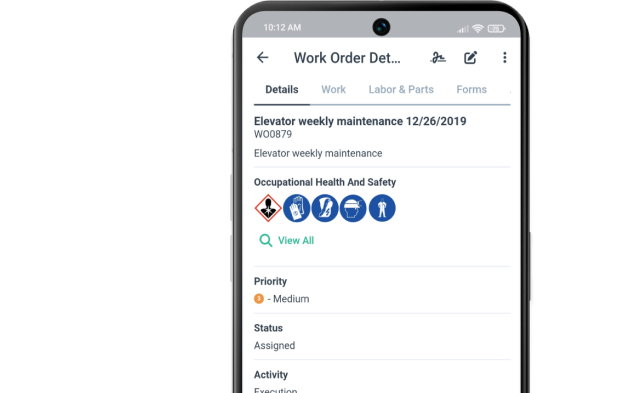
As you can see below, every essential detail, from costs and priority levels to labor and parts, is easily captured.
Source: WorkTrek
Thanks to this centralized documentation, technicians can do their jobs more efficiently, and each stakeholder can track progress without hassle.
In terms of pricing, WorkTrek software comes with transparent subscription plans designed to meet any organization’s needs and budget.
Source: WorkTrek
Please note that each plan includes unlimited guest requests and a mobile application—because flexibility and scalability matter.
So, if you’d like to learn more, feel free to try WorkTrek for free, book a demo, or contact our team with any questions.
Maintenance Connection
Maintenance Connection by Accruent is a CMMS software designed to streamline work orders, preventive maintenance, and inventory control.
It offers many of the essential features expected from efficient maintenance software, including:
Work order management
Inventory management
Reporting
Compliance management
Automated notifications
Mobile app support
Maintenance Connection recently introduced its EDMS/CMMS/IoT cloud integration.
This integrated cloud solution combines CMMS capabilities with Meridian (an engineering document management system, or EDMS) and vx Observe (an IoT remote monitoring and energy management tool).
As a result, their users can now simplify their document management process and easily access engineering, project, and operational data on a centralized platform.
Source: Accruent
With remote IoT monitoring, the system can proactively generate notifications and trigger work orders when an asset approaches failure, enabling more timely decision-making.
Many users praise the platform's extensive feature set, which can be expanded with other Accruent solutions.
However, some find such robust software that could be more complex and convenient to use.
Source: Software Advice
As for the costs, the software pricing starts at $1325 per user and per year, with an additional $700 per user/year for the mobile add-on.
This makes the Maintenance Connection a better option for enterprise companies.
To find out more, don’t hesitate to take advantage of their live demos or free trial.
Whip Around
Whip Around is a fleet-focused maintenance platform used by fleet managers, mechanics, and drivers to manage:
Maintenance
Inspections
Compliance
Reports
Fuel use
This platform offers highly effective maintenance features.
For instance, it allows users to set up proactive service schedules for assets based on distance traveled, hours run, or time in service.
Source: Whip Around
This helps ensure that each vehicle receives proper and timely care based on its actual condition and use history.
Additional fleet upkeep features include:
Automated service reminders
Work order management
Parts tracking
Mechanic sign-off
Barcode scanning
According to Whip Around users, the initial setup can be time-intensive due to the platform's high customizability.
Source: Software Advice
However, users find it convenient and efficient once it's configured, especially for maintenance scheduling.
Whip Around offers straightforward and transparent pricing, starting at $5 per asset/month.
There’s even a forever-free plan, limited to one asset only.
However, keep in mind that the Pro plan or higher is required for access to most maintenance-related features.
All in all, Whip Around is an excellent choice for fleet managers seeking a customizable and efficient system to streamline their maintenance processes.
If this sounds like you, you can begin a 7-day free trial directly from their website or mobile app.
Their team can assist with the setup if needed—just send them a message.
MicroMain
MicroMain is a versatile CMMS and EAM software used by professionals across various industries, including manufacturing, property management, and healthcare.
Some of their key features include:
Work Order Management
Preventive Maintenance
Predictive Maintenance
Asset Management
Parts & Inventory Management
QR Code and Barcode Integration
MicroMain also offers Workforce Tracking & Management, which enables users to automatically calculate estimated task completion times and monitor technician performance over time.
Source: MicroMain
This functionality helps identify top-performing workers, boost overall operational efficiency, and flag areas for improvement.
You can achieve this with WorkTrek’s detailed reporting module by analyzing task duration and cost.
While their workforce tracking might be stellar, online reviews suggest that the system's work order customization lacks robustness and has limited reporting fields.
This might be an issue for maintenance technicians who need as much information as possible when performing tasks.
Source: Software Advice
Conversely, MicroMain's customer service is often praised for its prompt and helpful responses to issues and inquiries.
So, if work order documentation is not that important to you, give them a try.
MicroMain’s pricing starts at $99 per admin license or $45 per technician license, but for an exact quote, you’ll need to contact them at (512) 328-3235 or through their website.
It’s also worth noting that, in addition to software, the company offers implementation and data migration services to facilitate the transition to its solution.
So, if you’d like to learn more, head over to the MicroMain website.
You can watch demo videos, request a demo with an expert, or access a free trial.
IBM Maximo
IBM Maximo® Application Suite is a set of apps designed to help organizations manage assets throughout their entire lifecycle by leveraging GenAI, advanced analytics, and IoT.
Its key features include:
Enterprise Asset Management (EAM)Uses AI to improve planning, maintenance, and performance across the entire asset lifecycleEAM AppOffers field technicians remote access to asset informationReliability-Centered MaintenanceIdentifies potential failures and recommends mitigation strategiesAsset Performance ManagementMonitors asset age, health, and usage to maximize lifespanVisual InspectionUses AI-driven computer vision and mobile tools to detect anomalies
They also recently added Maximo Work Order Intelligence, powered by IBM watsonx™, to the suite.
This module leverages generative AI to expedite work approvals, provide accurate failure code recommendations, and track emissions.
Source: IBM Maximo
Overall, IBM Maximo is highly customizable, making it ideal for organizations with unique or complex requirements.
However, this high level of customization also adds complexity. Some users report having trouble getting used to and navigating the system.
This online review summarizes the pros and cons of the solution perfectly:
Source: Software Advice
IBM's website doesn’t provide any specific details about pricing, but it seems more tailored for enterprises than small or mid-size companies.
Instead, a price estimator tool is available to calculate costs based on specific factors, like the number of users or features.
The suite includes a benefit calculator to evaluate its potential ROI.
Additionally, those interested in IBM Maximo can explore its capabilities through a product tour or a 14-day free trial.
SAP Plant Maintenance (PM)
SAP Plant Maintenance (PM) is a component of the SAP ERP Central Component (ECC), which serves as the base layer of the SAP Business Suite.
The SAP PM module is specifically designed to help industrial companies maintain their plants, technical systems, and equipment through three main functions:
InspectionDetermines the condition of systems or equipment to identify potential issuesPreventive MaintenanceEnsures that systems and equipment stay in optimal conditionRepairRestores systems or equipment to their ideal condition through repairs, parts replacement, or the creation of purchase requisitions
As a part of SAP ECC, SAP PM integrates with other components such as Sales and Distribution (SD), Materials Management (MM), and Financial Accounting (FI).
This ensures data consistency and allows different departments and functions to communicate seamlessly.
As such, SAP is ideal for organizations seeking a versatile solution with a comprehensive operational overview beyond just maintenance.
However, for companies with limited budgets or those searching for a simpler maintenance solution, this system might be too complex or costly.
This Redditor explains what some of the issues with the system are:
Source: Reddit
While pricing details are not listed, you can contact SAP for a personalized quote or additional information.
Free demo videos and trials are also available.
Asset Panda
Asset Panda is a complete asset-tracking platform designed to help manage all assets, from heavy machinery to computers and contracts.
When it comes to maintenance, it offers a CMMS solution with many essential upkeep-related features, such as:
Work order management
Real-time, custom notifications
Built-in barcode technology
Signature capture
Compliance management
Straight-line depreciation
In addition to software, Asset Panda provides barcode asset tags, making it a convenient, well-rounded solution for all asset management needs.
Source: Asset Panda
A barcode generator and scanner app are included in their annual plans' price.
Overall, users appreciate the platform's high degree of customization, which adapts to everyone’s needs and budget.
Some reviews note an unintuitive interface and a steeper learning curve for specific features.
Source: GetApp
Asset Panda’s annual plans are based on the number of assets you want to track, but you’ll need to contact their team for specific pricing details.
This solution is perfect for basic maintenance needs, as it is more oriented towards tracking asset location.
To see the platform in action, you can request a free, one-on-one demo with a product expert and take advantage of a two-week trial.
Hippo CMMS by Eptura
Hippo CMMS—now part of Eptura Asset, a complete asset management platform—is a maintenance management solution provider with over a decade of experience.
It offers a wide array of valuable features, including:
Work order/request management
Parts inventory tracking
Inspection checklists
Vendor management and invoicing
One standout feature is its BIM viewer, which provides detailed building information through a 3D model of the facilities.
This feature allows users to gain a broad overview of the entire facility or zoom in on specific systems. It also allows users to monitor faults and assess their potential impact.
Source: Eptura
There’s also the floor-plan view, which lets users see how their assets are being used at a glance and automatically generate work orders.
This is also one of the capabilities users like the most.
At the same time, online reviews indicate that certain features, like reporting and work order generation, aren’t customizable enough and can feel a bit clunky.
Source: Capterra
Eptura Asset offers three pricing plans—Core, Advanced, and Power—but specific prices aren’t listed.
It’s worth noting, however, that many maintenance features aren’t included in the Core plan.
For a free demo or pricing details, you can contact their sales team, while their customer support team can assist you with general inquiries.
Conclusion
Effective maintenance software can transform your operations, saving you money, reducing downtime, and extending the lifespan of your assets.
That’s why selecting the right one is crucial.
Start by evaluating your organization’s needs and goals to choose the best solution.
This will help you identify the features and capabilities that matter most.
Once you’ve narrowed down your options, take advantage of free trials, demos, and online reviews.

Operations & Maintenance
Debunking 6 Common Asset Maintenance Myths
Key Takeaways:
More than half of facilities rely on reactive maintenance.
Preventive and predictive maintenance reduce asset failures.
Over-servicing equipment can lead to damage.
Skipping maintenance for new assets can void warranties.
Have you ever been told to wait until something breaks to fix it or that new assets don’t need to be maintained regularly?
These widespread misconceptions can lead to inefficient practices and unnecessary downtime.
That’s why today, we’ll debunk six common asset maintenance myths.
The truth will empower you to make smarter decisions for more efficient asset maintenance.
Let’s get started!
Reactive Maintenance Is Enough for Equipment Reliability
Many teams still depend on reactive strategies, believing this ensures equipment reliability.
Also called run-to-failure, this practice is common, with over half of facilities using it to manage their assets.
Illustration: WorkTrek / Data: MantainX
While reactive maintenance can be suitable (and is more recommended) for non-critical, inexpensive assets that are easy to replace, the problem arises when it’s the only strategy.
Unfortunately, the same study reveals that reactive maintenance is the only maintenance program for 5% of facilities.
Illustration: WorkTrek / Data: MantainX
However, relying exclusively on reactive maintenance has significant drawbacks.
Unplanned failures result in costly downtime, repairs, and shorter asset lifespans.
Additionally, sudden breakdowns can create hazardous conditions for workers, especially in environments involving heavy or complex machinery.
Proactive maintenance is a far better solution.
Preventive strategies focus on scheduled upkeep to avoid failures, while predictive maintenance (PdM) uses advanced tools to predict issues before they happen.
Both approaches significantly reduce downtime, extend assets’ life, and create safer working environments.
On top of that, it’s easier to coordinate teams when maintenance is planned and scheduled, as one maintenance manager points out:
Illustration: WorkTrek / Quote: AMP
The data also confirms the numerous benefits of proactive maintenance.
A survey by Advanced Technology Services and Plant Engineering Magazine from 2020 found that about 70% of respondents reported lower asset failure risks and downtime when using predictive or preventive maintenance.
Illustration: WorkTrek / Data: ATS
These methods offer a smarter, more efficient path forward, proving that reactive maintenance alone is no longer sufficient for maintaining equipment reliability.
More Maintenance Is Always Better
Some professionals mistakenly believe that more maintenance is always better and that frequent interventions improve equipment performance.
However, over-maintaining assets often has the opposite effect.
Excessive maintenance wastes resources, drives up costs, and even causes unnecessary wear and tear on components, shortening their lifespan.
Duncan Aviation, a privately owned business jet service provider, illustrates this clearly.
In aviation, over-servicing engines by repeatedly topping off oil can damage gearbox seals, causing leaks and visible streaking on engine cowlings.
In this case, over-servicing does more harm than good, unnecessarily grounding aircraft and inflating costs.
Source: Duncan Aviation
The better approach is data-driven maintenance, where the actual needs of the equipment guide decisions.
Tools like condition monitoring and predictive analytics allow maintenance teams to assess these needs.
Industries like aviation and manufacturing demonstrate the importance of data-driven maintenance.
For instance, GE Aerospace, a world leader in jet and turboprop engines, uses advanced data analytics to avoid unnecessary maintenance and ensure its engines work perfectly.
Patrick Ketelaar, former Principal Engineer at Remote Monitoring & Diagnostics and current GEnx-2B Product Leader, explains their mission:
Illustration: WorkTrek / Quote: GE Aerospace
Through real-time monitoring and diagnostics of over 38,000 jet engines, their system identifies potential issues such as abnormal exhaust gas temperatures or oil usage trends.
When issues are detected, they immediately notify their customers (airlines) to act.
This timely and data-driven approach to maintenance prevents the wear and tear caused by excessive maintenance while saving airlines millions of dollars annually.
In the end, the most effective maintenance is not about doing more but about doing what’s needed when it’s needed.
Data-driven strategies help balance the scale.
Preventive Maintenance Guarantees Zero Failures
Preventive maintenance is a proven strategy for reducing equipment failures but not eliminating them.
Even with strict schedules and adherence to manufacturers' guidelines, unforeseen issues can still happen.
For instance, a manufacturing plant might follow rigorous preventive maintenance for its motors but experience an unexpected failure due to electrical surges or material fatigue that weren’t detectable during routine checks.
GE Aerospace brings another example in this context.
In one case, mechanics addressed an issue flagged by routine maintenance (higher than normal nacelle temperatures), but they couldn’t find the cause:
Without knowing specifically what was causing the higher temperature, the issue wasn’t found by mechanics right away.
Fortunately, in this case, continuous data monitoring identified a pressure line leak as the cause of abnormal temperatures.
Once the faulty component was replaced, the engine performance returned to normal.
So, to address the limitations of preventive maintenance, many companies are turning to predictive tools, data analysis, and condition monitoring for more efficient processes.
From telematics in fleets to vibration analysis in wind turbines or thermal imaging in HVAC systems, predictive tools complement preventive maintenance and fill the gaps it cannot address.
Tim Richards, equipment manager at Sargent, a contractor from Maine, highlights this advantage for their company:
Illustration: WorkTrek / Quote: Construction Equipment
One of Sergent’s key strategies is using HCSS Equipment360, a telematics solution integrated into most of its equipment.
It provides real-time data on machine performance, fault codes, and service intervals, helping them better maintain vehicles and reduce unexpected downtime.
Ultimately, no maintenance strategy can eliminate failures.
However, combining preventive maintenance with predictive tools and condition monitoring is the best defense.
New Assets Don't Need Maintenance
The belief that new equipment requires no maintenance is a costly misconception.
While it might seem logical that brand-new assets will perform flawlessly, skipping maintenance early on can still lead to unexpected breakdowns, reduced performance, and even warranty voids.
Manufacturers often specify maintenance schedules to honor warranties, making routine maintenance non-negotiable.
And they also look for maintenance records.
Source: Quora
So, not following their guidelines and not keeping records could result in repairs or replacements being denied under warranty, increasing your costs significantly.
Take conveyor systems as an example.
Even for a brand-new conveyor belt, regular maintenance is vital.
Source: Joloda Conveyor Services
Daily inspections to identify wear, nicks, or cuts in belts are essential to prevent damage.
Weekly or monthly checks for belt mistracking, slippage, and scraper blade tension are also critical to ensure the system functions smoothly.
Refrain from following these steps even if the conveyor system is brand-new could result in early failures, such as misaligned belts causing excessive wear or even catastrophic breakdowns that halt production.
The assumption that “it’s new, so it doesn’t need attention” could cost businesses dearly in downtime and repair expenses.
The truth is that maintenance of new assets should begin even before assets are installed in your facility.
Mark Lamendola, an expert in maintenance management, agrees:
Illustration: WorkTrek / Quote: EC&M
He has preparatory tasks in mind, such as entering assets into a CMMS, scheduling manufacturer-recommended maintenance, and collecting baseline data.
These simple tasks lay the groundwork for effective future maintenance.
For example, performing initial maintenance at start-up will give you a benchmark for detecting performance changes during subsequent checks.
Conversely, lacking it can leave you with baseline data, making it easier to identify abnormal wear trends.
All in all, maintenance from day one protects your investment, ensures compliance with warranties and sets the foundation for a longer and more reliable asset lifecycle.
Don’t skip it.
Spare Parts Should Always Be on Hand
When a machine breaks down and spare parts are unavailable, production halts, costs rise, and downtime can stretch longer than necessary.
But should you keep a hundred extra bearings or fifty couplings on the shelf, just in case?
Absolutely not.
While critical spares should be available, overstocking ties up capital and increases storage costs.
And yet, many maintenance professionals fall into this trap, as noted by Dr. Anthony Kenneson-Adams, a former Royal Air Force Senior Engineering Officer:
Too often I see 5 years' worth of bearings or couplings on a shelf while the maintenance manager is struggling to find the budget to buy some other component or service.
The smarter approach is to adopt an optimized inventory strategy based on asset criticality and demand.
Dr. Kenneson-Adams further advises identifying critical assets and establishing true min/max in your storeroom.
Here’s what he suggests:
Start by identifying your critical assets through an asset criticality assessment.
Classify spare parts into critical, essential, and non-critical categories.
Use tools like failure mode and effects analysis (FMEA) or failure reporting and criticality analysis (FRACAS) to prioritize which spares truly need immediate availability.
Leverage reliability data, such as mean time between failures (MTBF) and mean time to repair (MTTR), to refine stock levels.
Use inventory management techniques like just-in-time (JIT) and establish clear minimum/maximum thresholds for each spare.
Besides, CMMS like WorkTrek can alert you when inventory levels drop below predefined thresholds.
Source: WorkTrek
This way, you can streamline inventory management and ensure spare parts are ordered on time.
CMMS also stores all your maintenance data, so you can more accurately predict future spare parts needs.
These helpful CMMS benefits bring us the last myth we must debunk today.
CMMS Isn’t a Necessity
One of the biggest myths in maintenance management is that a computerized maintenance management system (CMMS) is unnecessary.
Many businesses believe they can manage without a CMMS, often due to misconceptions such as:
Some feel that CMMS solutions are too expensive, especially for small companies.
Others worry about the time and effort needed to train staff
Or fear they’ll need costly hardware upgrades.
Employees may also be reluctant to switch from familiar processes to something new.
Some believe that CMMS platforms are complex and hard to use.
While these points may seem valid, they’re far from the reality of today’s CMMS solutions.
Implementing a CMMS requires time and resources, but today's systems are designed to be user-friendly and scalable.
Modern CMMS solutions, especially cloud-based ones like WorkTrek, require minimal infrastructure.
WorkTrek can, for example, be accessed from devices you already have—whether a desktop, tablet, or smartphone.
Source: WorkTrek
With subscription-based pricing models, the upfront cost is often lower than expected, and companies can pay only for the sets of features they need, making it an affordable option.
The actual value of a CMMS lies in its ability to streamline operations, enhance work order tracking, minimize downtime, and support data-driven decisions.
Additionally, a CMMS lets you easily plan and schedule preventive maintenance.
Source: WorkTrek
A well-implemented CMMS improves technician safety by providing clear, detailed maintenance instructions, safety hazards, PPE requirements, etc.
Source: WorkTrek
All these benefits together far outweigh the initial investment and effort.
But don’t just take our word for it.
According to the ATS study, 74% of companies using a CMMS say it boosts their productivity.
Illustration: WorkTrek / Data: ATS
Moreover, at least half of them say that a CMMS improves OEE, overall efficiency, safety, flexibility, usability, and uptime and has good ROI overall.
Given all this, a reliable CMMS is becoming a real necessity.
Conclusion
How many of these asset maintenance myths have you encountered or unknowingly believed?
If even one, it’s time to rethink your approach.
The truth is that effective maintenance strategies don’t just reduce costs—they also create a safer work environment.
It’s time to leave the myths behind and take control of your asset maintenance.

Operations & Maintenance
How to Create an O&M Manual (Step by Step)
If you run a maintenance organization, you know the importance of creating and maintaining an Operation and Maintenance (O&M) Manual.
It provides clear instructions and detailed guidance for efficiently running equipment and systems. This article offers a step-by-step guide for creating an O&M Manual.
Illustration: WorkTrek / Data: DeskDirector
There are several reasons a maintenance organization needs an O&M manual. It can help define the process of maintaining machine property and the process for staff to operate and maintain necessary equipment safely.
In short, it is a valuable resource and training tool for new employees.
Key Takeaways
O&M manuals provide important guidance for equipment operation and upkeep
Clear organization and simple language make manuals more effective
Regular updates ensure the manual stays relevant and useful
What are Operational and Maintenance Manuals?
You need an Operation and maintenance manual if you run a maintenance organization. There are several reasons for this:
Purpose and Importance
O&M manuals serve as comprehensive guides for operating and maintaining equipment or systems. The key components ensure that these manuals are thorough and effective.
They help ensure safe and efficient operations in facilities. These manuals contain vital details on:
Equipment specifications
Operating procedures
Maintenance schedules
Troubleshooting guides
Safety and Emergency Protocols
Operating Equipment
Data and Illustration: worktrek.com
Well-crafted O&M manuals reduce downtime, extend equipment life, and improve workplace safety. They also aid in training new staff and preserving institutional knowledge.
Audience and Accessibility
O&M manuals cater to various users, including:
Maintenance technicians
Maintenance Staff
Operators
Facility managers
Safety personnel
Third-party contractors
All relevant stakeholders
The manual is valuable, enabling new employees to adapt quickly and ensuring maintenance teams have all critical information readily accessible.
The content should be clear and easy to understand for all potential users. Organizing the manual with a logical structure and table of contents improves accessibility.
Digital formats allow for easy updates and quick searches.
This ensures users can find needed information quickly during urgent situations.
Compliance and Legal Considerations
O&M manuals play a crucial role in meeting regulatory requirements. They help organizations:
Comply with industry standards
Meet safety regulations
Fulfill warranty conditions
Additionally, these manuals are instrumental in reducing maintenance costs by guiding maintenance personnel in their tasks and preventing unplanned shutdowns.
Documenting procedures and maintenance records can protect companies in case of audits or legal issues.
While it is time-consuming, keep O&M manuals up-to-date with current regulations and best practices.
This includes safety guidelines and emergency procedures.
Preparation for Creating a Manual
Illustration: WorkTrek / Data: OandM manual
Creating an operation and maintenance manual involves key steps.
These include gathering essential information, selecting the right tools, and outlining the content structure.
Gather Necessary Information
Start by collecting all relevant documents about the equipment or processes.
This includes technical specifications, user guides, and safety protocols. Talk to experts who work with the systems daily. Their insights are invaluable.
Set up meetings with different departments. Each may have unique needs for the manual and have other maintenance procedures and maintenance workflows.
Take detailed notes during these discussions and share them with maintenance personnel.
Review existing manuals or documentation since they can provide a helpful template or highlight areas for improvement.
These documents could be valuable for defining routine maintenance and implementing quality control.
Tools and Software Requirements
Choose the right software to create your manual. Word processors work for simple documents. For more complex manuals, consider specialized documentation software.
Additionally, many AI-based large language models, like ChatGPT and Claude AI, can help you create the outline for O&M manual templates. Use this as a starting outline and modify it to meet your requirements.
Ensure you have access to the necessary design tools. These might include flowchart makers or image editing software.
Pick a tool that allows for easy updates. Manuals often need frequent revisions.
Consider collaboration features if multiple team members will work on the manual.
Defining Scope and Content Structure
Illustration: WorkTrek / Data: Collato
Outline the main sections of your manual. Common areas include equipment descriptions, operational procedures, and maintenance schedules.
Create a detailed table of contents. This helps organize information and guides the writing process.
Decide on the level of detail for each section. Some parts may need step-by-step instructions, while others might be more general.
Include troubleshooting processes to ensure company assets remain functional and practical, particularly during unplanned downtime.
Plan for visual aids like diagrams or photos.
These can significantly enhance understanding of complex processes.
Consider the end-users when structuring content. Organize information in a way that makes sense for their daily tasks.
Sample O&M Manual Template
To help you get started, below is a sample O&M Manual templates:
HVAC Operations and Maintenance TemplateDownload
Writing the Operation Manual
Creating a practical operation manual involves documenting key processes, safety guidelines, and standard procedures. This ensures consistency and efficiency in daily operations.
Creating Standard Operating Procedures
Standard Operating Procedures (SOPs) form the backbone of an operation manual. Start by listing all key tasks and processes. Break each task down into clear, step-by-step instructions.
Illustration: WorkTrek / Quote: ClickUp
Keep it simple - use easy-to-understand language and avoid jargon.
A picture is worth 1000 words. Don't forget to include visuals like flowcharts or diagrams to illustrate complex processes. This helps readers grasp information quickly.
Number each step to make the sequence clear.
Illustration: WorkTrek / Data: Speach
Test the SOPs with staff members. Ask them to follow the instructions and provide feedback. This helps identify any gaps or unclear sections.
Based on this input, update the SOPs to ensure they are practical and easy to follow.
Documenting Key Processes and Workflows
Start by identifying the core processes that keep your operation running.
These might include:
Manufacturing steps
Customer service protocols
Maintenance routines
Steps to improve maintenance operations
Preventative maintenance guides
Relevant information regarding equipment handling
Write detailed descriptions of each process, including inputs, outputs, and responsible parties.
Create workflow diagrams to represent these processes visually.
Use software tools to make professional-looking diagrams. Include decision points and alternate paths where applicable.
Remember to document troubleshooting procedures and list common issues and their solutions. This will help staff handle problems efficiently without always needing supervisor input.
Incorporating Safety Guidelines
Don't forget to incorporate safety guidelines into your O&M manual.
List all potential hazards in the workplace and provide clear instructions on how to avoid or mitigate risks for each hazard.
This might include Lockout/Tagout operations and other safety protocols.
Include information on required personal protective equipment (PPE). Specify when and how to use each item.
Create checklists for safety inspections and regular maintenance tasks.
Define emergency procedures in detail, including evacuation routes and assembly points. Provide contact information for emergency services and key personnel.
Include a section on first aid procedures and the location of medical supplies.
Developing the Maintenance Manual
Defining and creating a detailed operating and maintenance manual is crucial for keeping equipment running smoothly. It provides essential information for technicians and operators, helps prevent breakdowns, and extends the life of machinery.
Detailing Maintenance Schedules
Maintenance schedules are the backbone of any good manual. They outline when to perform specific tasks on each piece of equipment. Start by listing all equipment that needs regular upkeep.
Create a table with columns for:
Equipment name
Maintenance task
Frequency (daily, weekly, monthly, etc.)
Time required
Skill level needed
Include both preventive and predictive maintenance tasks. Preventive tasks might include regular cleaning or lubrication, while predictive tasks could involve checking for signs of wear.
Always follow manufacturer recommendations for maintenance intervals. Adjust schedules based on equipment usage and environmental factors.
Listing Required Tools and Equipment
A comprehensive list of tools and equipment is essential for efficient maintenance. Organize this section by maintenance task or equipment type.
Include:
Tool name
Size or specification
Quantity needed
Any special instructions for use
Consider creating a checklist for each maintenance task. This helps technicians gather all necessary items before starting work.
Don't forget to mention safety equipment like gloves, goggles, or hearing protection. Proper tools and safety gear are key to preventing accidents and injuries.
Troubleshooting Common Issues
A good troubleshooting guide can save time and reduce downtime.
Start by identifying common problems for each piece of equipment.
Understanding the company's history can also provide valuable context for troubleshooting processes.
Create a table with these columns:
Problem description
Possible causes
Diagnostic steps
Solutions
Use clear, simple language to describe each step. Avoid technical jargon when possible. If jargon is necessary, include a glossary of terms.
Include diagrams or photos to illustrate complex procedures. Visual aids can significantly improve understanding and reduce errors.
Emphasize safety precautions for each troubleshooting task. Remind users to consult with experts for complex issues beyond their skill level.
Formatting and Designing the Manual
An operation and maintenance manual's visual layout and structure play a key role in its usability. Clear formatting and thoughtful design choices help readers find information quickly and understand complex procedures easily.
Layout Considerations
When designing the manual's layout, focus on readability and ease of navigation.
Use a clear, legible font like Arial or Calibri for body text in an 11-12 point size. Larger fonts can be used for headings to create a clear hierarchy.
Break up text into short paragraphs and use bullet points for lists. This makes the content easier to scan and digest.
Include plenty of white space to avoid overwhelming the reader. Margins should be at least 1 inch on all sides.
Use headers and footers to display page numbers, section titles, and other helpful navigation aids.
Utilizing Visuals and Diagrams
Visuals are crucial for explaining complex procedures or equipment layouts. Where appropriate, use high-quality photos, illustrations, and diagrams.
Label all visuals clearly and refer to them in the text. Place images close to the relevant text to avoid confusion.
Consider using flowcharts for multi-step processes. These can help readers understand the sequence of actions at a glance.
Tables are useful for presenting data or comparing different options. Keep tables simple and use clear headings for each column.
Ensuring Consistency in Design
Maintain a consistent design throughout the manual to create a professional look and aid navigation.
Use the same fonts, colors, and heading styles across all sections. Use charts and images to help the reader better understand the content.
Create a style guide that outlines formatting rules for headings, captions, lists, and other elements. This ensures uniformity even if multiple people work on the manual.
Use templates for recurring elements like procedure steps or safety warnings. This saves time and maintains a cohesive look.
Consider using color coding to differentiate between sections or types of information. Just be sure to choose easily distinguishable colors and print well in black and white.
Reviewing and Revising the Manual
A thorough review and revision process ensures the Operation and Maintenance Manual is accurate, user-friendly, and meets its intended purpose.
This critical step involves verifying technical details, gathering feedback, and making necessary improvements.
Technical Accuracy Verification
Make sure to review your O&M manual technically.
Start by cross-checking all technical specifications, procedures, and data against original equipment documentation and industry standards.
Verify that all diagrams, schematics, and illustrations are correct and up-to-date.
Engage subject matter experts to review specific sections related to their areas of expertise. They can spot errors or outdated information that might not be obvious to others.
Use a checklist to ensure all critical elements are covered. This includes safety procedures, operational guidelines, maintenance schedules, and troubleshooting steps.
Conducting Peer Reviews
Peer reviews play a vital role in improving the quality of the manual. Select reviewers from different departments or roles who will be using the manual.
Provide clear guidelines on what aspects to focus on during the review. This might include:
Clarity of instructions
Logical flow of information
Completeness of content
Consistency in terminology
Set a realistic timeline for the review process. Allow enough time for thorough examination but maintain momentum to complete the project.
Encourage reviewers to test procedures and instructions hands-on when possible. This practical approach often reveals issues that may not be apparent from reading alone.
Incorporating Feedback and Improvements
Collect all feedback from technical verifications and peer reviews. Organize comments and suggestions into categories for easier processing.
Prioritize changes based on their impact on safety, operational efficiency, and user understanding. Address critical issues first.
Make revisions systematically, ensuring each change aligns with the overall structure and purpose of the manual. Update related sections to maintain consistency throughout the document.
Consider creating a system for regular updates to keep the manual current. This might involve scheduled reviews or a process for users to submit change requests.
Test the revised manual with end-users to confirm improvements have addressed initial concerns. This final check helps ensure the manual meets its intended goals.
Manual Testing and Validation
Manual testing and validation are key to creating an effective operations and maintenance manual. These processes ensure the document is user-friendly and meets its intended purpose.
Real-world Usability Testing
Real-world usability testing involves actual users evaluating the manual hands-on. This step is vital for identifying any gaps or unclear instructions.
Start by selecting a diverse group of testers who match the manual's target audience.
Give them specific tasks to complete using only the manual as a guide. Observe their actions and note any difficulties they encounter.
Ask testers to think aloud as they work through the manual. This will provide insight into their thought processes and highlight areas of confusion.
After testing, gather feedback through surveys or interviews. Ask about the manual's clarity, organization, and completeness. Use this input to make necessary revisions.
Effectiveness Assessments
Effectiveness assessments measure how well the manual achieves its goals. These evaluations help refine the document to serve its users better.
Begin by setting clear objectives for the manual. These might include reducing equipment downtime or improving safety compliance. Develop metrics to measure these goals.
Conduct before-and-after comparisons. Track relevant data before implementing the new manual, then compare it to results after its introduction. This shows the document's impact on operations.
Use error logs and help desk requests to identify common issues. If specific problems persist after the manual's release, updates may be needed in those areas.
Don't forget to review and update the manual regularly based on assessment results. This ensures it remains relevant and effective over time.
Publishing the Manual
Publishing and distributing the operation and maintenance manual is a key step. It ensures the manual reaches its intended users and remains easily accessible.
The format and distribution methods chosen impact how effectively the information is used.
Choosing a Publication Format
Digital formats like PDFs offer flexibility and easy updates. They allow for quick searches and hyperlinks between sections.
Print manuals work well in environments without computer access. Some companies use both digital and print versions.
When picking a format, consider the end user's needs. Field technicians may prefer a sturdy printed manual, while office staff might find a searchable digital version more useful.
Cloud-based solutions can provide real-time updates and mobile access.
Distribution Strategies
Effective distribution ensures the manual reaches all relevant personnel. Email the digital version to staff and post it on the company intranet. For print copies, mail them directly to work sites or hand them out during training sessions.
Set up a system to track who has received the manual. This helps ensure everyone has the latest version. Consider creating a sign-off process where employees confirm they've read and understood the content.
Regular updates are crucial. Establish a schedule for reviewing and revising the manual. Communicate changes clearly to all users. Digital formats make updates more straightforward, but printed versions need a system for replacing outdated pages.
Training and Support
Provide training and support for staff, helping them understand the manual's content and assisting when needed.
Conducting Training Sessions
Illustration: WorkTrek/ Data: Shortlister
Training sessions introduce staff to the manual's structure and contents. They begin with an overview of the manual's purpose and organization.
Then, they show employees how to quickly navigate sections and find key information.
Break training into smaller modules focused on specific topics. This helps prevent information overload. Use hands-on exercises to reinforce learning.
For example, have staff lookup procedures in the manual during simulated scenarios.
Create a training schedule that works for different shifts and departments. Consider recording sessions for those who can't attend in person.
Follow-up training with quizzes to check understanding of the material. Encourage staff with prizes or gifts to engage in the process.
Setting Up Support Channels
Establish clear support channels for manual-related questions—designate point persons in each department who are well-versed in the manual's contents.
These individuals can answer questions and provide guidance.
Set up an internal help desk or ticketing system for manual-related inquiries. This will ensure questions are tracked and answered promptly. Also, create an FAQ section based on common issues that arise.
Consider implementing a chat system for quick questions. This can be particularly helpful in urgent situations. Based on feedback received through support channels, regularly update the manual.
Provide ongoing refresher training to keep staff up-to-date on manual changes. This helps maintain consistent knowledge across the organization.
Ongoing Updates and Revisions
Keeping an Operation and Maintenance Manual current is key for its usefulness.
Regular reviews and timely updates ensure the manual stays relevant as equipment and processes change over time.
Scheduling Periodic Reviews
Set up a review schedule for the O&M manual. This could be yearly, quarterly, or monthly, depending on how often things change. Put someone in charge of these reviews. They should check each section for accuracy.
During reviews, look for outdated information, check if procedures still work, and ensure correct contact details. Ask staff for feedback on what needs updating. Keep a log of when reviews happen and what changes are made.
Use digital tools to make reviews easier. Set reminders for review dates. Use version control software to track changes. This helps see what's been updated and when.
Updating for Equipment or Process Changes
When new equipment arrives or processes change, update the manual right away.
Don't wait for the next review—train staff to report changes that affect the manual.
Create a change form for updates. Include:
What changed
Why it changed
How it affects current procedures
New instructions or info needed
Add new sections for new equipment, update old sections for process changes, remove outdated information to avoid confusion, and ensure that safety procedures are current.
Use clear language in updates. Avoid jargon.
Test new procedures before adding them to the manual. Get feedback from workers who use the equipment or follow the processes.
Summary
An O&M manual guides equipment operation and maintenance.
It is a comprehensive resource for safe, efficient operations, including specs, procedures, schedules, and troubleshooting. The manual caters to technicians, operators, and managers, helping them comply with regulations and reduce costs.
Creating one involves gathering information, defining structure, documenting processes, and using clear formatting and visuals. Publishing in accessible formats, providing training, and conducting periodic reviews keep the manual relevant.

Operations & Maintenance
What is Risk-Based Maintenance
Risk-based maintenance prioritizes maintenance tasks based on the risk associated with equipment failure. It is a strategy focused on optimizing resource allocation to enhance asset reliability and extend its useful life.
Risk-based maintenance goes beyond traditional maintenance approaches. It uses data and analysis to decide when and how to maintain assets.
Risk-based maintenance (RBM) aims to optimize resource allocation and minimize the likelihood of costly breakdowns by identifying critical assets and potential failure modes.
Source: WLC
This approach helps organizations balance the need for equipment reliability with the costs of maintenance activities.
By systematically assessing risk, companies can allocate their resources more effectively, focusing on the most critical assets that pose the highest risk to operations, safety, or financial performance.
RBM involves a continuous cycle of risk assessment, planning, and execution.
It requires gathering data on equipment performance, analyzing failure patterns, and evaluating the consequences of potential failures.
This information is then used to create tailored maintenance plans that address the specific risks associated with each asset.
Key Takeaways
RBM prioritizes maintenance tasks based on equipment failure risks
It optimizes resource allocation and improves overall asset reliability
RBM requires ongoing risk assessment and data-driven decision-making
Fundamentals of Risk-Based Maintenance
https://youtu.be/YNA5ICtOMd8
Risk-based maintenance focuses on assessing and managing asset risks using maintenance data. Risk-based asset maintenance is a strategic approach that prioritizes resources towards the most critical assets based on their potential risk and consequences of failure.
It aims to optimize maintenance activities and resource allocation based on the potential impact of failure.
Definition of Risk-Based Maintenance
Risk-based maintenance (RBM) is a strategy that uses risk assessment to guide maintenance decisions. It considers how likely equipment will fail and what would happen if it did.
Based on asset health, RBM helps companies decide which assets need attention most. It considers risk probability factors like safety, environmental impact, and financial loss.
This approach differs from fixed schedules. Instead, it adapts maintenance plans based on changing risks.
Evolution of Maintenance Strategies
Maintenance strategies have changed over time. Early methods were reactive, fixing things only after they broke.
Next came preventive maintenance, which used set schedules. This was better but sometimes led to unnecessary work.
Risk-based Maintenance emerged as a more efficient and hybrid approach.
It combines data analysis with expert knowledge to target high-risk areas.
RBM helps companies:
Save money
Improve safety
Increase equipment reliability
It's part of a shift towards smarter, more flexible maintenance practices.
Benefits of Risk-Based Maintenance
https://youtu.be/KxWaX1kweCw
Implementing a risk-based maintenance strategy offers numerous benefits to organizations. By prioritizing maintenance efforts on high-risk assets, businesses can minimize the likelihood of unexpected equipment failures, reduce downtime, and optimize maintenance resources. Some of the key benefits of risk-based maintenance include:
Improved Asset Reliability and Longevity: By focusing maintenance efforts on critical assets, organizations can ensure they are well-maintained, reducing the risk of asset failure and extending their operational life.
Reduced Maintenance Costs: Targeting high-risk assets allows for more efficient use of maintenance resources, reducing unnecessary maintenance tasks and overall costs.
Enhanced Safety and Reduced Risk of Accidents: Properly maintained equipment is less likely to fail unexpectedly, which helps maintain a safer working environment and reduce the risk of accidents.
Increased Efficiency and Productivity: Minimizing unexpected equipment failures and downtime leads to smoother operations and higher productivity.
Better Allocation of Maintenance Resources: By identifying and focusing on high-risk assets, organizations can allocate their maintenance resources more effectively, ensuring that the most critical assets receive the attention they need.
Improved Compliance with Regulatory Requirements: Regular and targeted maintenance helps meet industry regulations and standards and avoid potential fines and legal issues.
Illustration: WorkTrek / Data: FTMaintenance
By focusing maintenance efforts on critical assets, organizations can ensure that their most valuable assets are adequately maintained, reducing the risk of asset failure and minimizing the impact of unexpected downtime.
Implementing Risk-Based Maintenance
Implementing risk-based maintenance requires a structured approach. It involves assessing assets, setting criteria, and creating a prioritization system. These steps help focus maintenance efforts where they’re most needed.
Assessment of Assets and Their Failures
The first step is to inspect all equipment, which means checking each machine or part. Teams need to know how often things break and why, and they also need to figure out what happens when asset failures occur.
Risk-based maintenance systems use real data from past breakdowns. This helps predict future problems. Teams should:
• List all assets
• Record failure history
• Note repair costs
• Track downtime
This info helps spot patterns. It shows which assets need more attention.
Risk Evaluation Criteria
Next, teams set up rules to measure risk.
These rules help decide how important each asset is. They look at two main things:
How likely is it to break?
What happens if it does break?
Once risks are identified, creating a risk mitigation plan is crucial for preventing asset failures and ensuring maintenance operations' safety, efficiency, and cost-effectiveness.
Teams might use a scale like this:
Source: WorkTrek
Each asset gets a score for both likelihood and impact. This helps rank them by risk level.
Prioritization Matrix
The last step is making a matrix to rank assets. This tool helps decide where to focus maintenance work. It uses the scores from the risk evaluation.
A simple matrix might look like this:
Impact →Likelihood ↓MinorModerateMajorLow369Medium258High147
Assets with lower numbers get more attention. This helps with planning and using resources wisely. Teams can focus on high-risk items first.
The matrix guides maintenance schedules and helps decide what checks to perform. High-risk assets might need more frequent or detailed inspections.
Creating a Risk-Based Maintenance Plan
Creating a risk-based maintenance plan involves several steps, each designed to optimize maintenance efforts and ensure the reliability of critical assets. Here’s a structured approach to developing an effective maintenance plan:
Collect Data on Equipment and Assets: Gather comprehensive data on all equipment, including failure histories, maintenance costs, and other relevant information. This data forms the foundation of the risk assessment process.
Conduct a Risk Assessment: Evaluate the potential risks associated with each asset. This involves identifying possible failure modes, their likelihood, and the consequences of such failures.
Develop a Maintenance Strategy: Based on the risk assessment, create a maintenance strategy that addresses the identified risks. This strategy should outline specific maintenance tasks and their frequency.
Assign Risk Scores to Each Asset: Use the risk assessment data to assign risk scores to each asset. These scores should reflect both the probability of failure and the potential impact of that failure.
Prioritize Maintenance Tasks Based on Risk Levels: Rank maintenance tasks according to their risk scores. The maintenance schedule should prioritize high-risk assets.
Schedule Maintenance Tasks and Allocate Resources: Develop a detailed maintenance schedule that includes all prioritized tasks. Allocate maintenance resources, such as personnel and tools, to ensure timely and effective execution of the plan.
Review and Update the Maintenance Plan Regularly: Continuously monitor the effectiveness of the maintenance plan. Regular reviews and updates are essential to adapt to changing conditions and new data.
Source: WorkTrek
A well-structured risk-based maintenance plan can help organizations optimize maintenance efforts, reduce downtime, and improve efficiency.
By systematically addressing risks, companies can ensure their maintenance strategy is both proactive and effective.
Risk Management in Maintenance
Risk management is a key part of maintenance planning. It helps teams focus on the most critical assets and potential problems. This approach can save time and money while keeping equipment running smoothly.
Integration with Asset Management
Risk-based maintenance works hand in hand with asset management. Teams look at each piece of equipment and consider what could go wrong. They ask questions like:
How likely is a breakdown?
What would happen if it failed?
How much would it cost to fix?
This information helps create a risk score for each asset. High-risk items receive more attention, and maintenance efforts are optimized across the facility to lower failure risks.
Regular checks and data collection are vital. They help spot issues before they become big problems. This proactive stance can prevent costly breakdowns and keep operations running smoothly.
Balancing Costs and Risks
Finding the right balance between maintenance costs and risks is tricky. Too much maintenance wastes money, while too little leads to breakdowns.
Risk-based maintenance helps find the sweet spot. It uses data to make smart choices about where to spend time and money. Here's how it works:
Identify critical assets
Assess risks for each
Plan maintenance based on risk levels
Track results and adjust as needed
This method often leads to cost savings. It cuts down on unnecessary work while focusing on what matters most. Over time, it can boost reliability and cut overall maintenance costs.
But it's not just about saving money. It's about using resources wisely to keep everything running safely and efficiently.
Planning and Scheduling in RBM
Risk-based maintenance (RBM) relies on a risk-based maintenance approach involving careful planning and smart resource use. It focuses on fixing equipment based on how likely it is to break and how bad that would be.
Maintenance Planning
RBM planning starts with examining each piece of equipment. Teams check its age, use, and history of problems. They also consider what would happen if it broke down.
Next, they rank equipment by risk.
The highest-risk items receive the most attention, which helps avoid surprise breakdowns.
Illustration: WorkTrek / Data: blyPro
Teams then make a schedule. They decide when to check, fix, or replace each item. The plan changes as new information comes in.
Regular reviews keep the plan current, ensuring it matches the facility's current risks and needs.
Resource Allocation and Optimization
RBM helps use maintenance resources wisely. It puts money and people where they're needed most.
High-risk equipment receives more care, meaning more frequent checks or faster repairs. Low-risk items receive less attention, saving time and money.
Teams balance the cost of maintenance against the cost of failure. They aim to spend just enough to prevent big problems.
RBM also helps plan for parts and tools. It shows what might be needed soon so teams can be ready.
By focusing on risk, RBM maximizes every maintenance dollar and labor hour, resulting in fewer breakdowns and less wasted effort.
This approach is also ideal when organizations with limited resources reduce unplanned downtime.
Tools and Techniques
Risk-based maintenance uses specific tools and technologies to assess risks and predict equipment failures. These methods help maintenance teams make data-driven decisions and focus their efforts on critical assets.
Risk Assessment Tools
Risk assessment tools help identify and measure potential risks to equipment and systems. One common tool is the Failure Mode and Effects Analysis (FMEA).
FMEA looks at how equipment might fail and what impacts those failures could have.
Another helpful tool is the Risk Matrix. This visual aid helps classify risks based on their likelihood and severity. It uses color codes to show which risks need immediate attention.
Illustration: WorkTrek / Quote: Forbes
Fault Tree Analysis is also valuable. It maps out the chain of events that could lead to failure, helping teams understand complex systems and find ways to prevent problems.
Source: WorkTrek
Predictive Maintenance Technologies
Predictive maintenance uses advanced tech to spot problems before they happen. Vibration analysis is a key method. It detects unusual vibrations in machines, which can signal upcoming failures.
Oil analysis is another important technique. It checks oil samples for signs of wear or contamination. This can reveal issues inside engines or other moving parts.
Infrared thermography uses heat-sensing cameras to find hot spots in equipment. These hot areas can point to electrical problems or excessive friction.
Ultrasonic testing helps detect leaks or cracks. It uses sound waves to find issues that can't be seen with the naked eye.
Key Performance Indicators
Key Performance Indicators (KPIs) help measure the success of risk-based maintenance strategies. They provide data to assess maintenance effectiveness and drive improvements.
Measuring Maintenance Effectiveness
Mean Time to Repair (MTTR) is a crucial KPI for maintenance teams. It measures the average time needed to fix equipment after a failure. A lower MTTR indicates more efficient repair processes.
Source: WorkTrek
Mean Time Between Failure (MTBF) tracks the average time between equipment breakdowns. Higher MTBF values suggest better reliability and maintenance practices.
Source: WorkTrek
Preventive maintenance effectiveness measures how well-scheduled maintenance prevents breakdowns. It compares planned maintenance to unplanned repairs.
Work order performance tracks the completion rate and timeliness of maintenance tasks. This KPI helps identify bottlenecks in the maintenance process.
Improvement and Benchmarking
Asset maintenance costs provide insight into the financial impact of maintenance strategies. Tracking these costs helps identify areas for potential savings.
Reliability metrics, such as equipment uptime and availability, show how well maintenance efforts keep assets running. Higher reliability often translates to improved productivity.
Risk assessment accuracy compares predicted failure probabilities to actual outcomes. This KPI helps refine risk models over time.
Benchmarking KPIs against industry standards or past performance highlights areas for improvement. Regular review of these metrics drives continuous enhancement of maintenance practices.
Case Studies
Risk-based maintenance has proven effective across various industries. Companies have seen improvements in safety, cost savings, and equipment reliability.
Gulf Coast Chemical Plant
A chemical plant on the Gulf Coast implemented RBM for their fixed equipment, piping, and pressure relief devices. The results were significant:
65% reduction in inspection requirements
Projected $3.2 million reduction in maintenance costs over 10 years
Estimated $4.6 million in risk reduction savings over 10 years
Potential for $8 million in savings over 10 years by increasing turnaround intervals
BPD Refinery
A 130,000 BPD refinery in the United States implemented an RBI program using RBMI software:
Reduced risk exposure by $5.1 million per year
Optimized inspection and maintenance plans, saving $1.2 million annually
Significantly reduced the risk of loss of containment incidents
Dutch Utility Company
A utility company in the Netherlands conducted a Proof of Concept (PoC) for RBM:
Applied to over 13,000 assets in electrical and gas systems
Results showed more efficient and effective maintenance practices
Most assets required less frequent maintenance
Some assets maintained the same level or increased maintenance based on ambient conditions
The company deemed the PoC successful and decided to implement RBM across the entire organization
Core Builder Machine Case Study
A study on a core builder machine demonstrated the benefits of integrating RBM with Cost of Unreliability (COUR) techniques:
Maintenance intervals for critical components were optimized:
Heater: reduced from 24 days to 6 days
Roll: reduced from 48 days to 13 days
Conveyor: reduced from 48 days to 23 days
Maintenance costs decreased from $468,442 to $95,483 - a reduction of 79% in maintenance costs
These case studies demonstrate that RBM can significantly improve maintenance efficiency, cost reduction, and risk mitigation across various industries.
Lessons Learned
Companies found clear communication key to success. Teams needed to understand the new risk-based approach, and training staff on risk assessment methods was crucial.
Data quality proved vital. Accurate equipment histories and failure data were essential for good decision-making. Some firms had to improve their data collection first.
Many learned to start small and scale up. Beginning with pilot projects on critical equipment helped refine the process, allowing for adjustments before full implementation.
Flexibility was important. Risk profiles changed over time.
Successful companies regularly review and update their risk assessments.
Challenges and Solutions
Implementing risk-based maintenance comes with hurdles, but there are ways to overcome them. Companies can address common obstacles and improve their maintenance strategies over time.
Overcoming Implementation Barriers
Resistance to change is a major challenge when adopting risk-based maintenance. Staff may be used to old methods and hesitant to learn new ones.
To address this, companies should provide clear training and show the new system's benefits.
Source: WorkTrek
Data quality issues can hinder risk assessments. Incomplete or inaccurate data leads to poor decisions. The solution is to invest in reliable data collection tools and processes.
Illustration: WorkTrek / Data: peeriosity-100
Resource constraints often limit implementation. Companies may lack time, money, or expertise. To overcome this, start with small pilot projects and gradually expand. Seek help from outside experts if needed.
Continuous Improvement and Adaptation
Risk-based maintenance needs ongoing refinement. Regular process reviews help identify areas for improvement. Set up feedback loops to gather input from maintenance teams and equipment operators.
Technology changes rapidly, so maintenance strategies must keep pace. Stay updated on new tools and techniques. Attend industry conferences and network with peers to learn best practices.
Adjusting to changing business needs is crucial. As production demands shift, so should maintenance priorities. Build flexibility into the risk assessment process for quick updates when conditions change.
Measuring success helps drive improvement. Track key performance indicators like equipment uptime and maintenance costs. Use this data to fine-tune the risk-based approach over time.
Conclusion
Risk-based maintenance (RBM) is a smart way to maintain equipment. It considers how likely things are to break and how bad it would be if they did.
RBM helps companies focus on what's most important. This allows them to spend their time and money wisely on the machines that need it most.
This method uses data to make choices. It's not just guessing or following a set schedule. RBM looks at accurate information about each piece of equipment.
Companies that use RBM can avoid big problems. They fix things before they break down, keeping the workplace safer and preventing costly shutdowns.

Operations & Maintenance
6 Asset Maintenance Challenges to Overcome
Key Takeaways
Downtime can cost companies between $140 million and $280 million each year.
CMMS solutions are one of the most effective ways to reduce maintenance backlogs.
Preventive upkeep strategies help minimize organizations’ environmental impact.
Asset maintenance is as challenging as it is important.
This is why today, we’ll explore some of the most common and pressing obstacles faced by modern upkeep professionals.
However, our goal isn’t just to point out the problems.
We’ll also examine why these issues are particularly problematic and share some actionable tips for overcoming them.
By the end of this read, you’ll be equipped to address these challenges effectively, elevating your maintenance strategies to new heights.
Unplanned Asset Downtime
Proactively scheduling maintenance to address asset problems before they escalate into unplanned downtime is one of the biggest challenges upkeep professionals face.
After all, this is a very costly issue—and it grows more expensive each year.
Jim Davison, National Membership Director at Make UK, a London-based manufacturing advocacy organization, elaborates:
Illustration: WorkTrek / Quote: Institute of Supply Management
While Davison's insights focus on the manufacturing industry specifically, downtime impacts all sectors almost equally.
A recent survey by Splunk confirms this.
Retail and manufacturing industries are certainly hit the hardest, with annual downtime costs exceeding $200 million.
However, even in less-affected sectors, costs are steep, surpassing $140 million annually.
Illustration: WorkTrek / Data: Splunk
This is why maintenance teams are under so much pressure to prevent unscheduled downtime and help maintain operational efficiency.
Luckily, overcoming this challenge is now easier than ever, thanks to the Computerized Maintenance Management Systems (CMMS).
These systems allow users to track the performance, health, and usage of assets.
This, in turn, enables them to schedule service or inspections based on the equipment’s actual condition.
That way, issues get addressed in advance, before they turn into significant operational and financial setbacks.
As shown in the example below, CMMS serves as a digital central control room.
It allows you to access all vital information, like physical location, warranty details, maintenance or downtime history, expenses, and more.
Source: WorkTrek
But these solutions don’t just monitor. They also take action.
CMMS can automatically generate preventive maintenance work orders based on specific triggers like usage time, mileage, temperature, or pressure.
That way, it’s even easier to ensure nothing slips through the cracks and that each asset receives timely care.
This is the foundation of effective unplanned downtime prevention.
Maintenance Backlogs
A maintenance backlog refers to the accumulation of upkeep tasks that have been identified, but remain incomplete.
When poorly managed or excessively large, backlogs can lead to significant issues, ranging from unplanned downtime to safety risks.
In some cases, they can even impact an organization’s reputation and customer satisfaction.
OC Transpo, the public transportation operator in Ottawa, Canada, recently faced such a challenge.
Namely, some bus trips went undelivered due to an upkeep backlog in their fleet.
Source: CBC
In fact, out of 8,210 planned daily trips, OC Transpo reported to CBC that hundreds were missed within a single week.
For transit riders, this was understandably frustrating, prompting OC Transpo to issue a public apology on X (formerly Twitter).
Source: @OC_TranspoHelps on X
One common cause of backlogs is the reliance on inefficient manual maintenance tracking and planning processes.
This is because paper- or spreadsheet-based record-keeping is highly prone to errors and lacks real-time updates.
Ultimately, that makes it difficult to identify problems, prioritize tasks, and schedule service strategically.
As a result, high-priority repairs often get delayed until they escalate into more serious issues.
However, with CMMS like WorkTrek, this all changes.
Thanks to WorkTrek’s work request/order management feature, monitoring, assigning, and managing tasks has finally become so much simpler and more efficient.
Users can submit requests through various channels—such as the WorkTrek app, email, or request portal—as soon as a problem is detected.
Then, they can track the request’s status in real time, as shown below:
Source: WorkTrek
Within the same system, you can also create, assign, and prioritize work orders using highly customizable forms.
This way, you ensure you always capture all the essential information, such as components used, costs incurred, working hours, and even signatures.
To see how much of the work is actually being finished on time and within budget, check WorkTrek’s intuitive dashboard.
There, you’ll find a brief overview of pending, completed, and overdue tasks, which will help you quickly identify any inefficiencies and avoid an overly large backlog.
Source: WorkTrek
The bottom line is this: to solve the issue of mismanaged backlogs, you need an efficient, transparent maintenance planning and scheduling process.
That way, tasks get neatly organized, appropriately prioritized, and—most importantly—completed on time.
Skill Shortages
Another significant contributor to maintenance backlogs and consequent downtime is the shortage of skilled personnel.
Every year, experienced maintenance professionals retire in growing numbers, while equipment and infrastructure become more complex.
As a result, finding qualified personnel to handle the workload has become a significant challenge.
And, according to the U.S. Bureau of Labor Statistics, the need for skilled workers will only continue to expand.
Their projections reveal that employment in installation, maintenance, and repair occupations will grow by 5.0% from 2021 to 2031, adding approximately 304,000 new jobs over the decade.
Illustration: WorkTrek / Data: U.S. Bureau of Labor Statistics
The problem is this: if this demand isn’t fulfilled, maintenance work can’t be done properly, which can have serious consequences for businesses across all industries.
Whether it’s transit agencies needing to cut services, aviation facing safety risks, or auto repair delivering subpar customer experiences, the skills shortage manifests in many different ways.
Addressing this challenge requires a twofold approach:
maximizing the potential of the existing workforce, and
finding alternatives for unfilled roles.
The former can be done by investing in training and upskilling your current team to keep them updated on the latest maintenance practices and technologies.
For example, the U.S. Air Force in Middletown, Pennsylvania, recently implemented virtual reality (VR) for this very purpose.
Technical Sgt. Anthony Gambone, leader of the 193rd Special Operations Wing VR program, explains why this technology is highly beneficial:
Illustration: WorkTrek / Quote: DVIDS
In short, this allows them to conduct customized training in a safe, time-efficient, and cost-effective way, while ensuring the staff has all the skills to tackle real-world challenges.
The second part of the solution is minimizing dependence on human labor.
This entails automating tasks wherever possible.
For instance, IoT devices and sensors can monitor asset conditions remotely, reducing the need for on-site inspections.
Additionally, CMMS can automatically track inventory levels across multiple locations, as shown in the example below:
Source: WorkTrek
This allows you to minimize time spent on manual inventory checks, data entry, and fixing mistakes.
It’s the easiest, most effective way to maintain uninterrupted operations without reliance on a large team.
Aging Infrastructure
As assets age, their reliability and predictability decline.
That is why more frequent maintenance often becomes necessary.
Additionally, older machines sometimes use components that are no longer standard in design or materials, making them hard and expensive to replace.
All of this not only makes aging assets difficult to maintain but also leads to a variety of safety and operational risks.
In fact, research from the Institution of Mechanical Engineers identifies aging equipment as a leading cause of unplanned downtime across industries.
Illustration: WorkTrek / Data: Institution of Mechanical Engineers
The ideal solution to this challenge would be to replace outdated assets with new ones that meet modern standards.
However, this is rarely financially viable.
Richard Jeffers, Owner of Two6 Services Ltd, a consulting agency focusing on the digitization of manufacturing teams, agrees that outright replacement isn’t the answer for most companies.
Instead, he suggests that maintenance teams hold the key to solving this problem.
Illustration: WorkTrek / Quote: Institution of Mechanical Engineers
Yes, it’s ultimately up to maintenance personnel to try to increase the lifespan and reliability of existing assets as much as possible.
This is best achieved through regular inspections and condition-based maintenance enabled by the integration of IoT, AI, and CMMS.
IoT sensors provide unprecedented insights into asset health, from speed and vibration to temperature and other vital variables.
AI then takes the data from these sensors and identifies patterns or anomalies, flagging potential problems before they spiral out of control.
Aneesh Goly, President of the Infrastructure IoT company, Smart Structures, provides a specific example:
Illustration: WorkTrek / Quote: LinkedIn
Armed with these insights, maintenance teams can make smarter decisions and use CMMS to proactively schedule repairs, keeping assets running smoothly and minimizing downtime.
Therefore, there is no need to give up on your older equipment just yet.
With the right combination of tools, you can ensure it keeps meeting your expectations and needs for years to come.
Data Overload
The data generated by various maintenance solutions is incredibly valuable for tracking asset conditions.
However, its sheer volume can often make it difficult to distinguish actionable insights from noise.
As Philipp Wallner, Industry Manager at MathWorks, the leading developer of mathematical computing software, says, managing this volume of data is no longer feasible for humans alone.
Illustration: WorkTrek / Quote: Digital Engineering
This is a problem because, when your team is drowning in data, the time required to analyze and interpret it increases.
Ultimately, this can lead to a delayed response to maintenance issues, potentially leading to equipment failures, unplanned downtime, and project delays.
This is why it's essential to find a way to filter through the noise and identify the critical risks that need immediate attention.
The key is finding a digital solution with robust reporting capabilities that can quickly and easily extract meaningful insights from a sea of information.
Therefore, if you’re using or considering any kind of maintenance management solution, take a close look at its reporting features.
Here are some capabilities to look for:
Source: WorkTrek
Ideally, the system should be able to analyze a wide range of maintenance metrics (like costs or equipment availability) and include customizable pre-built reports, like in the example below:
Source: WorkTrek
Overall, this simple, yet powerful feature makes all the difference in how you interact with your data.
Instead of sifting through mountains of information, scheduled reports bring actionable insights directly to you—saving time and enabling faster, more informed decision-making.
Environmental Concerns
Asset maintenance can contribute to high energy consumption, water usage, waste generation, and chemical emissions, ultimately causing harm to the environment.
If this isn’t managed properly, it can lead to all sorts of broader problems, such as:
Noncompliance with laws governing emissions, waste disposal, and pollution control
Reputational damage
Safety concerns
To address this challenge, businesses should adopt sustainable practices that minimize their environmental footprint across their maintenance processes, tools, and materials.
There are numerous ways to achieve this.
So, let’s explore some specific examples of how companies are tackling these environmental challenges.
One effective approach is using non-invasive repair processes.
For instance, drainage systems in Australia utilize Quick-Lock, a trenchless pipe repair solution for point repair, pre-lining stabilization, and liner end sealing.
The key benefit of such repair solutions is that they require minimal excavation, significantly reducing environmental impact.
Peter Ados, Managing Director at Leading Civil Solutions, the company tasked with drainage infrastructure repairs at a Victoria airport, praised Quick-Lock for its practical and sustainable benefits.
Illustration: WorkTrek / Quote: Council
The second possible solution to upkeep-related environmental concerns involves adopting sustainable maintenance tools.
One example of such a tool is the battery-powered Multi-Purpose Vehicle (MPV) for rail maintenance projects.
Developed in 2021 by Railcare, a Swedish manufacturer of rail maintenance machines, this vehicle is both emission-free and low-noise.
Source: ABB
This makes it a highly eco-friendly alternative to traditional diesel-powered vehicles.
Finally, businesses can transform their overall maintenance strategy to be more sustainable.
Preventive or predictive maintenance, for instance, address issues before they escalate, thus reducing unnecessary wear and extending the life of machinery.
This, in turn, decreases the environmental impact associated with spare parts or energy consumption and waste generation.
Siemens even has the numbers to back this up.
They found that predictive maintenance leads to a significant increase in asset lifespan, as well as reductions in inventory, waste, and spare part consumption.
Illustration: WorkTrek / Data: Siemens
This directly translates into decreased waste generation and a more positive impact on the environment.
All in all, companies now have plenty of options when it comes to mitigating environmental risks associated with their maintenance efforts.
In fact, with a bit of careful planning and a proactive mindset, you can transform this process into a powerful force for environmental good.
Conclusion
There’s no denying that the role of a maintenance professional is becoming more challenging with each passing year.
Labor shortages, aging equipment, and an ever-increasing workload are more than enough to overwhelm anyone.
However, these challenges also bring new opportunities.
They are proof that maintenance is no longer just a reactive function, but a strategic player with the potential to deliver significant value to the organization.
It isn’t just about fixing what’s broken anymore, but about reducing costs, achieving sustainability goals, and fostering innovation.
So, rather than being discouraged by these challenges, embrace them.
With the right tools and mindset, you can overcome them and become one of the key drivers of your organization’s success.

Operations & Maintenance
How to Improve Your Asset Maintenance Process
Key Takeaways:
78% of manufacturers have experienced downtime due to a lack of spare parts.
Maintenance technicians reveal that trial and error often replace formal training.
Proper asset maintenance depends on communication across multiple departments.
Using IoT sensors to monitor asset behavior helps plan maintenance.
Asset maintenance can be challenging.
It is a complex process involving tasks such as tracking spare parts, managing unplanned downtime, and coordinating between maintenance and operations.
However, there are proven ways to improve that process and reduce asset downtime, save costs, and extend the assets’ lifespan at the same time.
Take a few minutes to learn how to reap these benefits yourself.
Maintain an Updated Asset List
To optimize asset performance, you must first know what assets you have, where they are located, how they are functioning, and their lifecycle stage.
In other words, you need to maintain an asset list with all the details about each asset, including:
expenses
warranties
serial numbers
asset locations
OEM recommendations
maintenance history records
If you can track this asset information, you’re already ahead in avoiding operational inefficiencies.
Naturally, the key here is ensuring this detailed asset list is always up-to-date.
That’s why it’s necessary to regularly audit your inventory and update asset information, such as when it was last serviced, which parts may be nearing the end of their lifespan, and where each asset is located.
With this level of detail, you can prioritize maintenance tasks and allocate resources more effectively, so you don’t waste time or money unnecessarily.
But the real challenge arises from managing this data, especially if it’s done manually.
Paper records and spreadsheets become inefficient and error-prone as asset numbers grow.
The solution is to digitalize this process and use a computerized maintenance management system (CMMS).
Rodrigo Pires, Maintenance Coordinator at Vale, a global mining company, agrees:
Illustration: WorkTrek / Quote: Linkedin
One such robust and structured solution is our CMMS software—WorkTrek.
With WorkTrek, you can track complete asset metadata, including physical location, custom fields, warranty, maintenance history, expenses, and more.
And you can do it all through a single platform available on desktop, tablet, and mobile devices.
Source: WorkTrek
You can also organize assets by location and create unlimited asset hierarchies.
Source: WorkTrek
This ensures that every detail about every asset is right where it needs to be.
Say you have a critical piece of equipment nearing the end of its warranty period.
Since you have this information at your fingertips, you can plan for any repairs or parts replacements before the warranty expires.
On top of that, with WorkTrek, you can use barcode or QR code labels for easier asset identification.
A technician in the field can scan the code with their mobile device, instantly pulling up all the asset details, related work orders, and tasks.
Source: WorkTrek
This way, maintenance technicians have the most accurate and up-to-date information.
In short, the first key step to better maintenance is having an organized, real-time view of your assets.
And the easiest way to get it is with a robust CMMS.
Centralize Spare Parts Inventory Management
There is no more disruptive scenario than when equipment breaks down, and you don’t have a spare part readily available.
This leads to very costly downtime, as confirmed by research.
According to Siemens, the cost of a lost hour now ranges from $39,000 in factories producing fast-moving consumer goods to more than $2,000,000 per hour in the automotive industry.
Illustration: WorkTrek / Data: Siemens
And this happens primarily due to a lack of spares.
One study from 2022 found that 78% of manufacturers had experienced a shutdown or line stoppage precisely due to that reason.
Illustration: WorkTrek / Data: SDI
Conversely, overstocking spare parts is also a problem because it ties up capital, consumes space, and risks obsolescence.
The key is finding the right balance.
To be able to do that, you first need to centralize spare parts inventory management.
You can achieve that with a CMMS.
With a good system, you can track spare parts by assigning barcodes or QR codes to each part.
You can also automate stock replenishment and set reorder thresholds to avoid stockouts and overstocking.
Source: WorkTrek
WorkTrek, for example, has all these abilities and provides an efficient way to manage spare parts inventory, so you always have what you need on hand.
It also allows you to transfer inventory between warehouses using your phone, making inventory management even more accessible and convenient.
Establish Clear Communication Protocols Between Teams
Effective communication is essential for a streamlined maintenance process.
Delays, prolonged downtime, and inefficiencies often result from poor inter-team communication.
And it happens more often than we’d like to admit.
Let’s start with the maintenance and operations teams who rely on each other.
Timely and accurate reporting of equipment failures by operations teams is crucial for maintenance teams to respond effectively.
Owe Forsberg, IDCON’s VP, summarizes what maintenance wants from operations:
Illustration: WorkTrek / Quote: IDCON on YouTube
He adds a process that should be used, too: sending a work request that becomes a work order if approved.
But it’s a two-way street.
Operations also depend on maintenance to plan work.
They need clear schedules to adjust production timelines and minimize disruptions.
Michael Dearden, an experienced maintenance manager, shared how he ensured cordial relationships and good communication between maintenance and operations across three refineries where he worked:
Illustration: WorkTrek / Quote: AMP
He also explains that in the rare event of a major breakdown, it is essential to keep everyone fully informed with constant updates on progress and provide "realistic" completion times.
However, communication isn’t just about maintenance and operations.
Procurement and finance play a role, too.
Spare parts management is a great example of how important cross-departmental communication is.
Phillip Slater, founder of SparePartsKnowHow.com and spare parts management specialist, explains that:
maintenance needs to provide quality forecasts and data on needs,
procurement needs to purchase goods in a manner consistent with inventory goals,
finance needs to understand that not all inventory is bad.
When these teams fail to communicate, it’s a recipe for delays and costly mistakes.
So, what’s the solution?
First, assign unique IDs to all assets to ensure everyone speaks the same language when identifying equipment.
Second, a standardized failure reporting system should be created with clear categories like downtime type, recurrence, and performance impact.
And don’t forget to train your teams to follow these protocols consistently.
Here’s another tip from Valentin Espinosa, Engineering and Maintenance Manager at CarbonFree:
Communication between ops and the maintenance team does not happen via email. The best option is a face-to-face conversation to present and discuss facts, strategy and how to proceed, oriented on gaining an agreement.
Face-to-face communication and quick communication channels can make all the difference in relationships between teams, especially maintenance and operations.
So, if you want to improve your maintenance process, change the way your teams communicate.
Or remind someone in upper management about it.
Conduct Regular Maintenance Training
One thing that often comes up in conversations about maintenance is the need for proper training.
Many maintenance professionals report that training is often limited or absent.
For example, one Reddit user from a steel fabrication factory shared his frustration:
When something goes down, they want it back up ASAP so there's not a lot of opportunities to learn slowly, four supervisors are cracking the whip with a fire lit under my feet to "just get it running. I always remind them I've had no formal training other than electrical and if they'd like me to do things quicker, they should push for training.
He pointed to a common problem: workers are expected to deliver immediate fixes without the time or resources to learn the right way.
The demand to 'just get it running' frequently results in frustration and inefficiencies.
Another professional echoed this sentiment:
Source: Reddit
This disconnect between workers and leadership only makes the problem worse.
Many maintenance staff feel unsupported, with no formal training programs to develop their skills.
For some, trial and error becomes the default training method, which isn’t just inefficient but also risky, as another worker bluntly put it:
Been in the industry since 2010. The only time I see training taking place is to cover the company from a potential lawsuit or if the maintenance techs are part of a good union.
Even supervisors aren’t immune to this lack of training, as one shared:
Illustration: WorkTrek / Quote: Reddit
All these experiences from maintenance professionals underscore the importance of proper training for all staff levels to ensure they are equipped to handle their challenges.
So, invest in comprehensive training programs that combine classroom learning with practical, on-the-job experience, as one maintenance professional suggests.
Teach core skills like preventive maintenance, troubleshooting, and using diagnostic tools.
On top of that, refresher courses should be offered to keep knowledge up-to-date and ensure compliance with safety standards.
Investing in maintenance training benefits not only the workers but also the entire company, leading to better asset management, fewer errors, and improved overall performance.
Identify Trends In Asset Behavior
Your assets hold the answers to their maintenance needs—they show you when and what type of maintenance is required.
By analyzing patterns in asset performance, you can predict failures, optimize maintenance schedules, and extend equipment life.
The key is to use historical data and tools like IoT sensors to track vital asset metrics such as temperature, vibration, and error codes.
You can uncover trends and make data-driven decisions that boost efficiency with analytics tools.
Source: ScienceSoft
Take Fastenal, an American industrial supply company, as an example.
They faced the challenge of improving machine uptime, utilization, and quality but needed more real-time data and actionable insights.
To solve this, they turned to MachineMetrics, an automated machine monitoring and manufacturing analytics solution.
The system collected data from machine controls and operators, including key metrics like:
Machine performance
Asset status tracking
Utilization rates
Fault detection
Downtime
Fastenal then displayed real-time dashboards on the production floor, giving managers immediate insights into performance metrics and any underperforming jobs.
This solution allowed Fastenal to track asset performance, identify production bottlenecks, and measure the impact of process improvements.
As a result, the company saw significant benefits:
Illustration: WorkTrek / Data: IoT ONE
This example shows the power of leveraging asset data to identify trends.
Fastenal didn’t just react to problems but anticipated and solved them before they escalated because data gave them the power to do so.
And you can do the same.
By monitoring asset behavior and making data-driven adjustments, your team can plan maintenance based on failure predictions.
The goal is clear; listen to what your assets are telling you.
When you do, you’re not just maintaining assets but maximizing their potential.
Conclusion
We hope this article has given you ideas on improving your asset maintenance process.
From improving communication and training to using sensors, there are a lot of things you can do. You can also help yourself with a reliable CMMS to increase your overall efficiency.
So apply these strategies today. The key to better maintenance is in your hands!

Operations & Maintenance
How to Decrease Deferred Maintenance
Every facility manager has encountered the challenge of deferred maintenance at some point. It's the maintenance equivalent of pushing off today's problems until tomorrow – except tomorrow inevitably arrives, often with compounded issues and costs.
This comprehensive guide will explore practical strategies for reducing deferred maintenance and creating a more sustainable maintenance program to protect your facility's assets for years.
Understanding Deferred Maintenance: More Than Just Delayed Repairs
Deferred maintenance isn’t simply about postponed repairs – it represents a complex challenge that can significantly impact an organization’s bottom line and operational efficiency.
When we defer maintenance, we take out a high-interest loan against our facility’s future. The interest comes from accelerated deterioration, increased repair costs, and potential safety risks.
Deferring maintenance due to budget constraints can lead to a growing backlog of unaddressed issues, escalating minor problems into major failures and reducing equipment lifespan.
Illustration: WorkTrek / Data: Lessen
Consider a small roof leak as an example. While it might seem minor initially, postponing its repair can lead to water damage, mold growth, structural issues, and a much more expensive roof replacement.
What might have been a $500 repair can escalate into a $50,000 problem. Delaying maintenance in such scenarios can result in increased costs and safety hazards.
This pattern illustrates why any facility manager must understand and address deferred maintenance.
The ripple effects of deferred maintenance extend beyond the immediate asset. A malfunctioning HVAC system, for instance, doesn’t just affect comfort – it can impact productivity, increase energy costs, and even lead to compliance issues.
Understanding these interconnections is crucial for developing an effective maintenance strategy.
Assessing Your Current Maintenance Backlog
Before effectively reducing deferred maintenance, you must understand its full scope within your facility. This process begins with a comprehensive maintenance audit – think of it as taking inventory of your maintenance debt. This audit should be systematic and thorough, leaving no stone unturned. An insufficient maintenance budget can lead to deferred repairs, causing unexpected costs and financial strain.
Start by documenting all delayed maintenance tasks, from minor repairs to major system overhauls. For each item, record:
The asset or system affected
The nature of the required maintenance
How long the maintenance has been deferred
Potential consequences of further delay
Estimated cost of repair or replacement
Impact on facility operations and safety
Dependencies with other systems or equipment
Required resources and expertise
Regulatory or compliance implications
This detailed assessment provides the foundation for developing an effective reduction strategy. It’s like creating a financial budget—you need to know where you stand before planning your moves.
The assessment should also include a condition rating for each asset, typically on a scale of 1-5, where 1 represents critical failure and 5 represents excellent condition.
Prioritizing Maintenance Tasks: The Art of Strategic Decision-Making
Once you clearly understand your maintenance backlog, the next crucial step is prioritization. Not all deferred maintenance tasks carry the same weight or urgency.
Developing a systematic approach to prioritization helps ensure that your limited resources are allocated to the most critical needs first.
Source: WorkTrek
A dedicated maintenance team is vital in this process. They assess and prioritize tasks to prevent minor issues from escalating into major problems.
Consider creating a priority matrix based on these factors:
Safety Impact: Issues that could affect occupant safety should always take top priority
Operational Impact: How significantly does the issue affect daily operations?
Cost Escalation: How quickly will repair costs increase if further maintenance is delayed?
Regulatory Compliance: Are there any legal or regulatory requirements at stake?
Asset Life Cycle: How critical is the maintenance to the asset’s expected lifespan?
Energy Efficiency: Will addressing the issue improve energy performance?
Occupant Comfort: How does the issue affect building occupants?
Public Image: Does the maintenance issue affect the facility’s appearance or reputation?
Let’s examine a real-world scenario to make this prioritization process more concrete. Imagine you’re managing a commercial office building with the following deferred maintenance issues:
A lobby elevator showing signs of wear
Several roof leaks
An aging boiler system
Cracked parking lot pavement
Outdated lighting systems
In this case, you might prioritize the roof leaks and boiler system first, as they have the highest potential for causing cascading problems and safety issues. The elevator would come next due to its impact on accessibility and tenant satisfaction.
While important, the parking lot and lighting systems would be addressed later unless they pose immediate safety concerns.
Maintenance teams manage these deferred maintenance tasks and ensure effective repairs. Due to a backlog of necessary repairs, they often respond reactively to system failures.
Leveraging technology and cross-departmental collaboration can empower maintenance teams to secure budgets and improve preventive maintenance strategies.
Implementing Preventive Maintenance: The Key to Breaking the Cycle
One of the most effective ways to reduce deferred maintenance is to prevent it from occurring. This is where a robust preventive maintenance (PM) program becomes invaluable.
Implementing preventive maintenance tasks is crucial in preventing emergency maintenance and deferred maintenance.
Source: WorkTrek
Think of preventive maintenance as regular health checkups for your facility—it’s always better to prevent problems than treat them after they develop.
A well-designed PM program should include:
Regular Inspections
Establish routine inspection schedules for all critical systems and equipment. These inspections should be thorough and documented, with clear criteria for acceptable performance.
Create detailed checklists for each type of inspection to ensure consistency and completeness.
Scheduled Maintenance Tasks
Create a calendar of regular maintenance tasks based on manufacturer recommendations and historical performance data. This might include tasks like:
Routine maintenance tasks are key to deferred maintenance, as insufficient resources or poor planning can lead to delays in addressing necessary upkeep.
Source: WorkTrek
Unexpected events can further divert attention from these essential high-priority tasks, exacerbating maintenance backlogs and complicating corrective measures.
Quarterly HVAC filter changes and system cleaning
Annual roof inspections and minor repairs
Monthly elevator maintenance and safety checks
Weekly safety system checks
Daily equipment monitoring and lubrication
Seasonal preparations for weather-related stress
Performance Monitoring
Illustration: WorkTrek / Data: 99firms
Implement systems to monitor equipment performance in real time. Modern building automation systems and IoT sensors can provide valuable data about equipment operation and help identify potential issues before they become problems. This might include:
Energy consumption patterns
Equipment running temperatures
Vibration analysis
Air quality measurements
Water usage tracking
Noise level monitoring
Securing Additional Budget and Resources
Securing additional budget and resources is crucial to effectively addressing deferred maintenance. Without adequate funding, even the best-laid plans can fall short.
This section will guide you in identifying funding opportunities, justifying maintenance investments, and building a business case to support your request.
Identifying Funding Opportunities
There are various funding opportunities available to support deferred maintenance initiatives. Some of these include:
Government Grants and Funding Programs: Many governments offer grants and funding programs specifically designed to help organizations address deferred maintenance. Researching these opportunities can uncover valuable resources.
Private Sector Partnerships and Collaborations: Partnering with private sector companies can provide additional funding and resources. These partnerships can be mutually beneficial, offering companies a chance to invest in community infrastructure.
Energy Savings Performance Contracts: These contracts allow organizations to fund maintenance projects through the energy savings they generate. This can be a cost-effective way to address deferred maintenance without upfront capital.
Budget Reallocation and Prioritization: Sometimes, the solution lies within your budget. Reallocating funds from less critical areas and prioritizing maintenance can provide the necessary resources.
Capital Improvement Plans: Including deferred maintenance projects in your capital improvement plan can secure long-term funding and ensure these projects are prioritized.
Researching and exploring these funding opportunities is essential to determine which ones suit your organization’s needs.
Justifying Maintenance Investments
Justifying maintenance investments requires understanding the benefits and return on investment (ROI) of addressing deferred maintenance. Here are some key points to consider:
Reduced Maintenance Costs: Addressing deferred maintenance can help reduce maintenance costs in the long run by preventing equipment failures and reducing the need for emergency repairs. Proactive maintenance is often less expensive than reactive maintenance.
Improved Safety: Deferred maintenance can pose safety risks to employees, customers, and the general public. Addressing these issues can help improve safety and reduce liability, which is crucial for any organization.
Increased Efficiency: Regular maintenance can help improve equipment efficiency, reduce energy consumption, and increase productivity. Efficient systems and equipment can lead to significant cost savings over time.
Extended Asset Lifespan: Regular maintenance can help extend the lifespan of assets, reducing the need for costly replacements. This saves money and ensures that your facility remains operational and efficient.
By highlighting these benefits, you can make a compelling case for why investing in maintenance is a smart financial decision.
Building a Business Case
Building a business case for deferred maintenance requires clearly and concisely presenting the benefits and ROI of addressing these issues. Here are the key elements to include:
Executive Summary: Provide a brief overview of the deferred maintenance issue and the proposed solution. This should be a high-level summary that captures the attention of decision-makers.
Problem Statement: Clearly define the problem and its impact on the organization. Use specific examples and data to illustrate the severity of the issue.
Solution Overview: Describe the proposed solution and its benefits. Explain how addressing deferred maintenance will improve operations, safety, and efficiency.
ROI Analysis: Provide a detailed analysis of the ROI of addressing deferred maintenance, including cost savings, increased efficiency, and improved safety. Use data and projections to support your claims.
Implementation Plan: Outline the steps required to implement the solution, including timelines, budgets, and resource allocation. This shows that you have a clear and actionable plan.
Conclusion: Summarize the key points and reiterate the importance of addressing deferred maintenance. Emphasize the long-term benefits and the positive impact on the organization.
Following these steps, you can build a strong business case to support your request for additional budget and resources to address deferred maintenance.
This will help ensure your facility remains safe, efficient, and operational for years.
Leveraging Technology to Streamline Maintenance Management
In today's digital age, technology is important in effective maintenance management. A Computerized Maintenance Management System (CMMS) like WorkTrek can be transformative in reducing deferred maintenance by providing powerful tools for tracking, scheduling, and analyzing maintenance activities.
Automating Work Orders
Source: WorkTrek
A CMMS can automatically generate work orders based on predetermined maintenance schedules, ensuring routine maintenance isn't overlooked or delayed. This automation helps eliminate human error and provides consistent maintenance scheduling.
Tracking Asset History
Source: WorkTrek
By maintaining detailed records of asset maintenance history, a CMMS helps identify patterns and predict potential failures before they occur. This historical data becomes invaluable for making informed decisions about costly repairs versus replacement and optimizing maintenance schedules.
Resource Management
Source: WorkTrek
Efficient allocation of maintenance staff and resources becomes much easier with a system that tracks work orders, maintenance schedules, and resource availability in real time. This includes:
Staff scheduling and workload balancing
Parts inventory management
Contractor coordination
Budget tracking and forecasting
Tool and equipment allocation
Creating a Sustainable Maintenance Culture
Reducing deferred maintenance isn't just about implementing new systems and processes – it requires a cultural shift within the organization. This cultural transformation involves several key elements:
Training and Development
Illustration: WorkTrek / Data: Mentimeter
Invest in regular training for maintenance staff to ensure they have the skills to perform preventive maintenance effectively. This includes:
Technical skills training
Safety procedures and protocols
New technology and equipment training
Best practices for specific systems
Sustainability and energy efficiency awareness
Communication and Collaboration
Illustration: WorkTrek / Data: BizPortals365
Foster open communication between maintenance staff, facility users, and management to promptly identify and address maintenance needs. This might involve:
Regular team meetings
Clear reporting procedures
Feedback mechanisms
Cross-departmental collaboration
Stakeholder engagement
Measuring Success and Continuous Improvement
To ensure your deferred maintenance reduction efforts are effective, you need to track key performance indicators (KPIs) such as:
Maintenance backlog reduction rate
Percentage of preventive vs. reactive maintenance
Asset uptime and reliability
Maintenance costs per square foot
Energy efficiency metrics
Work order completion rates
Response times to maintenance requests
Safety incident rates
Occupant satisfaction levels
Regularly reviewing these metrics helps identify what's working and what needs adjustment in your maintenance strategy. Consider implementing quarterly reviews of your maintenance program to assess progress and make necessary adjustments.
Conclusion: A Journey, Not a Destination
Reducing deferred maintenance is an ongoing process that requires commitment, resources, and a strategic approach. By implementing the abovementioned strategies, facility managers can break the deferred maintenance cycle and create a more sustainable maintenance program.
Remember that success in reducing deferred maintenance doesn't happen overnight. It requires consistent effort, regular evaluation, and strategy adjustments as needed.
The key is to start by clearly understanding your current situation, develop a comprehensive plan, and maintain a focus on long-term facility health rather than short-term cost savings.
Reducing deferred maintenance has benefits far beyond the immediate financial savings. These include improved occupant satisfaction, enhanced safety, better energy efficiency, and increased property value.
By taking these steps and remaining committed to the process, facility managers can significantly reduce their deferred maintenance backlog and create a more efficient, reliable, and cost-effective facility maintenance program.
Operations & Maintenance
Operation and maintenance
What is Operation and Maintenance?
Operation and maintenance (O&M)is the comprehensive set of activities, procedures, and resources required to keep a system, facility, or equipment functioning effectively and efficiently throughout its intended lifecycle.
This includes the day-to-day running of the asset (operation) and the systematic care needed to prevent deterioration. This is all done to ensure reliable performance (maintenance).
Facility management is integral to O&M. It includes routine tasks, compliance with safety standards, and the coordination of maintenance activities to optimize the management of physical assets.
The operation component involves managing and controlling the system or facility to deliver its intended function. This includes monitoring performance metrics, adjusting operational parameters, supervising automated processes, and ensuring compliance with safety and regulatory requirements.
Think of it like driving and controlling a car – you must steer, accelerate, brake, and respond to changing conditions.
Data and illustration: WorkTrek
Definition and Overview
Operations and Maintenance (O&M) is a comprehensive approach to managing and maintaining physical assets, facilities, and equipment. It encompasses various activities, including routine cleaning and inspection, minor repairs, safety and compliance measures, inventory and spare parts management, and preventive maintenance.
O&M is a proactive maintenance strategy that aims to reduce unexpected equipment failure, prolong asset life, and ensure technicians, operators, and contractors can work efficiently.
Approaches to O&M
The maintenance aspect can be broken down into several key approaches within maintenance programs:
Preventive maintenance (scheduled upkeep to prevent failures),
Corrective maintenance (fixing problems after they occur),
Predictive maintenance (using data to anticipate and prevent failures)
Condition-based maintenance (performing maintenance based on the actual state of the equipment).
Data and illustration: WorkTrek
This is analogous to how we maintain our health through regular check-ups:
Preventive - treat illnesses when they occur
Corrective - monitor health markers to catch problems early
Predictive - address specific issues as they arise (condition-based).
O&M requires careful planning, skilled personnel, appropriate tools and equipment, detailed documentation, and often sophisticated management systems.
For example, a modern manufacturing facility might use computerized maintenance management systems (CMMS) like WorkTrek to schedule maintenance tasks, track spare parts inventory, and document repair histories.
The scope of O&M can vary significantly depending on the context. For example, a small HVAC system might require regular filter changes and annual inspections.
For a nuclear power plant, it encompasses complex procedures, extensive safety protocols, and continuous monitoring of critical systems.
Goals of an O&M Program
The primary goals of an O&M program are to:
Optimize asset management and performance
Ensure operational efficiency and productivity
Support all aspects of facility maintenance with documentation and detailed reference material
Reduce downtime and increase productivity
Improve quality control and safety
Extend asset life and reduce maintenance costs
Data and illustration: WorkTrek
Importance of O&M
Effective operations and maintenance management (O&M) is important for several reasons:
It maximizes asset reliability and availability,
Extends equipment lifetime,
Ensures safety,
Optimizes performance,
Reduces operating costs,
Minimizes unexpected breakdowns.
Poor O&M practices can lead to increased downtime, higher repair costs, reduced efficiency, and potentially catastrophic failures.
Modern O&M practices increasingly incorporate digital technologies like IoT sensors, artificial intelligence, and digital twins, enabling more precise monitoring and proactive maintenance strategies.
This evolution represents a shift from traditional time-based maintenance to more sophisticated, data-driven approaches that can predict and prevent failures before they occur.
Operations and Maintenance Manual
An Operations and Maintenance (O&M) manual is a comprehensive document that contains detailed instructions and guidelines for managing and maintaining a facility, asset, or property.
Illustration: WorkTrek / Quote: fogwing
It is a centralized resource for operations and maintenance personnel, providing essential information on operating, maintaining, troubleshooting, and managing a given asset effectively and optimally.
Improve O&M Using CMMS
A Computerized Maintenance Management System (CMMS) such as WorkTrek, can transform and enhance an operations and maintenance program (O&M) in several significant ways. Let’s explore how these systems create value across different aspects of O&M management.
Work Order Management and Automation
Operations and maintenance programs (O&M) are essential for ensuring operational efficiency and asset longevity. CMMS platforms streamline the entire work order lifecycle, from creation to completion. When equipment needs maintenance, the system can automatically generate work orders based on predetermined triggers, such as runtime hours or calendar schedules.
Source: WorkTrek
For instance, if an industrial pump reaches 1,000 operating hours, the CMMS can create a work order for inspection and preventive maintenance without human intervention.
This automation reduces delays between problem identification and resolution while ensuring no maintenance tasks fall through the cracks.
Asset Management, Lifecycle Tracking, and History
Think of CMMS as creating a detailed medical record for each piece of equipment. Every maintenance action, repair, modification, and inspection is logged with timestamps, technician information, and detailed notes.
Source: WorkTrek
This comprehensive history serves multiple purposes: technicians can review past issues when troubleshooting problems, managers can identify recurring issues that might indicate a need for equipment replacement, and organizations can make data-driven decisions about asset lifecycle management.
For example, if a motor shows increasing repair frequency and costs over time, the CMMS data can justify and inform replacement timing.
Inventory Management and Resource Optimization
CMMS sophisticatedly manages spare parts and materials. The system tracks inventory levels, automatically triggers reorder points, and links parts to specific equipment and maintenance procedures.
Source: WorkTrek
This integration prevents maintenance delays due to missing parts and reduces carrying costs from excess inventory. Consider a manufacturing facility that maintains critical spare parts for production equipment – the CMMS can ensure optimal stock levels based on usage patterns, lead times, and criticality of the equipment.
Preventive Maintenance Scheduling
Rather than reactive maintenance, CMMS enables systematic preventive maintenance planning. The system can schedule maintenance tasks based on multiple parameters: calendar time, equipment runtime, production cycles, or even environmental conditions.
Source: WorkTrek
This structured approach helps organizations move from a reactive "fix it when it breaks" mindset to a proactive maintenance strategy that prevents failures before they occur.
For example, a CMMS might coordinate the scheduling of related maintenance tasks to minimize production downtime.
Performance Analysis and Reporting
CMMS provides powerful analytical capabilities by converting maintenance data into actionable insights. The system can generate reports on key performance indicators like equipment reliability, maintenance costs, labor utilization, and mean time between failures.
Source: WorkTrek
These metrics help organizations identify trends, optimize maintenance strategies, and make informed decisions about resource allocation. For instance, analyzing labor hours across different types of equipment can reveal which assets require the most maintenance attention and guide staffing decisions.
Compliance and Documentation
CMMS is a crucial tool for maintaining compliance records in regulated industries. The system can automatically document maintenance activities, store certificates, track calibration requirements, and generate compliance reports.
This systematic record-keeping is particularly valuable during audits or inspections. For example, a healthcare facility can use CMMS to demonstrate consistent maintenance of critical medical equipment by regulatory requirements.
Mobile Access and Real-Time Updates
Modern CMMS platforms typically offer mobile capabilities, allowing technicians to access and update maintenance information from the field.
This real-time connectivity improves efficiency by eliminating paper-based processes and reducing administrative overhead. Technicians can access equipment manuals, maintenance procedures, and historical data while working on equipment, and they can immediately update work order status and document their actions through mobile devices.
Integration with Other Systems
CMMS can integrate with other enterprise systems, such as Enterprise Resource Planning (ERP), Building Management Systems (BMS), or Industrial Internet of Things (IIoT) platforms, to create a more comprehensive operational picture.
Source: WorkTrek
For example, when connected to IoT sensors, the CMMS can receive real-time equipment performance data and automatically trigger maintenance actions based on actual operating conditions rather than fixed schedules.
These capabilities can improve maintenance efficiency, asset reliability, and operational performance.
The key is to view CMMS as a digital tool enabler of more sophisticated and effective maintenance management practices.
Common Misconceptions about Operation and Maintenance
Common Misconceptions: The most prevalent misconceptions about O&M include:
"Operation" and "maintenance" are separate functions that can be managed independently. In reality, these functions are deeply interconnected. How a system is operated directly impacts its maintenance needs, and maintenance practices affect operational capabilities.
Second Misconception: O&M is purely reactive. Modern O&M incorporates predictive and preventive strategies to optimize system performance and prevent failures before they occur.
O&M costs are fixed overhead expenses. However, they can be strategically managed through proper planning, condition monitoring, and optimization of operational practices.
Scientific and Engineering Principals of O&M
Let me explain the core scientific and engineering principles that underpin Operation and Maintenance, including how that asset functions. These principles draw from multiple disciplines and help us understand why O&M practices work the way they do.
Thermodynamics and Energy Systems
At its heart, O&M deals heavily with the laws of thermodynamics. Every piece of equipment or system loses efficiency over time due to the Second Law of Thermodynamics, which states that entropy (disorder) in a system always increases. This fundamental principle explains why:
Equipment naturally degrades over time
Friction leads to wear in moving parts
Energy efficiency decreases without proper maintenance
Heat dissipation must be managed in operational systems
Materials Science and Degradation
The behavior of materials under stress and environmental conditions forms another crucial scientific foundation. Understanding these principles helps predict and prevent failures:
Material Fatigue: Cyclic loading causes microscopic changes in material structure, leading to crack formation and propagation. This explains why regular inspections must focus on high-stress areas and why components have finite lifespans even under normal operation.
Corrosion Mechanisms: Electrochemical reactions between materials and their environment cause gradual degradation. This underlies the importance of protective coatings, environmental controls, and regular inspection of susceptible components.
Wear Mechanisms: The science of tribology explains how surfaces interact during operation. This includes:
Adhesive wear (surface bonding and tearing)
Abrasive wear (surface scratching)
Erosive wear (particle impact damage)
Fatigue wear (repeated surface stress)
Systems Engineering Principles
O&M relies heavily on systems thinking and engineering principles:
Reliability Engineering: This field applies probability and statistics to predict and prevent failures. Key concepts include:
Bathtub curve behavior (early failures, useful life, wear-out period)
Reliability block diagrams for system analysis
Failure Mode and Effects Analysis (FMEA)
Redundancy and backup systems
Control Theory: The mathematical principles behind system control help us understand:
System stability and response
Feedback loops in operation
Process control optimization
Performance monitoring and adjustment
Fluid Dynamics and Heat Transfer
For many systems, especially in HVAC and industrial processes, these principles are crucial:
Reynolds number affects flow characteristics
Heat exchanger effectiveness depends on flow patterns
Pump and fan laws govern system performance
Pressure drops and flow distribution impact system efficiency
Electrical Engineering Principles
Understanding electrical systems is vital for O&M:
Ohm's Law and Circuit Behavior
Power factor and energy efficiency
Insulation degradation mechanisms
Electromagnetic interference effects
Chemical Engineering Principles
Many O&M activities involve chemical processes:
Chemical equilibrium in treatment systems
Reaction kinetics in process equipment
Mass transfer in separation processes
pH control and corrosion prevention
Data Science and Analytics
Modern O&M increasingly relies on:
Statistical process control
Pattern recognition in condition monitoring
Predictive modeling using machine learning
Time series analysis for trend prediction
These scientific principles come together in practical applications. For example, when maintaining a pump system:
Vibration analysis uses physics principles to detect misalignment
Oil analysis applies chemistry to assess wear patterns
Thermal imaging uses heat transfer principles to identify problems
Performance curves rely on fluid dynamics
Motor analysis applies electrical engineering principles
Understanding these scientific foundations helps maintenance professionals:
Make better decisions about maintenance timing
Choose appropriate monitoring techniques
Predict potential failure modes
Select optimal operating conditions
Implement effective preventive measures
Real World Industry Examples of O&M
Power Plant Operations
Illustration: WorkTrek / Data: UptimeAI
The Tennessee Valley Authority's Cumberland Fossil Plant provides an excellent case study of comprehensive O&M practices in power generation. The plant implemented a predictive maintenance program that reportedly reduced forced outages by 25% over three years.
Their program integrated vibration analysis, thermography, and oil analysis to predict equipment failures before they occurred.
Building Management
The Empire State Building underwent a major retrofit and O&M overhaul that demonstrates the impact of proper O&M practices. According to various industry reports, the building's O&M improvements included:
Modernization of all 68 elevators with energy-efficient drives
Installation of an advanced building management system
Renovation of all 6,500 windows to improve thermal performance
Implementation of tenant energy monitoring systems
Through these combined O&M initiatives, the project reportedly reduced energy costs by 38%, though you should verify current figures.
Water Treatment Facilities
The Orange County Water District's Groundwater Replenishment System in California represents advanced O&M practices in water treatment. The facility's O&M program includes:
Real-time monitoring systems for water quality
Predictive maintenance on reverse osmosis membranes
Automated chemical dosing systems
Comprehensive staff training programs
Manufacturing Sector
Toyota's Total Productive Maintenance (TPM) system serves as a benchmark for manufacturing O&M. Their Georgetown, Kentucky plant implemented TPM principles that reportedly resulted in:
Increased equipment effectiveness
Reduced maintenance costs
Improved product quality
Enhanced worker safety
The specific metrics from these implementations would need to be verified against current sources.
Transportation Infrastructure
The Hong Kong Mass Transit Railway (MTR) system is often cited for its exceptional O&M practices. Their approach includes:
Condition-based maintenance using IoT sensors
Predictive analytics for track maintenance
Automated inspection systems
Integrated asset management systems
Their reported 99.9% on-time performance is often attributed to these comprehensive O&M practices, though current figures should be verified.
Healthcare Facilities
The Cleveland Clinic's facilities management program demonstrates O&M best practices in healthcare settings. Their program encompasses:
Advanced building automation systems
Real-time equipment monitoring
Integrated maintenance scheduling
Energy optimization programs
The clinic reportedly significantly reduced energy consumption and maintenance costs, though specific figures should be verified.
Data Center Operations
Google's data centers provide an interesting example of innovative O&M practices. They reportedly use machine learning algorithms to optimize:
Cooling system operations
Power usage effectiveness
Equipment maintenance scheduling
Energy consumption patterns
Their published case studies suggest these practices reduced energy usage by 40%, though current figures should be verified.
Illustration: WorkTrek / Data: Google Data Center
These examples illustrate several key principles of effective O&M:
Integration of modern technology with traditional maintenance practices
Focus on preventive and predictive maintenance rather than reactive repairs
Use of data analytics to optimize operations
Emphasis on staff training and development
Clear documentation and standard operating procedures
Best Practices for O&M
Implement a Computerized Maintenance Management System (CMMS): A CMMS can help streamline maintenance operations, track inventory and spare parts, and improve quality control and safety.
Conduct Regular Inspections and Audits: Regular inspections and audits can help identify potential issues before they become major problems.
Provide Training and Development Opportunities: Training and development opportunities for maintenance personnel can help them improve their skills and knowledge, leading to more efficient and effective maintenance operations.
Monitor and Analyze Maintenance Data: Monitoring and analyzing maintenance data can help identify trends and patterns, allowing for more informed decision-making and improved maintenance operations.
Challenges and Opportunities in O&M
Aging Infrastructure: Many facilities and assets are aging, requiring more frequent maintenance and repairs.
Limited Resources: Limited resources, including budget and personnel, can make implementing and maintaining an effective O&M program challenging.
Technological Advancements: Technological advancements, like the Internet of Things (IoT) and artificial intelligence (AI), can improve maintenance operations and asset management opportunities.
Changing Regulations and Standards: Changing regulations and standards can require facilities and assets to adapt and modify their O&M programs to ensure compliance.
Workforce Development: The need for skilled maintenance personnel can provide opportunities for workforce development and training programs.
Make your work easier.
Try for free.
Book a demo