

Blog
Enterprise Asset Management
Top 10 Tips for Spare Parts Management
Struggles with disorganized spare parts, stockouts, or excess inventory can disrupt maintenance schedules and increase downtime. Without a proper system, spare part management becomes chaotic, leading to inefficiencies and higher costs. Every hour of downtime affects productivity, and untracked inventory means delayed repairs, wasted resources, and lost revenue. Over-ordering adds unnecessary costs, while stockouts leave […]
Struggles with disorganized spare parts, stockouts, or excess inventory can disrupt maintenance schedules and increase downtime. Without a proper system, spare part management becomes chaotic, leading to inefficiencies and higher costs.
Every hour of downtime affects productivity, and untracked inventory means delayed repairs, wasted resources, and lost revenue. Over-ordering adds unnecessary costs, while stockouts leave teams scrambling to find parts.
Illustration: WorkTrek / Quote: Tractian
Maintenance organizations can streamline spare parts management with practical strategies like real-time inventory tracking, setting optimal reorder points, and utilizing a modern CMMS. This ensures the correct parts are always available, reducing downtime, lowering costs, and improving operational efficiency.
Smart spare parts management makes a big difference. It helps companies work better and save money. The rest of this post will provide a list of tips for spare parts management.
Understanding Spare Parts Management
Spare parts management can help businesses improve operations and overall inventory systems. It involves keeping the right parts on hand to minimize downtime and control costs.
Definition and Importance
Spare parts are backup components kept in stock to replace broken or worn-out parts in equipment. Effective spare parts management ensures that the right parts are available when needed. This practice is vital for:
• Reducing equipment downtime
• Maintaining production schedules
• Cutting repair costs
• Improving customer satisfaction
Good spare parts management balances having enough parts on hand without tying up too much money in inventory. It helps businesses avoid costly rush orders and production stops.
Key Principles of Spare Parts Inventory Management
Smart spare parts inventory management relies on several key ideas:
Accurate forecasting: Predict which parts will be needed and when.
Proper categorization: Group parts by importance, cost, and usage rate.
Regular audits: Check inventory levels often to ensure accuracy.
Lean inventory: Keep only what's needed to avoid excess stock.
Supplier relationships: Work closely with suppliers for quick deliveries.
Technology use: Employ software to track parts and usage patterns.
These principles help businesses keep the right parts in stock without wasting resources. They support both preventive maintenance and quick repairs when breakdowns occur.
1. Inventory Control Systems
Effective inventory control systems help businesses manage spare parts efficiently. They provide accurate tracking, streamline operations, and reduce costs.
Role of Computerized Maintenance Management System (CMMS)
CMMS software plays an important role in spare parts management. It tracks inventory levels, part locations, and usage patterns. This system automates many tasks, saving time and reducing errors.
Source: WorkTrek
CMMS allows businesses to set up alerts for low stock levels. It also helps schedule maintenance tasks and order parts as needed. The software can generate reports on inventory turnover and costs.
With CMMS, companies can optimize their spare parts inventory. It helps identify slow-moving items and excess stock. This information guides decisions on what to keep and what to phase out.
Benefits of Centralized Inventory Control
Centralized inventory control improves spare parts management. It creates a single point of access for all inventory data. This setup enhances accuracy and efficiency.
A central system allows better visibility of stock across locations. It helps prevent duplicate orders and overstocking. Businesses can quickly transfer parts between sites when needed.
Centralized control also improves security measures. It limits access to authorized personnel only, reducing the risk of theft or misuse of valuable spare parts.
The system enables better forecasting and planning. It provides a complete view of inventory trends. This data helps in making informed decisions about stock levels and purchases.
2. Strategic Spare Parts Storage and Distribution
Effective storage and distribution of spare parts are crucial for efficient operations. Proper warehousing and safety stock planning help minimize downtime and ensure parts availability when needed.
Warehousing Solutions
Centralized inventory storage improves accessibility and accuracy. Warehouses should be organized with clear labeling systems. This makes it easy for employees to locate and retrieve parts quickly.
Shelving and storage units need to be arranged logically. Similar parts should be grouped. High-use items are best placed in easily reachable areas.
Some companies use automated storage and retrieval systems. These can increase efficiency and reduce errors. Barcode scanning and inventory management software help track part locations and quantities.
Climate control is important for sensitive components. Proper lighting and ventilation create a safe work environment. Regular cleaning and maintenance keep the warehouse in good condition.
Safety Stock Considerations
Safety stock protects against stockouts and unexpected demand spikes. The right amount depends on several factors:
Lead times from suppliers
Demand variability
Criticality of the part
Storage costs
Inventory control systems help determine optimal safety stock levels. They track usage patterns and forecast future needs.
For critical parts, higher safety stock may be necessary. This prevents costly downtime if a crucial component fails. Less critical items can have lower stock levels to reduce carrying costs.
It is essential to review safety stock levels regularly. Adjustments should be made based on changing demand patterns or supplier performance.
3. Optimizing Inventory Management
Good spare parts management involves finding the right balance between having enough stock and avoiding excess. Two key strategies can help achieve this balance.
Application of the Pareto Principle
The Pareto Principle, also known as the 80/20 rule, is useful for optimizing spare parts inventory. It suggests that 80% of effects come from 20% of causes.
In inventory management, this means about 20% of parts account for 80% of usage or value. Companies can focus on these critical items to improve efficiency.
Source: WorkTrek
To apply this principle:
Identify the top 20% of parts by usage or value
Prioritize these items for tighter control
Set higher safety stock levels for critical parts
Review and adjust inventory levels more frequently
This approach helps reduce holding costs while ensuring the availability of vital components.
Implementing the Economic Order Quantity Model
The Economic Order Quantity (EOQ) model helps determine the optimal order size to minimize total inventory costs. It balances ordering costs with holding costs.
The EOQ formula is:
EOQ = √(2DS/H)
Where:
D = Annual demand
S = Fixed cost per order
H = Annual holding cost per unit
Using EOQ can lead to:
Lower total inventory costs
Improved inventory turnover
Reduced stockouts
To implement EOQ:
Gather accurate data on demand, ordering costs, and holding costs
Calculate EOQ for each item
Adjust order quantities based on results
Monitor and refine over time
Optimizing inventory levels through EOQ can significantly improve spare parts management efficiency.
4. Maintenance Strategies and Work Order Management
Good maintenance practices and efficient work order systems are key to effectively managing spare parts. They help predict needs, reduce waste, and keep operations running smoothly.
Preventive vs. Predictive Maintenance
Preventive maintenance involves regular, scheduled upkeep to prevent breakdowns. It's based on time or usage intervals, such as changing oil every 5,000 miles in a car.
Illustration: WorkTrek / Data: EZO CMMS
Predictive maintenance uses data and sensors to spot issues before they cause problems. It can be more cost-effective as work is done only when needed.
Illustration: WorkTrek / Data: TheBlue
Both strategies affect spare parts needs differently:
Preventive: Requires a steady stock of routine parts
Predictive: Needs fewer parts on hand but demands quick access when issues arise
Companies often use a mix of both. This balanced approach helps manage inventory and reduces unexpected downtime.
Developing a Standard Work Order Process
A standard work order process ensures tasks are done consistently and efficiently. It should cover these steps:
Request initiation
Approval
Planning and scheduling
Assigning tasks
Parts allocation
Work completion
Review and close-out
Clear labeling of parts is crucial. It speeds up retrieval and reduces errors. A good system also tracks parts usage, helping with inventory management.
Regular training keeps staff up-to-date on procedures. This leads to better accuracy and efficiency in parts handling.
Maintenance Scheduling and Planning
Good scheduling maximizes resource use and minimizes downtime. It involves:
Prioritizing tasks based on urgency and impact
Matching tasks to available skills and parts
Coordinating with production schedules
Planning allows for better parts management. It gives time to order and receive necessary items, reducing rush orders and excess inventory.
Source: WorkTrek
Using CMMS software can greatly improve this process. It can track parts, schedule tasks, and provide data for better decision-making.
Regular reviews of completed work orders help refine the process. They can reveal patterns in parts usage and maintenance needs.
5. Reduce Unplanned Downtime
Cutting down on unplanned downtime is key to smooth operations. Proper spare parts management is also crucial to keeping equipment running.
Managing Equipment Failure Risks
Effective spare parts management helps cut costly downtimes. Companies should keep critical parts on hand for quick fixes, allowing them to make repairs quickly when things break.
A good plan groups parts by their importance. Top-priority items need higher stock levels, while less vital ones can have lower counts.
Regular checks of part quality are a must. Old or worn items should be replaced before they cause issues. This stops minor problems from turning into big shutdowns.
Training staff on proper part use is also key. When workers know the right parts and how to use them, repairs go smoother.
Leveraging CMMS for Downtime Prevention
A Computerized Maintenance Management System (CMMS) helps track parts and schedule upkeep. It clearly shows what's in stock and what needs ordering.
Source: WorkTrek
CMMS tools can predict when machines might fail. This lets teams plan fixes before breakdowns happen. They can order parts ahead of time and avoid rush fees.
These systems also log repair history. This data shows which parts often fail, allowing managers to focus on stocking these high-risk items.
Some CMMS options link to supplier systems. This setup can trigger auto-orders when stock gets low, keeping part levels steady without extra work.
6. Team Collaboration in Spare Parts Management
Working together across teams and departments is key for good spare parts management. It helps cut costs and keeps operations running smoothly.
Integrating Supply Chain Teams
Supply chain collaboration can improve spare parts management. Teams should share data on part usage, costs, and delivery times to help predict needs and avoid shortages.
Regular meetings between purchasing, inventory, and maintenance staff improve communication. They can discuss upcoming projects and plan for parts needs.
Using shared software systems allows real-time updates on stock levels. This prevents duplicate orders and reduces excess inventory.
Enhancing Collaboration Between Departments
Cross-department teamwork is crucial for spare parts management. Maintenance crews should work closely with operations to plan scheduled downtime for repairs.
IT departments can help by setting up digital systems to track parts across locations. This improves visibility and helps with reordering.
Illustration: WorkTrek / Data: 10xhire
Finance teams should be involved in setting budgets for spare parts. They can help balance costs with the need to avoid production delays.
Regular training sessions help staff understand the importance of proper parts management, creating a culture of collaboration across the organization.
7. Improving Service Level and Customer Satisfaction
Effective spare parts management directly impacts service quality and customer happiness. Smart inventory practices and tracking key metrics help companies meet customer needs quickly and efficiently.
Aligning Inventory to Service Goals
Companies can boost service levels by matching spare parts stock to customer demand. This means keeping enough critical parts on hand to avoid delays. Data can be used to predict which parts are needed most often.
Smart labeling systems make it easy to find parts quickly. Grouping similar items in the warehouse reduces search time when filling orders.
Some businesses use min-max levels for each part. When stock hits the minimum, they order more to reach the maximum, keeping popular items from running out.
Tracking and Enhancing Customer Service Metrics
Measuring service performance helps spot areas to improve. Key metrics include:
Order fill rate
On-time delivery percentage
Average repair time
Customer satisfaction scores
Use software to track these numbers. Look for trends over time. Are certain parts always causing delays? This info helps decide where to focus improvement efforts.
Ask customers for feedback after each service. Their input reveals issues you might miss. Act quickly on complaints to show customers you value their business.
Regular staff training keeps service skills sharp. Teach teams about new parts and repair methods. This helps them solve problems faster and please customers.
8. Leveraging Technology for Enhanced Efficiency
New tech tools can greatly improve how companies manage spare parts. These tools make tracking and organizing parts easier and faster.
The Role of Automation in Inventory Management
Automated systems have improved spare parts management. They keep track of stock levels in real-time, helping to avoid running out of parts.
When stock gets low, these systems can order more parts independently. This saves time and prevents delays in getting needed items.
Automation also creates detailed reports. These show how fast parts are used, how long orders take, and other key info. With this data, companies can make smarter choices about what to keep in stock.
Tracking Systems and Their Impact on Operational Efficiency
Modern tracking systems monitor parts using barcodes or RFID tags. This makes finding and counting items much quicker and more accurate.
These systems can tell workers exactly where to find a part in the warehouse, cutting down on search time and helping jobs get done faster.
Source: immago
Better tracking also means fewer lost or misplaced parts. When companies know what they have, they waste less money on unnecessary purchases.
Tracking data helps predict when parts will be needed. This allows for better planning and fewer urgent orders, which can be costly.
9. Implementing Effective Spare Parts Procurement
Good spare parts procurement ensures the right parts are available when needed. It balances costs with operational needs.
Understanding Lead Times and Their Impact
Lead times affect how quickly spare parts can be obtained. Long lead times require careful planning. Companies must order parts well in advance to avoid stockouts.
Short lead times allow for more flexibility. Parts can be ordered closer to when they're needed, reducing inventory costs and storage needs.
Illustration: WorkTrek / Quote: cleverence
To manage lead times effectively:
Track supplier performance
Build relationships with reliable vendors
Use historical data to predict future needs
Consider safety stock for critical parts
Computerized systems help monitor lead times and inventory levels. They can alert managers when it's time to reorder.
Building a Robust Bill of Materials (BOM)
A Bill of Materials lists all parts needed for a product or repair. A well-structured BOM is crucial for effective spare parts management.
Key elements of a robust BOM:
Accurate part numbers and descriptions
Quantity required for each part
Alternate part options
Supplier information
Cost data
Inventory control systems can help maintain an up-to-date BOM. These systems track parts usage and availability.
Regular BOM reviews ensure it stays current. This helps prevent ordering obsolete parts or missing new requirements.
10. Asset Management and Parts Inventory
Good asset management and parts inventory control are key to running operations smoothly. These practices help businesses avoid costly downtime and ensure they have the right parts on hand when needed.
Tracking and Managing Asset Lifecycles
Computerized Maintenance Management Systems (CMMS) can track asset lifecycles. These systems help businesses monitor equipment performance and schedule maintenance.
Regular inspections and preventive maintenance extend asset life, reducing the need for emergency repairs and unplanned parts purchases.
Illustration: WorkTrek / Data: Innovative
Companies should keep detailed records of each asset's:
Purchase date
Expected lifespan
Maintenance history
Repair costs
This data helps predict when parts will be needed and inform decisions about when to replace aging equipment.
Inventory Audits and Accuracy
Regular inventory audits are crucial for maintaining accurate stock levels. These checks help prevent stockouts and overstocking.
Businesses should conduct physical counts of parts at least once a year. More frequent spot checks can catch discrepancies early.
Using barcodes or RFID tags makes tracking parts easier and more accurate. These technologies reduce human error in inventory management.
It's important to set reorder points for each part. The reorder point formula is:
ROP = (Average daily usage × Lead time) + Safety stock
This ensures parts are ordered before they run out. It also prevents excess inventory from tying up cash.
Conclusion
Good spare parts management can promote smooth operations. It helps keep equipment running and avoids costly downtime.
Smart inventory practices save money. Companies can cut waste by stocking the right amounts.
Using tech makes things easier. Inventory software and barcodes help track parts accurately.
Easy access to parts is important. A central inventory lets workers find what they need quickly.
With these practices, businesses can manage spare parts effectively. This supports equipment upkeep and overall efficiency.

Compliance & Control
Purpose of Standard Operating Procedure (SOP)
Without clear guidelines, maintenance tasks are often inconsistent and inefficient. This leads to equipment failures, unexpected downtime, and costly repairs, which can seriously impact your organization’s performance.
Without a clear Standard Operating Procedure (SOP), teams can approach maintenance tasks differently, resulting in miscommunication, missed steps, and even safety hazards. This lack of consistency creates uncertainty, increases the risk of errors, and fosters a reactive "firefighting" mentality, where problems are only addressed after they've caused significant damage.
Illustration: WorkTrek / Quote: ClickUp
Implementing Standard Operating Procedures (SOPs) for maintenance helps your organization stay proactive, ensuring tasks are performed consistently, efficiently, and safely.
SOPs provide clear, step-by-step instructions for maintenance processes, helping to reduce downtime, prevent costly mistakes, and extend equipment lifespan. With SOPs in place, you empower your team to perform maintenance correctly—every time.
What is a Standard Operating Procedure?
Standard operating procedures (SOPs) are step-by-step instructions that help workers execute routine tasks consistently and effectively.
These SOPs are detailed guides that foster consistency within workflows. This reduces variability and minimizes the risk of errors.
An effective standard operating procedure clearly outlines best practices and methods, enabling organizations to maintain high-quality standards while complying with relevant industry regulations.
Illustration: WorkTrek / Data: LinkedIn
HR organizations can implement SOPs to streamline employee training. SOPs can also enhance workplace safety measures and improve employee retention of critical knowledge.
One huge benefit of SOPs is onboarding new maintenance team members. If you can provide new hires with detailed SOPs, it reduces onboarding time and makes team members productive faster.
Life without SOP
Without SOPSs, organizations are vulnerable to interruptions in their operations, a slide in productivity levels, and a spike in mistakes due to inconsistent duty execution.
When employees lack clear guidance on procedures, they can perform actions variably, which may lead to errors. Implementing standardized operating procedures (SOPs) safeguards against this variability by ensuring all tasks are conducted uniformly, reducing blunders, and sustaining high-quality outcomes.
Purpose of SOP Document
Standard Operating Procedures (SOPs) ensure operational activities are executed precisely and uniformly, leading to high-quality results across various sectors and all the stakeholders.
These documents provide an organized approach for upholding quality and efficacy throughout operations beyond completing tasks. SOPs guide resolving issues, preserving safety, sustaining top-notch performance levels, and adhering to regulatory mandates.
Industry Specific SOP
For several industries, such as healthcare, creating and following SOPs is standard practice and, in many cases, required.
Without SOPs, organizations can experience significant disruptions and diminished efficiency due to confusion and unclear directives.
As the foundational framework for operational efficiency and quality assurance, SOPs guarantee that employee actions consistently meet high standards. It can also assure compliance with regular requirements.
Fundamental Objective of SOPs
Illustration: WorkTrek / Quote: Montrium
The fundamental objectives of Standard Operating Procedures (SOPs) include:
Guaranteeing that operations are executed with precision and uniformity
Attaining desired quality results
Synchronizing the efforts of various team members
Elevating the efficiency of operational processes as a whole
Streamlining the management of employees by setting clear guidelines for expected performance
Outlining compliance requirements
Provide detailed steps to employees
Ensure consistency
Outlines all steps involved in the process
SOPs improve time management and reduce costs by eliminating redundant steps in performing tasks. They can also lead and promote an organization-wide culture focused on control, safety, and adhering to industry regulatory requirements.
Ensuring Consistency in Processes
SOP documentation can streamline and coordinate team activities by setting clear process execution guidelines. It eliminates ambiguity within organizations, promoting smooth operational continuity.
By outlining specific procedures, SOPs eliminate misunderstandings and ensure best practices. This consistency can improve quality outcomes while reducing errors attributed to human factors.
Implementing SOP documentation reinforces procedural consistency and addresses essential interdependencies, ensuring each team member knows their responsibilities and accountabilities.
Organizations that lack established procedures should begin by implementing a few SOPs in each department to standardize their operations.
Utilizing SOP templates can assist in harmonizing procedures throughout the organization.
Enhancing Efficiency and Productivity
SOPs can significantly improve a maintenance organization’s efficiency and productivity. They turn best practices into specific procedures and standards.
SOPs can help maintenance staff reduce mistakes and increase efficiency and output.
Illustration: WorkTrek / Data: Touchpoint
Defining and refining SOPs is key for organizations that want to grow. Without them, companies will struggle with operational hiccups and a dip in productivity caused by uncertainty and lack of direction.
These guidelines help streamline by including hierarchical levels in SOPs and flowcharts with flexible steps for different outcomes at decision points.
Quality Standards
Standard Operating Procedures (SOPs) provide a framework for maintaining quality and regulatory compliance across industries. By ensuring consistency in task execution, SOPs ensure work is done to a high standard.
Each industry has protocols for operating equipment, quality checks, and safety measures to produce consistent products.
Illustration: WorkTrek / Data: peeriosity-100
In quality assurance, SOP documentation requires team members to follow established procedures.
Team members should review individually and during regular reviews. Any deviations from the SOP must be addressed immediately, and changes must be made.
Meeting Regulatory Compliance
In sectors such as healthcare, keeping Standard Operating Procedure (SOP) documentation up-to-date is a legal requirement.
SOPs establish the best practices necessary for meeting cybersecurity, patient care, hospital maintenance, and other regulatory standards.
In healthcare, SOPs typically detail procedures critical for correctly identifying patients and reducing medical mistakes. They provide explicit instructions on processes, including patient registration and securing medications to maintain precision and fulfill regulatory obligations.
Benefits of Implementing SOPs
SOPs have many benefits, such as better training protocols, safer workplaces, and better knowledge retention.
They standardize procedures, bring consistency across operations, and ensure regulatory compliance, which increases an organization's productivity and overall efficiency.
Sections will go into more detail.
Better Training and Onboarding
Illustration: WorkTrek / Data: Exploding Topics
Defined procedures in SOPs make newbie onboarding easier. These key documents give them a clear understanding of job roles and help them get up and running faster in the organization.
The step-by-step guidance in SOPs is especially useful during onboarding as it provides explicit instructions.
Standardizing orientation and training methods through SOPs means consistency in hiring and training practices for all recruits. When existing staff follow revised SOPs, uniformity across staff is achieved by following established procedures.
Safer Workplaces
Illustration: WorkTrek / Data: DuraPlas
Clear guidelines in SOPs greatly reduce the risk of accidents in the workplace. These safety-focused SOPs are important as they outline procedures to address hazardous situations, equipping every employee with the knowledge to manage risks better.
Organizations that follow standardized safety protocols can create an environment where safety is for every team member.
Better Knowledge Retention
Documented SOPs protect institutional knowledge, capturing information that could be lost during staff turnover. They are important because they can retain organizational knowledge and mitigate the risk of employee turnover.
Digital SOPs enhance this protection by securely storing critical data and making it easily accessible, which means better retention of key information.
By codifying tasks in SOPs, organizations prevent the loss of critical information and make it easier for new staff to quickly get up to speed with their roles. This ensures continuity and uniformity even with personnel changes.
SOP Formats
Try to tailor SOP formats to specific requirements and situations they are designed to cover. Common ways of writing SOPs are step-by-step instructions, hierarchical structure, and flowcharts.
Other ways of writing SOP documents are checklists, slide presentations, handouts, and infographics, each chosen based on the purpose and target audience.
Organizations often get inspiration from existing examples to develop SOP examples customized to their needs. The following sections will go into more detail.
Step by Step Instructions
The SOP is written as a sequence of steps. Each task has detailed instructions to guide the user through the process. This format is good for simple procedures. It provides clear and easy-to-follow instructions to minimize errors and achieve the desired outcome.
These step-by-step guides are important when inducting new staff or when tasks require strict protocol adherence. Such detailed instructions are crucial for consistency across operations and getting the same results from those performing these tasks.
Hierarchical Format
The hierarchical SOP format uses a descending approach to break down complex tasks into main steps and sub-steps. This format is often used for complex tasks that can’t be explained in a simple step-by-step list.
This format organizes information, making it more accessible and understandable for employees who need to understand and execute the process.
Flowchart Format
A flowchart for an SOP shows the sequence to complete a task or procedure. It simplifies process documentation, making it more accessible and executable.
These flowcharts can be shared among team members, promoting teamwork and communication.
Adding levels to an SOP flowchart handles the details while keeping the visual layout clear. This graphical representation of the steps allows users to understand the process better and navigate through it.
You can use tools like Canva or Lucid to create flowcharts for SOP.
Key Bits of an SOP Document
Illustration: WorkTrek / Quote: ATR
Start with a short title that sums up what they are and what they cover. Then a summary section that covers the purpose, scope and objectives.
An SOP must name who is responsible for what for all parties involved. Don’t skip this.
These should be laid out in a step-by-step format with safety and compliance guidelines to follow.
Make it easy for the team to read and follow.
We’ll get into these in more detail later.
Title Page
You need to include key information on the title page. This includes the document title, which must sum up what it’s about and who it’s for, and the SOP version number and revision date.
This information on the title page helps hold people accountable, as it shows that team members know and understand this procedure.
As a reference, the title page is key to what document this is and what it’s for.
Table of Contents
In SOPs include a table of contents over a few pages. This makes it easy to navigate and find specific bits of the document. It lists all main sections and sub-sections, so it’s a map of the SOP.
It is more useful when dealing with complex procedures in long SOPs, as it helps the user find what they need quickly.
Procedures
The first part of the procedures section should state the purpose of the SOP. This section must break down each step into each sequence and include sub-steps, diagrams, or decision trees to help clarify.
Clarity is key to avoid confusion.
When someone refers to an SOP document, they need to know what’s in it. Following these guidelines allows organizations to create detailed and simple SOPS for employees to follow – that’s how tasks get done consistently and correctly.
Best Practices for Writing SOPs
When creating an SOP, adopt best practices such as utilizing straightforward and understandable language, engaging stakeholders in the development process, and ensuring a system for routine reviews and updates. These strategies guarantee that your SOPs are user-friendly and tailored to suit your organization's requirements.
Subsequent segments will explore these recommended approaches more thoroughly, offering practical guidance on crafting effective SOPs to boost operational effectiveness and uniformity.
Use Clear and Simple Language
Utilizing straight forward language in Standard Operating Procedures (SOPs) mitigates the potential for confusion and fosters improved compliance with procedures. Rather than complex terminology, active voice improves user understanding, rendering SOPs more approachable and simpler to execute.
This transparency contributes to uniformity in following processes and diminishes mistakes that result from communication breakdown.
Concentrating on lucid instructions allows entities to guarantee the efficacy and ease of use of their SOPs.
Involve Stakeholders in SOP Creation
Illustration: WorkTrek / Quote: ATR
The involvement of all stakeholders in the SOP creation process is crucial for crafting effective SOPs. By incorporating feedback from those who will be directly impacted, resistance to new procedures can be minimized, and their practicality and relevance are ensured.
Soliciting engagement from everyone with a stake in the procedure fosters more efficient SOPs and strengthens organizational commitment and adherence to these standard operating procedures.
Regularly Review and Update SOPs
Conducting periodic evaluations of SOPs is crucial for maintaining their relevance and efficacy. Establishing scheduled intervals, such as every 3 or 6 months, to scrutinize an SOP ensures it reflects the latest procedural modifications or regulatory updates.
By seeking input from staff members and performing routine inspections, opportunities for enhancement can be pinpointed, thus simplifying the complexities inherent in SOPs.
Once approved and examined, the SOP should transition to active use within the organization—this confirms that it continues as a dynamic record that adapts alongside organizational progression.
Challenges in SOP Implementation
Although SOPs offer advantages, their adoption may encounter hurdles. This could be internal to the complexities of creating SOPs and matching them to current procedures.
Challenges such as lack of employee participation and organizational cultural shifts also play a significant role in integrating SOPs.
As processes or technologies change, continue to review and update existing SOPs.
Resistance to Change
Involved maintenance managers and other employees in the process of creating SOPs. This approach will reduce their resistance to the established processes and make them stakeholders.
Some steps to reduce resistance include:
Employees should be included in the development of SOPs.
The designed SOPs must be pragmatic and directly applicable to their routine work activities.
To lessen resistance, providing training and transparent communication about the advantages of following SOPs.
Complexity of SOPs
Resist adding unnecessary complexity to your SOPs. Complex task. The more complex the SOP, the less likely it will be for employees to use it.
Here are a few tips to reduce the complexity of SOP Documents:
Employ straightforward and succinct language.
Utilize visual tools like flowcharts to improve understanding.
Facilitate ongoing instructional programs for staff concerning new updates on SOPs.
Engage pertinent stakeholders to ensure reliable upkeep and compliance with these procedures.
These strategies can improve comprehension and utilization of SOPs for the entire team.
Summary
Illustration: WorkTrek / Data: Steelwedge
As this article outlines, SOPs are important instruments to optimize operations and promote uniformity.
They serve as an integral guide for sustaining quality and efficiency during operations, aiding in the effective resolution of issues while securing safety standards and superior performance levels.
They are critical in helping organizations meet regulatory demands to prevent operational disruptions and decrease productivity.

Compliance & Control
What is System FMEA (SFMEA)
What is System FMEA (SFMEA)? It is a key tool for improving product and system reliability. It helps teams find and fix problems before they cause issues.
In short, System Failure Mode and Effects Analysis (SFMEA) is a systematic approach to evaluating potential failures within a system, understanding their impacts, and prioritizing actions to mitigate these risks.
Illustration: WorkTrek / Data: TWI
SFMEA takes a holistic view and examines how different system parts work together. It checks for ways the system might fail and what could happen if it does. This systematic approach helps make products and processes safer and more reliable.
Companies use SFMEA to catch problems early. Fixing issues before they become big problems saves time and money. SFMEA is helpful in many fields, such as car making, healthcare, and software design. It helps teams build better, safer products that customers can trust.
[ez-toc]
https://www.youtube.com/watch?v=ena1GxBwSNw
Understanding SFMEA
System Failure Mode and Effects Analysis (SFMEA) is a powerful tool for improving system reliability. It helps identify and prevent potential failures before they occur, enhancing safety and performance across industries.
Definition and Importance
As described above, SFMEA can help evaluate and reduce potential system failures. It examines how these failures impact the system and prioritizes actions to minimize risks. The main goal of SFMEA is to boost system reliability, safety, and performance—something all maintenance managers want.
Illustration: WorkTrek / Quote: ThinkReliability
This technique is useful for complex systems where failures can have serious consequences. It allows teams to spot weak points early in the design process, allowing them to make changes before problems arise in real-world use.
SFMEA helps companies save time and money. It reduces the need for costly fixes after a product is released and improves customer satisfaction by delivering more reliable products.
Comparison with DFMEA and PFMEA
SFMEA is part of a family of failure analysis techniques. It works alongside Design FMEA (DFMEA) and Process FMEA (PFMEA). Each type focuses on different aspects of product development.
SFMEA: Looks at the entire system and how parts interact
DFMEA: Focuses on product design
PFMEA: Examines manufacturing processes
SFMEA takes a broader view than DFMEA or PFMEA. It considers how failures in one part might affect others, making it ideal for complex systems with many components.
SFMEA often combines elements of DFMEA and PFMEA, creating a more complete picture of potential risks across the system.
Source: WorkTrek
Scope and Applications
SFMEA is used in many industries. It's valuable in fields where system failures can be dangerous or costly. Some key areas include:
Automotive: Ensuring the safety and reliability of vehicle systems
Healthcare: Improving patient safety in medical devices and procedures
Manufacturing: Enhancing production line efficiency and product quality
Aerospace: Ensuring the safety and performance of aircraft systems
The scope of SFMEA covers the entire system and its interfaces with other systems. It looks at how different parts work together and what might go wrong.
SFMEA is often used early in product development. This allows teams to catch and fix issues before they become expensive problems. It's also helpful in improving existing systems and processes.
Executing SFMEA
Executing System Failure Mode and Effects Analysis (SFMEA) involves a structured approach to identify and address potential system failures. This process boosts system reliability and safety through careful risk assessment and mitigation strategies.
Cross-Functional Teams
SFMEA requires a cross-functional team to analyze system failures effectively and to reduce process failure modes. These teams bring together experts from various disciplines, including engineering, quality control, and operations.
The team's diverse knowledge helps spot potential issues a single department might miss. Members collaborate to identify failure modes, their effects, and possible causes.
This multidisciplinary approach ensures a thorough examination of the system from different angles. It leads to more robust solutions and a deeper understanding of system interactions.
Stages of SFMEA
Source: WorkTrek
The SFMEA process unfolds in several key stages. It starts with system definition and function analysis, where the team outlines the system's components and their intended purposes.
Next, they identify potential failure modes for each component. This step involves brainstorming all possible ways the system could fail.
The team then analyzes these failures' effects, considering immediate and long-term impacts on system performance and safety.
After that, they determine possible causes for each failure mode. This helps in developing preventive measures.
Risk Assessment
Risk assessment is a crucial part of SFMEA. The team evaluates each failure mode based on three factors:
Severity: How serious are the consequences?
Occurrence: How likely is the failure to happen?
Detection: How easily can the failure be detected?
These factors are rated on a scale, typically from 1 to 10.
The product of these ratings gives the Risk Priority Number (RPN).
High RPN values indicate critical areas needing immediate attention. The team then develops action plans to reduce potential failures. This might involve design changes, additional controls, or improved detection methods.
Regular reviews ensure the effectiveness of these measures. The team updates the SFMEA as the system evolves or new information becomes available.
Analysis Outcomes
SFMEA produces key insights to improve system reliability and safety. It examines failure effects, identifies root causes, and develops targeted mitigation strategies.
Failure Effect Analysis
Source: WorkTrek
Failure effect analysis examines how system failures impact performance and safety. It ranks effects based on severity. Critical failures that could harm users or damage equipment are prioritized.
Teams study how failures spread through the system. They map out failure chains to spot weak points. This helps catch problems early before they grow.
Potential failure effects are rated on a scale. Minor issues may only cause slight inconvenience, while major failures could lead to system shutdown or safety hazards.
The analysis creates a clear picture of the impact of failure. This guides where to focus improvement efforts.
Root Cause Analysis
Root cause analysis digs deep to find the source of failures. It asks why problems happen and digs until it considers the core issue.
Teams use tools like fishbone diagrams to map out possible causes. They look at design flaws, part defects, and human error.
Testing and data help confirm true root causes. This prevents time from being wasted on surface-level fixes that don't solve the real problem.
Identifying failure modes is a key step. These are the specific ways a system can fail. Examples include parts wearing out, software bugs, or electrical shorts.
Understanding the root causes points to the most effective solutions.
Risk Mitigation Strategies
Risk mitigation strategies aim to prevent failures or reduce their impact. Teams develop plans to address the highest-risk issues first.
Common approaches include:
Redesigning weak components
Adding backup systems
Improving quality control
Enhancing user training
Corrective actions are specific steps to fix problems. These might involve changing materials, updating software, or revising procedures.
Proactive measures help catch issues early. Examples include adding sensors to detect wear or scheduling more frequent inspections.
Teams track the effectiveness of strategies and adjust plans based on real-world results to improve system reliability over time.
Implementing SFMEA Findings
Putting SFMEA results into action helps boost product quality and system reliability. Companies use specific steps to turn insights into tangible improvements.
Corrective Actions Execution
Source: WorkTrek
Organizations swiftly fix issues in SFMEA. They make a list of the top problems and create fixes for each one. Teams set clear goals and deadlines for these fixes.
Managers assign tasks to skilled workers. They track progress closely using charts or software, and regular check-ins help keep work on track.
Some fixes may require new tools or methods. Companies invest in training to help staff use these new approaches, and they also update work instructions to reflect changes.
As fixes roll out, teams test to ensure their effectiveness. They look at data to see if failures decrease. If a fix doesn't help, they try a new solution.
Improving Product Quality
SFMEA findings lead to better products. Teams use the data to spot weak points in design or production and make targeted upgrades.
Engineers may redesign parts to be stronger or easier to make, which can reduce defects. Based on SFMEA results, production lines might receive new quality checks.
Companies often create new test plans. These focus on areas where SFMEA showed high risk. More thorough testing catches issues before products ship.
Staff training also gets an update. Workers learn about common failure modes and how to spot them, which helps prevent problems early in the process.
Tracking quality metrics helps show if changes work. Teams look at things like defect rates and customer feedback. Good results can mean fewer warranty claims and recalls.
Enhancing System Reliability and reducing failure mode
SFMEA helps make systems more dependable. Teams use the analysis to find weak links in system design. They then work to strengthen these areas.
Engineers might add backup systems for critical parts, which prevent total failure if one part breaks. They also examine how different parts work together. Sometimes, small changes can make big improvements in reliability.
Maintenance plans get updated based on SFMEA. Teams focus more on parts likely to fail, setting up checks and replacing parts before they break.
Companies often invest in better monitoring tools. These tools help catch problems early, allowing staff to fix issues before they cause system shutdowns.
Reliability engineering teams use SFMEA data to set new goals. They track system uptime and failure rates. As reliability improves, happier customers and lower costs follow.
SFMEA in Various Industries
System FMEA (SFMEA) is a powerful risk management technique used in various sectors. It helps identify potential system failures and their impacts. Cross-functional teams in various industries use SFMEA to improve product quality and safety.
Automotive Industry
The automotive sector widely uses SFMEA to enhance vehicle safety and reliability. Car makers apply this method to complex systems like braking, steering, and electrical components.
SFMEA helps spot potential issues in new car designs before production starts. By catching problems early, this saves time and money, and it also helps meet strict safety regulations.
For example, an SFMEA might look at a car's anti-lock braking system. The team would list possible failures, their effects, and ways to prevent them. This could lead to design changes that make the brakes safer and more dependable.
Medical and Healthcare
In healthcare, SFMEA is important for patient safety. It analyzes medical devices, hospital processes, and treatment plans.
Illustration: WorkTrek / Quote: National Library of Medicine
Medical device makers use SFMEA to find risks in new products. This helps create safer devices for patients and doctors, and hospitals use it to improve patient care processes.
An SFMEA for an infusion pump might examine risks like incorrect dosing or power failures. The team would then devise ways to prevent these issues or reduce their impact.
Manufacturing Sector
The manufacturing industry uses SFMEA to improve product quality and reduce waste. It's applied to production lines, equipment, and entire factories.
Illustration: WorkTrek / Quote: Coast
SFMEA helps manufacturers spot potential problems in their processes. This leads to fewer defects, less downtime, and better products.
For instance, a food processing plant might use SFMEA to analyze its canning line. The team would look at risks like contamination or improper sealing and create steps to prevent these issues, ensuring food safety and quality.
Integration with Quality Frameworks
System FMEA integrates seamlessly with established quality management approaches. It enhances product design and lifecycle processes through systematic risk analysis and prevention.
Six Sigma and Lean
System FMEA aligns well with Six Sigma and Lean methodologies. In Six Sigma, SFMEA supports the Define and Measure phases by identifying potential failure modes early. It helps teams focus on critical quality characteristics.
Lean principles benefit from SFMEA's waste reduction potential. Catching issues before production minimizes rework and scrap, supporting the Lean goal of streamlining processes.
Teams often use SFMEA alongside other Six Sigma tools, such as control charts and process capability studies. This combination provides a comprehensive approach to quality improvement.
Continuous Improvement
SFMEA plays a key role in continuous improvement efforts. It provides a structured method for evaluating and enhancing systems over time.
Organizations use SFMEA results to track improvements in system reliability. They can measure the reduction in high-risk failure modes as changes are implemented.
Regular SFMEA reviews keep quality efforts focused on the most critical areas. This aligns with the Plan-Do-Check-Act cycle standard in many quality frameworks.
Illustration: WorkTrek / Quote: British AssessementBureau
SFMEA also supports knowledge sharing across teams and projects. Lessons learned from one analysis can inform future designs and processes.
Summary
System FMEA (SFMEA) is a key tool for improving product and system reliability. It helps teams find and fix problems early in the design process.
SFMEA looks at how different parts of a system work together. It checks for ways the system could fail and what might happen if it does.
The main steps of SFMEA are:
List system functions
Find possible failure modes
Note the effects of each failure
Rate how severe each failure would be
Figure out what could cause each failure
Rate how likely each failure is
List current controls
Rate how easy it is to detect each failure
Calculate risk priority numbers
Make plans to reduce high risks
SFMEA helps teams focus on the most critical risks. It creates a clear record of potential issues and solutions.
Using SFMEA can lead to safer, more reliable products and reduce costly fixes later in development. SFMEA is widely used in many fields, such as auto, aerospace, and medical devices.
By using SFMEA, companies can boost quality and customer satisfaction. It's a vital part of good system design and risk management.

Facility Management
Facility Management Statistics: What the Numbers Reveal
In this article, we present 10 key statistics about facility management.
You’ll discover where the industry is headed, the technologies shaping its future, the biggest challenges to overcome, and much more.
By the end, you’ll gain valuable insights into this rapidly evolving field, empowering you to navigate it more strategically and improve your facility management practices.
Let’s get started.
Global Facility Management Market to Reach $2.28 Trillion by 2032
According to Fortune Business Insights, the facilities management market is experiencing strong growth.
Valued at $1.3 trillion in 2024, it’s projected to expand to $2.28 trillion by 2032, with a CAGR of 8.2%.
Illustration: WorkTrek / Data: Fortune Business Insights
This growth is mainly driven by urbanization and infrastructure developments fueled by a growing population.
More people directly increase demand for new residential complexes, transport networks, and other infrastructures.
Naturally, with every new building comes the need for skilled professionals to manage and maintain it.
That’s where facility management (FM) comes into play.
FM professionals are capitalizing on this increasing need and offering personalized services tailored to all types of buildings.
And, judging by the following statistic, many are already feeling the strain of a growing workload.
55.7% of Facility Managers Expect Higher Work Order Volumes in 2024
The JLL Technologies’ State of Facilities Management Technology Report reveals that managing facilities is increasingly challenging.
Namely, out of 230 FM experts across different countries and industries, 55.7% agreed that they expected an increase in work orders (WOs) in 2024 compared to 2023.
Illustration: WorkTrek / Data: JLL Technologies
In facility management, work orders are the heart of operations.
They provide detailed instructions on how to perform tasks and are essential to ensuring cost-effective and efficient processes.
However, as work order volumes grow, so does the complexity of managing them.
Below, you’ll find a breakdown of what a streamlined work order process should look like.
Source: WorkTrek
Ideally, each step should be completed quickly and easily.
However, that’s often easier said than done.
Some parts of the WO process are especially challenging for facility managers. Let's explore which ones.
Work Order Tracking Is Time-Consuming for 44.1% of Facility Managers
FM professionals are bogged down by a wide range of tasks, from invoicing and reporting to assigning WOs and managing warranties.
However, the JLL Technologies survey shows that their most time-consuming activity is tracking the work order status.
Illustration: WorkTrek / Data: JLL Technologies
It’s easy to understand why. Tracking who did what, when, and at what cost across multiple work orders simultaneously can significantly drain time and energy.
This is even more challenging when WOs are managed using old-school methods like paper, spreadsheets, and phone calls.
One survey respondent even reported getting up to 60 calls daily from different stakeholders, all checking up on the progress of various WOs.
Just imagine how much time was lost on that one task.
So, one thing is clear: facility managers are facing growing workloads, but the inefficient, cumbersome processes are holding them back.
The big question is: how are they adapting to this issue?
39.6% of Facilities Plan Increased Investment in Facility Management Software
With less staff, more work, and insufficient time to get everything done, over a third of facilities are planning to rely on software.
Illustration: WorkTrek / Data: JLL Technologies
Simply put, many organizations are turning to technology to streamline time-consuming processes and boost productivity.
And they’re right to do so.
Facility management software enables users to oversee and control all requests, work orders, and tasks across multiple locations from a single dashboard, whether on a phone or desktop.
Source: WorkTrek
This means that the dreaded task of monitoring work order statuses can finally be eliminated. Any authorized employee can easily and quickly look up the information they need in the system.
Source: WorkTrek
Gordon Food Services, a food distributor in Grand Rapids, Michigan, is a prime example of how much of a game-changer such technology can be.
In 2022, they decided to roll out an FM system that could handle their 190 store locations and integrate all their departments.
Needless to say, they succeeded. According to Kyle McDaniel, their Manager of Construction, Facilities, & Procurement, the biggest win was automating their reporting processes
The biggest thing for an FM operations team is the end of the month, which involves expense reporting and a lot of questions from accounting. We have individual reports and subscriptions that we now automatically produce and send to those folks at the end of the month. So when questions come up, accounting has their reports readily available for answering their own questions.
But this kind of software can do so much more.
It also allows workers to submit requests from anywhere, while managers can assign tasks to specific employees.
Plus, built-in notifications for scheduled service ensure no task falls through the cracks.
Source: WorkTrek
In short, these tools truly make all the difference so it’s not surprising to see increasingly more facilities investing in them.
Now, let’s dive into the specifics and see what they expect to get in return.
27.4% of Facility Managers Expect Work Order Management Software to Automate Repetitive Tasks
The greatest perk of WO management software, according to facility managers, is its ability to streamline processes through automation.
Illustration: WorkTrek / Data: JLL Technologies
They believe creating or approving work orders, scheduling recurring maintenance, and more can all be handled quickly and efficiently through such solutions.
As a result, operations experience fewer disruptions, and managers get more time to focus on strategic work.
Manual work order management simply can't compete with these systems.
Manually combing through countless spreadsheets and logbooks to pinpoint maintenance needs while determining who is responsible for what, where, and why is a path to chaos.
This approach only leads to human error, wasted time, and zero visibility.
But, with the WO management system in place, all relevant information is automatically updated and neatly displayed on a dashboard, like the one from WorkTrek software you see below.
Source: WorkTrek
With this software, facility managers finally get the tools to make data-driven decisions quickly and eliminate unnecessary tasks.
And this is just the beginning.
In addition to various software solutions that improve facility management, we’re also witnessing a rise in the use of other advanced technologies.
26% of Manufacturing Facilities Have Adopted AR for Facility Management
Resonai’s 2021 State of Augmented Reality in Facilities Management report reveals that 26% of manufacturing organizations have already implemented augmented reality (AR) for managing their facilities.
Even more striking is that 73% of respondents across all industries expect to adopt this tech within the following two years.
Illustration: WorkTrek / Data: Resonai
This means that, soon enough, AR could become commonplace in facility management.
AR is a technology that enhances the real world by overlaying audio, video, or graphics on top of it, much like in the example below.
Source: PT. Reka Mandala Nusantara
This completely changes how we interact with information, creating a blend of the physical and digital worlds and offering access to real-time data whenever and wherever needed.
49% See Maintenance Automation as the Top AR Benefit
The same survey reveals that nearly half (49%) of facility managers view maintenance automation as the top benefit of AR, followed by preventive maintenance and training.
Illustration: WorkTrek / Data: Resonai
AR contributes to upkeep automation by improving how technicians interact with equipment and systems, increasing efficiency and accuracy.
One example is guided visual inspections, where AR overlays instructions directly onto assets via smart glasses, tablets, or headsets.
This puts everything a technician needs to know right before their eyes. There is no need to waste time sifting through bulky physical manuals.
As a result, tasks are completed more quickly, in the correct order, and with minimal errors.
Moreover, AR automates access to expert knowledge by enabling real-time remote assistance.
This allows maintenance personnel to share a first-person experience with an expert located anywhere in the world.
The expert can provide guidance, annotate live footage, and even run diagnostics without being present on-site, drastically speeding up the process.
75% of Facility Managers Work With IoT-Enabled Buildings
One major enabler of increasing AR use is the rapid Internet of Things (IoT) adoption in buildings.
In fact, according to the Resonai survey, 75% of facility managers already work in environments equipped with IoT technology.
Illustration: WorkTrek / Data: Resonai
IoT, which connects everyday objects to the internet for remote access and control, feeds AR with crucial data points like temperature, pressure, vibration, and more.
When this information is layered onto the technician’s field of view in real-time, it can be used for more efficient visualization and diagnostics.
So, which specific functions are most commonly IoT-enabled in modern facilities?
Here are the top five, as per the survey:
Illustration: WorkTrek / Data: Resonai
From IoT-powered sensors to HVAC systems, cameras, and even doors, our facilities are getting smarter by the day.
And this is revolutionizing facility management as we know it.
42.6% of Facility Management Teams Are Understaffed
All this efficiency-boosting technology can’t come soon enough, as the 2024 JLL Technologies survey reveals that nearly half of facility management teams are currently understaffed.
Illustration: WorkTrek / Data: JLL Technologies
With rising workloads, facility managers find themselves in a tough spot, often forced to do more with less. Unfortunately, there's no end in sight to these challenges.
Survey respondents highlight many barriers to hiring new staff, with budget constraints topping the list.
Illustration: WorkTrek / Data: JLL Technologies
The second biggest challenge is the need for qualified candidates.
As many seasoned professionals retire, the influx of young talent entering the field needs to catch up.
Moreover, to compound these issues, the lack of training funds leaves many facilities struggling to keep up with all the technological advancements in the industry.
As a result, FM teams are pressed to make the most out of minimal resources, with innovative technologies as their only possible lifeline to manage an ever-growing array of tasks.
Women Held 23.4% of Facility Manager Roles in 2023
According to the data from the U.S. Bureau of Labor Statistics, facilities management is still a male-dominated field, with women making up only 23.4% of the workforce.
Illustration: WorkTrek / Data: U.S. Bureau of Labor Statistics
This field, which involves overseeing maintenance, security, and other essential services, has long been viewed as a man's domain.
An even more discouraging statistic from Zippia shows that this figure has barely budged since 2010, when women made up just 23.5% of facility managers.
Sure, this kind of change never happens overnight, but the pace at which facilities management welcomes women into the field is particularly slow.
Yet, as Danielle J. Floyd, director of public works for Delaware County, Pennsylvania, notes, women have what it takes to excel in these (and other) roles:
I do believe that at the end of the day, it is intrinsically built in us [women] to want to care for and make things better. That deep level of commitment is such a value to have. We just make things work. We weed through the excuses to get the job done. The more that the ‘soft’ skills are valued as equally as the ‘hard’ skills that are required for roles, the more people will take out the extra time to seek out someone who may not have been initially thought of for the position.
Hopefully, we’ll soon see more organizations adopt this mindset and take actions that pave the way for gender equality within the sector.
Conclusion
With its market size expanding yearly and cutting-edge technologies constantly being introduced into the processes, facility management is set to undergo significant transformation over the next decade.
Of course, certain challenges need to be addressed, particularly workforce shortages and gender inequality.
Interestingly, one issue could help solve the other.
By creating a more inclusive environment for women and encouraging their education and involvement in this field, FMs could tackle both the talent gap and gender disparity in one move.
Significant changes are on the horizon, making facility management a field to watch closely in the coming years.

Operations & Maintenance
7 Must-Know Facts About Industrial Maintenance
Industrial maintenance is surprisingly dynamic, with constant innovations and developments emerging.
This article highlights seven essential facts you need to know about this rapidly changing sector, with support from real-world data, expert insights, and examples.
There’s so much to discover—so let’s get started.
Global Industrial Maintenance Market Should Double In Size By 2031
According to data from Allied Market Research, the global industrial maintenance services market is projected to grow significantly, from $49 billion in 2021 to $85.5 billion by 2031.
Illustration: WorkTrek / Data: Allied Market Research
A major factor driving this growth is the increasing complexity of machinery and industrial facilities.
As facilities grow and their equipment becomes more sophisticated, they’re outpacing what internal teams can handle, says Aaron Merkin, CTO of Fortive, an American industrial technology conglomerate.
Illustration: WorkTrek / Quote: IoT For All
That’s why more and more companies are turning to third-party service providers.
They bring cutting-edge technology like AI and the specialized workforce needed to keep company assets running smoothly.
And when facilities leave upkeep to experts, they can focus on their core activities.
The reason so many industrial businesses are scaling up in the first place is the rise in demand for their services.
This demand is fueled by bigger forces like population growth and globalization, which ramp up the need for everything from electricity to air travel to healthcare services.
To keep up, companies simply must scale up their operations.
Maintenance service providers naturally follow suit. After all, more machines means more upkeep.
Just take New York-based maintenance provider InLine Aviation Group, for example.
They recently introduced a maintenance subscription program called UpAssist, designed to help general aviation companies manage their increasingly complex equipment.
Eric Faulkner, the company’s CEO, highlights how this program will be a huge game-changer for all maintenance directors.
Illustration: WorkTrek / Quote: Aviation International News
This is just one of many such service providers emerging across all industries.
Overall, as industrial businesses expand, the need for reliable, tech-enabled upkeep services is growing—and the market is responding.
The Aerospace Sector Fuels Industrial Maintenance Growth
The expanding aerospace sector is a key driver of growth in the industrial maintenance services market.
According to Spherical Insights & Consulting, the global aircraft maintenance market is projected to expand significantly, from $88.7 billion in 2023 to $139.4 billion by 2033.
Illustration: WorkTrek / Data: Yahoo!Finance
Besides the increase in air travel, what else is fueling this growth?
It’s the rise of Industry 4.0, pushing companies to adopt various advanced technologies to boost the efficiency of their upkeep process.
For instance, Delta Airlines recently became the first U.S. commercial operator to receive FAA approval to use camera-based drones for inspections.
These semi-autonomous drones, or small unmanned aircraft systems (sUAS), are developed to capture images around the airplane without any manual input from a pilot.
Source: Delta News Hub
TechOps technicians and inspectors analyze drone images to assess airworthiness before the plane returns to service.
This technology is supposed to reduce the risk of injury for maintenance personnel and is even expected to expedite condition assessments by up to 82%.
As it evolves, it becomes a staple in aircraft upkeep.
In addition to the increased demand for new technologies, aging airliner fleets are another major factor driving the growth of plane maintenance.
Many old airplanes are still in operation and are not yet due for retirement.
However, they require much more frequent and intensive maintenance to stay in service.
As Benjamin Murray, President & CEO of aviation services company Skyservice Business Aviation Inc., points out, even sourcing spare parts for these aging aircraft is challenging.
Illustration: WorkTrek / Quote: Skies Mag
At the end of the day, whether it’s an old helicopter or a brand-new private jet, the need for aircraft upkeep is constant and expensive.
That’s why it's no surprise that the aerospace sector has a massive role in expanding industrial maintenance services.
Aircraft Maintenance Workers Remain Too Prone to Injury
From fire hazards and electrical shocks to falls and harmful chemicals; workers are exposed to numerous risks during aircraft upkeep.
Unfortunately, news headlines frequently highlight the dangers involved in the maintenance process.
For example, in 2019, a British Airways employee suffered a severe brain injury and spent three weeks in a coma after falling from a platform in a maintenance hangar.
A subsequent investigation by the Health and Safety Executive (HSE) revealed that the company had failed to assess risks and replace safety barriers properly.
As HSE inspector Sara Lumley, notes, the accident was entirely preventable:
This incident could so easily have been avoided by simply carrying out correct control measures and safe working practices.
Then, there was another incident in Singapore the next year, where a 63-year-old worker at SIA Engineering Company fell from a height while working on an aircraft.
Here, investigators from The Ministry of Manpower (MOM) also found considerable gaps in the company’s work procedures and risk controls.
However, this company is not the only one that has experienced such problems.
In 2021, another accident occurred when a technician’s foot was crushed by a Boeing 737 during a towing operation at Newark Liberty International Airport, resulting in the amputation of five toes.
According to Joseph Czapik, Area Director at U.S.DOL-OSHA, it was United Airlines' failure to enforce safety standards that led to the incident:
United Airlines could have prevented an employee from suffering a debilitating injury had the company followed its safety procedures for towing a jet weighing as much as 50 tons.
All these stories share a common theme: inadequate safety protocols.
This is a prevalent issue in aircraft upkeep, often stemming from deficiencies in training, communication, or policy enforcement.
However, there are signs of improvement in the industry, with better training, stricter policies, and enhanced risk control practices becoming more widespread.
One promising development comes from AETC Safety, which collaborated with aircraft maintenance experts to roll out a standardized Operational Risk Management (ORM) process.
Col. Will Phillips, director of AETC Safety, believes this will provide technicians with a practical, hands-on tool for assessing and minimizing risks before performing critical tasks.
Illustration: WorkTrek / Quote: Air Education and Training Command
The bottom line is this: aircraft upkeep is and will always be dangerous.
While technological innovations like drones and robots make the process somewhat safer, the human element still plays a significant role.
Workers must exercise caution and follow proper procedures—and it’s up to companies to make sure they do.
Medical Equipment Maintenance is Growing at 10.51% CAGR
Medical equipment maintenance is another sector experiencing significant growth.
According to Precedence Research, based on projections, it will expand from $51.84 billion in 2023 to approximately $155.92 billion by 2034.
Illustration: WorkTrek / Data: Precedence Research
Several growth factors drive this trend and are all closely interconnected.
In a discussion with Outsourcing Pharma, Jiresh Patel, Co-Founder of UptimeHealth, a software startup that provides predictive analytics for medical equipment, explains what they are:
The increase in the number of medical devices in healthcare
The growing complexity of equipment
The rising adoption of IoT and connected devices
Like many other industries, healthcare organizations are scaling up to meet rising demand, which means they are purchasing more equipment.
At the same time, this equipment is getting more complex, making it harder to maintain.
This complexity requires companies to invest more in skilled maintenance technicians who can adequately handle these valuable assets.
In response to these challenges, we see a growing demand for advanced maintenance technologies, particularly IoT systems, because they are designed to make asset monitoring, servicing, and management much more efficient.
Just take GE Healthcare's OnWatch™ Predict, for example.
This system leverages healthcare IoT technology and AI to analyze real-time asset data and deliver actionable insights to its users.
The solution can track all metrics, from environmental factors (like temperature and humidity) to compressor status, Helium levels, and cryocooler efficiency in MR magnets.
Source: GE Healthcare
The system analyzes the data and forecasts issues before they occur.
This enables upkeep personnel to make timely repairs and replacements, drastically reducing unplanned downtime.
When you tie all these factors together, it becomes clear why healthcare facilities are expected to invest more and more in maintaining their assets.
It’s simply unavoidable if they want to ensure continued reliability within their operations.
The U.S. Leads in Technological Innovation and Adoption
According to Grand View Research, the U.S. leads in industrial maintenance tech innovation and adoption.
One possible reason for this could be the global competition that pressures U.S. companies to stay ahead.
Countries like Japan, China, and Germany are strong competitors, especially in the automotive, electronics, and aerospace sectors.
U.S. organizations must invest in advanced technologies that ensure equipment reliability and smooth production processes to maintain their edge.
But the competition isn’t just global—it’s local, too.
To put things in perspective, IBIS World reports that, as of 2023, there are over 600,000 manufacturing businesses in the U.S., growing at an average of 1.1% per year since 2018.
Illustration: WorkTrek / Data: IBIS World
With many new players every year, it’s no surprise the need to innovate and stand out has become almost ingrained in the culture.
The combination of such a mindset and a robust economic infrastructure forces tech leaders to keep innovating.
And the industrial maintenance industry is particularly ripe for innovation.
Let’s explore some of the exciting advancements happening in this space.
The Industrial Maintenance Service Market Keeps Innovating
Industrial maintenance innovations are primarily focused on making maintenance more efficient, cost-effective, and faster.
One example comes from CreaForm, which created the first portable, self-positioning 3D laser scanner.
Their 3D handheld scanners are currently used by Fleet Maintenance Facility Cape Breton (FMFCB) to improve ship upkeep and manufacturing.
Source: The Lookout Newspaper & Publishing
The devices can capture the details of a ship component with incredible accuracy—up to 0.040mm—which helps the organization create digital twins of complex shapes.
Moreover, the data captured by these scanners can be used to design and 3D print component prototypes.
Below, you can see the quarter turn sector gear prototype FMFCB created using the CreaForm scanner data.
Source: The Lookout Newspaper & Publishing
Thanks to this technology, the company saves time and money.
Here’s a quote from Si Thu Naing, supervisor of the Drawing Office within FMFCB’s Naval Architecture subsection:
By streamlining the repair process and reducing downtime, 3D scanning helps FMFCB reduce costs and avoid unnecessary delays due to the supply chain, enabling us to promptly respond to operational requirements of the RCN while ensuring vessels return to service faster.
Now, this is just one example of innovations among many others.
With such groundbreaking technologies entering the field, one thing is certain: the future of this sector should be exciting.
IIoT Is a Leading Trend in Industrial Maintenance
Among all these emerging technologies, the Industrial Internet of Things (IIoT) stands out.
IIoT refers to interconnected sensors, instruments, and other devices that collect, exchange, and analyze asset data to optimize maintenance.
As Rajesh Ramachandran, Global Chief Digital Officer & MD at ABB Process Automation, notes, these systems are most commonly used for predictive maintenance.
Predictive maintenance has always been the topmost critical use case of Industrial IoT, as this is where we see the combination of data, domain expertise, IoT platform, and AI. With a combination of these four critical aspects, predictive maintenance enables manufacturers to predict anomalies in their plants—be it in terms of equipment health, performance, reliability, or operational parameters well in advance.
With IIoT-enabled sensors, upkeep teams gain detailed insights into asset health, allowing them to address equipment problems and prevent unscheduled downtime proactively.
At the same time, they minimize the risk of over-maintenance because upkeep is performed only when necessary.
One example of an IIoT startup is SEW-Eurodrive, which recently showcased its DriveRadar IoT Suite at the Tire Technology Expo 2024.
This solution uses high-precision sensors and advanced machine learning to monitor critical mechanical parameters of industrial gear units.
Its algorithms can pinpoint exactly where issues might arise, providing real-time asset health updates through a web application or mobile app.
Sascha Nagel, Industry Segment and Account Manager at SEW-Eurodrive elaborates:
Illustration: WorkTrek / Quote: Tire Technology International
Ultimately, modern industrial facilities must proactively handle equipment failure to maintain smooth operations, and IIoT is ideally suited for this task.
It ensures no data slips through the cracks and provides vigilant, real-time analysis to help maintenance personnel stay one step ahead of potential issues.
Conclusion
The data points to a clear conclusion: industrial maintenance is constantly evolving and will continue to do so.
Because it has to.
As more sophisticated machinery enters industrial ecosystems and competition intensifies, the demand for innovative solutions that drive efficiency becomes more urgent.
After all, organizations simply can’t get anywhere without reliable assets.
The maintenance function has never played such a significant role in securing a company’s success.
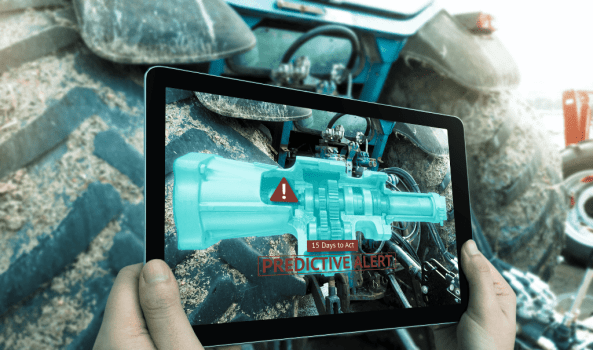
Operations & Maintenance
9 Key Statistics About Predictive Maintenance
If you’re responsible for maintenance in plants or facilities, you’ve likely come across predictive maintenance (PdM).
You might wonder if this advanced strategy could enhance your maintenance operations, or perhaps you simply want to know more about how it works and why it’s gaining popularity.
You will learn nine key statistics about predictive maintenance today.
By the end, you’ll understand PdM’s value, why companies are adopting it, and the requirements for implementing it effectively.
Let’s begin.
Predictive Maintenance Market Was Valued at $7.85B in 2022
Predictive maintenance is a rapidly growing market.
In 2022, its global value was estimated at $7.85 billion. By 2030, this figure is expected to skyrocket to $60.13 billion, according to Grand View Research.
That’s an astonishing compound annual growth rate of 29.5%
Illustration: WorkTrek / Data: Grand View Research
The report reveals that this growth is driven by two major factors:
Stricter workplace safety standards
The increasing availability of AI and machine learning (ML) tools
These advanced tools enable companies to predict when machinery will fail and schedule repairs before that happens, reducing costly unplanned downtime.
Not only does this keep the operations running, but it also reduces the risk of accidents.
This combination of enhanced safety and cost savings explains why more companies are adopting predictive maintenance and why the market continues to expand.
Now, who is leading the charge?
Industry giants like IBM, Schneider Electric SE, Siemens, and Microsoft are heavily investing in these technologies, making predictive maintenance more accessible and accurate than ever before.
Illustration: WorkTrek / Data: Grand View Research
For example, Toyota is already leveraging IBM’s predictive maintenance solution, Maximo, to improve its operations and see impressive results.
Brandon Haight, General Manager at Toyota North America Indiana, explains what it looks like:
Illustration: WorkTrek / Quote: IBM
So, if you’re considering whether predictive maintenance is worth it, this explosive growth tells you that it’s becoming the preferred solution for businesses looking to improve efficiency and save on costs.
30% of Facilities Use Predictive Maintenance
Another global survey on the state of industrial maintenance in 2024, involving 1,165 MRO professionals across industries like manufacturing, retail, and hospitality, shines a light on the popularity of predictive maintenance.
Of the 1,165 companies surveyed, nearly one-third actively use PdM.
Predictive maintenance is the third most popular strategy behind preventive maintenance and the run-to-failure approach.
Illustration: WorkTrek / Data: MaintainX
Preventive maintenance remains the most widely used maintenance strategy because it’s simple—based on regularly scheduled checkups tied to time or usage.
However, it has one fundamental drawback: it doesn’t consider the equipment’s actual condition.
This can result in unnecessary maintenance for machines functioning perfectly or failing to detect potential issues that may arise between scheduled checkups.
Predictive maintenance takes a more data-driven approach.
It analyzes real-time equipment data to detect wear and tear before an issue arises.
Source: WorkTrek
This reduces unnecessary maintenance and minimizes unexpected breakdowns, saving time and money.
Of course, PdM requires a higher initial investment in technology and training.
This upfront cost is one reason why preventive maintenance still leads the way for many companies.
However, as more businesses recognize the potential for long-term savings, predictive maintenance (PdM) is gaining traction.
And this statistic shows that the tide is turning.
79% of Facilities Involve Technicians in Predictive Maintenance
When it comes to predictive maintenance; you might wonder who’s taking the lead—maintenance inspectors, reliability engineers, IT specialists, or technicians.
According to a PwC and Mainnovation 2017 survey, the answer is clear: technicians play a key role in predictive maintenance.
They are directly involved in PdM efforts in 79% of surveyed facilities.
Illustration: WorkTrek / Data: PwC
This makes sense, as maintenance technicians are the closest to the machinery and understand the nuances of how the equipment operates.
However, it’s important to note that most technicians are involved in lower maturity levels of PdM, primarily levels 1 and 2, where visual or instrument inspections are common.
Other professionals involved in the process, like maintenance inspectors and reliability engineers, are needed for higher predictive maintenance maturity levels.
But how do facilities stand when it comes to PdM maturity?
The following statistics will tell us.
Only 11% of Facilities Reach Level 4 Predictive Maintenance
The same survey revealed that most facilities were still in the early stages of predictive maintenance maturity in 2017.
Only 11% reached the highest Level (4), where big data analytics and machine learning drive decision-making.
Illustration: WorkTrek / Data: PwC
To understand the journey to Level 4, let's break down the four levels of PdM maturity (as per PwC and Mainnovation):
Level 1: Visual inspections
This is the most basic form, where equipment is checked based on technician observations.
Level 2: Instrument inspections
Tools and instruments are used to measure conditions.
Level 3: Real-time condition monitoring
Facilities gather real-time data from their machines to predict failures.
Level 4: Big data and machine learning (PdM 4.0)
Here, advanced algorithms analyze large amounts of data to provide predictive insights that improve asset availability and reduce downtime.
Essentially, maturity levels depend on how much data is being used to forecast equipment failures.
To reach level 4, companies must invest in sophisticated technologies like machine learning.
While only 11% of companies were at this level in 2017, it's likely more companies have advanced since then, given the growing trend in the use of data-driven technologies.
Interestingly, the survey highlighted that certain sectors, like rail, were leading the way.
In 2017, 42% of rail facilities had already reached level 4, compared to the 11% of companies in all sectors.
Illustration: WorkTrek / Data: PwC
The rail industry’s high use of PdM can be attributed to its reliance on similar assets across locations, which makes data collection and analysis more effective.
Additionally, political and public pressure to keep transportation running smoothly drives innovation and investments in this sector.
Predictive Maintenance Can Lower Costs by 25%
We've already touched on how predictive maintenance can save money.
However, Deloitte Analytics Institute gives us more specific information: PdM can lower maintenance costs by up to 25%.
Illustration: WorkTrek / Data: Deloitte
How does this happen?
For starters, with predictive maintenance, you avoid emergency repairs, which means you also avoid related costs.
When a critical machine in a facility breaks down unexpectedly, you have to pay for emergency repair and associated costs like expedited parts shipping and overtime pay.
Another way PdM reduces costs is by extending the lifespan of the equipment.
By addressing minor issues before they escalate, your machines run smoothly for longer, reducing the need for replacements.
Additionally, compared to preventive maintenance, PdM skips unnecessary checkups that often happen with fixed schedules, focusing only on repairs when they’re truly needed.
All of this adds up to significant long-term savings for your facility.
47% Say Improving Uptime Is Their Main Goal With PdM
However, lower maintenance costs are not the main driver for adopting PdM.
According to the previously mentioned PwC survey, almost half of facilities say improving uptime is their main goal.
Illustration: WorkTrek / Data: PwC
Why is uptime the main goal? Because downtime costs manufacturers billions each year.
When a machine stops unexpectedly, production ceases, resulting in revenue loss.
Take Sitech Services, for example, a company providing site services to 22 factories in the chemical industry.
Their former director, Richard Schouten, noted that downtime could cost them up to half a million euros daily!
Illustration: WorkTrek / Quote: PwC
For companies like this, uptime outweighs the importance of shaving a few percentage points off maintenance costs.
And it’s not just about money.
Downtime affects production schedules, delays deliveries, and can damage customer relationships—hurting your reputation.
That’s why more companies are turning to PdM to eliminate unwanted downtime and all of its negative consequences.
Predictive Maintenance Boosts Uptime by 10-20%
But how much can PdM improve your uptime?
According to Deloitte’s internal studies, it can be anywhere between 10 and 20%.
Illustration: WorkTrek / Data: Deloitte
This is because PdM allows you to plan maintenance activities at the most convenient times.
Instead of reacting to breakdowns during production hours, you can schedule repairs during off-peak times or when the right personnel are available.
PdM also helps your logistics team by forecasting which parts you’ll need, ensuring you have the right components when maintenance is due.
In short, PdM can optimize your entire maintenance process to ensure equipment stays up and running when you need it most.
But there’s one critical factor you need for PdM to work.
And you probably already know what it is.
60% of Maintenance Professionals Say Data Availability Is Key to PdM Success
According to PwC and Mainnovation, 60% of maintenance professionals believe that access to reliable, accurate data is critical for successfully implementing predictive maintenance.
Illustration: WorkTrek / Data: PwC
And it’s no surprise—PdM depends on continuous data streams to predict equipment failures before they happen.
Without this data from sensors, it's impossible to predict maintenance needs effectively.
However, many facilities face challenges with data collection.
Older equipment may lack the sensors required for real-time monitoring, or the infrastructure to collect data from these machines might not yet exist.
This is especially challenging in environments like hazardous industries or in areas where assets, like trains or trucks, move over large distances, which demands robust IoT networks.
The quality of data is just as important.
To accurately predict failures, you need detailed information such as temperature, pressure, and even more advanced metrics.
Without these insights, predictive maintenance is essentially running blind.
51% of Facilities Aren’t Planning to Adopt Predictive Maintenance
Despite all the benefits of predictive maintenance, over half of the facilities surveyed in PwC's 2017 study said they weren’t planning to adopt it.
Illustration: WorkTrek / Data: PwC
Why would so many shy away from such a promising technology?
For one, implementing PdM is costly.
It requires substantial investments in hardware and software and hiring specialized workers like data scientists and engineers to interpret and act on the data.
However, this statistic is from 2017, and since then, the adoption of PdM has grown.
Still, many companies aren’t ready to adopt PdM.
For those companies, there's still an option to improve reliability through other maintenance strategies, like advanced preventive maintenance.
For example, a modern CMMS like WorkTrek allows you to track meter readings and set advanced preventive schedules, as shown in the image below.
Source: WorkTrek
This can provide companies with a more reliable maintenance approach even if they are not yet ready for predictive maintenance.
Conclusion
Predictive maintenance is gaining momentum, bringing the benefits of reduced downtime, cost savings, and improved safety to more and more facilities.
However, only some companies are ready to adopt it, and many are still progressing through different maturity levels.
Nonetheless, the growing trend toward digitalization, artificial intelligence (AI), and machine learning positions PdM as the future of maintenance.
As more companies invest in these technologies, those that embrace predictive maintenance early on will be in a stronger position to reap its long-term benefits.

Operations & Maintenance
CMMS: 9 Statistics and Insights You Need to Know
Computerized maintenance management systems (CMMS).
If you want to know some interesting facts about it, you've come to the right place.
Today, we'll walk you through key statistics and insights about computerized maintenance management systems (CMMS).
You'll see how the market is evolving, why more companies are adopting this technology, and how it can benefit your maintenance operations.
The Global CMMS Market Size Is Projected to Reach US $4,2 Billion by 2033
Future Market Insights reveals that the CMMS market is expected to grow significantly over the next ten years.
More precisely, it is projected to grow from US $1,636.2 million in 2023 to US $4,215.1 million by 2033, with a growth rate of 9.1% per year.
Illustration: WorkTrek / Data: Future Market Insights
To put this into perspective, from 2018 to 2022, the growth rate was just 7.0%.
So, what’s driving this rapid demand?
It’s simple: industries need their machines to run smoothly and last longer, and they need better visibility to the work being performed, which is what CMMS offers.
With downtime costing millions per hour, businesses are turning to CMMS to track work orders, monitor performance, and make smarter decisions faster.
Source: WorkTrek
Another reason for this growth is the general shift toward automation and digital solutions.
Gone are the days when maintenance logs were kept with pen and paper.
With CMMS, everything is organized digitally, giving businesses more control over their operations.
Plus, as digital tools are used more widely, CMMS is becoming more affordable and user-friendly, opening the doors for small and medium businesses to join in.
Finally, a modern CMMS can integrate with IoT sensors to analyze real-time data and automatically schedule maintenance based on predictive insights, further reducing downtime and improving asset management.
Source: WorkTrek
Considering all these factors, it’s easy to see why more companies are jumping on board and investing in CMMS.
The CMMS Market Contributes 20% to the Global Asset Management Market
CMMS now makes up one-fifth of the global asset management market, and that number is telling.
Illustration: WorkTrek / Data: Future Market Insights
This shows how vital these systems are for managing and maintaining physical assets.
If you're in an industry where your equipment's uptime is crucial—manufacturing, construction, or utilities—CMMS is a game-changer.
It ensures that preventative maintenance happens on time, which means fewer breakdowns and more efficient use of your assets.
In the long run, this extends the lifespan of your machinery and saves you money.
This 20% share shows a trend toward software-based solutions for managing extensive equipment inventories.
Companies realize that spreadsheets and manual tracking just don’t cut it anymore.
With CMMS, everything is in one place, making it easier to manage work orders, track asset histories, and plan for future maintenance needs.
This trend highlights the growing recognition of CMMS as a critical tool for companies that want to stay competitive and efficient.
72% of Companies Use CMMS for Organizing Maintenance
This statistic comes from the State of Maintenance Report 2024 by Upkeep, which surveyed maintenance supervisors and managers from mostly small to mid-sized companies.
On why they use CMMS, 72% of maintenance professionals answered that they primarily use it to organize their maintenance activities and data in one place.
Illustration: WorkTrek / Data: Upkeep
This makes perfect sense.
Juggling work orders, service history, parts inventory, and asset conditions using different systems or, worse, manually, is chaotic and inefficient.
With CMMS, it’s the opposite.
Take our very own CMMS, WorkTrek, as an example.
It centralizes everything: maintenance tasks, documents, service history, spare parts inventory, asset conditions, and expenses.
Source: WorkTrek
From one central dashboard, you can easily schedule and assign tasks, track progress, and generate detailed reports.
When everything is in one place, it’s easier to manage, which saves you time and minimizes errors.
It really can’t get more organized than this!
28% of Maintenance Professionals Say Reduced Unplanned Downtime Is the Biggest Benefit of CMMS
Another key finding from the State of Maintenance Report is that 28% of maintenance professionals believe reducing unplanned downtime is the biggest benefit of CMMS.
Illustration: WorkTrek / Data: Upkeep
It’s easy to see why when we know that unplanned downtime is a huge pain point for many companies. Unfortunately, this pain point occurs way too often.
Namely, research shows that over two-thirds of industrial companies experience at least one unplanned outage a month.
However, with the help of a CMMS, that can be reduced.
Maintenance teams can easily stay on top of their maintenance strategy, schedule preventive maintenance more accurately, and even monitor assets in real time to predict failures before they cause costly breakdowns.
As you will soon learn, the latter is growing in popularity across industries.
48% of CMMS Users Have a Predictive Maintenance Regime
Even in 2022, 48% of CMMS users have already implemented a predictive maintenance regime.
This statistic comes from the CMMS Market Report and Insights by Comparesoft, which analyzed data from 119 CMMS buyers.
Illustration: WorkTrek / Data: Comparesoft
This shows that almost half of CMMS users are tapping into advanced capabilities to optimize their maintenance strategies further.
Predictive maintenance allows CMMS to analyze equipment data and identify patterns that indicate potential issues, letting maintenance teams fix problems before they cause downtime.
As more companies adopt Industry 4.0 and IoT technologies, CMMS solutions that connect with sensors to gather real-time data are becoming necessary.
With nearly half of users already using predictive maintenance by 2022, it's clear that this trend is set to grow, making these capabilities a must-have for any future-focused CMMS.
21% of CMMS Users Are Interested Only in Core CMMS Functions
Not surprisingly, the same Comparesoft report revealed that only 21% of companies were interested in core CMMS functions like asset tracking, job logging, and work order management.
With so many companies already adopting predictive maintenance, it makes sense that most users expect more from their CMMS.
The majority (79%) are looking for additional features such as service management analytics, parts management, health and safety compliance, and integration with sensors for predictive maintenance.
Illustration: WorkTrek / Data: Comparesoft
Why is this significant?
It highlights that the needs of modern maintenance teams are evolving and that CMMS providers must continuously innovate to stay competitive.
It’s no longer enough just to offer basic tracking and scheduling features.
As digital technologies and IoT become standard, maintenance teams expect their CMMS to integrate with equipment monitoring software, collect sensor data, and automate maintenance activities.
This reinforces the idea that predictive maintenance is becoming a "must-have".
58% of Users Who Sought a CMMS in 2022 Used Spreadsheets
In 2022, more than half of potential CMMS buyers still relied on spreadsheets, while 28% weren’t using any maintenance management system, according to Comparesoft.
Illustration: WorkTrek / Data: Comparesoft
This data highlights a stark contrast between past practices and the future direction of maintenance management.
It is easier for companies to adopt CMMS if they are already managing their maintenance somehow, than not at all. Because they can quickly become aware of the drawbacks of their approach.
While spreadsheets were once the go-to tool, their limitations are becoming increasingly apparent.
They are time-consuming, error-prone, and need more automation and advanced tracking features that a CMMS offers.
With a CMMS, maintenance teams can automate tasks, track service history, and manage assets from a single platform—efficiencies that spreadsheets simply cannot match.
The growing demand for CMMS shows that more companies are moving away from outdated methods, investing in systems that handle everything from basic asset tracking to predictive maintenance.
And you’re about to learn the key reason why this shift matters.
74% of Maintenance Professionals Say Their CMMS Improves Productivity
Spreadsheets alone cannot significantly improve productivity, but CMMS can.
And this statistic proves it.
In 2020, Advanced Technology Services (ATS) partnered with Plant Engineering Magazine to survey the state and common trends in industrial maintenance across U.S. manufacturing plants.
Regarding software use, they found that CMMS improves productivity for 74% of maintenance professionals.
Illustration: WorkTrek / Data: Advanced Technology Services
This statistic highlights how much a well-implemented CMMS can impact day-to-day operations.
Here are some ways CMMS can boost your productivity:
Automate and standardize work order creation, assignment, and tracking.
Schedule and manage preventive maintenance tasks based on equipment data.
Track inventory levels, manage spare parts, and optimize purchasing.
Use mobile apps to access and update work orders in the field.
Implement predictive maintenance using data analytics and algorithms.
When you switch from manually managing tasks to an automated CMMS, the boost in efficiency is clear. That’s why so many maintenance professionals notice a significant productivity gain.
7% of Maintenance Managers Say That Poor CMMS Data Quality Is the Biggest Challenge They Face
But even with all its benefits, a CMMS isn’t flawless.
According to ABL's 2023 Global Maintenance Manager Report, 7% of maintenance managers cited poor data quality as their biggest challenge in using CMMS.
Illustration: WorkTrek / Data: ABL
While this number might seem small, it points to a serious problem.
A CMMS is only as good as the data entered into it.
If the data—like equipment details, maintenance history, or performance metrics—is incomplete or incorrect, it can lead to mistakes, delays, and inefficiencies.
For instance, wrong model numbers or missing manufacturer information can delay repairs or cause the wrong parts to be ordered, leading to increased downtime.
The report further reveals the root cause of this issue: inadequate change management processes, where updates about equipment changes or repairs aren’t properly recorded.
Luckily, there is a solution to this challenge.
Stuart Murray, Head of Technical at ABL Group Company, suggests that maintenance teams can solve this by collecting accurate data, using standardized processes, and implementing continuous improvement strategies:
Illustration: WorkTrek / Quote: ABL
Ultimately, it’s not the CMMS itself that causes problems—it’s how we use it. Ultimately, a CMMS can only be as effective as the information it holds.
Conclusion
These nine statistics tell a clear story—adopting a CMMS can take your operations to the next level.
As long as you use it properly, it will keep your maintenance organized, boost productivity, and reduce downtime.
With rising demand for predictive maintenance and improved efficiency, now is the time to embrace this technology.
You’ll need to if you want to stay competitive. As more companies adopt CMMS to streamline processes and reduce costs, sticking to outdated methods could leave you struggling to keep up.

Operations & Maintenance
6 Manufacturing Maintenance Trends to Know About
Manufacturing maintenance is an ever-evolving field, with new processes, technologies, and best practices always emerging.
It seems like, just when we think we know everything there is to know about this important process, a new innovation appears, reminding us there's always more to learn and improve.
That’s why we’ve dedicated this article to exploring six trends in manufacturing maintenance that you need to be aware of right now.
By staying on top of these trends, you’ll not only be able to stay ahead of your competition but also unlock new ways to maximize the potential of your assets.
Let’s dive right in.
Predictive Maintenance
Predictive maintenance (PdM) is a proactive strategy focused on predicting and preventing equipment failure by collecting and analyzing data from the machines themselves.
According to a 2024 MaintainX survey, it is currently the third most commonly used type of maintenance, following the traditional reactive and preventive methods.
Illustration: WorkTrek / Data: MaintainX
So, how does it work exactly?
First, data is collected in real-time through various sensors installed on equipment, like the nanotechnology-powered sticker sensor produced by Feelit, as shown below.
Source: Feelit
These sensors track all sorts of metrics related to the operational condition of assets, like vibration, temperature, operating hours, and so much more.
The data is then processed by machine learning (ML) and artificial intelligence (AI) software to detect patterns, identify anomalies, establish correlations between parameters, and assess their impact on equipment health.
Ultimately, this enables the system to predict future asset behavior and show it to you in an easy-to-understand way.
Source: WorkTrek
Plus, these systems can send alerts to users when potential failures are detected, allowing repairs and checkups to be scheduled in advance.
Overall, PdM is a real game-changer, ensuring that upkeep is performed only when actually necessary, reducing the risk of both under- and over-maintenance.
This, in turn, translates to less downtime (both planned and unplanned), lower repair costs, and more reliable assets.
No wonder this type of maintenance is becoming increasingly popular in the manufacturing sector.
Take Cintas, for example, an American corporation that provides various products and services to businesses, including uniforms, mats, mops, cleaning and restroom supplies, and more.
As their Maintenance Supervisor, Woody Rogers points out; it’s precisely predictive maintenance that empowers them to achieve their high production standards:
Because we strive to operate higher than the standard, it’s critical for us to stay ahead of any issues that might impact asset performance or uptime. By monitoring and analyzing historical and real-time data that we collect on the conditions of our assets, we’ve been able to proactively identify, detect, and fix issues before they become bigger problems.
After all, in this industry, you have to be able to stay ahead of potential issues if you want to keep your operations running smoothly.
And predictive maintenance is all about staying ahead.
Maintenance-as-a-Service (MaaS)
One of the main barriers to adopting predictive maintenance is its high setup cost, which is driven by the costly, high-tech infrastructure required.
Luckily, there's a solution to this problem on the horizon called Maintenance-as-a-Service (MaaS).
This new, subscription-based model allows companies to outsource their upkeep to third-party service providers instead of building and managing their maintenance systems and teams.
These vendors offer sophisticated predictive tech and the expertise needed to make it work so that the plants have more time to focus on their core activities.
The best part?
Manufacturing facilities pay only for the maintenance they need, on a pay-as-you-go basis—just like they would for their SaaS solutions like, say, CMMS.
MaaS itself is a broad concept, encompassing a variety of sub-services, such as:
Fault-Detection-as-a-Service
Delivers detailed information on asset status, including predictions of failures based on parameters like End of Life (EOF) and Mean Time Between Failures (MTBF)
Recommendations-as-a-Service
Provides suggestions on when to perform repairs for specific parts or equipment
Simulation-as-a-Service
Simulates future asset operation based on historical data in the cloud
Training-as-a-Service
Offers cloud-based training, including VR (Virtual Reality) and AR (Augmented Reality)-based services
Thanks to MaaS and its flexibility, businesses can tailor their subscription plans based on their actual needs and budget, which enables them to use advanced technologies without breaking the bank.
Precognize is one of the providers of such services.
They offer SAM GUARD®, an AI-powered predictive maintenance solution that detects issues in equipment and operational processes.
In addition to this, their Digital Transformation Experts (DTE) team works closely with clients to implement this tool and help analyze the data it generates.
This expert team monitors and evaluates alerts, compiles reports and ensures companies get the most out of the system.
Here's a more detailed description of what the team does, as found on their website:
Source: Precognize
All in all, although MaaS is still in its early stages, it holds immense potential, especially for smaller facilities.
It presents an amazing opportunity to experiment with almost anything the maintenance industry offers without compromising the organization’s profitability.
So, as it matures, expect it to become a go-to solution for businesses looking to stay ahead of the game while keeping costs under control.
3D Printed Replacement Parts
3D printing, also known as additive manufacturing, enables maintenance teams to create replacement parts on the spot, which eliminates all sorts of concerns related to inventory management.
Before you ask, yes, these 3D-printed parts are reliable.
In fact, research published in MDPI examined parts produced for Stellantis, a Spanish automotive manufacturer, and found that 80% of the original properties were retained in 3D-printed components.
Illustration: WorkTrek / Data: MDPI
In other words, they perform just as well as their traditionally produced counterparts.
The research also highlights that additive manufacturing plays a key role in preventive maintenance and "will become even more important in the future."
We agree.
With on-demand spare parts printing, lead times are significantly reduced, unlocking many benefits for manufacturing facilities.
Massimiliano Cecconi, Innovation Engineering Director at Baker Hughes, one of the world's largest oil field services companies, elaborates:
Additive manufacturing allows us to develop parts and products more efficiently, with better performance and cost-effectively, and it accelerates the speed at which we can bring products to market: production times are drastically reduced—the finished product can be completed in weeks instead of months, significantly reducing production cycles, which ultimately benefits the customer.
Faster production, less downtime, and more efficient inventory control are all made possible by additive manufacturing.
Even when you need components no longer in production, 3D printing can help.
This was demonstrated in 2017, when Siemens reverse-engineered and 3D printed one such component for the Slovenian nuclear power plant, Krško.
Source: Siemens
Namely, the plant needed a new 108 mm diameter impeller for a fire protection pump that has been in operation since 1981.
The problem was that the original manufacturer had since gone out of business.
Fortunately, Siemens successfully produced the component, which marked "the first successful commercial installation and continuing safe operation" of such a part in a nuclear power plant.
You can see the result below. From left to right, the photo shows the original part, Siemens’ 3D-printed prototype, and the 3D-printed replacement installed and operating in Krško.
Source: Siemens
Vinko Planinc, Head of Maintenance at the Krško plant, praised the tech’s capability to prolong assets’ useful lives.
Illustration: WorkTrek / Quote: Siemens
Ultimately, while the high costs of 3D printers mean it may take a little time for every plant to have one, the benefits are simply too powerful to ignore.
It’s only a matter of time before we see this technology become a must-have tool for factories across industries, transforming spare part management for good.
Use of Augmented Reality For Visualization and Diagnostics
Immersive technologies, once the stuff of sci-fi movies, are now becoming part of our reality, and manufacturing maintenance is not left behind.
In particular, augmented reality (AR) is gaining more and more traction in this area.
In the simplest terms, this technology allows technicians to overlay digital information onto real-world environments and equipment through AR-powered headsets, mobile devices, or wearables.
As Drew Bowers, Group Leader for Human Factors in UDRI’s Sensor and Software Systems division, notes, many of us have already seen this tech in action.
Illustration: WorkTrek / Quote: University of Dayton Research Institute.
In the context of maintenance, it looks quite similar. A technician points a tablet camera at a machine, and the device displays relevant notes on the screen.
For example, it could indicate which wire or pipe is which, which drive controls which motor, or which spare parts are required for repair.
Some systems show whether these parts are available in the warehouse.
This, in turn, dramatically speeds up problem diagnosis and makes repairs more precise, with fewer mistakes.
However, AR also improves upkeep processes by enabling remote support.
In this scenario, an off-site expert shares the technician’s view in real-time, providing advice and annotating screens with instructions, data, and other helpful information.
That’s precisely the service they offer at ABB, says Stuart Thompson, the President of the Electrification Service Division.
Illustration: WorkTrek / Quote: Data Centre Dynamics
ABB has supported customers in over 20 countries this way, reducing repair time and costs by eliminating the need to send experts to facilities.
You can see a demonstration of how it all works in this video:
https://www.youtube.com/watch?v=9YUpvD_KoPw
Source: ABB Medium voltage products on YouTube
It seems futuristic, doesn’t it? Yet, it’s already here.
And as AR technology keeps developing, we’ll surely be seeing a lot more of it.
Maintenance Robotics
Speaking of sci-fi-like technology, there are now all sorts of robots available that can perform various routine upkeep tasks, either alongside humans or even all on their own.
And the benefits are almost too many to count.
For one, robots can significantly increase the efficiency of your maintenance efforts.
Take, for example, Bristola’s remote-controlled submersible robots that clean and maintain liquid storage tanks.
Source: Bristola
The Bristola team installs its patented equalization chamber entry system, and the machine takes it from there, removing all the sediment and build-up within the tank.
No need to drain the tanks, plan for downtime, or send anyone inside for manual cleaning.
The process becomes much faster and more cost-effective, taking two days instead of the usual six weeks.
In addition to efficiency, robots also greatly improve safety.
Maintenance personnel at the global stainless steel manufacturer, Outokumpu, know this very well.
The company is currently piloting safety inspection robots, which are expected to reduce employee exposure to hazardous substances by over 80% and cut down dangerous repairs by 20%.
Thorsten Piniek, Outokumpu’s Vice President of Health Safety, provides some more information.
Illustration: WorkTrek / Quote: Engineer Live
He adds that the robots can also shorten malfunction times since they can detect defects earlier through temperature and sound profile measurements.
The most fascinating thing about these maintenance robots is that they get smarter daily.
Just recently, Boston Dynamics’ robot dog, Spot, learned predictive maintenance.
Spot can now perform acoustic leak detection and vibration inspections, helping maintenance technicians identify early signs of bearing failure.
You can learn more about Spot in this video:
https://www.youtube.com/watch?v=0hrYzgP_Lg4
Source: Boston Dynamics on YouTube
Given all these amazing advancements, it’ll be very interesting to see what else the future holds for the field of robotics and its role in manufacturing maintenance.
One thing is for certain, though: even more ground-breaking innovations are on the horizon.
Green Maintenance
With 87% of business leaders acknowledging the growing importance of sustainable manufacturing, we see more and more factories working to reduce the environmental impact of their maintenance activities.
Illustration: WorkTrek / Data: Fictiv
They are embracing innovative practices to hit those goals.
For instance, many are swapping out materials and tools used for upkeep for more eco-friendly alternatives.
The market, flooded with greener options, reflects this trend, too.
For example, take EcoChem’s Eco-Green Kleen, a water-based industrial degreaser that cuts out the need for harsh chemicals.
Source: EcoChem
Many, however, go further and evolve their maintenance processes to drive sustainability.
According to Bill Zujewski, CMO at NetFoundry, a zero-trust connectivity platform, predictive maintenance is a good example of a maintenance strategy that can yield more sustainable results:
There are two use cases around predictive maintenance that jump out at me as win-wins – for the environment and manufacturers. The first one is around the service process. If you can reduce the truck rolls that have to come out to [...] fix something that’s broken, you’re reducing your carbon footprint – there’s less fossil fuel burned for all those service people coming on-site for routine checkups when they’re not needed. [...]
The other use case is around the parts and the machines themselves. If you can get the machines and part replacements to last longer and not replace parts prematurely, you’re saving scarce resources. You’re not sending them to the dump and creating pollution and waste.
Interestingly enough, nearly every trend we’ve discussed in this article contributes to greener maintenance in a similar way.
This is because, broadly speaking, all these innovations are developed specifically to decrease the frequency of repairs and help businesses achieve more with less in the long run.
This naturally translates to less waste, lower energy consumption, and optimized resource use.
3D printing is another case in point, as it significantly cuts down on material waste.
Adam Lea-Bischinger, Partner at Asset One LLP, a company providing Asset Management Advisory services, elaborates:
[Subtractive manufacturing] involves starting with a raw material, such as a block of metal, and cutting it down to get the shape you need, creating a lot of waste. An alternative – enabled by new technologies – is additive manufacturing, also known as 3D printing. In this case, you build a product by adding material, rather than subtracting it, so there is very little waste.
The bottom line?
The environmental impact of manufacturing facilities is no longer being ignored.
Companies are finally stepping up, taking responsibility, and actively trying to reduce their negative footprint wherever possible.
And when it comes to maintenance in particular, there’s a huge opportunity to make a real difference.
Conclusion
Looking at all these amazing innovations and trends, it becomes clear that there's never been a more exciting time to work in manufacturing maintenance.
Augmented reality, robotics, and the ability to predict future asset behavior—things we used to see only in films—are now our everyday tools, helping us make equipment more reliable, safer, and longer-lasting.
And the field is evolving rapidly, which means we'll likely see even more advanced technologies in the near future.
In other words, this is just the beginning.
The cutting-edge breakthroughs will probably transform the industry in ways we can barely imagine.
Compliance & Control
Benefits of Reliability Centered Maintenance (RCM)
Reliability Centered Maintenance (RCM) is a strategic approach to maintaining equipment and assets. It focuses on keeping systems running smoothly and preventing breakdowns. RCM helps companies save money, improve safety, and boost productivity by targeting maintenance efforts where they matter most.
This method examines each piece of equipment and determines the best way to keep it working. It's not about fixing things when they break. Instead, RCM tries to prevent problems before they start. Companies use RCM to make smart choices about when and how to perform maintenance.
Illustration: WorkTrek / Quote: MaxGrip
RCM is different from older maintenance methods. It uses data and careful planning to create a more effective maintenance strategy. .
This approach can lead to better equipment performance and fewer unexpected shutdowns. For businesses that rely on machines and other assets, RCM can be a game-changer.
Benefits of RCM
Reliability Centered Maintenance (RCM) offers several key advantages for organizations. It enhances safety, boosts performance, cuts costs, and improves maintenance planning.
Enhanced Safety and Environmental Integrity
RCM strongly emphasizes safety and environmental protection. It helps identify potential hazards and failure modes that could lead to accidents or environmental damage. By addressing these risks proactively, companies can prevent incidents before they occur.
Source: WorkTrek
RCM promotes a culture of safety awareness among staff. It encourages teams to think critically about equipment failures and their consequences, leading to better safety protocols and procedures.
The approach also helps meet regulatory requirements more effectively. It ensures that safety-critical systems receive proper attention and maintenance, reducing the risk of fines or legal issues related to safety or environmental breaches.
Improved Reliability and Performance
RCM significantly boosts asset reliability and performance by focusing maintenance efforts where they're most needed.
Illustration: WorkTrek / Data: ABB
Critical equipment gets more attention, while less important items receive appropriate levels of care.
The method helps identify and address the root causes of failures, leading to fewer breakdowns and longer equipment life. Improved reliability means less downtime, reduced maintenance costs, and more consistent production.
RCM also enhances operational performance. It helps maintain equipment at optimal levels, ensuring peak efficiency. This can lead to higher quality output and improved customer satisfaction.
The approach supports continuous improvement. As teams learn more about asset behavior, they can refine maintenance strategies.
Cost Efficiency
RCM can lead to substantial cost savings for organizations. Focusing on critical assets reduces unnecessary maintenance activities, cuts labor costs, and reduces spare parts inventory.
The method helps prevent costly breakdowns and emergency repairs. Planned maintenance is generally cheaper than reactive fixes. RCM also extends equipment life, delaying expensive replacements.
Improving reliability, RCM reduces production losses due to equipment failures, significantly impacting overall profitability.
The approach also helps optimize maintenance schedules, reducing overtime costs.
Illustration: WorkTrek / Data: Streamline Health
RCM supports better budget planning. It provides data-driven insights into maintenance needs, allowing for more accurate forecasting.
Effective Maintenance Planning
RCM enables more efficient and effective maintenance planning. It helps prioritize maintenance tasks based on criticality and risk.
This ensures resources are used where they'll have the most impact.
The approach supports predictive maintenance strategies. By understanding failure modes, teams can spot issues before they cause breakdowns, allowing for more proactive maintenance activity scheduling.
Illustration: WorkTrek / Data: TheBlue
RCM improves documentation and knowledge sharing. It creates a structured approach to capturing information on asset performance and maintenance history. This helps teams make better decisions and preserves institutional knowledge.
The method also supports better spare parts management. By understanding equipment needs, organizations can optimize their inventory levels. This reduces carrying costs while ensuring critical parts are available when needed.
Understanding RCM
Reliability-centered Maintenance (RCM) is a strategic approach to asset maintenance. It aims to keep equipment running smoothly while cutting costs. RCM uses data and analysis to make smart choices about maintenance tasks.
Principles of Reliability-Centered Maintenance
RCM focuses on keeping systems working, not just fixing parts. It looks at how equipment fails and what that means for the operation. The main goal is to stop problems before they start.
RCM uses a mix of different maintenance types, including preventive maintenance and proactive repairs.
The method picks the best way to care for each piece of equipment.
One key idea is that not all equipment needs the same care. RCM helps teams decide what's most important to fix or check, saving time and money by focusing on what matters.
History and Evolution of RCM
RCM was first used in the aviation industry in the 1960s. United Airlines first used it to keep planes safe and on time. The success in aviation led other sectors to adopt RCM.
Illustration: WorkTrek / Data: ramco
Over time, RCM grew and changed. In 1999, the Society of Automotive Engineers created the JA1011 Standard, which set clear rules for doing RCM right.
Today, many fields use RCM. It helps in factories, power plants, and transport systems. The basic ideas haven't changed much, but new tech makes RCM easier to use.
Key Components of RCM
RCM starts with a deep look at how systems work and fail. This is called RCM analysis. It helps find the most important parts to maintain.
Teams then make a plan to prevent failures. This often includes a mix of tasks:
Regular checks
Replacing parts on a schedule
Watching for signs of wear
RCM also uses data to make choices. It tracks how often things break and why, which helps make better maintenance plans over time.
A big part of RCM is teamwork. It brings together people who run the equipment and those who fix it, leading to smarter decisions about upkeep.
RCM Methodology
Reliability-centered Maintenance (RCM) uses a structured approach to optimizing maintenance strategies. It focuses on identifying and preventing equipment failures to improve reliability and reduce costs.
RCM Process and Implementation
The RCM process starts with defining system functions and performance standards. Teams then identify functional failures and their causes. This collaborative effort involves maintenance, operations, and engineering staff.
RCM implementation follows a Plan-Do-Check-Act cycle:
Plan: Set goals and define the scope
Do: Analyze equipment and develop strategies
Check: Monitor results and gather data
Act: Adjust strategies based on findings
Successful RCM implementation requires strong leadership support and employee buy-in. Organizations should provide training and resources to ensure proper execution.
Identifying Failure Modes
Failure mode identification is a critical step in RCM. It involves analyzing how equipment can fail and what causes these failures. Teams use tools like Failure Mode and Effects Analysis (FMEA) to examine potential issues systematically.
Key steps in identifying failure modes:
List all system functions
Define functional failures
Determine failure modes for each functional failure
Identify root causes of failure modes
This process helps teams understand equipment behavior and develop targeted maintenance strategies. It also aids in prioritizing maintenance efforts based on failure likelihood and impact.
Assessing Risks and Consequences
RCM employs a risk-based approach to evaluate the consequences of equipment failures. This assessment considers factors such as safety, environmental impact, and production losses.
Teams assign risk levels to each failure mode based on:
Probability of occurrence
Severity of consequences
Detectability of the failure
This risk assessment guides decision-making on maintenance strategies. High-risk failures receive more attention and resources, while low-risk issues may be addressed with simpler approaches.
Selecting Maintenance Tasks
RCM aims to choose the most effective maintenance tasks for each failure mode. These tasks fall into several categories:
Preventive maintenance
Predictive maintenance
Run-to-failure
Redesign or modification
Task selection considers factors like technical feasibility and cost-effectiveness. Teams may use decision trees to guide this process.
Condition monitoring plays a key role in many RCM strategies. It involves using sensors and data analysis to detect early signs of equipment deterioration.
The chosen tasks form a comprehensive maintenance plan tailored to each asset's needs. This approach helps organizations balance reliability, cost, and risk effectively.
RCM in Practice
Reliability-centered Maintenance (RCM) has proven effective across many industries. Companies have seen real benefits from using RCM methods. Building the right culture is key to RCM's success.
Application in Different Industries
RCM works well in many fields. The aviation industry uses RCM to keep planes safe and on time. Power plants rely on RCM to avoid outages. Factories use it to keep production lines running.
In healthcare, RCM helps keep vital equipment working. Oil and gas companies use it on offshore rigs, and even IT departments use RCM ideas to manage computer systems.
RCM adapts to each industry's needs. A hospital focuses on patient safety, while a factory aims for nonstop production. RCM helps both meet their goals.
Case Studies and Success Stories
United Airlines saw big gains with RCM. They cut maintenance costs while improving safety. Downtime dropped, and planes spent more time in the air.
Illustration: WorkTrek / Data: ePlan Blog
In 1978, F. Stanley Nowlan (Director of Maintenance Analysis at United Airlines) and Howard F. Heap (Manager of Maintenance Program Planning at United Airlines) produced a seminal report for United Airlines that codified the RCM process.
In the past 40 years, United and other airlines have continued to refine that process. They've started using data from IoT devices and advanced analytics tools to better pinpoint the equipment status.
Creating a Culture for RCM Success
RCM needs more than new methods. It needs a new way of thinking. Leaders must show they believe in RCM and explain why it matters.
Training is key. Workers must learn RCM skills and understand how their work fits the big picture.
Teamwork is vital for RCM. Maintenance, operations, and engineering must work together. Open communication helps spot problems early.
Continuous improvement is part of RCM culture. Teams should always look for ways to do better. Celebrate wins to keep people motivated.
Maintaining and Improving the RCM Program
A strong RCM program needs ongoing attention and refinement. Regular monitoring, continuous learning, and integration with broader asset management practices are key to maximizing RCM benefits.
Monitoring and Adjusting the RCM Approach
RCM is not a set-it-and-forget-it process. To stay effective, it requires constant evaluation and adjustment. Organizations should track key performance indicators (KPIs) related to asset reliability, downtime, and maintenance costs.
Regular audits of the RCM process help identify areas for improvement. These may include:
Equipment failure rates
Maintenance task effectiveness
Resource allocation
Cost savings
Based on these metrics, maintenance teams can fine-tune their strategies. This might involve updating failure modes, adjusting task frequencies, or revising maintenance procedures.
Continuous Learning and Adaptation
The RCM process thrives on knowledge sharing and continuous improvement. Maintenance teams should foster a culture of learning and adaptation.
Key practices include:
Regular training sessions on RCM principles
Cross-functional meetings to share insights
Analyzing root causes of failures
Staying updated on new maintenance technologies
Sharing learnings across the asset lifecycle helps improve overall system performance. Teams can use this knowledge to refine maintenance strategies and prevent recurring issues.
Integration with Asset Management
RCM should not exist in isolation. It works best when integrated with broader asset management practices. This integration ensures that maintenance efforts align with organizational goals.
Key integration points include:
Aligning RCM with asset lifecycle planning
Incorporating RCM data into asset replacement decisions
Using RCM insights to inform equipment procurement
Coordinating RCM with other maintenance approaches
By linking RCM to overall asset management, organizations can make more informed decisions about their equipment. This holistic approach helps optimize asset performance and longevity while controlling costs.
Advanced Tools and Techniques in RCM
Modern reliability-centered maintenance relies on cutting-edge tools and methods. These advancements help companies make better choices, spot issues early, and keep equipment running smoothly.
Technological Advancements in RCM
Implementing a CMMS system like WorkTrek can help provide you with real data and status on each piece of equipment.
Source: WorkTrek
Reliability-centered maintenance can also use smart sensors and the Internet of Things (IoT). These tools gather real-time data on machine health, allowing companies to track vibration, temperature, and other key factors.
Artificial intelligence (AI) and machine learning boost RCM efforts. These systems can predict when parts might fail, helping prevent breakdowns before they happen.
Mobile apps let workers check and update maintenance information on the go, speeding up response times and improving efficiency.
Virtual reality (VR) is changing how technicians train. They can practice complex repairs in a safe, virtual setting.
Data-Driven Decision Making
RCM thrives on good data. Modern systems collect vast amounts of info from machines and processes.
Big data analytics help make sense of all this information. Companies can spot trends and patterns humans might miss.
CMMS system system dashboard can give managers a clear view of asset health. They can see which machines need attention at a glance.
Predictive algorithms use past data to forecast future issues. This lets teams plan maintenance at the best times.
Data-driven RCM helps companies decide which assets to fix or replace. It eliminates the guesswork in big choices.
Analytical Methods in RCM
Failure Mode and Effects Analysis (FMEA) is a key RCM tool. It helps teams find weak points in systems before they cause problems.
Fault Tree Analysis (FTA) maps out how small issues can lead to major failures, helping prevent major breakdowns.
Root Cause Failure Analysis digs deep into why problems happen. It goes beyond symptoms to fix underlying issues.
The P-F Curve shows how equipment health changes over time. It helps teams decide when to act to prevent failures.
Source: WorkTrek
Condition monitoring uses tools like vibration analysis and oil testing. These methods catch small changes that signal future problems.
Challenges and Considerations in RCM
Reliability-centered Maintenance (RCM) has many benefits, but it also has challenges. To succeed with RCM, organizations must navigate hurdles, weigh costs against benefits, and address misconceptions.
Overcoming Implementation Hurdles
RCM implementation can be complex. It requires strong leadership and teamwork, and many companies struggle to get buy-in from all levels of staff.
Training is crucial. Workers need to understand new processes and tools. This takes time and resources.
Data collection and analysis can be daunting. RCM needs accurate information to work well, and companies may need to upgrade their systems to gather the right data.
Change management is key. Shifting from reactive to proactive maintenance is a big change, and some staff may resist new working methods.
Balancing Costs and Benefits
RCM can save money long term, but upfront costs can be high. Companies need to invest in:
Training programs
New tools and technology
Data systems
These costs can be a barrier for some organizations.
RCM may lead to more planned downtime at first. This can impact production in the short term.
It's important to track ROI carefully. The benefits of RCM may take time to appear in financial reports.
Addressing Common Misconceptions
Some think RCM is only for big companies. In reality, businesses of all sizes can benefit.
There's a myth that RCM means doing more maintenance. It often leads to less but more targeted work.
Some believe RCM is too complex. While it does require learning, the basic principles are straightforward.
A common error is thinking RCM replaces other maintenance strategies. It works best when combined with preventive and predictive maintenance.
RCM isn't a quick fix. It's an ongoing process that needs constant refinement.
Conclusion
Illustration: WorkTrek / Quote: RCMTrainingOnline
As described in this article, Reliability-Centered Maintenance (RCM) offers a powerful approach to managing equipment and asset maintenance. It focuses on preventing failures rather than reacting to them.
Using data-driven strategies and careful analysis, RCM helps organizations enhance safety, improve performance, and reduce costs. Its proactive nature allows for better allocation of maintenance resources, resulting in fewer unexpected breakdowns and extended equipment life.
Although implementing RCM can present challenges, such as initial increased costs and the need for cultural shifts, the benefits outweigh the downsides in the long term.
When executed effectively, RCM boosts operational efficiency and fosters a culture of continuous improvement, making it an essential tool for modern asset management.
Make your work easier.
Try for free.
Book a demo