

Blog

Operations & Maintenance
Optimize Maintenance Storeroom Operations
Many organizations struggle with inefficiencies due to poor parts maintenance and storeroom operations, leading to frequent production delays, equipment downtime, and higher costs. Without a well-organized system, companies risk overstocking, understocking, or not having critical components when needed. This results in lost productivity, increased maintenance expenses, and staff frustration. Implementing a streamlined Parts Maintenance Storeroom […]
Many organizations struggle with inefficiencies due to poor parts maintenance and storeroom operations, leading to frequent production delays, equipment downtime, and higher costs.
Without a well-organized system, companies risk overstocking, understocking, or not having critical components when needed. This results in lost productivity, increased maintenance expenses, and staff frustration.
Implementing a streamlined Parts Maintenance Storeroom operation ensures that parts are available when needed, reduces downtime, minimizes waste, boosts productivity, and optimizes inventory control.
Illustration: WorkTrek / Data: Maintenance Innovators
Listen to this Article
Fundamentals of Maintenance Storeroom Operations
In our experience working with various customers across industries, we've found that a well-run maintenance storeroom can keep operations flowing smoothly. It helps prevent downtime and ensures repairs happen quickly.
Defining the Maintenance Storeroom
A maintenance storeroom is a dedicated space for storing parts and tools needed for equipment repairs. It houses items like spare parts, lubricants, and specialized tools.
The storeroom serves as a central hub for maintenance teams. It allows quick access to needed materials, and proper organization can help the team quickly find the necessary parts.
Key features of a maintenance storeroom include:
Shelving and storage systems
Inventory tracking tools
Safety equipment
Clear labeling
A well-designed storeroom layout improves workflow. It reduces search time and boosts productivity.
The Importance of Efficiency and Reliability
Efficient storeroom operations can keep equipment running smoothly. They help avoid costly downtime and production delays.
Reliable storerooms ensure parts are available when needed. This allows for faster repairs and less equipment downtime.
Implementing a CMMS system like WorkTrek, can help you improve your storeroom operations. You can view all inventory on hand and, more importantly, set automated low-stock alerts.
Benefits of an efficient storeroom:
Reduced maintenance costs
Improved equipment uptime
Better inventory control
Increased worker productivity
Using technology like barcode scanners can boost accuracy. It helps track inventory levels and usage patterns.
Regular audits keep stock levels accurate. This prevents shortages of critical parts.
Strategies for Storeroom Optimization
Illustration: WorkTrek
Effective storeroom management boosts maintenance efficiency and cuts costs. Key strategies focus on inventory control, ongoing improvements, and proven methods.
Inventory Management Essentials
Inventory accuracy can smooth storeroom operations. Tracking parts using barcoding or RFID systems helps avoid stockouts and excess inventory.
Set up a clear labeling system. Group similar items together. This makes it easier to find parts quickly.
Implement a cycle counting program. Regular checks keep inventory records up-to-date. Aim to count high-value or fast-moving items more often.
Use min/max levels for each part. This helps automate reordering and ensures you have enough stock without wasting money on inventory.
Implementing Continuous Improvement
Create a feedback loop with maintenance staff. They can spot issues and suggest fixes, helping refine processes over time.
Track key metrics, such as stock turnover and stockout rates. Use this data to spot trends and make smart changes.
Regularly train staff on best practices. This keeps everyone up-to-date and working efficiently.
Look for ways to cut waste. This might mean finding better suppliers or adjusting order quantities.
Try new ideas on a small scale first. If they work, roll them out more widely.
Employing the Best Practices
Build a strong storeroom team. Assign clear roles and responsibilities. This helps ensure smooth operations.
Use a computerized maintenance management system (CMMS). It can track inventory, schedule maintenance, and generate reports.
Optimize your storeroom layout. Put fast-moving items in easy-to-reach spots. Use vertical space with shelving and racks.
Set up a system for handling urgent parts requests. This helps avoid delays in critical repairs.
Work closely with suppliers. Good relationships can lead to better prices and faster deliveries.
Maintenance Storeroom Layout and Organization
A well-designed maintenance storeroom improves efficiency and reduces downtime. Good layout and organization make finding parts quick and easy, saving maintenance teams time and money.
Effective Layout Planning
Illustration: WorkTrek
Efficient storeroom layouts maximize space and minimize part retrieval time. Start by grouping similar items. Put frequently used parts near the entrance. Store heavy items at waist level to prevent injuries.
Use clear aisles for easy movement. Label shelves and bins. Create a map of the storeroom for quick reference.
Consider workflow when planning. Place receiving and shipping areas near doors. Set up workstations for tasks like part kitting.
Organizational Systems for Storerooms
A good system keeps parts organized and easy to find. Use a mix of methods:
Alphabetical order for small parts
Numerical systems for larger inventories
Color-coding for quick visual identification
Illustration: WorkTrek
Implement 5S principles in the storeroom:
Sort: Remove unnecessary items
Set in order: Arrange parts logically
Shine: Keep the area clean
Standardize: Create consistent procedures
Sustain: Maintain the system
Use barcode labels or RFID tags to track parts. This improves accuracy and speeds up inventory checks.
Storage Solutions and Accessibility
Choose storage options that fit your needs:
Shelving units for small to medium parts
Pallet racks for large or heavy items
Drawer systems for tiny components
Vertical lift modules for space-saving storage
Ensure good visibility of stored items. Where possible, use clear plastic bins or open shelving. Install proper lighting throughout the storeroom.
Make frequently used parts easily accessible. Use ergonomic designs to reduce strain on workers. Consider mobile storage solutions for flexibility.
Implement a check-out system to track part usage. This helps maintain accurate inventory levels and prevents stockouts.
Inventory Control and Maintenance
Good inventory control helps keep costs down and parts available. It involves tracking stock levels, checking accuracy, and managing storage costs.
Utilizing a CMMS like WorkTrek you can set triggers when spare parts run low. You can also run reports to get up-to-date status on all spare parts in the organization.
Inventory Levels and Stocking
Proper stocking ensures parts are ready when needed. Too much stock ties up money, while too little causes delays.
Set minimum and maximum levels for each item. Use past usage data and lead times to decide amounts. Keep fast-moving parts well-stocked. Order slow movers only as needed.
Source: WorkTrek
Consider safety stock for critical items. This extra inventory prevents stockouts during demand spikes or supply issues.
Review stock levels often. Adjust as maintenance needs change. Watch for obsolete parts and phase them out when equipment is upgraded.
Cycle Counting and Audits
Regular checks keep inventory records accurate. Cycle counting means counting a portion of stock each day or week.
Focus on high-value or critical items first. Count them more often. Use ABC analysis to group items by importance.
Compare physical counts to system records. Fix any differences right away. Look for patterns in errors to improve processes.
Do full audits yearly. This checks all inventory at once.
It takes more time but catches issues that cycle counts might miss.
Use barcodes or RFID tags to speed up counting. These reduce human error, too.
Managing Carrying Costs
Carrying costs are expenses for holding inventory. They include storage space, insurance, and lost investment chances.
Organization of the storeroom can cut storage costs. Use vertical space with proper shelving and group similar items together.
Track expiration dates to avoid waste. Rotate stock to use the oldest items first.
Consider vendor-managed inventory for some parts. The supplier keeps track and restocks as needed. This can lower your carrying costs.
Look at which parts are used the least. Can they be ordered just in time instead of stocked? This frees up space and money.
Tools and Technologies for Storeroom Management
Source: WorkTrek
Modern storeroom management relies on specialized tools and technologies. These systems help track inventory, automate processes, and improve efficiency. Let's explore some key technologies used in maintenance parts storerooms.
Computerized Maintenance Management System (CMMS)
A CMMS is a powerful tool for managing maintenance operations. It helps track parts, schedule maintenance, and manage work orders. CMMS software can:
Monitor inventory levels
Generate reports on parts usage
Create purchase orders automatically
Track equipment maintenance history
Source: WorkTrek
This system connects different aspects of maintenance work. It allows managers to make data-driven decisions about inventory levels and part replacements.
Inventory Tracking Systems
Effective inventory tracking is crucial for storeroom management. Modern systems use barcodes or RFID tags to track parts. These technologies offer several benefits:
Real-time inventory updates
Reduced manual counting errors
Easy location of parts in the storeroom
Improved accuracy in stock levels
Source: WorkTrek
Barcode and RFID systems enhance inventory accuracy. They also speed up the process of finding and retrieving parts.
Automated Reordering and Labeling
Automation streamlines many storeroom tasks. Automated reordering systems can:
Monitor stock levels
Place orders when inventory is low
Adjust order quantities based on usage patterns
Automated labeling systems print clear, consistent labels for parts. This improves organization and reduces errors in part identification.
These tools work together to create an efficient storeroom. They reduce manual work and improve accuracy in inventory management.
Maintenance and Repair Operations (MRO)
MRO helps keep facilities running smoothly. It involves managing parts, tools, and equipment to ensure efficient operations and minimize downtime.
Integrating MRO into Maintenance Strategy
MRO is essential for effective asset management. It helps organizations maintain equipment, handle repairs, and keep operations running.
A good MRO strategy includes:
Regular equipment checks
Timely repairs
Proper inventory management
Companies should use MRO to reduce waste and lower costs. This can be done by organizing storerooms efficiently and tracking part usage.
Using software to manage MRO can improve results. It helps track maintenance schedules, parts inventory, and repair history.
Maintenance Budget Considerations
Setting an MRO budget requires careful planning. It's important to balance cost control with the need for reliable equipment.
Illustration: WorkTrek / Quote: Plant Services
Key budget factors include:
Equipment age and condition
Replacement part costs
Labor expenses for repairs
MRO spending typically ranges from 6% to 10% of a company's total budget. This can vary based on industry and equipment needs.
Investing in preventive maintenance often saves money in the long term. It helps avoid costly breakdowns and extends equipment life.
Improving Equipment Reliability
Reliable equipment is key to smooth operations. MRO plays a big part in keeping machines running well.
Steps to boost reliability:
Regular inspections
Timely repairs
Using quality parts
Predictive maintenance can spot issues before they cause breakdowns. This approach uses data to predict when repairs are needed.
Training staff on proper equipment use helps, too. It reduces wear and tear, leading to fewer repairs.
Keeping detailed maintenance records. It helps identify patterns and improve future maintenance plans.
Performance Metrics and Goals
Tracking the right metrics and setting clear goals is crucial for optimizing maintenance parts storeroom operations. By focusing on key indicators and targets, managers can drive continuous improvement and efficiency.
Key Performance Indicators (KPIs)
Mean Time Between Failures (MTBF) is a vital KPI for storeroom management. It measures the average time between equipment breakdowns, helping predict parts needs.
The parts turnover rate shows how quickly inventory moves. A higher rate often indicates better storeroom efficiency.
Stock-outs track how often requested parts are unavailable. Lower stock-out rates mean better parts availability and less downtime.
Inventory accuracy measures how well physical stock matches recorded levels. Higher accuracy leads to more reliable parts management.
Other useful KPIs include:
Order fill rate
Carrying costs
Obsolete inventory percentage
Setting and Tracking Goals
Illustration: WorkTrek / Data: Collato
Storeroom excellence requires clear, measurable goals. Managers should set targets for each KPI based on industry benchmarks and company needs.
SMART goals work well for storerooms:
Specific
Measurable
Achievable
Relevant
Time-bound
Example goal: "Reduce stock-outs by 25% within six months."
Regular stick tests help track progress. These quick checks compare actual performance to goals.
Maintenance storeroom management software can automate data collection and reporting, making it easier to monitor KPIs and adjust strategies as needed.
Managers should review goals quarterly. They can then update targets based on progress and changing business needs.
Personnel and Training
Good staff and proper training are key to running a smooth parts storeroom. The right people with the right skills can make a big difference. Let's examine the main parts of managing personnel in a maintenance storeroom.
Staffing and Job Requirements
Efficient maintenance parts storerooms need skilled workers. Jobs often include inventory managers, parts specialists, and storeroom attendants.
Inventory managers should be good with numbers and organizing. They need to know how to use inventory software.
Parts specialists must be knowledgeable about different types of parts and be able to find the right part quickly when needed.
Storeroom attendants keep the space clean and organized. They also help with receiving and organizing new parts.
All staff should be detail-oriented and able to work as a team. Good communication skills are a must for all roles.
Comprehensive Employee Training
Training can improve the productivity of the storeroom staff. It helps them do their jobs better and safer.
New workers should learn about:
Parts identification
Inventory systems
Safety rules
Storeroom layout
Ongoing training keeps skills sharp. Topics might include:
New inventory methods
Updates to parts catalogs
Improved safety practices
Hands-on practice is important. Staff should get chances to use tools and systems in real situations.
Cross-training helps, too. When workers know multiple jobs, they can fill in where needed.
Standard Operating Procedures (SOPs)
SOPs are step-by-step guides for doing tasks. They help keep work consistent and safe.
Key areas for SOPs include:
Receiving new parts
Storing items correctly
Picking and issuing parts
Conducting inventory counts
Handling hazardous materials
SOPs should be straightforward to follow. Pictures or diagrams can help explain the steps.
It's good to review SOPs regularly. This helps keep them up to date with new practices.
Staff should help create and update SOPs. Their input makes the procedures more useful and practical.
Operational Excellence in the Storeroom
A well-run maintenance parts storeroom boosts efficiency and cuts costs. It provides timely parts access and optimizes inventory levels. Smart practices help storerooms better serve maintenance teams.
Storeroom as a Service Provider
The storeroom should operate as an internal service provider. It aims to meet maintenance needs quickly and accurately. Staff should be trained in customer service and parts knowledge.
Efficient storerooms use technology to streamline processes. Barcode scanners speed up part location and checkout, and inventory management software tracks stock levels in real time.
Clear communication is key. Storeroom staff should update technicians on the status of parts. They can suggest alternatives for out-of-stock items.
Performance metrics help measure service quality. Track metrics like order fulfillment time and accuracy. Use feedback to continuously improve processes.
Managing Parts Availability
Keeping the right parts in stock can help maintenance personnel perform their jobs quickly. Too much inventory ties up cash and too little causes delays.
A parts inventory planner should analyze usage data. They can set optimal stock levels for each item for storeroom personnel. Critical parts need higher stock levels to prevent downtime.
Source: WorkTrek
Regular cycle counts improve accuracy. Use ABC analysis to focus on high-value or fast-moving items. This ensures stock records match physical inventory and storage locations are optimized.
Build relationships with suppliers. Negotiate lead times and pricing. Consider vendor-managed inventory for some items. This can reduce carrying costs and stockouts.
Proactive Measures for Inventory Optimization
Preventive maintenance helps predict part needs. Schedule regular equipment checks. This can prevent unexpected breakdowns and emergency part orders.
Use data to spot trends in part usage. Look for patterns tied to seasons or production cycles. Adjust stock levels to match demand fluctuations.
Consider stocking kits for common repairs. This speeds up maintenance tasks and reduces the risk of forgetting needed parts.
When possible, standardize parts across equipment. This reduces the variety of items to stock and simplifies ordering and inventory management.
Review obsolete parts regularly. Phase out items for retired equipment. This frees up space and capital for needed inventory.

Operations & Maintenance
Different Types of Maintenance Used in Manufacturing (Detailed Guide)
If you're looking for the most detailed guide on the types of maintenance used in manufacturing, you've come to the right place.
In this article, you'll find plenty of information on the different maintenance strategies, including their pros, cons, and when to use them.
By the time you’re done reading, you'll have all the knowledge needed to create an effective maintenance plan that slashes costs and boosts production uptime.
Let’s get started.
1. Reactive Maintenance
Also known as corrective or run-to-failure maintenance, this is the oldest approach to maintenance.
Let’s explore some of its subtypes.
Breakdown Maintenance
As the name implies, breakdown maintenance involves repairing equipment after it breaks down.
When people talk about reactive maintenance, this is usually what they mean—the two terms are practically synonymous.
However, contrary to popular belief, breakdown upkeep can be both planned and unplanned.
Source: WorkTrek
That way, if machinery unexpectedly stops working, the staff at least knows the protocol for repairing it.
Overall, it’s best to use this approach for non-critical or low-cost equipment and assets that are easy and quick to fix.
In that case, the failure doesn’t significantly threaten the operational efficiency or bottom line.
However, in manufacturing, where peak productivity really counts, this is a risky strategy.
Emergency Maintenance
Unlike breakdown maintenance, emergency maintenance is always unplanned.
It deals explicitly with urgent situations involving even critical assets where failure severely impacts safety or operational efficiency.
Source: Google News
With this type of maintenance, there’s no room for waiting.
While breakdown maintenance might allow for a slower response time, these repairs require immediate action.
This is a worst-case scenario in the manufacturing industry, in which money is lost, time is wasted, and workers’ well-being is endangered.
But the reality is that this industry relies on complex systems, especially in heavy manufacturing, which inherently carry higher risks.
This means emergencies are bound to happen from time to time.
The good news is that the risk can be somewhat minimized with a more proactive approach to maintenance.
2. Proactive Maintenance
Reactive maintenance isn’t enough to keep asset health and production pace where needed.
That’s why various proactive strategies emerged as an answer to this issue.
Preventive Maintenance (PM)
Preventive maintenance schedules checkups and upkeep based on predetermined intervals, regardless of an asset's actual condition.
It can be either:
Time-based
Scheduled at regular calendar intervals (daily, weekly, monthly, annually)
Usage-based
Scheduled based on usage metrics (operating hours, mileage, units produced, etc.)
This is the simplest type of proactive maintenance to plan, schedule, and implement. And in some cases, it can be highly effective.
Research shows that when you mix preventive with predictive maintenance, you can dramatically reduce defects and downtime.
Illustration: WorkTrek / Data: NCBI
However, due to its straightforward nature, this sort of upkeep is often overused or applied to activities and equipment unsuitable for it.
This can easily lead to over-maintenance.
Therefore, it's best to use a preventive maintenance program for assets with predictable failure patterns and well-defined wear-out ages.
Or, you could apply it to equipment with low repair costs and low consequences of failure where slight over- or under-maintenance from time to time won’t hurt too much.
Condition-Based Maintenance
Condition-based maintenance monitors equipment health and schedules repairs or inspections only when problems are detected.
Condition-based maintenance is more data-driven than preventive maintenance.
It relies on real-time measurements obtained through visual inspections and other condition-tracking techniques like, for instance, data gathered through various sensors.
This type of maintenance is particularly effective in manufacturing settings, as it allows you to avoid equipment issues without the risk of over-maintenance.
This directly translates to less unnecessary repair costs, more predictable maintenance schedules, and more uptime.
And here’s another reason why condition-based maintenance is so beneficial.
Erik Hupje, Founder & Managing Director at Reliability Academy, a company providing coaching on efficient maintenance, compiled various studies on failure modes and uncovered some interesting findings.
As it turns out, 70-90% of failure modes are not age-related at all, but completely random.
Illustration: WorkTrek / Data: LinkedIn
Now, the studies he analyzed are a bit older, but this still is a strong enough indicator that time-based maintenance alone can’t fix everything.
Instead, it’s much smarter to blend it with strategies that focus on the actual condition of your assets.
Predictive Maintenance (PdM)
Predictive maintenance builds upon condition-based maintenance by leveraging advanced techs like AI and IoT to provide even richer information about asset health and predict future issues.
Relying on real-time and historical data from various sources, from sensors to ERP or EAM systems, it can deliver exact insights.
For large-scale manufacturers with rigorous production standards, this is the go-to approach.
Take Toyota, for instance.
A new car rolls off the assembly line every minute in their highly efficient factories. To maintain their production pace, downtime has to be virtually non-existent.
This is where predictive maintenance plays a large role, says their General Manager, Brandon Haight.
Illustration: WorkTrek / Quote: IBM
Now, for automotive giants like Toyota, this strategy works great.
However, for smaller plants, the upfront investment in technology and the extensive training required to master these systems can be a significant barrier.
That’s why it’s best to perform a thorough cost-effectiveness assessment before rolling out such an advanced system.
Prescriptive Maintenance (RxM)
The most advanced and automated manufacturing environments use prescriptive maintenance.
Like predictive maintenance, it forecasts when and where equipment service is needed, but it doesn't stop there.
Instead, it suggests specific upkeep activities and operational adjustments to optimize performance.
Prescriptive maintenance represents the fifth and final stage in the maintenance maturity timeline.
Source: WorkTrek
In other words, this is the most advanced approach to maintenance currently available.
As such, it’s best suited for assets with very complex failure modes and those absolutely critical for operational efficiency and safety.
While this technology is still in its infancy and slowly making its way into manufacturing, there's no doubt it's the next big step toward maximizing equipment reliability and effectiveness.
Right now, it may seem still a bit futuristic, but it could soon become the norm.
Reliability-Centered Maintenance (RCM)
Reliability-Centered Maintenance (RCM) focuses on critical assets and evaluates the consequences of their failure.
Based on these evaluations, it identifies potential issues that may compromise functionality and prescribes the appropriate type of upkeep for each asset to ensure reliable performance.
This could mean continuous real-time monitoring, periodic inspections, or waiting until the asset breaks down.
It all depends on how vital they are for the operations.
The assessment criteria for RCM are commonly known as the "7 Questions of RCM":
What are the functions and desired performance standards of each asset?
How can each asset fail to fulfill its functions?
What are the failure modes for each functional failure?
What causes each failure mode?
What are the consequences of each failure?
What actions can be taken to predict or prevent each failure?
What should be done if a suitable proactive task cannot be determined?
This strategy is beneficial for large-scale operations because it helps prioritize based on asset reliability and criticality.
Instead of spreading resources thin across all equipment, RCM lets you focus on the most important assets first, ensuring maximum equipment uptime and cost-effectiveness of your maintenance program.
Risk-Based Maintenance (RBM)
Risk-Based Maintenance (RBM) prioritizes assets with the highest risks if they fail.
It operates based on the following framework:
Source: WorkTrek
The process begins by analyzing potential risks, ranking them according to their impact and likelihood, and then developing a maintenance plan to mitigate those issues.
RBM is similar to RCM in that both approaches help prioritize and empower you to allocate resources more strategically.
However, they differ in their core focus.
While RCM zeros in on maintaining functionality, RBM minimizes risk front and center.
Sure, these two concepts might be somewhat interconnected, but they are not the same.
For example, replacing an air compressor on an asset may increase its output (an RCM concern), but the risk of a leak remains unchanged (an RBM concern).
Moreover, RCM starts by assessing only critical assets, while RBM evaluates all assets and then determines which ones should be prioritized.
Ultimately, both methods can benefit manufacturing, depending on available resources, asset portfolio, and company objectives.
Generally, RBM is more suitable for significant safety risks, whereas RCM is preferred when maximizing productivity is the primary goal.
3. Other Maintenance Types
There are several other types of maintenance that can’t be strictly categorized as either reactive or proactive. Let’s see what they are.
Autonomous Maintenance
Autonomous maintenance assigns the responsibility of performing basic service tasks, like lubrication, cleaning, and safety checks, to the primary users of equipment—the operators.
This frees up dedicated maintenance personnel to focus on more complex activities while providing operators with greater ownership and responsibility.
As a result, overall upkeep effectiveness is improved, as issues are identified more quickly and all assets receive the needed attention.
Autonomous maintenance is one of the pillars of Total Productive Maintenance (TPM), an approach developed in Japan in the 1960s.
Source: WorkTrek
With its main goal of optimizing equipment performance as much as possible, it’s a foundational element of many lean manufacturing environments.
Although it requires an initial investment of resources and effort for training and cultural adaptation, autonomous maintenance can significantly reduce downtime and help maintain operational efficiency.
It also creates a more engaged workforce that’s invested in the factory’s success.
Deferred Maintenance
Also referred to as backlog or demand maintenance, deferred maintenance is essentially equipment service that has been postponed.
This can be either unplanned or strategic, occurring for various reasons such as:
cost control
equipment inaccessibility
company policies
lack of priority
parts unavailability
While deferring maintenance can help budget adherence and prevent staff from overworking, it often causes more harm than good in the long run.
As we’ve already explained, neglecting regular asset upkeep can lead to more unplanned downtime and higher repair costs.
Nevertheless, sometimes deferred maintenance is unavoidable.
The trick is to be smart about it.
Consider borrowing principles from RCM or RBM and perform risk analyses on your assets to determine where this kind of upkeep can be safely applied.
This task can be a breeze if you’re using a Computerized Maintenance Management System (CMMS) like WorkTrek.
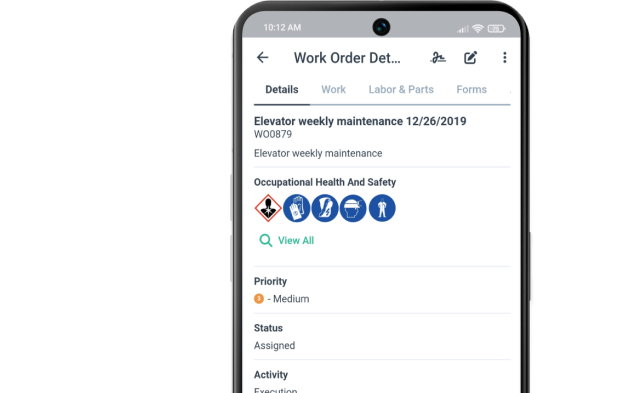
WorkTrek provides instant access to all your asset data, work order histories, service requests, and other relevant documentation for minor repairs and major maintenance activities.
Source: WorkTrek
It tracks who performed what work, when, how long it took, and which resources were used.
WorkTrek also offers a wide range of reports, such as work hours summaries, rates of overdue work orders, asset warranty trackers, and more.
Source: WorkTrek
All of that empowers you to see the big picture at a glance, which can help you gauge the long-term risks of delaying certain tasks.
For instance, you might learn more about the financial implications of deferred maintenance by calculating the potential costs of breakdowns versus the cost of immediate repairs.
All in all, there is a time and place for deferred maintenance, especially when the budget is tight.
However, make sure to understand the risks before making that call.
Shutdown Maintenance
Unlike other types, shutdown maintenance involves a halt of entire, or at least a portion of, plant operations.
This is maintenance on a grand scale, encompassing multiple assets and lasting for days or even weeks.
Yes, shutting down operations can be costly and disruptive, but it’s a necessary investment in your equipment's long-term health and reliability.
To minimize the effect of such an operational disruption, careful planning and smart scheduling are a must.
Shutdowns are usually timed to have minimal impact on key workflows, like during off-peak periods or at the end of a production cycle.
And checklists, like the one you see below, are typically used for planning.
Source: Fiix
They help ensure all the steps are completed correctly and nothing slips through the cracks.
The last thing you want here is to forget to perform a key task.
Ultimately, with the right preparation and coordination, this type of maintenance, although often dreaded in manufacturing, doesn’t have to be a headache at all.
Conclusion
Each of these maintenance types has its unique benefits.
But, which one’s the best?
Unfortunately, there’s no simple answer to that question.
The most effective maintenance plans don’t rely on just one approach but often blend multiple strategies to get the best results.
For non-critical assets, reactive maintenance might do the trick.
However, you need to be more vigilant and proactive when it comes to vital equipment.
So, assess your equipment’s reliability and criticality, understand the risks involved, and prioritize accordingly.
With the right asset care, you'll see immediate improvements in your bottom line, productivity, and safety.
If you’re ready to choose the right maintenance strategy, follow this process.

Operations & Maintenance
How to Choose the Right Maintenance Strategy in 6 Steps
Maintenance decisions impact many things, from your facility’s efficiency to employee safety and long-term costs.
With that in mind, choosing the right strategy to keep maintenance in check can feel overwhelming.
But if you’re dealing with that, you’re in the right place.
We will walk you through six practical steps to help you make the best decision for your equipment.
By the end, it will be easier to select a strategy that maximizes asset performance while keeping costs under control.
Let’s get started.
1. Gather Information On All of Your Equipment
The first step in choosing the correct maintenance strategy is understanding your equipment inside and out.
After all, you can’t maintain what you don’t fully understand.
So, identify every piece of equipment, tools, and machinery in your facility.
But don’t stop there—take note of each asset's age, condition, usage patterns, and maintenance history.
All of this will influence your maintenance strategy.
Source: WorkTrek
Think of it like this: maintaining equipment that keeps the production line moving isn’t the same as maintaining machinery that’s only used occasionally.
For example, if your entire operation depends on a single conveyor system, its breakdown would bring everything to a halt.
In contrast, a failure in a rarely-used backup generator wouldn’t be as urgent.
Naturally, these two pieces of equipment will need different maintenance strategies.
Also, a new piece of equipment and an old one probably won’t need the same maintenance approach.
But how do you know which assets are the most critical to maintain beyond the obvious ones?
With the help of criticality analysis.
Through this analysis, you evaluate each asset based on the cost of failure—not just in terms of money but also safety risks, production delays, and environmental impact.
With a criticality score, you can rank your equipment by importance and prioritize maintenance accordingly.
Illustration: WorkTrek / Data: Reliable Plant
Once you’ve identified your critical assets, ensure everyone is aligned on priorities.
What seems minor at the corporate level could have a huge impact on daily operations.
Jonathan Trout from Reliable Plant captures this well:
On a corporate level, a failure that leads to a loss of $1 million in revenue might be considered minor or moderate, but on an equipment or plant operational level, it might be seen as major.
This difference in perspective is why aligning corporate goals with operational realities is key when planning maintenance.
Ensuring that both corporate and operational teams agree on what’s critical will help you choose a maintenance strategy that balances company-wide goals with day-to-day needs.
Once you've gathered all the information and identified your critical equipment, you're ready for the next step.
2. Evaluate Your Current Maintenance Processes
Now examine how maintenance has been handled.
To choose the right maintenance strategy, you must understand what’s working, where the gaps are, and where improvements are needed.
How can you do that?
Start by collecting and analyzing data on equipment availability, downtime, and the causes of asset failures.
Ask yourself:
How much time and money are you spending on maintenance?
Are there areas where downtime is hurting productivity?
The more data you gather, the clearer your insights will be.
Accurate, up-to-date maintenance data is crucial here.
It helps you identify patterns, track performance, and, most importantly, highlight inefficiencies that need fixing.
Christopher Wilcox, Maintenance Manager at Univar Solutions, a global chemical and ingredients distributor, explains how data has played a key role in shaping their maintenance strategy:
Illustration: WorkTrek / Quote: MaintainX
So, how do you gather this data?
If you’re using a computerized maintenance management system (CMMS), you’re already a step ahead.
A good CMMS stores valuable maintenance data, giving you a clear overview of your maintenance operations.
For example, if breakdowns are frequent, historical records in your CMMS can help you spot potential errors in work orders or underlying issues in your process.
It uncovers key metrics like mean time between failures (MTBF) and overall equipment effectiveness (OEE), showing how well the equipment performs and where inefficiencies exist.
Other metrics include maintenance costs, response times, and failure trends.
For example, with WorkTrek, our CMMS solution, you can quickly generate reports on the cost of work orders to get insight into your overall maintenance expenses.
Source: WorkTrek
By analyzing this data, you can spot patterns and identify where in your maintenance processes changes need to be made to boost efficiency, reduce costs, or improve safety.
3. Define Your Maintenance Goals
Now that you’ve identified what isn’t working, it’s time to focus on what you want to achieve with your new maintenance strategy.
Do you want to reduce equipment downtime?
Cut maintenance costs?
Extend the lifespan of your assets?
Or perhaps improve safety and compliance?
The goals you set will guide your decision on which strategy to choose.
For example, if you found that unplanned downtime was a major issue in your facility during the previous step, reducing it should be a top priority.
A recent report on industrial maintenance showed that the average cost of one hour of unplanned downtime is about $25,000 per facility.
In larger organizations, this can skyrocket to over $500,000.
Illustration: WorkTrek / Data: MaintainX
If downtime drains your resources, minimizing it must be a key objective.
On the other hand, if improving compliance is your main goal, you might focus on stricter, more regular inspections and safety protocols.
This ensures your equipment meets regulatory standards. It also means consistently tracking compliance requirements and scheduling timely audits.
Or, perhaps, you’ve noticed a pattern where assets aren’t fully utilized, yet you’re still performing scheduled maintenance and replacing parts in good condition.
In this case, your goal could be to reduce maintenance costs by choosing a strategy that better aligns with equipment needs.
Ultimately, this is the moment to set clear, measurable goals.
They will shape your decision on the best strategy moving forward.
But first, you need to know which strategies are available.
4. Compare Different Maintenance Methods
Once you’ve completed all the prep work, it’s time to explore and compare the different types of maintenance.
Each one comes with its own set of pros and cons, so the goal is to find the one that best suits your facility, equipment, and goals.
Here’s a simple comparison of key maintenance strategies:
Strategy
Description
Pros
Cons
Best for
Run-to-failure
Equipment is fixed or replaced only after it breaks
Low upfront cost, minimal planning required
High risk of downtime, costly emergency repairs, safety risks
Non-critical equipment where downtime isn’t a major issue
Preventive maintenance (time/usage-based)
Scheduling regular maintenance at fixed intervals or after a set usage period
Reduces unexpected breakdowns, improves equipment reliability
Can lead to over-maintenance, labor-intensive
Equipment with predictable wear patterns or high operational importance
Condition-based maintenance
Monitors equipment conditions (vibration, oil quality) to schedule maintenance only when needed
Avoids unnecessary maintenance, detects early issues
Requires monitoring systems, training, and expertise
Assets where frequent failures impact production, but conditions can be easily monitored
Predictive maintenance
Uses real-time data and advanced analytics to predict failures before they happen
Minimizes downtime, extends equipment life, reduces unnecessary maintenance
High initial investment in sensors, data systems, and skilled staff
Critical equipment where downtime is costly, large facilities with significant resources
Reliability-centered maintenance (RCM)
Combines different strategies based on equipment criticality and reliability analysis
Optimizes maintenance for each asset, reduces risks
Complex to implement, requires ongoing data collection and skilled personnel
Facilities with diverse equipment, where one strategy won’t fit all
When comparing these, it’s also important to assess the costs associated with each.
In general, the more monitoring and data-intensive a strategy is, the higher the cost.
However, these costs are often offset by the savings from reduced downtime, extended asset life, and fewer emergency repairs.
So, in this step, thoroughly compare the strategies and weigh their pros, cons, and costs to determine the best fit.
5. Choose the Right One For You
Now that you know your goals and understand the different maintenance strategies, it's time to choose the one (or a combination) that fits your facility best.
But before you decide, consider a few key factors:
the condition of your equipment,
your staff’s skills,
and your budget.
Now, you should have these basics covered, so it’s all about matching your needs with the right approach.
For your non-critical assets, reactive maintenance might be the best option.
However, you'll need a more proactive approach—like preventive maintenance for critical assets.
If you have a machine that powers your production line, you wouldn’t want to wait for it to fail.
And in some industries, preventive maintenance is non-negotiable.
Take a food processing plant, for instance—unexpected refrigeration breakdowns would compromise product safety.
Scheduling preventive maintenance for these critical systems ensures small issues, like a failing fan, don’t turn into larger, more expensive problems.
The great news?
Tools like WorkTrek make scheduling preventive maintenance simple.
In just a few clicks, you can set preventive maintenance inspections and repairs for your assets, like this turbine generator:
Source: WorkTrek
This method allows you to catch minor issues before they escalate and make your turbine generator unusable.
If you want to be more data-driven, consider condition-based maintenance.
This strategy uses real-time monitoring to track the health of your equipment, ensuring maintenance is only performed when necessary.
According to Erik Hupjé, founder of the Reliability Academy, condition-based maintenance should be the primary strategy in modern plants.
However, you can mix it with time-based preventive maintenance where it makes sense:
Illustration: WorkTrek / Quote: Linkedin
For instance, if you manage a bunch of air compressors that tend to wear out after a set number of hours, time-based maintenance is perfect for servicing them at regular intervals.
This way, you stay cost-effective while preventing unexpected breakdowns.
But if you don’t have accurate data, condition-based maintenance would be a better fit because it allows you to monitor the equipment’s actual condition and only service it when needed.
If your main goal is to eliminate defects, predictive maintenance might be the way to go.
Research shows that facilities using predictive maintenance experience 87.3% fewer defects than those relying on preventive maintenance.
Illustration: WorkTrek / Data: NIH
This approach uses real-time sensor data and predictive analyses to calculate when equipment will fail, letting you perform maintenance before it happens.
At the end of the day, choosing the right strategy is about aligning your maintenance goals with your facility’s specific needs.
Whether you opt for a single strategy or mix a few, ensure it fits your budget, equipment, and team capabilities.
That way, you’ll get the best performance out of your assets while keeping costs in check.
6. Continuously Improve Your Maintenance Strategy
Once the strategy is in place, your job isn’t over.
You’ll need to regularly review and adjust it to ensure it delivers the desired results.
As equipment ages and operational demands evolve, this step becomes even more critical.
Joao Lemos, a maintenance technician and planner with more than 20 years of experience, emphasizes this:
Illustration: WorkTrek / Quote: Linkedin
So, review the chosen maintenance strategy after a while and ask yourself:
Is downtime decreasing?
Are maintenance costs lower?
Are repairs more efficient?
If the answers aren’t affirmative, adjust your approach.
For instance, if predictive maintenance isn’t preventing breakdowns, figure out why.
It could be due to inaccurate sensor data or aging equipment, and you might need to upgrade your technology.
It’s also important to communicate with your maintenance team.
They know the equipment best and can provide valuable feedback on whether the strategy works.
Persistent issues or inefficiencies reported by technicians are clear signs that you must re-evaluate your process.
Therefore, know that choosing the maintenance strategy isn’t a set-and-forget decision.
You must continuously monitor, communicate, and adjust your strategy to keep your facility running smoothly and efficiently.
Conclusion
As you’ve seen, choosing the right maintenance strategy requires careful planning, but it’s well worth the effort.
By gathering the right data, setting clear goals, and comparing strategies, you can confidently select a strategy—or a combination of them—that fits your facility’s unique needs and budget.
Remember that this shouldn’t be a set-it-and-forget-it thing.
Be ready to adjust your strategy to your evolving needs, so you’re always using the most effective methods.
Good luck!

Operations & Maintenance
The Complete Guide to Maintenance Strategy
Are you tired of unexpected equipment breakdowns and all the disruptions they come with?
If you are, your maintenance strategy might be lacking, or you might not have one in the first place.
However, a good maintenance strategy can help you avoid costly issues and ensure your equipment stays in good working condition.
Today, we will tell you all you need to know about it.
From why it matters and how it can benefit you to the factors to consider when choosing the right strategy for your facility's needs.
Let’s begin.
Maintenance Strategy Defined
A maintenance strategy is a plan that guides how you care for the equipment and systems you use daily.
It defines when and how maintenance should happen to keep everything—from machinery, tools, and all other assets—in top shape.
The goal is to prevent breakdowns, minimize downtime, reduce costs, and ensure safety.
Source: WorkTrek
Various strategies, like scheduling regular checks at set intervals or performing maintenance based on the equipment’s condition, can be used.
Each approach is tailored to specific equipment needs and has pros and cons, which we’ll explore later.
But here’s the thing: a maintenance strategy shouldn’t be fixed.
Instead, it depends on your equipment, how it’s used, and the environment it's in.
That’s why you need good data on your equipment and some experience to decide on the best strategy—or strategies.
Christopher Wilcox, Maintenance Manager at Univar Solutions, a leading global chemical and ingredient distributor, points this out:
Illustration: WorkTrek / Data: MaintainX
He further explains that, for instance, you might begin with a preventive maintenance schedule based on manufacturer guidelines.
However, as you gather data, you may discover areas that lead to unplanned maintenance.
This information can help you refine your maintenance schedule, prioritize tasks, and find the best maintenance strategy for your equipment.
Why You Need a Good Maintenance Strategy
Nothing disrupts productivity faster than equipment failure. When a machine fails unexpectedly, everything stops.
And the cost of such unplanned downtime is staggering.
According to a 2023 ABB survey, unplanned downtime can cost industrial or manufacturing companies an average of $125,000 per hour.
Illustration: WorkTrek / Data: ABB
But as Virve Viitanen, Head of Global Customer Care and Support at ABB Motion Services, points out, the real shock is how frequently unplanned downtime happens.
Illustration: WorkTrek / Quote: The Manufacturer
And it’s getting worse.
A 2024 report on the state of industrial maintenance found that 30% of companies saw an increase in the cost of unplanned downtime, adding even more pressure to their operations.
This cost isn’t just about fixing broken equipment—it includes lost production, labor, and even penalties for missed deadlines.
But here's the good news!
A solid maintenance strategy, like preventive maintenance, can catch these potential issues before they become full-blown breakdowns.
The same report confirmed that, in the last 12 months, 45% of companies reported a decrease in unplanned downtime.
So, while the cost of unplanned downtime rises, it’s happening less often.
And for 65% of them, the key reason for less frequent downtime was evolving their maintenance strategy to stay ahead of problems.
Illustration: WorkTrek / Data: MaintainX
In other words, they moved from a reactive approach to more proactive strategies like preventive or predictive maintenance.
Without a strategy, you risk frequent emergency repairs or even needing to replace your equipment entirely.
On the other hand, regular maintenance extends the lifespan of your machines, spreading out costs over time and avoiding those sudden, expensive fixes.
Lastly, let’s not forget safety.
Equipment failures or poor maintenance can lead to dangerous accidents, particularly in high-risk industries like aviation, manufacturing, and construction.
For example, poor maintenance was the cause of a tragic 2022 helicopter crash in New Mexico, which killed four people.
Investigators determined that engine failure—due to fatigue and a lack of maintenance—caused the accident.
Source: The Independent
However, with the right maintenance strategy, maintenance is never skipped—especially not on critical equipment.
In fact, safety checks are built into the process, which reduces the risk of accidents caused by malfunctioning machinery.
In the end, if the equipment runs smoothly, your team can focus on getting the job done safely and efficiently.
All of this combined is why you need a good maintenance strategy.
Types of Maintenance Strategies
Maintenance strategies range from merely reacting to equipment failures to using advanced technology to predict issues before they happen.
Let’s break down the most common types of maintenance strategies and how they work.
Preventive Maintenance
Preventive maintenance focuses on stopping problems before they start.
Instead of waiting for something to break down, this strategy involves scheduling regular tasks—like inspections, part replacements, or cleaning—at fixed intervals.
These intervals can be time-based (e.g., every month) or usage-based (e.g., every 500 hours of operation).
The main goal is to catch potential issues early and prevent major breakdowns later.
This is also the most common maintenance strategy in industries, with almost 87% of facilities using it.
Illustration: WorkTrek / Data: MaintainX
Preventive maintenance is popular because it reduces unexpected breakdowns and keeps repair costs low.
However, one downside is that you might end up replacing parts or doing maintenance even when it’s unnecessary—like changing a filter that’s still in good condition.
But the trade-off is worth it because it helps you avoid bigger problems down the line.
However, there is one challenge: planning preventive maintenance and keeping track of all those tasks.
It can get overwhelming, especially if you’re managing a large facility or hundreds of pieces of equipment.
Even more so if you’re still doing it manually.
That’s where a computerized maintenance management system (CMMS) steps in.
A good CMMS, like WorkTrek, makes organizing and planning preventive maintenance easier.
Instead of manually tracking every maintenance task or relying on guesswork, WorkTrek keeps everything organized in one place.
Source: WorkTrek
You can schedule maintenance, track work orders, and even set up automatic triggers based on real-time data, ensuring you're always ahead of potential issues.
For example, if an HVAC meter shows that temperatures have reached a set point, you must update this in the system, and WorkTrek will automatically create a work order.
Source: WorkTrek
This will help ensure that the maintenance team responds to real conditions—not just following a set schedule.
In short, using a CMMS takes the burden off your team, making preventive maintenance smoother, more efficient, and more precise.
Reactive Maintenance
Reactive maintenance, or breakdown maintenance, is performed after equipment breaks down.
Essentially, you wait for the failure to happen and then repair the damage. It is unplanned and often urgent.
While this approach to maintenance sounds risky, it makes sense for non-critical or inexpensive assets where the cost of regular checks isn’t justified.
In industries where some equipment is cheap to fix, reactive maintenance can save unnecessary effort and costs.
And sometimes, there are things that you simply can’t plan for, as Justin Foat, Fleet Maintenance Manager at Herlache Truck Lines, explains with an example:
For example, during the hotter months, you can send out a truck fitted with brand new tires, have them hit the hot pavement, roll over a rock, and boom, it blows.
This is the kind of scenario that neither preventive nor predictive maintenance could have predicted.
As such, reactive maintenance still plays a major role in many industries.
In fact, 57% of facilities rely on it.
However, the problem is that 5% of companies still use it as their sole maintenance strategy, leaving them vulnerable to lost productivity, higher repair costs, and more unplanned downtime.
Illustration: WorkTrek / Data: MaintainX
So, while reactive maintenance can be cost-effective for specific cases if it’s relied on too heavily, it can lead to higher overall repair costs and extended downtime.
That’s why it works best when combined with other maintenance strategies.
Predictive Maintenance
The predictive maintenance strategy removes the guesswork from equipment care by using real-time data to predict potential failures.
It monitors factors like vibration, temperature, or oil quality to spot early signs of wear and tear before they lead to bigger problems.
This strategy can deliver huge benefits; a Deloitte study provides the numbers to back this up.
Their research breaks down the benefits of predictive maintenance, like cost savings and increased equipment uptime:
Illustration: WorkTrek / Data: Deloitte
Given these results, it is not surprising that industries worldwide are adopting predictive maintenance.
Even airports do it.
For instance, the UK’s biggest airport, Heathrow, uses predictive maintenance and machine learning to monitor its baggage handling system to prevent failures and minimize passenger disruptions.
Though predictive and preventive maintenance both aim to prevent future failures, there’s a key difference we must point out.
While preventive maintenance relies on a fixed schedule, predictive maintenance is data-driven.
Simply put, it triggers maintenance only when the data suggests it's necessary.
This makes predictive maintenance more precise, but it also requires a bigger investment in monitoring technology and skilled personnel.
Reliability-Centered Maintenance
Reliability-centered maintenance (RCM) is a strategy that balances preventive, reactive, and predictive maintenance to ensure a system’s reliability.
The goal is to determine the most efficient way to maintain critical equipment while minimizing downtime and maintenance costs.
This strategy is used in industries where safety and uptime are crucial—like aerospace, defense, and energy.
In fact, RCM originated from the aviation industry in the 1960s, when the traditional approach of time-based maintenance wasn’t enough to prevent failures that were causing airplane crashes.
Below is an overview of the steps in the RCM strategy:
Illustration: WorkTrek / Data: IBM
As you can see above, RCM has many steps and is a comprehensive approach.
Its complexity requires deep knowledge of the equipment and, like predictive maintenance, calls for advanced tools and training.
All in all, when you understand the strengths and limitations of these strategies, you can determine which approach—or combination of approaches—best suits your facility’s unique needs.
Whether you’re aiming for the regularity of preventive maintenance, the insight of predictive strategies, or the comprehensive nature of RCM, the right strategy can make all the difference in keeping your operations running smoothly and efficiently.
What to Consider When Choosing Your Maintenance Strategy
Don’t pick a maintenance strategy on a whim.
Critical factors must be considered before deciding which one works best for your facility.
Choose wrong, and you could face compliance issues, budget overruns, or constant equipment breakdowns.
So, what should you focus on?
Let’s break down the key factors to take into account.
Regulatory Requirements
First, ensure your maintenance strategy follows all industry standards and safety regulations.
In some industries, like healthcare or aviation, safety is non-negotiable.
Compliance mandates are strict, and cutting corners could lead to serious consequences.
For example, in aviation, the Federal Aviation Administration requires operators to conduct regular inspections to ensure aircraft are safe.
Illustration: WorkTrek / Quote: Avionics
In these cases, relying only on reactive maintenance won’t cut it.
You’ll need a preventive or predictive approach to avoid non-compliance and hefty fines.
Your Budget
Not all maintenance strategies cost the same.
Predictive maintenance, for example, comes with a bigger price tag due to sensors, monitoring tools, and data analysis.
If your budget doesn’t allow for that level of investment, consider preventive maintenance instead. It’s less expensive and still effective at reducing unexpected downtime.
State of Your Equipment
Ask yourself—how old are your machines? Are they breaking down often?
If they are, pouring money into a high-tech predictive maintenance system might not make sense.
For instance, an older machine nearing the end of its useful life probably won’t benefit much from advanced monitoring systems.
In this case, sticking to preventive or even reactive maintenance might be the more practical choice.
But predictive maintenance can be a game-changer if you’ve got newer, critical equipment.
It helps you avoid surprise breakdowns and can save you a lot of money in the long run.
Moreover, if your equipment has failure modes that are simply unpredictable, you’ll also want a strategy that allows you to see problems before they happen.
Erik Hupjé, founder of The Reliability Academy and expert in the maintenance field, explains this approach.
Illustration: WorkTrek / Quote: Reliability Academy
The bottom line is to assess your equipment’s condition carefully.
If it’s aging and near the end of its useful life, preventive or reactive maintenance may be more practical.
Staff Availability
Even the best strategy can fall flat if you don’t have the right people to do it.
Some strategies, like predictive maintenance, require specialized skills because your team needs to know how to analyze data and manage real-time monitoring systems.
Predictive maintenance might be unrealistic if your staff isn’t trained for that. Or you will have to invest in training them.
By thinking through these factors, you’ll be in a much better position to choose a maintenance strategy that makes sense for your facility.
Conclusion
The maintenance strategy you choose directly affects your facility's performance, costs, and safety.
It’s about finding a system that fits your team, equipment, and budget.
Whether you go with preventive, predictive, or a mix of approaches, the goal remains the same: to keep things running smoothly with as little disruption as possible.
And remember, your strategy isn’t set in stone.
It should evolve with your needs, technology, and the condition of your equipment.
This way, you’ll extend the life of your assets and keep your facility efficient for the long term.

Operations & Maintenance
Manufacturing Maintenance: Everything You Need to Know
Key Takeaways:
CMMS solutions help streamline and improve entire maintenance operations
A typical industrial business loses $125,000 an hour due to unplanned downtime
Due to labor shortages, maintenance personnel struggle to perform their tasks properly.
The manufacturing industry relies heavily on a wide range of machinery and equipment, making maintenance an essential component of its operations.
Safety, efficiency, and bottom lines take a significant hit when this is neglected.
And yet, maintenance often doesn't receive the attention it deserves, whether due to competing priorities or a lack of knowledge.
This article aims to address the latter.
On this page, you’ll find a detailed overview of everything you need to know about manufacturing maintenance: from the basics of different maintenance types to the latest technologies shaping the field.
Let’s get started.
How Manufacturing Maintenance Changed Through Times
In its early stages, maintenance was primarily corrective—focused on fixing problems as they arose.
This worked well for a time.
But then, significant historical events like the Industrial Revolution and World War II brought about new developments and inventions, changing our maintenance needs as well.
At that point, a more proactive approach was needed to prevent serious equipment damage before it impacted operations. This forever changed the way maintenance is perceived and performed.
In the 1980s, digitalization began to reshape manufacturing maintenance even further.
Many new technologies were introduced, and Computerized Maintenance Management Systems (CMMS) started gaining more traction.
Fast forward to today, and we can access technological solutions that our predecessors could never have imagined.
With sensors, data analytics, and the Internet of Things (IoT), we can create smart systems that can predict equipment failures before they even happen.
The timeline below illustrates the history of manufacturing maintenance from its inception to the present day.
Source: WorkTrek
So, in just a few short decades, manufacturing maintenance has grown from a simple “fix it when it breaks” mindset to a high-tech, data-driven field.
It’ll be exciting to see what else the future has in store.
Key Objectives of Maintenance in Manufacturing
Of course, the ultimate objective of maintenance is to save money in the long run.
However, this can be achieved by focusing on several specific goals.
First and foremost, maintenance aims to prevent costly, unplanned downtime.
When a key piece of equipment suddenly stops working, it costs you differently, from lost production time and increased labor costs to missed delivery deadlines.
A 2023 ABB survey revealed that an hour of unscheduled downtime costs a typical industrial business a shocking $125,000.
And even more shocking is that 69% of plants experience this problem at least once a month.
Illustration: WorkTrek / Data: ABB
This is where well-planned upkeep comes into play.
If routine tasks like lubrication, calibration, and inspection are performed regularly, minor problems will likely be caught and fixed before they snowball into severe operational disruptions.
Similarly, maintenance ensures that production capacities stay at optimal levels.
This is important because a decrease in production capacity can lead to unnecessary expenses, bottlenecks in productivity, and reduced profitability.
Fabio Camargo de Oliveira, Technical Assistance and Services Manager at Wenger, an industrial equipment supplier, illustrates the impact of this issue with an example:
For example, if an extruder in good condition that usually produces 10 tons per hour—consuming approximately 25 kw per ton, [suddenly starts to produce] 7 tons per hour—consuming 32 kw per ton—it will spend more electricity, water, and steam due to wear and difficulty in stabilization, ultimately producing less and decreasing the manufacturer’s profit.
The problem is that, unlike downtime, you may not immediately notice a slow decline in production capacity, but only when it’s already started to harm your bottom line.
However, with proper maintenance, this issue can be avoided entirely.
Beyond just keeping things running, maintenance also plays a role in ensuring a safe work environment. After all, properly maintained equipment is far less likely to malfunction and injure your employees.
This directly translates to fewer accidents and decreased costs associated with workers' compensation, insurance premiums, legal liabilities, and productivity losses.
Did you know that, in the manufacturing industry, an average of 67 days are lost per injury?
Illustration: WorkTrek / Data: Travelers
That’s more than two months of missed work—no small matter.
When you add potential lawsuits, reputational damage, and lowered worker morale, the costs of neglecting equipment safety quickly increase.
Overall, the role of maintenance is very multifaceted. Many people aren’t even aware of just how impactful it can be.
It isn’t only about fixing broken assets—far from it—but about building a solid foundation for safe, profitable, and efficient operations.
Types of Manufacturing Maintenance (And When to Use Each)
There are many different types of maintenance used in manufacturing, each with its advantages, disadvantages, and ideal use cases.
Corrective or reactive maintenance, as the name implies, focuses on fixing problems after they have already occurred.
It often gets criticized for being ineffective in the long term, but there is a time and place for it—especially with non-critical assets.
Preventive maintenance, on the other hand, is a more proactive strategy.
It prioritizes frequent cleaning, parts replacement, and similar tasks to prevent unexpected failures and keep operational disruptions minimal.
According to the 2024 MaintainX survey, this is currently the most popular approach to asset upkeep, with 87% of respondents reporting its active use.
Illustration: WorkTrek / Data: MaintainX
And why wouldn’t they?
It’s proven to minimize unplanned downtime, extend equipment lifespan, and keep operations running smoothly.
Condition-based maintenance is also proactive, but its implementation differs from a preventive strategy.
Preventive maintenance schedules tasks based on regular time intervals or usage (e.g., every three months, or after a certain number of operating hours).
On the other hand, condition-based focuses on servicing when particular indicators show signs of decreasing performance or potential failure.
This way, you’re only maintaining equipment when it’s actually needed and not just because the calendar says you should.
Another maintenance type that’s been gaining traction in manufacturing is predictive maintenance.
You can consider it the more advanced version of a condition-based method.
It uses data, various sensors, and analytical tools like machine learning to identify, detect, and predict equipment issues before they even occur.
Kevin Tucker, Advisory Practice Lead at the IT services and consulting company Info-Tech Research Group, explains why this is such a valuable addition to any upkeep plan.
Illustration: WorkTrek / Quote: Facility Executive
Lastly, Total Productive Maintenance (TPM) is the all-hands-on-deck approach that blends corrective, preventive, and predictive methods into one strategy.
The idea here is that everyone within the operations should take responsibility for daily service tasks, which helps detect problems earlier and reduces the likelihood of unplanned downtime.
Here’s a quick overview of all these types of maintenance:
Type
Pros
Cons
When to use
Corrective
No upfront maintenance costs and minimal planning
If certain issues are overlooked, it can lead to unplanned downtime and more long-term costs
For non-critical assets and when replacement parts are easily accessible and repairs can be made quickly
Preventive
Reduces the likelihood of unexpected equipment failure and increases equipment lifespan
Can lead to unnecessary maintenance and requires more manpower and resources for routine checks.
For critical equipment that would cause significant downtime if it failed
Condition-based
Helps in planning upkeep activities without disrupting production and avoiding unnecessary maintenance
High initial costs for equipment and sensors, as well as challenging data management
When equipment has fluctuating loads and operating conditions
Predictive
Reduces unnecessary maintenance by only performing maintenance when needed
High initial setup costs for sensors, monitoring equipment, and software.
Requires skilled personnel to analyze data and manage systems
For critical equipment where downtime is very costly and when the needed technology is readily available and feasible to implement
Total Productive Maintenance
Engages all employees, increasing accountability and leading to a culture of continuous improvement
Requires significant effort for training and a high level of commitment from all employees and management
Where the highest manufacturing standards and employee accountability are a priority
So, which strategy should you implement? Which one's the best?
The truth is, there is no one-size-fits-all solution.
Your choice of maintenance activities should be tailored to your organization's and equipment's specific needs.
In most cases, this means mixing and matching all of these approaches to create a maintenance plan that works for you.
Why Is Maintenance in the Manufacturing Industry So Challenging?
Any experienced manufacturing maintenance professional will tell you their job isn’t always easy.
In addition to being a complex process, maintenance is often faced with various outside challenges that make it even more difficult.
For starters, there's a significant shortage of skilled workers.
According to an UpKeep survey, 72% of companies anticipate maintenance staff shortages and related issues in 2024.
Illustration: WorkTrek / Data: UpKeep
The problem is that seasoned professionals are all retiring, but new talent is tough to come by.
At the same time, technology is evolving at lightning speed, and not everybody can keep up.
This leaves maintenance teams spread too thin, often without the expertise needed to maintain equipment properly.
But the problems don't stop there.
It's more than just people we're running short on; it's the tools, spare parts, and materials, too.
A Limble study shows that 34.1% of manufacturing and facility maintenance professionals consider supply chain issues one of their biggest challenges.
Illustration: WorkTrek / Data: Limble
This issue leads to delays in the delivery of spare parts, increased costs for specific items, and difficulties in accurately forecasting resource needs and managing inventory.
Consequently, organizations either face understocking, which causes delays, or overstocking, which ties up their cash flow and storage space.
Either way, the machinery doesn’t get the care it needs when needed, and productivity takes a hit.
And then there’s the budget—or lack thereof.
Many maintenance teams operate with minimal budgets, preventing them from doing their jobs properly.
This is because, for too many executives, strategic upkeep is an afterthought, overshadowed by short-term cost-cutting.
John Sedgwick, Director of Engineering and Maintenance at the chemical manufacturing company HEXPOL Compounding, experienced this first-hand.
Illustration: WorkTrek / Quote: Industry Week
His team initially had issues with productivity and unplanned downtime.
However, the situation improved once the company prioritized proper upkeep and invested more in maintenance software.
And it makes sense. Without adequate financial backing, maintenance always suffers.
Aging equipment isn’t replaced or upgraded, training or tech investments fall by the wayside, and teams are forced to rely solely on reactive maintenance.
Put simply, short-term savings lead to long-term problems.
All in all, with all these issues and more, it’s clear why maintenance in manufacturing is so challenging.
But what’s the solution?
How to Ensure Effective Manufacturing Maintenance
The answer to these challenges is clear: start prioritizing effective manufacturing maintenance.
Let’s dive a bit deeper into what that means, exactly.
It all begins with maintenance planning and then regularly updating the plan to reflect your changing needs.
This plan should clearly outline which assets need maintenance, the type of maintenance they require, how often, and who’s responsible for it.
Vivre Viitanen, Head of Global Service Line at ABB Motion Services, a technology leader in electrification and automation, outlines the benefits of having a well-structured plan:
When strategies are planned, you can ensure that the right capabilities and skilled people are in the right place at the right time and you have the necessary materials. That means the plan can be rolled-out in a more efficient and effective way than if you’re reacting to a situation which has come as a surprise or a shock.
In other words, a solid maintenance plan is the backbone of successful operations.
It prioritizes more strategic resource allocation and scheduling, boosting your processes' effectiveness.
To take it up a notch, create Standard Operating Procedures (SOPs) that go hand-in-hand with your plan.
SOPs are more granular, step-by-step instructions on executing specific tasks, in what order, and with which resources.
Source: FMX
This ensures more consistency in your practices, eliminating mistakes and confusion.
When everyone knows exactly how to fulfill their responsibilities, everything gets done on time, safely, and efficiently—every single time.
However, it’s not enough to simply tell your team what to do and how to do it.
You should also monitor performance to ensure your plans and procedures are effective and realistic.
For example, if you’re still struggling with high downtime rates despite careful planning, it’s a sign that something is off.
Maybe your instructions regarding a particular activity aren’t clear enough, or perhaps some equipment needs specialized maintenance that you didn’t account for.
Tracking relevant KPIs is the best way to gauge your performance.
These metrics provide clear, data-driven insights into the effectiveness of your upkeep efforts, without any biases or relying on guesswork.
After all, the numbers never lie.
Here are some KPIs worth considering:
Mean Time to Repair (MTTR)
Mean Time Between Failures (MTBF)
Overall Equipment Effectiveness (OEE)
Planned Maintenance Percentage (PMP)
And if you’d like to explore these metrics in more detail, check out our guide on the top 5 maintenance metrics you should always have in mind.
Overall, these practices are a solid starting point for more efficient maintenance operations.
Still, given the complexity of the process and the challenges involved, they may not be enough on their own.
Luckily, there are many digital tools available that can help further streamline and improve your maintenance efforts.
Modern Tech Used For Factory Maintenance
From advanced robots to augmented reality, a wave of exciting new technologies is transforming manufacturing maintenance.
One technology that has been in the spotlight for some time now is AI.
AI is a key component in predictive maintenance, where machine learning models analyze historical and real-time data to predict future equipment failures.
The technology becomes even more powerful when combined with IoT sensors.
Rakesh Prasad, Senior Vice President of Digital Business at Innover Digital, a technology and process digitization company, explains how this integration works:
For PdM, IoT sensors are fitted in machines and equipment to monitor their health and surroundings, gathering data on factors such as vibration, temperature, and humidity. This data is then relayed to a central system that employs AI/ML algorithms to examine the data and give insights into the equipment or machinery’s well-being.
With countless data points to draw from, AI-driven predictive maintenance can deliver precise forecasts.
This allows its users to schedule upkeep accurately and keep equipment in peak condition without over-maintenance.
Remote monitoring is another technology that is making significant strides in manufacturing maintenance.
It uses various sensors, software, and tools to detect and diagnose issues without requiring maintenance personnel to be physically present.
Robots and drones are increasingly being used for this purpose, too.
Jeff Burnstein, President of the Association for Advancing Automation, predicts we'll see even more robots used in this space.
Illustration: WorkTrek / Quote: Plant Services
With remote monitoring, you can access hard-to-reach areas and capture high-resolution images and videos.
This gives you a full 360-degree view of your equipment's health.
In other words, you get more data but fewer safety risks—a true win-win scenario.
The last type of tech on our list is a Computerized Maintenance Management System (CMMS), like our own WorkTrek.
You can think of this tool as your ultimate command center for the entire maintenance operation.
For those routine tasks, you can use WorkTrek’s task management feature to create and assign tasks, keep track of completed work, and see how much time your team spends on certain activities.
Source: WorkTrek
Plus, your staff can report problems and generate work requests by going through our web and mobile apps or via the WorkTrek Request portal.
You can create new work orders as soon as those requests come in and assign them to the right technician or team.
Source: WorkTrek
Each work order comes with all the details—priority level, needed resources, and more—so your team can get the job done right and on time.
But that’s not all.
With WorkTrek, you can keep a close eye on your inventory, tracking quantities, locations, and costs of your spare parts and materials.
Source: WorkTrek
The system enables you to specify minimum quantities for products and then alerts you when your inventory falls below a safe level so that you can restock on time.
It’s really easy to see why maintenance professionals love CMMS so much.
Thanks to this technology, you can manage your whole maintenance operation from a single, intuitive dashboard and, in turn, improve overall efficiency and save money.
Conclusion
Hopefully, you now see manufacturing maintenance for the vital process it truly is.
When done right, it can transform entire operations beyond recognition, boosting profitability, safety, and efficiency.
Plus, being a manufacturing maintenance professional has never been more exciting.
The field is full of new technologies that help simplify the complexities and tackle the challenges that usually come as a part of the job.
We can now predict equipment problems, automate repetitive tasks, and eliminate errors, all from our computers.
So don’t let anyone tell you maintenance is just another routine task when, in reality, it’s the backbone of any successful operation.

Operations & Maintenance
5 Tips for Efficient Maintenance Scheduling
Scheduling maintenance activities is a complex task, no doubt about it.
There are many factors to consider, from technician skills and availability to production schedules and the impact of downtime on your facility’s operations.
That is precisely why, in this article, we’re sharing our best tips to help you efficiently schedule maintenance tasks and keep your operations running smoothly.
Let’s get started.
Leverage Maintenance Management Software
The first thing you can do to schedule maintenance tasks more efficiently is to stop doing that manually.
Sure, using pen and paper—or perhaps Excel spreadsheets—for maintenance scheduling is inexpensive and straightforward since everyone is already familiar with these methods.
But is this truly the most efficient way to go about it?
Robert Burgh, President at Nexcor Food Safety Technologies, doesn’t think so.
He explains that using CMMS is the best way to schedule maintenance tasks.
Such software solutions, he says, make scheduling more efficient, as all the necessary data is aggregated and easily accessible in one place.
Illustration: WorkTrek / Quote: Food Safety Magazine
Using a CMMS means no more digging through paperwork to figure out when specific technicians are available or shuffling the entire schedule because you accidentally double-booked someone.
With all the relevant data in one central location, maintenance management becomes a breeze.
To illustrate our point, we’ll use our maintenance management software, WorkTrek, as an example.
Our Work Order Scheduler provides a holistic view of all things maintenance.
Source: WorkTrek
You can see which technicians are available, what maintenance tasks are assigned, and their status.
This makes it easier to create and assign new work orders.
What makes this system even better is that its benefits extend to your maintenance technicians.
Once assigned a work order, they’ll receive a notification via our mobile app.
Source: WorkTrek
That way, they don’t have to constantly check in with their supervisor to see whether there are any new tasks they’re in charge of.
They can access the app anywhere, anytime, and find out exactly what they need to do.
In addition, WorkTrek allows users to enrich work orders with details such as the start and end date, the description of the problem at hand, and instructions on how to fix it.
Source: WorkTrek
This minimizes the back-and-forth communication between technicians and supervisors as the software answers many potential questions.
In short, relying on CMMS streamlines a plethora of maintenance scheduling processes that are time-consuming and error-prone.
Does it require an initial investment and getting used to it? Yes.
But leveraging maintenance management software for this purpose will save you and your team so much time, energy, and money in the long run, so it pays off.
Match Technician’s Skills to Tasks
An important part of scheduling maintenance is ensuring that the technicians you choose to assign specific tasks have the necessary skill set to complete them.
That’s because accounting for skill levels when assigning tasks ensures each task is carried out correctly, efficiently, and safely.
If tasks are assigned to technicians who are not skilled enough to handle them, the consequences can be detrimental.
Take the 2020 Evergreen Packaging Paper Mill incident for example.
Source: CSB
In this tragic case, two Blastco workers were tasked with repairing the inside surface of the upflow tower using epoxy vinyl ester resin and fiberglass matting.
Since the night was colder, the resin—which hardens faster at higher temperatures—and fiberglass matting were not hardening at the expected rate.
After they couldn’t stop the material from sliding down the tower's walls, the workers used an electric heat gun to get the resin to harden.
The heat gun ended up falling into the bucket of flammable resin, causing a fire that traveled through the connecting pipe, ultimately killing the workers maintaining the downflow tower.
After the incident, the U.S. Chemical Safety Board (CSB) Lead Investigator Drew Sahli said:
Illustration: WorkTrek / Quote: USCSB on YouTube
Had the task been given to workers experienced with resin application in cold weather, this tragedy could have been prevented.
So, what can we learn from this?
For starters, this tragic incident underscores the importance of thoroughly evaluating the skills and experience of each technician before assigning them a maintenance task.
The research conducted by Plant Engineering has shown that over 70% of maintenance personnel in the facilities are trained in basic mechanical and electrical skills.
However, significantly fewer technicians have the skills necessary for maintaining fluid power systems, for instance.
Source: Plant Engineering
So, before you schedule any of your technicians for a task, try to determine whether they have the experience and certifications needed to perform it.
This is, again, where having a CMMS comes in handy.
As you can see in the screenshot below, you can use your CMMS to store information about any training courses your workers have completed and see what maintenance tasks they’ve handled in the past.
Source: WorkTrek
With this information at your fingertips, you can always be confident that the technicians you’re assigning tasks to can complete them.
Coordinate Maintenance Schedules with Operations
Yes, figuring out who you should assign to which maintenance task is essential.
However, another big question needs to be answered correctly to maintain the efficiency of your facility’s operations.
And that question is: “When is the best time to schedule specific maintenance tasks?”
As it turns out, answering it is not as easy as it may seem.
If it were, the results of the 2022 Maintenance Manager Report wouldn’t show that planning and scheduling maintenance are the biggest challenges for most maintenance teams.
Illustration: WorkTrek / Data: Add Energy
What makes scheduling maintenance so complex is that it involves more than simply matching tasks to the workers who can perform them.
For starters, if not properly scheduled, maintenance can throw off operations at your facility, causing disruptions and delays.
So, don’t schedule maintenance in a vacuum.
Instead, regularly meet and discuss maintenance with others, as this will give you a complete picture of your facility’s activities.
For instance, an operations manager might inform you that some production activities need to be completed by a specific date, so scheduling maintenance before then would throw a wrench in the works.
Or, a procurement officer could tell you that the spare parts your technicians will need for a specific maintenance task won’t be delivered as planned.
This kind of information can be a lifesaver when trying to create a solid schedule.
Aside from consulting with the stakeholders within your facility, you may also want to consider implementing predictive maintenance.
This approach to maintenance scheduling is all about using historical and real-time data and ML algorithms to predict future maintenance needs.
Hans Van der Aa, Senior VP of Lifecycle Services at the engineering and manufacturing company Duravant, finds that it can bring significant benefits to facilities trying to minimize unnecessary downtime caused by poor maintenance scheduling.
Illustration: WorkTrek / Quote: ProFood World
As you can see, multiple factors need to fall into place to develop the perfect maintenance schedule.
So, before you hastily assign work orders for the first available time slot, consider how your scheduling decisions will affect operations overall.
Whether this is through regular consultation with the key stakeholders, staying one step ahead by implementing predictive maintenance, or a combination of both, one thing is for sure.
Looking at the bigger picture will help you create a schedule supporting your facility’s overall goals.
Define How You Will Prioritize Maintenance Tasks
Not all maintenance tasks are equal.
You’ll probably agree that replacing a flickering lightbulb in the breakroom doesn’t carry the same weight as fixing a broken conveyor belt that has brought your production to a halt.
So, when scheduling maintenance activities, you need a clear idea of what constitutes an urgent task versus a non-critical one for your facility.
Ahmed Awad Ramadan, Maintenance Planning and Scheduling Department Manager at MIDOR Refinery explains how to do just that:
When it comes to work prioritization, we should consider two main criteria. First, the criticality of equipment, which reflects the effect of the asset's failure on the whole organization. Second, the nature of work. While equipment criticality is a fixed number and has to be aligned with the organization's strategy; the nature of work is variable and relies on the workers' perspective.
He explains that to assess the criticality of specific maintenance tasks, the Ranking Index for Maintenance Expenditures (RIME) is his tool of choice.
Illustration: WorkTrek / Quote: Click Maint
Observing the key components of RIME—criticality, cost impact, frequency of failure, and downtime—can help you gain clarity and decide which tasks should be tackled first.
For instance, repairing a machine that is critical to the operations, but has recently experienced more frequent issues is bound to take priority over a costly repair with barely any impact on the production.
Many maintenance professionals also like to use a scale from 1 to 5 to denote the criticality of maintenance tasks, where 1 is a low-priority task, and 5 is urgent work.
John Q. Todd, a senior business consultant and product researcher at Total Resource Management and a leading asset management solutions provider, shares an important insight regarding the use of this approach.
He says he had clients who’d gone as far as to use a scale from 1-10 for task prioritization, which ultimately rendered them unable to determine the actual difference between priority levels 4 and 5, for example.
Therefore, he explains, that keeping your priority scale small can significantly simplify the decision-making process.
Illustration: WorkTrek / Quote: LinkedIn
Many maintenance management systems have this priority scale feature, which makes assigning priority levels easier, as you can see in the example below.
Source: WorkTrek
This feature makes it easier for you to assign tasks and allocate resources for maximum operational efficiency.
It also helps your maintenance technicians understand the importance and urgency of each task they’ve been assigned.
On a particularly busy day, for instance, knowing how high of a priority each task on their list is can help them make sure that they tackle those critical ones first.
So, before you put any maintenance tasks into the schedule, determine exactly how you will prioritize them.
Use Past Job Data to Estimate Maintenance Task Duration
When creating a new maintenance schedule, one of the more challenging yet essential tasks is determining how long a specific task should take to complete.
Why is that the case?
Because your estimate for the duration of maintenance tasks can make the difference between smooth running operations and those disrupted by costly downtime.
Now, trying to determine how long each task should take, but having data makes this task possible.
It’s almost like reading the third book in a trilogy without reading the first two parts.
You’ll have no idea what is going on and probably make all the wrong conclusions due to a lack of context.
That is why Daniel McGowan, Offshore Projects Director at Longitude Engineering, highlights the importance of making data-based assumptions when planning and scheduling maintenance.
Illustration: WorkTrek / Quote: Add Energy
This brings us to the key question: how exactly do you do that?
Start by reviewing the data from previously completed maintenance jobs and use it to identify patterns and anomalies.
How long did the same or similar tasks take to complete?
Are the workers who completed them truly the most efficient, or do you have other technicians who could complete them faster next time around?
Did your technicians encounter any unexpected obstacles that prolonged the task duration?
Asking questions like these will help you create better time estimates going forward, and your CMMS can be a great source of answers.
In the example below, you can see the task being finished sooner than expected, giving you an idea of how much time you should reserve for it next time.
Source: WorkTrek
On top of that, it is wise to observe some key KPIs, such as your MTTR, or mean time to repair.
This important KPI measures the average time needed to complete a repair, providing you with a baseline for future upkeep scheduling.
You can calculate it using the following formula:
MTTR = Total Repair Time ÷ Total Number of Repairs.
Alternatively, you can use our handy maintenance calculator to quickly calculate both your MTTR and a variety of other key maintenance metrics.
Of course, the goal is to keep your MTTR as low as possible, as this indicates that both your scheduling and maintenance practices are effective.
Source: WorkTrek
The bottom line is that one of the best ways to estimate the duration of future maintenance activities is to look at the past.
Do your best to identify patterns and pay attention to cold, hard data, and you’ll excel at making this important estimation.
Conclusion
While scheduling maintenance tasks is no easy feat, we believe that following the tips we shared throughout this article can certainly make it more manageable.
With the right blend of technology, historical and real-time data, and collaboration with key stakeholders at your facility, you can make sure that everything keeps running smoothly—both your machinery and your operations.
And if you’re still worried about how you’re going to juggle everything that goes into good maintenance scheduling, we suggest you start with tip #1: make the most of your CMMS.
Just that one piece of technology can make a world of difference and help you implement the rest of the advice we shared.

Compliance & Control
Ultimate Guide to writing a Standard Operating Procedure
Standard Operating Procedures (SOPs) are key tools for businesses. They help teams work better and make fewer mistakes. A good SOP breaks down tasks into simple steps that anyone can follow.
Writing an SOP might seem difficult, but it's not. The key is to be clear and thorough. This article will guide you through the steps to write a SOP.
Start by picking the right format. There are several SOP formats, such as simple steps or flowcharts.
Source: WorkTrek
Next, gather all the needed info. Talk to the people who do the job every day. They know the task best. Then, write out each step in order. Use plain language that's easy to understand.
Add pictures or diagrams if they help explain things better. Remember to test the SOP to ensure it works well in real life.
[ez-toc]
Listen to this Article
Planning Your SOP
Good SOP planning involves three key steps. These steps help create a clear, useful document for everyone involved.
Identifying Stakeholders
Stakeholders play a big role in SOP creation. They include staff using the SOP and managers overseeing the process.
Illustration: WorkTrek / Quote: Linkedin
To find stakeholders:
List all departments affected by the SOP
Note key people in each department
Include customers if the SOP impacts them
Talk to these stakeholders. Get their input on the current process and ask about their problems. This will help create a better SOP.
Defining Scope and Objectives
The scope sets the SOP's limits. It says what the SOP covers and what it doesn't. A clear scope prevents the SOP from getting too big.
Objectives are the goals of the SOP. They explain why it's needed. Good objectives are:
Specific
Measurable
Achievable
Illustration: WorkTrek / Data: Collato
Write down the scope and objectives. Share them with stakeholders.
Make sure everyone agrees before moving on.
Determining the Format and Content
The SOP format depends on the process's complexity. Simple tasks need simple formats, while complex tasks need more detail.
Common SOP formats include:
Step-by-step lists
Flowcharts
Checklists
For content, think about the SOP's audience. New hires need more detail. Experts need less. Include these parts:
Purpose
Needed materials
Safety info
Step-by-step instructions
Troubleshooting tips
Use clear, simple language. Add visuals like diagrams if they help explain the steps.
SOP Structure
A well-organized Standard Operating Procedure (SOP) helps readers quickly find and understand important information. The structure typically includes a title page, a table of contents, and clearly defined sections with hierarchical steps.
Title Page and Table of Contents
The title page is the first thing readers see. It should include the SOP name, document number, and revision date. The company logo and department name are also often included.
Source: WorkTrek
The table of contents lists all major sections and subsections with page numbers, helping readers navigate the document easily.
Source: WorkTrek
A good table of contents is detailed but not overly long. It should cover the main topics and essential subtopics.
Sections and Hierarchical Steps
SOPs are divided into logical sections. Each section focuses on a specific part of the process.
Steps within sections use a hierarchical format:
Main step 1.1 Sub-step 1.2 Sub-step
Next main step 2.1 Sub-step 2.2 Sub-step
This format makes complex procedures easier to follow. It breaks tasks into manageable chunks.
Use clear, action-oriented language for each step. Start with verbs like "Click," "Enter," or "Select."
Roles and Responsibilities
This section outlines who does what in the procedure. It clarifies team member duties within the process.
Illustration: WorkTrek / Quote: Peter Simoons
A table can effectively show roles and tasks:
Role Responsibilities Manager Approve final document Technician Perform steps 1-5 Quality Control Check output in step 6
Include any special qualifications or training needed for each role. This ensures the right people handle each task.
Writing the SOP
Creating a clear and effective Standard Operating Procedure requires careful planning and attention to detail. The following steps will guide you through writing an SOP that is easy to understand and follow.
Creating Clear, Step-by-Step Procedures
Source: WorkTrek
When writing an SOP, it's crucial to break down complex tasks into simple, manageable steps. Start by listing all the actions needed to complete the process. Then, arrange these steps in a logical order.
Use numbered lists for sequential tasks. Use bullet points for tasks that can be done in any order. Each step should be concise and action-oriented.
Include any necessary safety guidelines or precautions at the beginning of the procedure. This ensures that workers are aware of potential hazards before starting the task.
It's also helpful to note the expected outcome of each step. This allows workers to check their progress and ensure they're on the right track.
Incorporating Visuals: Flowcharts and Diagrams
Visual aids like flowcharts and diagrams can significantly enhance the clarity of an SOP. They provide a quick overview of the process and help workers understand the relationship between different steps.
Flowcharts are handy for processes with decision points. They show the different paths a procedure can take based on specific conditions.
Source: WorkTrek
Diagrams can illustrate equipment setups, parts of a machine, or the layout of a workspace. These visuals can help prevent confusion and reduce errors.
When creating visuals, keep them simple and easy to read. Use clear labels and consistent symbols. Color coding can be helpful, but ensure the SOP is still understandable in black and white.
Using Clear and Simple Language
The language used in an SOP should be straightforward to understand. Avoid technical jargon unless it's necessary for the job. If industry-specific terms must be used, provide clear definitions.
Write in short, direct sentences. Use active voice to make instructions clear. For example, write "Turn off the machine" instead of "The machine should be turned off."
When writing, consider the audience's language abilities. If the SOP will be used by non-native English speakers, use simple vocabulary and avoid idioms or colloquialisms.
Be consistent with terminology throughout the document. If a piece of equipment is called a "conveyor belt" in one section, don't refer to it as a "transport system" in another.
Ensuring Compliance and Quality
Standard Operating Procedures play a key role in maintaining compliance and quality standards. They help organizations meet regulatory requirements, implement quality control measures, and ensure workplace safety.
Meeting Regulatory Standards
SOPs are essential for meeting regulatory standards in various industries. They outline specific steps to comply with regulations from agencies like the EPA and DOT.Organizations should:
Research relevant regulations for their industry
Include compliance steps in SOPs
Update SOPs when regulations change
Train employees on compliance procedures
SOPs help track and document compliance activities. This is crucial for audits and inspections. Companies can use SOPs to show they follow required practices and standards.
Quality Control and Assurance
Quality control and assurance are vital for consistent products and services. SOPs support these efforts by:
Defining quality standards
Outlining inspection processes
Specifying testing procedures
Establishing documentation practices
SOPs help maintain ISO 9001 certification. They provide a framework for continuous improvement, and when included in SOPs, quality checks become routine.
Employees can refer to SOPs for correct quality procedures. This reduces errors and improves product consistency. SOPs also help identify and address quality issues quickly.
Health and Safety Warnings
SOPs are crucial for workplace safety. They should include clear health and safety warnings. This helps prevent accidents and protects employees.
Illustration: WorkTrek
Key elements to include:
Hazard identification
Required safety equipment
Emergency procedures
First aid instructions
SOPs should highlight potential risks in each step. They can specify how to handle dangerous materials safely. Clear safety instructions reduce workplace injuries.
Regular safety training based on SOPs is important. This ensures all employees understand and follow safety protocols. SOPs should be updated when new safety risks are identified.
Testing and Validation
Testing and validation are key steps to ensure a Standard Operating Procedure (SOP) works well. These steps help find and fix any issues before the SOP is used.
Conducting Internal Reviews
Internal reviews check whether the SOP meets all rules and standards. A team of experts examines each part of the SOP to ensure it is clear, correct, and follows company policies.
The review team uses a checklist to test the SOP. They check things like
Is the language easy to understand?
Are the steps in the correct order?
Does it cover safety rules?
They also trial-run the SOP. This helps them identify any steps that are difficult to follow or don't work well.
Gathering Feedback from End-Users
End-users are the people who will use the SOP every day. Their input is very important. Here's how to get their feedback:
Give them the draft SOP to try out.
Ask them to note any confusing parts.
Have them fill out a survey about the SOP.
Watch them use the SOP and see where they struggle.
Illustration: WorkTrek / Quote: Muuk Test
This feedback helps make the SOP more user-friendly. It also finds problems that experts might miss.
Making Necessary Revisions
After reviews and feedback, it's time to make changes. This step is crucial for quality control.
The SOP writer looks at all the comments and suggestions. They decide which changes to make. Some standard revisions are:
Adding missing steps
Making instructions clearer
Fixing errors in the process
After changes are made, the SOP goes through testing again. This cycle may repeat until the SOP works well for everyone.
Implementing the SOP
Implementing a Standard Operating Procedure requires careful planning and execution. Effective implementation ensures that the SOP becomes an integral part of organizational operations.
Training and Communication
Training employees is crucial for successful SOP implementation. Develop a comprehensive training program that covers all aspects of the procedure.
Use a variety of training methods:
Classroom sessions
Hands-on practice
E-learning modules
Communicate the SOP's importance to all staff members. Explain how it contributes to organizational goals and improves efficiency.
Create a feedback loop to address questions and concerns. This will help refine the SOP and ensure everyone understands their role.
Regular refresher courses keep employees up-to-date with any changes or updates to the procedure.
Ensuring Accessibility and Understanding
Source: WorkTrek
Make the SOP easily accessible to all relevant personnel. Store it in a central location, such as a shared drive or intranet portal.
Create different versions of the SOP to cater to various learning styles:
Text-based documents
Flowcharts
Video tutorials
Use clear, simple language to enhance comprehension. Avoid jargon and technical terms unless necessary.
Provide a glossary for any specialized terms used in the SOP. This helps ensure consistent understanding across the organization.
Encourage employees to ask questions if anything is unclear. Foster an environment where seeking clarification is welcomed and encouraged.
Monitoring and Management
Review the SOP regularly to ensure it remains current and effective. Set up a schedule for periodic evaluations, such as quarterly or annually.
Monitor adherence to the SOP through:
Direct observation
Performance metrics
Quality control checks
Collect feedback from employees who use the SOP daily. Their insights can reveal areas for improvement or potential issues.
Track key performance indicators (KPIs) related to the SOP. This helps measure its impact on organizational efficiency and productivity.
Be prepared to make adjustments based on monitoring results. An SOP should be a living document that evolves with the organization's needs.
Designate a person or team responsible for managing and updating the SOP. This ensures consistent oversight and timely revisions when needed.
Reviewing and Maintaining SOPs
Standard operating procedures need continuous improvement to remain useful. Regular reviews, timely updates, and proper storage keep SOPs accurate and accessible.
Scheduling Regular Reviews
Source: WorkTrek
Set up a review schedule for SOPs. Decide how often each procedure needs to be checked. This could be yearly, quarterly, or monthly.
Assign reviewers who know the processes well. They should look for outdated steps, new rules, or better ways of doing things.
Use a checklist to guide the review:
Are all steps still correct?
Do safety measures need updates?
Have any laws or rules changed?
Can anything be made clearer?
Keep a log of when reviews happen and what changes were made. This helps track the SOP's history.
Updating SOPs in Real-Time
Don't wait for scheduled reviews to fix SOPs. Update them as soon as changes happen.
Set up a system for workers to suggest improvements. This could be a form or a regular meeting.
When updating:
Mark the new version clearly
Note what changed and why
Get approval from the right people
Tell everyone about updates right away. Use emails, meetings, or training sessions to spread the word.
Document Control and Storage
Use a clear naming system for SOPs. Include the date and version number in file names.
Store SOPs where everyone can find them easily. This might be a shared drive or a special software.
Source: WorkTrek
Control who can change SOPs. Only let authorized people make edits.
Keep old versions for records, but ensure everyone uses the latest one.
Back up SOPs regularly to prevent loss. Consider both digital and physical copies for important procedures.
Use clear file organization to group related SOPs together. This makes it easier to find and update connected procedures.

Compliance & Control
What Is Responsibility Assignment Matrix (RACI)?
Maintenance organizations often experience confusion and delays due to unclear roles and responsibilities, leading to inefficiencies and increased downtime.
Without clear accountability, tasks may be neglected, decision-making can become muddled, and communication breakdowns slow progress.
A Responsibility Assignment Matrix (RACI) addresses these issues by defining who is Responsible, Accountable, Consulted, and Informed for each task. This clear structure streamlines processes enhances communication and ensures that maintenance tasks are completed on time, reducing downtime and improving overall operational efficiency.
Source: Triaster
[ez-toc]
What is a Responsibility Matrix?
In project management, a RACI is essential for delineating the roles and duties attached to diverse tasks.
This matrix is commonly known as a RACI chart and distinguishes between four key role types:
Responsible
Accountable
Consulted
Informed
Source: WorkTrek
The core aim of devising a RAM is to ensure that every task is executed efficiently while averting any overlap or oversight in responsibilities.
A responsibility matrix bolsters team supervision by outlining specific roles, duties, and degrees of authority. It helps all individuals grasp their distinct contributions to the undertaking, thus promoting better project outcomes.
Allocating each task singularly to one person is crucial to maintaining explicitness within this structure. Incorporating all pertinent stakeholders into this framework comprehensively ensures that neglectful exclusions are prevented.
This mechanism defines team members’ functions and demonstrates their relationship to the larger objectives within the venture.
Key Components of a Responsibility Matrix
A RACI matrix is a responsibility assignment framework that delineates duties and obligations for different activities, project stages, or pivotal decisions. It is an acronym where “RACI” stands for Responsible, Accountable, Consulted, and Informed.
Each term designates a specific role within the team that helps restrict the responsibilities associated with each task.
Illustration: WorkTrek / Quote: Forbes
This systematic technique guarantees that every team member is aware of their respective individual tasks and the level of engagement required during the project's implementation phase.
This tool maps out how tasks are shared among project team members. This aids in clarifying roles to ensure clarity on who takes ownership (responsible), holds oversight (accountable), gives input (consulted), and needs updates (informed) regarding every assigned task.
Such precise attribution defines each participant’s degree of involvement and promotes seamless cooperation toward effective execution.
When dissecting each designated role further, each bears its unique significance and function. It’s critical to comprehend what being responsible, accountable, consulted or informed entails within this context.
Responsible
In a RACI matrix, the ‘Responsible’ role denotes the team member or members performing the actual work. This individual is typically profoundly involved in executing tasks and directly contributes to their successful completion. For each essential task within a project, it’s crucial to have an assigned responsible party to guarantee that the work meets project standards and reaches completion.
Illustration: WorkTrek / Data: Ninety
Clarifying who is responsible for specific project tasks removes uncertainty and reinforces accountability. The responsible person position usually falls on those team members actively carrying out duties pertinent to fulfilling project objectives.
Selecting appropriate individuals for this pivotal role is key to sustaining quality and progress throughout a project.
Accountable
Within the RACI matrix, define a distinct ‘Accountable’ role.
The person in this position is charged with achieving project goals and possesses the final decision-making power. To avoid ambiguity and sustain clarity in decisions, each task must be allocated to only one accountable individual.
Illustration: WorkTrek / Data: Workboard
Ensuring that there’s just a single accountable party for every task provides an unambiguous chain of command and authority. This appointed person is responsible for whether the task meets its intended outcome and must assign specific duties to others to complete it correctly.
Their function is vital in overseeing progress and certifying that tasks align precisely with set objectives.
Consulted
In a RACI matrix, the ‘Consulted’ designation is assigned to those individuals or groups that offer their advice and perspectives as a task is being carried out.
These consulted parties ensure that all relevant viewpoints have been acknowledged and considered. For instance, within the context of a project, one might seek a technical architect's specialized knowledge on technology-related matters.
Members of the team who fall under the ‘Consulted’ category need to be prepared for inquiries so they can contribute accordingly to the accountable parties and project stakeholders.
They provide insights for well-informed decisions and improve the quality of work involved in any given task. This practice of effective consultation ensures tasks align with larger project objectives and meet stakeholder expectations.
Informed
Project managers are important in ensuring that informed team members, including suppliers and stakeholders, are consistently updated with the project’s advancements. These consulted and informed parties need to know where things stand and how they might affect their interests.
These individuals are central to the project as they need insights into its progress without being active participants in task execution.
You will promote improved communication and maintain alignment throughout the project's duration by delivering regular updates to these team members.
Benefits of Using a Responsibility Matrix
Utilizing a RACI matrix within a project can markedly improve communication and maintain stakeholder awareness by precisely outlining roles.
This simple yet effective instrument aids in upholding project standards and streamlining role distribution, thereby averting responsibility duplication while ensuring each task has an assigned proprietor.
In larger teams, assigning responsibilities can reduce role ambiguity and pinpoint task responsibilities.
Illustration: WorkTrek / Data: Ninety
Implementing the RACI model promotes accountability among team members by fostering clear comprehension of individual obligations, reducing uncertainty regarding who owns which task.
Such clarity not only plays a crucial role in ensuring that no tasks fall through the cracks but also assists in keeping projects on track and identifying areas where efficiency could be improved.
Steps to Create a Responsibility Matrix
Developing a responsibility assignment matrix (RAM) starts with gaining an in-depth knowledge of the project. Initiating a RAM without grasping the complete scope and nuances of the project can cause misunderstandings and result in poorly assigned roles.
All project team members must be involved from the outset so they have clear insight into their specific tasks and responsibilities.
The methodology involves four primary steps: outlining all tasks associated with the project, determining who is on your team, attributing RACI roles to each task for each member, and thoroughly reviewing and communicating this vital matrix.
Each phase plays an essential role in crafting a meticulous RAM that effectively directs every aspect concerning responsibilities within the team for various tasks throughout your undertaking.
Define Project Tasks
The initial phase of developing a RACI chart is delineating the project tasks. This enumeration must encompass all duties, deliverables, milestones, and major decisions pivotal to the project's success. Such organized cataloging guarantees that each aspect of the project is addressed and prevents any essential assignments from being missed.
Illustration: WorkTrek / Data: Atlassian
Providing an explicit task inventory offers guidance and focus for the project team. It aids in monitoring advancement and ascertains that every necessary specific activity is recognized and allocated correctly, thereby aiding in achieving collective success in the venture.
Identify Team Members
The subsequent phase requires pinpointing every individual associated with the project, encompassing team members and stakeholders. This action guarantees that all participants are recognized and their specific duties within the project are distinctly established.
Identifying the appropriate individuals is essential for fostering efficient communication. This ensures that there is only one way of communicating during project execution.
Assign RACI Roles
After enumerating the tasks and recognizing the team members, allocating RACI roles for every task is essential. This process requires establishing who will be in charge, held accountable, consulted with, and kept informed regarding each action and output.
Illustration: WorkTrek / Data: Niagara Institute
Establishing well-defined RACI roles is instrumental in monitoring responsibilities and guarantees that all individuals know their precise obligations. Such a measure is vital to preserve clarity within the project framework and avert any duplication or misunderstanding concerning the distribution of tasks.
Review and Communicate
The last step involves reviewing the responsibility matrix with the team to confirm that all roles are well-defined and understood. We can finalize the RACI matrix through effective communication and feedback sessions, guaranteeing its correct and thorough completion while keeping the team on the same page.
This process is crucial for clearly defining each person’s roles and responsibilities within the project, ensuring everyone is aware of what they need to contribute.
Practical Examples of Responsibility Matrices
A responsibility matrix is a graphic instrument that delineates the roles and duties of different stakeholders within a project.
For example, when charting a business process, the business analyst may be responsible for actively completing the task at hand.
Likewise, when embarking on new product development or ventures aimed at growth, the consulted parties are essential contributors due to their specialized knowledge and critique.
Such instances underscore how effectively utilizing a Responsibility Assignment Matrix (RAM) across varying contexts can facilitate transparency and streamline processes within projects.
Best Practices for Implementing a Responsibility Matrix
Consistently revising and refreshing the responsibility matrix at various stages in the project lifecycle ensures that information remains current, thus eliminating any ambiguity surrounding role assignments.
Task delegation is streamlined by limiting the number of ‘Responsible’ roles assigned, and accountability stays distinct.
Following established guidelines helps to maintain the RACI as an effective instrument for overseeing responsibilities within a project, thereby improving both its efficiency and eventual outcome.
Common Pitfalls to Avoid
A frequent misstep with using a RACI matrix is assigning the ‘Responsible’ role for a single task to numerous stakeholders. This can cause disarray and reduce productivity.
An overly extensive project team may make the responsibility matrix more complex and challenging to manage and execute.
To implement the RACI matrix effectively, ensure that conflicts are resolved promptly and uncertainties about roles are dispelled. Lack of clear communication regarding roles and responsibilities might result in misunderstandings and a lack of cohesion within the project team.
Summary
The Responsibility Assignment Matrix (RAM) is an essential tool in project management. It ensures that roles and responsibilities are clearly defined and communicated.
Using a RACI matrix, project managers can enhance communication, maintain project expectations, and prevent overlaps in responsibility. Embrace the power of a Responsibility Assignment Matrix to bring clarity and order to your project management processes.
Operations & Maintenance
How to write a SOP for Maintenance Organizations
Many organizations struggle with inconsistent maintenance practices, leading to increased downtime, safety hazards, and costly repairs. Without a standardized approach, teams often miss critical steps or perform tasks incorrectly, affecting productivity.
This inefficiency can lead to operational delays, unexpected equipment failures, and higher costs, ultimately hindering business growth and performance.
Illustration: WorkTrek / Quote: Know Industrial Engineering
Implementing Standard Operating Procedures (SOP) for maintenance ensures consistency, clarity, and compliance across the board. Organizations can reduce errors, optimize resource allocation, and enhance overall efficiency by standardizing tasks, improving performance, and achieving cost savings over time.
[ez-toc]
Listen to this Article
What is Maintenance SOP?
Maintenance SOPs provide a structured approach to equipment care and facility upkeep. They ensure safety, efficiency, and consistency across maintenance tasks.
Definition of SOP
A maintenance SOP is a detailed guide that outlines specific steps for carrying out maintenance tasks. It sets clear standards for work quality and safety practices.
These documents are crucial for several reasons:
They promote consistency in maintenance work
SOPs reduce errors and improve safety
They help train new staff quickly and effectively
SOPs increase efficiency by standardizing processes
Source: WorkTrek
Maintenance SOPs also ensure compliance with regulations and industry standards. They create a system of accountability and help track maintenance history.
Core Components
Effective maintenance SOPs include several key elements:
Scope and objectives
Safety precautions
Required tools and equipment
Step-by-step procedures
Quality control checks
A good SOP starts with clear goals and a defined scope. It lists all necessary safety gear and precautions. The procedure section breaks down tasks into simple, easy-to-follow steps.
Source: WorkTrek
Quality control measures ensure the work meets standards. SOPs often include checklists or sign-off procedures. They may also specify how to document completed work.
Regular reviews and updates keep SOPs relevant and effective, ensuring they reflect current best practices and equipment changes.
Developing Effective Maintenance SOPs
Creating useful maintenance SOPs involves getting input from workers, making clear documents, and improving them over time. Good SOPs help maintenance teams work better and keep equipment running smoothly.
Gathering Input From Stakeholders
Stakeholders play a key role in making SOPs. Talk to maintenance techs, supervisors, and operators. They know the jobs best.
Ask about common tasks, safety concerns, and equipment needs. Make a list of all maintenance activities.
Hold meetings to discuss procedures. Take notes on important steps and tips.
Look at past repair records to find problem areas. Check if any rules or laws apply to the work.
Get photos or videos of tasks being done right. These can go in the SOP later. Having input from many people helps make SOPs that work well in real life.
Creating SOP Documents
Write SOPs in simple, clear language. Use short sentences and bullet points. Start with the task's goal. List needed tools and safety gear.
Break jobs into step-by-step instructions. Number each step. Use photos or diagrams to show key parts. Make a checklist for workers to follow.
Source: WorkTrek
Include these parts in each SOP:
Task name and ID number
Who does the task
How often to do it
Safety warnings
Step-by-step directions
What to do if something goes wrong
Use a standard format for all SOPs. This makes them easy to read and update.
Incorporating Feedback and Revisions
Test new SOPs before using them fully. Have workers try following the steps. Watch for any confusion or missed items. Ask for their thoughts on how to improve the SOP.
Provide a way for staff to give feedback anytime. Put a note box in the work area, or use a CMMS System to collect ideas. Review all suggestions regularly.
Update SOPs when equipment or methods change. Check quality standards to be sure SOPs still meet them. Revise steps that cause problems or delays.
Keep track of all SOP changes. Use version numbers. Tell workers about updates. Train them on new steps. Good SOPs grow and improve over time.
Implementation Strategies
https://www.youtube.com/watch?v=JG8hcdzvpMM
Implementing maintenance SOPs requires a well-planned approach. This involves clear communication, defined roles, and proper resource allocation.
Communication and Training
Strong communication is essential for the effective implementation of maintenance SOPs. Teams must understand the new procedures and their importance.
Training sessions should be held to explain the SOPs in detail. These can include hands-on practice and Q&A periods.
Illustration: WorkTrek / Data: Whale
Regular updates keep staff informed of any changes. This helps ensure everyone follows the latest procedures.
Feedback channels allow workers to voice concerns or suggest improvements. This creates a culture of continuous improvement.
Assigning Roles and Responsibilities
Clear role assignments are crucial for SOP success. Each team member should know their specific duties.
A responsibility matrix that lists tasks and the people accountable can help clarify who does what.
Supervisors should oversee SOP compliance. They can offer guidance and address any issues that arise.
Regular performance reviews can track how well staff follow SOPs. This helps identify areas for improvement or additional training.
Tools and Resources Allocation
Proper tools and resources are essential for effective SOP implementation. This includes both physical equipment and digital systems.
Maintenance management software can help track work orders and SOP compliance. It provides a central platform for accessing procedures.
Safety gear and specialized tools should be readily available. This ensures workers can follow SOPs without delay.
Budget allocation for ongoing training and equipment upgrades is important. This keeps the maintenance team up-to-date with best practices and technology.
Safety and Compliance
Safety and compliance are key parts of maintenance SOPs. They protect workers and keep things legal. Rules, safety steps, and industry standards all play a role.
Understanding Regulatory Requirements
Regulatory requirements set the rules for maintenance work, and companies must know and follow them. OSHA standards often apply to maintenance tasks.
Source: WorkTrek
Some common rules include:
Proper machine guarding
Lockout/tagout procedures
Electrical safety standards
Breaking these rules can result in fines or legal trouble. Therefore, it's crucial to stay current on changing regulations.
Incorporating Safety Protocols
Safety protocols are steps to prevent harm. They should be a core part of every maintenance SOP.
Key safety measures include:
Using the correct personal protective equipment (PPE)
Following proper tool-handling procedures
Identifying and marking hazards
Regular safety training helps workers remember these protocols. Review and update safety steps often.
Ensuring Compliance with Industry Standards
Industry standards go beyond basic rules. They set best practices for maintenance work, and following these standards can improve safety and quality.
Common industry standards include:
ISO 9001 for quality management
ISO 14001 for environmental management
ISO 45001 for occupational health and safety
Maintenance SOPs should align with these standards. This helps ensure work is done safely and correctly, making it easier to pass audits and inspections.
Regular reviews can help keep SOPs in line with changing standards. It's important to document how the SOP meets each standard.
Maintenance Execution
Effective maintenance execution involves regular inspections, timely repairs, and proper documentation. These practices help keep equipment running smoothly and prevent unexpected breakdowns.
Conducting Inspections and Preventive Maintenance
Regular inspections are crucial for identifying potential issues before they become major problems. Maintenance teams should create checklists for each piece of equipment, noting key components to examine.
Source: WorkTrek
Preventive maintenance tasks may include:
Lubricating moving parts
Tightening loose bolts
Cleaning filters
Checking fluid levels
These tasks should be scheduled based on manufacturer recommendations and equipment usage patterns. It's important to train staff on proper inspection techniques and safety procedures.
Maintenance teams should use digital tools to track inspection results and schedule follow-up actions. This helps ensure no issues are overlooked and allows for trend analysis over time.
Equipment Repair and Parts Management
When repairs are needed, technicians should follow standardized procedures to diagnose and fix issues. This may involve:
Troubleshooting steps
Repair instructions
Safety precautions
Potential safety hazards
Source: WorkTrek
A well-organized parts inventory is essential for quick repairs. Maintenance departments should:
Keep commonly used parts in stock
Track part usage and reorder points
Store parts properly to prevent damage
A computerized maintenance management system (CMMS) can help streamline parts ordering and tracking, reducing equipment downtime and improving repair efficiency.
Recording and Reporting Procedures
Accurate maintenance records are needed to track equipment history and identify recurring issues. Technicians should document:
Date and time of maintenance activities
Work performed and parts used
Equipment condition before and after maintenance
Any unusual findings or concerns
Source: WorkTrek
Regular reporting helps management make informed decisions about equipment replacement and maintenance strategies. Monthly or quarterly reports should include:
Equipment uptime and downtime statistics
Cost of repairs and parts
Trends in maintenance needs
Using digital tools for recording and reporting can improve data accuracy and make it easier to analyze maintenance performance over time.
Performance Evaluation and Improvement
Evaluating and improving maintenance performance is crucial for keeping operations running smoothly. Tracking key metrics, analyzing downtime, and implementing continuous improvement help boost efficiency and reliability.
Tracking Maintenance Metrics
Maintenance analytics in the form of Key Performance Indicators (KPIs) are essential for measuring and optimizing maintenance performance. Standard metrics include equipment uptime, mean time between failures, and maintenance costs.
Managers should track both leading and lagging indicators. Leading indicators predict future performance while lagging indicators show past results.
Key metrics to monitor:
Equipment availability
Planned vs unplanned maintenance
Work order completion rate
Spare parts inventory turnover
Regular review of these metrics helps identify trends and areas for improvement. Teams can use dashboards or reports to visualize data and spot issues quickly.
Analyzing and Addressing Downtime
Downtime analysis is critical for improving maintenance efficiency. Teams should track both planned and unplanned downtime and categorize reasons for equipment failures.
Steps to address downtime:w
Collect detailed data on each incident
Identify root causes using techniques like 5 Why analysis
Develop action plans to prevent recurring issues
Implement predictive maintenance where possible
Illustration: WorkTrek / Data: Trilio
Prioritize efforts on equipment that will have the highest impact on productivity. Cross-functional teams can collaborate to find innovative solutions to chronic problems.
Regular downtime review meetings help keep everyone focused on improvement goals. Teams should celebrate successes and learn from setbacks.
Continuous Improvement Process
Continuous improvement is vital for long-term maintenance success. It involves regularly reviewing and updating processes to adapt to changing needs and technologies.
Key elements of a continuous improvement process:
Regular performance reviews
Employee feedback and suggestions
Benchmarking against industry best practices
Training and skill development programs
Teams should set clear improvement goals and track progress over time. Small, incremental changes often lead to significant gains in efficiency and quality.
Illustration: WorkTrek / Quote: Manutan
Encourage a culture of innovation where staff feel empowered to suggest ideas. Pilot new approaches on a small scale before fully implementing them.
Technology can support improvement efforts through better data collection and analysis. Consider investing in maintenance management software to streamline processes.
Maintenance Optimization
Maintenance optimization improves efficiency, reduces costs, and extends equipment life. It focuses on using technology, streamlining workflows, and enhancing reliability.
Leveraging Technology and CMMS
Computerized Maintenance Management Systems (CMMS) play a key role in maintenance optimization. These systems help track equipment, schedule tasks, and manage resources.
CMMS software stores equipment data, maintenance history, and spare parts inventory. This information helps managers make better decisions about maintenance needs.
Illustration: WorkTrek / Quote: Flowdit
With CMMS, teams can set up automatic alerts for scheduled maintenance. This ensures tasks are done on time, reducing the risk of breakdowns.
Mobile apps linked to CMMS allow technicians to access information and update records in real-time, improving accuracy and speeding up work completion.
Streamlining Maintenance Workflows
Efficient workflows are crucial for optimizing maintenance processes. Standard Operating Procedures (SOPs) provide clear guidelines for maintenance tasks.
SOPs outline step-by-step instructions for each maintenance job. This helps ensure consistency and quality in work performed.
Prioritizing tasks based on equipment criticality is important. Teams should focus on high-priority items first to minimize downtime.
Cross-training staff allows for more flexible scheduling and ensures that critical tasks can always be completed, even if specific team members are unavailable.
Regular team meetings help identify bottlenecks and areas for improvement. This ongoing feedback loop is essential for continuous optimization.
Extending Equipment Lifespan and Reliability
Planned Maintenance Optimization (PMO) strategies help extend equipment life and improve reliability. PMO involves analyzing maintenance data to create targeted maintenance plans.
Predictive maintenance techniques use sensors and data analysis to detect potential issues before they cause breakdowns. This approach can significantly reduce unexpected failures.
Regular inspections and preventive maintenance tasks keep equipment in good condition. Follow manufacturer recommendations for maintenance schedules.
Proper lubrication, cleaning, and equipment calibration are simple yet effective ways to extend its lifespan. Train staff on these basic maintenance tasks.
Tracking and analyzing equipment performance data helps identify patterns and potential problems. This information guides decisions about repairs or replacements.
Documentation and Manuals
Good documentation and manuals are key to effective maintenance. They provide clear instructions, help with training, and keep everyone on the same page.
Creating Visual Aids and Flowcharts
Visual aids and flowcharts make complex procedures easier to understand. They break down tasks into simple steps. Use clear diagrams to show equipment parts and how they fit together.
Flowcharts help organize decision-making processes and guide workers through troubleshooting steps. Create charts for common problems and their solutions.
Use colors and symbols to highlight important points. Keep designs simple and easy to read. Test visuals with staff to ensure they are helpful.
Updating Manuals as per Manufacturer Recommendations
Manuals need regular updates to stay useful. Check for new info from equipment makers often. This keeps procedures safe and up-to-date.
Illustration: WorkTrek / Data: Infotech
Set a schedule to review manuals. Look for changes in:
Safety guidelines
Operating instructions
Maintenance schedules
Maintenance processes
Emergency procedures
Part numbers
Add notes about common issues found on-site. This will make the manuals more helpful for your team. Share updates with all staff quickly.
Document Control and Record Keeping
Good record-keeping is vital for maintenance. It helps track work done and plan future tasks. Set up a system to organize all documents.
Use a central database for easy access. Include:
Equipment manuals
Repair histories
Inspection reports
Safety procedures
Control who can edit documents. This keeps info accurate. Use version numbers to track changes.
Keep backup copies of all records. This protects against data loss. Train staff on how to use and update the system properly.
Make your work easier.
Try for free.
Book a demo