


Get a Free WorkTrek Demo
Let's show you how WorkTrek can help you optimize your maintenance operation.
Try for freeKey Takeaways:
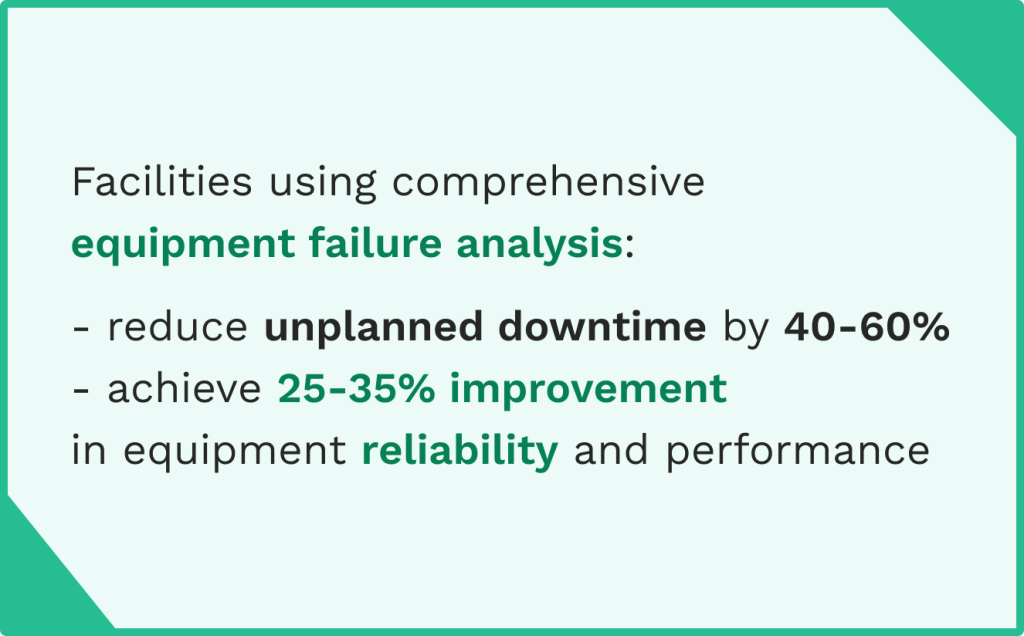
- Effective failure analysis reduces unplanned downtime by 40-60% through systematic investigation and prevention techniques.
- The global failure analysis market is projected to reach $7.65 billion by 2030, growing at 7.56% annually.
- Proper documentation and data collection during failure analysis provide crucial evidence to prevent recurring failures and improve equipment reliability.
Equipment failures don’t just happen. They often leave clues that can be useful for analysis.
When critical equipment fails, the immediate response is often to get it running again as quickly as possible. However, rushing to restore operations without understanding why the failure occurred practically guarantees you’ll face the same problem again.
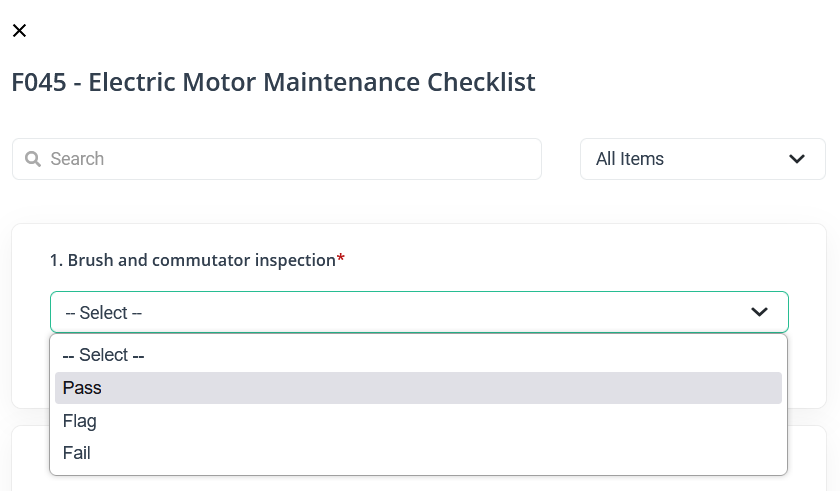
That’s where equipment failure analysis comes in.
This investigation process identifies the root causes of equipment failures, helping you implement corrective and preventive actions that actually stick.
According to research from Mordor Intelligence, the failure analysis market is expected to reach $7.65 billion by 2030, growing at a compound annual growth rate of 7.56%.
In this guide, we’ll walk you through the best practices for conducting equipment failure analysis.
The suggestions here will deliver real results, from proper data collection to the development of effective prevention techniques that keep your critical equipment running reliably.
Understand When Equipment Failure Analysis Is Needed
You don’t need to perform a full-scale failure analysis on every equipment failure. The key is to identify when an investigation will deliver the greatest return on your time and resources.
Generally, equipment failure analysis makes sense when failures occur on critical equipment that directly impacts production, safety, or compliance.
You should also investigate when the failure was unexpected and:
- Can’t be explained by normal wear,
- Unplanned downtime exceeds your established thresholds
- Recurring failures that suggest deeper mechanical failures or material defects.
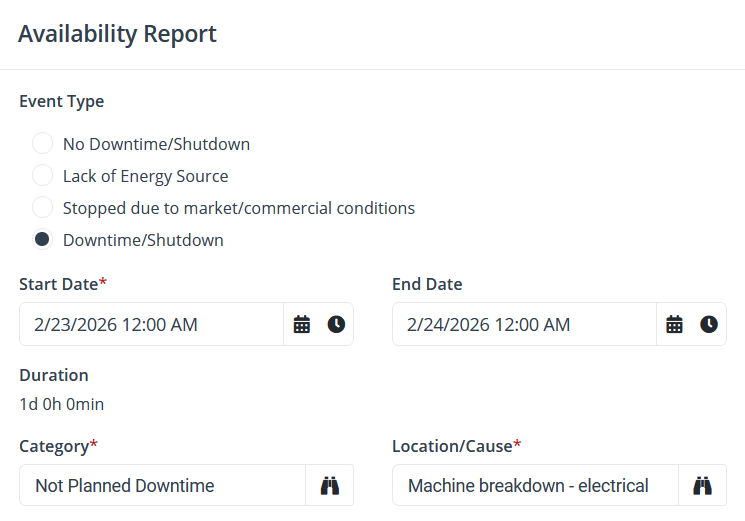
According to Siemens’ 2024 True Cost of Downtime report, the 500 biggest companies globally lose approximately $1.4 trillion annually due to unplanned downtime.
This is equivalent to 11% of their total revenues.
In the automotive sector, an idle production line at a major plant costs up to $2.3 million per hour.
These staggering numbers make it clear why identifying and eliminating failure patterns through proper failure analysis is so critical.
On the flip side, you probably don’t need formal failure analysis for routine wear items that failed as expected.
For example, minor failures with minimal operational impact, or issues where the cause is immediately obvious and easily corrected.
Assemble the Right Investigation Team
Failure analysis requires a team with diverse perspectives and expertise.
Complex failures often involve multiple contributing factors spanning mechanical, operational, and organizational issues. A cross-functional investigation team helps ensure you identify all relevant failure mechanisms.
Your team should typically include the maintenance technician who knows the equipment best, an experienced maintenance manager or reliability engineer to lead the investigation, operators who were running the equipment when it failed, and specialists based on the failure type (electrical engineers for electrical failures, materials experts for metallurgical issues, etc.).
According to maintenance experts, serious investigations require diverse skills to ensure rigorous, wide-ranging analysis. Representation from production, quality, management, and purchasing provides different perspectives that help avoid jumping to conclusions.
The size and composition of your team should scale with the severity and complexity of the failure.
A simple bearing failure might need just two or three people, while investigating a major failure with safety risks or significant production impact might require a larger team with specialized expertise.
Secure and Document the Failure Site
Before anyone touches the failed equipment, secure the failure site and document everything. This important step preserves crucial evidence that could be lost once repair work begins.
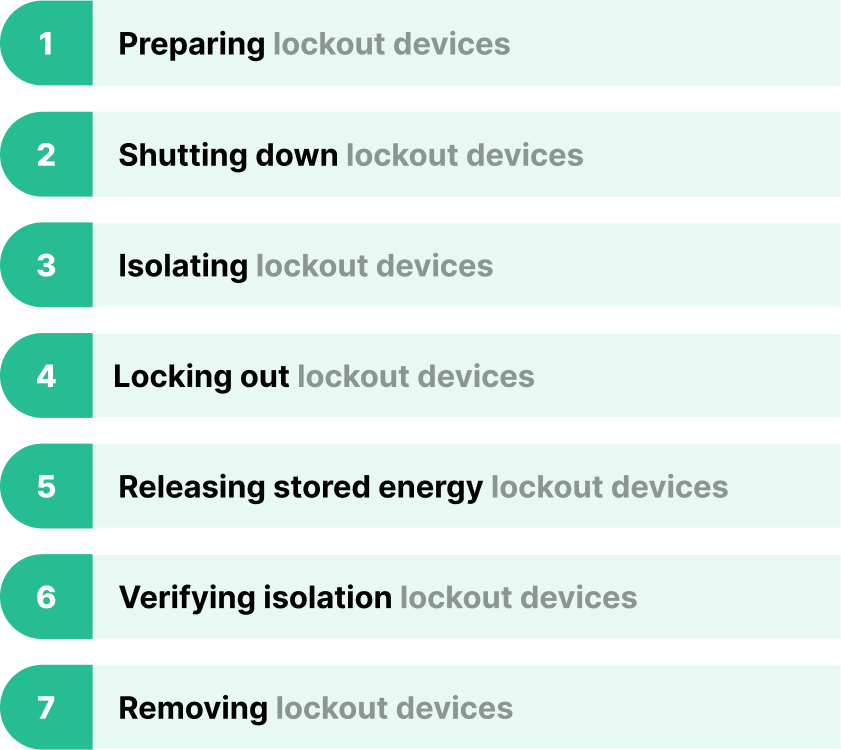
Start by implementing lockout/tagout procedures immediately to ensure everyone’s safety. Then photograph and video the equipment from multiple angles before anyone disturbs anything. Capture the position of components, surrounding conditions, fluid levels, instrument readings, and any visible damage.
The maintenance team should document operating conditions at the time of failure, including temperature, pressure, flow rates, vibration levels, and any abnormal sounds or behaviors that operators noticed.

According to root cause analysis experts, thorough documentation during this phase often uncovers evidence that becomes critical later in the investigation.
Many stalled investigations restart only after someone documents details that were previously overlooked.
Collect any relevant sensor data, maintenance logs, and operational data from your CMMS or monitoring systems.
This historical context helps you understand whether the failure was sudden or the result of gradual degradation.
Collect and Preserve Crucial Evidence
Data collection is the foundation for effective failure analysis.
Start by retraining physical evidence, since it will be important for your analysis. When possible, remove and preserve the failed component before attempting repairs.
If you must restore the equipment quickly, at a minimum, take detailed photos and measurements before disassembly. Collect fluid samples (oil, coolant, hydraulic fluid) for analysis, especially if contamination is a concern. Save wear particles, broken pieces, or any material that separated from components.
Your data collection should also include maintenance history from your CMMS showing:
- Last preventive maintenance date
- Work history that was performed
- Any data on modifications or repairs related to the equipment
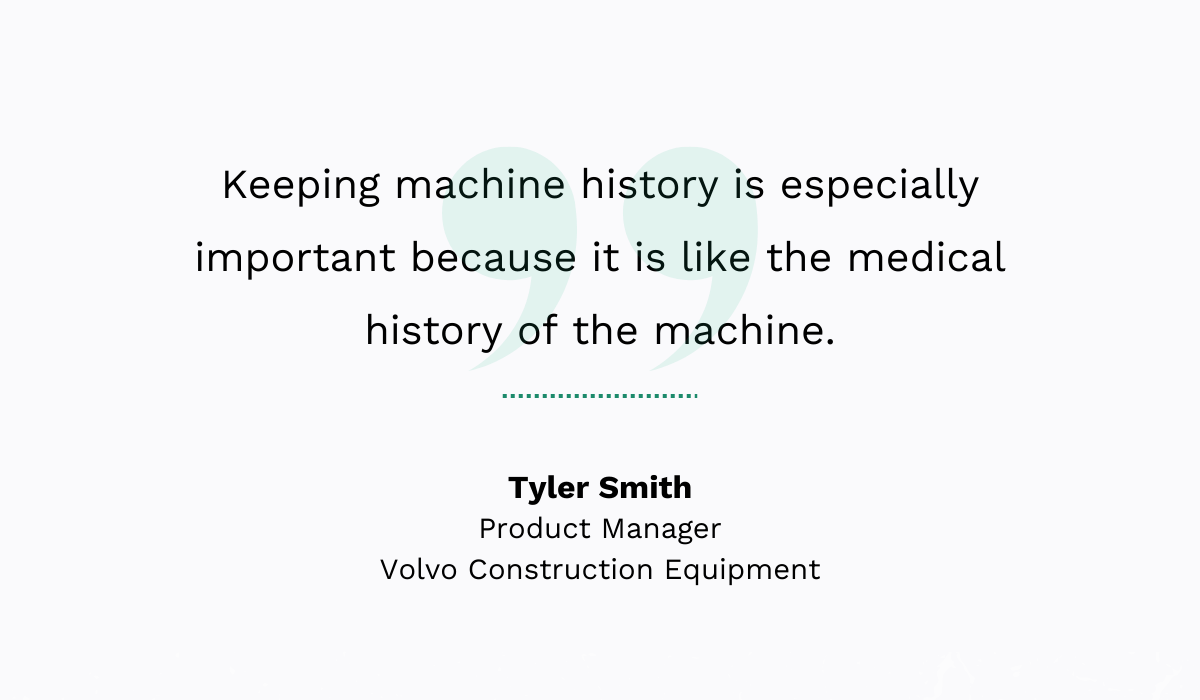
Operational data analysis reveals important context about how the equipment was being used when it failed.
Another tip is to review production schedules, throughput levels, recent changes in operating conditions, and environmental factors such as temperature or humidity.
Research from Deloitte shows that effective data-driven decision making through condition monitoring and sensor data can reduce maintenance planning time by up to 50% while improving reliability.
The more thorough your data collection, the more likely you are to identify the true root cause rather than just treating symptoms.
Use Appropriate Failure Analysis Techniques
Selecting the right failure analysis techniques ensures you conduct a systematic investigation rather than jumping to conclusions. Different methods work better for different types of failures.
Root cause analysis (RCA) should be your go-to technique for most equipment failures. RCA uses structured questioning (like the “5 Whys” method) to drill down from symptoms to underlying causes. It helps distinguish between immediate causes, contributing factors, and true root causes that need to be addressed.
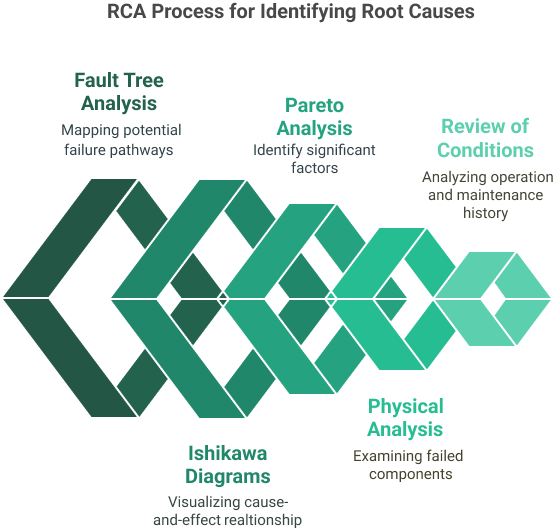
Failure mode and effects analysis (FMEA) is particularly valuable for preventing failures before they happen. This proactive technique identifies potential failure modes, assesses their effects on operations, and calculates a risk priority number based on severity, occurrence, and detection ratings. FMEA helps you focus prevention efforts where they’ll have the greatest impact.
Fault tree analysis works well for complex failures with multiple contributing factors. This top-down, deductive approach maps out all possible causes that could lead to a specific failure event, showing how different factors combine to create problems.
For analyzing trends across multiple failures, data analysis techniques like Pareto analysis help identify which failure mechanisms are most common. Tracking patterns in maintenance logs and sensor data can reveal developing problems before they cause major failures.
Oil analysis and vibration analysis are essential condition-monitoring techniques that provide early warning of developing mechanical failures, such as bearing failures, misalignment, or lubrication issues.
According to industry research, vibration analysis can detect developing problems with 85-95% accuracy, typically providing 3-8 weeks of warning before failure.
The best maintenance teams don’t rely on just one technique. They select methods appropriate to the specific failure and combine approaches for comprehensive analysis.
Identify Root Causes, Not Just Symptoms
One of the most common mistakes in equipment failure analysis is stopping at symptoms instead of drilling down to root causes. Fixing symptoms might get the equipment running again, but it doesn’t prevent recurrence.
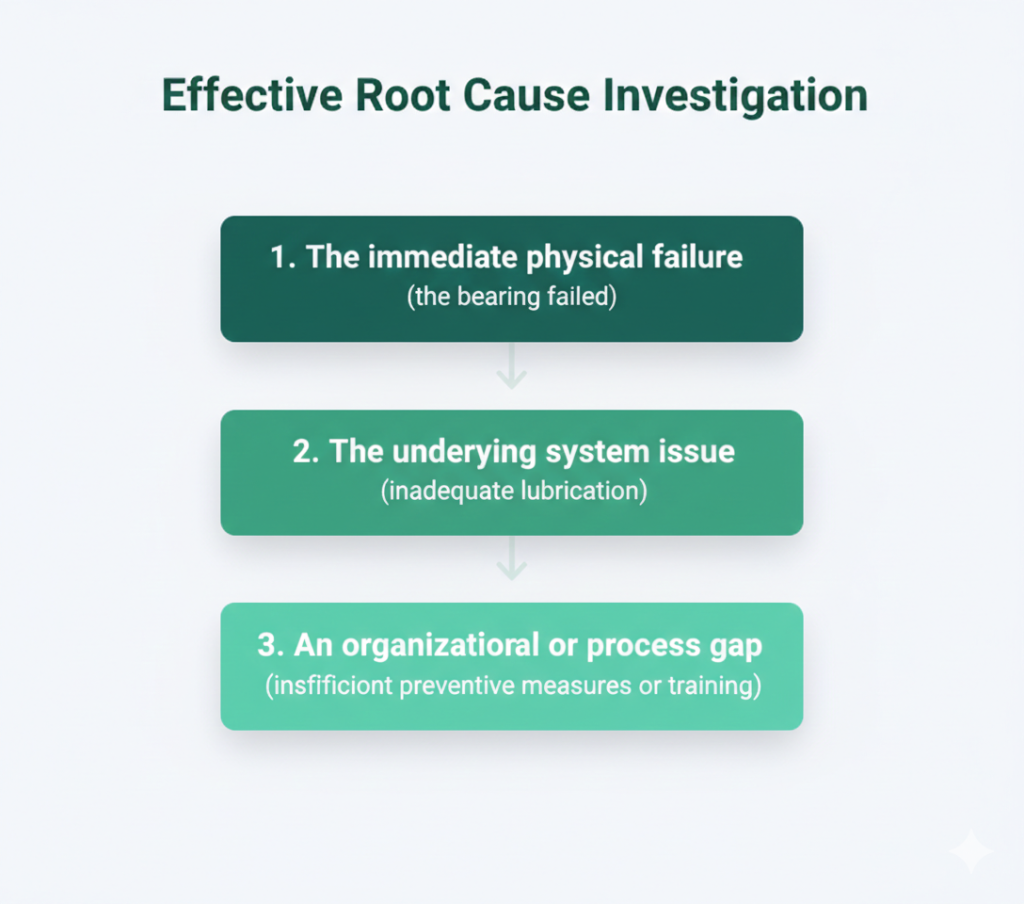
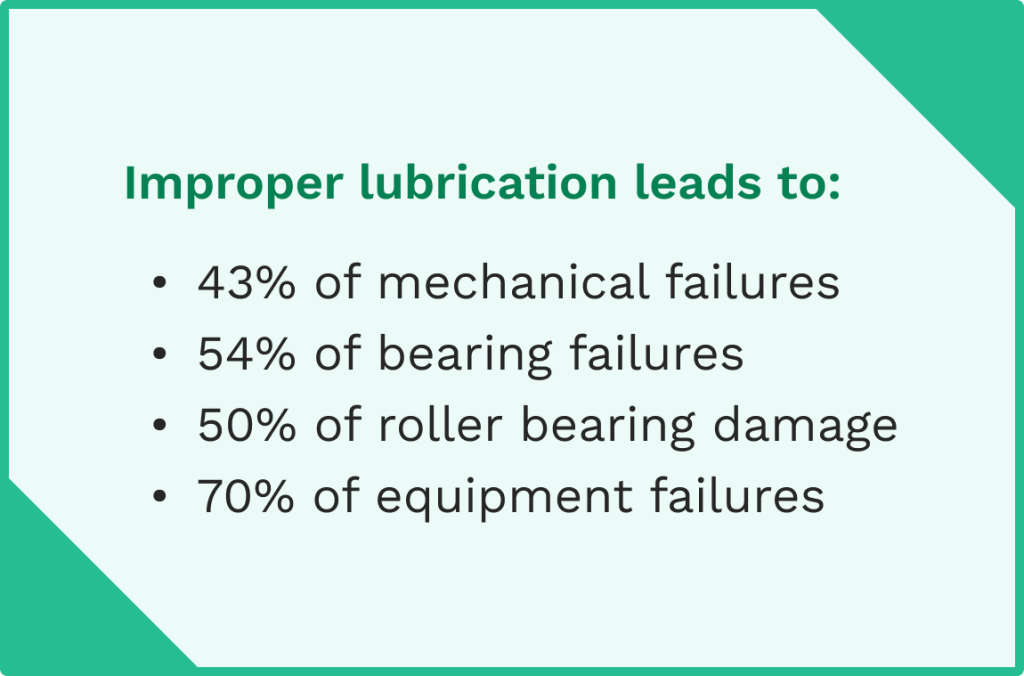
For example, if a bearing fails, the immediate cause potentially might be insufficient lubrication.
But the root cause could be that the lubrication schedule in your preventive maintenance program isn’t frequent enough.
Other reasons include technicians not being properly trained in lubrication procedures or contamination entering the bearing housing due to a damaged seal.
Effective root cause investigation looks at three levels:
- The immediate physical failure (the bearing failed),
- The underlying system issue (inadequate lubrication)
- An organizational or process gap that allowed the condition to develop (insufficient preventive measures or training).
Research shows that manufacturing facilities implementing systematic equipment failure analysis typically achieve 40-60% reductions in unplanned downtime. These results come from addressing true root causes rather than just treating symptoms.
When identifying root causes, consider all categories of potential failures:
- Design issues
- Material defects
- Operational factors (running outside normal parameters)
- Inadequate preventive maintenance
- Incorrect spare parts inventory
- Environmental conditions like temperature extremes or contamination.
Remember that many failures have multiple contributing factors. Your investigation should identify all significant causes, not just the most obvious one.
Develop Corrective and Preventive Actions
Once you’ve identified root causes, develop corrective actions that prevent recurrence and preventive actions that address similar potential failures across other equipment.
Effective corrective and preventive actions (CAPA) should be specific, measurable, and address the actual root cause.
Vague recommendations like “improve maintenance” won’t drive real change. Instead, specify exactly what needs to change: update the preventive maintenance schedule, implement new training procedures, modify equipment design, or improve spare parts inventory management.
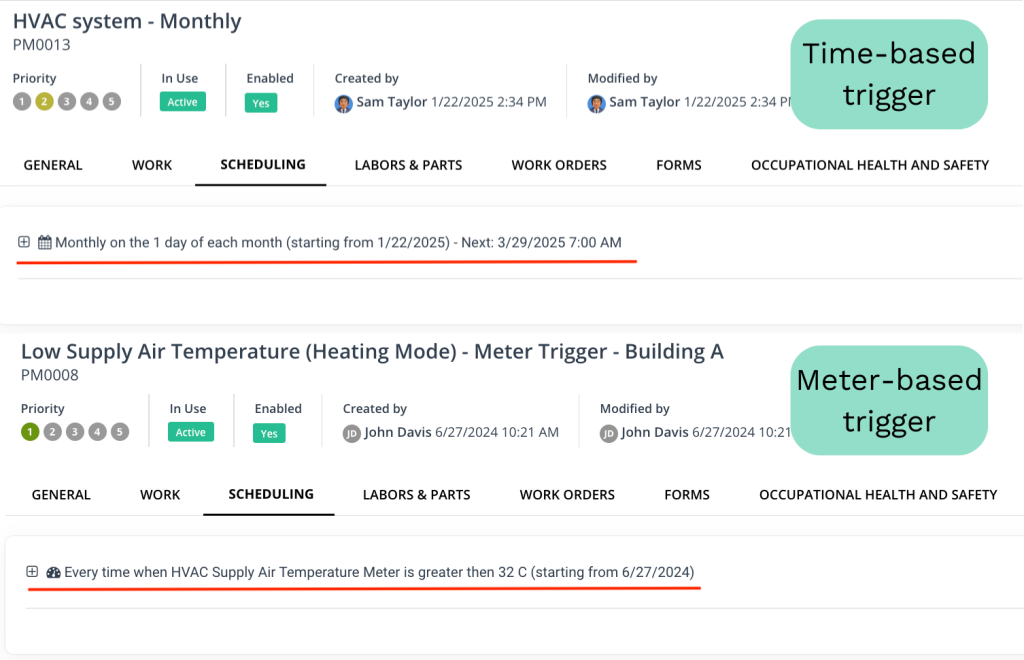
Your corrective actions might include:
- Immediate fixes to prevent the same failure mode from recurring
- Modifications to maintenance tasks or frequencies in your preventive maintenance program
- Changes to operating procedures or operating conditions
- Improvements to condition monitoring or sensor data collection
- Updates to training programs for maintenance team members.
According to a 2025 report from SFG20, continuous improvement in maintenance practices is a top priority for organizations looking to optimize maintenance operations and reduce maintenance costs.
When developing preventive actions, think beyond the specific piece of equipment that failed. If inadequate lubrication caused this bearing failure, review lubrication practices across all similar equipment. If vibration from improper installation contributed, check installation procedures for other critical equipment.
Assign clear responsibility and deadlines for each action. Corrective actions that aren’t assigned to specific people with specific timelines rarely get implemented.
Document Findings for Future Reference
Thorough documentation transforms individual failure investigations into organizational learning that drives continuous improvement.
Your failure analysis report should include:
- Executive summary stating what happened and what needs to be done
- Description of the failure with timeline and basic facts
- Methodology used in the investigation
- Identify root causes with supporting evidence
- Recommended corrective and preventive actions with assigned responsibilities.
Visual documentation is particularly valuable.
Include photographs showing the failed component, diagrams illustrating failure mechanisms, charts or graphs showing relevant data trends, and timelines mapping the sequence of events.
Store your failure analysis reports where your entire maintenance team can access them. Many organizations attach reports directly to asset profiles in their CMMS, creating a comprehensive failure database for future reference.
This documentation serves multiple purposes. It provides a knowledge base that helps technicians troubleshoot similar issues faster.
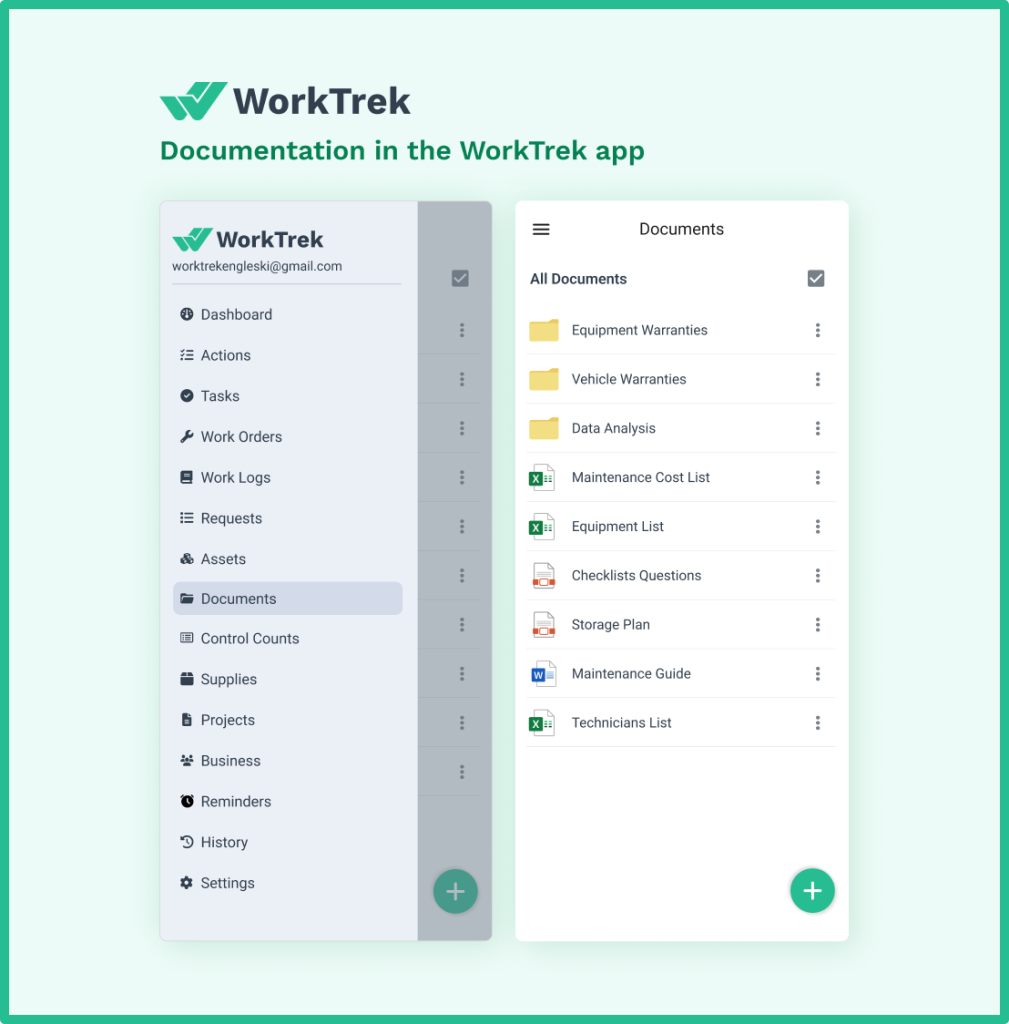
It can also support trend analysis to identify recurring failure patterns across multiple assets, justify investments in equipment improvements or replacements, and demonstrate due diligence for regulatory compliance or warranty claims.
According to research on maintenance optimization, organizations that systematically document and learn from failure analysis see significantly better equipment reliability and lower total maintenance costs over time.
Conclusion
Equipment failure analysis is about understanding what went wrong and preventing future failures.
Every failure represents an opportunity to improve equipment reliability, reduce maintenance costs, minimize unplanned downtime, enhance workplace safety, and drive operational excellence across your organization.

The best practices we’ve covered include:
- Assembling cross-functional teams
- Documenting the failure site
- Collecting crucial evidence
- Using appropriate failure analysis techniques
- Identifying true root causes
- Developing effective corrective actions
- Maintaining comprehensive documentation
Start applying these best practices to your next equipment failure. The investment in thorough investigation and proper documentation will pay dividends through improved equipment reliability, fewer recurring failures, and a maintenance organization that gets smarter with every failure it investigates.