

Get a Free WorkTrek Demo
Let's show you how WorkTrek can help you optimize your maintenance operation.
Try for freeKey Takeaways:
- Systematic preventive maintenance extends equipment life by 20–30% while reducing unexpected breakdowns and operational costs.
- A company will lose at least 5% of its productivity due to machinery malfunctions and repairs — and some firms lose as much as 20%, according to the International Society of Automation (ISA).
- 66% of companies now use a CMMS to optimize their equipment care and improve equipment uptime.
Heavy equipment is one of the biggest capital investments a business can make.
Whether you’re running a manufacturing plant, a construction fleet, or a facilities operation, the machines that keep your operation moving aren’t cheap, and neither are the repairs when they break down.
The problem?
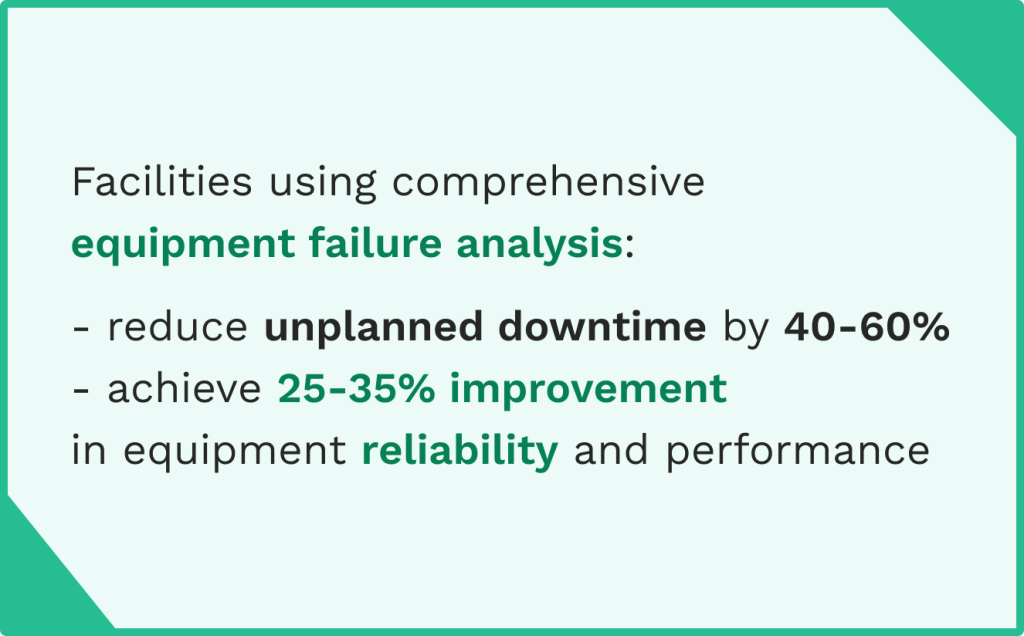
Most organizations are reactive rather than proactive. They wait for equipment failure before taking action, leading to unplanned downtime, costly repairs, and lost revenue that could have been avoided entirely.
The good news is that extending equipment life doesn’t require a massive overhaul of your entire operation.
It comes down to a handful of proven, practical habits that any maintenance team can implement.
This article covers seven tips for extending equipment life and getting the most out of every machine on your job site.
Tip 1: Build a Consistent Preventive Maintenance Schedule
If there’s one thing that separates organizations with high equipment longevity from those constantly dealing with premature breakdowns, it’s a disciplined preventive maintenance program.
Preventive maintenance — or PM — is a proactive approach to maintaining machinery before problems develop. Rather than waiting for something to break, you schedule maintenance at regular intervals based on machine hours, calendar time, or usage thresholds.
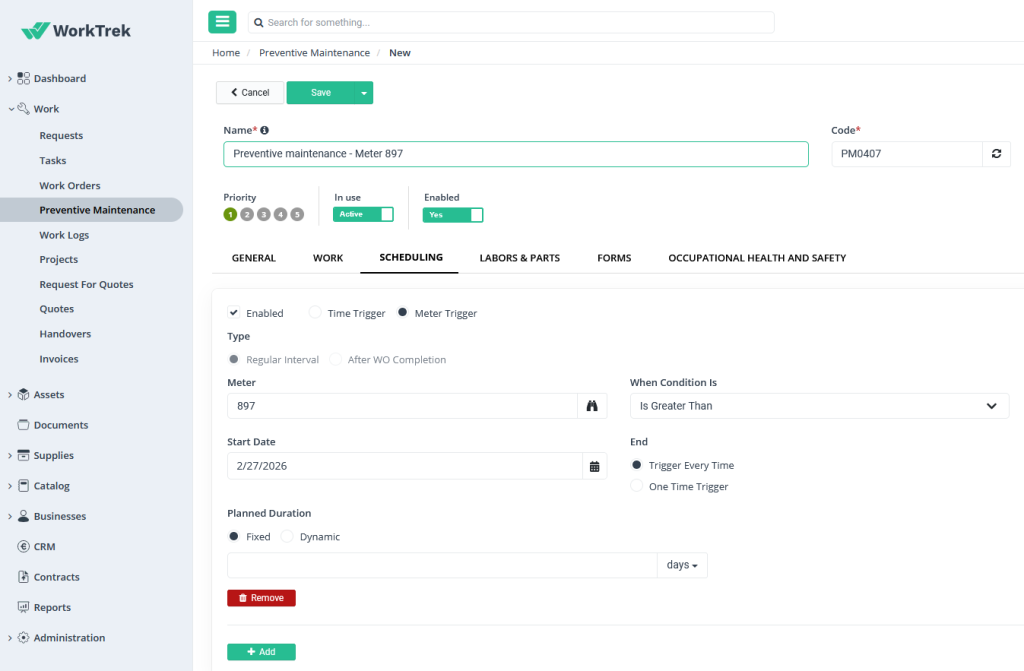
This keeps critical components in good working order and gives your maintenance team visibility into the overall health of your assets.
According to research cited by Brady Industries, systematic preventive maintenance extends equipment life by 20–30% while reducing unexpected breakdowns and operational costs.
That’s not a minor improvement; that’s the difference between replacing a machine in seven years versus ten.
A solid maintenance plan should go beyond simple filter changes and oil top-offs. It should include:
- Scheduled service intervals aligned with manufacturer recommendations
- Routine inspections tied to machine hours and usage patterns
- Documented procedures that any member of your maintenance team can follow
- Escalation paths for when minor issues are detected during routine service
One common mistake is letting production schedules push PM aside to speed up production.
Skipping or delaying scheduled maintenance to hit a production target is a bad idea.
The cost of a poorly maintained machine that fails at full capacity is far greater than the cost of a planned maintenance window. If your maintenance schedule keeps getting bumped, consider moving service to off-hours to protect both your production targets and your equipment.
Tip 2: Prioritize Proper Lubrication and Fluid Management
Lubrication is one of the most important and, according to studies, the most frequently mismanaged aspect of equipment maintenance.
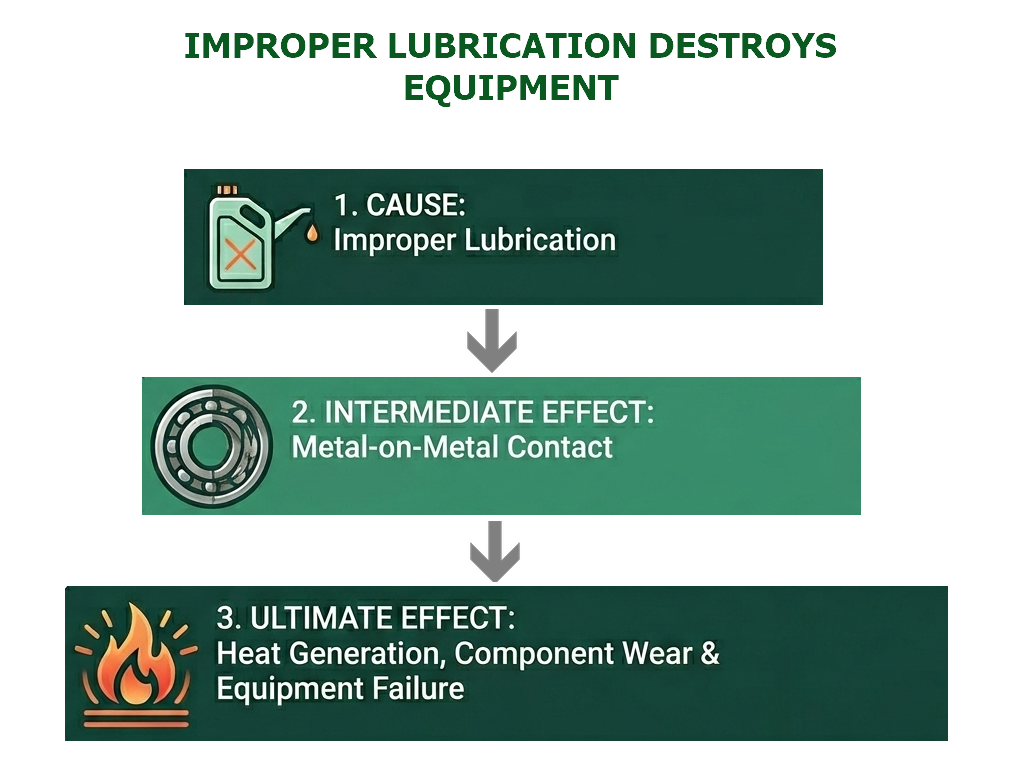
Nothing destroys equipment faster than improper lubrication, where metal-on-metal contact generates heat that accelerates component wear.
This can cause warping, and eventually leads to failure. With it, moving parts operate smoothly, friction is reduced, and equipment runs significantly longer.
Every machine has specific lubrication requirements. Using the wrong lubricant or applying too much (or too little) can be just as damaging as skipping lubrication altogether.
Over-lubricating, for example, can damage seals and attract debris, accelerating wear.
Beyond lubrication, verify fluid levels across the board:
- Hydraulic fluid
- Coolant
- Engine oil
- Transmission fluid
Fluid analysis is particularly valuable for heavy equipment.
Regular sampling and lab analysis of your oil and hydraulic fluids can detect contamination, wear metals, and other warning signs long before they cause visible problems.
Think of it as a blood test for your machines. It can give you actionable data rather than guesswork.
Key fluid management practices to implement:
- Check fluid levels at the start of each shift
- Follow manufacturer-specified lubricant types and change intervals
- Inspect for signs of excess oil, grease buildup, and leaks during every service
- Use fluid analysis to get ahead of internal component wear
Proper lubrication is not glamorous, but it is one of the highest-ROI habits in any maintenance plan.
Tip 3: Conduct Routine Inspections and Catch Issues Early
The earlier you catch a problem, the cheaper it is to fix.
A thorough inspection program catches the minor issues that, left unchecked, become the catastrophic failures.
A dripping seal, a frayed wire, a loose belt, are not expensive to address at discovery. But ignore them for a few more weeks of machine hours, and that minor issue can cascade into a full system failure and thousands of dollars in unplanned repairs.
The Canadian Centre for Occupational Health and Safety highlights regular inspections as one of the key ways to mitigate workplace hazards.
This is a reminder that inspections aren’t only about machinery longevity, but also about the safety of the people who operate it.
A good inspection routine covers:
- Rust, cracks, dents, or warping on metal fixtures and structural components
- Tire tread wear, punctures, cuts, and inflation levels
- Hydraulic fluid levels and hose fittings
- Fraying wiring or loose connections in electrical systems
- Non-functional controls and safety mechanisms
- Belt and chain tension
- Filter condition and cleanliness
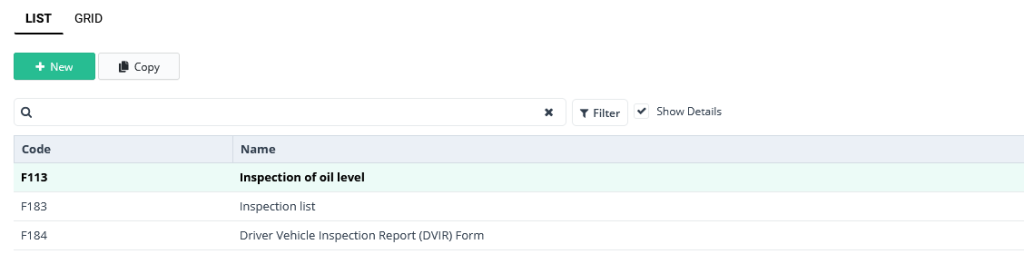
Daily pre-shift and post-shift walkarounds are very useful.
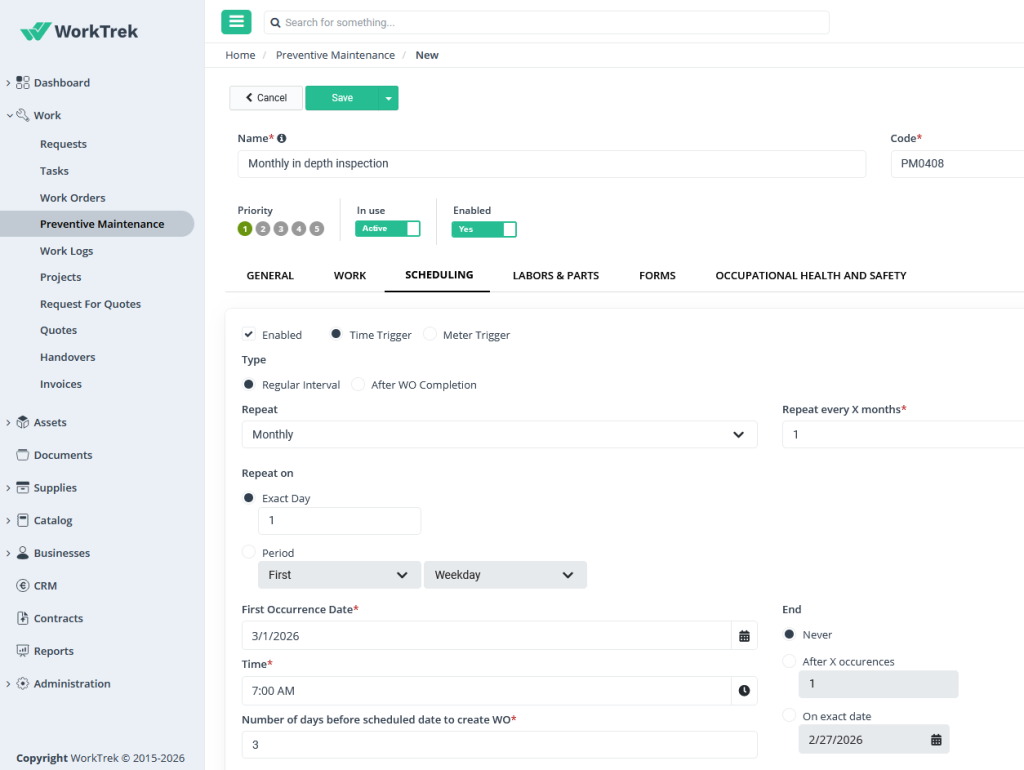
Monthly in-depth inspections covering every system. This includes mechanical, hydraulic, electrical systems, and structural.
Building these into your maintenance schedule with standardized checklists ensures consistency across your maintenance team and prevents critical steps from being missed.
Document everything.
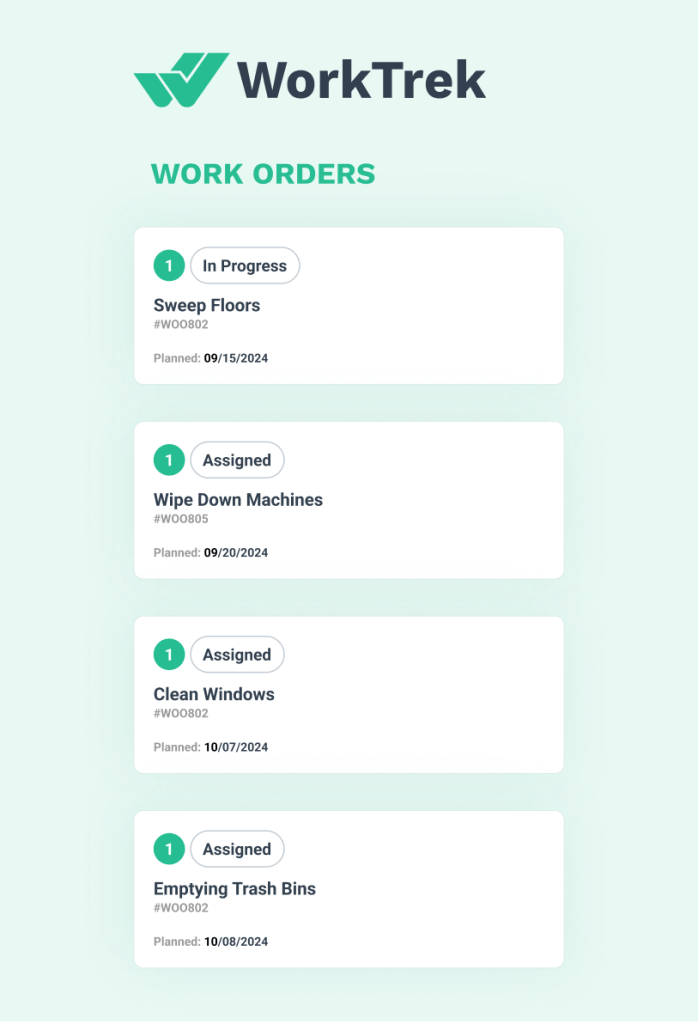
Tracking what was observed and when provides historical data that helps identify recurring issues, spot trends in component wear, and proactively schedule replacements rather than reactively.
Tip 4: Train Your Operators
Your equipment is only as well-treated as the people operating it.
Poor operator habits such as excessive idling, overloading, improper technique, can accelerate wear and tear at a rate that no maintenance plan can fully compensate for.
Operator training should be a formal, recurring part of your operations, not a one-time onboarding event. It should cover:
- Proper startup and shutdown procedures
- Load limits and appropriate machine-to-task matching
- How to recognize and report unusual sounds, smells, or performance changes
- Pre- and post-shift inspection routines
- Fuel and idle management to save fuel and reduce unnecessary engine wear
Matching the right machine to the right job is equally important.
Using a machine that’s too large for a task wastes fuel and puts unnecessary stress on components. This is like oversizing an HVAC unit. It can be overkill, short cycle, and use more energy than necessary.

Using one that’s too small exceeds its design limits and accelerates premature wear. Training operators to make these judgments correctly is one of the most underrated tips to extend equipment life.
Consider implementing formal refresher training on a quarterly or semiannual basis, especially when new equipment is introduced or usage data reveals inefficient operating patterns. The investment in operator training pays for itself many times over in reduced repairs and longer equipment service life.
Tip 5: Keep Equipment Clean
It may seem basic, but cleanliness is one of the most consistently overlooked aspects of equipment maintenance.
This is especially important in demanding environments like construction sites, manufacturing floors, and heavy industrial settings.
Dirt, dust, and debris are not just cosmetic issues.
They clog air filters, jam hydraulic fittings, hide developing cracks and leaks, contaminate lubricants, and accelerate corrosion. A clean machine is one where problems are visible and addressable before they become serious.
Cleaning heavy equipment thoroughly after use should be part of every operator’s end-of-shift routine. This means:
- Removing loose debris from the surface and undercarriage using brushes and cloths
- Washing exterior grime with pH-neutral cleaners or mild soap
- Using pressure washers for caked-on dirt (carefully, avoiding sensitive electronics)
- Applying industrial degreasers to engine components and fittings
- Cleaning battery terminals to remove corrosion buildup
Keeping a clean machine also makes inspections faster and more accurate.
When your equipment is covered in mud and grease, it’s easy to miss a leaking hose or a stress crack. When it’s clean, those early warning signs are visible and easy to act on.
Environmental conditions deserve special attention here as well.
Operating in dusty, sandy, or highly humid environments accelerates wear in ways that standard maintenance intervals don’t account for. If your equipment runs in these conditions, increase your cleaning frequency and adjust filter inspection schedules accordingly.
Tip 6: Use High-Quality Fuel, Fluids, and OEM Parts
The quality of what goes into your equipment directly affects how long it lasts. This applies to fuel, lubricants, coolants, filters, and replacement parts alike.
High-quality fuel is especially important for diesel-powered heavy equipment.
Contaminated or degraded diesel can damage fuel injectors, reduce combustion efficiency, and cause the engine to run inefficiently.
In extreme environments, like particularly cold climates, fuel quality is even more critical, as low-grade diesel can gel at low temperatures and cause fuel system failures.
Premium lubricants formulated to meet industry standards provide better protection for engine components and reduce friction more effectively.
Good quality lubricants can potentially extend service intervals compared to generic alternatives.
The same logic applies to filters: OEM filters are designed to the exact specifications of your equipment and often carry significantly longer service lives than aftermarket options. According to Volvo Construction Equipment, OEM oil and air filters can last up to 1,000 hours, providing meaningful protection for your engine’s critical components.
When replacement parts are needed, resist the temptation to cut corners with cheaper alternatives.
As noted by equipment maintenance experts, a seemingly affordable substitute part can result in a minor issue escalating into a major system failure.
Don’t let a $20 decision that turns into a $2,000 repair or worse. Warranty claims may also be invalidated when non-OEM parts are used.
Tip 7: Account for Environmental Factors and Operating Conditions
Not all equipment operates in the same environment, and maintenance programs that ignore this fact leave performance and extended lifespan on the table.
Extreme heat causes fluids to degrade more quickly and puts additional strain on cooling systems. High temperatures can cause seals to fail prematurely and accelerate oxidation in lubricants.
Cold environments can cause hydraulic fluid to thicken, increasing startup wear.
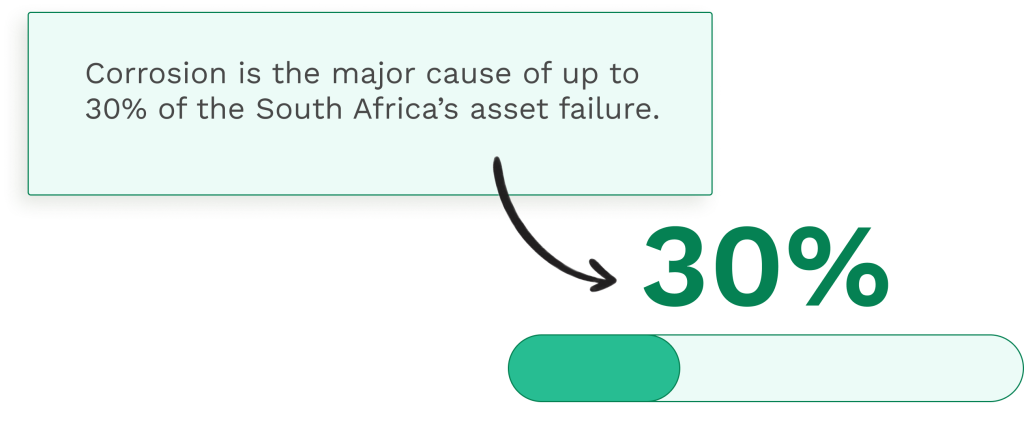
Dusty job sites clog air filters faster than clean environments. High humidity accelerates corrosion on exposed metal components.
The key insight here is that manufacturer-recommended maintenance intervals are typically based on average operating conditions.
If your machinery operates in conditions that deviate significantly from those baselines, you need to adjust your maintenance schedule accordingly. For example more frequent filter changes, more regular fluid analysis, and additional lubrication checks.
Proactive adjustments to environmental factors can also reduce the rate of damage accumulation. Spraying down work areas to reduce airborne dust, using weather-appropriate fluids and additives, and storing equipment properly when not in use all contribute meaningfully to heavy equipment longevity.
Why WorkTrek Is the Right CMMS for Equipment-Heavy Operations
WorkTrek is designed specifically for organizations that need to manage asset management, preventive maintenance, and field service operations in one unified platform. It’s built around the realities of maintenance teams — practical, easy to use, and powerful enough to handle complex multi-site operations.
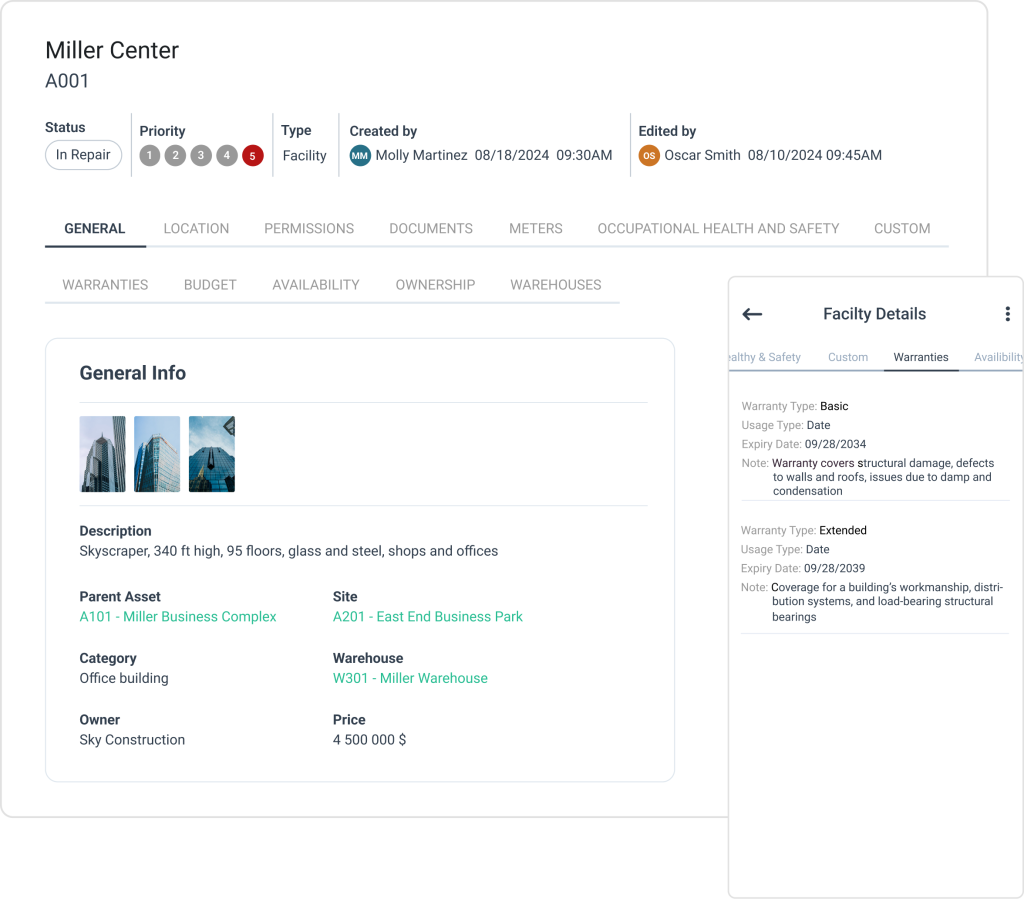
With WorkTrek, you can:
- Automate preventive maintenance scheduling based on time, meter readings, or usage triggers, so nothing gets missed
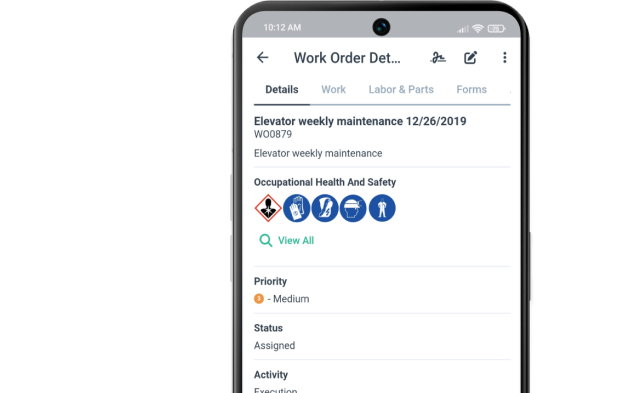
- Build and assign digital inspection checklists that standardize your team’s inspection process across every asset
- Track every work order from creation to completion, with full history attached to each piece of equipment
- Monitor parts and inventoryto ensure scheduled maintenance is never delayed by missing supplies
- Generate reports that give leadership visibility into maintenance costs, equipment downtime, and team performance
Unlike some CMMS platforms that require months of implementation and extensive IT support, WorkTrek is built to get your team up and running quickly, usually within a couple of weeks. In addition, it includes an intuitive interface that technicians actually want to use.
Organizations using WorkTrek report fewer unplanned downtime incidents, better collaboration between maintenance teams and operators, and significantly improved visibility into the health of their asset portfolios.

When your maintenance program runs on WorkTrek, extending equipment life isn’t a goal you’re working toward — it’s a natural result of the system working as designed.
Conclusion
Equipment failure is usually the result of deferred maintenance, inadequate inspections, undertrained operators, or low-quality inputs. The good news, as described in this article, is that all of these are preventable.
Implementing the seven tips covered in this article that include:
- Building a consistent preventive maintenance program
- Managing fluids and lubrication properly
- Conducting routine inspections
- Investing in operator training
- Keeping equipment clean
- Using quality materials
- Accounting for environmental conditions
All of this gives your team a proven framework for getting maximum life and performance out of every machine you operate.
And with a CMMS like WorkTrek supporting your maintenance team, you have the tools to execute that framework consistently, at scale, without things falling through the cracks.