


Get a Free WorkTrek Demo
Let's show you how WorkTrek can help you optimize your maintenance operation.
Try for freeKey Takeaways:
- Over two-thirds of industrial businesses face at least one unplanned outage each month.
- Nearly 60% of organizations spend less than half of their maintenance time on scheduled preventive work.
- A poorly installed set screw on a ship caused $2.2 million in damage in 2021.
How much money does your facility lose each year because of unplanned equipment downtime?
In most cases, the answer is: more than it should.
Many of these breakdowns stem from industrial maintenance mistakes that are easy to prevent once you know what to look for.
And that’s exactly why we’ve created this article.
If you’re a maintenance manager who wants to reduce costly failures and keep operations running smoothly, read on.
Relying Too Heavily on Reactive Maintenance
One of the most common mistakes in industrial maintenance is waiting for equipment to break down before doing anything about it.
Many organizations opt for this reactive approach over a preventive one because it seems cheaper in the short term.
After all, if you skip regularly scheduled maintenance, you save on labor, parts, and downtime costs right now.
The problem is that equipment does not fail on a convenient schedule. Instead, it tends to break down when you least expect it.
And when that happens, you face unplanned outages.
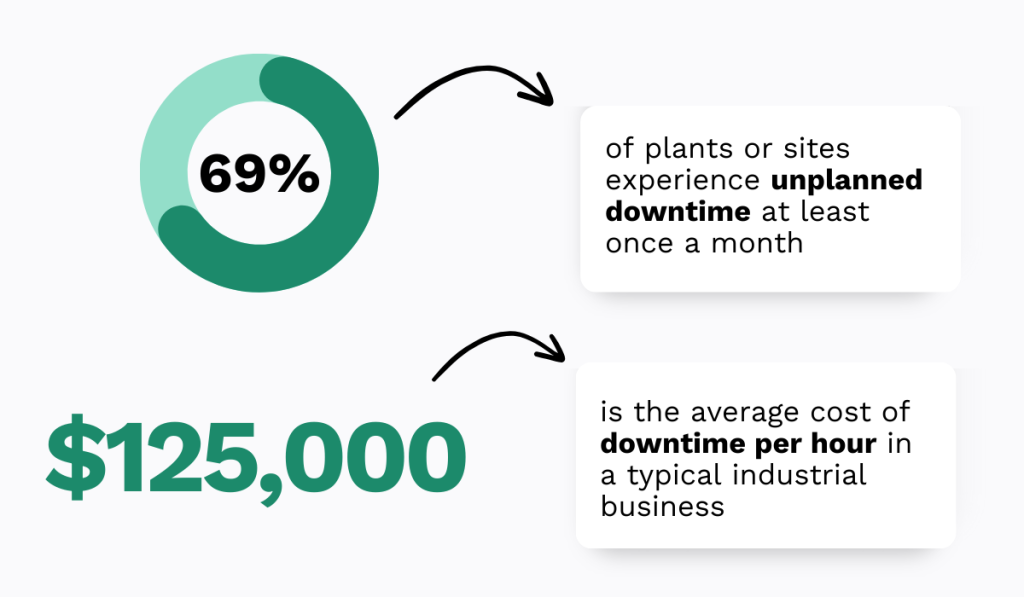
According to ABB’s “Value of Reliability” survey, more than two-thirds of industrial businesses experience at least one unplanned outage every month.
And these outages are expensive.
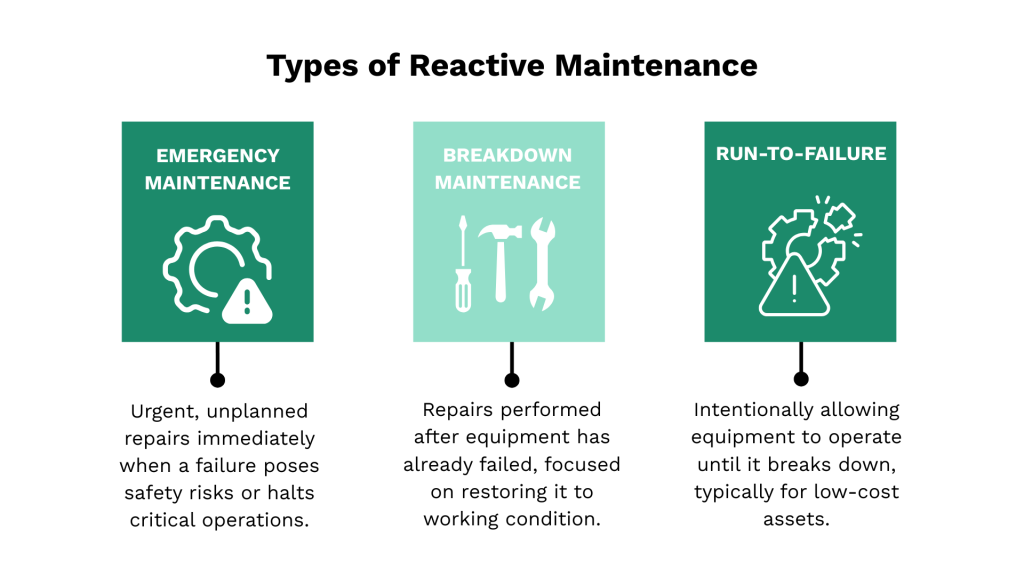
Despite this, the same survey found that 21% of businesses still use a run-to-failure maintenance strategy.
This means they intentionally let equipment operate until it stops working, and only then do they replace or repair it.
Although it carries significant risk, this strategy is still a conscious operational choice.
But without proper planning, many companies end up relying on even worse types of reactive maintenance, like emergency and breakdown maintenance.
These are unplanned responses to unexpected failures, leaving teams scrambling with no preparation at all.
With these types of maintenance, you are not just paying the price of lost production during the outage.
The cost of the actual repairs goes up, too, because you often need to order parts urgently, pay for overtime labor, or bring in outside specialists on short notice.
Consider the 2021 Atlantic Huron accident.
A poorly installed set screw caused a mechanical failure, resulting in 2.2 million USD in damage, with fortunately no injuries.
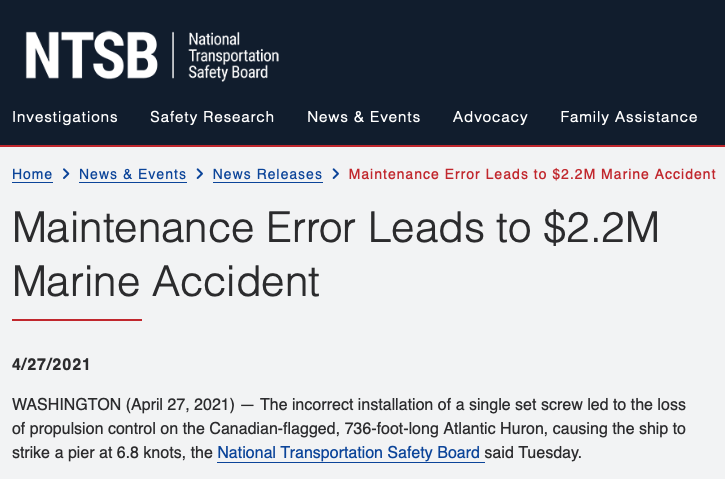
The ship’s records showed the set screw was reinstalled over four years earlier without the manufacturer-required thread-locking fluid, which is meant to keep the screw from loosening over time.
Granted, we do not know whether that work was rushed or overdue.
But it raises a key question: if one improperly installed screw can cause this level of damage, why risk leaving maintenance to chance?
Ultimately, relying heavily on reactive maintenance increases the likelihood of these failures, and the consequences can go far beyond cost.
Inadequate Preventive Maintenance Planning
The obvious solution to the previous mistake is shifting your focus toward preventive maintenance.
However, a new problem often comes up here: not planning that shift properly.
Many organizations have a preventive maintenance strategy on paper, but either fail to execute it consistently or do not follow through at all.
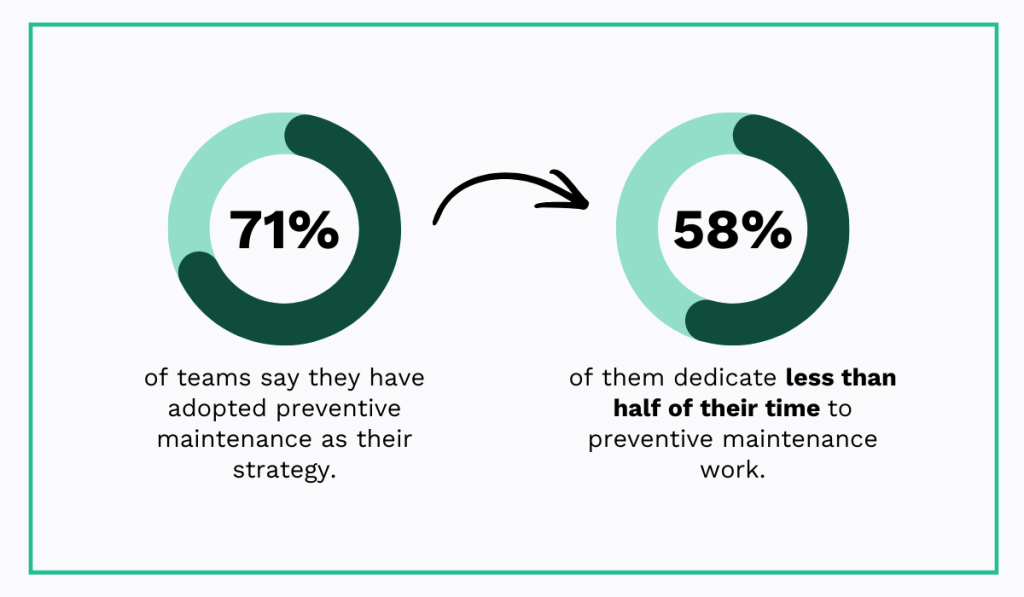
Research from MaintainX illustrates this exact gap.
While the majority of organizations adopt this strategy, nearly 60% still allocate less than half of their maintenance time to scheduled preventive maintenance work.
One reason for this is that teams fall back into reactive habits because of short-term cost savings.
Another common reason?
Building the maintenance plan on a weak foundation.
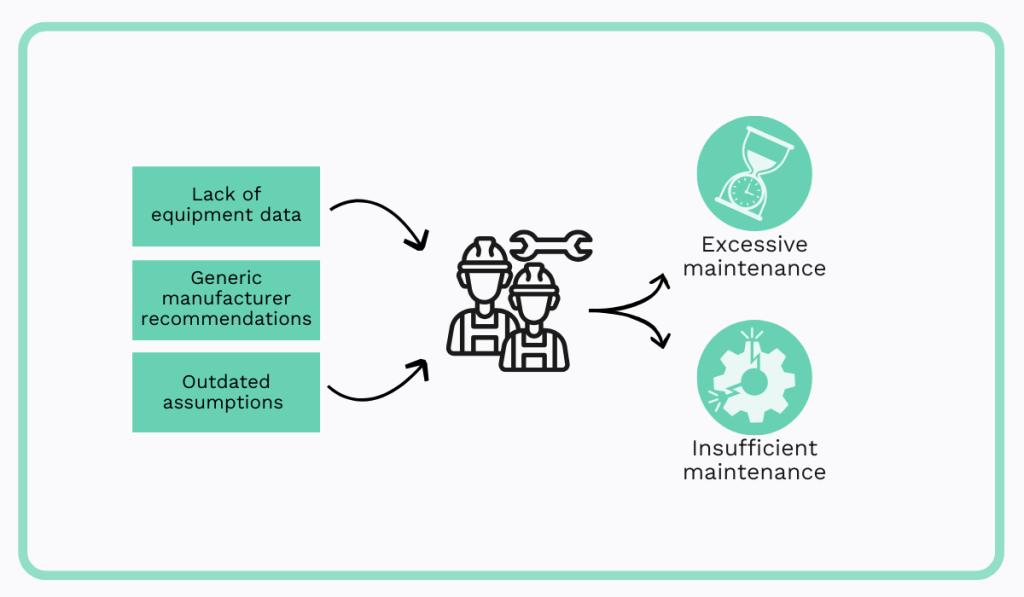
Some of the data points that can lead to over- or under-maintenance of equipment are illustrated below.

For example, consider a maintenance crew that rigidly follows manufacturer recommendations for servicing a piece of equipment.
If those intervals do not match the equipment’s actual usage or wear patterns, you end up performing excessive maintenance and wasting resources.
On the other hand, heavily used equipment could be severely undermaintained if your schedule is based on assumptions or you lack historical performance data.
The bottom line is that, with a preventive approach, having accurate, accessible data is essential.
This is where a computerized maintenance management system (CMMS) like WorkTrek can help.
Tools like WorkTrek can automatically generate work orders based on different trigger types, including time-based, meter-based, or condition-based ones.
The meter-based option is especially useful because it allows you to schedule maintenance based on real equipment usage readings rather than guesswork.
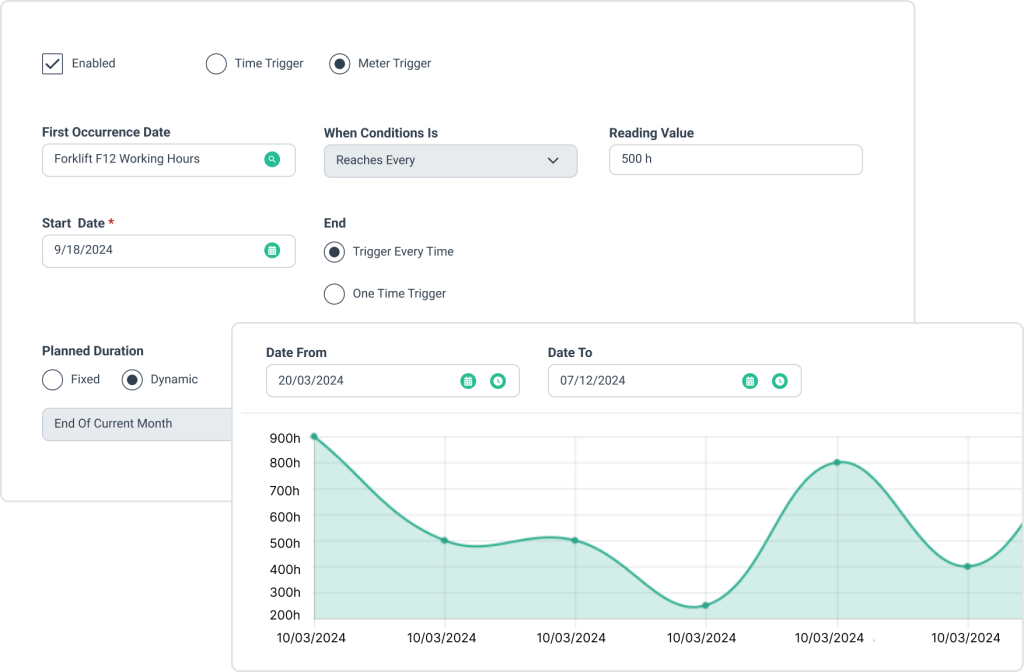
For time-based schedules, WorkTrek automatically creates recurring work orders and sends notifications to technicians on their mobile devices, so nothing gets missed.
And because a CMMS centralizes your entire asset maintenance history, parts inventory, and scheduling data in one place, you have everything you need to plan an effective preventive strategy.
In short, while moving to preventive maintenance is the right direction, without proper planning and the right tools, the results can easily fall short of expectations.
Lack of Training
Even the best maintenance plan can fail if the technicians responsible for it lack the proper training to execute it.
Unfortunately, the maintenance industry faces a real challenge in finding skilled, well-trained workers.
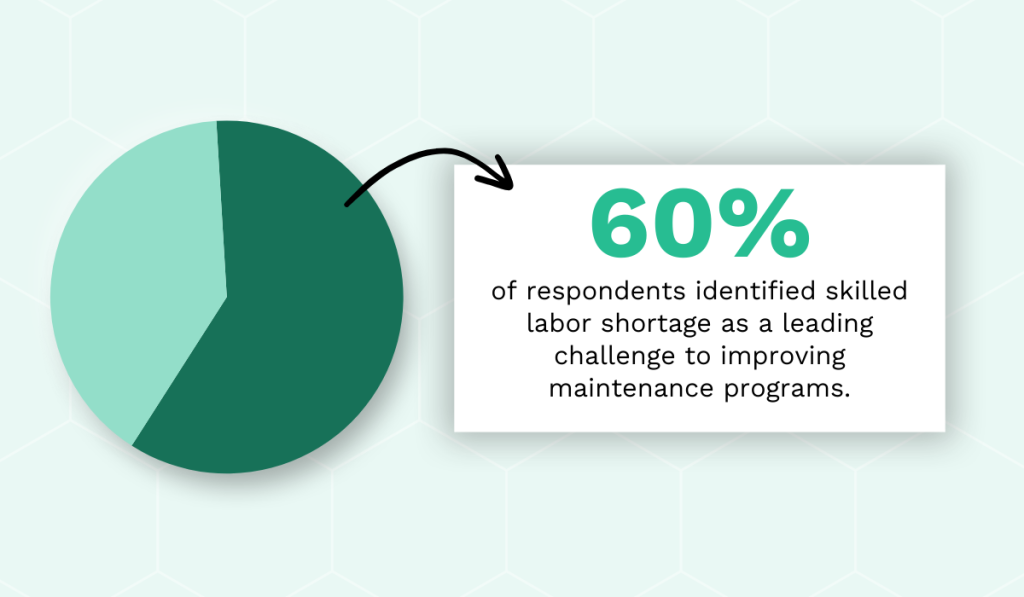
According to MaintainX’s 2024 State of Industrial Maintenance report, 60% of organizations identified skilled labor shortages as the leading challenge to improving their maintenance programs.
The reason behind this is fairly obvious.
As older technicians retire or leave the workforce, there is simply not a strong enough pipeline of younger talent entering the field to replace them.
This problem keeps getting worse as more experienced maintenance technicians reach retirement age, explains remote staffing and marketing specialist Dan Trujillo:

Therefore, organizations failing to provide thorough training to workers entering this field can be considered a critical mistake.
Teams need structured training on your specific equipment, safety procedures, and maintenance workflows so they can work confidently and safely from the start.
Plus, with the complexity of existing machinery and the introduction of innovative new equipment into facilities, training is not optional.
Without it, technicians are more likely to make errors that lead to equipment damage, production delays, or serious injuries.
Luckily, there are various programs to support maintenance training.
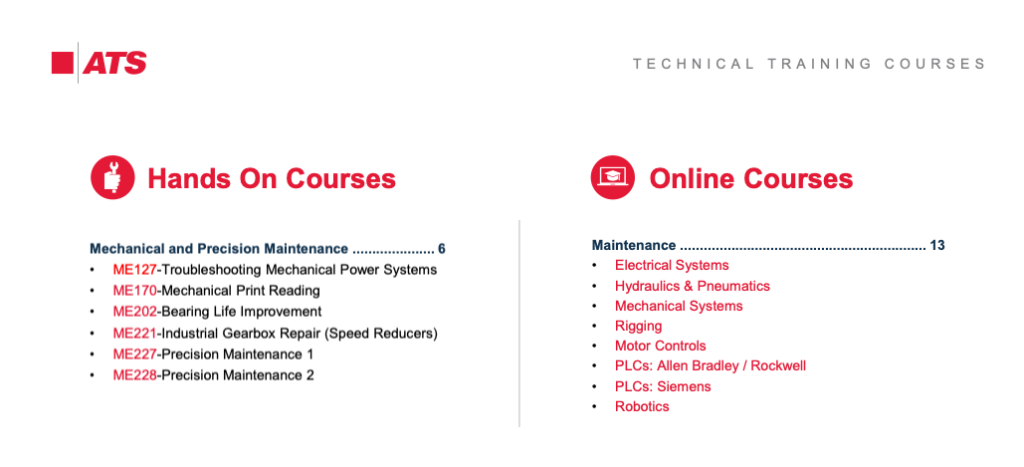
For example, ATS offers both hands-on and online technical training courses designed to improve the skills of industrial maintenance technicians.
However, it’s important to note that these general training programs should be coupled with equipment-specific training.
After all, every facility has its own machines with their own procedures, tolerances, and safety requirements.
And making sure technicians know how to properly service the exact equipment they work with every day is just as important as building their broader technical foundation.
The bottom line is this: equipment is only as reliable as the people maintaining it, so heavy investment in upskilling teams is crucial.
Not Following LOTO Procedures
Another common mistake, one which often stems from a lack of training, is failing to follow lockout/tagout (LOTO) procedures.
And if we look at recent data, LOTO violations have actually been on the rise.
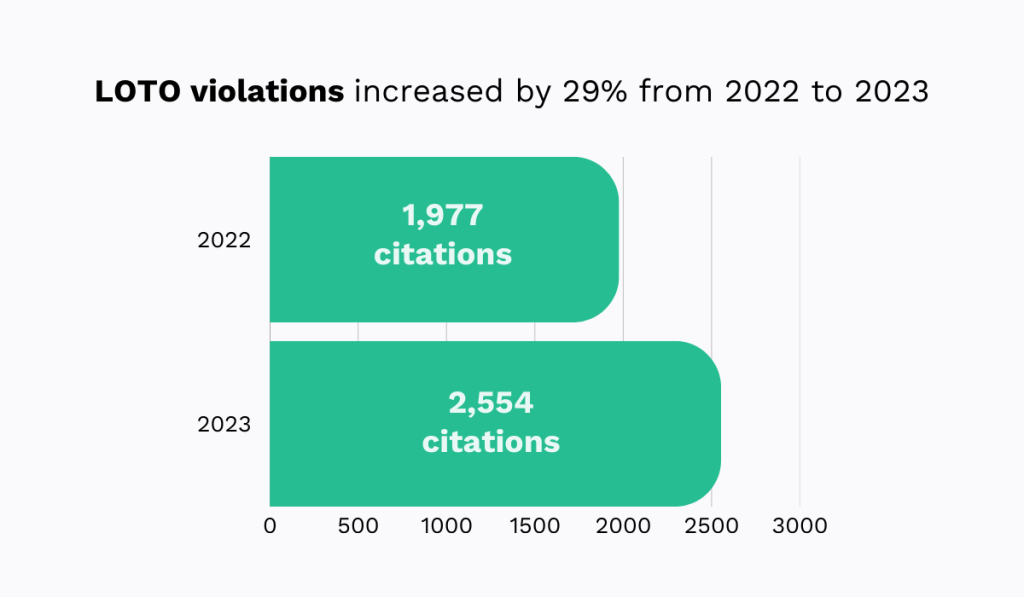
For instance, the 2024 State of Electrical Safety Report by Grace Technologies reveals a 29% increase in LOTO citations between 2022 and 2023.
The report further shows that the manufacturing industry has been disproportionately affected, with food manufacturing, fabricated metal products, and plastics and rubber products accounting for the majority of citations.
Unfortunately, this is also one of the most dangerous mistakes on our list, as it can cause serious injuries or even death.
OSHA regularly documents accidents of all kinds, including those related to LOTO failures.
These serve as important reminders of everything that can go wrong.
Let’s take a look at an example.
While performing maintenance on a baler, a maintenance supervisor was seriously injured while servicing the equipment without performing lockout/tagout.
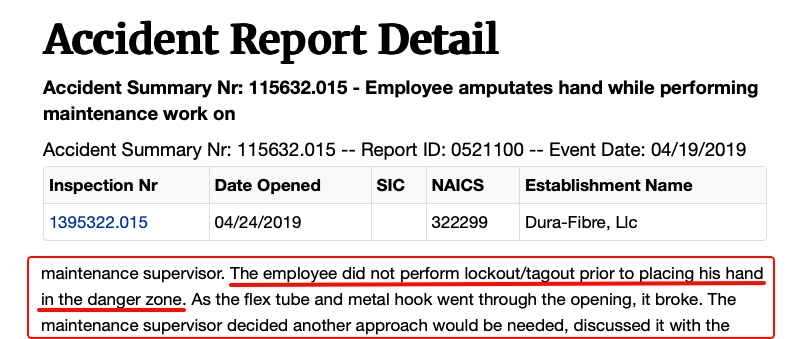
In this case, the crew may have skipped LOTO because the product was piling up in the chute, and they wanted to resolve the issue quickly.
This is quite a common pattern.
Maintenance workers sometimes intentionally bypass LOTO procedures when they are in a rush, especially when equipment is down and causing production delays.
Some other common reasons behind LOTO violations are illustrated below.
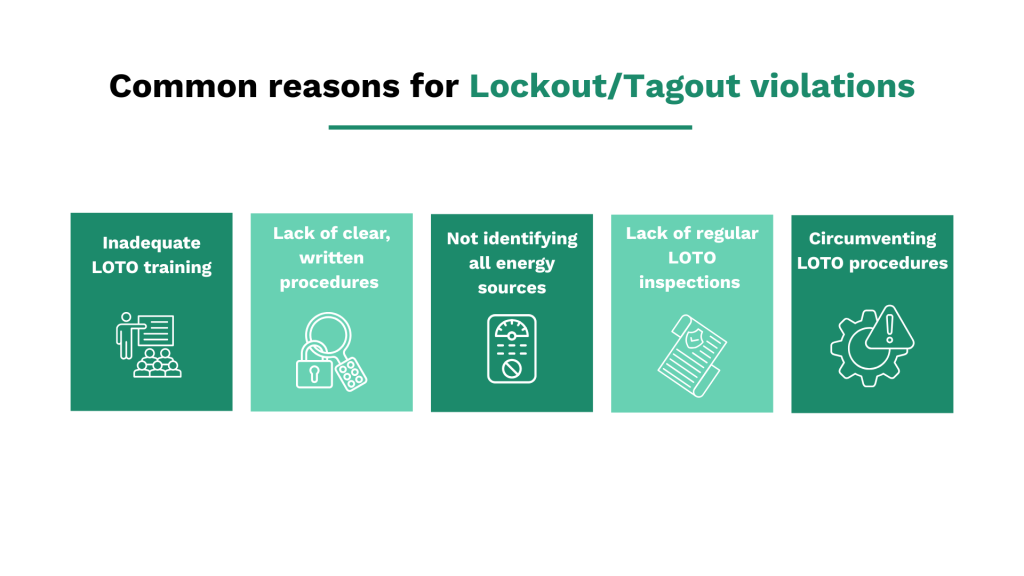
Even when employees are properly trained and not under time pressure, routine maintenance work can lead to carelessness.
For example, a technician who has serviced the same machine dozens of times might start skipping verification steps simply because nothing has gone wrong before.
This is why regular safety inspections are so important: they help catch dangerous mistakes before they result in an accident.
Equally important, LOTO procedures need to be clearly written, easily accessible, and regularly revised to reflect changes in equipment or workflows.
Done right, well-documented and enforced LOTO programs are one of the most effective ways to protect maintenance crews from serious harm.
Poor Maintenance Documentation
The last mistake on our list today is one that many teams overlook: having poor maintenance documentation workflows.
Maintenance crews often skip or rush through documentation because they see it as extra paperwork that takes time away from actual repairs.
And it makes sense: after a long shift of fixing equipment, filling out detailed records is usually the last thing on anyone’s mind.
But even when documentation does get completed, it often lacks the detail needed to be useful.
A proper maintenance work log should include elements like those shown in the image below.
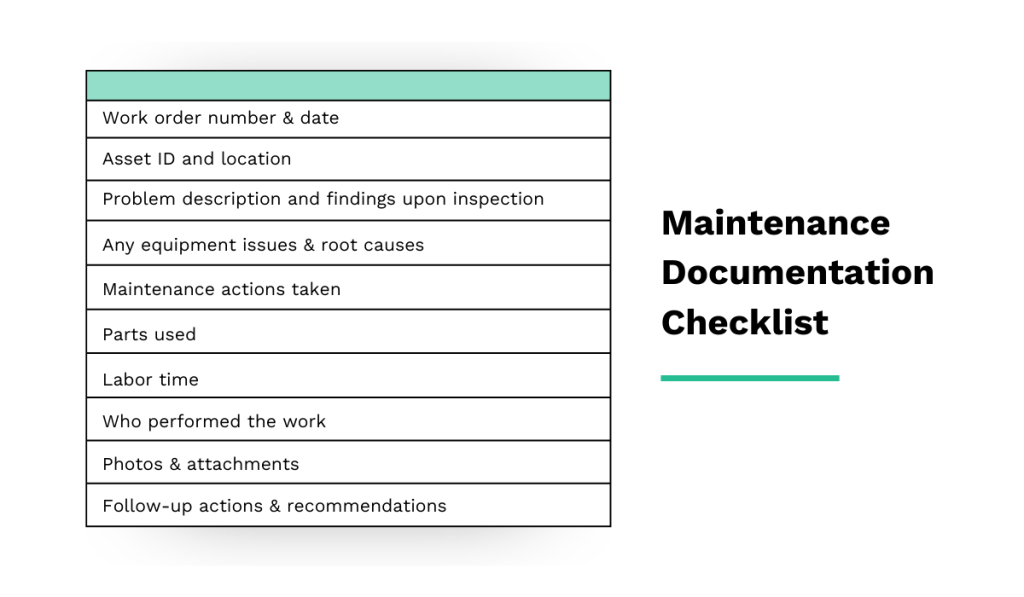
Without these details, you lose the ability to spot patterns.
Let’s say a technician replaces a bearing on a conveyor, but does not log which bearing was used and what caused the failure.
In that case, your team has no way of identifying that the same bearing has failed four times in six months.
That’s a crucial indicator of a recurring issue that could point to a deeper alignment or lubrication problem costing you significant money in parts and downtime.
This documentation problem often stems from a lack of standardization across teams.
Some workers use paper logs or informal notes, while others track maintenance on spreadsheets that don’t sync to a centralized location.
As a result, information gets lost, duplicated, or stored in places where others cannot find it.
This is another scenario in which using a CMMS is the way to go.
These systems typically offer standardized work order forms with customizable fields, the ability to attach photos directly from a mobile device, and even structured drop-down menus that make it faster and easier for technicians to log their work consistently.
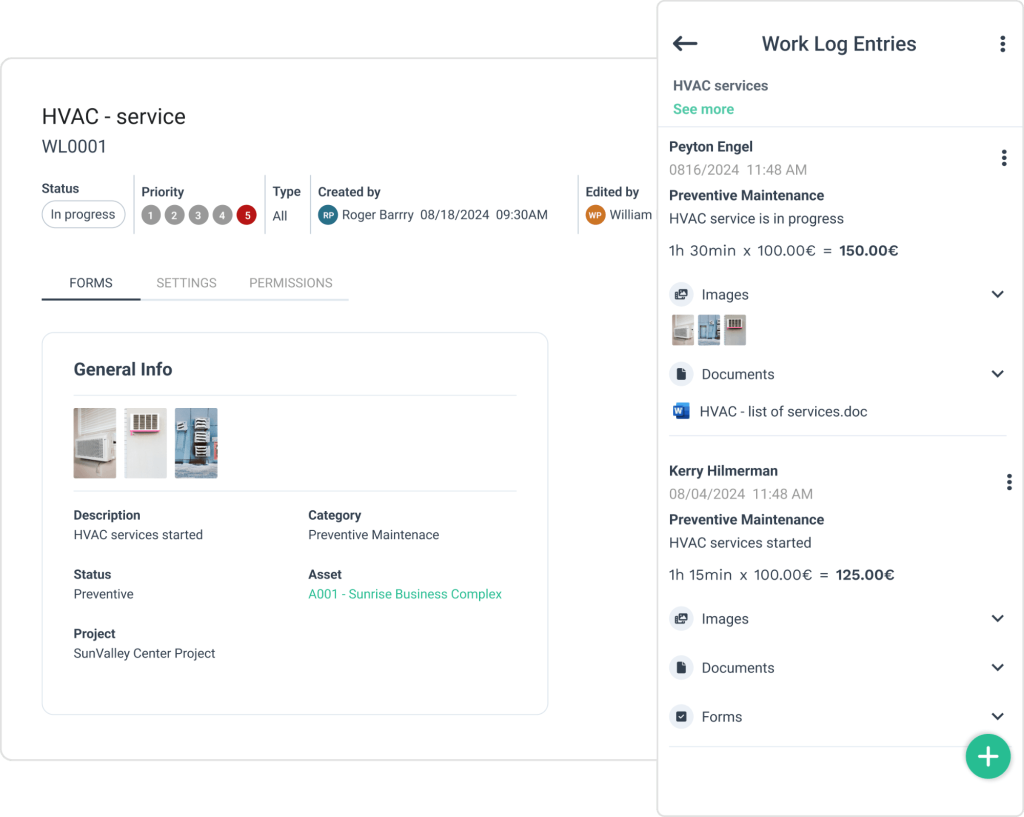
This means that, instead of writing vague notes, crews can quickly select failure codes, log parts used, and document findings in a format that is searchable and reportable.
However, as Ricky Smith, CMRP and VP of World Class Maintenance, points out, these benefits can only materialize if teams consistently input data into CMMS or enterprise asset management (EAM) systems.
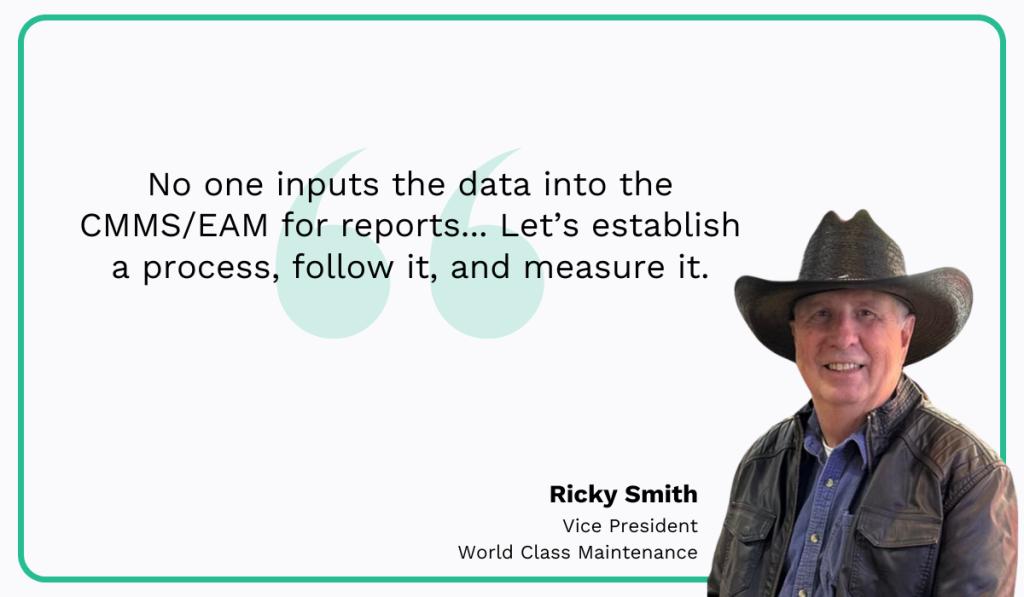
Establishing a digital documentation process only for teams to revert to handwritten notes or familiar spreadsheets defeats the purpose entirely.
Without consistent adoption, even the best CMMS becomes an expensive tool that sits unused while critical maintenance data continues to slip through the cracks.
Conclusion
That covers the five most common maintenance mistakes we see in industrial facilities.
We looked at the risks of relying solely on reactive maintenance rather than preventive maintenance, the importance of proper training and lockout/tagout procedures, and why good documentation matters more than most teams realize.
Take these ideas back to your team, review your current processes, and start closing the gaps.
After all, even small changes can lead to fewer breakdowns and a safer workplace.