


Get a Free WorkTrek Demo
Let's show you how WorkTrek can help you optimize your maintenance operation.
Try for freeA practical guide for maintenance managers, planners, and operations leads
Key Takeaways
- Wrench time across most facilities sits at 25- 35%. That means technicians spend less than a third of their shift on hands-on maintenance.
- Proper planning with well-written tasks can raise wrench time to 55–65%, effectively adding 35–57% more productive output without increasing headcount (Prometheus Group).
- Unplanned maintenance costs up to 5x more than planned work — making effective task writing one of the highest-ROI improvements a maintenance department can make.
Most maintenance teams are busier than they are productive.
Technicians show up, get assigned a job, and then spend the next 30 minutes hunting for the right parts. They also spend time decoding a vague work order note or figuring out whether “inspect motor” means a full teardown or a quick visual.
The wrench doesn’t come out until they’ve already lost a chunk of the day.
That’s a task-writing problem that can reduce your equipment availability.
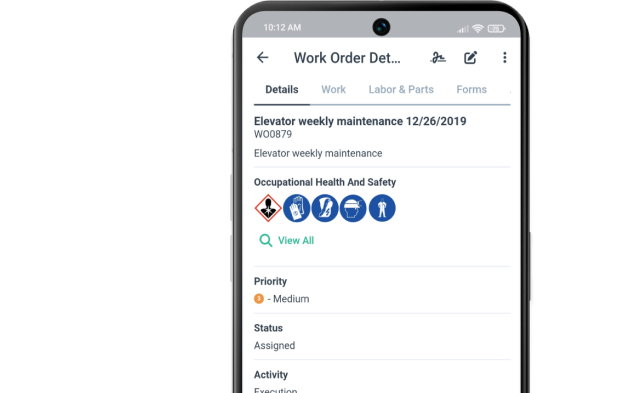
A well-constructed maintenance task tells a technician exactly what to do, what tools to bring, how long it should take, and what success looks like to help improve equipment performance.
Done right, it’s one of the cheapest improvements a maintenance department can make, and one of the highest-impact.
This article walks through what makes a maintenance task effective, how to write one, and how a computerized maintenance management system (CMMS) like WorkTrekcan make it systematic across your entire maintenance program.
What Is a Maintenance Task?
A maintenance task, such as preventive maintenance, is a discrete, defined unit of work within a larger maintenance plan. It is usually part of a larger preventive maintenance program and describes a specific action or sequence of actions that a technician must perform to inspect, repair, replace, or service a piece of equipment.
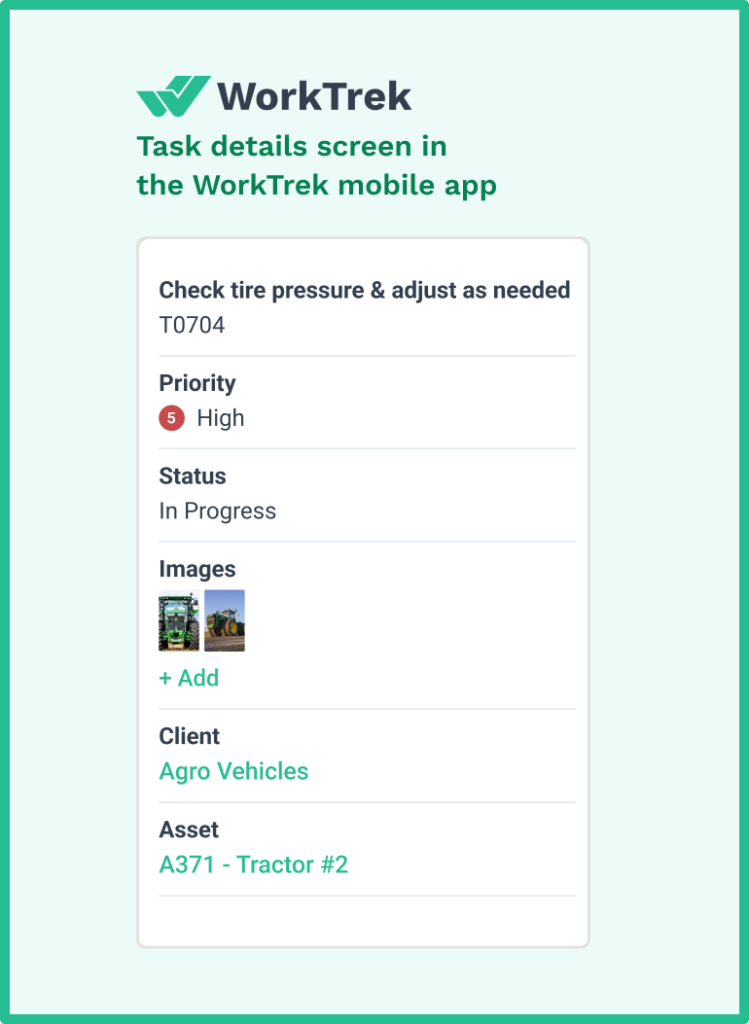
Tasks aren’t just notes. They’re instructions that should be part of your preventive maintenance plan. A well-written task tells the technician not just what to do, but how to do it, how long it should take, and what qualifications are needed to complete it correctly.
In the context of preventive maintenance tasks, they are typically grouped under a work order and assigned on a recurring schedule. These maintenance activities include monthly lubrication, quarterly inspection, and annual calibration. Each task is a building block of the broader maintenance schedule.
When you’re running a reactive shop, task quality barely matters. Technicians go to broken equipment and figure it out.
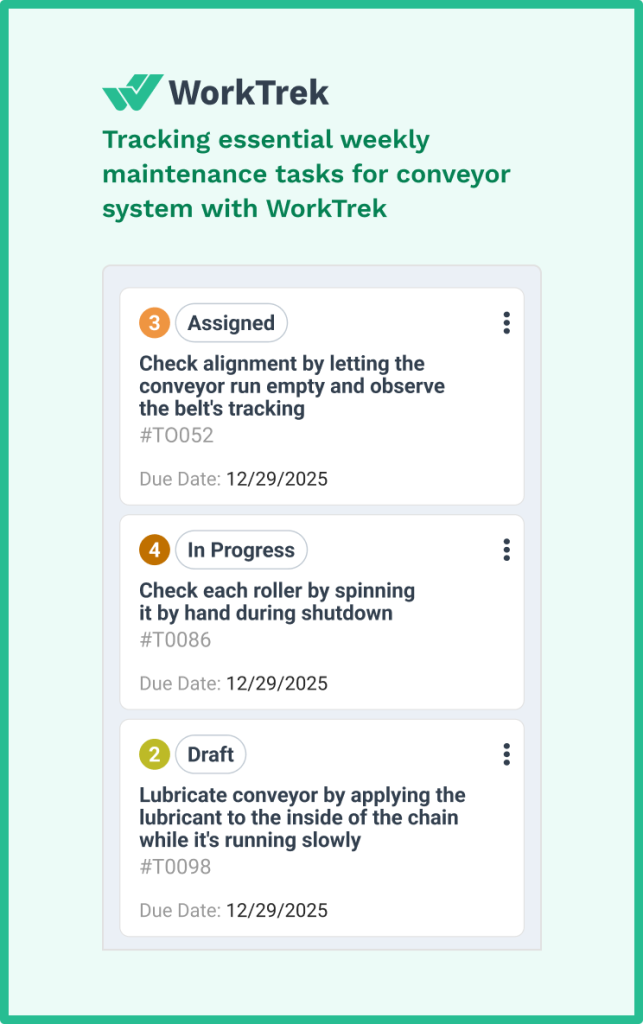
But as teams shift toward a proactive maintenance strategy, well-defined tasks become the foundation of the entire system.
Why Effective Task Writing Matters More Than You Think
Here’s a number worth sitting with: across most industries, the average maintenance technician spends only 25-35% of their shift doing actual hands-on maintenance work.
That’s the finding from DuPont’s landmark benchmarking study covering 3,500 sites across North America, Europe, and Japan. During a typical 10-hour shift, your technician is doing maybe 2–3 hours of actual maintenance.
Prometheus Group reports that organizations following best practices in planning and scheduling, which start with writing clear tasks, can reduce wrench time to 60-65%. Going from 35% to 55% wrench time translates into a 57% increase in productive output with the same workforce.
The cost argument is just as stark. Unplanned maintenance costs roughly five times as much as planned work. Poorly written tasks that create confusion, callbacks, or rework push more work into the unplanned column, even on supposedly scheduled jobs.
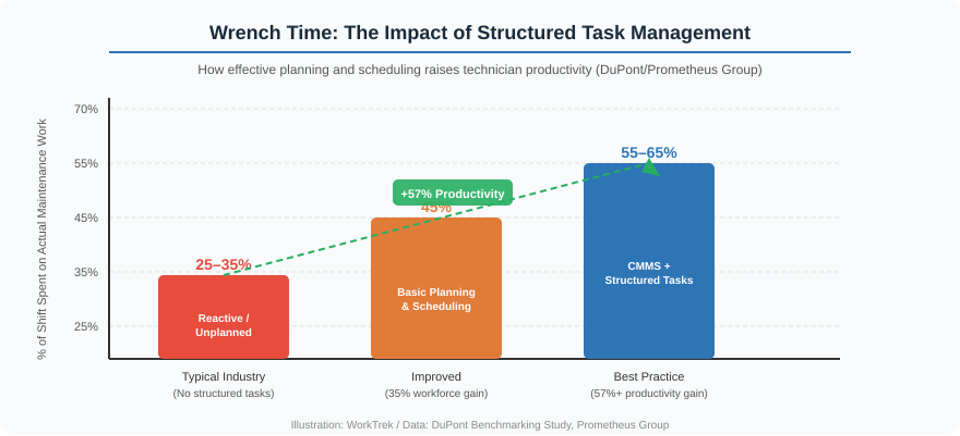
Illustration: WorkTrek / Data: DuPont Benchmarking Study, Prometheus Group
Clear tasks reduce unplanned downtime, cut maintenance costs, and give maintenance managers the performance data they need to make better decisions. The ROI is not theoretical — it’s structural.
The 6 Components of an Effective Maintenance Task
Before you write a single task, understand what it should contain. Six elements separate a functional task from a note on a work order.
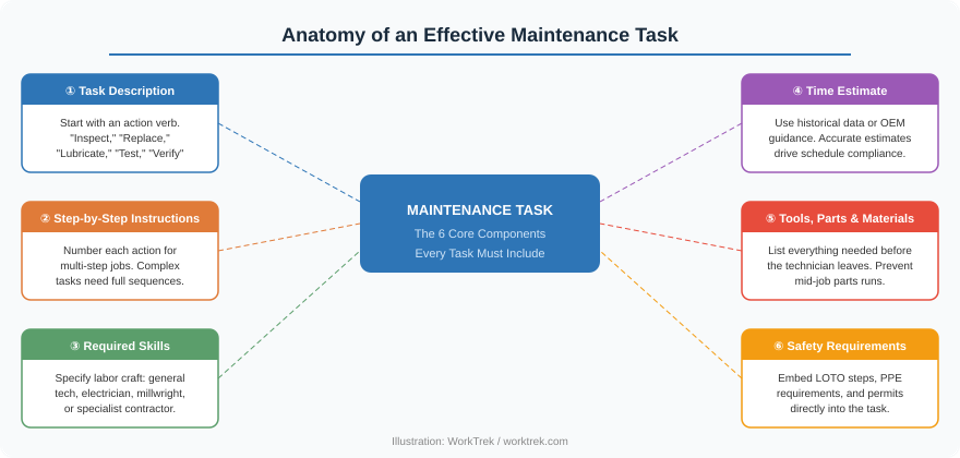
Illustration: WorkTrek
1. A clear task description. Start with an action verb. “Inspect,” “Replace,” “Lubricate,” “Test,” “Verify.” Avoid vague nouns like “motor service” or “conveyor check.” The description should tell any qualified technician, at a glance, exactly what the action is.
2. Step-by-step instructions. For multi-step tasks, break the process into numbered steps. Lockout/tagout procedures, fluid sampling sequences, alignment checks. These need specific instructions, not just a title. Single-step tasks can be simpler, but complex jobs need full detail.
3. Required skills and labor craft. Specify whether the task requires a general maintenance technician, an electrician, a millwright, or a specialized contractor. Assigning the wrong skill level to a task is one of the most common causes of rework and safety incidents.
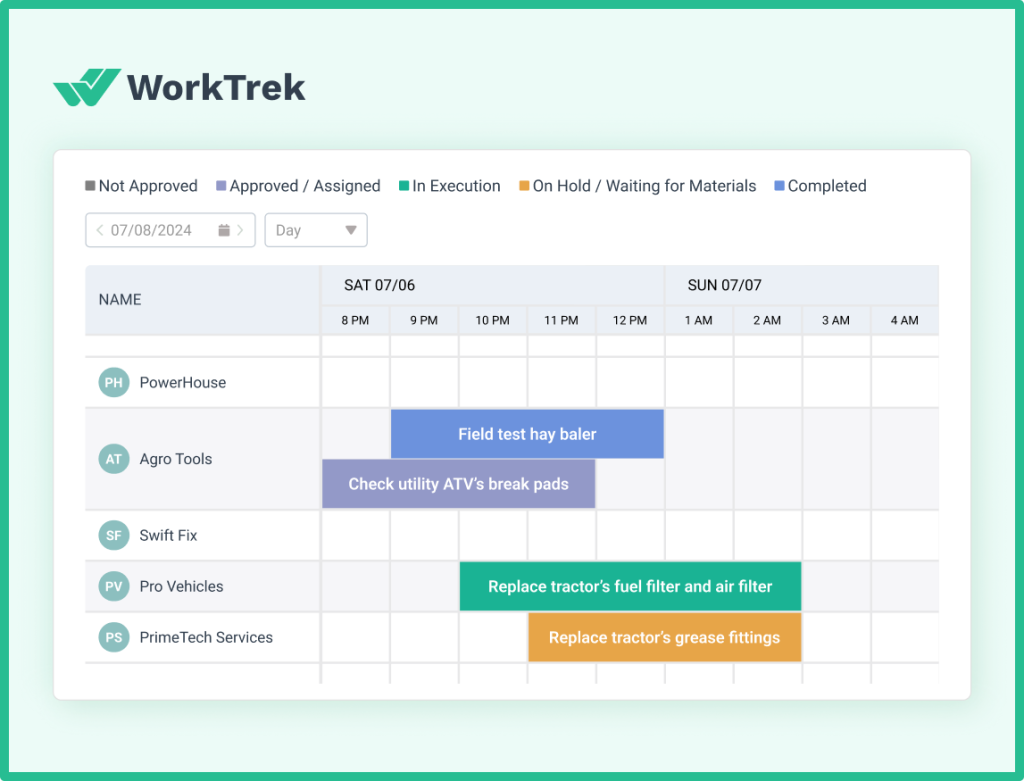
4. Estimated completion time. Time estimates keep technicians on track and give schedulers what they need to build a realistic maintenance schedule. Use historical data when available. For new tasks, reference similar completed work or OEM guidance.
5. Tools, parts, and materials. List the specific tools, spare parts, and consumables required before the technician leaves for the job. Nothing kills wrench time faster than a mid-task parts run.
6. Safety precautions and standard operating procedures. Any required lockout/tagout steps, PPE requirements, or safety permits should be embedded in the task, not assumed. This is especially true for regulated industries or critical assets.
How to Write a Maintenance Task: Step by Step
The steps below describe how to write an effective maintenance task in the context of planned preventive maintenance, where tasks are most commonly used.
Step 1: Identify the Maintenance Need
Start by defining what the task is trying to accomplish. Is this an inspection to catch early signs of wear? A scheduled part replacement based on time intervals or meter readings? A compliance-driven check required by regulation?
Align task type with the asset’s maintenance plan and manufacturer recommendations. Don’t skip this step. Vague problem definitions produce vague tasks.
Step 2: Define the Action Clearly
Once you know what needs to happen, write the task action starting with a verb. “Replace the V-belt on Conveyor 4.” “Lubricate all grease fittings on the north compressor housing.” “Test emergency stop function on Press Line 2.”
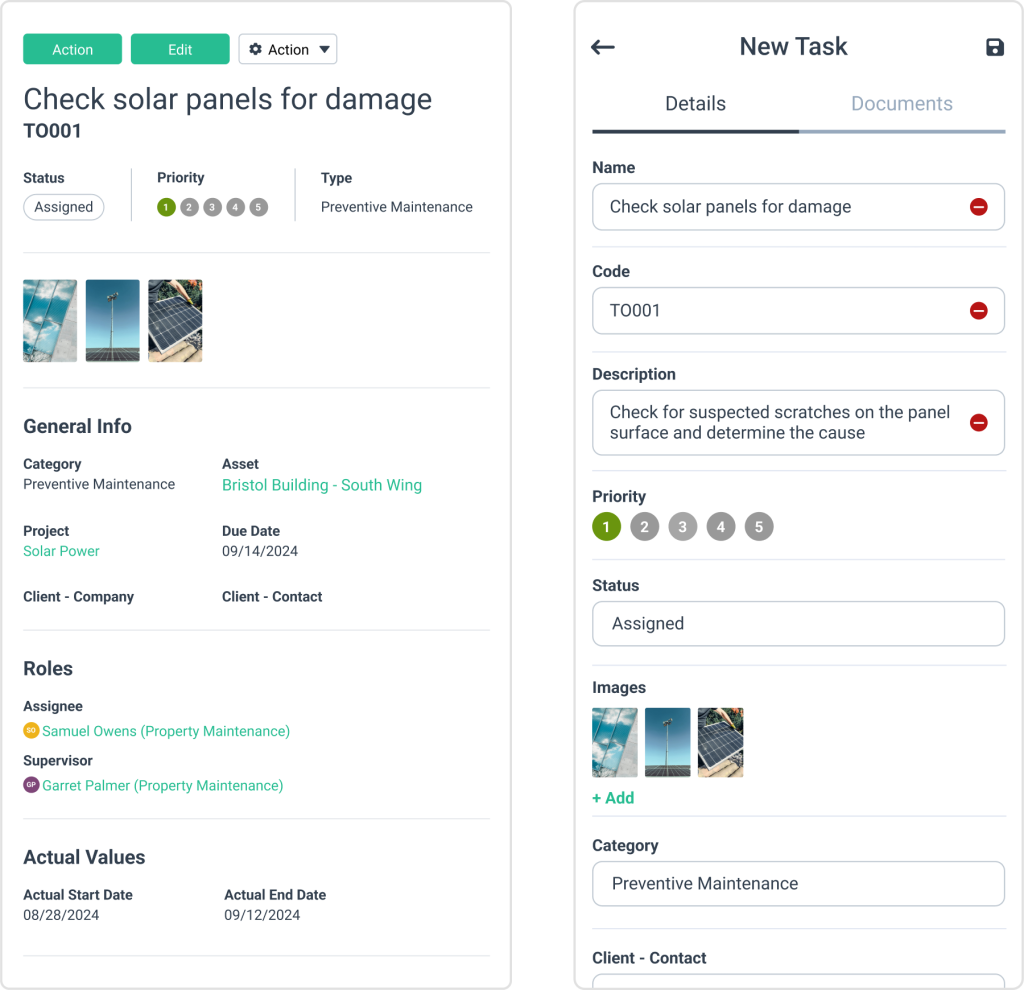
If the action is straightforward and single-step, keep it brief. If it’s multi-step, like a bearing replacement that involves heating, pressing, and shimming, break it into sequential numbered steps. They’re faster to follow under pressure and easier to sign off on.
Step 3: Specify Required Resources
List everything the technician needs before they walk out the door: tools, parts, PPE, permits, and technical documentation. Cross-reference your parts inventory to confirm availability. Research shows that maintenance teams can spend up to 20% of their time searching for tools or parts if resource planning isn’t built into the task itself.
Building resource lists into individual tasks is how you reclaim that time.
Step 4: Assign the Right Skills
Match each task to the appropriate skill level. A maintenance technician with general mechanical skills can handle most routine maintenance. But an electrical fault diagnosis or a hydraulic system rebuild belongs with a specialist.
Mismatched assignments create two problems: slower completion times and increased error rates. Senior technicians get pulled into tasks they’re overqualified for. Junior technicians get assigned jobs that exceed their qualifications. Both scenarios cost time and introduce risk.
Step 5: Set Time Estimates
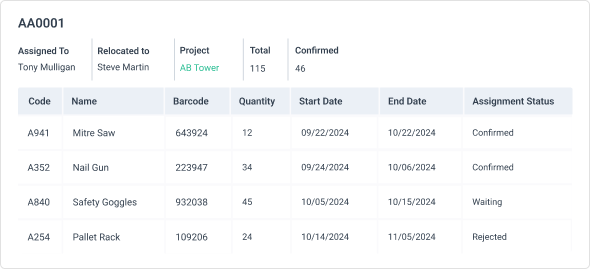
Realistic time estimates are among the most undervalued aspects of a maintenance task. They give schedulers the data to build workable plans and help technicians pace their day.
Use historical data where possible. If a similar task was completed five times last year and averaged 45 minutes, that’s your starting point. For new tasks, OEM documentation often includes estimates of maintenance time. For tasks with no reference point, use an educated estimate and refine it as performance data accumulates.
Don’t inflate estimates to build in a buffer. That approach invites Parkinson’s Law, which says work expands to fill available time. Accurate estimates paired with accountability produce better results.
Step 6: Embed Safety Requirements
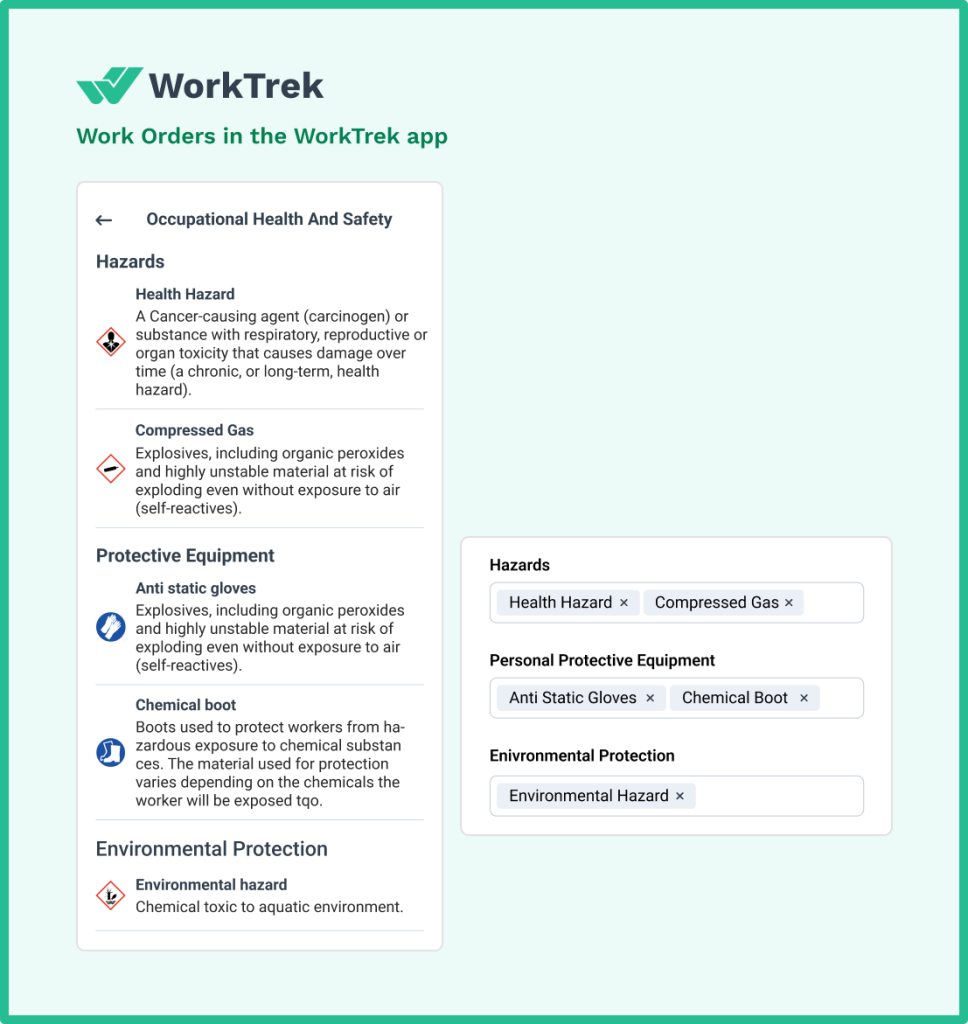
Safety steps don’t belong in a separate document that technicians may or may not carry. They belong in the task itself.
For any task involving energy isolation, rotating equipment, confined spaces, or chemical exposure, include the specific LOTO procedure, PPE requirements, and permit requirements directly in the task instructions. Having safety steps documented in the task record also creates an audit trail and demonstrates adherence to standard operating procedures.
Step 7: Review and Validate
After writing the task, put it down and come back to it. Read it from the technician’s perspective. Would a new hire understand exactly what to do? Would an experienced tech have everything they need without making a phone call?
Better yet, have a senior technician review new tasks before they go live. Peer review catches ambiguous instructions, missing resources, and outdated procedures that a desk-based planner might overlook.
Build a review cycle into your maintenance program. Tasks written three years ago may no longer reflect current equipment configurations, upgraded procedures, or revised safety requirements.
Common Mistakes That Undermine Task Effectiveness
Even experienced maintenance planners fall into the same traps. The most common ones to watch for:
| Mistake | Why It Costs You |
| Vague action descriptions | “Service the pump” is a category, not a task. Technicians shouldn’t guess whether that means inspecting seals, flushing fluid, or replacing bearings. |
| Missing resource lists | Forces technicians to improvise mid-job. Results in delays, substitute parts, or incomplete work. |
| No time estimates | Schedulers can’t build realistic plans. Teams end up over- or under-loading technicians, and schedule compliance suffers. |
| Over-complexity on routine tasks | Not every task needs a full procedure. Routine lubrication checks can be brief. Level of detail should match complexity and risk. |
| Ignoring historical data | If the same bearing fails on a three-month cycle, task frequency should reflect that. Writing tasks without reviewing equipment failure history wastes your most valuable input. |
| One-size-fits-all instructions | Different skill levels need different detail. Mixed-experience teams need enough detail for junior technicians while not over-explaining to veterans. |
Vague action descriptions: “Service the pump” is a category, not a task. Technicians shouldn’t guess whether that means inspecting seals, flushing fluid, or replacing bearings.
Missing resource lists: Forces technicians to improvise mid-job. Results in delays, substitute parts, or incomplete work.
No time estimates: Schedulers can’t build realistic plans. Teams end up over- or under-loading technicians, and schedule compliance suffers.
Over-complexity on routine tasks: Not every task needs a full procedure. Routine lubrication checks can be brief. The level of detail should match the complexity and risk.
Ignoring historical data: If the same bearing fails on a three-month cycle, task frequency should reflect that. Writing tasks without reviewing equipment failure history wastes your most valuable input.
One-size-fits-all instructions. Different skill levels need different detail. Mixed-experience teams need enough detail for junior technicians while not over-explaining to veterans.
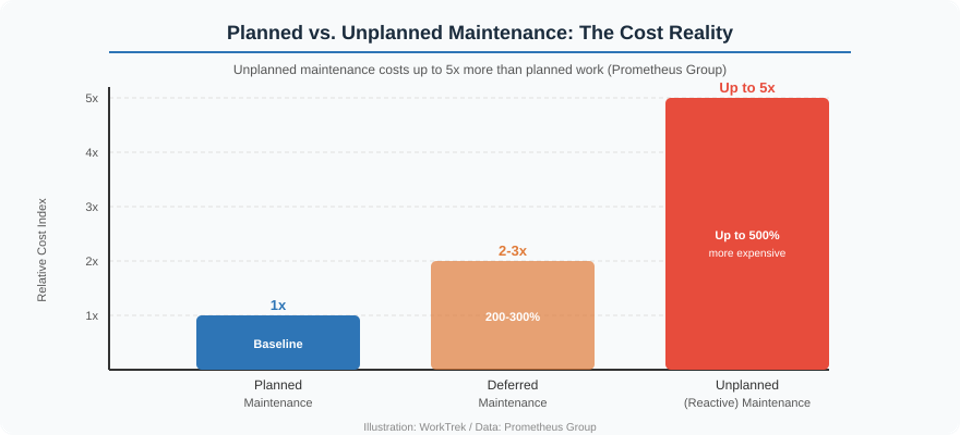
Illustration: WorkTrek / Data: Prometheus Group
How a CMMS Turns Task Writing Into a System
Writing a good task once is doable. Writing hundreds of them consistently, keeping them up to date, and routing the right ones to the right technicians on the right schedule requires a system.
A computerized maintenance management system (CMMS) provides maintenance teams with the infrastructure to create, store, assign, and track maintenance tasks at scale. A good one doesn’t just digitize paperwork. It makes task management a core part of the maintenance department’s operations.
Why WorkTrek Is the Right Tool
WorkTrek is built for exactly this kind of structured, high-volume maintenance work. Here’s what it handles:
Centralized task library. WorkTrek lets you build a library of standardized maintenance tasks linked to specific assets. Once created, tasks can be reused across work orders, updated in one place and reflected everywhere, and versioned when procedures change.
Automated preventive maintenance scheduling. WorkTrek’s preventive maintenance feature runs on time-based or meter-based triggers. Tasks are assigned automatically based on your defined intervals, with no manual calendar management required.
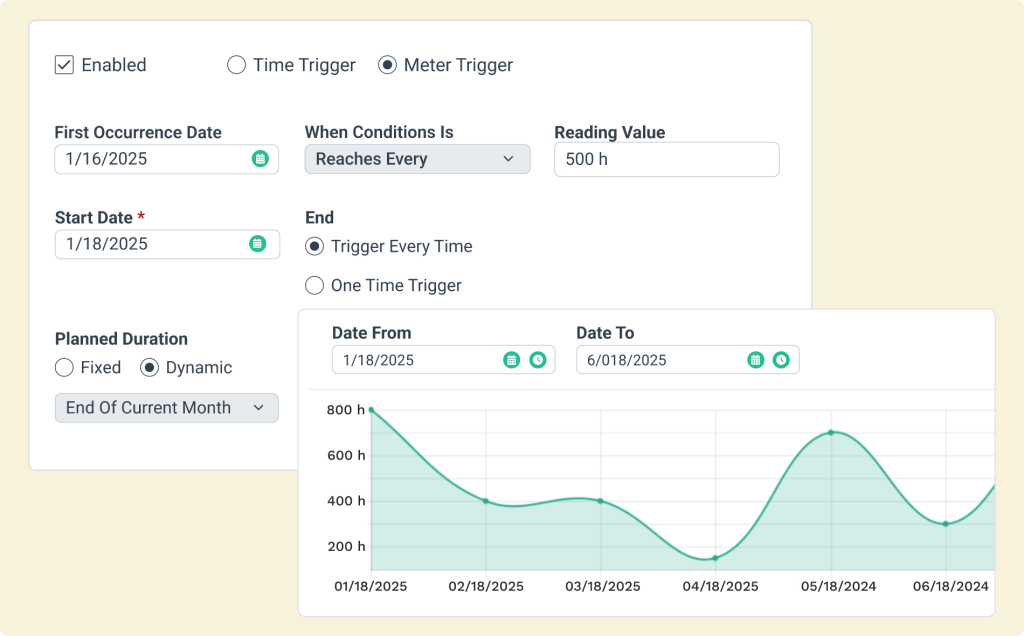
Skill-based task assignment. Assign tasks to technicians based on documented skill sets. Schedulers can see technician availability and current workload in real time, enabling smarter resource allocation across the entire maintenance team.
Real-time data capture. Technicians complete tasks on mobile devices, capturing completion status, time logged, parts used, and any anomalies found. That performance data flows back into asset records, building the historical database you need to continuously improve task estimates and intervals.
Parts and inventory integration. WorkTrek’s parts and inventory management connect directly to work orders. When a task specifies required parts, the system checks availability before scheduling the job. This eliminates mid-task parts runs and the productivity loss that comes with them.
Work order tracking and reporting. Every completed task generates a record. Over time, that data reveals patterns: assets that require frequent attention, tasks that consistently run over time, and where technician skill gaps exist. That’s the performance data you need to make informed decisions about your overall maintenance strategy and planned maintenance.
Teams that manage maintenance tasks through a CMMS don’t just complete more work — they complete better work. Structured task management reduces the variability that turns scheduled maintenance into unplanned downtime.
Conclusion
The test of any maintenance task isn’t how it reads in a planning meeting. It’s how it performs in the field at 6 AM when a technician needs to get a line back online.
Effective task writing is a discipline that can be learned.
It requires maintenance planners who understand both the technical requirements of the work and the operational realities of the technicians performing it. It requires systems that make task creation, storage, and assignment consistent rather than improvised. And it requires a feedback loop that uses completed task data to improve future plans.
Most maintenance departments don’t need a complete overhaul to get there. Start with your highest-frequency, highest-criticality tasks. Rewrite them with the six components outlined here. Build them into your CMMS. Measure the difference in time-to-complete and rework rate.
The improvement compounds quickly. Better tasks mean better schedules. Better schedules mean more planned work. More planned work means fewer equipment failures and lower maintenance costs.
The whole preventive maintenance program becomes more effective when the individual tasks that hold it together are written to a higher standard. That’s not a marginal gain. That’s a structural improvement to how your maintenance operations run.