


Get a Free WorkTrek Demo
Let's show you how WorkTrek can help you optimize your maintenance operation.
Try for freeKey Takeaways
- Worker deaths in America have dropped from 38 per day in 1970 to 15 per day in 2023 — largely due to OSHA enforcement.
- Lockout/tagout (LOTO) is consistently among the top three most-cited OSHA violations in maintenance operations.
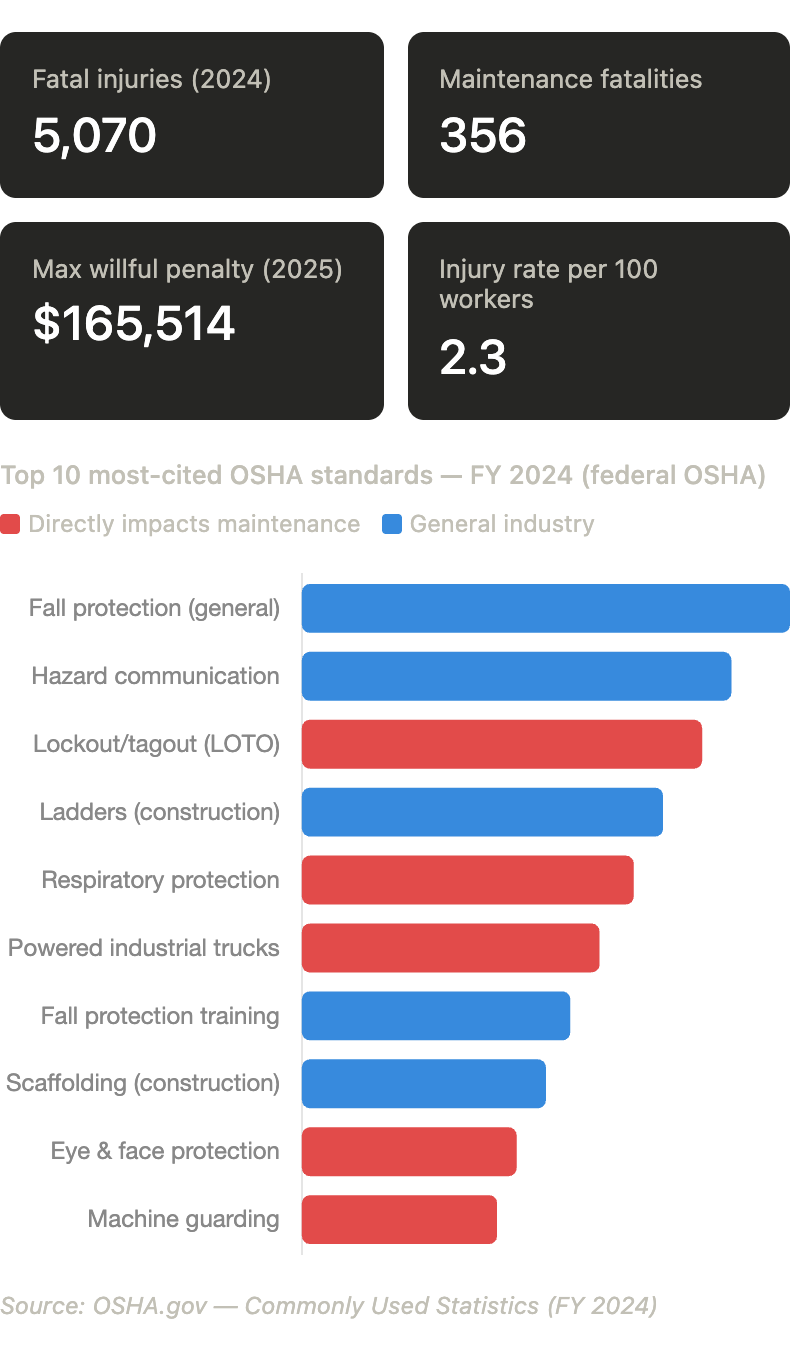
- OSHA’s maximum penalty for willful or repeated violations reached $165,514 per violation in 2025.
- A CMMS like WorkTrek helps maintenance teams document compliance, schedule safety tasks, and stay inspection-ready year-round.
Maintenance workers face real hazards every day.
They work around energized equipment, elevated surfaces, hazardous chemicals, and moving machinery.
Without the right rules in place, these environments can quickly become life-threatening.
That is why the Occupational Safety and Health Administration (OSHA) exists.
OSHA regulations establish the legal framework that protects maintenance workers across every industry in the United States. For maintenance managers, understanding these regulations is not optional. It is a core part of the job.
This article provides a practical overview of the key OSHA standards that affect maintenance operations, what inspections look like, and how the right tools can help keep your team compliant.
What Is OSHA?
The Occupational Safety and Health Administration (OSHA) is a United States government agency created by Congress in 1970 under the Occupational Safety and Health Act. Its mission is to assure safe and healthful working conditions for workers across the country.
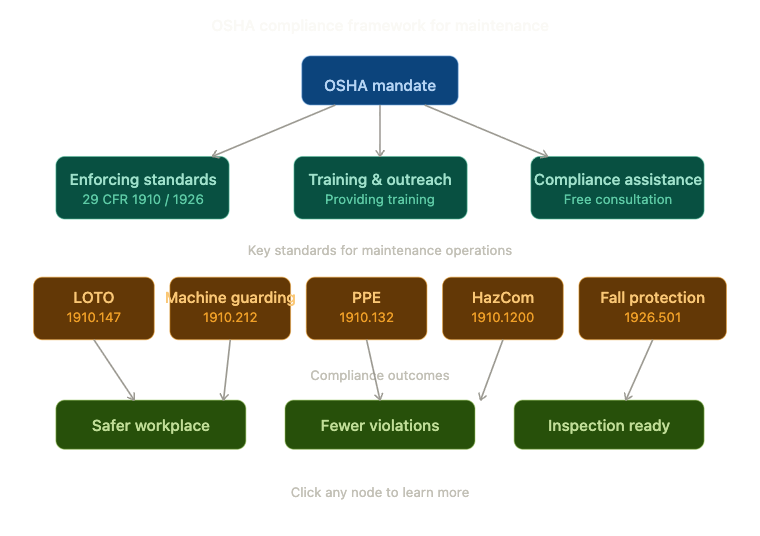
OSHA does this in three main ways:
- Setting and enforcing standards
- Providing training, outreach, and education
- Offering compliance assistance to employers
OSHA covers most private-sector employers and their workers, along with some public-sector employers.
It operates through a network of federal and state offices, with 10 regional offices and approximately 85 area offices nationwide.
State plans are OSHA-approved workplace safety and health programs run by individual states. These state plans must be at least as effective as federal OSHA standards.
Currently, 22 states operate their own full state plans that cover both private- and public-sector workers.
OSHA by the Numbers
- Worker fatalities: 38 per day in 1970 → 15 per day in 2023
- Injury/illness rate: 10.9 per 100 workers in 1972 → 2.4 per 100 in 2023
- Fatal work injuries in 2024: 5,070 (down 4.0% from 2023)
Source: OSHA Commonly Used Statistics / U.S. Bureau of Labor Statistics (2025)
Why OSHA Regulations Matter for Maintenance Workers
Maintenance workers are among the most at-risk employees in any workplace. They operate and repair equipment on a daily basis, often under time pressure and in environments that other employees rarely enter.
According to the U.S. Bureau of Labor Statistics, fatal work injuries among building and grounds cleaning and maintenance workers increased to 356 in 2024 alone.
That is a significant number. And it reflects a reality that maintenance managers live with every day.
OSHA compliance is not just about avoiding fines. It is about creating a safe and healthful workplace where workers can do their jobs without fear of serious injuries or death.
The data is pretty clear: when OSHA standards are properly enforced, workplaces get safer.
The question for most organizations is whether they are doing enough to comply.
How OSHA Standards Are Created and Enforced
Developing OSHA standards is a structured, multi-step process. OSHA can initiate rulemaking on its own or in response to petitions from third parties, employers, labor organizations, or government bodies.
The process typically follows these steps:
- OSHA collects information through public hearings, symposiums, and surveys
- A proposal is published in the Federal Register for public comment
- OSHA reviews feedback and revises the proposed standard
- A final rule is published and becomes enforceable
Once a standard becomes enforceable, OSHA has the authority to conduct inspections, issue citations, and propose penalties for violations.
OSHA regulations enforced under the general industry fall primarily under 29 CFR Part 1910.
Construction standards fall under 29 CFR Part 1926. Both sets of regulations directly impact maintenance operations depending on the industry and work environment.
Key OSHA Standards That Impact Maintenance Operations
Several specific OSHA standards apply directly to maintenance workers. Knowing which ones matter to your operation is the first step toward building a compliant safety program.
| OSHA Standard | CFR Reference | Key Requirement | Who It Affects |
|---|---|---|---|
| Control of Hazardous Energy (LOTO) | 29 CFR 1910.147 | Lockout/tagout procedures before servicing equipment | All maintenance technicians |
| Machine Guarding | 29 CFR 1910.212 | Guards on all machines with moving parts | Operators and maintenance staff |
| Personal Protective Equipment (PPE) | 29 CFR 1910.132 | PPE must be provided, used, and maintained | All workers in hazard areas |
| Hazard Communication | 29 CFR 1910.1200 | Chemical labels, SDS, and employee training | Anyone handling chemicals |
| Fall Protection | 29 CFR 1926.501 | Protection at 4–6 feet, depending on industry | Workers on elevated surfaces |
| Respiratory Protection | 29 CFR 1910.134 | Respirators when air quality is hazardous | Maintenance and operations staff |
| Electrical Safety | 29 CFR 1910.303 | Safe work practices around energized circuits | Electrical maintenance workers |
Source: OSHA.gov
1. Control of Hazardous Energy (Lockout/Tagout)
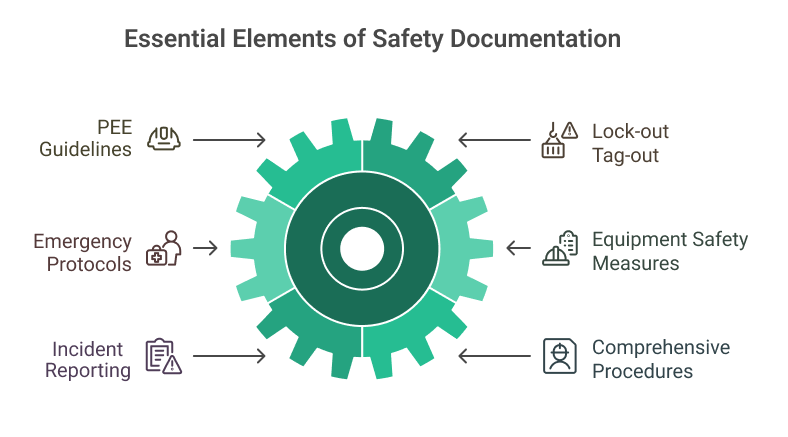
Lockout/tagout (LOTO) is one of the most critical OSHA standards for maintenance teams. It falls under 29 CFR 1910.147 and governs how workers control hazardous energy during the servicing and maintenance of machines and equipment.
Before any repair, adjustment, or maintenance work begins, workers must isolate and lock out energy sources. This includes electrical, hydraulic, pneumatic, mechanical, and thermal energy.
LOTO procedures must be written, equipment-specific, and followed exactly. Workers who service equipment must apply their own lock. No one else can remove it.
LOTO violations are consistently among the top 10 most frequently cited OSHA standards. According to OSHA’s 2024 violation data, Control of Hazardous Energy ranked third in the number of citations issued that year. Violations in this area can lead to amputations, electrocutions, and fatalities.
Maintenance managers must ensure that all technicians receive LOTO training before operating or servicing equipment. Providing training once is not enough. Periodic retraining is required when procedures change or when an employee demonstrates inadequate knowledge.
2. Machine Guarding
Machine guarding falls under 29 CFR 1910.212 and requires that all machines with moving parts have adequate guards to protect operators and other employees from contact with those parts.
This directly impacts maintenance operations in two ways.
First, maintenance teams are responsible for keeping guards in place and in proper working condition.
Second, whenever guards are removed for servicing, proper safety procedures must be followed before the machinery is restarted.
Removing a guard without proper lockout procedures is a serious hazard. It is also one of the most common violations cited during OSHA inspections in manufacturing environments.
For organizations running plant maintenance operations, ensuring guards are included in preventive maintenance checklists is a simple but highly effective compliance practice.
3. Personal Protective Equipment (PPE)
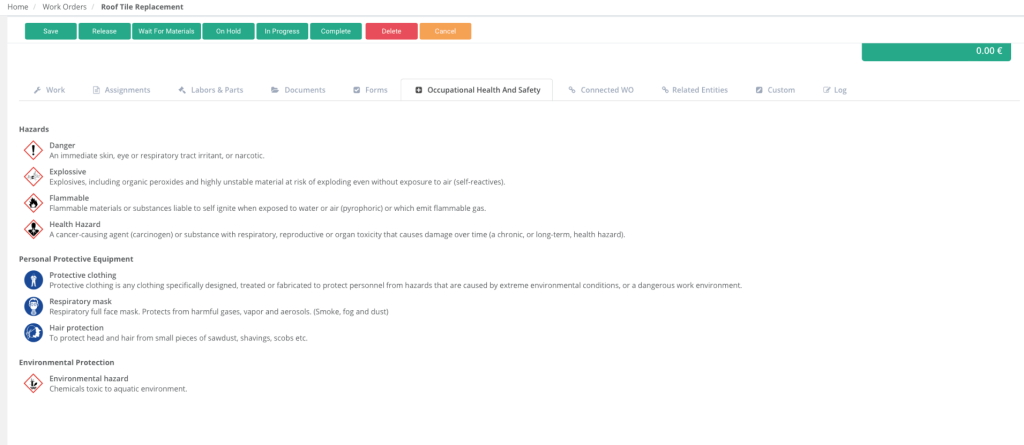
OSHA requires that personal protective equipment be provided, used, and maintained in a sanitary and reliable condition wherever workplace hazards are present. This falls under 29 CFR 1910.132 for general industry.
Protective equipment must be appropriate for the specific hazard. That means conducting a hazard assessment to determine what PPE is needed for each task.
Common PPE in maintenance environments includes:
- Safety glasses and face shields for grinding and cutting operations
- Hard hats in areas with overhead hazards
- Steel-toed boots for areas with falling or rolling objects
- Chemical-resistant gloves for handling hazardous substances
- Hearing protection in high-noise environments
- Respirators when airborne contaminants are present
The responsibility for purchasing and maintaining PPE falls on the employer. Workers must be trained on when PPE is required, how to use it correctly, and how to care for it. PPE training must be completed before work begins.
4. Hazard Communication (HazCom)
29 CFR 1910.1200 requires employers to identify and communicate information about chemical hazards in the workplace. This standard requires three key elements:
- Chemical labels on all containers
- Safety Data Sheets (SDS) are accessible to workers at all times
- Employee training on chemical hazards and safe handling practices
Maintenance teams frequently work with lubricants, solvents, cleaning agents, and other chemical substances. These workers must understand the hazards they are dealing with before they begin any work involving those materials.
Hazard Communication is the second most frequently cited OSHA standard in general industry. It is one of the easiest compliance areas to manage with the right documentation systems in place.
5. Fall Protection
Falls are the leading cause of fatalities in construction. They can also be a significant source of serious injuries across all industries.
OSHA requires fall protection at heights of 4 feet in general industry workplaces, 5 feet in shipyards, and 6 feet in the construction industry.
Maintenance workers routinely access elevated surfaces, such as rooftops, tanks, platforms, towers, and ladders. Each of these situations requires an assessment of fall hazards and the appropriate protective measures.
Fall protection can take the form of guardrails, safety nets, personal fall arrest systems, or positioning systems.
The method used depends on the specific work environment and task being performed.
Maintenance managers must ensure that workers receive fall-protection training specific to the environments they work in, and that the appropriate equipment is available and maintained in safe working condition.
OSHA Inspections and Compliance Audits
OSHA conducts workplace inspections to enforce its standards. These inspections can be scheduled or unannounced, and they can be triggered by several different situations.
| Inspection Type | What Triggers It |
|---|---|
| Imminent Danger | A condition that could cause immediate serious injury or death |
| Severe Injury or Illness | Employee fatality, hospitalization, amputation, or loss of eye |
| Worker Complaint | A worker or representative files a complaint about a hazard |
| Referral | Another agency or individual reports a potential hazard |
| Follow-up | Verification that a previously cited violation has been corrected |
| Programmed (Planned) | Targeting high-hazard industries based on injury rate data |
Source: OSHA.gov
During an inspection, OSHA compliance officers have the authority to enter the workplace, review records, interview employees, and examine equipment and procedures.
Employers and their representatives have the right to accompany the inspector during the walkthrough.
If violations are found, OSHA can issue citations.
At that point employers have 15 working days to contest a citation after receiving it.
Failing to contest a citation and receiving a subsequent one for a similar hazard can result in it being classified as a willful or repeated violation, which carries significantly higher penalties.
OSHA Violation Categories and Penalties
As of January 15, 2025, OSHA’s maximum civil penalties are as follows, per OSHA’s official penalty schedule:
| Violation Type | Description | Maximum Penalty (2025) |
|---|---|---|
| Other-Than-Serious | A violation that could affect safety but is unlikely to cause death or serious harm | $16,550 per violation |
| Serious | A hazard that could cause serious injury or death that the employer knew about or should have known about | $16,550 per violation |
| Willful | The employer knowingly violated the law or showed plain indifference to employee safety | $165,514 per violation |
| Repeated | A violation substantially similar to one cited in the prior three years | $165,514 per violation |
| Failure to Abate | The employer failed to correct a previously cited violation by the deadline | $16,550 per day |
Source: OSHA.gov/penalties (2025)
These numbers can aq 2`add up quickly.
A single inspection that uncovers multiple serious violations could result in penalties that far exceed $100,000. For willful violations, the financial consequences can be devastating for any organization.
Beyond fines, OSHA violations can trigger increased inspection frequency, reputational damage, and civil liability if an employee is injured or killed.
Building an OSHA Compliance Program for Maintenance
Compliance does not happen by accident. It requires a structured approach that covers people, processes, and documentation.
The core elements of an effective OSHA compliance program for maintenance teams include:
- Management Commitment: Leadership must set clear expectations and provide resources for safety compliance. Without top-level support, safety programs rarely stick.
- Hazard Identification: Conduct regular worksite surveys to identify and document workplace hazards before they cause incidents. Include maintenance-specific risks such as electrical hazards, chemical exposure, and confined spaces.
- Written Procedures: Every high-risk maintenance task should have a documented procedure. LOTO procedures, in particular, must be equipment-specific and written in a way that workers can easily follow.
- Training: All maintenance workers must receive initial training before performing hazardous tasks, and refresher training whenever procedures change. Training records must be maintained.
- PPE Program: Conduct a formal hazard assessment, select appropriate PPE, and ensure workers are trained on proper use and maintenance.
- Inspection Readiness: Maintain organized records of training, equipment inspections, and corrective actions. This documentation is your first line of defense during an OSHA inspection.
- Incident Investigation: When incidents or near-misses occur, investigate the root cause and implement corrective actions. Document everything.
Pro Tip: OSHA offers free on-site consultation services for small businesses through its On-Site Consultation Program. These visits are separate from enforcement inspections and help employers identify hazards and improve safety programs without the threat of citations or penalties.
How a CMMS Helps With OSHA Compliance
Managing OSHA compliance manually is difficult. Spreadsheets get outdated. Paper records get lost. Training logs fall through the cracks. A Computerized Maintenance Management System (CMMS) changes that equation.
A CMMS gives maintenance managers a centralized platform to track every task, every inspection, and every piece of documentation needed to demonstrate OSHA compliance.
Here is how a CMMS directly supports OSHA compliance in maintenance operations:
| OSHA Requirement | How a CMMS Helps |
|---|---|
| LOTO Procedures | Store equipment-specific LOTO procedures as digital work order checklists. Require technician sign-off before and after service tasks. |
| Training Documentation | Track training completion by employee, task type, and equipment. Set automated reminders for retraining deadlines. |
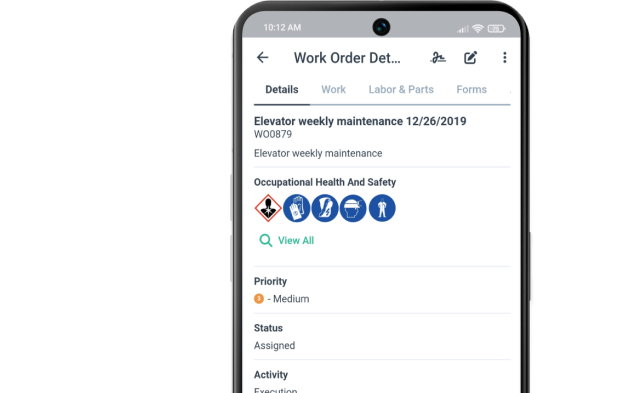
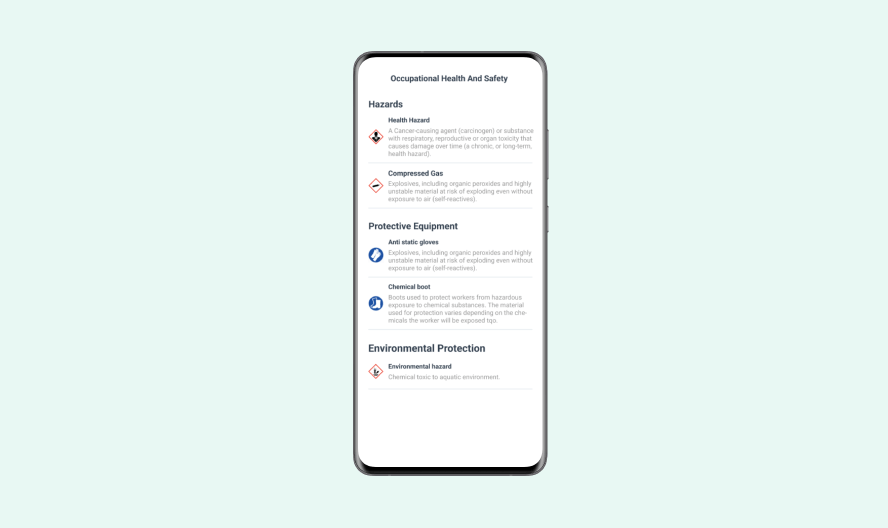
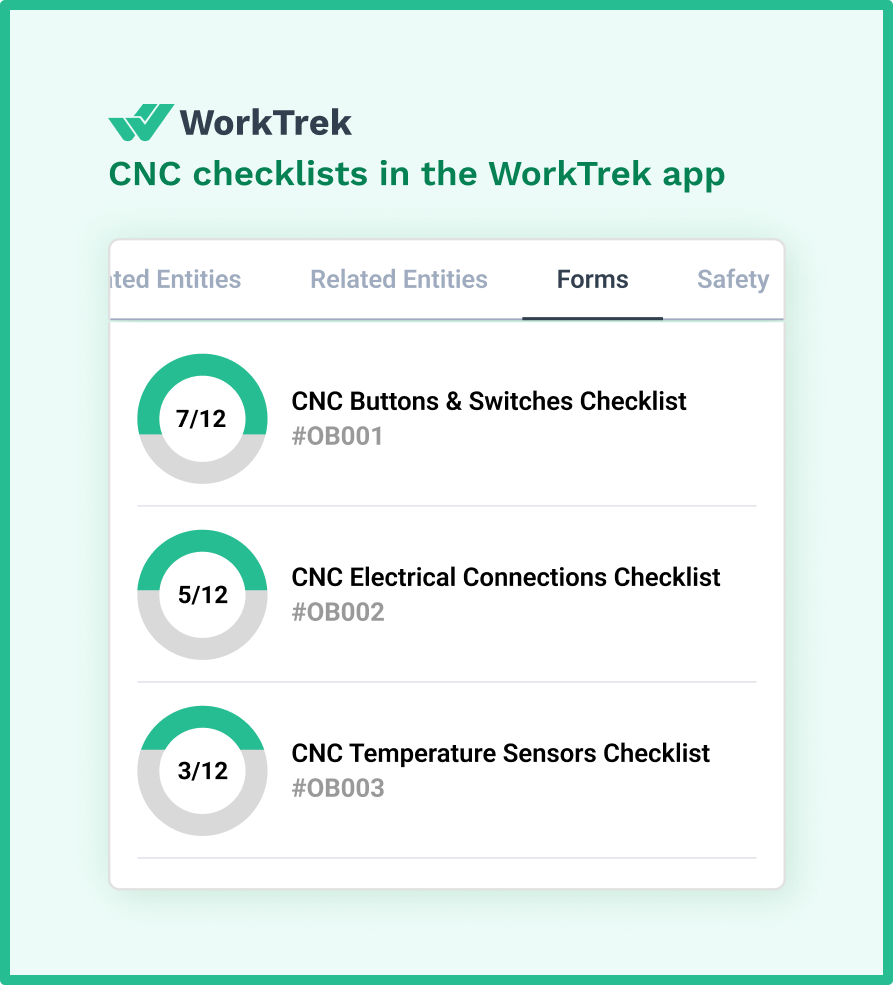
| PPE Requirements | Attach PPE requirements directly to work orders so technicians know what is needed before starting a job. |
| Equipment Inspections | Schedule recurring preventive maintenance inspections with standardized checklists. Automatically flag overdue tasks. |
| Incident Tracking | Log near-misses and incidents directly in the system, linked to specific assets and locations for root cause analysis. |
| Audit Readiness | Generate instant reports on completed work orders, inspection history, and corrective actions to present during OSHA inspections. |
| Machine Guarding | Create work order templates that include guard inspection steps. Ensure guards are checked and documented every time equipment is serviced. |
Illustration: WorkTrek
Conclusion
OSHA regulations exist for one reason: to protect workers. For maintenance teams, that protection is especially important.
The work is physically demanding, often hazardous, and conducted under conditions that demand constant vigilance.
Understanding OSHA standards is the first step. The goal is to apply them consistently across your maintenance operations.
The key standards to focus on are lockout/tagout, machine guarding, PPE, hazard communication, and fall protection. Each of these directly impacts the safety of your workers on a daily basis.
Building a compliance program takes effort. But the cost of non-compliance — in fines, injuries, and lost productivity — is always higher.
A CMMS like WorkTrek gives your maintenance team the structure and documentation needed to stay compliant, stay safe, and stay ahead of inspections. If you are serious about occupational safety and health in your organization, it is time to put the right systems in place.