

Blog

Operations & Maintenance
Developing a Maintenance Procedure: Step-by-Step Guide
In this article, you will learn how to develop a maintenance procedure step by step, from defining scope to ongoing improvements.
Key Takeaways:
More than 50% of maintenance teams regularly run out of critical spare parts.
In 2018, poor SOPs led the upkeep team to release an aircraft for service when it wasn’t yet airworthy.
Employees spend up to 30 hours per week waiting to receive information they need for work.
In 2018, unclear maintenance procedures led a maintenance team to release an aircraft to service before it was fully airworthy, resulting in an uncommanded in-flight engine shutdown.
In 2025, another maintenance team suffered burn injuries because procedures were incomplete and failed to address all potential hazards.
Different years. Different teams. Different industries. The same root cause: poorly written maintenance procedures.
If you want to prevent something similar from happening in your organization and protect your operational efficiency, worker safety, and reputation, read on.
In this article, you’ll find seven straightforward steps to developing an effective SOP, complete with examples, expert insights, and industry research.
Let’s begin.
1. Define the Purpose of the Procedure
First, clearly define what equipment or system the procedure covers, what type of maintenance is being performed, and the intended outcome.
Here, you are essentially explaining why this procedure exists in the first place.
This keeps the document focused, ensuring technicians understand its intent and helping you as the writer to avoid overcomplicating it or drifting away from reliability goals.
In this section, you need to strike that perfect balance.
It shouldn’t be overly long and distract readers from the core of the procedure, but it also can’t be too vague, answering at least some of these questions:
Why the procedure exists
What problem it prevents or solves
What success looks like
When and under what conditions it should be used
You shouldn’t dedicate an entire page to this section, but it’s also not enough to write, “The purpose of this procedure is to maintain the pump.”
For inspiration, take a look at the equipment maintenance procedure document by the University of Alberta’s Department of Agricultural, Food, and Nutritional Science.
It states:
“The purpose of this procedure is to regulate the planning and maintenance of equipment, to minimize and prevent downtime and to enhance safety and peak production for AFDP personnel and clients.”
This clearly defines both the purpose and the goal.
The document also includes separate sections for responsible personnel and maintenance frequency.
You can structure your procedure similarly, separating each piece of information into a different section, or you can include everything under a single “Purpose” section using a formula like this:
“This procedure defines the [maintenance type] for [equipment name/ID] located in [location/system] to achieve [desired outcome] and reduce the risk of [specific failure or hazard]. It is performed [frequency/trigger].”
It’s clear, concise, and to the point, providing enough context for readers to understand what the document covers without taking up unnecessary space.
2. Identify Safety Requirements
Now, it’s time to list all relevant safety information.
This includes:
Required PPE
Required permits
Environmental precautions
Lockout/Tagout (LOTO) procedures
Hazard identification (electrical, hydraulic, chemical, stored energy)
Never assume that technicians already know this.
Making that assumption is a serious mistake for two major reasons: it can lead to accidents and injuries, and it exposes the company to the risk of regulatory noncompliance.
An incident onboard the Aframax oil tanker Wisdom Venture in 2025 clearly demonstrates how omitting even a single piece of information can result in serious harm.
During maintenance on a cargo heating system steam valve, three engineering crew members sustained burn injuries.
Source: SAFETY4SEA
One contributing factor to this incident was that a drain line in the warm-up bypass line had been permanently modified without formal approval or documentation.
As a result, the incoming engineering team was unaware of the altered configuration and the associated hazards.
That’s why your procedure needs to put safety front and center, keeping it clear, easily visible, and up to date.
Take, for instance, the Overhead Crane Maintenance and Operations Procedure by Suncor Energy Inc., a Canadian integrated energy company based in Calgary:
Source: Suncor Energy
Although the document lists hazards, regulatory requirements, and qualification requirements for operators, inspectors, and maintenance personnel, this information is scattered throughout the document.
It isn’t highlighted in any way either, making it blend in with the rest of the text.
As such, it’s very easy to overlook.
A much stronger example is the conveyor maintenance procedure developed by Spire Safety Consultants, an Australia-based firm providing Work Health and Safety services:
Source: Spire Safety
In this procedure, hazards, PPE requirements, and safe operating and inspection instructions are clearly presented at the beginning of the document and prominently displayed.
It makes expectations clear for technicians and operators and leaves no ambiguity about the potential risks.
3. Break Down the Task into Sequential Steps
This is the core of the procedure.
Here, you will write clear, logical, and easy-to-follow instructions for performing the task, ensuring that different technicians achieve the same result every time.
Doing this right matters more than you might think.
For example, in 2018, confusing and ambiguous procedures led maintenance personnel to release an aircraft to service when, in fact, it was not airworthy just yet.
The aircraft subsequently experienced an uncommanded in-flight engine shutdown after metal debris was detected by the engine’s chip detector.
The Australian Transport Safety Bureau (ATSB) Director of Transport Safety, Stuart Macleod, stated:
Illustration: WorkTrek / Quote: ATSB
As it turns out, maintenance personnel were aware of the debris but incorrectly concluded it didn’t need to be considered due to unclear procedures.
Don’t make the same mistake.
Protect your workers and operational stability by ensuring your procedures are clear, concise, and leave no room for guesswork.
You can design this section in several ways, including step-by-step checklists, diagrams, or flowcharts.
However, avoid purely text-based SOPs written in long paragraphs, as they can become wordy, unclear, and difficult to navigate.
A step-by-step format, as shown in the example below, is usually more effective.
Source: Trico Corporation
As you can see, each step begins with an action verb, contains only one action, and is written as a short, clear sentence.
You’ll likely find that this format works well for most of your needs.
However, if a process you’re describing is complex, includes multiple steps and substeps, or requires branching logic, a flowchart or hierarchical SOP may be more appropriate.
Regardless of the format, though, your top priority must always be ease of use and clarity.
4. Write Out a Complete Parts List
Here, you document the spare parts, consumables, and special tools required to perform the task.
This supports effective planning and inventory control, helping you prevent delays and avoid emergency procurement.
The fact that more than 50% of maintenance teams regularly run out of critical spare parts highlights how important this section truly is.
Illustration: WorkTrek / Data: Limble
Think of it as creating a shopping list, only far more thorough, because you can’t simply run to the store if you realize you forgot to purchase something mission-critical.
So, try to be as detailed and specific as possible; no component is too small to include.
John Kingsley, Senior R&D OT Cybersecurity Engineer at Hitachi Energy, a global leader in power technologies and electrical infrastructure, agrees:
Illustration: WorkTrek / Quote: LinkedIn
You may also want to include part numbers, descriptions, quantities, storage locations, and approved equivalents, if permitted.
Anyone reading the document should immediately understand what is needed, where to find it, and the quantity required.
If they need to contact you or someone else for clarification, it means the section isn’t doing its job.
For additional clarity, you could also reference specific parts within individual steps, as shown in the example below:
Source: Optibelt
Just remember that this alone isn’t enough.
You still need a dedicated spare parts section that consolidates all relevant details.
Without it, these important components may get lost within the body of the text and be completely overlooked.
5. Add Images Wherever Possible
We say that a picture is worth a thousand words for a reason.
Visual guidance can significantly reduce interpretation errors and speed up task completion, especially for less experienced technicians.
Therefore, ensure you include high-resolution images in your documents wherever they add value.
This can include photos of actual equipment, annotated component images, before-and-after condition examples, and more.
For example, you may add exploded diagrams that are often featured in OEM manuals, like the one shown below:
Source: SKF Power Transmission
These are excellent for helping readers understand a specific component, its individual parts, and how those parts fit together, particularly elements that are typically hidden from view.
However, it’s best to supplement these diagrams with real equipment photos whenever possible.
Real-world images show the actual assets technicians work with and reflect the conditions they encounter every day, making them more practical and valuable.
That said, the images must be high quality and clear, not blurry or poorly lit.
Take, for instance, the photo below, taken from an SOP by Johnson Controls, a global leader in HVAC, security, and building automation systems:
Source: Johnson Controls
It shows real equipment and includes helpful annotations, but it’s printed in black and white, which reduces clarity. This was likely due to concerns about printing costs.
Today, however, there is no need to compromise on image quality or color, thanks to digital maintenance management systems, which enable you to upload all files to the cloud.
Ultimately, what matters most is that each image clearly shows the subject and is properly annotated, with a brief but clear explanation of what the image represents.
6. Review With the Technicians
Before finalizing the document, have experienced technicians review the draft or even perform a trial run using it.
After all, they are the ones who know all the real-world challenges, risks, and shortcuts worth noting.
In fact, they may be the only ones who know these details, which means that, without capturing their insights at this point, this knowledge could be lost forever when they leave.
This is exactly the problem one Redditor describes at their company:
“[...] a lot of our procedures [...] are incorrect or have been "revised" due to modifications to the equipment or the equipment is just so old and haggard that the SOPs from the manuals don't work as expected. There is a lot of tribal knowledge, pretty frustrating at times, [...].”
In other words, knowledge stored in technicians’ heads is often far more reliable than what exists in SOPs or manuals.
Sure, this may not be an issue for experienced staff, but what about new hires?
They could ask for help, but the Panopto survey shows this can be highly inefficient.
Its respondents reported spending 5 to 30 hours per week waiting to receive information, support, training, or other insights that only an in-house expert can provide.
Illustration: WorkTrek / Data: Panopto
To avoid such inefficiencies, capture this unique knowledge in your procedures by involving technicians in the review process.
Not only does this improve the accuracy and applicability of the document, but it also ensures that valuable knowledge isn’t lost when personnel change.
7. Make the Document Easily Accessible
Last but certainly not least, you need to ensure technicians can access procedures exactly when they need them.
If they have to drive from the field to the office only to sift through mountains of paperwork or scroll endlessly through files on a computer, chances are they won’t bother using it at all.
Magnus Campbell, Founder of Remark Interactive, mobile software for process and documentation optimization, puts it perfectly:
Illustration: WorkTrek / Quote: Barchart
This entails having the right information, in the right order, with all the right details, which we’ve already covered.
But it also entails making that documentation easily accessible. For that, a CMMS solution like WorkTrek is your safest bet.
WorkTrek digitizes and centralizes all your maintenance-related data, including work orders, invoices, reports, PM schedules, and, of course, SOPs.
Everything is in one place, making it easy to find, access, and update as needed.
You can even create forms and checklists directly within the system: choose from multiple question types, organize them into sections, and quickly customize each to fit your needs.
Source: WorkTrek
Brand them with your logo, fonts, and colors to align with your branding and documentation standards, and export them as MS Word or PDF documents.
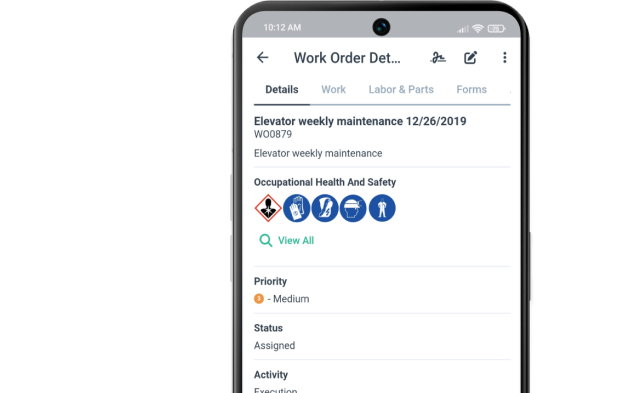
Most importantly, WorkTrek enables you to embed all vital information, such as instructions, photos, hazard warnings, PPE requirements, and safety procedures, directly into work orders.
So, when a worker is assigned a task, they no longer need to search separately for the work order and the SOP.
Everything is in the system and accessible on a computer, tablet, or phone, even without an internet connection.
Conclusion
Maintenance procedures may seem like simple documents on the surface, but they can have a significant impact on a company’s overall safety, efficiency, and reputation.
And in most cases, they aren’t that difficult to develop.
Typically, the real challenge is getting workers to actually use them. That’s where you’ll likely need to invest more effort.
Employees need to be trained on how to use the procedures, how to access them, and why they matter in the first place.
It can also help to share real-world examples of how poor SOP practices have led to serious damage or failures.
But most importantly, these documents must be easily accessible. Workers need to be able to retrieve them at any time, from anywhere, with minimal effort.
Even the most perfectly written procedure is worthless if it can’t be found when it’s needed most.

Operations & Maintenance
5 Benefits of Equipment Monitoring
Key Takeaways:
The global equipment monitoring market was valued at $3.5 billion in 2024 and is projected to grow to over $5.3 billion by 2032.
Unplanned downtime costs the average Fortune 500 company $2.8 billion every year — roughly 11% of annual revenue.
Predictive maintenance enabled by equipment monitoring can reduce maintenance costs by up to 25% and increase uptime by 10–20%.
Every unplanned breakdown tells the same story: a machine that should have been monitored more closely.
In today's industrial landscape, equipment failures don't just inconvenience your maintenance team; they ripple across your entire operation. This can affect production schedules, quality control, worker safety, and your bottom line.
Source: WorkTrek
The good news is that the tools to get ahead of these problems are more accessible than ever.
Equipment monitoring gives maintenance teams real-time data on machine health, enabling them to move from reactive firefighting to a genuinely proactive approach.
Whether you're managing a single production line or coordinating assets across multiple locations, the benefits of equipment monitoring are hard to ignore.
In this article, we'll break down five of those benefits and explain how a CMMS like WorkTrek can help you put monitoring data to work.
What Is Equipment Monitoring?
Equipment monitoring refers to the continuous tracking and analysis of machinery performance using sensors, IoT devices, and monitoring software to detect potential issues before they become major problems.
Modern machine monitoring systems collect real-time data on parameters like vibration, temperature, pressure, and energy consumption. That data flows through wireless or wired networks to analytics tools and dashboards, where your maintenance team can interpret it.
Source: WorkTrek
It can also be used to trigger automated alerts when readings fall outside normal ranges.
The key distinction from traditional maintenance is timing.
Rather than scheduling maintenance based on calendar intervals or waiting for something to break, equipment monitoring supports predictive maintenance and condition-based maintenance, meaning you intervene based on actual equipment health data, not guesswork.
Key components of a typical monitoring system include:
Sensors – Collect real-time data on vibration, temperature, pressure, and other parameters
IoT devices and connectivity – Transmit data over wireless networks or wired networks to centralized platforms
Data collection and storage – Aggregates readings for analysis and trend detection
Analytics tools and monitoring software – Process raw data into actionable insights
Automated alerts – Notify technicians when readings indicate potential equipment issues
Integration with existing systems – Connects monitoring data with your CMMS, ERP, or existing infrastructure
This combination of hardware and software components creates a continuous feedback loop between your equipment and your maintenance team. This is far more accurate than manual inspections alone and far faster than reactive maintenance.
Benefit 1: Reduced Downtime
Nothing drains productivity and profit faster than unexpected downtime.
According to the True Cost of Downtime 2024 report, unplanned equipment downtime alone costs the average Fortune 500 company $2.8 billion every year. This translates to approximately 11% of annual revenue.
For a large manufacturing plant specifically, that figure averages $253 million per year.
These aren't abstract statistics. Every unscheduled stoppage means idle workers, missed production targets, delayed shipments, and, in some cases, unhappy customers who take their business elsewhere.
Equipment monitoring addresses this directly by enabling teams to predict equipment issues before they cause unplanned downtime.
Source: WorkTrek
Instead of discovering a problem when a machine stops, real-time monitoring surfaces early warning signs. This could include a bearing running slightly hotter than normal or vibration readings creeping outside acceptable ranges — so your team can schedule maintenance before anything fails.
This shift from reactive maintenance to a proactive approach is significant.
Research by Deloitte found that predictive maintenance can increase equipment uptime by 10–20%, a direct result of catching problems early rather than responding to them after the fact.
Remote monitoring extends this capability further.
Assets in remote locations, such as field equipment, substations, or facilities without full-time staff, can be monitored continuously through a remote monitoring system, with software alerts sent directly to responsible technicians, regardless of where they are.
This remote access eliminates the lag time between a problem developing and someone discovering it, a gap that can turn a minor issue into a costly breakdown.
The bottom line: equipment monitoring minimizes downtime by giving maintenance teams the information they need to act before equipment failures happen, not after.
Benefit 2: Significant Cost Savings
For many operations managers, the financial case for equipment monitoring is what closes the deal, and the numbers can be compelling.
Reuters and the True Cost of Downtime 2024 report estimate that Fortune 500 companies could save $233 billion in maintenance costs annually with full adoption of condition monitoring and predictive maintenance.
Source: WorkTrek
That's not a theoretical projection. It's based on documented patterns of how proactive monitoring reduces emergency repairs, extends equipment life, and lowers labor costs associated with reactive maintenance.
The cost savings come from several directions at once:
Fewer Emergency Repairs
Emergency repairs are consistently more expensive than planned maintenance. Parts sourced on short notice, overtime labor, and expedited shipping all inflate the cost of reactive fixes. Equipment monitoring enables proactive maintenance that addresses issues during scheduled windows, using the right parts and the right people — at normal cost.
Optimized Maintenance Schedules
Without monitoring data, many organizations either over-maintain (spending money on unnecessary inspections) or under-maintain (allowing hidden problems to grow). A machine monitoring system helps you schedule maintenance precisely when it's needed, reducing wasted labor and unnecessary parts consumption.
Lower Energy Consumption
Equipment running outside optimal parameters often consumes more energy than it should. Monitoring systems can identify inefficiencies in real time, allowing teams to adjust operations and reduce energy costs. This is meaningful savings for operations with heavy machinery running continuously.
Reduced Inventory Costs
With better data on what's failing and when, maintenance teams can manage spare parts inventory more efficiently, reducing the carrying cost of excess stock while ensuring critical parts are available when needed.
Source: WorkTrek
Taken together, these savings represent a strong return on the investment in monitoring technology.
Deloitte's research suggests that predictive maintenance enabled by monitoring can reduce overall maintenance costs by 5–10% — and in large-scale operations, that translates to millions of dollars per year.
For teams still trying to make the case internally, the math tends to speak for itself.
Benefit 3: Enhanced Safety and Regulatory Compliance
Equipment monitoring isn't just good for your machinery; more importantly, it's good for your people.
When machines operate outside safe parameters, the risk of accidents increases. A pump running at unsafe pressure, a motor overheating, a conveyor belt with compromised tension: These are the kinds of conditions that lead to workplace injuries.
Illustration: WorkTrek / Data: Rutgers University
Regular monitoring ensures that production equipment stays within safe operating ranges, and automated alerts notify the maintenance team immediately when something falls outside those boundaries.
This matters on two levels.
Human Cost
First, there's the human cost. Workplace injuries disrupt operations, affect morale, and in serious cases carry long-term consequences for workers and their families. An industrial operation that proactively monitors equipment health reduces the likelihood that a developing mechanical issue will become a safety incident.
Regulatory Compliance
Second, there's regulatory compliance. Many industries operate under strict safety and environmental standards that require documented evidence of regular equipment inspections and timely maintenance. Equipment monitoring creates an automatic, continuous record of machine performance — a data trail that simplifies compliance reporting and audit preparation.
Source: WorkTrek
According to Grand View Research, compliance requirements are a significant driver of monitoring adoption, particularly in brownfield plants where older, high-risk equipment demands closer attention.
Industries such as oil and gas, pharmaceuticals, and food manufacturing face particularly stringent requirements, and monitoring systems make it substantially easier to demonstrate compliance without relying entirely on manual inspection logs.
The digital records generated by a modern monitoring system also reduce the impact of human error.
When readings are captured automatically by sensors rather than recorded manually by technicians, the margin for data-entry errors shrinks, and the integrity of compliance documentation improves.
For any operation where safety incidents or regulatory violations carry serious consequences, the monitoring system pays for itself in risk reduction alone.
Benefit 4: Improved Operational Efficiency
Equipment that runs well runs efficiently.
Equipment monitoring helps ensure that your machines are always performing at or close to their optimal parameters. This can directly impact on operational efficiency across the manufacturing process.
Illustration: WorkTrek / Data: AR Plumbing & Heating Chelmsford
There are several dimensions to this.
Better Production Efficiency
When machines are properly maintained and running within spec, production runs more smoothly and consistently. Quality control issues that trace back to equipment wear or calibration drift are reduced. The result is more consistent output with fewer defects. This leads to a meaningful gain in competitive environments.
Smarter Resource Allocation
Real-time insights from monitoring systems allow maintenance teams to allocate their time and resources where they're actually needed, rather than spreading effort evenly across all assets regardless of their actual condition. This makes maintenance teams more productive and frees technicians from performing unnecessary inspections on equipment that's performing perfectly.
Data-Driven Decisions
The data analysis capabilities built into modern monitoring software give operations leaders a far clearer picture of machine efficiency across the production line. Trends become visible over time — which assets are degrading fastest, which maintenance strategies are most effective, where energy consumption is higher than it should be — enabling informed decisions that compound over time.
Source: WorkTrek
Streamlined Operations Across Multiple Locations
For organizations managing assets at multiple locations or remote locations, remote monitoring eliminates the need for on-site personnel to manually collect performance data. Teams can analyze data from anywhere, coordinate maintenance across sites, and respond to alerts before local staff would even notice a developing issue.
The global machine condition monitoring market is projected to reach $4.7 billion by 2029, growing at a CAGR of 8.3%. This is a clear signal that industrial operators across sectors are recognizing the operational advantages these systems deliver.
Companies that adopt monitoring today build capabilities and institutional knowledge that translate into a genuine competitive edge as the technology matures.
The shift from reactive maintenance to continuous improvement, by using data to steadily optimize machine efficiency and maintenance strategies, is what separates high-performing operations from those perpetually chasing breakdowns.
Benefit 5: Extended Equipment Lifespan
Every piece of production equipment represents a significant capital investment.
Equipment monitoring is one of the most effective tools available for protecting that investment and maximizing the equipment lifespan of your assets.
The reason is straightforward: machines that receive timely maintenance consistently last longer than those that don't.
Minor wear issues, small misalignments, or marginal lubrication problems are usually the kinds of things that are easy to miss in a manual inspection. However, all of this can compound over time into serious mechanical damage if left unaddressed.
Equipment monitoring catches these developing conditions early, enabling timely maintenance that prevents small problems from becoming catastrophic failures.
This extends asset life in concrete terms.
According to Deloitte, predictive maintenance enabled by monitoring can increase equipment uptime by 10–20%. This means that an asset that runs reliably rather than undergoes repeated failure-and-repair cycles lasts longer.
Source: WorkTrek
There's also a compounding benefit: the more consistently you monitor and maintain equipment, the richer the historical data you accumulate about that asset's behavior.
Over time, this data analysis helps your team better predict when a machine is approaching the end of its usable life, enabling planned replacement rather than emergency replacement, which is almost always more expensive.
Radio frequency identification (RFID) tags and asset tracking tools, often integrated with monitoring systems, help teams maintain comprehensive records on individual assets. This includes: usage hours, maintenance history, and part replacements, which inform both maintenance decisions and capital planning.
For organizations facing budget pressure, extending equipment lifespan means delaying expensive capital expenditures.
For those focused on sustainability, it means getting maximum value from the energy and resources already invested in manufacturing the equipment. Either way, the monitoring investment pays dividends far beyond the immediate operational benefits.
How a CMMS Amplifies These Benefits
Monitoring systems generate a lot of data. What you do with that data determines how much value you actually extract from the investment.
That's where a CMMS comes in.
Source: WorkTrek
Closing the Loop Between Monitoring and Maintenance
A monitoring system tells you that something needs attention. A CMMS ensures that something gets done about it.
With a modern CMMS, you can integrate with equipment monitoring data to automatically generate work orders when conditions warrant.
This is triggered by software alerts rather than waiting for someone to notice and log a request manually. This closes the gap between detection and response, reducing the window in which a developing issue can escalate into a full equipment failure.
Source: WorkTrek
Technicians receive work orders with all the context they need:
What equipment is affected
What readings triggered the alert
What tasks need to be completed
What parts will be required
They can access this information from any device, whether they're on the floor or at a remote location. This eliminates the delays caused by paper-based systems or phone-tag communication.
Conclusion
The case for equipment monitoring isn't complicated: machines that are continuously watched run better, last longer, and cost less to maintain than those that aren't.
The five benefits covered here: reduced downtime, cost savings, enhanced safety, improved operational efficiency, and extended equipment lifespan, should be the primary focus.
They're the measurable results that organizations across manufacturing, energy, and heavy industry are achieving today by adopting real-time monitoring as a core part of their maintenance strategies.
The shift from reactive maintenance to a proactive approach is a defining factor in which operations thrive and which ones fall behind.

Operations & Maintenance
Overall Equipment Effectiveness (OEE): What You Need to Know
Key Takeaways:
OEE (Overall Equipment Effectiveness) is the gold standard metric for measuring manufacturing productivity — combining Availability, Performance, and Quality into a single score.
A world-class OEE score is 85%. The typical discrete manufacturer averages around 60%, which means a third of potential production capacity is being lost.
Unplanned downtime alone accounts for 34.2% of all OEE efficiency losses across discrete manufacturing sectors.
A CMMS like WorkTrek gives maintenance teams the real-time data, scheduling tools, and reporting they need to track OEE and drive meaningful improvement.
Walk into almost any manufacturing plant and ask the floor manager how their equipment is performing. Chances are, you'll get a vague answer: something like "pretty well" or "we had a rough week."
Source: WorkTrek
That's the problem. In manufacturing, "pretty well" doesn't pay the bills. Precise, data-driven insight does.
That's exactly what Overall Equipment Effectiveness (OEE) was designed to provide. It's not just another key performance indicator.
OEE is the single most powerful metric for understanding how effectively equipment is running. It can disaggregate where productivity is being lost and guide continuous improvement efforts on the production line.
Whether you're a maintenance manager trying to reduce unplanned downtime, a plant director benchmarking against world-class standards, or a production engineer looking to optimize asset performance, this guide covers everything you need to know about OEE.
What Is Overall Equipment Effectiveness (OEE)?
Overall Equipment Effectiveness (OEE) is a standardized metric that measures what percentage of planned production time is truly productive.
In plain terms: it tells you how well your manufacturing equipment is actually working versus how well it could be working.
A perfect OEE score of 100% means your equipment is running at maximum speed, producing only good parts, with zero downtime. In the real world, that's a theoretical ceiling — but it's a critical target to measure against.
OEE was developed as part of the Total Productive Maintenance (TPM) framework, pioneered in Japan in the 1960s and 70s. Today, it's recognized industry-wide as the gold standard for measuring manufacturing productivity and has become a foundation for lean manufacturing and continuous improvement programs.
Why It Matters: OEE is the single best metric for identifying losses, benchmarking progress, and improving the productivity of manufacturing equipment — i.e., eliminating waste.
Source: WorkTrek
Crucially, OEE doesn't just give you a single number. It breaks down into three components:
Availability
Performance
Quality
Using these components can reveal exactly where your production processes are leaking time, output, and quality. That diagnostic power is what makes OEE far more actionable than a simple uptime or throughput figure.
The Three Pillars of OEE: Availability, Performance, and Quality
OEE is calculated by multiplying three factors together.
Each one captures a distinct category of production loss. Understanding all three is essential to improving your OEE score.
1. Availability — Are You Running When You Should Be?
Availability measures the percentage of scheduled (planned) production time that equipment actually operates. It accounts for all stop time, including planned downtime such as changeovers or preventive maintenance, and unplanned downtime (like equipment failures or material shortages).
Source: WorkTrek
Availability = Run Time ÷ Planned Production Time
Example: If a machine is scheduled to run for 8 hours (480 minutes) but experiences 60 minutes of downtime,
Run Time = 420 minutes. Availability = 420 ÷ 480 = 87.5%.
An availability score of 100% means the process never stopped during planned production time. Key availability losses include equipment failures, unplanned stops, and setup/changeover time.
2. Performance — Are You Running as Fast as You Should Be?
Performance (also called the performance score or speed factor) measures how fast equipment runs compared to its maximum possible speed.
It captures losses from slow cycles and small, brief stops that interrupt flow without triggering a full downtime event.
Performance = (Ideal Cycle Time × Total Count) ÷ Run Time
Example: A machine has an Ideal Cycle Time of 1 second per part. During 420 minutes of Run Time, it produces 23,000 total parts. Performance = (1 sec × 23,000) ÷ 25,200 sec = 91.3%.
Reduced equipment speed, idling, and minor stoppages are the main culprits behind low performance scores. These are often overlooked because they feel minor individually, but they compound quickly across a production line.
3. Quality — Are You Producing Good Units the First Time?
Quality measures the ratio of good units produced compared to total units produced.
It accounts for production defects, rejects, and any parts requiring rework. OEE quality is similar to First Pass Yield; it only counts parts that pass quality standards on the first run, without rework.
Quality = Good Count ÷ Total Count
Example: Of 23,000 total parts produced, 22,500 meet quality standards. Quality = 22,500 ÷ 23,000 = 97.8%.
Illustration: WorkTrek / Data: Oxmaint
The OEE Formula and Calculation Example
Once you have your three factor scores, OEE is calculated by multiplying them together:
OEE = Availability × Performance × Quality
Using the example figures above:
OEE = 87.5% × 91.3% × 97.8% = 78.1%
That means only 78.1% of your planned production time was truly productive, and the rest was consumed by availability losses, performance losses, and quality losses.
And this OEE calculation example is actually better than many manufacturers achieve in practice.
OEE Formula (Simplified): The simplest version of the OEE formula is: OEE = (Good Count × Ideal Cycle Time) ÷ Planned Production Time. This confirms that OEE is ultimately a measure of truly productive manufacturing time versus all planned production time.
Understanding Your OEE Score: From Baseline to World-Class
Not all OEE scores mean the same thing. Here's how to interpret yours:
OEE ScoreStatusInterpretation100%PerfectPerfect (theoretical)85%+World-ClassWorld-class60%–85%AverageAverage — room to grow< 60%Below AverageBelow average — needs attention
A world-class OEE of 85% is the target benchmark for discrete manufacturing companies. It's calculated based on 90% Availability × 95% Performance × 99.9% Quality. Reaching this level requires relentless focus on eliminating waste across all three OEE factors.
Most manufacturers sit between 60% and 75% — meaning roughly 25–40% of production capacity is being lost to inefficiencies that can be identified and addressed. A baseline OEE measurement is your starting point for any meaningful improvement initiative.
34.2%of all OEE efficiency losses in discrete manufacturing come from unplanned downtime alone (Godlan, 2025)
The Six Big Losses: Where OEE Goes to Die
The Six Big Losses are the root causes of OEE degradation. They map directly to the three OEE factors and give maintenance teams a practical framework for targeting improvement efforts:
Availability Losses
Equipment Failures/Breakdowns: Unplanned downtime caused by unexpected equipment failures. This single factor accounts for the majority of availability losses in most plants.
Setup and Changeover Time: Planned stops for product changes, tooling swaps, or reconfiguration. Setup and changeover time accounts for 28.7% of total OEE losses in make-to-order environments.
Performance Losses
Idling and Minor Stops: Short interruptions that don't trigger a formal downtime event but still reduce output. Often the hardest loss category to track without automated data collection.
Reduced Speed (Slow Cycles): Equipment running below its maximum possible speed due to operator behavior, material issues, or mechanical wear — a silent productivity killer.
Quality Losses
Production Defects and Scrap: Parts that fail to meet quality standards and cannot be reworked. Every defective unit represents wasted machine time, labor, and material.
Startup and Yield Losses: Defects produced during startup, warmup, or after a changeover before the process stabilizes. These are quality losses that occur at the beginning of a production run.
Why This Matters: Knowing which of the Six Big Losses is driving your low OEE score changes everything about how you respond. A plant suffering from equipment breakdowns needs a different solution than one struggling with reduced speed or startup defects.
Why Measuring Manufacturing Productivity with OEE Actually Matters
It's easy to dismiss OEE as another management metric. The truth is, the data tells a different story.
According to a 2024 Siemens survey, automotive plants alone incur approximately $695 million in annual losses due to unplanned downtime.
Across industries, manufacturers routinely lose 20–40% of their productive capacity to hidden inefficiencies that OEE is specifically designed to surface.
Source: WorkTrek
OEE serves two essential functions simultaneously:
As a benchmark: Compare your equipment's performance against industry standards, against similar assets in your own facility, or against different shifts running the same asset.
As a baseline: Track progress over time as you implement improvement initiatives, allowing you to see definitively whether changes are working.
For manufacturing operations looking to improve competitiveness without major capital investment, OEE improvement is often the highest-ROI path available.
Amazingly, improving OEE from 60% to 75% on the same equipment, in the same facility, with the same workforce effectively adds 25% more productive capacity.
How to Improve Your OEE Score
Improving OEE isn't about a single action — it's about building a systematic approach to identifying and eliminating waste. Here's where to start:
1. Establish a Baseline OEE Measurement
You can't improve what you don't measure. Start by calculating your current OEE using the formula above. This baseline OEE becomes your reference point for evaluating improvement efforts. Make sure your data collection process captures all three factors consistently.
2. Focus on Your Biggest Loss Category First
OEE data tells you where to focus. If availability losses from equipment failures are your primary constraint, as they are for most manufacturers, then prioritizing preventive maintenance will yield the most impact.
If performance losses dominate, look at slow cycles and minor stops. Targeted improvement beats scattered effort every time.
3. Implement Preventive and Predictive Maintenance
Equipment failures are the largest single driver of OEE losses. A robust preventive maintenance program reduces unplanned downtime by addressing potential failures before they occur. Going further, predictive maintenance (PdM) uses condition monitoring data to predict failures before they cause downtime, enabling maintenance to happen at the optimal time.
Source: WorkTrek
4. Reduce Setup and Changeover Time
Setup and changeover time accounts for 28.7% of OEE losses in complex manufacturing environments. SMED (Single-Minute Exchange of Die) techniques and standardized changeover procedures can dramatically reduce planned downtime and improve availability scores.
5. Build a Culture of Continuous Monitoring
OEE improvement is not a one-time project. It's an ongoing process. Track OEE metrics by shift, by asset, and by production line to spot trends early. Review OEE data regularly in team meetings and use it to drive improvement initiatives. Ongoing improvement efforts require ongoing visibility.
6. Engage Plant Floor Employees
OEE is powerful at the management level, but its real value is unlocked when plant floor employees are actively engaged. Real-time production targets, downtime tracking, and shift-level OEE data give frontline teams the context they need to make better decisions in the moment.
Source: WorkTrek
How a CMMS Transforms OEE Tracking and Improvement
Here's an uncomfortable truth about OEE: it's only as useful as the data behind it.
Manual data collection is slow, error-prone, and often incomplete, and without accurate, timely OEE data, you can't make informed decisions.
That's where a Computerized Maintenance Management System (CMMS) becomes essential.
A CMMS doesn't just help you do maintenance — it creates the data infrastructure that makes meaningful OEE improvement possible.
Here's how a CMMS supports each dimension of OEE:
Improving Availability: Fewer Unplanned Stops
A CMMS automates preventive maintenance scheduling, ensuring that inspections, lubrications, and component replacements happen on time before equipment failures occur.
Maintenance teams get automated work orders, step-by-step task instructions, and complete visibility into what's due and what's overdue. Fewer missed maintenance tasks means fewer equipment breakdowns and dramatically better availability scores.
Source: WorkTrek
Improving Performance: Real-Time Visibility into Slow Cycles
Slow cycles and minor stops are hard to catch without real-time monitoring. A CMMS tracks work orders and equipment history, enabling identification of recurring issues that drag down performance. These are issues that might never be flagged under a reactive maintenance approach.
Improving Quality: Root Cause Analysis and Traceability
Production defects are often linked to maintenance failures. When equipment isn't properly calibrated, lubricated, or serviced, quality suffers. A CMMS creates a complete maintenance history for every asset, giving quality and engineering teams the traceability they need to connect defect spikes to specific maintenance events.
CMMS Impact: According to a 2024 UpKeep report, maintenance teams using CMMS platforms report dramatically better visibility into completed work, reduced unplanned downtime, and improved team collaboration — all of which directly improve OEE scores.
Common OEE Mistakes to Avoid
Even companies that are tracking OEE often do it wrong. Here are the most common pitfalls:
Using OEE without the three-factor breakdown: A single OEE number tells you how bad the problem is. Availability, Performance, and Quality tell you what to do about it. Don't settle for the simplified calculation alone.
Measuring OEE in isolation: OEE data is most powerful when tracked over time and across assets. One data point is noise; a trend is a signal.
Excluding planned downtime from calculations: Some manufacturers exclude planned stops from OEE. While TEEP (Total Effective Equipment Performance) includes all time, standard OEE uses Planned Production Time as the denominator, which includes planned stops like changeovers and scheduled maintenance.
Chasing a high OEE score at the wrong asset: Focus OEE improvement efforts on bottleneck equipment — the assets that most constrain your production output. Improving OEE on a non-bottleneck asset may not improve overall throughput at all.
Neglecting employee buy-in: Successful OEE implementation requires everyone from technicians to plant managers to understand and trust the data. OEE should be a shared language, not just a management dashboard.
Source: WorkTrek
Conclusion
Overall Equipment Effectiveness forces manufacturing organizations to confront exactly how much of their potential capacity is being lost, and exactly why.
Whether your OEE score is 45% or 80%, there's a clear path to improvement: measure the three factors, identify your biggest losses, implement targeted maintenance and operational changes, and track progress relentlessly.
The manufacturers who take OEE seriously, and back it up with the right tools, consistently outperform those who rely on intuition and anecdote. In a competitive manufacturing landscape, that advantage is real, and it's compounding.
Operations & Maintenance
Debunking 7 Myths About Overall Equipment Effectiveness (OEE)
Key Takeaways:
The average OEE score across discrete manufacturing industries is 66.8% — far below the widely-cited "world-class" benchmark of 85%.
OEE is not just a maintenance metric: availability, performance, and quality losses all carry equal weight and demand cross-functional ownership.
A CMMS like WorkTrek gives production teams the real-time data visibility needed to identify hidden inefficiencies and drive meaningful continuous improvement efforts.
Overall equipment effectiveness (OEE) is one of the most widely cited metrics in manufacturing. It shows up in board presentations, lean initiatives, and shop floor dashboards alike.
And yet, despite its widespread use, OEE is also one of the most widely misunderstood metrics in the industry.
Source: WorkTrek
Many organizations track it. Far fewer use it correctly.
Misconceptions about how OEE works, what it measures, and what it means for your operations have spread so thoroughly that they've begun to undermine the very continuous improvement efforts the metric was designed to support.
In this blog post, we're setting the record straight.
We're debunking seven of the most common OEE myths and showing you what high-performing production teams do instead.
Myth #1: 85% OEE Is the Universal World-Class Benchmark
Walk into almost any manufacturing discussion about OEE and someone will eventually say, "world class is 85%." This figure has been repeated so many times across industry publications, consultancy frameworks, and conference talks that many organizations treat it as gospel.
The reality is considerably more nuanced.
According to data from Evocon, which analyzed OEE scores from more than 3,500 machines across 50+ countries, the average OEE score for most manufacturers falls between 55% and 60%.
Their research further suggests that only around 3% of manufacturers actually achieve a sustained OEE of 85% or higher.
Illustration: WorkTrek / Data: Godlan
The problem is context.
The "85% = world class" benchmark was developed for high-volume, discrete manufacturing environments with standardized products, high automation, and minimal changeover requirements. It was never intended as a universal target.
A pharmaceutical company managing regulatory batch changeovers, a food and beverage producer handling sanitation requirements, or an aerospace manufacturer producing complex custom components will naturally operate at lower OEE scores.
This is not because they're performing poorly, but because the nature of their processes demands it.
According to Godlan's 2025 OEE benchmark report, based on data from 1,470+ discrete manufacturing operations, the average OEE across all industries was 66.8%, with Medical Devices achieving the highest performance at 78.2% and Trailers & RVs recording the lowest at 57.2%.
Godlan Aerospace and defense companies incur an average OEE penalty of over 12% due to engineering complexity and regulatory compliance requirements alone.
What to do instead: Establish your own internal OEE baseline before making external comparisons. Set targets that are realistic for your industry, product mix, and automation level.
Strive for consistent, measurable improvement over time, not a mythical benchmark with little relevance to your actual operations.
Myth #2: OEE Is Only a Maintenance Metric
This is one of the most damaging OEE myths, and one that causes production teams and maintenance departments to work at cross-purposes on the shop floor.
Because machine downtime and equipment failures are among the most visible causes of lost OEE, many organizations assign ownership of the metric entirely to the maintenance department. Maintenance reduces unplanned stops, the thinking goes, and OEE goes up. Simple.
But OEE is a three-factor equation: Availability × Performance × Quality.
OEE takes into account all losses, stop time loss, speed loss, and quality loss, resulting in a measure of truly productive manufacturing time. It is calculated as the ratio of Fully Productive Time to Planned Production Time.
A machine can be perfectly maintained and running continuously, yet still produce a poor OEE score if it's running at reduced speed due to operator settings, or generating defects due to process conditions.
Performance loss, which includes minor stoppages, slow cycle times, and suboptimal machine speeds, is frequently caused by operator behavior, scheduling decisions, and upstream process conditions.
None of these factors falls under maintenance's direct control. Quality losses caused by raw material variation, incorrect machine parameters, or inadequate process controls are similarly outside the maintenance function entirely.
The OEE metric measures a machine or plant's actual productivity and accounts for the three main components — availability, performance, and quality — as well as factors such as equipment or performance losses.
When only one department "owns" OEE, the other contributing factors go unaddressed.
Performance and quality losses become invisible, while all the pressure falls on maintenance to push availability higher and higher. This leaves the majority of hidden inefficiencies untouched.
What to do instead: Treat OEE as a cross-functional metric. Production, quality, engineering, and maintenance teams should all have visibility into OEE data and shared accountability for improvement. Each of the three components deserves equal weight and its own targeted improvement strategy.
Myth #3: A High OEE Score Automatically Means High Profitability
At first glance, this myth seems so logical it barely qualifies as a myth. If your equipment is running effectively, surely that translates to financial results?
Not necessarily.
There is no financial element in an OEE calculation, and it has very little connection to business value.
According to Lnsresearch, it doesn't factor in the cost of materials, cost of labor, importance of customer, price paid by customer, or even if a customer order exists. Therefore, maximizing the OEE of an asset is not the same as maximizing the profitability of that asset.
Consider a simple example: a machine running at 90% OEE producing parts that are currently in oversupply or that cost more to manufacture than the market price supports.
Pushing OEE even higher doesn't improve profitability. Conversely, it compounds the problem by generating more unsellable inventory faster.
OEE is an operational metric, not a financial one.
It tells you how efficiently your equipment is being used during scheduled production time. It does not tell you whether that production is contributing to your bottom line.
Confusing the two leads organizations to optimize for the wrong metrics.
Illustration: WorkTrek / Quote: IndustryWeek
That said, OEE improvement does correlate with improved profitability when it's driven by the right things: reducing waste, lowering costs, and eliminating the need for overtime or additional capital expenditure. The key is context. OEE should be one input into a broader performance management framework, not the sole measure of business health.
What to do instead: Pair OEE data with financial KPIs such as cost per unit, contribution margin, and return on assets. Use OEE to guide maintenance cost management decisions and waste elimination efforts, but don't mistake a rising OEE score for rising profits without verifying the connection.
Myth #4: Planned Downtime Doesn't Hurt OEE
Many production teams believe that because planned downtime such as scheduled maintenance, changeovers, calibration runs, and tooling changes. If this is intentional and controlled, it doesn't count against OEE. After all, you planned for it. It was supposed to happen.
This is a common misconception that causes organizations to systematically underestimate one of their biggest sources of lost productivity.
OEE is the ratio of Fully Productive Time to Planned Production Time.
Availability takes into account Availability Loss, which includes all events that stop planned production for an appreciable length of time, including both Unplanned Stops, such as equipment failures, and Planned Stops, such as changeover time.
What OEE does exclude is schedule loss. This is the time when the machine was never intended to run, such as nights, weekends, or holidays.
Source: WorkTrek
But any time a machine is scheduled for production and is instead stopped, whether by surprise failure or by a scheduled changeover, that time counts as an availability loss.
This distinction matters enormously for preventive maintenance planning. If maintenance tasks are scheduled during active production windows, or if changeovers routinely run long due to poor preparation, those losses show up directly in your OEE score.
The goal is not to eliminate planned downtime. The goal should be to optimize it.
World-class manufacturers apply techniques like SMED (Single-Minute Exchange of Die) and reliability-centered maintenance to shrink the time windows needed for planned activities. This can help you recover productive capacity without sacrificing machine reliability.
What to do instead: Audit your planned downtime events. Measure their actual duration against targets. Identify where changeovers or preventive maintenance activities routinely run over schedule, and apply continuous improvement methods to bring those durations down.
Myth #5: You Can Aggregate OEE Across Different Machines and Plants
Roll-up OEE reporting is common.
Many organizations calculate an average OEE for an entire production line, then for a plant, then present a single enterprise-wide OEE figure to leadership. It's clean, it's simple, and in most cases, it's largely meaningless.
People have begun to place the emphasis on the "O" in OEE instead of where it belongs - on the "E's."
The trend is for manufacturers to take their total output, average availability of all equipment, and planned design production capacity, and generate a single OEE metric for the entire operation.
As industry-by-industry benchmarks show, there is wide variation in OEE, much of which stems from the fact that very different equipment is used to manufacture different products. Even within an industry, the processes and equipment to make one product may vary significantly from those used to make another.
Think about what a blended OEE score actually represents when it mixes a high-speed automated stamping press with a manual assembly station, a CNC machining center, and a batch mixing tank.
Each of those assets has different theoretical maximum speeds, different cycle times, different types of losses, and entirely different improvement levers. Averaging their OEE scores into a single number obscures every root cause and makes it nearly impossible to prioritize improvement efforts meaningfully.
The original intent of OEE was always equipment-level visibility — understanding how effectively every single piece of production equipment is being used to execute its intended purpose.
The only time an aggregate plant or process number has any real meaning is if we are comparing identical plants, with identical equipment, manufacturing identical products from identical raw materials. In reality, for most manufacturers, that condition simply doesn't exist.
What to do instead: Measure and track OEE at the individual machine or asset level. Use equipment-level data to identify which specific assets are the biggest contributors to lost productivity, and focus your continuous improvement efforts there. Reserve aggregate reporting for trend tracking over time, not for cross-asset comparisons.
Myth #6: OEE Improvement Requires Massive Capital Investment
This myth is especially damaging because it causes manufacturers to do nothing at all.
The reasoning goes: we can't afford new equipment right now, so there's nothing we can do to improve OEE. Capital budgets are tight. We'll revisit it next year.
But OEE improvement doesn't require large capital expenditures. When production machinery operates more efficiently, production times drop, along with resource usage and maintenance demands. In the end, this leads to lower costs.
According to USC Consulting Group in the event that production needs to scale upward due to increased market demand or expansion, the existing machinery is ready to support such growth without the need for new capital investment.
Many of the most impactful OEE improvements come from operational changes that cost little or nothing:
Standardizing changeover procedures
Training operators on optimal machine settings
Improving shift handover communication
Make OEE data visible to frontline workers so they can act on it in real time.
Toyota's implementation of the Toyota Production System emphasizes just-in-time production, error-proofing, and continuous improvement through kaizen.
These strategies have allowed Toyota not only to meet but also to sustain high OEE scores over time, largely through process discipline rather than constant capital reinvestment.
The tools to improve OEE are often already in your facility. What's frequently missing is the data infrastructure to identify where losses are occurring, and the process discipline to address them systematically.
What to do instead: Start by improving measurement accuracy. You can't eliminate waste you can't see. Invest in data collection systems and CMMS platforms that provide visibility into downtime events, cycle time deviations, and quality losses.
Then apply lean continuous improvement methods to address root causes before considering capital equipment investment.
Myth #7: A Single OEE Number Tells You Everything You Need to Know
Perhaps the most seductive myth of all: that a plant manager can glance at an OEE score of, say, 72% and immediately know what's wrong and what to fix.
They can't.
OEE is a composite metric. The same overall score can be produced by dozens of different combinations of availability, performance, and quality values. Each score points to entirely different problems with entirely different solutions.
Two facilities with identical OEE scores of 72% could have almost nothing in common operationally.
Each of the three components of OEE points to an aspect of the process that can be targeted for improvement. These losses are further subdivided into what is known as the "Six Big Losses" in order to make the data more universally applicable and to better reflect the financial impact of the losses.
Without drilling down into those components, an OEE headline number is like a body temperature reading: it tells you something is off, but not what or where.
Modern manufacturers who use OEE effectively go far beyond the top-line metric.
They analyze the six big losses:
Breakdowns
Setup and adjustment time
Minor stoppages
Reduced speed
Startup rejects
Production rejects
They correlate OEE data with specific shifts, operators, products, and time windows to identify patterns. They use predictive analytics to anticipate where the next losses are likely to emerge before they happen.
The targeted analysis and differentiation of value-adding and unproductive activities is crucial for optimizing OEE in the long term.
Digitalization opens up completely new possibilities for making OEE calculation more efficient and accurate, enabling companies not only to calculate OEE automatically but also to react immediately to issues and identify ways to improve.
What to do instead: Always analyze OEE at the component level, availability, performance, and quality, before drawing conclusions. Use the six big losses framework to categorize the specific types of waste driving your score down. Make OEE data available to frontline production teams in real time, not just as a lagging indicator in a weekly management report.
How a CMMS Helps You Improve OEE the Right Way
Understanding the myths is only half the battle. Fixing the underlying issues requires the right tools — and specifically, the right data.
This is where a CMMS (Computerized Maintenance Management System) becomes indispensable for production teams serious about OEE improvement.
A CMMS connects directly to the three root causes behind every OEE loss:
Availability losses are primarily driven by unplanned machine downtime and excessive planned downtime durations. A CMMS automates preventive maintenance scheduling to reduce unplanned failures, and gives maintenance managers the data they need to optimize maintenance windows and minimize disruption to planned production time.
Source: WorkTrek
Performance losses caused by minor stoppages, slow cycle times, and suboptimal machine conditions are often linked to deferred maintenance, aging components, and inadequate lubrication or calibration schedules. A CMMS tracks full asset history, flags deteriorating performance trends early, and ensures nothing falls through the cracks between shifts.
Source: WorkTrek
Quality losses driven by tooling wear, poor machine calibration, or inconsistent operating conditions are often traceable to maintenance gaps. A CMMS maintains complete records of maintenance history and inspection outcomes, making it far easier for engineering and quality teams to correlate defect events with specific maintenance activities and address the actual root causes.
Conclusion
OEE is a genuinely powerful metric when it's understood and applied correctly. The problem has never been the metric itself. It's the myths that have grown up around it.
Chasing an 85% benchmark that doesn't apply to your industry, treating overall equipment effectiveness as a maintenance-only concern, aggregating OEE across dissimilar assets, or interpreting the top-line number without examining its three components can result in mistakes that divert energy from the meaningful improvements actually available to you.
The manufacturers who get real value from OEE are the ones who dig into the data, challenge their assumptions, and address the actual root causes of their losses
With the right approach and the right tools, your OEE program can become one of the most powerful drivers of operational excellence on the production floor.

Operations & Maintenance
How to Develop an Equipment Replacement Plan
Key Takeaways:
U.S. factories currently operate with an estimated $40 billion worth of outdated equipment, resulting in $50 billion in unexpected downtime annually.
The world-class benchmark for annual maintenance spending is 2–5% of your total replacement asset value (RAV)—once you exceed that threshold consistently, replacement is often the smarter investment.
Organizations that use a CMMS to track maintenance history make faster, more defensible equipment replacement decisions, reducing both costly repairs and unplanned downtime.
Most maintenance teams don't have a replacement plan until they desperately need one.
A piece of equipment fails at the worst possible moment. This could happen mid-production, during peak season, right before a major contract delivery. All of a sudden, everyone's scrambling to find a replacement, get quotes, justify the budget, and explain to leadership why this wasn't anticipated.
Sound familiar?
The truth is, developing a solid equipment replacement plan isn't complicated. But it does require discipline, good data, and a process you can apply consistently across your fleet of assets.
Illustration: WorkTrek / Data: itemit
Done right, it can transform a reactive, painful decision into a proactive, budget-friendly strategy.
This guide walks you through exactly how to do it.
What Is an Equipment Replacement Plan?
An equipment replacement plan is a process that helps your organization determine when to retire aging or underperforming assets and replace them. The goal is get ahead of any asset failure.
You don't just need a list of machines that need to be replaced. Here is what to consider:
Budget
Maintenance history of your assets
The level of criticality of each piece of equipment
Projected lifespan
Think of it as a roadmap. Without one, you're guessing.
With one, you're making cost-effective decisions backed by data, and your team, leadership, and finance department are all aligned on the plan.
Why Equipment Replacement Planning Matters
The financial case for replacement planning is compelling.
According to MaintainX's 2024 State of Industrial Maintenance Report, the average large manufacturing plant loses $253 million per year due to unplanned downtime.
Meanwhile, the average age of industrial fixed assets has reached 24 years. This is the oldest average in nearly 70 years.
Additionally, aging equipment is the leading cause of unplanned downtime, responsible for roughly 44% of unscheduled outages, according to Plant Engineering's maintenance survey.
In other words, the longer organizations delay replacing worn-out equipment, the more they pay in maintenance costs, emergency repairs, and lost productivity. Generally, the problem compounds over time.
A well-executed equipment replacement plan should help you stay ahead of the curve and avoid surprise expenses and equipment failures.
Step 1: Determine Your Replacement Budget
The first thing to establish is how much money you can realistically allocate to equipment replacement. Without a budget, every other step in the process becomes theoretical.
There are industry benchmarks that provide a useful starting point.
It's generally recommended that organizations allocate between 1.5% and 4.6% of their annual revenue budget to equipment replacement. However, every five to seven years—particularly when a batch of equipment purchased around the same time reaches the end of its useful life—that figure can jump to 12–15%.
Another useful framework is the Replacement Asset Value (RAV) ratio.
UpKeep's maintenance benchmarking guidance suggests that world-class facilities keep their annual maintenance spending at 2–5% of total RAV.
Once you're spending significantly more than that to maintain an aging asset, replacing it often becomes the more cost-effective option.
It's worth noting that budget planning for replacement shouldn't happen in isolation. Loop in your finance team and other stakeholders early.
Step 2: Build a Complete Asset Inventory with Maintenance History
You can't make smart replacement decisions without knowing what you have and how it's performing.
Start by creating a complete inventory of all your equipment—every machine, vehicle, computer, HVAC unit, and any other significant asset. For each piece of equipment, you want to document:
Purchase date and original cost
Manufacturer and model
Expected lifespan per manufacturer specifications
All maintenance and repair work completed to date, including labor and parts costs
Current condition and performance indicators
Warranty status
Source: WorkTrek
The maintenance history is particularly critical.
Detailed records showing cumulative repair costs, frequency of failures, and parts replacement history allow you to calculate the true cost of ownership for each asset.
When you know what a machine has actually cost you to maintain over time, it can help you make better decisions about whether to repair or replace it.
This is exactly why keeping detailed records in a CMMS is so much more effective than relying on spreadsheets or paper logs. Asset history needs to be searchable, reportable, and actionable.
Step 3: Assess the Need for Replacement
Once you have cost data on each asset, you can begin assessing the need for replacement. The most practical approach is to categorize every piece of equipment into one of three replacement need levels:
Critical (1): The asset is failing frequently, safety is at risk, or continued operation significantly threatens production. Replacement is urgent.
Moderate (2): The asset is showing signs of age, repair costs are rising, but it can still function reliably in the near term with attention.
Low (3): The asset is aging but stable, with no immediate performance or safety concerns.
This categorization exercise forces your team to have honest conversations about asset health.
Illustration: WorkTrek / Data: Maintainly
What looks fine on a maintenance schedule might be quietly draining resources when you actually look at the repair history. What seems like a low priority might be the single piece of equipment that could bring an entire production line to a halt if it fails.
Involve your maintenance technicians in this step.
They work with these machines every day and often have the clearest picture of which assets are struggling. Their insight is invaluable when identifying potential equipment failures before they become expensive emergencies.
Step 4: Determine the Cost to Replace
With replacement priorities established, the next step is to determine what replacing each asset would actually cost.
Start gathering quotes for equipment that falls into the critical and moderate replacement categories.
Research the market: get at least two to three quotes per asset, factor in installation and commissioning costs, and account for any downtime associated with the changeover.
Once you have quotes, categorize each replacement into a cost tier:
Low cost (1): Relatively minor investment with minimal budget impact.
Moderate cost (2): A meaningful but manageable capital expenditure.
High cost (3): A significant investment requiring careful planning, budget allocation, and possibly phased purchasing.
This step is also a good time to research new technology.
In many cases, the replacement isn't a like-for-like swap. It is might be a simple upgrade.
More energy-efficient equipment, machines with better diagnostic capabilities, or systems with longer expected lifespans may carry a higher upfront price but deliver a better long-term return. Factor that into your analysis.
Step 5: Score and Prioritize Your Assets
Now you have two numbers for each asset: a replacement need score (1–3) and a cost score (1–3). Add them together.
The resulting score runs from 2 to 6:
Score of 2: Critical need, low cost. Replace immediately. This is your highest priority.
Score of 3–4: Moderate priority. Plan replacement within the current budget cycle.
Score of 5–6: Lower priority. Schedule for future budget cycles, but continue monitoring.
This scoring system is simple, but it's powerful. It gives your team a common language for discussing replacement priorities and makes it much easier to communicate those priorities to leadership and finance.
Instead of advocating for replacements based on gut instinct, you're presenting a data-driven case.
One important caveat: a score of 6 doesn't mean the asset is fine. It means it's critical to replace but expensive to do so.
Don't let the score obscure the underlying need. In those cases, you may need to make difficult decisions about phased replacements, temporary fixes to extend life, or sourcing alternative funding.
Step 6: Compare Against Manufacturer Lifespan
Every asset has an expected useful life defined by its manufacturer. This is one of the most important and most overlooked reference points in replacement planning.
When you purchased equipment, the manufacturer provided documentation outlining expected maintenance intervals and a projected lifespan.
Source: WorkTrek
Compare where each asset currently sits relative to that lifespan. An asset at 80% of its expected life will behave very differently than one at 110%.
This comparison helps validate your priority scoring. If an asset scores as moderate priority but is also well past its manufacturer's recommended lifespan, that should push it higher on your replacement list.
Conversely, an asset with a high replacement cost but years of useful life remaining may be better served by a focused preventive maintenance program than an immediate replacement.
It's also worth noting that manufacturer lifespans assume average use and conditions.
Heavy-use environments, harsh operating conditions, or inadequate maintenance will accelerate wear. Always apply judgment alongside the numbers.
Step 7: Factor In New Technology and Long-Term ROI
Equipment replacement isn't just about retiring something that's broken down. Use it as an opportunity to upgrade your operations.
Before finalizing your replacement plan, research whether newer technology in your asset category offers meaningful advantages over what you're replacing.
For example, modern manufacturing equipment often comes with built-in IoT sensors that feed data directly into your maintenance management systems. This can help with any predictive maintenance models that you might be using.
Energy-efficient models can reduce operating costs significantly over their lifespan. Machines with longer warranty coverage reduce financial risk in the early years.
According to Deloitte research, companies that invest in predictive maintenance-enabled equipment can increase equipment uptime by 10–20% and reduce overall maintenance costs by 5–10%. Those savings should absolutely factor into your replacement cost analysis.
Don't just ask: "How much does this cost to buy?" Ask: "What will this cost or save over its expected lifespan?" That's the lens that leads to truly cost-effective decisions.
Step 8: Write, Share, and Revisit the Plan
The final step is to formalize everything you've built into a written plan and put it in front of the right people.
A complete equipment replacement plan should include:
Your asset inventory
Replacement priority scores
Cost estimates and quotes
Budget allocation by year
Timelines for replacements
Rationale behind each priority decision
The more clearly documented it is, the more defensible it becomes when you need to justify spending to leadership or finance.
Source: WorkTrek
Don't forget to share the plan with all relevant stakeholders: maintenance managers, operations leadership, finance, and procurement.
Different teams often have different priorities, and you may discover that someone can source a better price, or that a department considers an asset more critical than your initial assessment indicated. That input improves the plan.
Finally, build a review cycle into the plan itself.
An equipment replacement plan isn't something you write once and file away. Asset conditions change, budgets shift, new equipment failures emerge, and technology evolves.
Review and update your plan at least annually and immediately after any significant unplanned failure that changes your priority landscape.
How a CMMS Helps You Build a Better Equipment Replacement Plan
Here's where many organizations struggle: they have a replacement planning process, but they lack the data infrastructure to execute it effectively.
Building a replacement plan on spreadsheets and gut instinct produces a document that's outdated the moment you finish writing it. The maintenance history is incomplete, the cost data is fragmented across different systems, and the priority scores are based on general impressions rather than actual performance metrics.
A CMMS (Computerized Maintenance Management System) solves this problem directly.
Source: WorkTrek
It centralizes all the data your replacement plan depends on maintenance history, repair costs, parts consumption, downtime incidents, and asset conditions into a single, accurate, always-current system.
According to UpKeep's 2024 State of Maintenance Report, 65% of companies now use a CMMS to manage and optimize maintenance activities.
The reason is straightforward: teams using CMMS platforms consistently report better visibility, fewer unplanned failures, and more informed asset decisions.
WorkTrek is purpose-built for exactly this kind of work.
It equips maintenance teams and managers with the tools to track every asset's full maintenance history, log all labor and parts costs against individual equipment records.
It can also empower maintenance teams to run reports that surface which assets are consuming disproportionate resources. When it's time to build or update your replacement plan, that data is already waiting for you.
With WorkTrek's asset management capabilities, you can maintain a complete, searchable inventory of every piece of equipment in your operation.
Source: WorkTrek
This includes purchase dates, expected lifespans, warranty information, and maintenance schedules.
The work order management system automatically logs all repair costs and labor hours against each asset, so your true cost of ownership data is always accurate and up to date.
Source: WorkTrek
WorkTrek's reporting and analytics tools let you identify which assets are generating the most corrective work orders.
Source: WorkTrek
This can help you identify equipment that is exceeding their maintenance budgets, or approaching the end of their useful lives. Instead of pulling data from multiple sources and piecing it together manually, you can run a report and have your priority list in minutes.
And because WorkTrek also manages your preventive maintenance scheduling, you can extend the useful life of assets that aren't yet ready for replacement. This can reduce maintenance costs and buying time for your replacement budget to align with your priorities.
The result is a replacement planning process that's faster, more accurate, and far less stressful.
Conclusion
An equipment replacement plan isn't just reserved for large enterprises with dedicated asset management teams. It's a fundamental business planning tool that any organization relying on physical assets needs.
As we've described in this blog, the process doesn't have to be complex.
Establish your budget, inventory your assets with accurate cost data, assess replacement needs honestly, score your priorities, and write it all down. Review it regularly. Loop in your stakeholders. Use the right tools to keep the underlying data accurate and accessible.
If you're ready to build a smarter replacement planning process, WorkTrek gives you the asset tracking, maintenance history, and reporting capabilities to do it right.
Operations & Maintenance
Repairing or Replacing Equipment: 8 Factors to Consider
Key Takeaways:
The "50% rule" is the most widely used starting benchmark: if repair costs exceed 50% of replacement cost, replacing is usually the smarter move.
Unplanned downtime costs manufacturers an average of $260,000 per hour, making the repair-or-replace decision far more than a line item on a budget sheet.
Teams with detailed maintenance records in a CMMS make faster, more confident repair-vs-replace decisions
Deciding whether to repair or replace a piece of equipment is one of the most consequential calls a maintenance manager can make.
Get it right, and you protect cash flow, minimize downtime, and keep operations running efficiently.
Get it wrong, and you're either throwing money at a machine that's already past its prime or spending six figures on new equipment that wasn't strictly necessary.
The challenge is that this is rarely a simple repair. There's no universal answer that applies to every machine, every facility, or every budget.
The best course of action depends on a combination of financial, operational, safety, and strategic factors. All of which need to be weighed together before you make an informed decision.
This guide breaks down the 8 most important factors to consider when deciding whether to repair or replace equipment, and shows you how a CMMS like WorkTrek can make that decision much easier.
1. Repair Costs vs. Replacement Costs
The most obvious starting point is money. But a lot of teams make the mistake of only looking at the immediate repair bill rather than the total cost picture.
The most commonly cited industry benchmark is the 50% rule: if the cost of repair exceeds 50% of the price of a new machine, replacement is generally the more cost-effective option.
Source: WorkTrek
Caterpillar uses this as a guiding principle for heavy equipment decisions, and it's widely adopted across manufacturing, construction, and facilities management.
But repair costs alone aren't the only consideration. When calculating true replacement costs, you also need to account for:
Taxes and depreciation: New equipment depreciates quickly, especially in the first few years. Older, already-depreciated machinery can actually be more cost-effective to repair in the short term.
Training costs: Replacing a machine your team knows inside and out with a newer model adds onboarding time and labor costs.
Disposal fees: Getting rid of old machinery isn't free. Factor in disposal or resale costs when running your numbers.
Financing: Replacement often requires capital expenditure that impacts cash flow. Equipment repairs are typically treated as operating costs, which can be easier to absorb.
The bottom line: don't just compare the repair invoice to a sales quote. When considering repairing or replacing equipment, make sure to run the full numbers.
2. Frequency of Breakdowns and Maintenance History
A one-time repair on a reliable piece of equipment is very different from the fifth repair in 18 months on a machine that constantly causes problems.
Frequent breakdowns are one of the clearest signals that you're dealing with aging equipment that's approaching end-of-life.
According to a 2022 State of Industrial Maintenance Report, sudden unplanned breakdowns were rated the number one factor negatively impacting plant productivity — ahead of supply chain issues, labor shortages, and budget constraints.
Illustration: WorkTrek / Data: TWI Institute
If a machine is breaking down repeatedly, you're not just paying for each individual repair. You're absorbing recurring labor costs, replacement parts, lost productivity, and the ripple effect on the rest of your operations.
At some point, that adds up to more than a full replacement would have cost.
This is exactly why detailed maintenance records are so important. Without them, it's almost impossible to know whether you're dealing with a one-off issue or a pattern of failure.
A CMMS platform like WorkTrek tracks every work order, every repair cost, and every breakdown event over the life of an asset — giving you the data to make this call with confidence rather than gut feeling.
3. Age and Remaining Useful Life of the Equipment
Age isn't the only factor, but it's usually a major one.
Older equipment tends to require more frequent and more expensive repairs as components wear down and replacement parts become harder to source.
There's also a practical limit to how much life you can squeeze out of existing machinery. For some outdated equipment models, original replacement parts may no longer be manufactured.
Even when parts are available, the labor and lead-time costs of sourcing them can make repairs economically unviable.
A useful framework here is the equipment's remaining useful life (RUL).
Source: WorkTrek
If a machine has two or three productive years left, regardless of repairs, it rarely makes sense to invest heavily in restoring it. On the other hand, if the equipment has substantial life remaining and the current issue is an isolated failure, repair is almost always the right answer.
For heavy equipment specifically, think excavators, cranes, or industrial presses, a third option also exists: rebuilding.
A quality rebuild can restore machinery to near-new condition at roughly 50–60% of the cost of a full replacement, extending its useful life by years without the depreciation hit of purchasing new.
4. Impact on Operational Efficiency and Productivity
Even a piece of equipment that technically still works can quietly drain your operational efficiency.
Older machines often run slower, consume more energy, and require more operator attention than newer models. All of this will chip away at productivity over time.
This is one of the most underappreciated factors in the repair-or-replace decision. Teams tend to focus on visible costs like repair invoices and replacement prices, but ignore the slow bleed of reduced efficiency from outdated technology.
Research from BMI Mechanical found that upgrading to modern, energy-efficient equipment can reduce energy bills by as much as 50%. For facilities with high equipment utilization, that's a meaningful long-term benefit that can meaningfully offset replacement costs.
Newer models also often come equipped with advanced features such as:
Telemetry
Condition monitoring
Automated diagnostics
All of this makes them easier to maintain and harder to run into the ground. These technological advancements don't just increase productivity; they also enable the kind of predictive maintenance programs that help you avoid this repair-or-replace dilemma altogether in the future.
5. Safety Standards and Regulatory Compliance
This one isn't optional. If a piece of equipment no longer meets current safety standards or regulatory requirements, repair vs. replace it before it becomes a legal and ethical decision.
Aging equipment is statistically associated with higher rates of workplace accidents. Components wear out, safety features degrade, and older machines may predate regulatory updates that have since raised the bar on what's considered safe.
Source: WorkTrek
OSHA regularly updates equipment safety requirements, and failing to comply can result in fines, work stoppages, and serious liability exposure.
Before committing to any repair on older equipment, it's worth asking: even if we fix this specific issue, will the machine still meet current safety and compliance requirements?
If the answer is no, or even uncertain, that's a powerful argument for replacement.
Regular inspections are the best way to stay ahead of this. Catching compliance gaps early gives you time to plan a replacement rather than being forced into an emergency purchase when a machine fails an inspection.
6. Downtime and the Cost of Waiting
Every hour a critical piece of equipment is offline has a price tag.
What's often overlooked in the repair-or-replace analysis is the comparative downtime of each option.
Repairs are typically faster than replacements. For example, a technician can often turn around a repair in hours or days, while sourcing, purchasing, and commissioning new equipment can take weeks or months.
Source: WorkTrek
But if the machine in question keeps going down, you are then dealing with frequent breakdowns that each add hours or days of lost production.
This type of cumulative downtime of repeated repairs can actually exceed the one-time downtime of replacing the equipment entirely.
Reducing downtime should be a central variable in your decision model. Calculate not just today's downtime, but the expected downtime over the next 12–24 months under each scenario.
7. Technological Advancements and Future-Proofing
Sometimes the right question isn't "can we fix this?" but "should we still be running this type of machine at all?"
Technological advancements in equipment have accelerated significantly in recent years. Newer equipment models often offer improved fuel efficiency, lower emissions, smarter controls, and integration with maintenance management software that older equipment simply can't match.
Continuing to repair outdated technology can mean locking yourself into inefficient operations for years while competitors benefit from modern alternatives.
This is particularly relevant in industries with strong sustainability goals. Newer equipment typically has a smaller carbon footprint than older counterparts.
Illustration: Worktrek / Source: Provalet
This is usually accomplished with improved fuel efficiency and reduced waste from fewer repairs. If reducing environmental impact is part of your operations strategy, that's a genuine long-term benefit worth factoring into the decision.
There's also the question of parts availability.
As equipment manufacturers release newer models, support for older models is eventually phased out. Do you really want to be scouring Ebay to find an old part?
If you're already having trouble sourcing replacement parts for your current equipment, that's a warning sign that full replacement should be on the near-term roadmap, repair or not.
8. Cash Flow and Budget Timing
Even when replacement is clearly the right long-term answer, the practical reality of cash flow matters.
Not every organization can absorb a major capital expenditure at any given moment, and a well-executed repair can bridge the gap between "now" and "when we can fund the right replacement."
This is a legitimate reason to repair rather than replace. However, this should only be done deliberately and with a clear plan.
Source: WorkTrek
Choosing repair because replacement feels too expensive is reasonable. Choosing repair because you're hoping the machine will outlast its problems is how organizations end up in a cycle of escalating costs.
A few things worth considering on the financial side: some replacement parts and equipment qualify for tax benefits or accelerated depreciation.
This can make new equipment less expensive than it initially appears. And financing options for capital equipment purchases have expanded considerably. It is always worthwhile to talk to your finance team and vendors before assuming you can't afford to replace.
The goal is to make aninformed decision based on total cost of ownership, not just the immediate number on a quote.
How a CMMS Makes the Repair-or-Replace Decision Easier
Deciding whether to repair or replace a piece of equipment is a complex process.
But it's made significantly harder and without good data. That's exactly where a Computerized Maintenance Management System (CMMS) pays for itself.
A CMMS gives maintenance teams the detailed maintenance records they need to make this call objectively.
Source: WorkTrek
Instead of relying on memory, spreadsheets, or tribal knowledge, you have a complete asset history: every work order, every repair cost, every breakdown event, every part replaced, and every hour of downtime accumulated over the life of the machine.
That data makes patterns visible. You can see at a glance whether a machine has been a reliable workhorse or a recurring money pit.
WorkTrek takes this a step further. Designed specifically for maintenance operations teams, WorkTrek's Asset Management module tracks real-time equipment performance data and maintenance histories in a single, searchable platform.
When a machine breaks down, you don't have to guess whether it's been a problem before — the answer is right there.
WorkTrek also enables proactive preventive maintenance scheduling, which reduces the frequency of breakdowns in the first place.
Fewer unplanned failures means fewer emergency repair-or-replace decisions made under pressure. Instead, you can evaluate aging equipment on your timeline, with the full cost picture in front of you.
Some of the ways WorkTrek directly supports the repair-or-replace decision process:
Maintenance cost tracking per asset: See exactly how much you've spent repairing a specific machine over any time period.
Work order history: Review the frequency and nature of past failures to identify chronic problem assets.
Downtime reporting: Quantify the productivity impact of equipment failures to factor into total cost calculations.
Parts and inventory management: Know immediately whether the replacement parts you need are in stock or on backorder.
Inspection checklists: Run structured safety and condition assessments to inform replacement timing before a crisis forces your hand.
When maintenance teams have this level of visibility into their assets, repair-or-replace decisions stop being gut-feel decisions and become data-driven ones.
Source: WorkTrek
That's the difference between making the best course of action and making the wrong choice under pressure.
Conclusion
There's no magic formula that automatically tells you whether repairing or replacing equipment is the right answer.
But there is a set of key factors that will lead you to the right decision far more often than going with instinct alone.
Start with the cost math: compare repair costs against replacement costs, and don't forget depreciation, training, and disposal.
Factor in breakdown history and whether the machine's performance has been trending in the wrong direction.
Consider the equipment's age, available parts, and remaining useful life.
Weigh the operational efficiency gains of newer models against the cash-flow impact of a full replacement. And always make meeting safety standards non-negotiable.
Above all, make sure you have the data to support your decision. Teams that maintain detailed records in a CMMS like WorkTrek consistently make faster, smarter, and more cost-effective repair-or-replace decisions.

Operations & Maintenance
Best Practices for Documenting the Maintenance Process
Key Takeaways:
New hires spend up to 30h a week asking for help when unique knowledge isn’t shared.
The lack of or incomplete LOTO procedures is one of the most frequently cited OSHA violations.
60% of employees report difficulty accessing information at work.
Proper process documentation isn’t always the top priority in maintenance operations.
That’s understandable. There are countless other pressing concerns, from minimizing costly unplanned downtime and ensuring equipment reliability to reducing safety incidents.
What many don’t realize, however, is that effective documentation can actually support all of these goals.
If done correctly, that is.
That’s why, in this article, we’ll share six best practices for documenting maintenance processes and explain why they matter.
These strategies are straightforward and fairly easy to implement, yet can significantly improve your overall operations.
Standardize the Structure
First and foremost, it’s important for every maintenance document to follow the same repeatable layout, regardless of the task or activity.
Sections, headings, and the overall sequence of information should all be consistent so that anyone opening the document immediately knows where to find what they are looking for.
This leads to more efficient execution and, just as importantly, safer work for everyone involved.
Therefore, before documenting any processes, define a single, standardized template for all future documents.
Most maintenance SOPs typically include the following core sections, in this order:
Scope & Purpose
Safety Requirements
Tools, Materials, and Parts
Step-by-Step Procedure
Visual References
Troubleshooting / Notes
Completion Checklist
Revision History
This structure presents information in a logical, easy-to-follow way without overwhelming the reader.
That’s why so many maintenance professionals prefer it.
Take, for example, the preventive maintenance SOP used by the Water and Sewerage Company Inc. (WASCO), an African utility company.
The document follows this exact format, clearly outlining responsibilities, purpose, and scope, step-by-step instructions, and even a flowchart of the full workflow for easier understanding.
Source: WASCO
They also include a list of abbreviations used throughout the document, such as Work Order Form (WOF), Inspection Form (IF), or Leak Detection Unit (LDU).
While WASCO places this list at the end, some prefer to put it at the beginning to help readers better understand the content from the start.
Ultimately, the exact sections, their number, and their order are up to you and should reflect what makes the most sense for your team.
The bottom line is this: standardized maintenance documentation is effective documentation.
It’s easier to create, read, implement, learn from, and use for onboarding, making everyone’s job that much smoother.
Capture Tribal Knowledge
Tribal knowledge is the unwritten, experience-based know-how that lives in the heads of your most experienced technicians and operators.
This information is incredibly valuable. You won’t find it anywhere else, yet it often keeps everything running smoothly.
That’s why failing to capture it before those workers leave can be a huge missed opportunity.
Daniel Marchant, Service Manager at Xylem, a large American water technology provider, agrees:
Illustration: WorkTrek / Quote: The State
If you think this doesn’t apply to your company, or that capturing this knowledge isn’t worth the effort, take a look at research from Panopto, which suggests otherwise.
According to it, nearly half of employee knowledge is unique, meaning no one else in the company has it.
When that knowledge isn’t shared, the research shows, new hires waste hours upon hours every week asking for help.
Illustration: WorkTrek / Data: Panopto
Naturally, the situation becomes even worse when experienced workers retire, leaving no one to ask for help in the first place.
So, try to intentionally capture this knowledge before it’s too late.
Start with structured, formal interviews designed to extract specific insights across all critical systems.
Create an equipment inventory organized by system, such as HVAC, electrical, plumbing, and so on.
Then, for each major system or piece of equipment, schedule focused interview sessions with experienced technicians using a consistent framework:
Equipment overviewAsk the technician to describe the asset, its function, and its role within the operationsCommon issues and solutionsWhat problems occur regularly? How are they diagnosed, and what solutions work best?Equipment quirksHow does this machine behave differently than expected? What advice would you give someone working on it for the first time?Maintenance tipsWhich tasks are vital? Which can be skipped? What non-standard maintenance practices have been added based on experience?Seasonal or operational considerationsDoes this equipment require special attention during certain times of the year or under specific operating conditions?
Most importantly, try to frame these interviews not as interrogations but as a way to honor hard-earned expertise and pass it on to the next generation.
In the end, many retiring technicians are deeply invested in their facilities and genuinely want to share what they know.
These interviews will give them the opportunity to do just that.
Put Safety Front and Center
Maintenance work can be dangerous.
That’s why safety information must be especially clear and highly visible when documenting procedures.
When these critical safety details are hard to find, technicians are unlikely to look for them, putting themselves, their colleagues, equipment, and overall operational stability at risk.
Take lockout/tagout (LOTO) procedures, for example.
They make all the difference when it comes to safety, says Paula Dixon-Roderick, Area Director at OSHA:
Illustration: WorkTrek / Quote: EHS Daily Advisor
Yet, the absence of or incomplete LOTO procedures is still one of the most frequently cited OSHA violations, year after year.
So, to protect your workers and avoid hefty fines, ensure safety rules are embedded directly into your documents, clearly structured, and easy to locate.
Use visual cues such as bold text, highlights, or warning icons to draw attention to the most important steps and hazards.
You can take some inspiration from Workhorse Staffing, an award-winning specialist recruitment agency based in Australia that focuses on technical trades, engineering, and manufacturing.
Their SOPs clearly outline PPE requirements, define who is authorized to perform LOTO procedures, explain what needs to be done, and how to do it step by step.
Source: Workhorse Staffing
They also describe what to do if any issues arise, and visually emphasize the most critical information.
Safety is unmistakably the top priority here.
Additionally, if you’re using a CMMS solution, you can often embed safety documentation directly into work orders.
This further increases compliance, since technicians don’t need to search for safety information.
It’s already there alongside the task, listing required PPE, hazard warnings, and relevant procedures.
Source: WorkTrek
The faster and easier it is to access this information, the safer the work becomes for everyone involved.
Use Visuals Wherever Possible
Wherever possible, avoid relying on text alone to explain a process.
Maintenance work often takes place in tight spaces, poor lighting, under time pressure, and in noisy environments.
In these conditions, visuals can significantly reduce interpretation errors and help ensure safe and efficient task execution.
They also help technicians retain information more quickly overall.
University of Edinburgh professor of psychology Robert Logie explains:
“When you’re learning, you’re developing these networks and forming associations between bits of information. Images are much richer in information than language, [...]. So with images, you’re actually growing more connections as you learn.”
When it comes to the types of visuals you can use, there are plenty of options.
The most valuable are usually photographs, as they depict the real equipment at your premises.
An example of this can be seen in the SOP below from Johnson Controls, a global leader in HVAC, security, and building automation systems:
Source: Johnson Controls
Please note that, though the photo shown is in black and white, it would ideally be in color to convey information more clearly.
Whenever possible, take photos yourself at the site.
After all, the goal here is to show the exact equipment that maintenance personnel interact with on a daily basis.
That said, you can also include images from OEM manuals or similar documentation, as shown in the example below:
Source: IMI Bahr
These are especially useful for explaining how specific components work, identifying parts, highlighting safety symbols, or describing procedures such as lubrication.
In addition to photos, you may also want to include step-by-step visual sequences, correct-versus-incorrect examples, and diagrams or schematics.
Diagrams and schematics, like the one shown below, are particularly effective for explaining relationships and process flow.
Source: Swiss Biobanking Platform
Overall, visuals play a significant role in ensuring procedures are followed correctly, information is clearly understood, and knowledge is retained.
Give them a try, and see how much of a difference they can make.
Make It Easy to Find and Use
Even the best-written documents are useless if they take too long to find.
A simple rule of thumb is this: if a technician would rather ask a coworker than search the records, there is some room for improvement.
Panopto research we referenced earlier confirms that the inability to find important information significantly harms productivity.
It reveals that more than half of employees report difficulty accessing information at work, and when that happens, they feel frustrated, overwhelmed, lost, and confused.
Illustration: WorkTrek / Data: Panopto
Those aren’t the emotions of someone who can perform their job effectively.
The good news is that the problem is relatively easy to fix by digitizing your documentation and storing it in a single, easily searchable location.
CMMS solutions like WorkTrek are especially effective here.
WorkTrek is specifically designed to act as a central hub for everything maintenance-related, including work orders and requests, invoices, reports, asset profiles, spare parts, and more.
Source: WorkTrek
In short, all operational knowledge, including process and safety documentation, becomes available right at your fingertips.
With mobile access, WorkTrek can be used anytime and anywhere, even offline.
As such, it completely eliminates the need for unnecessary trips to the office, calling around for important information, and combing through mountains of scattered paperwork.
Source: WorkTrek
This makes it ideal for field technicians who are constantly on the move.
At the same time, supervisors and managers can track progress, update information, schedule work, receive notifications, and bill customers, all within the same system and in real time.
It doesn’t get much easier or more efficient than that.
Review Regularly
Your maintenance SOPs should be living documents that evolve with the company's needs, goals, and priorities.
If you ignore changes in your operations, such as equipment upgrades or evolving safety risks, your process documents become obsolete.
And outdated information can be worse than no information at all, leading workers to perform tasks incorrectly and potentially lose trust in your documentation over time.
That’s why many companies often embed version control directly into their SOPs.
For example, Efteon, a South African research infrastructure monitoring terrestrial and freshwater ecosystems, includes a dedicated section for document control:
Source: EFTEON
Placed at the beginning of the SOP, it lists the release date, responsible parties, approvals, change descriptions, and other information to ensure transparency.
Kottakkal Farook Arts and Science College goes a step further by specifying how often their facilities maintenance SOP must be reviewed and by whom:
“The SOP will be reviewed annually by the Management Team to ensure its effectiveness and relevance. Any changes or updates will be communicated to all relevant teams.”
Embedding version control like this signals that the documents are taken seriously and evolve with operational needs, thereby boosting accountability and trust.
Of course, this only works if you follow through with the reviews.
The frequency of updates can be based on a set schedule, as is the case at Kottakkal Farook College, but remember that this alone might not be enough.
Certain operational events may also trigger revisions, such as:
Repeated failures or breakdowns
Safety incidents or near-misses
Equipment upgrades or modifications
Introduction of new parts or tools
Negative feedback from technicians
Essentially, whenever it becomes clear that previous practices are no longer effective, it’s worth investigating, documenting what was learned, and updating procedures accordingly.
This keeps your documentation relevant, accurate, and genuinely useful over time.
Conclusion
If there’s one overriding rule for effective maintenance documentation, it’s this: simplicity wins every single time.
When documenting maintenance processes, your first priority should always be making sure the document is easy, not just to access, but also to understand, implement, and learn from.
If you achieve that, without sacrificing any vital information, you end up with a truly effective SOP that people actually follow.
It may take some practice to strike that balance, but once you get it right, everything runs more smoothly from there.
Operations & Maintenance
7 Tips for Extending Equipment Life
Key Takeaways:
Systematic preventive maintenance extends equipment life by 20–30% while reducing unexpected breakdowns and operational costs.
A company will lose at least 5% of its productivity due to machinery malfunctions and repairs — and some firms lose as much as 20%, according to the International Society of Automation (ISA).
66% of companies now use a CMMS to optimize their equipment care and improve equipment uptime.
Heavy equipment is one of the biggest capital investments a business can make.
Whether you're running a manufacturing plant, a construction fleet, or a facilities operation, the machines that keep your operation moving aren't cheap, and neither are the repairs when they break down.
Illustration: WorkTrek / Data: Oxmaint
The problem?
Most organizations are reactive rather than proactive. They wait for equipment failure before taking action, leading to unplanned downtime, costly repairs, and lost revenue that could have been avoided entirely.
The good news is that extending equipment life doesn't require a massive overhaul of your entire operation.
It comes down to a handful of proven, practical habits that any maintenance team can implement.
This article covers seven tips for extending equipment life and getting the most out of every machine on your job site.
Tip 1: Build a Consistent Preventive Maintenance Schedule
If there's one thing that separates organizations with high equipment longevity from those constantly dealing with premature breakdowns, it's a disciplined preventive maintenance program.
Preventive maintenance — or PM — is a proactive approach to maintaining machinery before problems develop. Rather than waiting for something to break, you schedule maintenance at regular intervals based on machine hours, calendar time, or usage thresholds.
Source: WorkTrek
This keeps critical components in good working order and gives your maintenance team visibility into the overall health of your assets.
According to research cited by Brady Industries, systematic preventive maintenance extends equipment life by 20–30% while reducing unexpected breakdowns and operational costs.
That's not a minor improvement; that's the difference between replacing a machine in seven years versus ten.
A solid maintenance plan should go beyond simple filter changes and oil top-offs. It should include:
Scheduled service intervals aligned with manufacturer recommendations
Routine inspections tied to machine hours and usage patterns
Documented procedures that any member of your maintenance team can follow
Escalation paths for when minor issues are detected during routine service
One common mistake is letting production schedules push PM aside to speed up production.
Skipping or delaying scheduled maintenance to hit a production target is a bad idea.
The cost of a poorly maintained machine that fails at full capacity is far greater than the cost of a planned maintenance window. If your maintenance schedule keeps getting bumped, consider moving service to off-hours to protect both your production targets and your equipment.
Tip 2: Prioritize Proper Lubrication and Fluid Management
Lubrication is one of the most important and, according to studies, the most frequently mismanaged aspect of equipment maintenance.
Nothing destroys equipment faster than improper lubrication, where metal-on-metal contact generates heat that accelerates component wear.
This can cause warping, and eventually leads to failure. With it, moving parts operate smoothly, friction is reduced, and equipment runs significantly longer.
Every machine has specific lubrication requirements. Using the wrong lubricant or applying too much (or too little) can be just as damaging as skipping lubrication altogether.
Source: WorkTrek
Over-lubricating, for example, can damage seals and attract debris, accelerating wear.
Beyond lubrication, verify fluid levels across the board:
Hydraulic fluid
Coolant
Engine oil
Transmission fluid
Fluid analysis is particularly valuable for heavy equipment.
Regular sampling and lab analysis of your oil and hydraulic fluids can detect contamination, wear metals, and other warning signs long before they cause visible problems.
Think of it as a blood test for your machines. It can give you actionable data rather than guesswork.
Key fluid management practices to implement:
Check fluid levels at the start of each shift
Follow manufacturer-specified lubricant types and change intervals
Inspect for signs of excess oil, grease buildup, and leaks during every service
Use fluid analysis to get ahead of internal component wear
Proper lubrication is not glamorous, but it is one of the highest-ROI habits in any maintenance plan.
Tip 3: Conduct Routine Inspections and Catch Issues Early
The earlier you catch a problem, the cheaper it is to fix.
A thorough inspection program catches the minor issues that, left unchecked, become the catastrophic failures.
A dripping seal, a frayed wire, a loose belt, are not expensive to address at discovery. But ignore them for a few more weeks of machine hours, and that minor issue can cascade into a full system failure and thousands of dollars in unplanned repairs.
The Canadian Centre for Occupational Health and Safety highlights regular inspections as one of the key ways to mitigate workplace hazards.
This is a reminder that inspections aren't only about machinery longevity, but also about the safety of the people who operate it.
A good inspection routine covers:
Rust, cracks, dents, or warping on metal fixtures and structural components
Tire tread wear, punctures, cuts, and inflation levels
Hydraulic fluid levels and hose fittings
Fraying wiring or loose connections in electrical systems
Non-functional controls and safety mechanisms
Belt and chain tension
Filter condition and cleanliness
Source: WorkTrek
Daily pre-shift and post-shift walkarounds are very useful.
Monthly in-depth inspections covering every system. This includes mechanical, hydraulic, electrical systems, and structural.
Building these into your maintenance schedule with standardized checklists ensures consistency across your maintenance team and prevents critical steps from being missed.
Document everything.
Source: WorkTrek
Tracking what was observed and when provides historical data that helps identify recurring issues, spot trends in component wear, and proactively schedule replacements rather than reactively.
Tip 4: Train Your Operators
Your equipment is only as well-treated as the people operating it.
Poor operator habits such as excessive idling, overloading, improper technique, can accelerate wear and tear at a rate that no maintenance plan can fully compensate for.
Operator training should be a formal, recurring part of your operations, not a one-time onboarding event. It should cover:
Proper startup and shutdown procedures
Load limits and appropriate machine-to-task matching
How to recognize and report unusual sounds, smells, or performance changes
Pre- and post-shift inspection routines
Fuel and idle management to save fuel and reduce unnecessary engine wear
Matching the right machine to the right job is equally important.
Using a machine that's too large for a task wastes fuel and puts unnecessary stress on components. This is like oversizing an HVAC unit. It can be overkill, short cycle, and use more energy than necessary.
Source: WorkTrek
Using one that's too small exceeds its design limits and accelerates premature wear. Training operators to make these judgments correctly is one of the most underrated tips to extend equipment life.
Consider implementing formal refresher training on a quarterly or semiannual basis, especially when new equipment is introduced or usage data reveals inefficient operating patterns. The investment in operator training pays for itself many times over in reduced repairs and longer equipment service life.
Tip 5: Keep Equipment Clean
It may seem basic, but cleanliness is one of the most consistently overlooked aspects of equipment maintenance.
This is especially important in demanding environments like construction sites, manufacturing floors, and heavy industrial settings.
Dirt, dust, and debris are not just cosmetic issues.
They clog air filters, jam hydraulic fittings, hide developing cracks and leaks, contaminate lubricants, and accelerate corrosion. A clean machine is one where problems are visible and addressable before they become serious.
Cleaning heavy equipment thoroughly after use should be part of every operator's end-of-shift routine. This means:
Removing loose debris from the surface and undercarriage using brushes and cloths
Washing exterior grime with pH-neutral cleaners or mild soap
Using pressure washers for caked-on dirt (carefully, avoiding sensitive electronics)
Applying industrial degreasers to engine components and fittings
Cleaning battery terminals to remove corrosion buildup
Keeping a clean machine also makes inspections faster and more accurate.
Source: WorkTrek
When your equipment is covered in mud and grease, it's easy to miss a leaking hose or a stress crack. When it's clean, those early warning signs are visible and easy to act on.
Environmental conditions deserve special attention here as well.
Operating in dusty, sandy, or highly humid environments accelerates wear in ways that standard maintenance intervals don't account for. If your equipment runs in these conditions, increase your cleaning frequency and adjust filter inspection schedules accordingly.
Tip 6: Use High-Quality Fuel, Fluids, and OEM Parts
The quality of what goes into your equipment directly affects how long it lasts. This applies to fuel, lubricants, coolants, filters, and replacement parts alike.
High-quality fuel is especially important for diesel-powered heavy equipment.
Contaminated or degraded diesel can damage fuel injectors, reduce combustion efficiency, and cause the engine to run inefficiently.
In extreme environments, like particularly cold climates, fuel quality is even more critical, as low-grade diesel can gel at low temperatures and cause fuel system failures.
Premium lubricants formulated to meet industry standards provide better protection for engine components and reduce friction more effectively.
Good quality lubricants can potentially extend service intervals compared to generic alternatives.
The same logic applies to filters: OEM filters are designed to the exact specifications of your equipment and often carry significantly longer service lives than aftermarket options. According to Volvo Construction Equipment, OEM oil and air filters can last up to 1,000 hours, providing meaningful protection for your engine's critical components.
When replacement parts are needed, resist the temptation to cut corners with cheaper alternatives.
As noted by equipment maintenance experts, a seemingly affordable substitute part can result in a minor issue escalating into a major system failure.
Don't let a $20 decision that turns into a $2,000 repair or worse. Warranty claims may also be invalidated when non-OEM parts are used.
Tip 7: Account for Environmental Factors and Operating Conditions
Not all equipment operates in the same environment, and maintenance programs that ignore this fact leave performance and extended lifespan on the table.
Extreme heat causes fluids to degrade more quickly and puts additional strain on cooling systems. High temperatures can cause seals to fail prematurely and accelerate oxidation in lubricants.
Cold environments can cause hydraulic fluid to thicken, increasing startup wear.
Dusty job sites clog air filters faster than clean environments. High humidity accelerates corrosion on exposed metal components.
Illustration: WorkTrek / Data: Coastings World
The key insight here is that manufacturer-recommended maintenance intervals are typically based on average operating conditions.
If your machinery operates in conditions that deviate significantly from those baselines, you need to adjust your maintenance schedule accordingly. For example more frequent filter changes, more regular fluid analysis, and additional lubrication checks.
Proactive adjustments to environmental factors can also reduce the rate of damage accumulation. Spraying down work areas to reduce airborne dust, using weather-appropriate fluids and additives, and storing equipment properly when not in use all contribute meaningfully to heavy equipment longevity.
Why WorkTrek Is the Right CMMS for Equipment-Heavy Operations
WorkTrek is designed specifically for organizations that need to manage asset management, preventive maintenance, and field service operations in one unified platform. It's built around the realities of maintenance teams — practical, easy to use, and powerful enough to handle complex multi-site operations.
Source: WorkTrek
With WorkTrek, you can:
Automate preventive maintenance scheduling based on time, meter readings, or usage triggers, so nothing gets missed
Build and assign digital inspection checklists that standardize your team's inspection process across every asset
Track every work order from creation to completion, with full history attached to each piece of equipment
Monitor parts and inventoryto ensure scheduled maintenance is never delayed by missing supplies
Generate reports that give leadership visibility into maintenance costs, equipment downtime, and team performance
Unlike some CMMS platforms that require months of implementation and extensive IT support, WorkTrek is built to get your team up and running quickly, usually within a couple of weeks. In addition, it includes an intuitive interface that technicians actually want to use.
Organizations using WorkTrek report fewer unplanned downtime incidents, better collaboration between maintenance teams and operators, and significantly improved visibility into the health of their asset portfolios.
Source: WorkTrek
When your maintenance program runs on WorkTrek, extending equipment life isn't a goal you're working toward — it's a natural result of the system working as designed.
Conclusion
Equipment failure is usually the result of deferred maintenance, inadequate inspections, undertrained operators, or low-quality inputs. The good news, as described in this article, is that all of these are preventable.
Implementing the seven tips covered in this article that include:
Building a consistent preventive maintenance program
Managing fluids and lubrication properly
Conducting routine inspections
Investing in operator training
Keeping equipment clean
Using quality materials
Accounting for environmental conditions
All of this gives your team a proven framework for getting maximum life and performance out of every machine you operate.
And with a CMMS like WorkTrek supporting your maintenance team, you have the tools to execute that framework consistently, at scale, without things falling through the cracks.

Operations & Maintenance
Best Practices for Conducting Equipment Failure Analysis
Key Takeaways:
Effective failure analysis reduces unplanned downtime by 40-60% through systematic investigation and prevention techniques.
The global failure analysis market is projected to reach $7.65 billion by 2030, growing at 7.56% annually.
Proper documentation and data collection during failure analysis provide crucial evidence to prevent recurring failures and improve equipment reliability.
Equipment failures don't just happen. They often leave clues that can be useful for analysis.
When critical equipment fails, the immediate response is often to get it running again as quickly as possible. However, rushing to restore operations without understanding why the failure occurred practically guarantees you'll face the same problem again.
Source: WorkTrek
That's where equipment failure analysis comes in.
This investigation process identifies the root causes of equipment failures, helping you implement corrective and preventive actions that actually stick.
According to research from Mordor Intelligence, the failure analysis market is expected to reach $7.65 billion by 2030, growing at a compound annual growth rate of 7.56%.
In this guide, we'll walk you through the best practices for conducting equipment failure analysis.
The suggestions here will deliver real results, from proper data collection to the development of effective prevention techniques that keep your critical equipment running reliably.
Understand When Equipment Failure Analysis Is Needed
You don't need to perform a full-scale failure analysis on every equipment failure. The key is to identify when an investigation will deliver the greatest return on your time and resources.
Generally, equipment failure analysis makes sense when failures occur on critical equipment that directly impacts production, safety, or compliance.
You should also investigate when the failure was unexpected and:
Can't be explained by normal wear,
Unplanned downtime exceeds your established thresholds
Recurring failures that suggest deeper mechanical failures or material defects.
Source: WorkTrek
According to Siemens' 2024 True Cost of Downtime report, the 500 biggest companies globally lose approximately $1.4 trillion annually due to unplanned downtime.
This is equivalent to 11% of their total revenues.
In the automotive sector, an idle production line at a major plant costs up to $2.3 million per hour.
These staggering numbers make it clear why identifying and eliminating failure patterns through proper failure analysis is so critical.
On the flip side, you probably don't need formal failure analysis for routine wear items that failed as expected.
For example, minor failures with minimal operational impact, or issues where the cause is immediately obvious and easily corrected.
Assemble the Right Investigation Team
Failure analysis requires a team with diverse perspectives and expertise.
Complex failures often involve multiple contributing factors spanning mechanical, operational, and organizational issues. A cross-functional investigation team helps ensure you identify all relevant failure mechanisms.
Your team should typically include the maintenance technician who knows the equipment best, an experienced maintenance manager or reliability engineer to lead the investigation, operators who were running the equipment when it failed, and specialists based on the failure type (electrical engineers for electrical failures, materials experts for metallurgical issues, etc.).
Illustration: WorkTrek / Data: Oxmaint
According to maintenance experts, serious investigations require diverse skills to ensure rigorous, wide-ranging analysis. Representation from production, quality, management, and purchasing provides different perspectives that help avoid jumping to conclusions.
The size and composition of your team should scale with the severity and complexity of the failure.
A simple bearing failure might need just two or three people, while investigating a major failure with safety risks or significant production impact might require a larger team with specialized expertise.
Secure and Document the Failure Site
Before anyone touches the failed equipment, secure the failure site and document everything. This important step preserves crucial evidence that could be lost once repair work begins.
Start by implementing lockout/tagout procedures immediately to ensure everyone's safety. Then photograph and video the equipment from multiple angles before anyone disturbs anything. Capture the position of components, surrounding conditions, fluid levels, instrument readings, and any visible damage.
Source: WorkTrek
The maintenance team should document operating conditions at the time of failure, including temperature, pressure, flow rates, vibration levels, and any abnormal sounds or behaviors that operators noticed.
According to root cause analysis experts, thorough documentation during this phase often uncovers evidence that becomes critical later in the investigation.
Many stalled investigations restart only after someone documents details that were previously overlooked.
Collect any relevant sensor data, maintenance logs, and operational data from your CMMS or monitoring systems.
This historical context helps you understand whether the failure was sudden or the result of gradual degradation.
Collect and Preserve Crucial Evidence
Data collection is the foundation for effective failure analysis.
Start by retraining physical evidence, since it will be important for your analysis. When possible, remove and preserve the failed component before attempting repairs.
If you must restore the equipment quickly, at a minimum, take detailed photos and measurements before disassembly. Collect fluid samples (oil, coolant, hydraulic fluid) for analysis, especially if contamination is a concern. Save wear particles, broken pieces, or any material that separated from components.
Your data collection should also include maintenance history from your CMMS showing:
Last preventive maintenance date
Work history that was performed
Any data on modifications or repairs related to the equipment
Illustration: WorkTrek / Quote: CONEXPO-CON/AGG
Operational data analysis reveals important context about how the equipment was being used when it failed.
Another tip is to review production schedules, throughput levels, recent changes in operating conditions, and environmental factors such as temperature or humidity.
Research from Deloitte shows that effective data-driven decision making through condition monitoring and sensor data can reduce maintenance planning time by up to 50% while improving reliability.
The more thorough your data collection, the more likely you are to identify the true root cause rather than just treating symptoms.
Use Appropriate Failure Analysis Techniques
Selecting the right failure analysis techniques ensures you conduct a systematic investigation rather than jumping to conclusions. Different methods work better for different types of failures.
Root cause analysis (RCA) should be your go-to technique for most equipment failures. RCA uses structured questioning (like the "5 Whys" method) to drill down from symptoms to underlying causes. It helps distinguish between immediate causes, contributing factors, and true root causes that need to be addressed.
Source: WorkTrek
Failure mode and effects analysis (FMEA) is particularly valuable for preventing failures before they happen. This proactive technique identifies potential failure modes, assesses their effects on operations, and calculates a risk priority number based on severity, occurrence, and detection ratings. FMEA helps you focus prevention efforts where they'll have the greatest impact.
Fault tree analysis works well for complex failures with multiple contributing factors. This top-down, deductive approach maps out all possible causes that could lead to a specific failure event, showing how different factors combine to create problems.
For analyzing trends across multiple failures, data analysis techniques like Pareto analysis help identify which failure mechanisms are most common. Tracking patterns in maintenance logs and sensor data can reveal developing problems before they cause major failures.
Oil analysis and vibration analysis are essential condition-monitoring techniques that provide early warning of developing mechanical failures, such as bearing failures, misalignment, or lubrication issues.
According to industry research, vibration analysis can detect developing problems with 85-95% accuracy, typically providing 3-8 weeks of warning before failure.
The best maintenance teams don't rely on just one technique. They select methods appropriate to the specific failure and combine approaches for comprehensive analysis.
Identify Root Causes, Not Just Symptoms
One of the most common mistakes in equipment failure analysis is stopping at symptoms instead of drilling down to root causes. Fixing symptoms might get the equipment running again, but it doesn't prevent recurrence.
For example, if a bearing fails, the immediate cause potentially might be insufficient lubrication.
But the root cause could be that the lubrication schedule in your preventive maintenance program isn't frequent enough.
Other reasons include technicians not being properly trained in lubrication procedures or contamination entering the bearing housing due to a damaged seal.
Effective root cause investigation looks at three levels:
The immediate physical failure (the bearing failed),
The underlying system issue (inadequate lubrication)
An organizational or process gap that allowed the condition to develop (insufficient preventive measures or training).
Source: WorkTrek
Research shows that manufacturing facilities implementing systematic equipment failure analysis typically achieve 40-60% reductions in unplanned downtime. These results come from addressing true root causes rather than just treating symptoms.
When identifying root causes, consider all categories of potential failures:
Design issues
Material defects
Operational factors (running outside normal parameters)
Inadequate preventive maintenance
Incorrect spare parts inventory
Environmental conditions like temperature extremes or contamination.
Remember that many failures have multiple contributing factors. Your investigation should identify all significant causes, not just the most obvious one.
Develop Corrective and Preventive Actions
Once you've identified root causes, develop corrective actions that prevent recurrence and preventive actions that address similar potential failures across other equipment.
Effective corrective and preventive actions (CAPA) should be specific, measurable, and address the actual root cause.
Vague recommendations like "improve maintenance" won't drive real change. Instead, specify exactly what needs to change: update the preventive maintenance schedule, implement new training procedures, modify equipment design, or improve spare parts inventory management.
Source: WorkTrek
Your corrective actions might include:
Immediate fixes to prevent the same failure mode from recurring
Modifications to maintenance tasks or frequencies in your preventive maintenance program
Changes to operating procedures or operating conditions
Improvements to condition monitoring or sensor data collection
Updates to training programs for maintenance team members.
According to a 2025 report from SFG20, continuous improvement in maintenance practices is a top priority for organizations looking to optimize maintenance operations and reduce maintenance costs.
When developing preventive actions, think beyond the specific piece of equipment that failed. If inadequate lubrication caused this bearing failure, review lubrication practices across all similar equipment. If vibration from improper installation contributed, check installation procedures for other critical equipment.
Illustration: WorkTrek / Data: Machinery Lurication
Assign clear responsibility and deadlines for each action. Corrective actions that aren't assigned to specific people with specific timelines rarely get implemented.
Document Findings for Future Reference
Thorough documentation transforms individual failure investigations into organizational learning that drives continuous improvement.
Your failure analysis report should include:
Executive summary stating what happened and what needs to be done
Description of the failure with timeline and basic facts
Methodology used in the investigation
Identify root causes with supporting evidence
Recommended corrective and preventive actions with assigned responsibilities.
Visual documentation is particularly valuable.
Include photographs showing the failed component, diagrams illustrating failure mechanisms, charts or graphs showing relevant data trends, and timelines mapping the sequence of events.
Store your failure analysis reports where your entire maintenance team can access them. Many organizations attach reports directly to asset profiles in their CMMS, creating a comprehensive failure database for future reference.
This documentation serves multiple purposes. It provides a knowledge base that helps technicians troubleshoot similar issues faster.
Source: WorkTrek
It can also support trend analysis to identify recurring failure patterns across multiple assets, justify investments in equipment improvements or replacements, and demonstrate due diligence for regulatory compliance or warranty claims.
According to research on maintenance optimization, organizations that systematically document and learn from failure analysis see significantly better equipment reliability and lower total maintenance costs over time.
Conclusion
Equipment failure analysis is about understanding what went wrong and preventing future failures.
Every failure represents an opportunity to improve equipment reliability, reduce maintenance costs, minimize unplanned downtime, enhance workplace safety, and drive operational excellence across your organization.
Source: WorkTrek
The best practices we've covered include:
Assembling cross-functional teams
Documenting the failure site
Collecting crucial evidence
Using appropriate failure analysis techniques
Identifying true root causes
Developing effective corrective actions
Maintaining comprehensive documentation
Start applying these best practices to your next equipment failure. The investment in thorough investigation and proper documentation will pay dividends through improved equipment reliability, fewer recurring failures, and a maintenance organization that gets smarter with every failure it investigates.
Make your work easier.
Try for free.
Book a demo