

Get a Free WorkTrek Demo
Let's show you how WorkTrek can help you optimize your maintenance operation.
Try for freeKey Takeaways:
- The “50% rule” is the most widely used starting benchmark: if repair costs exceed 50% of replacement cost, replacing is usually the smarter move.
- Unplanned downtime costs manufacturers an average of $260,000 per hour, making the repair-or-replace decision far more than a line item on a budget sheet.
- Teams with detailed maintenance records in a CMMS make faster, more confident repair-vs-replace decisions
Deciding whether to repair or replace a piece of equipment is one of the most consequential calls a maintenance manager can make.
Get it right, and you protect cash flow, minimize downtime, and keep operations running efficiently.
Get it wrong, and you’re either throwing money at a machine that’s already past its prime or spending six figures on new equipment that wasn’t strictly necessary.
The challenge is that this is rarely a simple repair. There’s no universal answer that applies to every machine, every facility, or every budget.
The best course of action depends on a combination of financial, operational, safety, and strategic factors. All of which need to be weighed together before you make an informed decision.
This guide breaks down the 8 most important factors to consider when deciding whether to repair or replace equipment, and shows you how a CMMS like WorkTrek can make that decision much easier.
1. Repair Costs vs. Replacement Costs
The most obvious starting point is money. But a lot of teams make the mistake of only looking at the immediate repair bill rather than the total cost picture.
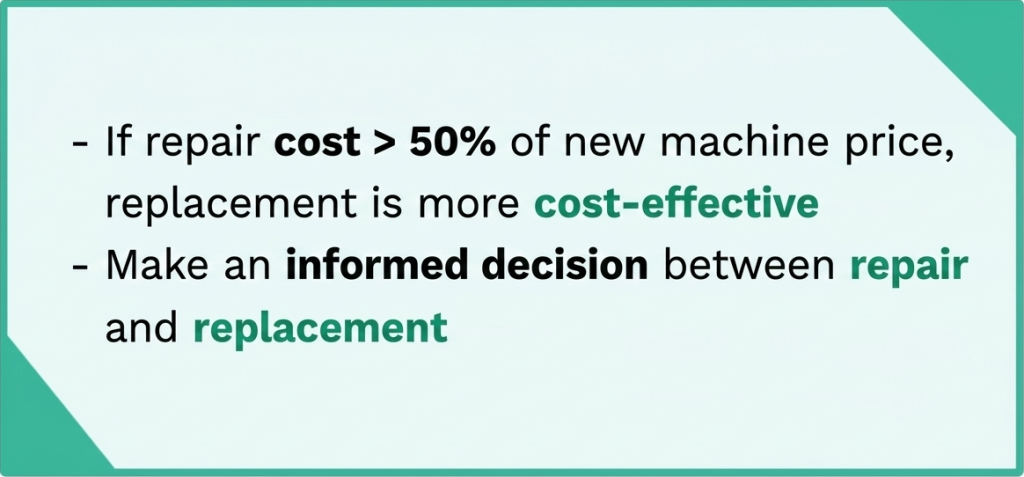
The most commonly cited industry benchmark is the 50% rule: if the cost of repair exceeds 50% of the price of a new machine, replacement is generally the more cost-effective option.
Caterpillar uses this as a guiding principle for heavy equipment decisions, and it’s widely adopted across manufacturing, construction, and facilities management.
But repair costs alone aren’t the only consideration. When calculating true replacement costs, you also need to account for:
- Taxes and depreciation: New equipment depreciates quickly, especially in the first few years. Older, already-depreciated machinery can actually be more cost-effective to repair in the short term.
- Training costs: Replacing a machine your team knows inside and out with a newer model adds onboarding time and labor costs.
- Disposal fees: Getting rid of old machinery isn’t free. Factor in disposal or resale costs when running your numbers.
- Financing: Replacement often requires capital expenditure that impacts cash flow. Equipment repairs are typically treated as operating costs, which can be easier to absorb.
The bottom line: don’t just compare the repair invoice to a sales quote. When considering repairing or replacing equipment, make sure to run the full numbers.
2. Frequency of Breakdowns and Maintenance History
A one-time repair on a reliable piece of equipment is very different from the fifth repair in 18 months on a machine that constantly causes problems.
Frequent breakdowns are one of the clearest signals that you’re dealing with aging equipment that’s approaching end-of-life.
According to a 2022 State of Industrial Maintenance Report, sudden unplanned breakdowns were rated the number one factor negatively impacting plant productivity — ahead of supply chain issues, labor shortages, and budget constraints.
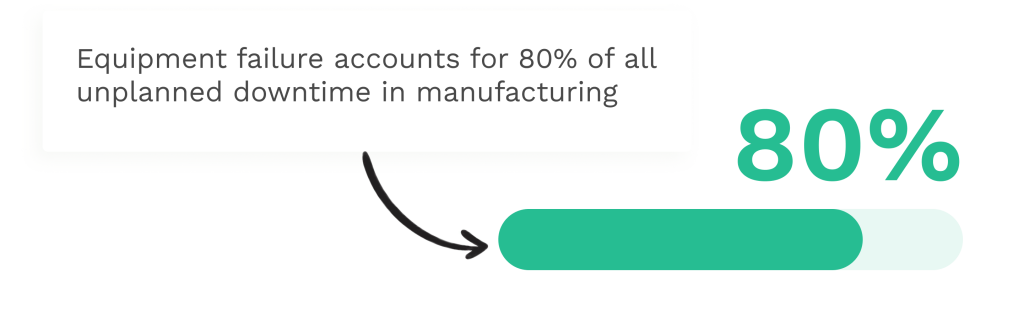
If a machine is breaking down repeatedly, you’re not just paying for each individual repair. You’re absorbing recurring labor costs, replacement parts, lost productivity, and the ripple effect on the rest of your operations.
At some point, that adds up to more than a full replacement would have cost.
This is exactly why detailed maintenance records are so important. Without them, it’s almost impossible to know whether you’re dealing with a one-off issue or a pattern of failure.
A CMMS platform like WorkTrek tracks every work order, every repair cost, and every breakdown event over the life of an asset — giving you the data to make this call with confidence rather than gut feeling.
3. Age and Remaining Useful Life of the Equipment
Age isn’t the only factor, but it’s usually a major one.
Older equipment tends to require more frequent and more expensive repairs as components wear down and replacement parts become harder to source.
There’s also a practical limit to how much life you can squeeze out of existing machinery. For some outdated equipment models, original replacement parts may no longer be manufactured.
Even when parts are available, the labor and lead-time costs of sourcing them can make repairs economically unviable.
A useful framework here is the equipment’s remaining useful life (RUL).
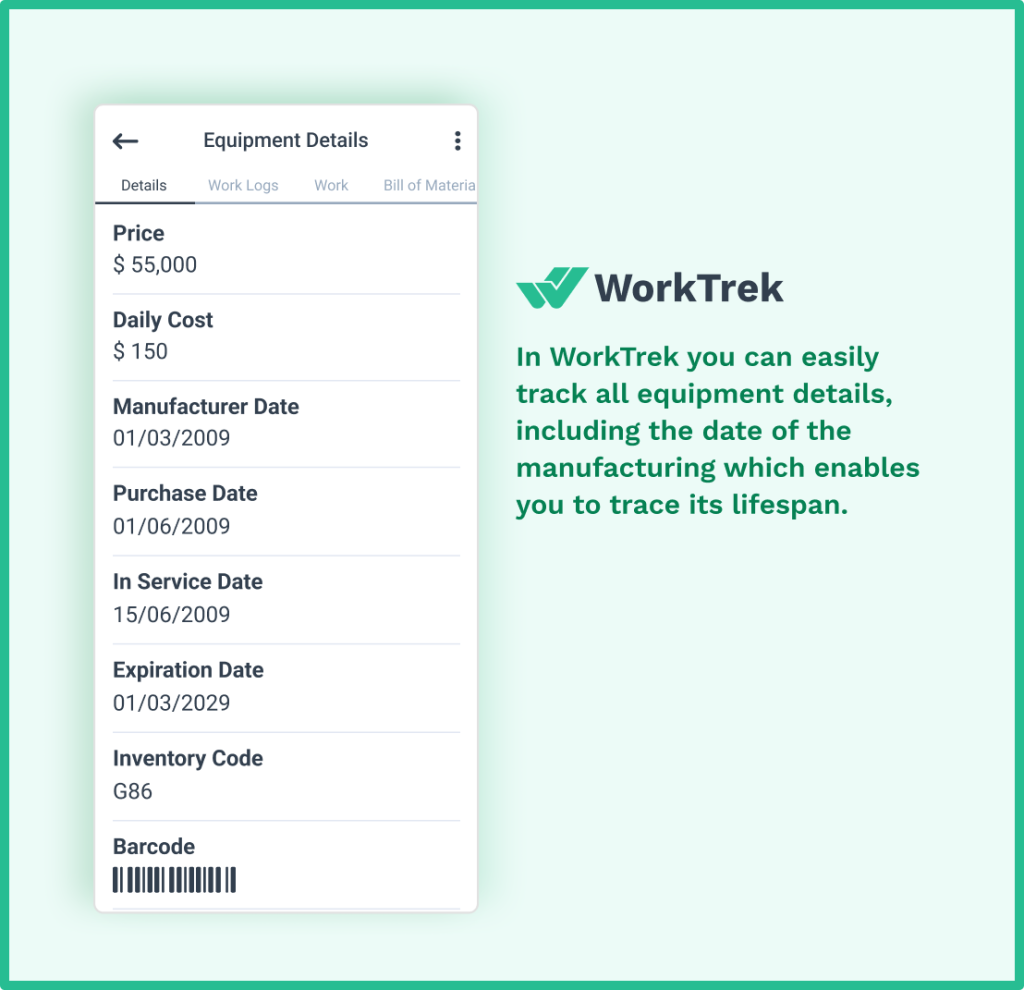
If a machine has two or three productive years left, regardless of repairs, it rarely makes sense to invest heavily in restoring it. On the other hand, if the equipment has substantial life remaining and the current issue is an isolated failure, repair is almost always the right answer.
For heavy equipment specifically, think excavators, cranes, or industrial presses, a third option also exists: rebuilding.
A quality rebuild can restore machinery to near-new condition at roughly 50–60% of the cost of a full replacement, extending its useful life by years without the depreciation hit of purchasing new.
4. Impact on Operational Efficiency and Productivity
Even a piece of equipment that technically still works can quietly drain your operational efficiency.
Older machines often run slower, consume more energy, and require more operator attention than newer models. All of this will chip away at productivity over time.
This is one of the most underappreciated factors in the repair-or-replace decision. Teams tend to focus on visible costs like repair invoices and replacement prices, but ignore the slow bleed of reduced efficiency from outdated technology.
Research from BMI Mechanical found that upgrading to modern, energy-efficient equipment can reduce energy bills by as much as 50%. For facilities with high equipment utilization, that’s a meaningful long-term benefit that can meaningfully offset replacement costs.
Newer models also often come equipped with advanced features such as:
- Telemetry
- Condition monitoring
- Automated diagnostics
All of this makes them easier to maintain and harder to run into the ground. These technological advancements don’t just increase productivity; they also enable the kind of predictive maintenance programs that help you avoid this repair-or-replace dilemma altogether in the future.
5. Safety Standards and Regulatory Compliance
This one isn’t optional. If a piece of equipment no longer meets current safety standards or regulatory requirements, repair vs. replace it before it becomes a legal and ethical decision.
Aging equipment is statistically associated with higher rates of workplace accidents. Components wear out, safety features degrade, and older machines may predate regulatory updates that have since raised the bar on what’s considered safe.
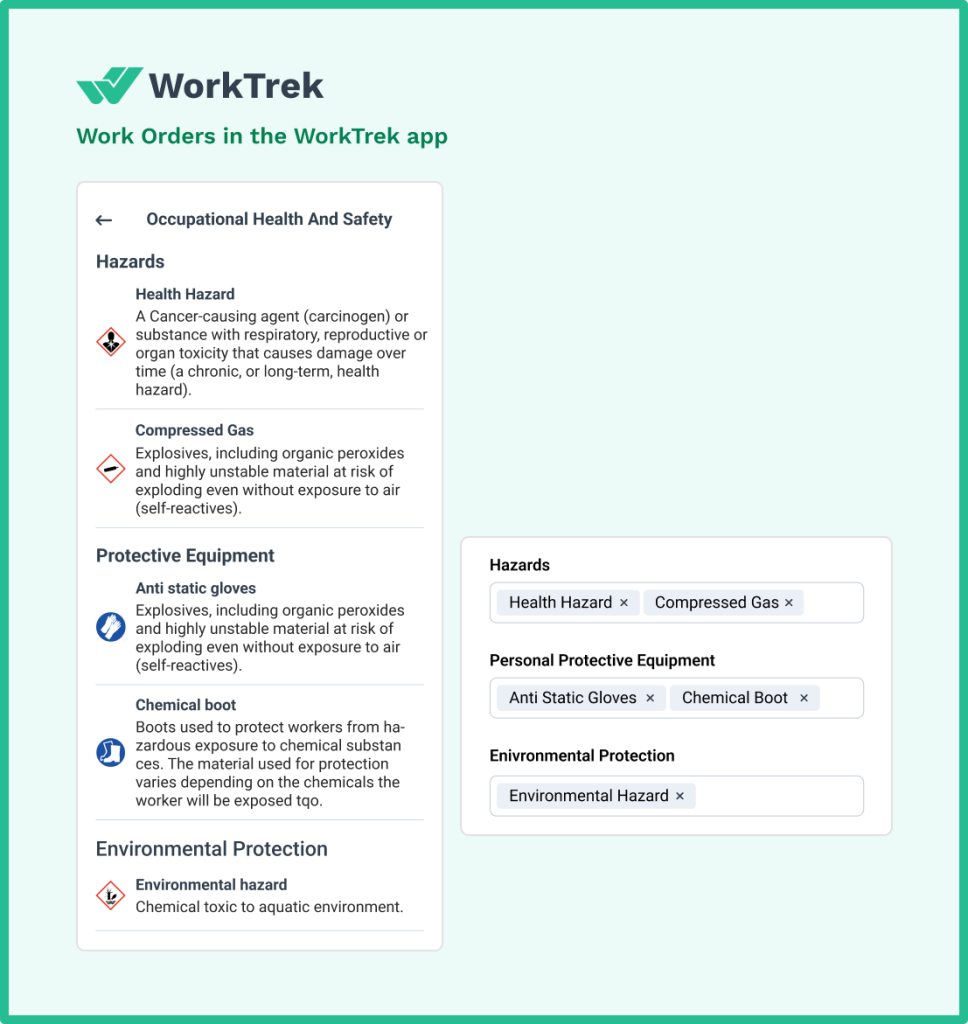
OSHA regularly updates equipment safety requirements, and failing to comply can result in fines, work stoppages, and serious liability exposure.
Before committing to any repair on older equipment, it’s worth asking: even if we fix this specific issue, will the machine still meet current safety and compliance requirements?
If the answer is no, or even uncertain, that’s a powerful argument for replacement.
Regular inspections are the best way to stay ahead of this. Catching compliance gaps early gives you time to plan a replacement rather than being forced into an emergency purchase when a machine fails an inspection.
6. Downtime and the Cost of Waiting
Every hour a critical piece of equipment is offline has a price tag.
What’s often overlooked in the repair-or-replace analysis is the comparative downtime of each option.
Repairs are typically faster than replacements. For example, a technician can often turn around a repair in hours or days, while sourcing, purchasing, and commissioning new equipment can take weeks or months.
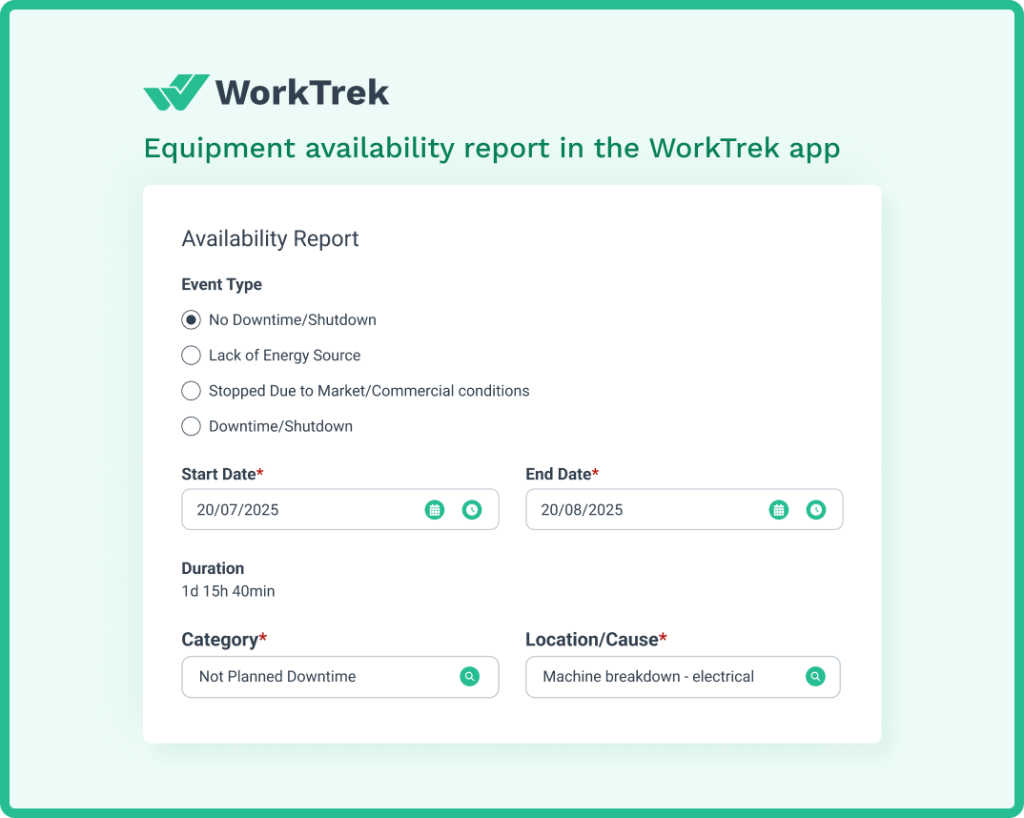
But if the machine in question keeps going down, you are then dealing with frequent breakdowns that each add hours or days of lost production.
This type of cumulative downtime of repeated repairs can actually exceed the one-time downtime of replacing the equipment entirely.
Reducing downtime should be a central variable in your decision model. Calculate not just today’s downtime, but the expected downtime over the next 12–24 months under each scenario.
7. Technological Advancements and Future-Proofing
Sometimes the right question isn’t “can we fix this?” but “should we still be running this type of machine at all?”
Technological advancements in equipment have accelerated significantly in recent years. Newer equipment models often offer improved fuel efficiency, lower emissions, smarter controls, and integration with maintenance management software that older equipment simply can’t match.
Continuing to repair outdated technology can mean locking yourself into inefficient operations for years while competitors benefit from modern alternatives.
This is particularly relevant in industries with strong sustainability goals. Newer equipment typically has a smaller carbon footprint than older counterparts.

This is usually accomplished with improved fuel efficiency and reduced waste from fewer repairs. If reducing environmental impact is part of your operations strategy, that’s a genuine long-term benefit worth factoring into the decision.
There’s also the question of parts availability.
As equipment manufacturers release newer models, support for older models is eventually phased out. Do you really want to be scouring Ebay to find an old part?
If you’re already having trouble sourcing replacement parts for your current equipment, that’s a warning sign that full replacement should be on the near-term roadmap, repair or not.
8. Cash Flow and Budget Timing
Even when replacement is clearly the right long-term answer, the practical reality of cash flow matters.
Not every organization can absorb a major capital expenditure at any given moment, and a well-executed repair can bridge the gap between “now” and “when we can fund the right replacement.”
This is a legitimate reason to repair rather than replace. However, this should only be done deliberately and with a clear plan.
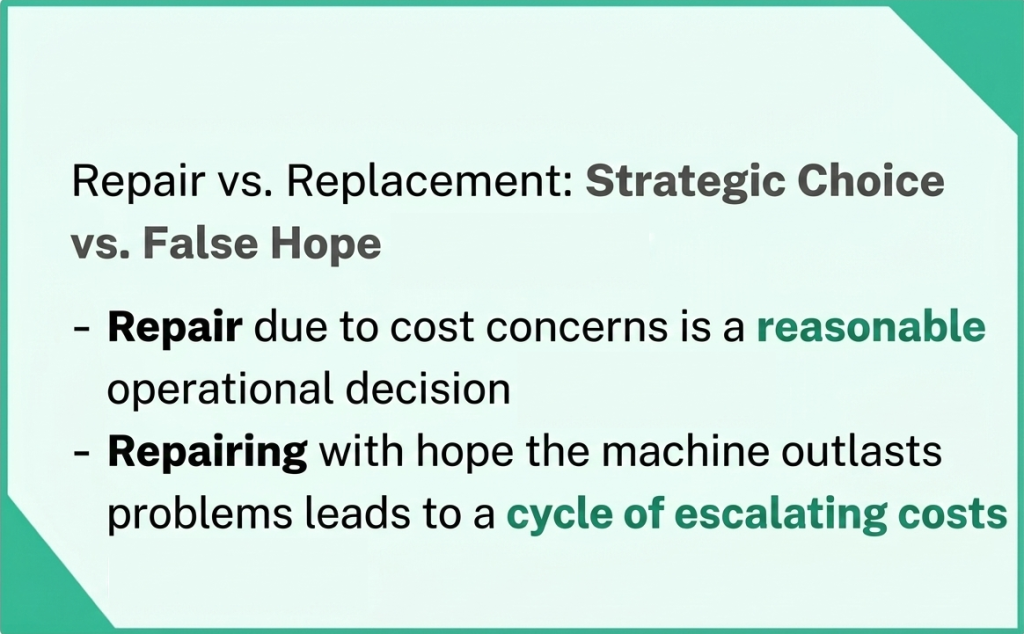
Choosing repair because replacement feels too expensive is reasonable. Choosing repair because you’re hoping the machine will outlast its problems is how organizations end up in a cycle of escalating costs.
A few things worth considering on the financial side: some replacement parts and equipment qualify for tax benefits or accelerated depreciation.
This can make new equipment less expensive than it initially appears. And financing options for capital equipment purchases have expanded considerably. It is always worthwhile to talk to your finance team and vendors before assuming you can’t afford to replace.
The goal is to make aninformed decision based on total cost of ownership, not just the immediate number on a quote.
How a CMMS Makes the Repair-or-Replace Decision Easier
Deciding whether to repair or replace a piece of equipment is a complex process.
But it’s made significantly harder and without good data. That’s exactly where a Computerized Maintenance Management System (CMMS) pays for itself.
A CMMS gives maintenance teams the detailed maintenance records they need to make this call objectively.
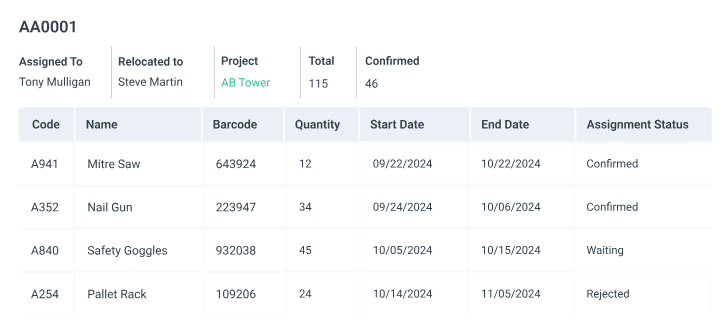
Instead of relying on memory, spreadsheets, or tribal knowledge, you have a complete asset history: every work order, every repair cost, every breakdown event, every part replaced, and every hour of downtime accumulated over the life of the machine.
That data makes patterns visible. You can see at a glance whether a machine has been a reliable workhorse or a recurring money pit.
WorkTrek takes this a step further. Designed specifically for maintenance operations teams, WorkTrek’s Asset Management module tracks real-time equipment performance data and maintenance histories in a single, searchable platform.
When a machine breaks down, you don’t have to guess whether it’s been a problem before — the answer is right there.
WorkTrek also enables proactive preventive maintenance scheduling, which reduces the frequency of breakdowns in the first place.
Fewer unplanned failures means fewer emergency repair-or-replace decisions made under pressure. Instead, you can evaluate aging equipment on your timeline, with the full cost picture in front of you.
Some of the ways WorkTrek directly supports the repair-or-replace decision process:
- Maintenance cost tracking per asset: See exactly how much you’ve spent repairing a specific machine over any time period.
- Work order history: Review the frequency and nature of past failures to identify chronic problem assets.
- Downtime reporting: Quantify the productivity impact of equipment failures to factor into total cost calculations.
- Parts and inventory management: Know immediately whether the replacement parts you need are in stock or on backorder.
- Inspection checklists: Run structured safety and condition assessments to inform replacement timing before a crisis forces your hand.
When maintenance teams have this level of visibility into their assets, repair-or-replace decisions stop being gut-feel decisions and become data-driven ones.
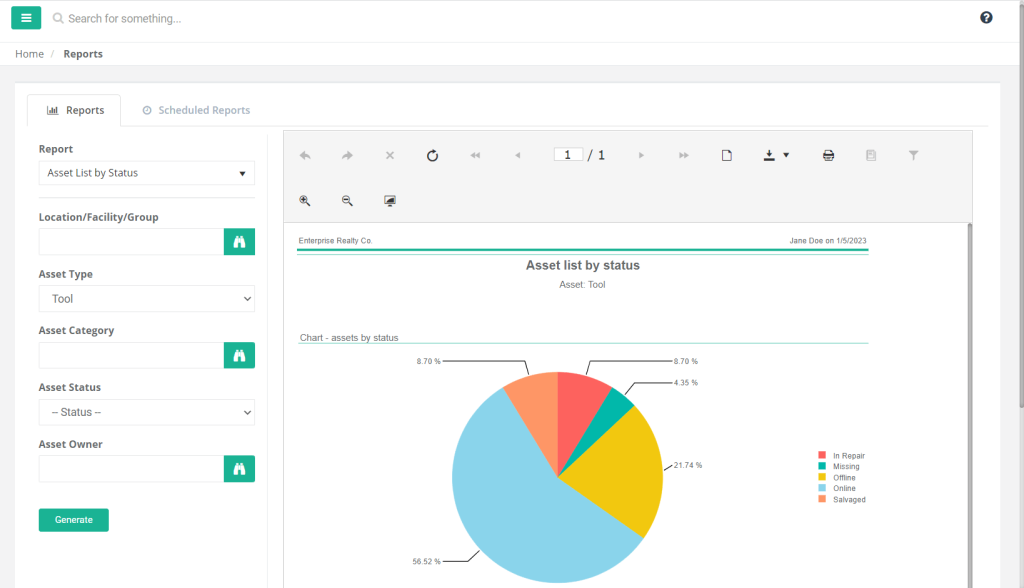
That’s the difference between making the best course of action and making the wrong choice under pressure.
Conclusion
There’s no magic formula that automatically tells you whether repairing or replacing equipment is the right answer.
But there is a set of key factors that will lead you to the right decision far more often than going with instinct alone.
Start with the cost math: compare repair costs against replacement costs, and don’t forget depreciation, training, and disposal.
Factor in breakdown history and whether the machine’s performance has been trending in the wrong direction.
Consider the equipment’s age, available parts, and remaining useful life.
Weigh the operational efficiency gains of newer models against the cash-flow impact of a full replacement. And always make meeting safety standards non-negotiable.
Above all, make sure you have the data to support your decision. Teams that maintain detailed records in a CMMS like WorkTrek consistently make faster, smarter, and more cost-effective repair-or-replace decisions.