


Get a Free WorkTrek Demo
Let's show you how WorkTrek can help you optimize your maintenance operation.
Try for freeKey Takeaways:
- The industrial maintenance services market is projected to grow to $85.5 billion by 2031.
- Manufacturing businesses lose approximately $225 million due to downtime.
- The total cost of work-related injuries reached $176.5 billion in 2023.
- 77% of employees say AI has increased their workloads.
In this article, you’ll learn everything you need to know about industrial maintenance, including its role in successful business operations, its current challenges, and how to overcome them.
At first glance, industrial maintenance may seem like nothing more than a cost center.
For many, it’s a necessary evil that offers very little value beyond simply repairing broken machines.
However, as you’ll discover while reading this article, this couldn’t be further from the truth.
Industrial maintenance is, in fact, a cornerstone of operational efficiency, workplace safety, and long-term profitability.
Read on to find out more.
What is Industrial Maintenance?
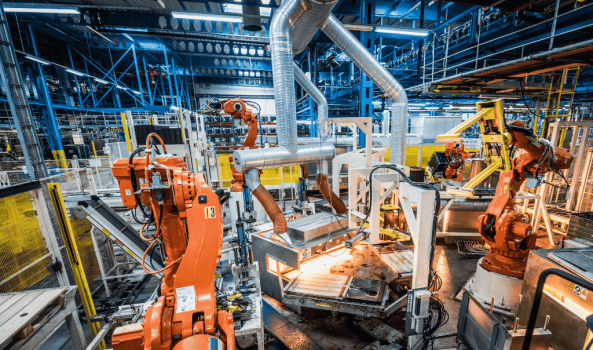
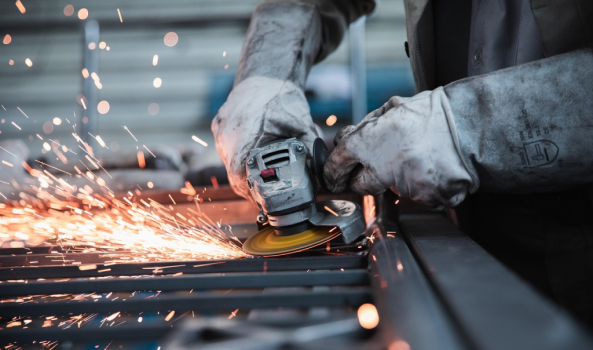
Industrial maintenance is the process of inspecting, servicing, and improving equipment and systems to ensure an industrial facility operates efficiently and safely.
All sorts of industries that produce goods, such as manufacturing, mining, construction, and utilities, rely on this type of upkeep to maintain operational stability and achieve their performance targets.
It’s also important to note that industrial maintenance teams aren’t only responsible for the assembly line, but for all operational environments within a facility.
For example:
| Logistics | Maintaining conveyor systems, automated storage and retrieval systems (AS/RS), forklifts, and barcode scanners |
| Utilities | Testing, inspecting, and performing upkeep on pumps, transformers, and HVAC systems to ensure continuous access to electricity and other services |
| Energy facilities | Monitoring and servicing control panels, steam or cogeneration systems, and solar panels |
In short, industrial technicians carry significant responsibilities and are vital to maintaining smooth and safe operations.
And as machinery and facilities become more advanced and complex, their role continues to evolve alongside them.
In fact, according to data from Allied Market Research, the global industrial maintenance services market is projected to grow from $49 billion in 2021 to $85.5 billion by 2031.
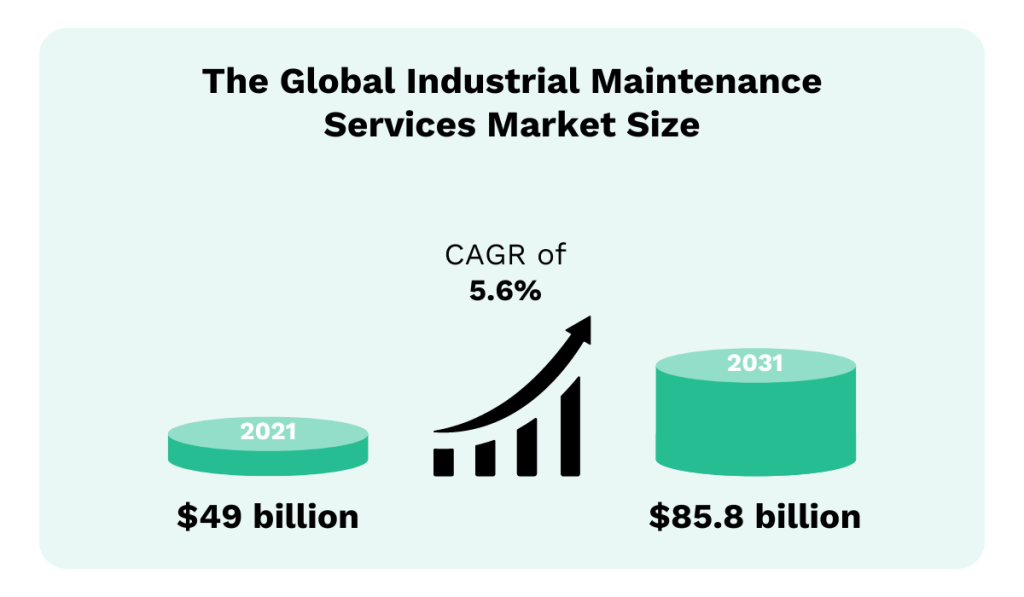
As machinery advances, facilities expand, and end-user demand increases, organizations need With machinery advancing, facilities expanding, and end-user demand increasing, organizations are in need of highly skilled maintenance professionals more than ever before.
Those without in-house expertise have no choice but to turn to outsourcing to fill the gap.
Because, when it comes to industrial maintenance, there’s simply no room for cutting corners.
Why Regular Maintenance Matters in Industrial Settings
We’ve established that industrial maintenance is extremely important, but we haven’t yet answered why.
In the following sections, you’ll learn all about the benefits of regular upkeep within industrial environments.
Reduces Unplanned Downtime
Regular asset inspection and servicing help detect wear, misalignment, and minor defects before they escalate into major failures that can disrupt entire operations.
There is no more effective defense against the number one enemy of industrial environments: unplanned downtime.
Unplanned downtime is one of the most costly and disruptive challenges in industrial operations, sometimes costing companies millions of dollars per incident.
For example, research from Splunk shows that manufacturing businesses lose approximately $255 million due to downtime.
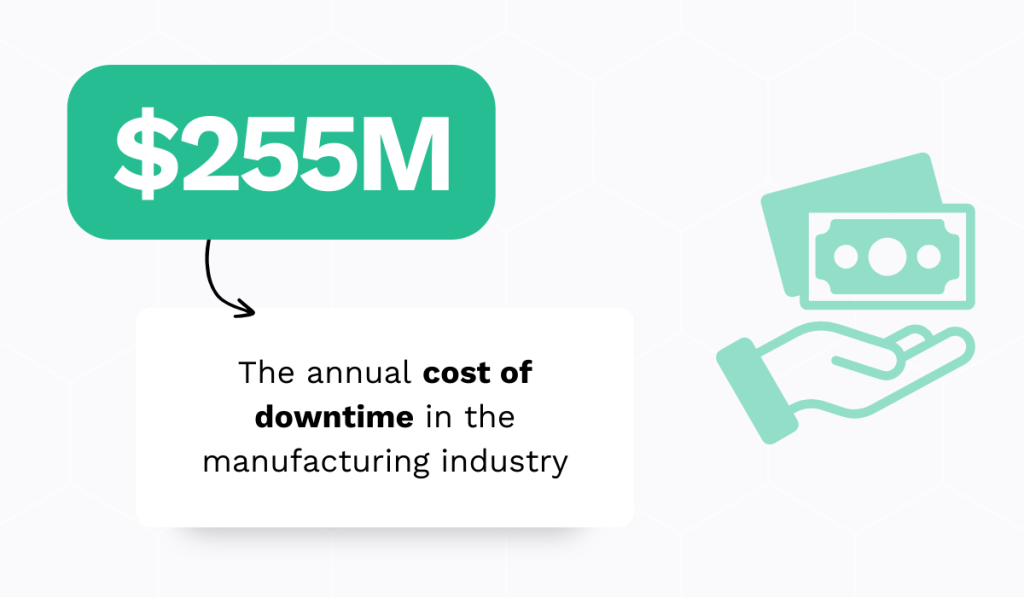
These immense losses occur because downtime affects multiple areas at once, from regulatory or SLA penalties and lost revenue to damage control expenses and overtime wages.
That’s why companies are investing heavily in various proactive maintenance strategies to address this costly issue.
Some are implementing advanced condition-monitoring technologies to optimize their schedules, while others are upgrading outdated systems that require excessive maintenance.
And some organizations, like Malaysia-based oil and gas company PETRONAS, are turning to predictive maintenance to reduce downtime.
In 2020, PETRONAS deployed a predictive maintenance system that monitors asset conditions and provides early warning alerts and diagnostics of issues days, weeks, or even months before failure.
Azizol Kamaruddin, Principal of Rotating Equipment at PETRONAS, praised the new system:
“[The predictive maintenance system] prescribes the corrective actions each time anomalies are triggered. This eliminates the need for manual, time-consuming investigations, and decisions can be made quickly, which in turn, boosts productivity.”
The results of this new maintenance approach have been truly impressive.
For instance, an instrumentation fault was detected that caused a restriction in a liquid separator, saving PETRONAS approximately $222,000 in potential asset failure and wasted materials.
It’s clear proof that, with the right maintenance strategy, downtime isn’t as much of a concern as it once wasdoesn’t have as big a concern as it once used to be.
Keeps Workers Safe
Machines that operate smoothly and predictably are far less likely to cause serious accidents or injuries.
This is particularly important in industrial environments, where heavy machinery, high voltages, hazardous materials, and extreme temperatures can create significant safety risks.
A 2018 incident involving a Lithuanian roll-on/roll-off (ro-ro) cargo ship illustrates how poor maintenance can easily escalate into disaster.
It all began with a single faulty component that caused a catastrophic engine failure, resulting in structural engine damage and a fire in the engine room.
The vessel’s third engineer, who was on duty at the time, suffered serious smoke-related injuries to his lungs, kidneys, and eyes while escaping.
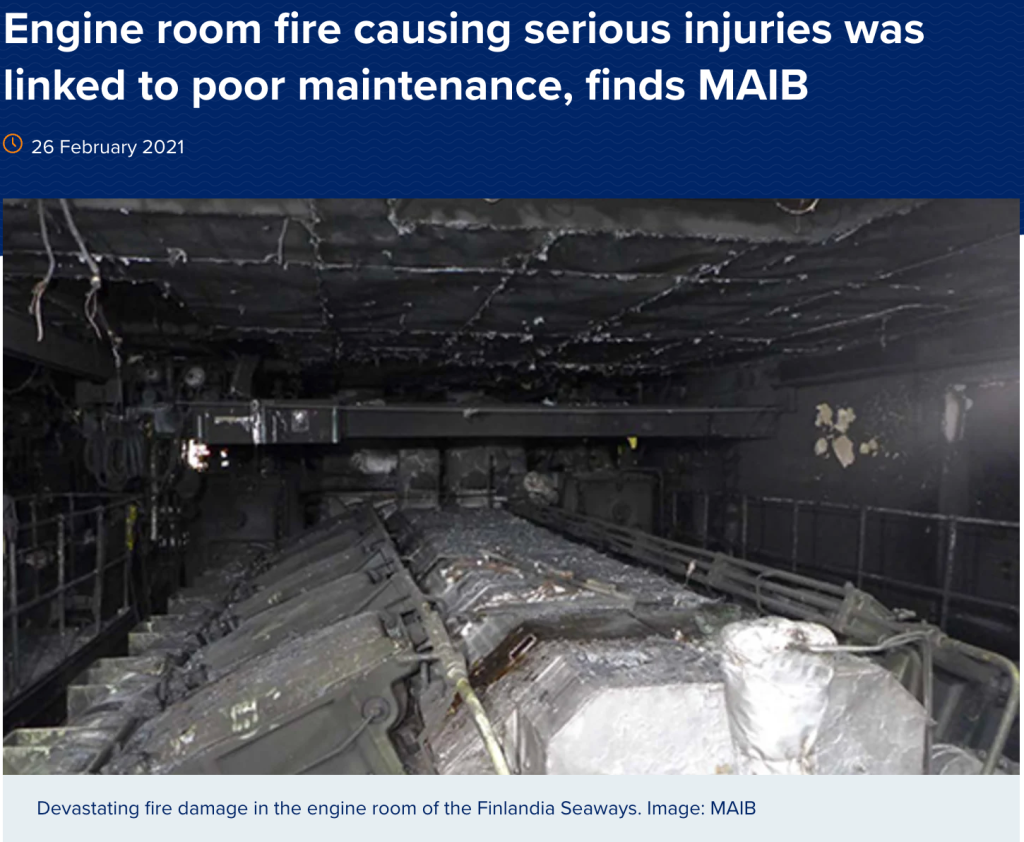
It was later discovered that the engine’s connecting rods had not been maintained in accordance with the manufacturer’s instructions, which was the cause of this terrible incident.
This lesson here is quite clear.
Proactive maintenance spells the difference between smooth, routine operations and serious, potentially fatal accidents.
However, it’s also important to note that, beyond the paramount goal of protecting human life, strong upkeep/safety practices also shield companies from costly consequences.
These include high employee turnover, regulatory fines, and reputational damage.

The 2023 National Safety Council (NSC) provides more insight into the repercussions of preventable occupational injuries.
The total cost of work-related injuries that year reached $176.5 billion, averaging $1,080 per worker.
Additionally, these workplace injuries resulted in 70 million lost workdays, with the NSC estimating that an additional 55 million days will be lost in future years due to injuries that occurred that year.
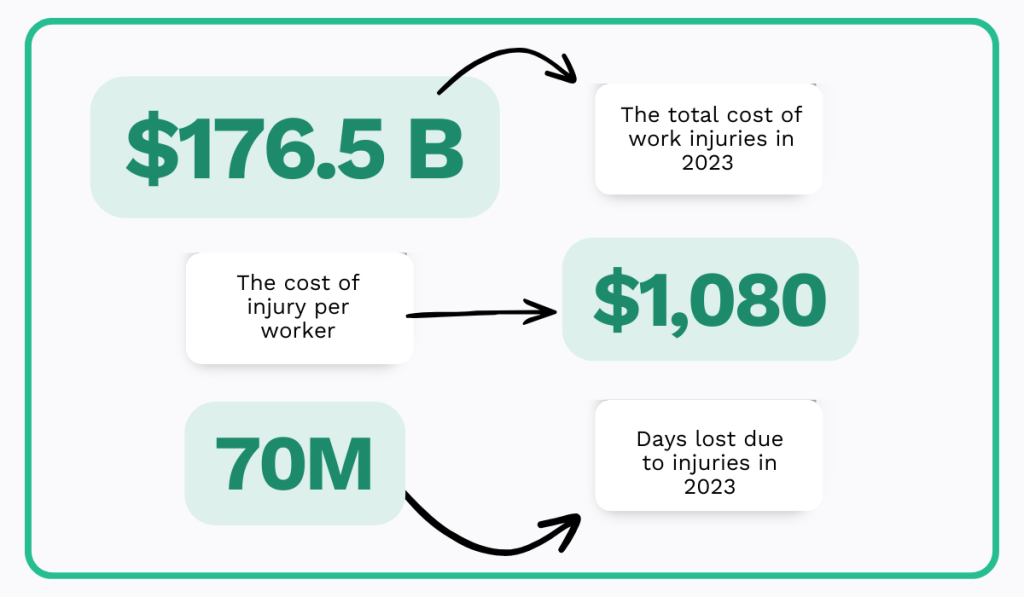
These figures show why safety must always be the top priority in industrial environments.
It’s vital not only for protecting workers but also for shielding operational stability, productivity, reputation, and the bottom line.
And it all starts with consistent, proactive maintenance of machinery and facilities.
Supports Regulatory Compliance
In addition to being reliable and safe, properly maintained machines are also compliant with all relevant laws and regulations.
Remember, industrial operations are governed by strict safety, environmental, and operational standards.
Regular maintenance, along with up-to-date maintenance logs, is key to meeting these requirements and avoiding severe penalties.
This is particularly true in highly regulated sectors such as food processing.
Feraas Alameh, the Market Segment Manager for Food & Beverage at Sherwin-Williams Protective & Marine, a leading supplier of protective coatings for industrial use, explains:
“A preventive maintenance plan which includes routine cleaning, equipment maintenance, and timely repairs helps to ensure all critical surfaces remain hygienic, slip-resistant, and compliant with food safety regulations.”
Overall, regulatory bodies have little sympathy for companies that put their workers, the public, or the environment at risk.
They will not hesitate to pursue legal action, which in some cases can result in mandatory shutdowns or the revocation of operating licenses.
Even so-called best-case scenarios, i.e., financial penalties, can be highly damaging.
For example, ProCon, a provider of paper sales and supply chain solutions for the North American paper printing and packaging industries, was fined $280,000 by OSHA in 2025.
That same year, Nova Chemicals, a major North American producer of plastics and chemicals, was fined $130,000 for safety violations following an incident that left a worker seriously injured.
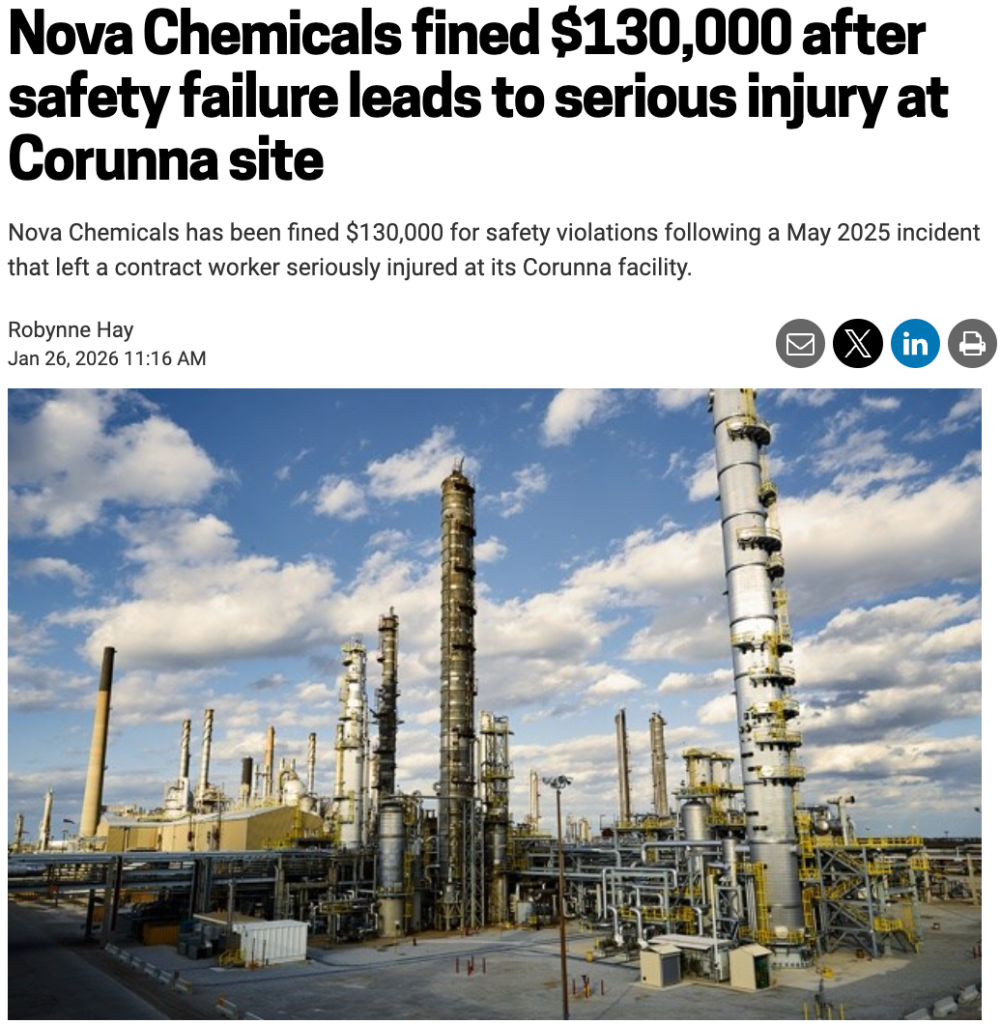
In both cases, investigators found deficiencies in maintenance training and documentation, including a lack of clear SOPs for machine operation and upkeep.
Unfortunately, many companies still treat maintenance purely as a cost center, failing to recognize that regular, carefully documented upkeep is not optional and carefully documented upkeep is not optional, but mandated by law.
It must be taken seriously at all times.
Those who neglect it risk severe fines and operational disruptions.
Those that prioritize it, however, gain a competitive advantage and build a reputation as reliable, safety-conscious organizations that care about their people and the environment.
The Biggest Challenges in Industrial Maintenance
Unfortunately, not every industrial company with a reliable maintenance team is able to unlock these benefits.
The industry is plagued by its own unique problems that cause inefficiencies, safety issues, and financial losses.
Here are some of the most common challenges, and how to address them.
Skills Gaps
Right now, the maintenance industry as a whole is experiencing significant challenges in finding skilled labor.
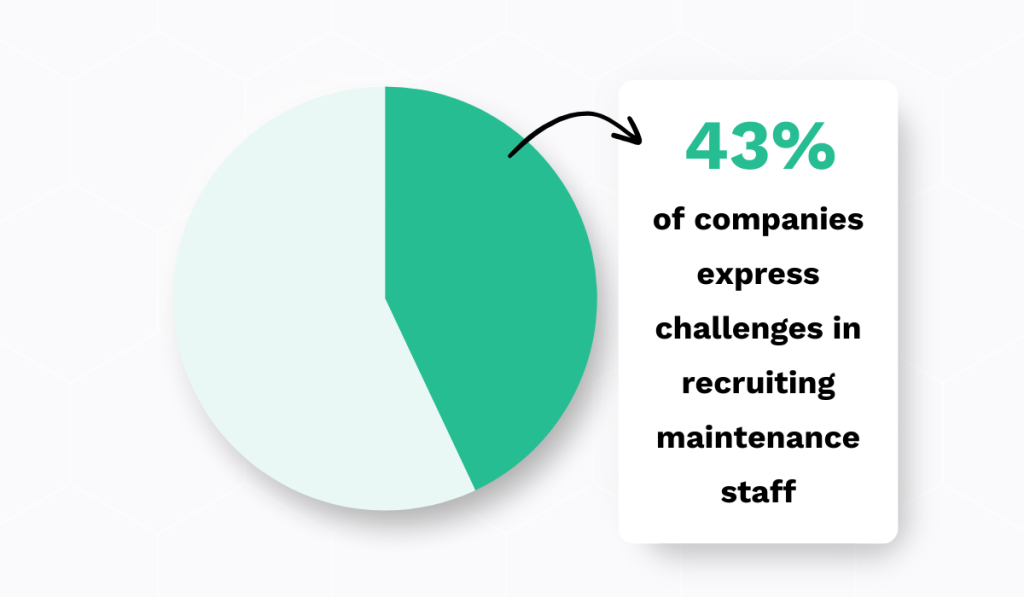
In fact, according to a survey by ABB, 43% of maintenance teams reported difficulties recruiting qualified staff in 2023.
This shortage is driven by two main factors.
First, industrial machinery and operations are becoming increasingly complex and technology-driven.
This means that today’s workers need not only strong technical skills but also digital competencies to operate and maintain these advanced systems.
Unfortunately, professionals with this combination of skills are in short supply.
Second, the workforce is aging.
Igor Marinelli, CEO and Co-Founder of Tractian, an Industrial AI company specializing in predictive maintenance, explains:
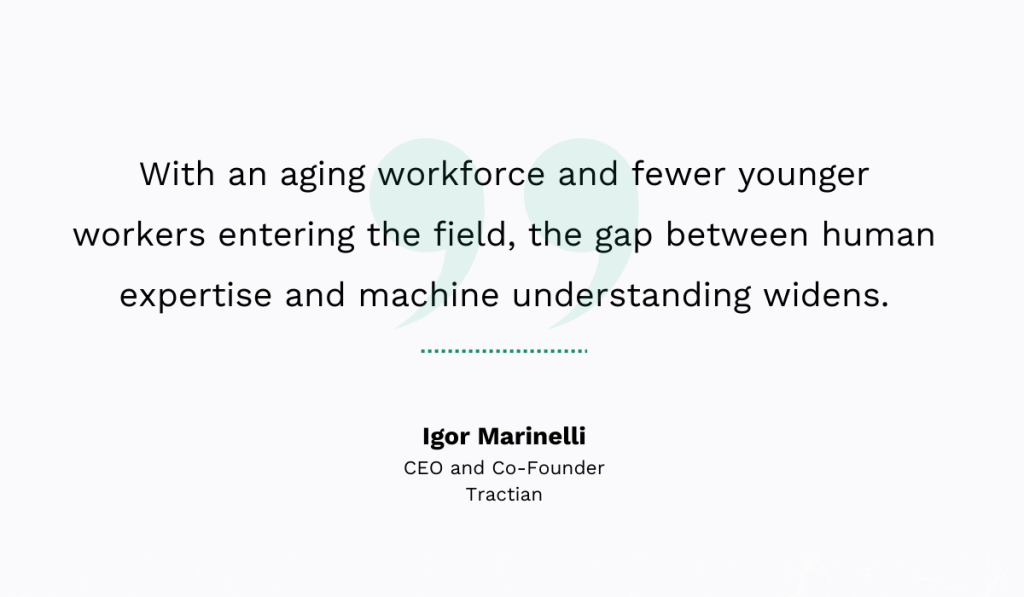
This poses a serious challenge for industrial environments, as it directly affects the quality of maintenance work.
A shortage of skilled workers often leads to rushed jobs, inefficient repairs, and mistakes that can cause greater long-term damage.
That’s why companies need to focus on retaining the employees they already have now more than ever.
Below, you’ll find worker retention strategies used by the US manufacturers, as reported by Deloitte.
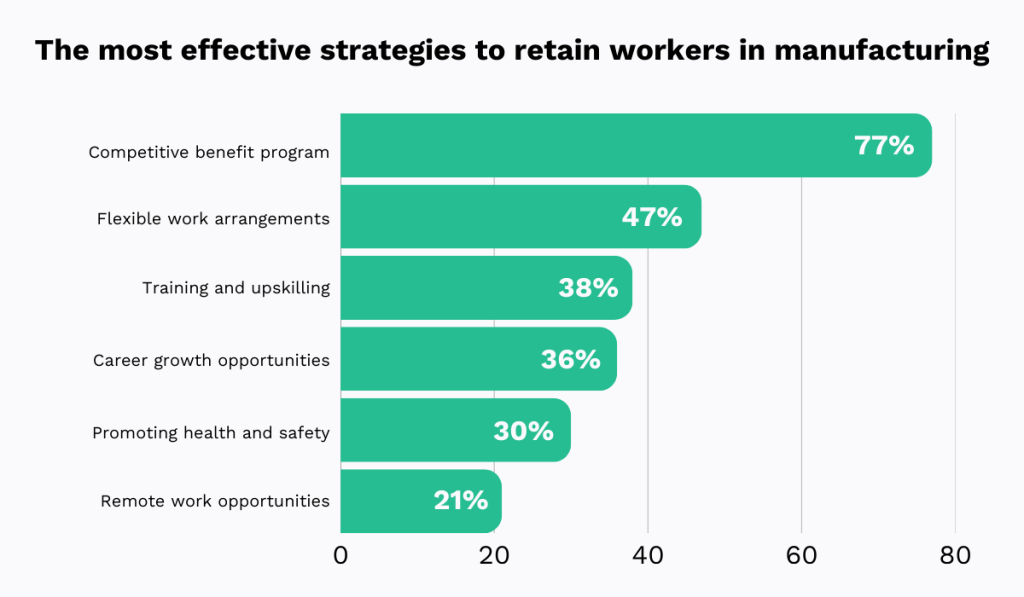
As you can see, the most effective tactics include strong benefits programs, flexible work arrangements, and ongoing training.
Essentially, employees want to see that their employers are willing to invest in them and treat themto be treated as the valuable assets they are.
As one executive interviewed by Deloitte put it:
“People who have been here for a long time and new hires are seeking a sense of belonging and being part of something bigger.”
Give them that sense of belonging through structured training, regular feedback, and genuine care for their well-being, and you’ll build a loyal workforce committed to the organization’s long-term success.
Transition to Predictive Maintenance
Currently, there’s a lot of talk about predictive maintenance and advanced technologies like IoT and AI, and how they can transform industrial operations or help address the skills gap.
Naturally, this sounds appealing to many executives who focus only on potential benefits but overlook the challenges.
The reality is that implementing predictive maintenance can be quite expensive, and most teams aren’t yet trained to handle the large volumes of data these predictive systems generate.
This likely explains why only 27% of industrial companies currently use predictive maintenance.
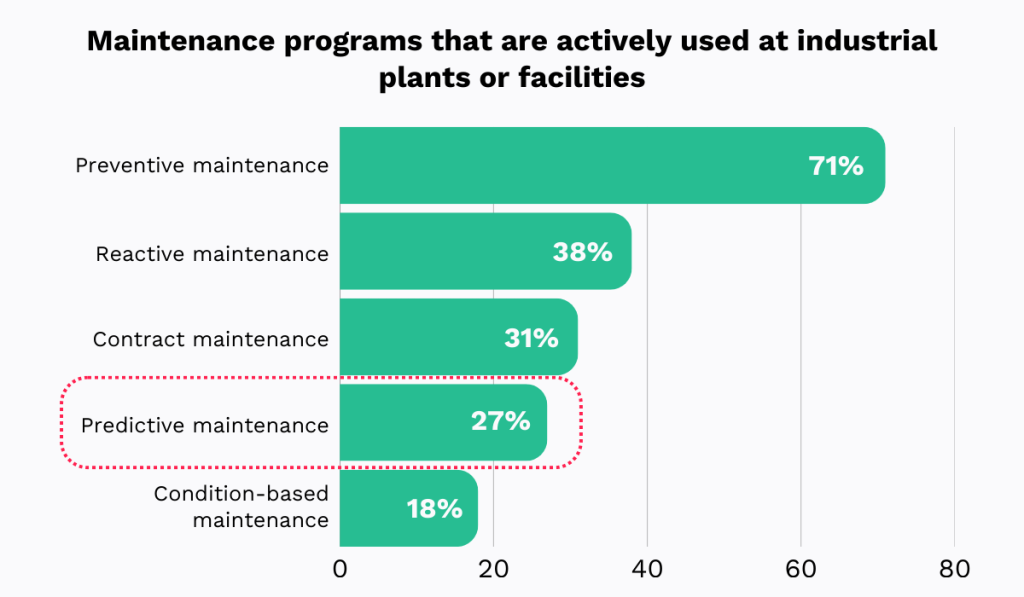
Implementing it represents a significant and complex change: sensors must be installed properly, data compiled, cleaned, analyzed, and integrated into planning processes.
Each step demands specific skills, knowledge, and a budget. Companies that aren’t truly ready for this change risk deploying technology that can cause more harm than good.
In fact, Forbes research shows that in many cases, AI, a core component of predictive maintenance programs, has actually increased workloads and decreased productivity.
Many employees are frustrated, maintaining that their companies are asking too much of them when it comes to AI.
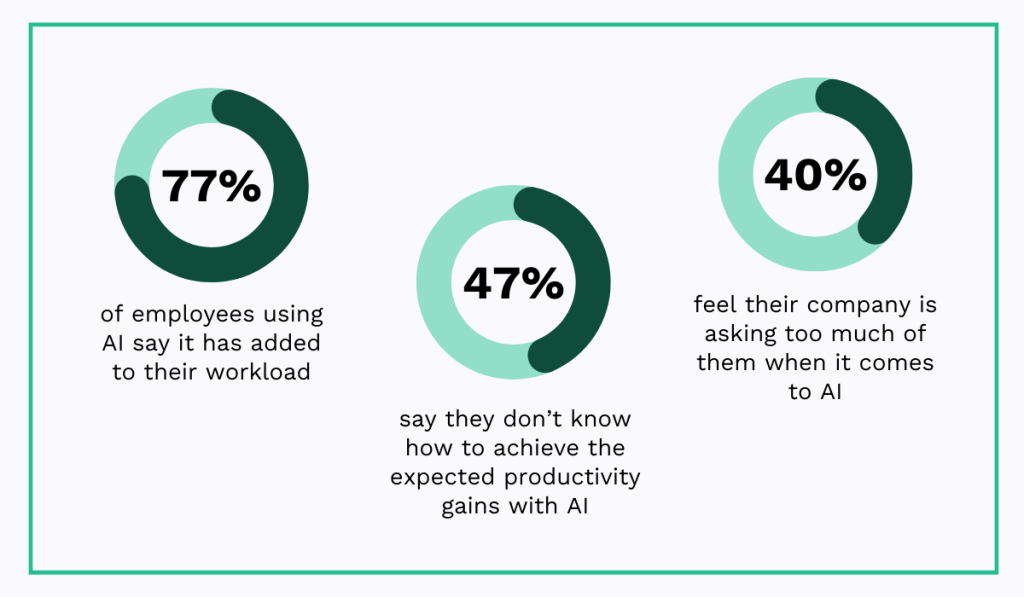
So, instead of rushing into the latest trends, it’s important to first assess your current processes and data maturity to determine whether your organization is ready for such a big shift.
This helps avoid wasted resources, highlights capability gaps, and ensures that when you do implement advanced technologies, you’re setting yourself up for success.
Outdated Processes
Speaking of maintenance maturity, the unfortunate reality is that many teams aren’t yet ready even for basic preventive programs, let alone advanced predictive maintenance.
The 2025 Zapium research confirms this, showing that many teams still rely on manual processes with no systematic way to track productivity, no PM schedules, and limited visibility into operations.
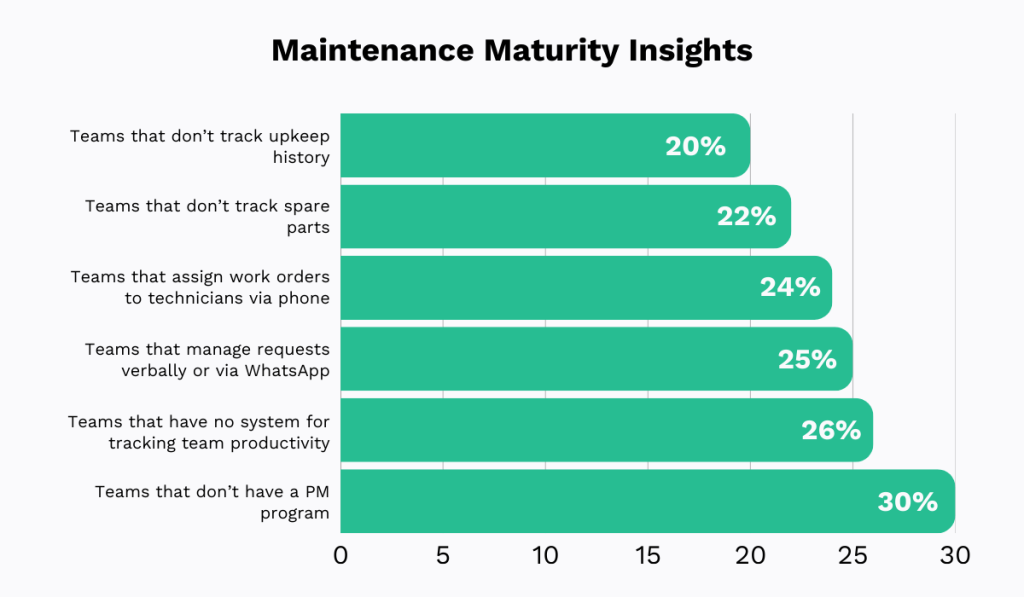
Such an outdated approach significantly slows down work, increases errors, and ultimately harms both asset reliability and operational efficiency.
Simply put, manual methods cannot keep pace with the demands of modern industrial companies.
For teams stuck in analogue mode, now is the perfect time to digitize maintenance operations and eliminate these inefficiencies.
No, this doesn’t mean jumping straight into the most advanced technologies.
There is a “golden middle” between manual work and fully advanced processes, and it’s called a Computerized Maintenance Management System (CMMS).
InterEnergo, a major international energy company headquartered in Slovenia, implemented this type of system, and it delivered impressive results.
Matjaž Valenčič, Operations & Maintenance Manager at interEnergo, explains:
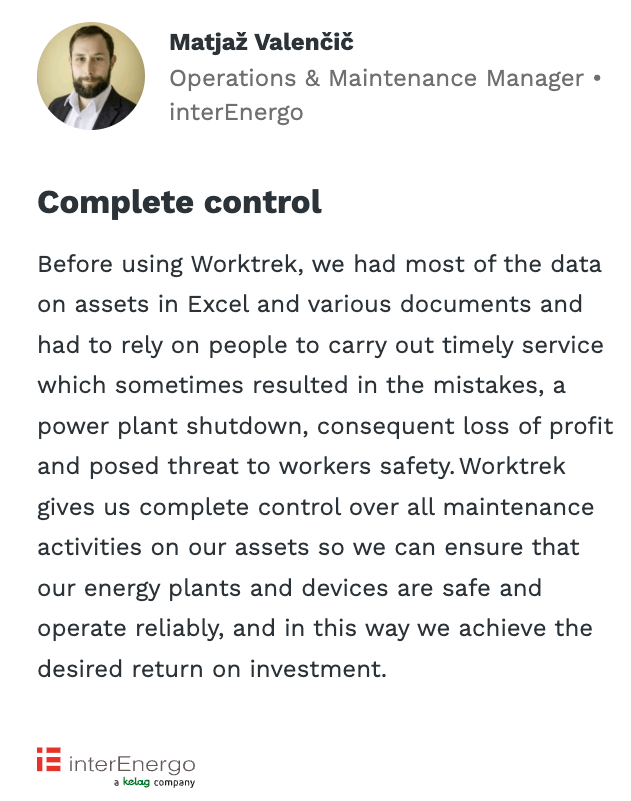
CMMS solutions like WorkTrek serve as a central hub for all maintenance-related activities.
They automate work orders, preventive maintenance scheduling, spare parts tracking, invoicing, and more, ensuring that data is always accurate, up-to-date, and easily accessible.
This makes transitioning to proactive maintenance strategies much simpler.
Instead of assigning tasks by phone, planning work using spreadsheets, and manually tracking spare parts, supervisors can handle everything in one system.
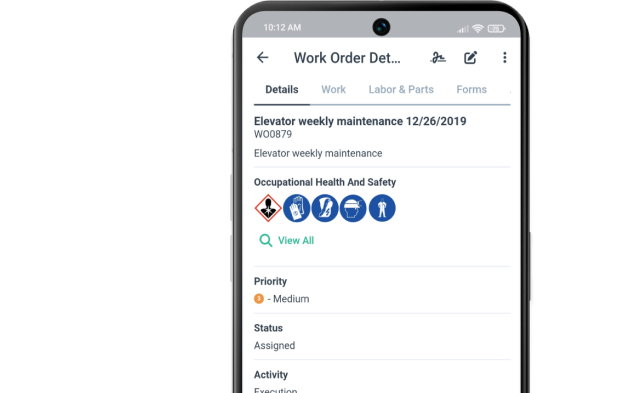
They can create a work order using a template that includes SOPs and safety data, assign it to the right worker, and set a due date.
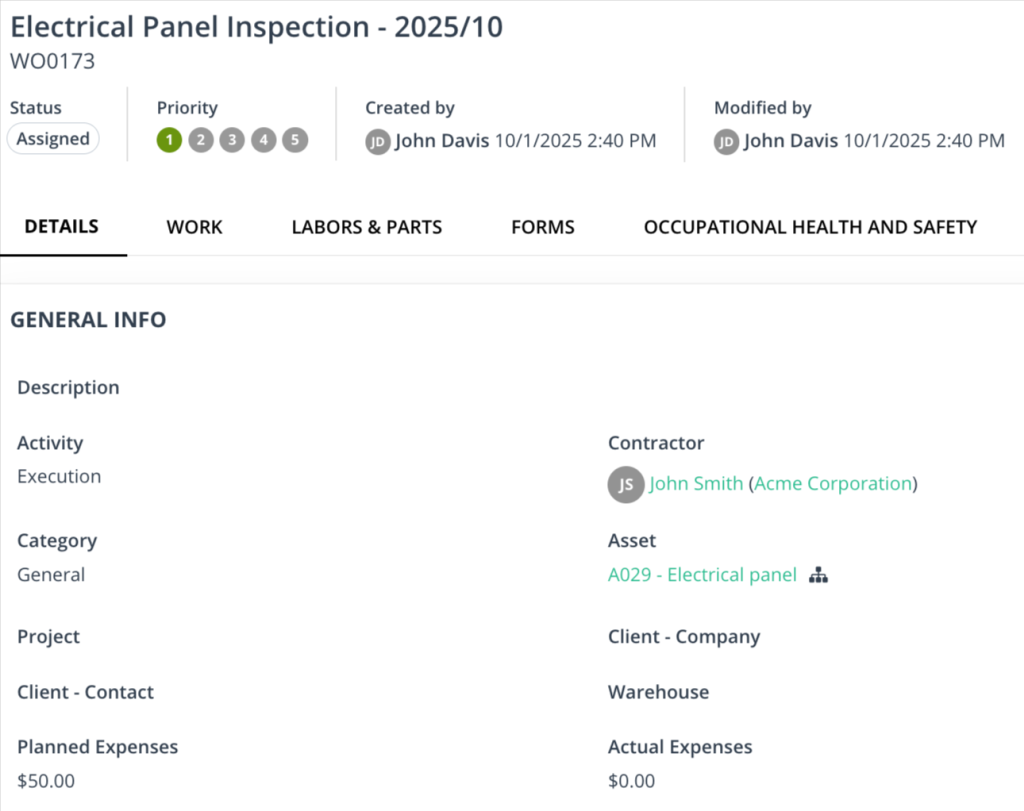
When the time comes, the worker receives a reminder and can access the work order on their phone, complete with all the information needed to perform the task efficiently and safely.
The bottom line is this: you don’t need the latest technology to achieve strong results in maintenance operations, but you also can’t afford to be held back by outdated processes.
CMMS solutions like WorkTrek are an efficient, user-friendly way to unlock significant productivity gains without overwhelming the team.
Conclusion
Hopefully, this article has given you a new appreciation for industrial maintenance and the technicians who perform this complex, dangerous, yet essential work every day.
Right now, it’s not easy to be in their shoes.
Numerous challenges are making their jobs more difficult than they should be, slowing them down, burning them out, and adding unnecessary stress.
At the same time, there has probably never been a more exciting time to be in this field, too.
A wide range of emerging technologies and tools, from predictive analytics to maintenance robots, are poised to transform the industry, making it more efficient and safer for everyone.
It will be exciting to see how the industry continues to evolve, especially as advanced technologies become more accessible and outdated processes are fully replaced.