

Get a Free WorkTrek Demo
Let's show you how WorkTrek can help you optimize your maintenance operation.
Try for freeKey Takeaways:
- Adopting energy management programs unlocks energy savings of about 11%.
- Unscheduled downtime costs the world’s 500 biggest companies $1.4 trillion annually.
- 82% of companies say 3D printing helped them save costs.
For decades, industrial maintenance teams followed a simple rule: wait until something breaks, then fix it.
Today, this is no longer sustainable.
Equipment failures can halt entire production lines, disrupt supply chains, and cost companies millions in lost productivity.
As factories become more connected, equipment grows more complex, and operational efficiency becomes increasingly critical, maintenance is evolving into a more strategic discipline.
As a result, various upkeep technologies and advanced tools are emerging, transforming how organizations maintain their assets and keep operations running.
In this article, we explore these and outline major trends shaping the future of industrial maintenance.
Increased Use of CMMS Solutions
Industrial maintenance has evolved far beyond clipboards, spreadsheets, and reactive repairs.
Today, Computerized Maintenance Management Systems (CMMS) have become the operational backbone of modern maintenance teams.
A good CMMS puts everything in one place, then keeps it both safe and accessible.
That means everything from preventive maintenance scheduling and work order management to spare parts tracking, asset histories, and performance analytics is handled within a single, unified platform.
With this information accessible in one place, teams can reduce manual coordination, respond faster to issues, and make decisions based on real operational data.
Automated reporting and KPI dashboards also give maintenance leaders a clearer view of overall asset performance.
Instead of guessing whether to repair or replace equipment, teams can analyze historical maintenance data, technician productivity, and asset reliability trends to guide decisions.
This visibility is vital in industrial environments, where downtime carries enormous financial consequences.
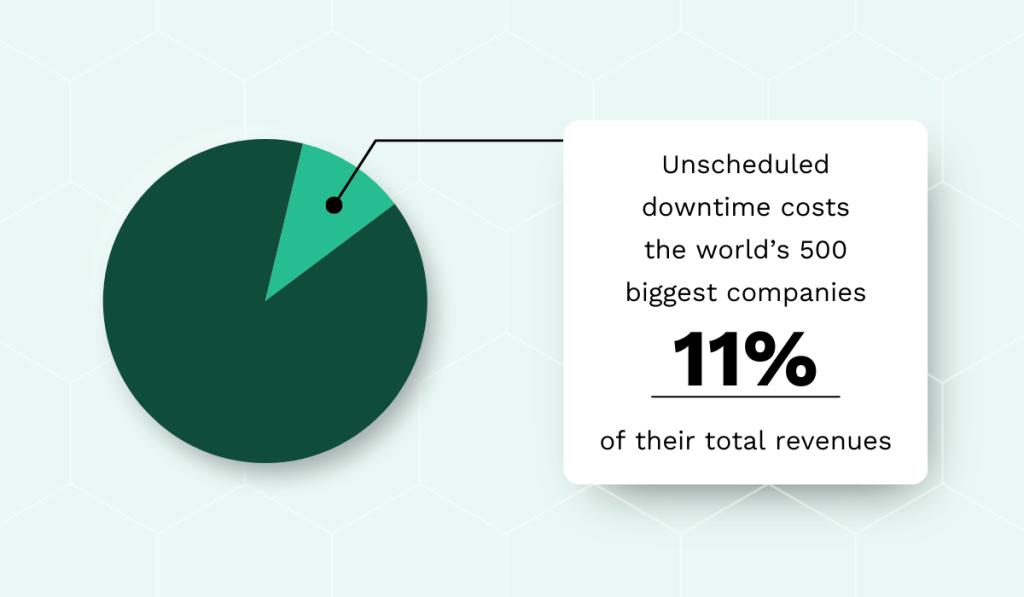
According to Siemens’ True Cost of Downtime 2024 report, unscheduled downtime costs the world’s 500 biggest companies $1.4 trillion annually, equal to 11% of their total revenues.
Reducing this risk requires a shift toward proactive maintenance strategies supported by digital tools.
Virve Viitanen, Head of Global Customer Care and Support at ABB’s Motion Services Division, agrees:
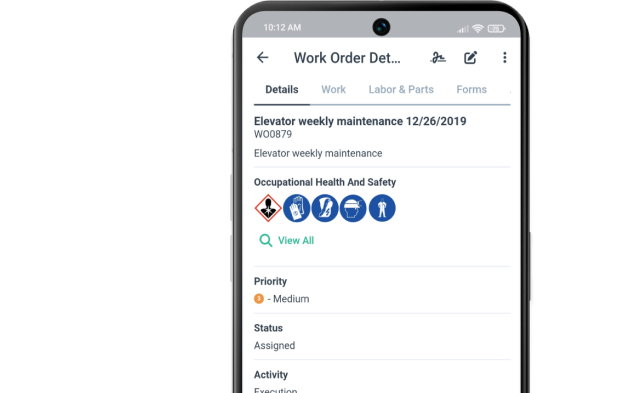
One platform helping industrial maintenance teams put this into practice is WorkTrek, a CMMS solution designed to elevate maintenance operations.
WorkTrek covers the full spectrum of maintenance needs, including:
- Work order and request management
- Preventive maintenance scheduling
- Performance insights and analytics
- Parts and inventory tracking
- Compliance checklists
- Asset management
Instead of stitching together spreadsheets and disconnected tools, maintenance teams gain a unified system for planning, executing, and analyzing maintenance work.
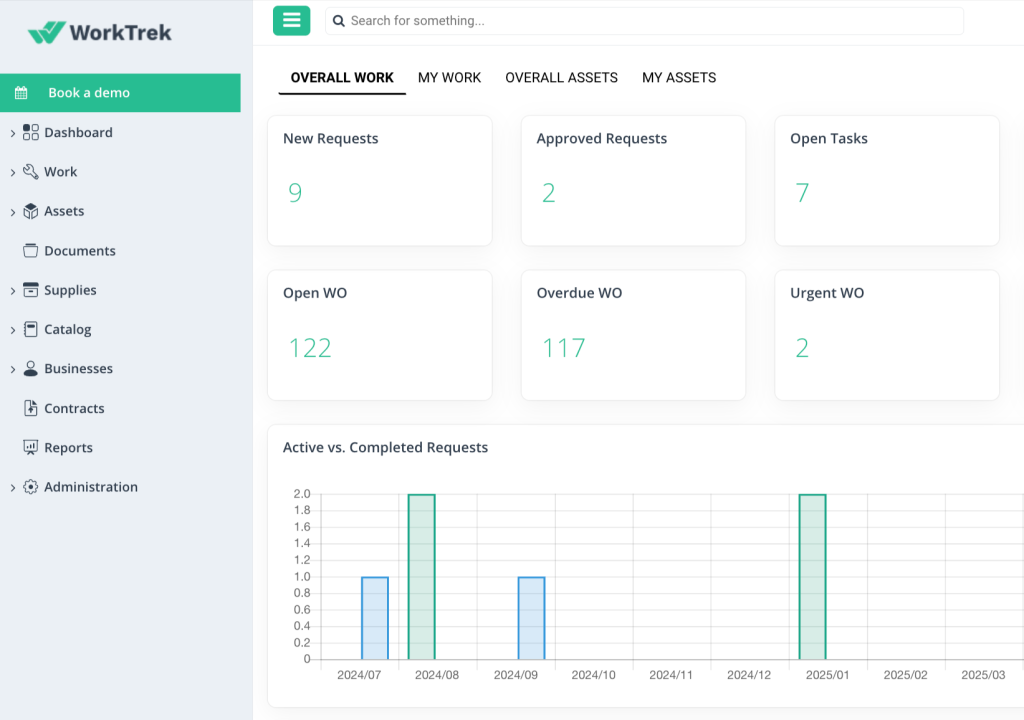
For instance, you can see WorkTrek’s dashboard below. It’s easy to navigate and offers an overview of the entire operation:
For companies managing complex industrial assets, the impact can be significant.
For example, InterEnergo, an energy company operating power and heating plants, previously managed asset information across spreadsheets and scattered documents.
This created a heavy reliance on individual employees for maintenance knowledge, sometimes leading to delayed servicing, plant shutdowns, and safety risks.
After implementing WorkTrek, however, the company centralized maintenance activities across its plants and equipment, giving teams complete visibility into asset performance and maintenance schedules.
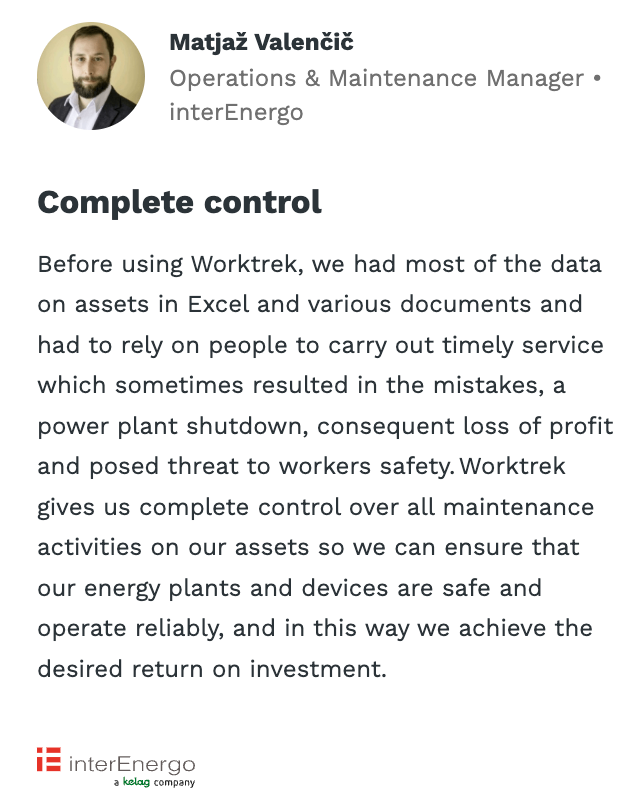
Matjaž Valenčič, Operations & Maintenance Manager at interEnergo, explains:
The result was more reliable operations and a measurable return on investment.
This is what happens when organizations replace fragmented processes with a capable CMMS: they often see meaningful improvements in productivity and asset performance.
WorkTrek customers often report 35% increase in productivity, a 20% reduction in downtime, and a 15% extension of asset lifetimes.
These results directly strengthen the bottom line of industrial operations.
Additive Manufacturing for Spare Parts Management
Walk through a traditional industrial maintenance storeroom, and you’ll often see shelves stacked with spare parts that sit untouched for years, slowly losing value while tying up capital.
For decades, this stockpiling was accepted as a necessary cost of doing business.
Additive manufacturing, commonly known as 3D printing, is changing this entirely.
Instead of storing physical, large inventories of rarely used components “just in case,” companies can now maintain digital part files and produce replacement components “just in time” when needed.
This “digital inventory” approach enables maintenance teams to manufacture parts locally, reducing storage needs, shipping delays, and reliance on complex supply chains.
The operational benefits are significant.
Faster repairs help:
- Improve asset availability
- Reduce Mean Time to Repair (MTTR)
- Enhance Overall Equipment Effectiveness (OEE)
Additionally, because printing can produce exact components, it also cuts assembly costs.
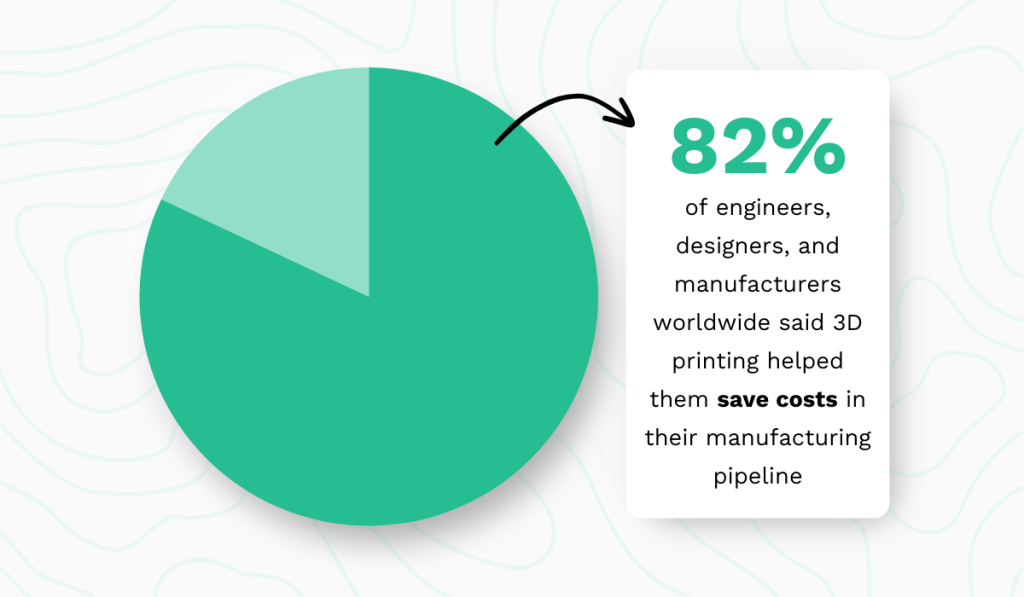
In fact, according to the Protolabs 2024 3D Printing Trend Report, which surveyed more than 700 engineers, designers, and manufacturers worldwide, 82% of respondents said 3D printing helped them save costs in their manufacturing pipeline.
In addition, 47% cited lead-time reduction as the primary reason they chose additive manufacturing over traditional production methods.
Another key advantage is the ability to keep aging equipment operational.
Components can be reverse-engineered and redesigned for older machinery, keeping legacy assets operational and extending return on investment without replacing entire systems.
Not to mention that additive manufacturing also supports sustainability by minimizing material waste, reducing carbon emissions from shipping, and enabling longer equipment lifespans.
Just ask Siemens Mobility.
At its RRX Rail Service Center in Dortmund, Germany, the company uses industrial 3D printing to produce replacement parts on demand.
Previously, manufacturing a customized component through traditional casting could take up to six weeks.
With additive manufacturing, the same part can now be produced in around 13 hours, reducing manufacturing time by up to 95%.
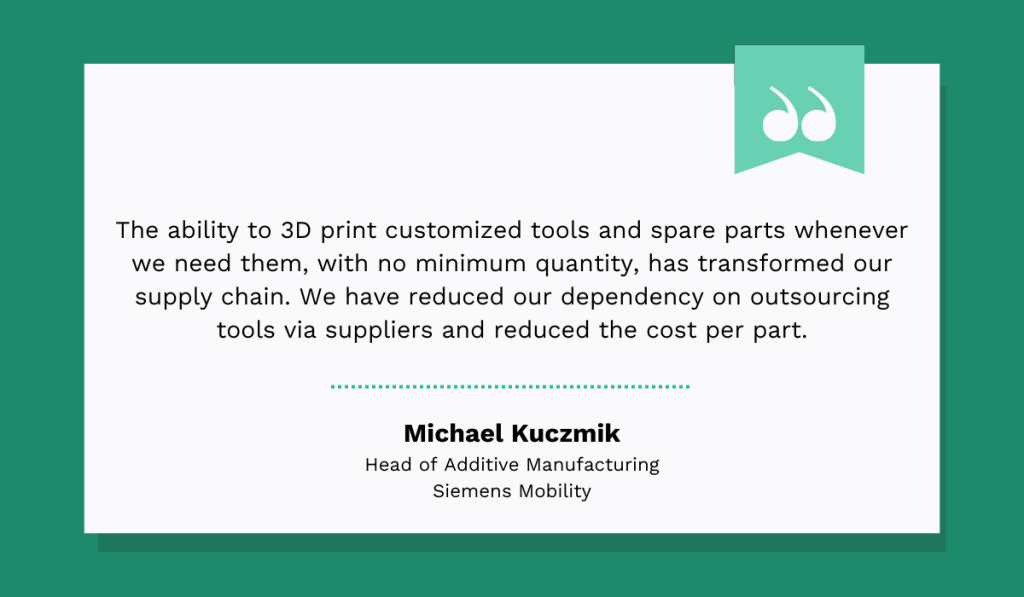
As Michael Kuczmik, Head of Additive Manufacturing at Siemens Mobility, explains:
Considering all the benefits, we’re likely to see this approach to spare parts management only grow from here.

IoT-Powered Condition Monitoring
For most of industrial history, maintenance has been a backward-looking discipline.
Teams responded to failures after they occurred or serviced equipment on fixed schedules regardless of its actual condition.
Yet, equipment failure remains one of the largest drivers of industrial downtime.
According to a Deloitte Industry 4.0 report, 42% of unplanned downtime is caused by equipment failure, costing manufacturers an estimated $50 billion annually.
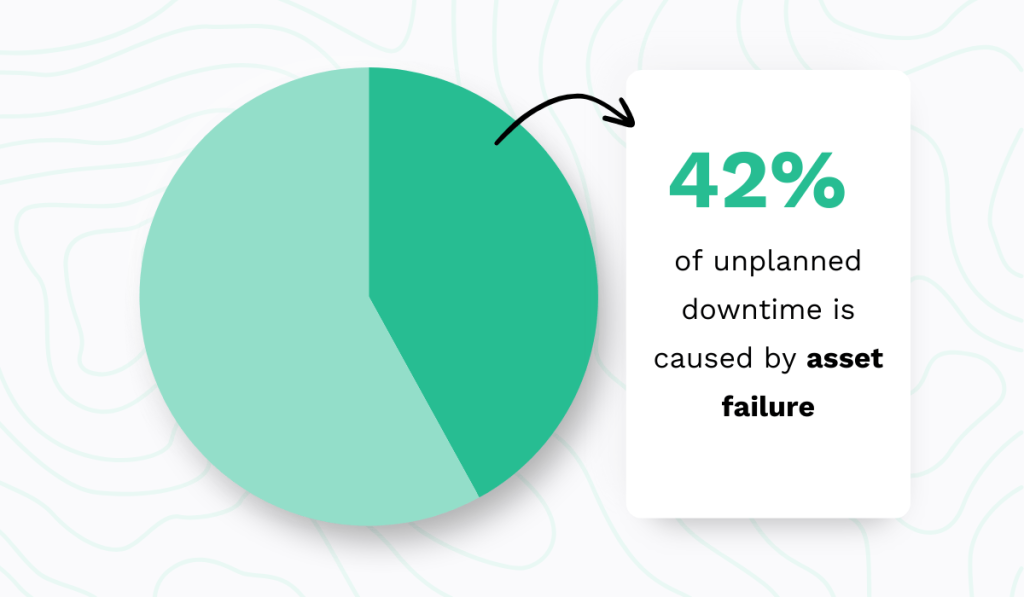
These figures clearly demonstrate that condition monitoring is no longer a nice-to-have but a non-negotiable operational imperative.
This is where IoT-powered condition monitoring comes in.
Sensors installed on industrial machines measure specific equipment parameters such as temperature, vibration, oil level, and frequency.
The data is transmitted to cloud-based platforms, where analytics tools transform raw sensor readings into actionable insights about equipment health.
Therefore, instead of relying on periodic inspections, maintenance teams gain continuous visibility into machine performance, enabling them to detect anomalies long before they escalate into failures.
In IoT networks, sensors form the foundation of predictive maintenance systems.
Different sensor types monitor specific failure indicators, including:
- Accelerometers detect abnormal vibration in rotating machinery
- Ultrasonic probes detect leaks in compressed air or steam systems
- Thermocouples identify temperature anomalies in furnaces and motors
When readings move outside predefined thresholds, the system automatically triggers alerts.
This early warning allows maintenance teams to schedule repairs during planned downtime rather than responding to unexpected failures.
Another key advantage of IoT monitoring is accessibility.
Equipment data can be viewed in real time from virtually anywhere, enabling remote diagnostics and faster decision-making.
This capability is particularly valuable for industrial operations spanning multiple facilities or assets located in hazardous or difficult-to-access environments.
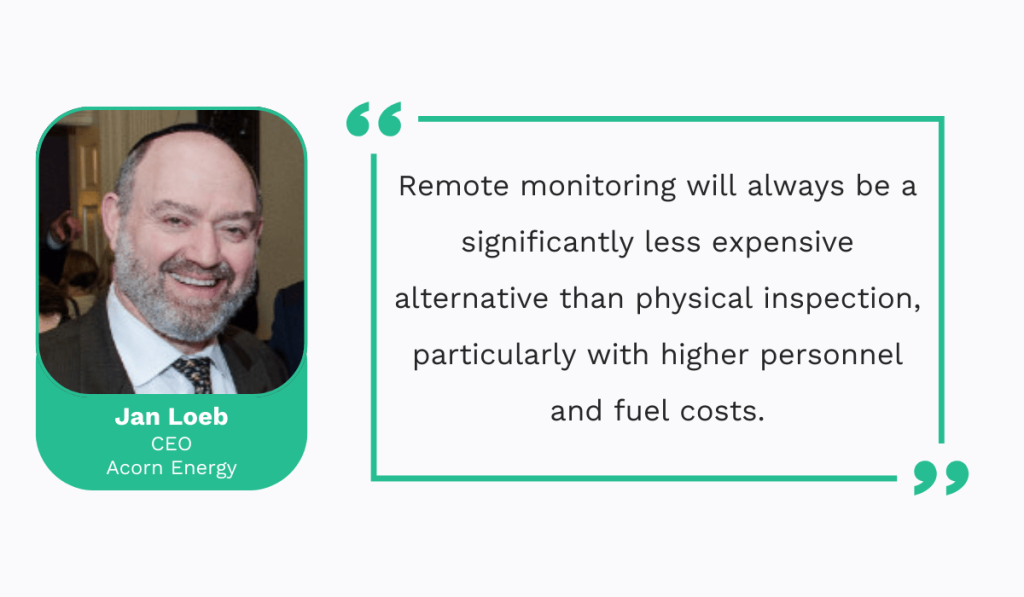
Jan Loeb, CEO of Acorn Energy, a provider of remote monitoring and control systems, highlights the economic benefits of remote condition monitoring:
Real-world implementations already demonstrate the impact of these technologies.
At Volkswagen Wolfsburg’s vehicle assembly plant, engineers deployed an Industrial IoT predictive maintenance system that combines machine sensors, edge computing, and advanced analytics to monitor the condition of production equipment.
The results have been substantial:
- 42% reduction in unplanned downtime
- $47 million in annual cost savings
- 35% reduction in spare parts inventories
- 18% longer equipment life
- A full return on investment in just seven months
It’s clear proof of how real-time condition monitoring can completely transform maintenance processes and unlock significant benefits.
The Rise of Predictive Maintenance
Condition monitoring shows what’s happening inside your equipment now, while predictive maintenance (PdM) forecasts what’s likely to happen next.
PdM leverages historical and real-time data, AI, machine learning, and IoT sensors to predict the optimal maintenance window, minimizing unplanned downtime.
The technology stack behind PdM is closely tied to IoT.
Sensors embedded in industrial assets continuously collect operational data, including vibration, temperature, pressure, and electrical load.
Advanced analytics platforms then process this data to identify patterns, detect anomalies, and forecast potential failures.
When anomalies are detected, like abnormal motor current or irregular bearing vibration, the system alerts maintenance teams before a breakdown occurs.
In practical terms, PdM allows maintenance teams to repair and replace components when needed, rather than performing unnecessary scheduled maintenance or reacting to unexpected breakdowns.
Predictive maintenance delivers several major operational benefits:
- Lower maintenance costs, by avoiding unnecessary servicing
- Reduced unplanned downtime, since failures are identified before they occur
- Extended equipment lifespan, because components are replaced at optimal intervals
- Improved asset utilization, enabling machines to operate closer to peak performance
Deloitte research shows that predictive maintenance programs can reduce maintenance costs by up to 10% while cutting maintenance planning time by up to 50%.
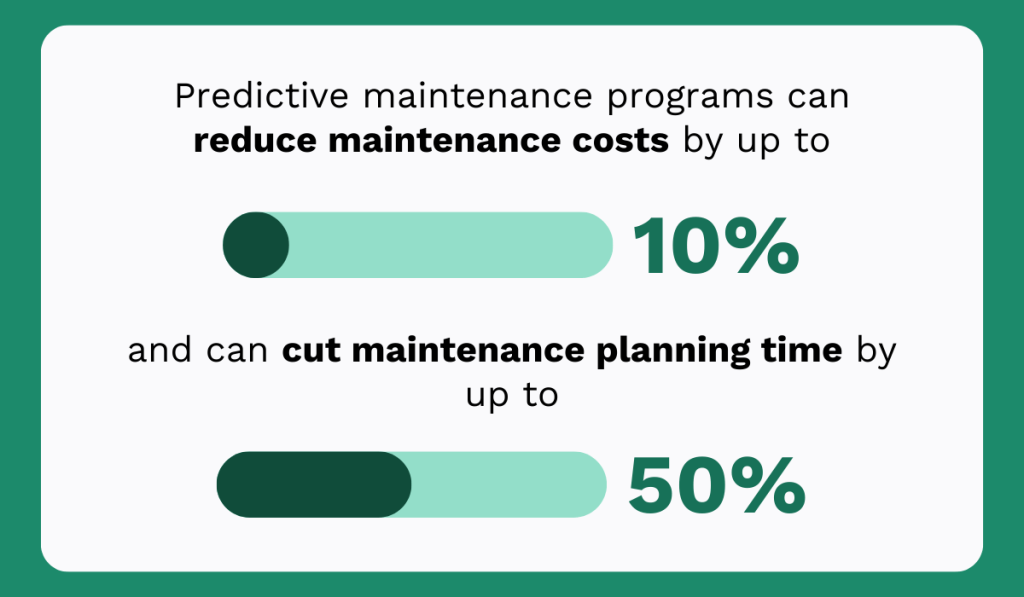
PdM complements IoT-powered condition monitoring by turning real-time visibility into actionable failure predictions and maintenance recommendations.
Take, for instance, Owens Corning’s Tessenderlo Plant, a manufacturing facility specializing in FOAMGLAS® cellular glass insulation for building and industrial applications
In February 2024, their PdM system flagged a temperature spike on a 40-year-old ball mill.
As a result, technicians identified a cracked shaft, a damaged bearing shell, and lubrication issues early enough to accommodate a 17-week parts lead time.
In other words, the system prevented an unplanned shutdown, saving over $11.2 million in potential production losses, repair costs, and downtime.
Jelle Willems, Reliability Engineer at Owens Corning, commented:
“Instead of reacting to a crisis, we integrate repairs into our existing maintenance schedule — often preventing a complete shutdown. Before using [PdM], we relied on periodic inspections and manual lubrication. Unplanned downtime caught us off guard far too often, […].”
That’s the power of predictive maintenance.
It helps you avoid the risk of under- and over-maintenance, keeping your assets in perfect condition for much longer.
Increased Use of AR in Training
Walk into most industrial facilities today, and you’ll still find technicians working from thick printed manuals, crouching next to machinery while trying to mentally map a two-dimensional diagram into a three-dimensional piece of equipment.
It’s slow, error-prone, and increasingly inadequate as machines grow more complex and experienced workers retire faster than they can be replaced.
As Hillary Ashton, Executive Vice President and General Manager of Augmented Reality at PTC, a global software company providing platforms and solutions, observes:
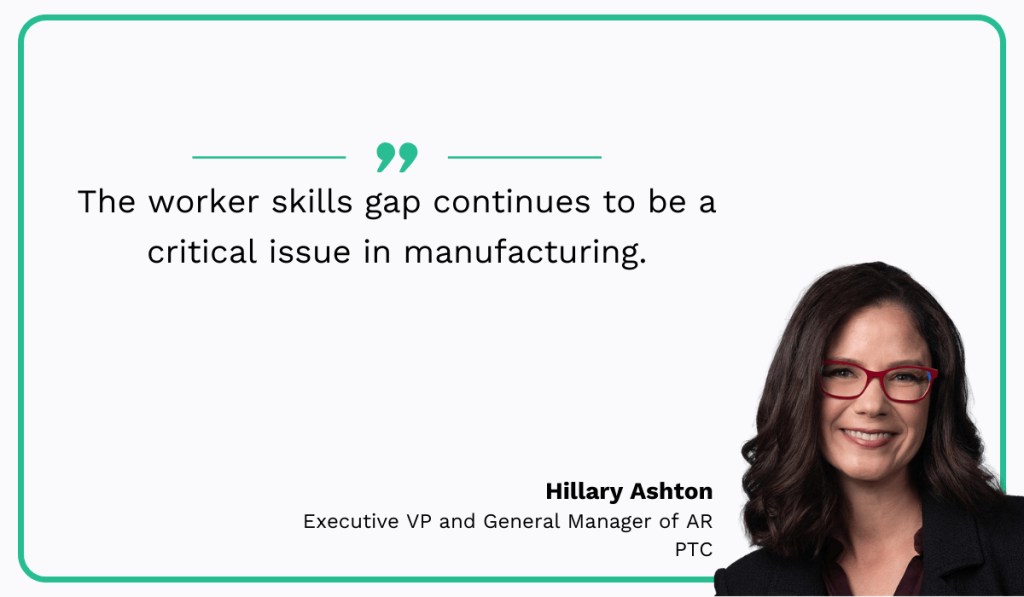
Augmented Reality (AR) is emerging as a practical solution.
By overlaying digital instructions, diagrams, and guidance directly onto physical equipment via smart glasses, tablets, or mobile devices, AR helps technicians understand complex machinery and follow procedures with precision.
Instead of flipping through paper manuals or static PDFs, technicians can now view step-by-step instructions precisely where and when they need them.
Interactive 3D content and annotations reduce interpretation errors and accelerate training progression.
One of AR’s primary advantages is improved efficiency and knowledge retention.
Traditional maintenance training often requires new hires to shadow experienced technicians or memorize manuals before working independently.
With AR, learners receive in-context guidance at their own pace, speeding onboarding and reducing reliance on experts.
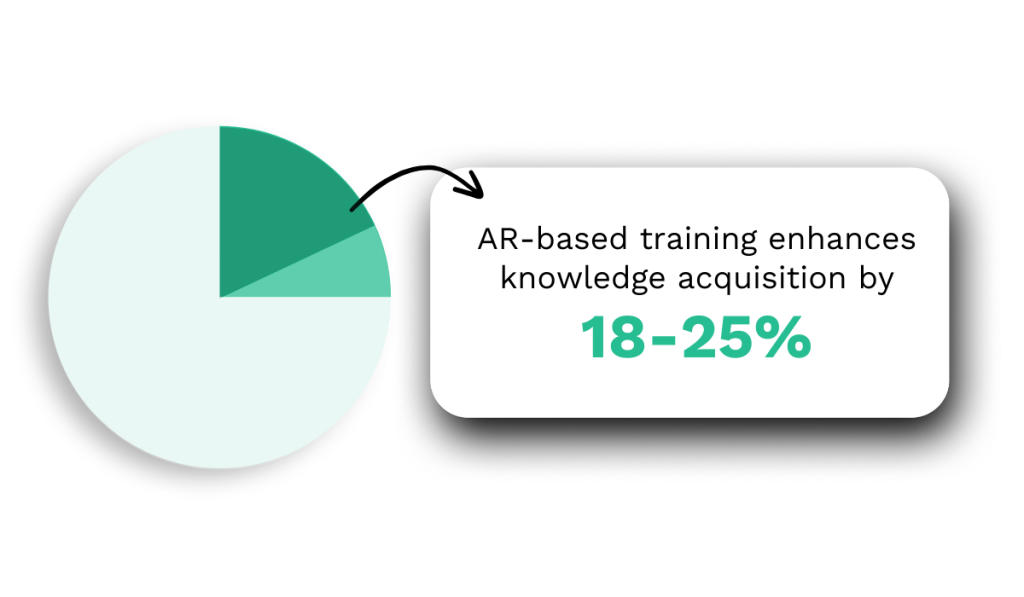
Peer-reviewed research published in the CIRP Journal of Manufacturing Science and Technology found that AR-based training enhances knowledge acquisition by around 18-25%, compared with traditional paper-based methods.
AR also enhances overall maintenance efficiency and safety.
By integrating AR with equipment schematics and digital twin models, technicians can visualize internal machine components, identify parts instantly, and follow real-time guidance without taking their eyes off their work.
This reduces errors, rework, and safety risks.
That’s why AR training is increasingly adopted across industries with complex equipment and strict safety standards.
By transforming static manuals into interactive, immersive experiences, AR helps companies boost both efficiency and safety while closing skills gaps in an increasingly technical workforce.
Focus on Sustainable Maintenance
Sustainability has reshaped expectations across every function of industrial operations, and maintenance is no exception.
For a long time, the sustainability conversation focused primarily on new builds, including greener facilities, renewable energy installations, and net-zero construction.
Today, attention is turning to what happens inside existing operations every day.
Sustainable maintenance goes beyond environmentally friendly upkeep of assets.
It also aims to eliminate wasteful practices, reduce costs, and minimize the social and environmental impacts of operations throughout the asset lifecycle.
Traditional maintenance strategies focus primarily on reliability and uptime.
Sustainable maintenance expands that by examining how maintenance activities influence energy consumption, emissions, waste generation, and resource use.
For example, maintenance teams may assess whether repairing an asset, replacing it with a more efficient alternative, or adjusting maintenance intervals produces the lowest environmental and operational impact over time.
While the scope is broader than many teams initially expect, sustainable maintenance typically focuses on three key dimensions:
- Maintenance cycle efficiency and how the impact of repeated maintenance tasks compounds over time
- Environmental footprint of maintenance materials, including lubricants, solvents, and replacement parts
- Energy consumption and emissions generated by maintenance activities
It’s tempting to view sustainable maintenance primarily as a regulatory requirement.
However, that framing misses the larger opportunity.
When maintenance strategies align with efficiency goals, organizations often achieve simultaneous improvements in environmental, operational, and financial performance.
Energy savings are one clear example.
An analysis by the International Energy Agency (IEA) of more than 300 energy management case studies across 40 countries confirms this.
It found that companies implementing structured energy management programs achieved an average energy savings of about 11% in the first year.
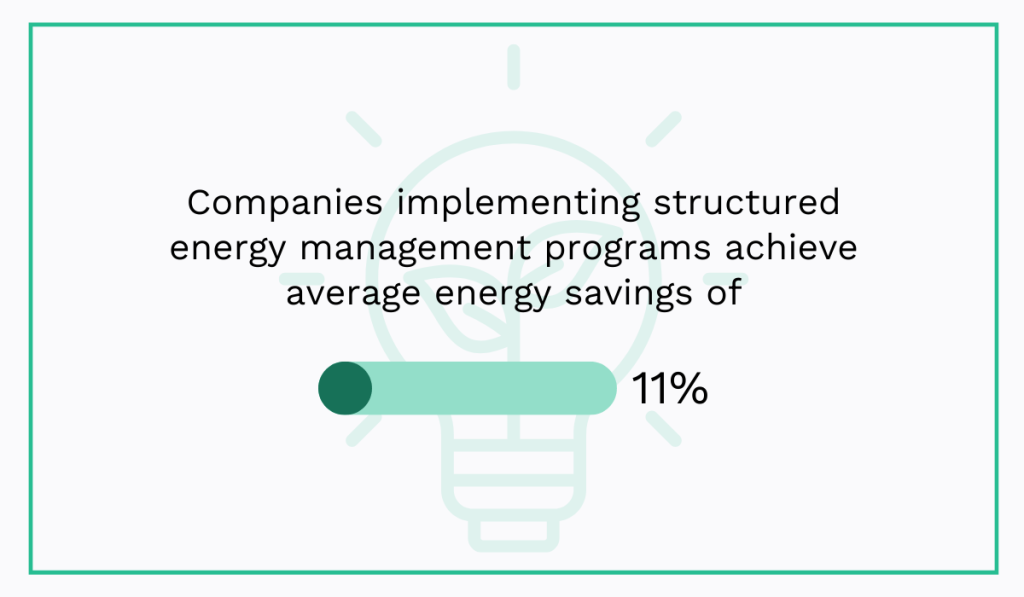
That’s because well-maintained equipment operates more efficiently, consuming less energy and producing fewer emissions.
Sustainable maintenance also reduces waste across maintenance operations.
Preventive maintenance extends equipment life, minimizes unnecessary component replacements, and reduces the amount of materials entering the waste stream.
Extending asset lifespan is one of the most powerful sustainability strategies available to maintenance teams.
Properly maintained equipment can operate for significantly longer periods, reducing the need for new manufacturing, transportation, and installation of replacement machinery.
Beyond operational improvements, sustainable maintenance also strengthens corporate sustainability initiatives and ESG performance.
This means that organizations that adopt greener maintenance practices often see improved brand reputation, stronger stakeholder trust, and greater alignment with sustainability goals.
Conclusion
Industrial maintenance is undergoing a profound transformation.
What was once viewed as a reactive function has evolved into a strategic discipline powered by data, connectivity, and advanced technologies.
Today, maintenance strategies are designed not just to keep machines running, but to optimize performance, reduce costs, and future-proof operations.
Organizations that embrace smarter, more proactive, and more integrated maintenance strategies will gain far more than operational reliability.
They’ll unlock measurable advantages in efficiency, safety, sustainability, and workforce productivity.
The future of industrial maintenance belongs to organizations willing to rethink how they manage and maintain their assets.
Those who embrace this mindset today will be better positioned to build more resilient, efficient, and sustainable operations for the years ahead.