


Get a Free WorkTrek Demo
Let's show you how WorkTrek can help you optimize your maintenance operation.
Try for freeKey Takeaways:
- Criticality assessments help direct resources to the assets that matter most.
- A criticality-based upkeep optimization helped one company reduce costs by 86%.
- Different criticality levels call for different maintenance strategies.
- A CMMS improves the efficiency of criticality assessments.
Not all equipment requires the same level of maintenance.
Some assets can fail without much consequence, while others can halt production or put people at risk.
If you’re looking for a structured way to figure out which is which, a maintenance criticality assessment (MCA) can help.
This article covers what this practice is, why it matters, and how to do it well.
What is Maintenance Criticality Assessment
First, let’s define what a maintenance criticality assessment actually is.
MCAs are structured processes for evaluating and ranking equipment based on the potential consequences of its failure.
The goal is to give maintenance teams an objective way to determine which assets need the most attention, so that time, budget, and effort are directed where they matter most.
This assessment is based on multiple dimensions, with some of the most common ones shown below.
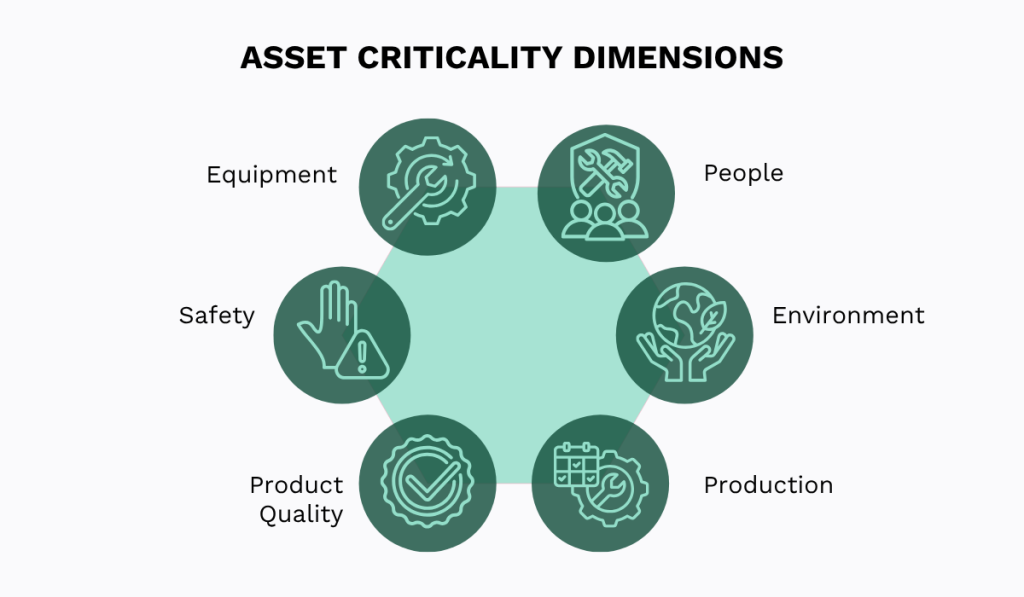
The idea behind these dimensions is that equipment failure can affect a facility in different ways.
A breakdown might impact production output, create safety hazards or environmental damage, and so on.
Of course, the specific dimensions used in assessments will vary depending on company requirements and the type of work being done.
A common one would be production impact, with a rating scale for this dimension shown below.
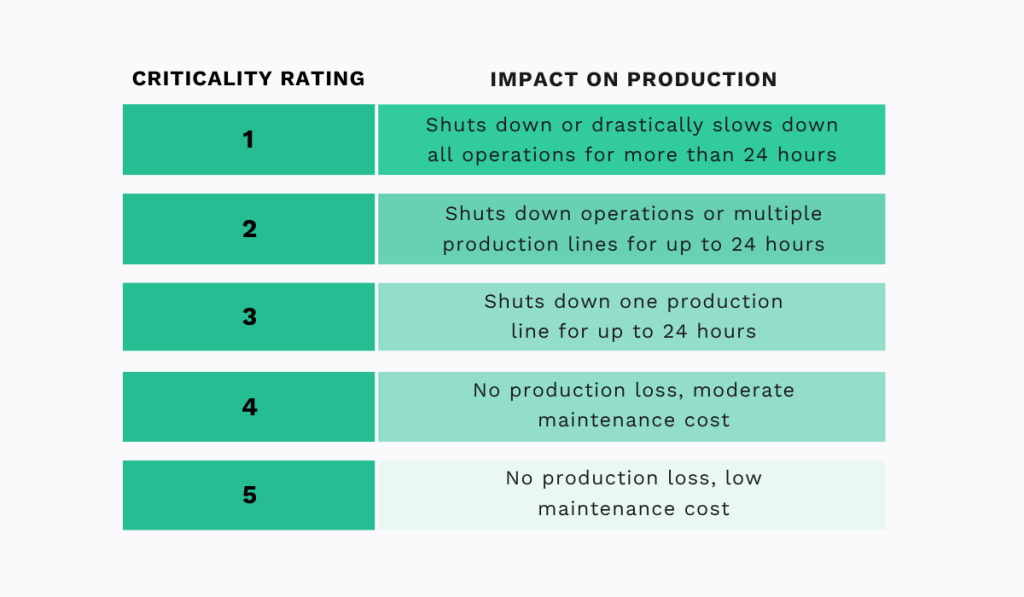
A level 1 criticality assessment, meaning a high production impact asset, might be a main conveyor belt on a packaging line.
If that belt breaks down, the entire line stops, and no products move forward.
On the other hand, assets such as office air conditioning units or backup lighting systems often have no meaningful impact on production.
And that’s the essence of criticality assessments.
Ratings like these are assigned for each dimension, and the overall score of an asset is determined by combining the results.
Below, you can see a criticality table that combines four dimensions for the overall assessment and criticality scoring.
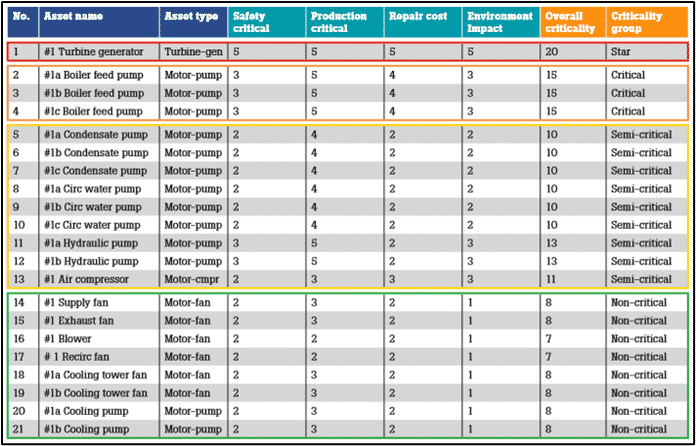
As with the rest of the process, the weight given to each individual score can vary, which directly affects the final criticality level.
However, while the specific dimensions and their weights vary by organization, the core process of MCAs stays the same.
The Importance of Maintenance Criticality Assessment
With all of this in mind, let’s now look at why performing a criticality assessment is important, looking at three specific benefits it brings to your maintenance program.
Focuses Your Maintenance Efforts
One of the main benefits of an MCA is that it helps focus maintenance resources appropriately.
Without clear maintenance prioritization, organizations might follow rough scheduled maintenance intervals for their equipment and allocate resources based on limited data.
The problem with this approach is that it can waste valuable time and budget on low-priority equipment, while potentially neglecting the key assets that keep operations running.
As maintenance expert James Kovacevic explains, a structured approach based on MCAs helps remove that guesswork.
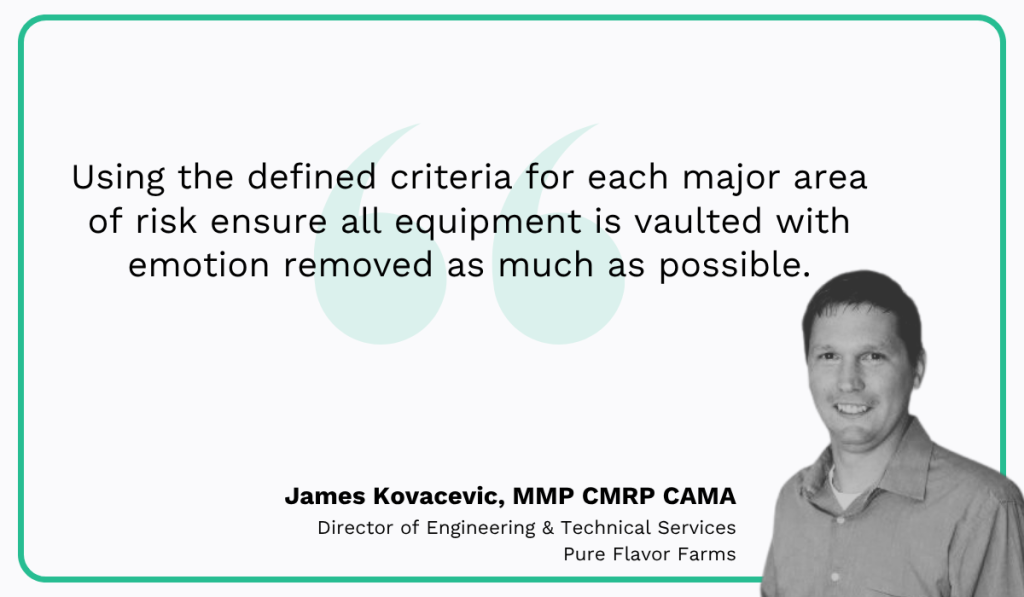
In fact, once the criticality dimensions and their rankings are in place, maintenance teams can match the time and effort spent according to each asset’s importance.
For example, consider the following criticality levels and the corresponding maintenance strategies.
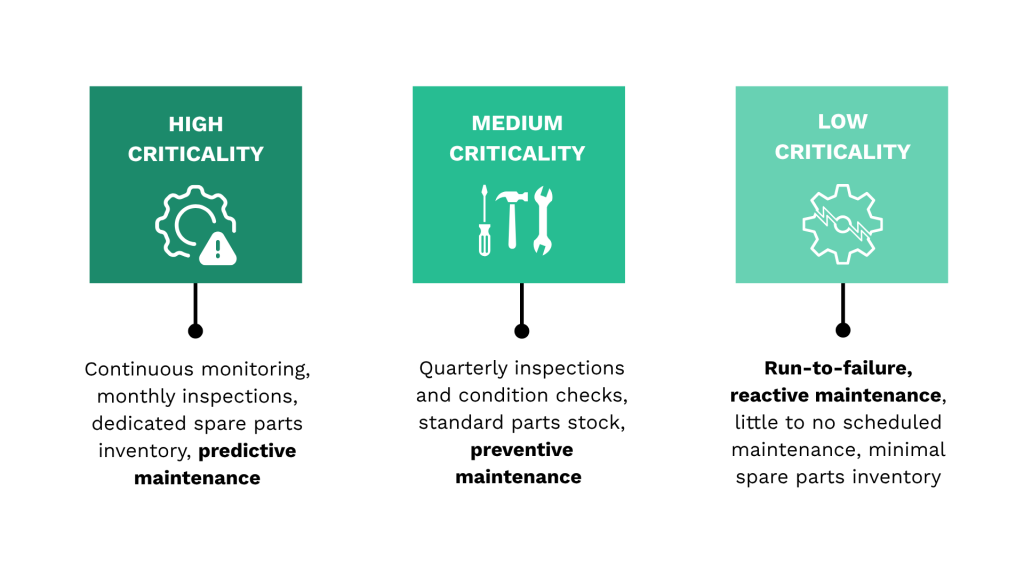
The logic behind this tiering is straightforward.
High-criticality assets need proactive strategies because their failure would cause the most damage, so you want to catch problems before they develop.
For instance, a primary compressor on a production line might warrant vibration sensors that detect wear weeks in advance.
Medium-criticality equipment doesn’t justify that level of investment, but still benefits from regular scheduled check-ups.
And, for low-criticality assets, it often makes more financial sense to simply let them run until they fail, since the cost of replacing them reactively is lower than the cost of monitoring them.
Ultimately, by matching maintenance strategies to criticality levels, you can make the most out of your existing resources.
Reduces Risk
Another important benefit of MCAs is that they help identify the equipment whose failure could lead to serious consequences.
As we saw when discussing criticality dimensions, equipment can be assessed on whether its breakdown can create serious safety hazards, environmental damage, or shut down production entirely.
In other words, we can assess the severity of the breakdown.
During an MCA, this severity can be mapped on a simple equipment criticality matrix, like the one shown below, and compared against the probability of the breakdown occurring.
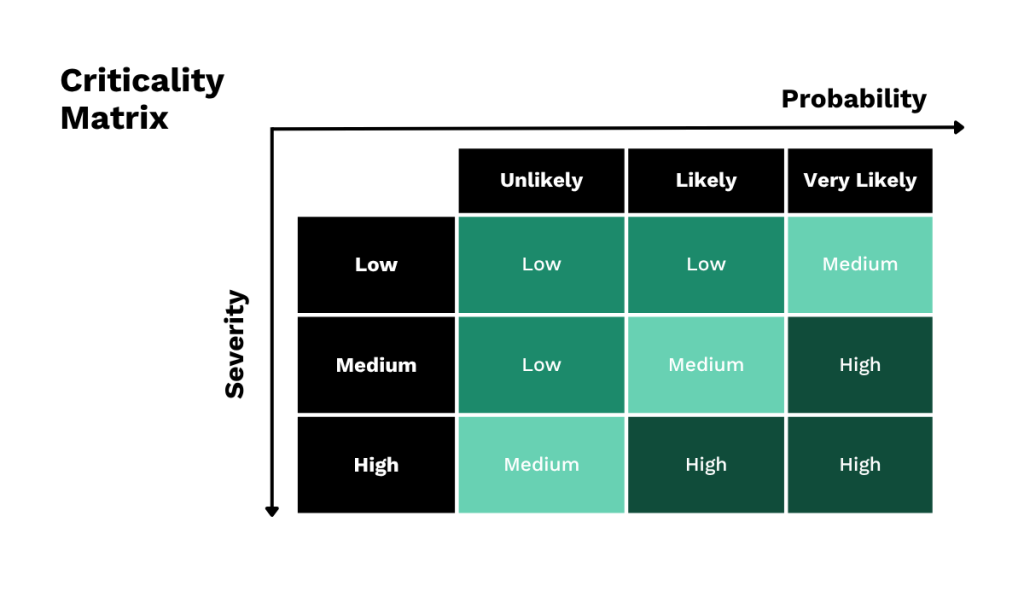
On top of that, some organizations take detectability into account, which covers how easy or difficult it is to spot a developing failure before it actually happens.
In short, an asset with severe consequences that is also hard to monitor and prone to frequent breakdowns would score higher than one that rarely fails and is easy to inspect.
To see what this process would look like in practice, let’s consider the March 2025 explosion at Chuo Spring’s auto parts plant in Japan.
The incident happened when a dust collector in the plant exploded and killed one worker while injuring two others.
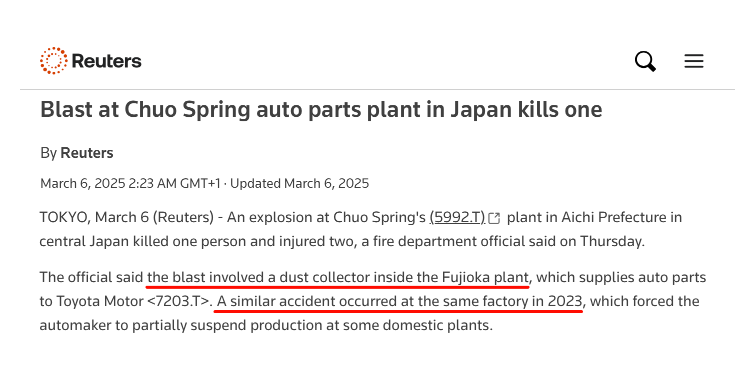
What makes this case especially concerning is that a similar accident had occurred at the same factory in 2023.
While we can’t know the exact circumstances of this event, a proper criticality assessment should have flagged dust collectors in environments with combustible materials as high-severity.
The risk of a recurring accident would also be marked as high probability, since it had already happened once before.
Considering both of these factors, the appropriate action would be to ensure these assets receive the highest level of monitoring and maintenance to prevent a safety issue.
Of course, this is a simplified example, but it illustrates the core idea: MCAs give upkeep teams the framework to identify high-risk assets and act on them before a failure turns into an incident.
Streamlines Costs
When every asset is treated the same, teams inevitably overspend on equipment that doesn’t need much attention, while underspending on the assets that drive the most downtime cost.
An MCA helps correct this imbalance by making sure maintenance budgets go where they’ll have the most impact.
To understand the scale of the problem, consider Siemens’ 2024 True Cost of Downtime report.
It reveals that the average large manufacturing plant loses around 27 hours of production time per month to unplanned downtime.
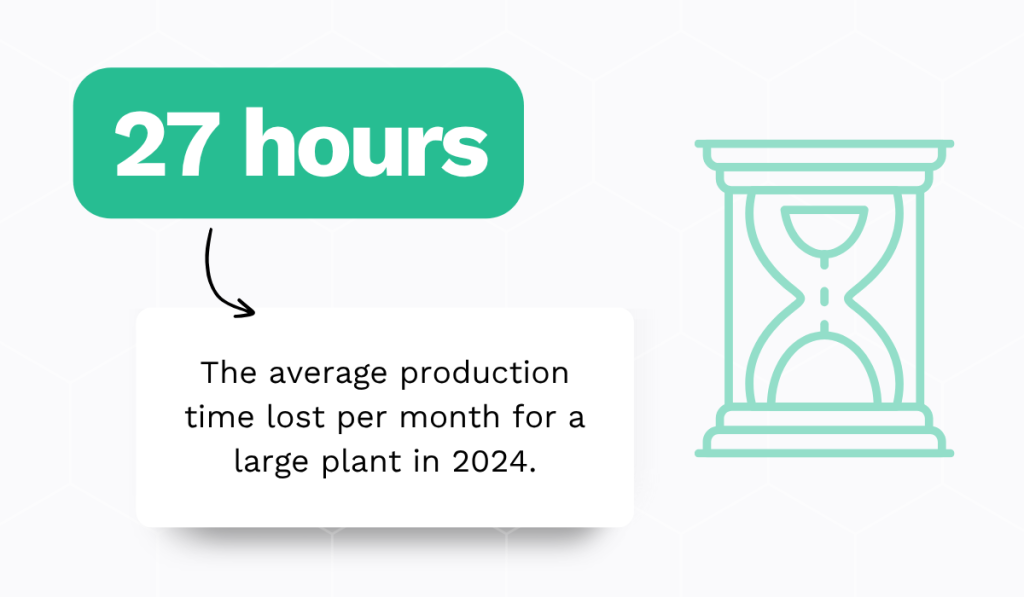
According to the same report, that translates to an average of $253 million in lost costs per facility per year.
A large portion of this cost can be traced back to maintenance that wasn’t properly prioritized, leading to avoidable asset breakdowns.
With an MCA in place, predictive and preventive maintenance can be directed at the assets where failures are most costly, while fewer resources could be spent on equipment where the consequences of failure are minimal.
A good example of this cost reduction in action comes from a chemical destruction company that partnered with GP Strategies to optimize its maintenance program.
As shown in the summary below, these optimization efforts were based on asset criticality.
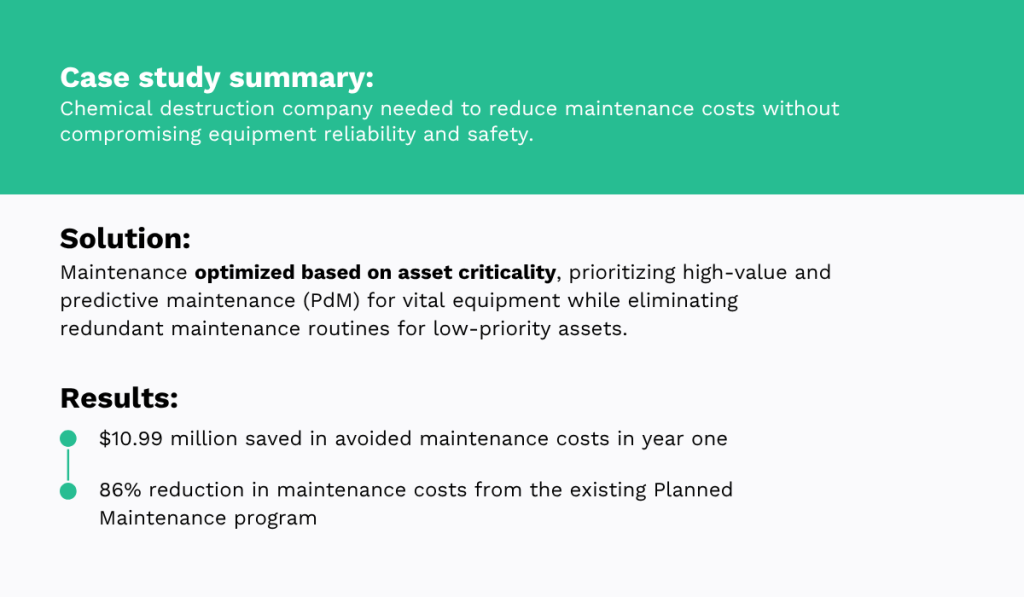
By focusing predictive maintenance effort on the assets that posed the greatest operational and safety risk, while reducing work on non-critical equipment, the company was able to achieve significant savings.
In fact, even though the company already had a planned maintenance program in place, this strategy reduced costs by 86%.
The takeaway is that when maintenance spending is guided by criticality rather than rigid maintenance schedules, the results can be substantial.
Maintenance Criticality Assessment Best Practices
Now that we’ve covered what MCA is and why it matters, let’s go over some best practices that can help you get the most out of the process.
Involve a Cross-Functional Team
A criticality assessment is only as good as the input that goes into it.
Since criticality covers multiple dimensions, the people evaluating those dimensions need to come from different parts of the organization.
After all, a maintenance technician will have a very different perspective on an asset than a safety officer or a production manager, and all of those viewpoints are needed for an accurate assessment.
The table below shows some key functions to include and what each brings to the process.
| Maintenance | Failure history, repair frequency, and hands-on knowledge of recurring issues |
| Operations / Production | How each asset affects output, throughput, and scheduling |
| Safety / EHS | Which equipment poses risks to worker health, safety, or environmental compliance |
| Engineering | Design specifications, failure modes, and expected equipment tolerances |
| Procurement | Spare parts lead times, component availability, and cost of emergency sourcing |
Each of these teams sees equipment through a different lens, which is why their input is needed.
Of course, these different perspectives need to be properly communicated and aligned.
Here, we’d echo this recommendation from Infraspeak, which is that organizations should create a unified approach to MCA and combine various relevant criticality dimensions.

Without this alignment, different departments may end up using different criteria or scoring scales, which leads to inconsistent rankings and confusion when it comes time to act on them.

The bottom line is that the more perspectives you include from the start, the more accurate and reliable your criticality rankings will be.
Review and Update Regularly
After criticality has been discussed and agreed upon by multiple teams, one instinct might be to keep things unchanged for as long as possible.
After all, the process took effort to complete, and the results feel solid.
However, criticality is not static.
Equipment ages, production demands shift, and new regulations can change the consequences of a failure overnight.
That’s why it’s recommended to schedule a full review annually or biannually, during which you reassess all assets using your most recent data and business priorities.
These reviews may reveal that some assets have moved up or down in criticality since the last assessment, which means their maintenance strategies need to be adjusted accordingly.
But maybe even more important are the unscheduled, event-driven reviews.
These are conducted whenever a major change occurs that could affect criticality rankings, with some common situations shown below.
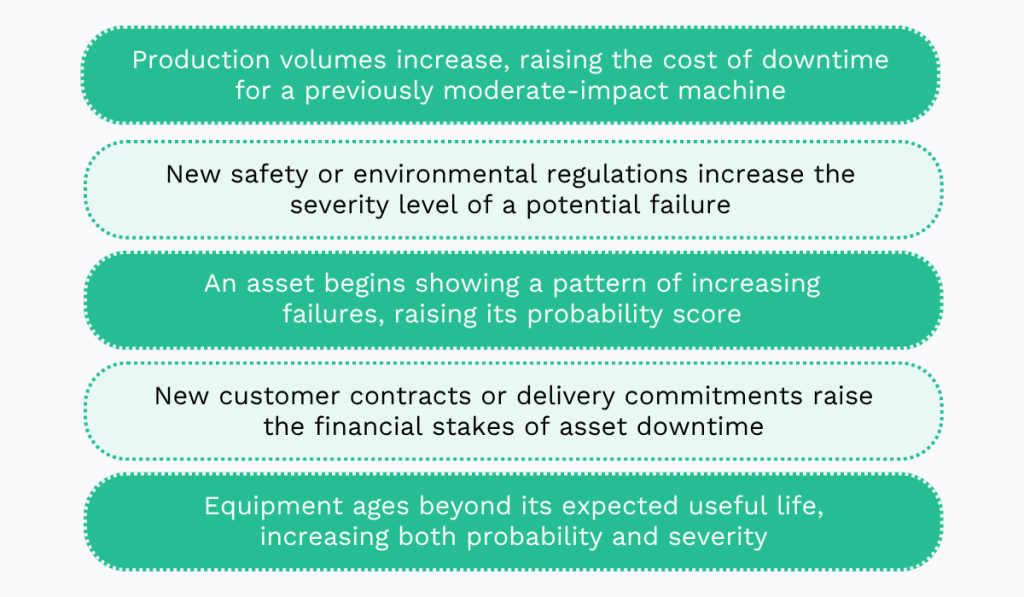
As a simple example, if a backup pump is decommissioned, the primary pump it was supporting is now a single point of failure, and its criticality score should reflect that immediately rather than waiting for the next annual review.
The same applies to external changes.
New environmental regulations might increase the severity rating of certain equipment, while a surge in customer demand could turn a previously moderate-impact machine into one where any downtime directly affects delivery commitments.
Ultimately, combining scheduled reviews with event-driven updates keeps your criticality data current and ensures your maintenance plan stays aligned with the reality on the ground.
Integrate with CMMS
Finally, technology can play a significant role in making your MCA process more efficient and easier to maintain over time.
Out of the systems available, a CMMS (Computerized Maintenance Management System) is the most widely adopted software for managing maintenance operations.
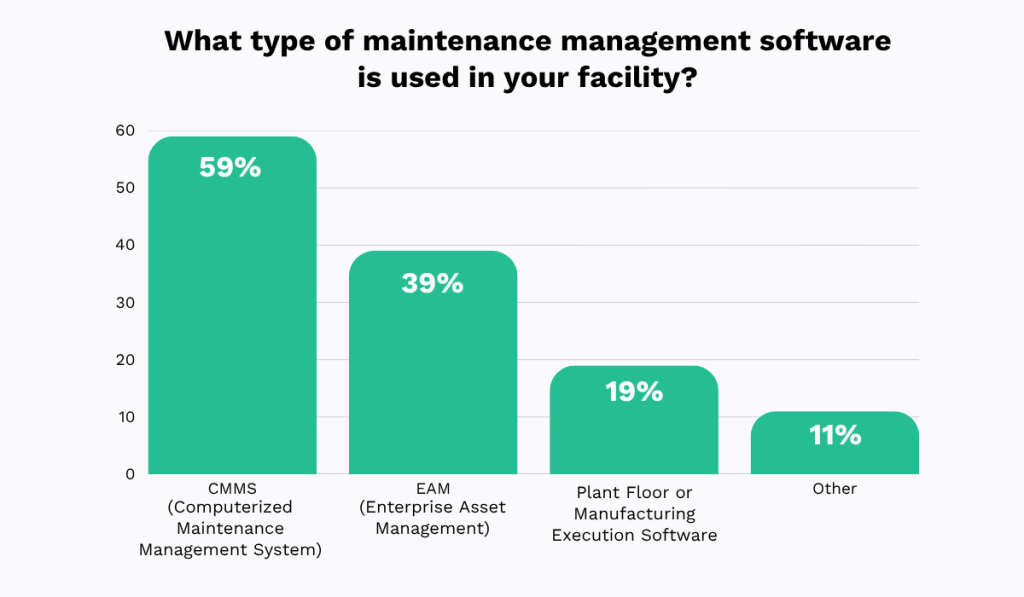
When you consider the benefits a CMMS brings to maintenance criticality assessment specifically, it’s easy to see why adoption is so high:
- Centralized storage of asset data, maintenance history, and failure records
- Automated scheduling of preventive maintenance tasks based on criticality tiers
- Work order prioritization aligned with criticality rankings
- Real-time tracking of downtime events and their causes
- Reporting and analytics for reviewing and refining criticality scores over time
Take our CMMS WorkTrek, for instance.
It can act as a centralized hub for all asset and maintenance data, making it straightforward to execute action plans after a criticality assessment is completed.
As a simple example, you could schedule preventive maintenance on regular time or meter-based triggers for any assets that were marked as high and medium-criticality.
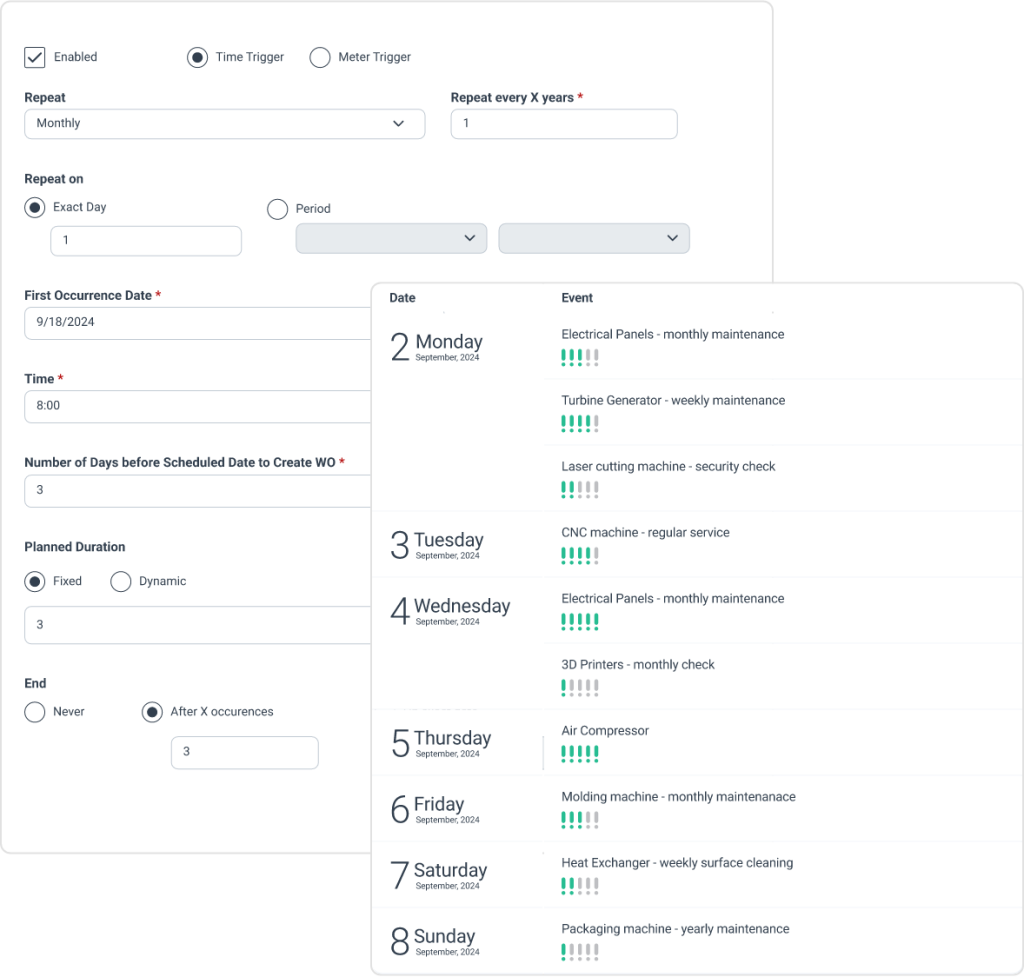
If one of these scheduled inspections reveals an issue, follow-up work orders can be triggered automatically, and the data captured fed directly into future criticality reassessments.
Data points that you can track also include downtime events, as shown in the availability report below, giving you a clear record of unplanned failures and their causes.
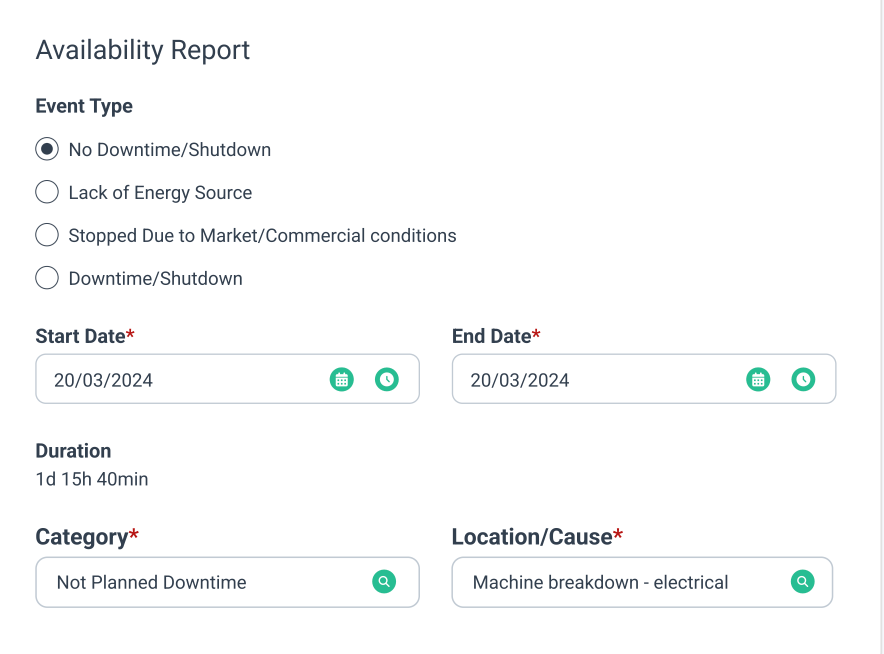
This kind of data is especially valuable when reviewing criticality rankings, since it shows you exactly which assets are causing the most disruption.
For instance, if your data shows that an asset has had several urgent repairs and hours of downtime in the past 2 months, that pattern of recurring failures could justify raising its criticality score and shifting it to a more proactive maintenance strategy.
Overall, using a CMMS like WorkTrek alongside your maintenance criticality assessments helps keep the process active and grounded in real data, so your upkeep priorities stay accurate as conditions change over time.
Conclusion
That covers everything you need to know about maintenance criticality assessment.
We went over the key dimensions of asset criticality and how assessments are usually performed.
Then we looked into ways how criticality assessments benefit your maintenance program, along with some best practices to make the process work effectively and sustainably over time.
Hopefully, this gives you a clearer picture of how to prioritize your assets.
Take these ideas back to your team and start putting your maintenance resources where they’ll have the largest impact.