


Get a Free WorkTrek Demo
Let's show you how WorkTrek can help you optimize your maintenance operation.
Try for freeKey Takeaways:
- 87% of maintenance issues resurface within 90 days without root cause analysis.
- Unplanned downtime costs many facilities at least $10,000 per hour.
- Proper documentation prevents knowledge loss and repeated mistakes.
Unexpected downtime, recurring equipment failures, missing parts, poor documentation, and constant firefighting are some of the most common maintenance problems teams face today.
In most cases, these issues build over time through reactive processes, inconsistent maintenance, and a lack of visibility.
Fortunately, they are all fixable.
Here are six practical steps upkeep teams can take to reduce downtime, improve reliability, and stay ahead of maintenance problems.
Identify the Root Cause of the Issue
One of the biggest maintenance mistakes is fixing the immediate problem without determining why it happened in the first place.
That’s how teams end up repairing the same asset over and over again.
Over time, recurring problems lead to increased downtime, higher repair costs, and growing frustration across operations.
To prevent repeat failures, teams need to focus on root cause analysis (RCA).
The goal of RCA is simple: identify the underlying cause of a problem so it can be eliminated permanently, not just temporarily.
There are several ways to conduct an RCA, as shown below.
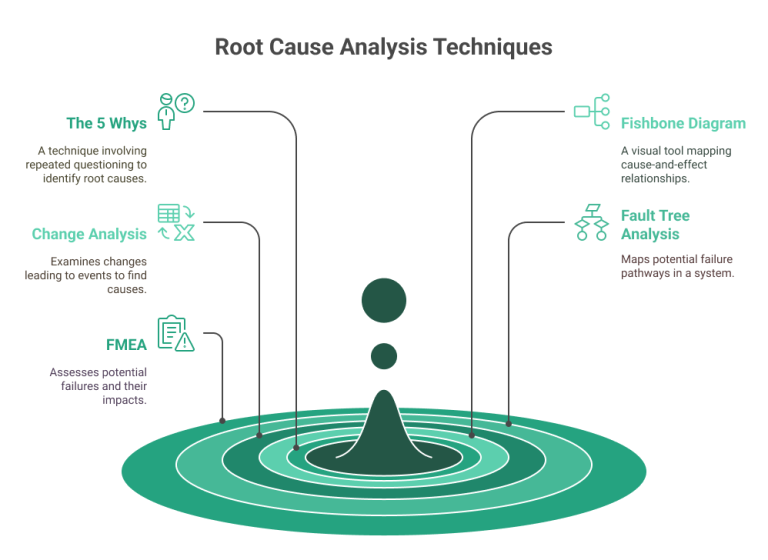
You can start with the 5 Whys method, popularized by Toyota.
It couldn’t be more straightforward: simply keep asking “why?” until you uncover the process issue behind the failure.
Toyota famously used this approach after its welding robot repeatedly shut down.
At first, the problem looked like a blown fuse, but instead of replacing it, they kept asking the following questions:
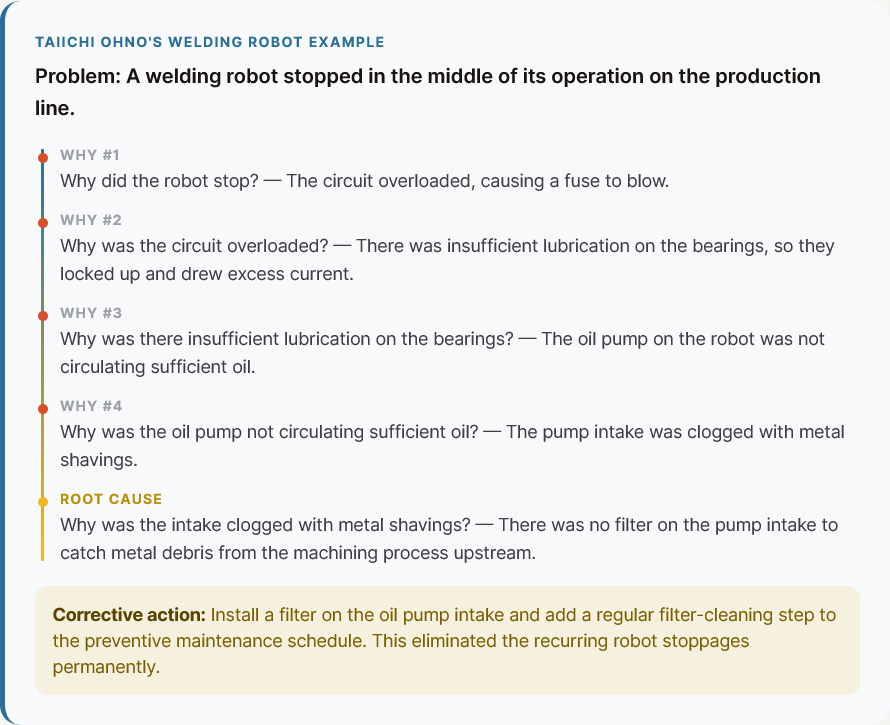
In the end, the real issue wasn’t the fuse, but contamination and missing filtration procedures.
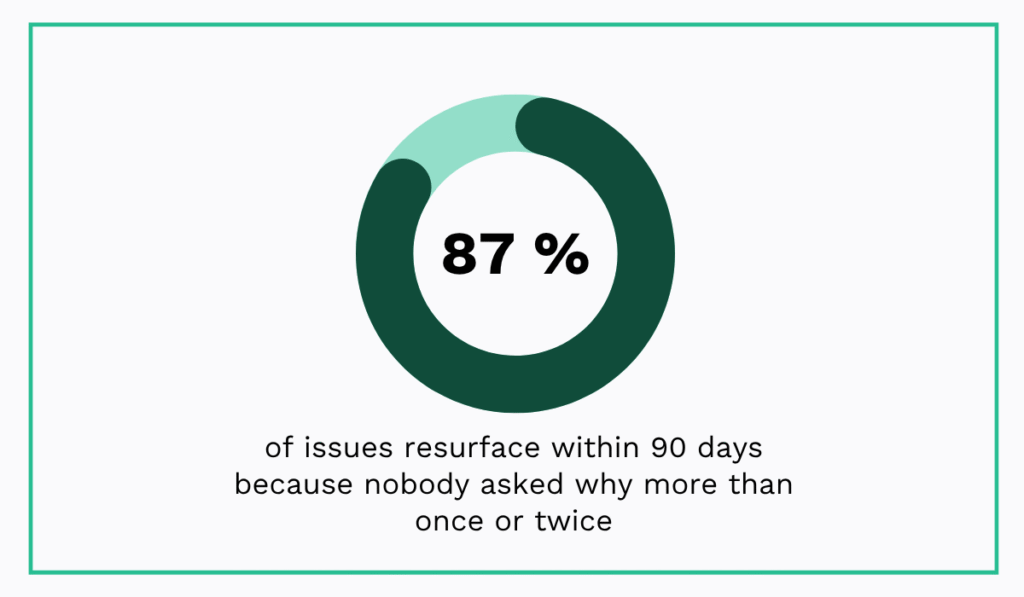
If you still aren’t sure whether RCA is worth the effort, consider this: research shows that 87% of issues recur within 90 days when teams fix surface-level symptoms rather than the underlying cause.
Therefore, when equipment fails, don’t stop at the broken part.
Review repeat work orders, involve the technicians who handled the repair, and ask enough questions to uncover what allowed the issue to happen in the first place.
Standardize Preventive Maintenance
A lot of maintenance problems become emergencies simply because small issues were not caught early enough.
Inspections get overlooked, lubrication gets delayed, minor faults go undocumented, and eventually, something fails unexpectedly.
Unfortunately, that reactive cycle is expensive.
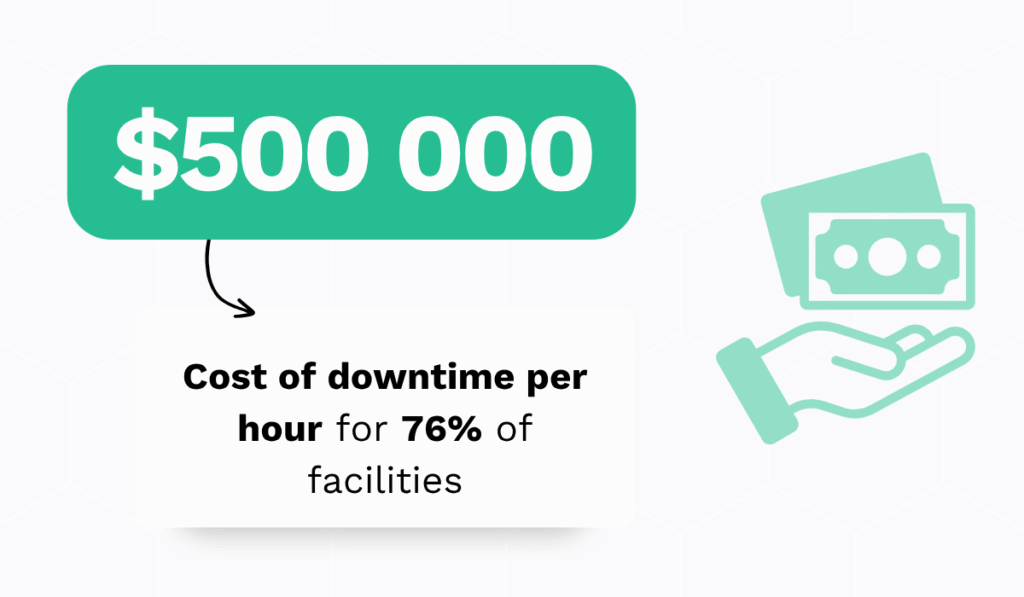
According to a global report by ABB, 83% of facilities estimate that unplanned downtime costs at least $10,000 per hour, while 76% put the figure as high as $500,000 per hour.
The good news is that many of these failures are preventable, but only if preventive maintenance is conducted consistently.
That’s where many teams struggle.
They may already have preventive maintenance schedules in place, but the process itself is often inconsistent.
Tasks live in spreadsheets, work orders get lost, technicians rely too heavily on memory or verbal communication, and in the end, many teams still spend more time reacting to failures than preventing them.
Research confirms this.
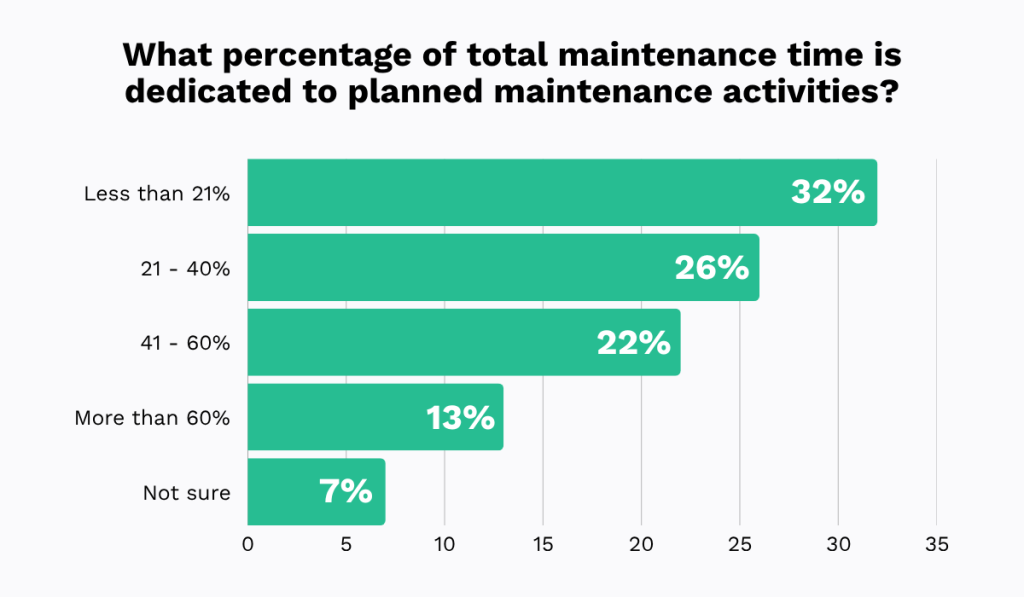
Yes, you read that correctly: less than 35% of facilities spend most of their time on planned tasks.
Here’s how to do things differently and ensure maintenance success.
First, clearly define:
- What needs to be inspected
- How often should maintenance happen
- What should technicians check
- How completed work should be documented
Prioritize high-impact recurring tasks such as lubrication, calibration, filter replacements, and safety inspections. These tasks often get overlooked in reactive environments.
Now, the easiest way to manage preventive maintenance consistently is with a CMMS like WorkTrek.
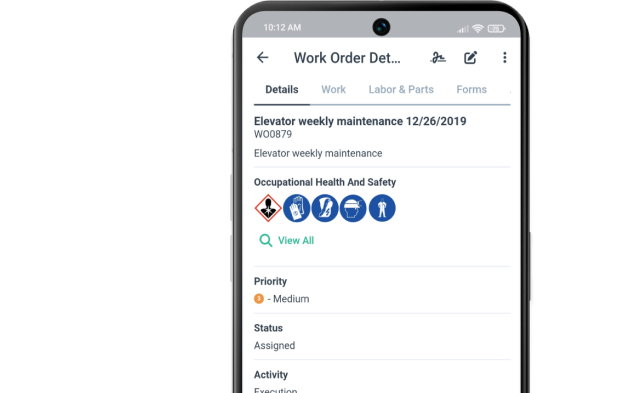
For example, instead of manually tracking preventive maintenance schedules in spreadsheets or on whiteboards, you can use recurring work orders to automatically schedule routine maintenance activities.
You can schedule PM based on time intervals or meter readings after specific usage time, mileage, temperature, pressure, and other factors.
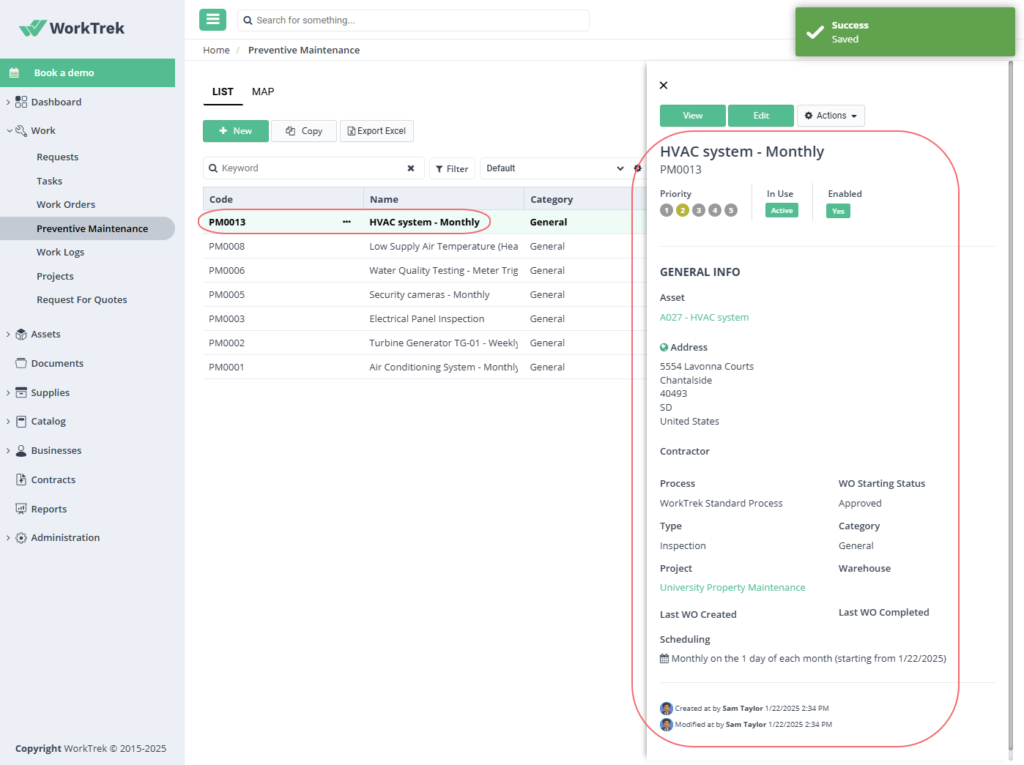
Another great thing about using a CMMS is that everything is in one place.
Technicians can use centralized asset histories to quickly see previous repairs, recurring issues, completed inspections, and technician notes before starting work on an asset.
That speeds up troubleshooting and helps teams notice patterns that would otherwise get missed.
To ensure maintenance is performed consistently across the entire team, you can even attach digital checklists and standardized procedures to work orders.

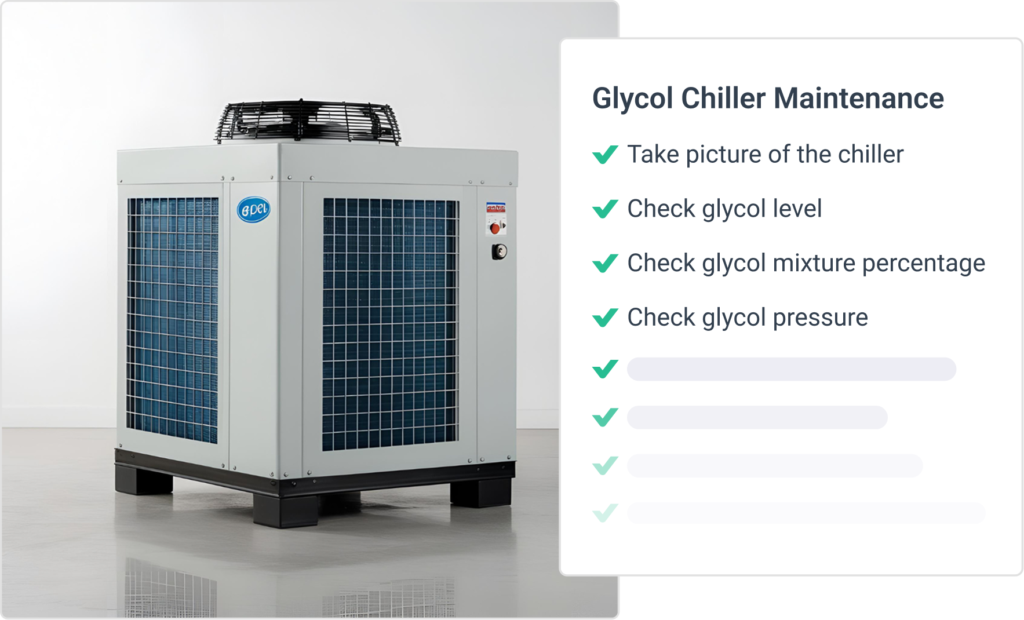
This way, every technician can follow the same process every time, regardless of shift, location, or experience level.
Upgrade Documentation Management Processes
A lot of maintenance teams rely heavily on the one person who knows everything.
The problem is that once that person is unavailable, troubleshooting suddenly becomes much slower and more chaotic.
Technicians waste time searching for manuals, repeating old mistakes, or trying to remember how a repair was handled the last time equipment failed.
Apparently, this scenario is more common than one might think, in every industry.
In a Reddit discussion about tribal knowledge in engineering teams, one engineer described how an aircraft manufacturer allowed several experienced supervisors to retire without first properly transferring their knowledge.
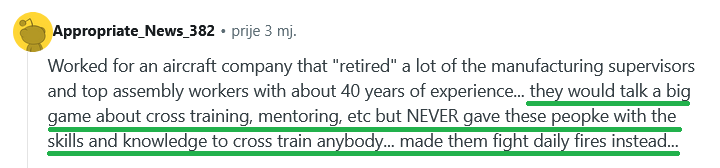
According to the post, the company later faced a huge vacuum and a ton of rework, eventually bringing some retirees back as consultants because critical assembly knowledge had been lost.
In other words, failing to document work properly costs money.
For example, in the UK, industrial organizations lose an average of £240,000 in productivity per retiring maintenance specialist because of undocumented knowledge.
Beyond costs, poor maintenance documentation can also be dangerous.
In a recent investigation involving a fatal UPS cargo jet crash, the NTSB found that inconsistent communication and incomplete reporting created blind spots around recurring bearing damage issues.

Several previous incidents were either poorly documented or never fully reported, making it harder to recognize the scale of the problem before the accident happened.
That’s why maintenance teams should document knowledge before it disappears.
Start by creating SOPs for recurring inspections, repairs, shutdown procedures, and troubleshooting processes.
Then make sure technicians can access them quickly when they need them.
A CMMS can help by giving teams one centralized place to store asset histories, maintenance notes, manuals, photos, and SOPs tied directly to each piece of equipment.
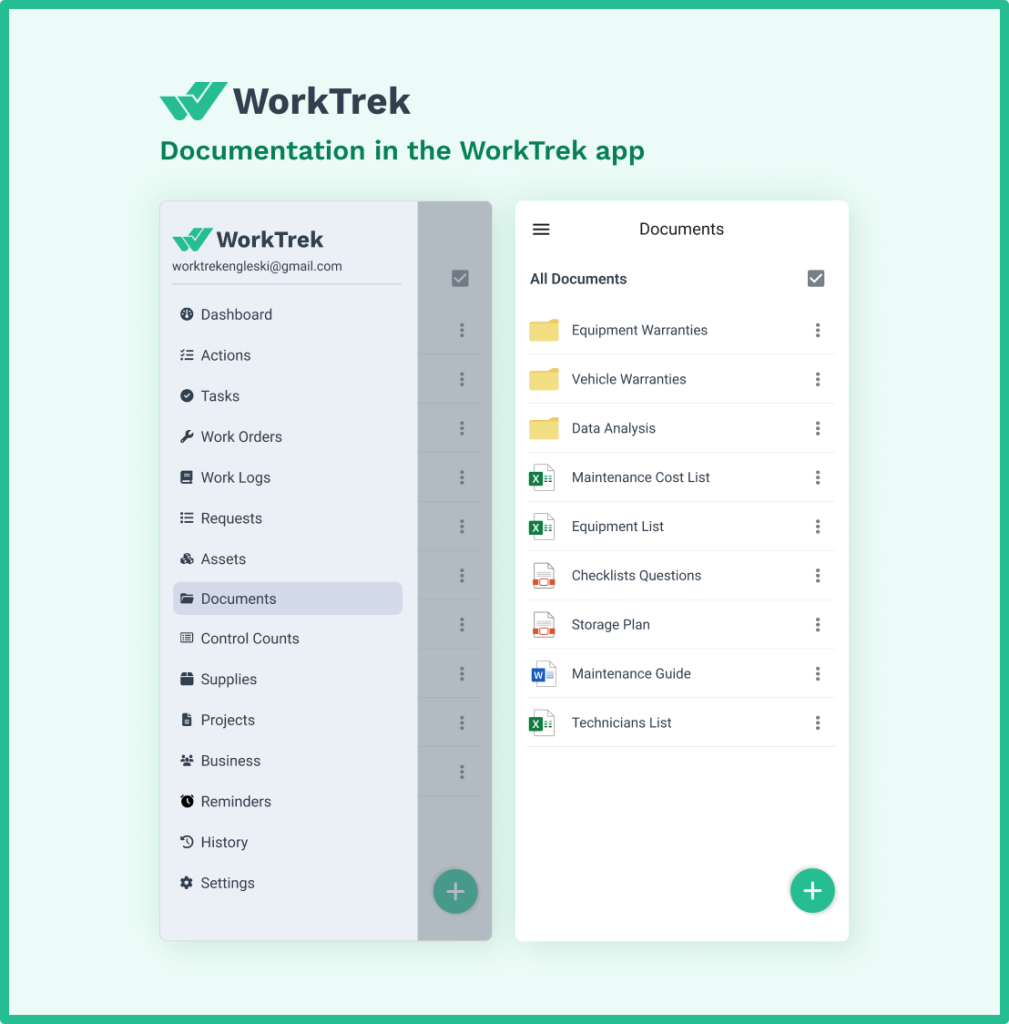
And most importantly, technicians should be able to access all this information in the field through their mobile phones.
Keep Spare Parts Ready
Even the best maintenance teams can’t fix equipment if the necessary parts are unavailable.
Unfortunately, many organizations only realize a spare part is missing after a critical asset is already down.
That situation can escalate quickly.
Maintenance engineer Jan Barraclough described watching cyclone feed pumps repeatedly fail during a single shift as worn vee-belts disintegrated one after another.
But the real problem appeared afterward.
The site had no spare pulleys available and nothing already on order.
Without replacement parts on site, the team was forced into emergency shipments and months-long lead times, as Barraclough explained:
“Due to the cost of ‘hot-shotting’ them to site, I was only allowed to have 1 set of pulleys and taper locks flown in… the other pulleys and belts would have to come by road (6 months away).”
That’s the real cost of poor spare-parts planning.
Once a critical component fails, teams often end up dealing with production losses, emergency shipments, temporary fixes, and months of operational risk just to keep equipment running.
To avoid situations like this, first identify your critical spare parts. These are the components that would immediately disrupt operations if they failed and were unavailable.
Then define minimum stock levels based on:
- Asset criticality
- Supplier lead times
- Failure frequency
- How long could operations realistically run without the part
With a CMMS, you can track spare parts inventory alongside maintenance activities, monitor which parts are running low, and link components directly to assets.
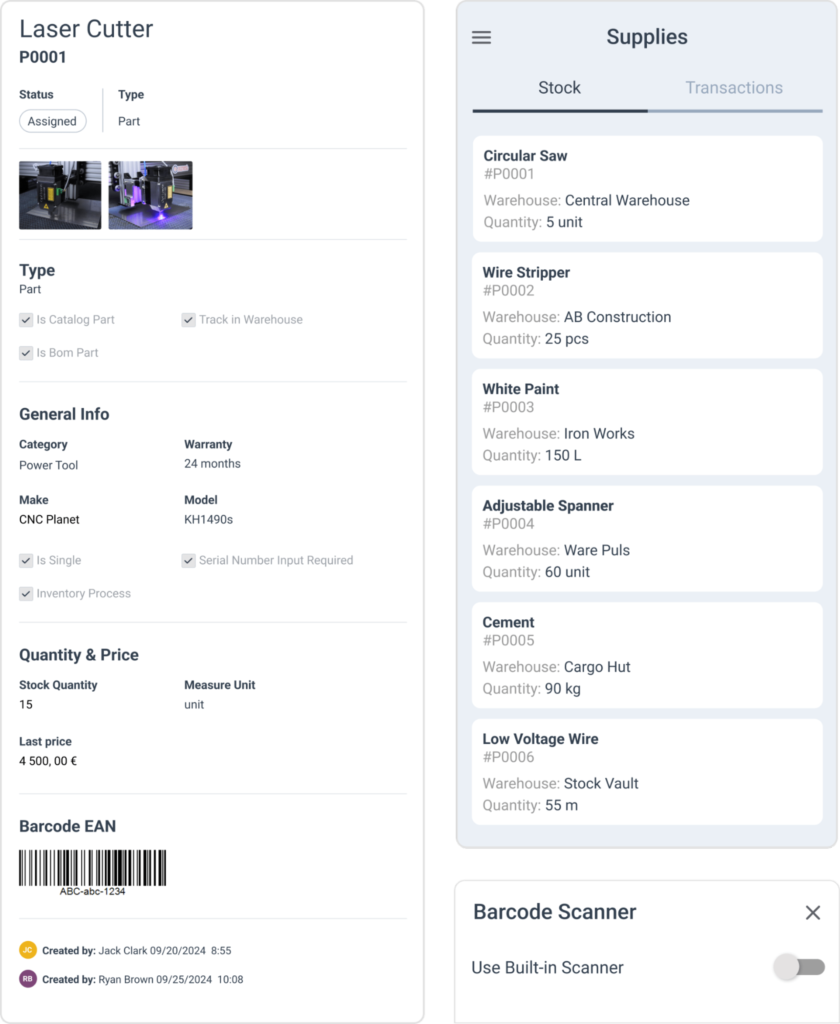
In the end, downtime often lasts much longer than the repair itself when teams are stuck waiting for parts to arrive.
Train Your Team Regularly
Maintenance problems are rarely caused by equipment alone.
In many cases, the bigger issue is whether technicians have the skills, knowledge, and confidence to maintain that equipment properly.
Even the best preventive maintenance plans, monitoring systems, and maintenance software will fail if teams do not know how to use them correctly.
And this challenge is growing.
Modern facilities rely on increasingly complex equipment, automated systems, and digital maintenance tools, while experienced technicians are retiring faster than companies can replace them.
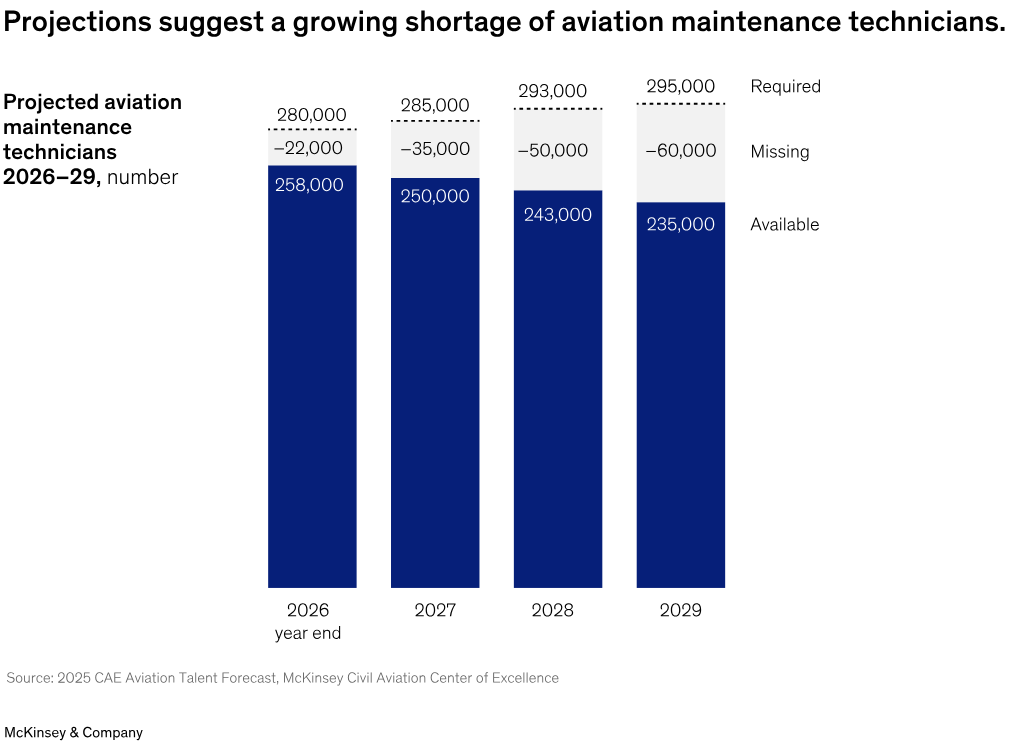
A McKinsey analysis of the aviation maintenance sector, for example, found that the industry could face a shortage of roughly 60,000 technicians by 2029.
In day-to-day maintenance operations, this problem usually shows up as missed warning signs, inconsistent inspections, incorrect repairs, repeat failures, and longer troubleshooting times.
If that sounds familiar, your maintenance training needs to become more practical and continuous, and not something that only happens during onboarding.
Instead of relying heavily on classroom-style instruction, focus on training that reflects real maintenance situations. For example, you can:
- Troubleshoot real breakdown scenarios
- Practice inspections on actual equipment
- Simulate common failures your team regularly encounters
- Walk through “what would you do if this happens?” exercises
This type of hands-on learning helps technicians build confidence in real operating conditions, not just understand procedures in theory.
Cross-training is equally important.
If only one technician knows how to troubleshoot a critical asset, your operation becomes vulnerable every time that person is absent, overloaded, or leaves the company.
Therefore, ensure knowledge is shared across the team. Have technicians shadow each other, rotate responsibilities occasionally, and document lessons learned after major repairs or failures.
You should also standardize how maintenance work is performed.
Clear checklists, visual instructions, and structured reporting processes help reduce mistakes, especially during busy shifts or high-pressure situations.
And with a CMMS, you can make those procedures easily accessible in the field, attach instructions directly to work orders, and ensure technicians follow the same maintenance process every time.
Ultimately, better training doesn’t equal running more courses.
In fact, it all comes down to ensuring your team can respond confidently, consistently, and correctly when real maintenance problems happen.
Keep Monitoring Your Operations Closely
Many maintenance teams operate reactively simply because they do not have enough visibility into what is happening across their operations.
Equipment performance slowly declines, small faults keep repeating, downtime becomes more frequent, and maintenance backlogs grow, but nobody notices the pattern early enough to act on it.
That’s why maintenance teams need to continuously monitor both equipment condition and maintenance performance, not just react after breakdowns occur.
And you do not need an overly complicated system to start doing this well.
In fact, one of the biggest mistakes teams make is trying to track too much data at once.
A much better approach is to start with just a few key indicators tied to your most critical assets.
For example, you can track:
- Downtime frequency
- Temperature or vibration changes
- Recurring error rates
- Maintenance backlog
- Mean time to repair (MTTR)
A good CMMS can help you monitor these metrics automatically and visualize them through dashboards and reports.
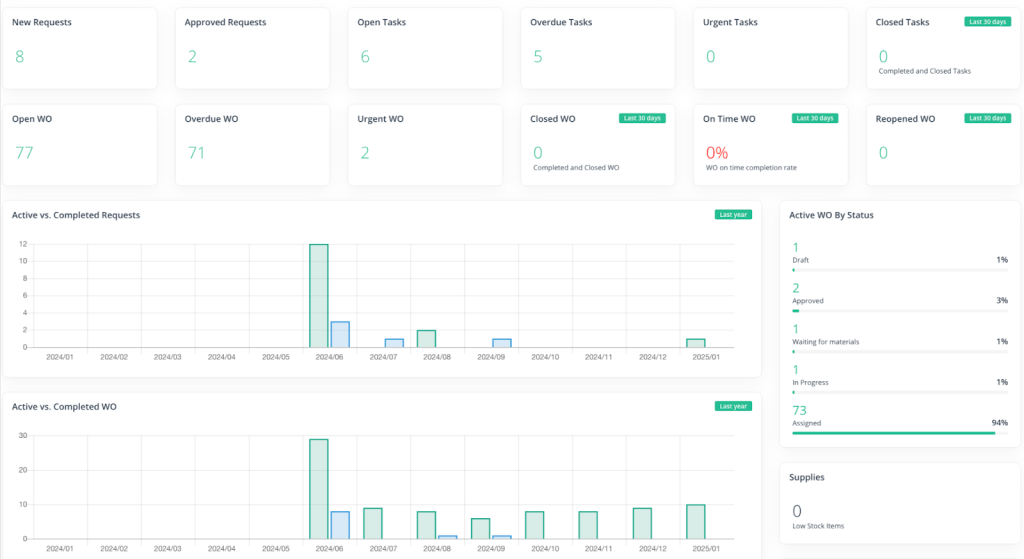
That makes it much easier to identify recurring issues, declining asset performance, and patterns before they turn into major operational problems.
This kind of deeper monitoring becomes especially valuable for critical assets where even a small failure can cause significant downtime.
In those cases, teams often go beyond KPIs and use condition-monitoring tools such as vibration analysis, temperature sensors, and real-time equipment monitoring.
That’s exactly what Ingredion, a global food ingredient manufacturer, did after repeated equipment failures caused costly downtime at one of its plants.
In one case, a critical pump with no backup failed, causing a full three-day shutdown.
After implementing real-time condition monitoring, the company started detecting developing issues much earlier.
In one standout case, monitoring tools identified a looseness defect on another critical pump before failure occurred, allowing the maintenance team to create a work order immediately and avoid another major shutdown.
According to Ingredion, this approach helped one facility achieve:
- $1 million in production savings
- $223,000 in maintenance savings
- Between 48 and 168 hours of avoided downtime across critical equipment
Because in maintenance, the earlier you notice a problem, the easier and less expensive it is to fix.
Conclusion
Maintenance can indeed be full of challenges.
But as you’ve seen throughout these steps, most common maintenance issues are preventable with the right processes and habits.
Even small improvements in preventive maintenance, documentation, training, inventory management, or operational monitoring can significantly reduce downtime and help you stay ahead of recurring problems.
Review these steps, identify where your biggest gaps are today, and start improving one process at a time.