


Get a Free WorkTrek Demo
Let's show you how WorkTrek can help you optimize your maintenance operation.
Try for freeKey Takeaways:
- Manual work order management produces more errors and decreases asset lifespan.
- Digital work orders enable teams to work from a shared real-time view of the operation.
- The world’s 500 largest companies lose $1.4 trillion a year due to unplanned downtime.
Imagine the following:
The technician who worked on the machine last week wrote the repair notes on paper, but no one can find the form.
A preventive maintenance inspection that should have happened three days ago was missed because the reminder was on a whiteboard in another building.
Someone forgot to order that critical spare part. Again.
For facilities managing maintenance through disconnected manual processes, these scenarios are all too common.
Luckily, digital work order (WO) management eliminates such inefficiencies through a centralized, real-time system for managing maintenance work, tracking assets, and keeping teams aligned.
In this article, we’ll explore six key reasons why digitizing your work order management can improve reliability, reduce downtime, and create a more efficient maintenance operation.
Improved Data Reliability
When maintenance records are managed through paper forms, sticky notes, or disorganized spreadsheets, errors accumulate quickly.
For instance, a technician might abbreviate an asset name differently each time, or fill in a work order from memory, hours after the job is done, forgetting key information.
Over time, these small inconsistencies erode the reliability of your maintenance data until the records your team depends on can no longer be trusted.
The operational consequences of such untrustworthy data can be severe.
Just ask Joyce Blom, a senior electrical reliability engineer at a major gas production facility:
“We had a case where a 15kV switch for a critical load was not in the […] system and was missed for its five-year maintenance. The switch eventually failed with an arcing short, causing a plant-wide power outage […]. The associated costs were significant.”
This shows that even a single missing or inaccurate maintenance record can lead to costly downtime, repair delays, and major operational disruptions.
Digital WO management eliminates many of these failure points by building accuracy and consistency directly into the process.
Standardized templates, like the one below, ensure every work order follows the same structure.
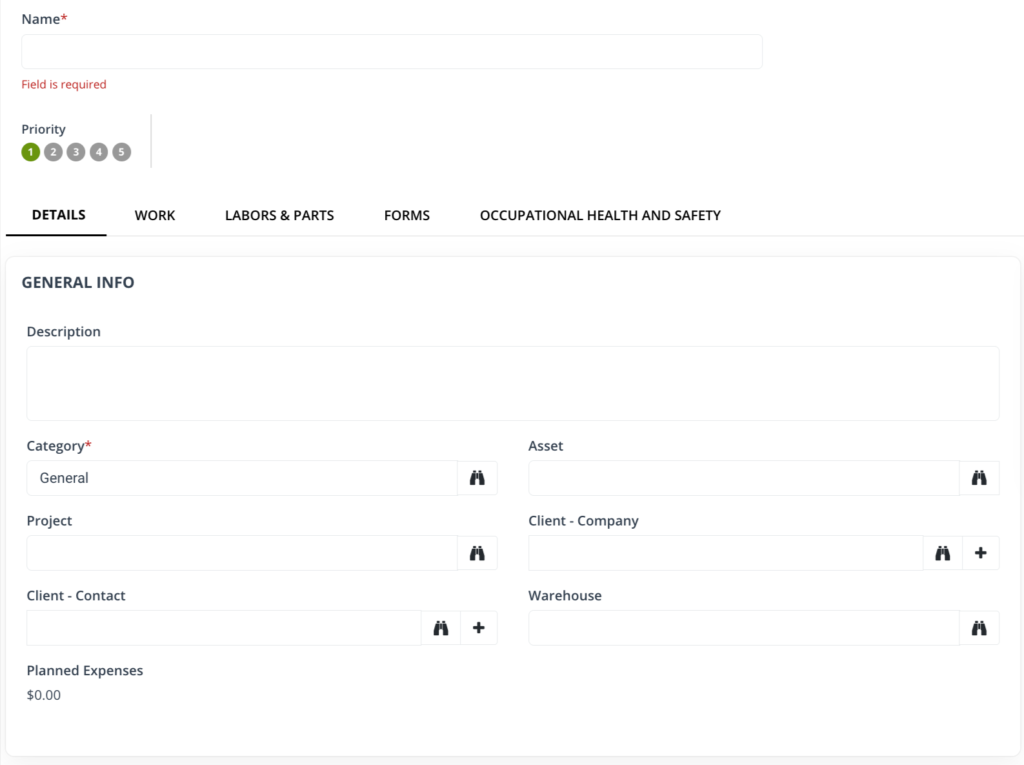
Instead of each technician documenting work differently, your team uses a predefined format with consistent fields for asset names, failure types, priority levels, assigned technicians, labor hours, and parts used.
This consistency makes records easier to complete, review, search, and analyze.
Digital WO systems also improve data completeness by requiring specific fields.
Technicians cannot close or submit a work order until key information, such as time spent, replaced parts, or resolution notes, has been entered.
What once fell through the cracks is now captured automatically as part of the workflow.
Digitization also enables real-time syncing, keeping teams aligned as work progresses and reducing the risk of outdated or forgotten information.
A technician can update a work order status, log completed work, take photographs, and add inspection notes or signatures, all on the go.
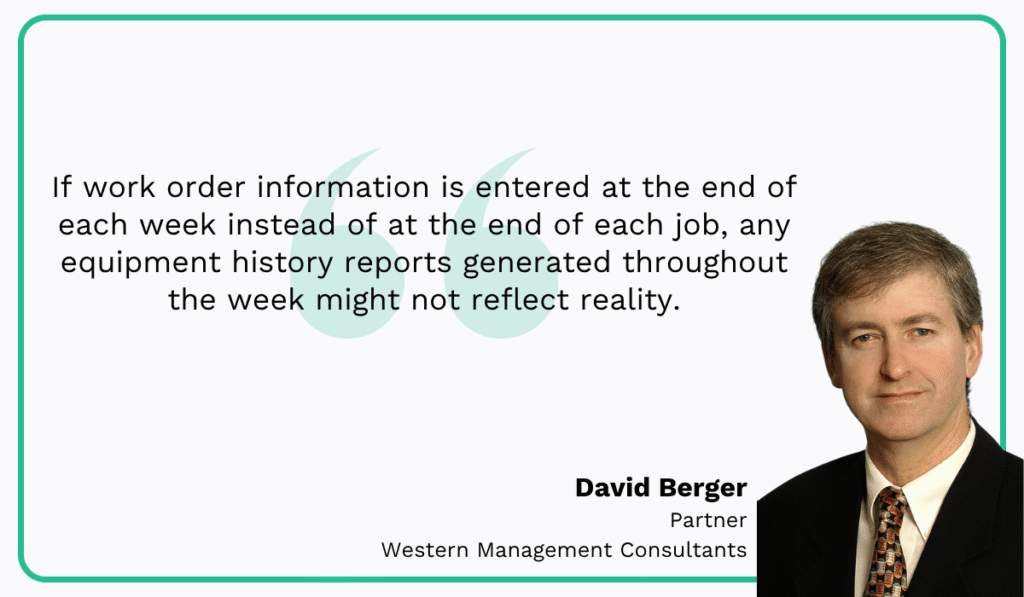
David Berger, P.Eng., Partner at Western Management Consultants, a Canadian management consulting firm, explains why real-time data is so important in upkeep:
Ultimately, digital work orders significantly increase data consistency and visibility, reducing duplicate records, incomplete documentation, and conflicting information between teams.
This creates a maintenance data foundation your organization can actually trust when making operational, financial, and reliability decisions.
Real-Time Data Access
Better data is only half the equation.
The other half is being able to get to it instantly, from wherever you are.
With paper-based or spreadsheet-driven systems, information moves slowly.
A technician completes a repair, fills out a form, hands it to a supervisor, who eventually uploads it to a shared drive.
By the time that data is available to the rest of the team, hours or even days have passed.
Not only are decisions made during this gap based on incomplete or outdated data, but teams also waste significant time searching for it.
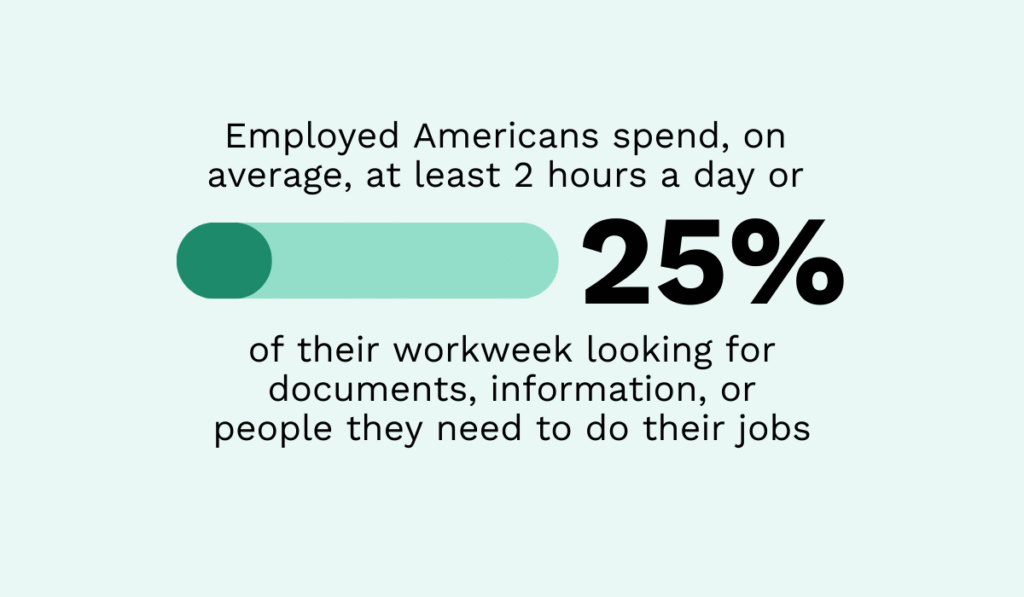
For instance, a Glean survey shows that American workers spend an average of two hours a day, or 25% of their workweek, searching for documents, information, or colleagues needed to complete tasks.
Fortunately, digital WO management eliminates these delays.
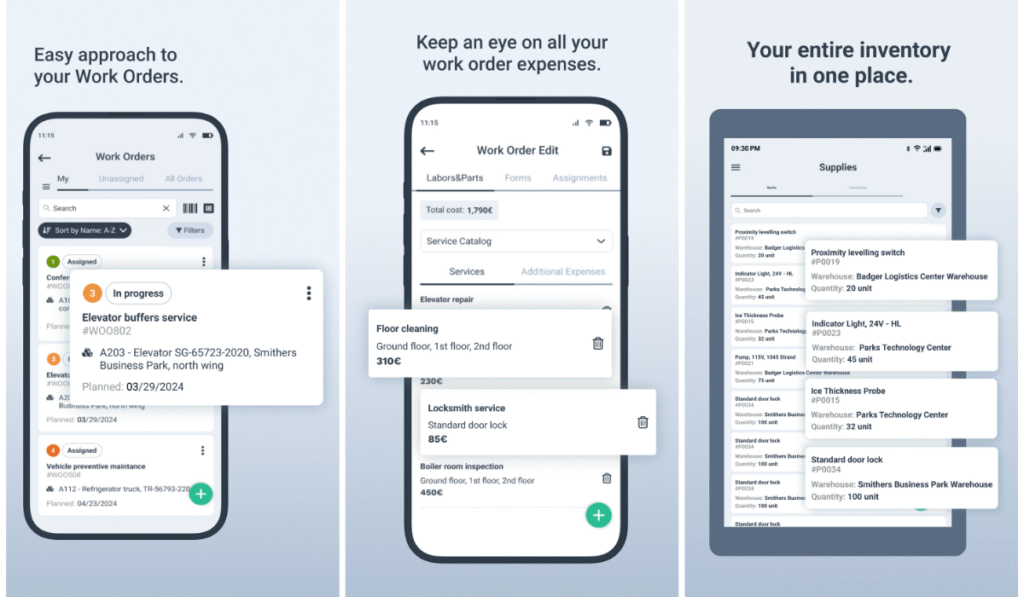
Since digital WO systems are often mobile-friendly, teams can access assignments, review job details, update work orders, and report issues from virtually anywhere, including directly from the shop floor.
As a result, everyone works from the same live information.
Supervisors can quickly verify job progress, planners can adjust schedules based on current equipment conditions, and technicians can respond faster when priorities change.
There are no manual handoffs, delayed updates, or disconnected spreadsheets slowing the flow of information.
Instead of tracking updates via calls, emails, or radio communications, the system provides a real-time view of maintenance activity across the facility.
This, ultimately, improves troubleshooting and repair quality.
When equipment fails, technicians can immediately pull up previous work orders, recurring issues, completed repairs, and parts history directly from a phone or tablet.
That context leads to:
- Faster diagnostics
- More informed repair decisions
- Reduced downtime
In short, digital work orders enable your team to work from a shared real-time view of the operation.
This, in turn, leads to faster response times, better coordination, fewer communication gaps, and a maintenance process that can keep pace with the demands of the facility.
Increased Accountability
When maintenance work is managed manually, accountability often depends on trust.
You trust the technician completes the form, the supervisor approves the right work order, and the paperwork ends up where it’s supposed to.
When something goes wrong, like a missed inspection, a repeat failure, or a compliance gap, you’re left trying to reconstruct what happened from memory and incomplete records.
Digital WO management changes this by making every maintenance activity traceable.
Every action taken within the system is automatically tied to a person, a timestamp, and an asset.
Not because someone is constantly monitoring employees, but because traceability is built directly into the workflow.
Each work order automatically records key activity data, including:
- Who created the work order
- Which technician was assigned
- When work started and ended
- Status updates and approvals
- Notes, comments, and uploaded photos
- Parts used and labor hours logged
- Asset repair and maintenance history
This way, digital work orders create clear ownership.
Instead of sitting in a general queue waiting for someone to claim them, work orders are assigned directly to specific technicians.
From creation to completion, the system tracks who received the task, when action was taken, and how long the work lasted.
As technicians update statuses, upload photos, log parts used, or document findings, the system automatically records those actions in real time.
This creates a complete maintenance history for every asset and repair activity.
If equipment fails shortly after a task was marked complete, you can review exactly what work was performed, what observations were documented, and who completed the repair.
One of the most practical accountability features in a digital WO system is mobile photo documentation.
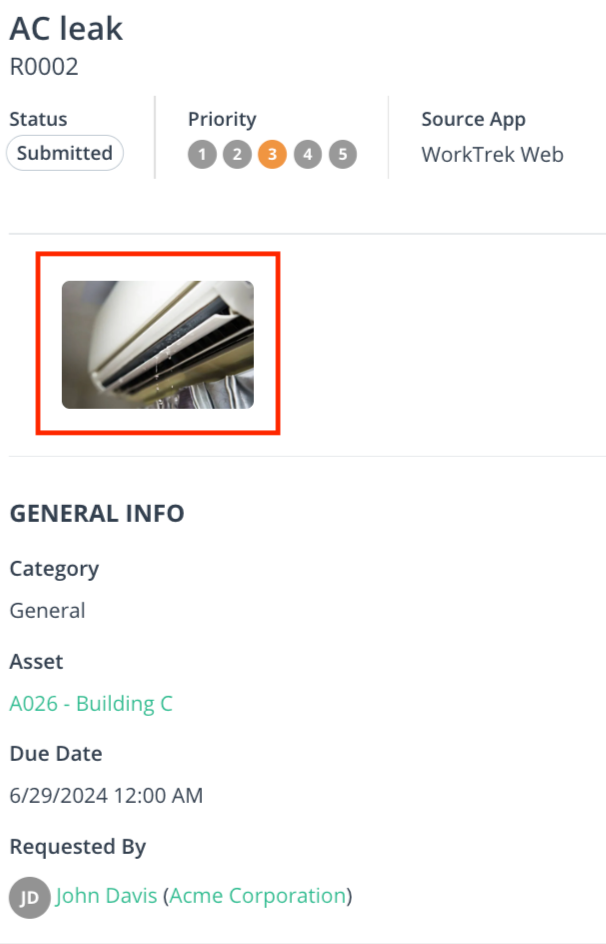
Technicians can attach photos showing the equipment’s condition before and after repairs, document defects discovered during inspections, or capture meter readings directly in the field.
Those images become part of the permanent asset record, providing far more context than handwritten notes.
The result is a more transparent, consistent, and accountable maintenance operation in which work quality is easier to verify, compliance is easier to demonstrate, and critical knowledge is easier to share.
More Efficient Work Planning
Planning maintenance can be challenging without a proper system.
Someone has to:
- remember which preventive maintenance tasks are coming up
- decide which jobs take priority
- identify the right technician for the task
- verify parts availability
- coordinate all of it across the facility
When that coordination is carried out through phone calls, printed lists, and whiteboard schedules, things inevitably fall through the cracks.
Tasks get missed, priorities are driven by urgency instead of business impact, and technicians arrive at jobs without the parts, tools, or information they need.
Digital work orders, on the other hand, lead to a more structured planning process, continuously keeping maintenance work organized, prioritized, and moving forward.
For instance, digital systems enable you to set a priority level for each task.
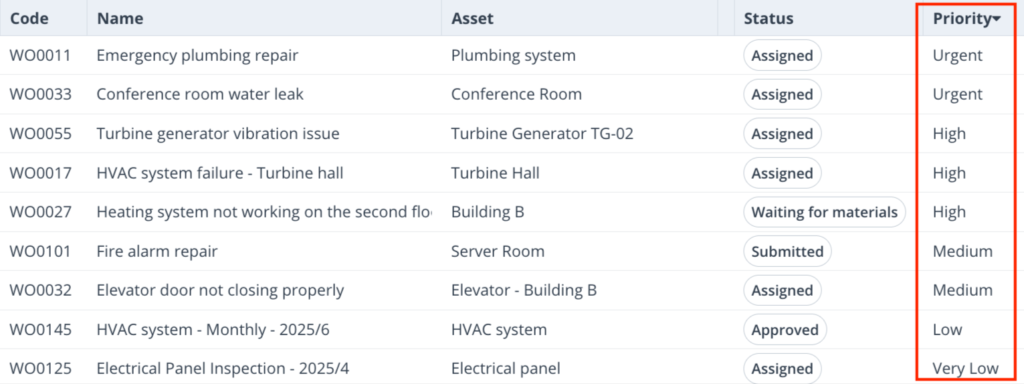
After all, not every work request carries the same level of operational risk.
A failure of a production-critical asset requires a different response than a flickering light in a storage room.
Digital WO systems allow you to define and enforce priority levels such as critical, high, medium, and low, ensuring technicians focus on the work with the greatest operational impact first.
Access to complete asset history further strengthens planning quality.
When planners can review previous repairs, recurring failures, labor history, and asset condition trends, they can make better decisions about scheduling, staffing, and repair preparation.
They know which assets require specialists, which repairs typically take longer than expected, and which equipment may be approaching the end of its reliable service life.
All in all, the operational value of the structure and visibility introduced by digital work order management is significant.
Properly planned maintenance work consistently takes less time, causes fewer interruptions, and produces more reliable outcomes than reactive repairs.
When technicians arrive prepared, with the right parts, documentation, and context already available, work is completed faster, more safely, and with fewer repeat failures.
Stronger Preventive Maintenance Program
Better maintenance planning often leads to more effective preventive maintenance, which results in various improvements across operations and assets.
For instance, research from the NIST found that manufacturers relying on reactive upkeep experienced 3.3 times more downtime and 16 times more defects compared to those using more preventive and predictive maintenance strategies.
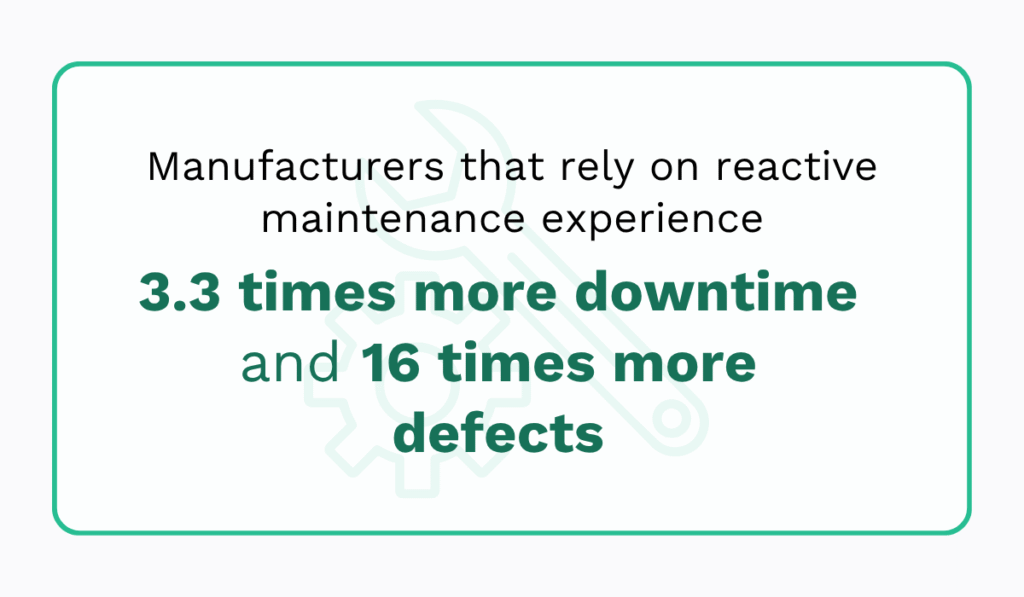
They also reported significantly higher lost sales and inventory disruptions tied to maintenance-related issues.
In other words, adopting a more proactive approach to maintenance directly translates to increased efficiency, reliability, uptime, and even profitability.
However, managing preventive maintenance through spreadsheets, paper schedules, and calendar reminders is extremely difficult.
Tasks get delayed or forgotten, intervals drift, and preventive maintenance gradually turns back into reactive upkeep with extra administrative work layered on top.
Digital WO systems are what make a PM program sustainable at scale. Take our own CMMS, WorkTrek, for instance.
WorkTrek supports both time-based and meter-based PM scheduling, giving organizations the flexibility to align maintenance intervals with actual equipment usage.
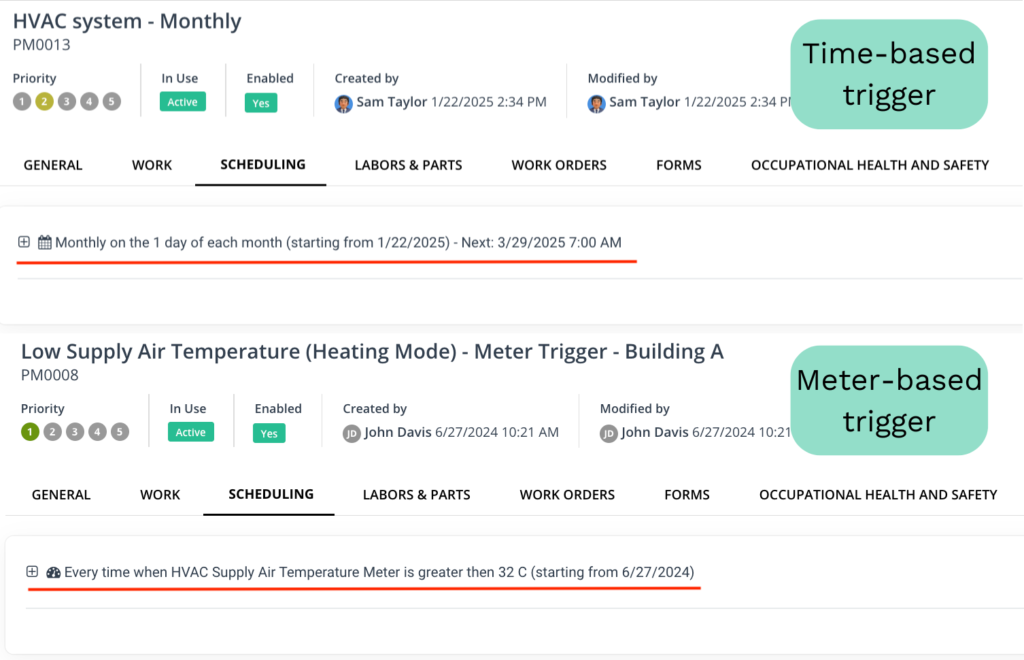
You simply fill out the work order template, complete with SOPs, photos, checklists, and more, define the trigger, and the system takes care of the rest.
The assigned technician automatically receives a notification when the task is due and can instantly access the relevant work order from their phone.
If an inspection uncovers an issue, follow-up corrective work orders can be generated automatically.
The result is a better-planned preventive maintenance schedule that your team consistently follows, executing every task with the right procedures, parts, and safety measures in place.
No more missed tasks, constant firefighting, incomplete work orders, or running out of critical spare parts.
With WorkTrek, your preventive maintenance program finally works the way it should.
Reduced Costs
All the benefits we’ve covered so far ultimately impact your bottom line.
Better reliability, real-time visibility, stronger accountability, more efficient planning, and a stronger PM program reduce wasted time, minimize downtime, improve labor efficiency, and extend asset life.
Ultimately, the financial impact becomes visible across nearly every part of the operation.
Reduced unplanned downtime is often where most money is saved.
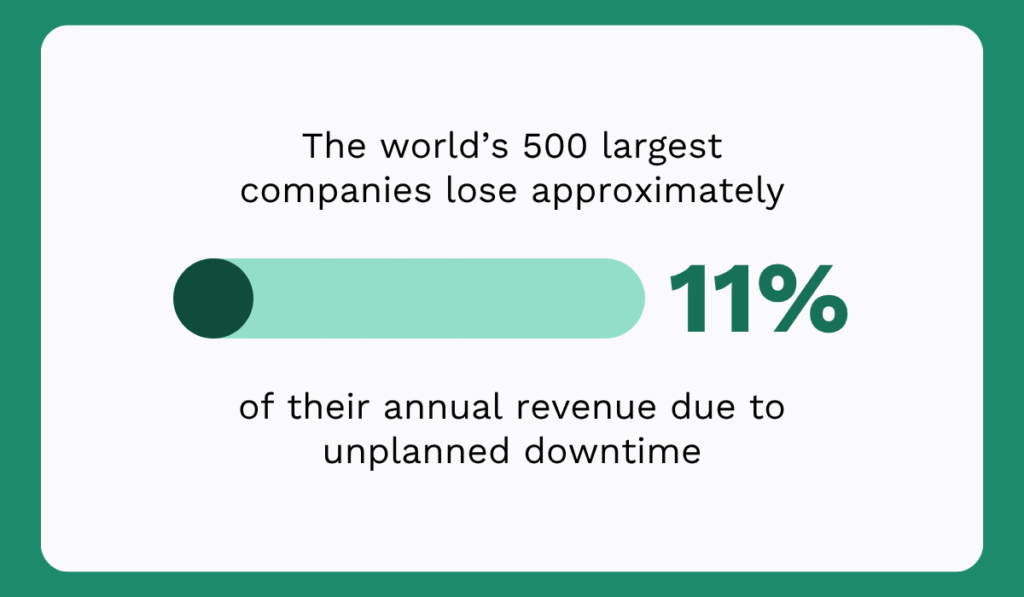
According to the 2024 Siemens report, the world’s 500 largest companies lose nearly $1.4 trillion annually due to unplanned downtime, approximately 11% of annual revenue.
However, it’s not just large enterprises that lose such large sums of money.
Companies of all sizes can be significantly impacted by unplanned operational disruption.
Alexander Hill, Chief Global Strategist at Senseye, a cloud-based predictive maintenance solution, explains:

Remember, when a machine fails unexpectedly, you’re not just paying the cost of lost production during the downtime.
You’re also paying a premium for the repair itself.
Emergency contractor rates, expedited parts shipping, and after-hours overtime are all expenses that disappear, or shrink dramatically, when maintenance is managed proactively through a digital system.
Digital WO management directly reduces these losses by enabling the preventive maintenance activities that keep equipment operating reliably.
Inventory management is another major area where digital maintenance systems reduce maintenance costs.
Without a digital system connecting parts usage to work orders and asset history, storerooms often accumulate excess inventory “just in case” while simultaneously running short on critical components actually needed for repairs.
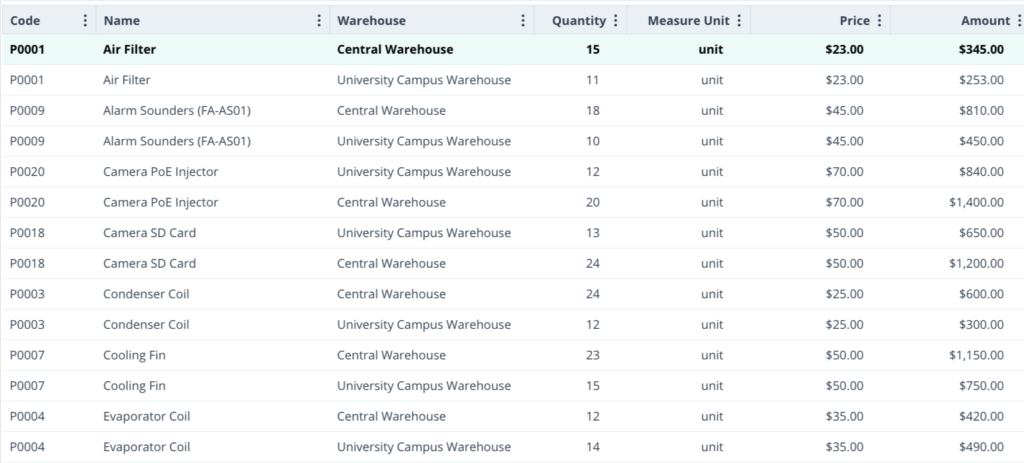
Digital WO systems, like the one shown below, improve inventory visibility by tracking parts consumption, recurring failures, and maintenance trends over time.
That’s right, digitizing work orders isn’t only about centralizing information or making technicians’ jobs easier.
It can also result in major cost savings for the entire organization.
Conclusion
Maintenance teams today are expected to reduce downtime while working with fewer resources, tighter budgets, and higher production demands.
Managing maintenance through paper forms, spreadsheets, and disconnected processes makes it increasingly difficult to meet those expectations.
Digitizing work order management is the only way forward.
It provides your team with accurate maintenance data, real-time visibility into ongoing work, stronger accountability, and more efficient planning and scheduling.
More importantly, it transforms maintenance from a reactive cost center into a structured, data-driven operation that improves reliability, supports production goals, and reduces long-term operating costs.