

Blog

Operations & Maintenance
Ultimate Guide to Proactive Maintenance
Keeping equipment running smoothly is key for any business. Proactive maintenance helps catch problems before they happen, saving money and time in the long run. This guide to proactive maintenance will answer that question. Proactive maintenance involves regular checks and fixes to prevent breakdowns. It’s different from fixing things only when they break. Many companies […]
Keeping equipment running smoothly is key for any business. Proactive maintenance helps catch problems before they happen, saving money and time in the long run. This guide to proactive maintenance will answer that question.
Illustration: WorkTrek / Data: facilio
Proactive maintenance involves regular checks and fixes to prevent breakdowns. It's different from fixing things only when they break. Many companies now use this method to keep their machines working well.
This guide will explain how to start a proactive maintenance plan. We'll cover the steps, tools, and tips you need.
By the end, you'll be ready to improve your maintenance approach.
Key Takeaways
Regular checks and fixes prevent costly breakdowns
Proactive maintenance saves time and money for businesses
Tools and planning are needed for successful proactive maintenance
Understanding Proactive Maintenance
Proactive maintenance efforts aim to prevent equipment failures before they occur. It involves regular inspections, repairs, and replacements to keep machines running smoothly.
This approach differs from reactive maintenance, which only fixes problems after breakdowns happen. Proactive maintenance helps reduce costs by preventing unexpected failures, minimizing downtime, and improving operational efficiency.
There are several types of proactive maintenance:
Preventive maintenance
Predictive maintenance
Condition-based maintenance
The most common type is implementing preventive maintenance strategies.
Source: WorkTrek
It involves scheduled upkeep based on time or usage, such as changing the oil every 5,000 miles or inspecting a machine monthly. The goal is to reduce costly emergency repairs for the most critical assets.
Predictive maintenance, also called smart maintenance, uses data and sensors to forecast when issues might arise.
This allows teams to fix problems just before they cause failures.
Condition-based maintenance monitors equipment in real time. It triggers repairs when specific indicators show potential issues.
Implementing proactive maintenance requires planning and resources. Organizations need to:
Identify critical equipment
Create maintenance schedules
Train staff on procedures
Use proper tools and software
Proactive maintenance practices can extend equipment life and improve reliability by focusing on prevention.
It helps businesses avoid costly breakdowns, improve maintenance practices, reduce maintenance costs, and maintain consistent operations.
Benefits of Proactive Maintenance
Proactive maintenance offers many advantages for facilities and equipment. It helps prevent unexpected breakdowns and extends the life of assets.
Reduced Downtime
One key benefit of a proactive maintenance plan is reduced downtime. Fixing small issues early can avoid major failures that stop operations.
Cost Savings
Another plus is cost savings. While upfront costs may be higher, proactive maintenance saves money in the long term. It cuts emergency repair expenses and replacement costs.
Improved Safety
Improved safety is a crucial advantage. Well-maintained equipment is less likely to malfunction in ways that could harm workers.
Energy Efficiency
Energy efficiency often increases with proactive upkeep. Properly maintained systems use less power and run more smoothly.
Improve Asset Lifespan
Asset lifespan gets a boost, too. Regular care and timely repairs help equipment last longer before needing replacement.
Illustration: WorkTrek / Data: Omega Engineering
Improve Planning
Proactive approaches also enhance planning. Maintenance can be scheduled at convenient times, minimizing disruptions to normal operations.
Tracking Maintenance Data
Better data collection is an added perk. Tracking maintenance activities provides insights for future improvements and budgeting.
Improved Equipment Reliability
Lastly, proactive maintenance improves product quality. Well-maintained equipment is more likely to produce consistent, high-quality outputs.
Source: WorkTrek
Key Elements of Proactive Maintenance
Proactive maintenance focuses on preventing equipment failures before they occur. It uses data analysis, scheduling, and monitoring to keep systems running smoothly.
Predictive Maintenance Techniques
Predictive maintenance uses data to forecast when equipment might fail. It relies on sensors and advanced analytics to track machine health.
Key predictive techniques include:
Vibration analysis
Oil analysis
Thermography
Acoustic monitoring
These methods help spot issues early. For example, vibration analysis can detect loose parts or misalignments, and oil analysis reveals contaminants that could damage engines.
Illustration: WorkTrek / Data: Deloitte
Predictive maintenance reduces unplanned downtime and cuts costs by avoiding unnecessary repairs. Companies can plan maintenance at the best times, causing less disruption.
Preventative Maintenance Scheduling
Preventative maintenance follows a set schedule. It aims to keep equipment in good shape through regular upkeep.
Common preventative tasks include:
Cleaning and lubricating parts
Replacing worn components
Calibrating instruments
Checking safety systems
Source: WorkTrek
Effective scheduling balances maintenance needs with production demands. It often uses manufacturer guidelines and past performance data.
Digital tools help manage complex maintenance schedules. They can track multiple assets and send alerts when service is due.
Condition Monitoring
Condition monitoring tracks equipment performance in real-time. It uses sensors to measure temperature, pressure, and vibration.
Key benefits of condition monitoring include:
Early detection of problems
Improved safety
Better energy efficiency
Extended equipment life
Source: WorkTrek
Modern systems collect data using the Internet of Things (IoT), allowing remote monitoring and quick response to issues.
Condition monitoring helps fine-tune maintenance plans. It shows which parts need attention and when leading to more efficient resource use and less waste.
Implementing Proactive Maintenance
Putting a proactive maintenance plan into action takes careful planning and execution. It involves creating a solid strategy, training staff, choosing the right tools, and using data to make smart choices.
Establishing a Maintenance Plan
A good maintenance plan is key to being proactive. Start by making a list of all equipment and assets. Give each item a priority based on its importance to your operations. Set up a schedule for regular checks and upkeep.
Use preventive maintenance strategies to stop problems before they start. This can include things like:
Cleaning and lubricating machines
Replacing worn parts
Checking for signs of wear
Make sure to keep detailed records of all maintenance tasks. This will help track patterns and spot recurring issues.
Training Maintenance Personnel
Well-trained staff are crucial for proactive maintenance. Teach your team about the equipment they'll be working on and show them how to spot early signs of trouble.
Illustration: WorkTrek / Data: Shortlister
Give hands-on training for maintenance tasks. This helps staff feel more confident in their work. Set up regular refresher courses to keep skills sharp.
Encourage a culture of proactive thinking. Reward staff who find and fix issues early. This helps everyone stay focused on preventing problems, not just fixing them.
Selecting the Right Tools and Technology
The right tools can make proactive maintenance much easier. Invest in a computerized maintenance management system (CMMS) like WorkTrek. This software helps track maintenance tasks, schedules, and equipment history.
Consider using sensors and IoT devices to monitor equipment health. These can give early warnings of potential issues. Some helpful tools include:
Vibration sensors
Temperature monitors
Oil analysis equipment
Choose tools that fit your specific needs and budget and improve maintenance performance. Make sure they can work together and share data easily.
Data Analysis and Decision-Making
Collecting historical maintenance data is just the first step. The real value comes from analyzing it and making smart choices. Look for patterns in equipment performance and failure rates.
Use this info to adjust your maintenance schedule and improve operational efficiency. You might find some machines need more frequent checks, while others can go longer between services.
Set up alerts for when data shows potential problems. This lets you act fast to prevent breakdowns. Over time, you'll build a predictive maintenance model that can spot issues before they happen.
Keep improving your process. Review your data regularly and adjust your plan as needed. This will help make your proactive maintenance even more effective over time.
Proactive Maintenance Strategies
https://youtu.be/FMbzPKL7qKg
Proactive maintenance aims to prevent equipment failures before they occur. It uses data, analysis, and systematic approaches to optimize asset performance and reliability.
Risk-Based Maintenance
Risk-based maintenance prioritizes maintenance tasks based on the potential impact of equipment failure. This strategy focuses resources on critical assets that pose the highest risk to operations, safety, or the environment.
Key elements of risk-based maintenance include:
Asset risk assessment
Failure mode analysis
Probability and consequence evaluation
Illustration: WorkTrek / Quote: WLC
Organizations use risk matrices to categorize assets and determine appropriate maintenance intervals. High-risk equipment receives more frequent inspections and preventive work.
This approach helps companies:
Reduce downtime of critical systems
Optimize maintenance budgets
Improve safety and regulatory compliance
Implementing risk-based maintenance requires thorough asset knowledge and ongoing risk evaluations.
Reliability-Centered Maintenance
Reliability-centered maintenance (RCM) is a systematic method for identifying each asset's most effective maintenance tasks. It aims to preserve system functions while minimizing costs.
RCM involves:
Defining system functions
Identifying potential failures
Analyzing failure modes and effects
Selecting optimal maintenance tasks
Illustration: WorkTrek / Quote: MaxGrip
This strategy helps determine whether preventive, predictive, or run-to-failure approaches suit each asset. RCM considers factors like:
Equipment criticality
Failure patterns
Maintenance costs
Operational impact
By applying RCM, organizations can extend asset lifespans and reduce unnecessary maintenance work.
Total Productive Maintenance
Total Productive Maintenance (TPM) is a holistic approach that involves all employees in maintaining equipment. It aims to eliminate breakdowns, defects, and accidents.
TPM principles include:
Autonomous maintenance by operators
Planned maintenance schedules
Quality maintenance to prevent defects
Early equipment management
Continuous improvement initiatives
This strategy empowers front-line workers to perform basic maintenance tasks, freeing up specialists for more complex work. TPM fosters a culture of shared responsibility for equipment reliability.
Benefits of TPM:
Improved equipment effectiveness
Reduced maintenance costs
Enhanced product quality
Increased employee engagement
Implementing TPM requires strong leadership support and employee training programs.
Computerized Maintenance Management Systems
Computerized Maintenance Management Systems (CMMS) like WorkTrek are software tools that help organize and streamline maintenance operations. They are important in proactive maintenance strategies.
Key CMMS features:
Work order management
Asset tracking and history
Inventory control
Preventive maintenance scheduling
Data analysis and reporting
Illustration: WorkTrek / Data: FMX
CMMS software enables maintenance teams to:
Plan and schedule work efficiently
Track equipment performance trends
Generate detailed maintenance reports
Manage spare parts inventory
CMMS tools centralize maintenance data and support data-driven decision-making. They help identify recurring issues, optimize maintenance intervals, and improve asset reliability.
Maintenance Metrics and Performance Indicators
Tracking the right metrics helps companies improve their maintenance processes. These indicators measure efficiency, costs, and the impact of maintenance activities on overall operations.
Key Performance Indicators (KPIs)
Maintenance KPIs are crucial for measuring success. Common KPIs include:
Mean Time Between Failures (MTBF)
Mean Time To Repair (MTTR)
Overall Equipment Effectiveness (OEE)
Planned Maintenance Percentage (PMP)
MTBF shows how long equipment runs between breakdowns. A higher MTBF means better reliability. MTTR measures repair speed. Lower MTTR indicates faster repairs.
OEE combines availability, performance, and quality to gauge equipment productivity. PMP tracks the percentage of planned vs. unplanned maintenance work.
These KPIs help teams spot trends, set goals, and make data-driven decisions. Regular tracking allows for quick adjustments to improve maintenance strategies.
Return on Investment (ROI) in Maintenance
ROI measures the financial benefits of maintenance activities. It compares maintenance costs to the savings or increased production it generates.
Source: WorkTrek
To calculate maintenance ROI:
Add up all maintenance costs (labor, parts, tools)
Estimate savings from reduced downtime and extended equipment life
Divide savings by costs and multiply by 100 for percentage
For example, if $50,000 in maintenance costs leads to $150,000 in savings:
ROI = ($150,000 / $50,000) x 100 = 300%
This shows a strong return on the maintenance investment. Tracking ROI helps justify maintenance budgets and proves the value of proactive strategies.
Maintenance Costs and Savings
Maintenance costs include:
Labor costs (wages, training)
Parts and materials
Tools and equipment
Contractor fees
Savings come from:
Reduced downtime
Longer equipment life
Lower energy costs
Fewer emergency repairs
Improved asset management
Tracking these numbers helps balance spending and savings. Finding the right mix of preventive and reactive maintenance is key.
Illustration: WorkTrek / Data: Insaite
Companies can use cost per production unit to compare maintenance spending across different areas. This metric shows which equipment or processes need more attention.
Regular cost analysis helps teams find ways to cut waste and improve efficiency. It also supports better budget planning for future maintenance needs.
Challenges and Considerations in Proactive Maintenance
Proactive maintenance brings many benefits but also presents unique hurdles. When implementing this approach, companies must carefully weigh resource needs, costs, cultural shifts, and operational impacts.
Resource Allocation
Implementing proactive maintenance strategies requires careful resource planning. Companies need to invest in skilled personnel and advanced tools. This often means hiring specialists or training existing staff.
New technologies like sensors and data analysis software are essential. But they come with a learning curve. Maintenance teams need time to master these tools.
Source: WorkTrek
Managers must balance maintenance tasks with other priorities. This can be tricky when resources are limited. Proper scheduling and task prioritization become crucial.
Upfront Costs versus Long-Term Savings
Proactive maintenance demands significant upfront investment. Companies need to purchase monitoring equipment, software, and training programs. These costs can be substantial.
The promise of future savings is appealing. Reduced breakdowns and extended equipment life offer long-term benefits. But, it can take time to see a return on investment.
Budget-conscious organizations may struggle with initial expenses. Decision-makers need to weigh short-term costs against potential long-term gains. This requires detailed financial analysis and forecasting.
Cultural and Organizational Changes
Shifting to proactive maintenance often requires a cultural transformation. Traditional reactive approaches are deeply ingrained in many organizations, and changing this mindset can be challenging.
Employees may resist new procedures and technologies. They might see proactive measures as unnecessary or disruptive. Clear communication and training are essential to overcome these barriers.
Leadership must champion the change. They must explain the benefits and set clear expectations, which helps create buy-in across all levels of the organization.
Balancing Maintenance and Production
Finding the right balance between maintenance activities and production needs is crucial. Excessive maintenance can disrupt operations and reduce output, while too little maintenance risks equipment failure and costly downtime.
Scheduling becomes complex. Maintenance teams must work around production schedules, which requires close coordination between departments.
Predictive technologies can help optimize this balance. They allow for more precise timing of maintenance activities. However, implementing these systems takes time and expertise.
Managers must constantly evaluate the impact of maintenance on production goals and adjust strategies as needed to maintain efficiency.
Case Studies
https://youtu.be/fMQW9jvSoRI
Proactive maintenance has transformed operations across various sectors. Real-world examples show its impact on efficiency, cost savings, and equipment reliability.
According to a recent McKinsey & Company study, organizations implementing proactive maintenance report up to a 28% reduction in maintenance costs.
Conclusion and Best Practices
Proactive maintenance is a key strategy for keeping facilities and equipment running smoothly. It helps prevent unexpected breakdowns and extends asset lifespans.
To implement effective proactive maintenance:
Create a detailed maintenance schedule
Train staff on proper maintenance procedures
Use condition monitoring tools
Keep accurate maintenance records
Regular inspections are crucial. Check equipment frequently for signs of wear or damage and address small issues before they become big problems.
Prioritize critical assets. Focus proactive efforts on equipment essential for operations or expensive to replace.
Leverage technology. CMMS software can help track maintenance tasks, schedule work orders, and analyze data.
Source: WorkTrek
Continuously improve processes. Review maintenance data regularly to identify trends and refine procedures.
Involve equipment operators. They often notice early warning signs of issues. Encourage them to report concerns promptly.
Stay up-to-date on best practices. Maintenance techniques evolve, so ongoing learning is important.
With a robust, proactive maintenance program, facilities can boost reliability, cut costs, and improve overall performance.

Operations & Maintenance
Our Ultimate Guide to Work Order Tracking
Key Takeaways:
Facilities managers consider work order tracking to be their most time-consuming task.
Companies like Jowat were able to reduce their backlog by streamlining WOs.
Tools like CMMS can help standardize and simplify the work order process.
Work orders are the foundation of effective maintenance execution.
How well you track and manage them makes all the difference in the effectiveness of your maintenance operations.
Yet, many organizations still rely on inefficient methods, with disorganized Excel sheets and scattered paper forms creating confusion that hampers productivity and asset health.
If this sounds familiar, this article is for you.
In it, we cover everything you need to know about efficient work order tracking, from its benefits to challenges, to help you regain control and optimize your operations.
Let’s begin.
Why You Should Get Good at Work Order Tracking
First, let’s explore why effective work order tracking is so important in the first place.
Improved Productivity
Effective work order (WO) tracking ensures every task is properly assigned, scheduled, and completed on time.
As a result, the entire work order management process improves, leading to smoother workflows, fewer operational disruptions, and less idle time for your maintenance team.
A recent JLL Technologies survey illustrates why getting good at WO tracking is so important.
As it turns out, the workload of the upkeep personnel is always increasing, with 55.7% of facility managers saying their WO volumes had risen in 2024 compared to 2023.
Additionally, almost half of them identified WO tracking as the most time-consuming aspect of their operations, making it the most primed for automation.
Illustration: WorkTrek / Data: JLL Technologies
Now think about how much productivity gets swallowed up by inefficiently tracking all these work orders.
Calling around just to check a task’s status, correcting errors, and ensuring there are no delays is extremely labor-intensive, yet it adds little to operations.
However, if you could streamline this process, your operational efficiency could be completely transformed.
Just ask Jowat, a leading industrial adhesives supplier.
After optimizing their WO tracking, they practically doubled their productivity.
Previously, their technicians actively handled only 45% of work orders. That number has since jumped to 85%-90%.
As a result, their maintenance backlog shrank by 75%, dropping from three months to only three weeks.
Illustration: WorkTrek / Data: SAP
This perfectly demonstrates how efficient WO tracking boosts productivity and workflows, empowering teams to work smarter and faster.
However, the benefits don’t stop there.
Increased Accountability
An effective work order tracking system doesn’t just show which work orders are completed and which aren’t.
It provides you with all the relevant information, such as deadlines, required resources, and assigned workers, as in the example below.
Source: WorkTrek
Thanks to this visibility, managers can easily monitor how quickly tasks are completed and identify who is responsible for delays or incomplete work.
Ultimately, this boosts accountability and drives better performance among the staff.
The unfortunate truth is that without proper monitoring, some work orders may never be completed, which can lead to more serious problems later on.
A striking example of this comes from the Jacob K. Javits Federal Building in New York City.
When investigators from the Inspector General’s Office of the General Services Administration (GSA) visited the building's control room, they uncovered a major oversight.
Namely, a contractor hired to fix a leaky pipe valve above a key electrical panel failed to do his job and falsely reported the work as complete.
Source: Government Executive
What the investigators found instead was a blue recycling bin positioned to catch water from the still-leaking valve.
This was a very dangerous move as it could’ve led to “corrosion of electrical components, mechanical parts failure, short circuits, possible fires,” according to the agency equipment specialist.
However, the situation later turned out to be much worse when it was revealed that about 69% of work orders sampled in six federal buildings had not been completed.
The whole purpose of work order tracking is to prevent incidents like these.
It clarifies roles and the expected outcomes for each team member, reducing ambiguity and ensuring ownership of tasks.
Extended Asset Lifespan
Effective WO tracking makes it easier to ensure that maintenance tasks, such as lubrication and inspections, are performed correctly and on time.
These routine checks and servicing minimize wear and tear and prevent smaller issues from escalating.
Consequently, your equipment stays in better condition for much longer.
A 2023 survey by ABB shows that upkeep professionals across industries already understand the importance of maintenance in ensuring continuous asset reliability.
According to the survey, 60% of respondents said they plan to increase their reliability and maintenance investment over the next three years.
Additionally, 51% cited extended equipment lifecycles as a key expected outcome.
Illustration: WorkTrek / Data: ABB
Keep in mind that this doesn’t just apply to heavy machinery. Proactive care benefits both small and large equipment and systems.
Take HVAC units, for example.
Typically, they last 15 to 20 years, but they can last even longer with proper maintenance.
Eric Goranson, a Seattle-based designer, home renovation expert, and host of the Around the House podcast, agrees:
Illustration: WorkTrek / Quote: CNET
Ten years is a significant increase, with every extra year adding to massive cost reductions.
And it all starts with smart, streamlined work order tracking.
Most Important Work Order KPIs to Track
In addition to tracking work progress, monitoring maintenance-related performance metrics is important.
Doing so provides insight into the strengths and weaknesses of your work order management, helping you identify areas for improvement.
Since every organization handles work orders differently, the KPIs you track should match your unique goals and upkeep needs.
That said, these three metrics are most commonly used to measure maintenance and work order performance:
Estimated Maintenance Backlog HoursAn increasing backlog indicates that the maintenance team struggles to promptly complete maintenance tasks.On-Time Work Order PerformanceA high percentage here indicates that work orders are being completed within their expected timeframes.Average Response TimeThis metric reveals how quickly the maintenance team addresses service requests.
If you want to simplify KPI tracking and analysis, consider using a computerized maintenance management system (CMMS) like our WorkTrek.
CMMS software automatically documents and reports on upkeep activities, providing the data you need to track key work order metrics.
For example, when you log into WorkTrek, you can immediately see a summary of key insights, like completed vs. active WOs, planned vs. actual WO expenses, or on-time completion rates:
Source: WorkTrek
Moreover, if you want more in-depth information, use our Reports feature.
It provides access to more detailed reports on spare parts usage, overdue WOs, work hour summaries, and so much more.
With solutions like WorkTrek, you’ll always have the reliable, real-time data you need to make smart decisions and improve your operations.
Common Work Order Tracking Mistakes
Now, let’s explore some common work order tracking mistakes and how to avoid them.
Lack of Standardization in Work Orders
A lack of standardization in your work order process can result in inconsistent data entry, varying formats, and incomplete details, all leading to confusion and inefficient data reporting.
Take it from Cleanaway Waste Management Limited, an Australian waste management company.
They learned firsthand the chaos that manual processes and inconsistency can create.
Preet Brar, their Executive General Manager explains the amount of work they had to deal with:
Illustration: WorkTrek / Quote: iTnews
Each of these had to be filled out by hand, with mechanics writing details of the work performed and then passing it to admin teams for manual data entry into their systems.
As you can imagine, this often led to missing information, follow-ups, and the need for further clarification, increasing the overall amount of non-productive time.
Consider digitizing the whole process to prevent this from happening to you and to clarify your work order tracking.
A CMMS like WorkTrek can make all the difference here.
WorkTrek helps you standardize and streamline work order processes by allowing you to use premade WO templates with required fields, as shown below:
Source: WorkTrek
This ensures that critical data—such as job details, labor and material costs, time allocation, and completion status—is consistently captured across all work orders.
No more missing information, just seamless, efficient operations.
Not Prioritizing Tasks
Treating all work orders with equal urgency is a significant mistake that can lead to delays in critical tasks and cause operational disruptions.
A 2021 AkitaBox survey highlights how prevalent this issue is among maintenance professionals and facility managers.
More than half of respondents agree they are more reactive than proactive, spending more time ‘firefighting’ incoming service requests and corrective work orders.
Illustration: WorkTrek / Data: AkitaBox
This problem often arises from the absence of a prioritization system, which prevents teams from addressing the biggest issues first instead of trying to tackle everything simultaneously.
Dan Roberts experienced the inefficiencies of such an approach firsthand at the beef brewing company Miller Coors, where he worked as a Technical Services Lead:
Illustration: WorkTrek / Quote: Reliable Plant
As a result, their plants constantly operated in reactive maintenance mode, and upkeep planners wasted considerable time on lower-value activities.
The simple solution to this problem is to allocate more time to establish a priority system.
Categorize tasks and/or assets as low, medium, or high priority by evaluating factors like:
safety risks
repair costs
downtime potential
environmental impact
Addressing the most pressing issues first keeps operations running smoothly and resources focused where they matter most.
Using a CMMS makes this even easier.
When creating a work order, the system requires the creator to set a priority level, like in the example below:
Source: WorkTrek
Thanks to that, work orders can be filtered by urgency, ensuring that each task receives the appropriate attention and resources it demands.
That way, you work smarter, not harder, and take proactive control over your maintenance efforts.
Poor Communication
Your work order tracking system should facilitate timely and clear communication of all relevant information.
Otherwise, you won’t be able to keep all the stakeholders up-to-date on WO changes and progress, which might lead to delays or duplication of work.
The U.S. Army has already experienced this problem because they used two separate systems to submit and monitor their work.
Since the systems weren’t integrated, they had to manually update WO statuses in both solutions, significantly impeding visibility and accountability.
Richard Hendricks, Deputy for Maintenance Operations Center at the U.S. Army Medical Material Agency, elaborates:
Illustration: WorkTrek / Quote: U.S. Army
This is a problem because, without real-time visibility, you and your team are essentially operating blind, unaware of any updates that might impact your decision-making.
To prevent situations like this from happening, it’s best to use a work order management system with a mobile app.
After all, phones travel with your personnel wherever they go, so they should be able to access or update crucial information instantly.
Approving requests, assigning tasks, monitoring their status, tracking inventory, and more—they should be able to do it all on the fly.
Source: WorkTrek CMMS on Google Play
Our software offers that capability.
With WorkTrek, you don’t even have to worry about being connected to the internet. Our app has an Offline mode that allows you to work when there’s no cellular signal or Wi-Fi.
It’s also possible to enable automated notifications that notify your workers of any changes in real-time.
This is the easiest way to keep everyone informed on work orders and ensure communication is not one of the operational bottlenecks.
Conclusion
It’s time to say goodbye to tracking work orders with spreadsheets and paper.
These outdated methods only breed inefficiency, reduce productivity, and can even jeopardize the health of your valuable assets.
Instead, embrace automation and optimize your processes.
A CMMS allows you to streamline repetitive tasks, gain complete visibility into all your work orders, and standardize your procedures, saving you both time and effort.
Once you implement it, you’ll wonder why you didn’t make the switch sooner.

CMMS
Benefits of Reactive Maintenance Software
If you employ a reactive maintenance strategy, you'll need reactive maintenance software to handle equipment breakdowns.
This powerful tool helps companies quickly respond to unexpected issues, keeping operations running smoothly. It's a smart choice for many industries, from manufacturing to property management.
Reactive maintenance software, such as WorkTrek CMMS, offers key benefits, such as faster response times, better resource management, and improved customer satisfaction.
Source: WorkTrek
Companies that employ a CMMS, can reduce downtime, easily track repairs and reduce maintenance costs. It helps teams work more efficiently, ensuring the right people are on the job at the right time.
Key Takeaways
Reactive maintenance software speeds up response times and cuts equipment downtime.
It helps businesses manage resources more effectively and improve customer satisfaction.
The technology enables better tracking, scheduling, and record-keeping for maintenance tasks.
Exploring Reactive Maintenance
So what exactly is reactive maintenance, and when do organizations use it?
Definition and Principles
Reactive maintenance is an approach to maintenance that responds to breakdowns after they happen. It's also called "run-to-failure", corrective or emergency maintenance.
Illustration: WorkTrek / Data: NEST
This means that maintenance organizations don't perform regular upkeep on equipment and only wait until the machine or equipment fails before fixing it.
This process is more cost-effective for maintenance organizations since it does not require a maintenance schedule or a preventive maintenance strategy.
However, it is best suited for cheap or easy-to-replace items. For example, light bulbs are often replaced only when they burn out.
What makes reactive maintenance popular? The approach is simple and does not require complex planning or schedules. It also reduces the need for unnecessary maintenance.
Most organizations make this part of their maintenance program.
Comparison with Preventive Maintenance
So how does this compare to preventive or proactive maintenance?
Preventive maintenance tries to stop problems before they start by implementing routine maintenance. It uses regular checks and upkeep to keep machines running well.
Corrective maintenance is different. It only deals with issues after they happen.
Source: WorkTrek
Preventive or corrective maintenance can cost more upfront. It requires regular staffing, time for inspections, and regular parts storage.
However, it is a proven approach to reduce equipment failures and potentially be more cost-effective for critical equipment.
Reducing emergency repairs can certainly improve asset performance. However, a proactive or predictive maintenance approach is required.
Advantages of Implementing Reactive Maintenance Software
Reactive maintenance software helps you implement an effective reactive maintenance process. Why do you need software to track reactive maintenance?
Streamline Maintenance Workflow
First, CMMS software can easily streamline the maintenance workflow through automated work order management.
Source: WorkTrek
Workers can instantly submit maintenance requests through mobile apps or web interfaces when a piece of equipment fails.
Source: WorkTrek
What is even more impressive is that CMMS systems, like WorkTrek, can automatically route these requests based on pre-defined rules and technical capabilities.
This can significantly reduce the manual work in managing work orders and improve response time.
Equipment History
One major benefit of using a CMMS software for reactive maintenance is the availability of equipment and maintenance history.
Every repair, part replacement, and maintenance activity gets logged with detailed information, including timestamps, technician notes, parts used, and associated costs.
Source: WorkTrek
This historical record proves invaluable for diagnosing recurring issues.
For instance, technicians can analyze past maintenance records to identify patterns and underlying causes if a particular motor fails every few months rather than just treating symptoms.
Asset Management
Asset management capabilities represent another crucial benefit. CMMS tracks equipment specifications, warranty information, spare parts inventory, and vendor contacts in a centralized database.
Source: WorkTrek
When equipment fails, technicians can immediately access repair manuals, parts availability, and maintenance procedures. This eliminates time wasted searching for documentation or discovering that necessary parts aren't in stock.
Reporting & Analytics
The reporting and analytics functions help organizations optimize their maintenance operations over time. Managers can analyze metrics like mean time between failures, average repair costs, and labor utilization.
Source: WorkTrek
These insights enable data-driven decisions about equipment replacement, maintenance staffing, and inventory management. For instance, if repair costs for aging equipment keep rising, the data can justify proactive replacement before catastrophic failure occurs.
Mobile Tools
Mobile accessibility has revolutionized how technicians execute reactive maintenance. Using smartphones or tablets, they can access work orders, equipment information, and maintenance procedures right at the point of service.
They can also document their work in real time by uploading photos, updating parts usage, and logging labor hours. This improved documentation leads to better accountability and more accurate maintenance records.
Source: WorkTrek
Perhaps most importantly, CMMS software helps organizations transition from purely reactive maintenance to more proactive approaches.
The data collected during reactive maintenance work creates the foundation for identifying equipment that would benefit from preventive maintenance schedules or condition monitoring. Over time, this can reduce the total volume of reactive maintenance needed.
Operational Improvements
Think of reactive maintenance software as a central nervous system for maintenance operations. Just as your nervous system coordinates responses throughout your body, this software coordinates maintenance activities across your facility. Let's explore how this coordination translates into tangible operational benefits.
Reduction in Response Time
The most immediate benefit is the dramatically reduced response time to equipment failures. In a traditional system, when a machine breaks down, the notification process might involve multiple steps:
An operator notices the problem
Fills out a paper form
Delivers it to maintenance
Wait for someone to process it.
How to Improve the Process Using a CMMS
With reactive maintenance software, the process is a lot simpler:
Operator can instantly submit a work order through their mobile device
System will create and automatically assign the work order
Operator will be notified when the work is completed.
Using the software greatly reduces the amount of manual steps that users have to go through.
Reduce Information Silos
Another significant operational advantage comes from the elimination of information silos.
So what exactly are information silos? This is when maintenance technicians become experts in a particular equipment type, and that information is not always shared with the organizations.
Without specialized software, critical maintenance information often exists in scattered locations – equipment manuals might be in filing cabinets, spare parts inventory in spreadsheets, and maintenance histories in notebooks.
The beauty of reactive maintenance software is that all this information can be centralized in a single, easy-to-access location.
This means that any maintenance technician can easily access this information and repair the equipment.
Improve Inventory Management
One of the biggest challenges maintenance technicians face is having the necessary parts ready for repair or maintenance.
Having the right parts on hand can reduce downtime and improve maintenance performance.
Source: WorkTrek
Having the right reactive maintenance software in place also means that you have full visibility into what parts are in stock and which parts are on order and expected to arrive soon.
Reactive maintenance software maintains real-time inventory tracking, automatically flagging low stock levels and initiating purchase orders when supplies run low.
This approach ensures that critical spare parts are available when needed.
Improve Labor Utilization
Labor is one of the most expensive parts of any maintenance organization. People cost money; the goal is to improve utilization and reduce overall costs.
How can you do that? By implementing reactive maintenance software, you can intelligently assign tasks based on technician location, skill set, and current workload.
This smart dispatching approach eliminates the inefficiencies of manual task assignment, where technicians might crisscross the facility multiple times or sit idle while others are overloaded. This can reduce breakdown maintenance instances.
The system can even account for shift changes, ensuring critical maintenance tasks are properly handed off between teams.
Documentation and Compliance
You know the importance of keeping up-to-date documentation if you run a maintenance organization. This is important for maintenance history and potential audits.
Reactive maintenance software automatically logs every action with timestamps, technician identification, parts used, and detailed notes.
Source: WorkTrek
Having digital, easy-to-access records proves invaluable for regulatory compliance and warranty claims.
More importantly, it creates a searchable database of maintenance actions that can help identify patterns in equipment failure and inform future maintenance strategies.
Move from Reactive to Predictive Maintenance
One of the biggest benefits of reactive maintenance software is that it allows organizations to transform from reactive to predictive maintenance.
Why is this beneficial? Organizations implementing predictive maintenance strategies can reduce unplanned downtime and improve planned maintenance and unexpected downtime.
Illustration: WorkTrek / Data: The Blue
The system can analyze maintenance data to identify equipment frequently requiring reactive maintenance. This helps maintenance managers make data-driven decisions about preventive maintenance schedules or equipment replacement.
Reactive maintenance has many disadvantages, including unexpected failures, extensive repairs, and potential safety risks.
A regular preventive maintenance approach can accurately predict failures, improve routine inspections, and reduce long-term costs.
Asset Life Extension
Good reactive maintenance software helps machines last longer by ensuring that small problems are fixed quickly.
When issues are caught early, they don't cause as much damage. This means less wear and tear on equipment over time.
The software keeps detailed repair histories. This information helps technicians understand each machine's weak points.
With this knowledge, they can take steps to prevent future breakdowns. They might replace parts before they fail or adjust maintenance schedules.
Increased Equipment Reliability
Reactive maintenance software boosts equipment reliability in several ways. It helps create a culture of quick issue response.
Workers are more likely to report problems immediately, and the software makes it easy to log issues and request help.
This leads to faster repairs. Machines spend less time broken and more time working.
The system also learns from past breakdowns. It can suggest ways to prevent similar issues in the future. This proactive approach keeps equipment running smoothly for longer periods.
Operational Improvements
Reactive maintenance software significantly upgrades companies' handling of equipment issues. It changes daily operations in several key ways.
Real-Time Data Tracking and Analysis
Reactive maintenance software allows teams to track repair needs as they happen. Workers can log problems quickly using mobile devices.
This creates a clear record of all issues.
The software analyzes this data to spot trends. It can show which machines break down most often and reveal common causes of failures.
Managers use these insights to make smart choices. They can focus on fixing recurring problems. This helps prevent future breakdowns.
Better Resource Allocation
With reactive maintenance software, companies can use their workers and tools more wisely. The system helps assign tasks based on urgency and worker skills.
It shows which jobs need attention first. This stops minor issues from becoming big problems.
The software also tracks parts and supplies and alerts managers when stock is low, ensuring teams have what they need for repairs.
Better planning leads to less downtime. Workers spend more time fixing things and waiting less for parts or instructions.
Asset Life Extension
Good reactive maintenance software helps machines last longer by ensuring that small problems are fixed quickly.
When issues are caught early, they don't cause as much damage. This means less wear and tear on equipment over time.
The software keeps detailed repair histories. This information helps technicians understand each machine's weak points.
With this knowledge, they can take steps to prevent future breakdowns. They might replace parts before they fail or adjust maintenance schedules.
Increased Equipment Reliability
Reactive maintenance software boosts equipment reliability in several ways. It helps create a culture of quick issue response.
Workers are more likely to report problems immediately, and the software makes it easy to log issues and request help.
This leads to faster repairs. Machines spend less time broken and more time working.
The system also learns from past breakdowns. It can suggest ways to prevent similar issues in the future. This proactive approach keeps equipment running smoothly for longer periods.
Strategic Benefits
Reactive maintenance software offers key advantages for organizations. It enhances decision-making, helps meet regulations, and supports eco-friendly practices.
Improved Decision-Making Processes
Reactive maintenance software provides real-time data on equipment issues, allowing managers to make quick, informed choices about repairs.
The software tracks the repair history and costs for each asset.
Managers can use this info to spot trends and plan better. They can decide when to replace old equipment instead of fixing it again. The software also helps prioritize urgent tasks.
Source: WorkTrek
It shows which problems need immediate attention, preventing small issues from becoming big, expensive breakdowns. A key benefit of using this software is improved equipment reliability.
Compliance with Regulatory Standards
Reactive maintenance software helps companies follow industry rules. It keeps detailed records of all maintenance work, making it easy to show compliance during audits.
The software can send alerts about required safety checks. It reminds staff to do these checks on time, helping avoid fines for missed inspections.
Source: WorkTrek
Many industries have strict equipment safety rules. The software tracks these rules and helps ensure they're followed. It can create reports to prove compliance to inspectors.
Support for Sustainability Initiatives
Reactive maintenance software can help companies be more eco-friendly. It helps reduce waste by making equipment last longer. When machines work well, they use less energy.
The software can track energy use and suggest ways to improve it. It helps find equipment that's using too much power, allowing companies to fix or replace these energy hogs.
Digital twins and AI in the software can predict when parts will fail. This lets companies replace parts at the right time, preventing them from throwing away good parts too early or keeping bad ones too long.
Conclusions and Future Outlook
Reactive maintenance software is set to play a crucial role in equipment upkeep. It helps companies respond quickly to breakdowns and minimize downtime.
The software's ability to track repair history and costs gives businesses valuable insights. This data can inform decisions about when to replace aging machinery.
Artificial intelligence and machine learning are likely to enhance reactive maintenance systems. These technologies may predict failures before they happen, blending reactive and predictive approaches.
Mobile technology will make reactive maintenance more efficient. Technicians can access repair information and log work orders from anywhere.
Key future trends:
Cloud-based solutions for better data sharing
Integration with IoT sensors for real-time monitoring
Augmented reality tools to guide repairs
Automated scheduling and dispatch of technicians
As software maintenance evolves, reactive systems will become more proactive. They'll help companies balance quick responses with strategic planning.
Businesses that adopt advanced reactive maintenance software will gain a competitive edge. They'll reduce costs, extend equipment life, and improve operational efficiency.

Operations & Maintenance
Different Methods of Work Order Tracking Reviewed
Poor work order tracking can cause significant issues, like missing deadlines, losing track of tasks, and overspending.
To address these issues, the first thing to know is that there’s no one-size-fits-all solution.
While some businesses have complex workflows requiring sophisticated tracking, others may only need simple methods for a small number of work orders.
The key is finding what works best for you.
This post will help you do that by reviewing six different methods of tracking work orders.
Paper-Based Work Order Tracking
A paper-based method is the most basic and accessible way of tracking work orders.
It may also be the most cost-effective method since it requires no setup costs, though this comes with a caveat.
According to some sources, paper documents are generally 141x more expensive than digital ones.
Illustration: WorkTrek / Data: MCCi
However, the scenario is likely reversed when you’re handling a small number of work orders that can be easily created and stored manually.
So, again, it will be important to assess your individual needs and situation.
This method works best for very small businesses, solopreneurs, and one-off tasks.
Managers who use it typically rely on pre-made paper forms to create and assign work orders.
They fill them out, place them in a shared location like a tray box, or hand them over directly to technicians. Upon completion, they store them for future reference.
Source: WorkTrek
Pretty straightforward, right?
That’s also perhaps the biggest benefit of this method. There’s no learning curve, software setup, or extensive training required.
Both technicians and managers can adopt this system right away.
They also don’t have to worry about making difficult-to-fix mistakes, which can be common with complex software.
For example, adding a wrong entry to one paper form doesn’t affect other work orders or disrupt the system.
However, one drawback of this method is a potential lack of efficiency, especially regarding data retrieval and communication between the parties.
Each party must exchange and process the forms on time to ensure smooth workflow.
You’ll also need a safe place to store them.
So, ensure you have file cabinets or similar storage ready and start systematically archiving orders.
Whiteboards or Corkboards
Whiteboards or corkboards fix one of the drawbacks of paper forms: lack of visibility and oversight.
They provide a visual, centralized space for displaying all work orders, making it easier to track which tasks are being worked on and by whom.
This helps managers evenly spread the work across technicians and ensure all orders are handled.
Specialized boards with pre-made tables and templates can be handy, as they ensure you never forget to add any important details to your work orders.
Source: Creative Safety Supply
Alternatively, you can find options that combine whiteboards with corkboards to leverage the best of both worlds.
For example, you can add paperwork orders to the corkboard and use the whiteboard to jot down others on the fly.
Source: WorkTrek
Just like paper forms, whiteboards, and corkboards are straightforward, simple, and accessible to use.
They provide quick updates, let everyone easily track order statuses, and delegate tasks.
However, they’ll only work for teams that are in the same physical location.
If your team is largely in the field, other methods mentioned below will likely be more useful.
With this in mind, boards can work for maintenance teams in:
manufacturing
facilities management
retail stores and warehouses (for daily task assignments)
Even if you don’t use them to track work orders, whiteboards can still be very useful.
For instance, they can be amazing tools for brainstorming sessions and visualizing maintenance workflows.
Source: Fishbowl on YouTube
This can help you determine the best general structure for managing and organizing work orders, making daily management easier even if it relies on another method.
Spreadsheets (Excel or Google Sheets)
The two methods we’ve mentioned so far are extremely easy to use but have significant data drawbacks.
Both methods make data easily lost and difficult to access or share.
Spreadsheets fix these issues while offering almost the same level of simplicity. You can easily customize them and leverage ready-made templates for recurring orders.
In fact, we already prepared one for you. You can download it for free and use it.
Source: WorkTrek
Unlike paper forms or boards, spreadsheets can be easily shared.
If you’re using local spreadsheet files, you can share them via email or a file-sharing service like Dropbox.
Cloud platforms, like Google Drive, are even more convenient because they allow you to add users and provide direct access.
Source: Google Sheets
Also, spreadsheets let multiple users collaborate and edit data. This can, however, be both a pro and a con, so make sure you establish editing guidelines upfront.
Admittedly, spreadsheets are somewhat more complex than the good old pen and paper, but most modern workers can quickly master them.
Pair that with the fact that spreadsheets also offer advanced features, like sorting, filtering, and basic automation, and it becomes evident they’re much more suitable for contemporary businesses.
As Greg Christensen, the Vice President of ProjectHub.com, says, spreadsheets are the first step to true digitization.
Illustration: WorkTrek / Quote: LinkedIn
This is especially important for small to medium-sized businesses needing a more structured approach.
Even simple automation, like SUM, AVERAGE, and VLOOKUP functions, can help reduce errors in more complex work orders.
Source: WorkTrek
Manual calculations can be reduced to a minimum, making decision-making quicker and less prone to errors.
It’s also easier to track simple KPIs, such as completion rates or costs, using a spreadsheet rather than paper or a whiteboard.
Project Management Systems
While spreadsheets can work for smaller teams with simple work orders, they won’t be the best choice for those managing multiple ongoing orders simultaneously.
This is often the case in marketing, software development, and consulting industries. Managers typically manage several complex projects involving many different team members simultaneously.
Such projects usually require continuous work progress monitoring, visualization, and clear accountability, which spreadsheets don’t provide.
Project management systems (PM systems), like Trello, Asana, or Monday.com, will prove more useful in these cases.
Source: WorkTrek
As you can see above, project management systems have many useful features.
They range from tools for tracking due dates and statuses to collaboration features that let entire teams communicate in a single interface.
For example, compare that to managing work orders in spreadsheets and then using several other tools just to get feedback from various team members. The process becomes much more complicated and time-consuming.
Even simpler project management tools like Trello can make work order tracking significantly easier.
They allow you to collaborate with different team members, visualize work orders, and share any necessary files all in one place:
https://www.youtube.com/watch?v=2sp0ACu0MvM
Source: @themaintenanceinstitute
More robust systems also offer integrations, automation, and reporting functionalities.
Here are a few examples:
Integration: By integrating your PM system with a CRM like Salesforce, you can automatically enrich work orders with ready-to-go customer data.
Automation: Work orders can automatically get assigned to the right person, flagged for review, and more.
Reporting: Automatically-generated reports offer quick insights into project progress, team performance, and upcoming deadlines.
As you probably realize by now, project management tools can range from very simple to very complex.
The key here is to choose the level of complexity that matches your needs. That way, you’ll avoid overwhelming team members while ensuring you can adequately address all your needs.
Accounting Systems
Accounting systems like Xero or Quickbooks are not meant to track work orders.
Still, many businesses use them as workarounds.
In some cases, teams just don’t want to deal with adopting new software and the challenges that come with it.
For many businesses, though, tracking work orders alongside financial data is extremely beneficial.
This includes:
Service-based businesses who bill per task, like electricians or plumbers.
Companies that need detailed cost tracking for labor and materials.
Businesses aiming for seamless financial audits and compliance.
The biggest benefit of using accounting systems to track work orders is that it simplifies invoicing, billing, and cost tracking.
Storing both work orders and financial data in one system can reduce errors, improve accuracy, and save time spent on duplicating data.
It can also help you improve budget planning and enable better, data-driven decisions.
Illustration: WorkTrek
The issue, however, is that most accounting systems don’t offer a straightforward way to create or track work orders.
With most, you’ll have to settle for makeshift alternatives.
For example, with QuickBooks, you could try customizing Sales Orders or using Estimates.
You can tag the estimates you use for work order purposes as ‘Work Orders,’ as shown below.
Source: QuickBooks
Of course, the problem here is that it becomes difficult to distinguish work orders from actual sales orders or estimates, which can quickly create a messy situation.
Many teams prefer to integrate accounting systems with other specialized software for tracking work orders.
Illustration: WorkTrek
This integration allows you to associate work orders with financial data without creating chaos.
The disadvantage is that you’ll still need another software. So, it’s best to prepare for training and some potential work disruptions in advance.
Also, choosing software that integrates with your existing accounting systems is important.
Most systems have a publicly available list of possible integrations on their websites:
Source: Xero App Store
If you don’t see your desired app on the list, try contacting either software provider to check if integration is still possible.
Specialized Work Order Management Software
This list wouldn’t be complete without specialized work order management tools.
They’re the most obvious but also the best choice for most businesses.
As Zapier puts it, having a drawer full of sharp knives is better than one blunt cleaver.
Since specialized software is designed for specific tasks, it often performs exceptionally well.
This typically leads to higher productivity, easier adoption, and less downtime.
Illustration: WorkTrek / Quote: Inc.
These advanced tools are often industry-specific, enabling comprehensive work order management.
This is essential for large enterprises with complex workflows and high work order volumes.
Most specialized software includes everything you’ll need to manage work orders effectively, from scheduling and real-time updates to inventory management and analytics.
As an example, consider the WorkTrek dashboard:
Source: WorkTrek
It offers a quick overview of the most important metrics, like open, urgent, and closed work orders.
By clicking Work, you can get more details about each, create new work orders, or manage existing ones.
This includes assigning them to different team members, describing the work orders, adding due dates, and more:
Source: WorkTrek
Finally, cloud-based solutions like WorkTrek also facilitate remote access and team collaboration.
There’s no need to switch between multiple different apps.
Users can collaborate and communicate through the same interface, usually by leaving comments and tagging others with @mentions.
Source: WorkTrek
Like project management systems, some work order software solutions offer several work order views for easier management.
For example, alongside lists, WorkTrek displays maps:
Source: WorkTrek
This way, users see the list of active work orders and their geolocation. This comes in handy when managing multiple facilities across cities or states.
Specialized systems work best for companies that need more, whether detailed reporting, parts and labor management or preventive maintenance capabilities.
They’re also typically the best fit for manufacturing, healthcare, and construction industries, where precision and scalability are essential.
Conclusion
Effective work order tracking is all about matching your method to your business's needs.
For businesses with simple workflows or a limited number of work orders, straightforward methods like paper forms can be practical and efficient.
On the other hand, specialized work order management software is the best choice for more complex operations.
The key takeaway: there’s no universal approach. Choose what works best for you.
By finding the right method, you’ll not only track work orders but also set your team up for success and smoother operations.

Product Updates
WorkTrek Monthly Updates: January 2025
We’re excited to unveil a major redesign of the WorkTrek web application! The app now has a fresh, modern interface that makes navigating it even easier and more intuitive.
This update is about improving your work— optimizing existing features, and delivering a seamless user experience.
1. Drag & Drop Functionality for Documents
Source: WorkTrek
Drag and drop is here!! With our new drag-and-drop feature, managing files is faster and more convenient than ever. Whether attaching images to a task or uploading documents to a project, you can simply drag the file from your device and drop it directly into the application.
No more hunting for upload buttons or navigating through extra menus. This update saves time and makes file management as effortless as possible.
2. Enhanced Data Display
After talking to our customers and considering their feedback, we’ve completely re-engineered how data is displayed across the platform. We've moved key information points that you need every day into an easy-to-read and organized format.
Key data points are now displayed more clearly, with better visual hierarchy and improved layouts. These updates are designed to reduce information overload, making simpler to find exactly what you need without unnecessary distractions.
Streamlined Tabs for Better Navigation
Source: WorkTrek
One of the most noticeable changes in this update is the consolidation of several tabs. The Assignments, Documents, and Log tabs are now all located within the DETAILS tab, allowing you to access critical information from a single location.
By reducing the number of tabs, we’ve simplified navigation and eliminated the need to switch back and forth between multiple sections.
Easier Access to Your Profile
Source: WorkTrek
We’ve made accessing your profile quicker and more convenient. You'll now find it in the top-right corner of the screen. To get there, click on your profile picture or initials to access your settings, preferences, and account details. This change ensures that key profile options are always within easy reach, which makes a big difference in day-to-day usability.
3.Dark Mode for Comfort and Flexibility
Source: WorkTrek
Dark mode is now available, offering users a more comfortable and flexible experience. This highly requested feature allows you to switch to a darker theme, making working in low-light environments or during extended periods easier.
The dark mode toggle is located in the top-right corner, allowing you to switch between light and dark themes with just a click. Dark mode reduces eye strain and gives the app a sleek, professional look. Whether you prefer a brighter or more subdued interface, the choice is yours.
4. New Language Support: Expanding Accessibility
Source: WorkTrek
In addition to our existing language support, we’re proud to announce that WorkTrek now supports Spanish, making the platform accessible to even more users worldwide.
This new language is part of our broader commitment to inclusivity and making WorkTrek a tool that works for everyone, regardless of location or language of choice.
Stay tuned for additional languages in the future as we continue to grow and support our diverse community!
Conclusion
These updates reflect our ongoing commitment to enhancing your experience with WorkTrek. We invite you to try the updated app and explore the new features and improvements for yourself.
Your feedback is invaluable to us, so share your thoughts, suggestions, or any issues you encounter. Let us know what you think - we’re always listening.
As always, reach out to us if you have any questions or want to provide any feedback -we are here for you!

Operations & Maintenance
Top Maintenance Scheduling Software Compared
When it comes to managing maintenance tasks efficiently, a CMMS can be your best ally.
This software is built to handle everything from work order management to preventive maintenance and analytics.
Maintenance scheduling is among its most critical capabilities, which ensures maintenance tasks are completed on time without disrupting operations.
To help you find the right fit, we've prepared an overview and comparison of some top maintenance scheduling software.
With all these tools, we’ll focus on their scheduling capabilities—what makes them similar and how they differ.
Let’s dive in!
WorkTrek
First on our list is WorkTrek, our own feature-rich CMMS.
Built to meet a wide range of maintenance needs, WorkTrek includes the following core features:
Work order management
Parts and inventory management
Preventive maintenance
Task management
Analytics
WorkTrek offers several helpful tools for maintenance scheduling.
For starters, it allows you to automate recurring tasks based on time, usage, or condition triggers.
You can schedule preventive maintenance tasks daily, weekly, monthly, or yearly, creating work orders in advance, specifying durations, and setting end rules.
Source: WorkTrek
WorkTrek also integrates with meters, enabling automatic PM work orders based on specific conditions like working hours, mileage, or pressure.
For example, you could set a forklift’s maintenance schedule to trigger every 500 working hours, as in the example below:
Source: WorkTrek
To be able to do that, you first have to add meters to your assets.
That’s very simple, as you just have to fill in details like name, description, measurement unit, and meter number, as seen here:
Source: WorkTrek
Another feature helpful for better maintenance scheduling is the ability to create follow-up work orders automatically if a preventive maintenance check identifies issues.
Source: WorkTrek
Assigning and scheduling one-time tasks is just as streamlined.
When creating a work order, specify the task name, description, priority, and planned start date.
You can link it to projects, add relevant images, services, and materials, and assign digital forms or checklists for step-by-step instructions.
Source: WorkTrek
The exact details can be added to preventive maintenance tasks as well.
To help teams visualize their workload, all tasks and schedules can be displayed on an interactive calendar.
Source: WorkTrek
This clutter-free layout makes it easy to avoid overlapping jobs and provides a clear overview, even during busy periods.
Looking at the image above carefully, you will see that the calendar view is daily and shows specific hours.
We mention this because some software on this list, like UpKeep, for example, offers such detailed calendar views only in their most expensive pricing plans, whereas in WorkTrek, this feature is available for all users.
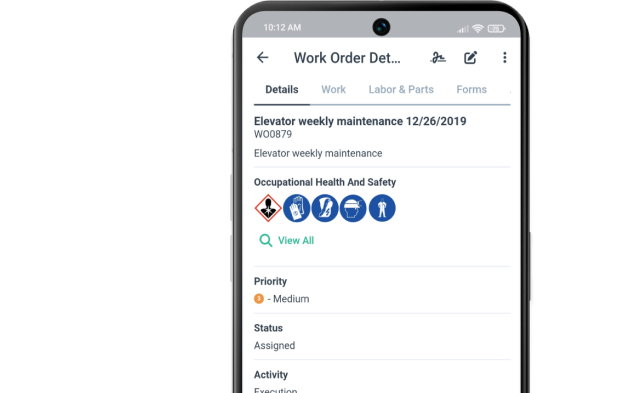
WorkTrek also comes as a mobile application.
Source: WorkTrek
This means field technicians can access schedules and updates on their mobile devices, ensuring they have real-time information no matter where they are.
Through the app, users can view instructions, complete checklists, upload photos, and even provide signatures, which allows supervisors to track task progress.
And those responsible for scheduling maintenance can do it on the go, too.
What truly stands out is how user-friendly and customizable it is.
Even if you’re new to CMMS, WorkTrek makes it easy to get started while offering enough flexibility to adapt to your team’s needs.
Support is another area where WorkTrek shines, with guidance during implementation, data import services, and ongoing assistance.
Unsurprisingly, users frequently highlight WorkTrek’s accessibility and robust mobile app as their favorite features.
Source: Reddit
Plans start at $29 per user per month, including unlimited guest requests and full mobile access.
If WorkTrek might fit your maintenance scheduling needs, you can explore it further.
We recommend trying it for free or booking a demo with us.
Fiix
Fiix is a cloud-based CMMS that helps organizations plan, track, and optimize maintenance activities.
It offers a variety of features, such as:
Work order management
Asset management
Parts and supplies management
Reporting
Fiix excels with its work order management system when we zoom in on scheduling.
It lets you easily schedule, assign, and track team work orders.
You can add inspection-type tasks to work orders, automate follow-up activities if an inspection fails, and link everything back to the original work order, just as in WorkTrek.
Additionally, Fiix offers smart priority settings to help prioritize tasks based on urgency and impact. You can do the same in WorkTrek.
You can also view your team’s workload in a centralized calendar, so you always know who is doing what and when.
Source: Fiix
Work orders can be assigned using drag-and-drop scheduling, and technicians can quickly access them to see details like priority, status, and maintenance type.
Automated alerts ensure that your team gets notifications by email or mobile whenever a new task is assigned.
Fiix also has robust features for automating preventive maintenance.
For example, users can schedule maintenance based on time and meter readings, and both time-based triggers and meter reading triggers can either be fixed or floating.
That’s because Fiix integrates with IoT devices and sensors to trigger maintenance based on the equipment's real-time condition, including vibration, temperature, pressure, and more.
Source: Fiix
Additionally, Fiix enables event triggers.
For example, for events like earthquakes or tremors, you can schedule system checks, as shown in their instructional video below:
https://www.youtube.com/watch?v=6qTJ_BxeMyc
Source: Fiix on YouTube
Fiix offers an AI-powered feature called the Asset Risk Predictor (ARP) for advanced scheduling.
ARP uses sensor data to detect anomalies and generate prescriptive maintenance work orders.
These AI-generated work orders include all the necessary details, such as summaries, work instructions, and labor tasks, automatically populated from your CMMS.
Source: Fiix
However, remember that ARP is an add-on feature requiring a separate purchase. We also learned that it rarely works as it should.
While Fiix is scalable and suitable for businesses of all sizes, it does have some limitations.
Users often mention the need to input parts manually, which can be time-consuming, and transferring data from other systems, although generally straightforward, may require effort.
Source: Reddit
Additionally, some reviews highlight the lack of robust reporting capabilities and the need for manual adjustments when scheduling future preventive maintenance tasks:
Another downtime is scheduled PM not being automatically changed after closing WO. It has to be manually changed for future planned maintenance WO's.
When it comes to pricing, Fiix offers a free plan for up to three users. However, the free plan allows you to schedule up to 25 preventive maintenance tasks using time, meter, or event-based triggers.
Paid plans start at $45 per user per month, and the Professional plan, which includes AI-powered insights, is priced at $75 per user per month.
UpKeep
UpKeep is a mobile-first CMMS designed to simplify, organize, and optimize maintenance and reliability operations.
It comes with a variety of features that help maintenance teams stay on top of their tasks, with a strong focus on real-time accessibility and ease of use.
Source: UpKeep
When it comes to scheduling maintenance, UpKeep offers some handy tools.
First, you can set up recurring maintenance with minimal effort—UpKeep allows you to create time- and usage-based triggers.
Time-based triggers mean you can schedule tasks at regular intervals, such as daily, weekly, monthly, or even after a specific number of days.
Source: UpKeep
Usage-based triggers allow you to set maintenance schedules based on asset usage, such as after a certain number of operational hours or miles traveled.
Source: UpKeep
You’ll first need to set up meters in the system to make this work.
Furthermore, as with WorkTrek and Fiix, UpKeep lets you attach checklists and documents to preventive maintenance work orders.
You can also assign tasks easily to technicians based on their availability.
The mobile-first design is a standout feature, allowing technicians to view and adjust their schedules directly from their devices, whether in the field or on the move.
Source: UpKeep
UpKeep also automates follow-up tasks by triggering work orders when inspection checklists fail.
Again, this feature is the same as in our WorkTrek.
Technicians can log meter readings for runtime-based tasks, and photos can be added to checklists for extra clarity.
Technicians can close out tasks and log details when preventive maintenance is completed.
The desktop version clearly shows scheduled maintenance tasks, but the weekly and daily calendar views are only available in the Pro plan.
Source: UpKeep on YouTube
This has been a point of frustration for some users, as you can see from the review below:
Source: G2
However, most users appreciate the platform’s user-friendly interface, customization options, and the ability to access maintenance schedules in real-time through the UpKeep mobile app, which makes it easy for field technicians to stay updated.
Pricing starts at $20 per user per month for the Lite plan, with more features available in the Starter ($45), Professional ($75), and Custom plans.
However, note that the preventive maintenance features in the Lite plan are limited, and meter-based triggers are unavailable.
Maintenance Connection
Maintenance Connection by Accruent is an enterprise-grade CMMS offering a comprehensive maintenance management tool suite.
Some key features include:
Work order management
Mobile CMMS application
Reporting and analytics
Automated notifications
When it comes to scheduling maintenance, Maintenance Connection provides a high level of flexibility.
You can set up time-based schedules, where maintenance is triggered after a specific time interval, or meter-based schedules, which rely on asset usage data.
Source: Solid CAD on YouTube
The system supports fixed and floating schedules, making it similar to Fiix.
Fixed schedules generate work orders on specific dates or at precise meter readings, regardless of when the last maintenance was completed.
In contrast, floating schedules base the next maintenance date on when the previous one was finished, allowing for dynamic intervals.
Source: Maintenance Connection
You can also create single-procedure schedules, which repeat the same task at regular intervals, or multiple-procedure schedules, where different tasks are set to occur at varying intervals.
For example, you might schedule one set of tasks for monthly maintenance and another for quarterly upkeep—of the same asset.
Maintenance Connection lets you associate tasks with specific assets, generating a single work order for all related assets or separate ones for each.
Additionally, the software includes a drag-and-drop calendar that simplifies technician scheduling.
Source: G2
For mobile users, Maintenance Connection offers MC Express, a mobile app where technicians can create and update work orders on the go.
Source: Microsoft
While users appreciate its comprehensive functionality and customization options, they note that the software can be complex to learn, and some tasks, like creating reports, require additional effort due to the high level of customization.
Source: G2
Despite this, its robust capabilities make it a great fit for large enterprises managing multiple sites.
Maintenance Connection is a premium tool, with costs starting at $1,325 per user annually (minimum three users), plus $700 per user per year for mobile access.
A free trial is available with access to a fully functional software version for evaluation.
eMaint CMMS
eMaint is a flexible and highly configurable CMMS with a wide range of enterprise asset management, work order management, scheduling, and reporting tools.
Designed for businesses of all sizes, eMaint allows users to customize workflows to fit unique operational requirements.
One of its key features is the ability to create preventive maintenance schedules for single and multiple assets.
For single assets, eMaint supports calendar-based or meter-based PMs.
Calendar-based PMs can trigger work orders at fixed intervals or after completing the last work order.
That’s the same workflow as in Fiix and Maintenance Connection.
Source: eMaint
Meter-based PMs, on the other hand, use asset readings like miles, hours, or units produced to determine when maintenance is due.
If you need, you can also set up an asset with multiple meter types, as in the example below:
Source: eMaint
In that case, the system will create a work order for each meter type when their threshold is met.
When managing multiple assets, eMaint allows users to create a single PM schedule for several assets, such as a fleet of vehicles.
Each asset will have its last maintenance date, and work orders are created accordingly.
Additionally, users can set up PM schedules for parent assets, automatically including all child assets in the work order. That is a highly time-saving feature.
eMaint also has the Calendar feature.
With it, you can define and manage time schedules, such as shifts, holidays, and off-seasons, ensuring availability is considered before scheduling tasks.
The calendar integrates with the Scheduler, allowing you to schedule tasks more accurately.
However, note that in the Scheduler, you can only assign PM work orders directly, though all work order types are visible for easy tracking.
Source: eMaint
They are working on updating this feature so all work order types can be scheduled in the Scheduler.
eMaint is also accessible via a mobile app, ensuring technicians and managers can access important information while on the go.
On both Reddit and sites like G2, eMaint is praised for its flexibility and configurability, making it a good fit for various industries and maintenance operations.
Source: Reddit
It also provides extensive training and support resources, helping users onboard quickly and resolve any issues.
However, some users have mentioned that the system can be redundant, with repetitive confirmation steps.
Source: Reddit
Pricing starts at $69 per user per month, with a three-user minimum.
Conclusion
These were the six software with the best maintenance scheduling features available.
While they all provide essential tools like work order management, preventive maintenance scheduling, and automated notifications, each stands out.
WorkTrek, Maintenance Connection, and eMaint shine with their high degree of customization, and UpKeep is ideal for mobile-first teams.
Ultimately, the right choice depends on your organization's specific needs, but these six tools undoubtedly lead the pack when it comes to robust scheduling capabilities for maintenance management.

Operations & Maintenance
Maintenance Technician Job Description
What do maintenance technicians do? They are skilled professionals responsible for maintaining and repairing buildings, equipment, and systems. They are a cog in the wheel that keeps operations running smoothly.
Maintenance technicians are adept in various areas, including electrical systems, plumbing systems, heating and plumbing systems, and mechanical systems.
Their responsibilities encompass performing general maintenance tasks, troubleshooting issues, and implementing preventative maintenance procedures to minimize downtime and ensure optimal performance.
Maintenance Technician Earnings Potential
Maintenance technicians can earn a range of salaries depending on various factors. The industry, company size, and experience level all play a role in determining pay.
Entry-level technicians at smaller companies might start at around $30,000 per year. More experienced professionals at larger organizations can earn up to and above $70,000 annually.
Illustration: WorkTrek / Data: Zippier
Several job websites provide salary information for maintenance technicians:
Indeed reports an average hourly wage of $23.53, about $49,000 annually. They also note the potential for $6,750 in overtime pay.
Salary.com indicates the average maintenance technician salary is $69,554 per year.
ZipRecruiter lists the average hourly rate at $22.47, ranging from $12.98 to $32.45.
Glassdoor suggests entry-level salaries between $29,878 and $60,130, while experienced technicians can make $52,552 to $108,720.
It's important to note that these figures represent averages and ranges. Individual salaries may vary based on specific job requirements, location, and other factors.
Many maintenance technicians have opportunities for overtime work, which can significantly boost their annual income. Some employers also offer bonuses or other incentives.
As the workforce in this field ages, companies may need to find new ways to attract qualified technicians. This could potentially lead to improved compensation packages in the future.
Education and Training Requirements
To become a maintenance technician, one typically needs a high school diploma or equivalent. However, many maintenance technicians pursue further education or training in building maintenance technology, maintenance technology, or related fields.
These programs provide hands-on practice with standard tools and equipment, knowledge of safety procedures, and an understanding of basic electrical and mechanical systems.
Certifications can also enhance a maintenance technician’s qualifications.
Common certifications include:
Certified Maintenance and Reliability Technician (CMRT) and the
Certified Apartment Maintenance Technician (CAMT).
In addition to formal education and certifications, maintenance technicians should possess basic computer skills and be proficient with power tools.
Illustration: WorkTrek / Data: Modern Materials Handling
Technical training and on-the-job experience provide practical knowledge and skills for performing maintenance tasks effectively.
Top States for Maintenance Technician Jobs
Oklahoma: With a median annual salary of $46,180 for mechanics, which is almost $10,000 more than the state's median annual salary, Oklahoma offers excellent compensation. It also has 4.9 mechanic jobs per 1,000, indicating strong employment prospects.
Mississippi: This state has one of the highest employment ratios, with 5.6 out of every 1,000 jobs being for mechanics
New Mexico: Boasting the highest number of mechanic jobs per 1,000 jobs at 6.3, New Mexico offers abundant opportunities
Tennessee: With a median salary of $42,000 for mechanics, which is 11% higher than the state's median average, Tennessee provides competitive compensation and a solid job opportunity ratio of 5.2 per 1,000 jobs
Georgia: Offering a median salary 14% higher than the state's median at $43,750 for mechanics, Georgia also has the sixth-lowest cost of living in the country
Landing Your First Maintenance Technician Position
1) Value Your Everyday Skills
Many people overlook their everyday experiences when job hunting.
Fixing a friend's car, mowing lawns as a teen, or taking high school shop classes all count. These activities show initiative and basic technical know-how.
They prove you can diagnose problems and work with your hands.
Don't be shy about listing these on your resume. Employers often value real-world experience. It shows you're practical and can apply what you've learned.
Even small projects, like replacing a light fixture, demonstrate useful skills.
Remember to ask friends or neighbors you've helped for references. Their feedback can boost your credibility with potential employers.
2) Build Your Professional Network
Networking doesn't have to be scary. It's about making connections and learning from others. Join industry groups to meet people in your field. Here are some options:
International Automotive Technicians Network (iATN)
Business Industrial Network (BIN)
Flight Simulator Engineer and Technician Association (FSETA)
Plumbing Heating Cooling Contractors Association (PHCC)
These groups offer training, resources, and chances to connect with experts.
Illustration: WorkTrek / Data: FinancesOnline
LinkedIn is another great tool for networking. Create a profile and connect with:
People you know
Professionals in your target field
Members of job search groups
Be active on the platform. Share relevant content and engage with others' posts. This helps you stay visible and learn about job openings.
3) Gain Hands-On Experience
Apprenticeships and internships provide real-world training and are great ways to prove your skills and work ethic.
Look for these opportunities on job boards like Indeed or Glassdoor.
Illustration: WorkTrek / Data: Aerotek
Some companies offer entry-level jobs with on-the-job training. These can be just as valuable as formal apprenticeships. They allow you to earn while you learn.
Don't forget to use your network when searching for these positions. Sometimes, personal connections can lead to unexpected opportunities.
Boost Your Technical Knowledge and Basic Computer Skills
Many employers prefer candidates with some formal training. Local technical colleges often offer maintenance technician programs. These can provide:
Hands-on practice with common tools and equipment
Knowledge of safety procedures
Understanding of basic electrical and mechanical systems
Look into financial aid options if cost is a concern. Many schools have grants or scholarships available.
Short-term certification programs are another option. They can help you gain specific skills quickly. Research which certifications are most valued in your area of interest.
5) Ace the Interview Process
A strong resume and cover letter are crucial. They're your first chance to make a good impression.
If you're unsure where to start, consider using a professional resume writing service.
Here are some tips for creating standout application materials:
Highlight relevant skills and experiences
Use clear, concise language
Tailor your resume to each job application
Include measurable achievements when possible
Prepare for common interview questions. Practice your answers to questions like:
What type of maintenance experience do you have?
How do you handle unexpected problems?
Why are you interested in this position?
Research the company before your interview. This shows initiative and genuine interest. Prepare thoughtful questions about the role and the organization.
Illustration: WorkTrek / Data: Children's Wisconsin
During the interview, emphasize your problem-solving skills and eagerness to learn. Many employers value a positive attitude and willingness to grow over extensive experience for entry-level positions.
Remember to follow up after the interview with a thank-you note. This small gesture can set you apart from other candidates.
Following these steps will increase your chances of landing that first maintenance technician job. Stay persistent and keep building your skills.
You can start a rewarding career in this field with dedication and the right approach.
Salary Ranges Based On Industry
1) Water Systems
Professionals in this field maintain and repair plumbing systems. They need state licenses, but no specific training is required. The yearly pay is solid, with a median of $76,159 and the potential to earn up to $96,675.
2) Electrical Systems and Power System Maintenance
These experts keep electrical systems running smoothly. Like plumbers, they need state licenses but no specific training. The pay is similar, with a median of $75,789 yearly and the chance to make up to $96,901.
3) Climate Control System Care
HVAC technicians manage heating, ventilation, and air conditioning systems. They need more training, including a certificate, associate degree, or apprenticeship. EPA licensing is also required. Hourly pay ranges from $23.41 to $31.78.
4) Outdoor Area Management
Groundskeepers tend to outdoor spaces. While on-the-job training is common, many employers prefer some post-secondary education. State licenses are often needed. Hourly wages range from $14.09 to $18.47.
5) Facility and Equipment Maintenance
Building maintenance technicians care for structures and machinery. An associate degree is usually enough to start, but more training can help. Yearly pay ranges from $63,933 to $91,672.
Ongoing education is key in all these fields. It helps technicians stay current with new technologies and can open doors to better jobs. Each area has its own pay scale and training needs. Some require specific licenses, while others value hands-on experience.
Here's a quick comparison of median yearly pay:
FieldMedian Yearly PayWater Systems$76,159Power Systems$75,789Climate Control$48,692Outdoor Areas$29,307Facility Upkeep$63,933
Path to Management
The path from technician to manager varies by field. Some key steps include:
Getting required licenses
Pursuing extra training or degrees
Gaining hands-on experience
Developing leadership skills
Taking on more responsibility over time
Remember, becoming a manager often means less hands-on work and more focus on team leadership, budgeting, and planning. It's a different set of skills, but it can lead to higher pay and more career options.
Job Outlook and Growth Opportunities
The job outlook for maintenance technicians is generally positive, with projected growth in the coming years. According to recent data:
The employment of industrial machinery mechanics, machinery maintenance workers, and millwrights is projected to grow 13% from 2022 to 2032, which is faster than the average for all occupations
For maintenance technicians in general, the job growth rate is projected to be about 8% over the next ten years
The Bureau of Labor Statistics reports that overall employment in installation, maintenance, and repair occupations is expected to grow about as fast as the average for all occupations from 2023 to 2033
Specifically for industrial maintenance technicians, employment is projected to grow 17% from 2023 to 2033
As of May 2023, the median annual wage for installation, maintenance, and repair occupations was $53,920, which was higher than the median annual wage for all occupations of $48,060
For industrial maintenance technicians, the median annual salary was $61,420 in May 2023
The job outlook for maintenance technicians is promising. The Bureau of Labor Statistics predicts a 5% growth in employment opportunities through 2031.
As organizations increasingly rely on automation and technology, the demand for skilled maintenance technicians is expected to rise.
Maintenance technicians can find opportunities in various industries, including maintenance, manufacturing, and construction.
Training
With experience and additional training, maintenance technicians can advance to supervisory or management roles, such as facilities manager or maintenance department supervisor.
These positions offer increased responsibility and higher pay, making them attractive career goals for those in the field.
The growing emphasis on preventative maintenance and the need for efficient, reliable systems ensure that maintenance technicians will continue to be in high demand.
This career path offers stability and the potential for long-term growth, making it an excellent choice for those interested in technical and hands-on work.
Why Choose a Career as a Maintenance Technician?
A career as a maintenance technician offers numerous benefits, including job security, competitive pay, and opportunities for advancement.
Good maintenance technicians are critical in ensuring the safety and efficiency of facilities and equipment, making it a rewarding and challenging career.
Maintenance technicians have the opportunity to work with a variety of systems and equipment, making it a dynamic and engaging field.
They are essential in maintaining the functionality of electrical, plumbing, heating and plumbing, and mechanical systems. This variety keeps the work interesting and allows technicians to develop their skills continually.
Maintenance technicians can enjoy a successful and fulfilling career in this in-demand field with the proper education and training.
Combining practical skills, problem-solving abilities, and the satisfaction of keeping systems running smoothly makes this a gratifying profession.
Maintenance Technician Responsibilities
Maintenance technicians play a crucial role in keeping businesses running smoothly. Without their expertise and hard work, even the most advanced equipment and well-planned maintenance schedules would be useless.
These professionals implement plans and ensure that everything functions as it should.
Maintenance technicians’ daily tasks are vital for business operations. Their maintenance technician work helps prevent costly breakdowns and extends the life of valuable machinery. By performing regular upkeep and addressing issues promptly, they save companies time and money in the long run.
To help maintenance technicians excel in their roles, providing them with the right tools and support is important. This includes:
Implement a CMMS system like WorkTrek to help manage maintenance tasks
Provide thorough training and onboarding programs
Implement transparent processes for completing work on schedule
Provide access to industry best practices and standards
Illustration: WorkTrek / Data: Atlassian
Businesses can empower their maintenance technicians to perform at their best by investing in these areas. This improves the quality of maintenance work and boosts job satisfaction and productivity.
When maintenance technicians have the resources they need, they can:
Respond quickly to urgent issues
Plan and execute preventive maintenance effectively
Communicate clearly with other team members
Keep accurate records of repairs and maintenance activities
Conclusion
In conclusion, a career as a maintenance technician offers a dynamic and rewarding path for those with a knack for hands-on work and problem-solving.
As integral members of maintenance teams, these professionals ensure the smooth functioning of electrical, plumbing, HVAC, and other systems.
With a foundation in a high school diploma and further technical training or certifications, maintenance technicians can enjoy competitive salaries and job security in various industries.
The growing emphasis on preventative maintenance and efficient systems highlights the need for skilled technicians to minimize downtime and promptly address maintenance issues.
This field offers numerous opportunities for advancement, allowing technicians to transition into supervisory roles or specialize in areas like facilities maintenance.
As technology continues to evolve, the demand for proficient maintenance technicians will only increase, making it a promising career choice for those looking to make a tangible impact in their work environment.

Operations & Maintenance
10 Maintenance Industry Trends for 2025
The maintenance industry is undergoing a significant transformation, driven by rapid technological advancements, a growing emphasis on sustainability, and evolving workforce dynamics. This article covers the Top 10 maintenance industry trends for 2025.
These changes are not just about keeping equipment running; they represent a fundamental shift towards strategic asset management and industrial maintenance that optimizes efficiency, reduces costs, and minimizes environmental impact.
As we move into 2025, several key maintenance industry trends are set to redefine the maintenance landscape.
1. Predictive Maintenance and Artificial Intelligence (AI)
In 2025 AI is what every industry is talking about. Large Language Models like ChatGPT are dominating the news cycle. However, these tools are not always valuable for maintenance technicians and managers, but the rise of predictive and preventive maintenance powered by artificial intelligence (AI) is transformative.
What is valuable and one of the most transformative trends is the rise of predictive maintenance and analytics powered by artificial intelligence (AI).
Illustration: WorkTrek / Data: Joseph's sons
The global predictive maintenance market has been experiencing significant growth and is projected to continue expanding in the coming years.
According to a report by IMARC Group, the market size reached USD 12.7 billion in 2024 and is expected to grow to USD 80.6 billion by 2033, exhibiting a compound annual growth rate (CAGR) of 22.8% from 2025 to 2033.
Another analysis by Precedence Research estimates the market size at USD 7.24 billion in 2024, with projections to surpass USD 79.70 billion by 2034, expanding at a CAGR of 27.10% between 2024 and 2034.
So how does it work?
AI-driven systems analyze vast amounts of data to forecast potential equipment failures, enabling maintenance teams to take proactive measures and reduce reactive maintenance.
This is a significant shift from reactive maintenance, where repairs are only initiated after a failure.
AI-driven systems can predict equipment failures and adjust dynamically to changing environmental conditions and usage patterns. This can result in lower maintenance costs.
Virtual simulations create digital environments that mirror real-world assets, providing insights that allow teams to anticipate performance shifts without physical intervention.
Machine learning algorithms improve predictive accuracy by using historical and real-time data to forecast maintenance needs effectively and improve routine maintenance tasks.
AI can analyze real-time IoT data streams, transform maintenance systems into autonomous, self-optimizing solutions, and improve equipment performance.
AI-enabled maintenance scheduling is one emerging technology that allows facilities to plan activities for the least disruptive times, reducing unexpected downtime.
AI-powered predictive maintenance can increase failure prediction accuracy by up to 90% while reducing maintenance costs by up to 12%.
By leveraging AI, maintenance teams can move from reactive to proactive strategies, minimizing downtime, reducing repair costs, and extending the lifespan of critical assets.
2. Sustainability as an Operational Imperative
Sustainability is no longer just a corporate buzzword; it has become a fundamental principle guiding maintenance strategies.
Maintenance equipment manufacturers are increasingly providing eco-friendly solutions that align with sustainability goals. In addition to its environmental impacts, sustainability will reduce costs and increase profits.
Illustration: WorkTrek / Data: Ecologi
In 2025 and beyond, maintenance operations are expected to align more closely with environmental goals. Integrating advanced technologies and sustainable practices will drive much of this alignment.
Companies must implement eco-friendly protocols that reduce waste and emissions and enhance operational efficiency.
Another trend is incorporating renewable energy sources and energy-efficient equipment.
Furthermore, maintenance teams will leverage data analytics to optimize resource utilization, ensuring that every aspect of maintenance operations contributes to a greener and more sustainable future.
By prioritizing environmental objectives, organizations can achieve cost savings, improve their brand reputation, and meet regulatory requirements, all while contributing to a healthier planet.
Circular economy practices are gaining traction, emphasizing repairing and repurposing components to reduce waste.
Carbon-neutral operations are becoming a priority, with organizations using low-emission tools and tracking carbon footprints.
Smart energy management is being integrated into maintenance practices. This includes smart thermostats, smart meters, IoT-based solutions, and energy analytics software, among many others.
Green asset management tools help reduce the environmental impact of assets and operations. Companies see an average of 15% cost savings through energy efficiency improvements.
Sustainable maintenance protocols and eco-friendly technologies reduce environmental impact, lower energy consumption, and reduce waste.
Source: WorkTrek
Focusing on sustainability reduces maintenance operations’ environmental impact, achieves cost savings, and enhances their brand reputation as a responsible organization.
3. AI Agents - The Future
Just like Large Language Models (LLMs) like ChapGPT have dominated the past few years, 2025 will be the birth and growth of AI Agents.
Think of an AI agent as a digital assistant that can understand, learn, and take action to help with specific tasks.
Illustration: WorkTrek / Data: CSDN
Like a human assistant, an AI agent can observe what's happening, make decisions based on what it sees, and take helpful actions.
The key difference is that AI agents can process vast amounts of information faster than humans and work 24/7 without getting tired.
Example of AI Agents for Maintenance Tasks
Imagine you're responsible for maintaining equipment in a manufacturing plant. Here's how an AI agent could help:
Without an AI agent, you might walk around the factory floor every morning, checking each machine, listening for unusual sounds, and looking at maintenance records to decide what needs attention.
You rely on your experience to catch problems, but you can't be everywhere simultaneously, and some issues might slip through.
AI Agents Trained Assistant
With an AI agent, it's like having a highly trained assistant who never sleeps. The agent continuously monitors all your equipment through sensors, collecting data about how each machine is running.
It learns what a "normal" operation looks like and can spot potential problems before they become serious. When it notices something concerning, it can alert you immediately and suggest what might be wrong based on patterns learned from thousands of similar cases.
The real power comes from how AI agents can help in different ways:
Understanding Language: They can read maintenance manuals, work orders, and technical documents, then answer questions in plain English. Instead of digging through hundreds of pages of documentation, you can simply ask, "What's the maintenance procedure for the cooling system?" and get a clear answer.
Making Predictions: By analyzing patterns in data, AI agents can tell you things like, "Based on current performance, this bearing will likely need replacement in about three weeks." This helps you plan maintenance before equipment fails.
Learning and Adapting: AI agents improve as they learn from experience. If they make a prediction that turns out to be wrong, they adjust their understanding, just like humans would learn from mistakes.
Providing Guidance: When working on equipment, an AI agent can guide technicians through repair procedures, showing each step on a mobile device or tablet, almost like having an experienced mentor look over their shoulder.
Source: WorkTrek
However, it's important to understand that AI agents aren't meant to replace human workers. Instead, they're tools that make human workers more effective by handling routine tasks, providing helpful information, and spotting problems that might be missed.
This lets people focus on more complex tasks that require human judgment and creativity.
Think of AI agents as team members who excel at monitoring, analyzing data, and providing information. They work alongside human employees who bring experience, judgment, and problem-solving skills.
Together, they can achieve better results than they could alone.
4. Unified Digital Ecosystems for Collaboration
You cannot run a maintenance organization without coordination among all stakeholders. Many organizations have started implementing digital tools, like CMMS systems, to improve collaboration and data collection.
In 2025, the adoption of digital tools and digital transformation will continue and accelerate. Organizations must depend on unified digital platforms that consolidate maintenance data, communication, and workflows.
Instant data sharing grants teams immediate access to real-time performance metrics and task progress.
Integrated compliance management automates systems to ensure regulations are met effortlessly.
Collaborative dashboards facilitate streamlined decision-making for quick issue resolution.
CMMS (Computerized Maintenance Management Systems), like WorkTrek and EAM (Enterprise Asset Management), are central to this trend. They help organize maintenance and track all activity in one system.
Source: WorkTrek
These platforms also provide increased visibility into completed work, improve maintenance planning, enhance documentation, reduce unplanned downtime, and give maintenance managers increased transparency into asset histories.
These digital ecosystems reduce downtime, boost overall efficiency, and foster a unified approach to asset management by seamlessly connecting various operations.
5. Immersive Maintenance with Augmented Reality (AR) and Virtual Reality (VR)
Many professionals, like fighter jet pilots and NFL football players, have embraced AR and VR technologies.
In 2025, we expect immersive technologies like Augmented Reality (AR) and Virtual Reality (VR) to continue transforming maintenance training and execution.
This can significantly benefit maintenance workers and improve overall operational efficiencies. These technologies provide new ways to interact with equipment and train staff.
AR tools provide on-the-go overlays of equipment schematics, guiding technicians in real-time.
VR simulations immerse maintenance teams in realistic scenarios, enabling skill development without disrupting live operations.
AR-enabled glasses enable interactive diagnostics that highlight issues and suggest solutions on-site.
Scenario-based learning is facilitated by VR modules designed for advanced troubleshooting and emergency response.
Remote collaboration is significantly improved. Maintenance specialists can virtually assist field teams, thus reducing travel and response times.
Virtual technology is becoming a more common method for diagnosing and troubleshooting, allowing offsite personnel a near “hands-on” experience.
AR/VR can also be used to train technicians without the risk of damaging actual equipment.
Source: WorkTrek
These technologies significantly enhance the accuracy and effectiveness of maintenance tasks, making them indispensable in complex and high-stakes environments.
6. Decentralized Maintenance Models
The conventional approach of centralized maintenance teams is anticipated to transition towards more adaptable, decentralized structures by 2025.
A decentralized maintenance model distributes maintenance teams and resources across an organization's areas or departments.
Each team has the authority, expertise, and resources to handle maintenance tasks in their specific area without always needing approval from a central authority. This approach brings several significant advantages:
This evolution is facilitated by IoT monitoring and sophisticated communication tools, enabling remote maintenance and oversight of geographically spread facilities.
This reduces the need for onsite dedicated maintenance technicians and allows for a more distributed model that improves efficiency.
Faster Response Times: When maintenance teams are positioned closer to the equipment they service, they can respond more quickly to problems. Instead of waiting for a central maintenance department to dispatch someone from across the facility, local teams can address issues immediately. This is particularly valuable in large facilities where travel time between locations can be significant.
Better Understanding of Local Needs: Maintenance teams working consistently in the same area develop deep knowledge of their specific equipment and its quirks. They become familiar with the operating conditions, common problems, and the needs of the operators who use the equipment daily. This local expertise often leads to more effective maintenance strategies.
Improved Communication: When maintenance personnel work closely with operations teams in their area, it creates better communication channels. Operators can easily share concerns or observations with maintenance staff they know and see regularly rather than submitting formal requests to a distant central department.
More Efficient Resource Use: Each area can maintain its inventory of commonly needed parts and tools, reducing the time spent retrieving supplies from a central location. Teams can also more effectively schedule maintenance activities around local production schedules.
This approach can lower overhead expenses and boost operational flexibility, enabling organizations to adjust to evolving demands swiftly.
Decentralized maintenance models provide a more agile approach to managing maintenance across multiple locations.
7. Edge Computing
In 2025, edge computing is poised to transform data processing in equipment maintenance processes by decentralizing decision-making.
Think of edge computing as having a mini data center right next to your equipment rather than sending all your data to a far-away computer center.
Illustration: WorkTrek / Data: itweb
Just as you'd want your maintenance technicians close to the machinery they maintain, edge computing puts computing power right where the action happens - at the "edge" of your network, next to your equipment.
Why does it matter for maintenance monitoring?
Your equipment sensors collect data about temperature, vibration, pressure, and other important metrics. This data travels to a central computer system, often in a distant data center or the cloud. The system processes this information and sends back alerts or insights.
This round trip takes time—sometimes just seconds, but those seconds can matter when dealing with critical equipment issues.
Now, here's how edge computing transforms this process. Instead of sending all data to a distant location, edge computing devices process information right next to your equipment. These devices are like small, powerful computers that can instantly analyze data and make decisions. They only send the most essential information to the central system, keeping critical processing local.
Benefits to Maintenance Teams
Real-Time Response: Edge computing can instantly detect and respond to equipment problems. If a machine shows signs of failure, the edge device can trigger an immediate shutdown or alert, potentially preventing severe damage. This is especially crucial in high-speed manufacturing, where even a slight delay could lead to significant problems.
Improved Reliability: Since edge computing doesn't depend on constant internet connectivity, your monitoring systems will continue working even if network connections are interrupted. The edge devices will continue collecting and analyzing data and storing important information until the connection is restored.
Better Data Management: Industrial equipment can generate enormous amounts of data—far more than it is practical to send to a central location. Edge computing lets you process this data locally, sending only the most relevant information to your central systems. For example, it might only transmit data when temperatures exceed normal ranges instead of sending constant temperature readings.
More Sophisticated Analysis: Edge devices can run complex analysis programs that would be impractical to run remotely. For instance, they can analyze real-time vibration patterns to detect subtle changes that might indicate developing problems. This kind of immediate, detailed analysis would be difficult or impossible if the data had to travel to a distant location first.
This trend enhances reliability and agility in maintenance, empowering organizations to address operational hurdles proactively.
8. The Rising Importance of Maintenance Metrics
By 2025, maintenance metrics will continue to play an important role and aid in strategic decision-making. In combination with AI and analytics tools, these metrics will
Maintenance and facility managers and organizations increasingly depend on sophisticated analytics to evaluate and benchmark performance across various dimensions, ensuring ongoing improvement and accountability.
Mean Time to Repair (MTTR) highlights repair efficiency and minimizes equipment downtime.
Asset utilization ratesensure equipment operates at optimal capacity.
Monitoring these metrics in real-time empowers organizations to pinpoint inefficiencies, strategically allocate resources, and align maintenance efforts with overarching business objectives.
Key metrics also include tracking uptime and unplanned asset downtime.
Planned maintenance percentage: is also a key metric, calculated as (planned maintenance hours / total maintenance hours) * 100%.
The focus on metrics shows a move towards data-driven maintenance, where insights are used to improve performance and efficiency.
9. Internet of Things (IoT) Integration
Illustration: WorkTrek / Data: QServices
IoT devices have continued to proliferate in maintenance organizations. In 2025, we expect this trend to continue.
In a traditional maintenance environment, machines operate independently. Each piece of equipment works independently, and we rely on periodic inspections or apparent failures to know when something needs attention. It's like having a group working in separate rooms and unable to communicate.
IoT changes this by giving equipment the ability to communicate. Here's how it works: Small sensors are attached to different parts of your equipment - think of these as the equipment's "senses." These sensors can detect temperature, vibration, pressure, speed, and many other conditions. Each sensor connects to a network, allowing it to share this information with other devices and your maintenance management systems.
All these sensors send their data to a central system, creating a complete picture of how each unit is performing. This brings several powerful benefits:
Continuous Monitoring: Instead of periodic checks, you now have 24/7 awareness of how your equipment is performing. The system can alert you immediately if anything drifts outside normal parameters.
Predictive Maintenance: By collecting and analyzing data over time, IoT systems can learn to predict when equipment is likely to fail. For example, they might notice that a slight increase in vibration often precedes bearing failure, allowing you to replace bearings before they break.
System-Wide Optimization: Because all your equipment is connected, you can see how different components affect each other. For example, you might discover that problems with one air handler are making others work harder to compensate.
Better Decision Making: With detailed data about equipment use, you can make better maintenance scheduling and replacement decisions. You might find that some units need more frequent maintenance while others could go longer between services.
Resource Optimization: IoT can help you optimize resource use by showing when and where maintenance is needed. This prevents over-maintenance (maintaining equipment more often than necessary) and under-maintenance (waiting too long between services).
Looking to the future, IoT continues to evolve with new capabilities:
Self-diagnosing equipment that can identify its problems
Automated maintenance scheduling based on actual equipment condition
Integration with inventory systems to automatically order replacement parts
Mobile apps that give maintenance teams instant access to equipment data
10. Additive Manufacturing
In 2025, additive manufacturing will continue to grow for maintenance teams.
What exactly is additive manufacturing? Think of traditional manufacturing, like carving a sculpture from a block of stone - you start with more material than you need and cut away the excess. Additive manufacturing works oppositely, building objects layer by layer, like stacking bread slices to make a sandwich.
Illustration: WorkTrek / Data: Precedence Research
Impact on Maintenance
This technology is particularly valuable for maintenance teams because it fundamentally changes how we think about spare parts and repairs. Instead of maintaining large inventories of replacement parts or waiting weeks for specialized components to arrive, maintenance teams can often print what they need on demand.
Key Benefits for Maintenance Teams
Reduced Downtime: Instead of waiting days or weeks for replacement parts, many components can be printed within hours. This dramatically reduces equipment downtime and its associated costs.
Cost Effectiveness: While the initial investment in 3D printing equipment can be significant, it often pays for itself by:
Reducing inventory costs: With 3D printing organization, organizations can eliminate shipping expenses for emergency parts. 3D printing also allows the quick production of otherwise expensive custom components
Design Flexibility: Maintenance teams can modify part designs to address recurring failure points and add reinforcement where needed, enabling repairs of parts that might otherwise require complete replacement.
Preservation of Legacy Equipment: Additive manufacturing can be a lifesaver for older equipment where parts are no longer available from manufacturers. Teams can scan existing parts to create digital models and recreate discontinued components.
Looking to the Future
The technology continues to evolve, bringing new capabilities:
Faster printing speeds
More material options
Better surface finishes
Increased precision
The ability to print parts with embedded sensors
Challenges and Opportunities
While these trends offer significant opportunities, there are challenges to overcome. Integrating new technologies into legacy systems requires investment and expertise, and bridging workforce skill gaps requires robust training initiatives.
Cybersecurity remains a key concern as connected systems become more integral. However, these challenges also present opportunities for organizations willing to innovate and adapt to the industry's evolving demands.
Conclusion
The maintenance industry in 2025 and beyond will be defined by technological innovation, sustainability, and a focus on workforce development.
From AI-driven insights to agile frameworks and immersive technologies, the trends transforming maintenance are poised to redefine its influence across various industries.
Companies that adapt to this evolution will enhance their efficiency and dependability and establish themselves as frontrunners in a swiftly progressing operational environment.
Maintenance has evolved beyond ensuring functionality—it is about forging a path toward a resilient, sustainable, and innovative future.

Operations & Maintenance
Best Work Order Tracking Software List
Work order tracking software can streamline your processes, save time, and reduce errors—without being complicated.
These tools are designed to help you manage work orders more efficiently in manufacturing, property management, or any other industry.
Today, we will explore the best work order tracking solutions available.
We’ll cover features, pros and cons, user reviews, and pricing to help you find the right fit for your needs.
WorkTrek
We are starting this list with our CMMS—WorkTrek.
With WorkTrek, you can manage every aspect of maintenance, including work orders, preventive maintenance, asset tracking, and team collaboration, all in one place.
Regarding work order management, WorkTrek helps you follow work orders from start to finish.
The software allows you to:
Create, assign, and schedule work orders to replace messy spreadsheets and paperwork.
Track every detail of your work orders with custom fields, priority settings, and deadlines.
Attach photos, documents, and comments to every work order to clarify instructions or highlight issues.
Here is an overview of all the documents you can attach to work orders:
Source: WorkTrek
You can also assign digital checklists or forms to standardize tasks and automatically generate follow-up orders for flagged inspections or incomplete jobs.
Source: WorkTrek
Additionally, WorkTrek lets you include hazard warnings, safety equipment requirements, and compliance steps in every task.
On the other side, technicians can log their work progress, capture time, and document materials directly through the mobile app.
You can view all work orders in multiple ways:
List view for a clear, detailed breakdown of tasks.
Map view to visualize work orders by location.
Schedule view to track deadlines and plan efficiently.
Below is our schedule view:
Source: WorkTrek
Besides these work order management features, WorkTrek also simplifies communication and collaboration.
For instance, your team can leave comments, tag colleagues, and share updates; even your external contractors can access shared work orders.
With WorkTrek, your clients and employees can quickly submit service requests with a few clicks using our app, a request portal, or other channels.
Source: WorkTrek
This way, you can immediately create work orders, assign them, and prioritize their completion.
Another feature in which WorkTrek shines and stands out from many other software on this list is customization.
For example, you can customize the software to your needs and choose how to track labor, parts, and costs for each work order—either manually or from predefined lists.
Compared to competitors like Fiix, which is more complex and better suited for enterprise-level organizations, WorkTrek is easier to use, more affordable, and more flexible.
Our users recognize all these benefits, too.
They especially like our mobile app for fieldwork and scheduled reporting tools to stay organized.
Source: G2
WorkTrek’s pricing plans, shown below, fit any budget and include options like unlimited guest requests and mobile access.
Source: WorkTrek
If you are ready to see how it works, try it for free or book a free demo with us!
MaintainX
MaintainX is a modern, mobile-first platform that simplifies maintenance, safety, and operations for industrial and frontline teams.
It allows you to create, assign, and monitor work orders, keeping your team aligned and tasks completed on time.
Source: Capterra
Similarly, as in WorkTrek, with MaintainX, you can:
Create detailed work orders with notes, photos, and checklists.
Use pre-filled templates to reduce training time and streamline recurring jobs.
Access real-time updates from your mobile device for better task management.
MaintainX offers several viewing options for work orders:
Table view for bulk sorting and editing.
Workload view to balance team capacity.
Calendar view to plan and schedule tasks.
Split view to see tasks and details side by side.
Below is MaintainX’s calendar view:
Source: MaintainX
Unlike WorkTrek, MaintainX does not support map-based tracking for work orders, which can make location-based task management less efficient.
Similarly, multiple assets cannot be assigned to a single work order, which can lead to duplicated effort for tasks involving several pieces of equipment.
From more advanced features, AI-powered Smart Time Estimates (available in enterprise plans) help you predict how long tasks will take, making scheduling more accurate.
Source: MaintainX
Another handy feature is the ability to record work order notes using voice clips, which are then automatically transcribed by AI.
This adds convenience but is not a replacement for email communication, which some users find limiting.
User feedback highlights its ease of use and strong customer support but notes room for improvement in these areas:
search functionality
automated email updates for work order comments
templates and layout customization
MaintainX offers a free basic plan, while advanced features are available in tiered MaintainX dashboard.
Source: MaintainX
For teams focused on mobile-first simplicity and communication, MaintainX is a strong choice, though it lacks the advanced customization or analytics found in Fiix or Limble CMMS.
Fiix by Rockwell Automation
Fiix by Rockwell Automation is a cloud-based maintenance management solution for companies seeking a comprehensive tool for managing preventive maintenance, work orders, parts inventory, and reporting.
Source: Fiix
Its advanced features, including IoT integration and AI-driven insights, make it an ideal choice for enterprises with complex maintenance needs.
Fiix excels in work order management, allowing you to:
Create, assign, and track an unlimited number of work orders.
Attach images, videos, and instructions for clarity.
To schedule preventive maintenance, use automated triggers based on time, meter readings, or equipment conditions.
Track costs, labor, and parts usage for each task.
Fiix also lets you group tasks, apply them to multiple assets, and automate follow-up activities if inspections fail.
The system supports custom fields, mandatory data inputs, and drag-and-drop scheduling to align with your workflows.
Analytics are a standout feature.
Fiix’s dashboard offers detailed insights, including reports on asset performance and maintenance costs.
Source: G2
You can also use templated or custom reports to optimize thousands of work orders simultaneously, making it easier to spot delays or inefficiencies.
Users appreciate Fiix's reporting and analytics but note that the mobile app lacks some of the web platform's versatility.
Navigating work orders or managing external repairs can also be cumbersome for new users.
Fiix offers a free plan for small teams, while paid plans range from $45 to $75 per monthly user. Enterprise-level pricing is available upon request.
Source: Fiix
For businesses needing advanced features like IoT integration and strong analytics, Fiix provides a solution.
However, if you need a solution with a powerful mobile app, explore other solutions like WorkTrek or UpKeep.
UpKeep
UpKeep is a mobile-first, full-featured CMMS that combines work order tracking, preventive maintenance, inventory management, and analytics.
This tool allows you to easily create, assign, and prioritize work orders from your desktop or mobile device.
https://www.youtube.com/watch?v=qPwYZcFxYDA&feature=youtu.be
Source: UpKeep on YouTube
Other capabilities include:
Filter work orders by technician, location, due date, status, and priority level.
Add attachments like PDFs, photos, or videos to work orders to ensure accuracy.
See work orders in a list or calendar view, like in WorkTrek or MaintainX.
Automatically create work orders and send mobile push notifications to technicians when assigned.
Turn work orders into recurring work orders for PM.
Once preventive maintenance is complete, technicians can swiftly close tasks and log details on the spot or sign off their work.
Desktop users can do the same while also having a good overview of all work orders.
Source: G2
Additionally, you can track wrench time and costs for each work order through a robust analytics module.
The software also streamlines inventory management, automatically deducting used parts from inventory. Therefore, it can also be used to optimize stock levels.
Source: App Store
Users appreciate UpKeep’s user-friendly interface but note occasional bugs and slow performance.
Some also find the pricing high for smaller organizations.
However, its real-time notifications, seamless communication, and mobile optimization make it a preferred choice for teams on the go.
Pricing starts at $20 per user per month for the Lite plan, with more advanced features available in Starter and Professional plans at $45 and $75 per user per month, respectively.
Source: UpKeep
Enterprise-level features require a custom quote.
Maintenance Connection
Maintenance Connection by Accruent is a robust CMMS for enterprises in industries like manufacturing, healthcare, and utilities.
It offers many features, including work order management, labor scheduling, asset tracking, and reporting.
When it comes to work order tracking, with this tool, you can:
Create, view, and update maintenance work orders in real time using its request manager.
Track critical details like service areas, task types, part availability, and order status.
Prioritize work orders and receive status updates via email or text.
In addition to many other features, the mobile version, MC Express, allows field technicians to create, edit, and complete work orders on the go.
https://www.youtube.com/watch?v=Or0ayTczAM4
Source: Accruent on YouTube
They can access manuals, inventory details, and photos directly from their devices, ensuring faster task completion and accurate reporting.
Work order tracking is highly configurable, with fields for costs, scheduling, and multi-department tasks.
Automatic escalation rules ensure timely action on critical tasks, while advanced reporting tools provide insights into inefficiencies and areas for improvement.
Source: Software Advice
Users praise the platform’s extensive feature set and integration capabilities with other Accruent solutions.
The smart reporting tools are a highlight, giving managers at-a-glance insights into labor, work order, and asset performance.
However, some users find the software clunky and report a steep learning curve.
Additional feedback notes challenges with data imports and limited functionality in some modules.
Maintenance Connection is one of the pricier solutions on our list, with costs starting at $1,325 per user annually, plus an additional $700 per user per year for the mobile add-on.
Source: Accruent
However, Maintenance Connection is a powerful, albeit complex, solution for large organizations needing enterprise-level capabilities and cross-department collaboration.
Limble CMMS
Limble CMMS is a maintenance management solution known for its user-friendly interface and robust features.
It offers tools for managing work orders, preventive maintenance, spare parts inventory, and performance analytics.
While Limble provides a wide range of capabilities, its work order tracking features stand out.
With Limble, creating and managing work orders is straightforward.
Work orders can be generated from your dashboard, an asset record, or even directly from a vendor.
Each work order is fully customizable, allowing you to add essential details such as labor, materials, downtime, and attachments like photos or manuals.
Source: Limble CMMS
You can use templates or create new ones tailored to your SOPs for standard tasks.
You can also include checklists to ensure every step of a task is accounted for and completed correctly, which most other software on this list enables, too.
Tracking work orders with Limble is equally effortless.
Users can sort and prioritize work orders by importance, team, location, asset, and other criteria to ensure efficient task completion.
Source: G2
The drag-and-drop calendar makes scheduling simple, allowing quick adjustments to task assignments or deadlines. Notifications keep teams updated on pending tasks.
Limble also includes a self-serve work request portal similar to WorkTrek, making it easy for team members to submit requests remotely.
Source: G2
Preventive maintenance can also be automated, with tasks scheduled based on thresholds or meter readings.
In addition to its work order management, Limble provides advanced analytics to track labor, parts, and costs.
Source: Capterra
These insights are easily shareable through automated reports in Excel or PDF formats.
Users appreciate Limble's intuitive design and functionality, noting its excellent customer support as a key advantage.
However, a big downside of Limble is that all of this works great on a web application. However, users point out some problems when it comes to mobile devices.
For example, some noted that Limble doesn’t have a native mobile app, which limits its functionality.
Source: Reddit
If your team prefers to manage work orders on the go, using tables or smartphones, more mobile-friendly solutions like UpKeep or WorkTrek might be a better choice.
Pricing starts at $28 per user per month for the Standard plan, with higher tiers offering additional features.
Source: Limble
The free option is also available but with limited features.
Limble is another great choice for teams seeking customizable and accessible CMMS with good work order tracking capabilities.
eMaint CMMS by Fluke
eMaint CMMS by Fluke Reliability is a cloud-based maintenance solution combining CMMS, EAM, and IIoT capabilities.
It is ideal for managing multiple sites or assets and connects hardware and software to streamline operations.
eMaint allows multiple assets to be linked to a single work order, simplifying complex tasks involving related equipment.
Source: eMaint
If we compare it with MaintainX, which allows only one asset per work order, eMaint takes the lead.
Parent-child asset hierarchies further streamline task management for interconnected systems.
eMaint also excels in tracking detailed work orders.
From including essential details like equipment history, work type, and priority to details about different cost categories and procedures, this software leaves nothing to chance.
Source: eMaint
Furthermore, scheduling is flexible with a drag-and-drop calendar, and work orders can be triggered automatically based on real-time asset data.
Source: G2
Field teams can use QR code scanning to create work requests instantly, check off tasks on the procedures list, enter measurements, and upload photos or documents as they go.
Source: eMaint
And what do eMaint’s users say?
Mostly, they appreciate eMaint’s extensive customization options, intuitive interface, and responsive customer support.
However, some note challenges with advanced report building and handling large backlogs:
“Building advanced reports in eMaint can be a bit of a challenge for those without JSON coding experience. The ability to close out multiple work orders at once would be a helpful feature, as it would be a major time saver when cleaning up a backlog.”
Pricing starts at $69 per user per month for the Team plan, with additional features available in Pro and Enterprise plans.
Source: eMaint
Note that the work request feature is only available on the Pro plan.
Workyard
Workyard is workforce management software built particularly for construction and field service businesses.
While it’s not as feature-rich as dedicated CMMS tools, Workyard offers a centralized, easy-to-use platform for creating, tracking, and managing work orders.
Work orders in Workyard include essential details like descriptions, assigned personnel, and schedules.
Managers can enhance task clarity with notes, photos, checklists, and attachments.
You can even customize work orders by setting up a geofenced project location, adding a task watcher to oversee its progress, adding a color-coded task label, and creating a work order checklist.
Source: Workyard
Then, each work order can be tagged to a specific project and cost code, enabling businesses to track labor, materials, and costs accurately.
This ensures better customer billing, precise estimates, and improved workflow optimization.
Workyard’s drag-and-drop calendar makes scheduling a breeze.
Source: Workyard
Whether planning a repair, installation, or inspection, managers can create new work orders, reschedule tasks, or assign personnel in seconds.
Routine maintenance tasks can also be automated with recurring schedules.
One standout feature is GPS tracking, which provides real-time visibility of field workers’ locations.
Source: Workyard
This allows dispatchers to assign the nearest available team member, improving response times and efficiency. In this regard, Workyard has functionality similar to WorkTrek.
While Workyard excels in field worker location tracking and time card management, its users report some limitations.
For example, it lacks an internal messaging system, options for workers to accept or reject work orders, and the ability to customize specific status options.
Pricing starts at $6 per user per month, with an additional $50 company base fee for the Starter pack. The Pro pack offers more features at $13 per user per month.
Source: Workyard
If you prioritize location and productivity tracking and don’t need the advanced features offered by other CMMS solutions, Workyard might be a good choice.
Coast
Coast is an all-in-one solution for businesses, offering tools for maintenance management, employee scheduling, task management, checklists, and team communication.
Source: Coast
With features for work order creation and delegation, it’s yet another great choice for managing work orders.
Source: GetApp
The mobile app makes it easy for technicians to access, update, and complete work orders.
Technicians can view and edit work orders in real time, no matter where they are.
Once a task is finished, they can close work orders directly from their mobile device.
As with other tools, you can add files, manuals, pictures, and videos to work orders, helping technicians stay on track with each job.
This system also offers automated reminders to ensure tasks are completed on time.
Source: Coast
Coast also lets you schedule preventive maintenance regularly—daily, weekly, or monthly—to stay ahead of tasks.
Scheduling combined with automated notifications works great, allowing users to streamline their maintenance. That’s why some praise reminders as the best part of the software.
Source: Capterra
Whether in the office or the field, Coast keeps your work orders organized and easy to manage.
In addition, users on platforms like G2 appreciate Coast for its simplicity and affordability compared to other work order tracking software with the same feature set.
However, they also note that the system can be glitchy and that the mobile version is not as easy to navigate as the desktop one.
Regarding pricing, Coast offers a free plan with additional features in the Starter and Pro plans.
For example, the Pro plan includes more views, like calendar and expanded views, along with all the Starter plan features.
Source: Coast
In our opinion, Coast could work for small to medium-sized teams that need streamlined communication, task tracking, and work order management.
It focuses on collaboration and communication but may not have the advanced capabilities of other systems like Fiix, Limble, or WorkTrek. Being an older platform, it also might be harder to implement than newer solutions like WorkTrek.
Conclusion
The nine software solutions we covered today are not identical.
Some are CMMS, others are workforce management tools, and some stand out with advanced features like AI capabilities or IoT integrations.
That said, all of them offer built-in work order tracking capabilities.
The key is identifying what you need to track with your work orders, how much customization you require, and which additional features matter most to you.
Once you answer these questions, you can choose the software that best fits your needs.
If you’re considering improving your work order tracking, now is the perfect time to start!
Use the table below for a quick overview of all the tools we covered in the article.
ToolWork Order ComplexityOverviewWorkTrekAdvancedCustomizable fields and robust tracking for detailed work orders.MaintainXIntermediateSimple, mobile-friendly tracking with real-time updates.FiixAdvancedDetailed work orders with IoT and analytics integration.UpKeepIntermediateUser-friendly tracking, less advanced than Fiix or Maintenance Connection.Maintenance ConnectionAdvancedHighly configurable with cross-department and cost tracking.Limble CMMSAdvancedCustomizable and user-friendly for detailed tracking.eMaint CMMSAdvancedMulti-asset work orders and granular tracking.WorkyardBasicFocused on cost and productivity rather than detailed work orders.CoastBasicSimple work order fields, prioritizing communication over detail.
Make your work easier.
Try for free.
Book a demo