

Blog

Operations & Maintenance
Top 6 Benefits of Efficient Maintenance Planning
Is maintaining machinery costing you a lot of money? Are frequent equipment breakdowns halting your operations? If yes, it’s time to start planning ahead. Planning maintenance will keep your equipment healthy, reduce unplanned downtime, decrease maintenance costs, and more. But what better way to convince you to start planning than by showing you your potential […]
Is maintaining machinery costing you a lot of money?
Are frequent equipment breakdowns halting your operations?
If yes, it’s time to start planning ahead.
Planning maintenance will keep your equipment healthy, reduce unplanned downtime, decrease maintenance costs, and more.
But what better way to convince you to start planning than by showing you your potential future?
So, buckle up.
In the next few minutes, you will learn about the top six benefits of efficient maintenance planning that will make you wonder what took you so long to do it.
Less Unplanned Downtime
The worst thing about unexpected equipment failures is downtime you didn’t account for.
And when does equipment break unexpectedly?
When it’s not maintained properly.
Unplanned downtime creates a domino effect where paused operations and idle workers reduce productivity and skyrocket your costs.
In 2023, the “Value of Reliability” survey from ABB Motion Services showed that unplanned downtime costs industrial or manufacturing facilities an average of $124,669 per hour.
Making matters worse, the same survey revealed that almost 70% of sites experience unplanned downtime at least once a month.
Illustration: WorkTrek / Data: ABB Motion Services
Over a year, that adds up to at least $1,500,000!
Fortunately, efficient maintenance planning reduces this costly downtime.
Regular maintenance checks keep your equipment in better condition, preventing sudden failures. You can identify issues early and prevent costly repairs or breakages.
Even if equipment fails unexpectedly, a good plan ensures you have all the spare parts, tools, and materials needed.
This way, technicians can start work immediately without waiting, shortening unplanned downtime.
Simmons Feed Ingredients (SFI), a company that produces animal nutrition for pet food, aquaculture, and livestock, faced these challenges before turning to proper maintenance planning.
The plant operated reactively, keeping spare parts in the storeroom to fix machines as necessary. But if parts weren’t available, machines were down until the appropriate parts arrived.
Tim Newman, the plant’s maintenance manager, noted:
Illustration: WorkTrek / Quote: Machinery Lubrication
Considering the cost of an hour of unplanned downtime we mentioned above, this was extremely costly.
But to make things worse, they had to sell perishable ingredients to competitors at a lower price during unscheduled downtime to avoid expiration.
So, they faced additional financial losses. However, with the help of outside consultants, SFI developed a maintenance plan and established standardized maintenance procedures.
The result?
They transformed their maintenance from reactive to predictive and proactive, reduced downtime, increased the number of planned jobs, and saved money.
Illustration: WorkTrek / Data: Machinery Lubrication
As we just saw, the costs of unplanned downtime are sky-high.
However, with efficient maintenance planning, you can avoid them altogether.
Lower Maintenance Costs
Efficient maintenance planning will help you keep your equipment in good condition and reduce overall maintenance costs.
When you plan maintenance ahead and regularly maintain your assets, you can identify issues before they get the chance to escalate.
This prevents costly emergency repairs, ultimately contributing to lower maintenance costs.
On the other hand, if you don’t plan maintenance beforehand and continually check up on your equipment, it can unexpectedly break down.
Allan Tarita, a leading maintenance, engineering, and operations expert, points out that this is costly and risky for your personnel.
Illustration: WorkTrek / Quote: Alusani
Where do these high costs come from?
Emergency repairs cost more than planned maintenance because you need parts and labor immediately. So you might have to rush to order parts and spend more than usual.
Also, emergency repairs often require technicians to work overtime, adding to the expenses.
Sometimes, management might not even approve extra spending, so you must find other ways to handle it.
This happened to a maintenance manager Jan Barraclough, when he was working at a plant with two process trains.
Due to a complete lack of maintenance planning and routine inspections, the plant had multiple pump failures.
They also didn’t have enough spare parts, and management didn’t let Barraclough order as many parts as needed, as he recounts:
Due to the cost of “hot-shotting” them to site, I was only allowed to have 1 set of pulleys and taper locks flown in with a decent amount of Vee-belts (6 weeks away), the other pulleys and belts would have to come by road (6 months away).
So, they had to be fully reactive for the next six months.
He admits they could have replaced the pulleys in advance and avoided multiple failures with better maintenance planning. Regularly running the standby pumps would have made sure they were reliable.
This would have saved the high costs of emergency maintenance and rushed deliveries.
With all things said, it’s much smarter to plan ahead and regularly check your equipment.
It will cost you less in the long run.
Better Resource Allocation
Another great benefit of efficient maintenance planning is ensuring that all necessary resources are available when and where needed.
This includes personnel, tools, spare parts, and materials.
Strategic asset manager at PPP contracts, Matt Willkie, puts it well:
Illustration: WorkTrek / Quote: Linkedin
Along with equipping them with the necessary tools and materials, this boosts productivity and ensures maintenance activities go as planned.
However, you'll face delays and reduced productivity if you don’t prepare and allocate resources on time.
Don Armstrong, president of Veleda Services Ltd., offers consulting and training to maintenance departments in industrial plants, and gives a simple but impactful example in his article for Reliable Plant.
He explains that any need to return to the shop or stores can result in a 90-minute delay, pushing the job to the next day with another 90 minutes of travel time.
On the flip side, a fully detailed plan with all materials and tools readily available can change everything:
Illustration: WorkTrek / Quote: Reliable Plant
Moreover, when maintenance planning is efficient, you can also achieve better control over spare parts.
This happened in one food processing plant in North America.
They faced constant breakdowns and equipment failures because they didn’t plan their maintenance properly.
They often had no spare parts in the warehouse and lacked the right repair tools.
However, after developing a comprehensive maintenance plan, including preventive maintenance task schedules, and improving resource allocation, they enhanced spare parts control from 45% to 79%.
Illustration: WorkTrek / Data: Lean Manufacturing
The bigger the control over spare parts, the higher the availability!
The key takeaway is this: when you plan, you ensure that tools, materials, and spare parts are ready when your technicians need them.
This makes them more efficient and prevents delays, idle time, and productivity loss.
That’s the goal for any facility, wouldn’t you agree?
Improved Safety
Talking about goals, safety should be a critical concern in any maintenance environment.
How could it not be knowing that poor maintenance and equipment malfunctions and failures can lead to accidents, injuries, and even fatalities?
But maintenance planning and better resource allocation can help you improve safety.
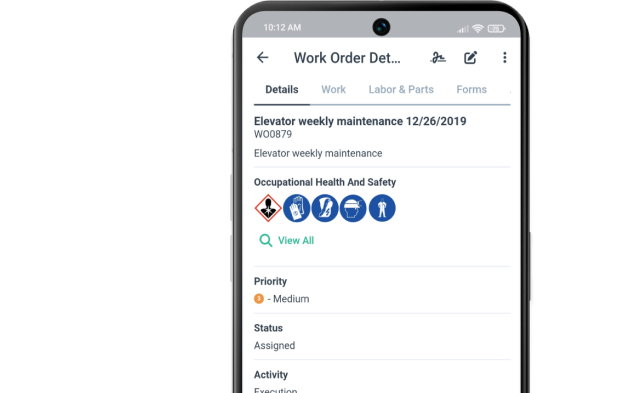
For example, many maintenance tasks require technicians to wear personal protective equipment (PPE).
Efficient planning ensures that enough PPE is available and that technicians know what to wear and when.
A good CMMS can help you with this.
When you assign work orders to your technicians, you can also include the PPE requirements for them to see.
Source: WorkTrek
But that is just one way of improving safety with maintenance planning.
Doc Palmer, a true expert in the field, explains three more ways it does so:
First, planners provide job plans in advance that anticipate and prepare for potential hazards. Second, planners save and apply knowledge from previous safety encounters to make plans even safer over time. Third, schedulers increase craft productivity to complete more proactive work to reduce the need for the most dangerous work altogether.
Let’s explain this a bit more.
First and foremost, regular inspections and preventive maintenance help you identify and address potential safety hazards before they cause accidents.
For example, checking and maintaining safety features such as emergency stop buttons, guards, and alarms can prevent accidents and protect your workers.
Second, a well-executed maintenance plan also includes safety protocols and procedures.
Clear guidelines for maintenance activities ensure that all tasks are performed safely and in compliance with industry standards.
For instance, you can implement lockout/tagout procedures to ensure that machinery is properly shut down and secured before maintenance work begins.
This helps protect your maintenance team and other employees from potential accidents.
Such proper safety measures are necessary because the consequences can be severe.
Just take a look at this report from OSHA explaining how an employee lost his hand because he (and workers before him) failed to lock out and tag out the equipment they were working on.
Source: OSHA
Accidents and injuries happen. However, with efficient maintenance planning, their number can be reduced to a minimum.
Safety is a priority, so maintain it with better maintenance planning.
Data-Driven Decision-Making
It’s not enough to rely on instincts when planning maintenance.
Efficient planning involves using historical data to determine which tasks must be done and spot any patterns that might help predict future maintenance needs.
Using these insights, maintenance planners can:
Create better plans
Improve maintenance procedures
However, to leverage historical data, you need good record-keeping.
That’s where a computerized maintenance management system (CMMS) comes in handy because it lets you store all data in one central place.
Take our system, WorkTrek, for example.
It lets you create and assign work orders to technicians and keep everything organized.
Source: WorkTrek
But what’s powerful about WorkTrek is its insights and analytics features.
This system stores all your data, giving you a treasure trove of information for better decision-making.
Source: WorkTrek
Here are some ways to use your data for better maintenance planning.
You can compare the costs of old work orders with your current ones, making cost estimates faster and more accurate.
Source: WorkTrek
Moreover, instead of writing a plan or work order from scratch, you can help yourself with reports on parts used in previous jobs to create new work orders faster.
Source: WorkTrek
Monitoring key performance indicators (KPIs) is also simplified with WorkTrek.
Pre-built KPIs allow you to see how well your maintenance strategies work and compare them to industry benchmarks.
For example, if work orders aren’t completed on time, you can dig into the data to see if there’s a problem with how time estimates are made.
In addition, WorkTrek lets you turn your data into valuable reports and even set up automatic reports to be emailed to your team at regular intervals.
In the end, effective maintenance planning relies on using data—and using it wisely.
With a reliable CMMS, you can leverage your data to improve planning and make smarter decisions based on accurate insights and analytics.
More Coordination Between Stakeholders
Finally, having a maintenance plan ensures that everyone involved in maintenance operations knows precisely what needs to be done, how, and by whom.
Why does this matter?
This clarity reduces misunderstandings, fosters accountability, and ensures everyone is on the same page about the planned maintenance activities.
This, naturally, has significant advantages:
No wasted time between jobs
Safety protocols and SOPs are followed
Maintenance work is completed on time
However, for this to work seamlessly, you, once again, need the right CMMS.
With a good CMMS, you can coordinate all activities, prioritize tasks, assign work orders, and follow up on them.
Source: WorkTrek
Your technicians can see what tasks need to be completed, follow guidelines on how to do them, and, if necessary, request additional service on the spot.
Moreover, a good CMMS is mobile-friendly.
This means people can receive real-time notifications on their phones, fill out checklists, and complete work orders while in the field.
Source: WorkTrek
All these features combine to ensure that maintenance is coordinated between key personnel—from the manager to the technician.
But what about coordination between maintenance and operations?
Maintenance planning can improve this, too.
Consider the case study from a coal mine in New South Wales, Australia.
Their production and maintenance schedules were not aligned due to a lack of real maintenance planning.
This caused machines to be down even if no maintenance was being carried out.
Another issue was poor coordination between maintenance planning and inventory management.
However, a detailed implementation plan was developed.
The mine assigned planner positions to ensure maintenance activities were systematically planned and aligned with operational needs.
This, along with regular meetings between the two departments, brought significant results, from downtime reduction to increased annual production value.
Illustration: WorkTrek / Data: TRM
The bottom line?
With the help of the right CMMs, efficient maintenance planning will improve the coordination of all people, tools, materials, and spare parts needed for maintenance.
And last but certainly not least, it will improve collaboration between maintenance and operations.
This is, ultimately, key to reducing downtime and achieving a more efficient facility or plant.
Conclusion
We hopefully showed you how efficient maintenance planning brings significant benefits.
From minimizing downtime and cutting costs to improving safety and production value, each reason for adopting maintenance planning is compelling enough.
So, why wait? Start planning your maintenance now.
The rewards will follow sooner than you think.

Operations & Maintenance
6 Maintenance Planning Mistakes You Should Avoid
Planning maintenance is one of the best things you can do for your facility or plant.
Regular planned maintenance prolongs the lifespan of your assets and keeps them healthy, reducing the need for emergency repairs.
It lets you schedule downtime when it best suits your operations, lowering overall maintenance and operational costs.
However, despite these appealing benefits, maintenance planning often needs to catch up.
That’s because maintenance supervisors and planners frequently make these common mistakes.
Today, we will explore the six most dangerous ones.
Don’t worry—we’ll also show you how to avoid them and give examples of companies that did it successfully.
Let’s get started.
Manually Planning Maintenance Activities
Is your planner still relying on spreadsheets in Excel or paper-based logs to do their job?
If yes, you’ll likely encounter errors in your maintenance planning.
This system is prone to them.
Acuity’s research from 2022 showed that 12% of Excel spreadsheets have serious errors and that 12% of people have seen an Excel mistake cost more than £10,000.
Illustration: WorkTrek / Data: Acuity Training
Now, think about this.
One critical task in a maintenance planner’s role is to ensure that all spare parts, tools, and materials are readily available for maintenance.
Let’s say you still keep inventory records in Excel.
If the spreadsheet contains an error, and your planner doesn’t physically check inventory—which would again be a waste of time—the mistake can lead to parts not being available when a technician is scheduled to complete the work.
And that means delays, technician’s idle time, and so on.
So, it’s pretty clear that manually planning maintenance is prone to errors. Not to mention how time-consuming it is to look for information on multiple spreadsheets.
But why go through these headaches when there’s a better solution?
A computerized maintenance management system (CMMS) is the answer.
Let’s look at our own WorkTrek as an example.
First and foremost, WorkTrek is easy to use for maintenance planners, supervisors, managers, and technicians.
Everyone has access to their tasks and schedules.
Source: WorkTrek
Planners can create, assign, and schedule work orders in one place without endless paperwork.
With all asset data available (including the inventory list), they can often plan a job with just a few clicks.
Source: WorkTrek
They can also add photos, documents, manuals, and comments to a task, ensuring the technician completes the job precisely as intended.
Source: WorkTrek
On the other hand, technicians and other employees can quickly submit service requests through WorkTrek’s app or request portal.
The planner can then immediately create work orders and tasks and assign them to the right technician or team using a web or mobile app.
Source: WorkTrek
In addition, WorkTrek lets you set specific time intervals for preventive maintenance, schedule inspections, run reports, and much more. In a system like this, data is captured in real time, processes are automated, and there’s no room for mistakes.
So, why stick with manual planning when there’s an easy and convenient way to improve your maintenance planning with automation?
Turning Maintenance Planners into Generalists
Turning your maintenance planner into one is another common mistake in maintenance planning.
After all, a jack of all trades is a master of none.
Burdening your planners with tasks like supervising, troubleshooting, administration, or scheduling distracts them from their primary focus—planning future tasks.
When bogged down with these additional duties, planners can easily get sidetracked.
And you know what that means?
No time to create efficient maintenance plans, leading to poor and inefficient work execution.
MillerCoors (now MolsonCoors), one of the world’s largest brewers, had the same problem.
Their maintenance planning was inefficient because the production department saw maintenance planners as “gofers.”
Brad Simpkins, an asset CARE manager at the time, explained:
Illustration: WorkTrek / Quote: Reliable Plant
So, their maintenance planners spent lots of time sourcing and storing replacement parts instead of planning future tasks.
But also doing tasks like “buying first-class seats on airplanes to ship a motor,” as Bobby McCall, maintenance manager for packaging operations, added.
Of course, this left no time for planning, and their maintenance remained reactive.
Fortunately, they took action and limited their planners to tasks within their scope of work.
This brought significant results. Planned and scheduled work increased from less than 30% to more than 60%.
Illustration: WorkTrek / Data: Reliable Plant
Equipment availability, productivity, and uptime increased, leading to reduced maintenance costs.
Therefore, let your planners do what they do best and remove distractions. It will soon lead to increased planned and scheduled maintenance.
Not Investing In Continuous Development for Planners
Did you appoint a technician as a planner, give them a quick rundown of their new role, and leave them to it?
If yes, you’ve made a big mistake.
Sure, assigning the planner role to a senior technician with maintenance knowledge is a good move. Maintenance planners need technical know-how.
But, technicians who’ve spent years fixing assets might not know how to use the software where historical maintenance data is stored. Or how to order necessary parts from vendors.
So, you need to invest time and effort into training them.
This includes teaching them how to use specific technology, best practices for planning and scheduling, and how to communicate with suppliers.
Erik Hupje, founder of Reliability Academy, highlights more areas that maintenance planners need to learn, or rather, that a manager needs to teach them:
How to use the CMMS you opted for.
How the maintenance planning and scheduling process works.
Where to find equipment information, from checklists to manuals.
How to create and save job plans.
How to order spare parts and materials.
How kitting and staging processes work.
But that’s just the beginning.
The maintenance manager or supervisor should also regularly evaluate the planner’s performance and advise them on what to improve.
This feedback can also uncover if the planner isn’t meeting expectations.
If that happens, Prometheus Group suggests you reassess their fit for the role and analyze whether you have set the planner for success.
So, ask yourself:
Are you overworking the planner?
Does one planner have too many assets or technicians to manage?
Are any issues arising due to poor training or a lack of training?
If the latter is the source of the problem, think of how to improve training. One smart way is to learn directly from equipment manufacturers.
Lee Hillyer, director of global sales—mining at Australian equipment manufacturer McLanahan, explains why:
Illustration: WorkTrek / Quote: Australian Mining
Yes, planners should stay updated on the latest maintenance techniques to prepare more thorough and accurate plans.
And what better way than to hear it from the asset manufacturers themselves?
In short, continually invest in your planners, their development, and their knowledge. Train them properly and teach them how to become better at planning along the way.
When they excel in their role, your maintenance will improve, too.
Relying Only On Manufacturers’ Maintenance Recommendations
Yes, we have just praised how effective it is to educate maintenance personnel directly from OEMs.
Now it’s time to explain why planning maintenance activities shouldn’t be done exclusively based on manufacturers’ recommendations.
We know it sounds contradictory, but let us explain why this is another mistake.
While it is essential to use these recommendations for guidance, it is just as important to consider a specific facility's operational requirements.
So, as Hillyer from McLanahan, who we already mentioned above, suggests, OEM guidelines should be treated as just a baseline:
Illustration: WorkTrek / Quote: Australian Mining
The real goal should be to combine theory (OEM recommendations) and practice.
OEM recommendations are general, and your plant or site is specific. So, think about how your assets are handled and the conditions in which they are used.
Let’s explain this through a simple example—maintenance of a forklift.
If a forklift operates in an environment with dust and debris or is used for heavy lifting continuously, it may require additional maintenance beyond OEM recommendations.
On the other hand, Modla, an online platform for advanced asset analytics, explains that some OEM recommendations assume that their equipment is used in worst-case conditions.
They do that to protect themselves from potential liability and warranty claims.
So, to minimize the risk of equipment failure and associated claims, they provide guidelines that cover even the most extreme conditions.
But, at the same time, that can lead to excessive maintenance for businesses operating in less demanding environments.
This is why some companies, like Harley-Davidson, transitioned to condition-based maintenance to match their specific operating conditions better.
The old process of preventive maintenance was basically to follow the old manuals. In six months, you dump this oil. In a year, you dump this. In two years, you dump this. By bringing in the oil analysis program, we have moved from a time-based system to a condition-based system. That’s low-hanging fruit, and it saved us a ton of money.
By doing so, they optimized their maintenance practices, improved efficiency, and significantly reduced costs.
Therefore, maintenance planners should use manufacturer recommendations as input to create maintenance plans that align with the facility's needs.
But most importantly, they should consider how the equipment is used in practice.
This, ultimately, truly affects the need for maintenance.
Creating Plans From Scratch Every Time
Creating a new maintenance plan from scratch each time for the same job is a common mistake in the maintenance planning phase.
Jeff Shiver, an expert in the field who helps facilities and plants improve their maintenance, sees this mistake all the time:
In my interviews and data analysis, I search for standard job plans or packages for repetitive maintenance work, especially planned corrective activities resulting from PM inspections and activities frequently repeated on outages. I am often disappointed with the lack of a standard job plan library. It seems that we constantly reinvent the wheel on every outage.
The solution here is simple.
You need a job plan library where your maintenance planners can easily find plans for similar tasks. Here’s an example of a preventive maintenance plan.
Source: WorkTrek
Of course, not every maintenance job is the same, so existing plans shouldn’t just be copied and pasted.
However, your planners can use them as a foundation for new plans, which can be refined for increased effectiveness.
If there isn’t a plan for the same job, should planners create a new one from scratch?
No, they should adjust the existing plans.
Erin Corrigan, former maintenance planner and current SAP PM Master Data Specialist at DuPont, agrees:
Illustration: WorkTrek / Quote: Linkedin
But one thing is sure: you can’t have a job plan library without good record keeping.
And this means more than just recording and saving the initial plan.
The essential part is to update the plan after the work is finished to document all feedback and areas for improvement.
When your current maintenance planners find a plan with all these elements in the library, their work will be much easier—and faster.
So, ensure all your maintenance plans are safely stored, and teach your planners to use them!
Ignoring the Findings of Root Cause Analysis
The last mistake we will cover today is ignoring or neglecting root cause analysis (RCA).
In a nutshell, RCA identifies the root causes of problems to prevent them from recurring rather than just reactively fixing symptoms.
One simple but efficient method is the 5 Whys, an example of which you can see below:
Source: Reliable Plant
Essentially, you ask “why” five times to dive deep into the root cause of equipment failure.
However, performing RCA is pointless if the findings are ignored.
Despite this, some companies still fall into this trap.
Century Aluminum Ravenswood, which is now closed, was one of them.
Jim Doeffinger, a maintenance manager, described their approach to RCA:
We do some root cause, but it's all after the fact, and then what do we do with it? 'This is why it failed.' Great. What are you going to do to change it? 'I don't know. I just wanted to know why it failed.' It didn't change anything.
So, even when RCA is conducted, the findings are not shared, no corrective action is taken, and there is no follow-up, so future planning will be poor.
If the core problem isn’t solved, the same issues will repeat, and the same tasks will be planned. Your entire maintenance plan will be off, and you’ll waste time.
Conversely, when the findings of RCA are implemented, you will be much better at planning maintenance.
For starters, knowing the root cause of frequent equipment failures allows better maintenance scheduling to prevent failures before they occur.
Say a machine frequently breaks down due to overheating, and RCA reveals that a malfunctioning cooling system causes the overheating due to clogged filters.
Since you know the root cause, you can plan to clean the filters regularly to prevent this from happening again.
Raytheon’s Facility Services experienced the benefits of RCA first-hand, as their deputy director, Mike Burmood, explained:
Illustration: WorkTrek / Quote: Reliable Plant
The key takeaway is this: never ignore RCA.
The findings can truly work wonders for your maintenance planning.
In Raytheon’s case, breakdowns decreased to 2% of unplanned work orders, making maintenance more predictable and manageable.
Conclusion
If you recognize yourself in any of these mistakes, it’s time for a change.
Hopefully, we provided enough tips to avoid these common pitfalls of maintenance planning.
We have shown you several companies that were able to fix these mistakes and improve their maintenance planning.
If they did it, you can do it, too!

Operations & Maintenance
Maintenance Planning vs Scheduling: Differences Explained
Identifying what needs to be fixed, writing a detailed maintenance plan, and determining which tools or spare parts you need differs from putting this task into a calendar and setting a deadline.
What we just described are, in fact, two very different processes—maintenance planning and maintenance scheduling.
But both are equally important for keeping your assets healthy and your facility running.
However, many people don’t distinguish between the two, which can lead to inefficiencies. After all, when processes are not clearly defined, it becomes challenging to execute them successfully.
So, if you’re unsure about the differences between maintenance planning and scheduling, you’ve come to the right place.
This article will thoroughly explain both processes, highlight their key differences, and show why you need both for efficient maintenance.
Let’s start with the process that comes first.
What Is Maintenance Planning
Maintenance planning ensures you have everything prepared before starting a maintenance task.
This process outlines:
What tasks must be done and why
How to perform them
What parts and tools are required
Which safety measures must be taken
As well as other necessary information that maintenance technicians should know.
The next logical question is: who does all this maintenance planning?
The answer is: a designated maintenance planner.
Their main job is to create a plan that helps the scheduler prioritize tasks and guides the technician in performing maintenance.
But, for planning to be successful, maintenance planners need a specific set of skills.
First and foremost, they need to understand the details of maintenance work. Which means they should ideally have some experience as technicians.
This hands-on experience helps them know exactly what needs to be done, what tools are required, and how long each task might take so they can estimate time and resources more accurately.
But when that’s not the case, and someone without technical experience takes on the role of a maintenance planner, both maintenance planning and maintenance can quickly become inefficient.
Erik Hupje, an expert in the field, explains what happens when an inexperienced person takes over:
When someone without technical experience fills the role of a planner, they can’t plan the work effectively or eliminate waste from unplanned or poorly planned work. As a result, your team becomes inefficient in the use of resources and there will be increased downtime due to poor planning. This also results in lower team morale and increased frustration due to ineffective communication and organization.
So, the first skill a maintenance planner needs is field experience.
Planners should also communicate well and have great analytical skills to extract meaningful information from older maintenance data.
In the video below, Allan Barry, Senior Consultant at IDCON, a reliability and maintenance management consulting and training company, summarizes these and other necessary skills for maintenance planners.
Take a moment to learn more about the needed skill set:
https://www.youtube.com/watch?v=IO6jdpUfjsw
Source: IDCON on YouTube
But apart from devising a maintenance plan, the planner has one more crucial responsibility: ensuring all materials, tools, and spare parts are available when needed.
So, this role also requires specific procurement skills, like ordering parts and materials and communicating with suppliers.
Now that we have explained maintenance planning and who performs it, let’s briefly review the critical steps of the planning process.
According to Don Armstrong from Veleda Services Ltd., consulting and training services for maintenance departments in industrial plants and institutions, there are five crucial steps that every planner must go through.
Illustration: WorkTrek / Quote: Reliable Plant
Why should you invest time and effort into such detailed maintenance planning?
Because good maintenance planning can decrease unnecessary delays during jobs.
For example, if a plan ensures a technician has all the necessary tools and materials, the likelihood of disrupted work is much lower.
This increases the technician’s wrench time and improves job performance overall.
Technicians will be grateful for well-planned work.
Tim Newman, Maintenance Manager at Simmons Feed Ingredients, explains the positive impact that implementing maintenance planning had on their technicians:
Illustration: WorkTrek / Quote: Reliable Plant
Overall, maintenance planning is all about identifying what needs to be maintained, breaking down tasks that need to be done, managing materials and tools, and ensuring their availability.
When maintenance planning ends, maintenance scheduling begins.
What Is Maintenance Scheduling
Essentially, scheduling means putting the planned tasks into a calendar.
And it revolves around answering two critical questions:
Who will perform the maintenance?
When should it be done?
Of course, it’s not that simple. This process requires a great deal of organization.
After all, schedulers have to coordinate all resources required for the job.
This person also has to:
Prioritize maintenance tasks according to plan.
Make sure all necessary resources (tools, workers, supplies) are available.
Ensure the equipment is accessible and ready for maintenance.
Assign the job to the right technician (with the right skill level).
Keep track of the job’s progress and address any issues in time.
But who should take on the role of a maintenance scheduler?
According to IDCON, the maintenance supervisor is the most optimal person for scheduling:
Illustration: WorkTrek / Quote: IDCON
This role knows their team and the skill level of each technician. However, as IDCON noted, the problem arises if the supervisor is too busy to do it.
Then, another person may need to take on the scheduler role. But remember that assigning a planner to this role is not ideal.
That’s because planners should focus on planning future tasks and not scheduling the current week’s maintenance.
The ultimate goal is to minimize reactive maintenance so that the supervisor can focus on scheduling planned work and monitoring how it goes.
In any case, the scheduler should follow specific steps when scheduling tasks.
Here they are:
Review the work order with the maintenance planner to understand the job’s needs, including tools, safety, and expected results.
Gather all necessary tools, workers, supplies, spare parts, and safety gear needed for the job.
Assign the task to a qualified technician.
Ensure the equipment is accessible, safe, and ready for maintenance.
Monitor the task to ensure it stays on schedule, meets quality standards, and addresses any issues that arise.
Maintenance scheduling optimizes time usage and prevents delays between jobs when done efficiently.
Key Differences Between Maintenance Planning and Scheduling
By now you have learned that maintenance planning and scheduling are two crucial steps in the maintenance process, each with its distinct focus and responsibilities.
Maintenance planning centers on the "what," "why," and "how" of maintenance tasks.
Source: WorkTrek
The maintenance planner's role requires in-depth technical knowledge, experience, and strong analytical skills to estimate time and resources accurately.
On the other hand, maintenance scheduling is concerned with the "when" and the "who."
Source: WorkTrek
The role of maintenance scheduler requires different skills.
From excellent organizational and coordination skills, and understanding of team capabilities, to managing resources efficiently.
Planning and scheduling are two pieces of a puzzle.
Do You Need Both?
Absolutely, you do!
Maintenance planning and maintenance scheduling work hand-in-hand to transform your maintenance from reactive to proactive.
Here’s why both are essential.
Budget control
Better keeping track of maintenance costs and resources
Less downtime
Preventing unexpected breakdowns by keeping equipment healthy
Better productivity
Everyone knows what must be done and has the tools ready
Better workflows
Tasks are done more efficiently without interruptions
Both planning and scheduling are key to reducing downtime, boosting productivity, and keeping maintenance costs in check.
The best-in-class facilities, like the Facility Services organization at Raytheon Missile Systems, know this too well.
As their mechanical planner John Lowe (now retired) aptly put it for Reliable Plant:
A well-designed plan, and executing that plan to the schedule, puts us where we want to be.
He also adds that better communication with production and using the right computerized maintenance management system are two key enablers for better planning, scheduling, and, therefore, better maintenance.
And their results show it better than any words could:
They increased planned work completed to schedule from 25% to 95.3%
Their breakdowns reduced to 2% of unplanned work orders
However, not all companies have mastered maintenance planning and scheduling.
Many still struggle with it.
In 2019, 17% of companies reported poor scheduling as a key challenge for improving facility maintenance.
But to make matters worse, by 2021, that number jumped to 20%.
Illustration: WorkTrek / Data: Plant Engineering
So, why does poor scheduling happen?
Often, bad planning is the culprit. Here’s what can go wrong:
The plan isn’t detailed enough.
Time estimates are too short.
Planners overestimate what technicians can do, especially if they don’t have field experience.
But even with good planning, there can be some scheduling mistakes.
For example, if the scheduler assigns a difficult task to a technician with basic skills, the technician might take much longer to complete the task. This delay can cause the entire schedule to be moved.
Additionally, technicians may have too much idle time if the scheduler assigns too little work and doesn’t fill their schedule.
Such mistakes lead to wasted resources, decreased productivity, higher operational costs, and delays in maintenance.
So, what’s the solution?
To get maintenance right, your planning and scheduling processes must be in sync.
The best way to achieve this is with a computerized maintenance management system like our very own WorkTrek.
With all maintenance data stored in one place, your maintenance planner has a solid ground for planning future maintenance tasks.
Source: WorkTrek
On the other hand, with WorkTrek’s work management features, your scheduler can easily assign maintenance tasks, set urgency levels, and keep track of them all in one scheduling calendar.
Check below how neat and organized such a calendar can be in WorkTrek:
Source: WorkTrek
What’s more, WorkTrek also lets you set preventive maintenance tasks on a daily, weekly, monthly, or yearly basis and automatically generate work orders based on meter readings to eliminate costly downtime.
For example, when your meter exceeds a condition you set in the system, WorkTrek automatically creates a work order.
Source: WorkTrek
This immediate response helps prevent breakdowns and system failures.
The bottom line is this: technology is your best friend here.
With tools like WorkTrek, maintenance planning and scheduling become more accessible and faster.
And both the planner and the scheduler can perform their jobs better.
Conclusion
With this, we wrap up our exploration of maintenance planning and scheduling.
It's more than evident that these two processes are different but, at the same time, complement each other.
Effective scheduling relies on robust planning. Without it, tasks will be poorly allocated, leaving technicians unsure of their responsibilities.
On the other hand, detailed planning can falter if scheduling lacks coordination of tools, people, and time, resulting in inefficiencies and downtime.
However, when harmonized, these two processes optimize productivity and ensure efficient maintenance.
Therefore, ensure your maintenance planners and schedulers are on top of their game and equip them with the right CMMS to make their lives easier.
You'll soon see improvements in your maintenance regime in no time!

Facility Management
The Role of the Maintenance Team in Your Facility
What is the best way to define the role of the maintenance team in your facility? Your facility maintenance professionals are the cornerstone of your facility's smooth operation. They play a vital role by ensuring all equipment and infrastructure function optimally.
A well-coordinated team helps plan and execute maintenance tasks, minimizing downtime and increasing productivity.
A key aspect of facility maintenance is precise management and goal setting. A maintenance manager is responsible for hiring, training, and leading the team to success.
Setting specific, measurable, achievable, relevant, and time-bound (SMART) goals can help you guide your team to meet organizational maintenance targets.
Regular inspections, audits, and strategic planning also improve efficiency. These are essential for maintaining a safe and operational facility.
This proactive approach reduces unexpected breakdowns and extends the lifespan of equipment and infrastructure.
[ez-toc]
Understanding the Maintenance Team's Role
Facility managers are responsible for ensuring the facility is running smoothly. This section will provide detailed information about their core responsibilities, impact on facility performance, and the different types of maintenance they perform.
Core Responsibilities
Your maintenance team's primary duties include keeping equipment running smoothly, performing routine maintenance, and addressing any faults quickly.
They monitor systems to foresee issues and manage preventive maintenance (PM) schedules. A maintenance technician can assess the condition of machinery, perform necessary repairs, and ensure compliance with safety standards.
Maintenance teams also document all activities and create scheduled maintenance, which helps track performance and plan future tasks.
Their roles range from hands-on technical work to administrative functions like managing maintenance records and equipment maintenance. By balancing these tasks, they maintain the overall health of your assets.
Source: WorkTrek
Impact on Facility Performance
Having a well-coordinated maintenance team can significantly boost your facility's performance. By executing regular maintenance on critical assets, they minimize unexpected breakdowns and reduce downtime.
Effective maintenance strategies, such as preventive and proactive maintenance, also contribute to equipment longevity.
This improved maintenance strategy can delay the replacement of critical assets. This approach can optimize maintenance costs and improve safety and reliability in operations.
Maintenance Types: Preventive, Corrective, and Proactive
Preventive Maintenance (PM) involves regular inspections and servicing based on a schedule. The goal is to prevent failures before they occur. This includes lubricating parts, checking for wear, and replacing old components.
Corrective Maintenance occurs after a problem has been identified. This unplanned corrective maintenance approach deals with fixing issues as they arise. It is essential for unexpected faults that can't be predicted or avoided beforehand, ensuring minimal downtime.
Proactive Maintenance focuses on predicting potential failures and addressing them before they happen. This includes advanced monitoring techniques and data analysis to foresee issues. It helps optimize maintenance operations and extend the lifespan of equipment. This approach can also help anticipate equipment failures.
These maintenance types create a comprehensive strategy to maintain your facility effectively.
Source: WorkTrek
Key Entities in Maintenance
The key entities included in property maintenance include maintenance managers and maintenance technicians.
Role of Maintenance Managers
Maintenance Managers are the responsible leaders for the facility management team. They coordinate all maintenance activities, including scheduling and ensuring the team follows the schedule efficiently. A significant part of their job is creating maintenance goals, providing safety equipment, and managing the budget.
These managers also handle the team's training and development. This involves organizing workshops and updating the team on new technologies and methods.
They ensure the facility runs smoothly by reducing downtime and improving performance.
Moreover, Maintenance Managers must oversee safety protocols and ensure maintenance practices comply with industry standards and regulations.
Maintenance Technicians at Work
Maintenance Technicians are the backbone of the maintenance team. They perform day-to-day tasks such as inspecting equipment, performing repairs, and performing preventive maintenance. Their role focuses on the upkeep and repair of facility assets.
Technicians need to be well-versed in various technical skills, including knowledge of HVAC systems, electrical work, access control systems, and plumbing.
They should also communicate and document maintenance efforts and adhere to safety standards.
Regular training and hands-on experience enhance their skills, enabling them to handle complex issues.
Technicians also play a role in identifying potential problems. Early detection and resolution of issues help avoid significant downtime and costly repairs.
Source: WorkTrek
Communication and Coordination
Effective communication and coordination across the team are essential for a well-functioning team. During maintenance work, Microsoft Teams and Slack can provide optimized messaging between different parties.
Maintenance Managers must communicate regularly with technicians to assign tasks and provide updates on maintenance activities. Clear instructions and open channels help in executing the maintenance plan efficiently.
Implementing a modern CMMS platform can significantly enhance this communication between all parties involved in maintenance.
Illustration: WorkTrek / Quote: Dynaway
Regular Meetings
Team meetings, sometimes called daily standups, can significantly improve coordination. They facilitate sharing information about completed tasks, ongoing work, and plans, helping to identify bottlenecks and ensure everyone is on the same page.
Maintenance and Facility Safety
Keeping your facility safe involves ensuring compliance with safety standards and being prepared for emergency maintenance and response. Both aspects are crucial for the well-being of employees and the smooth operation of your facility.
Compliance with Safety Standards
Compliance with safety standards prevents accidents and ensures a safe working environment. Regular inspections are necessary to identify potential hazards.
Your facility maintenance team should be trained in safety protocols and understand the importance of adhering to regulations set by agencies like OSHA.
Your facility’s electrical systems, plumbing, and HVAC need ongoing checks. This includes checking for leaks or changing filters.
Preventive maintenance can reduce the risk of failures leading to unsafe conditions. Maintenance logs should be kept to track compliance and the status of safety inspections.
Using detailed checklists helps identify and address issues promptly. Moreover, ongoing training for the maintenance team on the latest safety standards can improve overall safety compliance.
Emergency Maintenance and Response
Emergency maintenance and response plans are vital for addressing unexpected issues that could impact safety. They are generally more expensive to perform and can increase maintenance costs.
These plans should clearly outline the steps during an emergency, such as equipment failures, fires, or chemical spills.
Regular emergency drills can help ensure everyone knows their roles during an emergency. Emergency lighting, backup power systems, and accessible emergency exits are essential.
Keeping an inventory of spare parts and emergency equipment can minimize downtime and maintain safety.
Additionally, a communication plan is necessary to inform all staff about procedures to follow during an emergency. This preparedness can significantly reduce the risks associated with unexpected maintenance issues.
Technological Integration
Integrating technology into your maintenance processes can significantly enhance efficiency and reliability. These tools offer valuable insights and streamline many tasks, from predictive maintenance to automated monitoring.
Computerized Maintenance Management Systems (CMMS)
CMMS is vital for modern maintenance teams. These systems help you document all maintenance activities, schedule tasks, and track equipment history. By using CMMS, you can predict when maintenance is needed, reducing unexpected downtime.
Features like asset management, work order tracking, and inventory control are central to CMMS. They let you plan and make informed decisions. Predictive maintenance also benefits from CMMS, as it helps you identify potential issues before they become problems.
Source: WorkTrek
Monitoring Systems and Automation
Monitoring systems use sensors to track the status of equipment in real-time. IoT sensors, for instance, can monitor temperature, humidity, and vibration. This data is crucial for ensuring everything runs smoothly and proactively addressing issues.
Automation further enhances these systems by automatically adjusting settings or alerting you when something goes wrong. Integrating these tools can optimize performance, optimize maintenance costs, and reduce the need for manual checks. Real-time data allows for quicker responses and more efficient maintenance workflows.
Facility Management Software
Facility management software integrates various aspects of facility maintenance, covering tasks from routine maintenance to emergency repairs.
Worktrek includes a complete facility maintenance module to help you manage your facility. This software lets you organize everything by managing resources, tracking progress, and generating reports.
Functions like energy management and space utilization are often included, providing a comprehensive view of your facility's operations. By centralizing information, facility management software ensures that all team members are on the same page, improving communication and efficiency.
Maintenance teams can better manage their responsibilities using these technologies and ensure the facility operates smoothly.
Maintenance Scheduling and Planning
Effective maintenance scheduling and planning ensure that maintenance tasks are completed efficiently and on time. By organizing tasks and resources ahead of time, you can minimize equipment downtime and maximize productivity.
Efficient Scheduling of Maintenance Tasks
Efficient scheduling can reduce maintenance delays. You must gather all necessary resources, including labor, parts, and tools. Planners coordinate these elements to ensure tasks follow a streamlined schedule.
Using a Computerized Maintenance Management System (CMMS) like WorkTrek can help. It automates the scheduling process, making it easier to track upcoming maintenance activities. Regular checklists help keep tasks on track, ensuring nothing is overlooked.
Communicate with your team to verify that all scheduled tasks are achievable within the given timeframe. This transparent communication helps prevent bottlenecks and unnecessary downtime. Efficient scheduling not only boosts productivity but also extends the lifespan of your equipment.
Source: WorkTrek
Strategic Planning and Forecasting
Strategic planning focuses on long-term goals. It involves analyzing equipment performance data to predict future maintenance needs. This proactive approach helps avoid unexpected failures by addressing potential issues before they become significant problems.
Forecasting is essential for resource allocation. Knowing when and what maintenance will be needed allows you to accurately budget for labor and parts. A well-thought-out maintenance plan can save money by preventing costly emergency repairs.
Involve all team members in the planning process. Their insights can provide valuable information that might be overlooked during data analysis. Regularly update the maintenance plan to adapt to changes in equipment usage and facility requirements, ensuring continued efficiency and reliability.
Maintenance for Various Facility Types
Different facilities have unique maintenance needs, from daily repairs to specialized tasks. Proper maintenance ensures longevity, safety, and optimal functionality.
Commercial, Industrial, and Residential Buildings
Maintenance in commercial buildings often includes HVAC system inspections, elevator checks, and pest control. Tasks like maintaining lighting, plumbing, and fire safety systems are routine. These buildings usually have high foot traffic, making regular upkeep essential to avoid disruptions.
For residential buildings, the focus is more on the comfort and safety of occupants. Typical tasks include plumbing repairs, electrical system inspections, and pest control. Landscaping and standard area maintenance, like cleaning hallways or repairing shared facilities, help keep the living environment pleasant and functional.
Specialized Facilities: HVAC and Electrical Systems
HVAC systems require regular inspections to ensure they operate efficiently. This includes checking air filters, cleaning ducts, and inspecting thermostats. Regular maintenance prevents breakdowns and ensures indoor air quality. Proper calibration and timely repairs extend the lifespan of HVAC units.
Electrical systems in any facility need routine checks to prevent hazards. This involves inspecting wiring, testing circuit breakers, and ensuring all electrical installations comply with safety standards. Regular maintenance helps prevent electrical fires and ensures the facility's power supply remains stable and efficient.
For more details on the roles of different maintenance personnel, refer to the blog The Role of the Maintenance Team in Your Facility.
Optimizing Resource Management
Effective resource management is essential for the efficiency and productivity of your facility's maintenance team. To maximize performance, focus on detailed inventory tracking and proper upkeep of capital and physical assets.
Effective Inventory Management
Efficient inventory management involves tracking and recording all maintenance supplies, tools, and parts. Accurate records ensure the right resources are available when needed, reducing downtime.
Use digital inventory systems to maintain real-time records. These systems can track item usage, forecast future needs, and alert you when stock is low.
Implementing an automated inventory process minimizes human error. Regular audits are also essential to verify stock levels and identify discrepancies.
Maintaining a detailed inventory database helps in better budgeting and resource allocation. It also aids in the quick identification of frequently used items, allowing for bulk purchasing and cost savings.
Maintenance of Capital and Physical Assets
Proper maintenance of capital and physical assets ensures longevity and reliable performance. Regular inspections and preventive maintenance schedules are key to avoiding unexpected failures.
Develop a comprehensive asset management plan that includes routine checks, servicing, and repairs. This plan should cover all assets, such as machinery, HVAC, and electrical systems, to maintain optimal operation.
WorkTrek can give you access to all your assets in a centralized area.
Source: WorkTrek
Use technology for asset tracking. Software solutions can schedule maintenance activities and log completed tasks, providing historical data for future reference.
Regular training for maintenance staff about new techniques and best practices ensures your team is well-equipped to handle asset maintenance. Investing in staff knowledge and modern tools can significantly extend the lifespan and functionality of your assets.
Review and update your maintenance strategies periodically. Staying current with technological advancements and industry standards is essential for maintaining the efficiency of capital and physical assets.
Quality and Performance Measurement
To maintain a high-quality and efficient facility, your maintenance team must monitor performance and regularly assess the health of equipment and infrastructure. This ensures reliability and minimizes equipment failure.
Key Performance Indicators (KPIs)
Key performance indicators (KPIs) are essential benchmarks for your maintenance team. They help measure how well your team achieves its maintenance goals. For instance, KPIs can include reducing downtime, cutting costs, and improving equipment reliability.
Specific KPIs like reducing unexpected downtime by 40% over 12 months can help you measure progress.
Leading KPIs give insights into future performance by showing trends and potential issues. In contrast, lagging KPIs reflect past performance and help verify whether goals were met. Tracking metrics such as these can effectively manage and optimize your facility's maintenance.
Assessing Equipment and Infrastructure Health
It is critical to assess the health of your equipment and infrastructure regularly. This includes monitoring for any signs of wear and tear or equipment failure and ensuring all systems operate smoothly.
Maintenance metrics like Mean Time Between Failures (MTBF) and Mean Time to Repair (MTTR) are crucial. MTBF indicates how reliably equipment performs over time, while MTTR measures how quickly your team can repair it.
Using tools and software for maintenance analytics can help in these assessments. Implementing a robust system enables you to keep your facility running efficiently and minimizes unexpected failures.
Source: WorkTrek
Working Environment and Culture
A positive working environment and a strong culture are crucial for an efficient maintenance team. Key areas include continuous education and practical problem-solving skills to ensure optimal upkeep and functionality.
Maintenance Team Culture and Education
Creating a solid maintenance culture starts with hiring the right professionals. Select individuals who inspire and guide the team and invest in continuous training to boost their skills.
Training programs should cover the latest maintenance techniques and safety protocols. Regular workshops and certifications keep the team up-to-date.
Fostering a collaborative atmosphere improves morale. Encourage open communication and feedback. Clearly defined mission and goals help focus efforts and align the team with the organization’s objectives, enhancing team cohesion and effectiveness.
Problem-solving and Technical Knowledge
Practical probletraiProvide access to manuals, tools, and up-to-date documentation. This support enables them to handle any situation. Conduct regular reviews and simulations of potential scenarios.
Empowering the team with decision-making authority boosts their confidence and efficiency. Continuous learning and adaptation to new problems build a resilient and competent maintenance team.
Standards and Procedures in Maintenance
Maintenance thrives when the facility manager defines clear standards and procedures. Following standard operating procedures and utilizing checklists ensures your maintenance team works efficiently and safely.
Adherence to Standard Operating Procedures
Standard Operating Procedures (SOPs) are key to consistent and efficient maintenance. They guide your team and provide step-by-step instructions for tasks.
This minimizes errors and enhances safety. When SOPs are well-documented, your team members know precisely what is expected.
Detailed SOPs also help train new staff quickly. They outline how tasks should be done and ensure everyone follows the same methods. This helps avoid misunderstandings and provides high-quality work. Regularly review and update your SOPs to keep them relevant to your facility's needs. Keeping close attention to detail is essential for effective SOPs.
Utilizing Checklists for Quality Assurance
Checklists are vital tools for quality assurance in maintenance. They ensure that every step of a task is completed without missing anything. Digital checklists are handy because they are easy to update and can be accessed by everyone on your team.
Using digital checklists can enhance your team's ability to keep track of recurring tasks and document completion. They serve as a record of maintenance activities, making it easier to spot patterns and areas needing improvement.
Checklists promote accountability and ensure every maintenance task is performed thoroughly and correctly.
Sustainability and Energy Management
Implementing sustainable practices and focusing on energy management can significantly lower energy consumption and cut costs. This section explores how maintenance teams can effectively adopt these practices.
Sustainable Practices and Energy Conservation
Adopting sustainable practices in your facility involves integrating eco-friendly methods to conserve energy. Energy-efficient systems and technologies, such as LED lighting and smart thermostats, can reduce energy consumption. These technologies minimize waste and lower utility costs.
Another practice is optimizing the use of natural light through strategic placement of windows and skylights.
Proper insulation and regularly maintained HVAC systems also contribute to energy conservation. Don't forget to use insulation for ducts.
Sustainable practices help reduce the carbon footprint and make your facility more cost-effective in the long run.
Source: WorkTrek
Maintenance Impact on Energy Consumption
The maintenance team plays a crucial role in managing energy consumption. Regular upkeep of equipment ensures that all systems operate efficiently. For instance, cleaning and servicing HVAC systems maintains their efficiency, preventing unnecessary energy use.
Scheduled inspections can identify and fix leaks, faulty wiring, or inefficient machinery that may waste energy. By adopting predictive maintenance strategies, your team can preemptively address potential issues, leading to smoother operations and reduced downtime. A well-maintained facility conserves energy and supports the organization's overall sustainability goals.
Human Resources and Organizational Aspects
Effective human resource management is key to organizing and empowering your maintenance team. This section focuses on the critical role HR plays in staff hiring and training within the maintenance department.
Role in Staff Hiring and Training
Human resources play a pivotal role in hiring the right maintenance workers. They help define job descriptions, required skills, and experience levels. In collaboration with the maintenance supervisor and maintenance director, HR identifies candidates who best fit the team.
HR departments can also develop training programs for new employees. Both new hires and existing staff need continuous training to stay current on the latest techniques and safety protocols.
Regular training sessions include equipment handling, safety regulations, and skill enhancement. Coordination between HR and the training department ensures these sessions meet the team’s needs.
Key Points to Remember:
HR defines job requirements.
Collaboration with supervisors and directors.
Continuous training improves safety and efficiency.
For more insights on closing the skills gap, you can explore ways to work with HR for facility maintenance.
Regulatory Compliance and Legal Considerations
Ensuring regulatory compliance in your facility's maintenance operations is crucial. This includes adhering to local and national laws and maintaining safety standards to protect everyone involved.
Compliance with Regulations and Standards
Your maintenance team must stay informed about various regulations that affect facility management. This involves understanding and following laws regarding building codes, health and safety standards, and environmental regulations.
Regular risk assessments should be conducted to identify potential hazards and implement corrective actions for effective compliance.
Failure to comply can result in hefty fines and legal issues that could disrupt operations. Proper compliance and safety in building maintenance ensure the safety of occupants and protect property assets.
To manage compliance effectively, consider using compliance management systems that help track legal requirements and automate reporting tasks. This lets the team stay updated with regulatory changes, ensuring continuous oversight. Regular training sessions are essential to keep staff aware of current regulations and best practices for maintenance and security systems in the facility.
Source: WorkTrek
Evolving Practices in Facility Maintenance
Modern facility maintenance involves innovative practices and the use of advanced technologies. The need for efficiency, cost control, and improved asset management drives these changes.
Innovation and the Future Outlook
Innovative technologies have significantly advanced facility maintenance. One key development is integrating enterprise asset management (EAM) systems. These systems help track assets, schedule maintenance tasks, and forecast potential issues. Leveraging this technology ensures optimal performance and reduces downtime.
Lubrication and oil management are other crucial areas of innovation. Advanced monitoring tools now allow you to keep equipment well-lubricated and operating smoothly. Predictive maintenance techniques can alert you to potential failures before they happen, saving time and resources.
Looking ahead, the future of facility maintenance involves adopting cutting-edge tools and software to streamline processes. Implementing sensors and IoT devices can further automate and enhance maintenance tasks, making your facility more efficient and reliable. Embracing these evolving practices will place your facility at the forefront of operational success.
Illustration: WorkTrek / Quote: Forbes
Frequently Asked Questions
Understanding the roles and strategies of the maintenance team is crucial when managing a facility. Below, you'll find answers to common questions about the responsibilities and structure of a maintenance department and strategies to enhance its effectiveness.
What are the key responsibilities of a maintenance department?
The maintenance department is responsible for planning, executing, and overseeing maintenance tasks. This includes preventive maintenance, repairs, and ensuring the smooth functioning of machinery and infrastructure. The department also manages the budget, supplies, and training needed for efficient operations.
How can the maintenance team structure in a facility enhance operational efficiency?
A well-structured maintenance team can significantly improve operational efficiency. Roles like Maintenance Planner and Director help coordinate efforts and set clear goals. Proper scheduling and task delegation can minimize downtime and ensure the timely completion of maintenance tasks.
What strategies can be implemented to improve the effectiveness of a maintenance department?
Implementing SMART goals can improve the effectiveness of your maintenance department. Hiring skilled technicians, providing continuous training, and using maintenance management software are also beneficial. Regular assessments and feedback can help identify areas for improvement.
In the context of facility management, what does 'maintenance' entail?
Maintenance in facility management includes routine inspections, preventive maintenance, and emergency repairs. It involves maintaining building systems and equipment to ensure they operate efficiently and safely. Tasks range from simple checks to complex system overhauls.
Can you give examples of everyday facility maintenance tasks?
Typical tasks include HVAC maintenance, electrical system checks, plumbing repairs, and general building upkeep. Regular inspections and lubrication of machinery, as well as replacing worn-out parts, are also typical. These tasks ensure the facility runs smoothly and prevent unexpected downtimes.
What is the significance of the maintenance department in a manufacturing company's operations?
A manufacturing company's maintenance department is vital for minimizing downtime and ensuring product quality. Proper equipment maintenance leads to fewer breakdowns and interruptions in the production line, directly contributing to the company's operational efficiency and overall profitability.

Operations & Maintenance
Guide to Building an Excellent Maintenance Team
A maintenance excellence team can ensure efficient and effective operations for the organization. A successful maintenance team starts with clear goals, effective maintenance practices, and competent, well-trained, and motivated individuals. Setting SMART goals can guide your team toward achieving maintenance excellence.
Engaging key stakeholders in the planning process is crucial. They help identify and address inconsistencies or missed opportunities. This holistic approach ensures the team is aligned and understands the project’s scope and objectives.
Motivating your team with recognition and other strategies can foster an environment of engagement and dedication.
Implement core maintenance processes to build a solid foundation. This groundwork allows for further improvements and refined strategies.
Learning from established practices of high-performing teams can provide valuable insights into achieving excellence in maintenance.
Source: WorkTrek
Understanding Maintenance Excellence
Maintenance excellence is about creating a well-oiled machine of people, processes, and technology to ensure optimal equipment performance and reliability.
A centralized maintenance department is crucial in achieving maintenance excellence by improving efficiency, resource allocation, communication, and equipment integrity and reliability.
Source: WorkTrek
Defining Maintenance Excellence
Maintenance excellence involves a strategic approach to maintaining and improving equipment reliability and efficiency. It requires a blend of best practices, continuous improvement, and proactive measures to minimize downtime and extend the life of equipment.
Key components include:
Preventive Maintenance: Routine inspections and services to prevent equipment failures.
Predictive Maintenance: Using data and analytics to predict when equipment might fail.
Reactive Maintenance: Quickly addressing issues as they arise to reduce downtime.
By integrating these strategies, you can build a robust system that keeps operations running smoothly and efficiently.
Source: WorkTrek
Importance of Maintenance Excellence
Implementing maintenance excellence can significantly boost your organization's performance. High equipment reliability and efficiency lead to fewer breakdowns, less downtime, and better productivity.
Benefits include:
Improved Reliability: Consistent performance of machinery reduces interruptions in production.
Cost Savings: Fewer breakdowns mean less money on emergency repairs and parts.
Enhanced Safety: Well-maintained equipment lowers the risk of accidents and injuries.
Operational Efficiency: Streamlined operations result in better use of resources and time.
Fostering a culture of maintenance excellence ensures your team is always equipped to handle challenges and keep equipment running at peak efficiency.
Source: WorkTrek
Building the Foundation of Maintenance Excellence
Establishing a solid foundation for maintenance excellence involves creating reliable leadership and clear standards. Both are crucial in driving an effective team towards common goals.
The Role of Leadership
Leadership is critical in forming a solid maintenance foundation. Leaders should inspire and guide their teams by setting clear visions and objectives. They must encourage a culture of continuous improvement and motivate their staff through recognition and reward.
Influential leaders also ensure that communication flows smoothly across all levels. This helps address any issues quickly and keeps everyone aligned toward common goals.
Consistent training and development programs for maintenance personnel play a significant role in maintaining high performance levels, as they equip team members with the necessary skills.
Moreover, leadership must foster an environment where each team member feels valued. This can be achieved by regularly engaging with the team and showing genuine interest in their work.
Transparency in decision-making and feedback openness are vital components of successful leadership.
Source: WorkTrek
Setting Standards and Expectations
Setting clear standards and expectations is crucial to building maintenance excellence. Start by defining SMART (Specific, Measurable, Achievable, Relevant, Time-bound) goals for the team. These goals act as a roadmap and provide clear direction.
Well-documented maintenance procedures and protocols ensure everyone follows best practices, reducing errors and enhancing efficiency. Regular audits and reviews help maintain these standards and identify areas for improvement.
Source: WorkTrek
Maintenance Tasks Metrics
Performance metrics should be established and communicated clearly.
These metrics keep everyone focused on a systematic approach to achieving goals and help track progress. Providing feedback based on these metrics fosters an environment of accountability.
Enforcing standards consistently is key. The maintenance process becomes more streamlined and effective when everyone understands what is expected and follows the same guidelines.
This consistency ultimately contributes to achieving maintenance excellence for the maintenance staff.
Source: WorkTrek
Developing a Comprehensive Maintenance Plan
Creating a thorough maintenance plan helps ensure that the maintenance personnel are operating and that your facility's assets operate efficiently, reducing unexpected breakdowns and planning maintenance activities effectively.
It would help if you had well-defined strategies, including preventive and predictive maintenance, and a keen understanding of maintenance planning factors.
Designing a Preventive Maintenance Program
A preventive maintenance program involves routine checks and servicing to prevent equipment failures. List all equipment and systems that need regular maintenance.
Identify critical assets that can significantly impact operations if they fail.
Set a schedule for routine inspections and tasks. Use tools like checklists and software to track maintenance activities.
Develop standardized procedures for each type of equipment, detailing specific tasks, tools required, and safety precautions.
Train your team in these procedures to ensure consistency and effectiveness. Keep detailed records of completed tasks to monitor performance and make necessary adjustments.
Source: WorkTrek
Incorporating Predictive Maintenance Strategies
Predictive maintenance uses data from sensors and machine learning algorithms to anticipate equipment failures before they occur. This strategy enhances predictability, leading to fewer unexpected outages.
Install sensors on critical equipment to monitor temperature, vibration, and pressure.
Data collected from these sensors can be analyzed to predict potential failures.
Implementing this technology requires an initial investment in hardware and software, but the long-term maintenance costs and downtime savings can be substantial. Regularly review the data trends and adjust maintenance schedules accordingly.
Source: WorkTrek
Factors Impacting Maintenance Planning
Several factors influence the effectiveness of a maintenance plan. Equipment age and condition play significant roles; older machinery might require more frequent attention.
Environmental conditions like humidity, temperature, and dust can affect equipment performance and lifespan.
The availability of maintenance resources, including spare parts and skilled technicians, is crucial. Ensure you have a reliable supply chain for parts and invest in ongoing training for your staff. Budget constraints are another consideration. Allocate funds wisely to balance immediate needs and long-term asset management.
Fostering a culture of continuous improvement is also essential. Review your maintenance processes regularly, gather feedback from your team, and make necessary adjustments to optimize efficiency and effectiveness.
Source: WorkTrek
Structure and Roles in a Maintenance Team
Creating a solid maintenance team requires careful planning of roles and responsibilities. A cross-functional approach can enhance teamwork and efficiency.
Maintenance teams are crucial in implementing maintenance strategies and plans and fostering a culture of operational excellence.
Defining Team Roles and Responsibilities
It's crucial to define roles within the maintenance team clearly. Each team member should know their tasks and responsibilities. The main roles typically include:
Maintenance Manager: Oversees the team, sets goals, and ensures tasks are completed on time.
Technicians: Technicians handle daily maintenance tasks and repairs. Based on skills and experience, technicians might be classified into levels, such as tech 1, tech 2, and tech 3.
Planners and Schedulers: Develop and maintain maintenance schedules. They ensure tasks are done systematically.
Safety Officers: Make sure all safety protocols are followed.
Defined roles help prevent confusion and ensure everyone knows what is expected of them. This structure supports efficiency and accountability within the team.
Source: WorkTrek
The Importance of Cross-Functional Teams
Cross-functional teams bring together people with different skills. This means combining technical skills, planning abilities, and safety knowledge in a maintenance team.
Enhanced Problem-Solving: When people with different specialties work together, they can solve problems more effectively.
Skill Development: Working in a diverse team helps members learn new skills from each other. This can be especially important for ongoing training and growth.
Flexibility: Cross-functional teams can adapt to different challenges. If a technician understands planning, they can step in if the planner is unavailable.
Building a cross-functional team helps create a more resilient and capable maintenance team. It ensures that all aspects of maintenance are covered, from technical tasks to safety measures.
Source: WorkTrek
Effective Maintenance Operations Management
Effective maintenance operations management is crucial for ensuring your equipment's optimal performance and maximizing uptime. This involves careful planning, resource allocation, and scheduling.
Ensuring Equipment Performance
Maintaining high equipment performance starts with regular inspections and preventive maintenance. By identifying potential issues before they become serious problems, unexpected downtime can be reduced.
Use condition monitoring tools to track the health of your machines. Technologies like vibration analysis and thermal imaging can detect early signs of wear or damage. Regularly update maintenance logs to spot trends and address recurring issues.
Training your team on proper equipment use and maintenance procedures is also key. Create standard operating procedures (SOPs) to ensure everyone follows the same practices. This consistency helps maintain performance and extend the equipment's lifespan.
Source: WorkTrek
Optimizing Scheduling and Resources
Efficient scheduling ensures that maintenance tasks are completed without disrupting production. Implement computerized maintenance management systems (CMMS) to streamline scheduling and manage resources effectively.
Classify tasks based on their urgency and importance. Emergency repairs should be prioritized, while routine checks and minor repairs can be scheduled during low production periods.
This strategy minimizes downtime and maximizes productivity.
Additionally, allocate resources wisely by keeping an inventory of spare parts and tools.
Having suitable materials on hand reduces delays and keeps operations running smoothly. Assign roles and responsibilities clearly so that everyone knows their tasks, ensuring coordinated efforts and efficient use of manpower.
Source: WorkTrek
Maintenance Tools and Technology
Staying updated with the latest tools and technologies is crucial for a high-performing maintenance team. These innovations improve efficiency, safety, and predictive capabilities.
Leveraging a Computerized Maintenance Management System
A Computerized Maintenance Management System (CMMS) is essential for organizing and streamlining maintenance tasks.
A CMMS helps you schedule preventive maintenance, track work orders, and manage inventory. By centralizing information, a CMMS ensures you never miss critical maintenance due dates, reducing downtime and unexpected failures. For example, setting SMART goals can be facilitated by tracking progress and identifying trends using CMMS tools like Fiix or MaintWiz.
Source: WorkTrek
Benefits of CMMS:
Improved Scheduling: Automate maintenance schedules.
Inventory Management: Track parts and supplies efficiently.
Data Analysis: Leverage data to make informed decisions.
A CMMS tool can optimize workflows, making your maintenance team more responsive and efficient.
Source: WorkTrek
The Impact of Emerging Technologies
Emerging technologies are transforming maintenance practices, making them more proactive and less reactive.
Artificial Intelligence (AI) and Machine Learning (ML) can analyze data patterns to predict equipment failures before they occur.
Virtual Reality (VR) and Augmented Reality (AR) offer immersive training experiences, helping your team learn complex tasks in a controlled environment. Tools like AI and VR are becoming integral, providing real-time diagnostics and remote support.
Key Technologies:
AI & ML: For predictive maintenance.
VR & AR: For interactive training.
IoT Devices: These are used for real-time monitoring of equipment.
Embracing these technologies enables your maintenance team to avoid potential issues, ensuring smoother operations and reducing downtime.
Source: WorkTrek
Ensuring Quality and Compliance
Quality and compliance in maintenance programs are essential to ensure safety and effectiveness. By adhering to standards and continuously improving processes, you can maintain high performance levels and avoid costly errors.
Adhering to Safety Protocols and Standards
Maintaining safety is critical in any maintenance operation. You must ensure all staff are trained in safety protocols and adhere to industry standards. This includes using proper personal protective equipment (PPE) and following guidelines for equipment use.
Safety protocols minimize accidents and downtime. Regular safety training sessions keep safety practices fresh in employees' minds.
Utilizing tools like thermographic cameras for inspections can also enhance safety by detecting issues early. Strict documentation practices help track compliance and manage potential hazards efficiently.
Source: Safety in Maintenance: An Improvement Framework
Maintenance Audits and Continuous Improvement
Conduct regular maintenance audits to evaluate the effectiveness of your procedures.
These audits should identify inefficiencies and areas needing improvement. Implementing the findings can lead to a more efficient and safer maintenance process.
Continuous improvement involves regularly updating maintenance techniques and tools. Structured problem-solving methods, such as Pareto and Ishikawa, can be used to analyze data and address root causes.
Source: AlisQI
Encouraging a culture of openness and regular feedback ensures that improvements are sustained over time.
Focusing on these areas ensures that quality and compliance are upheld in your maintenance operations, leading to sustained success and safety.
Maximizing Maintenance Budget Efficiency
Effective maintenance budget efficiency involves meticulous planning and controls, as well as strategic cost-cutting measures that do not compromise the quality of maintenance operations.
Budget Planning and Control
Start by setting realistic and achievable goals for your maintenance budget. Identify critical equipment and prioritize spending accordingly. Use historical data to forecast future maintenance costs accurately.
For instance, comparing maintenance cost (MC) to your equipment's replacement asset value (RAV), as noted in a Baker Hughes study, can help you keep MC between 2% and 5% of RAV.
Source: WorkTrek
Create a detailed budget that includes all potential costs, from labor to equipment replacement. Regularly monitor and update your budget based on actual performance to ensure you stay within limits. Software tools can help automate tracking and reporting, making budget control more effective.
Cutting Costs Without Compromising Quality
To reduce costs, consider implementing a proactive maintenance strategy, which includes preventive and predictive maintenance. Educating your team on best practices such as root cause analysis can prevent recurring issues, saving time and money. Additionally, using in-house training can cut costs further than outsourced services.
Source: WorkTrek
Another strategy is to invest in efficient, high-quality tools and materials. This may have a higher upfront cost but reduces long-term maintenance expenses. You should also regularly review your supply chain and negotiate with vendors for better rates. Applying these strategies ensures cost efficiency without sacrificing the quality of your maintenance operations.
Communication and Problem-Solving Skills
Strong communication and effective problem-solving skills are crucial in building a maintenance excellence team. Clear communication enables team members to understand tasks and expectations, while efficient problem-solving helps resolve issues swiftly.
Fostering Clear Communication
Clear communication is key to ensuring all team members are on the same page. To achieve this, use simple and direct language and avoid jargon that may confuse some team members.
Regular meetings, such as daily standups, are also essential. These meetings allow team members to share updates, ask questions, and discuss issues.
Using digital communication tools can also help. Tools like Slack or Microsoft Teams enable quick and efficient communication. They ensure everyone can be reached, regardless of where they are.
Encourage an open-door policy. This approach makes team members feel comfortable seeking guidance and sharing ideas, creating an environment where everyone feels valued and heard.
Source: WorkTrek
Effective Maintenance Troubleshooting
A structured approach is essential for maintenance troubleshooting. Start by training your team in problem-solving techniques. Methods like Pareto analysis and Ishikawa diagrams help identify root causes.
Invest in continuous technical training for your team. Keeping up-to-date with the latest maintenance techniques, tools, and technologies ensures your team can handle any issue.
Having a step-by-step troubleshooting guide can also be beneficial. This guide should outline procedures for diagnosing and fixing common problems.
Encourage teamwork during troubleshooting. Team members can pool their knowledge and skills to find solutions faster when collaborating.
Effective troubleshooting resolves issues and prevents recurring problems, ensuring smoother operations.
Maintenance Team Development and Growth
Effective maintenance team development involves continuous training and initiatives to keep the team motivated and recognized. Fostering both personal and professional growth is crucial for building a high-performing team.
Training and Professional Development
Regular training sessions ensure your team stays updated with the latest maintenance techniques, tools, and technologies. Providing opportunities for professional development, like obtaining industry-specific certifications, helps keep skills sharp and relevant.
Encouraging cross-training among team members boosts versatility and helps the team adapt to various tasks. Establishing mentorship programs allows experienced members to pass on valuable knowledge, building a more confident and well-rounded team. Regular updates and new training programs can significantly enhance technical and soft skills, like communication and problem-solving.
Recognition and Motivation
Motivating your team through recognition of their efforts plays a key role in maintaining a high-performing maintenance team. Implementing an appreciation system where achievements are acknowledged boosts morale and fosters a sense of camaraderie among team members.
Provide regular feedback and celebrate milestones. Set up formal rewards, such as bonuses or promotions, and informal ones, like team outings or shout-outs during meetings. Ensuring that your team feels valued and appreciated helps maintain high motivation and dedication towards their work.
Source: WorkTrek
Measuring Maintenance Success
Measuring the success of your maintenance team is essential to ensure ongoing efficiency and improvement. Focus on using key performance indicators (KPIs) and regular performance reviews to track and enhance your team's effectiveness.
Understanding Key Performance Indicators (KPIs)
Key performance indicators (KPIs) are vital metrics that help you evaluate your maintenance team's performance. KPIs provide quantitative data that reveals how well the team meets its goals.
Common KPIs include:
Equipment uptime,
Maintenance backlog,
Mean time to repair (MTTR)
Preventive maintenance compliance. By tracking these metrics, you can identify areas where your team excels and where improvements are needed.
For example, a low MTTR indicates efficient repair processes, while high preventive maintenance compliance ensures scheduled tasks are completed on time. Using KPIs allows you to make data-driven decisions to improve your maintenance strategy.
Source: WorkTrek
Maintenance Metrics and Performance Reviews
Maintenance metrics involve the data collected from various KPIs, providing a comprehensive view of your team's performance. Regular performance reviews using these metrics are critical.
During performance reviews, focus on metrics like work order completion rates, technician productivity, and the overall cost of maintenance activities. These reviews facilitate constructive feedback and help set goals for improvement.
Create a feedback loop where team members can discuss challenges and successes. This promotes a culture of continuous improvement.
By evaluating key metrics regularly, you ensure that your maintenance operations align with your business goals and achieve maximum efficiency. For more on building a high-performance team, visit maintenance team creation.
You build a framework that continuously drives operational success by emphasizing KPIs and maintenance metrics.
Leveraging Feedback and Insights
Understanding and utilizing feedback from all levels of the maintenance team is critical. By acting on user and equipment feedback, you can significantly improve your maintenance operations and achieve excellence.
From Upper Management to Technicians
Communication between upper management and technicians is key. Upper management must be open to receiving feedback from technicians on the frontline who perform daily maintenance tasks.
This feedback allows upper management to provide valuable resources and set priorities.
Regular meetings encourage the exchange of ideas. Surveys and suggestion boxes can also be helpful for anonymous feedback. Clearly define goals so everyone works towards the same targets.
Technicians should feel comfortable sharing their insights on maintenance issues and troubleshooting. This creates a culture of continuous improvement.
By valuing the feedback from technicians, you ensure they stay engaged and motivated, contributing to maintenance excellence.
Source: WorkTrek
Acting on User and Equipment Feedback
Using data from equipment is essential. Condition monitoring tools can provide real-time feedback on machinery health. This data helps in predictive maintenance, allowing you to fix issues before they escalate.
User feedback, especially from operators, provides insights into how equipment performs in actual use. Listening and acting on this feedback can prevent future breakdowns. Analyze the data collected from both users and equipment to identify patterns.
After gathering feedback, create an action plan. Prioritize issues based on their impact and implement solutions. Regularly review the input and update your maintenance practices. Ensuring timely responses to feedback builds trust and enhances maintenance efficiency.
Source: WorkTrek

Operations & Maintenance
9 Steps to a High-Performance Maintenance Team
Creating a high-performance maintenance team is key for any organization looking to minimize downtime and extend the life of your equipment.
A well-executed plan helps your team stay on track from start to finish. By involving key stakeholders during the planning stage, you can quickly address inconsistencies and missed opportunities, achieving a successful execution.
Regular checks and preventive measures, such as routine inspections, can help you identify and fix issues before they escalate. Incorporating an effective preventive maintenance program and prioritizing critical assets can result in exceptional daily performance, regardless of any challenges.
This structure ensures each team member understands their role and how they contribute to the overall success.
Effective maintenance is about preventing problems. A robust preventive maintenance plan and an inventory of critical spare parts can prepare your team for any situation.
This article highlights the steps you need to build a dependable and high-performing maintenance team.
[ez-toc]
1. Build the Foundation of a High-Performance Team
Creating a high-performance maintenance team involves setting clear goals and defining each member’s role within the group. Focusing on these essential elements helps align efforts and foster accountability among team members.
Additionally, having a well-defined equipment maintenance strategy is crucial for ensuring preventive maintenance and the longevity of assets.
Defining Team Vision and Goals
You must establish a clear vision and set ambitious, achievable goals to build a high-performance team. Start by discussing what success looks like for your maintenance team. This shared vision should align with the organization’s larger objectives.
A preventive maintenance program is crucial in achieving these goals by ensuring reliability and equipment uptime.
Develop specific goals for the team. These should be SMART goals: Specific, Measurable, Achievable, Relevant, and Time-bound. For instance, if the goal is to reduce machine downtime, set a target percentage for reduction within a specific timeframe.
Revisit these goals regularly and adjust them as needed. Keep everyone informed about progress toward these goals to maintain motivation and accountability.
Source: WorkTrek
Establishing Team Roles and Responsibilities
Clearly defined roles and responsibilities are essential for a high-performing maintenance team. Each team member should understand their specific duties and how they contribute to the overall team's success.
Create a responsibility matrix to map out who is responsible for what tasks. This can include roles like preventative maintenance, emergency repairs, and inventory management.
Source: Forbes
In addition, cross-training should be encouraged to ensure team members can cover for each other during absences. This not only improves flexibility but also enhances team cohesion and trust.
Review and update these roles regularly to reflect any changes in team dynamics, skills, or organizational needs. Communicating these changes ensures everyone remains on the same page and works efficiently.
2. Invest in Team Skills and Competencies
Enhancing team skills and competencies is crucial to building a high-performance maintenance team. This involves implementing ongoing training programs and promoting cross-functional skill development.
Reliability-centered maintenance can improve skill development by integrating predictive, real-time monitoring, and proactive maintenance practices.
Implement Ongoing Training Programs
Regular training ensures team members stay updated with the latest technologies and keep their skills up to date.
It is crucial to communicate to teams the importance of breakdown maintenance, which is corrective and urgent in contrast to preventive maintenance.
Schedule these sessions frequently to cover new maintenance methods, safety protocols, and equipment usage.
Hands-on workshops can be especially beneficial. Encourage participation in industry conferences and seminars. Online courses and certifications can also provide valuable knowledge without requiring travel.
Examples of Training Topics:
Safety Procedures: Understanding and applying the latest safety standards.
Technical Skills: Learning advanced troubleshooting techniques and new equipment operations.
Software Use: Mastering maintenance management software.
Providing consistent training opportunities helps maintain high standards and keeps skills sharp.
Promote Cross-Functional Skill Development
Encouraging team members to develop skills beyond their primary roles enhances versatility. Routine maintenance involves planned and ongoing tasks to prevent problems and is crucial in cross-functional skill development. This makes the team more adaptable and prepares them for varied challenges.
Pair less experienced members with seasoned professionals for mentorship. Create a rotational schedule where team members can try different roles. Offer workshops that cover multiple disciplines within maintenance.
Benefits of Cross-Functional Skills:
Enhanced Flexibility: Members can step into different roles as needed.
Improved Problem-Solving: Broader skill sets enable tackling complex issues more effectively.
Stronger Team Cohesion: Working in various capacities fosters a better understanding and collaboration.
Promoting a multifaceted skill set creates a robust team capable of maintaining high performance under diverse conditions.
Source: WorkTrek
3. Develop Effective Leadership
Developing strong leadership is key to building a high-performance maintenance team. To ensure operational success, focus on empowering leaders and fostering skills among all team members.
Empowering Team Leaders
Empowering team leaders means giving them the authority and tools to make decisions. Leaders should have access to all necessary resources, including training, budget, and personnel. Encourage decision-making by outlining clear goals and expectations, which will help them guide their teams effectively.
Regular communication is vital. Hold frequent meetings where leaders can discuss challenges and share solutions. This not only builds trust but also promotes a collaborative environment.
Participation in leadership development programs is also important, as it helps refine their skills and keeps them updated with modern management techniques.
Recognize and reward exceptional leadership. Positive reinforcement boosts morale and motivates leaders to maintain high performance.
This could be in the form of bonuses, public recognition, or career advancement opportunities. Empowered leaders are more likely to inspire their teams to achieve organizational goals.
Fostering Leadership Skills Among Team Members
It's important to develop leadership skills among all team members, not just those in formal leadership roles. Start by offering training sessions on communication, problem-solving, and critical thinking. These skills help team members take initiative and contribute more effectively.
Create opportunities for team members to lead projects. This hands-on experience is invaluable for building confidence and competence. Set up mentoring programs where experienced leaders can guide less experienced team members.
This fosters a culture of continuous learning and development.
Feedback plays a crucial role in the development of leadership skills. Provide constructive feedback regularly to help team members understand their strengths and areas for improvement. This can be done through one-on-one meetings or performance reviews.
Encourage a culture where feedback is seen as an opportunity for growth rather than criticism.
Source: WorkTrek
4. Cultivate a Culture of Communication
Clear communication ensures that all team members stay informed, collaborate effectively, and address issues promptly. It is essential for productivity, team cohesion, and efficient problem-solving.
Enhancing Information Sharing
Promote information sharing by implementing shared digital platforms. Tools like Slack or Trello can help keep everyone updated.
Set guidelines on how information should be shared. For example, urgent updates could use a specific channel, while regular updates might use another.
Encourage documenting maintenance procedures and issues. This creates a valuable reference for current and future team members.
Provide training on effective communication techniques. This includes clarity in messaging and understanding how to use the tools provided.
Source: WorkTrek
Implementing Regular Team Meetings
Schedule regular team meetings to go over upcoming tasks and projects. This helps align everyone’s efforts and clarifies responsibilities.
Use these meetings to discuss any roadblocks or issues. This proactive approach can prevent minor problems from becoming significant setbacks.
Encourage participation from all team members during these meetings. Everyone should feel their input is valued and necessary.
Keep the meetings structured but flexible. A well-organized agenda can make discussions more efficient while leaving room for spontaneous, productive conversations.
Source: WorkTrek
Encouraging Open Feedback
Create an environment where team members feel safe giving and receiving positive feedback and constructive criticism.
Implement anonymous feedback tools if necessary. This can help those who are hesitant to speak up in public settings.
Act on the feedback received. Showing that feedback is taken seriously can motivate team members to participate more actively.
Recognize and reward constructive feedback. This can be done through simple gestures like verbal acknowledgment or more formal recognition programs.
Source: WorkTrek
5. Optimize Workflow and Processes
Optimizing workflow and processes ensures your maintenance team operates efficiently and minimizes downtime. Key strategies include streamlining procedures and leveraging technology and automation.
Streamlining Maintenance Procedures
To streamline maintenance procedures, first identify and eliminate unnecessary steps. This makes workflows more efficient.
Begin by mapping out each task your team performs. Point out repetitive or redundant tasks that can be removed or combined.
Implement standardized procedures to ensure consistency. Use checklists and templates to guide your team through each step. This reduces errors and the time spent on each task.
Review and update procedures regularly. Incorporate feedback from your team to continuously improve processes. This keeps workflows relevant and efficient. Streamlined procedures lead to faster turnaround times and greater productivity.
Leveraging Technology and Automation
checLeverage technology and automation to take your maintenance processes to the next level. Utilize workflow management software to automate repetitive tasks. This reduces errors and frees up your team for more meaningful work.
Integrate sensors and monitoring tools, such as RFID tags, to detect issues before they become significant problems. Predictive maintenance can notify your team of required maintenance, reducing unexpected breakdowns.
Adopt mobile solutions to enable real-time updates and communication. Use tablets or smartphones with CMMS software to access maintenance records and update work orders. This ensures your team is always informed and can respond quickly.
By leveraging technology, you enhance efficiency, accuracy, and operational effectiveness.
Source: WorkTrek
6. Implement Predictive Maintenance Strategies
Successfully implementing predictive maintenance strategies involves analyzing equipment performance data and scheduling proactive maintenance activities to prevent unexpected failures and improve equipment longevity.
Analyzing Equipment Performance Data
To start, equip your machinery with sensors that collect real-time temperature, pressure, and vibration data. This information helps identify patterns and anomalies. For example, time series process data is commonly analyzed in predictive maintenance.
You should use an analytics engine to process the collected data. Look for trends over time to predict potential issues before they occur.
Ensure data cleansing techniques are applied to remove outliers and fill in missing values, improving the accuracy of your predictions.
Monitor the data regularly and update your predictive models to reflect new findings. This continuous improvement helps in early detection and allows for timely interventions.
Source: WorkTrek
Scheduling Proactive Maintenance Activities
Once you've analyzed the performance data, schedule maintenance activities based on the insights gathered and focus on equipment identified as critical during your analysis. This targeted approach ensures resources are used efficiently.
Create a maintenance schedule that aligns with your operational needs without causing significant downtime. This might include off-peak hours or planned shutdowns.
Proactive maintenance reduces the risk of unexpected breakdowns and extends the life of your equipment.
It's also important to keep detailed records of all maintenance activities. Implementing a CMMS can help automate both data collection and storage.
Documenting helps track the effectiveness of your predictive maintenance strategy and make necessary adjustments.
Regularly review and adjust your maintenance schedule based on new data and evolving operational requirements.
7. Focus on Continuous Improvement
Continuous improvement is critical to maximizing the efficiency and effectiveness of your maintenance team. By adopting lean maintenance practices and utilizing key performance indicators (KPIs), you can ensure long-term success and growth.
Adopt Lean Maintenance Practices
Lean maintenance focuses on reducing waste and optimizing processes. To start, you can adopt strategies like the 5S methodology. This involves sorting, setting in order, shining, standardizing, and Maintaining the workspace to improve efficiency.
Regularly conduct preventive maintenance to avoid unexpected breakdowns. Plan maintenance activities during downtime to minimize impact on production. Training your team on lean principles ensures everyone is aligned and can identify areas for improvement.
Using tools like root cause analysis helps you understand and address the root of problems, preventing recurring issues. Effective communication and teamwork are crucial in lean maintenance, ensuring smooth operations and quick problem resolution.
Utilize Key Performance Indicators (KPIs)
Key performance indicators (KPIs) are essential in tracking and measuring your team’s success. Important KPIs include Mean Time Between Failures (MTBF) and Mean Time to Repair (MTTR). These metrics help you understand equipment reliability and repair speed.
Monitor the percentage of planned maintenance versus unplanned maintenance. High levels of planned maintenance typically indicate a proactive approach.
Track overall equipment effectiveness (OEE), which combines availability, performance, and quality metrics to give a comprehensive view of equipment efficiency.
Regularly reviewing these KPIs enables you to make informed decisions and adjustments. Establish clear benchmarks and goals for your team, and use these metrics to celebrate achievements and identify areas needing improvement.
Source: WorkTrek
8. Prioritize Safety and Compliance
Maintaining a high-performance maintenance team requires a strong safety and regulatory compliance focus. This ensures that team members work in a secure environment and adhere to necessary standards, which minimizes risks.
Ensuring Adherence to Safety Protocols
Safety protocols are essential to protecting maintenance team members from potential hazards. First, according to the job requirements, everyone should be trained to use personal protective equipment (PPE), such as gloves, helmets, and safety glasses.
Next, conduct regular safety drills. These help team members practice emergency procedures and familiarize themselves with the actions needed in hazardous situations.
Routine inspections are another key measure. Check tools and machinery for defects that could pose risks. Create a checklist that inspects electrical cords, power tools, and other equipment for wear and tear.
Implement a transparent reporting system for safety issues. Make it easy for team members to report unsafe conditions or incidents promptly. Encourage a culture of openness where safety concerns are taken seriously and acted upon immediately.
Staying Updated with Regulatory Standards
Keeping up with regulatory standards is crucial for compliance. Review and update your team's safety manuals and protocols regularly based on the latest regulations.
Make it a point to subscribe to industry newsletters and updates from relevant authorities.
Training sessions should be scheduled to educate team members about any regulation changes. This keeps everyone informed about new compliance requirements. Assign a dedicated compliance officer to oversee these updates and ensure practices align with current standards.
Perform internal audits regularly. These audits help identify areas where your team might not meet regulatory requirements. Based on audit findings, take corrective actions to close any gaps in compliance.
Use software tools, such as WorkTrek CMMS, to track compliance. These tools can keep records of training, certifications, and safety inspections, ensuring that nothing falls through the cracks. This method also provides a reliable way to demonstrate compliance during external inspections or audits.
Source: WorkTrek
9. Measure and Celebrating Success
To ensure the effectiveness of a high-performance maintenance team, it is crucial to measure and celebrate their successes. This involves setting clear milestones and recognizing the team’s achievements to foster continued excellence.
Setting Achievable Milestones
Setting achievable milestones is the first step in tracking success. Break down larger goals into smaller, more manageable tasks. This makes progress more straightforward to monitor and allows the team to stay focused.
Consider using Key Performance Indicators (KPIs) such as:
Response Times: Measure how quickly the team responds to maintenance requests.
Downtime Reduction: Track the reduction in equipment downtime over a specified period.
Completion Rates: Monitor the percentage of maintenance tasks completed on time.
Review these milestones regularly to ensure they align with the team’s objectives. Adjust them as necessary to keep the team motivated and on track.
Recognize and Reward Accomplishments
Recognizing and rewarding accomplishments is essential for maintaining team morale. Celebrate small wins and significant achievements to show appreciation for the team's hard work.
You can recognize accomplishments through:
Public Appreciation: Announce achievements during team meetings or in company newsletters.
Incentives: Offer rewards such as bonuses, gift cards, or extra time off.
Career Development: Provide opportunities for further training or professional growth.
Regularly engaging in these practices helps create a positive work environment. It encourages the team to maintain high performance and strive for continuous improvement, making them feel valued and appreciated.
Source: WorkTrek
Frequently Asked Questions
How do you structure a maintenance team?
A maintenance team should be structured with clear roles and responsibilities. Typically, it includes technicians, skilled tradespeople, and maintenance managers. Organizing staff by specific areas like electrical, mechanical, and plumbing can improve efficiency and focus.
What is the hierarchy of maintenance management?
The hierarchy usually starts with maintenance technicians at the base, followed by supervisors or team leaders. Above them are maintenance managers, who report to directors or vice presidents. This structure ensures clear lines of communication and responsibility.
How can you organize a maintenance department to maximize productivity?
Implementing a robust preventive maintenance plan is critical. Setting SMART goals and continuous training also play crucial roles. Efficient communication channels and involving key stakeholders in planning stages help streamline processes and reduce downtime.
What are the roles and responsibilities within a maintenance team?
Maintenance technicians, supervisors, planners, and managers play roles. Responsibilities range from performing routine checks and repairs to managing spare parts inventories and overseeing large projects. Providing ongoing training is essential for keeping skills up-to-date.
What key factors define a high-performance maintenance team?
Strong technical expertise, efficient communication, and a proactive approach are crucial. Teams should focus on preventive rather than reactive maintenance and regularly update their knowledge through training. Engaging team members in planning and goal-setting also contributes to high performance.
In what ways can the effectiveness of a maintenance team be measured?
Effectiveness can be tracked using metrics such as downtime reduction, response time to issues, and completion rates of planned maintenance tasks. Regularly evaluating these metrics helps identify areas for improvement and reinforces successful strategies.

Operations & Maintenance
How to Optimize Maintenance Workflow Using CMMS
In today's fast-paced and highly competitive business environment, organizations are constantly pressured to streamline operations, reduce downtime, and improve overall efficiency. One area that often goes overlooked yet plays a crucial role in achieving these goals is the management of maintenance activities.
Computerized Maintenance Management System (CMMS) software can help optimize workflow processes within your organization. By providing a centralized platform for tracking, scheduling, and managing maintenance tasks, CMMS helps ensure that equipment operates efficiently, reducing costly downtime. It also enables better resource allocation, facilitates compliance with industry regulations, and provides valuable data insights for proactive decision-making.
Implementing CMMS software enhances maintenance efficiency and drives long-term operational success, making it a vital tool for organizations aiming to stay competitive in a technology-driven landscape.
[ez-toc]
Source: WorkTrek
Understanding Maintenance Workflow
Streamlining maintenance operations requires implementing standardized maintenance workflows. By doing so, organizations can achieve a level of uniformity that enhances quality and efficiency in all maintenance activities, reducing variability and errors while promoting a culture of continuous improvement.
Workflow standardization is pivotal to cost-saving initiatives within the realm of maintenance management.
Through consistent and predefined processes, organizations can:
Cut down on ineffective trial-and-error approaches, which often escalate operational expenses
Follow set procedures
Execute tasks with increased proficiency
Boost overall efficacy in both maintenance outcomes and product integrity
Improve equipment performance and asset management
Instituting electronic methods for managing these processes is vital. CMMS automates various aspects of routine upkeep, ensuring each task follows an established protocol. This results in fewer mistakes and heightened productivity among teams responsible for facility care.
Implementing such systems enhances transparency and accountability throughout ongoing maintenance activities. CMMS software offers clear documentation that supports defined roles at each stage, reducing misunderstandings and preventing neglectful oversights among teams responsible for repairs or improvements.
Illustration: WorkTrek / Quote: PWE
7 Key Benefits of Using CMMS for Maintenance Workflow Optimization
CMMS software is designed to help organizations manage their maintenance operations more efficiently. To achieve this goal, effective CMMS software should have the following key features:
1. Asset Management
Effective CMMS software should comprehensively view an organization's assets, maintenance history, and associated documentation. This feature allows maintenance teams to track equipment performance, identify potential issues, and schedule preventative maintenance tasks to minimize downtime.
Source: WorkTrek
2. Work Order Management
Work order management is a critical feature of CMMS software. It allows maintenance teams to create and track work orders, assign tasks to specific team members, and monitor progress in real-time. This feature helps organizations prioritize maintenance tasks, ensure timely completion, and reduce the risk of equipment failure.
Source: WorkTrek
3. Preventative Maintenance Scheduling
Preventative maintenance scheduling is a crucial feature of CMMS software that helps organizations minimize downtime and reduce maintenance costs. This feature allows maintenance teams to schedule routine maintenance tasks, such as inspections and servicing, based on the equipment's usage, age, and performance history.
Source: WorkTrek
4. Inventory Management
Inventory management is an essential feature of CMMS software that helps organizations manage their spare parts and supplies more efficiently. This feature allows maintenance teams to track inventory levels, reorder supplies when necessary, and avoid stockouts that can lead to equipment downtime.
Source: WorkTrek
5. Reporting and Analytics
Reporting and analytics are critical features of CMMS software that help organizations track maintenance performance, identify trends, and make data-driven decisions. This feature allows maintenance teams to generate reports on work orders, asset performance, inventory levels, and other key metrics to optimize maintenance operations.
Overall, effective CMMS software should provide organizations with the tools to manage their maintenance operations more efficiently, reduce downtime, and increase equipment reliability. Organizations can optimize their maintenance workflow and improve their bottom line by incorporating these key features into their CMMS software.
Source: WorkTrek
6. Reduce Machine Downtime
A primary benefit of deploying CMMS is its ability to significantly reduce machinery downtime. The system ensures continuous operational capability by concentrating on urgent repairs and conducting systematic inspections, reducing production delays.
CMMS software can lead to reduced maintenance costs, minimize equipment downtime, and prioritize maintenance tasks based on specific company requirements.
Source: WorkTrek
7. Manage Resources
CMMS proves invaluable for effectively managing resources. It optimizes how organizations allocate manpower and materials during repair operations, ensuring that qualified staff and necessary supplies are available at critical moments.
Adopting a strategy centered on actionable insights derived from historical data is crucial for maintaining competitiveness and achieving goals related to managing an organization’s mechanical responsibilities.
Source: WorkTrek
Improve Efficiency By Using CMMS
The introduction of CMMS software into maintenance management significantly improves the efficiency of maintenance operations by offering benefits such as:
Streamlining and automating routine maintenance workflows
Adopting a proactive stance towards upkeep activities with preventive maintenance
Optimize Maintenance Workflow
Prompt execution with increased effectiveness in regular tasks
Minimization of human errors
Prioritizing critical jobs, ensuring essential tasks are addressed first
Elevating the overall standard of maintenance output
Enable maintenance managers to make data-driven decisions
Quick access to maintenance history
Source: WorkTrek
Automating Work Order Management with CMMS
Implementing work order management through a CMMS, which streamlines maintenance tasks from start to finish, significantly enhances maintenance operations.
Automating the initiation, tracking, and completion process for work orders simplifies handling these tasks. Maintenance requesters can quickly submit their requests via digital forms.
Maintenance tasks
Automating maintenance tasks using a CMSS improves efficiency among maintenance technicians by enabling them to finalize work orders directly on-site with mobile devices.
This reduces time spent handling paperwork and allows technicians to direct their efforts toward completing maintenance tasks.
CMMS promotes better communication and accountability among maintenance team members, helping companies complete maintenance tasks faster.
Source: WorkTrek
Scheduling Preventive Maintenance Activities
Preventive maintenance should be the cornerstone of any organization. Creating effective preventive maintenance schedules (PM Schedules) can help reduce reactive maintenance cases and keep equipment running in top condition.
Having maintenance technicians address potential issues before they become significant problems can reduce overall maintenance costs.
Paired with a CMMS system, organizations can easily create and schedule PM Schedules and Task Lists and track them using Key performance indicators.
Additionally, creating detailed work orders through the CMMS system can guide technicians through each process step, including health and safety guides and equipment manuals.
Source: WorkTrek
Real-Time Asset Tracking and Inventory Management
CMMS provides organizations with indispensable tools for tracking assets in real time. Pairing equipment with RFID, QR Codes, IoT devices, and various GPS technologies can enhance overall equipment tracking:
Accurately monitor where assets are located and their current state
Track movement history assets
Evaluate equipment utilization
Get notified and detect early signs of equipment failures
Track Key Performance Indicators
Give the maintenance team visibility to all equipment
Improve equipment performance
Source: WorkTrek
Equipment Transparency
As you can see, using the above tools provides several benefits, including better visibility for all equipment.
This level of transparency empowers maintenance teams to oversee asset health and properly prevent costly operational interruptions.
Pairing this with a CMMS mobile application that detects and reads these sensors can automate this approach and improve equipment visibility.
Asset and Inventory Management
One of the challenges many organizations face is inventory and spare parts management.
Maintaining stockpile levels and setting up automatic replenishment alerts ensures that essential repair parts are always on hand.
This effective supply chain management helps minimize unnecessary urgent orders or surplus inventory costs while enhancing resource allocation efficiency.
Organizations can automate this process using real-time asset management and reduce surprises during maintenance tasks.
Source: WorkTrek
Improving Communication and Collaboration
Like any organization, maintenance teams can benefit from improved communication and teamwork. CMMS can be the hub that facilitates this interaction between maintenance teams.
It can become the central hub that all parties can use to communicate status and state of work.
By centralizing all tasks, CMMS helps maintain clear responsibilities and alignment between stakeholders through task management, status updates, and information sharing.
Mobile Apps
Integrating mobile technology into CMMS enhances its utility by enabling real-time interaction capabilities.
This allows maintenance technicians to conveniently manage work orders on the go using their smartphones or tablets to approve activities, update statuses, and easily track workflows.
All of this can lead to increasing productivity levels while reducing unnecessary delays.
Centralized Document Management
CMMS can put all vital documents at your fingertips, such as equipment guidelines or health and safety instructions.
This allows maintenance technicians to access the critical information needed to complete their tasks quickly and, more importantly, correctly.
This reduces the time spent searching for documents, minimizes errors, and ensures tasks are completed correctly and efficiently.
Additionally, having up-to-date and easily accessible documentation fosters better compliance with safety and regulatory standards and streamlines training processes for new technicians.
Effective document management in CMMS improves productivity, heightened accuracy, and a more organized approach to maintenance workflows.
Source: WorkTrek
Leveraging Data Analytics for Continuous Improvement
Leveraging data and analytics should be the cornerstone of any successful maintenance organization. Reporting and analytics tools embedded within CMMS systems can be the foundation for this approach.
CMMS can track everything from maintenance histories to consumption trends and parts management. This data can be analyzed using the built-in reporting and analytics tools for a CMMS system to understand patterns used through a reporting and analytics system to evaluate
Organizations can use a variety of native reporting and analytics tools provided by the CMMS software or third-party tools such as Microsoft Fabric or Tableau. However, to enable those tools to work, you must ensure that the CMMS software you choose offers an Open API feature.
Data to the Rescue
Organizations can gather crucial insights that shape future maintenance strategies through CMMS by analyzing breakdown histories and parts consumption trends.
This data-driven approach empowers entities to:
Detect recurring patterns and evolve their maintenance processes
Refine their existing workflows
Strengthen overall efficiency during operations
Extract exhaustive reports for KPI evaluation
Advance initiatives aimed at perpetual refinement
Achieve new heights in terms lockstep with operational excellence
Predictive Maintenance
CMMS enables predictive maintenance strategies by analyzing historical maintenance records and equipment performance data.
These proactive measures allow companies to anticipate and address potential issues before they escalate, reducing downtime and repair costs.
Organizations can develop and fine-tune their predictive maintenance approach using data-driven decisions derived from repair history.
Simplify Regulatory Compliance
Most maintenance organizations must adhere to regulatory standards, such as safety management.
A CMMS assists organizations in fulfilling these objectives by consolidating asset information, streamlining the reporting process, and creating audit trails.
Documenting maintenance tasks stored in a CMMS is crucial for complying with regulations and protecting workers' well-being.
A CMMS automates reports and audit logs, simplifying internal and external auditing and improving transparency and accountability in maintenance procedures. This software ensures that all equipment meets established safety standards by managing regulatory requirements and scheduling essential corrective actions.
This proactive approach to safety management significantly reduces accident risks, promoting a positive workplace safety culture.
CMMS can improve the overall safety posture with features such as:
Procedures like Lockout/Tagout, which help prevent unintentional activations or hazardous releases during servicing
Regular inspections are conducted using uniform checklists aimed at the early identification and rectification of possible risks
Creation as maintaining safe conditions conducive for those engaged in facility upkeep
Recording incidents related to workplace safety concerns or near-misses within a CMMS allows for the rapid development of strategies to improve existing preventive measures, ultimately enhancing overall operational safety.
Source: WorkTrek
Training and Supporting Maintenance Technicians
Extensive training and consistent support for the maintenance staff are essential to ensure a smooth adoption of CMMS and its efficient utilization.
Initiating comprehensive education on the new system early can significantly enhance its utility and facilitate an easier shift in operations.
Adopting these methods will help train your maintenance personnel effectively in using the new CMNS.
Facilitate hands-on learning through interactive workshops.
Offer virtual classes for convenience and adaptability to remote situations.
Implement continuous educational sessions to solidify skills while addressing queries or issues.
Customize training programs to meet your company’s specific requirements and those of your maintenance teams.
Stress how crucial it is to integrate everyday tasks with CMMS functionality.
Vendors typically supply online materials that act as a refresher course, enabling maintenance crews to keep up-to-date regarding progressive enhancements. Incessant instruction alongside assistance underpins efficacy, user satisfaction, and unceasing refinement across all spheres of handling upkeep functions.
Source: WorkTrek
Best Practices for Successful CMMS Implementation
Careful and strategic planning is essential to successfully deploying a CMMS. Begin by evaluating your current maintenance management processes and identifying any inefficiencies to set clear SMART objectives for improvement.
Pinpointing key issues allows companies to select an appropriate CMMS tailored to their needs.
Following these measures can facilitate an efficient CMBS deployment.
Evaluate the existing state of maintenance operations within your organization.
Establish SMART targets informed by the primary difficulties identified.
Select a modern CMMS solution that meets those particular needs.
Allocate a feasible budget for necessary customization, integration, and sustained upkeep expenses.
Stagger the Rollout
Starting with a single department, where you can potentially gain the most benefit and demonstrate value, start rolling out the CMMS system.
This approach allows you to fine-tune the overall process, define the maintenance management strategy, and create your preventive maintenance program. It also helps you prioritize maintenance activities and optimize resource allocation with a smaller group that you can quickly iterate on and fix.
Source: WorkTrek
Summary
In summary, CMMS offers many benefits for optimizing maintenance workflows, from automating work order management to enhancing communication among maintenance teams.
By leveraging data analytics and ensuring regulatory compliance, CMMS empowers organizations to achieve operational excellence and continuous improvement in their maintenance operations.
Embracing CMMS technology and following best practices for successful implementation can transform maintenance management strategies, leading to more efficient workflows, reduced downtime, and improved asset performance.
Some keys to success lie in thorough training, continuous support, and a commitment to proactive maintenance.

Operations & Maintenance
Maintenance Planning: Everything You Need to Know
Are you constantly battling unexpected equipment breakdowns that disrupt your operations?
Are your maintenance costs through the roof?
If yes, you will benefit from better maintenance planning.
This article will act as a crash course in this vital aspect of maintenance management.
We’ll explain why it’s so important to plan it, which industries benefit the most from it, which tools you could use, and more.
So, consider stumbling upon this article as a sign that your maintenance regime is ready to be improved.
Let’s get started.
Benefits of Maintenance Planning
Would you believe us if we told you that maintenance planning is the key to skyrocketing your productivity and profitability?
Let’s see why.
Maintenance planning involves outlining all the necessary upkeep activities, targets, risks, resources, and procedures, all with the goal of making sure your assets are properly taken care of.
The result?
Far fewer equipment failures, inefficiencies, and operational disruptions.
Simply put, with maintenance plans, you’re in control. Without them, things happen to you.
Did you know that in 2022, according to the Advanced Technology Services Industry Maintenance Survey, unscheduled downtime was cited as the number one cause of lost plant productivity?
Illustration: WorkTrek / Data: Advanced Technology Services
And it's easy to see why.
When a machine unexpectedly breaks down, other work usually needs to be stopped until the problem is investigated and resolved, which can take a lot of time.
Well, guess what?
Maintenance planning addresses this issue head-on by laying out all upkeep tasks in advance, ensuring assets are regularly serviced and protected against unexpected failure.
But unplanned downtime doesn't just waste time; it can also drain money.
Siemens has the numbers to back this up.
They did a survey in 2022 and found that automotive plants lose a whopping two million dollars per hour due to downtime.
The oil and gas industry isn’t far behind, losing $500,000 per hour.
Illustration: WorkTrek / Data: Siemens
This further demonstrates how important it is to plan your upkeep activities proactively.
It isn’t only about making sure everyone knows what they need to do, but about actually protecting the entire organization from unnecessary disruptions and expenses.
Terri Ghio, former President of FactoryEye, a global software provider, agrees that proper and regular asset care is far more cost-effective in the long run.
Illustration: WorkTrek / Quote: Pet Food Processing
But proper and regular asset care requires an efficient maintenance plan.
Without it, there would be no clearly defined roles or procedures, and the team would struggle to execute tasks efficiently, leaving your valuable machinery neglected and poorly maintained.
And if you need more proof of the benefits of a good plan, just ask Tim Newman, Maintenance Manager at Simmons Feed Ingredients, a poultry, pet, and ingredient products supplier.
He experienced firsthand how much of a game-changer strategic planning can be.
Illustration: WorkTrek / Quote: Reliable Plant
See?
It all starts with a well-thought-out maintenance plan, from reducing downtime and prolonging equipment's lifespan to ultimately increasing overall productivity and profits.
Maintenance Planning vs Maintenance Scheduling
Although they are both vital components of maintenance management, planning and scheduling are two completely different processes.
Planning focuses on the what, why, and how of the entire upkeep process and typically happens before scheduling.
It defines the goals for maintenance efforts and lays out resources, budgets, activities, and standard operating procedures (SOPs), establishing the foundation for an efficient and cost-effective maintenance strategy.
Source: WorkTrek
Following planning, scheduling addresses the when and who, specifying timelines as well as assigning personnel to perform the tasks that you have outlined in the plan.
The main scheduling objective is to minimize operational disruptions by ensuring maintenance is performed during scheduled downtime, preventing any dips in productivity.
Source: WorkTrek
So, why does planning go before scheduling?
Imagine you schedule service for a piece of equipment, and when the day comes, you realize you don't have the necessary spare parts to perform the task.
Planning ensures everything is in place beforehand, so there are no delays when it's time to do the work.
Ultimately, planning and scheduling are equally essential and require dedicated time and attention.
Do them right, and your workflows will be smoother, procedures more efficient, and your equipment’s reliability much higher.
Doc Palmer, an expert in scheduling and planning, points out another interesting perk of these two processes.
Illustration: WorkTrek / Quote: MRO - Canada's Maintenance Voice on YouTube
That’s right, viewing these as separate functions and appointing dedicated experts to each can free supervisors to focus on more critical tasks.
It's, in a way, a win-win scenario. Planning and scheduling get the focus they need, and the rest of the team can concentrate on their core responsibilities.
So, remember: while planning and scheduling are two different processes with their objectives, they must work hand-in-hand to deliver the best results.
Understand and respect their unique roles, and you'll establish the basis for a well-coordinated, successful maintenance strategy.
Different Strategies Used in Maintenance Planning
There are four different maintenance strategies you can include in your plan: reactive, preventive, condition-based, and predictive.
Let's briefly go over each of them.
Reactive maintenance, also known as run-to-failure, breakdown, or corrective maintenance, focuses on repairs only when an asset has failed. It doesn’t prepare for asset damage but, as the name suggests, only reacts to it.
As such, it requires little to no planning or upfront expenses.
While this might seem positive due to lower initial costs, many experts argue otherwise.
Gerard Wood, Managing Director at Wood and Media Pty Ltd, a consulting company focusing on asset management, says the following:
Illustration: WorkTrek / Quote: Mining Digital
A much better approach, he says, is to regularly perform more minor repairs and inspections to keep your equipment fully operable and avoid any unpleasant surprises.
This brings us to preventive maintenance.
This strategy is much more proactive, prioritizing frequent and regular upkeep, including daily checkups, cleaning, lubrication, and parts replacements.
That way, any potential issues get nipped in the bud well before they start wreaking havoc on your operational efficiency.
According to the 2023 ABB survey, this is the most preferred form of maintenance, with 45% of businesses implementing it at the moment.
Illustration: WorkTrek / Data: ABB
In contrast, the reactive approach is being phased out because, as the survey reports, it “leads to unplanned downtime, disrupted operations, and can halt procedures entirely.”
So, it’s good to see more and more companies working to avoid that.
Next, condition-based maintenance tracks assets' conditions in real time to determine the necessary service tasks and activities.
It relies on various sensors to collect asset data minute-by-minute and schedule upkeep as soon as any irregularities are detected.
This could, in a way, be considered a step up from preventive maintenance, but it does come with a higher price tag due to the technology involved.
Similarly, predictive maintenance also uses tech-like sensors and machine learning to identify, detect, analyze, and address equipment problems as they arise.
But what separates this strategy from all the rest is its ability to predict future issues by analyzing asset usage patterns and history, providing insights into the actual future conditions of your machinery rather than relying solely on guesswork.
Now, you’re probably wondering: which one of these methods is the best?
Well, according to NCBI research, companies that use preventive and predictive maintenance see about 52% less unscheduled downtime and 78% fewer defects.
Illustration: WorkTrek / Data: NCBI
That’s certainly not something to glance over. But truth be told, there's no one-size-fits-all answer.
Each of these strategies has its place in an effective maintenance plan, depending on your budget, asset's criticality, labor availability, and other factors.
So carefully study each of them and assess your needs thoroughly, and you’ll be much better equipped to find the right path to fulfilling all your maintenance objectives.
Industries that Need Maintenance Planning
Essentially, any industry that relies on heavy machinery, different kinds of equipment, and other physical assets to conduct its operations can benefit from maintenance planning.
After all, this process is the key to long-lasting, reliable equipment, safe and efficient workflows, and effective cost control.
For example, in manufacturing, a good maintenance plan can significantly reduce unexpected equipment failures that halt production lines.
In an industry where every hour counts, such unscheduled downtime is simply unacceptable, explains Vivre Viitanen, Head of Global Service Line at ABB Motion Services, a technology leader in electrification and automation:
[...], in the food and beverage sector for example, downtime can cost from between US$4,000 and US$30,000 per hour [...] Paper producers, meanwhile, lose up to US$25,000 every hour when a key asset breaks down, with the steel industry averaging around US$300,000 in losses per critical machine failure. On top of the obvious direct financial costs, downtime also presents businesses with several indirect costs, like reputational damage, health and safety risks, loss of team morale and insurance premium rises.
Therefore, for those in manufacturing, a maintenance plan is like a shield for their operational efficiency, bottom line, and overall company success.
The oil and gas industry isn’t immune to the benefits of maintenance planning, either.
In this highly complex sector, adequate maintenance of refineries, pipelines, or drilling rigs can prevent oil leaks, explosions, and prevent significant environmental damage.
According to Bruno Vidal, Business Applications Manager at Petrobras, a state-owned Brazilian oil company, a solid maintenance regime has had a huge influence on their business, preventing oil losses and boosting their bottom line.
Illustration: WorkTrek / Quote: SAP
In a way, it transformed maintenance from a cost center into a strategic partner with a considerable return on investment.
Industries operating in harsh and demanding environments, like mining, should prioritize proper asset care, too.
After all, when you work in such rough conditions, you want to be able to spot any irregularities immediately, not only because it helps you repair your equipment on time and keep it operable but also because it protects your workers from dangerous situations.
In this context, having a maintenance plan in place increases the likelihood of identifying and eliminating any possible risks before they cause substantial damage.
And, as Eugenio Gomez, Regional Manager at MineSense Technologies Ltd., a company providing mining technology, says, all of this ultimately has an impact on productivity and financial performance as well.
Illustration: WorkTrek / Quote: MiningMagazine
Virtually, a win-win situation.
And let’s not forget about aerospace.
Here, upkeep planning is not just about productivity or profits but also about adhering to stringent safety standards.
Tatiana Aloia, Co-founder, CEO, and CFO of Aloia Aerospace Inc., a company selling replacement aeronautical parts, knows this all too well.
Illustration: WorkTrek / Quote: Aeroflap
According to her, in this industry, thorough maintenance programs are an absolute must-have.
Plus, they must be constantly reevaluated and updated to accommodate the ever-changing and demanding safety rules and regulations.
At the end of the day, whether your equipment is in the air, on the ground, or deep beneath it, it requires frequent, regular, and strategic care to keep your operations running smoothly and help generate revenue.
That’s why maintenance plans are so crucial.
They prevent your equipment from turning into an operational hindrance or a financial burden and ensure they stay a valuable asset for years to come.
Tools for More Streamlined Maintenance Planning
Now, if you think that maintenance planning seems like one of those tasks that take too much effort and time, worry not.
You can use so many amazing software solutions to make the planning process quicker, easier, and more streamlined.
For instance, you could use inventory management software.
These systems automate many activities related to inventory management, from stock-level monitoring and order management to warehouse organization, significantly reducing human error and boosting overall efficiency.
Some also come with maintenance planning and scheduling features and send alerts when equipment is due for service, such as EZOfficeInventory.
Source: EZOfficeInventory
Plus, they keep track of all the spare parts, tools, and materials you need for regular upkeep, which can be a massive help during the resource planning phase.
Or, what about a work order management system—a tool designed to create, manage, and monitor work orders?
Such solutions can be a godsend for maintenance planners because they allow them to clearly define tasks that need to be carried out and assign them to employees without having to deal with endless piles of paperwork.
Besides, they keep all maintenance activities well-documented so that you can use that data as a reference for plans.
However, if you’re in need of a more well-rounded solution that encompasses all these capabilities and more, consider looking into CMMS.
According to a 2024 survey by UpKeep, these systems are the current go-to choice for a large number (65%) of organizations.
Illustration: WorkTrek / Data: UpKeep
And when it comes to the benefits of the software, they often cite increased visibility into completed work, reduced unplanned downtime, and improved team communication.
Not bad for a single software solution, right?
But how do these systems exactly do it?
Let’s demonstrate using our very own maintenance management solution, WorkTrek.
WorkTrek offers a variety of features that make planning a breeze.
For starters, its asset management feature centralizes and updates all relevant asset data in real time, such as locations, costs, conditions, downtime, history, and more.
Source: WorkTrek
This can be your starting point during planning as it tells you all you need to know about your assets’ current state and needs.
But that’s not all.
Using WorkTrek’s preventive maintenance feature, you can automatically generate preventive work orders based on meter readings.
When sensors detect a certain value, you input that value into the system, and the system automatically creates a new work order for you.
Source: WorkTrek
You can even create follow-up work orders after your technicians have finished their inspections.
Source: WorkTrek
With this neat little function, organizing upkeep activities is all but a hassle.
Lastly, with our task management feature, you can assign and then track the completion of tasks, ensuring everyone is aware of their responsibilities and meets deadlines.
Source: WorkTrek
Essentially, wherever you are in your maintenance planning process, WorkTrek has your back.
No matter what tool you choose to use, make sure first to do thorough research, explore all the features, read reviews, and take full advantage of free trials, if offered.
This will help you find the perfect solution for your own unique needs.
Conclusion
Congratulations!
You’re one step closer to a super-efficient maintenance program that ensures your assets stay reliable, your operations run smoothly, and your maintenance costs stay low.
Who knew a maintenance plan could make such a difference?
So get your hands on good maintenance software and start planning today.
You’ll see a huge improvement across your entire operation in no time!

Operations & Maintenance
7 Key Steps of Successful Maintenance Planning
Want to take your maintenance regime to the next level?
You’ve come to the right place.
In this article, we dive into the fundamentals of successful maintenance management, outlining seven key steps of effective maintenance planning.
We bring you tips, tricks, and insights from industry experts, all to help you better understand this vital process that can truly transform your maintenance process, no matter your company or asset portfolio size.
Let’s dive right in.
1. Define Maintenance Goals
First, it’s indispensable to clearly define and articulate the specific objectives your maintenance program aims to achieve.
Why?
Because doing so will provide the whole team with a sense of direction and give them shared targets to aim for, making the execution of the entire maintenance plan much easier.
But don’t just take our word for it.
Ricky Smith, the Vice President of World Class Maintenance, a company providing maintenance training and consulting, supports this notion.
As he rightly puts it, getting everyone on the same page across the organization is a must.
Illustration: WorkTrek / Quote: ReliablePlant
And guess what?
Defining your goals is the key to unlocking that type of synchronization as it spells out precisely what needs to be done, by when, and how.
Skip this step, and you're setting yourself up for confusion, finger-pointing, and unfinished tasks.
But with well-defined objectives, all that chaos fades away, leaving room only for efficient and purposeful work.
Establishing clear targets, however, doesn’t just keep your workflows smooth but can also help drive the company towards its broader objectives.
For instance, if the organization wants to improve its eco-efficiency, maintenance goals could reflect that by focusing on reducing downtime to aid in resource conservation.
Pieter du Plessis, the Group Product Engineer at Welding Alloys Group, a company specializing in welding consumables, goes deeper into the link between a well-thought-out maintenance program and improved sustainability performance at the company level.
Illustration: WorkTrek / Quote: Automation.com
But remember: this is only possible if you do this first step right. So, establish precise, measurable, and easy-to-follow goals.
And how do you do that, you ask?
You can follow the SMART framework outlined below.
Source: WorkTrek
This popular goal-setting method ensures your objectives are specific enough and eliminates any ambiguity, making your targets achievable.
For example, the following goal is not SMART:
Reduce maintenance costs
It just doesn’t specify how much the expenses need to be reduced, which specific costs are targeted, or the timeframe for achieving these savings. Is 1$ saved an accomplished goal? Or is it $1,000?
Without specifics, you cannot measure progress on this target, leading to potential delays or even abandonment of the task.
A far better way to phrase the goal would be:
Reduce spare parts costs by 10% over the next 12 months by implementing a preventive maintenance program.
Now, it’s much clearer what needs to be achieved, when, and through which method.
At the end of the day, a maintenance plan without clearly defined goals is just an abstract idea or a wish.
So be sure to dedicate enough time to this critical phase, and establish targets to keep your team accountable and focused on the right activities.
2. Create an Inventory of Assets
Creating an asset inventory involves systematically documenting and cataloging every piece of equipment, machine, infrastructure, and other physical asset that requires regular upkeep.
Whether you prefer to do this the old-school way via spreadsheets or using a dedicated software solution (check out the example below), the goal of this step stays the same: gaining complete visibility into your assets and their status.
Source: WorkTrek
This enables a deeper understanding of maintenance needs, preventing the duplication of service tasks and neglect of certain equipment.
In other words, an accurate inventory empowers you to allocate resources more strategically, prioritize machinery needing immediate attention, and, ultimately, keep each asset operating at peak performance.
Now, as we mentioned, you have two options when it comes to creating these lists: manual methods like spreadsheets or pen and paper and digital tools.
However, in this context, software wins hands down.
It automates data entry, slashing the risk of human error and ensuring your equipment information is always reliable, up-to-date, detailed, and deduplicated.
Matjaž Valenčič, O&M Manager at InterEnergo, a leading renewable energy provider in central Europe, experienced the difference automation can make firsthand by using our solution for maintenance management—WorkTrek.
Source: WorkTrek
Switching to WorkTrek helped them cut down on asset data mistakes significantly, in turn reducing delays, improving machine reliability, and boosting overall operational efficiency.
The bottom line?
Don't underestimate the power of a precise asset inventory.
It's the key to transparency needed to create the most efficient and cost-effective maintenance plan and keep all your valuable assets maintained adequately throughout their whole life cycles.
3. Conduct a Risk Assessment
Now it’s time to identify, evaluate, and analyze the likelihood and consequences of potential maintenance-related hazards such as equipment failures, safety issues, and operational disruptions.
This step is of grave importance because it allows you to properly prioritize maintenance activities and address problems proactively, reducing their impact or eliminating them altogether.
This way, you can significantly reduce that expensive unplanned downtime, keeping your operations intact and costs under control.
But how much money do you exactly save by minimizing unscheduled downtime?
According to a “Value of Reliability” survey from ABB Motion Services in 2023, unplanned downtime is one of the most costly events any industrial or manufacturing facility can experience, costing them an average of $124,669 per hour.
Illustration: WorkTrek / Data: ABB
Yes, you read that right—more than $100,000 every hour. That's a financial risk no organization can afford to ignore.
But it's not just about the money. Conducting a thorough risk evaluation also safeguards against noncompliance, legal issues, and shutdowns.
And here’s a real-world example.
Bluestone Coke, an Alabama coking plant, faced a $925,000 fine in 2021 and was closed due to leaking toxic chemicals and environmental pollution.
The cause of this incident?
Poor upkeep and neglect of aging equipment, as reported by Manufacturing.net:
The plant, which is more than a century old, has been shut down since October 2021. At that time, the health department declined to renew its operating permit after finding that the oven doors were leaking toxic chemicals, as well as citing other maintenance failures. The agency sued for damages, calling the plant "a menace to public health.
Had more attention been given to these assets and had proper risk assessment been conducted, these problems would have been identified earlier, preventing harm to owners, workers, the plant, and the local community.
Sadly, this isn’t the worst-case scenario, either. In extreme cases, failure to identify risks and perform timely maintenance can result in severe injury or even death.
However, it’s important to remember that you can’t conduct a successful risk analysis without detailed asset information.
Insights, such as the machine’s location, status, condition, specifications, or repair history, can help you understand your equipment better, pinpoint its vulnerabilities, and develop the most effective risk mitigation strategies.
When it comes to gathering and analyzing such information, maintenance management solutions like our very own WorkTrek work like a charm.
WorkTrek’s data-driven Asset Management module tracks all your assets along with their costs, spare parts, downtime, work processes, service histories, and more.
Plus, the system lets you add images and documents to enrich the depth of information about each asset.
Source: WorkTrek
The best part?
All this data is available in real-time through a single platform, whether a desktop, tablet, or mobile device, allowing you to conduct risk assessment essentially from anywhere, at any time.
Who says that risk evaluation has to be complex or time-consuming?
With the right tools, you can easily perform this critical step in maintenance planning, obtaining accurate and actionable insights that shield your organization from all sorts of legal, operational, and equipment-related challenges.
4. Plan the Type of Maintenance Needed
Based on risk assessment, you’ll be able to come up with specific maintenance strategies and actions required to keep each of your assets functioning optimally.
This is precisely what this next step is all about. It includes determining:
The type of maintenance required (such as inspection, lubrication, cleaning, parts replacement, etc.)
The order in which maintenance tasks will be performed
The frequency of maintenance (based on time intervals or other metrics)
The duration of downtime required for maintenance
Planning this out in advance helps define the scope of your upkeep needs, which is necessary to identify the resources—such as labor, materials, and budget—needed to get the job done right.
It's best to adhere to the guidelines provided by the Original Equipment Manufacturers (OEMs) to adapt the maintenance strategy to each machine's specific requirements.
They offer detailed maintenance schedules, procedures, and recommendations tailored to each asset, leveraging the manufacturer's deep understanding of their products, including operational limits and optimal upkeep practices.
As such, they are a complete must-have for any maintenance team and program.
If somebody knows what works for a particular piece of equipment and what doesn’t, it’s the manufacturers. After all, it’s their product.
Tyler Smith, a Product Manager at Volvo Construction Equipment, agrees with this approach.
Illustration: WorkTrek / Quote: CON/AGG
Once you've figured out the ideal path to fulfilling each asset’s maintenance requirements, it’s time to determine which resources you need to execute your strategy effectively.
Let’s elaborate.
5. Plan the Needed Resources
In this context, resources entail labor, tools, equipment, spare parts, components, and information like technical documentation and work instructions, all essential for effective maintenance execution.
Strategic planning during this step ensures that all necessary resources are readily available at all times, reducing the time an asset is out of operation and boosting operational efficiency.
Jeff Shiver, the President and CEO of People and Processes Inc., a consulting and education services company, knows this all too well:
Illustration: WorkTrek / Quote: Plant Services
Once he started working as a maintenance manager, he says, he realized how important it is to have the right spare parts at the ready.
Just imagine the scenario where resource needs are not carefully planned: wasting time searching through the warehouse for that vital component, only to discover you no longer have it.
Then you’d have to take the time to order the materials you need, possibly paying extra for expedited shipping, and wait for the order to arrive.
Alternatively, you could risk using an incorrect part you do have at hand, potentially causing even more damage to the asset.
The Pepsi Bottling Group encountered firsthand the pitfalls of poorly managed resources, although, interestingly, their challenge wasn’t having too few spare parts, but having too many.
Tony Yanora, their former maintenance manager, explains what exactly the problem was:
Because of the extensive number of sensors we had in inventory, including multiple styles and brands, simply finding the right replacement could result in an hour of downtime. We had a lot of specialized sensors that we didn’t really need which increased our inventory costs and made it a nightmare for our technicians to make repairs—if we even had the right parts in stock.
Luckily, Pepsi was able to get the issue under control by using inventory management software that helped them identify products they needed and eliminate the rest, ultimately increasing their productivity by 8%.
This example only shows how crucial precise resource planning is when it comes to maintenance.
Sure, you don't want to run out of key materials, but simply stockpiling as much as possible in hopes you might one day need them doesn’t work either.
That’s why you should always thoroughly consider all the assets the company owns, potential risks you identified, and maintenance activities you planned out in the previous steps.
6. Calculate the Budget for Maintenance Tasks
Don't forget that maintenance costs money.
That's why it's crucial to budget wisely for it, taking into consideration all relevant costs such as:
Labor costs
Consumables costs
Tools and equipment costs
Maintenance software license fees
Costs associated with unforeseen maintenance
Consulting fees for external maintenance experts
Creating a detailed budget will help you allocate resources more strategically, ensuring enough money to cover all regular upkeep activities, unexpected repairs, and upgrades effectively without compromising any of your asset's health.
It will provide a clear framework for expenditure, essentially protecting you from situations where you overspend on specific areas or equipment and then have no money left to cover the rest of the assets.
In WorkTrek, users can easily input parts and labor costs and then compare their planned and realized maintenance expenses.
Source: WorkTrek
Joe Anderson, Chief Operating Officer at ReliabilityX, a consulting company dealing with maintenance and asset management, points out that budgeting is something maintenance managers often struggle with.
Illustration: WorkTrek / Quote: Plant Services
They need to understand, he explains, that this step must be approached strategically to deliver tangible ROI for the business rather than merely spending money reactively and without any plan.
That’s why many organizations aim for the 80-20 principle regarding maintenance budgets.
This means they try to dedicate 80% of their financial resources to preventive upkeep, which offers far more benefits while keeping the remaining 20% for reactive repairs and unforeseen circumstances.
Source: WorkTrek
The logic is simple: by investing in proactive maintenance, you save more money on keeping your machines reliable, preventing unexpected failures or disruptions, and prolonging their useful life.
This not only boosts the maintenance ROI Anderson talks about but also keeps your assets in prime condition and even ensures you have a safety net for unplanned expenses.
That's precisely the trifecta of benefits a maintenance budget should strive to unlock.
7. Develop Standard Operating Procedures
If you’re not sure, a standard operating procedure (SOP) is a detailed, written set of step-by-step instructions on completing maintenance tasks and procedures safely, efficiently, and consistently.
This is crucial for maintaining the efficiency of your operations, as SOPs make sure all processes are carried out the same way, regardless of who performs them.
It eliminates a lot of guesswork, confusion, and time spent figuring out everybody’s responsibilities, thereby increasing productivity and reducing unnecessary downtime.
More importantly, SOPs can also boost safety.
Maintenance work often involves hazardous equipment or environments, so having clear safety guidelines is non-negotiable. SOPs are just that.
With a good CMMS, you can remind technicians of the SOPs they should follow and the PPE they should wear when you assign them work orders.
Source: WorkTrek
Kristen Panella, founder of 2SAFE Consulting, explains how she has seen many safety issues during her career tied precisely to the lack of SOPs:
I find a lot of companies don't have SOPs. Let's say an electrician is working at a facility, and he does the same routine maintenance activity on the electrical panel. There's often no set SOP for that individual to follow that would give him the knowledge: “I'm supposed to do this. I'm supposed to shut it off and lock it out and then work in there. I'm not supposed to work on live electricity."
She says that, although often overlooked, these documents are key to educating employees about potential dangers and safety protocols that help them avoid injury.
For complex processes like equipment upkeep, hierarchical SOPs are most commonly used.
They use a top-down approach to break down activities and tasks into four levels: policies, procedures, guidelines, and documentation.
Source: WorkTrek
You can think of policies as the "why". They establish the scope of the SOP.
Procedures are, then, the "what" and "who," detailing the specific steps and roles involved, while guidelines represent the "how," providing extra tips to meet quality standards.
Finally, documentation details how to document all the activities thoroughly to ensure compliance with internal processes and industry regulations.
Ultimately, this final step is the backbone of your entire maintenance plan.
It ensures all assets are properly cared for, resources are used effectively, maintenance needs are addressed promptly, and risks are mitigated proactively every single time.
Conclusion
So, there you have it: these are the steps to create an efficient maintenance plan that ensures smooth workflows, minimizes downtime, and keeps your equipment performing at its peak for years.
Sure, it all might seem like a lot of work right now, but with the right digital tools and patience, thorough maintenance planning will become second nature to you in no time.
And the perks are well worth the effort.
Once you've mastered this critical task, you'll be all set for the next phase of maintenance management: scheduling and assigning upkeep tasks.
Make your work easier.
Try for free.
Book a demo