

Blog

Operations & Maintenance
Maintenance Tools: A Quick Guide
Looking for a maintenance tools guide? This article will show you key tools used in maintenance and how they support better workflows.
Key Takeaways:
Predictive maintenance can reduce costs by 10% to 40%.
CMMS platforms increase visibility and communication, and decrease downtime.
U.S employers spend approximately $58.78 billion annually on workplace injury costs.
Unplanned breakdowns start long before a machine stops working.
Behind many of them is a problem that often goes unnoticed: the wrong tools, used at the wrong time, for the wrong job.
It happens more often than you might think.
That’s why this guide breaks down the full spectrum of upkeep tools, both physical and digital, and shows how each category helps reduce downtime, improve safety, and control operational costs.
Types of Maintenance Tools
Maintenance work relies on a wide range of tools, and not all of them are used directly for repairs.
Some tools help monitor performance and detect issues early, while others protect the people performing the work.
Understanding these categories helps you build a well-equipped maintenance program and ensures your team is prepared for all types of upkeep.
Hand Tools
Hand tools are manual tools that rely solely on the user’s physical effort.
They’re the most common tools in any maintenance environment and form the foundation of routine, day-to-day work.
Their simplicity, reliability, and low cost make them indispensable across industries.
Common examples of hand tools used in maintenance include:
Pliers for gripping, bending, or cutting wires
Allen keys (hex keys) for tightening hex bolts
Screwdrivers for fastening and removing screws
Hammers and mallets for assembly or disassembly
Wrenches and spanners for tightening or loosening bolts
Tape measures and levels for measurement and alignment
Even in highly automated facilities, hand tools remain vital for everyday maintenance tasks.
Power Tools
Power tools are motor-driven and use electricity, batteries, or compressed air to perform tasks that would be slow or physically demanding with hand tools.
They are especially useful when maintenance work requires higher torque, speed, or precision, particularly for large or tightly fastened components.
Common power tools include:
Electric drills for drilling and fastening
Impact wrenches for heavy-duty fastening
Angle grinders for cutting and polishing metal
Reciprocating saws for dismantling and structural work
Pneumatic tools (e.g., air ratchets) powered by compressed air
Power tools improve efficiency, reduce manual effort, and enable teams to handle more demanding maintenance tasks with greater precision.
Diagnostic Tools
Diagnostic tools help you identify faults, failures, or performance issues, often before they cause equipment downtime or safety incidents.
Unlike hand and power tools, which are used to perform repairs, diagnostic tools provide insight into equipment condition.
This makes them essential for preventive, condition-based, and predictive maintenance strategies.
By identifying issues early, maintenance teams can schedule repairs proactively, reducing unplanned downtime and extending asset lifespan.
There’s plenty of research that supports this.
According to Siemens' 2024 report, plants have reduced unplanned downtime incidents by 41% in recent years, reflecting the growing adoption of technologies such as condition monitoring and diagnostic tools.
Illustration: WorkTrek / Data: Siemens
These tools are clearly yielding significant results, which is why we’re likely to see their adoption increase even further.
Here are some examples of diagnostic tools commonly used in maintenance:
Diagnostic ToolWhat It Measures / DetectsExample UseMultimetersVoltage, current, resistanceDiagnose faults in motors, circuits, and control panelsThermal imaging camerasHeat anomaliesIdentify overheating components before failureVibration analyzersAbnormal vibrationDetect imbalance, misalignment, or bearing wearUltrasonic leak detectorsHigh-frequency soundLocate air, gas, or steam leaksOil analysis toolsContamination and wear particlesDetect internal equipment wear early
All in all, while condition-monitoring tools aren’t used directly in equipment repair, they still have an enormous impact on maintenance efficiency, minimizing disruption and prolonging asset life.
PPE
Personal protective equipment (PPE) is wearable gear designed to minimize exposure to workplace hazards.
In many cases, these hazards cannot be fully eliminated through engineering controls, such as machine guarding, or administrative controls, such as safe work procedures.
Therefore, PPE is a critical layer of protection in maintenance environments, where technicians regularly work with electrical systems, heavy machinery, chemicals, and at heights.
The impact of improved safety practices is clear.
According to OSHA, workplace injury and illness rates in the U.S. have declined from 10.9 incidents per 100 workers in 1972 to approximately 2.7 in recent years.
Illustration: WorkTrek / Data: OSHA
This is a direct result of decades of progress in safety standards, training, and protective measures.
Common PPE used in maintenance includes:
Hard hats for protection against falling objects
Hearing protection in high-noise environments
Steel-toed boots for impact and puncture protection
Safety glasses and face shields for eye and face protection
High-visibility vests for safer movement in active work zones
Gloves to guard against cuts, chemicals, and electrical hazards
Note that PPE is the last line of defense in the hierarchy of hazard controls, and not a substitute for eliminating risks at the source.
Digital Tools
Modern maintenance increasingly relies on software and smart devices alongside physical tools.
As facilities grow more complex and the cost of unplanned downtime rises, managing maintenance through spreadsheets, paper logs, or phone calls alone is no longer practical.
Digital tools provide a centralized, real-time view of operations, including who is working on what, where, and when.
The most widely adopted category is Computerized Maintenance Management Software (CMMS).
A CMMS centralizes and automates core maintenance tasks, including:
Asset tracking
Performance reporting
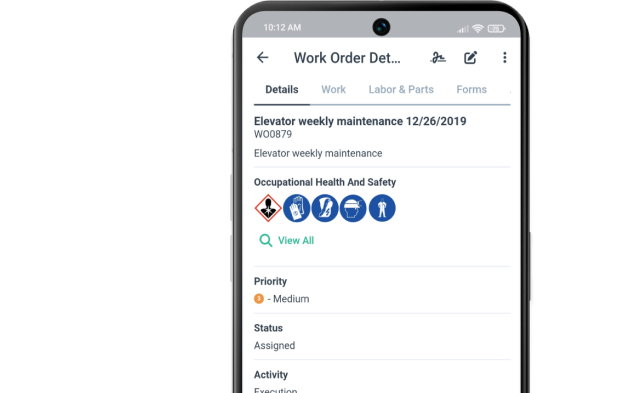
Work order management
Maintenance history logging
Preventive maintenance scheduling
Spare parts and inventory management
Instead of relying on fragmented records or institutional knowledge, a CMMS creates a single source of truth accessible from both desktop and mobile devices.
It reduces administrative workload, simplifies audit readiness, and provides the data needed to make informed decisions.
Teams can identify high-cost assets, optimize technician workloads, and prioritize maintenance activities more effectively.
In fact, a recent survey found that teams using CMMS platforms report major improvements: better visibility into completed work, less unplanned downtime, and increased communication.
Illustration: WorkTrek / Data: UpKeep
Take, for instance, WorkTrek, a CMMS platform designed to simplify asset and work management for upkeep teams across manufacturing, facilities, and field service environments.
Built with the needs of maintenance managers and supervisors in mind, it consolidates your operations into a single platform accessible via web and mobile, including offline functionality for field technicians.
Some of its key capabilities include the preventive maintenance scheduling feature, which plans and schedules recurring maintenance tasks based on time-based or usage-based triggers.
Source: WorkTrek
It automatically generates work orders according to scheduled intervals, helping you stay ahead of equipment failures.
Additionally, WorkTrek’s comprehensive reporting provides insight into KPIs, such as PM compliance, downtime, and more, helping you minimize downtime, optimize staffing, and ensure high-priority tasks are completed.
Here’s just one report example:
Source: WorkTrek
Additionally, the work order management feature helps you create, assign, prioritize, and track work orders from request through to completion.
Every task is documented with full transparency, so nothing falls through the cracks.
Your team always knows what needs to be done and who’s responsible.
Source: WorkTrek
These features directly translate into operational improvements.
Just ask Matjaž Valenčič, Operations and Maintenance Manager at interEnergo, an international energy company:
Source: WorkTrek
For teams managing complex operations, digital tools are no longer optional.
If your maintenance program still relies on spreadsheets or disconnected systems, adopting a CMMS like WorkTrek is one of the highest-impact upgrades you can make.
Benefits of Choosing the Right Maintenance Tools
The tools your team uses directly affect how well your facility runs.
Therefore, choosing the right tools for each job and building the systems to support their use pays dividends across three areas that matter most to upkeep managers: asset uptime, workforce safety, and operating costs.
Reduced Downtime
Unplanned equipment failures rarely happen without warning.
They develop over time through wear, misalignment, loose fasteners, or component degradation that goes unnoticed until it’s already too late.
Anyone who’s experienced this knows how severe the cost can be.
Robert Russell, Head of Predictive Maintenance Strategy and Delivery at Siemens, explains:
Illustration: WorkTrek / Quote: ISM
Your maintenance tools make it easier to detect early warning signs and intervene before these costly failures occur.
On the physical side, properly calibrated hand and power tools allow technicians to perform routine inspections and adjustments with precision.
Moreover, digital tools support these routine tasks by ensuring that the work actually gets done.
A CMMS automates preventive maintenance scheduling by:
Generating work orders at defined intervals
Assigning tasks to the right technicians
Flagging overdue or incomplete work
This removes reliance on memory, manual tracking, or paper-based systems, reducing the risk of missed maintenance.
The cumulative effect is a measurable reduction in both the frequency and severity of unplanned failures.
In the end, equipment that is regularly inspected, adjusted, and serviced with appropriate tools simply breaks down less often.
And when issues do arise, they’re caught early enough to be addressed during planned maintenance windows rather than mid-production.
Increased Safety
The relationship between maintenance tools and workplace safety manifests in two ways.
First, these tools, particularly PPE, protect your technicians from hazards encountered during maintenance work.
Second, well-maintained equipment is inherently safer.
Machines that are regularly inspected, properly adjusted, and serviced before components degrade are far less likely to fail in ways that put operators or nearby workers at risk.
Using the correct tool for each task also eliminates a common source of injuries.
Improvised tool use, such as using a wrench as a hammer, or bypassing a safety interlock because the right lockout/tagout equipment is not available, significantly increases risk.
When teams have access to the proper tools and are trained to use them correctly, these incidents decline sharply.
The business case for investing in safety through better tooling is also concrete.
Workplace injuries carry direct costs, like medical treatment, workers’ compensation claims, regulatory fines, and potential litigation, as well as indirect costs that are often even higher:
Lost productivity
Equipment damage
Impact on team morale
Accident investigation time
Increased insurance premiums
According to the Liberty Mutual Workplace Safety Index 2025, U.S employers spend approximately $58.78 billion annually on workplace injury costs.
Illustration: WorkTrek / Data: Liberty Mutual
Beyond financial exposure, a strong safety record also offers operational benefits.
Facilities with lower injury rates typically see:
Higher workforce retention
Fewer production disruptions
Better outcomes in regulatory inspections and customer audits
In other words, safety is more than a compliance requirement. It’s a core operational metric that directly impacts performance, reliability, and long-term cost control.
Lower Operational Costs
Investing in the right maintenance tools, both physical and digital, can feel like an upfront cost.
In reality, it’s one of the most reliable ways to reduce long-term maintenance expenditure.
For example, research from McKinsey & Company shows that predictive maintenance, enabled by diagnostic tools and AI, can reduce total maintenance costs by 10% to 40%.
Illustration: WorkTrek / Data: McKinsey
The most direct route to cost savings is through reduced equipment damage.
Using properly sized and calibrated tools minimizes the risk of incidental damage during maintenance, such as stripped threads, cracked housings, or damaged seals.
Individually, these issues may seem minor.
However, they compound quickly, adding unnecessary parts, labor, and downtime that could have been avoided.
A strong proactive maintenance program, combining diagnostic tools with a CMMS, helps address wear before it escalates into failure.
For instance, replacing a bearing at the right time costs far less than replacing it after it seizes and damages adjacent components, such as shafts or housings.
Efficiency gains are just as significant.
When technicians have the tools they need and receive clearly assigned, well-documented work orders through a CMMS, they spend less time:
Searching for equipment
Diagnosing recurring issues from scratch
Waiting for parts due to poor inventory visibility
That time is redirected toward productive maintenance work instead of administrative overhead.
Across all these areas, the pattern is consistent: effective tooling shifts maintenance from an unpredictable, reactive cost center into a controlled, planned function.
Conclusion
Modern maintenance is about building systems, processes, and toolsets that make breakdowns less likely and less disruptive when they occur.
Hand and power tools enable precise, reliable work, and diagnostic tools help you catch problems early.
Digital platforms like CMMS bring structure, visibility, and accountability to every task, while PPE ensures your team can do their jobs safely, every single day.
When these tools work together, the result is less downtime, safer operations, and lower long-term costs.
In short, maintenance outcomes are built on having the right tools, used the right way, at the right time.

Operations & Maintenance
The Importance of Maintenance for Industrial Equipment
Key Takeaways:
Plants average 25 downtime incidents and 300 lost hours yearly.
Downtime costs Fortune 500 companies about 11% of revenue.
Proper maintenance extends equipment lifespan and delays replacements.
If you work with industrial equipment, you’ve seen how quickly a small issue turns into a major disruption.
A strange vibration, a minor leak, a delayed inspection, and suddenly, production is down, costs are rising, and everyone is reacting instead of planning.
Proper maintenance is what separates stable operations from such constant firefighting. It’s a business-critical function that directly impacts performance, cost, and safety.
Let’s see how.
Keeps Equipment Running Reliably
When maintenance is consistent, equipment stops being unpredictable.
You start to understand how machines behave, when they need attention, and what early warning signs look like.
Without that, even high-quality equipment becomes unreliable: not because it’s poorly designed, but because small issues are allowed to develop into failures.
In industrial environments, this rarely affects just one asset.
In a manufacturing plant, for example, if a conveyor or CNC machine goes down unexpectedly, upstream and downstream processes are forced to stop as well.
This is exactly why many large-scale operators invest heavily in condition monitoring and predictive maintenance.
Rail systems across the U.S., for example, use sensor data provided by Siemens AG to detect faults before they lead to breakdowns.
Source: Siemens
By identifying issues early, such as abnormal vibrations, rail operators can now intervene in time, avoiding disruptions across entire networks where even a single malfunction can affect thousands of operations.
Gerhard Kress, Director of Mobility Data Services at Siemens, shares even more benefits that predictive maintenance brings to their clients:
Illustration: WorkTrek / Quote: Siemens
At its core, reliability comes down to reducing uncertainty.
Regular inspections, lubrication, and calibration, as well as more advanced predictive maintenance, make the equipment’s performance predictable.
That allows the rest of the operation to run as planned.
Minimizes Downtime
Downtime is where maintenance failures become impossible to ignore.
In industrial environments, a failed compressor can shut down pneumatic systems across an entire plant. A conveyor issue can stop production lines from end to end.
Since these failures are unplanned, they tend to happen at the worst possible moment: when demand is high, and there’s the least room for disruption.
This is not an occasional issue.
According to the 2024 report by Siemens, the average manufacturing facility experiences around 25 unplanned downtime incidents per month, adding up to more than 300 hours of lost production every year.
Illustration: WorkTrek / Data: Siemens
Moreover, the problem is getting harder to manage.
According to the same report, mean time to repair has increased from 49 minutes to 81 minutes, largely due to skills gaps and supply chain delays.
Illustration: WorkTrek / Data: Siemens
In other words, when something breaks, it takes longer to fix, and the impact spreads further.
What makes downtime particularly difficult is its unpredictability.
Without a structured maintenance approach, failures dictate when production stops. Teams are forced to react, often without the right parts or enough time to respond efficiently.
Even small issues escalate simply because they weren’t addressed early.
Proper maintenance eliminates that problem by shifting downtime from unexpected to controlled.
Preventive maintenance reduces the likelihood of sudden failures by keeping equipment within expected operating conditions.
Predictive maintenance goes further, identifying early signs of failure so that intervention can happen before equipment stops working.
These advancements are already visible across the industry.
Nearly three-quarters of upkeep leaders report the same or reduced levels of unplanned downtime, showing that more structured strategies are starting to stabilize operations.
Illustration: WorkTrek / Data: MaintainX
When downtime does happen, it’s no longer a surprise. It’s planned, scheduled, and managed around production, not forced into it.
That’s the difference maintenance makes: it doesn’t eliminate downtime, but it puts you back in control of it.
Reduces Operating Costs
It’s easy to see maintenance only as a cost until you look at the cost of failure.
In industrial operations, breakdowns are rarely isolated or cheap. A single incident can trigger emergency repairs, production losses, and contractual penalties.
At scale, the impact can be massive.
Research shows that unplanned downtime costs the average Fortune 500 company roughly 11% of its annual revenue.
Illustration: WorkTrek / Data: Siemens
However, this problem doesn’t affect only large enterprises.
The average large manufacturing plant loses around $253 million annually due to unplanned downtime, with the cost per hour of downtime nearly doubling in recent years.
A major driver of these costs is inefficiency under pressure, as well as rising labor and material costs.
According to industry data, 55% of maintenance professionals say rising parts costs are the main reason downtime has become more expensive.
Illustration: WorkTrek / Data: MaintainX
When failures are unplanned, everything, from labor to materials, becomes even more costly.
Regular, well-planned maintenance changes help you better understand when and how to act.
By monitoring real-time equipment data, such as vibration, temperature, or pressure, teams can detect early signs of wear and intervene before a failure occurs.
Instead of replacing parts too early or too late, maintenance is performed at the point where it has the most impact and the lowest cost.
The results of such a proactive approach can be significant.
For instance, Deloitte reveals that predictive maintenance can reduce maintenance costs by up to 25% and increase uptime by 10–20%.
And, according to the previously cited report by Siemens, full adoption of condition monitoring and predictive maintenance could save companies $233 billion in maintenance costs annually.
Illustration: WorkTrek / Data: Siemens
Shell, for example, has already experienced such benefits.
They have implemented predictive maintenance across thousands of assets, using machine learning models to detect failures early.
By intervening before breakdowns occur, the company reduced unplanned downtime and reduced costs by 20-25%.
Source: Pertama Partners
That’s where the real value comes from. Not just from avoiding breakdowns, but also from avoiding the chain reaction of costs that follows them.
When maintenance is done right, you stop spending reactively and gain more control over operational costs.
Extends Equipment Lifespan
Industrial equipment is designed to last. But only under the right conditions.
Over time, even small issues start to compound.
A slightly misaligned shaft increases vibration. That vibration puts extra stress on bearings. Worn bearings affect adjacent components.
Source: Kestner Chemical Pumps on Facebook
Left unaddressed, what starts as a minor issue can become a larger mechanical failure that shortens the asset's life.
Without maintenance, this process proceeds quietly until it leads to breakdowns or premature replacement.
With maintenance, it’s interrupted early.
Routine tasks like alignment, lubrication, and timely part replacement reduce wear before it spreads.
In fact, the ABB survey reveals that 39% of companies identify extended equipment lifespan as the top benefit of regular maintenance.
Illustration: WorkTrek / Data: ABB
Instead of replacing entire systems, teams maintain individual components and preserve the integrity of the whole machine.
This is especially important today, as industrial assets are getting older.
The average age of fixed assets has reached 24 years, the highest level in decades.
Source: Bloomberg
That means more equipment is operating closer to its limits, where small issues have a greater impact on performance and lifespan.
In that context, maintenance is important for protecting long-term investment.
For example, with condition monitoring and predictive maintenance, teams can detect early-stage faults and intervene before damage spreads.
This allows equipment to operate closer to its intended lifespan, rather than failing prematurely.
Large operators apply this approach to delay costly replacements.
By continuously monitoring asset condition and addressing issues early, they extend the usable life of critical equipment and avoid unnecessary capital expenditure.
Well-maintained equipment lasts longer, performs more consistently, and requires fewer large-scale replacements.
In capital-intensive environments, that difference is significant.
Creates a Safer Working Environment
Maintenance is one of the most direct ways to reduce risk in industrial environments.
When equipment is not properly maintained, small technical issues can quickly turn into safety hazards.
An overheated motor, a miscalibrated pressure system, or a worn mechanical component doesn’t just affect performance but also creates conditions in which failures can become dangerous.
Here are just a couple of news headlines that prove this:
Source: Google
What makes these risks challenging is that they often build gradually.
Equipment doesn’t suddenly become unsafe. It drifts out of safe operating conditions over time, until something fails under pressure.
This is still a widespread issue.
Industry data shows that 30% of workers report using outdated equipment, while 26% say the equipment they work with is not properly maintained.
As a result, 43% of industrial workers report experiencing a safety incident within a single year.
Illustration: WorkTrek / Data: Vector Solutions
So it’s clear: when maintenance is inconsistent, the risk of exposure increases.
Regular inspections, testing, and servicing, however, ensure that equipment operates within defined safety parameters.
Instead of relying on operators to react in the moment, potential hazards are identified and addressed before they cause problems.
Preventive maintenance plays a key role here by ensuring that known risk points, such as wear-prone components or critical systems, are regularly checked and maintained.
Predictive maintenance adds another layer by identifying hidden risks.
Ashok Amin, Mining Segment Manager of the Americas at Bosch Rexroth Corporation, a leading supplier of drive and control technologies, explains:
"Before something critically blows up, you get warnings, you get symptoms, and if you analyze trends, you can see when wear is happening, and some maintenance is needed before [the equipment] fails."
This matters most in environments with small safety margins.
In industries like manufacturing, energy, or chemical processing, even minor equipment failures can have serious consequences.
That’s why maintenance is a core part of risk management.
Because the safest operations are not the ones that react quickly. They’re the ones where failures don’t happen in the first place.
Improves Resource Management
Without a structured maintenance strategy, most teams end up stuck in reactive mode.
Technicians spend their time responding to urgent breakdowns. Spare parts are ordered at the last minute. Priorities shift constantly, making maintenance planning difficult.
Over time, this leads to inefficient use of labor, materials, and time.
Unfortunately, this is the reality for many industrial operations.
As it turns out, only 35% of facilities spend the majority of their time on preventive maintenance, while 58% spend less than half their time on scheduled work.
Illustration: WorkTrek / Data: MaintainX
That imbalance means most teams are still focused on fixing what’s already broken instead of preventing issues in the first place.
This is caused by various underlying problems.
A lack of resources is now the biggest challenge cited by maintenance leaders, with 45% identifying it as their primary obstacle.
At the same time, the workforce itself is under pressure, with 69% of maintenance professionals being 50 or older and expected to retire in the coming years.
Illustration: WorkTrek / Data: MaintainX
This makes reactive maintenance even harder to sustain.
When experienced technicians are stretched thin, constantly dealing with unplanned issues, it becomes difficult to improve performance or implement more advanced strategies.
This is exactly where the technology helps. Not by adding complexity, but by bringing structure into everyday work.
A CMMS like WorkTrek does that in a practical way. It gives you a single system to manage maintenance instead of relying on memory or scattered tools.
You can schedule preventive tasks based on time or meter readings.
Source: WorkTrek
You can track the history of each asset to spot recurring issues and clearly prioritize and assign work so nothing gets missed.
Moreover, WorkTrek helps you keep track of your inventory and spare parts.
Source: WorkTrek
That structure makes a difference over time.
Technicians spend less time firefighting and more time on planned work. Spare parts are used more efficiently because needs are anticipated rather than rushed.
And that’s the key point.
Proper maintenance improves how resources are used, but without the right system, it’s difficult to stay consistent.
A CMMS makes that consistency possible. It turns maintenance from something reactive and unpredictable into something you can plan and control.
Conclusion
In industrial environments, maintenance is what keeps everything else working as it should.
It determines how reliably equipment runs, how often operations are disrupted, how much those disruptions cost, and how safely and consistently work gets done.
Without it, even small issues become larger problems.
But done right, maintenance brings control over equipment, over costs, and over the pace of operations.

Operations & Maintenance
8 Tips for Creating Good Standard Maintenance Procedures
Key Takeaways:
41% of workers struggle to find the information they need to do their job.
Standard procedures can slow workers down if every document looks different.
A U.S. plant was fined $463,000 by OSHA for poor safety during upkeep.
If you’ve ever stopped a job to clarify a step, search for missing information, or double-check if it is safe to continue, you have already seen what poor procedures do in practice.
They slow work down, create uncertainty, and increase risk.
Standard maintenance procedures should remove these pain points. However, they only work when technicians can follow them easily, without second-guessing or searching for missing details.
These tips will help you create procedures your team can actually use in real conditions.
Write Clear, Actionable Steps
When someone opens a standard maintenance procedure, they shouldn’t have to interpret what you meant.
They should be able to follow the steps and complete the task correctly, even if they haven’t done it before.
So here’s what a clear step looks like.
Each step should begin with a clear action and describe one task only. Instead of describing what needs to happen in a general way, tell the technician exactly what to do.
For example, instead of writing “Check the condition of the belt and replace if necessary,” be more specific:
Inspect the drive belt along its full length while manually rotating the pulley.
Look for cracks, fraying, glazing, or uneven wear on the inner surface.
Apply light pressure midway between pulleys; belt deflection should not exceed 10–15 mm.
*Replace the belt if any of the following conditions are present:
Visible cracks or frayed edges
Belt deflection exceeds the specified limit
Audible slipping during operation
**If replacement is required:
Isolate and lock out the machine before removal.
Install the correct belt type (refer to Parts List, Section 3).
Re-tension the belt according to manufacturer's specifications before restart.
This level of detail removes the need for interpretation and ensures that even a technician performing the task for the first time can complete it safely and correctly.
Sequence matters just as much as clarity.
Steps should follow the natural order of the task, without forcing the reader to jump back and forth or make assumptions.
There’s also a balance to strike with detail.
Too little detail leaves room for mistakes, while too much slows people down and makes procedures harder to use.
Use this as your benchmark: A technician should be able to complete the task safely and correctly on the first attempt, even if it is their first time performing it.
Use a Consistent Format Every Time
Standard procedures can slow people down if every document looks different.
When technicians have to figure out how a procedure is structured before they can even start the task, they’re already losing time.
Using a consistent format across all procedures solves that problem.
When every document follows the same structure, technicians know exactly where to find the steps, key information, and safety notes.
This is especially important in environments with frequent tasks, multiple assets, or rotating teams.
So, make sure to create consistent procedures.
One way to structure your procedures can be listing “operation steps” alongside “key points to help the technician understand not just what to do, but why it matters.
In the example below, the procedure for an AC generator follows this logic clearly:
Source: LinkedIn
That extra context can prevent mistakes, especially in tasks where skipping a small detail can lead to equipment damage or safety risks.
There is another benefit here as well. Consistency improves training.
New team members don’t have to learn how to read different types of procedures. Instead, they learn one format and apply it everywhere.
Over time, this reduces errors and builds confidence in execution.
That is really the goal here; not a perfect format, but a predictable one that supports the work.
List Tools and Materials for Every Procedure
Few things disrupt a maintenance task more than realizing halfway through that something is missing.
A technician starts the job, progresses through several steps, and then has to stop to find a tool, part, or material that was not identified in advance.
That is why every standard maintenance procedure should clearly list all required items before the work begins.
This allows technicians to prepare everything in advance and complete the task without unnecessary interruptions.
Therefore, it’s essential to have an updated list of spare parts, materials, and tools for your facility, such as this one:
Source: WorkTrek
However, be specific when defining these requirements in the procedures.
Instead of writing “standard tools,” list exactly what is needed, such as “torque wrench (20–100 Nm), gasket kit, lubricant type X.”
This reduces the risk of using incorrect tools or substitutes, which can affect both the quality of the work and the condition of the equipment.
In facilities that use tools such as asset management software or CMMS, procedures are often connected to inventory systems, allowing technicians to quickly check the availability and location of every item.
Source: WorkTrek
But even without that integration, a clear and complete list in the procedure itself significantly improves maintenance execution.
Highlight Safety at Every Step
Safety information is often included at the beginning of a standard maintenance procedure, like in this maintenance procedure for lifts by GMV:
Source: GMV
However, in practice, that is not enough.
In real working conditions, technicians focus on the steps in front of them, not on a block of text they read at the start.
That’s why all safety instructions, hazard information, and PPE requirements should be built directly into the procedure, especially at key points where risks are highest:
Source: WorkTrek
If a step involves electrical exposure, high temperatures, moving parts, or pressure systems, the warning should appear exactly where the action happens.
This approach makes safety more practical and harder to overlook.
Instead of expecting someone to remember all hazards in advance, you guide them through the risks as they perform the task.
It’s also important to be specific.
General warnings don’t carry the same weight as clear, direct instructions.
For example, indicating when to disconnect power, wear specific protective equipment, or verify zero energy creates a much safer working environment.
Well-placed safety guidance protects people and equipment, and prevents costly mistakes.
To understand the impact, consider a case where a U.S. food manufacturer faced a $463,000 OSHA fine.
Source: ehsleaders
The company failed to implement proper lockout/tagout procedures and did not adequately train workers who maintained and cleaned production equipment.
This shows how quickly gaps in safety procedures can lead to real financial and operational consequences.
But when safety is integrated into each step of a maintenance procedure, it becomes part of how the job is done, not something separate from it.
Include All Supporting Information
A procedure should do more than list steps.
It should provide everything a technician needs to complete the task without searching for additional information, explains Bill Hillman, a certified maintenance and reliability professional, in his article for Reliable Plant.
Source: Reliable Plant
This includes details such as safety information and required personal protective equipment, as we have already mentioned.
However, it should also include information such as estimated time to complete the task, the number of people needed, and how often the task should be performed.
Moreover, procedures should also include measurements, tolerances, or references to other related documents.
Take, for instance, these steps in a standard maintenance procedure for an AC generator:
Clean the inside of the generator with a vacuum cleaner or use dry filtered compressed air at a pressure of from 25 to 40 psi.
Lubricate the exciter end bearing with 1.6 ounces of NGL 1, grade 2 electric motor bearing grease through the zerk fitting on the stator frame.
Without that specific pressure information, the technician cannot perform maintenance correctly.
Too much air pressure can damage insulation or force debris deeper into the windings, while incorrect grease amounts can lead to bearing overheating or premature failure.
Clearly defining expectations also improves execution.
If a task requires two people for safety or efficiency, that should be stated in the procedure. If it must be performed at specific intervals, that information should be included as well.
When all supporting information is available in one place, technicians can focus on the job rather than searching for missing details.
Use Visuals to Support Instructions
Even the clearest written instructions have limitations.
When a task involves specific conditions, visual checks, or precise outcomes, words alone can leave too much room for interpretation.
On the other hand, visuals such as photos, diagrams, and videos help technicians quickly understand what correct execution looks like.
Instead of interpreting a written description, they can compare what they see in front of them with a clear reference.
Sometimes, a simple illustration like the one below will suffice:
Source: GMV
However, real photos of the actual asset are usually more effective.
As Quality Engineer Neil Barker notes, a picture gives the reader a clear definition of what is acceptable and what is not.
“I have written many SOPs, and I always find that a picture speaks a thousand words (as they say). Having that picture gives the reader a clear definition of what is acceptable and what is not.”
This is especially valuable in maintenance tasks where small deviations can lead to performance issues or equipment failure.
Video takes this a step further.
Engineering consultant Steve T. highlights that video effectively combines thousands of
images into a continuous explanation:
“The old adage, a picture is worth a thousand words… what is video other than thousands of pictures. The digital transformation, especially in manufacturing, is to video for standard work instruction.”
For complex or less frequent tasks, this can significantly reduce errors and improve consistency.
That said, not every step needs a visual. Use them where precision matters most.
But when used correctly, visuals remove ambiguity and make procedures easier to follow.
Connect Procedures Directly to Work Orders
Procedures lose value if they’re hard to find or disconnected from daily work.
In many teams, procedures sit in shared folders, scattered across systems, or saved with unclear naming conventions.
It’s no surprise that, according to industry research, 41% of workers struggle to find the information they need to do their job.
Illustration: WorkTrek / Data: EDH Technology
To be effective, procedures need to be available exactly when and where the work happens.
The most practical way to achieve this is by connecting them directly to work orders.
When a technician receives a task, the procedure should already be attached, complete with steps, required tools, safety instructions, and any supporting visuals.
This is where a CMMS like WorkTrek makes all the difference.
Instead of creating procedures as static documents, you can define them as part of a service catalog.
You can do it with just one click, as shown below:
Source: WorkTrek
Within each service, you can include all relevant information, such as task steps, estimated time, required spare parts, and health and safety details.
Source: WorkTrek
You can also create a checklist with clearly defined steps and add it to a service.
Source: WorkTrek
That same service can then be turned directly into a work order.
The best part is that maintenance technicians can access all this information on their mobile devices without having to search across multiple systems or waste time.
When procedures are embedded into the workflow, they are much more likely to be used.
And when they are used consistently, the results are clear: better efficiency, fewer errors, and safer maintenance.
Test Procedures in Real Conditions
A procedure may look complete on paper, but that does not guarantee it will work in practice.
The only reliable way to validate it is to test it in real working conditions.
As Bill Hillman, whom we mentioned earlier, points out in his article, effective standard maintenance procedures require a feedback loop:
“In order for SMPs to be effective and accurate, a formal feedback mechanism should be supplied to the job performer. The SMP should be updated when feedback reveals mistakes or more effective ways to perform the job.”
So, have technicians follow the procedure step by step and observe where issues arise.
You may discover missing details, unclear instructions, or assumptions that do not match reality.
Testing also helps you assess the level of detail.
If technicians hesitate or ask questions, the procedure needs improvement. If they complete the task smoothly without additional guidance, it works as intended.
Involving technicians in this process also increases adoption. People are more likely to use procedures they helped validate than those created without their input.
No procedure is perfect from the start. Treat it as a working document; test it, gather feedback, and refine it over time.
Conclusion
Standard maintenance procedures are only effective if they are practical in real-world conditions.
Clear steps, consistent structure, proper preparation, and integrated safety all contribute to better maintenance execution, but only when the information is accessible and relevant.
The goal is not to create perfect documents, but reliable tools that support the work.
When procedures are written with the user in mind, tested in practice, and embedded in daily operations, they become something teams rely on rather than work around.

Operations & Maintenance
How to Write an Effective Maintenance Task
A practical guide for maintenance managers, planners, and operations leads
Key Takeaways
Wrench time across most facilities sits at 25- 35%. That means technicians spend less than a third of their shift on hands-on maintenance.
Proper planning with well-written tasks can raise wrench time to 55--65%, effectively adding 35--57% more productive output without increasing headcount (Prometheus Group).
Unplanned maintenance costs up to 5x more than planned work --- making effective task writing one of the highest-ROI improvements a maintenance department can make.
Most maintenance teams are busier than they are productive.
Technicians show up, get assigned a job, and then spend the next 30 minutes hunting for the right parts. They also spend time decoding a vague work order note or figuring out whether "inspect motor" means a full teardown or a quick visual.
The wrench doesn't come out until they've already lost a chunk of the day.
That's a task-writing problem that can reduce your equipment availability.
Source: WorkTrek
A well-constructed maintenance task tells a technician exactly what to do, what tools to bring, how long it should take, and what success looks like to help improve equipment performance.
Done right, it's one of the cheapest improvements a maintenance department can make, and one of the highest-impact.
This article walks through what makes a maintenance task effective, how to write one, and how a computerized maintenance management system (CMMS) like WorkTrekcan make it systematic across your entire maintenance program.
What Is a Maintenance Task?
A maintenance task, such as preventive maintenance, is a discrete, defined unit of work within a larger maintenance plan. It is usually part of a larger preventive maintenance program and describes a specific action or sequence of actions that a technician must perform to inspect, repair, replace, or service a piece of equipment.
Tasks aren't just notes. They're instructions that should be part of your preventive maintenance plan. A well-written task tells the technician not just what to do, but how to do it, how long it should take, and what qualifications are needed to complete it correctly.
In the context of preventive maintenance tasks, they are typically grouped under a work order and assigned on a recurring schedule. These maintenance activities include monthly lubrication, quarterly inspection, and annual calibration. Each task is a building block of the broader maintenance schedule.
Source: WorkTrek
When you're running a reactive shop, task quality barely matters. Technicians go to broken equipment and figure it out.
But as teams shift toward a proactive maintenance strategy, well-defined tasks become the foundation of the entire system.
Why Effective Task Writing Matters More Than You Think
Here's a number worth sitting with: across most industries, the average maintenance technician spends only 25-35% of their shift doing actual hands-on maintenance work.
That's the finding from DuPont's landmark benchmarking study covering 3,500 sites across North America, Europe, and Japan. During a typical 10-hour shift, your technician is doing maybe 2--3 hours of actual maintenance.
Prometheus Group reports that organizations following best practices in planning and scheduling, which start with writing clear tasks, can reduce wrench time to 60-65%. Going from 35% to 55% wrench time translates into a 57% increase in productive output with the same workforce.
The cost argument is just as stark. Unplanned maintenance costs roughly five times as much as planned work. Poorly written tasks that create confusion, callbacks, or rework push more work into the unplanned column, even on supposedly scheduled jobs.
Illustration: WorkTrek / Data: DuPont Benchmarking Study, Prometheus Group
Clear tasks reduce unplanned downtime, cut maintenance costs, and give maintenance managers the performance data they need to make better decisions. The ROI is not theoretical --- it's structural.
The 6 Components of an Effective Maintenance Task
Before you write a single task, understand what it should contain. Six elements separate a functional task from a note on a work order.
Illustration: WorkTrek
1. A clear task description. Start with an action verb. "Inspect," "Replace," "Lubricate," "Test," "Verify." Avoid vague nouns like "motor service" or "conveyor check." The description should tell any qualified technician, at a glance, exactly what the action is.
2. Step-by-step instructions. For multi-step tasks, break the process into numbered steps. Lockout/tagout procedures, fluid sampling sequences, alignment checks. These need specific instructions, not just a title. Single-step tasks can be simpler, but complex jobs need full detail.
3. Required skills and labor craft. Specify whether the task requires a general maintenance technician, an electrician, a millwright, or a specialized contractor. Assigning the wrong skill level to a task is one of the most common causes of rework and safety incidents.
4. Estimated completion time. Time estimates keep technicians on track and give schedulers what they need to build a realistic maintenance schedule. Use historical data when available. For new tasks, reference similar completed work or OEM guidance.
Source: WorkTrek
5. Tools, parts, and materials. List the specific tools, spare parts, and consumables required before the technician leaves for the job. Nothing kills wrench time faster than a mid-task parts run.
6. Safety precautions and standard operating procedures. Any required lockout/tagout steps, PPE requirements, or safety permits should be embedded in the task, not assumed. This is especially true for regulated industries or critical assets.
How to Write a Maintenance Task: Step by Step
The steps below describe how to write an effective maintenance task in the context of planned preventive maintenance, where tasks are most commonly used.
Step 1: Identify the Maintenance Need
Start by defining what the task is trying to accomplish. Is this an inspection to catch early signs of wear? A scheduled part replacement based on time intervals or meter readings? A compliance-driven check required by regulation?
Align task type with the asset's maintenance plan and manufacturer recommendations. Don't skip this step. Vague problem definitions produce vague tasks.
Step 2: Define the Action Clearly
Once you know what needs to happen, write the task action starting with a verb. "Replace the V-belt on Conveyor 4." "Lubricate all grease fittings on the north compressor housing." "Test emergency stop function on Press Line 2."
Source: WorkTrek
If the action is straightforward and single-step, keep it brief. If it's multi-step, like a bearing replacement that involves heating, pressing, and shimming, break it into sequential numbered steps. They're faster to follow under pressure and easier to sign off on.
Step 3: Specify Required Resources
List everything the technician needs before they walk out the door: tools, parts, PPE, permits, and technical documentation. Cross-reference your parts inventory to confirm availability. Research shows that maintenance teams can spend up to 20% of their time searching for tools or parts if resource planning isn't built into the task itself.
Building resource lists into individual tasks is how you reclaim that time.
Step 4: Assign the Right Skills
Match each task to the appropriate skill level. A maintenance technician with general mechanical skills can handle most routine maintenance. But an electrical fault diagnosis or a hydraulic system rebuild belongs with a specialist.
Mismatched assignments create two problems: slower completion times and increased error rates. Senior technicians get pulled into tasks they're overqualified for. Junior technicians get assigned jobs that exceed their qualifications. Both scenarios cost time and introduce risk.
Source: WorkTrek
Step 5: Set Time Estimates
Realistic time estimates are among the most undervalued aspects of a maintenance task. They give schedulers the data to build workable plans and help technicians pace their day.
Use historical data where possible. If a similar task was completed five times last year and averaged 45 minutes, that's your starting point. For new tasks, OEM documentation often includes estimates of maintenance time. For tasks with no reference point, use an educated estimate and refine it as performance data accumulates.
Don't inflate estimates to build in a buffer. That approach invites Parkinson's Law, which says work expands to fill available time. Accurate estimates paired with accountability produce better results.
Step 6: Embed Safety Requirements
Safety steps don't belong in a separate document that technicians may or may not carry. They belong in the task itself.
For any task involving energy isolation, rotating equipment, confined spaces, or chemical exposure, include the specific LOTO procedure, PPE requirements, and permit requirements directly in the task instructions. Having safety steps documented in the task record also creates an audit trail and demonstrates adherence to standard operating procedures.
Source: WorkTrek
Step 7: Review and Validate
After writing the task, put it down and come back to it. Read it from the technician's perspective. Would a new hire understand exactly what to do? Would an experienced tech have everything they need without making a phone call?
Better yet, have a senior technician review new tasks before they go live. Peer review catches ambiguous instructions, missing resources, and outdated procedures that a desk-based planner might overlook.
Build a review cycle into your maintenance program. Tasks written three years ago may no longer reflect current equipment configurations, upgraded procedures, or revised safety requirements.
Common Mistakes That Undermine Task Effectiveness
Even experienced maintenance planners fall into the same traps. The most common ones to watch for:
MistakeWhy It Costs YouVague action descriptions“Service the pump” is a category, not a task. Technicians shouldn’t guess whether that means inspecting seals, flushing fluid, or replacing bearings.Missing resource listsForces technicians to improvise mid-job. Results in delays, substitute parts, or incomplete work.No time estimatesSchedulers can’t build realistic plans. Teams end up over- or under-loading technicians, and schedule compliance suffers.Over-complexity on routine tasksNot every task needs a full procedure. Routine lubrication checks can be brief. Level of detail should match complexity and risk.Ignoring historical dataIf the same bearing fails on a three-month cycle, task frequency should reflect that. Writing tasks without reviewing equipment failure history wastes your most valuable input.One-size-fits-all instructionsDifferent skill levels need different detail. Mixed-experience teams need enough detail for junior technicians while not over-explaining to veterans.
Vague action descriptions: "Service the pump" is a category, not a task. Technicians shouldn't guess whether that means inspecting seals, flushing fluid, or replacing bearings.
Missing resource lists: Forces technicians to improvise mid-job. Results in delays, substitute parts, or incomplete work.
No time estimates: Schedulers can't build realistic plans. Teams end up over- or under-loading technicians, and schedule compliance suffers.
Over-complexity on routine tasks: Not every task needs a full procedure. Routine lubrication checks can be brief. The level of detail should match the complexity and risk.
Ignoring historical data: If the same bearing fails on a three-month cycle, task frequency should reflect that. Writing tasks without reviewing equipment failure history wastes your most valuable input.
One-size-fits-all instructions. Different skill levels need different detail. Mixed-experience teams need enough detail for junior technicians while not over-explaining to veterans.
Illustration: WorkTrek / Data: Prometheus Group
How a CMMS Turns Task Writing Into a System
Writing a good task once is doable. Writing hundreds of them consistently, keeping them up to date, and routing the right ones to the right technicians on the right schedule requires a system.
A computerized maintenance management system (CMMS) provides maintenance teams with the infrastructure to create, store, assign, and track maintenance tasks at scale. A good one doesn't just digitize paperwork. It makes task management a core part of the maintenance department's operations.
Why WorkTrek Is the Right Tool
WorkTrek is built for exactly this kind of structured, high-volume maintenance work. Here's what it handles:
Centralized task library. WorkTrek lets you build a library of standardized maintenance tasks linked to specific assets. Once created, tasks can be reused across work orders, updated in one place and reflected everywhere, and versioned when procedures change.
Automated preventive maintenance scheduling. WorkTrek's preventive maintenance feature runs on time-based or meter-based triggers. Tasks are assigned automatically based on your defined intervals, with no manual calendar management required.
Source: WorkTrek
Skill-based task assignment. Assign tasks to technicians based on documented skill sets. Schedulers can see technician availability and current workload in real time, enabling smarter resource allocation across the entire maintenance team.
Real-time data capture. Technicians complete tasks on mobile devices, capturing completion status, time logged, parts used, and any anomalies found. That performance data flows back into asset records, building the historical database you need to continuously improve task estimates and intervals.
Parts and inventory integration. WorkTrek's parts and inventory management connect directly to work orders. When a task specifies required parts, the system checks availability before scheduling the job. This eliminates mid-task parts runs and the productivity loss that comes with them.
Work order tracking and reporting. Every completed task generates a record. Over time, that data reveals patterns: assets that require frequent attention, tasks that consistently run over time, and where technician skill gaps exist. That's the performance data you need to make informed decisions about your overall maintenance strategy and planned maintenance.
Teams that manage maintenance tasks through a CMMS don't just complete more work --- they complete better work. Structured task management reduces the variability that turns scheduled maintenance into unplanned downtime.
Conclusion
The test of any maintenance task isn't how it reads in a planning meeting. It's how it performs in the field at 6 AM when a technician needs to get a line back online.
Effective task writing is a discipline that can be learned.
It requires maintenance planners who understand both the technical requirements of the work and the operational realities of the technicians performing it. It requires systems that make task creation, storage, and assignment consistent rather than improvised. And it requires a feedback loop that uses completed task data to improve future plans.
Most maintenance departments don't need a complete overhaul to get there. Start with your highest-frequency, highest-criticality tasks. Rewrite them with the six components outlined here. Build them into your CMMS. Measure the difference in time-to-complete and rework rate.
The improvement compounds quickly. Better tasks mean better schedules. Better schedules mean more planned work. More planned work means fewer equipment failures and lower maintenance costs.
The whole preventive maintenance program becomes more effective when the individual tasks that hold it together are written to a higher standard. That's not a marginal gain. That's a structural improvement to how your maintenance operations run.

Operations & Maintenance
Complete Guide to Maintenance Intervention Planning
Key Takeaways
Unscheduled downtime costs Fortune Global 500 companies 11% of annual revenues — $1.4 trillion — according to Siemens' 2024 True Cost of Downtime report.
65% of respondents in MaintainX's 2024 State of Industrial Maintenance report said proactive maintenance is the most effective way to reduce unplanned downtime.
A CMMS-enabled preventive maintenance program can lower repair costs 12-18% and extend equipment life by 20-40%.
Most maintenance departments don't struggle with effort. They struggle with coordination.
Work gets done, but sometimes it can be the wrong work, at the wrong time, with the wrong priorities. The result is a shop floor that's always reacting and never quite ahead of the curve.
Maintenance intervention planning is the discipline that changes that.
The process is designed to help you decide what maintenance work needs to be done, when it should be done, how it should be executed, and who's responsible for it. When it's done well, it keeps assets running, costs predictable, and maintenance personnel focused on work that actually matters.
This guide covers everything you need to build and operate an effective maintenance intervention plan, from asset inventory and criticality assessment to scheduling, execution, and continuous improvement.
What Is Maintenance Intervention Planning?
A maintenance intervention is any deliberate action taken to preserve, restore, or improve an asset's condition or performance.
For example, it includes routine maintenance such as lubrication checks and filter replacements, as well as more complex planned maintenance activities, such as overhauls, calibrations, and condition-based replacements.
Maintenance intervention planning is the process of organizing those interventions into a coherent system.
Source: WorkTrek
It defines the what, when, how, and who for every maintenance activity across your asset portfolio. The goal is to execute efficiently — meaning the right work happens at the right time, with the right resources, based on each asset's actual maintenance requirements.
This is distinct from simply having a maintenance schedule. A schedule tells you when tasks are due. A maintenance intervention plan tells you how to prepare for them, what resources you need, how to execute them correctly, and how to evaluate whether they worked.
A maintenance schedule without a supporting intervention plan is just a list of deadlines. The plan is what turns those deadlines into operational outcomes.
Why Maintenance Intervention Planning Matters
The financial case for structured intervention planning starts with the cost of not doing it.
According to Siemens' 2024 True Cost of Downtime report, unscheduled downtime now costs Fortune Global 500 companies 11% of their annual revenues, a combined total of $1.4 trillion.
In the automotive sector, one hour of unplanned downtime can cost upwards of $2.3 million. For a typical industrial business, ABB's 2023 Value of Reliability report puts the figure at $125,000 per hour.
82% of companies have experienced at least one unplanned downtime incident over the past three years. (Aberdeen Strategy & Research)
Those numbers aren't abstract. A single major unexpected equipment failure at a mid-size facility — a compressor, a drive system, a cooling loop — can generate six-figure costs once you account for emergency parts, premium labor, lost production, and contract penalties.
The costs of emergency repairs are typically 2 to 5 times higher than the same work performed under a planned maintenance strategy, according to the National Institute of Standards and Technology.
Beyond dollars, unplanned failures create safety risks, compliance exposure, and downstream supply chain disruptions that are difficult to quantify but very real.
The good news is that a proactive maintenance approach protects against all of it.
The chart above illustrates how hourly downtime costs vary dramatically by industry — from $125,000 for a typical industrial facility to $2.3 million in automotive manufacturing. For any of these operations, a well-executed maintenance intervention plan is one of the highest-ROI investments available.
Types of Maintenance Interventions
Not every asset warrants the same approach. Part of effective maintenance planning is matching the intervention type to the asset's criticality, failure mode, and operational context.
Here are the six primary intervention types you'll manage in any comprehensive plan:
Preventive maintenance
Preventive maintenance (PM) involves scheduled, time- or usage-based tasks performed before failure occurs. Oil changes, filter replacements, belt inspections, and bearing greasing. These are the backbone of most facility maintenance plans.
PM is predictable, easy to schedule, and straightforward for maintenance personnel to execute. Its limitation is that it's a fixed-interval schedule, which means you sometimes over-maintain assets that are running fine and under-maintain those that are deteriorating faster than expected.
Source: WorkTrek
Predictive maintenance
Predictive maintenance uses real-time condition data such as vibration signatures, thermal readings, oil analysis, and ultrasound to determine when an asset is actually approaching a failure threshold.
It's more resource-intensive to set up than PM, but it delivers more precise interventions. According to NIST, a strong predictive maintenance program can reduce unplanned maintenance inventory needs by up to 66% and cut maintenance planning time by 20 to 50%.
Corrective maintenance
Corrective maintenance is the repair or restoration of an asset after a deficiency is identified. This could happen either following a failure or flagged during an inspection. Not all corrective work is reactive; a planned corrective intervention triggered by an inspection finding is still proactive work, even if it wasn't scheduled in advance.
Proactive maintenance
Proactive maintenance targets root causes rather than symptoms. It includes things like realignment to prevent bearing wear, lubrication analysis to prevent contamination, and operator-level condition monitoring to catch issues before they escalate. A proactive maintenance approach is what separates teams that improve over time from those that just keep up.
Emergency maintenance
Emergency interventions address safety-critical failures or situations where production impact demands an immediate response. These can't be eliminated entirely, but a mature planned maintenance system minimizes their frequency. When they do occur, having documented maintenance procedures and a well-stocked parts inventory is what determines how fast you recover.
Deferred maintenance
Deferred maintenance is work that has been identified but intentionally postponed. With clear criteria and a documented justification, deferral is a legitimate planning tool. Done without discipline, it becomes a liability. The city of San Diego's $1 billion deferred maintenance backlog in 2024 is a textbook example of what happens when deferral becomes the default.
Source: WorkTrek
How to Build a Maintenance Intervention Plan: 6 Steps
The process flowchart above summarizes the six-step planning cycle. Here's what each step requires in practice.
Step 1: Build your asset inventory
You can't plan maintenance for assets you haven't catalogued and inventoried. Start with a complete, structured asset register that captures asset type, location, manufacturer, model, installation date, maintenance history, and current condition.
It helps to group assets by system and location to improve scheduling and resource allocation.
Source: WorkTrek
The asset register is also where you identify maintenance requirements from OEM documentation, operating history, and engineering judgment. This is your baseline for everything that follows.
Step 2: Assess risk and criticality
Not all assets have equal priority. A good approach is to perform a criticality assessment that helps you allocate maintenance resources where they matter most.
Start by evaluating each asset on three dimensions:
Impact on safety and regulatory compliance
Effect on production output if it fails
Cost and time required to repair it.
High-criticality assets, which are primary production equipment, safety systems, and single points of failure, deserve more frequent and rigorous maintenance attention.
Low-criticality assets may tolerate longer intervals or a run-to-failure approach when that's the most cost-effective option. This analysis is what makes your plan cost-effective rather than simply comprehensive.
Asset criticality assessment matrix
Asset tierSafety impactProduction impactRecommended strategyTier 1 — CriticalHighProduction stopPreventive + predictiveTier 2 — ImportantModerateReduced capacityPreventive, scheduledTier 3 — StandardLowMinor or no impactRoutine PM or RTF
Step 3: Select intervention type per asset
With your asset inventory and criticality tiers in place, assign an intervention strategy to each asset or asset class:
Tier 1 assets typically warrant both predictive and preventive maintenance.
Tier 2 assets are usually well-served by structured preventive maintenance plans with defined intervals.
Tier 3 assets may be candidates for run-to-failure maintenance where the economics support it.
Don't forget to document the reasoning for each decision. This creates an auditable record and makes it easier to revisit decisions when asset conditions change.
Step 4: Schedule and assign resources
Planning and scheduling are related but distinct activities.
Planning determines what work needs to happen and what's required to do it. This includes parts, tools, skills, and documentation.
Source: WorkTrek
Scheduling determines when that work happens, who does it, and how it fits within production windows and labor capacity.
Good scheduling accounts for maintenance windows, spare parts availability, technician competencies, and interdependencies between tasks. It also builds in buffer time for corrective work triggered by inspections because inspections almost always find something.
Step 5: Execute and document
Execution without documentation is wasted work.
Every completed maintenance task should generate a record that captures what was done, what was found, which parts were used, how long it took, and any observations about the asset's condition.
These maintenance records are the data that drives future planning decisions interval adjustments, parts stocking, technician training needs.
Standardized maintenance procedures reduce variability in execution. When technicians follow documented procedures, you get consistent outcomes, and deviations from expected findings are more meaningful.
Step 6: Review and improve
No maintenance plan survives contact with reality unchanged.
Regular reviews, such as monthly for KPIs, quarterly for strategy, identify where your plan is working and where it isn't. Recurring failures on specific assets, high corrective-to-preventive ratios, or missed PM compliance targets are signals that something in the plan needs adjusting.
The feedback loop from step 6 back to step 2 is what makes the plan a living system rather than a document that collects dust.
How to Prioritize Maintenance Tasks
With limited technician hours and competing demands, it’s essential to prioritize maintenance tasks using a clear, structured decision hierarchy.
Safety and regulatory compliance must always come first. Any asset posing a safety hazard or compliance risk requires immediate attention, regardless of its impact on production.
After safety, production impact drives priority. Assets at high risk of failure that would stop or significantly reduce production output need to be addressed before lower-criticality work.
Risk-based prioritization, which is combining failure probability with consequence severity. This gives you a defensible, consistent framework that maintenance professionals can apply quickly and confidently.
Practical tools for prioritization include Failure Mode and Effects Analysis (FMEA), which systematically evaluates failure modes and their consequences, and risk priority numbers (RPNs) derived from severity, occurrence, and detectability ratings.
You don't need a formal FMEA process for every asset, but applying the underlying logic, like how likely is failure, how bad would it be, how detectable is the warning, gives you a consistent basis for decisions.
A common rule of thumb: aim for a planned-to-reactive maintenance ratio of at least 80:20. If more than 20% of your work orders are reactive, your plan has gaps worth addressing.
How a CMMS Supports Maintenance Intervention Planning
A Computerized Maintenance Management System (CMMS) is the operational backbone of any serious maintenance intervention plan.
It manages the planning, scheduling, execution, and documentation of maintenance work in a single platform. This can eliminate the paper-based, fragmented processes that make good planning nearly impossible to sustain.
Illustration: WorkTrek / Data: Brightly
Here's where a CMMS delivers real, measurable value across the planning process:
Asset management: Centralizes your entire asset register with full maintenance histories, OEM documentation, failure records, and condition data in one place. You can't plan effectively without this foundation.
Preventive maintenance scheduling: Automatically triggers work orders based on calendar intervals, runtime hours, or condition thresholds. PM compliance rates improve significantly when technicians receive automated work orders rather than relying on manual tracking.
Work order management: Structures every intervention with the information technicians need — procedures, parts, safety protocols, and estimated labor — before they start the job.
Parts and inventory management: Links maintenance tasks to parts requirements and tracks inventory levels, reducing the emergency purchasing and stockouts that inflate maintenance costs.
Analytics and KPI tracking: Generates the MTBF, MTTR, PM compliance, and cost-per-asset data that makes your review-and-improve cycle meaningful rather than anecdotal.
Teams implementing CMMS-enabled preventive maintenance programs reduce unplanned downtime by 32% on average. (MaintainX 2024 State of Industrial Maintenance Report)
A CMMS also shifts the maintenance balance from reactive to proactive.
Studies consistently show that organizations with mature CMMS implementations operate at roughly 60% planned work and 40% reactive, compared with 30% planned work in operations without one. Planned work costs 30 to 50% less than emergency repairs for the same task, so that shift in ratio translates directly to lower operational costs.
Measuring the Success of Your Maintenance Intervention Plan
A plan that can't be measured can't be improved. The KPI scorecard below outlines the six core metrics that matter most for maintenance intervention planning:
Mean Time Between Failures (MTBF) measures the average time between failures of an asset. A rising MTBF indicates your preventive and predictive interventions are extending asset life and reducing failure frequency.
Mean Time to Repair (MTTR) reflects how quickly your team restores equipment after a failure. Lower MTTR means better documentation, better parts availability, and better-prepared technicians — all of which are products of good planning.
PM Compliance tracks the percentage of planned maintenance tasks completed on schedule. Industry best practice is above 90%. Consistent slippage in PM compliance is often a leading indicator of increases in corrective work.
Planned vs. Reactive Ratio shows the balance between planned maintenance and emergency work. The industry benchmark target is 80% planned, 20% reactive. Most reactive-heavy operations get there gradually — not by forcing the number, but by systematically addressing the root causes of unplanned failures.
Source: WorkTrek
Overall Equipment Effectiveness (OEE) is the composite measure of availability, performance, and quality for production assets. Maintenance intervention planning directly influences OEE by affecting asset reliability and uptime. A world-class OEE target is typically above 85%.
Maintenance cost as a percentage of Replacement Asset Value (RAV) is the industry standard benchmark for total maintenance spend efficiency. Facilities operating below 3% typically have well-structured preventive programs and strong CMMS utilization. Operations above 5% are usually over-invested in reactive maintenance.
Conclusion
Maintenance intervention planning isn't a one-time project. It's an operating discipline that follows a cycle of planning, scheduling, execution, documentation, and review, which gets better as data accumulates and the team develops the habits to use it.
The organizations that do this well don't necessarily have more resources than anyone else. They have a structured maintenance planning process, the tools to run it consistently, and the discipline to act on what the data tells them.
Start with your highest-criticality assets. Build your asset register. Assign intervention types based on risk. Schedule the work, execute it properly, and document everything. Review the results and adjust. That cycle, repeated consistently, is what separates facilities that control their maintenance costs from those that are always chasing the next breakdown.

Compliance & Control
OSHA Regulations for Maintenance: An Overview
Key Takeaways
Worker deaths in America have dropped from 38 per day in 1970 to 15 per day in 2023 — largely due to OSHA enforcement.
Lockout/tagout (LOTO) is consistently among the top three most-cited OSHA violations in maintenance operations.
OSHA's maximum penalty for willful or repeated violations reached $165,514 per violation in 2025.
A CMMS like WorkTrek helps maintenance teams document compliance, schedule safety tasks, and stay inspection-ready year-round.
Maintenance workers face real hazards every day.
They work around energized equipment, elevated surfaces, hazardous chemicals, and moving machinery.
Without the right rules in place, these environments can quickly become life-threatening.
That is why the Occupational Safety and Health Administration (OSHA) exists.
Source: WorkTrek
OSHA regulations establish the legal framework that protects maintenance workers across every industry in the United States. For maintenance managers, understanding these regulations is not optional. It is a core part of the job.
This article provides a practical overview of the key OSHA standards that affect maintenance operations, what inspections look like, and how the right tools can help keep your team compliant.
What Is OSHA?
The Occupational Safety and Health Administration (OSHA) is a United States government agency created by Congress in 1970 under the Occupational Safety and Health Act. Its mission is to assure safe and healthful working conditions for workers across the country.
OSHA does this in three main ways:
Setting and enforcing standards
Providing training, outreach, and education
Offering compliance assistance to employers
OSHA covers most private-sector employers and their workers, along with some public-sector employers.
It operates through a network of federal and state offices, with 10 regional offices and approximately 85 area offices nationwide.
State plans are OSHA-approved workplace safety and health programs run by individual states. These state plans must be at least as effective as federal OSHA standards.
Currently, 22 states operate their own full state plans that cover both private- and public-sector workers.
OSHA by the Numbers
Worker fatalities: 38 per day in 1970 → 15 per day in 2023
Injury/illness rate: 10.9 per 100 workers in 1972 → 2.4 per 100 in 2023
Fatal work injuries in 2024: 5,070 (down 4.0% from 2023)
Source: OSHA Commonly Used Statistics / U.S. Bureau of Labor Statistics (2025)
Why OSHA Regulations Matter for Maintenance Workers
Maintenance workers are among the most at-risk employees in any workplace. They operate and repair equipment on a daily basis, often under time pressure and in environments that other employees rarely enter.
According to the U.S. Bureau of Labor Statistics, fatal work injuries among building and grounds cleaning and maintenance workers increased to 356 in 2024 alone.
That is a significant number. And it reflects a reality that maintenance managers live with every day.
OSHA compliance is not just about avoiding fines. It is about creating a safe and healthful workplace where workers can do their jobs without fear of serious injuries or death.
The data is pretty clear: when OSHA standards are properly enforced, workplaces get safer.
The question for most organizations is whether they are doing enough to comply.
How OSHA Standards Are Created and Enforced
Developing OSHA standards is a structured, multi-step process. OSHA can initiate rulemaking on its own or in response to petitions from third parties, employers, labor organizations, or government bodies.
The process typically follows these steps:
OSHA collects information through public hearings, symposiums, and surveys
A proposal is published in the Federal Register for public comment
OSHA reviews feedback and revises the proposed standard
A final rule is published and becomes enforceable
Once a standard becomes enforceable, OSHA has the authority to conduct inspections, issue citations, and propose penalties for violations.
OSHA regulations enforced under the general industry fall primarily under 29 CFR Part 1910.
Construction standards fall under 29 CFR Part 1926. Both sets of regulations directly impact maintenance operations depending on the industry and work environment.
Key OSHA Standards That Impact Maintenance Operations
Several specific OSHA standards apply directly to maintenance workers. Knowing which ones matter to your operation is the first step toward building a compliant safety program.
OSHA StandardCFR ReferenceKey RequirementWho It AffectsControl of Hazardous Energy (LOTO)29 CFR 1910.147Lockout/tagout procedures before servicing equipmentAll maintenance techniciansMachine Guarding29 CFR 1910.212Guards on all machines with moving partsOperators and maintenance staffPersonal Protective Equipment (PPE)29 CFR 1910.132PPE must be provided, used, and maintainedAll workers in hazard areasHazard Communication29 CFR 1910.1200Chemical labels, SDS, and employee trainingAnyone handling chemicalsFall Protection29 CFR 1926.501Protection at 4–6 feet, depending on industryWorkers on elevated surfacesRespiratory Protection29 CFR 1910.134Respirators when air quality is hazardousMaintenance and operations staffElectrical Safety29 CFR 1910.303Safe work practices around energized circuitsElectrical maintenance workers
Source: OSHA.gov
1. Control of Hazardous Energy (Lockout/Tagout)
Lockout/tagout (LOTO) is one of the most critical OSHA standards for maintenance teams. It falls under 29 CFR 1910.147 and governs how workers control hazardous energy during the servicing and maintenance of machines and equipment.
Before any repair, adjustment, or maintenance work begins, workers must isolate and lock out energy sources. This includes electrical, hydraulic, pneumatic, mechanical, and thermal energy.
LOTO procedures must be written, equipment-specific, and followed exactly. Workers who service equipment must apply their own lock. No one else can remove it.
LOTO violations are consistently among the top 10 most frequently cited OSHA standards. According to OSHA's 2024 violation data, Control of Hazardous Energy ranked third in the number of citations issued that year. Violations in this area can lead to amputations, electrocutions, and fatalities.
Maintenance managers must ensure that all technicians receive LOTO training before operating or servicing equipment. Providing training once is not enough. Periodic retraining is required when procedures change or when an employee demonstrates inadequate knowledge.
2. Machine Guarding
Machine guarding falls under 29 CFR 1910.212 and requires that all machines with moving parts have adequate guards to protect operators and other employees from contact with those parts.
This directly impacts maintenance operations in two ways.
First, maintenance teams are responsible for keeping guards in place and in proper working condition.
Second, whenever guards are removed for servicing, proper safety procedures must be followed before the machinery is restarted.
Source: WorkTrek
Removing a guard without proper lockout procedures is a serious hazard. It is also one of the most common violations cited during OSHA inspections in manufacturing environments.
For organizations running plant maintenance operations, ensuring guards are included in preventive maintenance checklists is a simple but highly effective compliance practice.
3. Personal Protective Equipment (PPE)
OSHA requires that personal protective equipment be provided, used, and maintained in a sanitary and reliable condition wherever workplace hazards are present. This falls under 29 CFR 1910.132 for general industry.
Protective equipment must be appropriate for the specific hazard. That means conducting a hazard assessment to determine what PPE is needed for each task.
Common PPE in maintenance environments includes:
Safety glasses and face shields for grinding and cutting operations
Hard hats in areas with overhead hazards
Steel-toed boots for areas with falling or rolling objects
Chemical-resistant gloves for handling hazardous substances
Hearing protection in high-noise environments
Respirators when airborne contaminants are present
Source: WorkTrek
The responsibility for purchasing and maintaining PPE falls on the employer. Workers must be trained on when PPE is required, how to use it correctly, and how to care for it. PPE training must be completed before work begins.
4. Hazard Communication (HazCom)
29 CFR 1910.1200 requires employers to identify and communicate information about chemical hazards in the workplace. This standard requires three key elements:
Chemical labels on all containers
Safety Data Sheets (SDS) are accessible to workers at all times
Employee training on chemical hazards and safe handling practices
Maintenance teams frequently work with lubricants, solvents, cleaning agents, and other chemical substances. These workers must understand the hazards they are dealing with before they begin any work involving those materials.
Source: WorkTrek
Hazard Communication is the second most frequently cited OSHA standard in general industry. It is one of the easiest compliance areas to manage with the right documentation systems in place.
5. Fall Protection
Falls are the leading cause of fatalities in construction. They can also be a significant source of serious injuries across all industries.
OSHA requires fall protection at heights of 4 feet in general industry workplaces, 5 feet in shipyards, and 6 feet in the construction industry.
Maintenance workers routinely access elevated surfaces, such as rooftops, tanks, platforms, towers, and ladders. Each of these situations requires an assessment of fall hazards and the appropriate protective measures.
Fall protection can take the form of guardrails, safety nets, personal fall arrest systems, or positioning systems.
The method used depends on the specific work environment and task being performed.
Maintenance managers must ensure that workers receive fall-protection training specific to the environments they work in, and that the appropriate equipment is available and maintained in safe working condition.
OSHA Inspections and Compliance Audits
OSHA conducts workplace inspections to enforce its standards. These inspections can be scheduled or unannounced, and they can be triggered by several different situations.
Inspection TypeWhat Triggers ItImminent DangerA condition that could cause immediate serious injury or deathSevere Injury or IllnessEmployee fatality, hospitalization, amputation, or loss of eyeWorker ComplaintA worker or representative files a complaint about a hazardReferralAnother agency or individual reports a potential hazardFollow-upVerification that a previously cited violation has been correctedProgrammed (Planned)Targeting high-hazard industries based on injury rate data
Source: OSHA.gov
During an inspection, OSHA compliance officers have the authority to enter the workplace, review records, interview employees, and examine equipment and procedures.
Employers and their representatives have the right to accompany the inspector during the walkthrough.
If violations are found, OSHA can issue citations.
At that point employers have 15 working days to contest a citation after receiving it.
Failing to contest a citation and receiving a subsequent one for a similar hazard can result in it being classified as a willful or repeated violation, which carries significantly higher penalties.
OSHA Violation Categories and Penalties
As of January 15, 2025, OSHA's maximum civil penalties are as follows, per OSHA's official penalty schedule:
Violation TypeDescriptionMaximum Penalty (2025)Other-Than-SeriousA violation that could affect safety but is unlikely to cause death or serious harm$16,550 per violationSeriousA hazard that could cause serious injury or death that the employer knew about or should have known about$16,550 per violationWillfulThe employer knowingly violated the law or showed plain indifference to employee safety$165,514 per violationRepeatedA violation substantially similar to one cited in the prior three years$165,514 per violationFailure to AbateThe employer failed to correct a previously cited violation by the deadline$16,550 per day
Source: OSHA.gov/penalties (2025)
These numbers can aq 2`add up quickly.
A single inspection that uncovers multiple serious violations could result in penalties that far exceed $100,000. For willful violations, the financial consequences can be devastating for any organization.
Beyond fines, OSHA violations can trigger increased inspection frequency, reputational damage, and civil liability if an employee is injured or killed.
Building an OSHA Compliance Program for Maintenance
Compliance does not happen by accident. It requires a structured approach that covers people, processes, and documentation.
The core elements of an effective OSHA compliance program for maintenance teams include:
Management Commitment: Leadership must set clear expectations and provide resources for safety compliance. Without top-level support, safety programs rarely stick.
Hazard Identification: Conduct regular worksite surveys to identify and document workplace hazards before they cause incidents. Include maintenance-specific risks such as electrical hazards, chemical exposure, and confined spaces.
Written Procedures: Every high-risk maintenance task should have a documented procedure. LOTO procedures, in particular, must be equipment-specific and written in a way that workers can easily follow.
Training: All maintenance workers must receive initial training before performing hazardous tasks, and refresher training whenever procedures change. Training records must be maintained.
PPE Program: Conduct a formal hazard assessment, select appropriate PPE, and ensure workers are trained on proper use and maintenance.
Inspection Readiness: Maintain organized records of training, equipment inspections, and corrective actions. This documentation is your first line of defense during an OSHA inspection.
Incident Investigation: When incidents or near-misses occur, investigate the root cause and implement corrective actions. Document everything.
Pro Tip: OSHA offers free on-site consultation services for small businesses through its On-Site Consultation Program. These visits are separate from enforcement inspections and help employers identify hazards and improve safety programs without the threat of citations or penalties.
How a CMMS Helps With OSHA Compliance
Managing OSHA compliance manually is difficult. Spreadsheets get outdated. Paper records get lost. Training logs fall through the cracks. A Computerized Maintenance Management System (CMMS) changes that equation.
A CMMS gives maintenance managers a centralized platform to track every task, every inspection, and every piece of documentation needed to demonstrate OSHA compliance.
Here is how a CMMS directly supports OSHA compliance in maintenance operations:
OSHA RequirementHow a CMMS HelpsLOTO ProceduresStore equipment-specific LOTO procedures as digital work order checklists. Require technician sign-off before and after service tasks.Training DocumentationTrack training completion by employee, task type, and equipment. Set automated reminders for retraining deadlines.PPE RequirementsAttach PPE requirements directly to work orders so technicians know what is needed before starting a job.Equipment InspectionsSchedule recurring preventive maintenance inspections with standardized checklists. Automatically flag overdue tasks.Incident TrackingLog near-misses and incidents directly in the system, linked to specific assets and locations for root cause analysis.Audit ReadinessGenerate instant reports on completed work orders, inspection history, and corrective actions to present during OSHA inspections.Machine GuardingCreate work order templates that include guard inspection steps. Ensure guards are checked and documented every time equipment is serviced.
Illustration: WorkTrek
Conclusion
OSHA regulations exist for one reason: to protect workers. For maintenance teams, that protection is especially important.
The work is physically demanding, often hazardous, and conducted under conditions that demand constant vigilance.
Understanding OSHA standards is the first step. The goal is to apply them consistently across your maintenance operations.
The key standards to focus on are lockout/tagout, machine guarding, PPE, hazard communication, and fall protection. Each of these directly impacts the safety of your workers on a daily basis.
Building a compliance program takes effort. But the cost of non-compliance — in fines, injuries, and lost productivity — is always higher.
A CMMS like WorkTrek gives your maintenance team the structure and documentation needed to stay compliant, stay safe, and stay ahead of inspections. If you are serious about occupational safety and health in your organization, it is time to put the right systems in place.

Operations & Maintenance
Maintenance Process Mapping: A Guide
Key Takeaways:
Workers spend up to 30 hours a week dealing with process inefficiencies.
In manufacturing, annual downtime costs exceed $200 million.
36% of employees believe poor communication leads to rework and wasted time.
If we told you that skipping just one step in your maintenance workflow could cost $135 million, would you believe us?
Because that’s exactly what happened to a technician working on a NASA satellite in 2003.
In maintenance, the impact of strict procedural compliance on operational stability, safety, profitability, and reputation is often neglected.
As a result, companies rarely invest time in analyzing their current processes, improving them where possible, and ensuring that workers follow them.
The fact that you’re reading this article already proves you’re one step ahead.
In it, you’ll learn all about maintenance process mapping, the foundation of workflow transparency and optimization.
We break down what process mapping entails, including common techniques, benefits, and best practices, so that you can ensure maximum efficiency and protect your company from costly mistakes.
What is Maintenance Process Mapping
Maintenance process mapping is the visual documentation of every step in a maintenance workflow, from start to finish.
Its primary objective is to help you and your team better understand your current process so you can then identify critical dependencies, decision points, strengths, and areas for improvement.
There are several visualization techniques you can use for process mapping. Let’s look at some of the most common ones.
Flowcharts are the simplest and most widely used method:
Source: WorkTrek
They use a standardized set of symbols to represent inputs, outputs, and the sequence of activities in a process.
You’ll likely find that this technique covers most of your process mapping needs.
Swimlane diagrams, also known as cross-functional flowcharts, organize a process by dividing responsibilities into horizontal or vertical “lanes”, with each lane representing a specific person, role, or team:
Source: Swiss Biobanking Platform
If your goal is to clarify roles and responsibilities across multiple teams, this format will work better than a standard flowchart.
Originating from Toyota and forming a cornerstone of lean methodology, value stream maps are designed to track the complete journey of a product or service, from initiation to delivery:
Source: NIST
They use specialized symbols to illustrate how data and materials flow through each step of the process, capturing insights such as cycle time, number of people involved, and areas where waste occurs.
This technique is more advanced and best suited for getting a thorough view of complex systems, particularly in manufacturing environments.
Lastly, SIPOC diagrams are a high-level process mapping tool that provides a bird’s-eye view of a workflow by summarizing its key components:
Source: KPI Fire
The acronym stands for Suppliers, Inputs, Process, Outputs, and Customers.
Popularized through the Six Sigma methodology, SIPOC diagrams are particularly useful for defining the scope of a complex process before moving into detailed analysis.
They ensure everyone shares a clear understanding of the process without becoming overwhelmed by too much detail.
Benefits of Mapping Your Maintenance Process
The main goal of process mapping is to better understanda better understanding of current processes.
Let’s explore why that matters in the first place, and what you stand to gain from accurate process mapping.
Ensures Everybody Follows the Same Steps
Since a process map visually lays out each step of a process, it significantly reduces reliance on tribal knowledge and ensures that everyone follows a single, standardized workflow.
So, instead of asking colleagues what to do, skipping steps, and making errors, all technicians, from seasoned professionals to new hires, know exactly what to do, how to do it, and when to do it.
A survey by Panopto suggests that this can dramatically boost productivity.
On average, workers spend eight hours a week solving problems through trial and error, reworking tasks, or searching for the information they need to do their jobs.
Illustration: WorkTrek / Data: Panopto
However, a well-designed process map provides all instructions upfront, thereby eliminating guesswork, saving time, reducing safety risks, and even improving overall work quality.
One well-known incident from 2003 perfectly illustrates how missing even a single step, no matter how small, can cause significant damage.
Back then, a Lockheed Martin technician working on a NASA weather satellite removed the bolts that secured the satellite to the turnoverturn-over cart (TOC) after he completed his work.
However, he forgot one simple yet vital step: documenting their removal.
Because this action was not recorded, the team that was using the turnoverturn-over cart later had no idea that the bolts were missing.
As they carefully rotated the 14-foot satellite, it fell approximately three feet onto the concrete floor.
Unsurprisingly, the impact caused severe damage to the highly sensitive equipment: $135 million worth of damage, to be exact.
Source: The Morning News
This goes to show how important it is to follow each and every step of a maintenance workflow, no matter how insignificant it may seem.
With a process map that explicitly defines all the necessary actions, you increase the likelihood of compliance with the procedure across the team, reducing the risk of costly incidents like the one at Lockheed Martin.
Helps Identify Process Inefficiencies
Maintenance process maps can also serve as diagnostic tools, helping you uncover hidden problems inact as a diagnostic tool, helping you uncover hidden problems within your workflows.
One of the biggest challenges in maintenance is that most process inefficiencies stay invisible because they don’t cause immediate or obvious damage.
As a result, issues such as work orders sitting unnoticed for days, technicians traveling back and forth unnecessarily, or excessive waiting for spare parts often go unaddressed.
The 2025 Zapium research shows that many maintenance teams still operate at a very low level of maturity, relying on manual processes and lacking a systematic way to track productivity, among other issues, with no systematic way to track productivity, and so on.
Illustration: WorkTrek / Data: Zapium
In such environments, inefficiencies tend to compound and feed ononly tend to compound and trigger one another, creating a snowball effect and wasting time and money.
This is where process mapping makes all the difference by increasing workflow visibility and clearly showing who does what, when, and how long each step takes.
With this kind of transparency, you are far better equipped to apply lean thinking, eliminate non-value-added activities, simplify decision paths, and reduce cycle times.
This is especially important in industries that depend on continuous, high-volume, or just-in-time operations, where even a single minute of downtime can be extremely costly.
For example, findings from Splunk research indicate that retail and manufacturing industries are among the hardest hit by downtime, with annual costs exceeding $200 million.
Even in less-affected sectors, downtime costs can surpass $140 million per year.
Illustration: WorkTrek / Data: Splunk
In other words, regardless of the industry, the financial impact of interrupted operations is enormous.
Maintenance plays a vital role in preventing these disruptions, but only if it operates efficiently.
Process maps help make that possible by laying out the entire workflow from start to finish and exposing areas where time, resources, and labor are being wasted.
Simplifies Onboarding
New hires are often the ones who struggle most when processes are unclear, undocumented, informal, or vary depending on whom they ask.
So, for them, process maps are incredibly valuable.
They provide a clear, visual overview of the big picture, showing how their role fits into the broader system, and reducing reliance on informal “shadow learning.”
In other words, they act as a single source of truth, clarifying what to do, when to do it, and who to involve from day one.
Such a streamlined approach to onboarding ultimately leads to faster time to productivity, fewer mistakes, and a better overall experience for everyone involved.
The 2024 survey by Enboarders supports this, showing that a well-structured onboarding journey increases employee satisfaction, productivity, engagement, and more.
Illustration: WorkTrek / Data: Enboarders
That’s right.
Onboarding can significantly influence how employees feel about their work, making them happier, more committed, and even more likely to stay with the company long-term.
Therefore, its importance should not be underestimated.
This is particularly true today, as maintenance, like many skilled trades, faces ongoing labor shortages as more experienced professionals retire or leave, with more and more experienced professionals retiring or leaving the workforce.
In fact, according to a survey by ABB, 43% of maintenance teams reported difficulties recruiting qualified staff in 2023.
Illustration: WorkTrek / Data: ABB
Sure, you may not be able to create more skilled workers overnight, but you can influence how well you support and retain the ones you have.
Equip them with clear guidance, practical knowledge, and the right tools to work efficiently and safely, and you foster confidence, pride in the work they do, and, in turn, loyalty.
Process maps are the fundamental first step in making that happen.
Best Practices for Developing a Maintenance Process Map
To unlock these benefits, however, you need to ensure you approach the maintenance process mapping the right way.
Here are some best practices that will help you get there.
Start With One Core Process
Instead of trying to map all maintenance activities, like WO procedure, PM scheduling, spare parts management, etc., at once, begin with just one process.
If you attempt to map every possible workflow right away, it can quickly become overwhelming, and you may lose focus.
Starting with a single process, on the other hand, creates clarity, builds momentum, and establishes a standard you can use to map future processes.
When deciding which process to map first, consider the following factors:
Production impact
Safety and compliance impact
The level of inefficiency in the process
The cost of inefficiencies in the process
The process with the greatest impact across these areas is a good place to start.
In maintenance environments, these highest-impact workflows are typically related to work order or preventive maintenance management.
Once you’ve chosen the mapping processprocess to map, don’t overcomplicate it.
Your first version can be simple, just like the one you see below:
Source: California State University
Even a basic workflow diagram is often enough for onboarding and ensuring consistent execution.
However, if your needs are more complex, you can gradually add more detail.
One Reddit user offers some valuable advice:
Source: Reddit
By tailoring the version to the audience, you ensure clarity without overwhelming anyone, yourself included.
At the same time, this approach allows you to build strong process mapping capabilities step by step, starting with one core process and gradually advancing to more detailed analysis across your operations.
Involve Cross-Functional Stakeholders
Maintenance doesn’t happen in isolation.
Your processes likely touch operations, procurement, engineering, finance, and other departments, with each group offering a unique perspective.
That’s why it’s important to include representatives from all groups that interact with the process you’re mapping out.
Otherwise, you miss the full picture.
Research from Panopto has already shown that nearly half of employee knowledge is unique.
Illustration: WorkTrek / Data: Panopto
By involving everyone in the mapping process, you tap into that unique knowledge, creating maps that accurately reflect each workflow, including hidden bottlenecks and dependencies.
After all, collaboration and communication are at the heart of any successful task.
Without it, efficiency plummets.
The 2023 Oak Engage study confirms this, showing that over a third of employees believe poor internal communication leads to excessive rework and wasted time.
Illustration: WorkTrek / Data: Oak Engage
That’s exactly what can happen if you don’t ask your colleagues for help: mistakes, extra revisions, and wasted time.
To ensure successful communication and cooperation, consider using collaboration platforms.
Many of these platforms offer features like digital whiteboards, where team members can brainstorm, provide feedback, and add comments, photos, videos, or drawings.
Source: Klaxoon
This is especially valuable if you’re working on your map with hybrid teams, as it enables everyone to contribute from anywhere.
In the end, when all teams collaborate, you gain a thorough understanding of the process from all relevant perspectives.
This makes your process maps that much more accurate, relevant, and actionable.
Use Your CMMS to Validate the Process Map
Asking your colleagues to help with process mapping is incredibly important, but so is grounding your findings in hard data.
Therefore, after mapping the process as perceived by the teams, compare those insights against actual system data from your CMMS.
Daniel Golub, Sales and Marketing Leader specializing in SaaS businesses, explains why CMMS solutions are such a valuable source of truth:
Illustration: WorkTrek / Quote: MRO Magazine
Take our own CMMS, WorkTrek, for example.
It lets you log everything related to maintenance operations, including work requests and orders, PM schedules, completed tasks, spare parts, invoices, asset profiles, and more.
However, this isn’t just data for data’s sake.
Over time, this information builds a clear picture of your operations and highlights inefficiencies, making your process mapping more data-driven.
WorkTrek’s dashboard provides a brief overview of key insights, like open work orders, overdue tasks, on-time completions, and planned vs. actual expenses.
Source: WorkTrek
Additionally, if you’re interested in a deeper analysis, you can use our reporting feature to track metrics such as parts usage, backlog hours, PM schedule compliance, and take advantage of our reporting feature that tracks various metrics like parts usage, backlog hours, PM schedule compliance, and much, much more.
This data allows you to verify whether the documented process matches reality.
For instance, a WO process may seem smooth according to the team, but if the system shows numerous overdue WOs, something might be off, and you may need to investigate further.
Overall, bias in process mapping is nearly inevitable.
People often describe processes based on what should happen, what used to happen, or what they think happens.
With WorkTrek, however, you can see what actually happens, unlocking greater transparency than ever before.
Conclusion
Hopefully, it’s now clear that efficient maintenance processes don’t happen by accident or luck.
They are carefully mapped out, continuously monitored, and regularly refined to meet the company’s evolving needs.
It’s not that other teams have bigger budgets, more advanced equipment, or teams that are more hardworking.
No, they simply take the time to identify areas for improvement and address them.
That’s great news for you because it means you can achieve the same results.
It all starts with an accurate, thorough process map, developed collaboratively with all relevant teams and supported by real operational data.
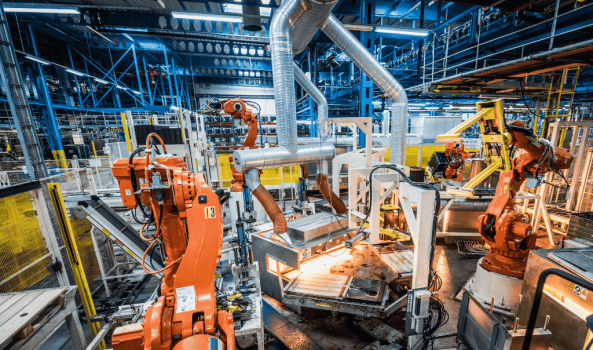
Operations & Maintenance
6 Industrial Maintenance Trends Shaping the Industry
Key Takeaways:
Adopting energy management programs unlocks energy savings of about 11%.
Unscheduled downtime costs the world’s 500 biggest companies $1.4 trillion annually.
82% of companies say 3D printing helped them save costs.
For decades, industrial maintenance teams followed a simple rule: wait until something breaks, then fix it.
Today, this is no longer sustainable.
Equipment failures can halt entire production lines, disrupt supply chains, and cost companies millions in lost productivity.
As factories become more connected, equipment grows more complex, and operational efficiency becomes increasingly critical, maintenance is evolving into a more strategic discipline.
As a result, various upkeep technologies and advanced tools are emerging, transforming how organizations maintain their assets and keep operations running.
In this article, we explore these and outline major trends shaping the future of industrial maintenance.
Increased Use of CMMS Solutions
Industrial maintenance has evolved far beyond clipboards, spreadsheets, and reactive repairs.
Today, Computerized Maintenance Management Systems (CMMS) have become the operational backbone of modern maintenance teams.
A good CMMS puts everything in one place, then keeps it both safe and accessible.
That means everything from preventive maintenance scheduling and work order management to spare parts tracking, asset histories, and performance analytics is handled within a single, unified platform.
With this information accessible in one place, teams can reduce manual coordination, respond faster to issues, and make decisions based on real operational data.
Automated reporting and KPI dashboards also give maintenance leaders a clearer view of overall asset performance.
Instead of guessing whether to repair or replace equipment, teams can analyze historical maintenance data, technician productivity, and asset reliability trends to guide decisions.
This visibility is vital in industrial environments, where downtime carries enormous financial consequences.
According to Siemens’ True Cost of Downtime 2024 report, unscheduled downtime costs the world’s 500 biggest companies $1.4 trillion annually, equal to 11% of their total revenues.
Illustration: WorkTrek / Data: Siemens
Reducing this risk requires a shift toward proactive maintenance strategies supported by digital tools.
Virve Viitanen, Head of Global Customer Care and Support at ABB’s Motion Services Division, agrees:
Illustration: WorkTrek / Quote: ABB
One platform helping industrial maintenance teams put this into practice is WorkTrek, a CMMS solution designed to elevate maintenance operations.
WorkTrek covers the full spectrum of maintenance needs, including:
Work order and request management
Preventive maintenance scheduling
Performance insights and analytics
Parts and inventory tracking
Compliance checklists
Asset management
Instead of stitching together spreadsheets and disconnected tools, maintenance teams gain a unified system for planning, executing, and analyzing maintenance work.
For instance, you can see WorkTrek’s dashboard below. It’s easy to navigate and offers an overview of the entire operation:
Source: WorkTrek
For companies managing complex industrial assets, the impact can be significant.
For example, InterEnergo, an energy company operating power and heating plants, previously managed asset information across spreadsheets and scattered documents.
This created a heavy reliance on individual employees for maintenance knowledge, sometimes leading to delayed servicing, plant shutdowns, and safety risks.
After implementing WorkTrek, however, the company centralized maintenance activities across its plants and equipment, giving teams complete visibility into asset performance and maintenance schedules.
Matjaž Valenčič, Operations & Maintenance Manager at interEnergo, explains:
Source: WorkTrek
The result was more reliable operations and a measurable return on investment.
This is what happens when organizations replace fragmented processes with a capable CMMS: they often see meaningful improvements in productivity and asset performance.
WorkTrek customers often report 35% increase in productivity, a 20% reduction in downtime, and a 15% extension of asset lifetimes.
These results directly strengthen the bottom line of industrial operations.
Additive Manufacturing for Spare Parts Management
Walk through a traditional industrial maintenance storeroom, and you’ll often see shelves stacked with spare parts that sit untouched for years, slowly losing value while tying up capital.
For decades, this stockpiling was accepted as a necessary cost of doing business.
Additive manufacturing, commonly known as 3D printing, is changing this entirely.
Instead of storing physical, large inventories of rarely used components “just in case,” companies can now maintain digital part files and produce replacement components “just in time” when needed.
This “digital inventory” approach enables maintenance teams to manufacture parts locally, reducing storage needs, shipping delays, and reliance on complex supply chains.
The operational benefits are significant.
Faster repairs help:
Improve asset availability
Reduce Mean Time to Repair (MTTR)
Enhance Overall Equipment Effectiveness (OEE)
Additionally, because printing can produce exact components, it also cuts assembly costs.
In fact, according to the Protolabs 2024 3D Printing Trend Report, which surveyed more than 700 engineers, designers, and manufacturers worldwide, 82% of respondents said 3D printing helped them save costs in their manufacturing pipeline.
Illustration: WorkTrek / Data: Proto Labs
In addition, 47% cited lead-time reduction as the primary reason they chose additive manufacturing over traditional production methods.
Another key advantage is the ability to keep aging equipment operational.
Components can be reverse-engineered and redesigned for older machinery, keeping legacy assets operational and extending return on investment without replacing entire systems.
Not to mention that additive manufacturing also supports sustainability by minimizing material waste, reducing carbon emissions from shipping, and enabling longer equipment lifespans.
Just ask Siemens Mobility.
At its RRX Rail Service Center in Dortmund, Germany, the company uses industrial 3D printing to produce replacement parts on demand.
Previously, manufacturing a customized component through traditional casting could take up to six weeks.
With additive manufacturing, the same part can now be produced in around 13 hours, reducing manufacturing time by up to 95%.
As Michael Kuczmik, Head of Additive Manufacturing at Siemens Mobility, explains:
Illustration: WorkTrek / Quote: Stratasys
Considering all the benefits, we’re likely to see this approach to spare parts management only grow from here.
IoT-Powered Condition Monitoring
For most of industrial history, maintenance has been a backward-looking discipline.
Teams responded to failures after they occurred or serviced equipment on fixed schedules regardless of its actual condition.
Yet, equipment failure remains one of the largest drivers of industrial downtime.
According to a Deloitte Industry 4.0 report, 42% of unplanned downtime is caused by equipment failure, costing manufacturers an estimated $50 billion annually.
Illustration: WorkTrek / Data: Deloitte
These figures clearly demonstrate that condition monitoring is no longer a nice-to-have but a non-negotiable operational imperative.
This is where IoT-powered condition monitoring comes in.
Sensors installed on industrial machines measure specific equipment parameters such as temperature, vibration, oil level, and frequency.
The data is transmitted to cloud-based platforms, where analytics tools transform raw sensor readings into actionable insights about equipment health.
Therefore, instead of relying on periodic inspections, maintenance teams gain continuous visibility into machine performance, enabling them to detect anomalies long before they escalate into failures.
In IoT networks, sensors form the foundation of predictive maintenance systems.
Different sensor types monitor specific failure indicators, including:
Accelerometers detect abnormal vibration in rotating machinery
Ultrasonic probes detect leaks in compressed air or steam systems
Thermocouples identify temperature anomalies in furnaces and motors
When readings move outside predefined thresholds, the system automatically triggers alerts.
This early warning allows maintenance teams to schedule repairs during planned downtime rather than responding to unexpected failures.
Another key advantage of IoT monitoring is accessibility.
Equipment data can be viewed in real time from virtually anywhere, enabling remote diagnostics and faster decision-making.
This capability is particularly valuable for industrial operations spanning multiple facilities or assets located in hazardous or difficult-to-access environments.
Jan Loeb, CEO of Acorn Energy, a provider of remote monitoring and control systems, highlights the economic benefits of remote condition monitoring:
Illustration: WorkTrek / Quote: Discounting Cash Flows
Real-world implementations already demonstrate the impact of these technologies.
At Volkswagen Wolfsburg's vehicle assembly plant, engineers deployed an Industrial IoT predictive maintenance system that combines machine sensors, edge computing, and advanced analytics to monitor the condition of production equipment.
The results have been substantial:
42% reduction in unplanned downtime
$47 million in annual cost savings
35% reduction in spare parts inventories
18% longer equipment life
A full return on investment in just seven months
It’s clear proof of how real-time condition monitoring can completely transform maintenance processes and unlock significant benefits.
The Rise of Predictive Maintenance
Condition monitoring shows what’s happening inside your equipment now, while predictive maintenance (PdM) forecasts what’s likely to happen next.
PdM leverages historical and real-time data, AI, machine learning, and IoT sensors to predict the optimal maintenance window, minimizing unplanned downtime.
The technology stack behind PdM is closely tied to IoT.
Sensors embedded in industrial assets continuously collect operational data, including vibration, temperature, pressure, and electrical load.
Advanced analytics platforms then process this data to identify patterns, detect anomalies, and forecast potential failures.
When anomalies are detected, like abnormal motor current or irregular bearing vibration, the system alerts maintenance teams before a breakdown occurs.
In practical terms, PdM allows maintenance teams to repair and replace components when needed, rather than performing unnecessary scheduled maintenance or reacting to unexpected breakdowns.
Predictive maintenance delivers several major operational benefits:
Lower maintenance costs, by avoiding unnecessary servicing
Reduced unplanned downtime, since failures are identified before they occur
Extended equipment lifespan, because components are replaced at optimal intervals
Improved asset utilization, enabling machines to operate closer to peak performance
Deloitte research shows that predictive maintenance programs can reduce maintenance costs by up to 10% while cutting maintenance planning time by up to 50%.
Illustration: WorkTrek / Data: Deloitte
PdM complements IoT-powered condition monitoring by turning real-time visibility into actionable failure predictions and maintenance recommendations.
Take, for instance, Owens Corning’s Tessenderlo Plant, a manufacturing facility specializing in FOAMGLAS® cellular glass insulation for building and industrial applications
In February 2024, their PdM system flagged a temperature spike on a 40-year-old ball mill.
As a result, technicians identified a cracked shaft, a damaged bearing shell, and lubrication issues early enough to accommodate a 17-week parts lead time.
In other words, the system prevented an unplanned shutdown, saving over $11.2 million in potential production losses, repair costs, and downtime.
Jelle Willems, Reliability Engineer at Owens Corning, commented:
“Instead of reacting to a crisis, we integrate repairs into our existing maintenance schedule — often preventing a complete shutdown. Before using [PdM], we relied on periodic inspections and manual lubrication. Unplanned downtime caught us off guard far too often, [...].”
That’s the power of predictive maintenance.
It helps you avoid the risk of under- and over-maintenance, keeping your assets in perfect condition for much longer.
Increased Use of AR in Training
Walk into most industrial facilities today, and you’ll still find technicians working from thick printed manuals, crouching next to machinery while trying to mentally map a two-dimensional diagram into a three-dimensional piece of equipment.
It’s slow, error-prone, and increasingly inadequate as machines grow more complex and experienced workers retire faster than they can be replaced.
As Hillary Ashton, Executive Vice President and General Manager of Augmented Reality at PTC, a global software company providing platforms and solutions, observes:
Illustration: WorkTrek / Quote: PTC
Augmented Reality (AR) is emerging as a practical solution.
By overlaying digital instructions, diagrams, and guidance directly onto physical equipment via smart glasses, tablets, or mobile devices, AR helps technicians understand complex machinery and follow procedures with precision.
Instead of flipping through paper manuals or static PDFs, technicians can now view step-by-step instructions precisely where and when they need them.
Interactive 3D content and annotations reduce interpretation errors and accelerate training progression.
One of AR’s primary advantages is improved efficiency and knowledge retention.
Traditional maintenance training often requires new hires to shadow experienced technicians or memorize manuals before working independently.
With AR, learners receive in-context guidance at their own pace, speeding onboarding and reducing reliance on experts.
Peer-reviewed research published in the CIRP Journal of Manufacturing Science and Technology found that AR-based training enhances knowledge acquisition by around 18-25%, compared with traditional paper-based methods.
Illustration: WorkTrek / Data: ScienceDirect
AR also enhances overall maintenance efficiency and safety.
By integrating AR with equipment schematics and digital twin models, technicians can visualize internal machine components, identify parts instantly, and follow real-time guidance without taking their eyes off their work.
This reduces errors, rework, and safety risks.
That’s why AR training is increasingly adopted across industries with complex equipment and strict safety standards.
By transforming static manuals into interactive, immersive experiences, AR helps companies boost both efficiency and safety while closing skills gaps in an increasingly technical workforce.
Focus on Sustainable Maintenance
Sustainability has reshaped expectations across every function of industrial operations, and maintenance is no exception.
For a long time, the sustainability conversation focused primarily on new builds, including greener facilities, renewable energy installations, and net-zero construction.
Today, attention is turning to what happens inside existing operations every day.
Sustainable maintenance goes beyond environmentally friendly upkeep of assets.
It also aims to eliminate wasteful practices, reduce costs, and minimize the social and environmental impacts of operations throughout the asset lifecycle.
Traditional maintenance strategies focus primarily on reliability and uptime.
Sustainable maintenance expands that by examining how maintenance activities influence energy consumption, emissions, waste generation, and resource use.
For example, maintenance teams may assess whether repairing an asset, replacing it with a more efficient alternative, or adjusting maintenance intervals produces the lowest environmental and operational impact over time.
While the scope is broader than many teams initially expect, sustainable maintenance typically focuses on three key dimensions:
Maintenance cycle efficiency and how the impact of repeated maintenance tasks compounds over time
Environmental footprint of maintenance materials, including lubricants, solvents, and replacement parts
Energy consumption and emissions generated by maintenance activities
It’s tempting to view sustainable maintenance primarily as a regulatory requirement.
However, that framing misses the larger opportunity.
When maintenance strategies align with efficiency goals, organizations often achieve simultaneous improvements in environmental, operational, and financial performance.
Energy savings are one clear example.
An analysis by the International Energy Agency (IEA) of more than 300 energy management case studies across 40 countries confirms this.
It found that companies implementing structured energy management programs achieved an average energy savings of about 11% in the first year.
Illustration: WorkTrek / Data: IEA
That’s because well-maintained equipment operates more efficiently, consuming less energy and producing fewer emissions.
Sustainable maintenance also reduces waste across maintenance operations.
Preventive maintenance extends equipment life, minimizes unnecessary component replacements, and reduces the amount of materials entering the waste stream.
Extending asset lifespan is one of the most powerful sustainability strategies available to maintenance teams.
Properly maintained equipment can operate for significantly longer periods, reducing the need for new manufacturing, transportation, and installation of replacement machinery.
Beyond operational improvements, sustainable maintenance also strengthens corporate sustainability initiatives and ESG performance.
This means that organizations that adopt greener maintenance practices often see improved brand reputation, stronger stakeholder trust, and greater alignment with sustainability goals.
Conclusion
Industrial maintenance is undergoing a profound transformation.
What was once viewed as a reactive function has evolved into a strategic discipline powered by data, connectivity, and advanced technologies.
Today, maintenance strategies are designed not just to keep machines running, but to optimize performance, reduce costs, and future-proof operations.
Organizations that embrace smarter, more proactive, and more integrated maintenance strategies will gain far more than operational reliability.
They’ll unlock measurable advantages in efficiency, safety, sustainability, and workforce productivity.
The future of industrial maintenance belongs to organizations willing to rethink how they manage and maintain their assets.
Those who embrace this mindset today will be better positioned to build more resilient, efficient, and sustainable operations for the years ahead.

Operations & Maintenance
What Is Industrial Maintenance?
Key Takeaways:
The industrial maintenance services market is projected to grow to $85.5 billion by 2031.
Manufacturing businesses lose approximately $225 million due to downtime.
The total cost of work-related injuries reached $176.5 billion in 2023.
77% of employees say AI has increased their workloads.
In this article, you’ll learn everything you need to know about industrial maintenance, including its role in successful business operations, its current challenges, and how to overcome them.
At first glance, industrial maintenance may seem like nothing more than a cost center.
For many, it’s a necessary evil that offers very little value beyond simply repairing broken machines.
However, as you’ll discover while reading this article, this couldn’t be further from the truth.
Industrial maintenance is, in fact, a cornerstone of operational efficiency, workplace safety, and long-term profitability.
Read on to find out more.
What is Industrial Maintenance?
Industrial maintenance is the process of inspecting, servicing, and improving equipment and systems to ensure an industrial facility operates efficiently and safely.
All sorts of industries that produce goods, such as manufacturing, mining, construction, and utilities, rely on this type of upkeep to maintain operational stability and achieve their performance targets.
It’s also important to note that industrial maintenance teams aren’t only responsible for the assembly line, but for all operational environments within a facility.
For example:
LogisticsMaintaining conveyor systems, automated storage and retrieval systems (AS/RS), forklifts, and barcode scannersUtilitiesTesting, inspecting, and performing upkeep on pumps, transformers, and HVAC systems to ensure continuous access to electricity and other servicesEnergy facilitiesMonitoring and servicing control panels, steam or cogeneration systems, and solar panels
In short, industrial technicians carry significant responsibilities and are vital to maintaining smooth and safe operations.
And as machinery and facilities become more advanced and complex, their role continues to evolve alongside them.
In fact, according to data from Allied Market Research, the global industrial maintenance services market is projected to grow from $49 billion in 2021 to $85.5 billion by 2031.
Illustration: WorkTrek / Data: Allied Market Research
As machinery advances, facilities expand, and end-user demand increases, organizations need With machinery advancing, facilities expanding, and end-user demand increasing, organizations are in need of highly skilled maintenance professionals more than ever before.
Those without in-house expertise have no choice but to turn to outsourcing to fill the gap.
Because, when it comes to industrial maintenance, there’s simply no room for cutting corners.
Why Regular Maintenance Matters in Industrial Settings
We’ve established that industrial maintenance is extremely important, but we haven’t yet answered why.
In the following sections, you’ll learn all about the benefits of regular upkeep within industrial environments.
Reduces Unplanned Downtime
Regular asset inspection and servicing help detect wear, misalignment, and minor defects before they escalate into major failures that can disrupt entire operations.
There is no more effective defense against the number one enemy of industrial environments: unplanned downtime.
Unplanned downtime is one of the most costly and disruptive challenges in industrial operations, sometimes costing companies millions of dollars per incident.
For example, research from Splunk shows that manufacturing businesses lose approximately $255 million due to downtime.
Illustration: WorkTrek / Data: Splunk
These immense losses occur because downtime affects multiple areas at once, from regulatory or SLA penalties and lost revenue to damage control expenses and overtime wages.
That’s why companies are investing heavily in various proactive maintenance strategies to address this costly issue.
Some are implementing advanced condition-monitoring technologies to optimize their schedules, while others are upgrading outdated systems that require excessive maintenance.
And some organizations, like Malaysia-based oil and gas company PETRONAS, are turning to predictive maintenance to reduce downtime.
In 2020, PETRONAS deployed a predictive maintenance system that monitors asset conditions and provides early warning alerts and diagnostics of issues days, weeks, or even months before failure.
Azizol Kamaruddin, Principal of Rotating Equipment at PETRONAS, praised the new system:
“[The predictive maintenance system] prescribes the corrective actions each time anomalies are triggered. This eliminates the need for manual, time-consuming investigations, and decisions can be made quickly, which in turn, boosts productivity.”
The results of this new maintenance approach have been truly impressive.
For instance, an instrumentation fault was detected that caused a restriction in a liquid separator, saving PETRONAS approximately $222,000 in potential asset failure and wasted materials.
It’s clear proof that, with the right maintenance strategy, downtime isn’t as much of a concern as it once wasdoesn’t have as big a concern as it once used to be.
Keeps Workers Safe
Machines that operate smoothly and predictably are far less likely to cause serious accidents or injuries.
This is particularly important in industrial environments, where heavy machinery, high voltages, hazardous materials, and extreme temperatures can create significant safety risks.
A 2018 incident involving a Lithuanian roll-on/roll-off (ro-ro) cargo ship illustrates how poor maintenance can easily escalate into disaster.
It all began with a single faulty component that caused a catastrophic engine failure, resulting in structural engine damage and a fire in the engine room.
The vessel’s third engineer, who was on duty at the time, suffered serious smoke-related injuries to his lungs, kidneys, and eyes while escaping.
Source: Nautilus International
It was later discovered that the engine’s connecting rods had not been maintained in accordance with the manufacturer’s instructions, which was the cause of this terrible incident.
This lesson here is quite clear.
Proactive maintenance spells the difference between smooth, routine operations and serious, potentially fatal accidents.
However, it’s also important to note that, beyond the paramount goal of protecting human life, strong upkeep/safety practices also shield companies from costly consequences.
These include high employee turnover, regulatory fines, and reputational damage.
The 2023 National Safety Council (NSC) provides more insight into the repercussions of preventable occupational injuries.
The total cost of work-related injuries that year reached $176.5 billion, averaging $1,080 per worker.
Additionally, these workplace injuries resulted in 70 million lost workdays, with the NSC estimating that an additional 55 million days will be lost in future years due to injuries that occurred that year.
Illustration: WorkTrek / Data: NCS
These figures show why safety must always be the top priority in industrial environments.
It’s vital not only for protecting workers but also for shielding operational stability, productivity, reputation, and the bottom line.
And it all starts with consistent, proactive maintenance of machinery and facilities.
Supports Regulatory Compliance
In addition to being reliable and safe, properly maintained machines are also compliant with all relevant laws and regulations.
Remember, industrial operations are governed by strict safety, environmental, and operational standards.
Regular maintenance, along with up-to-date maintenance logs, is key to meeting these requirements and avoiding severe penalties.
This is particularly true in highly regulated sectors such as food processing.
Feraas Alameh, the Market Segment Manager for Food & Beverage at Sherwin-Williams Protective & Marine, a leading supplier of protective coatings for industrial use, explains:
“A preventive maintenance plan which includes routine cleaning, equipment maintenance, and timely repairs helps to ensure all critical surfaces remain hygienic, slip-resistant, and compliant with food safety regulations.”
Overall, regulatory bodies have little sympathy for companies that put their workers, the public, or the environment at risk.
They will not hesitate to pursue legal action, which in some cases can result in mandatory shutdowns or the revocation of operating licenses.
Even so-called best-case scenarios, i.e., financial penalties, can be highly damaging.
For example, ProCon, a provider of paper sales and supply chain solutions for the North American paper printing and packaging industries, was fined $280,000 by OSHA in 2025.
That same year, Nova Chemicals, a major North American producer of plastics and chemicals, was fined $130,000 for safety violations following an incident that left a worker seriously injured.
Source: The Sarnia Journal
In both cases, investigators found deficiencies in maintenance training and documentation, including a lack of clear SOPs for machine operation and upkeep.
Unfortunately, many companies still treat maintenance purely as a cost center, failing to recognize that regular, carefully documented upkeep is not optional and carefully documented upkeep is not optional, but mandated by law.
It must be taken seriously at all times.
Those who neglect it risk severe fines and operational disruptions.
Those that prioritize it, however, gain a competitive advantage and build a reputation as reliable, safety-conscious organizations that care about their people and the environment.
The Biggest Challenges in Industrial Maintenance
Unfortunately, not every industrial company with a reliable maintenance team is able to unlock these benefits.
The industry is plagued by its own unique problems that cause inefficiencies, safety issues, and financial losses.
Here are some of the most common challenges, and how to address them.
Skills Gaps
Right now, the maintenance industry as a whole is experiencing significant challenges in finding skilled labor.
In fact, according to a survey by ABB, 43% of maintenance teams reported difficulties recruiting qualified staff in 2023.
Illustration: WorkTrek / Data: ABB
This shortage is driven by two main factors.
First, industrial machinery and operations are becoming increasingly complex and technology-driven.
This means that today’s workers need not only strong technical skills but also digital competencies to operate and maintain these advanced systems.
Unfortunately, professionals with this combination of skills are in short supply.
Second, the workforce is aging.
Igor Marinelli, CEO and Co-Founder of Tractian, an Industrial AI company specializing in predictive maintenance, explains:
Illustration: WorkTrek / Quote: PR Newswire
This poses a serious challenge for industrial environments, as it directly affects the quality of maintenance work.
A shortage of skilled workers often leads to rushed jobs, inefficient repairs, and mistakes that can cause greater long-term damage.
That’s why companies need to focus on retaining the employees they already have now more than ever.
Below, you’ll find worker retention strategies used by the US manufacturers, as reported by Deloitte.
Illustration: WorkTrek / Data: Deloitte
As you can see, the most effective tactics include strong benefits programs, flexible work arrangements, and ongoing training.
Essentially, employees want to see that their employers are willing to invest in them and treat themto be treated as the valuable assets they are.
As one executive interviewed by Deloitte put it:
“People who have been here for a long time and new hires are seeking a sense of belonging and being part of something bigger.”
Give them that sense of belonging through structured training, regular feedback, and genuine care for their well-being, and you’ll build a loyal workforce committed to the organization’s long-term success.
Transition to Predictive Maintenance
Currently, there’s a lot of talk about predictive maintenance and advanced technologies like IoT and AI, and how they can transform industrial operations or help address the skills gap.
Naturally, this sounds appealing to many executives who focus only on potential benefits but overlook the challenges.
The reality is that implementing predictive maintenance can be quite expensive, and most teams aren’t yet trained to handle the large volumes of data these predictive systems generate.
This likely explains why only 27% of industrial companies currently use predictive maintenance.
Illustration: WorkTrek / Data: MaintainX
Implementing it represents a significant and complex change: sensors must be installed properly, data compiled, cleaned, analyzed, and integrated into planning processes.
Each step demands specific skills, knowledge, and a budget. Companies that aren’t truly ready for this change risk deploying technology that can cause more harm than good.
In fact, Forbes research shows that in many cases, AI, a core component of predictive maintenance programs, has actually increased workloads and decreased productivity.
Many employees are frustrated, maintaining that their companies are asking too much of them when it comes to AI.
Illustration: WorkTrek / Data: Forbes
So, instead of rushing into the latest trends, it’s important to first assess your current processes and data maturity to determine whether your organization is ready for such a big shift.
This helps avoid wasted resources, highlights capability gaps, and ensures that when you do implement advanced technologies, you’re setting yourself up for success.
Outdated Processes
Speaking of maintenance maturity, the unfortunate reality is that many teams aren’t yet ready even for basic preventive programs, let alone advanced predictive maintenance.
The 2025 Zapium research confirms this, showing that many teams still rely on manual processes with no systematic way to track productivity, no PM schedules, and limited visibility into operations.
Illustration: WorkTrek / Data: Zapium
Such an outdated approach significantly slows down work, increases errors, and ultimately harms both asset reliability and operational efficiency.
Simply put, manual methods cannot keep pace with the demands of modern industrial companies.
For teams stuck in analogue mode, now is the perfect time to digitize maintenance operations and eliminate these inefficiencies.
No, this doesn’t mean jumping straight into the most advanced technologies.
There is a “golden middle” between manual work and fully advanced processes, and it’s called a Computerized Maintenance Management System (CMMS).
InterEnergo, a major international energy company headquartered in Slovenia, implemented this type of system, and it delivered impressive results.
Matjaž Valenčič, Operations & Maintenance Manager at interEnergo, explains:
Source: WorkTrek
CMMS solutions like WorkTrek serve as a central hub for all maintenance-related activities.
They automate work orders, preventive maintenance scheduling, spare parts tracking, invoicing, and more, ensuring that data is always accurate, up-to-date, and easily accessible.
This makes transitioning to proactive maintenance strategies much simpler.
Instead of assigning tasks by phone, planning work using spreadsheets, and manually tracking spare parts, supervisors can handle everything in one system.
They can create a work order using a template that includes SOPs and safety data, assign it to the right worker, and set a due date.
Source: WorkTrek
When the time comes, the worker receives a reminder and can access the work order on their phone, complete with all the information needed to perform the task efficiently and safely.
The bottom line is this: you don’t need the latest technology to achieve strong results in maintenance operations, but you also can’t afford to be held back by outdated processes.
CMMS solutions like WorkTrek are an efficient, user-friendly way to unlock significant productivity gains without overwhelming the team.
Conclusion
Hopefully, this article has given you a new appreciation for industrial maintenance and the technicians who perform this complex, dangerous, yet essential work every day.
Right now, it’s not easy to be in their shoes.
Numerous challenges are making their jobs more difficult than they should be, slowing them down, burning them out, and adding unnecessary stress.
At the same time, there has probably never been a more exciting time to be in this field, too.
A wide range of emerging technologies and tools, from predictive analytics to maintenance robots, are poised to transform the industry, making it more efficient and safer for everyone.
It will be exciting to see how the industry continues to evolve, especially as advanced technologies become more accessible and outdated processes are fully replaced.
Make your work easier.
Try for free.
Book a demo