


Get a Free WorkTrek Demo
Let's show you how WorkTrek can help you optimize your maintenance operation.
Try for freeKey Takeaways:
- 41% of workers struggle to find the information they need to do their job.
- Standard procedures can slow workers down if every document looks different.
- A U.S. plant was fined $463,000 by OSHA for poor safety during upkeep.
If you’ve ever stopped a job to clarify a step, search for missing information, or double-check if it is safe to continue, you have already seen what poor procedures do in practice.
They slow work down, create uncertainty, and increase risk.
Standard maintenance procedures should remove these pain points. However, they only work when technicians can follow them easily, without second-guessing or searching for missing details.
These tips will help you create procedures your team can actually use in real conditions.
Write Clear, Actionable Steps
When someone opens a standard maintenance procedure, they shouldn’t have to interpret what you meant.
They should be able to follow the steps and complete the task correctly, even if they haven’t done it before.
So here’s what a clear step looks like.
Each step should begin with a clear action and describe one task only. Instead of describing what needs to happen in a general way, tell the technician exactly what to do.
For example, instead of writing “Check the condition of the belt and replace if necessary,” be more specific:
- Inspect the drive belt along its full length while manually rotating the pulley.
- Look for cracks, fraying, glazing, or uneven wear on the inner surface.
- Apply light pressure midway between pulleys; belt deflection should not exceed 10–15 mm.
*Replace the belt if any of the following conditions are present:
- Visible cracks or frayed edges
- Belt deflection exceeds the specified limit
- Audible slipping during operation
**If replacement is required:
- Isolate and lock out the machine before removal.
- Install the correct belt type (refer to Parts List, Section 3).
- Re-tension the belt according to manufacturer’s specifications before restart.
This level of detail removes the need for interpretation and ensures that even a technician performing the task for the first time can complete it safely and correctly.
Sequence matters just as much as clarity.
Steps should follow the natural order of the task, without forcing the reader to jump back and forth or make assumptions.
There’s also a balance to strike with detail.
Too little detail leaves room for mistakes, while too much slows people down and makes procedures harder to use.
Use this as your benchmark: A technician should be able to complete the task safely and correctly on the first attempt, even if it is their first time performing it.
Use a Consistent Format Every Time
Standard procedures can slow people down if every document looks different.
When technicians have to figure out how a procedure is structured before they can even start the task, they’re already losing time.
Using a consistent format across all procedures solves that problem.
When every document follows the same structure, technicians know exactly where to find the steps, key information, and safety notes.
This is especially important in environments with frequent tasks, multiple assets, or rotating teams.
So, make sure to create consistent procedures.
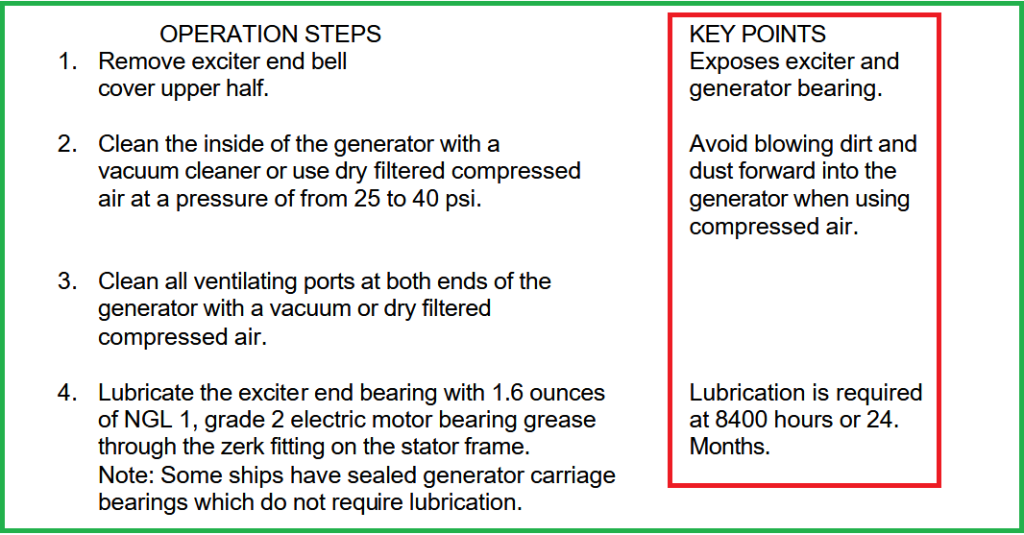
One way to structure your procedures can be listing “operation steps” alongside “key points to help the technician understand not just what to do, but why it matters.
In the example below, the procedure for an AC generator follows this logic clearly:
That extra context can prevent mistakes, especially in tasks where skipping a small detail can lead to equipment damage or safety risks.
There is another benefit here as well. Consistency improves training.
New team members don’t have to learn how to read different types of procedures. Instead, they learn one format and apply it everywhere.
Over time, this reduces errors and builds confidence in execution.
That is really the goal here; not a perfect format, but a predictable one that supports the work.
List Tools and Materials for Every Procedure
Few things disrupt a maintenance task more than realizing halfway through that something is missing.
A technician starts the job, progresses through several steps, and then has to stop to find a tool, part, or material that was not identified in advance.
That is why every standard maintenance procedure should clearly list all required items before the work begins.
This allows technicians to prepare everything in advance and complete the task without unnecessary interruptions.
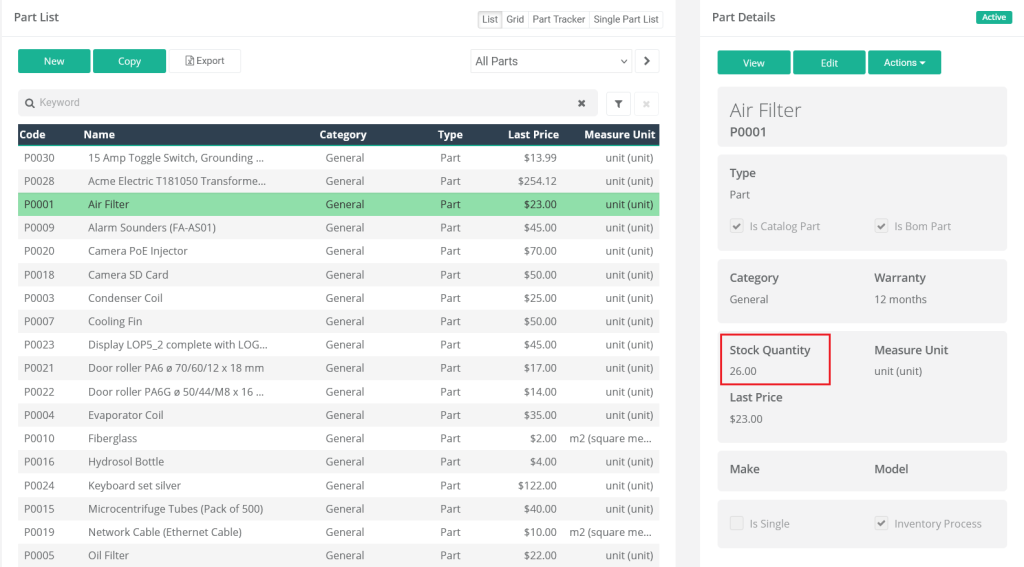
Therefore, it’s essential to have an updated list of spare parts, materials, and tools for your facility, such as this one:
However, be specific when defining these requirements in the procedures.
Instead of writing “standard tools,” list exactly what is needed, such as “torque wrench (20–100 Nm), gasket kit, lubricant type X.”
This reduces the risk of using incorrect tools or substitutes, which can affect both the quality of the work and the condition of the equipment.
In facilities that use tools such as asset management software or CMMS, procedures are often connected to inventory systems, allowing technicians to quickly check the availability and location of every item.
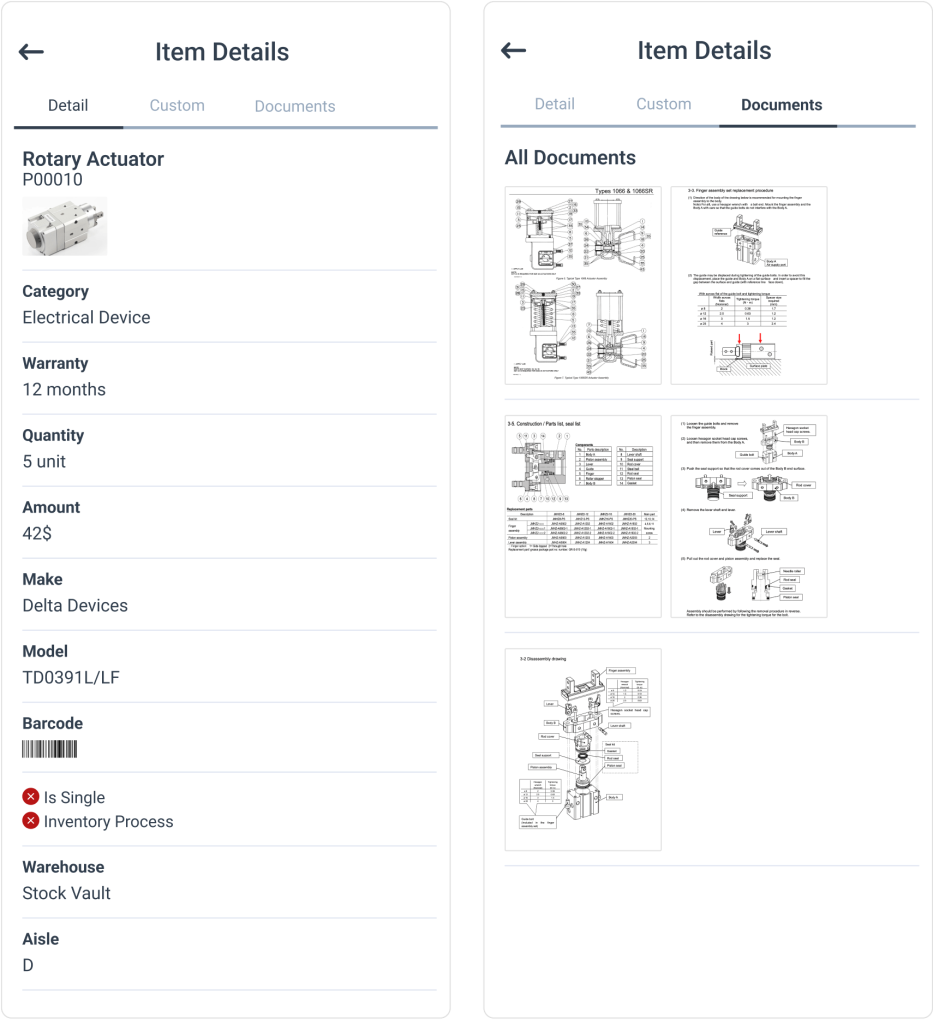
But even without that integration, a clear and complete list in the procedure itself significantly improves maintenance execution.

Highlight Safety at Every Step
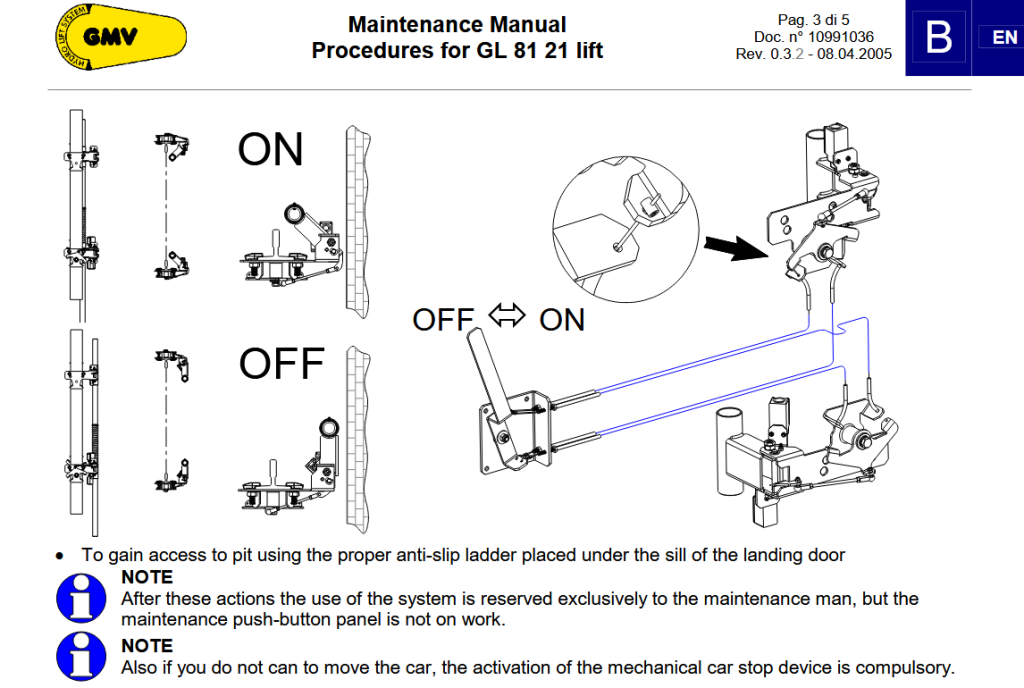
Safety information is often included at the beginning of a standard maintenance procedure, like in this maintenance procedure for lifts by GMV:
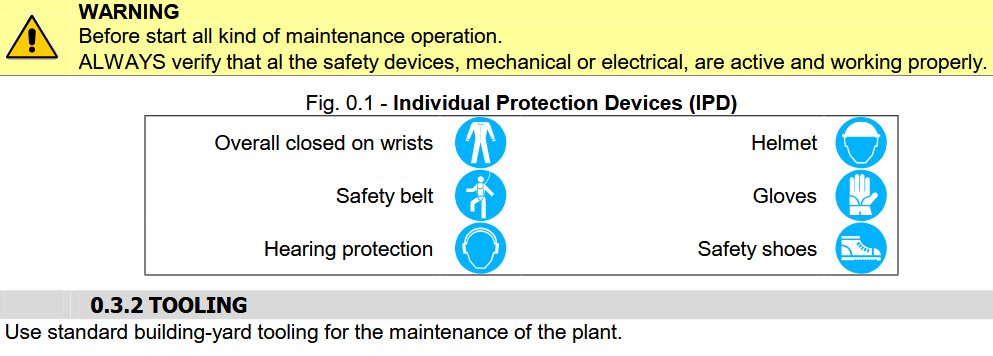
However, in practice, that is not enough.
In real working conditions, technicians focus on the steps in front of them, not on a block of text they read at the start.
That’s why all safety instructions, hazard information, and PPE requirements should be built directly into the procedure, especially at key points where risks are highest:
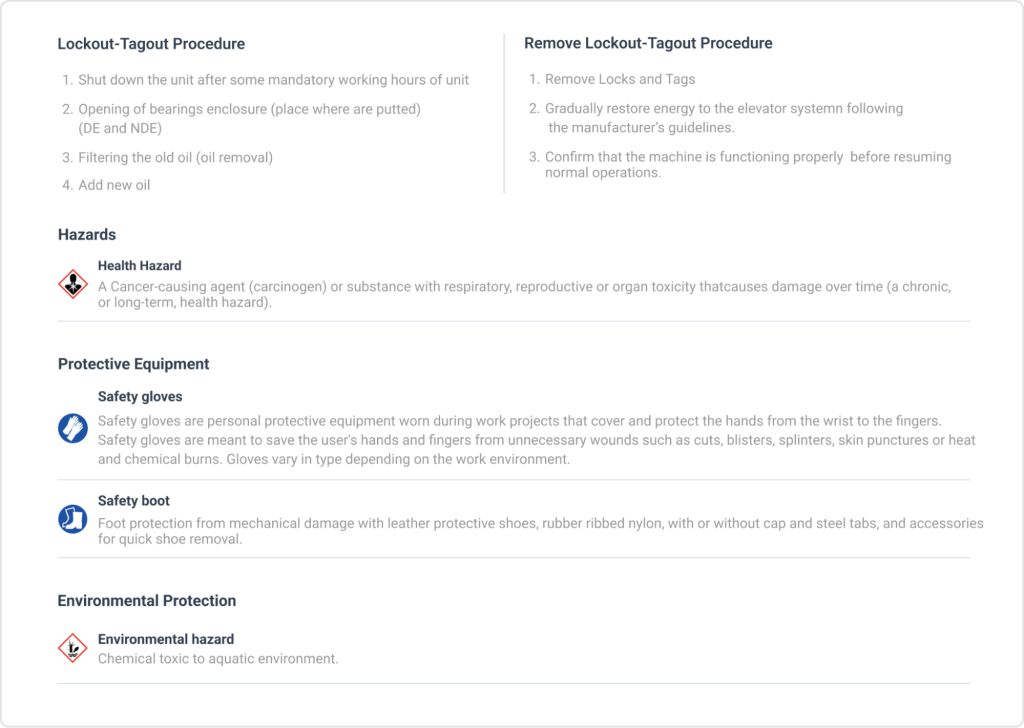
If a step involves electrical exposure, high temperatures, moving parts, or pressure systems, the warning should appear exactly where the action happens.
This approach makes safety more practical and harder to overlook.
Instead of expecting someone to remember all hazards in advance, you guide them through the risks as they perform the task.
It’s also important to be specific.
General warnings don’t carry the same weight as clear, direct instructions.
For example, indicating when to disconnect power, wear specific protective equipment, or verify zero energy creates a much safer working environment.
Well-placed safety guidance protects people and equipment, and prevents costly mistakes.
To understand the impact, consider a case where a U.S. food manufacturer faced a $463,000 OSHA fine.

The company failed to implement proper lockout/tagout procedures and did not adequately train workers who maintained and cleaned production equipment.
This shows how quickly gaps in safety procedures can lead to real financial and operational consequences.
But when safety is integrated into each step of a maintenance procedure, it becomes part of how the job is done, not something separate from it.
Include All Supporting Information
A procedure should do more than list steps.
It should provide everything a technician needs to complete the task without searching for additional information, explains Bill Hillman, a certified maintenance and reliability professional, in his article for Reliable Plant.
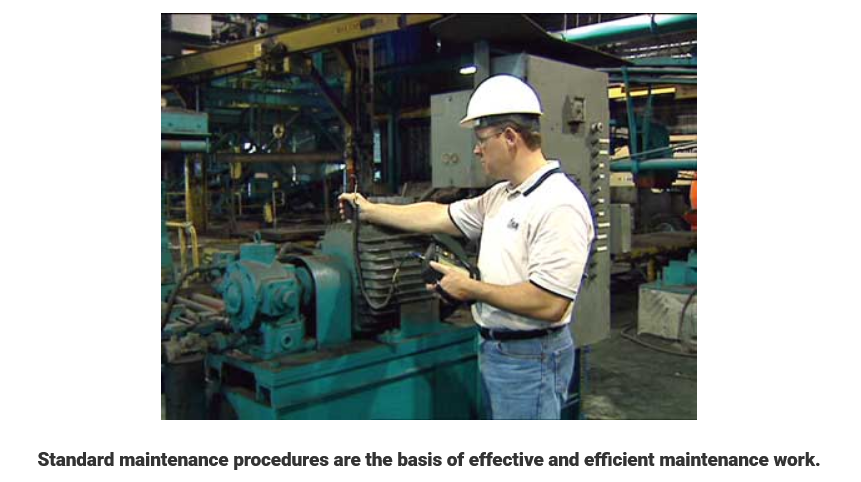
This includes details such as safety information and required personal protective equipment, as we have already mentioned.
However, it should also include information such as estimated time to complete the task, the number of people needed, and how often the task should be performed.
Moreover, procedures should also include measurements, tolerances, or references to other related documents.
Take, for instance, these steps in a standard maintenance procedure for an AC generator:
- Clean the inside of the generator with a vacuum cleaner or use dry filtered compressed air at a pressure of from 25 to 40 psi.
- Lubricate the exciter end bearing with 1.6 ounces of NGL 1, grade 2 electric motor bearing grease through the zerk fitting on the stator frame.
Without that specific pressure information, the technician cannot perform maintenance correctly.
Too much air pressure can damage insulation or force debris deeper into the windings, while incorrect grease amounts can lead to bearing overheating or premature failure.
Clearly defining expectations also improves execution.
If a task requires two people for safety or efficiency, that should be stated in the procedure. If it must be performed at specific intervals, that information should be included as well.
When all supporting information is available in one place, technicians can focus on the job rather than searching for missing details.
Use Visuals to Support Instructions
Even the clearest written instructions have limitations.
When a task involves specific conditions, visual checks, or precise outcomes, words alone can leave too much room for interpretation.
On the other hand, visuals such as photos, diagrams, and videos help technicians quickly understand what correct execution looks like.
Instead of interpreting a written description, they can compare what they see in front of them with a clear reference.
Sometimes, a simple illustration like the one below will suffice:
However, real photos of the actual asset are usually more effective.
As Quality Engineer Neil Barker notes, a picture gives the reader a clear definition of what is acceptable and what is not.
“I have written many SOPs, and I always find that a picture speaks a thousand words (as they say). Having that picture gives the reader a clear definition of what is acceptable and what is not.”
This is especially valuable in maintenance tasks where small deviations can lead to performance issues or equipment failure.
Video takes this a step further.
Engineering consultant Steve T. highlights that video effectively combines thousands of
images into a continuous explanation:
“The old adage, a picture is worth a thousand words… what is video other than thousands of pictures. The digital transformation, especially in manufacturing, is to video for standard work instruction.”
For complex or less frequent tasks, this can significantly reduce errors and improve consistency.
That said, not every step needs a visual. Use them where precision matters most.
But when used correctly, visuals remove ambiguity and make procedures easier to follow.
Connect Procedures Directly to Work Orders
Procedures lose value if they’re hard to find or disconnected from daily work.
In many teams, procedures sit in shared folders, scattered across systems, or saved with unclear naming conventions.
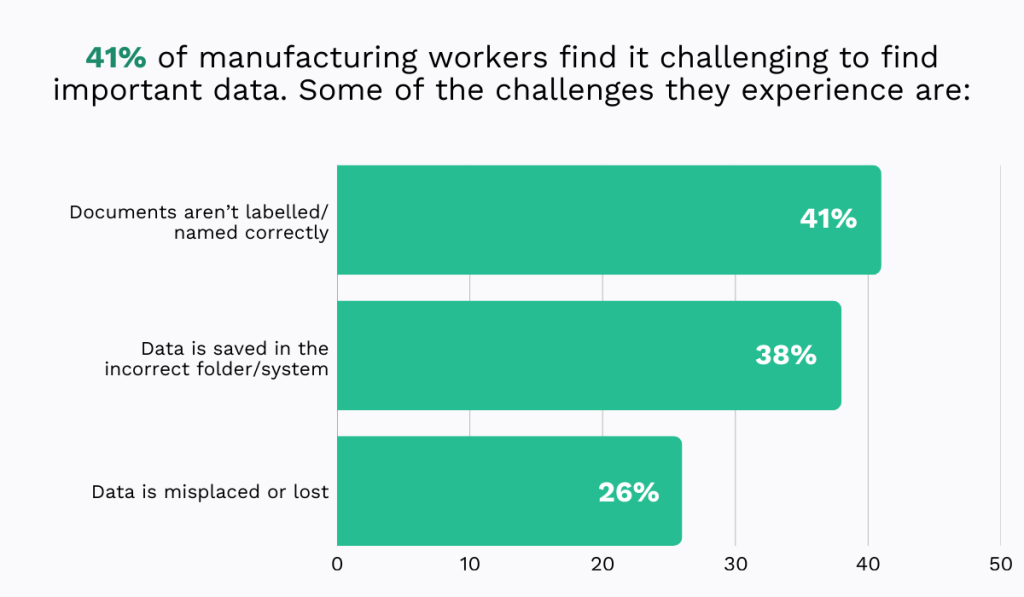
It’s no surprise that, according to industry research, 41% of workers struggle to find the information they need to do their job.
To be effective, procedures need to be available exactly when and where the work happens.
The most practical way to achieve this is by connecting them directly to work orders.
When a technician receives a task, the procedure should already be attached, complete with steps, required tools, safety instructions, and any supporting visuals.
This is where a CMMS like WorkTrek makes all the difference.
Instead of creating procedures as static documents, you can define them as part of a service catalog.
You can do it with just one click, as shown below:
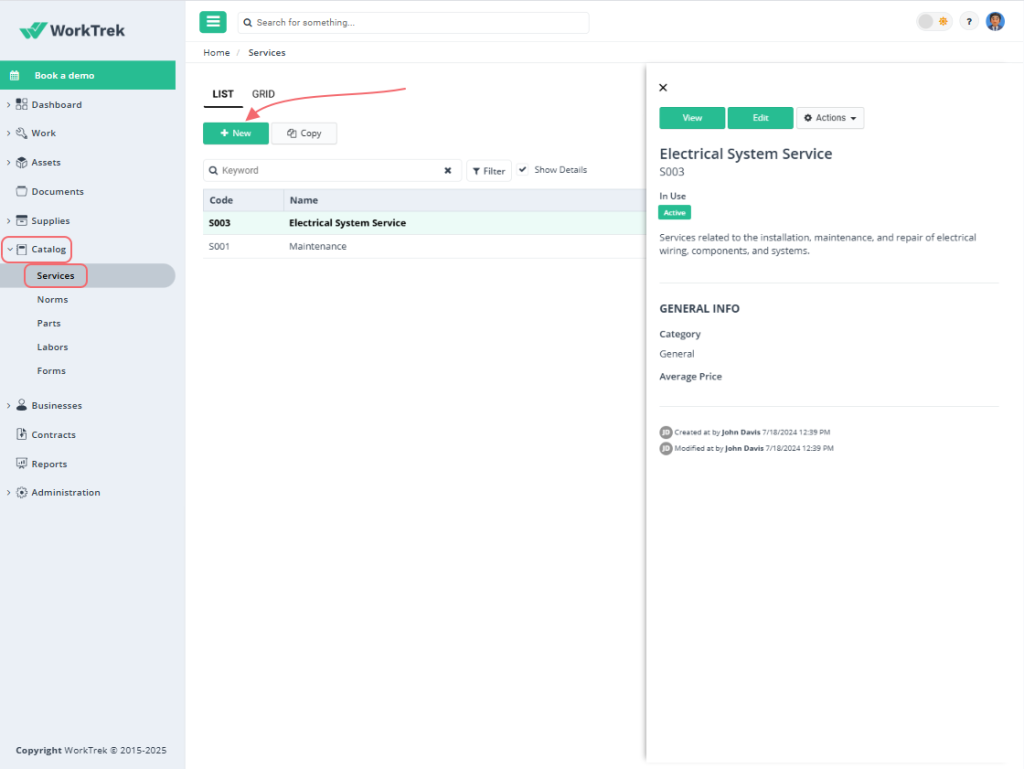
Within each service, you can include all relevant information, such as task steps, estimated time, required spare parts, and health and safety details.
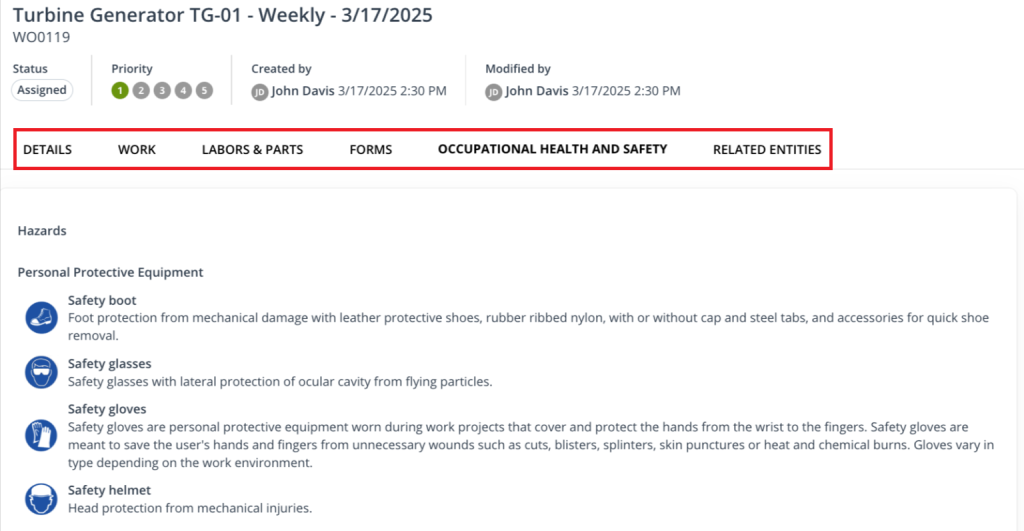
You can also create a checklist with clearly defined steps and add it to a service.

That same service can then be turned directly into a work order.
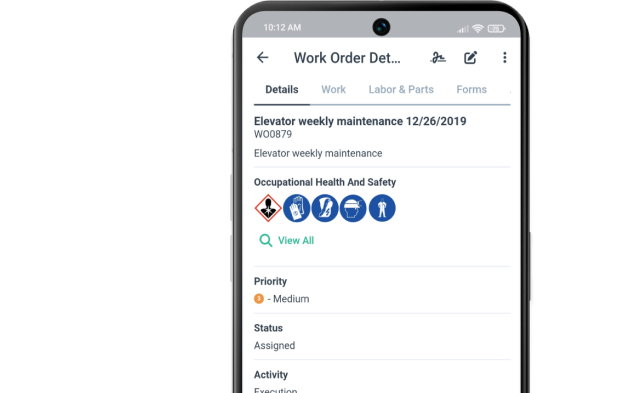
The best part is that maintenance technicians can access all this information on their mobile devices without having to search across multiple systems or waste time.
When procedures are embedded into the workflow, they are much more likely to be used.
And when they are used consistently, the results are clear: better efficiency, fewer errors, and safer maintenance.
Test Procedures in Real Conditions
A procedure may look complete on paper, but that does not guarantee it will work in practice.
The only reliable way to validate it is to test it in real working conditions.
As Bill Hillman, whom we mentioned earlier, points out in his article, effective standard maintenance procedures require a feedback loop:
“In order for SMPs to be effective and accurate, a formal feedback mechanism should be supplied to the job performer. The SMP should be updated when feedback reveals mistakes or more effective ways to perform the job.”
So, have technicians follow the procedure step by step and observe where issues arise.
You may discover missing details, unclear instructions, or assumptions that do not match reality.
Testing also helps you assess the level of detail.
If technicians hesitate or ask questions, the procedure needs improvement. If they complete the task smoothly without additional guidance, it works as intended.
Involving technicians in this process also increases adoption. People are more likely to use procedures they helped validate than those created without their input.
No procedure is perfect from the start. Treat it as a working document; test it, gather feedback, and refine it over time.
Conclusion
Standard maintenance procedures are only effective if they are practical in real-world conditions.
Clear steps, consistent structure, proper preparation, and integrated safety all contribute to better maintenance execution, but only when the information is accessible and relevant.
The goal is not to create perfect documents, but reliable tools that support the work.
When procedures are written with the user in mind, tested in practice, and embedded in daily operations, they become something teams rely on rather than work around.