


Get a Free WorkTrek Demo
Let's show you how WorkTrek can help you optimize your maintenance operation.
Try for freeKey Takeaways:
- Following HazCom standards ensures workers understand hazards.
- LOTO remains a top OSHA violation.
- Continuous employee training through OSHA-authorized programs is essential.
OSHA citations cost US employers hundreds of millions of dollars every year, with a single willful violation reaching over $165,000.
Maintenance teams are especially exposed because they regularly work with hazardous chemicals, energized equipment, and moving machinery.
If you’re looking to strengthen your safety practices and avoid common citations, this article covers practical steps to stay compliant and avoid some common OSHA violations.
Implement Effective Hazard Communication
The first standard to address is Hazard Communication, commonly referred to as HazCom.
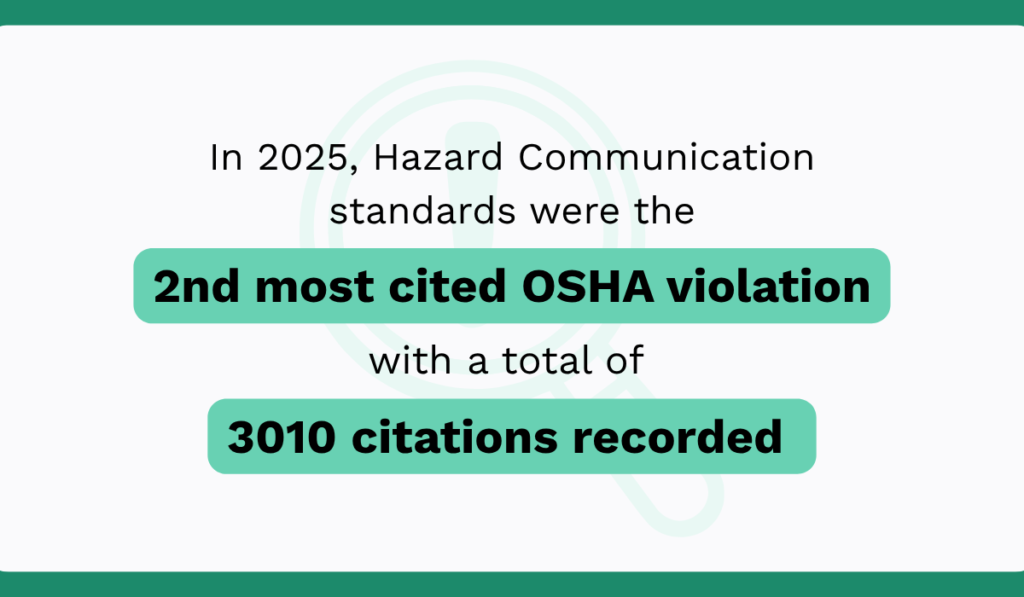
We start with HazCom, as it had the second-highest number of recorded OSHA violations in fiscal year 2025, with over 3,010 citations.
At its core, HazCom is about making sure every worker understands the chemical and physical hazards they are exposed to in the workplace.
To stay compliant, it’s important to have a well-maintained HazCom program in place, with some essential elements to focus on, as shown below.
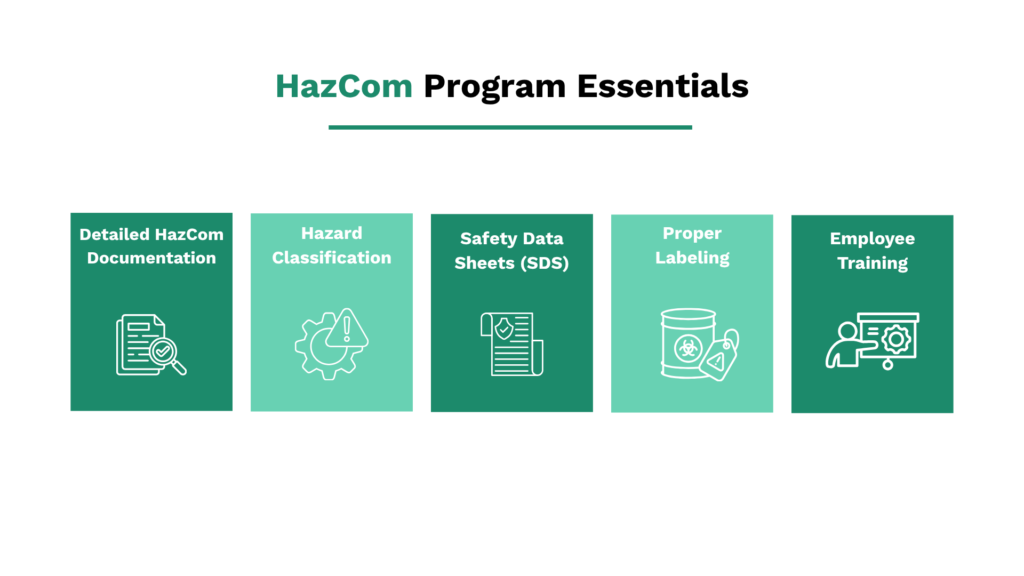
For starters, proper documentation and hazard classification are needed to ensure that every hazard on site is identified and accounted for.
Without this foundation, workers have no reliable way to know what they’re handling or what precautions to take.
When it comes to chemical hazards, OSHA’s Hazard Communication Standard (HCS) is aligned with the Globally Harmonized System of Classification and Labeling of Chemicals (GHS).
That means using GHS-compliant labels is required, just like the one shown below.
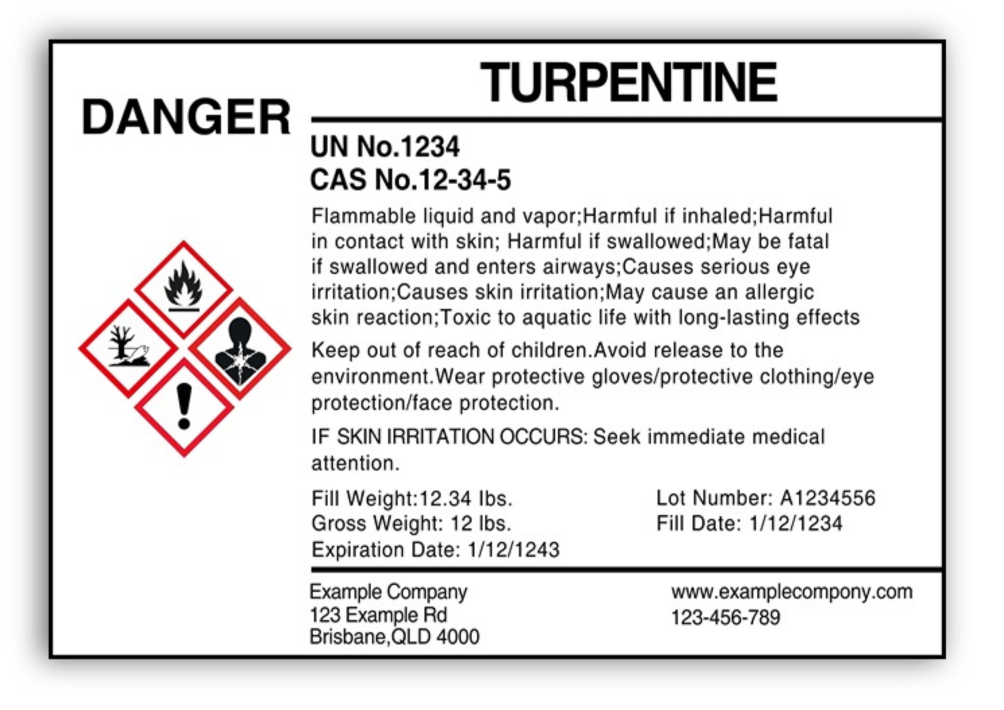
These labels provide standardized hazard information through signal words, pictograms, and precautionary statements, making them easy to read and understand regardless of the worker’s background.
Additionally, GHS labels give maintenance workers access to critical safety information before they handle a chemical.
That being said, labels are still quite brief, so Safety Data Sheets (SDS) are also necessary for any HazCom program.
SDS are detailed documents covering everything from a chemical’s properties to its health effects and safe handling procedures.
With the most recent changes, OSHA now requires these to follow a standardized 16-section format.
Fortunately, SDS search providers like the one shown below make it easy to look up sheets for specific chemicals.
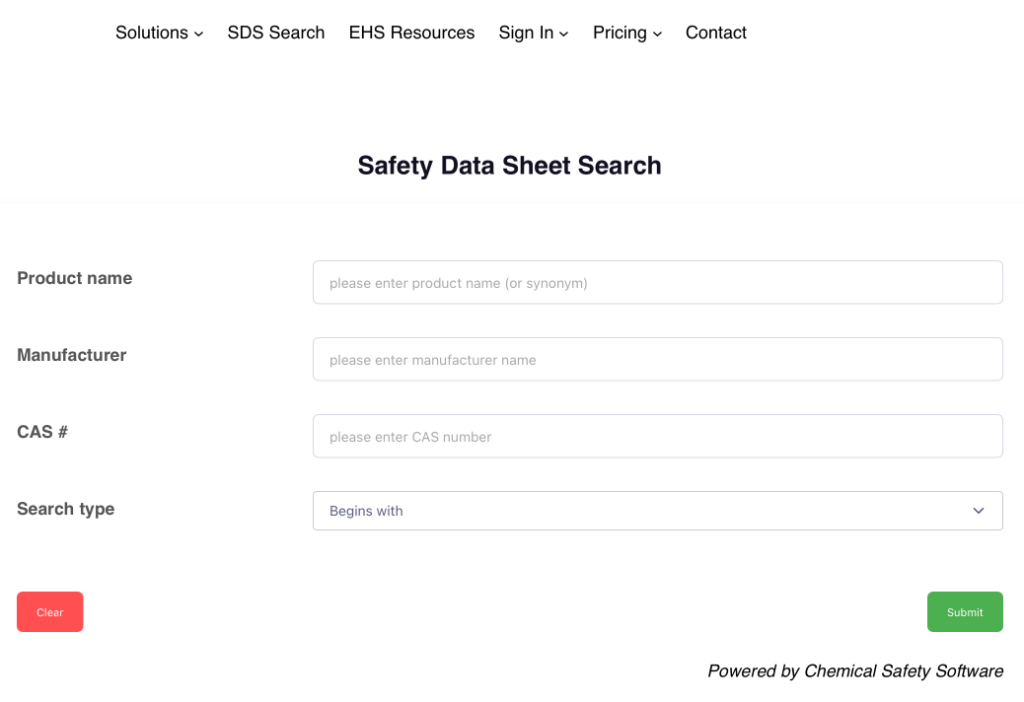
For example, if a technician needs to use a solvent for the first time, the label might tell them to wear gloves and avoid inhalation, but an SDS would specify exactly which type of gloves are resistant to that chemical and what respirator rating is required.
In short, a solid HazCom program and the right safety info ensure your team always knows what they’re working with and how to stay safe doing it.
Ensure Technicians Always Use the Right PPE
PPE is the last line of defense when other controls aren’t enough to eliminate a hazard, and OSHA requires employers to provide it and enforce its proper use.
In fact, two PPE-related standards appear among the top 10 most-cited violations for 2025.
For instance, respiratory protection, i.e., standard number 1910.134, ranks fifth with 2,294 citations.
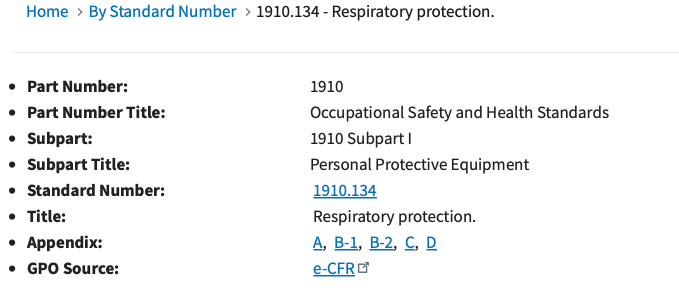
A few spots below is eye and face protection, which comes in at ninth place, and covers the use of safety glasses, goggles, and face shields.
Of course, these being the most frequently cited doesn’t take away from the importance of other PPE categories.
The table below maps some common hazards to the appropriate protection.
| Hazard | PPE Required |
| Chemical splash | Chemical-resistant gloves, goggles, face shield |
| Airborne dust/fumes | Respirator (N95, half-face, or full-face depending on exposure) |
| Moving machinery | Safety glasses, hard hat, steel-toe boots |
| Electrical work | Insulated gloves, arc-flash rated clothing |
| Falling objects | Hard hat, safety-toe footwear |
Now, you might be wondering why PPE violations are so common if it comes down to simply putting on the right equipment?
As Doug Parker, former Assistant Secretary for Occupational Safety and Health, explains, the issue often starts with availability and fit.
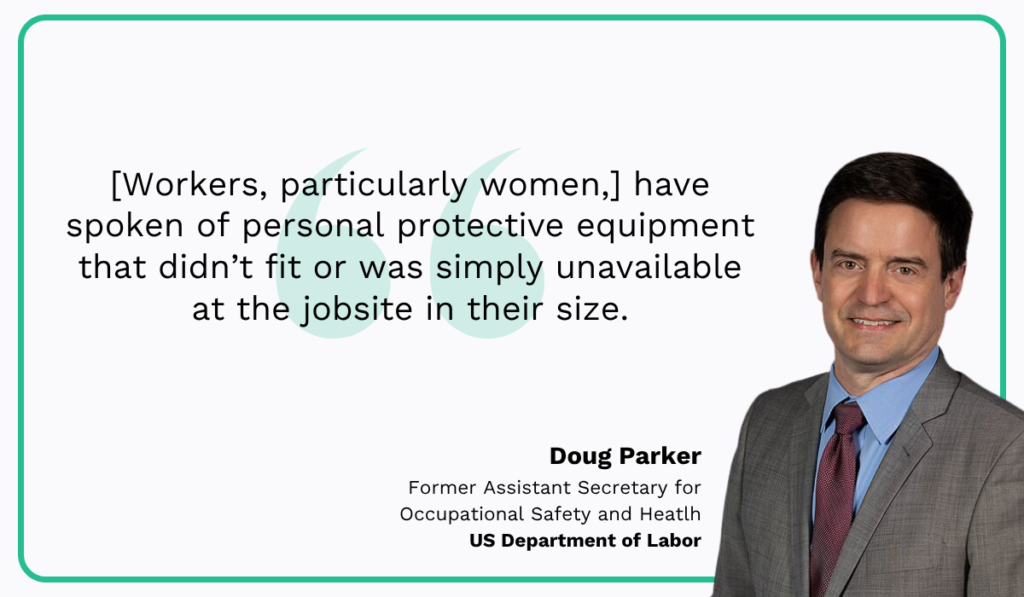
In fact, in December 2024, the US Department of Labor established a rule specifically requiring properly fitting PPE in the construction industry.
While that rule targets construction, the same principle applies to maintenance teams.
However, even when PPE is available and fits correctly, workers sometimes forget or skip it due to tight schedules or simply not knowing the protection requirements for a specific job.
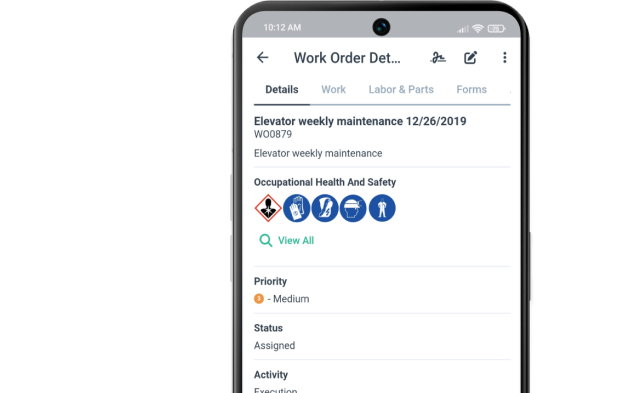
One practical solution is to outline the required PPE directly within work orders, ideally in a digital system, as shown below.
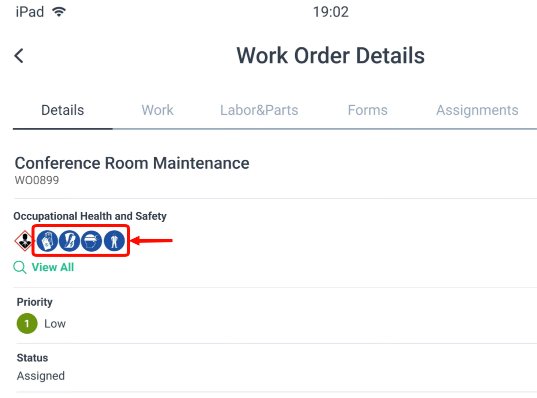
The safety icons highlighted in the image show exactly what pieces of equipment need to be worn for that particular job, removing any guesswork for the technician.
Ultimately, making PPE available and all requirements visible at the point of work are the simplest ways to close the gap between policy and practice.
Build a Strong Lockout/Tagout Program
Control of hazardous energy, commonly known as lockout/tagout (LOTO), is an essential safety standard that protects workers from the unexpected release of stored energy during maintenance and servicing.
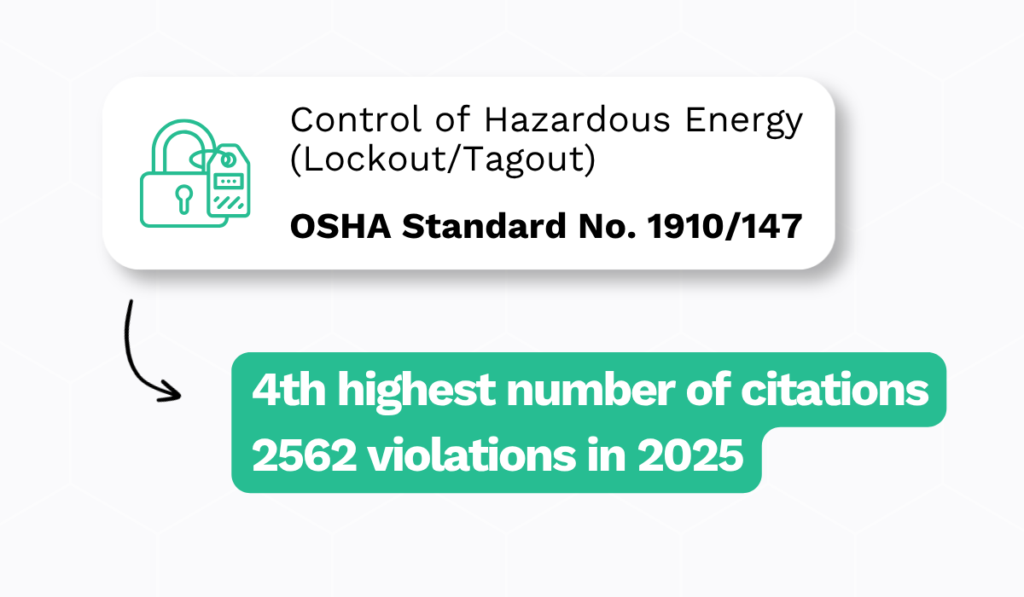
It’s also one of the most heavily cited OSHA standards, ranking fourth in 2025 by number of citations, with 2,562 violations recorded.
The reason OSHA enforces LOTO so strictly is that violations in this area frequently lead to serious injury or death.
This makes a well-built LOTO program a non-negotiable part of any maintenance operation.
On the equipment side, building a LOTO program requires proper locks, tags, hasps, and lockout kits assigned to each authorized employee.

But equipment alone is just the start.
What matters more is LOTO training and establishing structured protocols that everyone follows consistently.
If your team is not yet trained in proper lockout/tagout procedures, there are a variety of resources available.
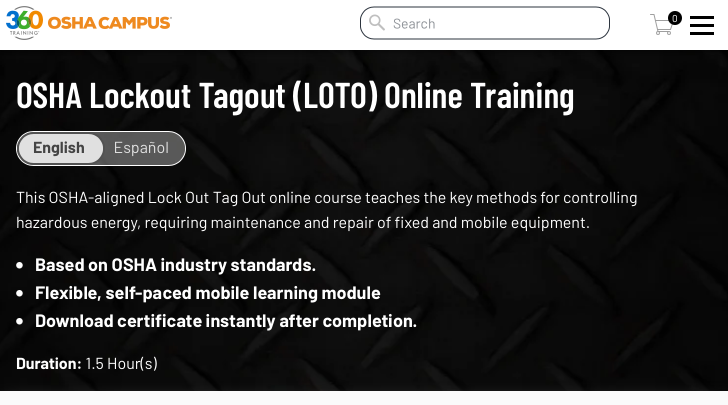
Online courses like the one shown below cover the essentials and are aligned with OSHA standards.
This kind of general training is a solid foundation, but you also want to train your team on the specific equipment they manage.
Every machine has different risks, so LOTO procedures should be written for each piece of equipment individually, not applied as a generic template.
If you usea computerized maintenance management system (CMMS), it’s worth checking whether the system supports attaching LOTO procedures directly to work orders.
As shown below, some systems can display hazard information, required PPE, environmental considerations, and step-by-step LOTO procedures all in one place.
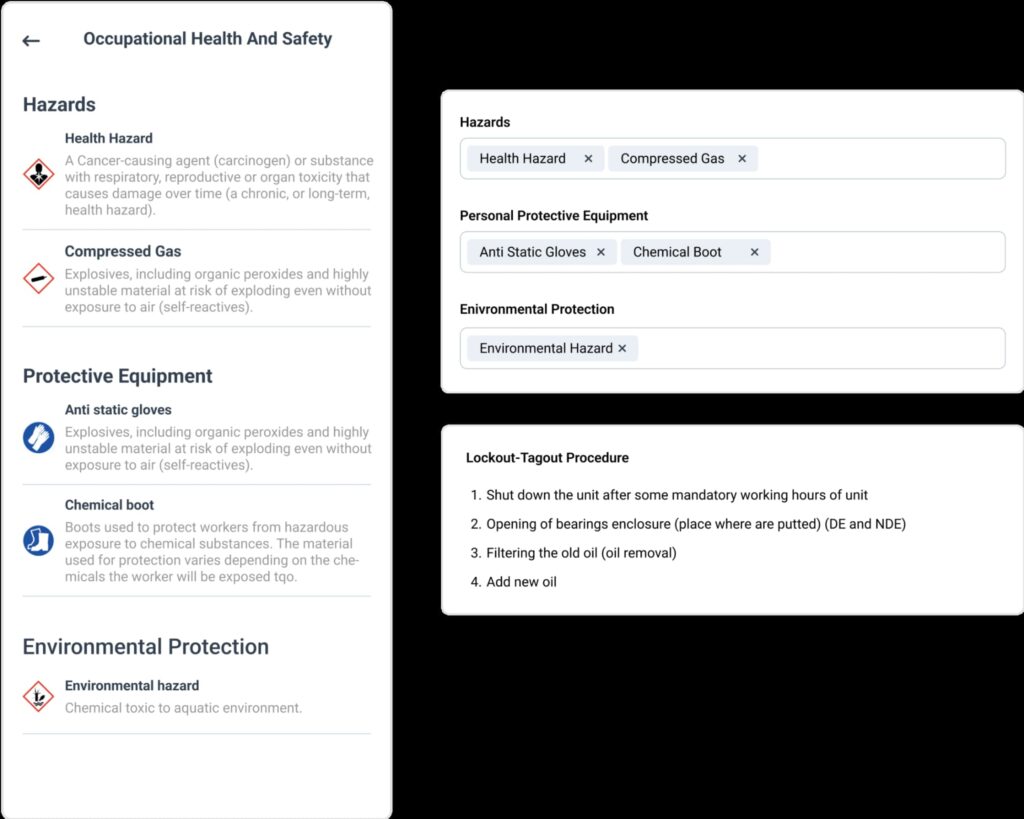
This approach ensures that every technician sees the correct safety steps before they begin work, reducing the risk of shortcuts or missed steps.
Maintain Machine Guards
Moving machinery is one of the most common sources of serious workplace injuries, which is why machine guards exist.
These are physical barriers or safety devices designed to prevent workers from coming into contact with moving parts like blades, rollers, gears, and belts during operation.
OSHA enforces strict standards around machine guarding, and the penalties for non-compliance can be severe.
The following case illustrates just how costly and dangerous a violation can be.
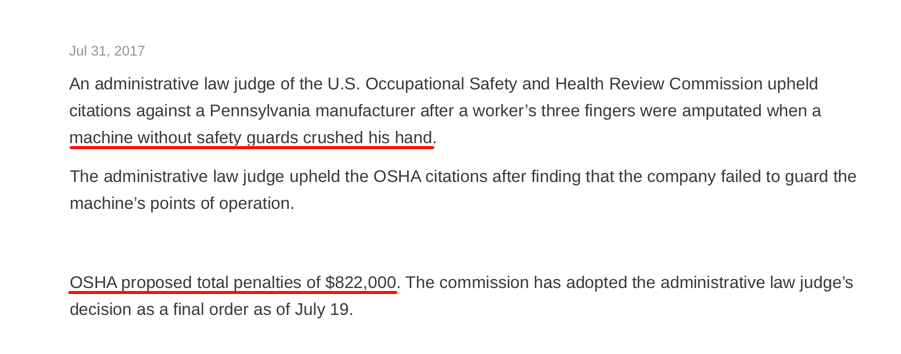
Assuming you have guards installed, it’s important to keep them in good condition through regular maintenance.
The type of work involved closely resembles general equipment maintenance, with some of the key practices shown below.
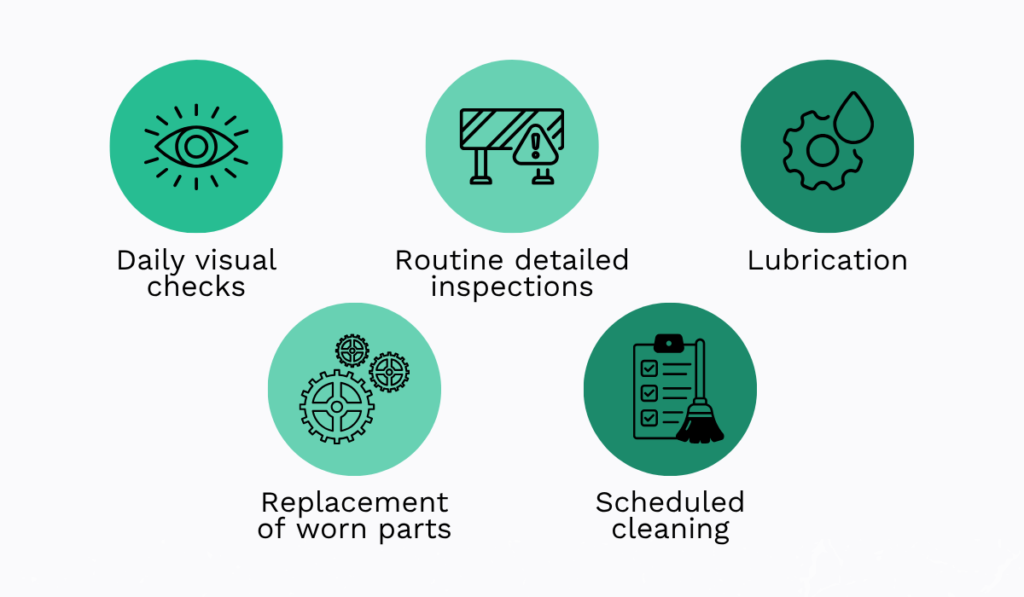
Getting this right is critical because a damaged or poorly maintained guard can be just as dangerous as having no guard at all.
Operators and less specialized personnel can perform daily visual checks to confirm guards are in place and undamaged, and handle basic cleaning and lubrication.
However, for more involved work like replacing worn parts or conducting detailed inspections of guards, trained maintenance workers should be assigned.
When it comes to this type of work, prevention and proper scheduling are key. A CMMS platform like WorkTrek can help you manage these tasks.
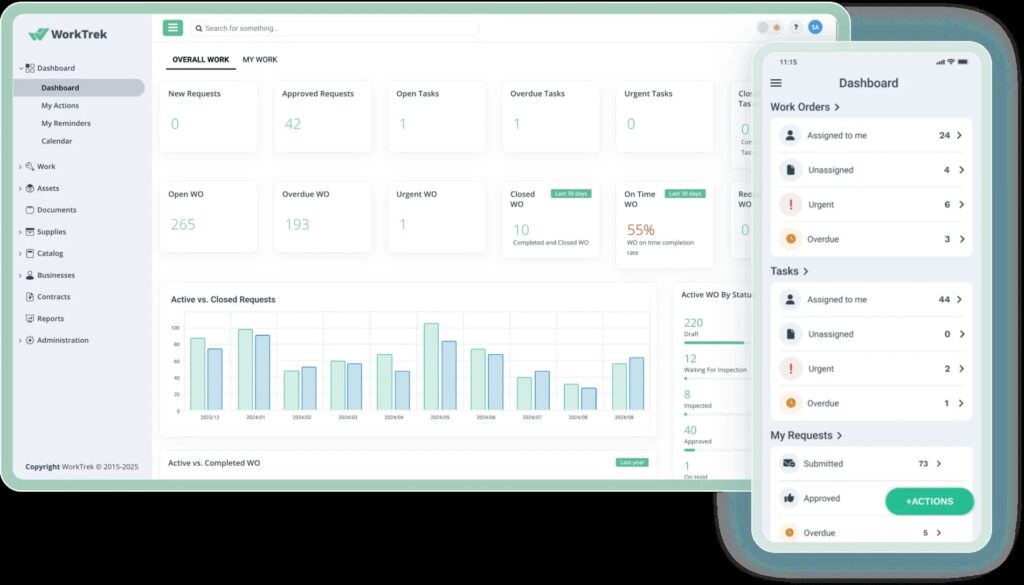
WorkTrek is a system that can centralize all your asset and work order data in one place.
For machine guarding specifically, it allows you to create recurring inspection schedules for every guarded machine and attach guard-specific checklists to preventive maintenance work orders.
Any planned and unplanned work can be easily viewed at a glance on a chart such as the one shown below.
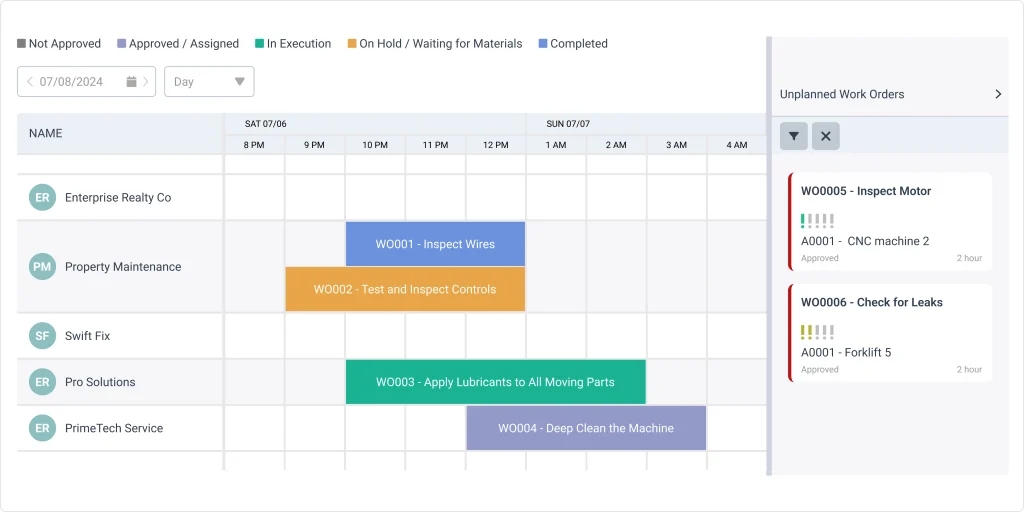
Work can also be prioritized based on urgency, which is important when an issue needs immediate attention.
For instance, if a daily inspection reveals a cracked machine guard on a key component, that finding can be logged as a high-priority work order.
With WorkTrek’s mobile app, the same task can be immediately pushed to the maintenance team’s devices, potentially preventing a serious injury before the next shift begins.
Overall, keeping equipment and its machine guards maintained and functional is one of the most straightforward ways to protect workers and avoid safety violations.
Perform Safety Audits Regularly
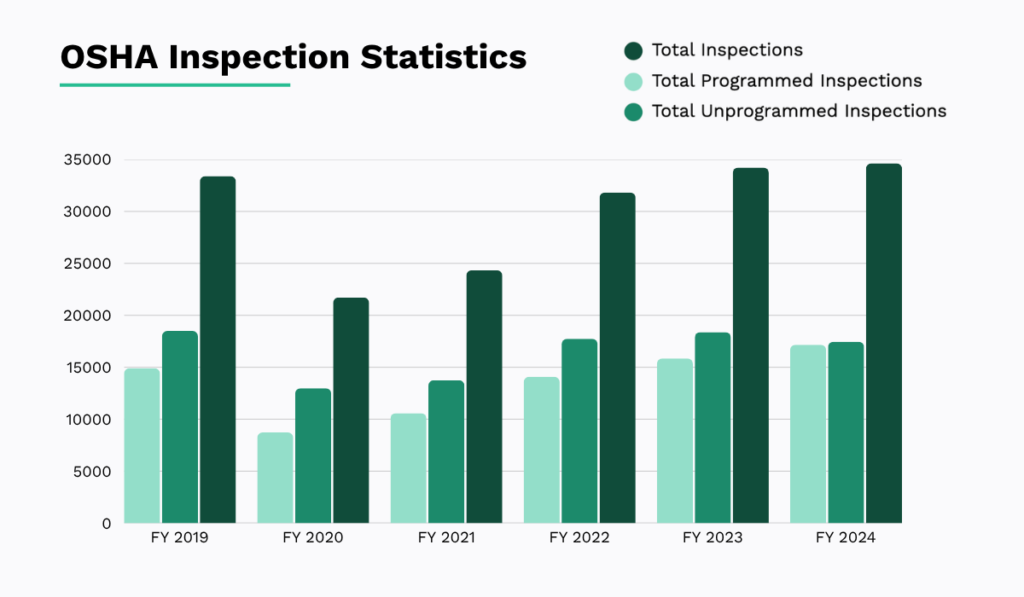
OSHA has been gradually increasing the number of workplace inspections it conducts each year.
As seen in the graph below, their programmed and unprogrammed inspections have steadily risen, with the total reaching an all-time high in 2024.
Instead of waiting for an inspector to find safety concerns at your facility, it’s far better to identify and address them yourself through regular internal safety audits.
In essence, these audits should be designed to surface hazards, unsafe practices, and compliance gaps.
For guidance on what these audits should cover, you can take direction from OSHA itself. Their inspection priorities FactSheet outlines exactly what their inspectors look for during a visit.
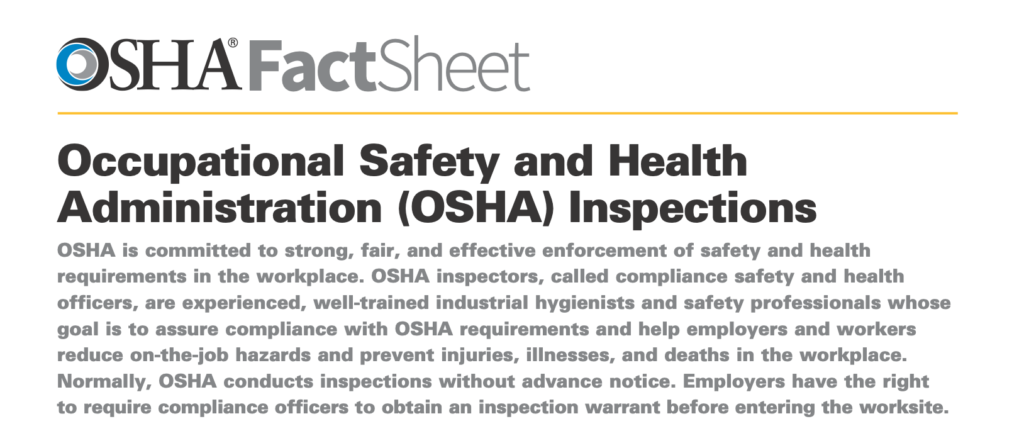
As the document outlines, imminent danger situations and severe injuries are naturally the top priority, along with follow-up inspections for previous violators.
However, OSHA also takes worker complaints into account, meaning any concern that employees raised but management didn’t address can become a violation waiting to happen.
The goal of an internal audit is to catch all of these issues beforehand, ideally covering several key aspects, which are illustrated below.
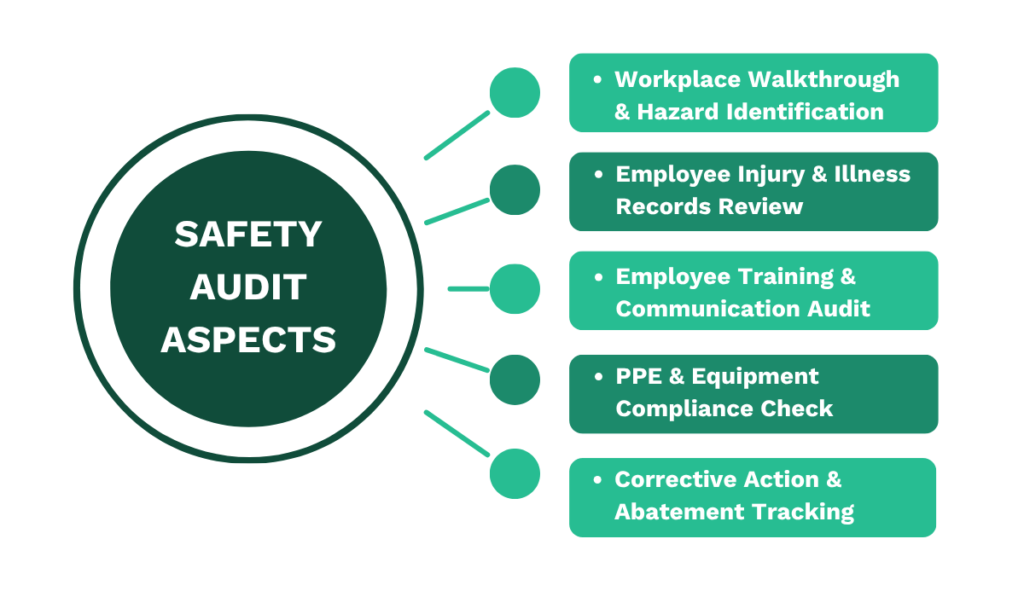
Prevention-focused activities such as workplace walkthroughs, hazard identification, and PPE compliance checks should be the primary focus, as these are the issues most likely to be flagged during an unannounced inspection.
However, you also need to review past incident records and worker injuries to verify that those issues haven’t reoccurred.
The same applies to any prior OSHA violations, which should be tracked and documented to show that corrective actions were completed and sustained.
While conducting these audits, following a structured checklist is helpful as it gives you a consistent format for flagging potential issues and documenting findings.
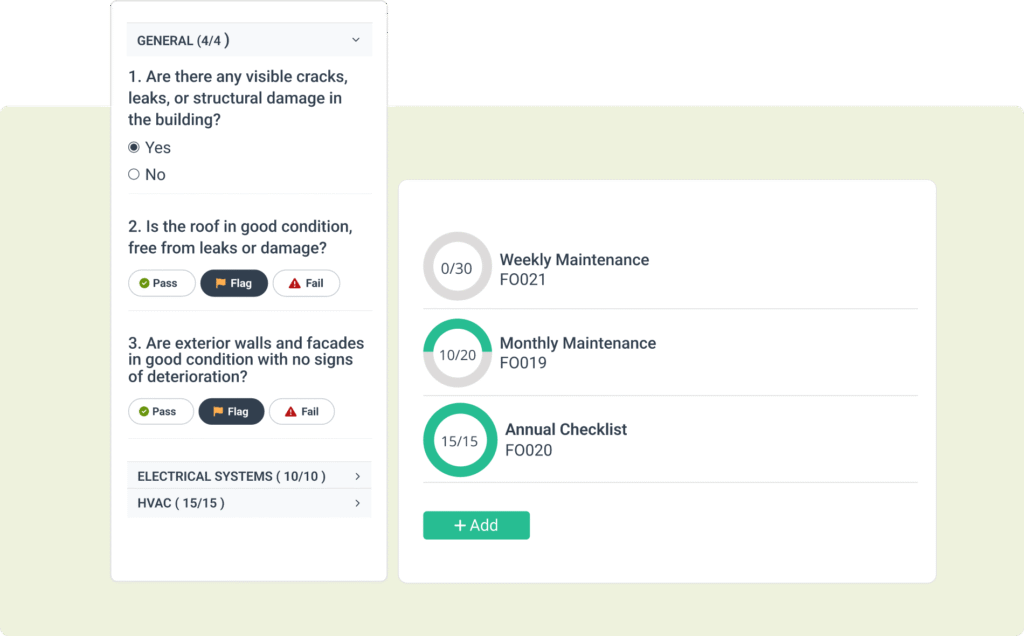
Digital tools make this process much easier, and when done right, they provide a centralized record where all audit results are stored.
These records are especially valuable if an OSHA inspection does occur, as they demonstrate a proactive commitment to workplace safety.
Train Your Employees
Employee training ties into every practice we’ve covered in this article.
Whether it’s knowing how to read a chemical label, selecting the right PPE for a job, or following LOTO procedures correctly, none of these standards work if the people performing the work haven’t been properly trained.
As Bryan Christiansen explains in an article on creating safety training programs, the goal is both to ensure safety and regulatory compliance.
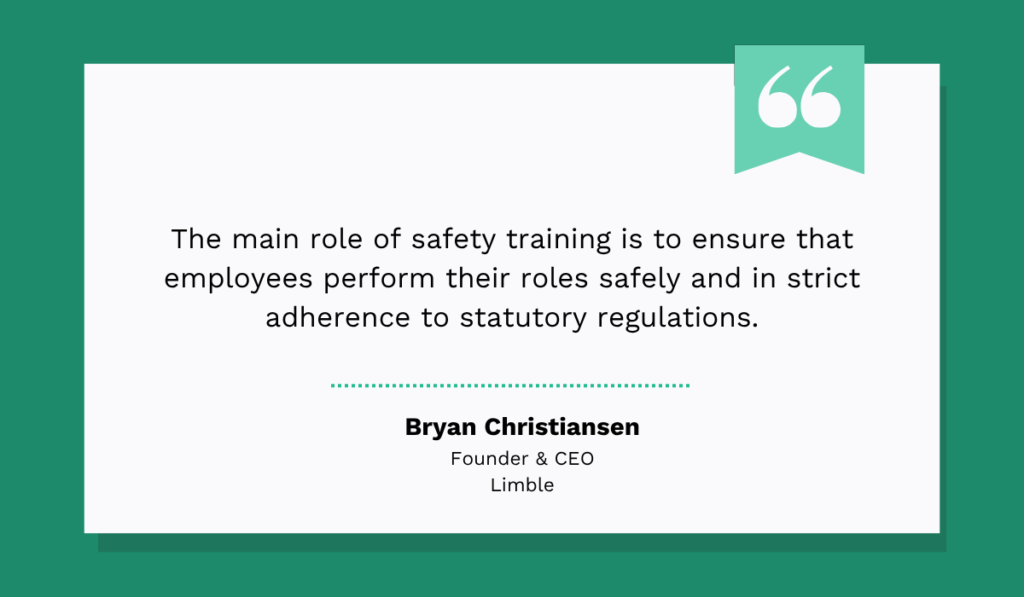
Just remember that effective training is not a one-time event.
Hazards change, equipment gets updated, and regulations evolve.
A technician who was trained two years ago may not be aware of a new chemical on site or a revised LOTO procedure for a recently modified machine.
That’s why training plans need to be continuous and repeated at regular intervals. Some key moments when training is needed are the following:
- During onboarding for all new hires
- Whenever new equipment, chemicals, or processes are introduced
- After a workplace incident or near-miss
- After changes in regulations or internal safety procedures
- As an annual scheduled refresher
The good news is that various OSHA-authorized training centers exist to help teams build this foundation, and the results are quite positive.
For instance, this OSHA-authorized Online Center published pre- and post-training scores across multiple safety metrics.
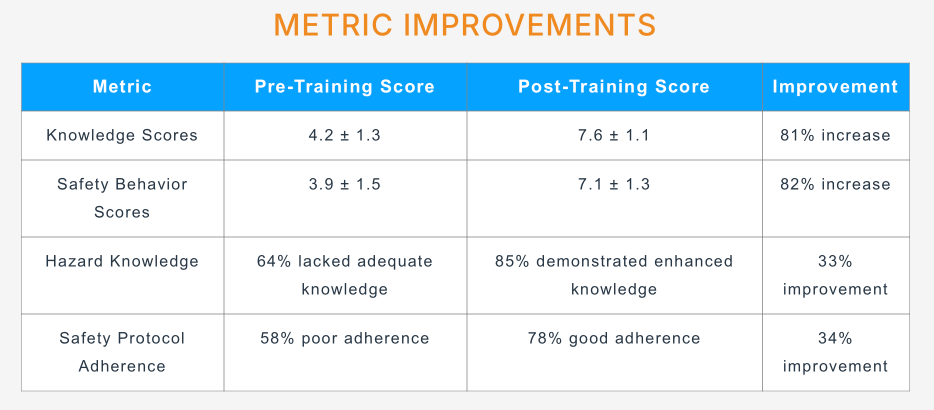
These results show significant improvements across the board, from theoretical knowledge to actual safety behavior and protocol adherence on the job.
To summarize, when workers understand the rules and why they exist, they’re far more likely to follow them consistently.
So investing in regular, job-specific training is one of the most effective ways to reduce violations and build a team that takes safety seriously.
Conclusion
That covers six practical ways maintenance teams can avoid some of the more common OSHA standard violations.
We covered specific standards such as hazard communication, PPE, and lockout/tagout programs, as well as more general tips, including focusing on employee training and conducting safety audits.
You can now use what we talked about to review your current safety practices and close any gaps before an inspector finds them for you.