


Get a Free WorkTrek Demo
Let's show you how WorkTrek can help you optimize your maintenance operation.
Try for freeKey Takeaways:
- Most facilities aren’t yet ready for advanced maintenance strategies.
- The total cost of work-related injuries reached $176.5 billion in 2023.
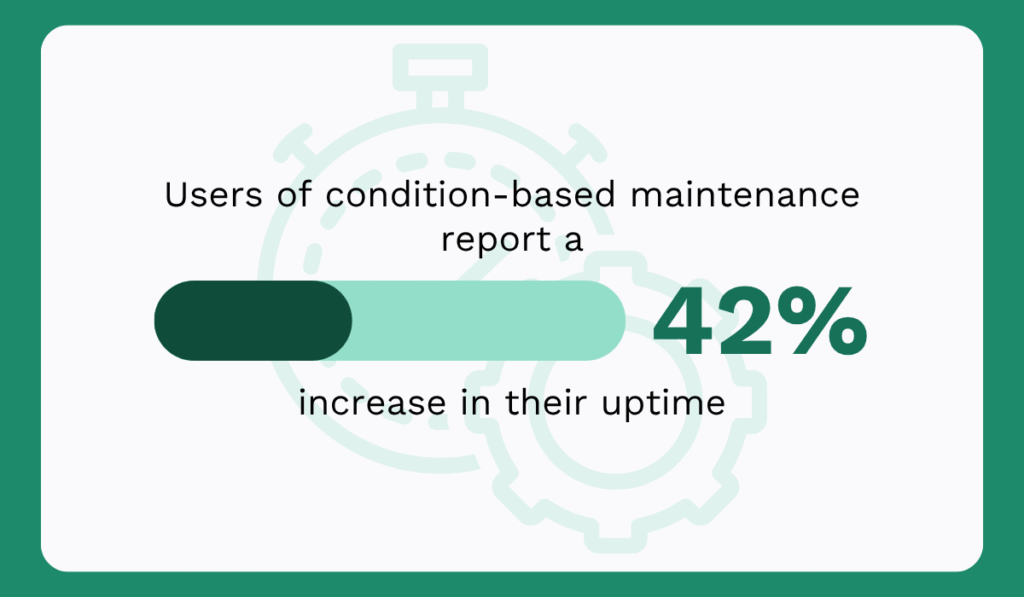
- Users of condition-based maintenance report a 42% increase in uptime.
In this article, we walk you through various maintenance tasks, from the simplest to the most advanced.
You’ll learn what each one involves and whether it’s truly a necessary part of your upkeep strategy, or if it may be better to exclude it from your program in favor of a more effective approach.
Because, in the end, there are many different ways technicians can maintain reliability, and not all of them are suitable for every operation.
Reactive Maintenance Tasks
Let’s start with the simplest of maintenance tasks.
These are present in most facilities and are fairly straightforward to manage.
Corrective Repairs
This is the most basic type of maintenance task.
Corrective repairs are exactly what they sound like: equipment is fixed only after a fault or failure has occurred.
This is often called “run-to-failure” maintenance because assets are allowed to operate until they stop working.
According to research, despite the increasing availability of more advanced upkeep approaches, methods, and strategies, this remains the second most common type of maintenance activity overall.
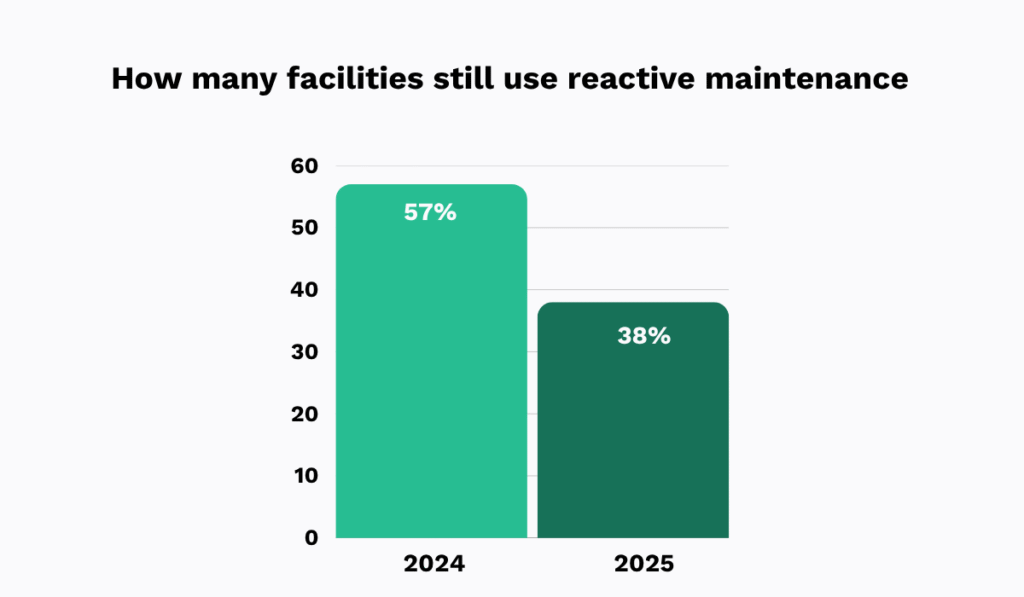
That said, the use of reactive maintenance is slowly declining, with its share in maintenance strategies dropping from 57% in 2024 to 38% in 2025.
This is happening because the low initial cost and simplicity of these tasks are often outweighed by their drawbacks.
Corrective repairs do not prevent damage. They address issues only after they occur.
As a result, they leave the door open to costly consequences such as unplanned downtime, safety risks, and secondary damage to other components.
Because of this, corrective repairs have gained a somewhat negative reputation in the maintenance world, with more teams looking to transition toward proactive strategies.
Still, it’s important to recognize that there is a place for this type of task in a well-balanced maintenance program.
Corrective maintenance is suitable for equipment that is:
- Low-cost
- Low in criticality
- Easy to repair
- Low risk in terms of safety
- Low impact on production
For such assets, there is no need to invest in expensive predictive systems or complex preventive schedules.
Corrective repairs work just fine here, allowing daily operations to continue smoothly without unnecessary time and resource expenditures.
Emergency Repairs
Emergency repairs are immediate, unplanned maintenance interventions carried out in response to sudden and critical equipment failures.
Unlike corrective repairs, which can sometimes be scheduled after a fault is detected, emergency repairs are non-negotiable and highly time-sensitive.
They must be performed right away to protect worker safety, maintain operational efficiency, and safeguard the bottom line.
To better understand the potential impact, take a look at the findings from the 2023 National Safety Council (NSC) report.
As it turns out, the total cost of work-related injuries reached $176.5 billion that year, averaging $1,080 per worker.
Additionally, these injuries resulted in 70 million lost workdays, with an estimated 55 million more expected in future years due to injuries sustained during that period.
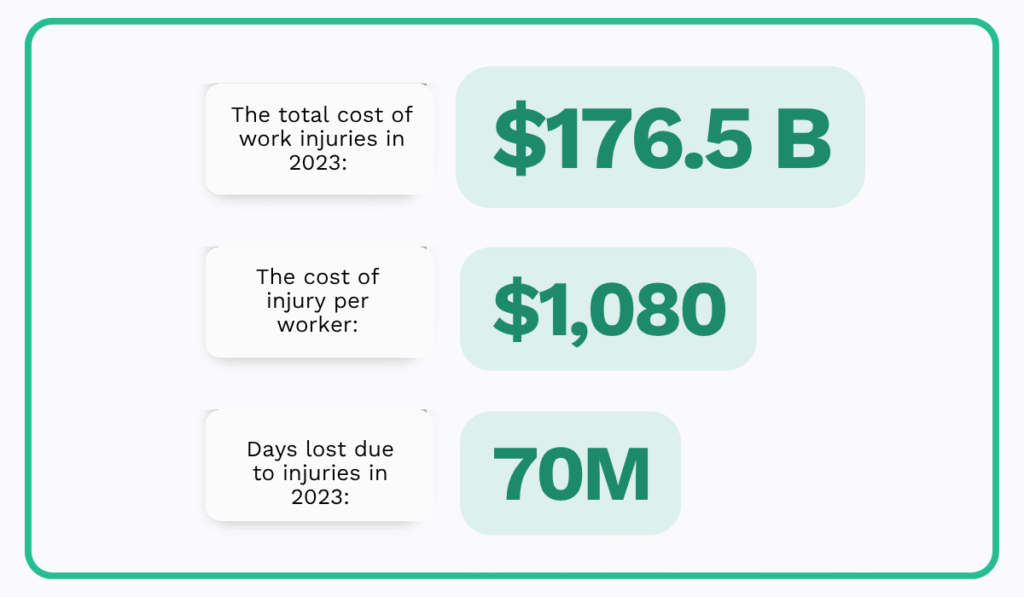
In other words, safety incidents carry significant and lasting consequences.
Emergency repairs aim to mitigate these consequences by addressing risks and restoring operations as quickly as possible.
However, despite their short-term benefits, they are generally undesirable.
In fact, they are widely considered the most expensive and inefficient form of maintenance due to operational disruption, high downtime costs, and the potential for secondary damage.
It’s no surprise that organizations strive to minimize them.
Research consistently shows that unplanned downtime can cost hundreds of thousands of dollars, and that those costs are only rising.
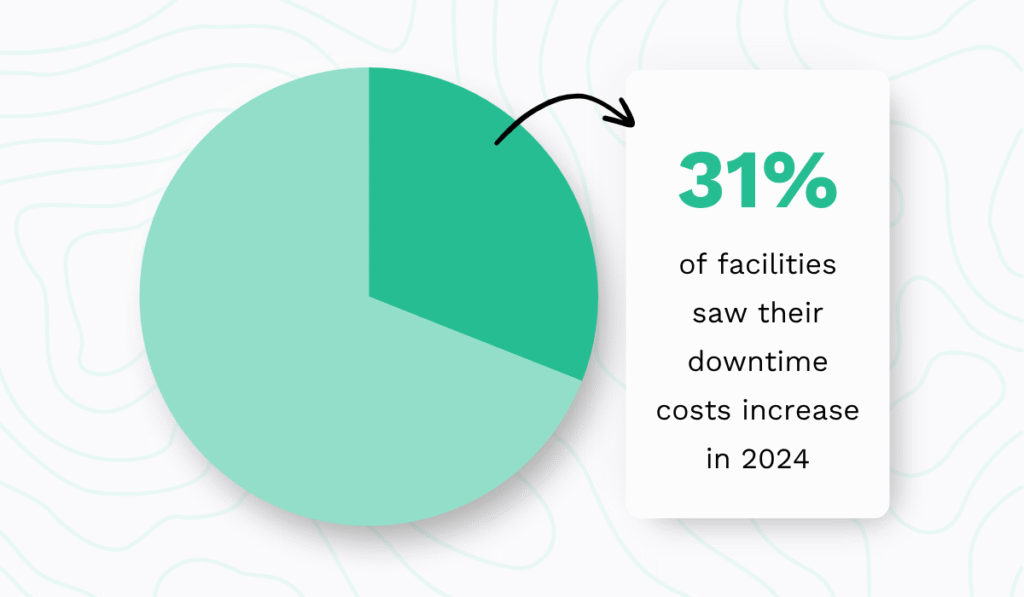
Therefore, in a well-managed maintenance strategy, emergency repairs should be rare rather than routine.
If they persist, they may be a sign of deeper issues, such as a poor maintenance strategy or other hidden inefficiencies within the maintenance department.
Preventive Maintenance Tasks
Preventive maintenance is a big step up from reactive upkeep. It can significantly reduce unplanned downtime and all the accompanying problems.
Let’s see which types of tasks it encompasses.
Inspection
Inspections, whether visual, sensory, or basic instrument-based, are the first and most fundamental step of any successful proactive maintenance program.
Their primary objective is to identify potential problems before they materialize and disrupt operations.
While inspections don’t directly fix issues, they play a vital role in informing maintenance decisions.
Bret Kasubke, Director of Customer Equipment Solutions at United Rentals, the world’s largest equipment rental company, agrees:
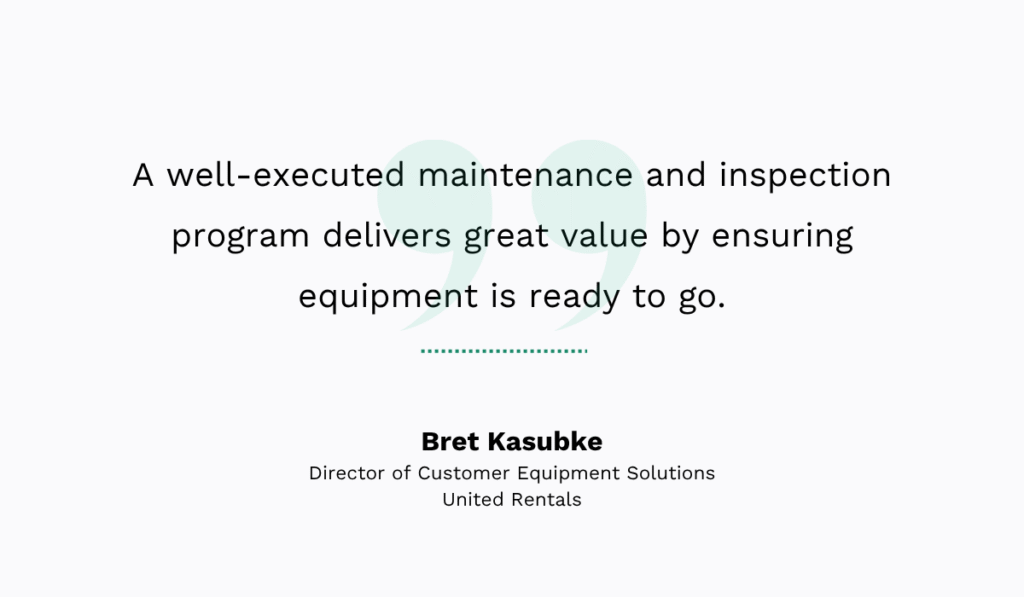
He adds that inspections provide structure and visibility into equipment maintenance, enabling companies to reduce downtime and improve cost control.
They can even extend the lifespan of machinery and help reduce the risk of catastrophic equipment failures, which may lead to serious safety issues on worksites.
In short, inspection is one of the simplest yet most powerful maintenance tasks.
However, its effectiveness depends heavily on consistency, proper training, and timely follow-up actions. Without proper execution and response, inspections are practically ineffective.
That’s why more teams are turning to CMMS solutions to improve their inspection efficiency.
These systems allow users to schedule recurring tasks, set due dates, and receive alerts for overdue tasks, ensuring nothing is overlooked.
Paper forms and spreadsheets are replaced with digital checklists, helping teams follow correct safety and operating procedures every single time:
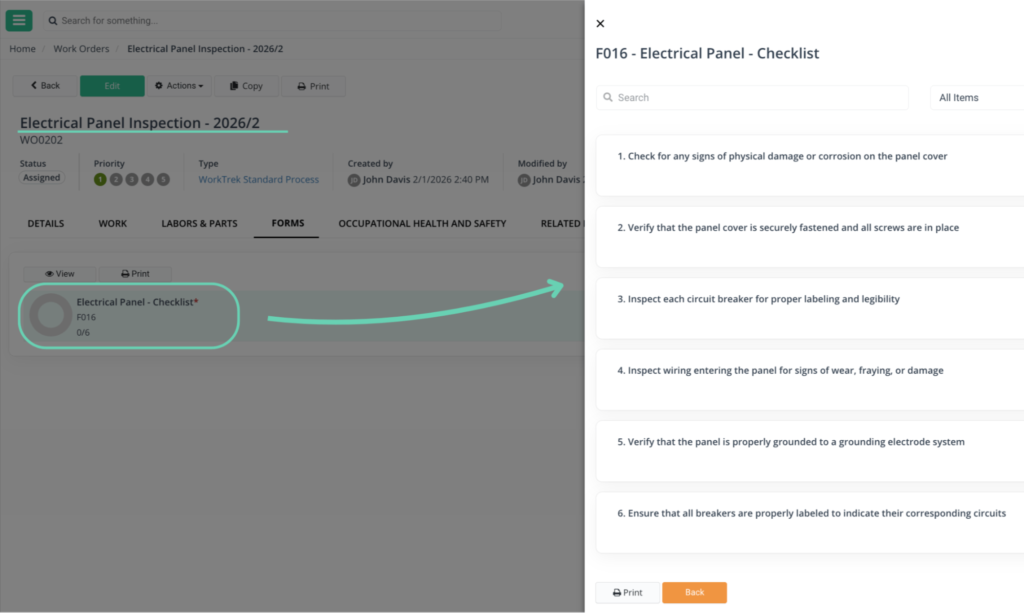
Some CMMS platforms can even automatically generate follow-up work orders when inspections reveal issues.
In any case, inspections serve as the first line of defense against unexpected equipment failure and costly operational disruptions.
Because of this, they are integral to any successful modern maintenance program.
Scheduled Replacement
Scheduled replacement is a maintenance task in which a component is replaced at predefined intervals, regardless of its current condition.
It’s based on the assumption that the component has a predictable wear-out life, after which the probability of failure increases significantly.
These replacement intervals are typically determined using:
- Manufacturer recommendations
- Historical failure data
- Safety or regulatory requirements
Ideally, the interval is set just before the wear-out phase begins; late enough to maximize useful life, but early enough to prevent failures.
This type of task helps reduce unexpected breakdowns in wear-out components, ensuring consistent equipment performance and minimizing risk in critical systems.
It’s also relatively easy to plan and schedule.
However, these benefits do come with trade-offs.
Scheduled replacement can be wasteful, as components may be replaced while they are still functional.
After all, not all components wear out predictably, so premature replacement can lead to higher material and labor costs over time.
With many maintenance teams already struggling to stay within budget and manage costs, these activities can be difficult to justify if applied too broadly.
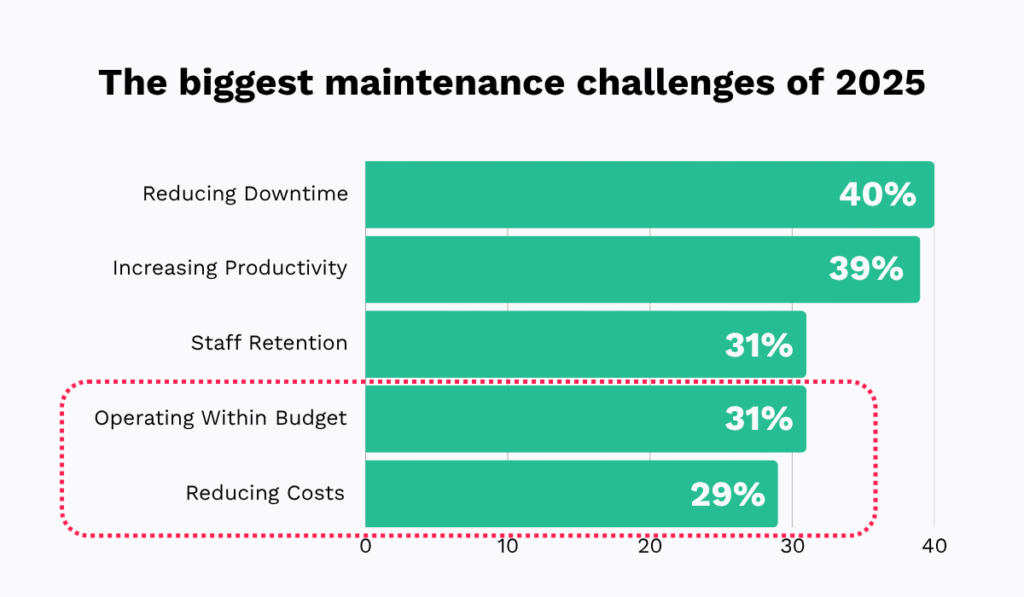
Today, with the ever-increasing material and labor expenses, optimizing resources is more important than ever.
Now, this doesn’t mean scheduled replacement should be avoided altogether.
Instead, it should be applied selectively, specifically when:
- The component exhibits a clear wear-out failure pattern
- The cost of failure exceeds the cost of early replacement
In the end, scheduled replacement can support smoother operations and help protect mission-critical assets.
You just need to learn when and how to apply it.
Scheduled Restoration
Scheduled restoration is a planned maintenance task that restores a component to its original or near-original condition at fixed intervals.
These are your common upkeep tasks every technician is familiar with, such as cleaning, adjusting, calibrating, or overhauling.
So, unlike scheduled replacement, the component is retained and serviced rather than discarded.
This makes scheduled restoration a more cost-effective option of the two.
It still helps extend asset life and ensure smooth operation, but without as much material and labor waste.
Terri Ghio, former President of the manufacturing optimization solution FactoryEye North America, illustrates the financial benefit with an example:
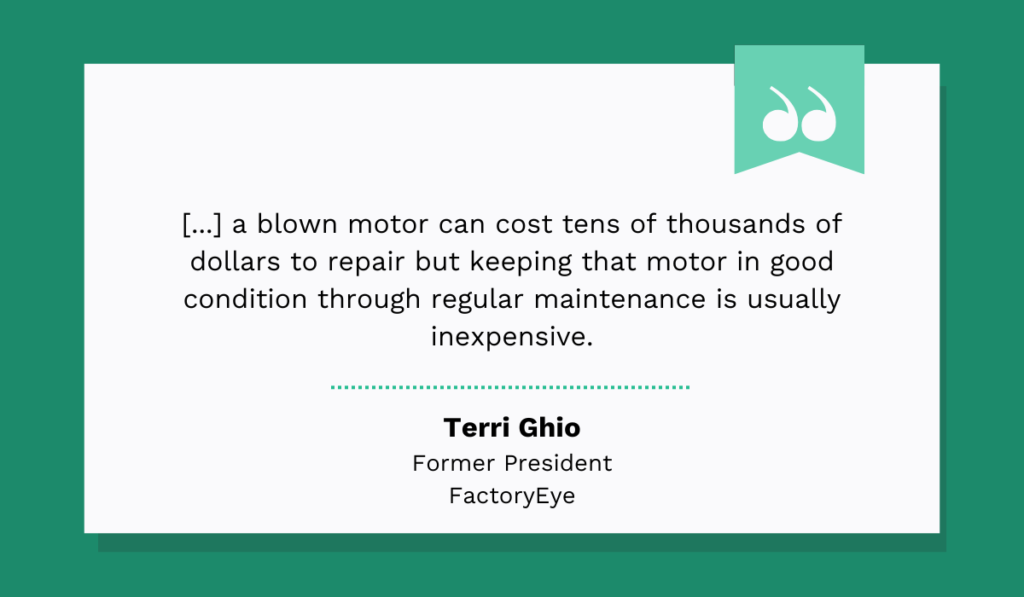
Ghio is right.
Keeping assets in good condition is more cost-effective than repairing them after complete failure or fully replacing components that could have been restored instead.
However, scheduled restoration is also more complex to plan and execute.
The timing needs to be right, technicians must have the right skills and tools, and they need to follow proper procedures.
In asset-heavy organizations, this isn’t always easy, especially when teams rely on outdated maintenance management tools like spreadsheets or paper forms.
These make it harder to access vital information and increase the risk of tasks being overlooked.
Fortunately, CMMS solutions like WorkTrek help eliminate these inefficiencies by automating, monitoring, and recording every step of the restoration process, as well as other maintenance tasks.
With WorkTrek, you can schedule restoration tasks based on time intervals or condition-based metrics such as usage time, mileage, temperature, or pressure.
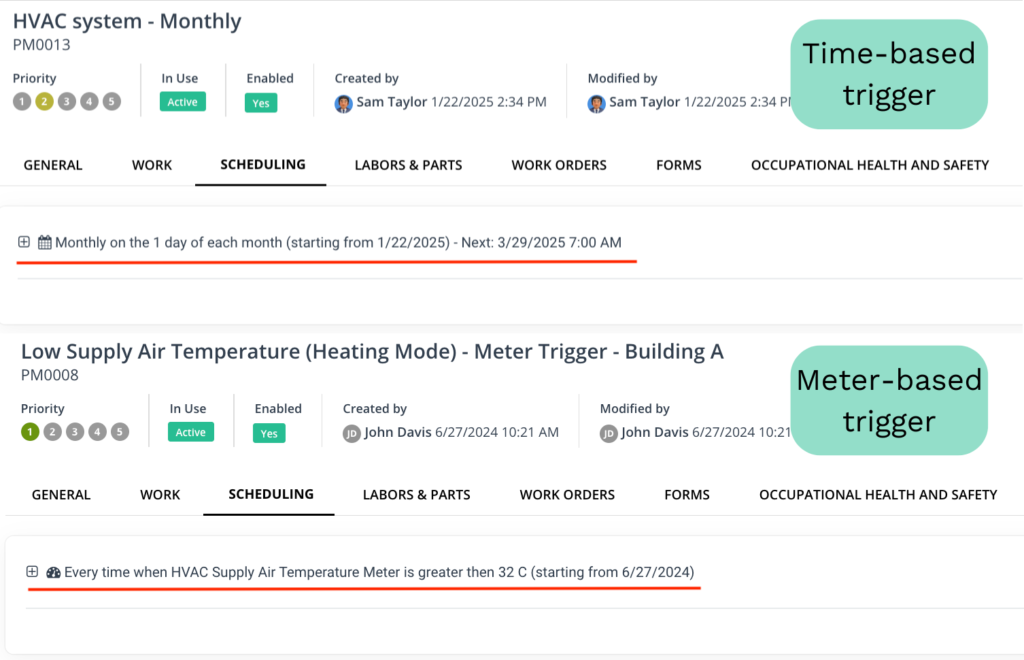
This ensures that tasks are performed at the right time on the right equipment, reducing the risk of missed interventions.
No more “I forgot”. The system sends notifications when the due date approaches.
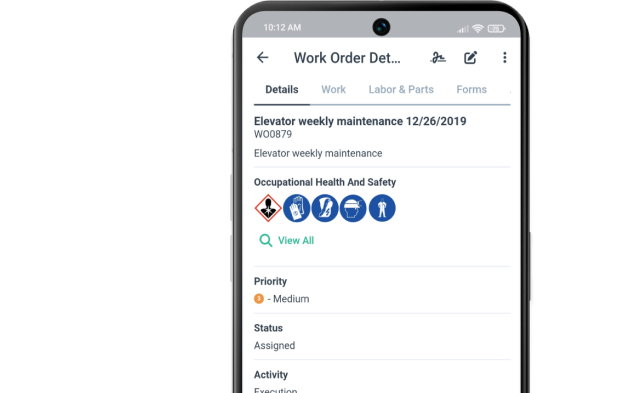
When it’s time to perform a task, technicians can access detailed work orders directly on their mobile devices and quickly see everything they need to know.
This includes photos, step-by-step instructions, safety guidelines, required tools, and more.
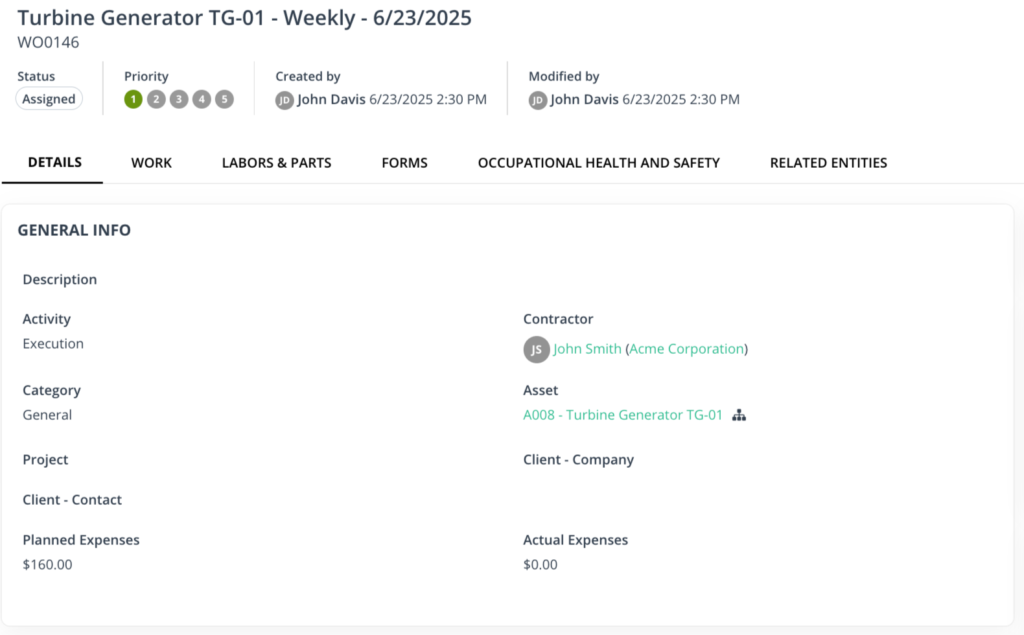
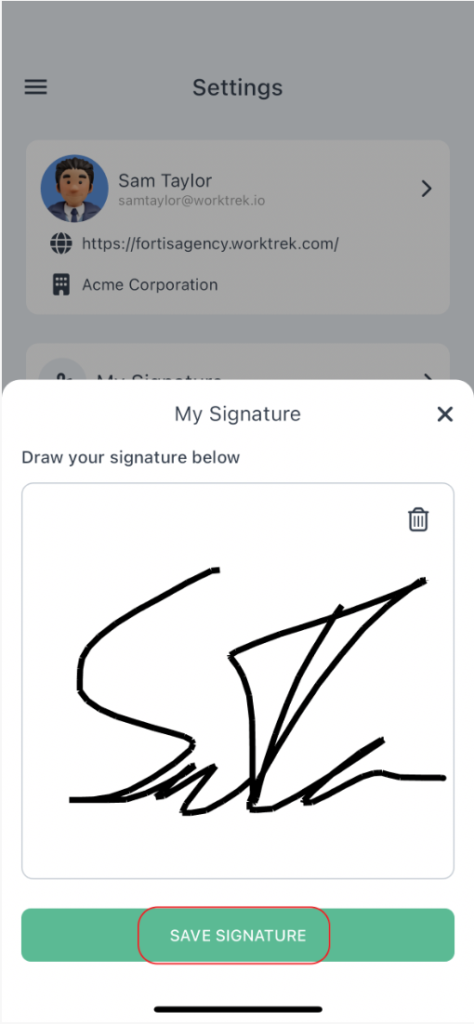
After completing the task, they can close out the work order on the spot, adding their signature and attaching photos if needed.
Meanwhile, managers and supervisors can monitor progress in real time, track labor allocation and costs, and make adjustments as necessary.
In short, WorkTrek makes scheduled restoration more predictable, traceable, and resource-efficient.
With this level of control and visibility, ensuring your valuable assets receive the best possible care becomes significantly easier.
Failure Finding
A core concept in Reliability-Centered Maintenance (RCM), failure-finding tasks are planned maintenance activities designed to detect hidden or latent failures within a system.
These failures are not apparent during normal operation but can prevent a system from performing its protective or critical function when required.
Kleber Siqueira, Owner and Principal Consultant at Navitas Consulting, an organization specializing in Asset Management and RCM, explains:
“Failure finding is a reliability-centered maintenance strategy aimed at detecting latent failures in systems that do not operate under normal conditions. These ‘hidden’ functions are only activated during abnormal or emergency scenarios, making their reliability both critical and difficult to observe.”
Common examples include testing backup generators to ensure they start during a power outage or verifying that fire suppression systems and alarms are fully operational.
These tasks are not necessarily about improving performance, but about ensuring readiness and strengthening operational resilience.
As such, they play a vital role in maintaining safety, productivity, and even regulatory compliance.
Siqueira outlines several methods used in failure-finding activities:
| Functional Testing | Simulates real operating conditions or injects test signals to verify system response |
| Proof Testing | Periodic, structured testing designed to uncover hidden failures not detected during normal operation |
| Maintenance Testing | Routine inspections and basic functional checks that reveal mechanical degradation, such as corrosion, wear, or obstruction |
| Audits and Reviews | Formal evaluations of testing processes and results to ensure completeness, compliance, and timely corrective actions |
| Historical Data Analysis | Data-driven assessments using trends, failure modes, and metrics like mean time between failures (MTBF) to anticipate performance decline |
Despite their importance, failure-finding tasks are often overlooked because the failures they target remain invisible during normal operations.
However, when these failures do surface, the damage, typically in the form of downtime, safety incidents, and financial loss, is already significant.
That’s why failure-finding tasks should be considered a non-negotiable component of any proactive upkeep program, just like inspections and scheduled restorations or replacements.
While the issues they address may be hidden, their impact can still be substantial.

Predictive Maintenance Tasks
Predictive maintenance is the latest and most advanced form of asset upkeep.
It’s also the most complex, involving a range of tasks that depend on cutting-edge technologies and rich, reliable data.
Condition Monitoring
Condition monitoring tracks the real-time health of equipment using IoT sensors, measurements, and diagnostic tools.
Instead of relying on scheduled maintenance or reacting to failures, it detects early signs of deterioration, enabling maintenance teams to intervene before issues escalate.
This is a core component of predictive maintenance programs.
By optimizing maintenance timing with better precision, condition monitoring helps avoid both over-maintenance and under-maintenance, along with the risks associated with each.
That way, organizations benefit from well-maintained assets without wasting resources.
In fact, an ABB survey found that users of condition-based maintenance report a 42% increase in uptime.
No wonder there’s a growing interest in this approach.
For instance, Chevron El Segundo Refinery in California adopted condition monitoring to improve the reliability of its hydrotreating process unit.
The refinery operates 24 hours a day, 7 days a week, and processes nearly 270,000 barrels of crude oil per day.
Condition monitoring is perfect for such demanding environments, helping detect and diagnose mechanical issues in critical assets.
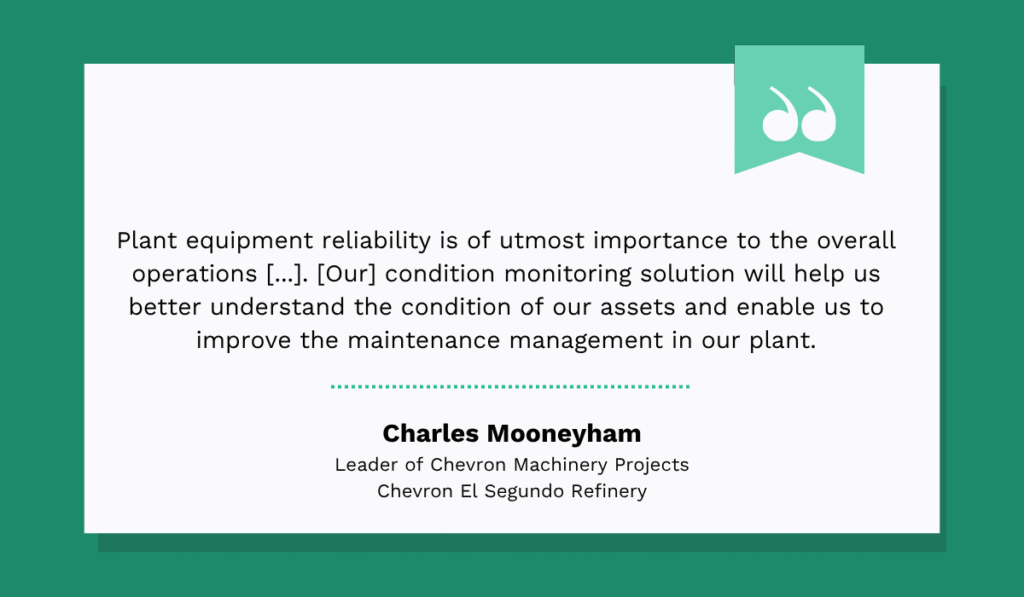
Charles Mooneyham, Leader of Chevron Machinery Projects, commented:
That’s right.
For organizations with the necessary budget, expertise, and personnel, condition monitoring can be one of the most effective ways to minimize downtime and improve operational efficiency.
Trend Analysis
While condition monitoring collects data, trend analysis interprets it, turning these measurements into actionable insights.
Largely powered by AI nowadays, trend analysis evaluates both historical and real-time data to identify patterns, deviations, or gradual deterioration in equipment performance.
The goal, of course, is to anticipate failures and schedule maintenance interventions at the most cost-effective time.
So far, this strategy seems to have been delivering very good results.
For example, a 2022 study by Deloitte showed that companies using predictive maintenance report reduced facility downtime, increased labor productivity, and lower new equipment costs.
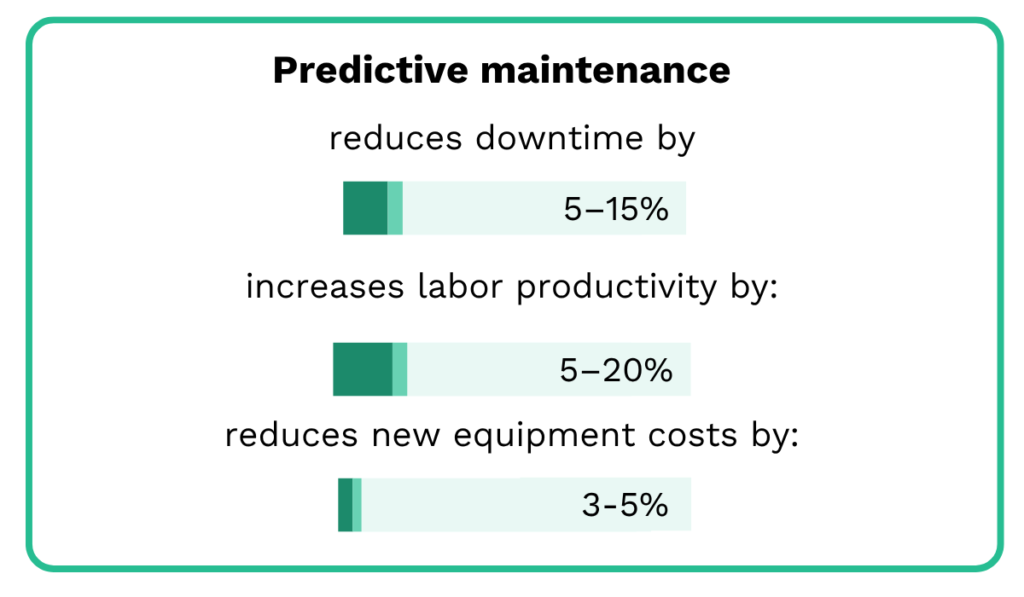
In other words, predictive maintenance, powered by condition monitoring and trend analysis, promises results that no other maintenance strategy has achieved before.
It almost makes you wonder why we don’t see this implemented in every asset-heavy organization.
The answer is quite straightforward: the required software and hardware can be expensive, and there aren’t many workers who know how to interpret the data correctly.
For many organizations, the issue goes even deeper than that.
Effective trend analysis requires a solid data foundation.
This means maintenance records must be absolutely accurate, complete, and up to date; otherwise, poor input data will lead to unreliable predictions.
Unfortunately, plenty of companies likely don’t have this in place just yet.
The 2025 research from Zapium shows that many teams still operate at a low level of maturity, relying on manual processes with no systematic way to track tasks, materials, and related data.
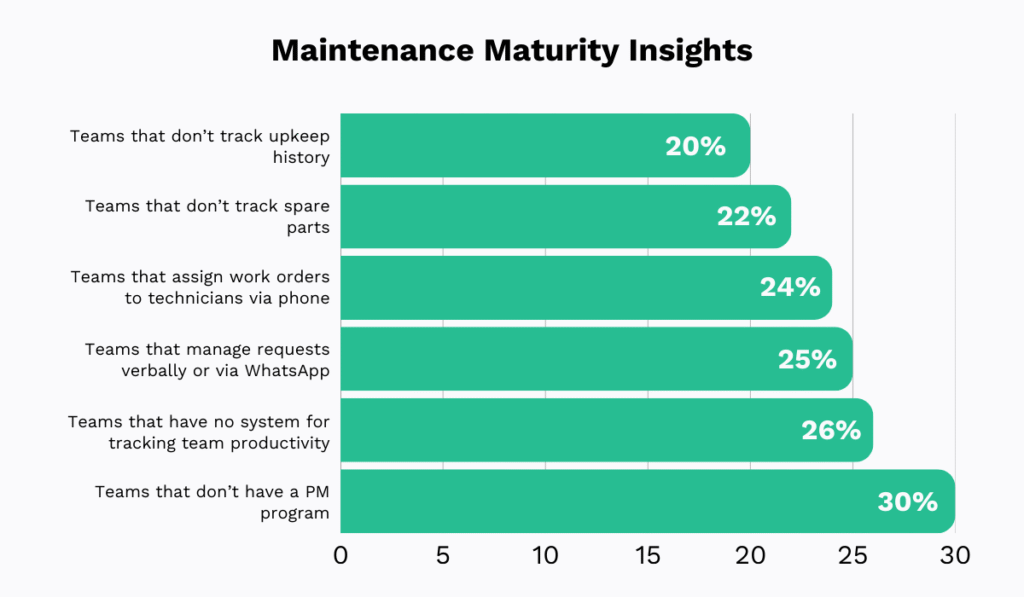
In such environments, important information is more likely to be error-prone, outdated, or missing entirely.
As such, it cannot support effective trend analysis.
Hopefully, this will change in the coming years, with more teams able to implement predictive maintenance and unlock the full potential of their facilities.
Conclusion
Ultimately, there is no one-size-fits-all approach when it comes to maintenance.
No single strategy will solve every problem on its own. More often, the best results come from combining several methods and types of tasks tailored to your specific situation.
So, feel free to use a run-to-failure approach for less critical assets, but remember that vital equipment should be managed with more proactive maintenance strategies to reduce risk.
At the same time, don’t feel obligated to adopt the most advanced technologies and processes if your budget or in-house expertise doesn’t currently support them.
A good strategy is always built around the real needs and capabilities of your operations, assets, and workforce.
Listening to them is what ultimately drives effectiveness