


Get a Free WorkTrek Demo
Let's show you how WorkTrek can help you optimize your maintenance operation.
Try for freeKey Takeaways:
- Even the simplest upkeep tasks help ensure operational efficiency.
- Without reliable data, technicians cannot execute more complex tasks effectively.
- Some tasks cannot be handled by either in-house or external upkeep teams.
Not all maintenance work is created equal.
Some tasks take a few minutes and a screwdriver, while others require a full factory rebuild.
To make sense of this range, the French standards body AFNOR defined five levels of maintenance in its X 60-010 standard.
If you’re looking to better understand which tasks belong where and who should handle them, this article breaks down each level in simple terms.
Level 1: Simple Interventions
To begin with, level one refers to the most basic maintenance activities.
These are routine preventive interventions performed on easily accessible components and are typically part of everyday operations.
You can see some of the more common maintenance tasks at this level in the image below.
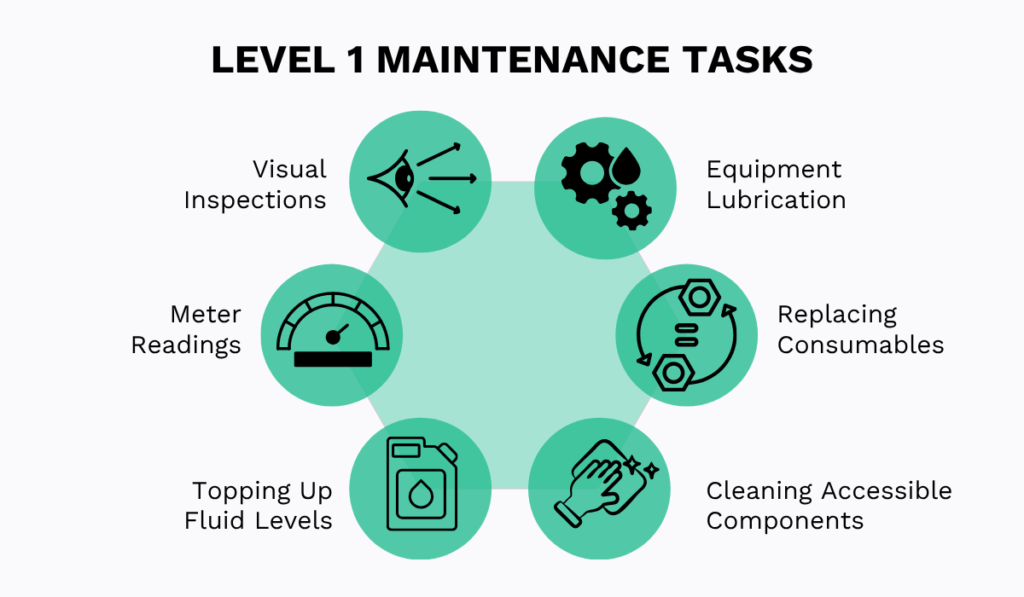
These activities are usually carried out during regular shifts or scheduled walkthroughs, and they pose no safety risk as long as basic instructions are followed.
Take equipment lubrication as a simple example.
An operator applies lubricant to designated points on a machine to reduce friction and prevent premature wear.
Many pieces of equipment will have stickers marking the exact lubrication points, which removes any guesswork and makes the process easy to follow, even for someone with no technical background.
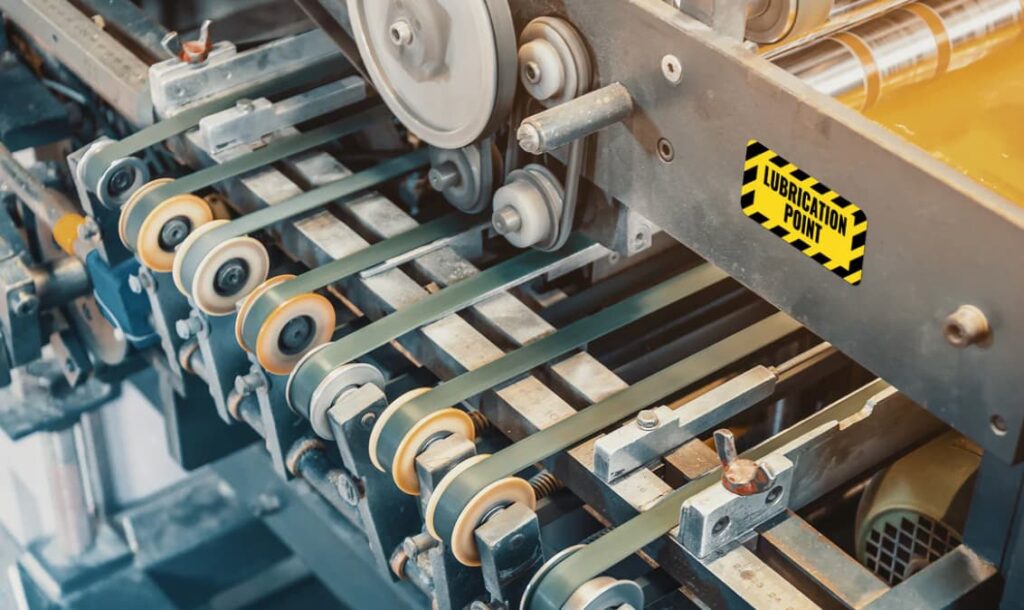
This shows that the level of expertise required at Level 1 is quite low.
There’s no diagnosis involved, no complex decision-making, and no need for specialized technical knowledge.
The person performing the task simply follows clear instructions.
Because of this, Level 1 maintenance can be carried out autonomously by non-specialized staff rather than dedicated personnel. Some of the roles that commonly handle these tasks include:
- Machine operators
- Production staff
- Facility workers
- Entry-level technicians
As for tools, Level 1 maintenance requires very little beyond what’s already available on the floor.
Simple visual guides for the equipment help point workers to the right spots, and standardized maintenance checklists, like the ones shown below, guide and document the work.
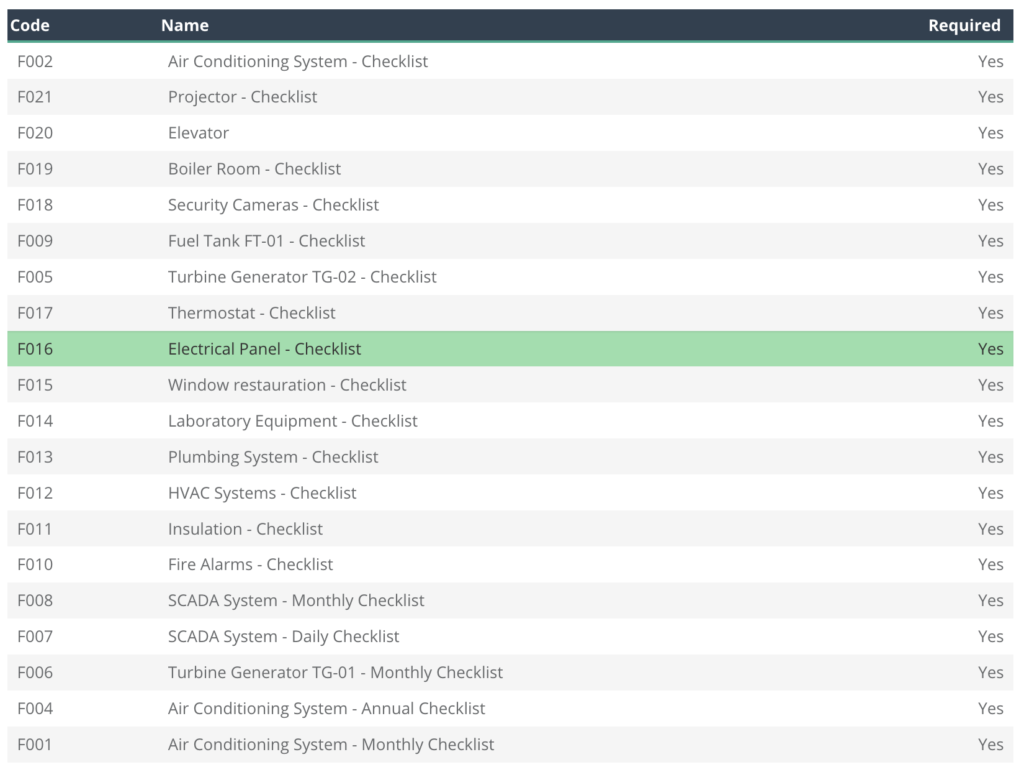
These checklists typically list each piece of equipment alongside the specific actions to be completed and how often.
When they’re stored and used within a computerized maintenance management system (CMMS), checklists help make sure nothing gets missed and create a record that can be referenced later if needed.
Finally, any consumables used during Level 1 interventions are simple supplies like replacement bulbs, lubricant, oil, or cleaning fluid. No spare parts or specialized materials are involved.
Overall, Level 1 maintenance is simple by design, but when performed consistently, it keeps equipment running smoothly between more involved interventions at higher levels.
Level 2: Medium Complexity Interventions
Moving up to level two, which includes maintenance tasks that are a step above the basics but still follow standard, documented procedures.
While interventions on this level still don’t require major equipment disassembly or advanced tools, they do go beyond what an untrained operator would be comfortable handling on their own.
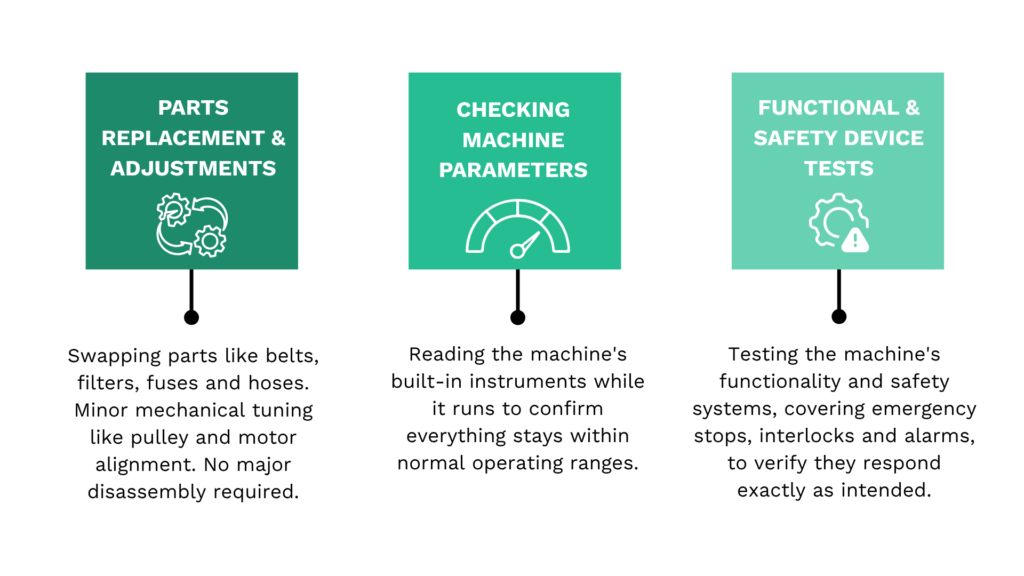
Below, we’ve illustrated the three main categories of Level 2 tasks.
To see what this looks like in practice, consider this simple troubleshooting guide for a Hytrol conveyor.
This table is found in their standard manual, which includes guidelines and procedures for installing, operating, and maintaining the conveyor.
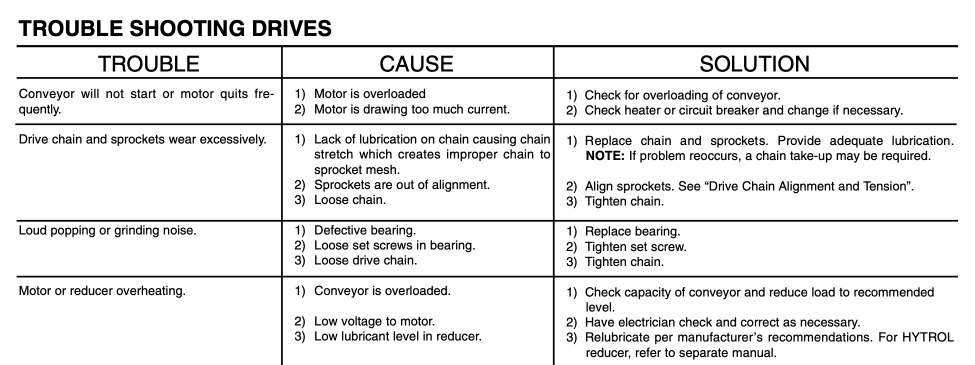
As you can see, these are not overly complex repairs.
Replacing a worn chain, tightening a loose set screw, or checking for overloading are all straightforward tasks that follow documented procedures.
However, they still require a degree of technical understanding to carry out correctly and safely.
Because of this, Level 2 work is typically handled by personnel with some formal training or hands-on experience.
The roles that commonly perform these tasks include:
- Trained maintenance technicians
- Skilled operators with equipment-specific training
- Junior maintenance staff under supervision
Level 2 sits at the boundary between what a skilled operator can handle and what requires a dedicated maintenance team member.
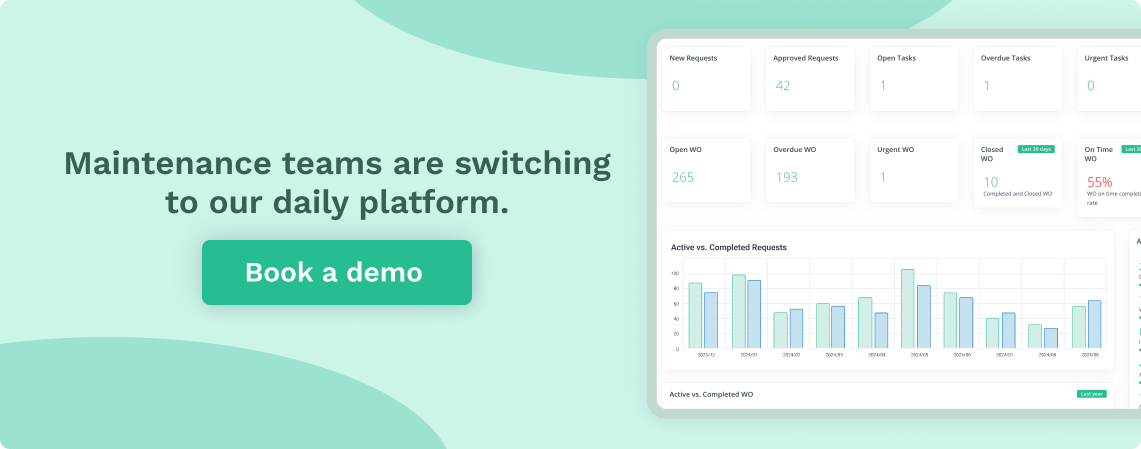
As such, this level is where the handoff between production staff and the maintenance department is key.
For instance, an operator might flag an overheating issue with equipment during a routine inspection.
To avoid potential unexpected downtime, the operator would typically use modern CMMS software, such as WorkTrek, for submitting these observations as work orders.
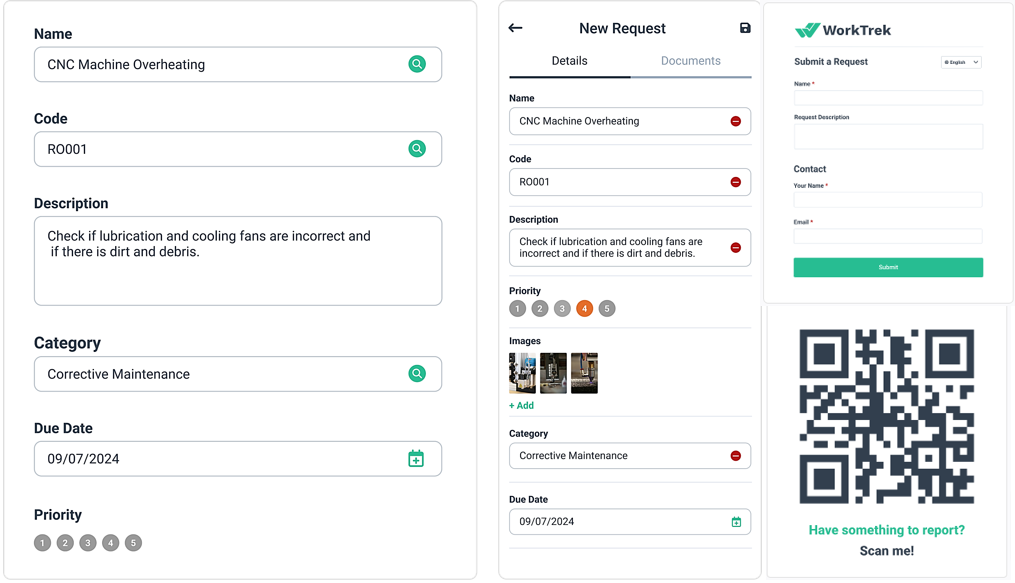
Once submitted and approved by management, this work order would sit in a centralized location where maintenance staff can pick it up immediately.
This kind of structured collaboration between operators and technicians is what makes Level 2 upkeep efficient, as issues get communicated clearly and reach the right people faster.
Finally, unlike Level 1, spare parts also come into play at this level.
These typically include consumable components like belts, filters, fuses, hoses, and similar items that wear out over time and need periodic replacement.
To summarize, Level 2 maintenance bridges the gap between basic operator-level care and the more specialized work that comes at higher levels.
Level 3: Complex Interventions
Level 3 is where maintenance work becomes significantly more involved.
At this level, tasks require specialized knowledge and expertise, and often involve a proper diagnosis before any repair work can begin, as well as partial disassembly of the equipment.
Common tasks at this level are shown in the illustration below.
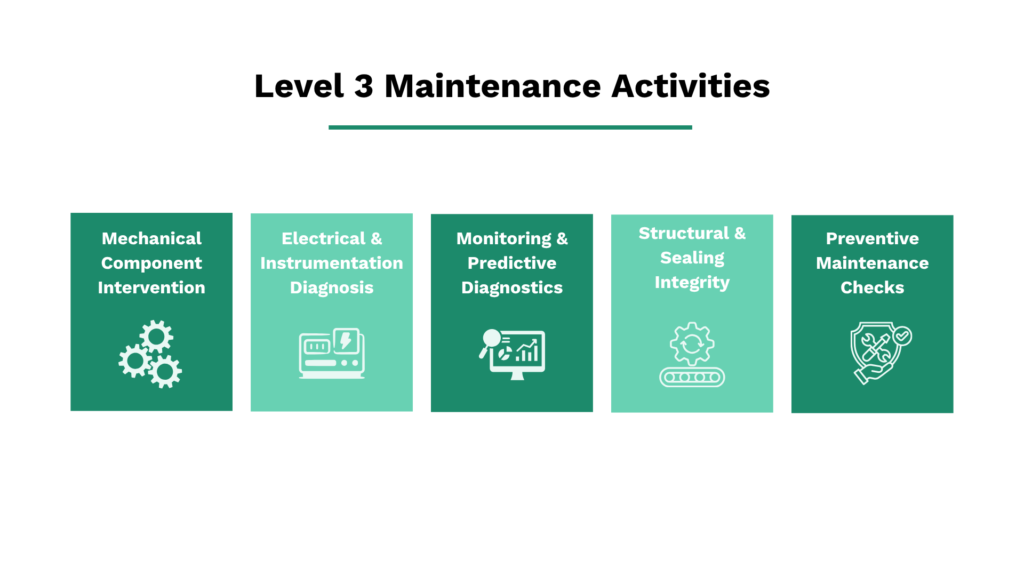
Unlike Levels 1 and 2, where the task is usually clear from the start, Level 3 interventions often begin with troubleshooting.
The technician needs to identify the root cause of a problem before deciding on the appropriate repair, which requires both experience and technical reasoning.
For example, say a production motor starts producing unusual vibration.
A maintenance technician would be assigned to diagnose the issue and could determine that a bearing is worn out and needs replacement.
Before ordering the part, they would check the facility’s inventory management system to see if the correct bearing is already in stock.
They can also pull up the motor’s schematics and diagrams, since partial disassembly will be required to complete the repair.
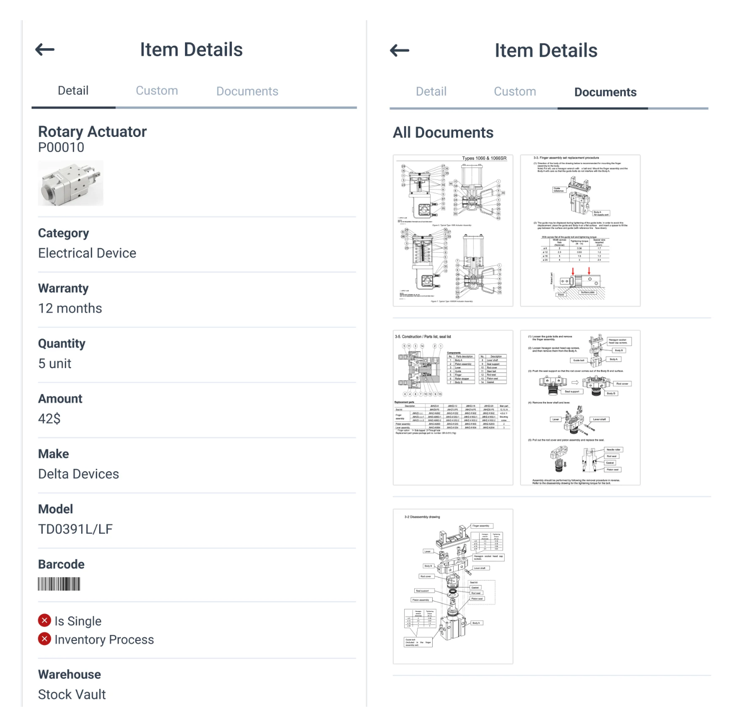
In this case, the part is in stock, so the repair can proceed without delay.
Because of this complexity, Level 3 work is carried out by qualified, specialized personnel, including roles like:
- Specialized maintenance technicians
- Mechanical fitters
- Industrial electronics technicians
- Hydraulic and pneumatic specialists
If the specific work goes beyond what the assigned maintenance technician can handle on their own, support from senior engineers or external specialists may be brought in.
This is especially common when the root cause is unclear or when the repair involves components the technician hasn’t worked with before.
Level 3 maintenance is also where technical skill and good data start to converge, and technicians will typically rely on specialized measuring instruments to complete their work.
In our production motor example, this might involve accelerometers, such as the ones shown below, that measure vibration to confirm the diagnosis.
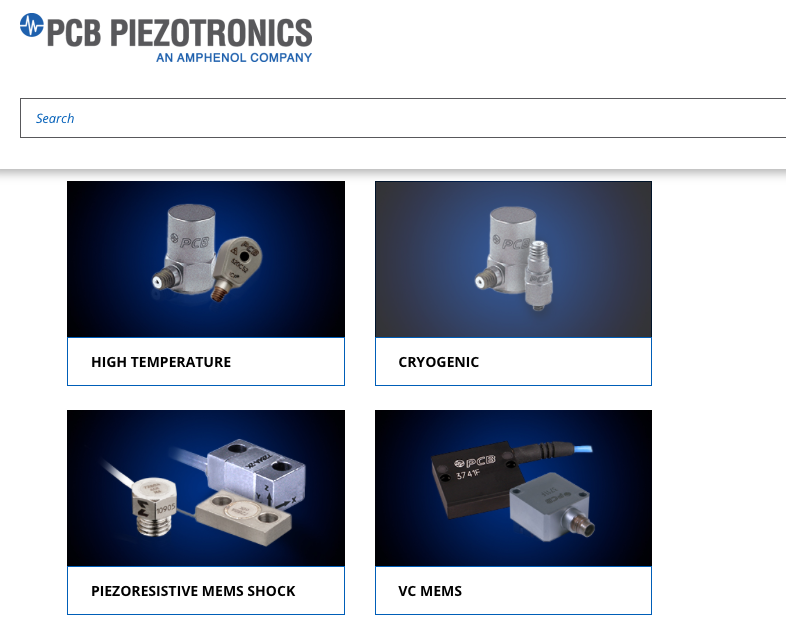
Overall, while the repairs themselves require expertise, the efficiency of the work depends heavily on having the right information measured, recorded, and accessible when the technician needs it.
Without that, even a skilled technician ends up waiting or working without full context, which slows everything down and can lead to repeat failures.
Level 4: Highly Complex Interventions
Level 4 represents major maintenance work that goes well beyond standard repairs.
These are significant interventions, often involving full equipment overhauls, advanced diagnostic techniques, and extended downtime.
As you can see from the image below, the scope of work at this level is much broader.
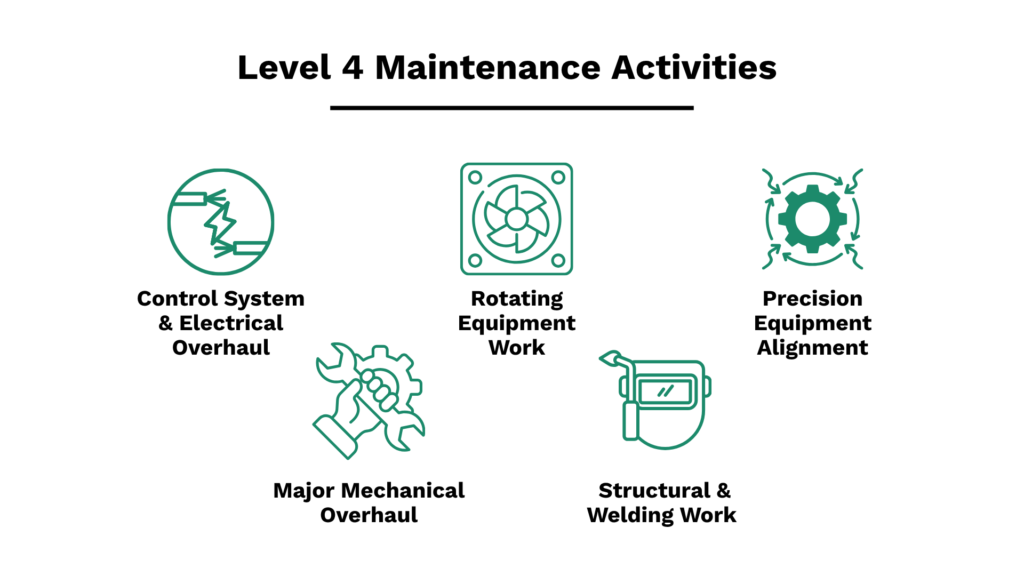
These tasks are technically demanding and are more challenging, both in terms of safety and operational impact.
In fact, a mistake during a Level 4 intervention can result in extended downtime or damage to expensive equipment, which is why the process requires careful planning and supervision.
As an example, consider the following case of a large industrial fan brought in for dynamic balancing.
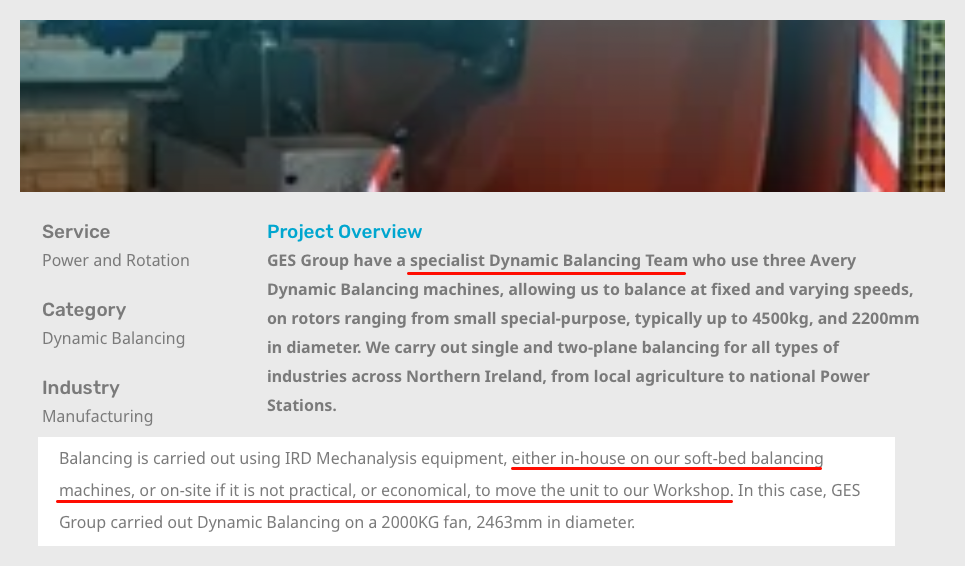
Because of the complexity of the task, the team at GES Group typically recommends bringing such equipment to their workshop, unless it is impractical or uneconomical to move.
That’s why level 4 work is most often done by specialists in dedicated workshops, as it requires controlled conditions and a level of precision that’s hard to achieve on the production floor.
The roles that typically handle these interventions include:
- Certified specialists like vibration analysts and thermographers
- Specialized teams working under supervision
- OEM technical advisors
In many cases, the team works under the supervision of a senior engineer or maintenance manager who oversees the process and signs off on the work before the equipment is returned to service.
Of course, specialized equipment and tools are used for this kind of work, which allows workshop teams to measure, diagnose, and correct issues with a level of accuracy that general maintenance tools can’t match.
When it comes to deciding to move forward with a Level 4 intervention, it’s important to consider whether an overhaul is really necessary.
Some of the most common scenarios that justify work of this scale are shown below.
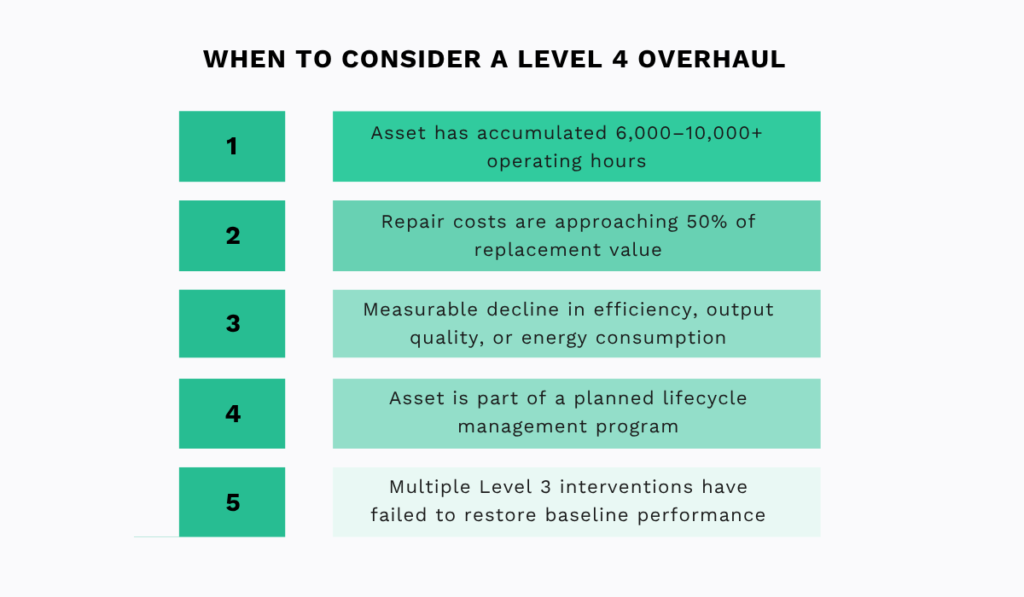
Each of these signals points to the same underlying idea: the asset is no longer performing as it should, and smaller repairs aren’t going to bring it back to baseline.
At this point, extensive maintenance work usually becomes both more cost-effective and more reliable.
Level 5: Actions Carried Out By Manufacturer
Level 5 is the highest and most complex level of maintenance.
At this point, the work goes beyond what even the most skilled in-house or external maintenance teams can handle.
These are full-scale reconstruction or refurbishment operations that require manufacturing-grade equipment, factory conditions, and deep knowledge of the original design.
The scope of work at this level typically includes the activities shown below.
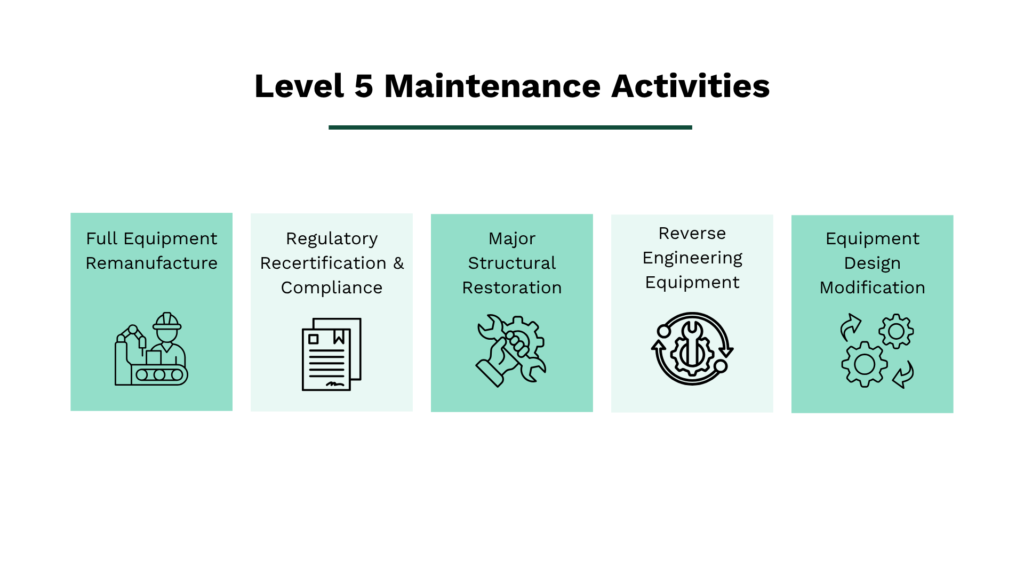
The methods and tools used at Level 5 are essentially the same as those used during the original manufacturing of the equipment.
This is what distinguishes it from all other levels.
The equipment as a whole, or major parts of it, are being rebuilt rather than repaired.
A good example of this kind of work comes from a 40-MW biomass-fired power plant in Michigan that suffered a catastrophic steam turbine failure.
Since sourcing a replacement turbine, along with a matching generator and auxiliary equipment, was nearly impossible on short notice, the plant turned to Sulzer, a global power generation services company.
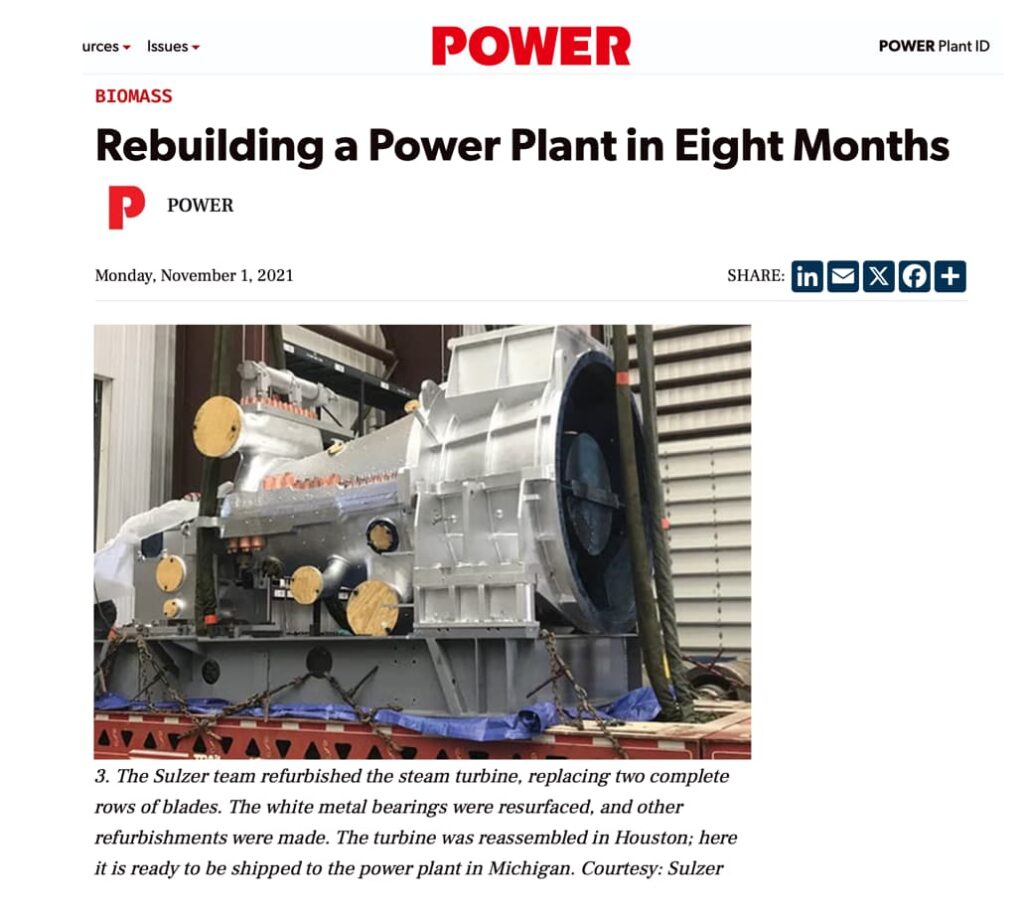
Sulzer sourced an almost identical mothballed unit from Maine, performed a complete disassembly, and rebuilt the turbine at its Houston facility in about eight months.
As you can see, Level 5 work is almost always carried out by external parties with direct ties to the equipment’s design and production.
The roles that typically handle these interventions include:
- OEM engineers and factory technicians
- Authorized rebuilders or certified service centers
- Manufacturer’s R&D teams, in cases involving upgrades or retrofits
In most cases, the equipment is shipped off-site to the manufacturer’s facility or a certified service center.
The in-house maintenance team’s role at this level is primarily coordination, documentation, and preparation.
Level 5 maintenance is rare and expensive, but for high-value equipment, it can be significantly more cost-effective than purchasing new.
The decision usually comes down to comparing the rebuild cost and the replacement cost, factoring in the expected remaining life of the refurbished asset.
When it makes financial sense, a manufacturer-level rebuild can restore equipment to like-new condition and extend its operational life by years or even decades.
Conclusion
That covers the five levels of maintenance.
We went through each level one by one, looking at what the work involves, who carries it out, and the kinds of tools and resources typically needed.
We also included some examples of work for each level, which hopefully gives you a clearer framework for categorizing your own maintenance work.
Use this guide to structure your maintenance planning and decide where each task fits best.