


Get a Free WorkTrek Demo
Let's show you how WorkTrek can help you optimize your maintenance operation.
Try for freeKey Takeaways:
- Manufacturers lose an estimated $1.4 trillion annually to unplanned downtime.
- Over one-third of employees lose 40+ hours yearly due to unclear communication.
- Tracking KPIs ensures a measurable, continuously improving upkeep operation.
Most maintenance teams don’t fail for lack of skill. They fail because of inefficient work order processes.
A work order arrives with insufficient detail, no one clarifies it, and a technician shows up to the job unprepared.
Or five people request the same repair through five different channels, and two technicians end up doing the same work on the same day.
These problems rarely seem significant at first. However, they accumulate until the backlog grows, costs climb, and reactive firefighting becomes the default.
This guide walks through five concrete steps for building a work order process that addresses these problems and actually works.
Map Your Current Process
Before improving your work order workflow, you first need to understand how work gets done right now.
That’s why maintenance process mapping is the first step to building an effective maintenance work order process.
It enables you to uncover and address hidden inefficiencies, such as communication gaps, poor documentation practices, or delays caused by unclear responsibilities.
For instance, the 2021 EDH Technology survey shows that 41% of manufacturing workers struggle to find the information they need.
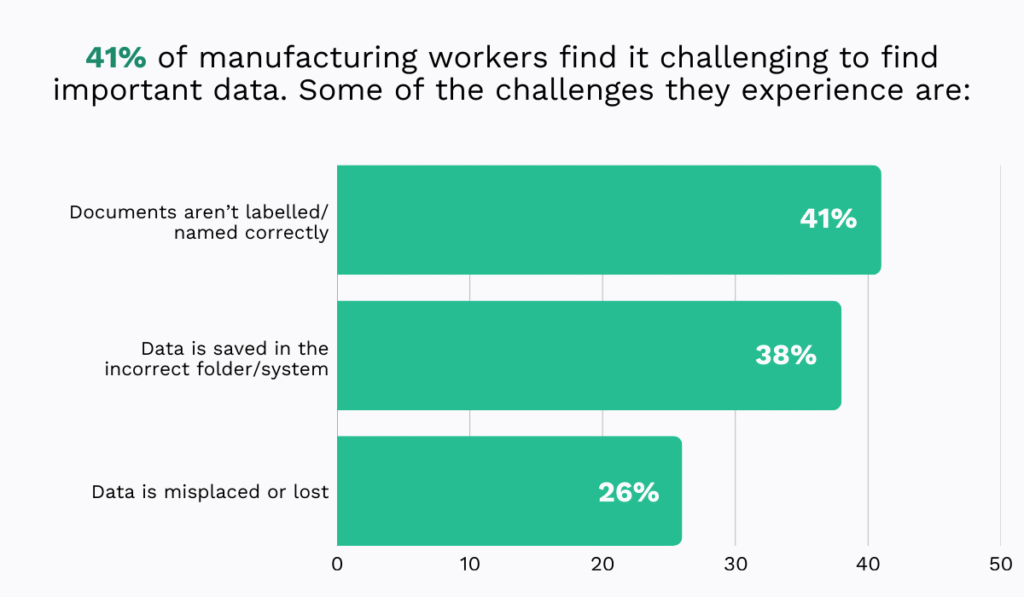
In a maintenance department, that could mean looking for the latest work order, chasing approvals, or trying to understand who is responsible for the next step.
Those seemingly small delays quickly add up across hundreds or even thousands of work orders every year.
The easiest way to uncover those inefficiencies is to trace a single work order from the moment a problem is reported until the job is officially closed.
Ask questions like:
- How was the issue reported in the first place?
- Who received the request, and how long did it sit before someone responded?
- Who decided the priority level?
- How were labor hours, spare parts, and downtime recorded?
- How was the completed work documented and verified?
The answers often reveal hidden gaps in your operations.
Break down every step exactly as it happens today, even if the process looks messy.
A simple flowchart, like the one you see below, is often enough to get started.
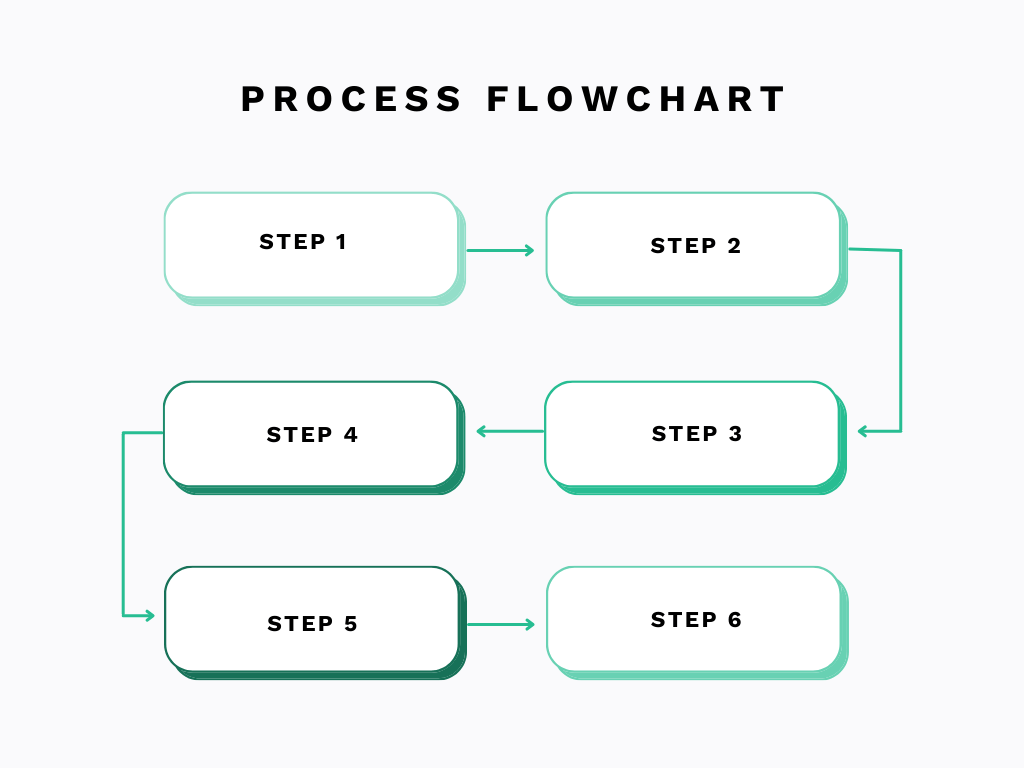
Begin with the maintenance request and map every handoff, approval, assignment, repair, inspection, and close-out.
You will quickly discover that many delays may happen outside your documented process.
Phone calls, hallway conversations, sticky notes, personal spreadsheets, and verbal approvals often become unofficial systems for managing maintenance work.
In the end, moving those habits into a CMMS will not solve the problem.
You will simply digitize the confusion.
Mapping your existing workflow first helps you identify those weaknesses before they become permanent.
Standardize Work Order Intake
Once you map your process, you need to improve how data comes in.
If one technician receives maintenance requests by phone, another by email, and someone else logs them in a spreadsheet, you have a potential problem before the work even begins.
Every request follows a different path, which means information gets recorded differently or, worse, not at all.
Over time, this can create:
- Inconsistent data
- Duplicate work orders
- Missing asset history
- Delayed repairs
A technician might receive a phone call about a leaking pump but forget to log it. Someone else might update a spreadsheet but omit critical details like the asset ID or priority level.
A tragic example of why standardization matters occurred in 2010 at DuPont’s Belle facility in West Virginia.
A braided steel hose connected to a one-ton phosgene tank suddenly ruptured, releasing a highly toxic gas. A veteran operator was exposed to the leak and died the following day.
During its investigation, the U.S. Chemical Safety and Hazard Investigation Board (CSB) found several maintenance management failures, including:
- the absence of an effective system to schedule hose replacements
- weak authorization controls
- no formal process for reporting deteriorating equipment
Employees had previously observed issues with aging hoses, but those concerns were never consistently documented or tracked.
This is exactly why standardizing your work order intake matters.
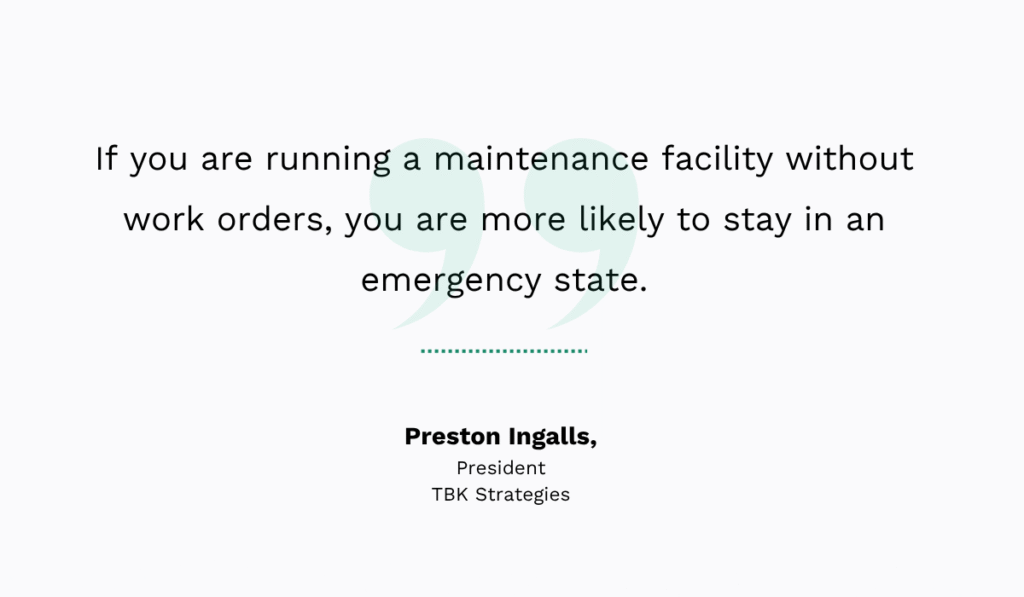
Preston Ingalls, President of the consultancy TBR Strategies, puts it perfectly:
Every maintenance request should follow a single, consistent workflow from the moment it is reported until the job is completed.
And the best way to standardize work order data is to use a CMMS like WorkTrek.
Instead of allowing requests to arrive through multiple disconnected channels, WorkTrek centralizes them into standardized digital work order forms and configurable workflows.
Every maintenance request follows the same process from submission to completion, regardless of who reports the issue.
With WorkTrek, you can use prebuilt work order templates to ensure consistency across the board.
You can require mandatory fields such as asset ID, location, priority level, and failure description so technicians never miss critical details.
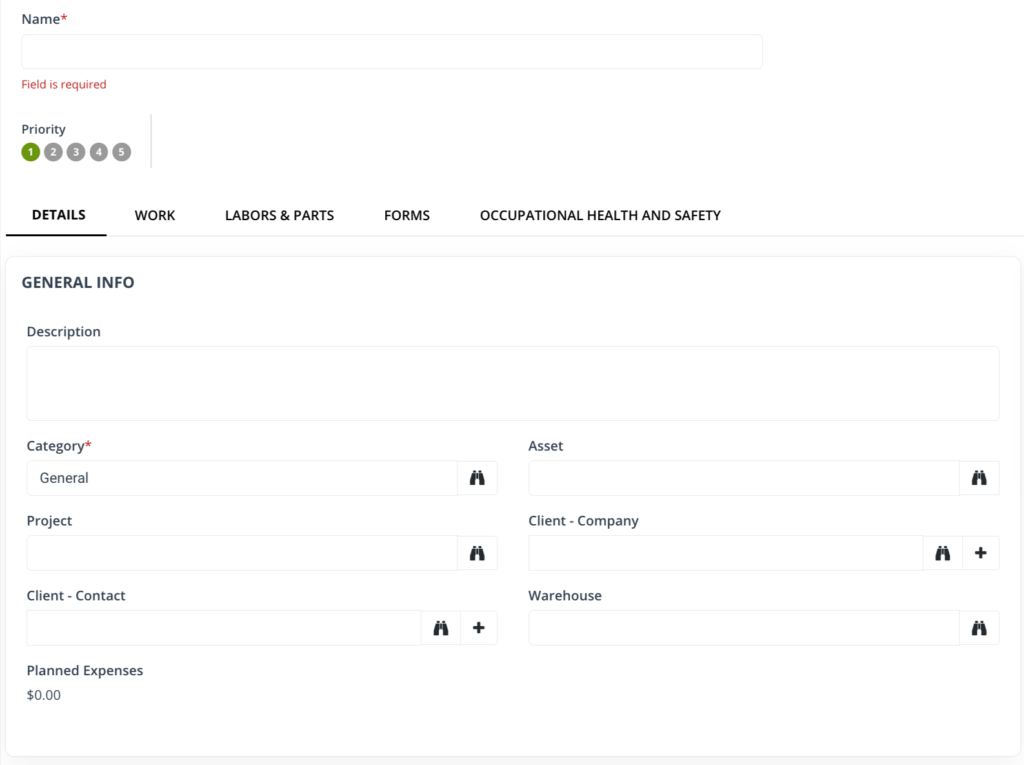
Additionally, your team can attach photos, inspection reports, manuals, and other documentation directly to the document, all from their phones.
Automated notifications also keep requesters, supervisors, and technicians informed throughout the entire lifecycle of the work order.
With WorkTrek, those hidden work order inefficiencies are eliminated.
Visibility, data accuracy, and accountability increase significantly across the entire workflow.
Establish Prioritization Rules
Not all work orders are created equal.
A burning motor is obviously more urgent than a squeaky door.
If you do not have clear prioritization rules, your technicians will work on whatever they see first.
This is a dangerous way to run a maintenance team.
You need strict rules for what constitutes a high-priority task. Otherwise, you expose your operation to the biggest productivity killer of them all: unplanned downtime.
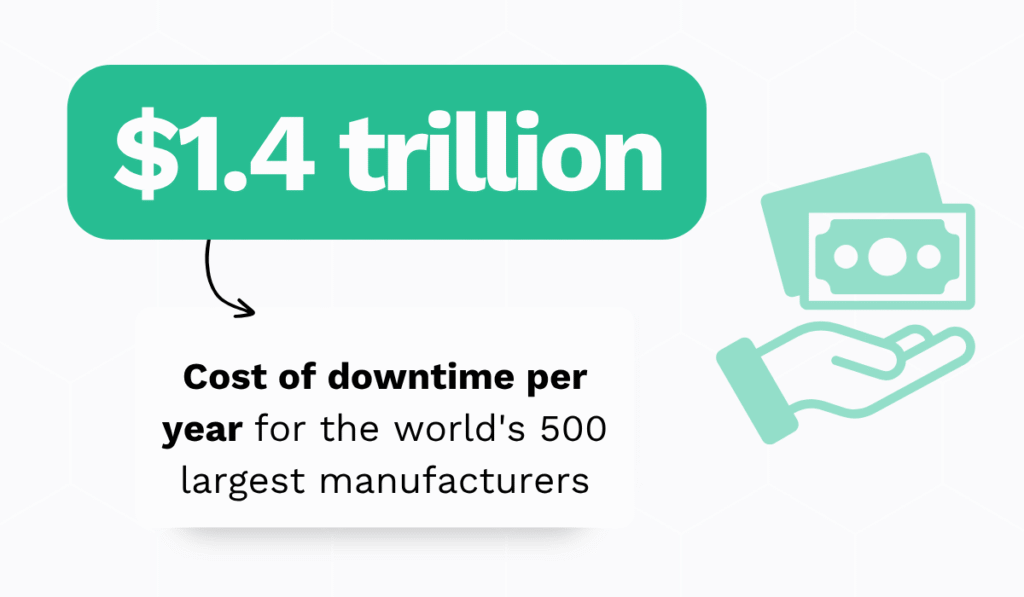
According to Siemens’ 2024 True Cost of Downtime report, the world’s 500 largest manufacturers lose an estimated $1.4 trillion every year to unplanned downtime, roughly 11% of their annual revenue.
One of the simplest ways to reduce maintenance costs is to establish work order prioritization rules.
Most organizations evaluate work orders using a tiered approach.
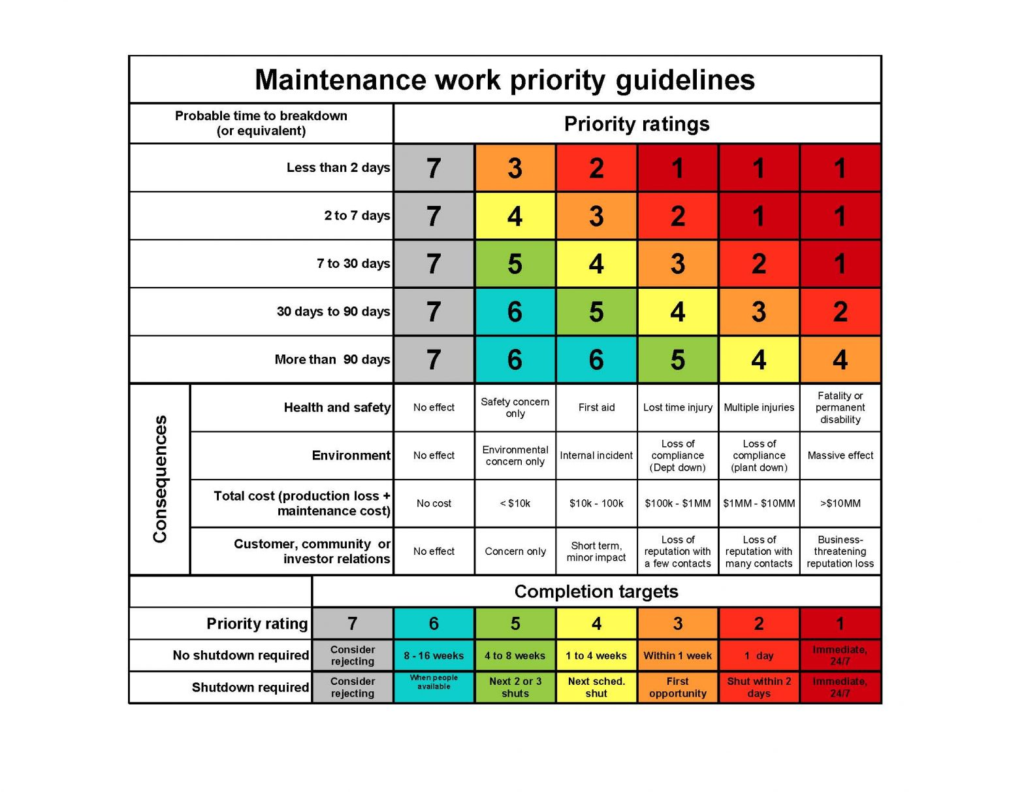
Safety risks always come first, followed by regulatory or environmental compliance, asset criticality, operational impact, and finally routine maintenance.
These elements are typically all laid out in a matrix that combines likelihood with the severity of the issue, as shown below:
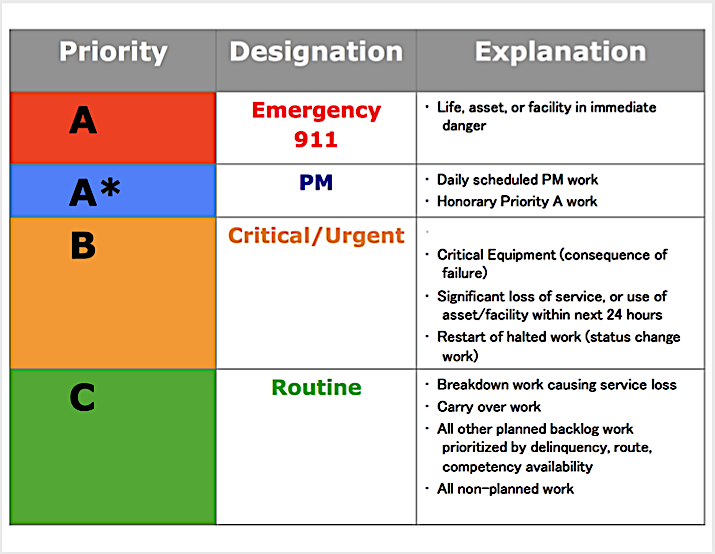
Or you could also simplify decision-making by assigning priority levels such as A, A*, B, and C, where each level represents a predefined response based on risk and business impact, like so:
This also improves workload planning, allowing managers to see how many high-priority tasks are waiting and adjust staffing before bottlenecks develop.
Without prioritization rules, your team may always be reactive or never get ahead of the preventive maintenance schedule.
Establishing these rules takes a little time up front, but it saves hundreds of hours later.
Define Clear KPIs
Defining clear Key Performance Indicators (KPIs) is one of the most reliable ways to determine whether your maintenance work order process is actually improving.
Below, you can watch an informative guide on maintenance KPIs by Ed Surber, Founder & Head of Operations at PIE Electric Inc., an electrical services provider:
Contrary to popular belief, maintenance KPIs aren’t only for massive refineries or manufacturing plants.
Every facility, from schools and hospitals to warehouses and commercial buildings, can use maintenance metrics to identify bottlenecks and continuously improve operations.
Here are some of the most valuable KPIs your maintenance team can monitor:
| KPI | Why it matters | What does it tells you |
|---|---|---|
| Mean Time to Repair (MTTR) | Measures how quickly assets are restored after failure. | High MTTR may indicate inefficient troubleshooting, poor spare parts availability, or inadequate technician training. |
| Preventive Maintenance (PM) Compliance | Tracks the percentage of scheduled PM tasks completed on time. | Low compliance often signals resource shortages, unrealistic scheduling, or excessive reactive work. |
| Work Order Completion Rate | Measures how many assigned work orders are completed within the planned period. | Helps identify backlog growth and overall maintenance productivity. |
| Planned vs. Reactive Maintenance Ratio | Compares planned maintenance against emergency repairs. | A higher percentage of planned work generally indicates a more mature and proactive maintenance program. |
| Maintenance Backlog | Measures outstanding maintenance work waiting to be completed. | A growing backlog may indicate understaffing, poor prioritization, or recurring asset failures. |
| Schedule Compliance | Tracks how closely technicians follow the planned maintenance schedule. | Reveals whether daily maintenance plans are realistic and achievable. |
These metrics tell you not only how quickly your team fixes equipment but also how effectively it prevents failures in the first place.
For example, if your MTTR continues to increase, the problem may not be your technicians at all.
It could indicate delays in locating spare parts, lengthy approval processes, or poor work order planning.
Likewise, consistently low PM Compliance often suggests your team is overloaded with reactive work or scheduling more preventive maintenance than available resources can realistically support.
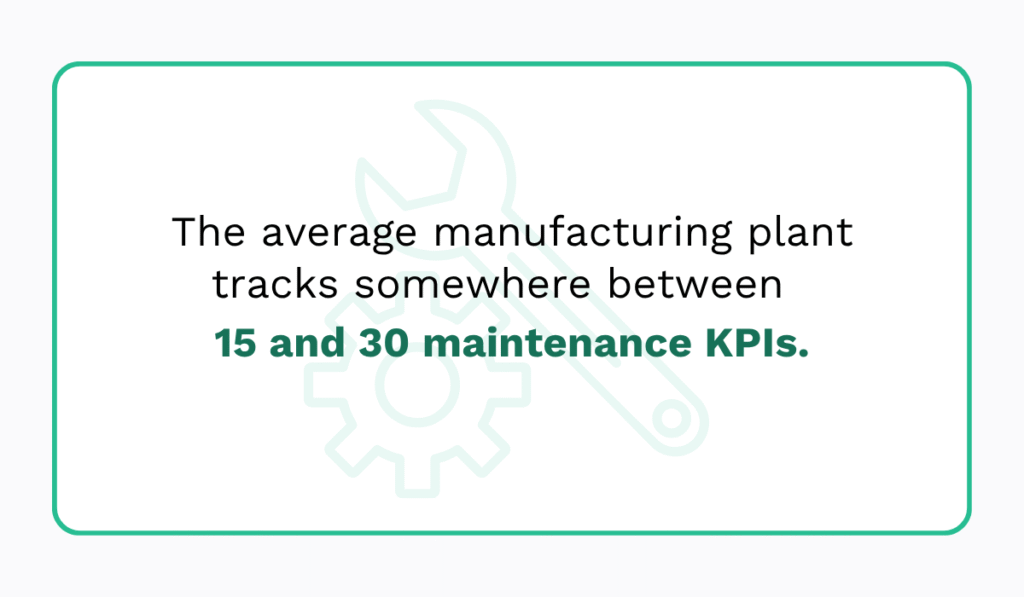
Looking at multiple KPIs together provides even greater insight. In fact, Reliable Magazine estimates plants track about 30 metrics.
However, KPIs aren’t just for your supervisors to track. Technicians should also be able to access and monitor them.
When teams understand how their work contributes to larger operational goals, they are more likely to identify inefficiencies, suggest improvements, and take ownership.
Track these metrics consistently, review them regularly, and look for trends instead of isolated numbers.
Over time, better visibility replaces guesswork, allowing your maintenance team to spend less time firefighting and more time building a reliable, proactive maintenance operation.
Develop Standard Operating Procedures
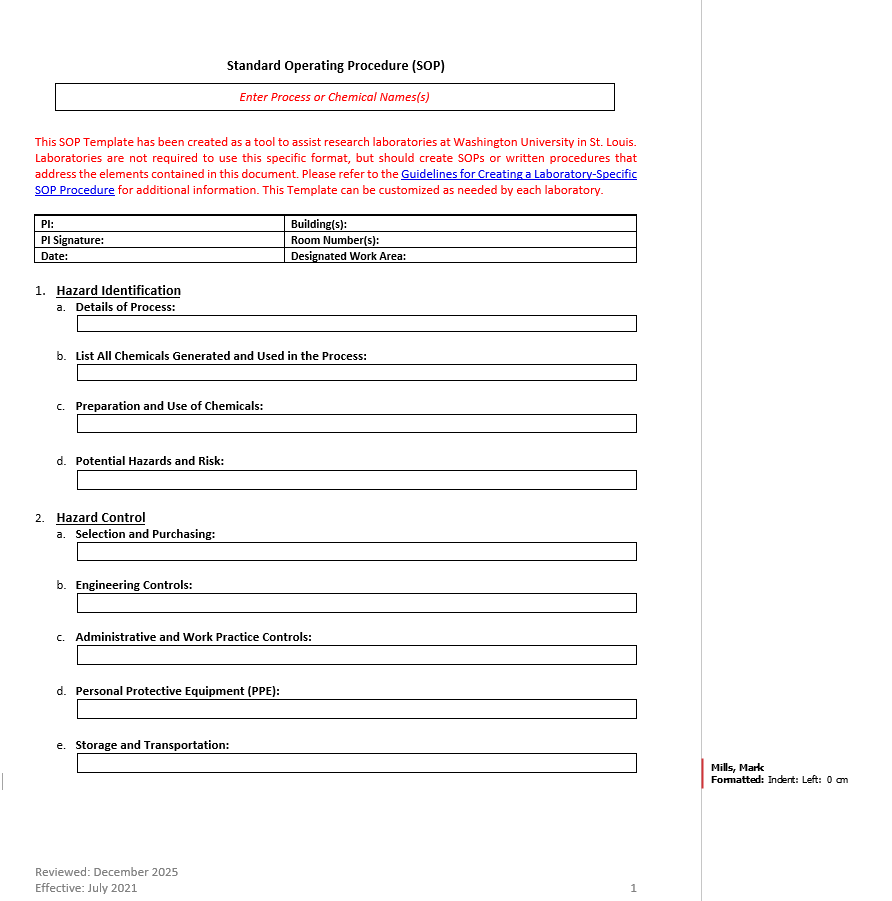
Standard Operating Procedures (SOPs) document exactly how a maintenance task should be performed.
You can see a template for one such document below:
These documents are more important than many realize.
Without one, two technicians are more likely to repair the same asset using completely different methods.
That inconsistency can lead to safety risks, longer repair times, and unreliable maintenance records.
This is why industries such as manufacturing, oil and gas, chemicals, pharmaceuticals, healthcare, utilities, aviation, and construction rely heavily on SOPs.
A good work order SOP may contain the following elements:
| Scope and objective | Defines exactly what the procedure covers. |
| Required tools, parts, and PPE | Ensures technicians arrive prepared. |
| Safety precautions | Identifies hazards before work begins. |
| Step-by-step procedure | Creates consistency across every technician. |
| Inspection and testing | Confirms the repair was successful. |
| Documentation and sign-off | Maintains complete maintenance history. |
Note: Elements may vary by industry type
Another great advantage of well-crafted SOPs is that they preserve institutional knowledge.
Experienced technicians eventually retire, change jobs, or move into leadership roles. SOPs allow their expertise to remain part of your maintenance program.
Digital SOPs make everything even easier and more accessible.
Rather than updating paper manuals or emailing revised instructions, maintenance teams can instantly publish the latest version.
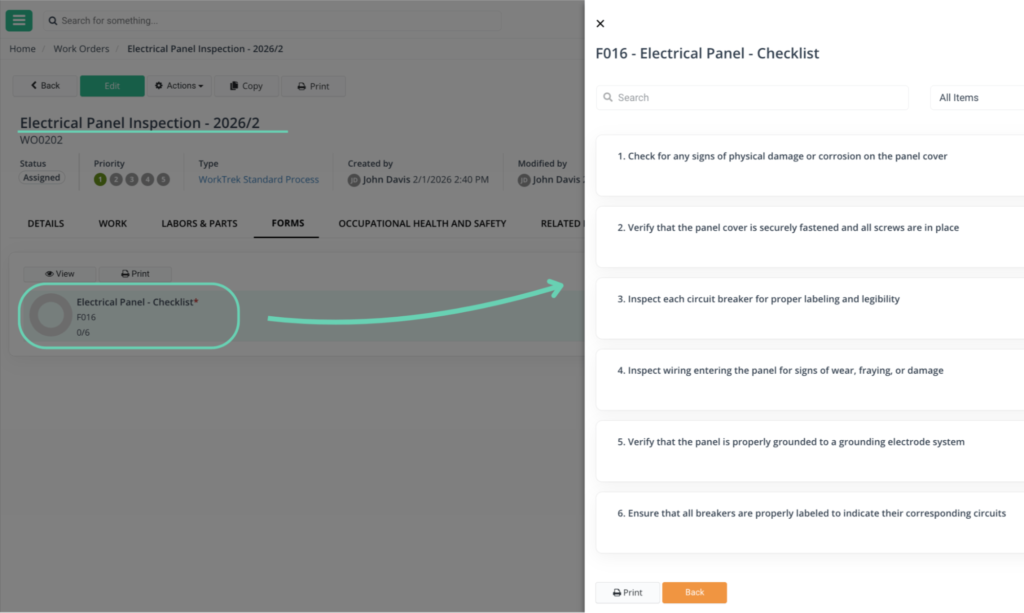
If a safer inspection method, improved repair technique, or new regulatory requirement emerges, everyone can access the same updated procedure immediately.
Essentially, your SOPs evolve alongside your equipment, workforce, and maintenance practices.
Conclusion
Improving your maintenance work order process does not happen overnight, but every improvement builds on the last.
A well-defined workflow helps eliminate confusion, ensures work is prioritized correctly, and gives technicians the information they need to complete jobs efficiently.
Combined with measurable KPIs and standardized procedures, your work order process becomes a reliable system for driving continuous improvement.
The sooner you build that foundation, the easier it becomes to reduce downtime and keep maintenance operations running smoothly.