

Get a Free WorkTrek Demo
Let's show you how WorkTrek can help you optimize your maintenance operation.
Try for freeKey Takeaways:
- Legionella bacteria can spread through cooling tower water droplets and cause serious illness.
- Proper cooling tower water treatment controls scale, corrosion, and bacterial growth.
- Vibration and temperature readings can reveal equipment problems before failure.
- With WorkTrek, teams can schedule cooling tower inspections and complete checklists.
If there’s one thing that should make anyone responsible for cooling towers pay attention to maintenance, it’s the risk of Legionella.
Over the past two summers, New York has dealt with dangerous Legionnaires’ disease outbreaks, putting cooling towers in the spotlight once again.
Legionella isn’t the only reason to keep up with maintenance. Proper care also helps cooling towers operate efficiently, use less energy, and last longer.
But how do you ensure the cooling towers you’re responsible for get the attention they need?
You need a good old maintenance checklist. Read on to get one, along with some practical tips and tools to help you keep your cooling towers in good shape and bacteria-free.
Cooling Tower Maintenance Checklist
Not all cooling towers are the same, so their maintenance needs won’t be exactly the same either.
The type of tower (open-circuit, closed-circuit, or dry), its operating conditions, and the environment around it all play a part.
For example, a tower surrounded by trees may need more frequent checks for leaves and other debris.
Your starting point should always be the manufacturer’s operation and maintenance (O&M) manual.
From there, use relevant guidance, including the CDC’s recommendations for Legionella prevention, and adapt the maintenance schedule to your equipment, water management plan, and local requirements.
We reviewed guidance from the CDC and EMSD, along with maintenance recommendations from manufacturers such as BAC, SPX Cooling Technologies, and EVAPCO, to put together this baseline checklist.
Use it as a starting point, not a one-size-fits-all schedule, and always check your manufacturer’s manual before carrying out cooling tower maintenance.
Daily Checks
Daily checks will help you spot changes in operating conditions and catch water treatment issues early.
- Check for unusual noise, vibration, leaks, or visible biological growth
- Check system readings, operating status, and alarms.
- Check disinfectant residuals and confirm they remain within control limits.
- Check automated water treatment and chemical feed systems.
- Record water treatment readings and flag results outside control limits.
Weekly Tasks
Use weekly inspections to check for buildup, obstructions, and early signs of mechanical or water quality problems.
- Inspect accessible components for debris, scale, corrosion, and biological growth.
- Check fans, motors, and drive components for unusual noise or vibration.
- Check basin water level and remove visible debris.
- Inspect air inlets, screens, and louvers for obstructions.
- Flush low-flow pipe runs and dead legs.
- Review water treatment results and investigate abnormal readings.
Monthly Tasks
Monthly maintenance covers key water distribution and basin components, drive systems, and routine water quality monitoring.
- Clean basin strainers.
- Check basin water level, makeup valve, and float assembly.
- Check the blowdown (bleed-off) valve.
- Inspect water distribution and spray patterns.
- Inspect and clean air inlet louvers and fan screens.
- Inspect fan belts for wear and tension (belt-driven units).
- Check gearbox oil level and look for leaks (geared units).
- Test and record water chemistry, including pH and conductivity, at the frequency required by the water management plan.
- Test for Legionella at the frequency required by local regulations and the water management plan.
Quarterly Tasks
Quarterly checks focus on components that need periodic inspection, lubrication, or more thorough cleaning.
- Lubricate fan-shaft bearings.
- Inspect drift eliminators for damage and buildup.
- Inspect fan blades for cracks, damage, or abnormal vibration.
- Inspect driveshafts, couplings, and bearing lubrication lines (where equipped).
- Clean and flush the basin or water collection pan.
- Inspect water-level controller probes and remove scale buildup (where equipped).
- Review microbiological monitoring results and complete scheduled Legionella testing.
Semi-Annual and Annual Tasks
At this frequency, do a deeper cleaning, detailed inspections, and preventive work that goes beyond routine checks.
- Inspect belt tension and condition (belt-driven units).
- Inspect structural fasteners and mechanical equipment bolts.
- Inspect fan blades, hubs, fan cylinders, driveshafts, and couplings for wear or damage.
- Inspect metal surfaces and repair damaged protective coatings.
- Inspect and lubricate motors.
- Inspect gearboxes and replace lubricant when due (geared units).
- Clean and disinfect the cooling tower at least annually, or more frequently when required.
- Inspect and clean fill surfaces (open cooling towers) or heat-transfer coils (closed-circuit coolers) as needed.
- Review maintenance records, water treatment results, and corrective actions.
Seasonal Start-Up and Shutdown
Before starting or taking a tower out of service, check the equipment and follow the relevant water management and seasonal maintenance procedures.
Before start-up
- Inspect the tower and connected components for damage and debris.
- Clean and disinfect the system as required before commissioning or restarting.
- Check the basin, drains, strainers, and makeup water valves.
- Inspect fans, motors, drives, and safety guards.
- Check water treatment controls, sensors, alarms, and safety interlocks.
- Check water distribution and spray patterns after start-up.
- Check for leaks, unusual noise, and vibration.
- Record inspection results and outstanding repairs.
Before shutdown
- Follow the water management plan’s shutdown procedure.
- Drain and clean the basin when required.
- Drain the heat-transfer coil when necessary to prevent freezing (closed-circuit coolers).
- Protect pipes, pumps, and other components against freezing.
- Lubricate and protect components as required.
- Record shutdown activities and maintenance needed before the next start-up.
How to Make Sure Your Team Actually Uses the Checklist
Having a checklist ready doesn’t mean much if your team doesn’t actually use it.
Unfortunately, there are plenty of reasons why that might happen.
Maybe the checklist is buried in a binder, technicians forget to record readings, or those less frequent tasks keep getting pushed aside.
Whatever the reason, the goal is to make the checklist easy to follow, easy to fill out, and hard to forget about.
Assign someone to each task, schedule preventative checklists and inspections, and keep a record of what was done and when.
Our CMMS WorkTrek will help you automate much of that job.
Instead of relying on paper checklists, you can create a digital one, customize the questions and sections to fit your cooling tower, and attach it to a recurring preventive maintenance work order linked to that tower.
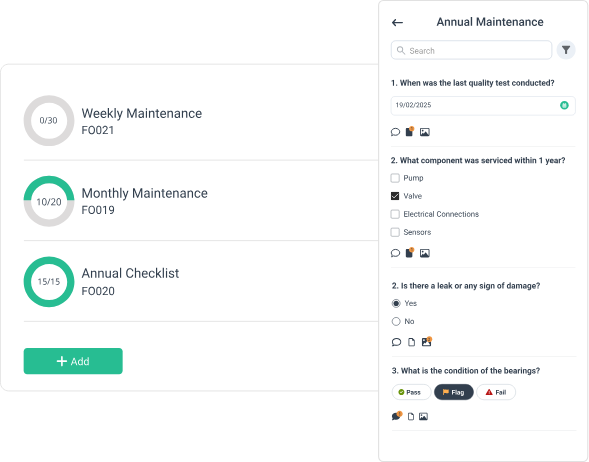
Set up daily, weekly, monthly, or annual checklists and assign them to the right technicians. When the date comes, they will get a reminder so the checklist won’t get lost in a binder somewhere.
Technicians can complete the checklist in the mobile app while they’re on-site.
If they flag an issue, WorkTrek can automatically create a follow-up work order so it doesn’t get lost among other tasks.
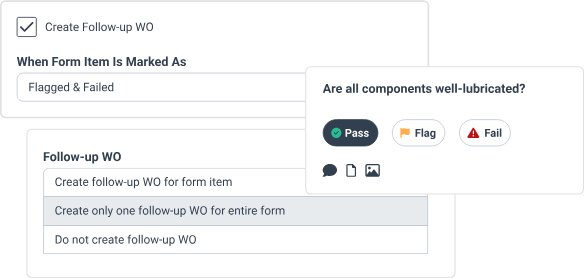
You can also use NFC tag check-ins to confirm that technicians visited the tower and access searchable inspection records whenever you need to look back at previous maintenance or prepare for an audit.
Cooling Tower Maintenance Best Practices
A thorough checklist will give you a routine to follow, but keeping a cooling tower in good shape takes a little more than that.
You also need to work with water treatment specialists, control health and safety risks, and pay attention to how the tower performs over time.
Work With a Water Treatment Specialist
Just because your cooling tower looks fine on the outside doesn’t mean everything is fine with the water inside it.
Dissolved minerals can build up and form scale, water can corrode metal parts, and bacteria, including Legionella, as well as algae and other microorganisms can grow if water conditions aren’t properly controlled.
And just like that, you’re looking at operational, financial, and health risks.
That’s why, for proper cooling tower maintenance, it is crucial to work with a water treatment specialist.
John Ramirez, Regional Manager of Engineering Services at Action Property Management, makes this point when talking about the role of maintenance teams and their vendors:
“I know the maintenance techs that are on site, they’re doing as much as they can, but they don’t control the chemicals. They have to get with their vendors and figure out what the proper mixture is for each tower. Each tower has its own mixture, it has its own way of controlling what grows and what doesn’t grow.”
The “mixture” he is referring to is a water treatment program that includes scale inhibitors, corrosion inhibitors, biocides, and pH adjusters, so figuring out the right combination and dosage is definitely a job for a specialist.
A qualified water treatment provider will therefore test your water, recommend the right treatment program, and adjust it when needed.
It’s also worth agreeing on how often the water should be tested, how you’ll receive the results, and who needs to act if the water chemistry is outside the recommended range.
Build a Legionella Water Management Plan
Legionella is one of the biggest reasons cooling tower maintenance needs to be taken seriously.
The bacteria can grow in cooling towers because they often have ideal temperature ranges for Legionella growth 20°-50°C (68°-122°F).
Bacteria can then spread through tiny water droplets in the air, potentially causing Legionnaires’ disease, a serious type of pneumonia.
According to the CDC, about one in ten people who get sick with the disease die from complications.
Unfortunately, there have been many cases of Legionnaires’ outbreaks.
In 2017, Disneyland shut down two cooling towers following an outbreak in Anaheim. More recently, a 2025 outbreak in Central Harlem sickened 114 people and killed seven.
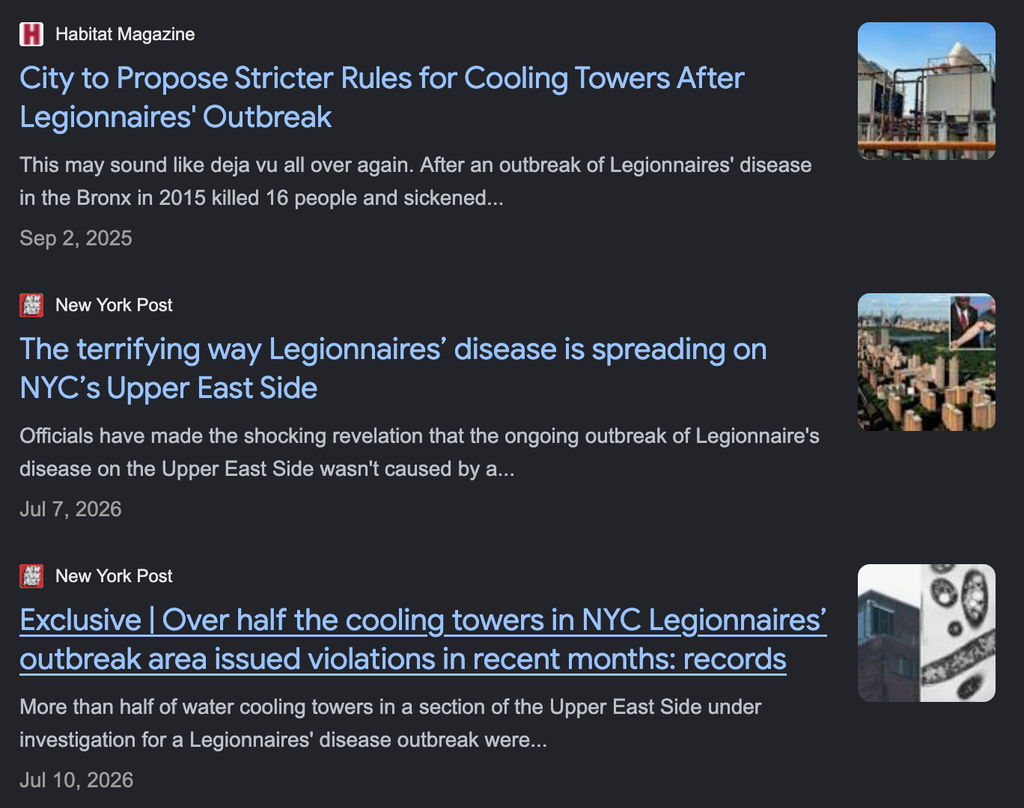
Investigators matched Legionella found in two cooling towers to samples from patients.
To prevent Legionella from growing and disease from spreading, cooling tower owners are required to have a special Legionella water management plan.
The purpose of a Legionella WMP is to identify Legionella risk and establish steps to monitor water conditions and respond to risks in time.
ASHRAE Standard 188 sets out minimum requirements for managing Legionella risks in building water systems, while ASHRAE Guideline 12 offers additional guidance, including for cooling towers.
Below are the seven steps that a Legionella water treatment plan has to have (by CDC, based on ASHRAE Standard 188 and ASHRAE Guideline 12):
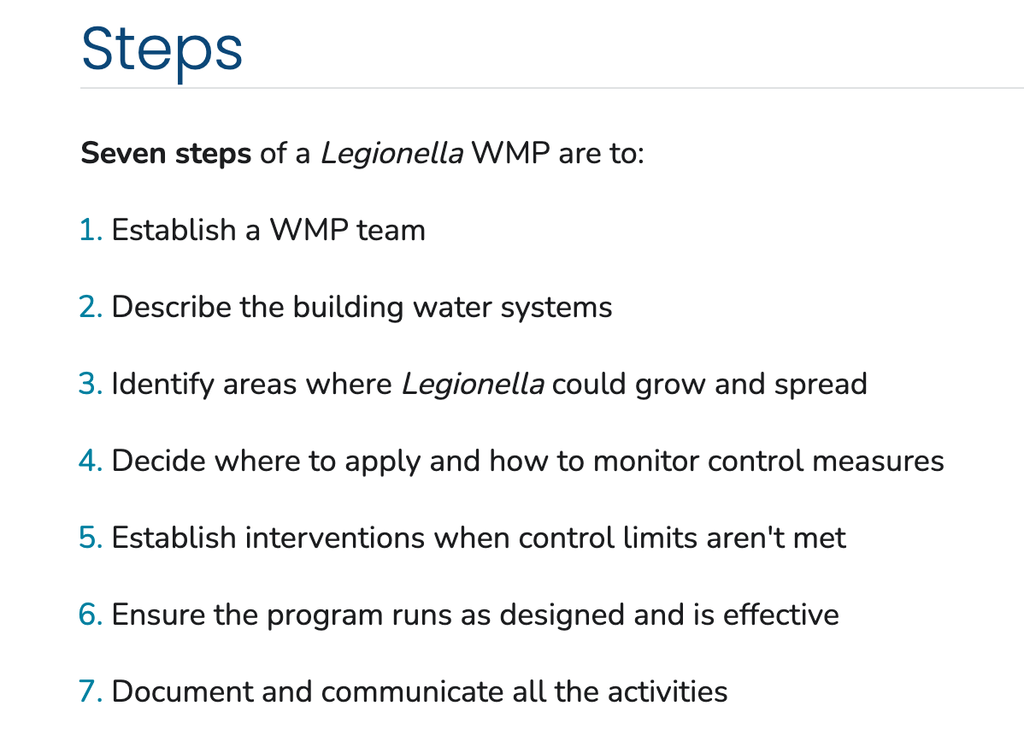
Make sure to build one for your cooling tower and follow it closely.
Protect Technicians During Inspections and Cleaning
A cooling tower isn’t just a big box of water.
It has fans, motors, pipes, and other components that technicians need to inspect and maintain, sometimes on rooftops or elevated platforms.
In other words, they work around moving machinery, surrounded by treatment chemicals, water aerosols, and fall hazards.
One case shows just how serious these risks can be.
A 65-year-old cooling tower engineer suffered multiple life-threatening injuries after falling around 30 feet when a neglected railing gave way, according to the law firm that represented him.
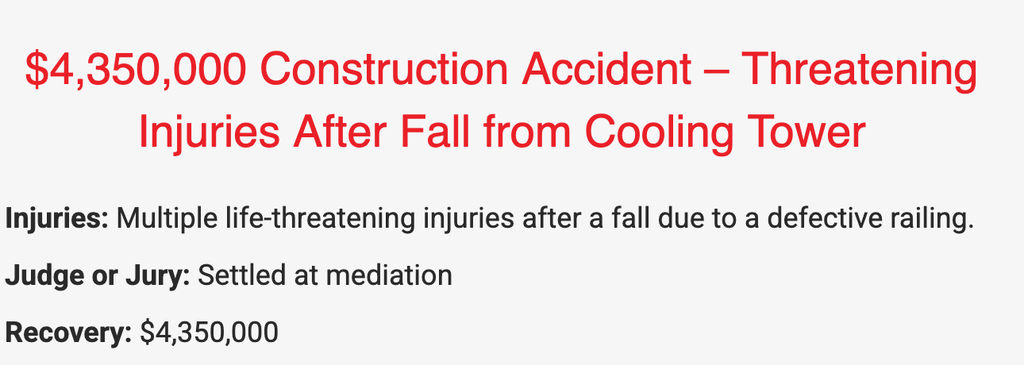
It’s a reminder that safety equipment needs maintenance, too.
Inspect ladders, platforms, and railings regularly, repair defects promptly, and provide safe access and fall protection for rooftop work.
Before servicing fans or motors, technicians should follow lockout/tagout procedures to isolate hazardous energy.
They also need task-appropriate PPE, including respiratory protection when there’s a risk of exposure to contaminated aerosols.
Cleaning and disinfection need care, too.
Disinfection often comes before physical cleaning to help reduce biological hazards before deposits and biofilm are disturbed.
Technicians should follow the manufacturer’s instructions and the site’s water management plan rather than improvise chemical concentrations or mix products.
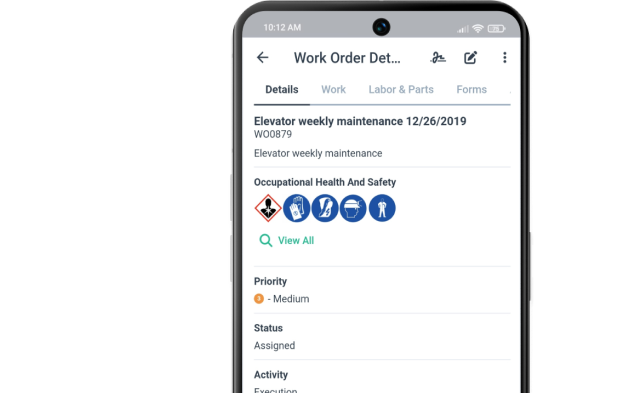
To help them follow these procedures, include relevant hazards, PPE requirements, and safety checklists in the work order.
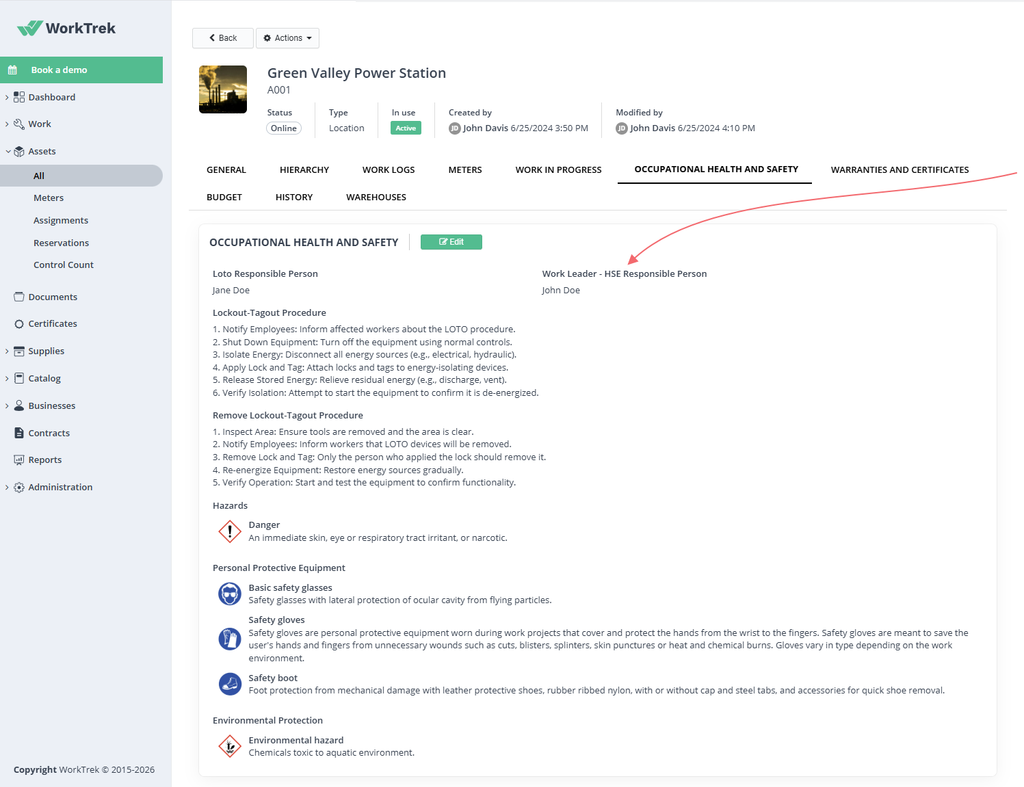
A CMMS can make these instructions available on technicians’ phones and keep completed safety checks with the maintenance records.
Track Performance Data, Instead of Completed Tasks Only
A maintenance checklist tells you what was done, but cooling tower performance readings can help you spot a problem that needs attention before the next scheduled inspection.
Here are four readings worth tracking:
| VIBRATION | Can reveal developing problems with fan motors, bearings, and gearboxes |
| FAN MOTOR AMPERAGE | Unexpected changes can point to electrical or mechanical issues |
| APPROACH TEMPERATURE | A rising temperature difference can indicate that the tower isn’t transferring heat as effectively as before |
| CONDUCTIVITY | Helps track dissolved minerals in the water and manage blowdown |
A real-world example of how beneficial it is to track this data comes from Aux Sable, a natural gas processing facility that monitored cooling tower fan motor vibration over three years.
Readings rose from 0.07 to 0.19 inches per second, approaching the alarm threshold of 0.20.
Further analysis identified a bearing defect, allowing the facility to repair the motor during a planned shutdown instead of risking an unexpected failure.
The repair cost less than $5,000, compared with a $20,000 quote for a replacement motor.
That’s the benefit of tracking performance data.
Rather than sticking to the same maintenance intervals regardless of equipment condition, your team can use the readings to decide when something needs a closer look or when maintenance should happen sooner.
So yes, a fixed schedule and a good maintenance checklist give you a routine, but performance data should decide when that routine needs to change.
Conclusion
A cooling tower checklist is a good place to start, but it’s not the whole maintenance plan.
You still need to keep water quality under control, manage Legionella risks, and make sure inspections don’t get forgotten or left undocumented.
And when performance readings start changing, your team needs to know what to do with that information.
Start with the checklist in this article, compare it with your manufacturer’s O&M manual, and adjust it to fit your cooling tower.
Then turn the tasks into recurring work orders so they don’t just sit on paper waiting to be done.