


Get a Free WorkTrek Demo
Let's show you how WorkTrek can help you optimize your maintenance operation.
Try for freeAn hour of downtime in large automotive plants costs $2.3 million.
Most facilities lose less than that, but unplanned downtime is expensive for almost every industrial business.
It also happens often, and for most maintenance teams, it is not decreasing.
CMMS systems like WorkTrek help maintenance teams track and reduce downtime, but it’s important to understand how widespread the problem is first.
These statistics show how often unplanned downtime happens, what it costs, and how maintenance teams are responding.
Major Manufacturers Average 25 Downtime Incidents per Facility Each Month
To start, we’ll look at Siemens’ 2024 report, The True Cost of Downtime.
Siemens collected data from 181 online interviews with maintenance, engineering, and IT professionals at large industrial organizations around the world.
The researchers wanted to examine how often production stops unexpectedly.
They found that, on average, each facility experiences 25 downtime incidents a month, as shown in the chart below.
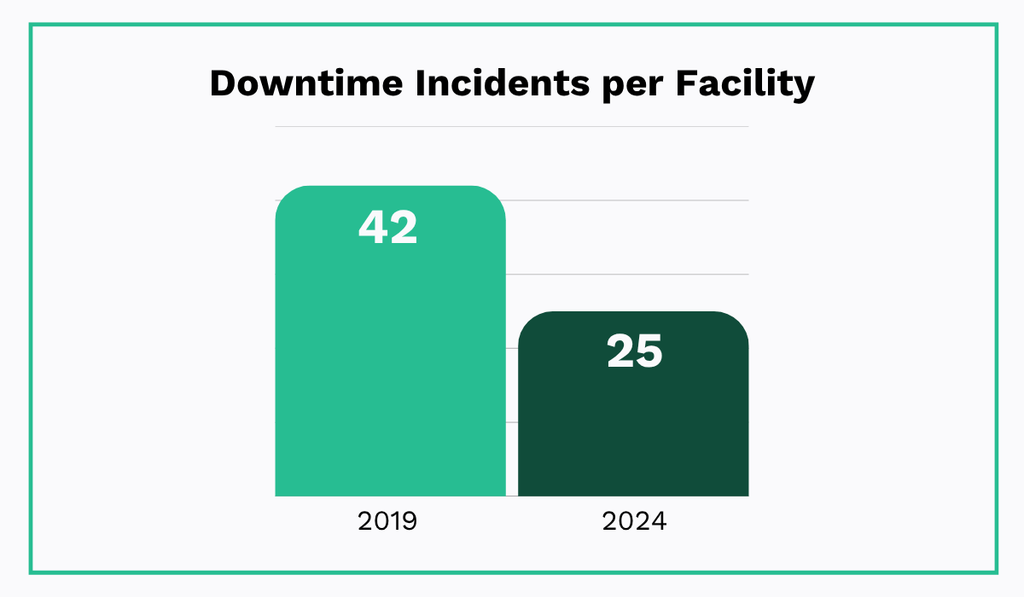
As we can see, this is a 41% drop from 2019, when the average was 42 incidents.
The report explains that the number has dropped due to the rise of predictive maintenance (PdM), which uses equipment data to detect early signs of failure.
Manufacturers can now predict many mechanical failures because these technologies have become common.
So, while the report shows that the cost of each hour of downtime rose in most sectors, fewer incidents mean total losses grow more slowly.
For 79% of Maintenance Teams, Unplanned Downtime Held Steady or Increased Over the Past Year
Two years later, we can see a slightly different trend.
MaintainX surveyed 2,234 maintenance and operations leaders in the U.S. and Canada for its State of Industrial Maintenance 2026 report.
Among their findings, they looked at how unplanned downtime changed over the past year.
The results are shown below.
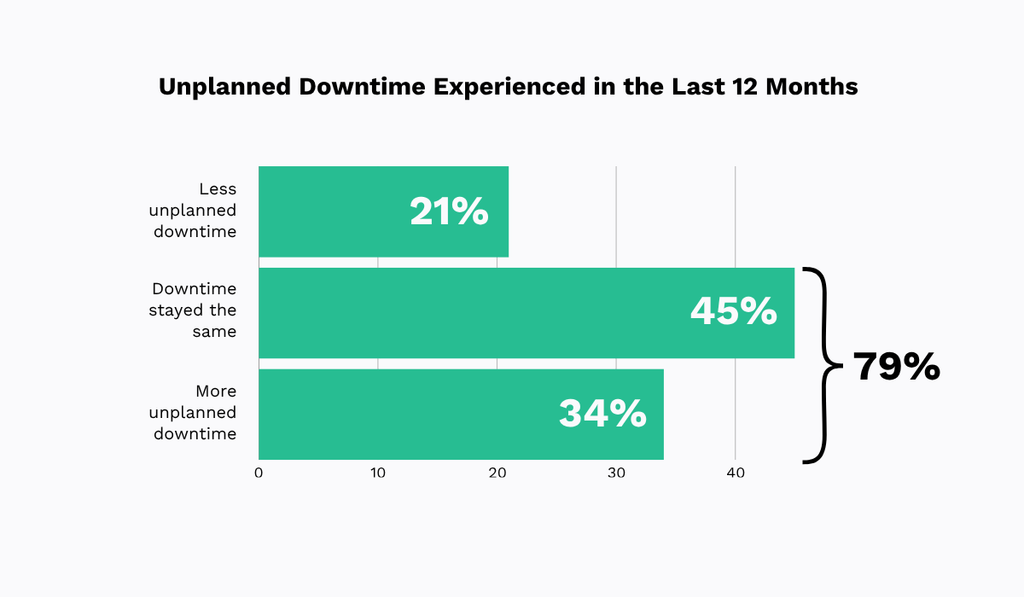
As you can see, downtime has not improved for the vast majority, with 45% reporting no change and 34% an increase.
Only 21% experienced less unplanned downtime.
When looking at the causes, respondents named asset strain and workforce constraints.
This means equipment is under more stress while fewer skilled technicians are available to maintain it.
It’s worth looking at your own downtime records from the past year to see whether stoppages are becoming less frequent.
If they are not, staffing and equipment condition are good places to start.
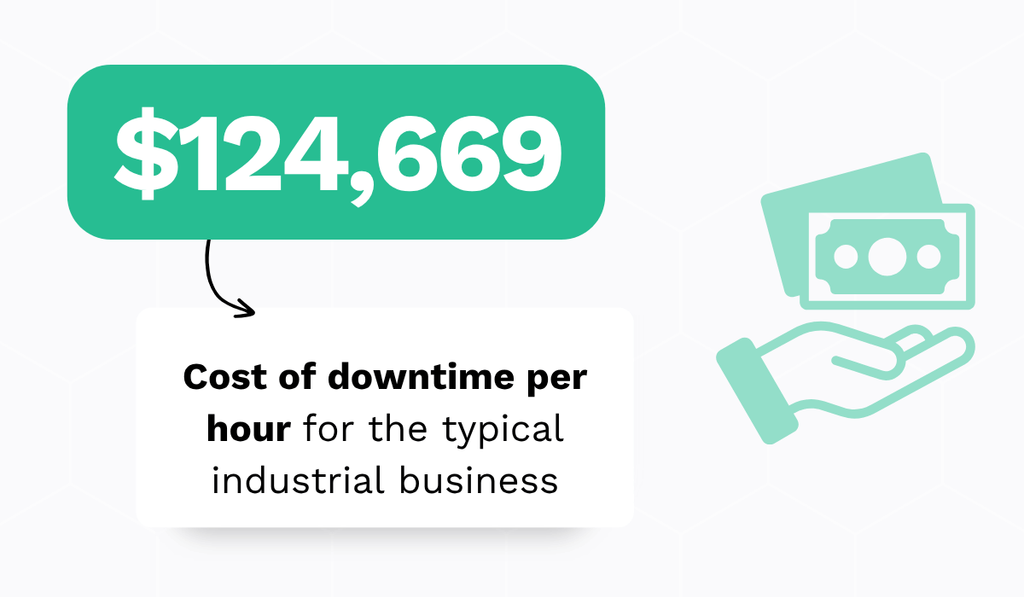
Unplanned Downtime Costs the Typical Industrial Business $124,669 per Hour
This data comes from ABB’s Value of Reliability report, which surveyed 3,215 plant maintenance leaders around the world in 2023.
Among them, 49% were senior managers, alongside C-level executives, directors, owners, and partners.
When asked about the cost of downtime, they reported almost $125,000 per hour for a typical business.
The number varied across sectors, which the report attributes to differences in regulation and in the cost of lost production and raw materials.
These three industries saw the highest cost:
- Energy and power: $179,055
- Plastics and rubber: $178,941
- Oil and gas: $144,452
If you’re in one of these sectors, it’s a good idea to calculate cost based on lost output, idle wages, and wasted materials.
That figure will show how much each prevented stoppage saves your business.
An Hour of Downtime in a Large Automotive Plant Costs $2.3 Million
Coming back to the Siemens report, it’s worth looking at their downtime cost figures as well.
As we mentioned, costs increased between 2019 and 2023.
For automotive manufacturers, they lost $2.3 million for each hour a large plant was not productive.
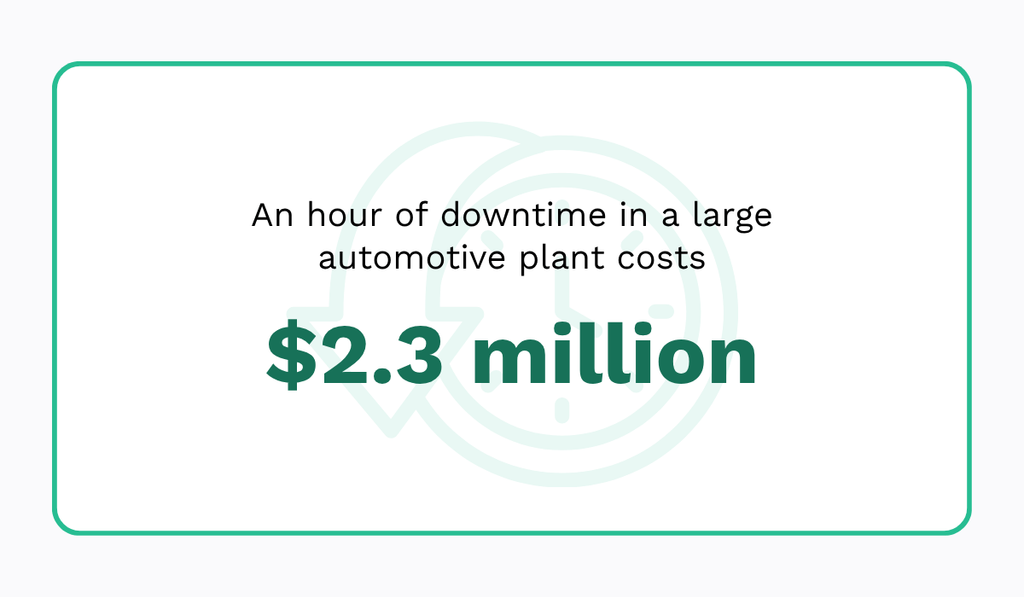
In other words, that’s over $600 lost every second that production lines are not running.
Over the five years the researchers examined, the cost of an hour’s downtime in this sector rose by 113%.
The report breaks down why these costs have increased so much, looking at how downtime leads to several costs at once:
- Lost revenue from goods not produced
- Wages for staff who cannot work during downtime
- Emergency repairs and parts
- Penalty payments to customers
This is important because each of these costs grows with every hour the equipment isn’t running.
Reducing the length of each stoppage lowers these losses, and preventing the stoppage lowers them further.
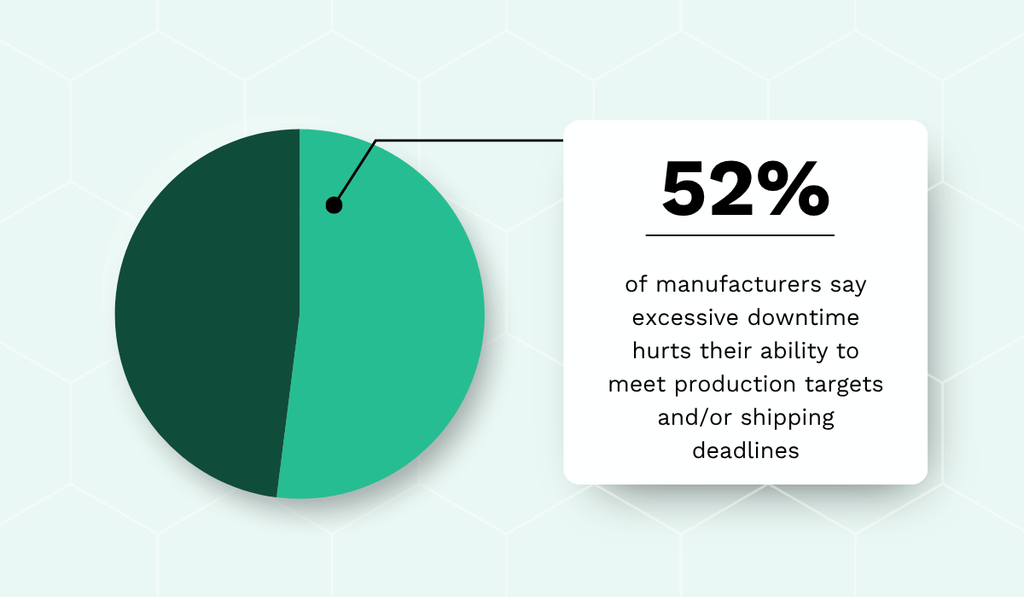
52% of Manufacturers Say Downtime Hurts Their Ability to Meet Production Targets or Shipping Deadlines
If we look beyond cost, we can see how downtime affects production schedules and customer orders.
One such insight comes from L2L’s research report, The Real Impact of Manufacturing Downtime.
Their 2025 survey, run with a third-party research firm, asked over 600 U.S. manufacturing leaders about the impact of downtime.
For over half of them, the biggest impact is on production targets and shipping deadlines, as shown below.
The report also found that facilities lose an average of 30 hours of production to downtime each month, and 17 of those hours are unplanned.
This means most of this downtime is not caused by scheduled repairs or planned inspections, but directly affects production that has already been scheduled.
Planned downtime can be arranged around delivery dates, but unplanned stops cannot.
When a line stops without warning, orders are delayed, and customers notice.
Reducing unplanned stops helps you meet production targets and deliver orders on time.
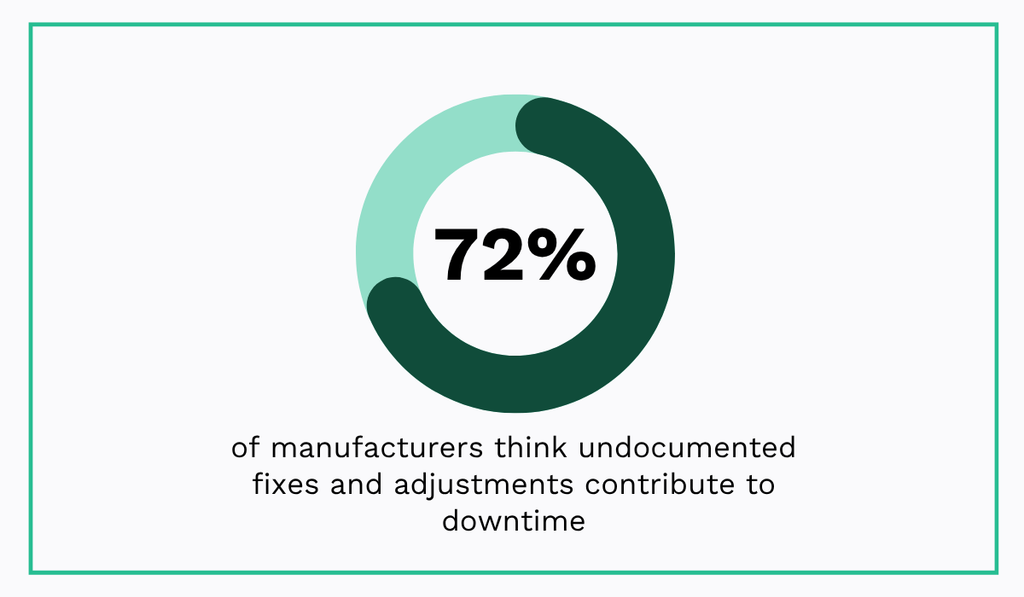
72% of Manufacturing Teams Say Undocumented Fixes Contribute to Downtime
One cause of this widespread problem is described in the same L2L report.
The researchers asked manufacturing leaders what they think contributes to unplanned downtime, and the majority named undocumented work as a major cause.
By undocumented fixes and adjustments, we mean repairs and machine changes that nobody records.
For example, a technician might reset a sensor or tighten a belt and return to work without writing anything down.
These activities also cause what is known as hidden factories, meaning work and lost time that never appear in official reports.
As a result, the downtime a facility tracks is lower than the real figure.
Looking at your own operations, it’s worth asking whether every repair, adjustment, and reset is recorded, including the short ones.
Check whether technicians can log a fix quickly during a shift, and whether anyone reviews those records for repeated problems.
93% of Organizations Are Taking Action to Improve Uptime, but Results Are Mixed
Of course, the same manufacturing leaders are working to prevent downtime.
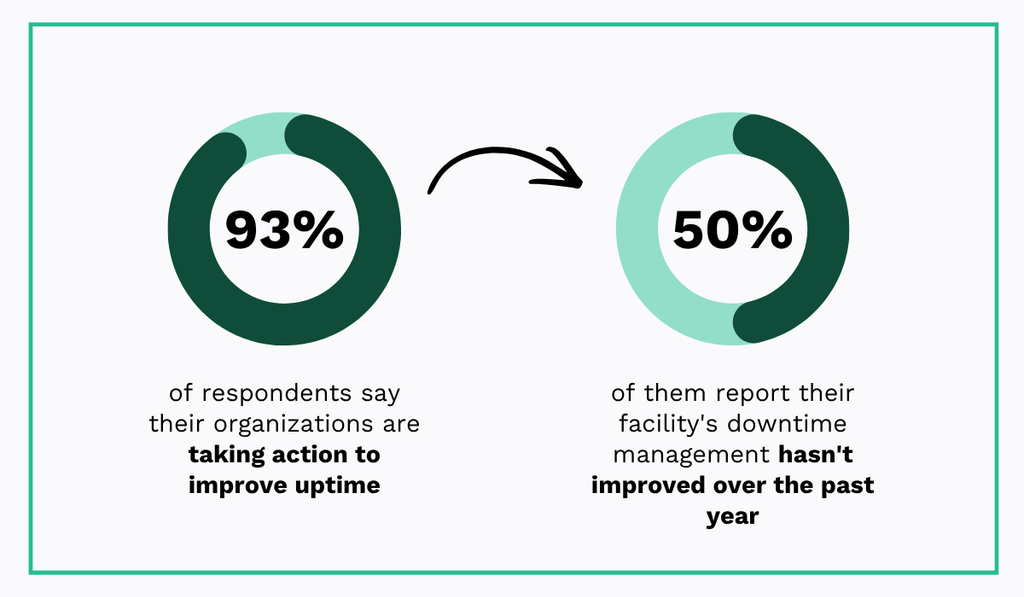
If we look at the L2L findings, the overwhelming majority are taking action to improve uptime, meaning the time equipment is available for production.
The chart below shows how many are taking action, and how many have seen results.
Some of the activities they are investing in are:
- Training and skills initiatives
- Continuous improvement
- Asset and maintenance management
Unfortunately, half of the same respondents also report that their downtime management hasn’t improved in the last 12 months, despite these efforts.
That being said, 46% saw improvements over the same period.
Out of this group, 64% said stronger maintenance protocols, such as clear inspection schedules and repair procedures, were the main reason their downtime decreased.
Improved training, better inventory tracking, and greater visibility into operations also helped reduce their downtime.
51% of Equipment Managers Don’t Have a Well-Defined Maintenance Process
While a strong maintenance process is key to reducing downtime, not every organization has one.
This was a finding from Cheqroom’s 2025 State of Enterprise Asset Management report, which surveyed 200 professionals who manage or check out physical assets.
Out of these, more than half believe they don’t need a well-defined maintenance process or have yet to develop one, as the data below shows.
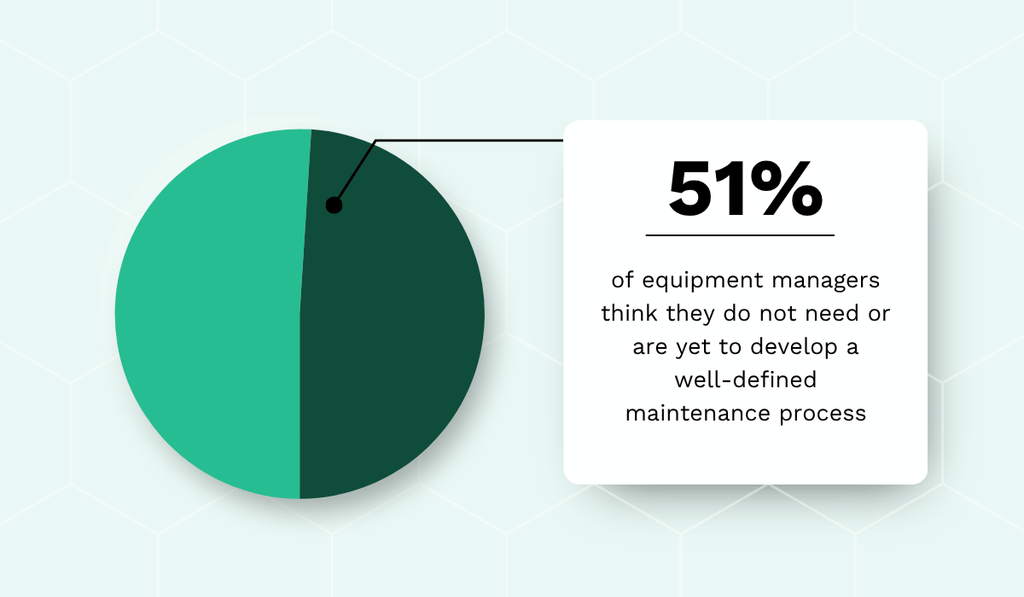
More specifically, 28% want to develop a better process, while 23% believe they don’t need a formal process.
Having a structured way to maintain equipment is necessary to prevent downtime, but the report states most organizations rely on informal practices nobody has reviewed closely.
Those that had well-defined processes for maintenance and other areas were more likely to rate their overall systems as extremely effective.
This means it’s worth checking processes for gaps, such as equipment without an inspection schedule or repairs with no written procedure.
52% of Equipment Managers Say Equipment Availability Is Extremely Critical to Their Job
The same report highlights the importance of equipment being readily available.
When asked how critical it is that this equipment is available and working, respondents answered as shown below.
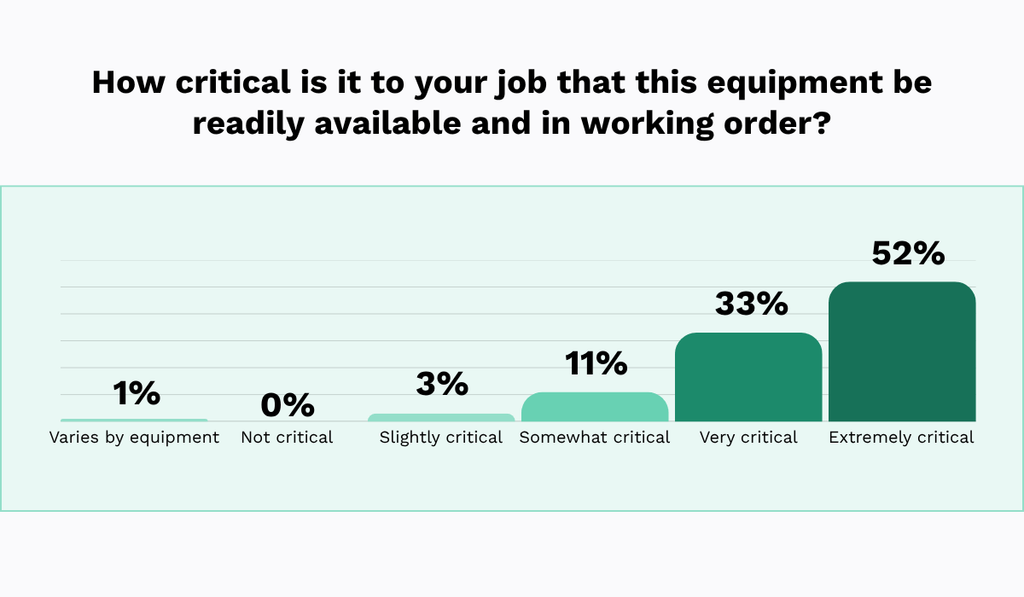
This data should come as no surprise, since 85% rated availability as very or extremely critical.
Their daily work depends on these assets.
When equipment stops working unexpectedly, the work planned around it is delayed, and other teams have to wait.
As one respondent put it in the Cheqroom report:

Production deadlines get postponed which then dominos down the line affecting everything from production times, to finishing times, and even to the customer receiving it.
This chain of delays the respondent describes is important to consider.
Even a minor part of a production line can stop the whole line when it fails, so maintenance needs to be planned and completed on schedule.
So, it’s a good idea to identify the assets operations depend on most and check that each has a maintenance plan.
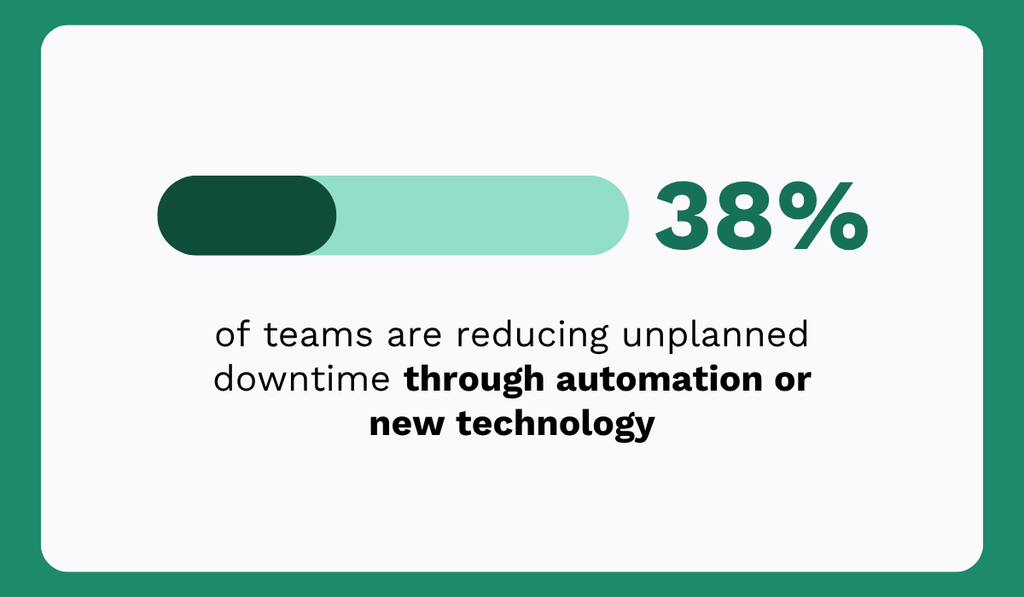
38% of Teams Are Reducing Unplanned Downtime Through Automation or New Technology
Technology is a big part of how maintenance teams reduce downtime.
Sensors, software, and automated systems can detect problems earlier and reduce manual work.
In fact, the MaintainX report found that many leaders plan to invest in new technology or automation over the next year to reduce downtime.
The chart below shows how many teams are using this approach to reduce unplanned downtime.
But it’s worth pointing out that investing in new technology is not enough to increase uptime.
The report points out that the best results come from execution maturity, not adoption alone.
Execution maturity describes how well a team uses its tools in daily work.
In practice, this means combining modern tools with strong basics, such as well-trained technicians and consistently scheduled planned work.
30% of Companies Say a CMMS Helped Reduce Downtime
Among the technologies teams use to reduce downtime, a CMMS is one of the most common.
This is software that schedules maintenance and records every repair in one central system.
UpKeep’s 2025 State of Maintenance Report asked employees of mostly small and mid-sized businesses about the benefits of a CMMS.
Respondents, including maintenance managers, technicians, supervisors, and facilities managers, named these three benefits most often.
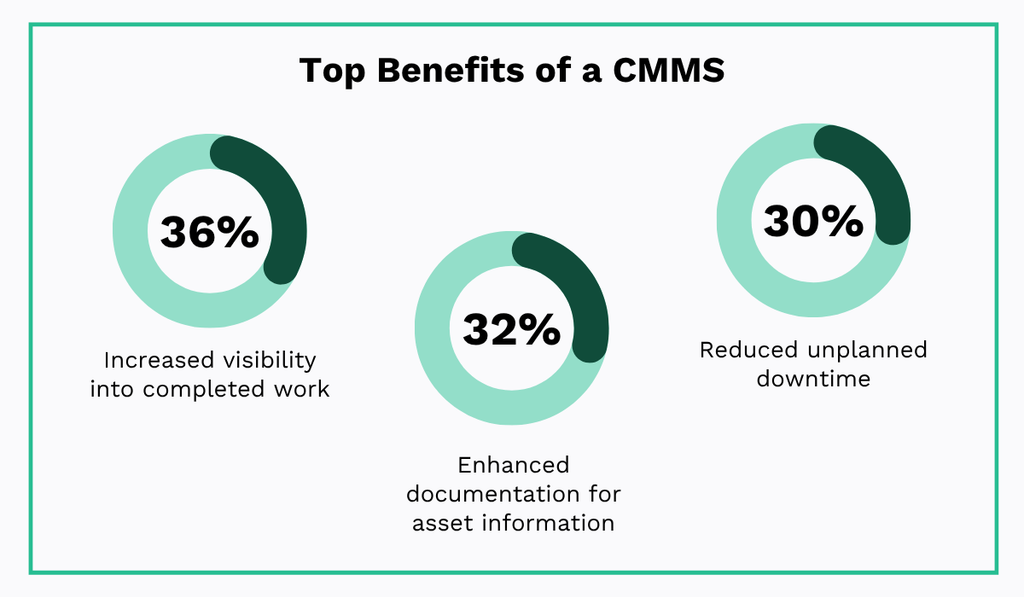
As you can see, almost a third reported less unplanned downtime, and it’s not hard to see why.
Consider a CMMS like WorkTrek.
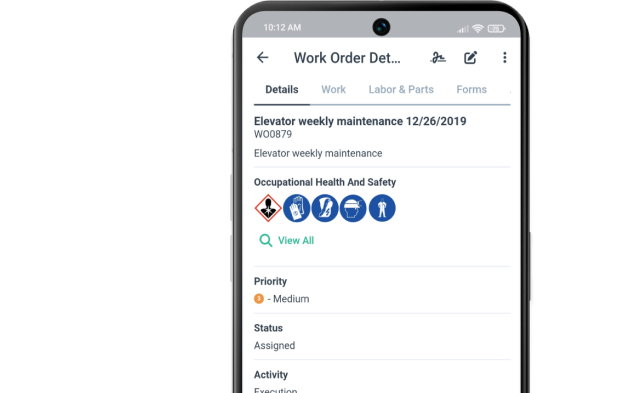
WorkTrek helps manufacturers schedule preventive maintenance, log every fix in a work order in one place, including from the mobile app shown below.
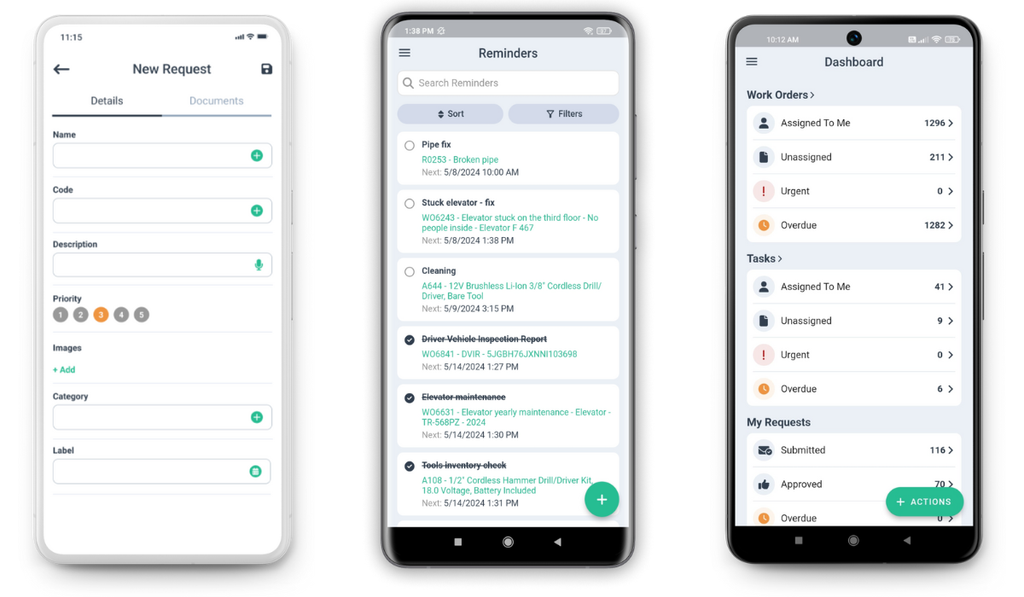
Its preventive maintenance scheduling creates work orders automatically, so inspections happen before equipment fails.
Each work order also records who fixed what and when, so no repair goes undocumented.
This provides the documentation and visibility that UpKeep’s respondents valued most.
With a CMMS, teams can plan maintenance around the assets that fail most often, instead of reacting to each breakdown.
Conclusion
The data in this article shows that unplanned downtime is frequent, expensive, and not decreasing for most teams.
But it also shows that teams with clear processes and complete records see improvement.
The main takeaway is that reducing downtime starts with knowing where and why it happens.
A good next step is to review your own maintenance records for the gaps described above.
Every improvement you make lowers the chance of the next unplanned stop.