


Get a Free WorkTrek Demo
Let's show you how WorkTrek can help you optimize your maintenance operation.
Try for freeEvery maintenance program depends on the people who perform it.
That’s why in this article, we examine the latest statistics on maintenance technician demand, retirement, and skills gaps.
We will also look at some of the steps organizations are taking in response to these maintenance workforce changes and what that means for you.
Installation, Maintenance, and Repair Employment Is Projected to Outpace Average Job Growth Through 2035
The maintenance field is growing, and it needs more workers every year.
This is clear from data by the U.S. Bureau of Labor Statistics (BLS), the federal agency that tracks employment and wages in the United States.
Its Occupational Outlook Handbook projects how employment in each occupation will change between 2025 and 2035, including installation, maintenance, and repair jobs.
According to these projections, more than half a million positions in this group will open each year, on average.
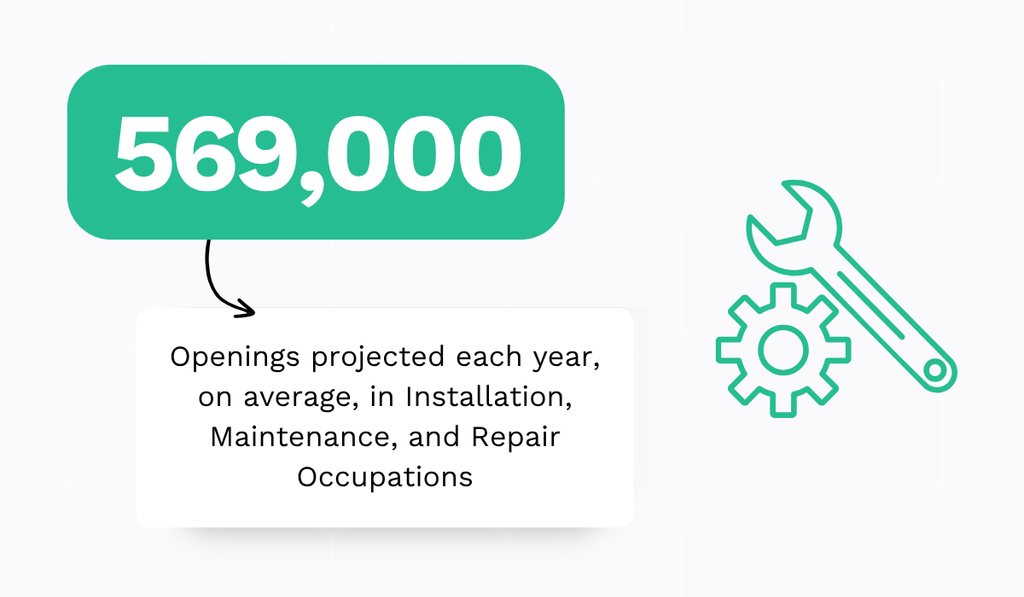
Part of these openings comes from the growth of the field itself.
Factories are installing more automated machinery, and every new conveyor or production line needs technicians to maintain it.
BLS expects employment in these occupations to grow by around 5% between 2025 and 2035, compared to 3% for all occupations on average.
Some maintenance positions are projected to grow especially fast.
For instance, employment of electrical power-line installers and repairers is projected to grow by 10%, while the outlook is 14% for industrial machinery mechanics, machinery maintenance workers, and millwrights.
For maintenance managers, this means more employers will compete for the same limited number of positions.
40% of the Manufacturing Maintenance Workforce will Retire by 2030
While some of the job openings we just covered come from industry growth, many come from the need to replace workers who leave.
In fact, retirement is becoming one of the biggest workforce challenges in maintenance.
Oxmaint, a maintenance software company, examined this trend in its 2025 global report on manufacturing maintenance, which combines findings from several industry surveys.
According to the report, a large share of the people who maintain manufacturing equipment will retire before the end of the decade.
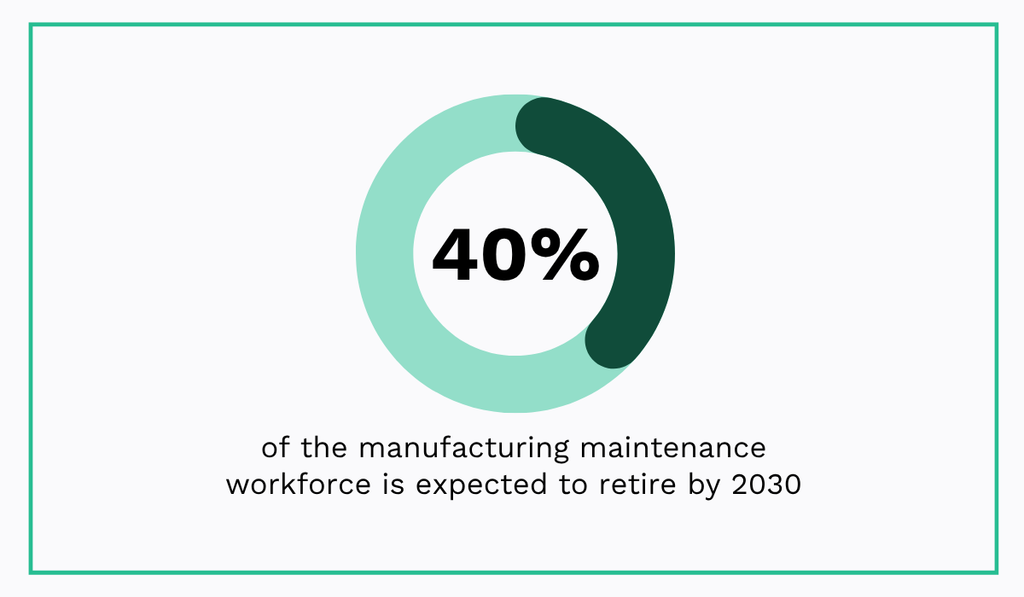
In other words, two out of every five of these workers could leave their jobs within the next few years.
This is happening because the workforce is aging, and many technicians who started decades ago are now close to retirement.
The same report found that 69% of maintenance professionals are already 50 or older.
For maintenance managers, an increasing priority is to record what these technicians know before they leave.
Much of that knowledge, such as how a specific machine behaves or which repairs worked in the past, exists only in their memory.
But organizations also need to consider who will replace these workers.
After all, written procedures are useful only when there are trained technicians to follow them.
43% of Industrial Businesses Struggle to Recruit Maintenance Staff
Unfortunately, when organizations look for people to replace departing technicians, many find the search difficult.
ABB, a global electrification and automation company, examined this in its 2023 Value of Reliability survey.
The survey, conducted by Sapio Research in July 2023, collected answers from 3,215 plant maintenance decision-makers across 11 sectors, including energy, metals, and rail.
One of the questions asked was how difficult it is for these decision-makers to recruit maintenance staff.
Their answers were split across four levels of difficulty, from not difficult at all to very difficult.
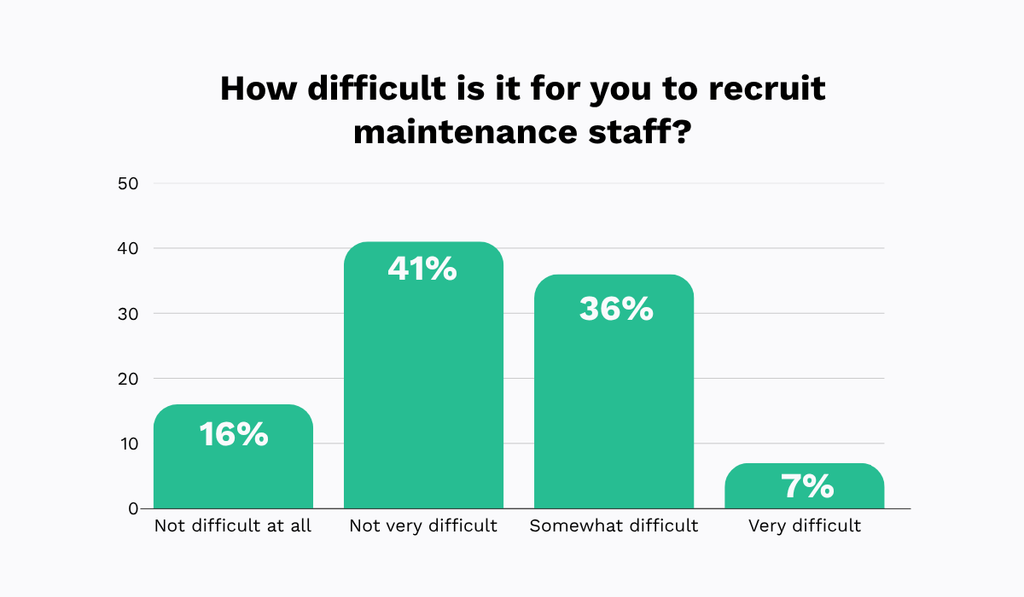
Fortunately, the majority of respondents, 57% in total, do not find recruiting qualified maintenance staff difficult.
That said, a large percentage, or 43%, find recruitment at least somewhat difficult.
For these plants, positions stay open longer while the existing team covers the extra work.
Some industries are affected more than others.
The sectors that find recruitment the most difficult are the following:
- Metals (54%)
- Water and wastewater (52%)
- Rail (49%)
- Oil and gas (47%)
Overall, recruitment difficulty is relatively split in half.
For plants that operate in one of the tougher sectors, it’s a good idea to plan ahead and start hiring maintenance roles earlier than what’s typical for other roles.
36% of Maintenance Professionals Blame Labor Shortages for Increased Unplanned Downtime
Workforce shortages also have a direct effect on unplanned downtime.
This was one of the topics in the State of Industrial Maintenance 2026 report by MaintainX, a maintenance software company, which surveyed 2,234 maintenance and operations leaders across the United States and Canada.
Among them, 34% said their facility experienced more unplanned downtime in the past 12 months.
When asked about the reasons for this increase, respondents included two workforce issues among the top causes, as illustrated below.
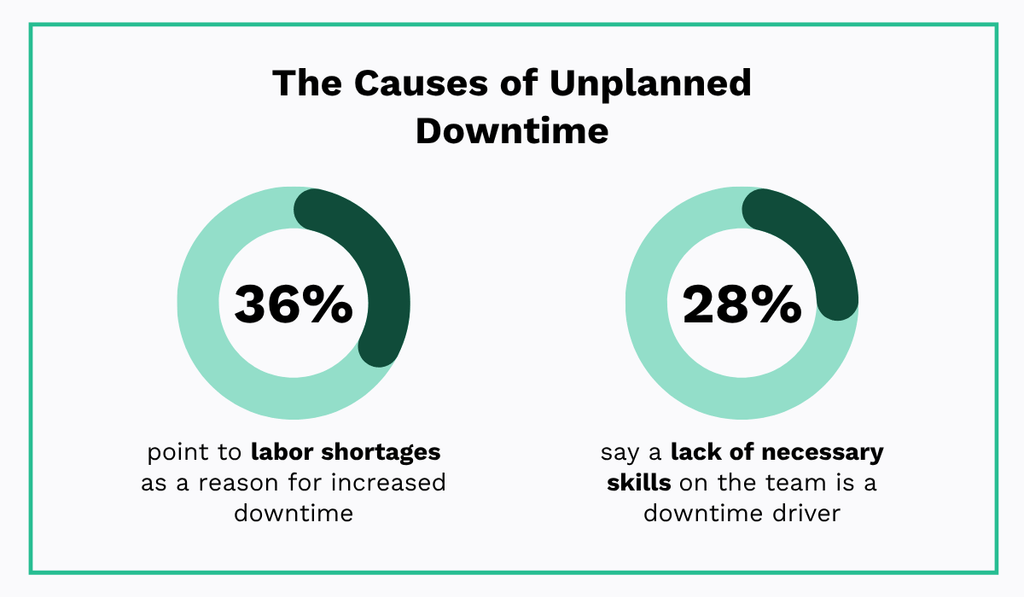
Labor shortages mean fewer technicians are available to respond to failures and complete planned work on time.
When a team is short on technicians, preventive tasks are postponed, and minor faults have more time to develop into breakdowns.
As a result, maintenance backlogs grow, and equipment runs longer between inspections.
The second issue is also worth examining, since it concerns skills rather than the number of workers.
In fact, as experienced specialists retire, newer technicians often take over equipment they have not worked on before and need more time to diagnose problems.
As an industry, this means we need to focus on capability as well as headcount, so that the right knowledge is available when a machine fails.
Industrial Organisations Lose About £240,000 in Productivity per Retiring Maintenance Specialist
Another study quantified the effect of some of these workforce changes.
Mainstream, a community that organizes maintenance and reliability conferences and research, examined the topic in The State of Maintenance and Reliability in the UK 2025.
The report combines a survey of 103 UK maintenance and reliability professionals with roundtable discussions and 30 interviews with industry leaders.
According to the report, UK industrial organizations lose almost a quarter of a million pounds in productivity each time a maintenance specialist retires.
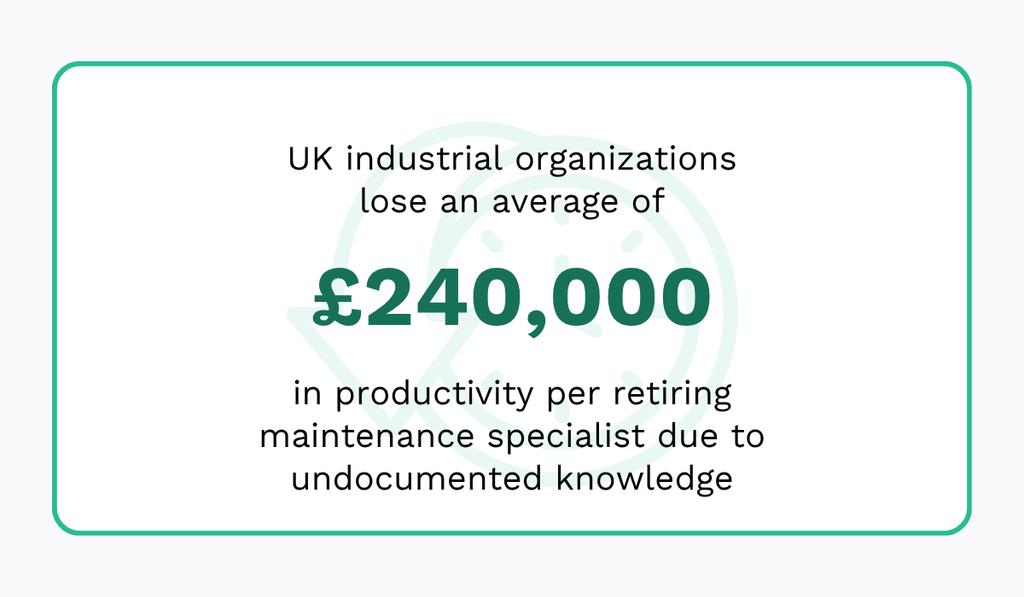
The main reason is that much of their knowledge was never documented.
The report divides this issue into three parts:
- Limited formal documentation
- Past maintenance decisions and their reasons are not stored in systems
- Informal knowledge transfer
In other words, when a specialist retires, the organization loses information that cannot be found in its own records.
This makes knowledge loss a financial problem as well as an operational one.
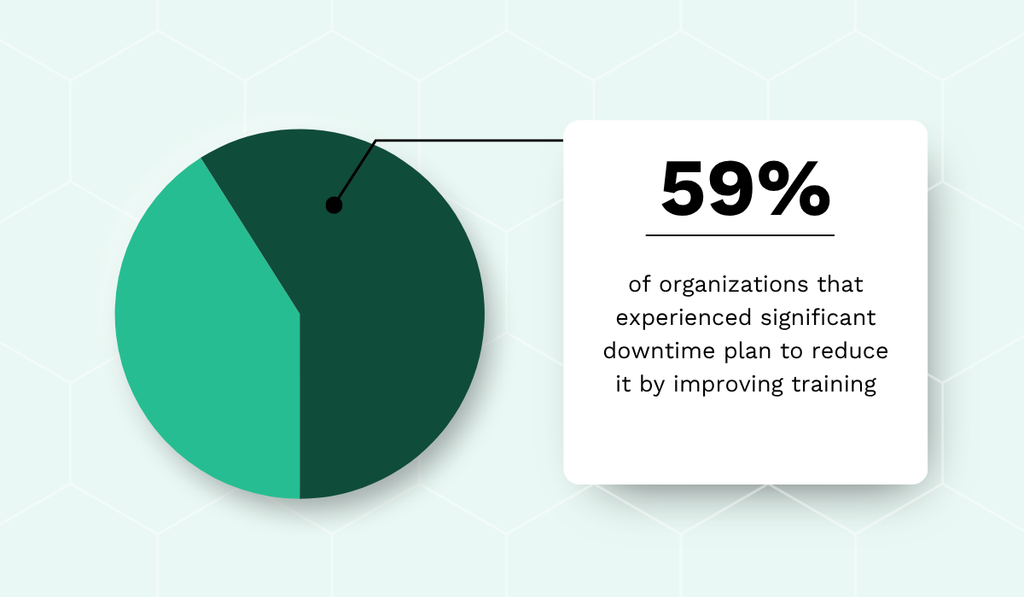
59% of Organizations Facing Significant Downtime Plan to Improve Workforce Training
According to the MaintainX survey we highlighted before, plans for reducing downtime differ depending on how much downtime an organization has experienced.
Among the organizations with the largest increase in downtime, the majority plan to invest in their people through better training.
This kind of maintenance training can cover technical skills for specific equipment, troubleshooting methods, and the use of new maintenance technologies.
It’s worth highlighting that this 59% figure applies only to organizations that experienced significantly more downtime.
These organizations focus most on training, and 44% of them are also trying to hire more technicians.
On the other hand, organizations that had significantly less downtime focus elsewhere, mainly on replacing aging equipment and improving their overall maintenance strategy.
This is an understandable division.
Organizations with rising downtime are likely short of people or skills, so they address the workforce first, while those with stable operations can direct resources to equipment and planning.
So before deciding where to invest, it’s a good idea to examine where your operations stand in terms of the amount of downtime.
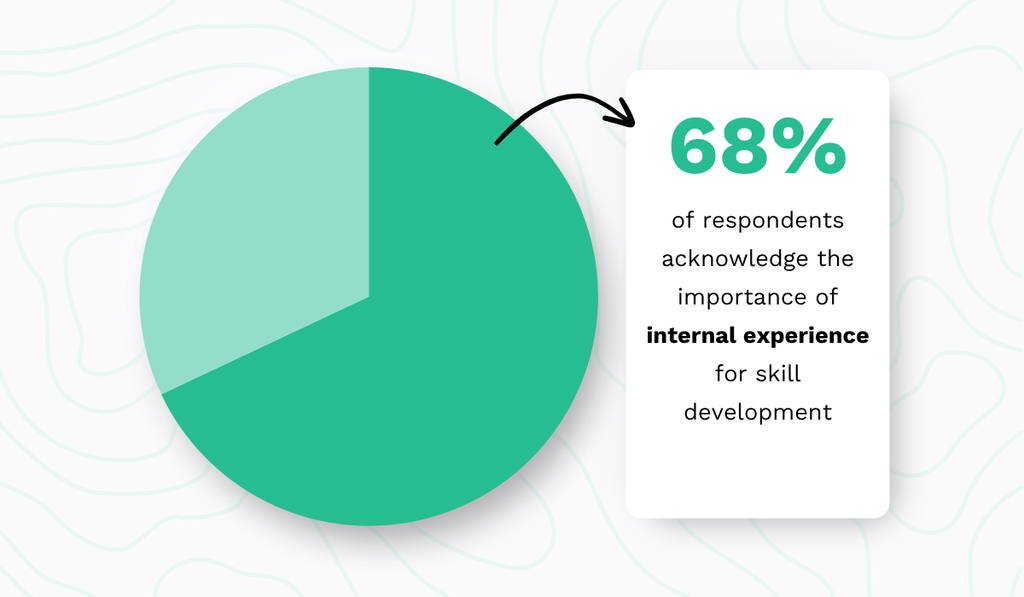
68% of Maintenance Professionals Acknowledge the Importance of Internal Experience for Skill Development
Knowledge is one of the most valuable resources a maintenance team has.
Often, only a few experienced technicians have this knowledge, and many of them will retire soon.
UpKeep, a maintenance software company, examined how teams develop skills in its State of Maintenance Report 2025, based on a survey of maintenance and reliability professionals.
A large majority of respondents agree that knowledge shared inside the organization is key to developing skills.
Internal experience is the practical knowledge technicians gain on-site, such as how a specific machine behaves and which repairs work on it.
It comes from colleagues and daily work instead of formal courses or manuals.
This means maintenance managers need a consistent way to transfer this experience from senior technicians to new hires.
One solution is WorkTrek, a computerized maintenance management system (CMMS) for planning, recording, and tracking maintenance work.
Teams use it to organize and centralize their entire maintenance operations in one place.
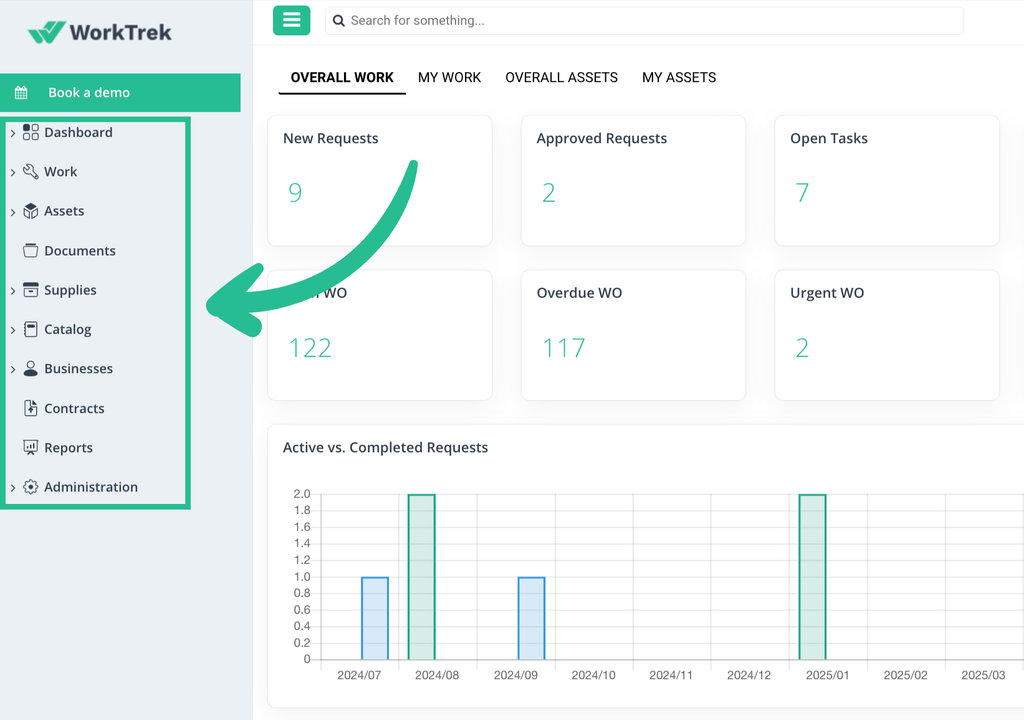
In fact, every completed job can be recorded with the asset involved, the steps taken, and the technician’s notes, creating a searchable history for each machine.
As a result, a CMMS like WorkTrek can serve as the basis for technician training.
Instead of relying only on informal conversations, they can study documented procedures and past work on an asset before starting a job.
This way, each technician’s experience stays with the organization even after a person leaves.
88% of Facilities Outsource at Least Some Maintenance Work
Technician shortages are not a problem organizations can solve quickly, as hiring and training can take months, if not years.
In the meantime, organizations rely on outside help to complete maintenance work.
According to Oxmaint’s report, the overwhelming majority of facilities assign at least part of their maintenance work to external contractors.
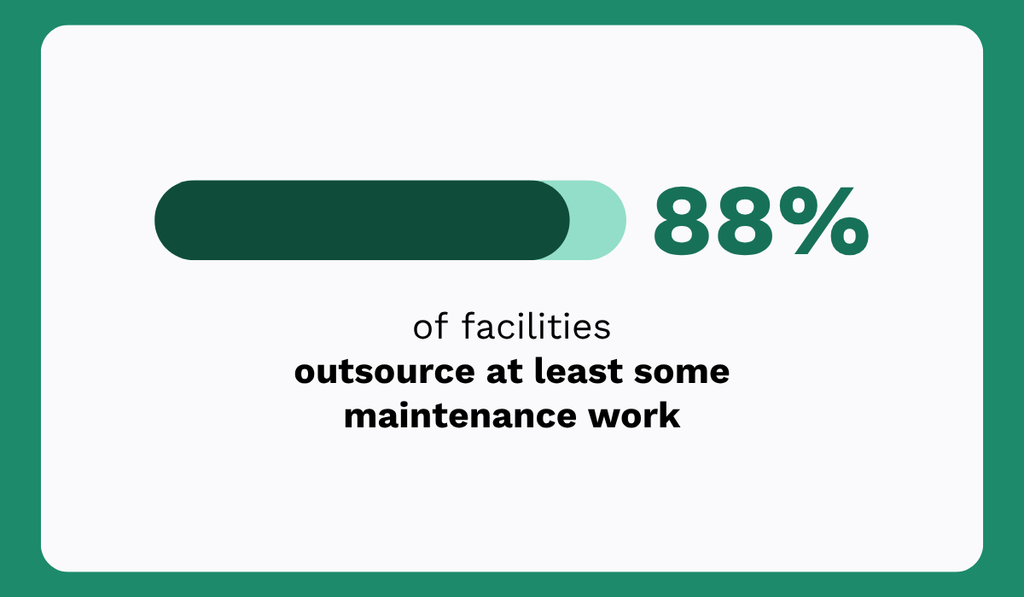
On average, these facilities outsourced 23% of their maintenance tasks.
This means contractors perform close to a quarter of the work, while internal teams handle the rest.
Outsourcing is often the only option when the team lacks the skills for a job, such as work on specialized equipment.
It can also cost less than employing a full-time technician for tasks that occur only a few times a year.
At the same time, outsourcing has downsides, since contractors know less about a site’s equipment and often leave no record of what they learned.
38% of Organizations Cite Apprenticeship Programs as Effective in Bridging Generational Gaps
In addition to outsourcing, organizations are starting initiatives to bring younger people into maintenance careers.
A key challenge here is motivation, since many young people do not consider maintenance an attractive career.
The work is often seen as physically demanding and less modern than jobs in technology.
The UpKeep survey we highlighted looked at youth engagement, and the chart below shows the share of respondents who named each of the three initiatives as effective.
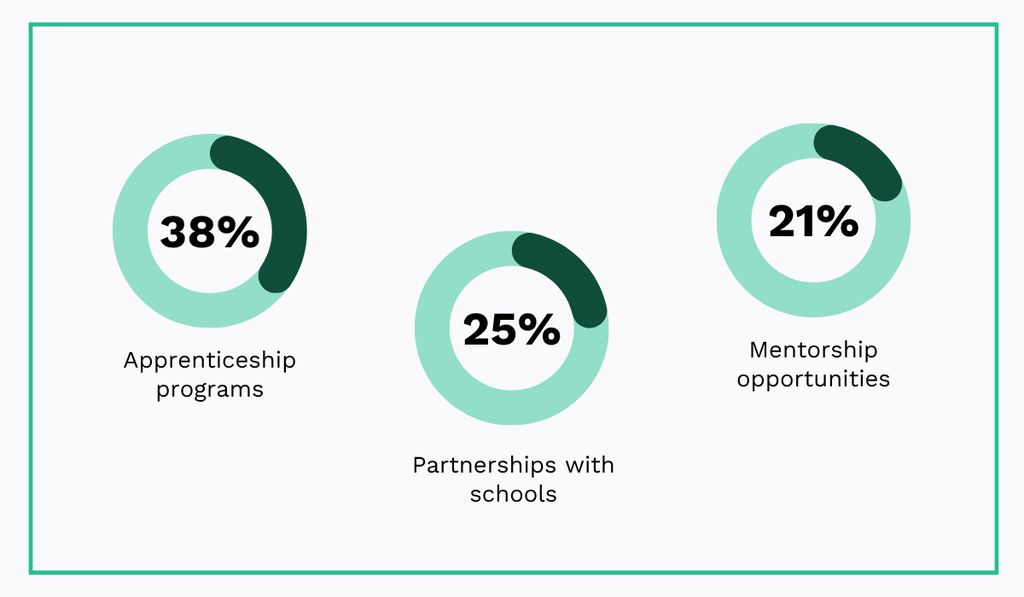
As you can see, each of these approaches offers young people practical contact with maintenance work early in their careers.
They also connect newcomers with experienced professionals, which supports the knowledge transfer we discussed earlier.
This is meant to address the labor supply at its source by increasing the number of people who choose maintenance as a career.
As 54% of respondents find it difficult or very difficult to attract talent from younger generations, these efforts are becoming necessary.
Because training a technician takes years, the youth programs of today will determine how well teams handle retirements later in the decade.
Conclusion
The numbers show a field that needs more skilled people, as many experienced technicians are leaving.
The main thing to remember is that your team’s knowledge matters as much as its size.
Start recording that knowledge and investing in new people today, and your team will be ready for the changes ahead.