


Get a Free WorkTrek Demo
Let's show you how WorkTrek can help you optimize your maintenance operation.
Try for freeKey takeaways:
- 72% of manufacturing leaders say undocumented fixes increase downtime.
- 22% of inventory sits unused for over five years.
- Digital work orders centralize work priorities, safety requirements, and parts data.
Keeping a maintenance team running efficiently requires constant coordination.
Technicians need clear direction on who is doing what, when, and with which parts, from scheduling routine inspections to assigning emergency repairs.
Work orders provide the structure and visibility required to make that happen.
In this article, we’ll cover 5 core aspects of work orders that give you control over maintenance workflows and efficiency.
Improving Maintenance Planning and Organization
Work orders give maintenance work a structure when it’s lacking.
A work request comes in, someone decides how urgent it is, a technician does the job, and the result gets written down.
That sequence is the same whether the work order is on paper, in a spreadsheet, or in CMMS software.
Take a basic spreadsheet work order template, like the one shown below.
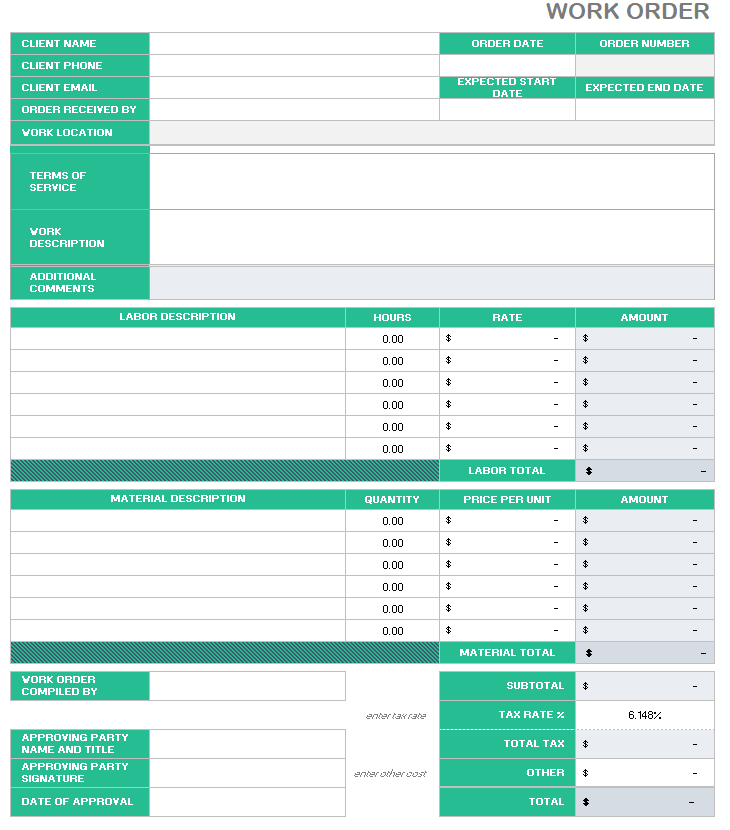
The template asks where the work is, what needs to be done, when it should start and finish, and what materials it needs.
Without those fields, most of that information isn’t planned out at all and gets passed on verbally or kept in someone’s head.
In other words, a work order makes teams decide on key maintenance aspects before a job starts.
Take maintenance priority as an example, which is often logged as a separate field or as part of the work order description.
Every plant has more work waiting than people to do it, so someone has to decide what gets done first.
For that reason, many teams sort jobs using a shared grid of urgency and importance, like the one below.
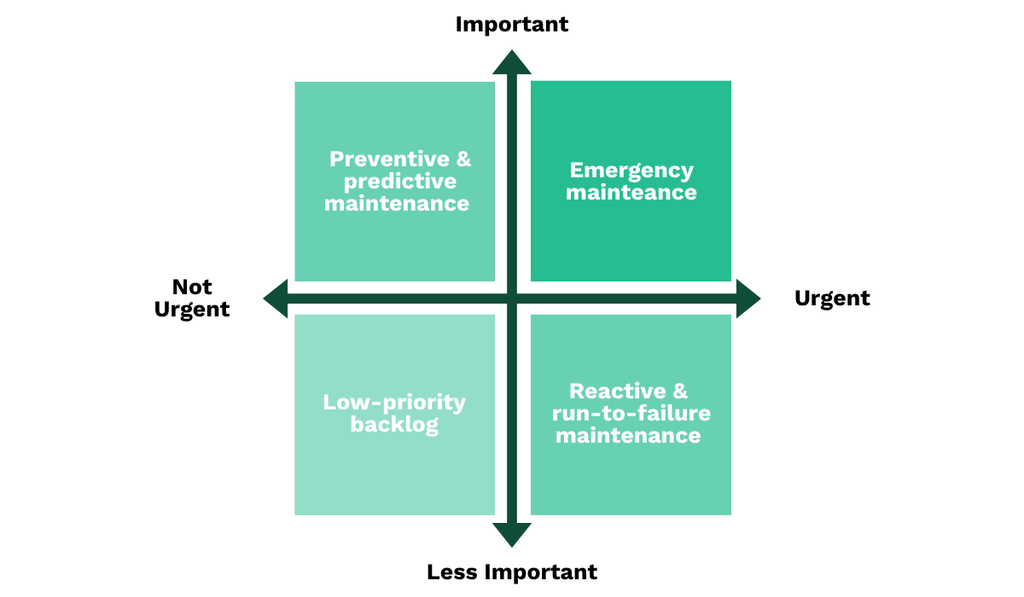
When this number is standardized and written down on a work order, a technician receiving a job marked at a certain priority will know when it needs to be done without much confusion.
Meanwhile, supervisors get the same benefit at a larger scale, since they can see and decide how the whole week might be scheduled.
Of course, that coordination holds only when operations and maintenance departments agree on a standard for work orders.
Torbjörn Idhammar, Director of Reliability at pulp and paper manufacturer Domtar, made this point in an article on work order backlogs for the consultancy IDCON.
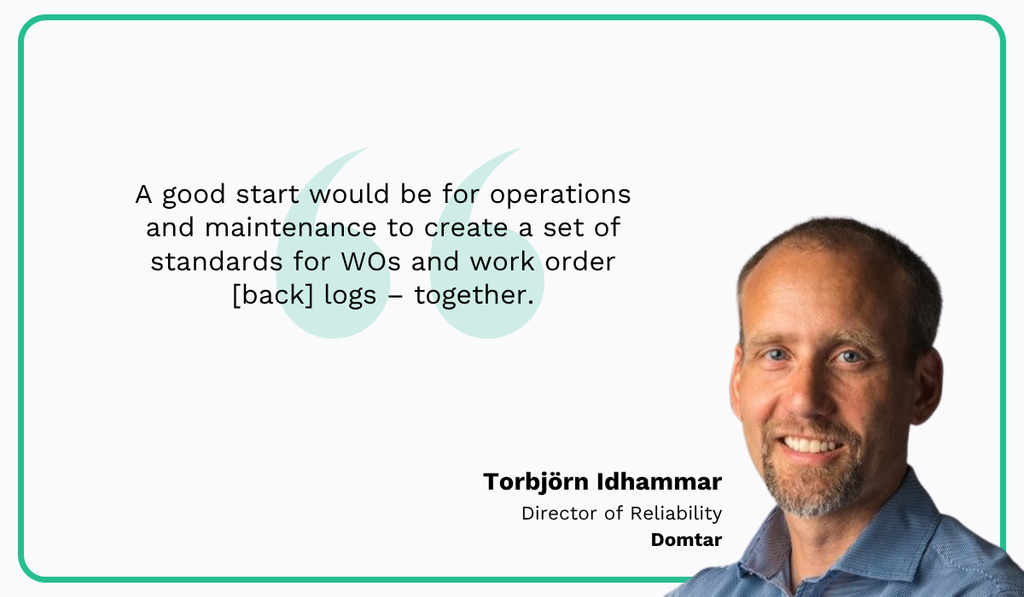
Idhammar’s reasoning is that the standard has to be built jointly because operations raise most of the work while maintenance teams carry it out.
Once both sides use the same definitions, a work order log starts answering key questions on its own.
It shows what will be finished this week, what is scheduled for next, and how many labor hours sit in the queue.
In turn, answering those questions week after week is how teams clear a maintenance backlog instead of watching it grow.
Reactive hours fall as the backlog shrinks, which leaves room for more planned preventive work.
Increasing Maintenance Team Accountability
Work orders also settle who is responsible for what.
A verbal request or a note on a desk says nothing about who accepted the job or when it was due.
By contrast, a work order records the task, the person assigned to it, the deadline, and a description of what was done.
That same record can become useful weeks later, when a machine breaks down again and nobody remembers the earlier repair.
On top of that, written records help with a second problem: knowledge that stays with one person.
Doc Palmer, managing partner at Richard Palmer & Associates and author of McGraw-Hill’s Maintenance Planning and Scheduling Handbook, wrote about this in a column on planning and scheduling.

Palmer points out that experienced technicians often keep their own notes about the machines they work on, and share them with a few colleagues.
He argues that planning should make that information available to the whole team instead.
Detailed work orders do this automatically because each completed job adds to a history everyone can read.
Several fields on a work order deal with responsibility directly.
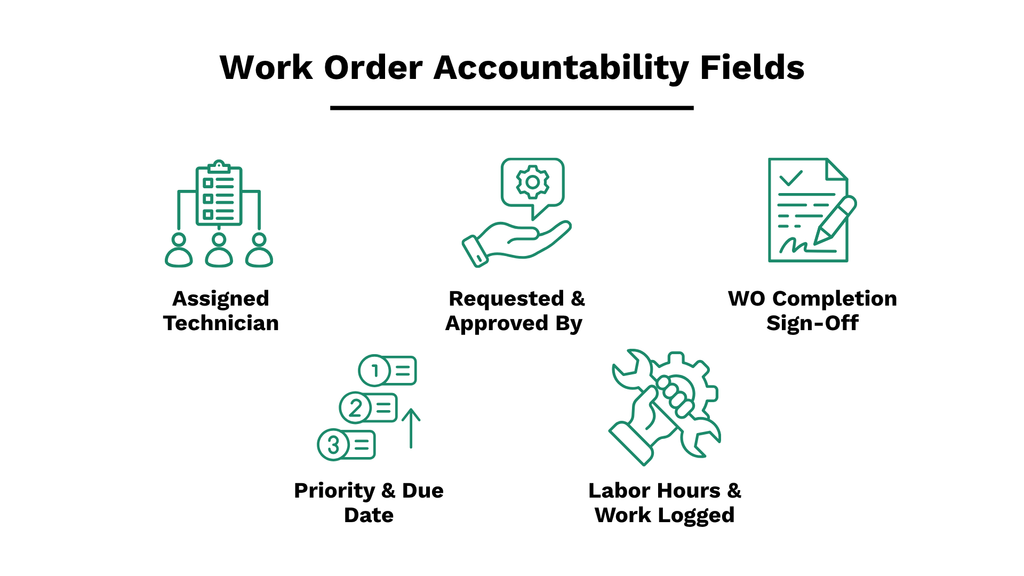
Together they show who was involved at each stage, from the request to the approval that closed the job.
If a repair has any issues, a supervisor can open the record and see what was done and by whom.
Of course, all of this depends on work orders being filled in properly, which means describing the repair rather than only marking the job complete.
Consider the following statistic from L2L, a manufacturing software company, where over 600 manufacturing leaders in the US were surveyed.
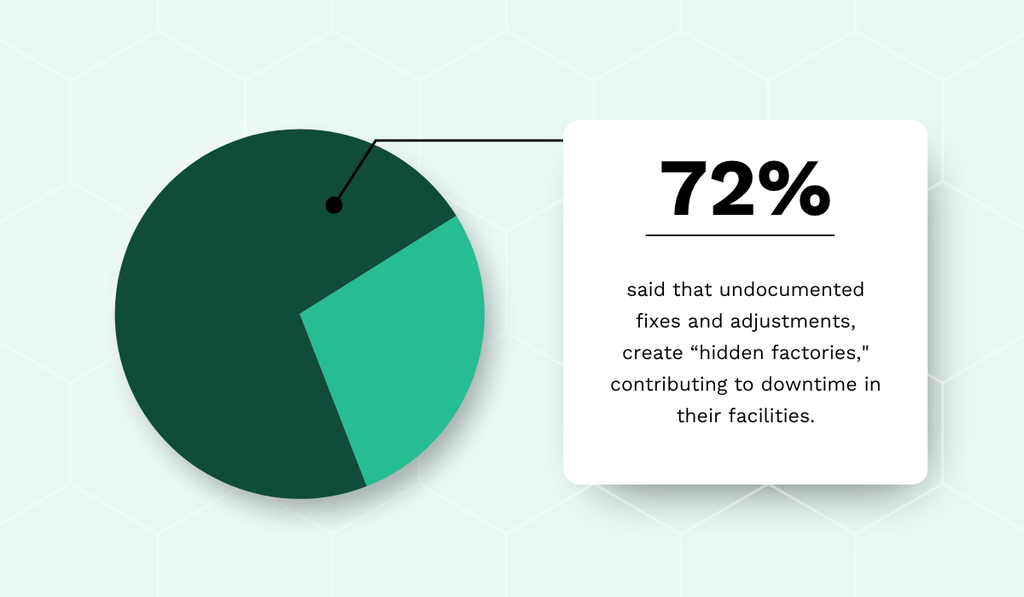
The term hidden factories comes from lean manufacturing, and it describes work that is never recorded anywhere, such as a quick adjustment made during a shift.
That work appears in no report, so the plant believes it loses less production time than it does.
A work order that is completed properly records that activity too, including short repairs nobody would think to mention.
Over time, the maintenance history comes closer to what happens on the floor, and the plant sees the full cost of its downtime.
Optimizing Spare Parts Management
Work orders can also help record how spare parts are used.
In fact, whenever a technician needs a certain part for a job, that should be logged in detail.
Over time, the records can start showing which components are replaced often and which have not been touched in years, which is important when we consider the following data on spare parts management.
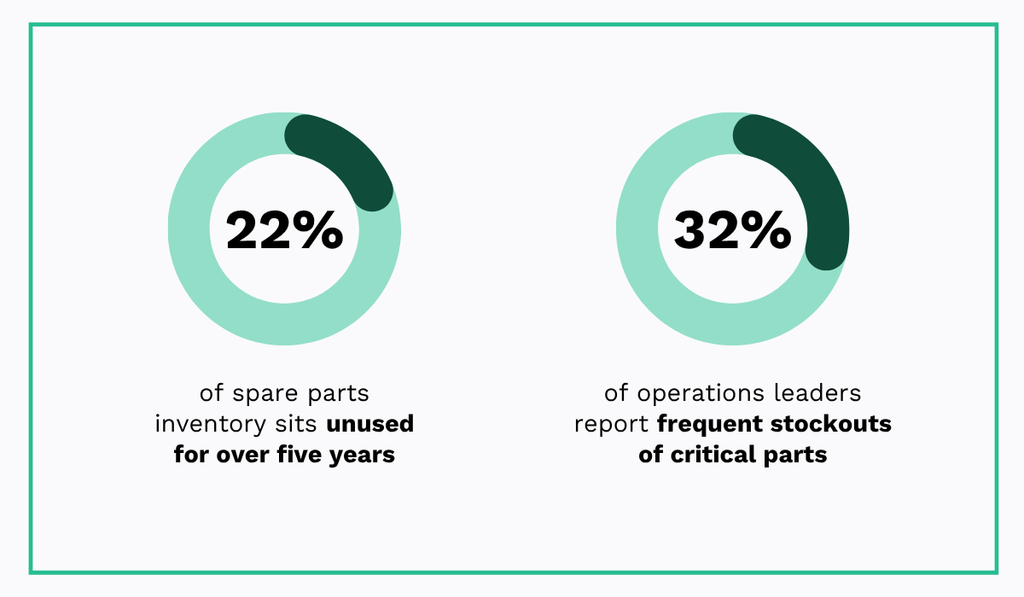
The statistics come from SPARETECH, a company that works on spare parts data quality, which surveyed 300 manufacturing executives in the US and Europe for its 2025 report on the maintenance, repair, and operations (MRO) strategy gap.
Unused and missing parts are opposite problems, but plenty of plants have both.
That points to a visibility and documentation problem.
Phillip Slater, founder of SparePartsKnowHow.com and author of eight books on inventory management, explained it in an article on reading spare parts data.
Slater points out that spare parts planning is based on historical usage data, which describes what people do rather than what the machines need.
His recommendation, quoted below, follows directly from that.

Some of the issues that increase the gap include parts getting taken without the transaction being recorded, or spare parts being taken and not getting used after they leave the storeroom.
Slater’s idea is that the problem has to be corrected at the point where people record what they use.
One way this might be implemented is by having a rule that work orders cannot be closed without noting part numbers and quantity.
Digital work orders can make this requirement easier to meet, since a technician can track parts on their mobile device at the machine instead of noting it for later.
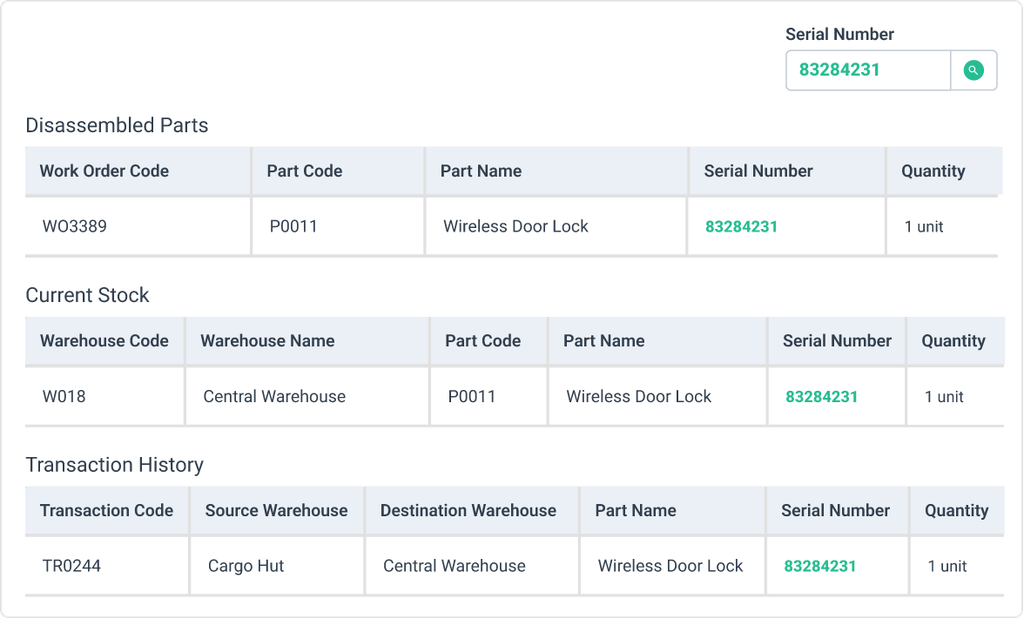
From there, a digital work order management system can store every movement in one place, including the work order a part was issued against and the warehouse holding it now.
As a result, purchasing gets real usage figures to order against, which is where a workable spare parts strategy begins.
Overall, better records make inventory management more efficient and less likely to delay a repair.
Improving Workplace Safety and Compliance
Safety in manufacturing depends on procedures being followed every time, and that is more likely when the instructions are written into the work order itself.
Let’s look at two workplace safety case studies and show how work orders fit in.
In May 2023, workers at a Dow plant in Louisiana did turnaround maintenance on a reflux drum and left work lights inside.
Two months later the lights had degraded enough to puncture a rupture disc, which caused explosions and released over 31,000 pounds of ethylene oxide.
Steve Owens, who chairs the board, summarized the finding when the investigation report appeared in February 2026.

At first this looks like carelessness by the crew.
However, Owens blames the missing procedure, since nothing required anyone to check the drum first.
A short closing checklist, with one named person confirming the vessel was empty, would have taken minutes.
Checklists like this can be added to a work order, and the job cannot be closed until every item is signed off.
Consider the following incident with a US Ink plant in New Jersey, when a dust collection system installed four days earlier caught fire.
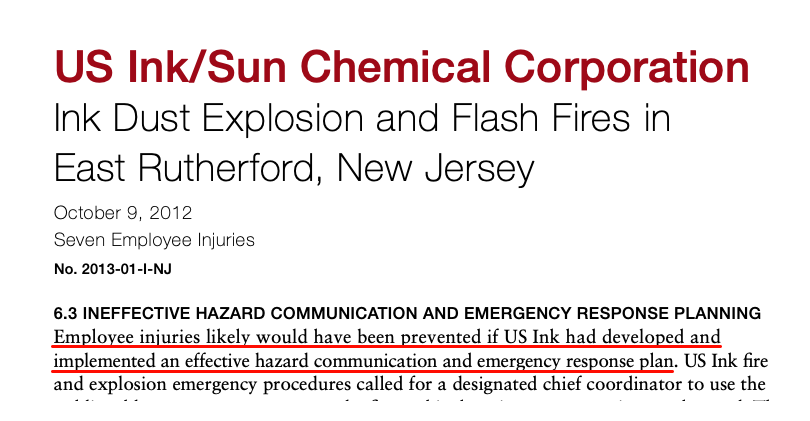
Hazard communication and emergency response planning are company wide programs, and the board’s case study found neither reached the people who needed them that day.
Parts of those programs can be written into individual work orders instead, especially if they’re digital.
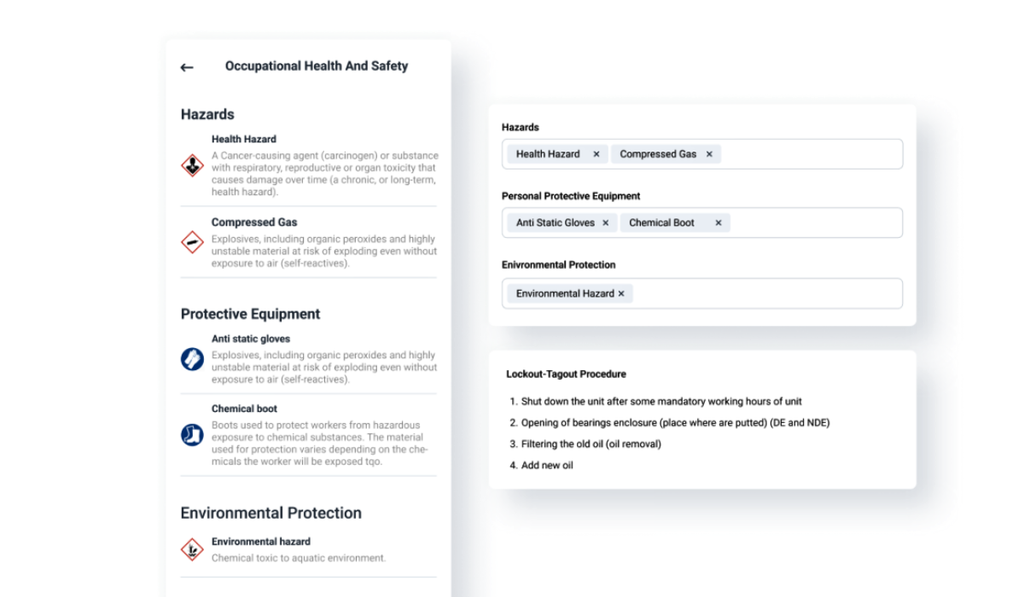
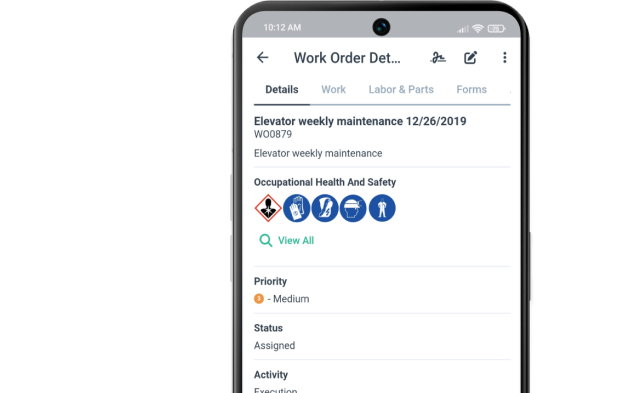
Consider a task with specific lockout/tagout requirements.
Typically, those instructions are kept in a binder a technician has to remember to look up, and the screen below shows the alternative.
A digital work order can list the hazards for that machine and the personal protective equipment (PPE) the task requires.
It can also include the isolation steps in order, so a technician sees the PPE requirement and the steps before starting work.
In the end, safety requirements change from job to job, which is why having them on the work order itself can be effective.
Reducing Unplanned Downtime and Production Disruptions
Everything described so far leads to the same outcome.
Work that gets prioritized, assigned, documented, and supplied with the right parts takes less time and goes wrong less often.
Fewer jobs turn into emergencies as a result, and fewer machines stop without warning.
Even so, reaching that position is difficult because a plant dealing with constant breakdowns has little time to change how it works.
Erik Hupjé, founder of Reliability Academy and a former maintenance manager at Shell and ConocoPhillips, explains why in an article on escaping reactive maintenance.

Hupjé describes a cycle in which repeat failures and ineffective preventive maintenance keep a plant reactive.
By his estimate, crews in that situation are productive for only 25% to 35% of their time, so nobody has the hours to remove the defects causing the failures.
Introducing work orders will not break that cycle immediately.
They do give the team a written list of every outstanding job and how urgent each one is.
Over a few months, better prioritized work and a smaller maintenance backlog leave more hours for scheduled jobs rather than reactive ones.
How far a team gets depends on the system it uses to manage the work.
A computerized maintenance management system (CMMS) such as WorkTrek keeps requests, assets, parts, and completed jobs in one place, so past work on a machine is visible the next time it fails.
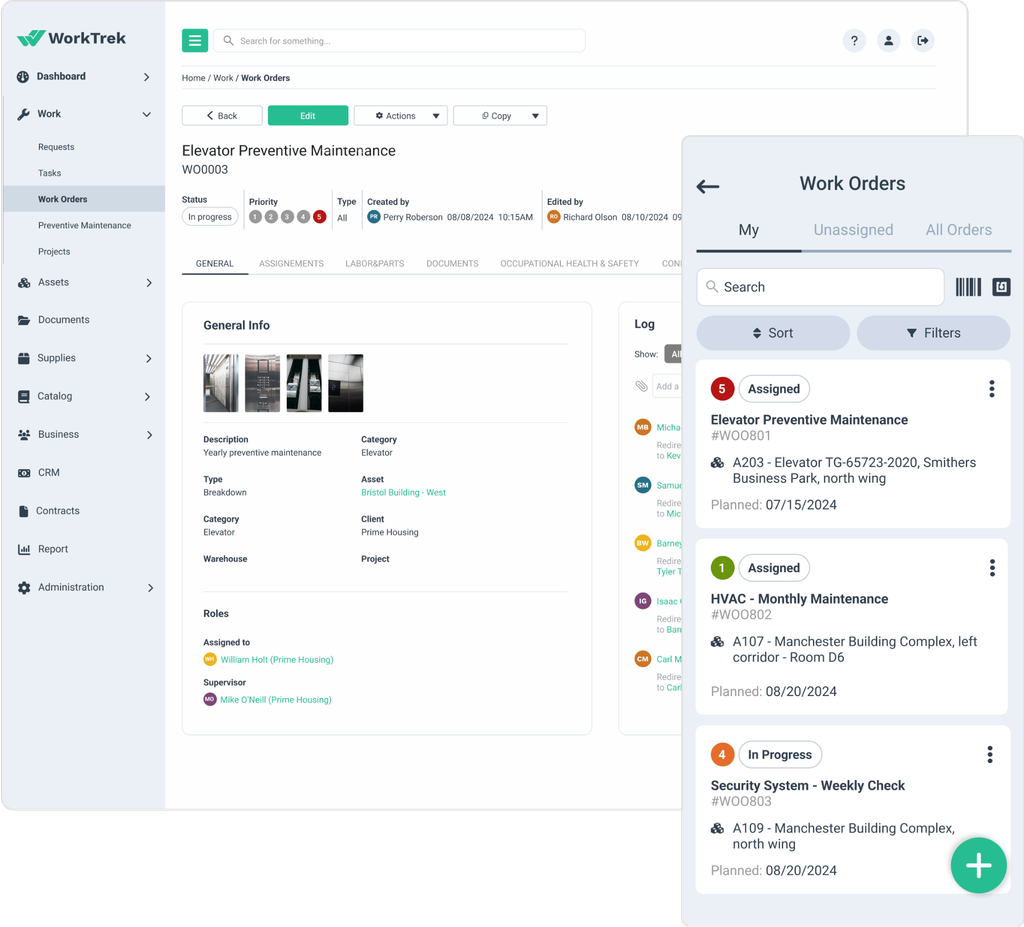
WorkTrek covers a work order from the first request to the final sign-off, with custom fields, attached documents, safety information, and a change log.
It’s a mobile-first platform, so technicians can fill in the record from a phone at the machine rather than at the end of the shift.
Those records tend to be more accurate, because the details are still fresh.
Work orders can also be created on a fixed schedule, or once a meter reaches a set reading.
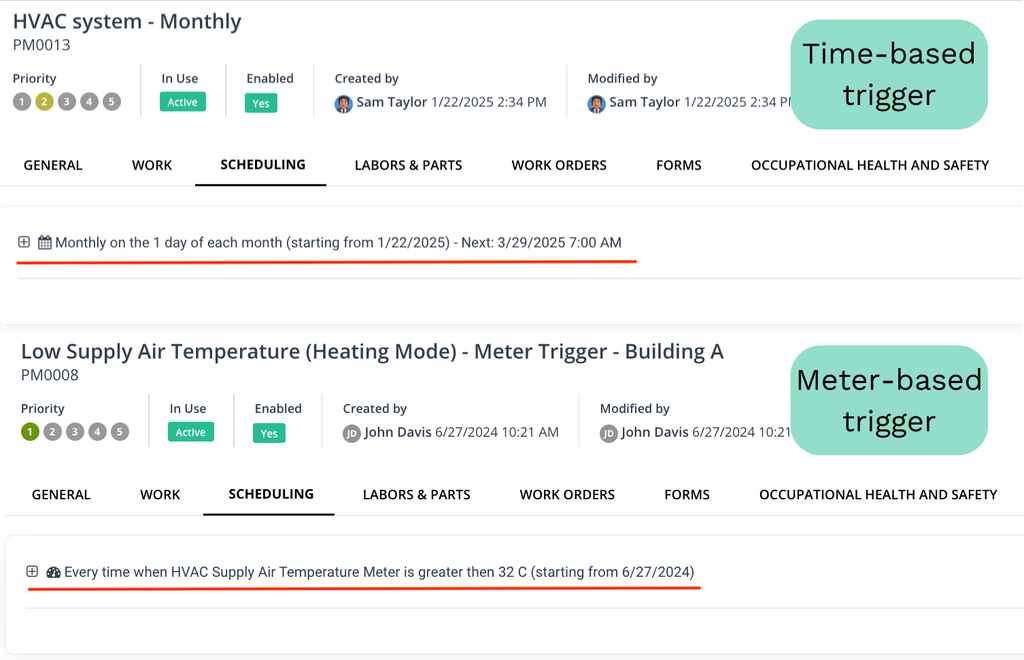
Work orders that are created automatically remove a large part of the administrative effort, because routine jobs appear in the system without anyone writing them out or remembering when they are due.
That lighter workload and the record of every completed job allow the team to schedule more of its work in advance over time.
The reactive share shrinks as the planned share of the workload grows, and fewer machines stop without warning.
Conclusion
That covers what work orders do across a maintenance operation.
Most of it comes down to recording work properly and keeping that record in one place, which matters more than the paperwork suggests.
If you’re ready to upgrade your work order management, start small.
Pick one part of your workflow to improve, and let the records build from there.