

Blog

Operations & Maintenance
Work Order Planning: Why it Matters to Get it Right
Struggling with inefficient work order planning? Discover how mastering this crucial process can streamline operations.
Key Takeaways:
Missing parts not only delay maintenance but also often lead to repeat work.
Maintenance costs will rise by 17% by Q4 2029.
Compliance with OSHA’s LOTO standard prevents 120 fatalities annually in the US.
Every successful maintenance job begins long before a technician picks up a tool. In fact, it begins even before work is assigned.
Planners must first define the scope, identify the required parts, estimate labor and materials, prepare for safety, and ensure technicians have the information they need to complete the job successfully.
When this preparation is done well, maintenance becomes more efficient, predictable, and easier to manage.
In this guide, you'll learn exactly why getting work order planning right matters and the practical steps you can take to build a planning process that's more consistent, repeatable, and better at delivering maintenance outcomes.
Effective Work Order Planning: Key Benefits
When work order planning is skipped or rushed, the consequences show up quickly.
Technicians arrive unprepared, jobs stall, emergency work increases, and production schedules become harder to protect.
The result is often unnecessary downtime, repeated trips to the storeroom, and higher labor costs.
Investing time in planning before work begins helps prevent these issues and creates a more efficient, predictable maintenance operation.
Here are some of the biggest benefits of getting work order planning right.
Fewer Delays From Missing Parts
As a maintenance professional, you’ve likely seen technicians arriving at a job site only to discover that a required part, tool, or material isn’t available.
And you’ve also seen the subsequent delays and operational inefficiencies.
What should have been a straightforward repair quickly turns into lost time as the technician searches for the missing item, waits for it to arrive, or leaves the job unfinished.
These interruptions not only delay the repair but also often lead to repeat work.
As Kristian Steenstrup, Vice President and Research Fellow at Gartner, notes:
Illustration: WorkTrek / Quote: PlantServices
In other words, every uncertainty introduced after a work order is released increases the risk that the job will take longer than planned or require additional maintenance to correct incomplete or incorrect work.
Proper work order planning is designed to prevent these situations.
During the planning stage, you identify the exact materials, tools, and equipment needed to complete the task before assigning the work to a technician.
This includes verifying part numbers, checking inventory levels, confirming tool availability, and ensuring any specialized equipment or safety requirements are addressed in advance.
A thorough planning review should confirm:
The exact parts, components, and consumables required for the job
That all required materials are in stock or scheduled to arrive before work begins
Any specialized tools, test equipment, or lifting devices needed to complete the work safely
Required permits, access arrangements, and safety preparations
Clear job instructions so technicians know exactly how the work should be performed
When these checks are completed up front, technicians can begin work immediately rather than stopping to resolve preventable issues.
The result is fewer delays, less rework, better schedule adherence, and more time spent performing value-added maintenance rather than searching for parts or troubleshooting logistical problems.
More Accurate Time and Cost Estimates
Effective work order planning replaces rough estimates and guesswork with cold, hard data, making budgeting much more accurate.
And with the maintenance costs constantly increasing, this matters more than ever.
For instance, the 2025 BCIS Facilities Management Forecast predicts that maintenance costs, as measured by the BCIS All-in Maintenance Cost Indices, will rise by 17% by Q4 2029.
Illustration: WorkTrek / Data: BCIS
By estimating labor hours, parts costs, contractor support, and specialized equipment in advance, you gain a much clearer picture of the time and resources a job will require.
Developing reliable estimates typically involves reviewing an asset’s maintenance history, consulting manufacturer documentation, analyzing similar completed work orders, and assessing the complexity of the repair.
Planners also consider site-specific factors such as:
equipment accessibility
safety requirements
availability of specialized skills that could affect the scope of work
Rather than estimating the job as a whole, experienced planners break it into individual tasks and estimate each step separately, producing a more accurate overall forecast.
This level of preparation improves more than a single work order.
When each planned job includes realistic labor and material estimates, maintenance managers can forecast departmental workloads more accurately, build more dependable maintenance budgets, and justify staffing and purchasing decisions with greater confidence.
Maintenance costs become more predictable because estimates are based on documented requirements rather than assumptions made during execution.
Accurate planning also lays the foundation for better forecasting.
When planners consistently compare estimated labor hours, material usage, and job costs against actual results, they can refine future estimates based on real performance data.
Over time, this feedback loop improves budget accuracy, supports smarter inventory planning, and reduces the likelihood of emergency purchases, cost overruns, and last-minute schedule changes.
Higher Technician Wrench Time
Wrench time is the percentage of a technician's shift spent performing direct, hands-on maintenance work.
Activities such as traveling between jobs, locating parts, gathering tools, waiting for permits, or searching for technical documentation are necessary, but they don't count toward wrench time.
A 2024 study of maintenance operations at a chemical processing plant found that technicians spent an average of 28% of their shift performing direct maintenance work, with individual crews ranging from 20% to 35%.
Illustration: WorkTrek / Data: Acadlore
In other words, technicians spent less than one-third of their workday performing the maintenance tasks they were assigned.
The researchers identified poor job planning, parts procurement delays, and missing equipment information as leading causes of lost productive time, highlighting the critical role of planning in improving wrench time.
Many of these obstacles can be eliminated before work begins through effective work order planning.
By verifying that replacement parts are available, specialized tools are identified, technical documentation is accessible, and safety requirements are addressed, planners remove the interruptions that would otherwise slow technicians down in the field.
As Doc Palmer, Managing Partner at Richard Palmer & Associates, Inc., and author of McGraw-Hill’s Maintenance Planning and Scheduling Handbook, explains,
Illustration: WorkTrek / Quote: Plant Services
The better prepared a work order is before it's assigned, the more time technicians can spend repairing equipment instead of resolving logistical issues.
The impact extends well beyond a single maintenance task.
When technicians spend more of their shift performing productive work, your team can complete more planned maintenance without increasing headcount, reduce the backlog of outstanding work orders, and respond to equipment issues more efficiently.
Over time, higher wrench time also improves asset reliability by enabling maintenance teams to complete preventive work as planned rather than constantly reacting to avoidable delays.
Built-In Safety Preparation
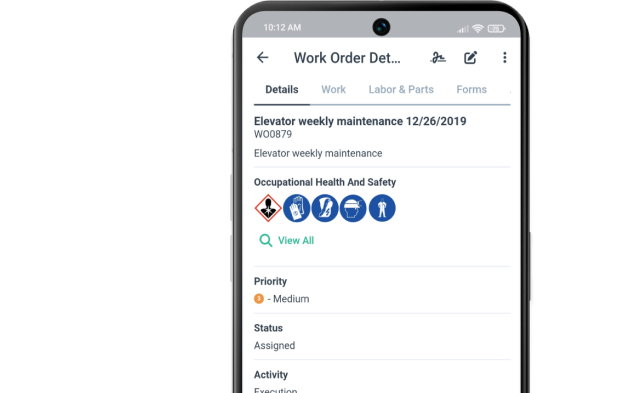
Effective work order planning enables supervisors to proactively identify the requirements needed to complete the job safely, including:
personal protective equipment (PPE)
lockout/tagout (LOTO) procedures
permits
any hazards associated with the equipment or work environment
Documenting these requirements in the work order ensures technicians arrive prepared rather than having to assess critical safety considerations under time pressure.
Many safety controls require coordination before work can begin.
Energy sources may need to be isolated, confined-space or hot-work permits may require approval, and specialized PPE or gas-monitoring equipment may need to be reserved in advance.
Waiting until a technician is on-site to identify these requirements can delay the job, increase the likelihood of procedural shortcuts, or expose workers to unnecessary risks.
That's why effective safety preparation belongs in the planning stage, not as a last-minute decision made in the field.
According to OSHA, millions of workers service machinery and equipment where the unexpected startup or release of hazardous energy can result in serious injury or death if proper lockout/tagout procedures aren't followed.
At the same time, OSHA estimates that compliance with its lockout/tagout standard prevents approximately 120 fatalities and 50,000 injuries annually in the United States.
Illustration: WorkTrek / Data: OSHA
These figures underscore the importance of identifying hazardous energy sources and documenting isolation procedures before maintenance work begins, rather than during execution.
Well-planned work orders also improve consistency across maintenance teams.
Instead of relying on individual technicians to remember every safety precaution, planners can standardize required procedures, attach job-specific safety instructions, and include references to equipment manuals or standard operating procedures.
This creates a repeatable process that reduces variability and helps ensure maintenance tasks are completed safely, regardless of who performs the work.
Templates Make Planning Repeatable
Good planning shouldn’t rely on one experienced planner to remember every detail of every recurring job.
If the quality of your work order rises and falls with whoever wrote it that week, you've built a skill, not a repeatable process. This won’t do.
While experienced planners are invaluable, standardized processes are what enable maintenance teams to deliver consistent results as they grow.
The way to achieve that consistency is through reusable job templates, checklists, and digital work order forms that capture proven planning practices.
Instead of recreating every work order from scratch, planners can start from a documented baseline and make adjustments only when asset-specific conditions require them.
This reduces planning time, improves consistency, and helps ensure critical information isn't overlooked.
Templates are particularly valuable for preventive maintenance and other routine tasks that follow the same basic process each time they’re performed.
Rather than redefining the scope, estimating labor, identifying replacement parts, and documenting safety requirements for every job, planners can reuse a proven plan that's already been validated in previous work.
This is where computerized maintenance management systems (CMMS) like WorkTrek come in, centralizing templates, maintenance histories, and cost data in one place.
WorkTrek's Service Catalog, for example, allows planners to create reusable templates for recurring jobs that include predefined labor estimates, required parts and materials, safety procedures, task instructions, and other job-specific information.
Source: WorkTrek
When a similar maintenance request is submitted, the appropriate template can be applied automatically, reducing planning effort while ensuring technicians receive complete, consistent work instructions.
WorkTrek also tracks actual labor hours, material usage, and job costs for completed work orders, making it easy to compare planned versus actual performance.
That feedback helps planners continuously refine their templates, improve the accuracy of future estimates, and build a planning process that becomes smarter with every completed maintenance task.
Conclusion
Since planning happens behind the scenes, it's easy to treat it as little more than an administrative task.
Yet effective work order planning reduces delays, improves technician productivity, controls costs, prevents rework, and helps maintenance teams work more safely.
If your planning process still depends on spreadsheets, paper forms, or institutional knowledge, now is the time to rethink it.
A modern CMMS like WorkTrek helps you standardize work order planning, create reusable job templates, and capture the data needed to continuously improve maintenance performance.
With the right processes and tools in place, every work order becomes an opportunity to work smarter, not just harder.
And when every job starts with a solid plan, every maintenance outcome is more likely to succeed.

Operations & Maintenance
Everything You Need to Know About the Work Order Process
Key Takeaways:
Strengthening the work order process significantly improves PM schedule compliance.
Workers spend about 25% of their workweek looking for information.
One company reduces its backlog by 70% by improving its WO process.
Many unplanned breakdowns in manufacturing facilities tell the same story: something was wrong before, but nobody caught it in time.
The warning signs were there.
A work request that never got prioritized, an inspection that kept getting deferred, or a repair that was completed but never properly documented.
The equipment didn’t fail randomly; the process around it did.
At the center of that process is the work order.
It's where maintenance activities are requested, planned, executed, and documented.
Weaknesses in your work order process can affect nearly every aspect of maintenance, from technician productivity and preventive maintenance to equipment reliability and operational costs.
Understanding the work order process is the first step toward improving it.
In this guide, you'll learn how a typical work order process works, the common challenges that undermine it, and how the right processes and technology can help your maintenance team operate more efficiently and proactively.
A Closer Look at a Typical Work Order Process
No two companies handle work orders in the same way.
Your process may include additional approval steps, a different ticketing system, or a unique escalation path.
While the exact workflow varies by industry, facility size, maintenance strategy, and maintenance tools, most organizations follow a similar sequence of steps when managing maintenance work:
Identify the maintenance need A work order begins when someone identifies a maintenance issue, such as an equipment failure or a safety concern.Submit a request The request captures essential information, including the asset, issue description, priority, location, and more.Review and approve the requestA maintenance manager verifies the request, determines its priority, and decides whether to approve it, defer it, combine it with other work, or reject it.Plan and schedule the workOnce approved, the work order is planned and scheduled based on factors such as equipment criticality and safety.Assign the work order.The job is assigned to the technician or team with the appropriate skills, certifications, and availability.Complete the maintenance workTechnicians perform the task, record labor hours, document parts used, and capture any relevant observations during the repair.Verify and close the work orderThe work order is closed; the completed work is documented, creating an upkeep history that supports future planning and decision-making.
These steps aren't just theoretical.
A good example is E. & J. Gallo Winery, one of the world’s largest wineries.
The company’s maintenance team identified gaps in its reliability program, particularly around managing corrective work orders.
Before improving its approach, the team struggled to understand where maintenance resources were being spent and lacked consistency across its facilities.
To address these challenges, Gallo created a more structured word order workflow built around five key stages: approval, planning, prioritization, scheduling, and execution.
During this process, the company discovered that its team was focusing more on scheduling work than on properly planning it.
As the company's Director of Engineering and Maintenance, John Lazar, put it:
Illustration: WorkTrek / Quote: PlantServices
This distinction is important.
Scheduling focuses on when a job will be completed, while planning focuses on what is required to complete it successfully, including the necessary parts, tools, procedures, and potential challenges.
By strengthening each stage of its work order process across five facilities, Gallo improved schedule compliance from 50% to 77% and gained greater control over corrective maintenance activities.
Common Work Order Problems That Sabotage the Entire Process
A work order process rarely fails because of a single mistake.
More commonly, it’s weakened by small execution gaps such as missing information, delayed approvals, or poor communication. These issues compound over time.
It's important to understand how they affect your maintenance operation before deciding how to solve these problems.
Incomplete Work Orders
An incomplete work order might look like a minor inconvenience on paper, but it can quickly disrupt your entire maintenance process.
A technician can’t immediately begin a repair if they open a work order that’s missing an asset’s history, the required parts list, or a clear description of the problem.
Instead, they may need to track down a supervisor for more details, search through old records, or return to the equipment to diagnose the problem themselves, all before they’ve turned a single wrench.
This delays response times and shifts technicians away from productive maintenance activities toward information gathering and administrative tasks.
The impact is even greater in manufacturing environments, where conditions change constantly.
Equipment failures, production schedules, and maintenance priorities can shift throughout the day.
A delay on one work order does not occur in isolation; it can create a backlog that affects every task scheduled afterward.
This is a challenge across all industries and sectors, not just maintenance.
Atlassian’s State of Teams 2025 report found that teams spend more than 25% of their workweek searching for information.
Illustration: WorkTrek / Data: Atlassian
In a typical 40-hour workweek, that’s the equivalent of spending about 10 hours, more than a full workday every week, just looking for information needed to complete tasks.
For maintenance teams, this lost productivity can appear as technicians searching for equipment manuals, previous repair records, asset details, or failure history instead of performing maintenance work.
The consequences extend beyond wasted technician hours.
For example, when a technician spends even 20 or 30 minutes searching for missing information during an urgent repair, the delay can:
Slow production recovery
Increase operational costs
Extend equipment downtime
Every minute spent chasing information is a minute taken away from restoring equipment and keeping operations running efficiently.
Chronic Backlog Accumulation
A maintenance backlog isn’t automatically a sign that something’s wrong.
A healthy, well-managed backlog helps maintenance teams prioritize work, plan resources, and keep technicians productive.
As Aaron Ridgway, founder of Ridgway Resilience, a maintenance and reliability training and consulting organization, explains:
Illustration: WorkTrek / Quote: Ridgway Resilience
The trouble starts when that backlog grows beyond what your team can realistically manage.
An excessive backlog means maintenance tasks continue to accumulate faster than they can be completed.
Over time, maintenance requests pile up, work orders remain unassigned, and lower-priority tasks are repeatedly deferred, with no one tracking how long they've been waiting.
Many maintenance professionals consider a backlog of roughly two to four weeks to be healthy because it provides enough planned work to keep technicians productive without overwhelming the team.
If your backlog consistently exceeds that range, it's a strong indicator that maintenance demand is outpacing available resources or that work isn't being managed effectively.
Once your backlog grows beyond a healthy level, maintenance teams naturally focus on the most urgent work, leaving lower-priority repairs and preventive maintenance tasks waiting.
Over time, those seemingly minor issues can develop into larger failures that require longer downtime, additional resources, and more expensive repairs.
A good example comes from this large offshore energy company that struggled with an excessive maintenance backlog across its operations.
Source: YCP Renoir
As work orders accumulated, maintenance planning became increasingly difficult, making it harder to prioritize maintenance activities and deploy resources effectively.
After redesigning its work management process and strengthening its planning and scheduling practices, the company reduced its maintenance backlog by 70%, improving operational performance and responsiveness.
Source: YCP Renoir
While not every organization will experience a backlog at this scale, the case illustrates how an unmanaged backlog can gradually erode maintenance efficiency until it becomes a significant operational challenge.
An unmanaged backlog also puts pressure on maintenance teams.
Faced with a constant queue of overdue work orders, technicians may rush jobs, shift priorities frequently, or focus almost exclusively on emergency repairs.
This reactive cycle makes it harder to complete planned maintenance activities and maintain long-term equipment reliability.
The impact extends beyond the maintenance department.
A growing backlog can make it harder for managers to accurately understand the true condition of their assets, forecast workload, and allocate resources effectively.
When too many unresolved issues accumulate, the maintenance team is no longer managing the backlog; the backlog is managing the team.
Poor Performance Visibility
You can’t improve what you can’t see.
Yet many maintenance teams struggle to measure performance because work order data is incomplete and inaccurate, reporting is inconsistent, or key performance metrics are missing altogether.
Without reliable data, managers are forced to make decisions based on assumptions rather than evidence.
In maintenance, this plays out in familiar ways.
A manager might assume the team is keeping up with planned maintenance because no one has raised concerns, only to discover during a budget review that reactive repairs have quietly overtaken preventive maintenance for months.
Inaccurate reporting often causes managers to overestimate how much planned work is being completed and underestimate the time lost to delays, administrative work, and recurring failures.
Ricky Smith, Vice President of World Class Maintenance, a maintenance and reliability training and consulting organization, summarizes this problem well:
Illustration: WorkTrek / Quote: Reliable Magazine
Poor visibility also leads to poor resource allocation.
Without accurate, real-time data, decisions about staffing, scheduling, inventory, and budgets become educated guesses.
A manager might assign additional technicians to what appears to be an overloaded area when the real issue is that work orders are sitting unassigned or awaiting approval.
Likewise, recurring equipment failures may continue to receive reactive repairs because incomplete maintenance records hide the underlying pattern.
A metric has little value if it doesn't drive action.
Reports become little more than paperwork, and recurring problems remain hidden when performance visibility is poor.
Overreliance on Reactive Work
Reactive maintenance isn’t inherently bad.
Equipment failures and emergency repairs are an inevitable part of running a manufacturing operation.
The problem arises when reactive maintenance becomes the norm rather than the exception.
When maintenance teams spend most of their time responding to emergencies, it often reflects deeper issues elsewhere in the maintenance operation.
Instead of preventing failures before they occur, technicians are forced into a constant cycle of responding to them.
However, reactive maintenance is more common than many organizations realize.
A McKinsey survey found that, on average, only 51% of maintenance activities are preventive, suggesting many manufacturers still devote a significant share of their maintenance effort to unplanned work.
Illustration: WorkTrek / Data: McKinsey
Rather than following a proactive maintenance strategy, many teams continue to spend much of their time reacting to equipment failures after they've already occurred.
The financial consequences can be substantial.
Organizations that rely heavily on reactive maintenance often experience more frequent and costly unplanned outages.
According to ABB's 2023 Value of Reliability survey, the typical industrial business loses about $125,000 for every hour of unplanned downtime.
Despite these costs, the survey also found that one in five organizations still follow a run-to-fail maintenance strategy, while 69% report experiencing unplanned outages at least once a month.
Illustration: WorkTrek / Data: ABB Motion Services
The impact extends beyond productivity and cost.
Equipment allowed to operate with unresolved defects or deferred maintenance presents greater safety risks to both operators and maintenance personnel.
Minor issues left unaddressed can escalate into major failures that:
Disrupt production
Damage equipment
Create hazardous working conditions
Verve Viitanen, Head of Global Customer Care and Support at ABB Motion Services, reinforces the value of a proactive approach:
Illustration: WorkTrek / Quote: ABB Motion Services
Reactive maintenance will always be part of manufacturing.
The goal isn't to eliminate emergency work, but to ensure it remains the exception rather than the strategy.
Modern CMMS: One Tool that Solves All These Challenges
The work order challenges we've covered are rarely isolated problems.
Incomplete work orders, growing backlogs, poor visibility, and reactive maintenance often reinforce one another, creating a cycle that's difficult to break.
A modern computerized maintenance management system (CMMS), like WorkTrek, helps break that cycle by bringing structure, consistency, and visibility to every stage of the work order process.
It provides a centralized platform where maintenance requests, work orders, asset history, preventive maintenance schedules, inventory records, and performance data all live in one place.
That said, software alone isn’t a silver bullet.
Success still depends on:
Well-defined workflows
Clear responsibilities
Consistent execution
A CMMS provides the tools to support those processes, but it doesn't replace them.
When paired with strong maintenance practices, however, it enables teams to execute those processes more consistently and efficiently.
The process starts with better work requests.
To reduce incomplete work orders and eliminate information gaps, WorkTrek's Work Request Management feature gives employees a standardized way to submit maintenance requests.
Source: WorkTrek
By capturing essential information such as asset details, issue descriptions, priority levels, and supporting attachments upfront, technicians spend less time chasing missing information and more time resolving the problem.
Once a request is approved, it becomes a structured work order.
WorkTrek's Work Order Management feature centralizes everything technicians and supervisors need, including asset history, assigned personnel, labor hours, parts used, checklists, notes, and completion status.
Source: WorkTrek
With everyone working from the same up-to-date information, technicians arrive better prepared, supervisors gain real-time visibility into work progress, and managers can make decisions based on accurate data rather than assumptions.
Effective planning also depends on having the right parts available when work begins.
WorkTrek's Parts Inventory Management feature gives maintenance teams real-time visibility into inventory levels, parts usage, and reorder points.
Source: WorkTrek
This helps planners confirm that required materials are available before scheduling work, which reduces delays caused by missing inventory, emergency purchases, or last-minute trips to the storeroom.
From there, Preventive Maintenance capabilities help shift maintenance from reactive to proactive.
WorkTrek can automatically generate recurring work orders based on time intervals, equipment usage, or meter readings, making it easier to schedule routine maintenance before equipment problems escalate into costly failures.
Source: WorkTrek
The clarity of data enables maintenance teams to consistently complete preventive work and reduce their dependence on emergency repairs.
Ultimately, a CMMS doesn't improve maintenance simply by digitizing work orders.
It improves maintenance by making the entire work order process more structured, visible, and accountable.
Combined with well-defined processes and consistent user adoption, WorkTrek provides maintenance teams with the foundation they need to reduce reactive work, manage the backlog more effectively, improve performance visibility, and keep critical assets operating reliably.
Conclusion
The work order is the backbone of your entire maintenance operation.
When it's ineffective, your team struggles to respond quickly, plan work effectively, allocate resources efficiently, and keep critical assets operating reliably.
Many common maintenance challenges can often be traced back to weaknesses in the work order process.
Improving that process means making sure every maintenance activity starts with the information needed to complete the job successfully.
A modern CMMS like WorkTrek supports that effort by establishing a consistent workflow and providing your team with a single source of truth for maintenance information.
But software is only part of the equation.
Lasting improvements come from the people and processes behind it, with technology helping your team execute their tasks consistently.

Operations & Maintenance
How to Build an Effective Maintenance Work Order Process: A Step-by-Step Guide
Key Takeaways:
Manufacturers lose an estimated $1.4 trillion annually to unplanned downtime.
Over one-third of employees lose 40+ hours yearly due to unclear communication.
Tracking KPIs ensures a measurable, continuously improving upkeep operation.
Most maintenance teams don't fail for lack of skill. They fail because of inefficient work order processes.
A work order arrives with insufficient detail, no one clarifies it, and a technician shows up to the job unprepared.
Or five people request the same repair through five different channels, and two technicians end up doing the same work on the same day.
These problems rarely seem significant at first. However, they accumulate until the backlog grows, costs climb, and reactive firefighting becomes the default.
This guide walks through five concrete steps for building a work order process that addresses these problems and actually works.
Map Your Current Process
Before improving your work order workflow, you first need to understand how work gets done right now.
That’s why maintenance process mapping is the first step to building an effective maintenance work order process.
It enables you to uncover and address hidden inefficiencies, such as communication gaps, poor documentation practices, or delays caused by unclear responsibilities.
For instance, the 2021 EDH Technology survey shows that 41% of manufacturing workers struggle to find the information they need.
Illustration: WorkTrek / Data: EDH Technology
In a maintenance department, that could mean looking for the latest work order, chasing approvals, or trying to understand who is responsible for the next step.
Those seemingly small delays quickly add up across hundreds or even thousands of work orders every year.
The easiest way to uncover those inefficiencies is to trace a single work order from the moment a problem is reported until the job is officially closed.
Ask questions like:
How was the issue reported in the first place?
Who received the request, and how long did it sit before someone responded?
Who decided the priority level?
How were labor hours, spare parts, and downtime recorded?
How was the completed work documented and verified?
The answers often reveal hidden gaps in your operations.
Break down every step exactly as it happens today, even if the process looks messy.
A simple flowchart, like the one you see below, is often enough to get started.
Source: WorkTrek
Begin with the maintenance request and map every handoff, approval, assignment, repair, inspection, and close-out.
You will quickly discover that many delays may happen outside your documented process.
Phone calls, hallway conversations, sticky notes, personal spreadsheets, and verbal approvals often become unofficial systems for managing maintenance work.
In the end, moving those habits into a CMMS will not solve the problem.
You will simply digitize the confusion.
Mapping your existing workflow first helps you identify those weaknesses before they become permanent.
Standardize Work Order Intake
Once you map your process, you need to improve how data comes in.
If one technician receives maintenance requests by phone, another by email, and someone else logs them in a spreadsheet, you have a potential problem before the work even begins.
Every request follows a different path, which means information gets recorded differently or, worse, not at all.
Over time, this can create:
Inconsistent data
Duplicate work orders
Missing asset history
Delayed repairs
A technician might receive a phone call about a leaking pump but forget to log it. Someone else might update a spreadsheet but omit critical details like the asset ID or priority level.
A tragic example of why standardization matters occurred in 2010 at DuPont's Belle facility in West Virginia.
A braided steel hose connected to a one-ton phosgene tank suddenly ruptured, releasing a highly toxic gas. A veteran operator was exposed to the leak and died the following day.
During its investigation, the U.S. Chemical Safety and Hazard Investigation Board (CSB) found several maintenance management failures, including:
the absence of an effective system to schedule hose replacements
weak authorization controls
no formal process for reporting deteriorating equipment
Employees had previously observed issues with aging hoses, but those concerns were never consistently documented or tracked.
This is exactly why standardizing your work order intake matters.
Preston Ingalls, President of the consultancy TBR Strategies, puts it perfectly:
Illustration: WorkTrek / Quote: Construction Equipment
Every maintenance request should follow a single, consistent workflow from the moment it is reported until the job is completed.
And the best way to standardize work order data is to use a CMMS like WorkTrek.
Instead of allowing requests to arrive through multiple disconnected channels, WorkTrek centralizes them into standardized digital work order forms and configurable workflows.
Every maintenance request follows the same process from submission to completion, regardless of who reports the issue.
With WorkTrek, you can use prebuilt work order templates to ensure consistency across the board.
You can require mandatory fields such as asset ID, location, priority level, and failure description so technicians never miss critical details.
Source: WorkTrek
Additionally, your team can attach photos, inspection reports, manuals, and other documentation directly to the document, all from their phones.
Automated notifications also keep requesters, supervisors, and technicians informed throughout the entire lifecycle of the work order.
With WorkTrek, those hidden work order inefficiencies are eliminated.
Visibility, data accuracy, and accountability increase significantly across the entire workflow.
Establish Prioritization Rules
Not all work orders are created equal.
A burning motor is obviously more urgent than a squeaky door.
If you do not have clear prioritization rules, your technicians will work on whatever they see first.
This is a dangerous way to run a maintenance team.
You need strict rules for what constitutes a high-priority task. Otherwise, you expose your operation to the biggest productivity killer of them all: unplanned downtime.
According to Siemens' 2024 True Cost of Downtime report, the world's 500 largest manufacturers lose an estimated $1.4 trillion every year to unplanned downtime, roughly 11% of their annual revenue.
Illustration: WorkTrek / Data: Siemens
One of the simplest ways to reduce maintenance costs is to establish work order prioritization rules.
Most organizations evaluate work orders using a tiered approach.
Safety risks always come first, followed by regulatory or environmental compliance, asset criticality, operational impact, and finally routine maintenance.
These elements are typically all laid out in a matrix that combines likelihood with the severity of the issue, as shown below:
Source: IDCON
Or you could also simplify decision-making by assigning priority levels such as A, A*, B, and C, where each level represents a predefined response based on risk and business impact, like so:
Source: THE RAM REVIEW
This also improves workload planning, allowing managers to see how many high-priority tasks are waiting and adjust staffing before bottlenecks develop.
Without prioritization rules, your team may always be reactive or never get ahead of the preventive maintenance schedule.
Establishing these rules takes a little time up front, but it saves hundreds of hours later.
Define Clear KPIs
Defining clear Key Performance Indicators (KPIs) is one of the most reliable ways to determine whether your maintenance work order process is actually improving.
Below, you can watch an informative guide on maintenance KPIs by Ed Surber, Founder & Head of Operations at PIE Electric Inc., an electrical services provider:
https://youtu.be/uyimxnSwoek?si=70Rv9gbNPeLnR_xv
Source: Ed Suber on YouTube
Contrary to popular belief, maintenance KPIs aren’t only for massive refineries or manufacturing plants.
Every facility, from schools and hospitals to warehouses and commercial buildings, can use maintenance metrics to identify bottlenecks and continuously improve operations.
Here are some of the most valuable KPIs your maintenance team can monitor:
KPIWhy it mattersWhat does it tells youMean Time to Repair (MTTR)Measures how quickly assets are restored after failure.High MTTR may indicate inefficient troubleshooting, poor spare parts availability, or inadequate technician training.Preventive Maintenance (PM) ComplianceTracks the percentage of scheduled PM tasks completed on time.Low compliance often signals resource shortages, unrealistic scheduling, or excessive reactive work.Work Order Completion RateMeasures how many assigned work orders are completed within the planned period.Helps identify backlog growth and overall maintenance productivity.Planned vs. Reactive Maintenance RatioCompares planned maintenance against emergency repairs.A higher percentage of planned work generally indicates a more mature and proactive maintenance program.Maintenance BacklogMeasures outstanding maintenance work waiting to be completed.A growing backlog may indicate understaffing, poor prioritization, or recurring asset failures.Schedule ComplianceTracks how closely technicians follow the planned maintenance schedule.Reveals whether daily maintenance plans are realistic and achievable.
These metrics tell you not only how quickly your team fixes equipment but also how effectively it prevents failures in the first place.
For example, if your MTTR continues to increase, the problem may not be your technicians at all.
It could indicate delays in locating spare parts, lengthy approval processes, or poor work order planning.
Likewise, consistently low PM Compliance often suggests your team is overloaded with reactive work or scheduling more preventive maintenance than available resources can realistically support.
Looking at multiple KPIs together provides even greater insight. In fact, Reliable Magazine estimates plants track about 30 metrics.
Illustration: WorkTrek / Data: Reliable Magazine
However, KPIs aren’t just for your supervisors to track. Technicians should also be able to access and monitor them.
When teams understand how their work contributes to larger operational goals, they are more likely to identify inefficiencies, suggest improvements, and take ownership.
Track these metrics consistently, review them regularly, and look for trends instead of isolated numbers.
Over time, better visibility replaces guesswork, allowing your maintenance team to spend less time firefighting and more time building a reliable, proactive maintenance operation.
Develop Standard Operating Procedures
Standard Operating Procedures (SOPs) document exactly how a maintenance task should be performed.
You can see a template for one such document below:
Source: Washington University in St. Louis
These documents are more important than many realize.
Without one, two technicians are more likely to repair the same asset using completely different methods.
That inconsistency can lead to safety risks, longer repair times, and unreliable maintenance records.
This is why industries such as manufacturing, oil and gas, chemicals, pharmaceuticals, healthcare, utilities, aviation, and construction rely heavily on SOPs.
A good work order SOP may contain the following elements:
Scope and objectiveDefines exactly what the procedure covers.Required tools, parts, and PPEEnsures technicians arrive prepared.Safety precautionsIdentifies hazards before work begins.Step-by-step procedureCreates consistency across every technician.Inspection and testingConfirms the repair was successful.Documentation and sign-offMaintains complete maintenance history.
Note: Elements may vary by industry type
Another great advantage of well-crafted SOPs is that they preserve institutional knowledge.
Experienced technicians eventually retire, change jobs, or move into leadership roles. SOPs allow their expertise to remain part of your maintenance program.
Digital SOPs make everything even easier and more accessible.
Rather than updating paper manuals or emailing revised instructions, maintenance teams can instantly publish the latest version.
Source: WorkTrek
If a safer inspection method, improved repair technique, or new regulatory requirement emerges, everyone can access the same updated procedure immediately.
Essentially, your SOPs evolve alongside your equipment, workforce, and maintenance practices.
Conclusion
Improving your maintenance work order process does not happen overnight, but every improvement builds on the last.
A well-defined workflow helps eliminate confusion, ensures work is prioritized correctly, and gives technicians the information they need to complete jobs efficiently.
Combined with measurable KPIs and standardized procedures, your work order process becomes a reliable system for driving continuous improvement.
The sooner you build that foundation, the easier it becomes to reduce downtime and keep maintenance operations running smoothly.

Operations & Maintenance
How to Use Digital Tools to Streamline Maintenance Workflows
Key Takeaways:
Mapping out upkeep processes ensures that a new tool fixes problems rather than repeating them.
Defining clear KPIs before committing to a system helps avoid buyer's remorse.
Centralizing scattered maintenance data into one system creates a single source of truth.
Training your team ensures a system gets used more consistently and effectively.
Are you currently looking to implement a digital tool into your maintenance operations?
These systems can do a lot for your team, from cutting downtime to helping keep better records.
But buying a feature-rich system is not enough on its own.
Without a few important steps taken beforehand, even a capable tool can fall short.
That’s why this article will walk you through seven steps for successfully using digital tools to improve your maintenance workflows.
1. Map Your Existing Processes
You need a clear picture of how work flows across your teams and sites before bringing in any digital tool.
Audrey Van de Castle, senior director of operational excellence technology at Stanley Black & Decker, talked on this topic on a recent podcast.
She explained that adding a digital solution on top of an ineffective workflow is rarely the right move.
Illustration: WorkTrek / Quote: MaintainX on YouTube
As she notes, software alone won't fix weak accountability or team culture, so it pays to look at those first.
A new system tends to copy any current inefficiencies rather than remove them without that baseline.
A digital tool runs your process exactly as it is, so any weak or wasteful steps are just carried out faster rather than being fixed.
With that in mind, the goal is to map out your key maintenance processes from start to finish.
Look at how you handle preventive and scheduled maintenance, then do the same for reactive, breakdown work, and so on.
What you want at the end is a clear view of each maintenance flow, end to end.
An example flow for a directly reported incident might look like the image below.
Source: WorkTrek
Of course, this is a simplified flowchart, and your own maps should capture as much detail as possible.
That includes aspects such as flow branches for when a request is approved or rejected, as well as your assignment rules and approval steps.
It also helps to ask a few guiding questions about each process, shown next.
Source: WorkTrek
Answering these for every workflow surfaces the gaps and handoffs that a digital tool will later need to support.
Once this is done, you'll have a documented baseline of how your maintenance runs today, which sets up every decision that follows.
2. Define What You Want the New Tool to Achieve
Once you have your processes mapped, the following step is to figure out how a digital tool fits into them and what you want it to achieve.
This step matters more than it might seem, because choosing the right software is something many teams struggle with.
In fact, according to data from Capterra, almost half of the surveyed manufacturers had trouble identifying the right solution for their needs, and many later regretted their purchase.
Illustration: WorkTrek / Data: Capterra
A big reason for this is that teams focus on flashy features rather than their own goals first.
What tends to happen is that companies compare systems by feature depth and unique capabilities, then commit to the most impressive option.
The problem is they never planned how those features would support their actual maintenance work, so they end up dissatisfied.
That is why it helps to start with the broader goals you want to reach, paired with specific KPIs to track your progress.
The image below shows two sample goals and a few metrics tied to them.
Source: WorkTrek
Your own goals will depend on where your operation needs the most help.
A simple way to set them is to look at your biggest pain points from the mapping step, then attach one or two measurable targets to each.
With clear goals and metrics established, you have a way to measure success.
3. Find the Right Tool
The right tool should fit your operation's size and workflow complexity, and stay within your team's technical comfort zone.
And, since you now should have some concrete goals and metrics, you can try to find tools that will move you toward them.
Say, for example, you want to reduce unplanned downtime, with better schedule adherence as the KPI you track.
You could then look for a tool with an intuitive scheduler like the one below, plus features that show each work order's status.
Source: WorkTrek
If that same tool also pushes you toward your other goals, even better.
In your own operations, you might need one highly specific system that is focused on a single workflow, or something more general that covers many use cases.
The table below maps some common goals to the tool types that typically fit them best.
GoalThe tool type that fitsCut unplanned downtimeCMMS with strong PM schedulingStop running out of partsParts & inventory management systemDigitize inspections & checklistsCMMS with mobile app, digital forms appStay audit- and compliance-readyCMMS with checklists & audit trailsSee across multiple sitesEnterprise CMMS or EAMPredict failures before they happenCMMS with condition monitoring, IoT platform
As you can see, CMMS appears repeatedly in this table because it is generally the best digital tool for streamlining maintenance overall.
Take WorkTrek as an example, our own cloud-based CMMS built to manage maintenance work in one place.
It covers the core areas most teams need, with features like:
Work order management
Preventive maintenance scheduling
Inventory and parts management
Digital checklists and inspections
A mobile app for technicians
Dashboards and reporting
In practice, with WorkTrek, a request can come in, turn into a work order, get scheduled and assigned, then close with parts and history logged in the same system.
Ultimately, a CMMS system like this one supports many processes at once, which is what makes it a natural fit for streamlining maintenance workflows.
4. Centralize Data
Another major source of inefficiency in maintenance is fragmented information.
This simply means your maintenance data is stored in many separate places instead of one, so no one has the full picture.
It can happen for many reasons, from old habits to skipping shared processes and letting each person track work their own way.
Whatever the cause, the result is usually messy.
One Reddit thread captures this well, with the writer describing maintenance data spread across several digital systems or jotted down on paper, when it gets recorded at all.
Source: Reddit
Their main frustration is that almost nothing is tracked in a reliable, consistent way.
The fix is to bring all that scattered data into one place and create a single source of truth.
This takes real effort, since it means pulling data from many different sources, a few of which are shown below.
Source: WorkTrek
Centralizing data that is already digital tends to be easier, especially if some standardization was followed along the way.
It usually involves organizing records from legacy systems and spreadsheets, then moving them into one place.
Physical data is a bit trickier to handle.
Handwritten notes and paper checklists need to be digitized and matched to the right assets before they are useful.
Then there is tribal knowledge, the undocumented knowledge that your technicians hold, which you will want to write down and store in the system while those people are still around.
The point is that this work has to be done for the rest of your digital effort to succeed.
Done well, it turns scattered records into data your whole team can trust.
5. Digitalize Only One Key Workflow First
Once your data is centralized, it can be tempting to digitize every workflow at once.
That is usually a mistake.
A better approach is to gradually introduce this digital change and start with one high-impact process.
In essence, you want to prove the system works to yourself and your team and refine your process before expanding.
Some useful data here comes from Prosci's Best Practices in Change Management research, which surveyed more than 2,600 change practitioners across projects that included implementing new digital technology.
Their findings show that teams with excellent change management were about seven times more likely to meet or exceed their objectives.
Illustration: WorkTrek / Data: Prosci
Even without a dedicated change manager on staff, the lesson here is that a careful and well-planned rollout beats rushing.
For digital tools specifically, a gradual approach works best, so we suggest focusing on improving a single workflow first.
This can be a fairly simple process that lets you test the system in real conditions.
You have plenty to choose from, and even one work-order lifecycle has several points worth improving, like assignment automation, work order prioritization, mobile checklists, and forms…the list goes on.
No matter the workflow you choose, you want to consider specific types of improvement to aim for, with three key categories shown below.
Source: WorkTrek
These overlap quite a bit, so treat them as a general direction rather than strict aspects.
Which one you start with depends on the workflow you pick and your situation.
If your team lacks clear insight into work order assignments, you could start by improving this workflow’s visibility.
On the other hand, if some processes already work but cost too much time or money, you could focus on efficiency and spending instead.
In short, starting with one workflow and a specific type of improvement keeps the change manageable and gives you a model to repeat.
6. Train Your Team
With all this focus on tools and digitizing, it is easy to overlook your team, the people who will use the new system.
They are the ones who decide whether your investment pays off.
For that reason, proper training is not optional; it is what turns a new tool into a daily habit.
The exact training will depend on your team and your system, but a few practices tend to help in most cases.
Source: WorkTrek
To highlight one training tip, you want to keep it as realistic as you can.
Where possible, train people on the workflow you chose to digitize first, and have your more tech-savvy staff act as internal mentors who support others.
This gives everyone hands-on practice and a clear person to ask when questions come up.
Next, role-based onboarding also matters a lot when you are working with a feature-rich platform like a CMMS.
After all, not everyone needs to know every aspect of the system.
As an example, a technician might mainly learn about work orders and the mobile app, while a maintenance planner would focus more on scheduling and reporting features.
On that topic, Steven McKissick of MRI Software points out that the right system can make this learning and onboarding process easier, depending on how clean its interface and overall design are.
Illustration: WorkTrek / Quote: MRI Software
In other words, an intuitive tool lowers the training load for the whole team.
Get this right, and your team adopts the system instead of avoiding working with it.
That adoption is what makes the rest of your effort worthwhile.
7. Create Operational Guidelines for the New Tool
One last piece that is closely related to training is giving your team standard operating procedures, or SOPs.
These are written rules for how work, and the system itself, should be handled.
A good SOP follows a clear, repeatable structure, with a handful of essential elements.
Source: WorkTrek
The purpose of these elements is to ensure anyone can pick up a procedure and carry it out the same way every time.
After all, when every technician uses the tool the same way, your workflows become smoother, and data reflects what is happening.
The digital tool you choose can take on a lot of this work for you.
For instance, a solid knowledge base, tied to features like work order management, can hold your step-by-step instructions right where the work happens.
Source: WorkTrek
You will still need to adapt and build on these over time, but the overall goal is to make them fit naturally into your wider maintenance workflows.
Done consistently, SOPs keep your data reliable and your whole team working the same way.
Conclusion
And that is the overall process.
It gives you a steady way to bring a digital tool into your maintenance operation without the usual headaches, if followed step by step.
Above all, start slow and begin with your own needs and a close look at your current processes before you pick tools.
Do that, and you give your new system the best possible chance to be adopted and improve how your team works.

Operations & Maintenance
6 Reasons for Digitizing Your Work Order Management
Key Takeaways:
Manual work order management produces more errors and decreases asset lifespan.
Digital work orders enable teams to work from a shared real-time view of the operation.
The world’s 500 largest companies lose $1.4 trillion a year due to unplanned downtime.
Imagine the following:
The technician who worked on the machine last week wrote the repair notes on paper, but no one can find the form.
A preventive maintenance inspection that should have happened three days ago was missed because the reminder was on a whiteboard in another building.
Someone forgot to order that critical spare part. Again.
For facilities managing maintenance through disconnected manual processes, these scenarios are all too common.
Luckily, digital work order (WO) management eliminates such inefficiencies through a centralized, real-time system for managing maintenance work, tracking assets, and keeping teams aligned.
In this article, we’ll explore six key reasons why digitizing your work order management can improve reliability, reduce downtime, and create a more efficient maintenance operation.
Improved Data Reliability
When maintenance records are managed through paper forms, sticky notes, or disorganized spreadsheets, errors accumulate quickly.
For instance, a technician might abbreviate an asset name differently each time, or fill in a work order from memory, hours after the job is done, forgetting key information.
Over time, these small inconsistencies erode the reliability of your maintenance data until the records your team depends on can no longer be trusted.
The operational consequences of such untrustworthy data can be severe.
Just ask Joyce Blom, a senior electrical reliability engineer at a major gas production facility:
“We had a case where a 15kV switch for a critical load was not in the [...] system and was missed for its five-year maintenance. The switch eventually failed with an arcing short, causing a plant-wide power outage [...]. The associated costs were significant.”
This shows that even a single missing or inaccurate maintenance record can lead to costly downtime, repair delays, and major operational disruptions.
Digital WO management eliminates many of these failure points by building accuracy and consistency directly into the process.
Standardized templates, like the one below, ensure every work order follows the same structure.
Source: WorkTrek
Instead of each technician documenting work differently, your team uses a predefined format with consistent fields for asset names, failure types, priority levels, assigned technicians, labor hours, and parts used.
This consistency makes records easier to complete, review, search, and analyze.
Digital WO systems also improve data completeness by requiring specific fields.
Technicians cannot close or submit a work order until key information, such as time spent, replaced parts, or resolution notes, has been entered.
What once fell through the cracks is now captured automatically as part of the workflow.
Digitization also enables real-time syncing, keeping teams aligned as work progresses and reducing the risk of outdated or forgotten information.
A technician can update a work order status, log completed work, take photographs, and add inspection notes or signatures, all on the go.
David Berger, P.Eng., Partner at Western Management Consultants, a Canadian management consulting firm, explains why real-time data is so important in upkeep:
Illustration: WorkTrek / Quote: PlantServices
Ultimately, digital work orders significantly increase data consistency and visibility, reducing duplicate records, incomplete documentation, and conflicting information between teams.
This creates a maintenance data foundation your organization can actually trust when making operational, financial, and reliability decisions.
Real-Time Data Access
Better data is only half the equation.
The other half is being able to get to it instantly, from wherever you are.
With paper-based or spreadsheet-driven systems, information moves slowly.
A technician completes a repair, fills out a form, hands it to a supervisor, who eventually uploads it to a shared drive.
By the time that data is available to the rest of the team, hours or even days have passed.
Not only are decisions made during this gap based on incomplete or outdated data, but teams also waste significant time searching for it.
For instance, a Glean survey shows that American workers spend an average of two hours a day, or 25% of their workweek, searching for documents, information, or colleagues needed to complete tasks.
Illustration: WorkTrek / Data: Glean
Fortunately, digital WO management eliminates these delays.
Since digital WO systems are often mobile-friendly, teams can access assignments, review job details, update work orders, and report issues from virtually anywhere, including directly from the shop floor.
As a result, everyone works from the same live information.
Supervisors can quickly verify job progress, planners can adjust schedules based on current equipment conditions, and technicians can respond faster when priorities change.
Source: WorkTrek
There are no manual handoffs, delayed updates, or disconnected spreadsheets slowing the flow of information.
Instead of tracking updates via calls, emails, or radio communications, the system provides a real-time view of maintenance activity across the facility.
This, ultimately, improves troubleshooting and repair quality.
When equipment fails, technicians can immediately pull up previous work orders, recurring issues, completed repairs, and parts history directly from a phone or tablet.
That context leads to:
Faster diagnostics
More informed repair decisions
Reduced downtime
In short, digital work orders enable your team to work from a shared real-time view of the operation.
This, in turn, leads to faster response times, better coordination, fewer communication gaps, and a maintenance process that can keep pace with the demands of the facility.
Increased Accountability
When maintenance work is managed manually, accountability often depends on trust.
You trust the technician completes the form, the supervisor approves the right work order, and the paperwork ends up where it’s supposed to.
When something goes wrong, like a missed inspection, a repeat failure, or a compliance gap, you’re left trying to reconstruct what happened from memory and incomplete records.
Digital WO management changes this by making every maintenance activity traceable.
Every action taken within the system is automatically tied to a person, a timestamp, and an asset.
Not because someone is constantly monitoring employees, but because traceability is built directly into the workflow.
Each work order automatically records key activity data, including:
Who created the work order
Which technician was assigned
When work started and ended
Status updates and approvals
Notes, comments, and uploaded photos
Parts used and labor hours logged
Asset repair and maintenance history
This way, digital work orders create clear ownership.
Instead of sitting in a general queue waiting for someone to claim them, work orders are assigned directly to specific technicians.
From creation to completion, the system tracks who received the task, when action was taken, and how long the work lasted.
As technicians update statuses, upload photos, log parts used, or document findings, the system automatically records those actions in real time.
This creates a complete maintenance history for every asset and repair activity.
If equipment fails shortly after a task was marked complete, you can review exactly what work was performed, what observations were documented, and who completed the repair.
One of the most practical accountability features in a digital WO system is mobile photo documentation.
Source: WorkTrek
Technicians can attach photos showing the equipment's condition before and after repairs, document defects discovered during inspections, or capture meter readings directly in the field.
Those images become part of the permanent asset record, providing far more context than handwritten notes.
The result is a more transparent, consistent, and accountable maintenance operation in which work quality is easier to verify, compliance is easier to demonstrate, and critical knowledge is easier to share.
More Efficient Work Planning
Planning maintenance can be challenging without a proper system.
Someone has to:
remember which preventive maintenance tasks are coming up
decide which jobs take priority
identify the right technician for the task
verify parts availability
coordinate all of it across the facility
When that coordination is carried out through phone calls, printed lists, and whiteboard schedules, things inevitably fall through the cracks.
Tasks get missed, priorities are driven by urgency instead of business impact, and technicians arrive at jobs without the parts, tools, or information they need.
Digital work orders, on the other hand, lead to a more structured planning process, continuously keeping maintenance work organized, prioritized, and moving forward.
For instance, digital systems enable you to set a priority level for each task.
Source: WorkTrek
After all, not every work request carries the same level of operational risk.
A failure of a production-critical asset requires a different response than a flickering light in a storage room.
Digital WO systems allow you to define and enforce priority levels such as critical, high, medium, and low, ensuring technicians focus on the work with the greatest operational impact first.
Access to complete asset history further strengthens planning quality.
When planners can review previous repairs, recurring failures, labor history, and asset condition trends, they can make better decisions about scheduling, staffing, and repair preparation.
They know which assets require specialists, which repairs typically take longer than expected, and which equipment may be approaching the end of its reliable service life.
All in all, the operational value of the structure and visibility introduced by digital work order management is significant.
Properly planned maintenance work consistently takes less time, causes fewer interruptions, and produces more reliable outcomes than reactive repairs.
When technicians arrive prepared, with the right parts, documentation, and context already available, work is completed faster, more safely, and with fewer repeat failures.
Stronger Preventive Maintenance Program
Better maintenance planning often leads to more effective preventive maintenance, which results in various improvements across operations and assets.
For instance, research from the NIST found that manufacturers relying on reactive upkeep experienced 3.3 times more downtime and 16 times more defects compared to those using more preventive and predictive maintenance strategies.
Illustration: WorkTrek / Data: NIST
They also reported significantly higher lost sales and inventory disruptions tied to maintenance-related issues.
In other words, adopting a more proactive approach to maintenance directly translates to increased efficiency, reliability, uptime, and even profitability.
However, managing preventive maintenance through spreadsheets, paper schedules, and calendar reminders is extremely difficult.
Tasks get delayed or forgotten, intervals drift, and preventive maintenance gradually turns back into reactive upkeep with extra administrative work layered on top.
Digital WO systems are what make a PM program sustainable at scale. Take our own CMMS, WorkTrek, for instance.
WorkTrek supports both time-based and meter-based PM scheduling, giving organizations the flexibility to align maintenance intervals with actual equipment usage.
Source: WorkTrek
You simply fill out the work order template, complete with SOPs, photos, checklists, and more, define the trigger, and the system takes care of the rest.
The assigned technician automatically receives a notification when the task is due and can instantly access the relevant work order from their phone.
If an inspection uncovers an issue, follow-up corrective work orders can be generated automatically.
The result is a better-planned preventive maintenance schedule that your team consistently follows, executing every task with the right procedures, parts, and safety measures in place.
No more missed tasks, constant firefighting, incomplete work orders, or running out of critical spare parts.
With WorkTrek, your preventive maintenance program finally works the way it should.
Reduced Costs
All the benefits we’ve covered so far ultimately impact your bottom line.
Better reliability, real-time visibility, stronger accountability, more efficient planning, and a stronger PM program reduce wasted time, minimize downtime, improve labor efficiency, and extend asset life.
Ultimately, the financial impact becomes visible across nearly every part of the operation.
Reduced unplanned downtime is often where most money is saved.
According to the 2024 Siemens report, the world’s 500 largest companies lose nearly $1.4 trillion annually due to unplanned downtime, approximately 11% of annual revenue.
Illustration: WorkTrek / Data: Siemens
However, it’s not just large enterprises that lose such large sums of money.
Companies of all sizes can be significantly impacted by unplanned operational disruption.
Alexander Hill, Chief Global Strategist at Senseye, a cloud-based predictive maintenance solution, explains:
Illustration: WorkTrek / Quote: Automation.com
Remember, when a machine fails unexpectedly, you’re not just paying the cost of lost production during the downtime.
You’re also paying a premium for the repair itself.
Emergency contractor rates, expedited parts shipping, and after-hours overtime are all expenses that disappear, or shrink dramatically, when maintenance is managed proactively through a digital system.
Digital WO management directly reduces these losses by enabling the preventive maintenance activities that keep equipment operating reliably.
Inventory management is another major area where digital maintenance systems reduce maintenance costs.
Without a digital system connecting parts usage to work orders and asset history, storerooms often accumulate excess inventory “just in case” while simultaneously running short on critical components actually needed for repairs.
Digital WO systems, like the one shown below, improve inventory visibility by tracking parts consumption, recurring failures, and maintenance trends over time.
Source: WorkTrek
That’s right, digitizing work orders isn’t only about centralizing information or making technicians’ jobs easier.
It can also result in major cost savings for the entire organization.
Conclusion
Maintenance teams today are expected to reduce downtime while working with fewer resources, tighter budgets, and higher production demands.
Managing maintenance through paper forms, spreadsheets, and disconnected processes makes it increasingly difficult to meet those expectations.
Digitizing work order management is the only way forward.
It provides your team with accurate maintenance data, real-time visibility into ongoing work, stronger accountability, and more efficient planning and scheduling.
More importantly, it transforms maintenance from a reactive cost center into a structured, data-driven operation that improves reliability, supports production goals, and reduces long-term operating costs.

Operations & Maintenance
Best Maintenance Tracking Software Tools on the Market
Maintenance tracking software has evolved far beyond basic work order logging.
Today’s platforms help teams manage preventive maintenance, track asset history, monitor inventory, standardize inspections, and improve visibility across entire facilities from both desktop and mobile devices.
However, not every tool approaches maintenance tracking the same way.
Some focus on simplicity and fast implementation, while others lean heavily into predictive maintenance, production monitoring, or advanced asset intelligence.
In this guide, we review six maintenance-tracking software tools that stand out for their distinct strengths, beginning with our very own WorkTrek CMMS.
WorkTrek
No more relying on scattered and disorganized spreadsheets, paper checklists, or maintenance records. WorkTrek is built to bring everything into one place.
WorkTrek CMMS combines maintenance tracking, work orders, preventive maintenance, asset history, inventory, and maintenance requests inside a centralized system.
Below is WorkTrek’s dashboard, where you can find all of the above and easily track maintenance tasks.
Source: WorkTrek
Every completed task, inspection, checklist, uploaded image, and technician update stays attached to the asset record, making it much easier to track recurring issues, audits, and long-term upkeep performance.
You can also monitor who worked on what, when tasks were completed, and how long jobs took.
Source: WorkTrek
What’s more, planning and scheduling maintenance couldn’t be easier.
Teams can schedule recurring tasks (e.g., daily, monthly, yearly), attach digital procedures and inspections to each task, and thus standardize maintenance workflows across facilities or shifts.
WorkTrek also includes maintenance request management.
Maintenance requests can be submitted through a portal, email, the WorkTrek mobile app, or even a branded request app, making it easier for operators and employees to report issues quickly.
Source: WorkTrek
Another feature worth mentioning is SLA tracking.
Teams managing service contracts can monitor response and resolution times in real time to see whether maintenance work meets internal or customer service targets.
Source: WorkTrek
The platform is also designed for field teams.
Technicians can create and update work orders, upload photos, scan barcodes, complete inspections, and access maintenance information directly from the mobile app.
The app also works offline, which is especially useful in plants, warehouses, or remote facilities with inconsistent connectivity.
Compared to platforms like Fabrico or Tractian, WorkTrek focuses less on production monitoring and predictive maintenance and more on giving teams a practical, centralized system for daily operations and long-term maintenance tracking.
Pricing starts at $29 per user/month, and unlike some competitors on this list, WorkTrek supports unlimited assets across all pricing tiers.
Source: WorkTrek
That matters more than many companies initially realize, since asset or task limits can become restrictive as maintenance operations scale.
To sum up, WorkTrek is best suited for teams that want a modern, mobile-friendly maintenance-tracking platform with strong asset visibility features, without the complexity of larger, enterprise-heavy systems.
Try it for free!
Fabrico
Fabrico combines CMMS functionality with production monitoring, which makes it feel quite different from more traditional maintenance tracking platforms.
Like WorkTrek, the platform covers the core maintenance tracking features most teams expect:
Preventive maintenance
Inventory management
Mobile functionality
QR-code scanning
Work orders
Reporting
You can manage assets in one place, create urgent maintenance tasks directly from the plant floor, and quickly pull up machine history or checklists by scanning a QR code.
Source: G2
Fabrico also puts a strong focus on shop-floor visibility.
Technicians can scan physical machines to instantly access digital lubrication procedures, cleaning checklists, maintenance history, and inspection records on a mobile device.
Where Fabrico really stands out is the connection between maintenance and production data.
The platform can connect directly to machine controllers or legacy equipment through gateway devices.
When a machine reaches a certain cycle count or fault condition, Fabrico can automatically generate a usage-based work order instead of relying on someone to manually report the issue.
That production-to-maintenance connection is something users mention frequently as one of the platform’s biggest advantages:
Source: Reddit
The platform even includes computer vision functionality for manual assembly stations.
Overhead cameras can detect inefficiencies and capture downtime footage, while Fabrico’s Inefficiencies Zoom-In module connects OEE data with real production-floor video for visual root cause analysis.
Source: Fabrico
Compared to WorkTrek or Maintainly, Fabrico leans much more heavily into manufacturing intelligence and operational analytics rather than just maintenance workflows.
That said, it’s important to note that some of Fabrico’s AI-focused capabilities are still add-ons or beta features rather than part of the standard platform.
Features such as AI-driven schedule optimization and generative troubleshooting assistance are currently on the company’s roadmap.
Some users also mention that the platform can feel slightly overwhelming at first.
On G2, reviewers noted that the dashboard may feel too data-heavy for teams unfamiliar with analytics-focused systems, while others mentioned that the scheduling interface could be more intuitive.
Source: G2
Pricing is another area worth paying attention to.
Fabrico offers four pricing tiers and a free trial, but pricing itself is not publicly listed.
Source: Fabrico
More importantly, lower plans come with asset and operational limits.
For example, the Free plan only supports up to 10 machines, 10 locations, and 200 tasks, while unlimited machine tracking is reserved for the Enterprise plan.
Reporting and analytics are only available in the more advanced plans, while work scheduling functionality is restricted to the Enterprise tier.
Overall, Fabrico feels best suited for larger manufacturing companies that want maintenance tracking tightly connected to production performance, machine data, and operational visibility.
Makula
Makula is a maintenance tracking platform that puts a strong focus on asset structure, inspections, and technician workflows.
The platform includes the core CMMS features, such as:
Work order management
Preventive maintenance
Inventory tracking
Inspections
Mobile functionality
Analytics
Compared to some simpler maintenance tracking tools, Makula stands out most in the way it organizes assets.
You can create parent and child assets, build clear equipment hierarchies, and link spare parts directly to specific machines or components.
Source: Makula
That makes it much easier for technicians to understand how assets are connected and what parts are needed before starting work.
Preventive maintenance workflows are also flexible.
Teams can schedule multiple recurring tasks for the same asset (monthly, annually, biannually, or custom intervals) while attaching procedures, inspections, and digital checklists directly to the work order, similar to WorkTrek.
Makula also does a good job with inspection tracking.
Technicians can complete checklists directly from the app, upload photos, collect signatures, and keep a detailed history of completed inspections, observations, and maintenance activity tied to each asset.
Source: Makula
The interface itself feels more visual than some enterprise-heavy CMMS platforms.
Kanban boards make it easier to track work orders and maintenance status at a glance.
Source: Makula
Like WorkTrek and Fabrico, Makula also offers an offline-capable mobile app, so technicians can work easily even in facilities with poor connectivity.
The platform has also introduced several AI-focused add-ons, including an AI Copilot, voice-based note-taking, and AI-assisted procedure filling.
Source: Makula
Similar to Fabrico, though, these AI features are modular rather than built into the standard platform.
Pricing starts at €55 per user/month for the Pro plan, with unlimited assets included.
However, some advanced functionality, including ERP integrations, API access, advanced security controls, and IoT integrations, is reserved for custom enterprise plans or comes with additional implementation costs.
Source: Makula
That implementation complexity is something buyers should keep in mind.
According to Research.com, ERP integrations and API setup may require additional consulting hours, which can increase both implementation time and overall cost.
Some users also report that the mobile experience is currently stronger on Android than iOS.
Overall, Makula feels best suited for teams that need strong asset hierarchy management, detailed inspection tracking, and flexible preventive maintenance workflows without moving fully into enterprise-level complexity.
Tractian
Instead of focusing mainly on work orders and preventive maintenance, Traction combines three connected systems: CMMS, condition monitoring, and OEE tracking.
That makes it feel closer to an industrial reliability platform than a traditional CMMS.
On the maintenance side, Tractian includes the core features most teams expect:
Work order management
Preventive maintenance
Parts inventory
Mobile app
Checklists
SOPs
Through the app, technicians can monitor asset status, access upkeep history, manage work orders, and navigate asset trees that show how equipment and components are connected across the facility.
Source: Tractian
That asset hierarchy feels somewhat similar to Makula’s, especially for larger operations that manage complex equipment relationships.
But the biggest differentiator is the connection between maintenance workflows and live machine condition data.
Tractian’s sensors continuously monitor vibration, temperature, runtime, RPM, and ultrasonic activity to detect early signs of equipment failure.
Source: Tractian
Instead of waiting for operators or technicians to notice issues manually, the system can automatically trigger alerts when abnormal machine behavior is detected.
Teams can also automate recurring maintenance tasks by connecting them directly to machine health insights and sensor data, helping shift maintenance operations from reactive to predictive maintenance.
For manufacturing companies, Tractian also adds OEE and production analytics into the same ecosystem.
Teams can monitor production lines, operator performance, downtime trends, and process analytics through live dashboards and AI-powered reporting tools.
Source: Tractian
Compared to platforms like WorkTrek or Maintainly, Tractian is much more focused on predictive maintenance and industrial monitoring than day-to-day maintenance administration.
That hardware-first approach does come with tradeoffs, though.
In Reddit discussions, some users mentioned that Tractian’s hardware-as-a-service model can become expensive compared to building monitoring systems with third-party sensors.
Source: Reddit
Others noted that the platform appears heavily optimized for manufacturing environments and may feel less flexible for mixed operations or facilities maintenance teams.
One Reddit user also pointed out concerns around scalability and integrations, mentioning that some advanced functionality relies heavily on Tractian’s own hardware ecosystem.
Source: Reddit
Pricing starts at $60 per user/month for the Standard plan, with a five-user minimum.
Both Standard and Enterprise plans include unlimited assets and unlimited requesters, while the Bundle plan combines the CMMS platform with Tractian’s condition-monitoring sensors and predictive maintenance tools.
All things considered, Tractian is best suited for industrial and manufacturing companies that want maintenance tracking tightly integrated with machine health monitoring, reliability analysis, and predictive maintenance workflows.
eMaint
eMaint combines CMMS, EAM, and IIoT functionality inside a cloud-based system from Fluke Reliability.
Core features include:
Mobile maintenance tools
Preventive maintenance
Spare parts inventory
Condition monitoring
Asset management
Work orders
Reporting
One area where eMaint stands out is preventive maintenance flexibility.
Teams can create calendar-based PMs, meter-based PMs, or combine multiple triggers for the same asset.
For example, maintenance can automatically trigger based on runtime hours, mileage, production output, or custom thresholds.
Source: eMaint
The platform also handles complex asset structures well.
Similar to Makula, eMaint supports parent-child asset relationships, allowing teams to manage multiple connected assets inside the same maintenance workflow.
Source: eMaint
That becomes especially useful for production lines, fleets, or larger facilities where maintenance tracking can quickly become difficult to manage manually.
Another strong point is mobile maintenance tracking.
Technicians can scan QR codes or barcodes to pull up asset details, maintenance history, spare parts, and open work orders directly from the field.
Source: eMaint
The mobile app also supports offline work, allowing technicians to complete tasks and sync updates once connectivity returns.
That makes eMaint more comparable to platforms like WorkTrek and Makula in terms of field usability.
Compared to Tractian or Fabrico, though, eMaint focuses less on production monitoring and predictive maintenance, and more on configurable maintenance workflows and enterprise asset management.
That flexibility is one of the reasons users on Reddit and G2 often praise the platform.
Many companies note that eMaint adapts well across industries and maintenance operations, rather than being tied heavily to manufacturing alone.
Source: Reddit
At the same time, several users note that the system can occasionally feel overly detailed or repetitive, especially during setup and workflow configuration.
Source: Reddit
Pricing starts at $69 per user/month with a three-user minimum, and all plans support unlimited assets.
However, some important maintenance-tracking features, including mobile offline work, QR-code request functionality, and unlimited request logins, are reserved for higher-tier plans.
Altogether, eMaint feels best suited for organizations that need highly configurable maintenance tracking, detailed preventive maintenance workflows, and scalable asset management across larger or more complex operations.
Maintainly
Compared to some of the larger CMMS platforms on this list, Maintainly takes a much simpler and more lightweight approach to maintenance tracking.
The platform focuses on the core features maintenance teams use daily:
Mobile maintenance workflows
Preventive maintenance
Maintenance requests
Asset tracking
Work orders
Audit history
Instead of trying to turn the system into a large enterprise platform, Maintainly keeps things relatively easy to implement and navigate.
That simplicity is actually one of its biggest selling points, and that’s why this tool is also suited for hotels, churches, aged care, and sports facilities.
Teams can create preventive or reactive maintenance tasks, scan QR codes to pull up assets and work orders, upload photos and files, and manage maintenance requests directly from the mobile app.
Source: Capterra
The platform also supports flexible asset hierarchies, which help teams organize equipment across facilities, production areas, or movable assets.
Maintainly also puts a strong focus on maintenance history and audit trails.
Source: Maintainly
Service reports, uploaded documents, technician notes, completed work orders, downtime records, and parts usage all stay attached to the asset history, making it easier to troubleshoot recurring issues or track maintenance activity over time.
Unlike platforms like Tractian or Fabrico, Maintainly is not focused on predictive maintenance or production analytics.
Instead, it focuses on making maintenance tracking accessible, mobile-friendly, and easy to roll out quickly.
The company even highlights that only 2% of customers require formal training to start using the platform.
That ease of use also shows up in customer feedback.
But at the same time, some users mention that a few workflow features still feel somewhat limited compared to larger enterprise CMMS systems.
Source: Capterra
Pricing is one of Maintainly’s strongest advantages.
The platform offers a free plan with unlimited work orders, mobile access, repeating tasks, checklists, meter readings, QR asset labels, and unlimited request users.
Source: Maintainly
Paid plans start at €8 per user/month, while more advanced reporting, API access, and unlimited preventive maintenance are reserved for the Enterprise tier.
However, keep in mind that inventory management and timesheet tracking are available only as optional add-ons.
Overall, Maintainly feels best suited for small- to mid-sized maintenance teams that want a clean, mobile-friendly maintenance-tracking system without the implementation complexity or pricing structure of larger enterprise CMMS platforms.
Conclusion
Maintenance tracking software can help you define how clearly you see your assets, how fast you react to issues, and how effectively you prevent downtime.
Some tools we covered today focus on simplicity and fast adoption, others on deep analytics, predictive maintenance, or full production visibility.
As always, the right choice comes down to what your operation actually needs today, and how much complexity you’re ready to scale into tomorrow.

Operations & Maintenance
6 Steps to Overcoming Common Maintenance Issues
Key Takeaways:
87% of maintenance issues resurface within 90 days without root cause analysis.
Unplanned downtime costs many facilities at least $10,000 per hour.
Proper documentation prevents knowledge loss and repeated mistakes.
Unexpected downtime, recurring equipment failures, missing parts, poor documentation, and constant firefighting are some of the most common maintenance problems teams face today.
In most cases, these issues build over time through reactive processes, inconsistent maintenance, and a lack of visibility.
Fortunately, they are all fixable.
Here are six practical steps upkeep teams can take to reduce downtime, improve reliability, and stay ahead of maintenance problems.
Identify the Root Cause of the Issue
One of the biggest maintenance mistakes is fixing the immediate problem without determining why it happened in the first place.
That’s how teams end up repairing the same asset over and over again.
Over time, recurring problems lead to increased downtime, higher repair costs, and growing frustration across operations.
To prevent repeat failures, teams need to focus on root cause analysis (RCA).
The goal of RCA is simple: identify the underlying cause of a problem so it can be eliminated permanently, not just temporarily.
There are several ways to conduct an RCA, as shown below.
Source: WorkTrek
You can start with the 5 Whys method, popularized by Toyota.
It couldn’t be more straightforward: simply keep asking “why?” until you uncover the process issue behind the failure.
Toyota famously used this approach after its welding robot repeatedly shut down.
At first, the problem looked like a blown fuse, but instead of replacing it, they kept asking the following questions:
Source: 5xWhys
In the end, the real issue wasn’t the fuse, but contamination and missing filtration procedures.
If you still aren’t sure whether RCA is worth the effort, consider this: research shows that 87% of issues recur within 90 days when teams fix surface-level symptoms rather than the underlying cause.
Illustration: WorkTrek / Data: TallyFy
Therefore, when equipment fails, don’t stop at the broken part.
Review repeat work orders, involve the technicians who handled the repair, and ask enough questions to uncover what allowed the issue to happen in the first place.
Standardize Preventive Maintenance
A lot of maintenance problems become emergencies simply because small issues were not caught early enough.
Inspections get overlooked, lubrication gets delayed, minor faults go undocumented, and eventually, something fails unexpectedly.
Unfortunately, that reactive cycle is expensive.
According to a global report by ABB, 83% of facilities estimate that unplanned downtime costs at least $10,000 per hour, while 76% put the figure as high as $500,000 per hour.
Illustration: WorkTrek / Data: ABB
The good news is that many of these failures are preventable, but only if preventive maintenance is conducted consistently.
That’s where many teams struggle.
They may already have preventive maintenance schedules in place, but the process itself is often inconsistent.
Tasks live in spreadsheets, work orders get lost, technicians rely too heavily on memory or verbal communication, and in the end, many teams still spend more time reacting to failures than preventing them.
Research confirms this.
Illustration: WorkTrek / Data: MaintainX
Yes, you read that correctly: less than 35% of facilities spend most of their time on planned tasks.
Here’s how to do things differently and ensure maintenance success.
First, clearly define:
What needs to be inspected
How often should maintenance happen
What should technicians check
How completed work should be documented
Prioritize high-impact recurring tasks such as lubrication, calibration, filter replacements, and safety inspections. These tasks often get overlooked in reactive environments.
Now, the easiest way to manage preventive maintenance consistently is with a CMMS like WorkTrek.
For example, instead of manually tracking preventive maintenance schedules in spreadsheets or on whiteboards, you can use recurring work orders to automatically schedule routine maintenance activities.
You can schedule PM based on time intervals or meter readings after specific usage time, mileage, temperature, pressure, and other factors.
Source: WorkTrek
Another great thing about using a CMMS is that everything is in one place.
Technicians can use centralized asset histories to quickly see previous repairs, recurring issues, completed inspections, and technician notes before starting work on an asset.
That speeds up troubleshooting and helps teams notice patterns that would otherwise get missed.
To ensure maintenance is performed consistently across the entire team, you can even attach digital checklists and standardized procedures to work orders.
Source: WorkTrek
This way, every technician can follow the same process every time, regardless of shift, location, or experience level.
Upgrade Documentation Management Processes
A lot of maintenance teams rely heavily on the one person who knows everything.
The problem is that once that person is unavailable, troubleshooting suddenly becomes much slower and more chaotic.
Technicians waste time searching for manuals, repeating old mistakes, or trying to remember how a repair was handled the last time equipment failed.
Apparently, this scenario is more common than one might think, in every industry.
In a Reddit discussion about tribal knowledge in engineering teams, one engineer described how an aircraft manufacturer allowed several experienced supervisors to retire without first properly transferring their knowledge.
Source: Reddit
According to the post, the company later faced a huge vacuum and a ton of rework, eventually bringing some retirees back as consultants because critical assembly knowledge had been lost.
In other words, failing to document work properly costs money.
For example, in the UK, industrial organizations lose an average of £240,000 in productivity per retiring maintenance specialist because of undocumented knowledge.
Beyond costs, poor maintenance documentation can also be dangerous.
In a recent investigation involving a fatal UPS cargo jet crash, the NTSB found that inconsistent communication and incomplete reporting created blind spots around recurring bearing damage issues.
Source: WSJ
Several previous incidents were either poorly documented or never fully reported, making it harder to recognize the scale of the problem before the accident happened.
That’s why maintenance teams should document knowledge before it disappears.
Start by creating SOPs for recurring inspections, repairs, shutdown procedures, and troubleshooting processes.
Then make sure technicians can access them quickly when they need them.
A CMMS can help by giving teams one centralized place to store asset histories, maintenance notes, manuals, photos, and SOPs tied directly to each piece of equipment.
Source: WorkTrek
And most importantly, technicians should be able to access all this information in the field through their mobile phones.
Keep Spare Parts Ready
Even the best maintenance teams can’t fix equipment if the necessary parts are unavailable.
Unfortunately, many organizations only realize a spare part is missing after a critical asset is already down.
That situation can escalate quickly.
Maintenance engineer Jan Barraclough described watching cyclone feed pumps repeatedly fail during a single shift as worn vee-belts disintegrated one after another.
But the real problem appeared afterward.
The site had no spare pulleys available and nothing already on order.
Without replacement parts on site, the team was forced into emergency shipments and months-long lead times, as Barraclough explained:
“Due to the cost of ‘hot-shotting’ them to site, I was only allowed to have 1 set of pulleys and taper locks flown in… the other pulleys and belts would have to come by road (6 months away).”
That’s the real cost of poor spare-parts planning.
Once a critical component fails, teams often end up dealing with production losses, emergency shipments, temporary fixes, and months of operational risk just to keep equipment running.
To avoid situations like this, first identify your critical spare parts. These are the components that would immediately disrupt operations if they failed and were unavailable.
Then define minimum stock levels based on:
Asset criticality
Supplier lead times
Failure frequency
How long could operations realistically run without the part
With a CMMS, you can track spare parts inventory alongside maintenance activities, monitor which parts are running low, and link components directly to assets.
Source: WorkTrek
In the end, downtime often lasts much longer than the repair itself when teams are stuck waiting for parts to arrive.
Train Your Team Regularly
Maintenance problems are rarely caused by equipment alone.
In many cases, the bigger issue is whether technicians have the skills, knowledge, and confidence to maintain that equipment properly.
Even the best preventive maintenance plans, monitoring systems, and maintenance software will fail if teams do not know how to use them correctly.
And this challenge is growing.
Modern facilities rely on increasingly complex equipment, automated systems, and digital maintenance tools, while experienced technicians are retiring faster than companies can replace them.
A McKinsey analysis of the aviation maintenance sector, for example, found that the industry could face a shortage of roughly 60,000 technicians by 2029.
Source: McKinsey
In day-to-day maintenance operations, this problem usually shows up as missed warning signs, inconsistent inspections, incorrect repairs, repeat failures, and longer troubleshooting times.
If that sounds familiar, your maintenance training needs to become more practical and continuous, and not something that only happens during onboarding.
Instead of relying heavily on classroom-style instruction, focus on training that reflects real maintenance situations. For example, you can:
Troubleshoot real breakdown scenarios
Practice inspections on actual equipment
Simulate common failures your team regularly encounters
Walk through “what would you do if this happens?” exercises
This type of hands-on learning helps technicians build confidence in real operating conditions, not just understand procedures in theory.
Cross-training is equally important.
If only one technician knows how to troubleshoot a critical asset, your operation becomes vulnerable every time that person is absent, overloaded, or leaves the company.
Therefore, ensure knowledge is shared across the team. Have technicians shadow each other, rotate responsibilities occasionally, and document lessons learned after major repairs or failures.
You should also standardize how maintenance work is performed.
Clear checklists, visual instructions, and structured reporting processes help reduce mistakes, especially during busy shifts or high-pressure situations.
And with a CMMS, you can make those procedures easily accessible in the field, attach instructions directly to work orders, and ensure technicians follow the same maintenance process every time.
Ultimately, better training doesn’t equal running more courses.
In fact, it all comes down to ensuring your team can respond confidently, consistently, and correctly when real maintenance problems happen.
Keep Monitoring Your Operations Closely
Many maintenance teams operate reactively simply because they do not have enough visibility into what is happening across their operations.
Equipment performance slowly declines, small faults keep repeating, downtime becomes more frequent, and maintenance backlogs grow, but nobody notices the pattern early enough to act on it.
That’s why maintenance teams need to continuously monitor both equipment condition and maintenance performance, not just react after breakdowns occur.
And you do not need an overly complicated system to start doing this well.
In fact, one of the biggest mistakes teams make is trying to track too much data at once.
A much better approach is to start with just a few key indicators tied to your most critical assets.
For example, you can track:
Downtime frequency
Temperature or vibration changes
Recurring error rates
Maintenance backlog
Mean time to repair (MTTR)
A good CMMS can help you monitor these metrics automatically and visualize them through dashboards and reports.
Source: WorkTrek
That makes it much easier to identify recurring issues, declining asset performance, and patterns before they turn into major operational problems.
This kind of deeper monitoring becomes especially valuable for critical assets where even a small failure can cause significant downtime.
In those cases, teams often go beyond KPIs and use condition-monitoring tools such as vibration analysis, temperature sensors, and real-time equipment monitoring.
That’s exactly what Ingredion, a global food ingredient manufacturer, did after repeated equipment failures caused costly downtime at one of its plants.
https://youtu.be/utX_IOZDRl4?si=cv7ag47VAHe27bP7
Source: Tractian on YouTube
In one case, a critical pump with no backup failed, causing a full three-day shutdown.
After implementing real-time condition monitoring, the company started detecting developing issues much earlier.
In one standout case, monitoring tools identified a looseness defect on another critical pump before failure occurred, allowing the maintenance team to create a work order immediately and avoid another major shutdown.
According to Ingredion, this approach helped one facility achieve:
$1 million in production savings
$223,000 in maintenance savings
Between 48 and 168 hours of avoided downtime across critical equipment
Because in maintenance, the earlier you notice a problem, the easier and less expensive it is to fix.
Conclusion
Maintenance can indeed be full of challenges.
But as you’ve seen throughout these steps, most common maintenance issues are preventable with the right processes and habits.
Even small improvements in preventive maintenance, documentation, training, inventory management, or operational monitoring can significantly reduce downtime and help you stay ahead of recurring problems.
Review these steps, identify where your biggest gaps are today, and start improving one process at a time.

Operations & Maintenance
Implementing Maintenance Software? Here are the Challenges Most Teams Run Into
Key Takeaways:
58% of software buyers regret at least one software purchase.
Workers lose about 2.33 hours every week due to software-related challenges.
Implementation challenges often have more to do with people than technology.
Clear goals, executive support, and training can improve software adoption rates.
Maintenance software can transform how a team plans work, tracks assets, and prevents downtime. Yet many implementations don't go as smoothly as expected.
Maybe you've already seen some warning signs.
Technicians are hesitant to adopt a new system, leadership wants results but hasn't clearly defined what success looks like, or perhaps you're worried about investing in software only to discover it doesn't solve the problems you hoped it would.
The good news is that most implementation challenges are predictable and preventable.
In this article, we'll look at the most common obstacles maintenance teams face when implementing new software and what you can do to avoid them.
Unclear Goals
Companies often implement maintenance software before clearly defining what they're trying to achieve.
The conversation often starts with a general desire to improve efficiency or modernize maintenance operations.
While those goals sound reasonable, they're too vague to guide software selection, implementation decisions, or long-term success.
As a result, teams end up evaluating software features without first identifying the problems those features are supposed to solve.
Alex J. Johnson, founder of MaintenanceMatters Consulting and a maintenance systems consultant with more than a decade of implementation experience, has seen this happen repeatedly.
“I consulted for a midsize chemical processor (...). Their executives bought an industrial-grade CMMS with modules their maintenance team never asked for. Eight months and $130K later, they were still using Excel spreadsheets for work orders.”
The software wasn't necessarily the problem.
The organization never established a clear connection between its maintenance challenges and the solution it purchased.
Johnson shared a very different example from a food processing facility that approached implementation with specific objectives in mind.
Before evaluating software, the team identified the issues they wanted to fix:
Nearly 30% of preventive maintenance tasks were being missed each month
Work orders took an average of 4.3 days to complete
Compliance documentation required roughly 11 hours of work every week
Inventory inaccuracies were causing multiple downtime events each month
Because the team knew exactly what needed improvement, selecting the right system and measuring whether it worked became much easier.
According to Johnson, the facility eventually reduced missed preventive maintenance tasks to less than 8% and cut average work order completion time to 1.7 days.
Illustration: WorkTrek / Source: CMMS Blog
Research suggests this approach is common among successful technology initiatives.
According to WalkMe's 2024 State of Digital Adoption report, 44% of organizations with successful digital adoption programs align technology initiatives directly with business outcomes.
Illustration: WorkTrek / Data: WalkMe
Therefore, before evaluating maintenance software, take time to identify the metrics and processes that need improvement. Ask questions such as:
Are preventive maintenance tasks being missed?
Is downtime occurring more frequently than expected?
Are technicians spending too much time searching for information?
Is compliance documentation difficult to manage?
Do work requests regularly fall through the cracks?
The more specific your objectives are, the easier it becomes to choose software that addresses your needs instead of simply offering the longest feature list.
And perhaps more importantly, you'll have a clear way to measure whether the implementation was successful once the software goes live.
Resistance to Change
Even the most capable maintenance software will fail if people don't use it.
That sounds obvious, but many organizations underestimate how difficult it can be to change established maintenance routines.
Technicians who have spent years relying on paper records, spreadsheets, whiteboards, or legacy systems may view new software as an unnecessary complication rather than an improvement.
From their perspective, the current process works well enough. They know where information is stored, how work gets assigned, and what needs to be done each day.
Introducing a new system can feel like extra work, especially if they don't immediately understand how it will make their jobs easier.
This is why software implementation is often more about people than technology.
After analyzing dozens of CMMS implementations, maintenance consultant Alex J. Johnson came to a simple conclusion:
Illustration: WorkTrek / Source: CMMS Blog
One of his most successful clients, a large manufacturing facility that achieved an impressive 99% CMMS adoption rate, didn't focus on selling employees a new software platform.
Instead, they focused on solving everyday frustrations. The maintenance supervisor in that facility explained:
“People don't resist change. They resist pain. Show them how you're removing pain, not adding it.”
That's an important distinction.
If technicians believe the new system will create more administrative work, require endless data entry, or slow them down in the field, resistance is almost inevitable.
On the other hand, if they see that the software can help them find asset histories faster, access procedures on a mobile device, reduce paperwork, or simplify work order management, adoption becomes much easier.
Maintenance professionals themselves often point to usability and value as the deciding factors.
In a Reddit discussion about encouraging CMMS adoption, one technician summed it up simply:
Source: Reddit
Others echoed a similar sentiment, noting that if software takes more time to use than it saves, many technicians will quickly abandon it.
So, don't wait until implementation is complete to start talking about benefits.
Instead, involve maintenance teams early in the process.
Ask them about their biggest frustrations with current workflows. Show them how the new system will help solve those problems.
Demonstrate features that directly support their daily work rather than overwhelming them with every capability the software offers.
For example, instead of saying:
“The new software has advanced reporting and workflow automation features.”
Try explaining:
“You'll be able to pull up an asset's maintenance history in seconds instead of searching through folders or spreadsheets.”
The second message connects directly to a problem technicians experience every day.
When employees understand how the software helps them do their jobs more efficiently, they're far more likely to embrace the change.
Lack of Executive Support
Many organizations treat maintenance software implementation as a maintenance department project, when in reality, it's a business project.
While maintenance teams may use the software every day, its success depends heavily on leadership support.
Budget approvals, implementation timelines, training resources, and organizational priorities are all influenced by executive decisions.
When leadership is actively involved, teams are more likely to receive the resources and support they need.
However, when executive attention fades after the software purchase is approved, implementation often loses momentum.
Organizations with successful digital adoption strategies understand this.
According to WalkMe's 2024 State of Digital Adoption report cited above, 68% of enterprises have six or more employees dedicated to managing digital adoption efforts.
Illustration: WorkTrek / Data: WalkMe
The finding highlights an important reality: implementing new technology requires ongoing support, not just a software purchase.
Before implementation begins, secure an executive sponsor who understands both the project's purpose and the expected outcomes.
Instead of focusing on software features, connect the investment to business goals such as:
reducing downtime
improving asset reliability
increasing preventive maintenance compliance
lowering maintenance costs
Just as importantly, keep leadership informed throughout the rollout. Sharing early wins and measurable improvements helps maintain engagement and reinforces the project's value.
When executives visibly support the implementation, employees are far more likely to view it as a priority, and the chances of long-term adoption increase significantly.
Inadequate Training
A common assumption is that once maintenance software is installed, employees will naturally figure out how to use it.
However, in reality, even the most intuitive software requires training. Without it, users often become frustrated, avoid certain features, or revert to old processes altogether.
The problem isn't usually a lack of willingness. More often than not, employees simply don't feel prepared.
According to the 2023 Yooz Survey: Technology in the Workplace, 24% of employees identified a lack of training as one of the biggest technological barriers to completing their jobs effectively.
When asked why they felt unprepared to use new workplace technologies, nearly 34% said they weren't given enough time to learn them before being expected to use them, while 18% felt the training they received wasn't thorough enough.
Illustration: WorkTrek / Data: Yooz
These numbers reveal that successful software implementation requires more than a single onboarding session.
Maintenance consultant Alex J. Johnson saw this firsthand while working with a healthcare facility implementing a CMMS.
To support adoption, the team created short 10-minute video tutorials covering each core function employees needed to perform.
They also installed a dedicated computer in the maintenance area with the tutorials readily available whenever questions came up.
As a result, questions dropped significantly, and system usage increased.
The approach worked because training didn't stop after launch. Employees could revisit information whenever they needed a refresher.
Johnson also recommends keeping training practical and manageable:
Limit sessions to 45 minutes or less
Focus on features employees will use immediately
Use real facility and asset data during training
Provide simple job aids or cheat sheets
Schedule follow-up training sessions after implementation
This last point is especially important.
Employees rarely remember everything from a single training session, particularly when they're balancing maintenance responsibilities at the same time.
Think of software training the same way you think about preventive maintenance. A single intervention isn't enough to ensure long-term performance.
Regular reinforcement keeps the system, as well as the people using it, operating effectively.
Of course, training becomes much easier when the software itself is easy to learn. But that's not always the case.
Overly Complex Tools
When evaluating maintenance software, it's easy to assume that the platform with the most features will deliver the best results.
The opposite is often true. Many organizations select software packed with advanced capabilities they rarely use.
While these systems may look impressive during a demo, they often come with steeper learning curves, longer implementation timelines, and lower user adoption.
This challenge isn't unique to maintenance software.
According to Capterra's 2024 Tech Trends Survey, 58% of software buyers regret at least one software purchase made within the previous 12 to 18 months.
Illustration: WorkTrek / Data: Capterra
The research also found that buyers frequently limit their evaluation to an initial list of vendors, increasing the likelihood of selecting a solution that isn't the best fit for their needs.
Complex software can continue creating problems long after implementation.
Userlane's 2023 State of Digital Adoption report found that employees lose an average of 2.33 hours every week due to software-related challenges.
Illustration: WorkTrek / Data: Userlane
This is what often happens when you choose software based on the number of features it offers.
So instead, choose software that matches your organization's size, maintenance processes, and technical maturity.
Most importantly, choose a tool that will make common maintenance tasks easier.
For example, maintenance teams need quick access to complete asset records.
WorkTrek, our own CMMS, allows users to view asset information and maintenance history from a single location.
You also need an easy way to submit and track maintenance requests. WorkTrek includes a centralized work request system that helps ensure nothing falls through the cracks.
Source: WorkTrek
You need a straightforward process for creating, assigning, and managing work orders. WorkTrek provides dedicated work order management tools that keep everyone aligned.
Moreover, you need preventive maintenance schedules that adapt to real operating conditions.
WorkTrek allows maintenance tasks to be triggered based on time intervals, usage, meter readings, and other asset-specific criteria.
Source: WorkTrek
Technicians also need access to information while they're in the field.
Through WorkTrek's mobile application, they can view asset details, maintenance procedures, and safety instructions without returning to the office.
Most importantly, WorkTrek is built to be accessible without extensive training or technical expertise.
And its users appreciate it:
Source: G2
At the end of the day, successful maintenance software isn't the software with the longest feature list. It's the software your team can learn quickly, use consistently, and rely on every day.
Choose one like that, and you can avoid all of these challenges.
Conclusion
Most maintenance software implementation challenges have little to do with the software itself.
More often, they stem from unclear goals, poor communication, or insufficient training.
Address those issues early, and you'll be far more likely to achieve what every implementation is meant to deliver: better maintenance outcomes with less effort.

Operations & Maintenance
Best CMMS Software with Repair Tracking Capabilities
Picking repair tracking software is harder than it seems.
Most tools on the market offer the same list of features on paper, but the differences show up in the details.
That can include how scheduling is triggered, how much of the repair cycle the system actually covers, and what it costs to get the features that matter most.
This article is for maintenance managers and facility teams who want a clear, side-by-side look at the options available.
WorkTrek
To start off our list, we have WorkTrek, our own CMMS solution with repair tracking capabilities.
WorkTrek is designed to cover repair tracking from start to finish, from the moment a request comes in, all the way through task execution, cost logging, and analytics.
Source: WorkTrek
In practice, this means your team handles the entire repair cycle in a single system, without needing to switch between tools or manually reconcile data at the end.
Key features:
Work order management
Asset management
Parts & inventory tracking
Preventive maintenance
Checklists & inspections
Invoicing
Reports & dashboards
Even if your team handles repair work across multiple locations, WorkTrek's asset list keeps everything organized.
Each asset has its own profile with details such as location, category, current status, and full maintenance history, so technicians have the context they need before starting a job.
The hierarchy can span from a location or facility all the way down to a specific piece of equipment, as shown below.
Source: WorkTrek
The asset list also helps with planning, since all the information needed to prioritize and schedule work is in one place.
For any asset, repair requests can be submitted through the desktop or mobile app, with instant notifications sent to the assigned workers.
Once a work order is completed, technicians log the relevant details on it directly: photos, time spent, parts used, and any notes.
Right after that, you can generate invoices from that work order data in a few clicks, even across multiple contractor organizations at once.
The table below shows how completed and pending work orders map to invoicing status per contractor.
Source: WorkTrek
This makes WorkTrek a particularly practical option for facility managers and service teams working with external contractors, where accurate billing without extra admin work matters.
That being said, WorkTrek works well for maintenance and facility teams of all sizes, and it tends to work best for teams that need straightforward end-to-end repair tracking.
As for pricing, there are three paid tiers starting at $29 per user per month.
Source: WorkTrek
The features available scale with the tier, with the Enterprise plan adding custom fields, custom workflows, and API access, which are generally better suited to larger organizations with more specific operational requirements.
You can also try the platform for free before committing to a plan.
If you're looking for a system that handles the full repair cycle without requiring additional tools, WorkTrek is a strong starting point.
Zoidii
Zoidii positions itself as an easy-to-use CMMS built for teams transitioning from pen-and-paper or spreadsheets.
Source: Zoidii
As such, it offers a relatively simple set of features for repair tracking, with an interface designed to be picked up quickly by teams with little prior CMMS experience.
Key features:
Work order management
Preventive maintenance
Parts and inventory management
Purchasing
Checklists
Nested PMs
Beyond the core work order and preventive maintenance (PM) features, Zoidii lets teams track and manage purchase orders directly within the system.
When a repair requires parts that are out of stock, technicians or managers can raise a purchase order, track its status, and connect it back to the repair record, as shown below.
Source: Zoidii
For repair tracking teams, this is useful as it keeps parts procurement tied to the actual work, rather than managing it in a separate spreadsheet or email thread.
It reduces the risk of repairs stalling because nobody knows whether parts have been ordered or not.
Also, while Zoidii does offer features like nested PM, scheduling is still limited to time-based triggers.
Compared to platforms like WorkTrek, which support PM scheduling based on meter readings such as operating hours or pressure, and can automatically generate work orders, Zoidii's PM capabilities are less responsive to actual asset conditions.
Additionally, nested PMs are only available at Zoidii's highest paid tier, priced at $75 per user per month.
Source: Zoidii
On the Basic plan at $39 per user per month, you only get standard time-triggered preventive maintenance.
Overall, if you are just stepping away from paper notes or spreadsheets and want to explore a simple solution, Zoidii is worth trying alongside the other systems on this list.
MPulse Software
Next on our list is MPulse Software, an older CMMS that has been on the market for 30 years.
It offers a range of standard repair tracking features along with more advanced capabilities similar to some of the more capable modern solutions on our list.
That said, its interface is noticeably less intuitive compared to most other options in this article, which can slow down adoption for less technical teams.
Source: MPulse Software
Here are some of its key features:
Work order management
Asset management
Inventory tracking
Barcode scanning
Purchase requisitions
Employee qualification tracking
Reports & dashboards
Compared to the other solutions here, MPulse has more structured qualification tracking for your workers.
Within each employee record, you can define qualifications, set skill levels, log training dates, and track certification expiration dates, as shown in the example below.
Source: MPulse Software
Work orders can then be assigned only to workers who hold the right qualifications for the job, reducing the risk of unqualified personnel handling specialized repairs.
Combined with the system’s role-based access controls, this makes MPulse a well-suited option for compliance-conscious repair teams with complex workforce needs, such as those in regulated industries where technician certifications are tied to specific asset types.
Pricing covers three tiers, which sit on the higher end compared to most of the other tools on this list.
Source: MPulse Software
It’s worth mentioning that condition-based maintenance and qualification tracking are only available at the higher tiers, with the Enterprise tier requiring a custom pricing quote.
MPulse is a reasonable choice for mid-to-large organizations that need structured workforce management built into their repair tracking system, though smaller teams may find the cost and the interface harder to justify.
Eptura (Ex-Hippo)
Fourth on our list is Eptura, formerly known as Hippo CMMS, a maintenance management platform that has expanded significantly in scope since its rebranding.
At its core, it is a CMMS for work order management, asset tracking, and preventive maintenance, but its standout capabilities are around location-based and 3D asset management.
Source: Eptura
Through its BIM (Building Information Modeling) viewer, teams can place assets within an interactive 3D model of a facility, link repair history and inspection checklists directly to those locations, and manage work in the context of where it physically happens.
Key features:
Work order management
Asset management with BIM viewer
Inventory tracking
Inspection Checklists
Vendor management & invoicing
Repair history tracking
It is also worth noting that Eptura is not a single standalone product but a platform that brings together multiple specialized solutions, covering asset management, workplace management, and field execution.
As such, it can serve as an integrated system for teams that need to connect maintenance and repair activities, facilities context, and frontline work across sites.
Source: Eptura
This breadth can be either a strength or a challenge, especially for smaller or mid-sized teams.
Also, while its feature depth is comparable to something like MPulse Software, Eptura is more tailored toward organizations managing complex, multi-building environments where spatial context for assets matters during repair planning.
In terms of pricing, if we look at just the Eptura Assets solution, there are two tiers: Advanced and Power, with multi-location tracking, downtime cost reporting, and task automation available only at the higher Power tier.
Source: Eptura
Overall, Eptura is best suited for large operations in facility management, commercial real estate, and industrial environments.
If you are running a smaller operation, the alternatives on this list will likely be a better fit.
Oxmaint
Oxmaint is a CMMS with a strong AI focus, which makes it distinct from most other systems on this list.
Source: Oxmaint
The standard maintenance management features are all there, such as work orders, asset tracking, and preventive maintenance, but several of them are extended with AI-driven capabilities layered on top.
Key features:
Work order management
Preventive maintenance
Synapse AI (AI-powered scheduling and intelligent work order routing)
AI predictive maintenance
AI Vision for visual equipment inspections
AI document workflow
As an example of how Oxmaint's AI features work, the AI Document Workflow allows teams to upload any maintenance document, such as a service manual, inspection report, or equipment log.
The system then extracts and categorizes the content, analyzes it for patterns, forecasts potential failures, and surfaces recommended actions, as shown in the six-step flow below.
Source: Oxmaint
For teams working at scale, this can help identify repair tasks that might otherwise be missed in large volumes of documentation, allowing issues to be addressed before they become breakdowns.
Along similar lines, the AI Vision feature lets technicians point their phone camera at a piece of equipment, and the system visually inspects it for signs of wear or potential failure.
We cannot speak to how effective these AI features perform across all equipment types, but they could serve as a useful additional check, particularly for less experienced technicians.
When it comes to pricing, there is one free tier and three paid options.
Source: Oxmaint
The AI capabilities are only unlocked from the Agentic tier at $49 per user per month.
This means the Pro plan at $19 per user per month gives you a functional CMMS without any of the AI features, so the AI is effectively a separate upgrade decision, not just a bonus included at a mid-tier price.
If AI-assisted repair detection and scheduling are important to your operation, Oxmaint is the only tool on this list where that is a core part of the product.
Click Maint
Finally, we have Click Maint, a CMMS built for simplicity, not unlike Zoidii.
Source: Click Maint
While Zoidii is aimed primarily at manufacturing and facilities teams, Click Maint covers a broader range of industries and offers a similarly clean, low-friction experience that most team members can pick up without much training.
Key features:
Facility management
Team collaboration capabilities
Inventory & parts tracking
Vendor management
Inspection checklists
Reports & KPIs
You can expect all the standard repair tracking functionality from Click Maint, though it’s less specialized for equipment where maintenance needs to respond to actual usage or asset conditions.
For example, the preventive maintenance feature lets you schedule work and track progress alongside parts used, labor hours, and other costs, as shown below.
Source: Click Maint
However, scheduling is limited to time-based intervals only. So teams managing equipment with maintenance triggers from meter readings or failed inspections would need to look at options like MPulse Software or WorkTrek.
Some of the key industries Click Maint serves include hospitals and clinics, educational facilities, hotels and resorts, and food and beverage processing.
For those environments, the feature depth is well-suited to the work, since maintenance tends to be facility-based and time-scheduled rather than condition-driven.
Combined with features like task checklists for standard operating procedures and work order history tracking, it gives these teams enough structure to stay organized.
Pricing is straightforward: one plan with all features included, at $42 per user per month.
Source: Click Maint
Click Maint also offers a 30-day free trial, which is worth taking advantage of before committing.
If you run a facility where quick adoption and simplicity matter more than advanced maintenance, Click Maint is a practical option to consider.
Conclusion
That covers the six repair tracking software solutions on our list.
Each system covered here takes a different angle, whether that is feature depth, ease of use, AI capabilities, or how well it fits a particular type of operation.
The goal was to give you enough to make an informed shortlist.
From here, the best next step is to explore some trials or demos.
Pick the one or two systems that best match your team's size, workflow, and budget, and get started.
Make your work easier.
Try for free.
Book a demo