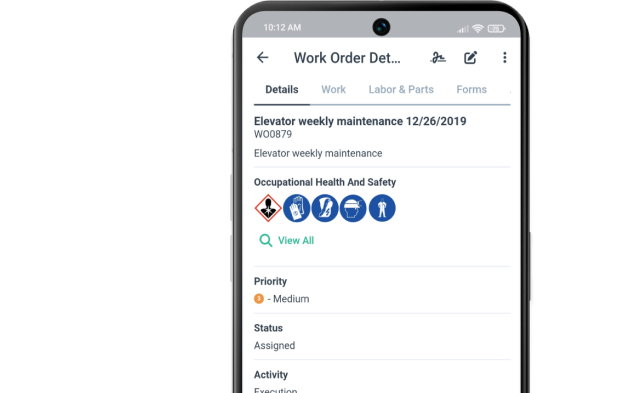


Get a Free WorkTrek Demo
Let's show you how WorkTrek can help you optimize your maintenance operation.
Try for freeKey Takeaways:
- Companies can potentially save 12-18% in maintenance costs by using preventive maintenance
- 88% of manufacturing companies use preventive maintenance, but only 35% spend the majority of their time on scheduled maintenance tasks
- Preventive maintenance optimization can reduce equipment downtime by 30-50% and increase machine life by 20-40%
- CMMS implementation improves PM completion rates by up to 70% while reducing maintenance planning time by 10-20%
Preventive maintenance is no longer just about following schedules and checking boxes. Today’s competitive landscape demands a more sophisticated approach. One that transforms preventive maintenance from a necessary expense into a strategic advantage.
Yet despite widespread adoption of preventive maintenance programs, many organizations struggle to maximize their effectiveness.
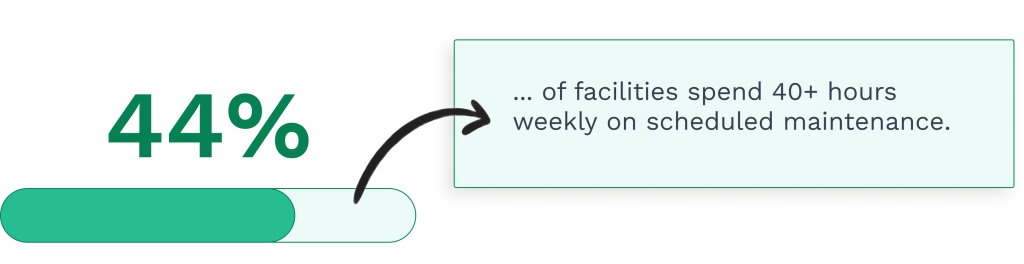
According to a 2025 study, 58% of facilities spend less than half their time on scheduled maintenance, even though 87% claim to use preventive maintenance strategies.
This disconnect between intention and execution can cost businesses billions in lost productivity annually.
That’s why preventive maintenance optimization has become critical. It’s about making your preventive maintenance program work smarter, not harder, ensuring every maintenance task delivers maximum value while minimizing downtime and costs.
What exactly is Preventive Maintenance Optimization?
Preventive maintenance optimization (PMO) is the process of refining your preventive maintenance approach. The goal is to achieve peak efficiency and effectiveness.
Instead of performing routine maintenance tasks on fixed schedules, PMO optimizes by analyzing data, evaluating risks, and tailoring your comprehensive maintenance plan to match the unique needs of each asset.
The truth is, generic maintenance schedules rarely align with actual equipment needs.
Research shows that as much as 30% of preventive maintenance is performed too frequently. This wastes valuable resources without improving equipment reliability.
PMO addresses this inefficiency by considering:
- Individual asset usage patterns and operating hours
- Environmental conditions affecting equipment performance
- Historical maintenance data and failure modes
- Manufacturer recommendations balanced with real-world experience
- Critical equipment priorities and their impact on operations
With this data-driven approach ensures maintenance teams can focus their efforts where they matter most: preventing equipment failures without over-maintaining assets.
The Business Case for Optimizing Your Preventive Maintenance Program
The numbers speak for themselves regarding the benefits of preventive maintenance optimization.
Cost Savings That Impact Your Bottom Line
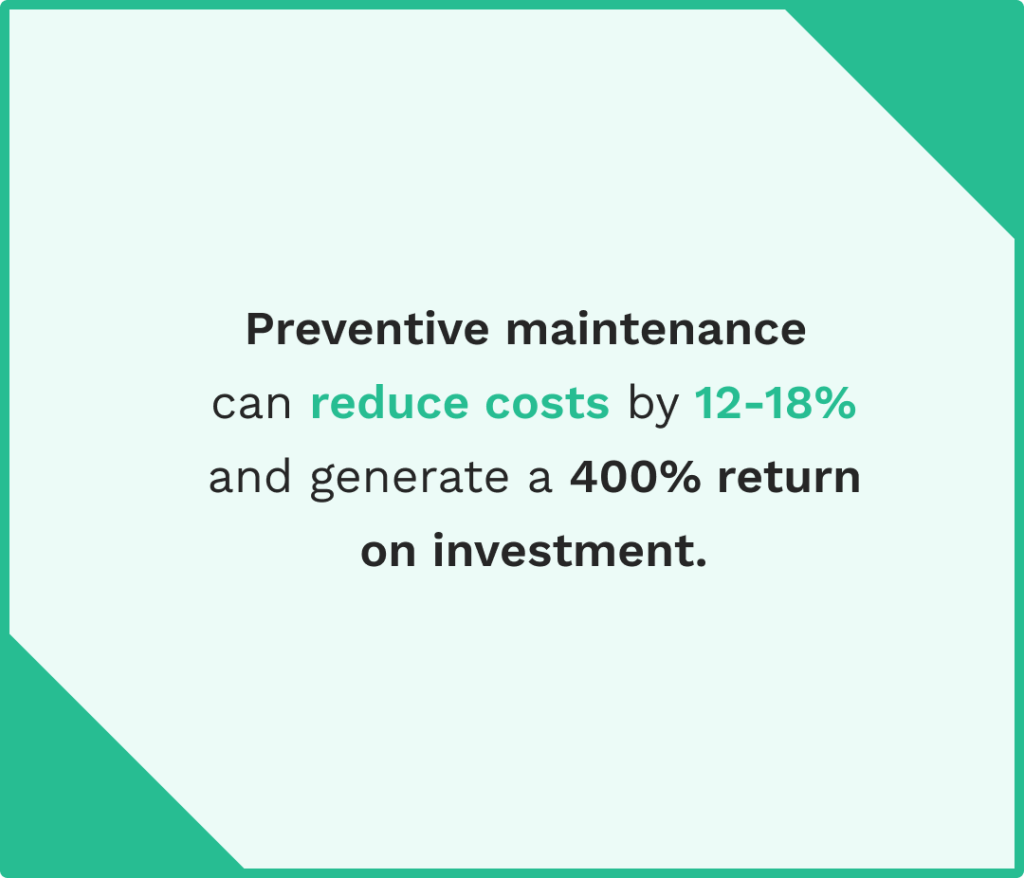
According to American Machinist research, businesses can save 12-18% in total maintenance costs with regular preventive maintenance compared to reactive maintenance.
But optimization takes these savings even further.
Another study from McKinsey found that optimized predictive maintenance can reduce machine downtime by 30-50% and increase equipment life by 20-40%.
When you consider that Siemens reports downtime costs in the automotive sector can exceed $2.3 million per hour—a twofold increase since 2019—the value of optimization becomes crystal clear.
Improved Equipment Reliability and Asset Performance
Well-maintained equipment doesn’t just last longer; it performs better throughout its lifecycle.
Organizations implementing optimized preventive maintenance programs see 70-75% reduction of breakdowns, according to industry studies.
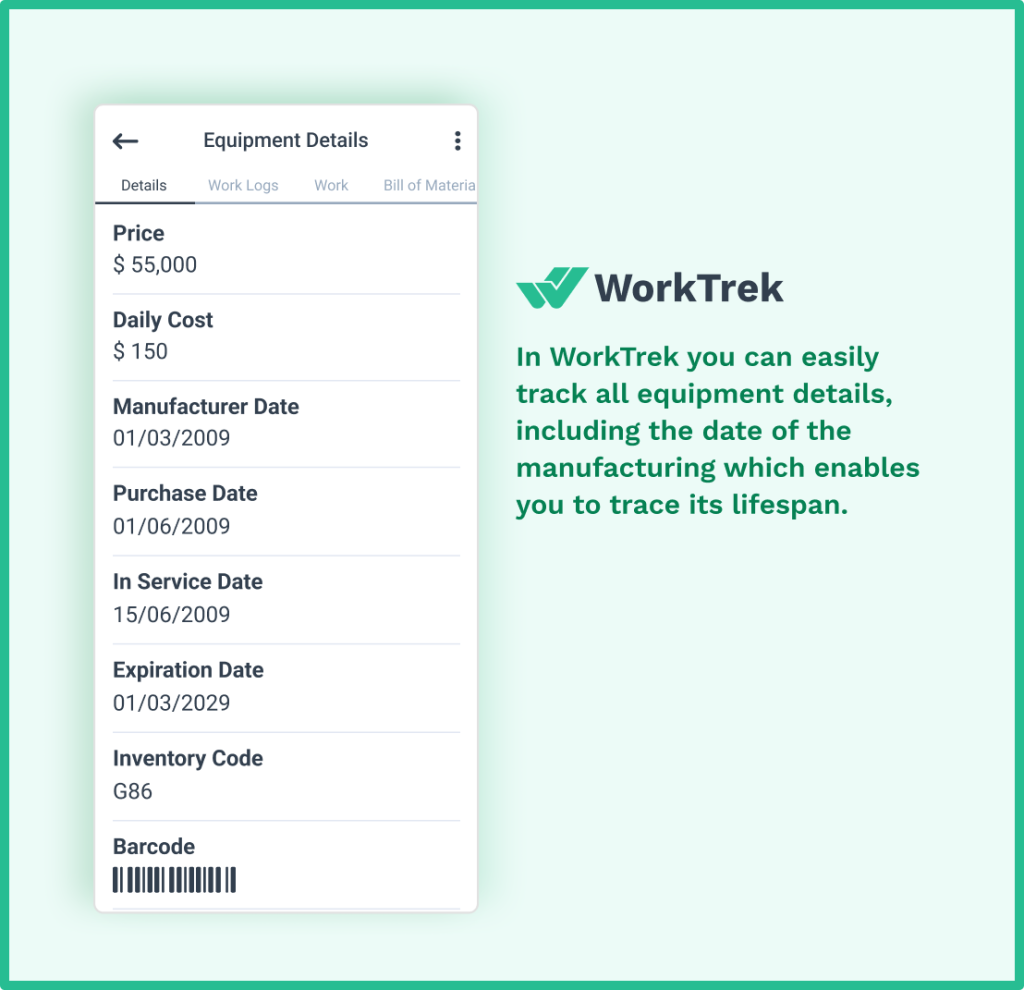
This dramatic improvement in asset reliability is the result of addressing potential issues before they escalate into equipment failures.
Your maintenance team can identify wear patterns, adjust maintenance intervals based on actual conditions, and prevent the cascade of failures that often result from neglected components.
Enhanced Operational Efficiency
PMO can streamline your entire maintenance operation.
Deloitte estimates that optimized maintenance processes can reduce maintenance planning time by up to 50%.
For maintenance teams, instead of scrambling to handle emergency repairs or performing unnecessary maintenance tasks, they can focus on value-adding activities that genuinely improve equipment effectiveness.
Core Components of a Successful Preventive Maintenance Program
Building a solid preventive maintenance program requires more than good intentions. Let’s explore the essential elements that separate truly optimized programs from those that merely go through the motions.
Data Collection and Analysis
The foundation of preventive maintenance optimization lies in robust data management. You need comprehensive maintenance history, equipment data, and performance metrics to make informed decisions.
WorkTrek’s CMMS platform provides hundreds of pre-built reports and 30+ KPIs to transform raw maintenance data into actionable insights.
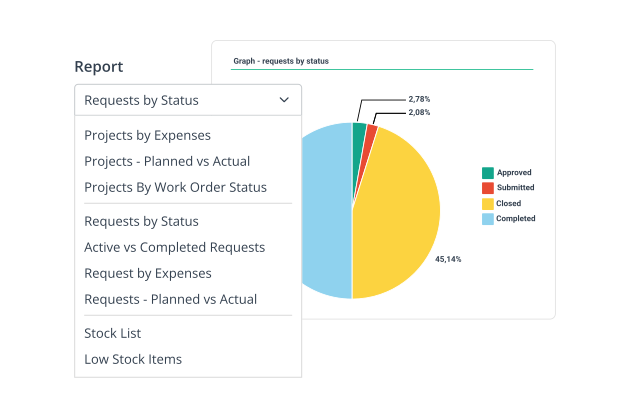
This level of visibility enables data-driven decision-making that continuously improves your maintenance strategy.
Historical data reveals patterns you might otherwise miss:
- Recurring failure modes that suggest design issues
- Seasonal variations in equipment performance
- The actual effectiveness of current preventive maintenance tasks
- Opportunities to optimize maintenance schedules
Identifying Critical Assets and Risk Assessment
Not all equipment deserves equal attention. Prioritizing critical assets ensures you allocate resources where they’ll have the greatest impact on operational efficiency.
Critical equipment typically includes:
- Assets with high replacement costs
- Equipment essential to production continuity
- Machines with significant safety implications
- Assets with long lead times for replacement parts
Creating a risk matrix helps visualize the relationship between failure probability and consequences. This approach can guide your preventive maintenance optimization efforts toward high-impact areas.
Customized Preventive Maintenance Schedules
One-size-fits-all maintenance schedules are a recipe for inefficiency and potential disaster.
Your preventive maintenance schedule should reflect the unique operating conditions, usage patterns, and criticality of each asset.
Consider these factors when defining preventive maintenance tasks:
- Usage-based maintenance: Schedule tasks based on actual operating hours or production cycles rather than calendar time
- Environmental conditions: Equipment in harsh environments may need more frequent attention
- Manufacturer recommendations: Use OEM guidelines as a starting point, then adjust based on your operational experience
- Failure history: Let past breakdowns inform future prevention strategies
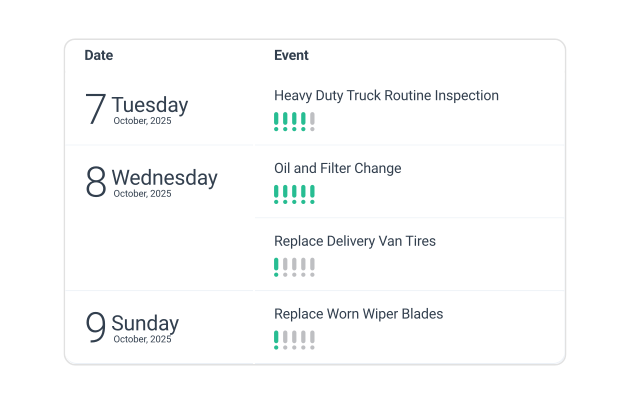
WorkTrek’s preventive maintenance features enable you to create customized schedules that automatically trigger work orders based on time, meter readings, or condition thresholds.
This advanced feature ensures maintenance happens exactly when needed.
Implementing Your Preventive Maintenance Optimization Strategy
Transitioning from basic preventive maintenance to an optimized program requires a structured approach. Here’s how to implement preventive maintenance optimization effectively.
Step 1: Establish Baseline Performance Metrics
Before you can optimize, you need to understand where you stand. Key performance indicators for maintenance programs include:
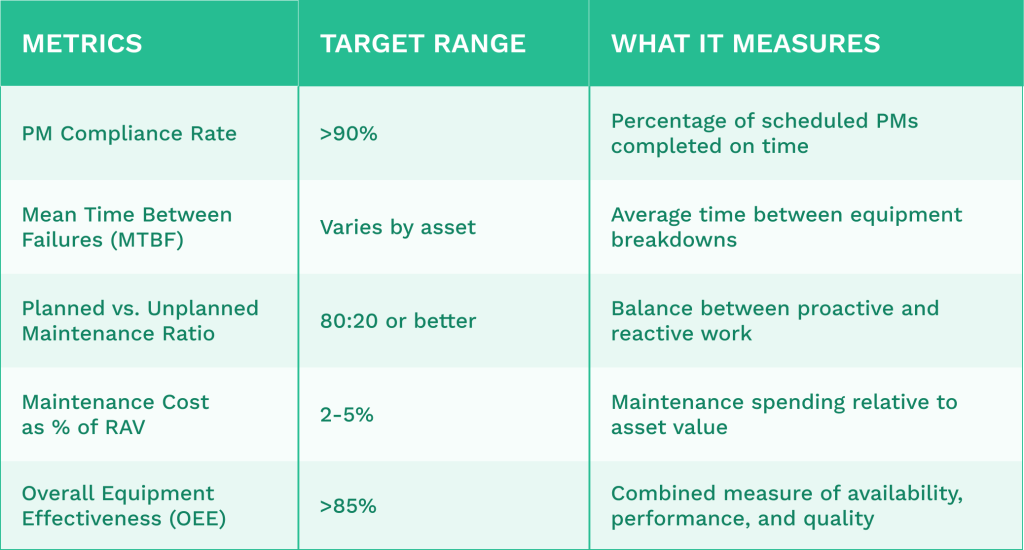
According to recent industry data, PM completion is the most commonly tracked maintenance KPI, used by 56% of facilities.
Step 2: Analyze Current Preventive Maintenance Tasks
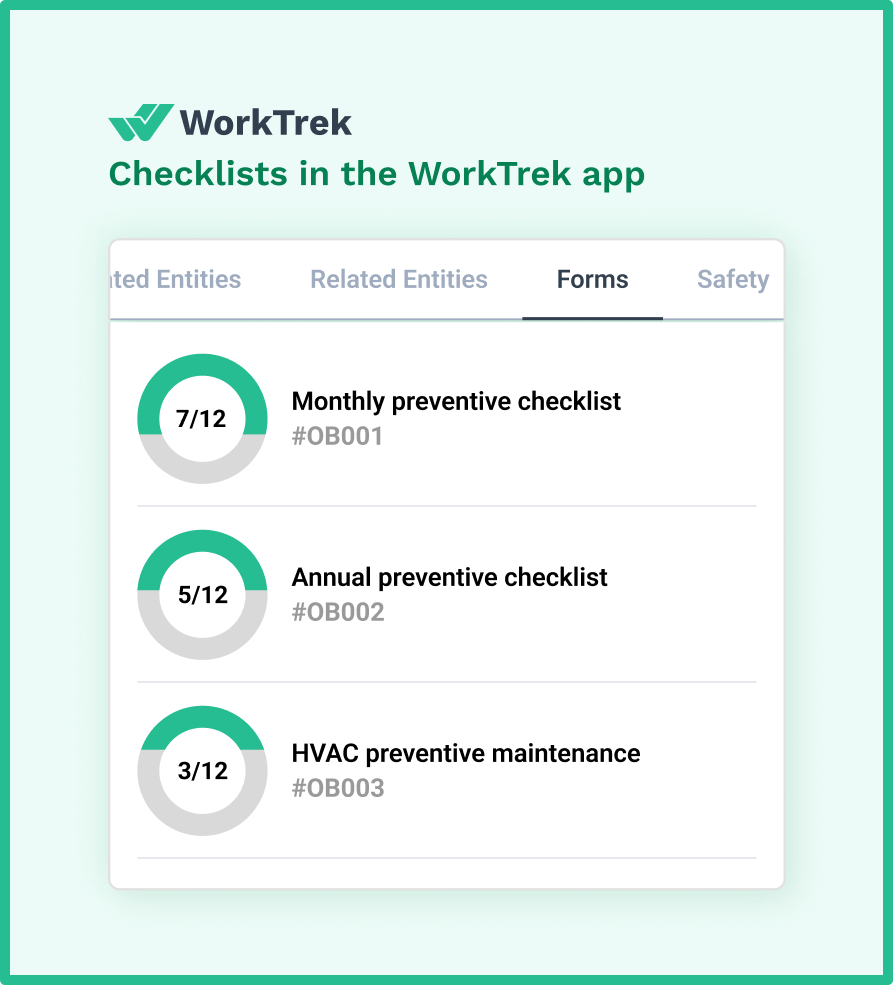
Start by reviewing your existing preventive maintenance checklist with a critical eye.
For each task, ask:
- Does this prevent a specific failure mode?
- Is the frequency based on data or arbitrary schedules?
- Can condition-based maintenance replace time-based tasks?
- What’s the consequence if we skip this task?
This analysis can reveal that many routine maintenance tasks add little value while consuming significant resources. This is a very important KPI to monitor.
Step 3: Implement Reliability-Centered Maintenance Principles
Reliability-centered maintenance (RCM) provides an ideal framework for optimizing your maintenance strategy.
The RCM process involves:
- Identifying failure modes: Document how equipment can fail and the consequences of each failure
- Selecting appropriate strategies: Choose between preventive, predictive, or corrective maintenance based on failure characteristics
- Implementing proactive measures: Design improvements, procedural changes, and training to minimize risks
This approach ensures every preventive maintenance task directly addresses a specific risk or failure mode.
Step 4: Utilize Technology for Continuous Improvement
A computerized maintenance management system (CMMS) like WorkTrek is essential for optimizing modern preventive maintenance.
Industry research shows that 59% of facilities now use CMMS software, while the global CMMS market is projected to grow at 11.1% CAGR through 2030.
WorkTrek’s CMMS solution centralizes all maintenance activities, from work order management to inventory tracking. This can provide the foundation for continuous optimization.
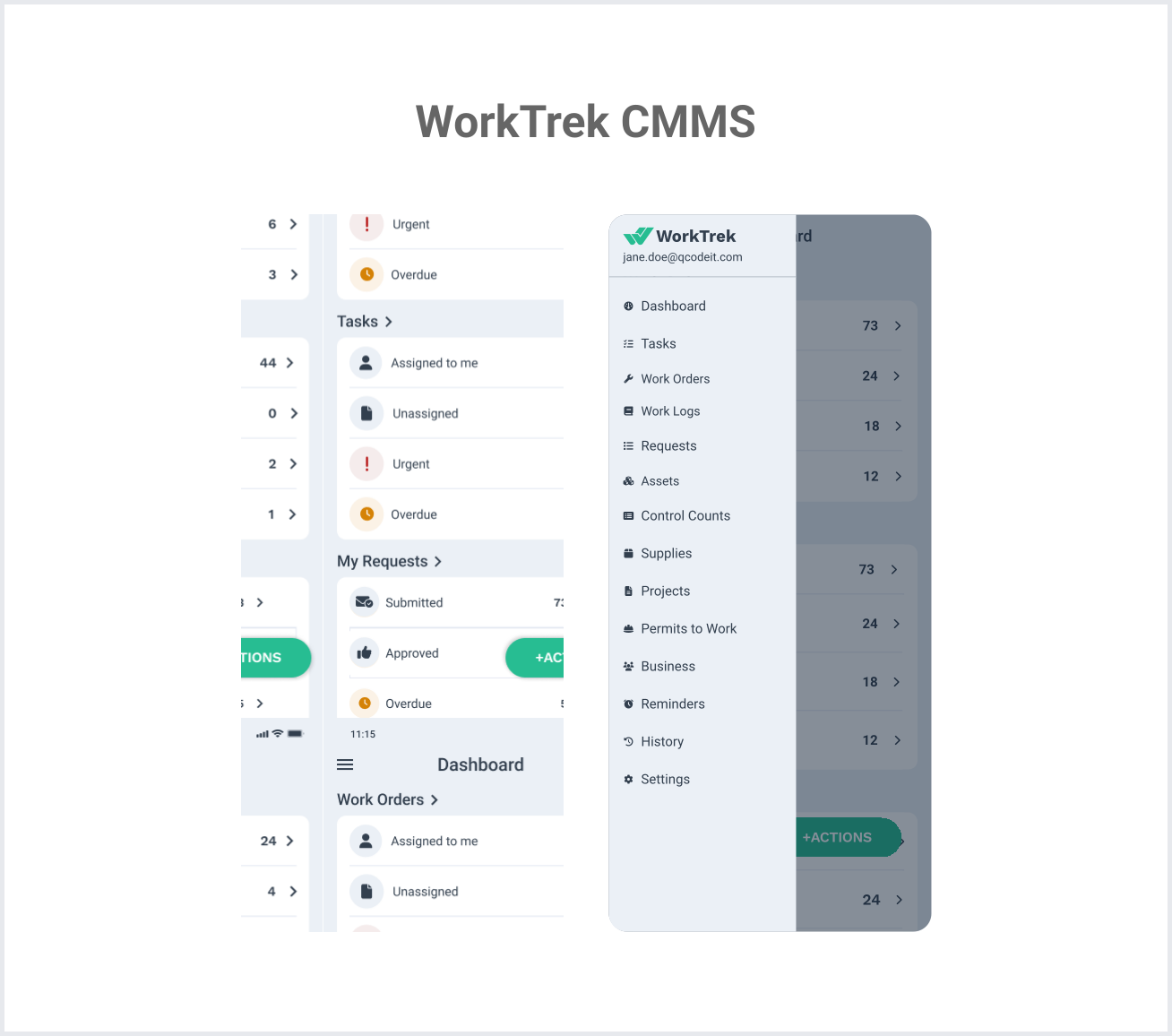
The benefits are substantial:
- Automated scheduling eliminates missed preventive maintenance tasks
- Mobile access enables technicians to update records in real-time
- Analytics identify trends and optimization opportunities
- Integration capabilities connect maintenance with other business systems
Step 5: Transition to Predictive and Condition-Based Strategies
Preventive maintenance forms the backbone of most maintenance programs. However, combining it with predictive maintenance delivers superior results.
Industry data shows that 40% of manufacturing companies now use predictive maintenance alongside their preventive programs.
Condition-based maintenance utilizes real-time monitoring to trigger maintenance activities based on actual equipment conditions rather than fixed schedules.
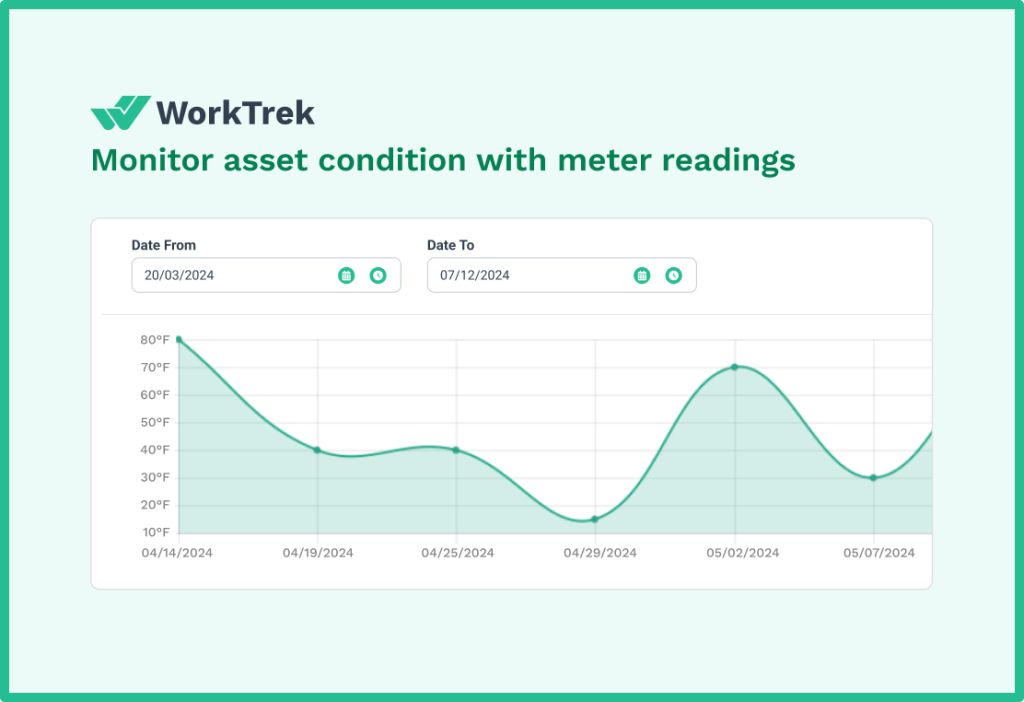
With this approach, you can reduce unnecessary maintenance while ensuring critical issues are addressed promptly.
Technologies enabling this transition include:
- IoT sensors for continuous equipment monitoring
- Vibration analysis for rotating equipment
- Oil analysis for hydraulic systems
- Thermography for electrical components
- Ultrasonic testing for leak detection
Common Challenges and How to Overcome Them
Even the best-intentioned optimization efforts can stumble.
Let’s address the most common obstacles and their solutions.
Challenge 1: Resistance to Change
Maintenance teams comfortable with existing processes may resist new approaches.
Solution:
Communicate the benefits clearly. Studies show that 67% of manufacturers implementing preventive maintenance cite reduced downtime as their primary motivation.
Share success stories, involve frontline workers in planning, and celebrate early wins to build momentum.
Challenge 2: Poor Data Quality
Incomplete or inaccurate maintenance history undermines optimization efforts.
Solution:
Start with what you have while implementing systems to improve data collection.
A CMMS platform standardizes data entry and provides the structure needed for consistent record-keeping.
Challenge 3: Resource Constraints
McKinsey reports that 73% of businesses face challenges hiring maintenance technicians, while budget constraints limit technology investments.
Solution:
Focus on incremental improvements. Start with your most critical assets, demonstrate ROI, then expand the program. Consider outsourcing specialized maintenance tasks to address skill gaps.
Challenge 4: Balancing Preventive and Reactive Work
Despite good intentions, research indicates that only 51% of maintenance activities are preventive, while the rest are reactive.
Solution:
Protect scheduled maintenance time. Treat preventive maintenance tasks as non-negotiable appointments. Use emergency work order analysis to identify recurring issues that better PM could prevent.
Measuring Success: KPIs for Preventive Maintenance Optimization
You can’t improve what you don’t measure. Track these metrics to gauge the effectiveness of your optimization efforts:
Equipment Performance Metrics
- Overall Equipment Effectiveness (OEE): Combines availability, performance, and quality metrics
- Mean Time Between Failures (MTBF): Indicates reliability improvements
- Mean Time to Repair (MTTR): Shows maintenance efficiency gains
Cost-Related Metrics
- Maintenance cost per unit produced: Reveals the true cost impact on production
- Emergency repair costs: Should decrease as optimization improves
- Inventory carrying costs: Optimized programs reduce spare parts requirements
Process Efficiency Metrics
- PM compliance rate: Target 90% or higher completion of scheduled tasks
- Planned vs. unplanned maintenance ratio: Aim for 80:20 or better
- Work order backlog: Should remain manageable and prioritized
WorkTrek’s analytics capabilities automatically track these KPIs, providing real-time visibility into your program’s performance.
The Role of Preventive Maintenance Software
Modern preventive maintenance optimization is virtually impossible without dedicated software support.
Here’s why a CMMS has become indispensable for maintenance operations.
Centralized Information Management
A CMMS serves as the single source of truth for all maintenance-related data. Equipment histories, maintenance schedules, spare parts inventories, and technician assignments all live on a single accessible platform.
This centralization eliminates the information silos that plague many maintenance departments, ensuring everyone works from the same accurate, up-to-date information.
Automated Scheduling and Work Order Generation
Manual scheduling is error-prone and time-consuming. WorkTrek’s preventive maintenance features automatically generate work orders based on your defined triggers, whether time-based, meter-based, or condition-based.
Technicians receive notifications on their mobile devices, complete with:
- Detailed task instructions
- Required tools and parts
- Safety procedures
- Asset history and documentation
This level of automation ensures nothing falls through the cracks while freeing managers to focus on optimization rather than administration.
Real-Time Performance Monitoring
Preventive maintenance software provides instant visibility into your program’s effectiveness. Dashboard views show:
- Upcoming and overdue PM tasks
- Technician utilization rates
- Cost trends and budget tracking
- Equipment reliability metrics
This real-time insight enables quick course corrections when performance drifts off target.
Predictive Analytics and Trend Analysis
Advanced CMMS platforms analyze historical data to predict future maintenance needs.
By identifying patterns in equipment failures, the software can suggest adjustments to maintenance intervals, highlight assets requiring additional attention, and forecast future resource requirements.
Advanced Optimization Techniques
Once you’ve established a strong foundation, these advanced strategies can take your preventive maintenance program to the next level.
Failure Mode and Effects Analysis (FMEA)
FMEA systematically evaluates potential failure modes, their causes, and consequences.
This analysis helps prioritize maintenance efforts based on risk severity, probability of occurrence, and detection difficulty.
The process reveals:
- Hidden failure modes that current PMs might miss
- Opportunities to eliminate failure causes through design changes
- The most cost-effective maintenance strategies for each failure type
Integration with Predictive Maintenance
While preventive and predictive maintenance are often discussed separately, the most effective programs combine both approaches in a hybrid manner.
Data shows that predictive maintenance can reduce maintenance costs by 5-10% beyond what preventive maintenance alone achieves.
Use predictive techniques to:
- Validate and refine PM intervals
- Identify equipment requiring immediate attention
- Detect problems that inspections might miss
- Provide early warning of developing issues
Total Productive Maintenance (TPM) Implementation
TPM engages operators in basic maintenance tasks, multiplying your maintenance capacity without adding headcount.
Operators performing simple preventive maintenance tasks like cleaning, lubrication, and inspection can:
- Detect problems earlier through daily familiarity with equipment
- Free skilled technicians for complex repairs
- Improve equipment reliability through consistent basic care
- Foster ownership and pride in equipment condition
Types of Preventive Maintenance Strategies
Understanding different preventive maintenance approaches helps you select the right strategy for each asset.
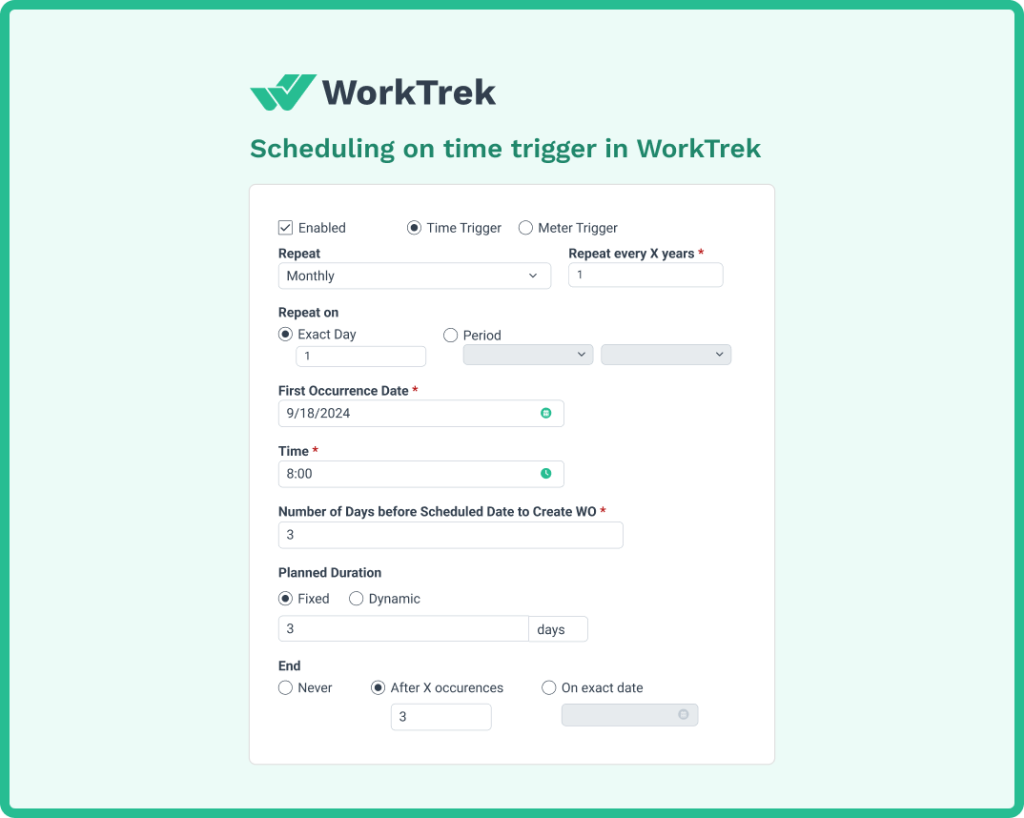
Time-Based Maintenance
Traditional calendar-based scheduling works well for:
- Equipment with predictable wear patterns
- Assets subject to regulatory requirements
- Components with known service life
Usage-Based Maintenance
Scheduling based on operating hours or cycles is ideal for:
- Equipment with variable usage patterns
- Assets where wear correlates directly with use
- Seasonal or campaign-based operations
Condition-Based Maintenance
Monitoring equipment health to trigger maintenance provides advantages for:
- Critical equipment where failure costs are high
- Assets with unpredictable failure patterns
- Equipment where condition indicators are easily measured
Risk-Based Maintenance
Prioritizing maintenance based on failure consequences suits:
- Operations with varying criticality levels
- Budget-constrained environments
- Complex systems with multiple failure modes
The most successful programs blend these strategies, applying each where it delivers maximum value.
Building Your Ultimate Preventive Maintenance Checklist
A well-designed preventive maintenance checklist ensures consistency while preventing oversight. Your ultimate preventive maintenance checklist should include:
Daily Tasks
- Visual inspections for leaks, unusual sounds, or vibrations
- Checking fluid levels and pressures
- Cleaning and housekeeping
- Recording operating parameters
Weekly Tasks
- Lubrication points requiring frequent attention
- Filter inspections and cleaning
- Belt tension checks
- Safety device testing
Monthly Tasks
- Calibration of instruments and controls
- Detailed mechanical inspections
- Electrical connection checks
- Performance testing against baselines
Quarterly/Annual Tasks
- Comprehensive overhauls
- Wear component replacements
- Alignment and balancing procedures
- Regulatory compliance inspections
WorkTrek’s digital checklists ensure technicians follow standardized procedures while capturing data for continuous improvement.
The Future of Preventive Maintenance Optimization
The maintenance landscape continues evolving rapidly. Here’s what’s shaping the future of preventive maintenance optimization.
Artificial Intelligence and Machine Learning
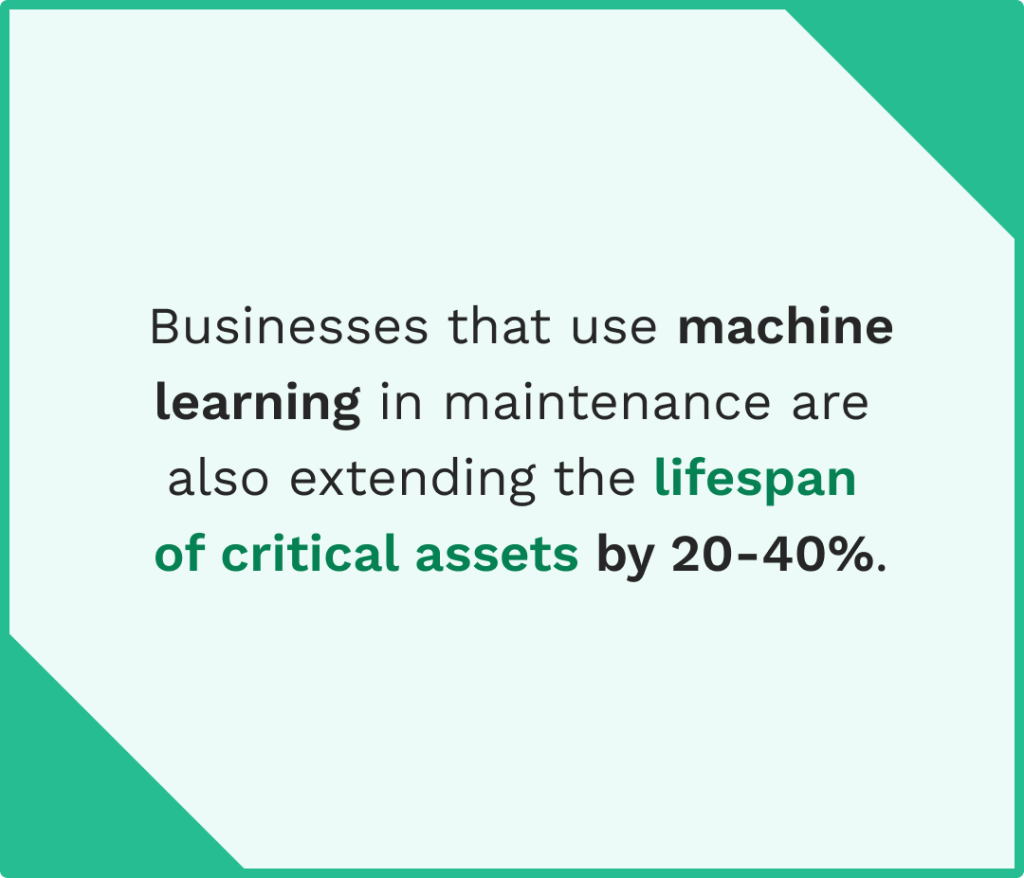
AI transforms preventive maintenance by analyzing vast datasets to identify patterns humans might miss.
Research indicates that 39% of maintenance leaders see knowledge capture and sharing as AI’s most valuable contribution, followed by reducing unexpected equipment failure (36%).
These technologies enable:
- Dynamic adjustment of maintenance intervals based on conditions
- Prediction of failure days or weeks in advance
- Optimization of spare parts inventory
- Automated root cause analysis
Internet of Things (IoT) Integration
IoT sensors provide continuous equipment monitoring at decreasing costs. Industry projections estimate that the industrial IoT will generate $800 billion in economic value by 2024.
This connectivity enables:
- Real-time condition monitoring without manual inspections
- Automatic work order generation when parameters exceed thresholds
- Remote diagnosis and troubleshooting
- Integration with enterprise systems for holistic optimization
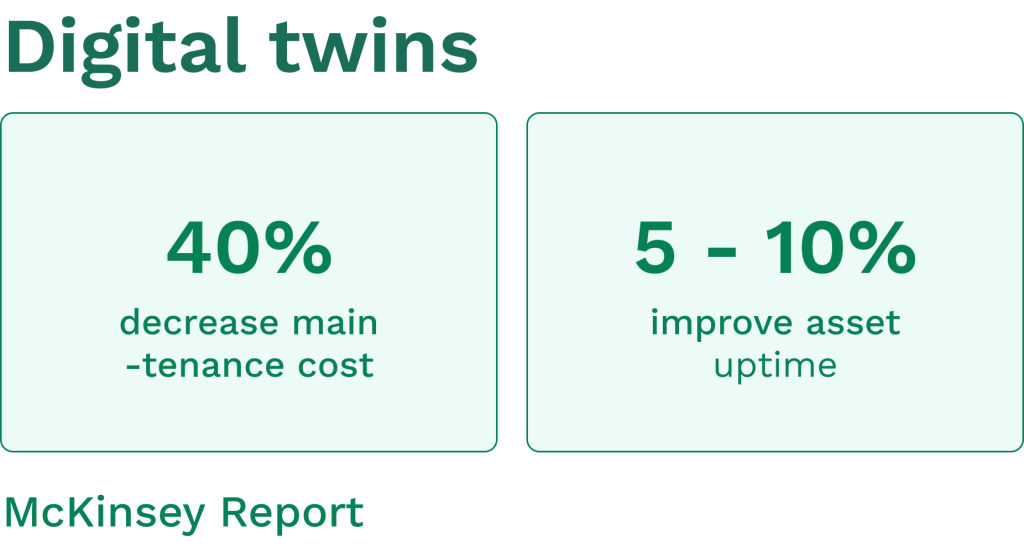
Digital Twins
Virtual replicas of physical assets allow testing maintenance strategies without risking actual equipment. Digital twins help:
- Simulate different maintenance scenarios
- Predict the impact of changes
- Train technicians in safe environments
- Optimize maintenance intervals through modeling
Augmented Reality (AR) Support
Studies show 49% of businesses see maintenance automation as the top benefit of AR technology.
AR applications include:
- Overlay of maintenance instructions on actual equipment
- Remote expert assistance for complex repairs
- Visual documentation of completed work
- Training acceleration for new technicians
Conclusion
Preventive maintenance optimization is more than just improving maintenance. It is a competitive advantage for organizations that implement it.
The statistics are clear: organizations that optimize their preventive maintenance programs see dramatic improvements in equipment reliability, operational efficiency, and bottom-line results.
Success requires more than good intentions. It demands systematic analysis, a solid technology foundation, and a commitment to continuous improvement. Start with your critical equipment, establish solid metrics, and leverage tools like WorkTrek’s CMMS platform to automate and optimize your maintenance processes.
Your equipment is counting on you. Your operations team is counting on you. Your bottom line is counting on you.
The time to optimize is now.